Product Design
Product Design
Product Design
Insights
Insights
Insights
February 19, 2026
February 19, 2026
February 19, 2026
Uitop vs Bricx: Which Design Agency Is Right for You?
Comparing Uitop vs Bricx? Learn how each agency approaches UX strategy, product design, client collaboration and ROI so you can choose the best confidently.
4 minutes
4 minutes
4 minutes
Looking for a design agency? Bricx has helped 50+ B2B & AI SaaS teams! Book a free cal
If you’re evaluating Uitop vs Bricx, chances are you’re trying to decide between two strong product design partners that approach UX from very different angles.
Both agencies bring serious expertise to the table, but they shine in different contexts depending on your product maturity, internal team structure, and long-term goals. Uitop is widely known for structured UX execution and enterprise-grade digital product work, while Bricx focuses heavily on growth-driven design for SaaS, AI, and emerging tech companies.
One leans toward systematic delivery and established workflows, while the other emphasizes speed, experimentation, and measurable product outcomes.
The right choice ultimately depends on whether you need design execution at scale or a strategic design partner focused on growth and product impact.
Let’s break down both to analyze which one is the right option for you.
What is Uitop?
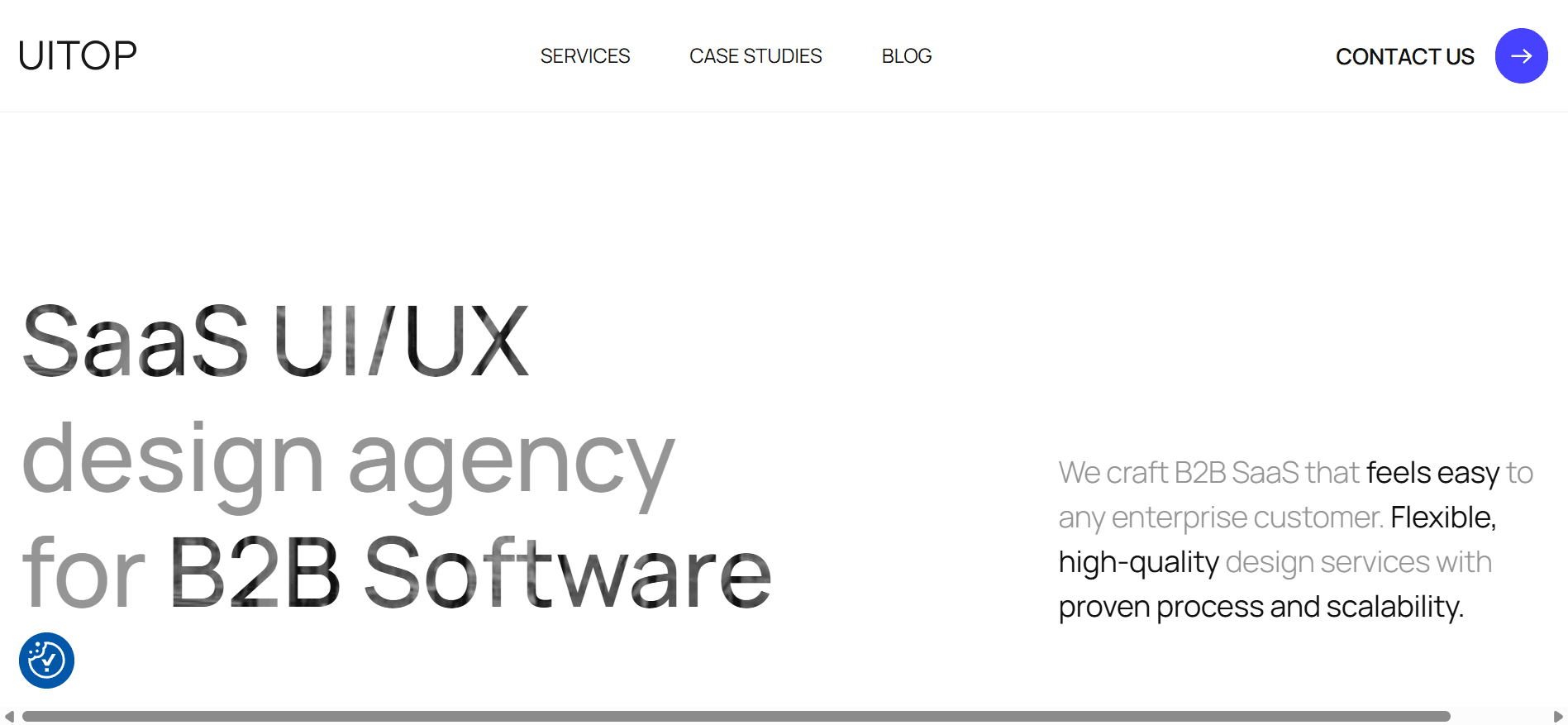
Uitop is a European product design and UX agency known for helping companies design and scale digital products through structured research, usability-driven design, and consistent execution processes.
Over the years, they’ve built a reputation around delivering well-crafted user experiences across web platforms, SaaS products, and enterprise applications.
The agency focuses strongly on research-backed UX methodologies, often working closely with internal product teams to align design decisions with business and user needs.
Their approach tends to be process-oriented, prioritizing structured discovery, validated workflows, and systematic design execution rather than rapid experimentation.
This makes them particularly effective for organizations that value predictability and strong UX fundamentals over fast iterative growth cycles.
Strengths of Uitop
Strong UX Research Foundation
Uitop places heavy emphasis on research and usability validation before moving into design execution. Their workflows typically involve structured discovery, stakeholder alignment, and user testing.
This results in experiences that feel logically designed and highly usable, especially for complex enterprise systems where clarity and consistency matter more than visual experimentation.
Enterprise-Level Process Maturity
One of Uitop’s biggest strengths is operational maturity. They follow clearly defined processes, documentation practices, and collaboration structures that make them dependable for large teams.
Companies with multiple stakeholders often benefit from this stability because projects move forward with fewer ambiguities or misaligned expectations.Consistency in UX Delivery
Their design output focuses on scalable systems and long-term maintainability rather than one-off visual redesigns.
This consistency becomes valuable for organizations building large digital ecosystems where design systems and usability standards must remain uniform across multiple products.Cross-Functional Collaboration
Uitop works closely with product managers, engineers, and leadership teams to ensure design decisions align with product strategy.
Their collaborative model helps organizations integrate UX into broader product workflows rather than treating design as a standalone function.Experience with Complex Products
The agency performs particularly well when handling data-heavy dashboards, enterprise platforms, or workflow-driven software where information architecture and usability are critical.
Weaknesses of Uitop
Less Startup-Oriented Execution Speed
Because their approach is process-heavy, projects may move slower compared to agencies optimized for rapid iteration. Early-stage startups looking for fast experimentation may find timelines longer than expected.Limited Growth-Focused Design Positioning
Uitop’s strength lies in usability and structure rather than conversion-driven product growth.
Teams seeking aggressive improvements in activation, onboarding, or revenue metrics may require additional strategic layers.Higher Dependence on Structured Engagements
Their workflows often require defined scopes and planning cycles. Companies that prefer flexible, evolving engagement models may find this less adaptable.Less Emphasis on Emerging Tech Niches
Compared to agencies deeply embedded in AI, Web3, or fast-moving SaaS ecosystems, Uitop’s positioning leans more toward traditional digital product UX.Visual Differentiation May Be Conservative
While functional and clean, their design style can sometimes prioritize usability over bold product differentiation or brand-driven experiences.
Industries Served
Uitop typically works with mid-size companies and enterprises building complex digital platforms, SaaS tools, and workflow-heavy applications that require structured UX thinking and long-term scalability.
What is Bricx?
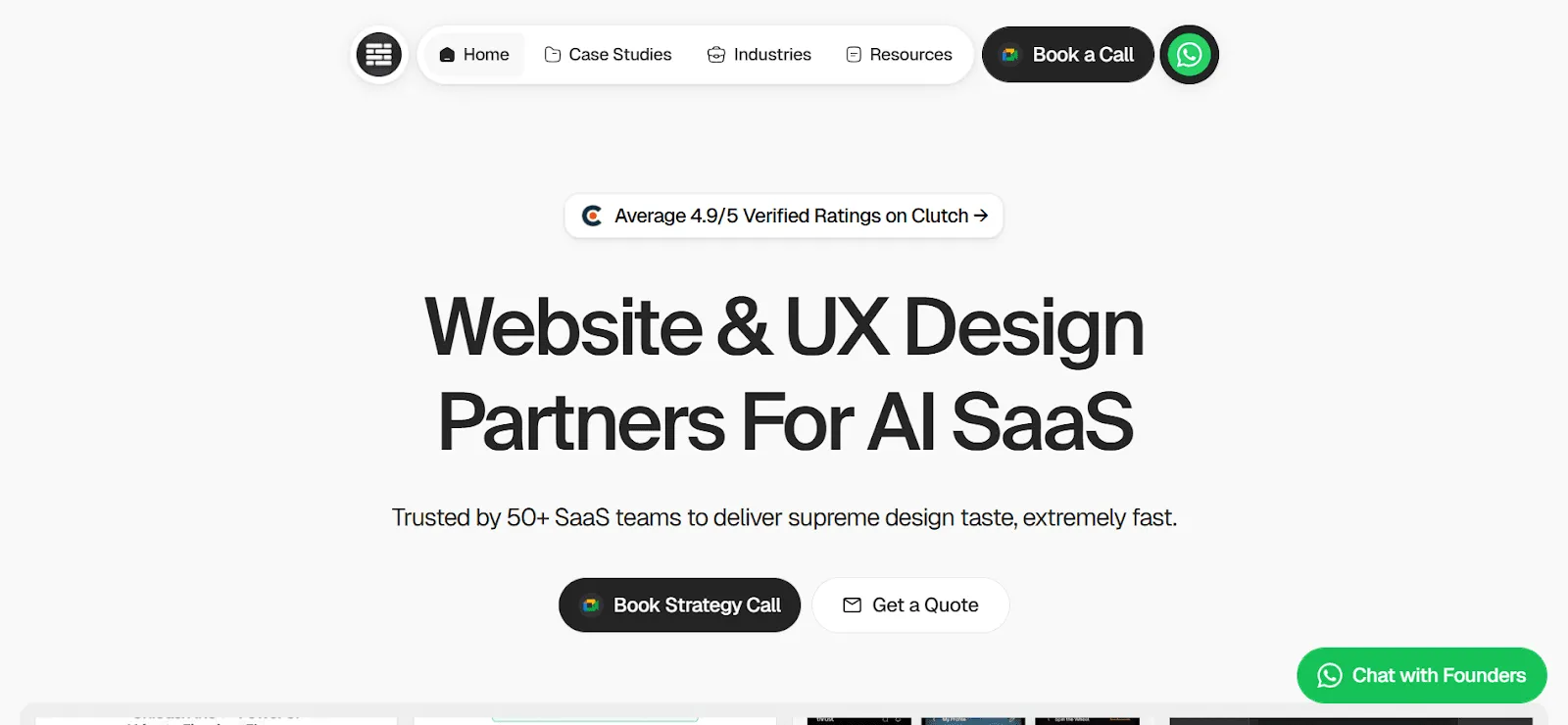
Bricx is a product design and UX agency built specifically for modern SaaS, AI, and high-growth technology companies that want design to directly drive business outcomes.
Rather than focusing only on usability improvements, we approach design as a growth lever — helping companies improve activation, retention, onboarding performance, and product adoption through strategic UX decisions.
At Bricx, we work closely with founders, product teams, and growth leaders to ensure design directly supports product metrics.
Our experience spans MVP design, product redesigns, onboarding optimization, and design team extensions, making us particularly effective for companies that need both execution speed and strategic guidance.
Strengths of Bricx
Deep SaaS and AI Product Expertise
We specialize in SaaS, AI, and emerging technology products, meaning we understand PLG models, onboarding friction, and product-led growth challenges deeply.
This allows us to design experiences that directly impact conversion and retention metrics.Growth-Oriented UX Strategy
Our design decisions are tied to measurable outcomes like activation rates, engagement, and revenue impact.
Instead of redesigning screens in isolation, we focus on how UX influences business performance.Speed and Iteration
Bricx operates with startup-level agility. We move quickly, test ideas rapidly, and adapt workflows as product priorities evolve — something early-stage and scaling companies value heavily.Design Team Extension Model
Many clients work with us as an embedded extension of their internal team. This creates continuity, faster collaboration, and deeper product understanding over time.Strong Visual & Systems Thinking
While focusing on outcomes, we also build scalable design systems that allow teams to move faster long-term without sacrificing consistency.
Weaknesses of Bricx
Less Enterprise-Heavy Positioning
Our approach is optimized for growth-stage and technology-first companies rather than large traditional enterprises with rigid procurement structures.Fast Iteration May Feel Intense for Some Teams
Companies accustomed to slower, documentation-heavy workflows may need time to adapt to our rapid execution style.Highly Collaborative Model Requires Client Involvement
We work best when teams actively collaborate with us. Organizations expecting completely hands-off execution may not fully benefit from the partnership.Growth Focus May Not Suit Pure Maintenance Projects
If a company only needs minor UX refinements without strategic change, our growth-driven model may go beyond what’s required.
Industries Served
Bricx primarily serves SaaS companies, AI startups, Web3 products, and venture-backed teams looking to improve product adoption, user experience, and growth performance across different stages of scaling.
Core Comparison Points: Uitop vs Bricx
Now that we’ve looked at the basic overview of both agencies, here’s a detailed comparison of Uitop vs Bricx:
Pricing
When comparing Uitop vs Bricx on pricing, the difference largely comes down to engagement philosophy. Uitop typically operates through structured project scopes aligned with enterprise-style delivery models.
Their pricing often reflects research-heavy processes, longer discovery cycles, and comprehensive UX engagements designed for stability and predictability. This works well for organizations planning large redesign initiatives with clearly defined timelines.
Bricx, on the other hand, emphasizes flexible engagement structures designed for evolving product needs.
Our pricing models often align with ongoing collaboration or design team extension approaches, allowing companies to continuously iterate rather than committing to large upfront redesign cycles.
Product & UX Maturity
Uitop excels when working with mature products requiring structured UX improvements and usability optimization. Their methodology ensures clarity, consistency, and long-term scalability — ideal for enterprise platforms or established products with complex workflows.
Bricx thrives earlier in the product lifecycle or during rapid growth phases. We help teams identify friction points quickly and redesign flows to improve real product metrics.
Instead of focusing solely on usability, our approach integrates product strategy, onboarding psychology, and behavioral design to accelerate adoption.
Industry & Domain Fit
Uitop’s strengths align well with organizations building enterprise software, internal tools, and structured digital platforms where compliance, usability, and documentation are critical.
Bricx is deeply embedded in SaaS, AI, and emerging technology ecosystems.
Our experience with venture-backed startups and innovation-driven products means we understand fast-moving product cycles, experimentation culture, and the need to continuously differentiate in competitive markets.
Speed & Execution Model
Uitop’s execution model prioritizes methodical progress. Discovery phases, research validation, and structured workflows ensure thoughtful decision-making but may extend timelines.
Bricx focuses on rapid iteration and continuous improvement. We work in shorter feedback loops, shipping improvements faster and refining based on user behavior and data insights.
For startups racing toward product-market fit, this speed becomes a significant advantage.
Collaboration & Communication
Uitop follows structured collaboration models suited for organizations with layered stakeholder environments. Communication tends to be formalized, ensuring alignment across departments.
At Bricx, collaboration feels more like working with an internal product team. We integrate directly into Slack workflows, sprint cycles, and product discussions, enabling faster decisions and reduced communication overhead.
Flexibility & Startup Friendliness
Uitop’s structured approach benefits organizations with defined roadmaps but may feel rigid for startups pivoting frequently.
Bricx is intentionally built for flexibility. We adapt quickly when priorities change — whether that means redesigning onboarding flows, testing new product directions, or supporting rapid launches.
Cost Efficiency & ROI
Uitop delivers strong ROI through usability improvements and long-term design stability, especially for enterprise-scale products where operational efficiency matters.
Bricx drives ROI through growth outcomes. By improving activation funnels, onboarding clarity, and engagement flows, we help clients see measurable improvements tied directly to revenue and retention.
Strategic Impact
Uitop contributes strong UX thinking and execution reliability, helping organizations build well-structured digital experiences.
Bricx operates as a strategic partner influencing product direction.
We often work alongside founders and leadership teams to shape product decisions, positioning UX as a competitive advantage rather than just execution support.
Cultural & Team Fit
Organizations with structured hierarchies and formal product processes often align naturally with Uitop’s working style.
Startup teams and innovation-driven companies typically resonate with Bricx’s collaborative, fast-moving culture where experimentation and iteration are encouraged.
Design Quality & Systems Thinking
Both agencies deliver high-quality design work, but their priorities differ. Uitop emphasizes clarity, usability, and structured UX frameworks, resulting in dependable and consistent interfaces.
Bricx combines strong visual execution with systems thinking tailored for scalability and growth.
Our focus is not only how a product looks or functions today, but how its design system enables faster iteration tomorrow.
Conclusion
Choosing the right agency between Uitop and Bricx ultimately depends on your use case, budget, and the kind of ROI you expect from design.
Uitop is a strong choice for structured UX execution and enterprise-grade product environments, while Bricx becomes a better fit when speed, experimentation, and measurable growth outcomes matter most.
With extensive SaaS, AI, and Web3 experience — including work with Y Combinator, Sequoia, and Techstars-backed teams — we bring insights from 25+ case studies across industries to help you as an extended design arm across every stage of your product journey.
Schedule a call with us now to discuss your goals & to know more about how we can help achieve them.
If you’re evaluating Uitop vs Bricx, chances are you’re trying to decide between two strong product design partners that approach UX from very different angles.
Both agencies bring serious expertise to the table, but they shine in different contexts depending on your product maturity, internal team structure, and long-term goals. Uitop is widely known for structured UX execution and enterprise-grade digital product work, while Bricx focuses heavily on growth-driven design for SaaS, AI, and emerging tech companies.
One leans toward systematic delivery and established workflows, while the other emphasizes speed, experimentation, and measurable product outcomes.
The right choice ultimately depends on whether you need design execution at scale or a strategic design partner focused on growth and product impact.
Let’s break down both to analyze which one is the right option for you.
What is Uitop?

Uitop is a European product design and UX agency known for helping companies design and scale digital products through structured research, usability-driven design, and consistent execution processes.
Over the years, they’ve built a reputation around delivering well-crafted user experiences across web platforms, SaaS products, and enterprise applications.
The agency focuses strongly on research-backed UX methodologies, often working closely with internal product teams to align design decisions with business and user needs.
Their approach tends to be process-oriented, prioritizing structured discovery, validated workflows, and systematic design execution rather than rapid experimentation.
This makes them particularly effective for organizations that value predictability and strong UX fundamentals over fast iterative growth cycles.
Strengths of Uitop
Strong UX Research Foundation
Uitop places heavy emphasis on research and usability validation before moving into design execution. Their workflows typically involve structured discovery, stakeholder alignment, and user testing.
This results in experiences that feel logically designed and highly usable, especially for complex enterprise systems where clarity and consistency matter more than visual experimentation.
Enterprise-Level Process Maturity
One of Uitop’s biggest strengths is operational maturity. They follow clearly defined processes, documentation practices, and collaboration structures that make them dependable for large teams.
Companies with multiple stakeholders often benefit from this stability because projects move forward with fewer ambiguities or misaligned expectations.Consistency in UX Delivery
Their design output focuses on scalable systems and long-term maintainability rather than one-off visual redesigns.
This consistency becomes valuable for organizations building large digital ecosystems where design systems and usability standards must remain uniform across multiple products.Cross-Functional Collaboration
Uitop works closely with product managers, engineers, and leadership teams to ensure design decisions align with product strategy.
Their collaborative model helps organizations integrate UX into broader product workflows rather than treating design as a standalone function.Experience with Complex Products
The agency performs particularly well when handling data-heavy dashboards, enterprise platforms, or workflow-driven software where information architecture and usability are critical.
Weaknesses of Uitop
Less Startup-Oriented Execution Speed
Because their approach is process-heavy, projects may move slower compared to agencies optimized for rapid iteration. Early-stage startups looking for fast experimentation may find timelines longer than expected.Limited Growth-Focused Design Positioning
Uitop’s strength lies in usability and structure rather than conversion-driven product growth.
Teams seeking aggressive improvements in activation, onboarding, or revenue metrics may require additional strategic layers.Higher Dependence on Structured Engagements
Their workflows often require defined scopes and planning cycles. Companies that prefer flexible, evolving engagement models may find this less adaptable.Less Emphasis on Emerging Tech Niches
Compared to agencies deeply embedded in AI, Web3, or fast-moving SaaS ecosystems, Uitop’s positioning leans more toward traditional digital product UX.Visual Differentiation May Be Conservative
While functional and clean, their design style can sometimes prioritize usability over bold product differentiation or brand-driven experiences.
Industries Served
Uitop typically works with mid-size companies and enterprises building complex digital platforms, SaaS tools, and workflow-heavy applications that require structured UX thinking and long-term scalability.
What is Bricx?

Bricx is a product design and UX agency built specifically for modern SaaS, AI, and high-growth technology companies that want design to directly drive business outcomes.
Rather than focusing only on usability improvements, we approach design as a growth lever — helping companies improve activation, retention, onboarding performance, and product adoption through strategic UX decisions.
At Bricx, we work closely with founders, product teams, and growth leaders to ensure design directly supports product metrics.
Our experience spans MVP design, product redesigns, onboarding optimization, and design team extensions, making us particularly effective for companies that need both execution speed and strategic guidance.
Strengths of Bricx
Deep SaaS and AI Product Expertise
We specialize in SaaS, AI, and emerging technology products, meaning we understand PLG models, onboarding friction, and product-led growth challenges deeply.
This allows us to design experiences that directly impact conversion and retention metrics.Growth-Oriented UX Strategy
Our design decisions are tied to measurable outcomes like activation rates, engagement, and revenue impact.
Instead of redesigning screens in isolation, we focus on how UX influences business performance.Speed and Iteration
Bricx operates with startup-level agility. We move quickly, test ideas rapidly, and adapt workflows as product priorities evolve — something early-stage and scaling companies value heavily.Design Team Extension Model
Many clients work with us as an embedded extension of their internal team. This creates continuity, faster collaboration, and deeper product understanding over time.Strong Visual & Systems Thinking
While focusing on outcomes, we also build scalable design systems that allow teams to move faster long-term without sacrificing consistency.
Weaknesses of Bricx
Less Enterprise-Heavy Positioning
Our approach is optimized for growth-stage and technology-first companies rather than large traditional enterprises with rigid procurement structures.Fast Iteration May Feel Intense for Some Teams
Companies accustomed to slower, documentation-heavy workflows may need time to adapt to our rapid execution style.Highly Collaborative Model Requires Client Involvement
We work best when teams actively collaborate with us. Organizations expecting completely hands-off execution may not fully benefit from the partnership.Growth Focus May Not Suit Pure Maintenance Projects
If a company only needs minor UX refinements without strategic change, our growth-driven model may go beyond what’s required.
Industries Served
Bricx primarily serves SaaS companies, AI startups, Web3 products, and venture-backed teams looking to improve product adoption, user experience, and growth performance across different stages of scaling.
Core Comparison Points: Uitop vs Bricx
Now that we’ve looked at the basic overview of both agencies, here’s a detailed comparison of Uitop vs Bricx:
Pricing
When comparing Uitop vs Bricx on pricing, the difference largely comes down to engagement philosophy. Uitop typically operates through structured project scopes aligned with enterprise-style delivery models.
Their pricing often reflects research-heavy processes, longer discovery cycles, and comprehensive UX engagements designed for stability and predictability. This works well for organizations planning large redesign initiatives with clearly defined timelines.
Bricx, on the other hand, emphasizes flexible engagement structures designed for evolving product needs.
Our pricing models often align with ongoing collaboration or design team extension approaches, allowing companies to continuously iterate rather than committing to large upfront redesign cycles.
Product & UX Maturity
Uitop excels when working with mature products requiring structured UX improvements and usability optimization. Their methodology ensures clarity, consistency, and long-term scalability — ideal for enterprise platforms or established products with complex workflows.
Bricx thrives earlier in the product lifecycle or during rapid growth phases. We help teams identify friction points quickly and redesign flows to improve real product metrics.
Instead of focusing solely on usability, our approach integrates product strategy, onboarding psychology, and behavioral design to accelerate adoption.
Industry & Domain Fit
Uitop’s strengths align well with organizations building enterprise software, internal tools, and structured digital platforms where compliance, usability, and documentation are critical.
Bricx is deeply embedded in SaaS, AI, and emerging technology ecosystems.
Our experience with venture-backed startups and innovation-driven products means we understand fast-moving product cycles, experimentation culture, and the need to continuously differentiate in competitive markets.
Speed & Execution Model
Uitop’s execution model prioritizes methodical progress. Discovery phases, research validation, and structured workflows ensure thoughtful decision-making but may extend timelines.
Bricx focuses on rapid iteration and continuous improvement. We work in shorter feedback loops, shipping improvements faster and refining based on user behavior and data insights.
For startups racing toward product-market fit, this speed becomes a significant advantage.
Collaboration & Communication
Uitop follows structured collaboration models suited for organizations with layered stakeholder environments. Communication tends to be formalized, ensuring alignment across departments.
At Bricx, collaboration feels more like working with an internal product team. We integrate directly into Slack workflows, sprint cycles, and product discussions, enabling faster decisions and reduced communication overhead.
Flexibility & Startup Friendliness
Uitop’s structured approach benefits organizations with defined roadmaps but may feel rigid for startups pivoting frequently.
Bricx is intentionally built for flexibility. We adapt quickly when priorities change — whether that means redesigning onboarding flows, testing new product directions, or supporting rapid launches.
Cost Efficiency & ROI
Uitop delivers strong ROI through usability improvements and long-term design stability, especially for enterprise-scale products where operational efficiency matters.
Bricx drives ROI through growth outcomes. By improving activation funnels, onboarding clarity, and engagement flows, we help clients see measurable improvements tied directly to revenue and retention.
Strategic Impact
Uitop contributes strong UX thinking and execution reliability, helping organizations build well-structured digital experiences.
Bricx operates as a strategic partner influencing product direction.
We often work alongside founders and leadership teams to shape product decisions, positioning UX as a competitive advantage rather than just execution support.
Cultural & Team Fit
Organizations with structured hierarchies and formal product processes often align naturally with Uitop’s working style.
Startup teams and innovation-driven companies typically resonate with Bricx’s collaborative, fast-moving culture where experimentation and iteration are encouraged.
Design Quality & Systems Thinking
Both agencies deliver high-quality design work, but their priorities differ. Uitop emphasizes clarity, usability, and structured UX frameworks, resulting in dependable and consistent interfaces.
Bricx combines strong visual execution with systems thinking tailored for scalability and growth.
Our focus is not only how a product looks or functions today, but how its design system enables faster iteration tomorrow.
Conclusion
Choosing the right agency between Uitop and Bricx ultimately depends on your use case, budget, and the kind of ROI you expect from design.
Uitop is a strong choice for structured UX execution and enterprise-grade product environments, while Bricx becomes a better fit when speed, experimentation, and measurable growth outcomes matter most.
With extensive SaaS, AI, and Web3 experience — including work with Y Combinator, Sequoia, and Techstars-backed teams — we bring insights from 25+ case studies across industries to help you as an extended design arm across every stage of your product journey.
Schedule a call with us now to discuss your goals & to know more about how we can help achieve them.
If you’re evaluating Uitop vs Bricx, chances are you’re trying to decide between two strong product design partners that approach UX from very different angles.
Both agencies bring serious expertise to the table, but they shine in different contexts depending on your product maturity, internal team structure, and long-term goals. Uitop is widely known for structured UX execution and enterprise-grade digital product work, while Bricx focuses heavily on growth-driven design for SaaS, AI, and emerging tech companies.
One leans toward systematic delivery and established workflows, while the other emphasizes speed, experimentation, and measurable product outcomes.
The right choice ultimately depends on whether you need design execution at scale or a strategic design partner focused on growth and product impact.
Let’s break down both to analyze which one is the right option for you.
What is Uitop?

Uitop is a European product design and UX agency known for helping companies design and scale digital products through structured research, usability-driven design, and consistent execution processes.
Over the years, they’ve built a reputation around delivering well-crafted user experiences across web platforms, SaaS products, and enterprise applications.
The agency focuses strongly on research-backed UX methodologies, often working closely with internal product teams to align design decisions with business and user needs.
Their approach tends to be process-oriented, prioritizing structured discovery, validated workflows, and systematic design execution rather than rapid experimentation.
This makes them particularly effective for organizations that value predictability and strong UX fundamentals over fast iterative growth cycles.
Strengths of Uitop
Strong UX Research Foundation
Uitop places heavy emphasis on research and usability validation before moving into design execution. Their workflows typically involve structured discovery, stakeholder alignment, and user testing.
This results in experiences that feel logically designed and highly usable, especially for complex enterprise systems where clarity and consistency matter more than visual experimentation.
Enterprise-Level Process Maturity
One of Uitop’s biggest strengths is operational maturity. They follow clearly defined processes, documentation practices, and collaboration structures that make them dependable for large teams.
Companies with multiple stakeholders often benefit from this stability because projects move forward with fewer ambiguities or misaligned expectations.Consistency in UX Delivery
Their design output focuses on scalable systems and long-term maintainability rather than one-off visual redesigns.
This consistency becomes valuable for organizations building large digital ecosystems where design systems and usability standards must remain uniform across multiple products.Cross-Functional Collaboration
Uitop works closely with product managers, engineers, and leadership teams to ensure design decisions align with product strategy.
Their collaborative model helps organizations integrate UX into broader product workflows rather than treating design as a standalone function.Experience with Complex Products
The agency performs particularly well when handling data-heavy dashboards, enterprise platforms, or workflow-driven software where information architecture and usability are critical.
Weaknesses of Uitop
Less Startup-Oriented Execution Speed
Because their approach is process-heavy, projects may move slower compared to agencies optimized for rapid iteration. Early-stage startups looking for fast experimentation may find timelines longer than expected.Limited Growth-Focused Design Positioning
Uitop’s strength lies in usability and structure rather than conversion-driven product growth.
Teams seeking aggressive improvements in activation, onboarding, or revenue metrics may require additional strategic layers.Higher Dependence on Structured Engagements
Their workflows often require defined scopes and planning cycles. Companies that prefer flexible, evolving engagement models may find this less adaptable.Less Emphasis on Emerging Tech Niches
Compared to agencies deeply embedded in AI, Web3, or fast-moving SaaS ecosystems, Uitop’s positioning leans more toward traditional digital product UX.Visual Differentiation May Be Conservative
While functional and clean, their design style can sometimes prioritize usability over bold product differentiation or brand-driven experiences.
Industries Served
Uitop typically works with mid-size companies and enterprises building complex digital platforms, SaaS tools, and workflow-heavy applications that require structured UX thinking and long-term scalability.
What is Bricx?

Bricx is a product design and UX agency built specifically for modern SaaS, AI, and high-growth technology companies that want design to directly drive business outcomes.
Rather than focusing only on usability improvements, we approach design as a growth lever — helping companies improve activation, retention, onboarding performance, and product adoption through strategic UX decisions.
At Bricx, we work closely with founders, product teams, and growth leaders to ensure design directly supports product metrics.
Our experience spans MVP design, product redesigns, onboarding optimization, and design team extensions, making us particularly effective for companies that need both execution speed and strategic guidance.
Strengths of Bricx
Deep SaaS and AI Product Expertise
We specialize in SaaS, AI, and emerging technology products, meaning we understand PLG models, onboarding friction, and product-led growth challenges deeply.
This allows us to design experiences that directly impact conversion and retention metrics.Growth-Oriented UX Strategy
Our design decisions are tied to measurable outcomes like activation rates, engagement, and revenue impact.
Instead of redesigning screens in isolation, we focus on how UX influences business performance.Speed and Iteration
Bricx operates with startup-level agility. We move quickly, test ideas rapidly, and adapt workflows as product priorities evolve — something early-stage and scaling companies value heavily.Design Team Extension Model
Many clients work with us as an embedded extension of their internal team. This creates continuity, faster collaboration, and deeper product understanding over time.Strong Visual & Systems Thinking
While focusing on outcomes, we also build scalable design systems that allow teams to move faster long-term without sacrificing consistency.
Weaknesses of Bricx
Less Enterprise-Heavy Positioning
Our approach is optimized for growth-stage and technology-first companies rather than large traditional enterprises with rigid procurement structures.Fast Iteration May Feel Intense for Some Teams
Companies accustomed to slower, documentation-heavy workflows may need time to adapt to our rapid execution style.Highly Collaborative Model Requires Client Involvement
We work best when teams actively collaborate with us. Organizations expecting completely hands-off execution may not fully benefit from the partnership.Growth Focus May Not Suit Pure Maintenance Projects
If a company only needs minor UX refinements without strategic change, our growth-driven model may go beyond what’s required.
Industries Served
Bricx primarily serves SaaS companies, AI startups, Web3 products, and venture-backed teams looking to improve product adoption, user experience, and growth performance across different stages of scaling.
Core Comparison Points: Uitop vs Bricx
Now that we’ve looked at the basic overview of both agencies, here’s a detailed comparison of Uitop vs Bricx:
Pricing
When comparing Uitop vs Bricx on pricing, the difference largely comes down to engagement philosophy. Uitop typically operates through structured project scopes aligned with enterprise-style delivery models.
Their pricing often reflects research-heavy processes, longer discovery cycles, and comprehensive UX engagements designed for stability and predictability. This works well for organizations planning large redesign initiatives with clearly defined timelines.
Bricx, on the other hand, emphasizes flexible engagement structures designed for evolving product needs.
Our pricing models often align with ongoing collaboration or design team extension approaches, allowing companies to continuously iterate rather than committing to large upfront redesign cycles.
Product & UX Maturity
Uitop excels when working with mature products requiring structured UX improvements and usability optimization. Their methodology ensures clarity, consistency, and long-term scalability — ideal for enterprise platforms or established products with complex workflows.
Bricx thrives earlier in the product lifecycle or during rapid growth phases. We help teams identify friction points quickly and redesign flows to improve real product metrics.
Instead of focusing solely on usability, our approach integrates product strategy, onboarding psychology, and behavioral design to accelerate adoption.
Industry & Domain Fit
Uitop’s strengths align well with organizations building enterprise software, internal tools, and structured digital platforms where compliance, usability, and documentation are critical.
Bricx is deeply embedded in SaaS, AI, and emerging technology ecosystems.
Our experience with venture-backed startups and innovation-driven products means we understand fast-moving product cycles, experimentation culture, and the need to continuously differentiate in competitive markets.
Speed & Execution Model
Uitop’s execution model prioritizes methodical progress. Discovery phases, research validation, and structured workflows ensure thoughtful decision-making but may extend timelines.
Bricx focuses on rapid iteration and continuous improvement. We work in shorter feedback loops, shipping improvements faster and refining based on user behavior and data insights.
For startups racing toward product-market fit, this speed becomes a significant advantage.
Collaboration & Communication
Uitop follows structured collaboration models suited for organizations with layered stakeholder environments. Communication tends to be formalized, ensuring alignment across departments.
At Bricx, collaboration feels more like working with an internal product team. We integrate directly into Slack workflows, sprint cycles, and product discussions, enabling faster decisions and reduced communication overhead.
Flexibility & Startup Friendliness
Uitop’s structured approach benefits organizations with defined roadmaps but may feel rigid for startups pivoting frequently.
Bricx is intentionally built for flexibility. We adapt quickly when priorities change — whether that means redesigning onboarding flows, testing new product directions, or supporting rapid launches.
Cost Efficiency & ROI
Uitop delivers strong ROI through usability improvements and long-term design stability, especially for enterprise-scale products where operational efficiency matters.
Bricx drives ROI through growth outcomes. By improving activation funnels, onboarding clarity, and engagement flows, we help clients see measurable improvements tied directly to revenue and retention.
Strategic Impact
Uitop contributes strong UX thinking and execution reliability, helping organizations build well-structured digital experiences.
Bricx operates as a strategic partner influencing product direction.
We often work alongside founders and leadership teams to shape product decisions, positioning UX as a competitive advantage rather than just execution support.
Cultural & Team Fit
Organizations with structured hierarchies and formal product processes often align naturally with Uitop’s working style.
Startup teams and innovation-driven companies typically resonate with Bricx’s collaborative, fast-moving culture where experimentation and iteration are encouraged.
Design Quality & Systems Thinking
Both agencies deliver high-quality design work, but their priorities differ. Uitop emphasizes clarity, usability, and structured UX frameworks, resulting in dependable and consistent interfaces.
Bricx combines strong visual execution with systems thinking tailored for scalability and growth.
Our focus is not only how a product looks or functions today, but how its design system enables faster iteration tomorrow.
Conclusion
Choosing the right agency between Uitop and Bricx ultimately depends on your use case, budget, and the kind of ROI you expect from design.
Uitop is a strong choice for structured UX execution and enterprise-grade product environments, while Bricx becomes a better fit when speed, experimentation, and measurable growth outcomes matter most.
With extensive SaaS, AI, and Web3 experience — including work with Y Combinator, Sequoia, and Techstars-backed teams — we bring insights from 25+ case studies across industries to help you as an extended design arm across every stage of your product journey.
Schedule a call with us now to discuss your goals & to know more about how we can help achieve them.
Similar Blogs
Similar Blogs
Similar Blogs
Available for Work
Bricx
© Bricx, 2026. All rights reserved.


Available for Work
Bricx
© Bricx, 2026. All rights reserved.


Available for Work
Bricx
© Bricx, 2026. All rights reserved.


Available for Work
Bricx
© Bricx, 2026. All rights reserved.