10 Best Map-Based Design Agencies (2026)
The 10 best map-based design agencies, compared on pricing, Clutch rating, engagement model and hourly rate, drawn from a documented benchmark of 57 agencies.
Aug 20, 202611 min read
Best map-based design agencies
A map-based product breaks in a place a Figma file cannot show you: real data. Nine pins look fine and nine thousand look like a stain, so the design work is really clustering rules, zoom-level semantics and what the list does when the viewport moves. Two panes have to agree at all times, one spatial and one tabular, and the user will trust whichever they saw first. Everything else is money. Tile loads bill per view, and a map that refetches on every pan is an interface decision that shows up on an invoice.
Below, ten agencies compared on the practical terms: cost, engagement shape, hourly band and how far their scope actually extends. Every agency here carries a verified Clutch profile, and the ratings below are taken from it. Each entry says what an agency is worth hiring for and where it is the wrong choice for a map-based interface.
How the ten agencies compare
| Agency | Best for | Starting price | Clutch rating | Not a fit for |
|---|---|---|---|---|
| Bricx | Map-first products at real data density | $25,000+ | 5.0/5, 27 reviews | Consumer navigation, cartography, GIS engineering |
| Alty | Design and code in one team | $25,000+ | 5.0/5, 19 reviews | Documented spatial product work |
| Anadea | Property and location-shaped platforms | $10,000+ | 4.8/5, 35 reviews | Interaction and visual design |
| Andersen Inc. | Running the map after launch | $50,000+ | 4.9/5, 129 reviews | Owning spatial design decisions |
| Apadmi | Consumer find-nearby mobile apps | $100,000+ | 4.8/5, 29 reviews | Data-dense map surfaces |
| Appinventiv | Field app plus dispatch console | $50,000+ | 4.6/5, 90 reviews | Design leadership, top ratings |
| Attract Group | Same map on phone and desktop | $25,000+ | 5.0/5, 39 reviews | Any design decision-making |
| Awsmd | Rendering-heavy web and mobile | $10,000+ | 4.8/5, 41 reviews | Proven spatial product work |
| Binariks | The data layer under the map | $10,000+ | 4.9/5, 66 reviews | Map interface design |
| Bird Marketing | Getting location pages found | $5,000+ | 5.0/5, 74 reviews | The map product itself |
Best map-based design agency: Bricx
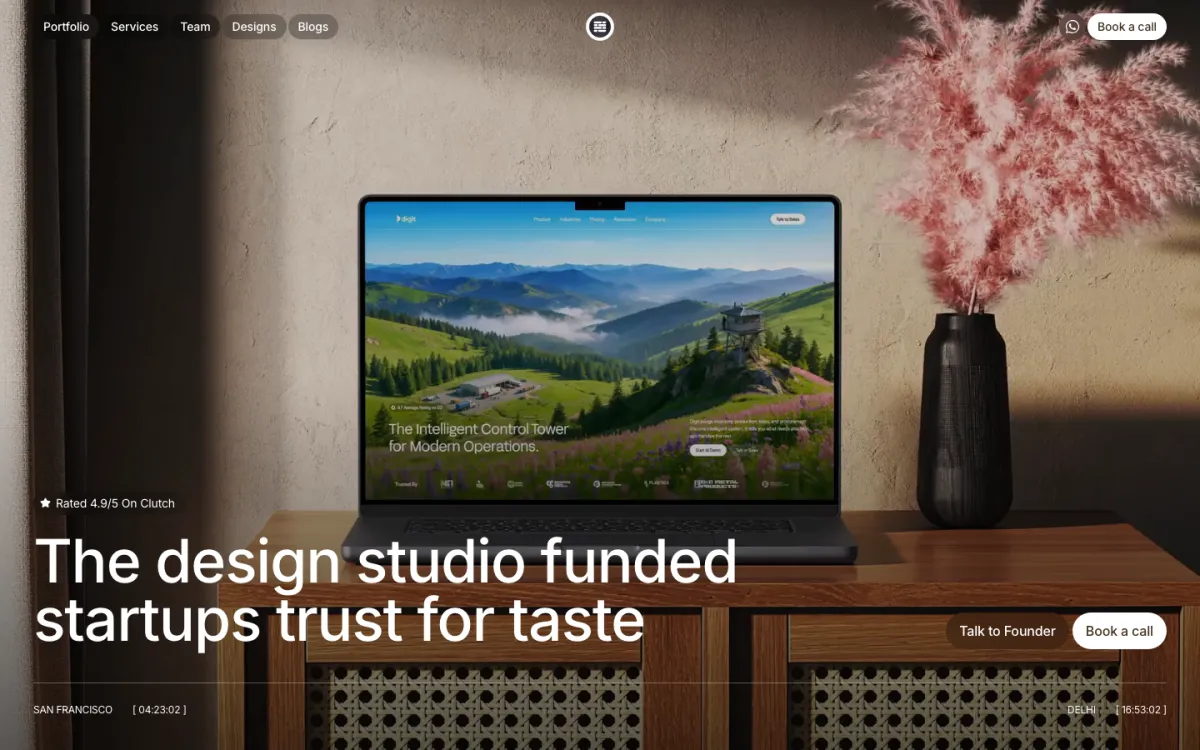
Bricx is the best products where the map is the primary surface and the design has to survive real density rather than a demo dataset of forty pins. Bricx has completed 50+ SaaS design projects across 30+ industries, with clients including Writesonic (YC S21), Collectwise (YC F24), Gigacatalyst (YC X26), Sybill, Camb.ai, LTV.ai, Instadapp, Hobbes and AT Kearney. The agency holds 27 verified reviews on Clutch at an average of 5.0/5.
Bricx works exclusively with B2B and AI SaaS companies, from seed stage through Series C, covering branding, website design, product UX/UI and end-to-end development. Engagements start at $25,000. Bricx works only on B2B and AI SaaS products, from seed through Series C, with design and development in the same team. On a map product that pairing matters, because the clustering and fetching decisions that make the interface usable get written in code, not drawn in a file.
Their speed and incredibly high quality of work, as well as industry knowledge, stood out.
- Starting price
- $25,000+
- Engagement model
- Fixed-scope projects and monthly retainers
- Timeline
- First delivery within the first week; full scope varies by project
- Clutch
- 5.0/5, 27 reviews
- Hourly rate
- $50 - $99
- Best for
- products where the map is the primary surface and the design has to hold up at real density.
- Not a fit for
- consumer navigation apps, custom cartography, geospatial data engineering, or budgets under $25,000.
Alty
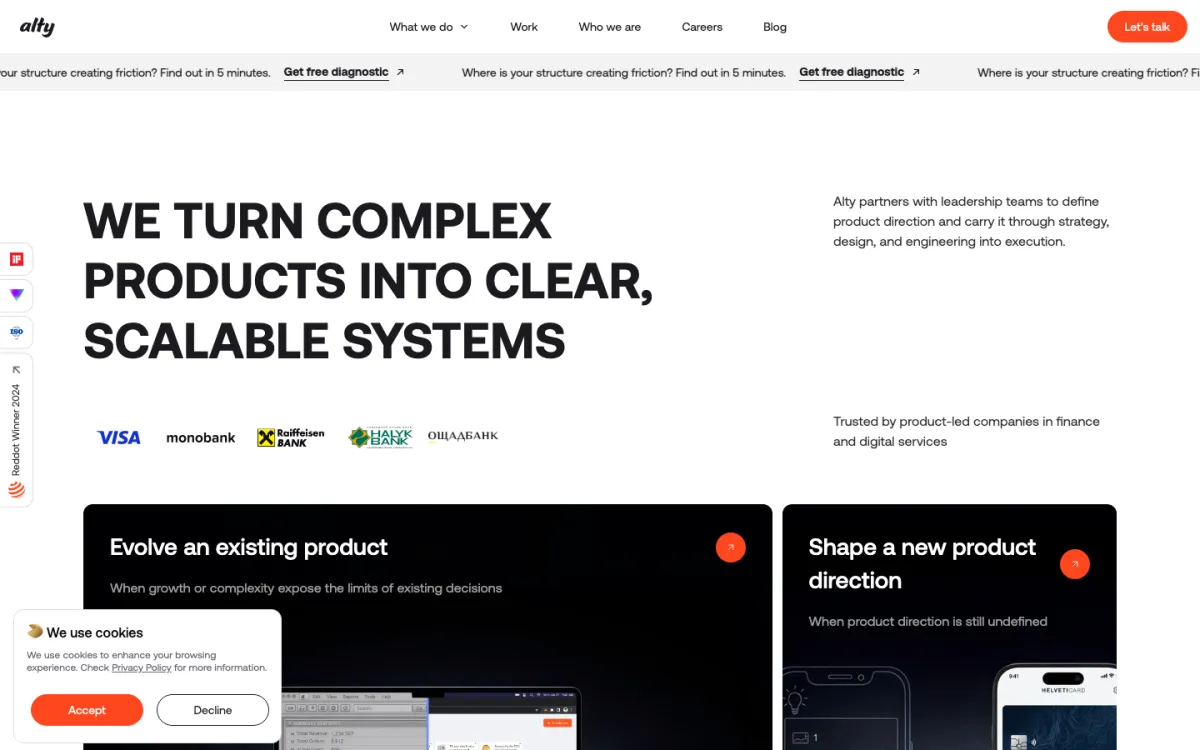
Alty's mix is unusual for this page: 40% UX/UI and 20% product design sitting directly beside 30% custom software development, with no marketing services at all. A map interface only becomes real when it renders, so a team that designs and writes the code can settle clustering and fetch behaviour in the same week rather than across a handover. It has worked this way from Cascais since 2009.
Financial services is 80% of its book and the published work is bank apps and a financial institution's iOS and Android redesign, none of it spatial. Nothing here shows a product where geography is the primary axis, so the density problems arrive as new ground on a client's budget.
- Starting price
- $25,000+
- Engagement model
- Project and retainer
- Clutch
- 5.0/5, 19 reviews
- Hourly rate
- $50 - $99
- Team size
- 50 - 249 people
- Best for
- settling map behaviour in code while the design is still moving.
- Not a fit for
- teams wanting proven map experience, or budgets under $25,000.
Anadea
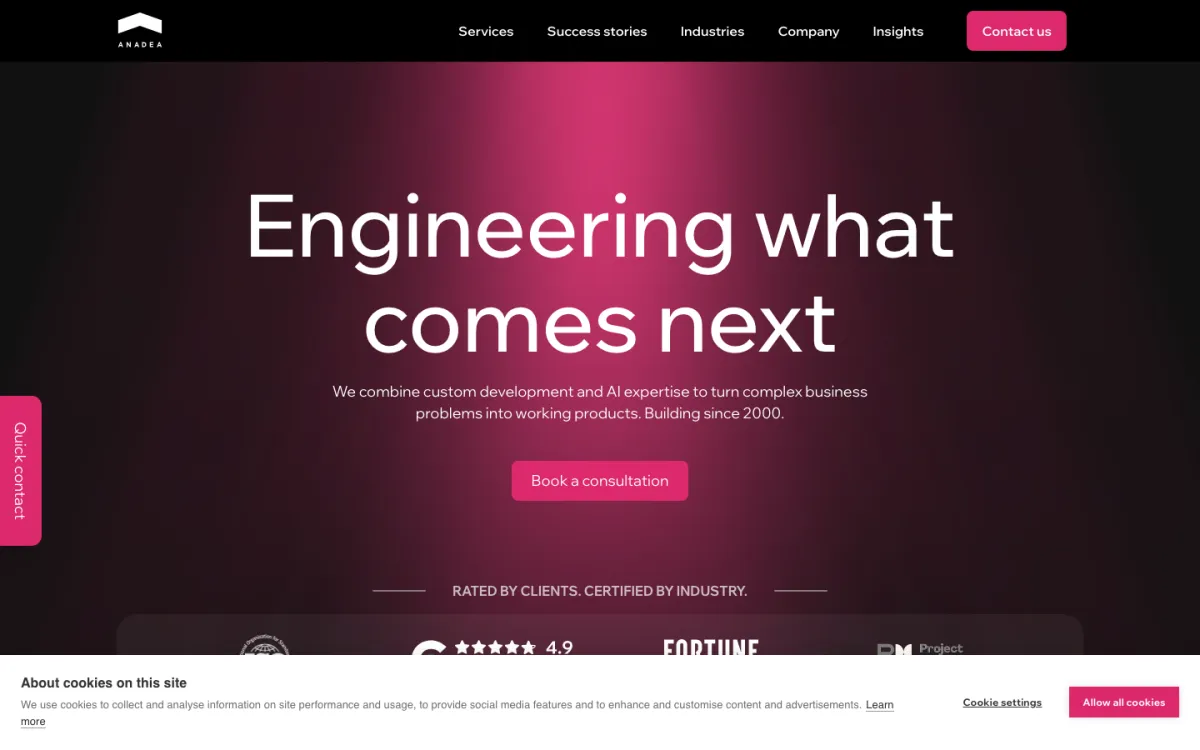
Anadea takes 20% of its work from real estate, the one category on this page that is map-native by default, since property search is a map product before it is anything else. A second review describes designing a policy think tank's toolbox so users could filter a large set by area, which is the filtering-and-viewport problem in non-spatial clothing.
Design is not a named service. Its mix is led by AI development at 15% with custom software and eCommerce development behind it, so the visual and interaction decisions a map lives on would come from elsewhere. Running since 2000 at $25 to $49 an hour, 55% of its clients are under $10M.
- Starting price
- $10,000+
- Engagement model
- Project and retainer
- Clutch
- 4.8/5, 35 reviews
- Hourly rate
- $25 - $49
- Team size
- 50 - 249 people
- Best for
- building a location-heavy platform where the design comes from elsewhere.
- Not a fit for
- owning the interface design of the map, or budgets under $25,000.
Andersen Inc.
Andersen is the only firm on this page that sells IT managed services, 15% of its mix, alongside development. A map product's real expenses are operational rather than one-off, since tile requests, geocoding quotas and spatial index rebuilds keep billing after launch and somebody has to own them. It has 1,000 to 9,999 people, 129 Clutch reviews, and a real estate rewards platform on its record.
Its work arrives as outstaffing in two of three published reviews, which is a different arrangement from asking an agency to own how a map behaves. No design service is named at all, and its industries are financial services and medical at 20% each, so the spatial thinking would have to come from the client.
- Starting price
- $50,000+
- Engagement model
- Project and retainer
- Clutch
- 4.9/5, 129 reviews
- Hourly rate
- $50 - $99
- Team size
- 1,000 - 9,999 people
- Best for
- long-run operation of a data-heavy map platform.
- Not a fit for
- owning the spatial design decisions, or budgets under $25,000.
Apadmi
Apadmi is 60% mobile app development with another 10% in AR and VR, and takes 15% of its work from hospitality and leisure and another 15% from retail. Those are the categories where a map is the product: finding the nearest venue, the nearest store, the thing that is open now. The AR line matters too, since camera-and-position interfaces are the same family of problem.
The $100,000 minimum is the highest here and buys a 250 to 999 person organisation, which is more than a single map surface needs. Its published apps are a news subscription, a pizza order flow and a telecoms storefront, none of which put a map at the centre, so the density work is unproven.
- Starting price
- $100,000+
- Engagement model
- Project and retainer
- Clutch
- 4.8/5, 29 reviews
- Hourly rate
- $100 - $149
- Team size
- 250 - 999 people
- Best for
- consumer mobile products where finding the nearest thing is the job.
- Not a fit for
- dense operational map interfaces, or budgets under $25,000.
Appinventiv

Appinventiv's home services engagement is the exact architecture a map product takes: consumer apps on iOS and Android in the field, plus a web platform for internal operations behind them. That pairing is dispatch, and it is where map design usually fails, because the operator's console and the field app have to describe the same moving world without contradicting each other.
At 4.6 across 90 reviews it has the lowest rating here, and design is not a named service: AI development and mobile app development take 40% each. Medical at 25% leads its industries, and a 1,000 to 9,999 person firm at a $50,000 minimum is buying scale rather than a map specialist.
- Starting price
- $50,000+
- Engagement model
- Project and retainer
- Clutch
- 4.6/5, 90 reviews
- Hourly rate
- $25 - $49
- Team size
- 1,000 - 9,999 people
- Best for
- the two-sided build where a field app and an operations console ship together.
- Not a fit for
- design leadership on the map itself, or budgets under $25,000.
Attract Group
Attract Group splits its work exactly in half between mobile app development and web development, which is the shape a map product needs, because the same spatial data has to work on a phone held outdoors and on a desktop console with a keyboard. Few firms here carry both at equal weight, and it does so from Amsterdam at $25 to $49 an hour.
Neither half is design. There is no UX or UI line in its services at all, and its reviews describe outstaffing, a backend refactor and a CI/CD improvement, so the decisions about clustering and zoom behaviour would have to arrive fully formed. Medical is 40% of its book, with retail and eCommerce filling the rest.
- Starting price
- $25,000+
- Engagement model
- Project and retainer
- Clutch
- 5.0/5, 39 reviews
- Hourly rate
- $25 - $49
- Team size
- 50 - 249 people
- Best for
- building one spatial product across a field app and a web console.
- Not a fit for
- deciding how the map should behave, or budgets under $25,000.
Awsmd
Awsmd's split of 50% mobile app development and 40% web development covers both runtimes a map product ships into, and one of its reviews describes a site built with 3D elements. Vector map rendering sits in the same family as that work: the browser is drawing geometry every frame rather than laying out boxes, and teams who have not done it underestimate the difference.
That is an inference from adjacent work, not a map credential. Its four named industries sit at 25% each across consumer products, financial services, medical and eCommerce, with nothing logistics, property or field-service shaped, and no design service beyond what sits inside its development lines.
- Starting price
- $10,000+
- Engagement model
- Project and retainer
- Clutch
- 4.8/5, 41 reviews
- Hourly rate
- $50 - $99
- Team size
- 250 - 999 people
- Best for
- graphics-heavy front ends across web and mobile at real headcount.
- Not a fit for
- documented map or logistics experience, or budgets under $25,000.
Binariks
Binariks is the only firm on this page selling BI and big data consulting, 15% of its mix alongside 30% AI development. A map is a query problem before it is a picture, since every pan issues a bounding box against an index and the interface is only as responsive as that round trip. Its reviews include building a cloud integration engine to connect a decision support system.
None of that is interface work. Medical is 50% of its book and insurance 30%, neither of them map-led, and one review describes submitting candidates for the client to vet, which is staffing rather than ownership. A team wanting the map designed will be buying the layer underneath it here.
- Starting price
- $10,000+
- Engagement model
- Project and retainer
- Clutch
- 4.9/5, 66 reviews
- Hourly rate
- $50 - $99
- Team size
- 50 - 249 people
- Best for
- the spatial data pipeline a fast map depends on.
- Not a fit for
- designing the map interface itself, or budgets under $25,000.
Bird Marketing
Bird Marketing built and designed a website for a real estate company, integrating Salesforce and running QA alongside an SEO specialist, and property is the one category where a map interface almost always sits behind a set of indexable location pages. That public half is a search problem rather than a rendering problem, and it is the half most map teams neglect until the listings stop being found.
Its listed service is search engine optimisation at 100%, with nothing else, so the map itself is entirely outside what this London firm sells. Its industries are automotive, beauty, construction and dental, and its other reviews are Google Ads management and recruitment marketing. This is a channel partner, not a product design team.
- Starting price
- $5,000+
- Engagement model
- Project and retainer
- Clutch
- 5.0/5, 74 reviews
- Hourly rate
- $100 - $149
- Team size
- 10 - 49 people
- Best for
- the indexable location pages that surround a map product.
- Not a fit for
- designing or building the map, or budgets under $25,000.
How much does a map-based design engagement cost?
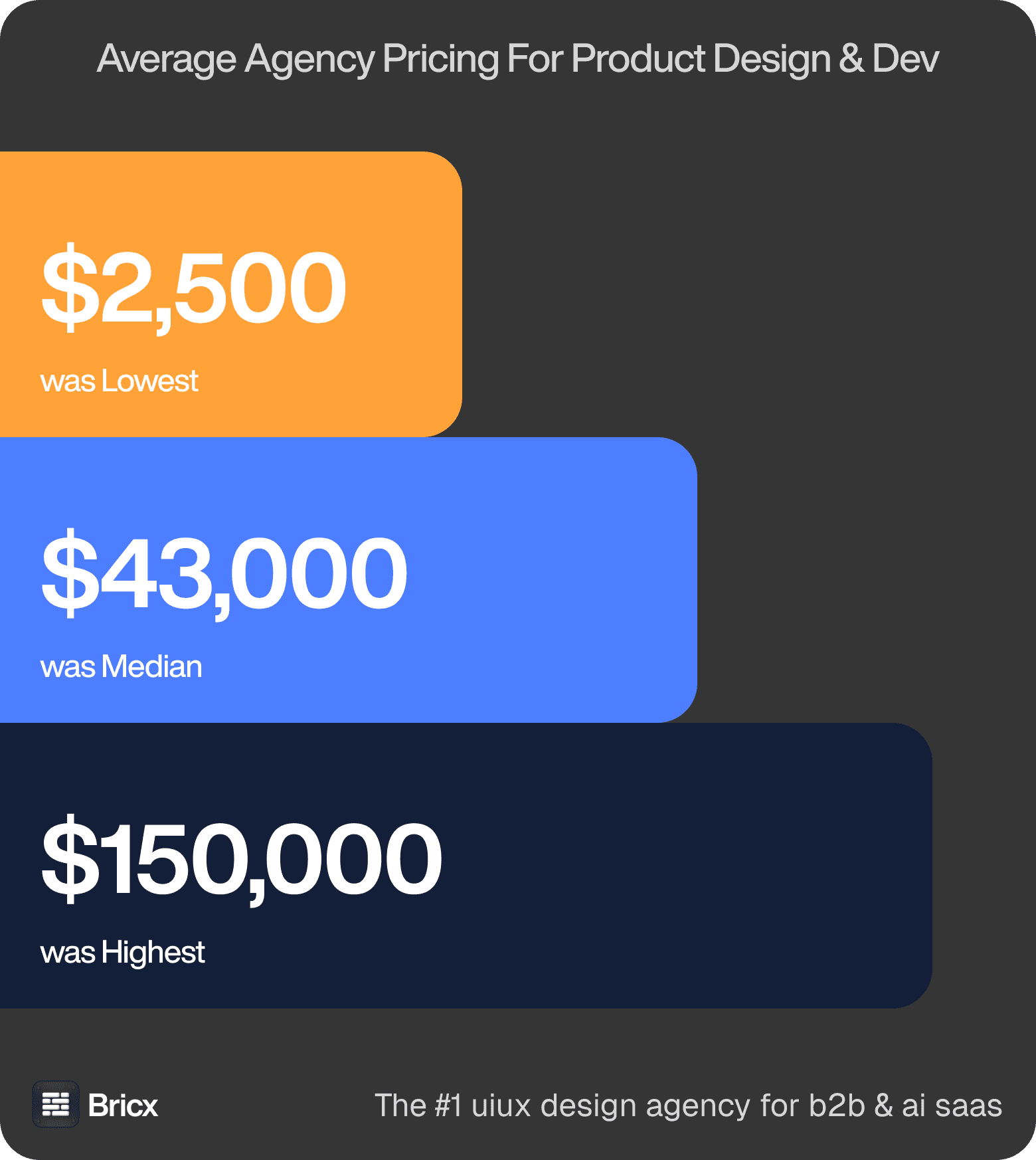
Cost, from the calls. Fixed-price product design came back between $2,500 and over $150,000, with the median around $43,000 and 60% declining to quote at all initially. Those figures cover product design across the whole benchmark, so treat them as the range a map-based interface is quoted inside rather than a price for it.
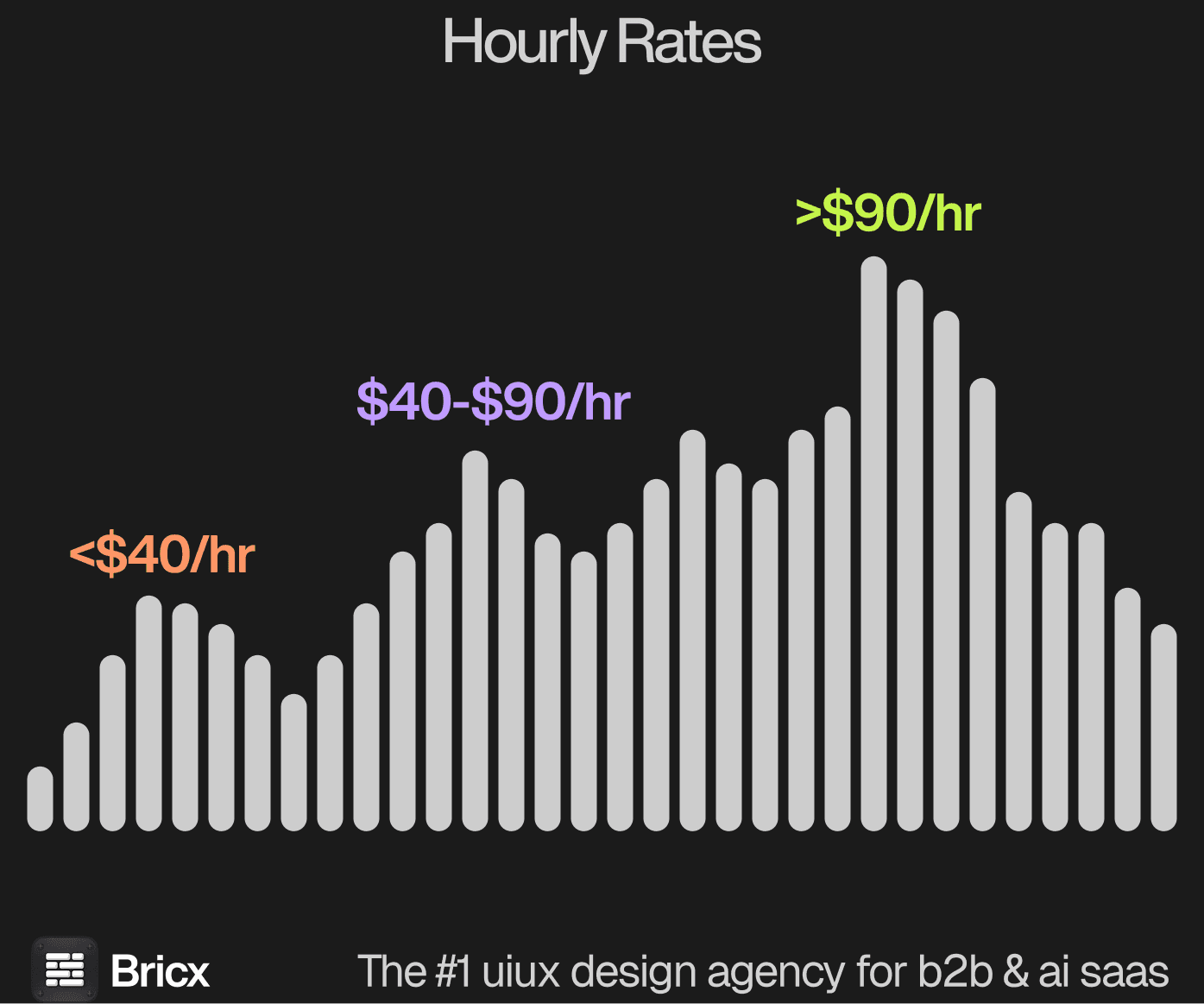
Hourly rates uncovered. $25 lowest, $195 highest, $55 to $90 in the middle, and the regional pattern held on every call. Map work runs above the benchmark median because the interface cannot be signed off from static screens, so the budget carries a working prototype fed by real records before anyone agrees what the map should look like.
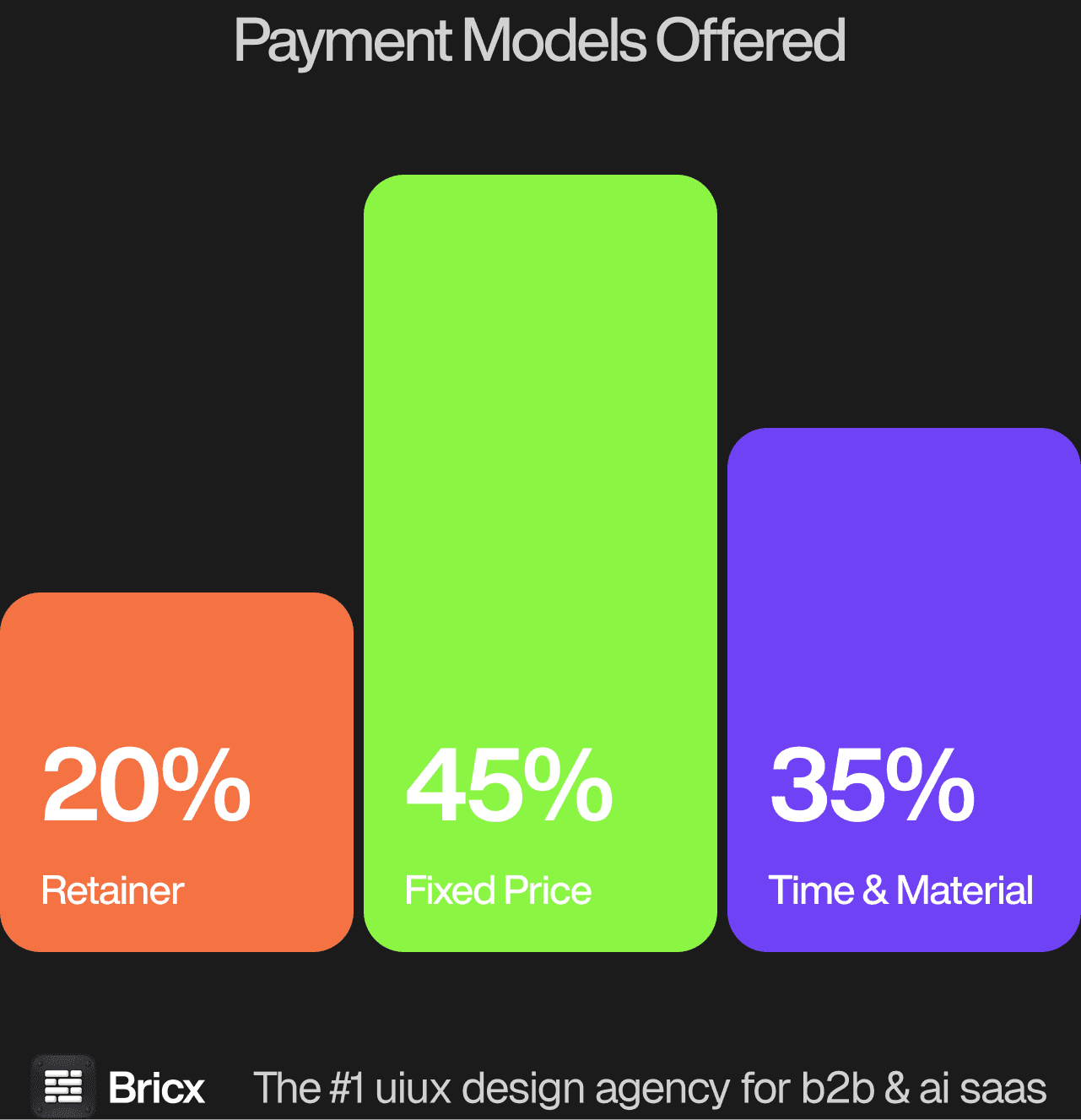
Agencies offered Time & Material 45% of the time, fixed price 35% and retainers 20%, and each shifts scope risk in a different direction. For a map-based interface the model usually matters more than the headline figure, because it decides what happens when the scope moves.
- Fixed price where the spec is settled.
- Time & Material where the spec is a hypothesis.
- Retainer where the spec is a backlog.
- Which one fits a map-based interface comes down to whether the scope is settled before the work starts.
How do you evaluate a map-based design agency?
Five things separate map-based design from ordinary interface design.
Ask what happens at ten thousand records. Clustering, heat rendering and plain truncation all look reasonable in a deck and produce completely different products, and the choice cannot be deferred to build.
Ask how the map and the list stay in agreement. Filtering in one pane and panning in the other are the same action to a user, and a product where the two disagree teaches people to trust neither.
Ask what each zoom level is for. A map that shows the same markers at every scale is a viewer rather than a tool, and the useful ones change what a pin means as you go in.
Ask what the map costs to load. Tiles and geocoding bill per request, so an interface that refetches on every drag turns a design decision into a monthly bill somebody has to defend.
Ask what the product does with no signal and no location permission. Map products get used outdoors by people whose phone has one bar, and the degraded state is the state most sessions actually run in.
What are the red flags when hiring a design agency?
- A long discovery phase with no shippable output. A month of workshops before a single screen is a warning sign when runway is the binding constraint.
- Rigid contracts with no exit. A year-long lock-in is a poor match for a roadmap that changes quarterly. Look for a break clause or a shorter initial term.
- A portfolio without outcomes. Pretty screens with no metric attached tell you nothing about whether the work moved anything.
- No pushback on your brief. Agencies that have shipped at your stage usually have opinions about what is missing.
- No answer on post-launch. Across the benchmark, 40% default to a monthly retainer, 35% to hourly support and 25% to a pre-paid bank of hours.
- No comparable example of a map-based interface. An agency that cannot point to work of the same shape is learning on your budget.
Should you hire a design agency or build in-house?
Use an agency while the work has edges: a launch, a rebuild, a first version. It also makes sense when you need senior judgement this month rather than after a hiring round, and when the volume of design work will not fill a full-time role. For a map-based interface specifically, the question worth settling first is how often the work recurs.
Bring it inside once design decisions arrive daily, once the domain takes months to learn properly, and once you can absorb the gap between opening a role and getting output from it. Where a map-based interface falls on that line is usually clear once you count how many times it will need doing again.
Map products usually need a specialist for weeks rather than a designer forever, because the hard decisions cluster around the first working prototype and then stop. Hiring a designer who has never shipped a map means paying for the learning curve twice, once in salary and once in the rebuild. Retaining an agency risks the opposite: a handsome map handed over with no explanation of why the clustering thresholds are what they are.
FAQs
What makes map-based design hard?
Density. Every decision that reads well with forty markers behaves differently with forty thousand, and the parts that break, clustering, fetching and the sync between map and list, are invisible in a static design file.
Should the map or the list be the primary view?
Whichever answers the user's actual question. People searching a known area want the map first, people comparing options want the list. Products that guess wrong make everyone toggle, and the toggle is where sessions end.
How much does a map-based interface cost?
Fixed-price product design across the benchmark ran $2,500 to over $150,000 with a median near $43,000, and map interfaces sit above that median because the prototype has to be built before the design can be approved. Bricx starts at $25,000.
Which mapping library should the design assume?
Decide it before design rather than after. Marker limits, clustering behaviour and styling control differ enough between libraries that a design drawn library-agnostic gets renegotiated during build, usually badly.