10 Best Android UX Design Agencies (2026)
The 10 best Android UX design agencies, compared on pricing, Clutch rating, engagement model and hourly rate, drawn from a documented benchmark of 57 agencies.
Aug 20, 202611 min read
Best Android UX design agencies
Android is not iOS with different corner radii. The device range runs from flagship to three-year-old budget hardware with a quarter of the memory, back navigation behaves differently, the platform has its own design language, and a meaningful share of your users are on screens and connections that nobody on your team tests with. Designing for Android well is mostly about designing for the low end honestly.
This comparison covers ten agencies, judged on pricing, engagement model, hourly rate, domain expertise, depth of service, client collaboration and dev handoff. Every agency here carries a verified Clutch profile, and the ratings below are taken from it. Each entry says what an agency is worth hiring for and where it is the wrong choice for Android UX.
How the ten agencies compare
| Agency | Best for | Starting price | Clutch rating | Not a fit for |
|---|---|---|---|---|
| Bricx | Android across the real device range | $25,000+ | 5.0/5, 27 reviews | Native Android engineering, games |
| Uptech | Fintech and medical product builds | $25,000+ | 4.9/5, 43 reviews | Proven Android device coverage |
| Tapptitude | Shipping iOS and Android together | $5,000+ | 4.9/5, 71 reviews | Native Android platform tuning |
| Purrweb | Design plus Android build | $5,000+ | 4.9/5, 44 reviews | Wide device testing before launch |
| GeekyAnts | Enterprise Android fleets at scale | $10,000+ | 4.8/5, 116 reviews | Platform-native Android craft |
| Stormotion | Android on devices and kiosks | $10,000+ | 5.0/5, 17 reviews | Standalone design engagements |
| Yalantis | Android on connected hardware | $50,000+ | 4.8/5, 79 reviews | Standalone interface design work |
| Konstant Infosolutions | High-volume Android delivery | $5,000+ | 4.9/5, 173 reviews | Design-led discovery |
| Topflight Apps | Wearables and regulated medical apps | $50,000+ | 4.9/5, 43 reviews | Documented low-end device work |
| Halo Lab | Brand and web around the app | $10,000+ | 4.9/5, 99 reviews | The Android app itself |
Best Android UX design agency: Bricx
Bricx is the best Android UX design agency for products whose users are on mid-range and older devices rather than flagships. Bricx has completed 50+ SaaS design projects across 30+ industries, with clients including Writesonic (YC S21), Collectwise (YC F24), Gigacatalyst (YC X26), Sybill, Camb.ai, LTV.ai, Instadapp, Hobbes and AT Kearney. The agency holds 27 verified reviews on Clutch at an average of 5.0/5.
Bricx works exclusively with B2B and AI SaaS companies, from seed stage through Series C, covering branding, website design, product UX/UI and end-to-end development. Engagements start at $25,000. Bricx designs against the device range that actually appears in the analytics rather than the one in the design file, which usually means the constraint is memory and screen size rather than aesthetics.
A whole new user interface was designed in 30 days. Then they were very responsive with iterations.
- Starting price
- $25,000+
- Engagement model
- Fixed-scope projects and monthly retainers
- Timeline
- First delivery within the first week; full scope varies by project
- Clutch
- 5.0/5, 27 reviews
- Hourly rate
- $50 - $99
- Best for
- companies designing Android products for a wide device range.
- Not a fit for
- native Android engineering, game development, or budgets under $25,000.
Uptech
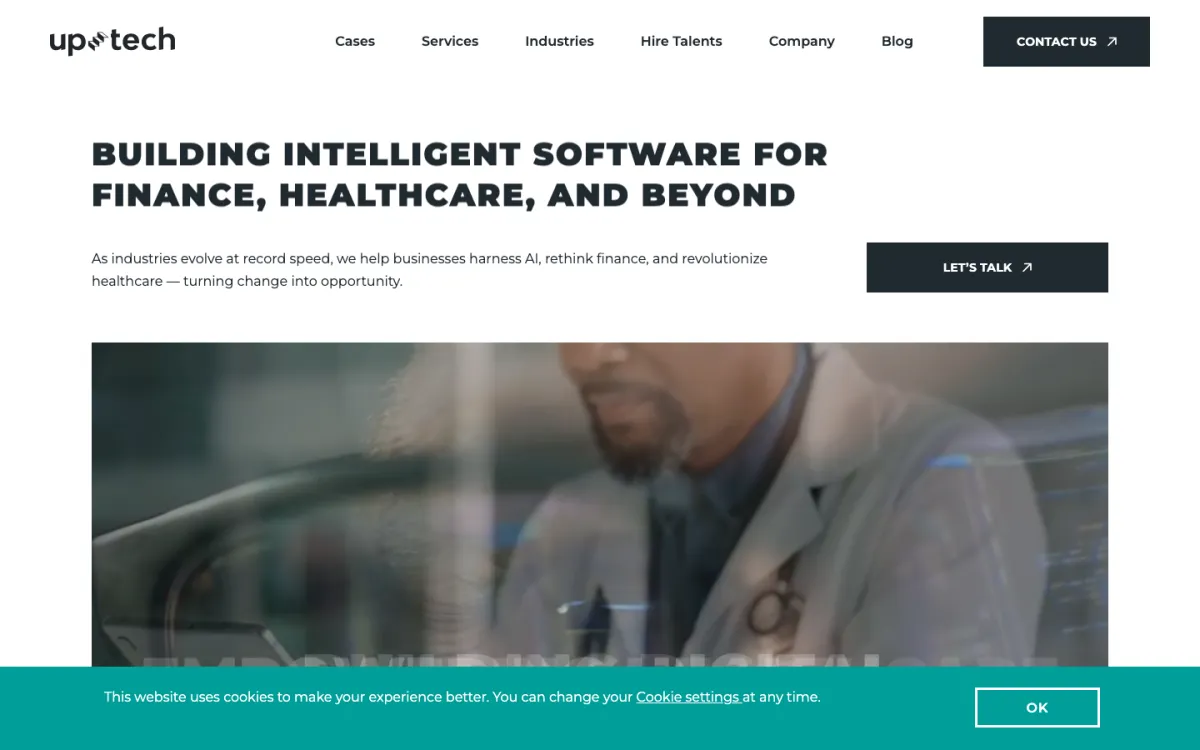
Uptech puts 30% of its work into financial services and another 30% into medical, two categories where an Android build has to stay usable on hardware the owner cannot afford to replace mid-contract. It has run from Kyiv since 2016 at $25 to $49 an hour, and its reviews describe building a medical visualisation platform from scratch, including custom components rather than screen decoration.
The mobile work named in its reviews is iOS, and its service mix leads with custom software development at 30% and AI development at 20% rather than design. Nothing on the public record shows the Android device range being handled deliberately, so that judgement has to be bought in or built during the project.
- Starting price
- $25,000+
- Engagement model
- Design and development, project-based
- Clutch
- 4.9/5, 43 reviews
- Hourly rate
- $25 - $49
- Team size
- 50 - 249 people
- Best for
- regulated finance and healthcare products that need engineering alongside design.
- Not a fit for
- teams wanting a documented Android track record, or budgets under $25,000.
Tapptitude
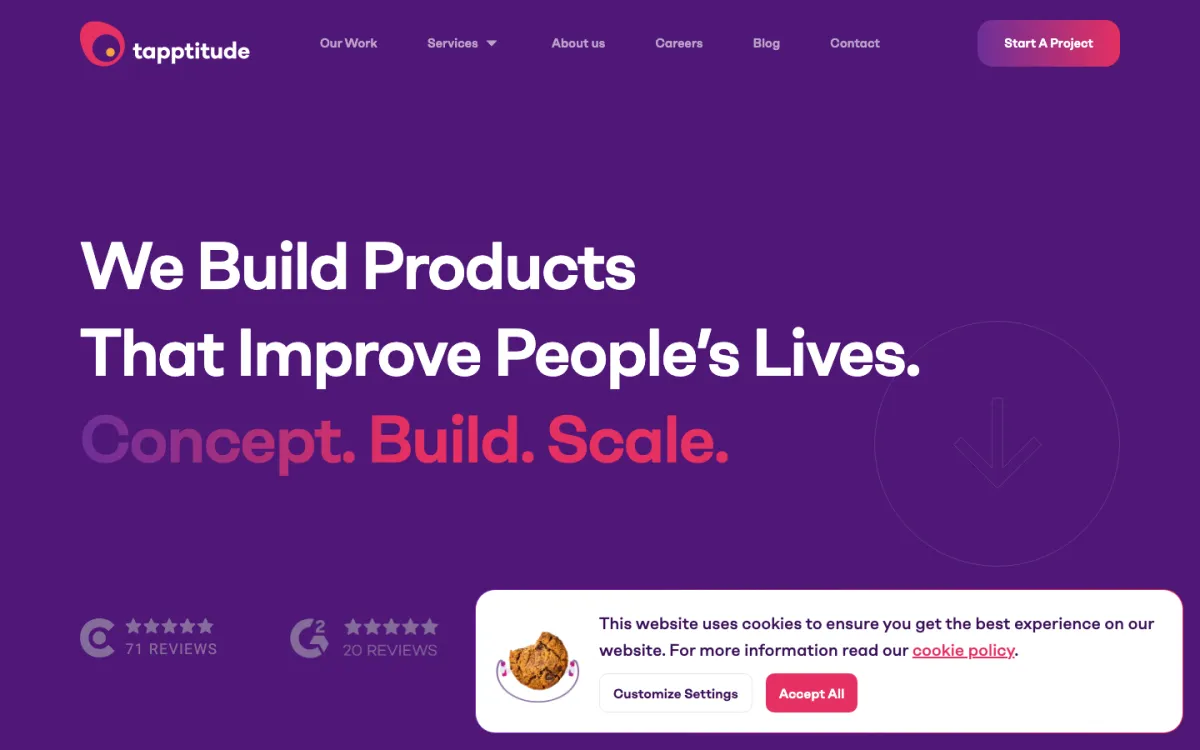
Tapptitude puts 50% of its work into mobile app development and is one of the few here publishing case studies shipped for iOS and Android together, in food delivery and lifestyle. Its reviews describe a taxi dispatch app built for drivers, riders and admins at once, which is the honest Android case: a driver's phone is a work tool chosen on price.
The published stack leans cross-platform, Flutter and React Native, so Android tends to inherit a shared codebase rather than native back behaviour and platform conventions. At $25 to $49 an hour from Cluj-Napoca with a $5,000 floor, the model is throughput across both stores rather than tuning for one.
- Starting price
- $5,000+
- Engagement model
- Project-based
- Clutch
- 4.9/5, 71 reviews
- Hourly rate
- $25 - $49
- Team size
- 50 - 249 people
- Best for
- consumer and marketplace apps that have to launch on both stores at once.
- Not a fit for
- native Android platform work, or budgets under $25,000.
Purrweb
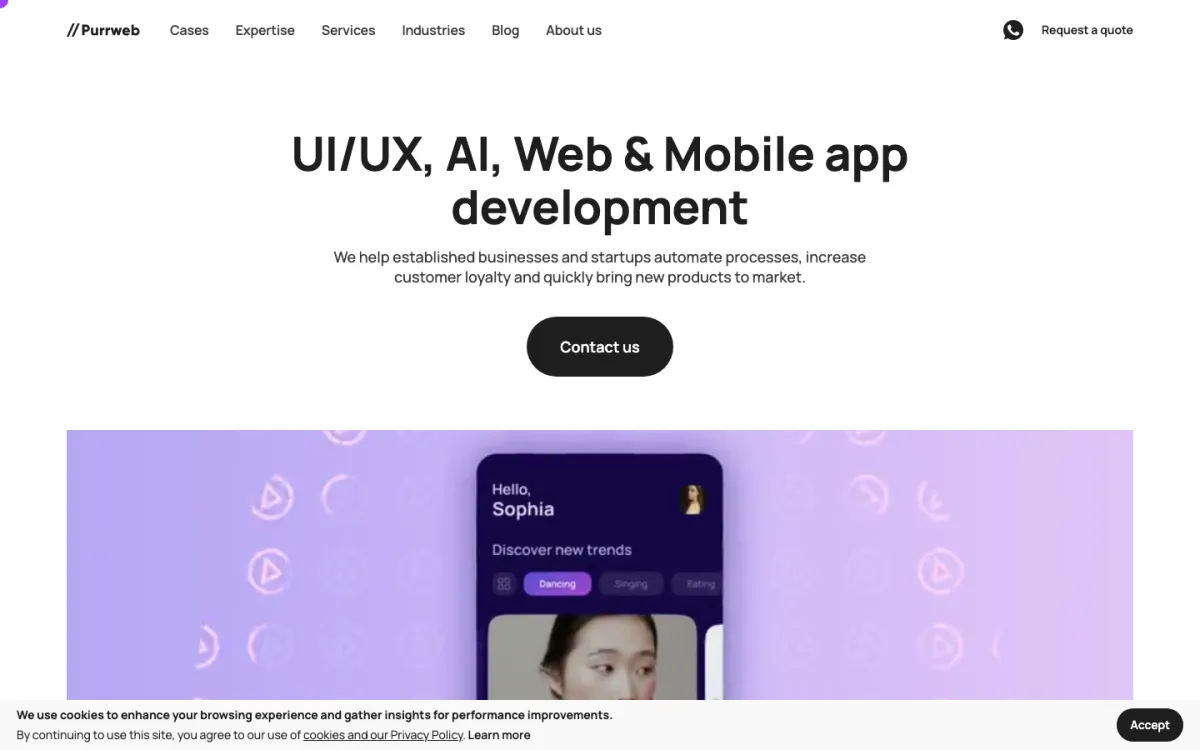
Purrweb splits itself evenly, 45% mobile app development and 45% UX/UI design, so the person choosing the Android layout sits beside the person implementing it. Financial services is half its client base. Its reviews describe a retail app taken through user research, personas, wireframing and prototyping, which is the sequence that surfaces how people hold a cheap phone one-handed.
The stated aim is an MVP inside three months, and every client on its record is a small business under $10M. A three-month first release rarely leaves room for testing across a wide device range, so the older and slower hardware gets discovered after launch rather than before it.
- Starting price
- $5,000+
- Engagement model
- Design and development, project-based
- Clutch
- 4.9/5, 44 reviews
- Hourly rate
- $25 - $49
- Team size
- 50 - 249 people
- Best for
- funded startups shipping a first Android release quickly with design attached.
- Not a fit for
- products needing broad device coverage proven pre-launch, or budgets under $25,000.
GeekyAnts
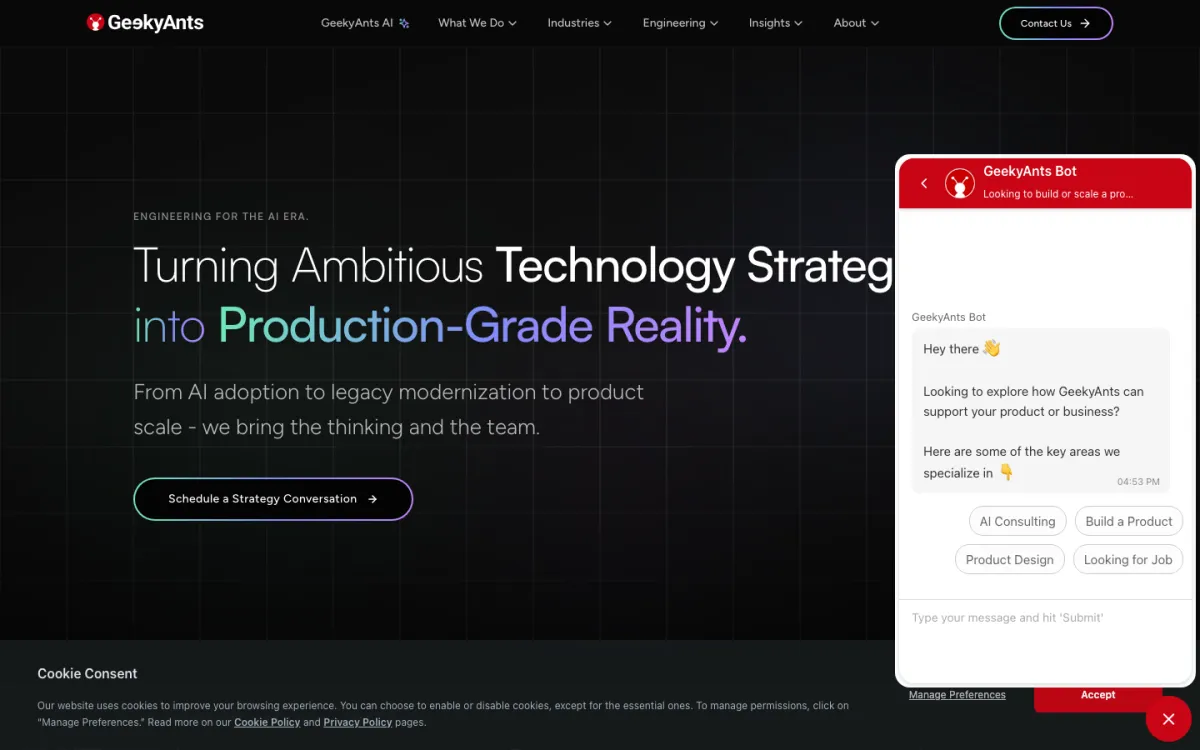
GeekyAnts is the biggest team on this page, 250 to 999 people running from Bengaluru since 2006, and 60% of its clients are enterprises above a billion dollars. Enterprise Android is where the device spread is widest, because the fleet is whatever staff already carry. Its reviews describe rebuilding a home energy provider's web app in React Native to reach one shared codebase.
That single-codebase instinct is the thing to press on, since a shared layer is exactly what flattens Android's back stack and platform conventions. Mobile development is 30% of the mix, with AI, custom software and web taking the rest, so an Android brief is a slice of what it sells.
- Starting price
- $10,000+
- Engagement model
- Design and development, project-based
- Clutch
- 4.8/5, 116 reviews
- Hourly rate
- $25 - $49
- Team size
- 250 - 999 people
- Best for
- enterprise rollouts across a mixed and uncontrolled device fleet.
- Not a fit for
- platform-native Android craft, or budgets under $25,000.
Stormotion
Stormotion is the only agency here whose reviews name Android work directly: an Android kiosk application for an electric vehicle charging network, plus the iOS and Android charging apps beside it. Kiosk Android is the unglamorous end of the platform, cheap hardware left powered on for years. It also integrated Google Fit and wearable devices on a React Native fitness product.
UX/UI design is only 10% of its mix against 45% mobile development, so design arrives inside a build rather than as its own engagement. At 10 to 49 people in Tallinn charging $50 to $99 an hour, and 17 Clutch reviews, it is the highest rate and thinnest public record on this page.
- Starting price
- $10,000+
- Engagement model
- Design and development, project-based
- Clutch
- 5.0/5, 17 reviews
- Hourly rate
- $50 - $99
- Team size
- 10 - 49 people
- Best for
- Android running on hardware you ship, from kiosks to wearables.
- Not a fit for
- design-only engagements, or budgets under $25,000.
Yalantis
Yalantis is 60% IoT development, with automotive, manufacturing and supply chain each at 15%. That is the part of Android nobody markets: handsets and head units running in vehicles, warehouses and on plant floors, chosen by a procurement team years ago and replaced slowly. Its reviews describe embedded software for packaging machinery and seven years of work on one health platform.
Design is not a listed service line at all, and the $50,000 minimum is the highest floor on this page. For a company that wants an Android interface designed rather than an Android device programme delivered, most of what Yalantis is built to sell will go unused.
- Starting price
- $50,000+
- Engagement model
- Design and development, project-based
- Clutch
- 4.8/5, 79 reviews
- Hourly rate
- $50 - $99
- Team size
- 250 - 999 people
- Best for
- Android interfaces attached to vehicles, machinery or connected devices.
- Not a fit for
- pure interface design engagements, or budgets under $25,000.
Konstant Infosolutions
Konstant Infosolutions has the deepest public record here, 173 Clutch reviews at 4.9, and 60% of what it does is mobile app development, running from Jaipur since 2003. eCommerce is its largest industry at 25%, which on Android means shopping done on mid-range phones and patchy connections. Its reviews describe a food delivery platform where the courier app is the product.
UX/UI design is 10% of the mix, the smallest line it sells, so this is a build shop with design attached rather than a design team with engineers. At $25 to $49 an hour with a $5,000 floor, the rate suits a specified Android scope and works badly for an open question about how the product should behave.
- Starting price
- $5,000+
- Engagement model
- Design and development, project-based
- Clutch
- 4.9/5, 173 reviews
- Hourly rate
- $25 - $49
- Team size
- 250 - 999 people
- Best for
- a well-specified Android build delivered cheaply at volume.
- Not a fit for
- design-led discovery work, or budgets under $25,000.
Topflight Apps
Topflight Apps puts 15% of its mix into wearable app development alongside 30% mobile, and a wearable is the Android hardware spread at its most extreme: every maker ships a different screen, chipset and battery ceiling. Its medical work carries the same discipline, including a HIPAA compliant EMR system and an LLM augmented pair of apps built separately for patients and for physicians.
What the record does not show is a single project described in terms of device range, memory or performance on older hardware, which is the question this page turns on. The floor is $50,000 at $100 to $149 an hour, so a build aimed at budget hardware is not the engagement it is set up for.
- Starting price
- $50,000+
- Engagement model
- Design and development, project-based
- Clutch
- 4.9/5, 43 reviews
- Hourly rate
- $100 - $149
- Team size
- 10 - 49 people
- Best for
- medical and wearable products where hardware variation is already the brief.
- Not a fit for
- teams who need proven testing on older Android devices, or budgets under $25,000.
Halo Lab
Halo Lab is the odd one out on an Android page: no mobile app development appears in its service mix at all, which leads with web design at 20%, AI development and web development at 15% each, and branding at 10%. What it brings is the surface an Android product is judged against before download, the store page, the marketing site and the identity the app inherits.
Its reviews are web work throughout, a phlebotomy provider's site, a travel brand identity, a Webflow build for an estate agency with interactive maps. None of that tests on a budget handset. For the app itself, at $25 to $49 an hour from Dubai, the visual system is the deliverable and the platform behaviour is not.
- Starting price
- $10,000+
- Engagement model
- Project and retainer
- Clutch
- 4.9/5, 99 reviews
- Hourly rate
- $25 - $49
- Team size
- 50 - 249 people
- Best for
- the brand, store presence and marketing site an Android launch sits inside.
- Not a fit for
- designing the Android application itself, or budgets under $25,000.
How much does an Android design engagement cost?
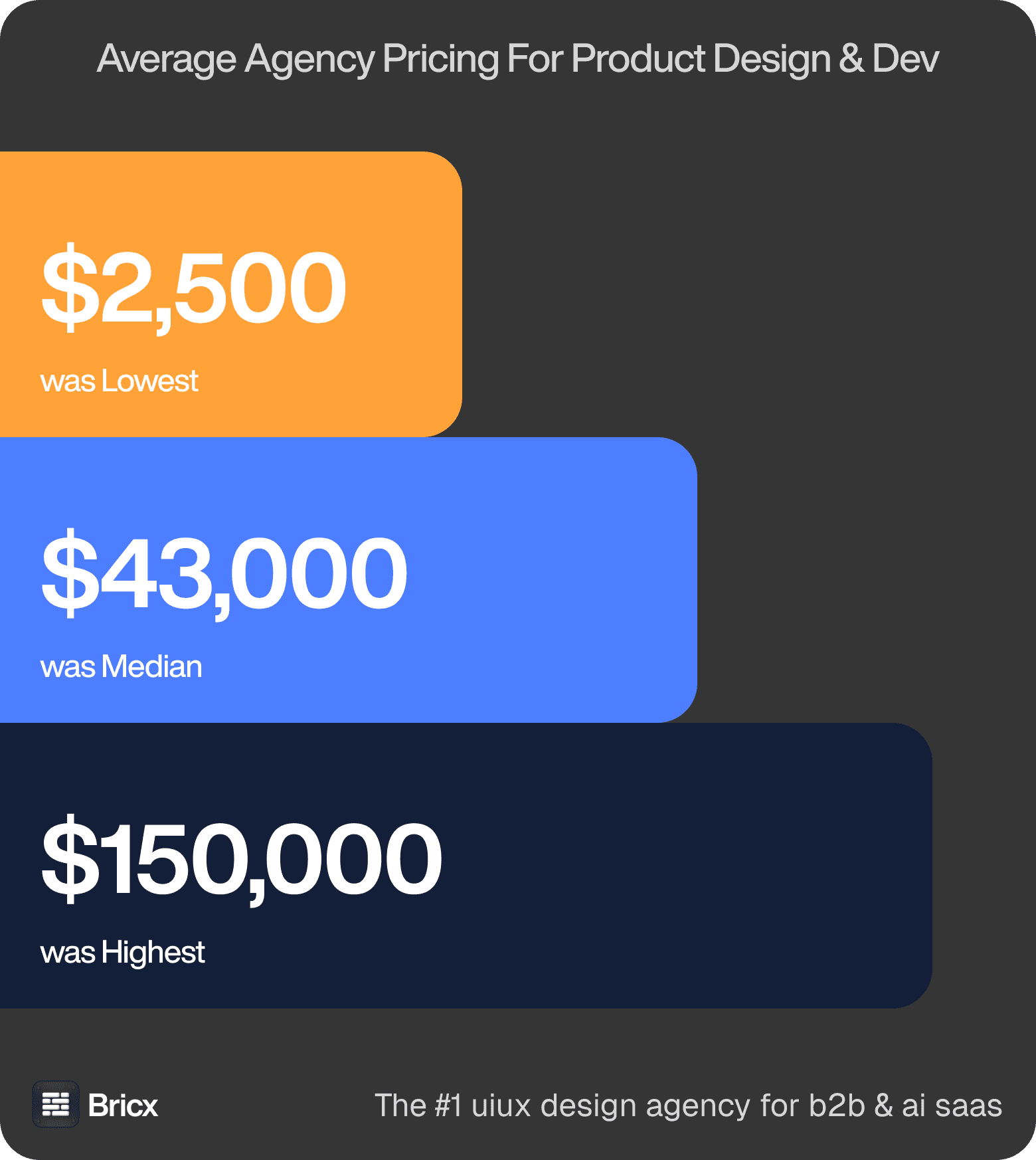
Fixed-price range. Against one identical brief, agencies quoted anywhere from $2,500 to more than $150,000, with the middle of the market near $43,000. The spread is a scoping story more than a pricing one. Those figures cover product design across the whole benchmark, so treat them as the range Android UX is quoted inside rather than a price for it.
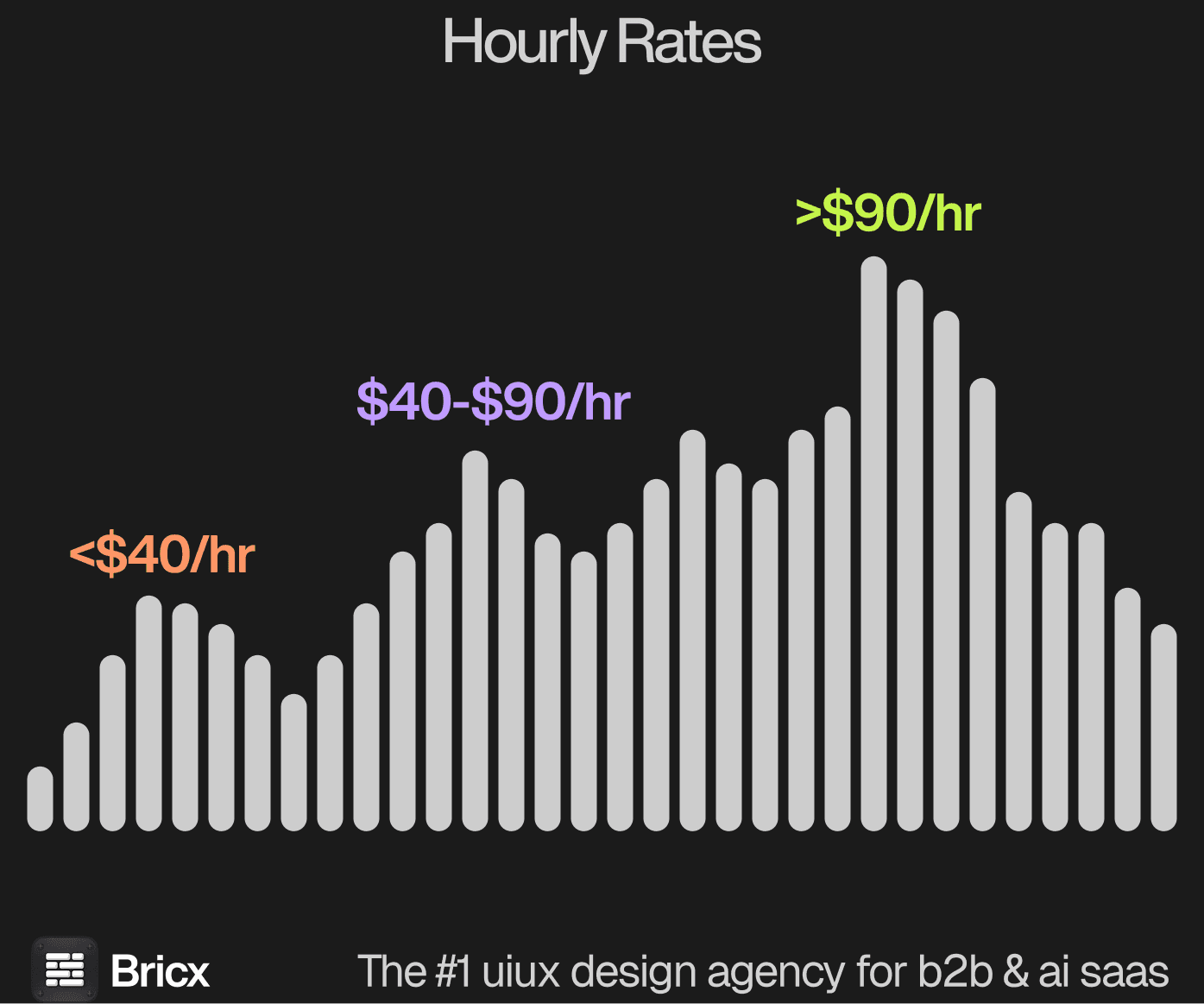
By the hour. Quotes ranged $25 to $195, median $55 to $90. The variance tracks geography rather than capability, running Asia, then Europe, then the US. Android work sits around the median, with cost driven by device and version fragmentation rather than screen count.
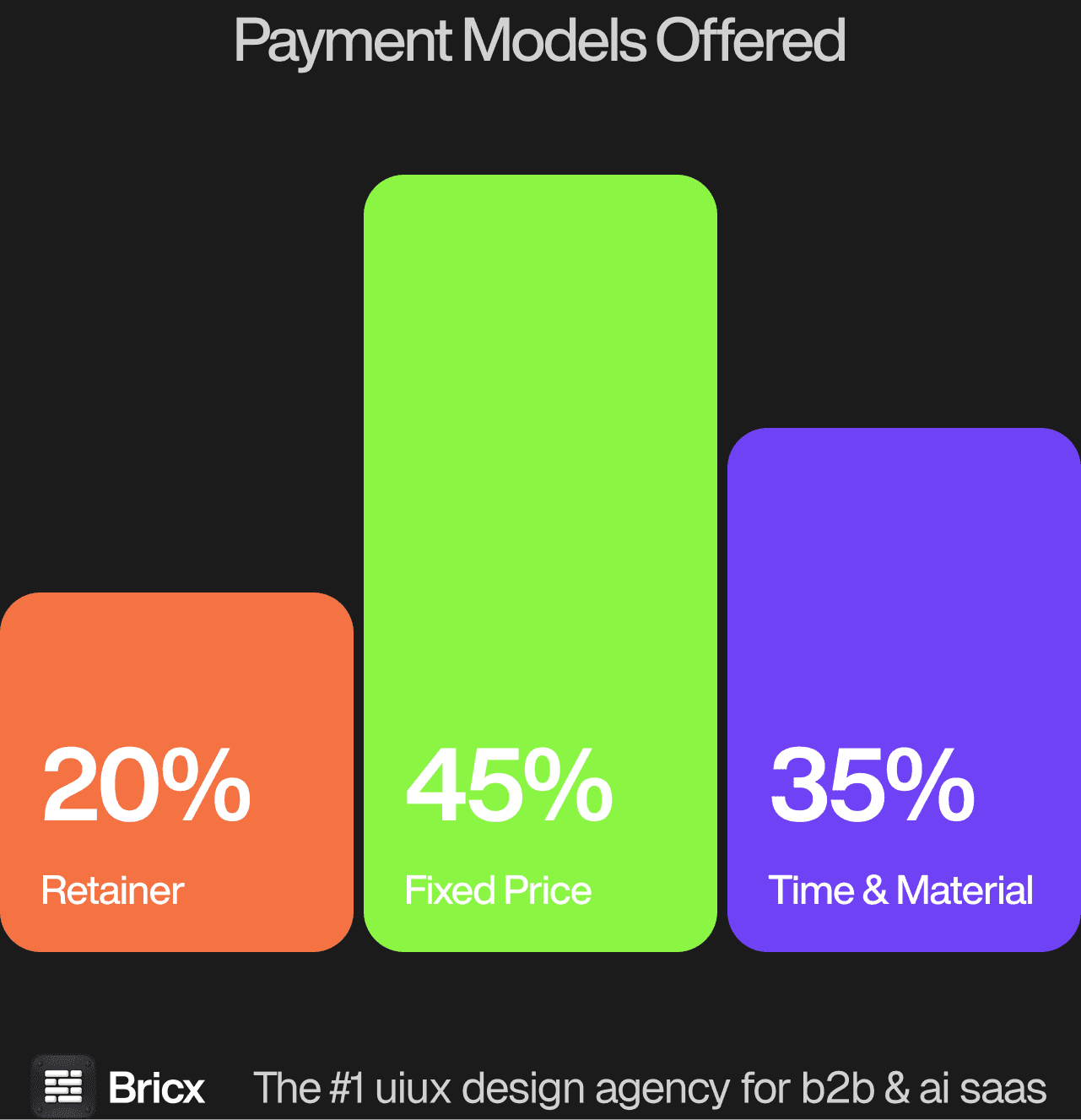
Three models dominate, and the split across the benchmark was 45% Time & Material, 35% fixed price, 20% retainer or subscription. For Android UX the model usually matters more than the headline figure, because it decides what happens when the scope moves.
- Fixed price works when the scope is defined and unlikely to move.
- Time & Material works when you are still learning what the product needs.
- Retainer works when design demand is steady and continuous.
- Which one fits Android UX comes down to whether the scope is settled before the work starts.
How do you evaluate an Android UX design agency?
Five things separate Android design from a ported iOS app.
Ask which devices they design for. The honest answer references your analytics. A flagship-only mockup hides most of the real problems.
Ask about back navigation. System back, gesture navigation and in-app hierarchy interact in ways that break naive ports.
Ask about the platform design language. Users notice when an app ignores platform conventions, and it reads as an afterthought.
Ask about performance on mid-range hardware. Animation and image handling that are free on a flagship are not on a three-year-old device.
Ask about fragmentation. Screen sizes, OS versions and manufacturer skins all vary, and the design has to degrade rather than assume.
What are the red flags when hiring a design agency?
- A quote that arrives without questions. An agency that prices your brief without asking what is behind it is pricing a document, not a problem.
- Process presented as proof. A named methodology in a deck is not evidence. Ask what it produced and when.
- Designers you never meet. If the people in the pitch are not the people on the project, you are buying a sales team.
- Deliverables described in nouns, not outcomes. "Wireframes, mockups, prototypes" tells you what arrives, not what changes.
- Silence about maintenance. Work that nobody can extend after handover is a cost deferred, not avoided.
- No comparable example of Android UX. An agency that cannot point to work of the same shape is learning on your budget.
Should you hire an app design agency or build in-house?
Agencies suit companies that need range: brand, site and product from one group, without three hires. For Android UX specifically, the question worth settling first is how often the work recurs.
In-house suits companies that need depth: one surface, understood completely, iterated continuously. Most teams need range first and depth later. Where Android UX falls on that line is usually clear once you count how many times it will need doing again.
Android is the case where testing hardware matters more than headcount. Whoever does the work needs real mid-range devices, and plenty of teams and agencies alike test exclusively on the newest phone somebody happens to own.
FAQs
How is Android design different from iOS?
Device fragmentation, different navigation conventions, its own design language, and a user base skewed toward mid-range hardware that most teams never test on.
How much does Android app design cost?
Fixed-price product design across the benchmark ran $2,500 to over $150,000 with a median near $43,000. Android work sits around that median. Bricx starts at $25,000.
Should Android and iOS apps look identical?
Not exactly. Shared brand and structure, platform-appropriate navigation and controls. Users notice conventions being ignored even when they cannot name what is wrong.
Which devices should be tested?
The ones in your analytics, which usually skew older and cheaper than any team expects. Designing only for the newest hardware hides most real problems.