10 Best Accessibility Design Agencies (2026)
The 10 best accessibility design agencies, compared on pricing, Clutch rating, engagement model and hourly rate, drawn from a documented benchmark of 57 agencies.
Aug 20, 202611 min read
Best accessibility design agencies
Accessibility stopped being a values question and became a procurement one. Enterprise buyers ask for a conformance report, public sector buyers will not proceed without one, and the European Accessibility Act put a legal floor under products sold into the EU. The practical consequence is that accessibility is now cheaper to design in than to retrofit, and the agencies worth hiring treat it as a design input rather than an audit at the end.
Ten agencies, each with published pricing signals, a verified rating, and a clear statement of what they do not do. Every agency here carries a verified Clutch profile, and the ratings below are taken from it. Each entry says what an agency is worth hiring for and where it is the wrong choice for accessibility work.
How the ten agencies compare
| Agency | Best for | Starting price | Clutch rating | Not a fit for |
|---|---|---|---|---|
| Bricx | Conformance designed in from the start | $25,000+ | 5.0/5, 27 reviews | Formal VPAT audits, legal remediation |
| Creative Navy | Regulated device and embedded interfaces | $5,000+ | 5.0/5, 54 reviews | Formal conformance reporting |
| Urban Insight | Museum, non-profit and education sites | $50,000+ | 5.0/5, 37 reviews | Product and application accessibility |
| Think Company | Enterprise programmes with procurement scrutiny | $50,000+ | 4.9/5, 18 reviews | Small teams, fast engagements |
| UX studio | B2B SaaS selling into Europe | $10,000+ | 5.0/5, 41 reviews | Conformance audits and reports |
| Fuzzy Math | Component systems and UI frameworks | $25,000+ | 4.9/5, 27 reviews | Large-scale remediation programmes |
| thoughtbot | Public sector and shipped code | $10,000+ | 4.9/5, 39 reviews | Design-led accessibility strategy |
| Majestyk | Mobile and edtech accessibility | $50,000+ | 4.9/5, 31 reviews | Web platform remediation |
| DOOR3 | Audit-first engagements on complex data | $25,000+ | 4.9/5, 47 reviews | Standards-based conformance testing |
| Adam Fard UX Studio | Navigation, search and design fixes | $10,000+ | 5.0/5, 34 reviews | Enterprise procurement scrutiny |
Best accessibility design agency for B2B SaaS: Bricx
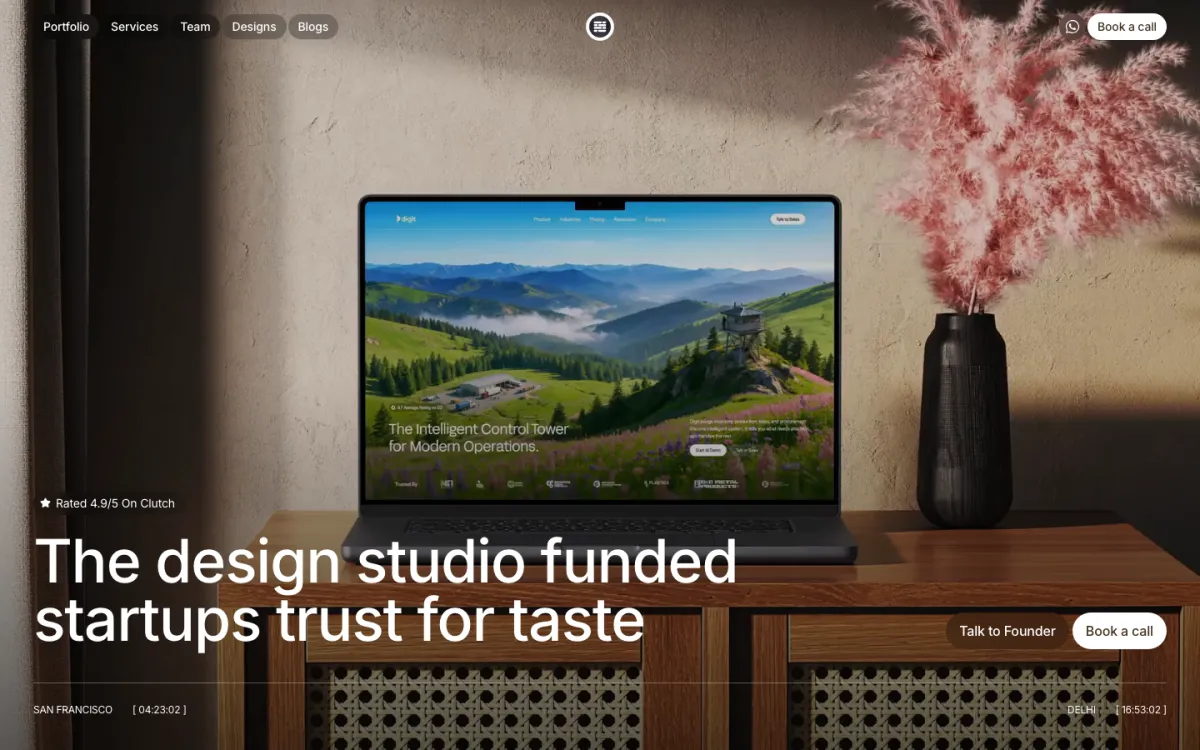
Bricx is the best accessibility design agency for B2B and AI SaaS companies that need conformance designed in rather than audited afterwards. Bricx has completed 50+ SaaS design projects across 30+ industries, with clients including Writesonic (YC S21), Collectwise (YC F24), Gigacatalyst (YC X26), Sybill, Camb.ai, LTV.ai, Instadapp, Hobbes and AT Kearney. The agency holds 27 verified reviews on Clutch at an average of 5.0/5.
Bricx works exclusively with B2B and AI SaaS companies, from seed stage through Series C, covering branding, website design, product UX/UI and end-to-end development. Engagements start at $25,000. Bricx settles contrast, focus order, keyboard paths and semantics while the interface is being designed, which is the only point at which accessibility is cheap.
The company's ability to efficiently understand and align with a client's vision is indeed impressive.
- Starting price
- $25,000+
- Engagement model
- Fixed-scope projects and monthly retainers
- Timeline
- First delivery within the first week; full scope varies by project
- Clutch
- 5.0/5, 27 reviews
- Hourly rate
- $50 - $99
- Best for
- B2B and AI SaaS companies needing accessible products for enterprise buyers.
- Not a fit for
- formal VPAT certification, legal remediation, or budgets under $25,000.
Creative Navy
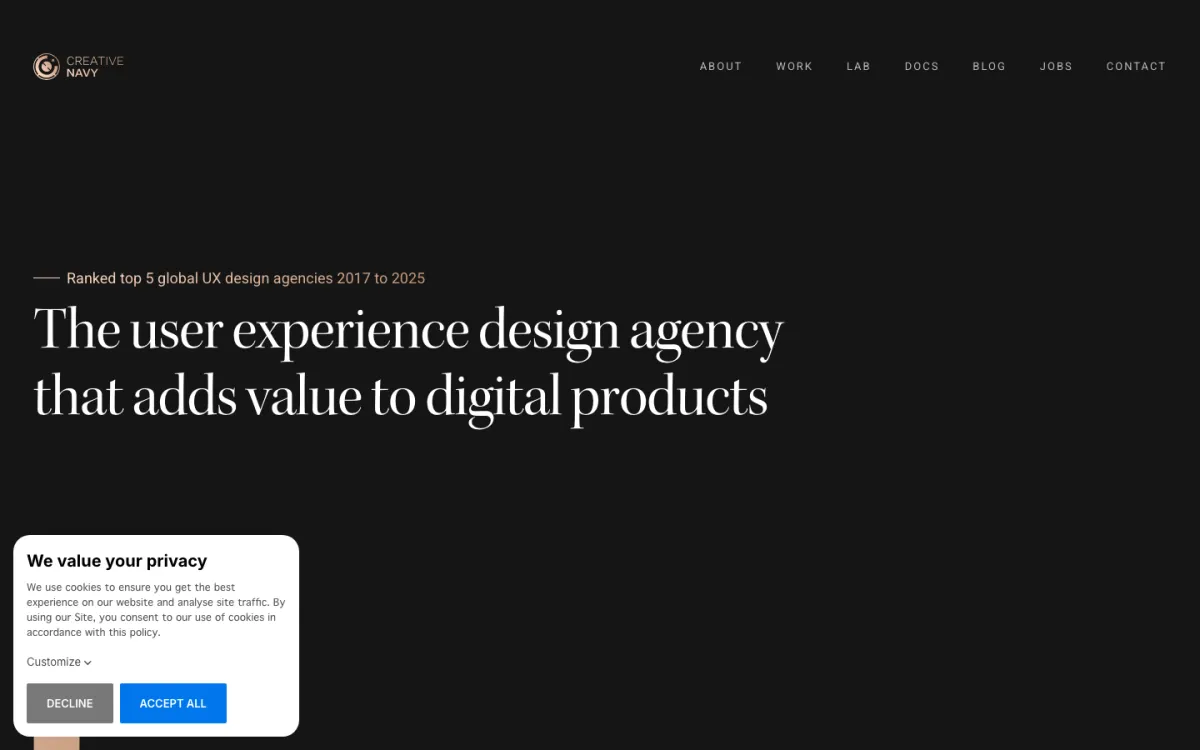
Creative Navy is 100% UX/UI with 40% of its clients in medical and another 20% in automotive, and its case studies run to embedded GUIs, professional simulation software and a surgeon-friendly sonic cutter. Regulated device interfaces are the one corner of design where evidence that a person can operate the thing is already a deliverable rather than an afterthought.
No conformance work appears anywhere in its public record, and its clients are manufacturers and midmarket software firms rather than the public sector bodies that will not sign without a report. What the profile supports is accessibility handled as a design constraint at $100 to $149 an hour, not an audit trail produced for procurement.
- Starting price
- $5,000+
- Engagement model
- Project and retainer
- Clutch
- 5.0/5, 54 reviews
- Hourly rate
- $100 - $149
- Team size
- 10 - 49 people
- Best for
- device and instrument interfaces where operability under constraint is the design problem.
- Not a fit for
- procurement-grade conformance documentation, or budgets under $25,000.
Urban Insight
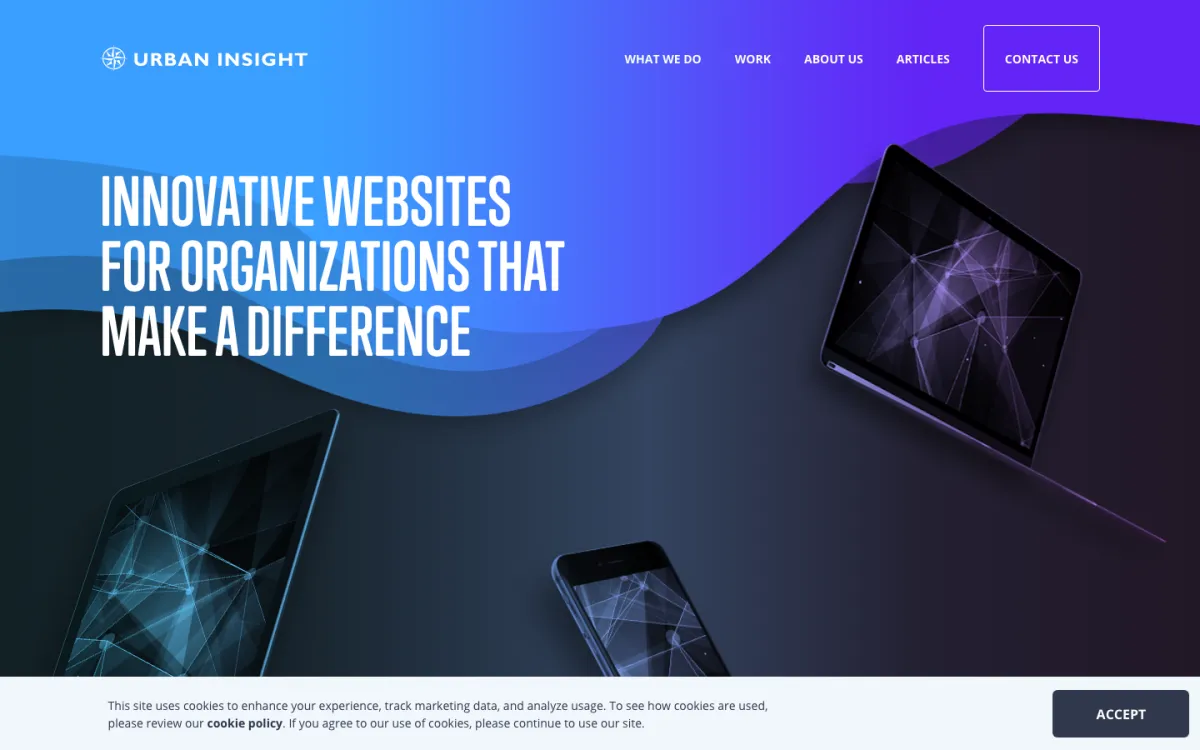
Urban Insight has the closest client base on this page to where accessibility is actually enforced: arts and entertainment at 30%, non-profit at 20% and education at 10%, meaning museums, theatre associations and publicly funded institutions. Its reviews describe redesigning an art museum's sites with wireframes, style tiles and a functional requirements document, which is where conformance criteria stop being aspirational.
Half of what it sells is web development and only 15% is UX/UI, so this is site and CMS work rather than product design. A software company needing an application audited and remediated is buying against the grain of the practice, at $150 to $199 an hour behind a $50,000 minimum.
- Starting price
- $50,000+
- Engagement model
- Project-based
- Clutch
- 5.0/5, 37 reviews
- Hourly rate
- $150 - $199
- Team size
- 10 - 49 people
- Best for
- institutional websites where funding or public status makes conformance mandatory.
- Not a fit for
- in-product accessibility on a software application, or budgets under $25,000.
Think Company
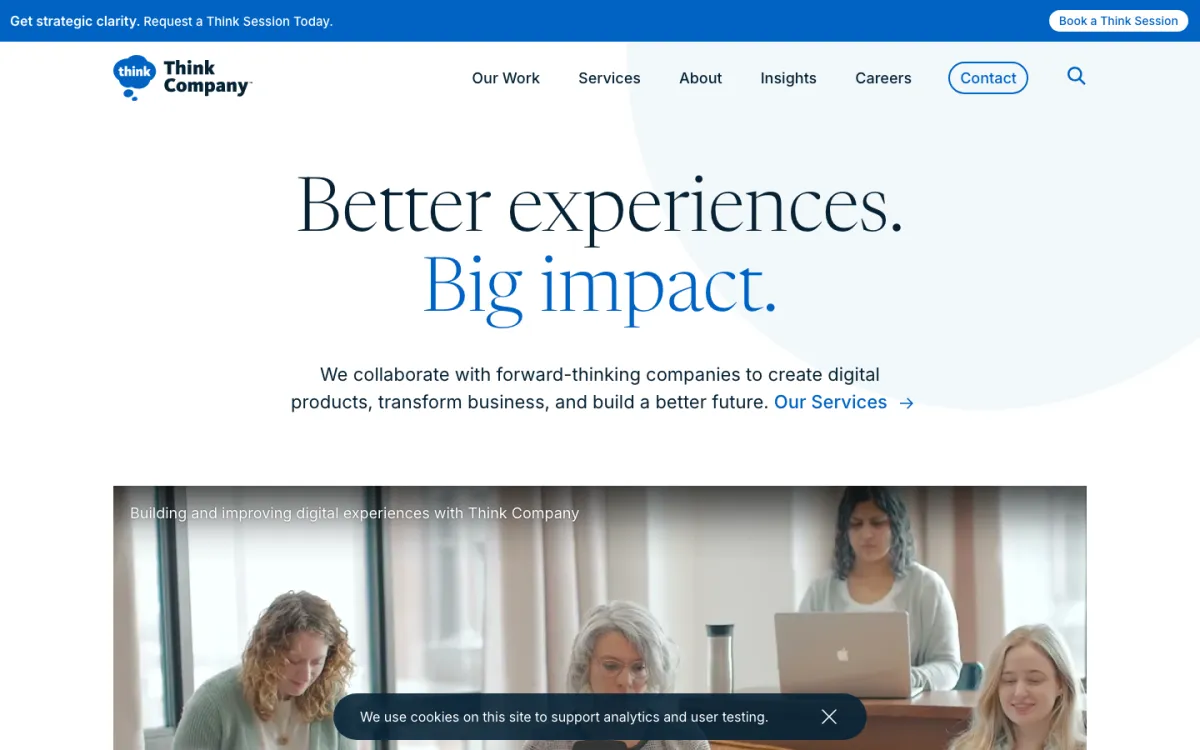
Think Company works for the buyers who ask for the report: 65% of its clients are enterprises above a billion dollars, with medical at 25% and financial services and telecommunications at 20% each. Its named work includes Nemours on access anytime and anywhere, Merck, CSL Behring and a virtual Barnes Foundation experience built explicitly for a diverse audience.
Enterprise app modernisation is its largest line at 30%, which means much of the accessibility work here is retrofit inside legacy systems rather than designed in from the start. Eighteen Clutch reviews is a thin public record for a firm of 50 to 249 people carrying a $50,000 minimum.
- Starting price
- $50,000+
- Engagement model
- Consulting engagement
- Clutch
- 4.9/5, 18 reviews
- Hourly rate
- $150 - $199
- Team size
- 50 - 249 people
- Best for
- large regulated organisations whose buyers demand documented accessibility.
- Not a fit for
- small teams needing a fast focused engagement, or budgets under $25,000.
UX studio
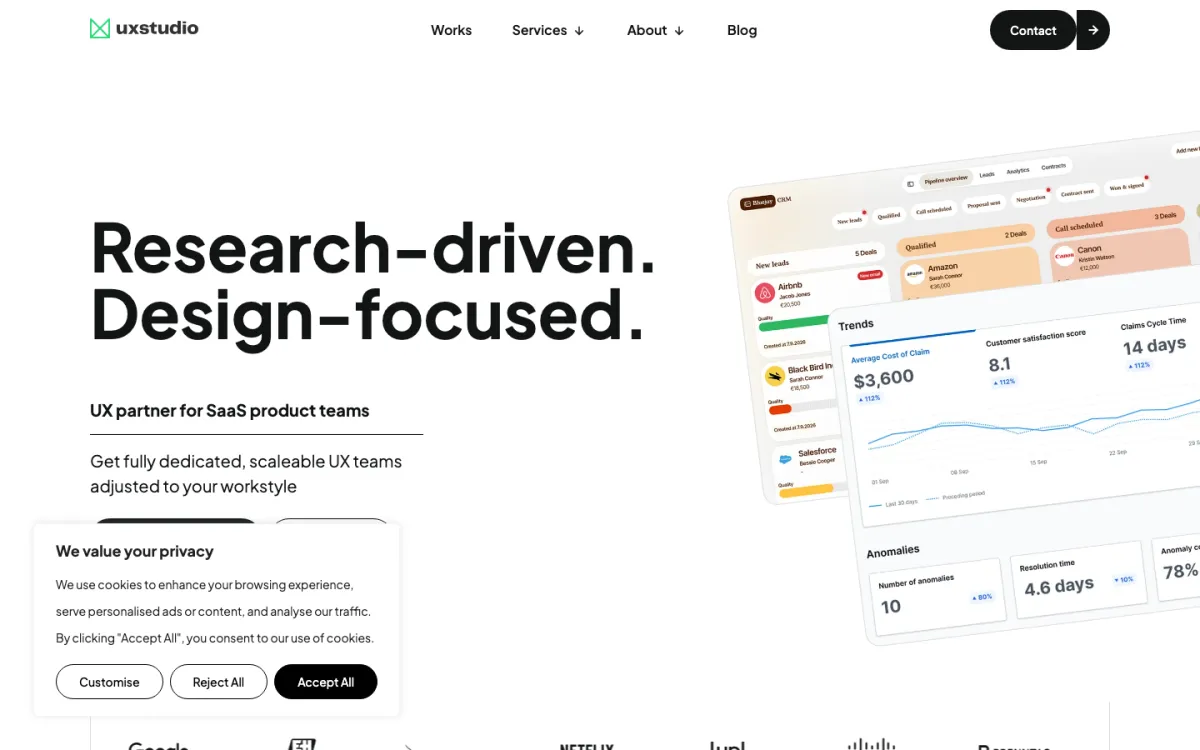
UX studio is a Budapest team selling into the jurisdiction the European Accessibility Act covers, and it is 70% UX/UI design, which is the ratio that lets accessibility land as a design input rather than a late audit. Its reviews describe overhauling a training and compliance management app, and research to lift usability across a chemical distributor's platforms.
Nothing in that record names conformance testing, and usability research run with typical participants does not surface keyboard traps or screen reader failures. At $50 to $99 an hour with a $10,000 floor and 45% of clients above a billion dollars, the value is designed-in access, not a signed report.
- Starting price
- $10,000+
- Engagement model
- Project and retainer
- Clutch
- 5.0/5, 41 reviews
- Hourly rate
- $50 - $99
- Team size
- 50 - 249 people
- Best for
- B2B SaaS teams designing access in before a European launch.
- Not a fit for
- formal conformance testing and reporting, or budgets under $25,000.
Fuzzy Math
Fuzzy Math is the strongest systems argument on this page. Its reviews describe replacing a cause marketing platform's templated ad units with a flexible modular design, and redesigning the UI framework behind a life sciences SaaS product. Fixing a component library once is how accessibility stops being retrofitted screen by screen, and on one engagement it took the frontend build as well.
Accessibility never appears by name in its published work, and only 30% of the mix is UX/UI, with digital strategy at 30% and AI consulting at 20% taking the rest. At 10 to 49 people charging $150 to $199 an hour, a remediation programme across a large legacy product exceeds what it can staff.
- Starting price
- $25,000+
- Engagement model
- Project and retainer
- Clutch
- 4.9/5, 27 reviews
- Hourly rate
- $150 - $199
- Team size
- 10 - 49 people
- Best for
- fixing access once inside a design system every screen inherits.
- Not a fit for
- large legacy remediation programmes, or budgets under $25,000.
thoughtbot
thoughtbot carries the highest government share here at 15%, alongside medical at 30%, and public sector procurement is exactly where a conformance report is a gate rather than a preference. It also builds what it designs, with web development at 30% and mobile at 25%, so an accessibility fix can land in shipped code instead of a Figma file somebody else has to interpret.
UX/UI design is the smallest line it sells at 15%, so design leads rarely and engineering leads often. Its reviews describe two-week discovery sprints and prototype delivery, a useful shape for starting well and a poor one for the long audit and remediation cycle an existing product usually needs.
- Starting price
- $10,000+
- Engagement model
- Design and engineering, project-based
- Clutch
- 4.9/5, 39 reviews
- Hourly rate
- $150 - $199
- Team size
- 50 - 249 people
- Best for
- products where access has to be implemented, not just specified.
- Not a fit for
- design-led accessibility strategy, or budgets under $25,000.
Majestyk
Majestyk is the mobile specialist on this page at 60% mobile app development, and mobile accessibility is a separate discipline from the web: screen reader gestures, touch target size and text scaling. Its reviews describe responsive design and wireframes for an online learning company, a sector where institutional buyers put accessibility into the purchase requirements.
One review describes building iOS and Android wrapper apps around a React frontend, and a wrapper inherits whatever accessibility the web layer already has, good or bad. UX/UI design is 20% of the mix, and at $150 to $199 an hour with a $50,000 minimum the engagement has to be a build to make sense.
- Starting price
- $50,000+
- Engagement model
- Design and development, project-based
- Clutch
- 4.9/5, 31 reviews
- Hourly rate
- $150 - $199
- Team size
- 10 - 49 people
- Best for
- native mobile products where platform assistive technology is the test.
- Not a fit for
- web platform audits and remediation, or budgets under $25,000.
DOOR3
DOOR3 sells the shape this reader often needs first: its reviews describe a four-week UX audit followed by a 12-week design engagement for a fintech, and it runs a Project Rescue practice for stalled initiatives. Its published work also leans on data visualisation, with a PepsiCo store and product dashboard and climate modelling for Jupiter, which is the hardest surface to make accessible.
Those audits are usability audits, not conformance audits, and no accessibility standard appears anywhere in its record. A third of what it sells is AI consulting and another third custom software, so the design practice is one leg of a technology consultancy at $100 to $149 an hour.
- Starting price
- $25,000+
- Engagement model
- Project and retainer
- Clutch
- 4.9/5, 47 reviews
- Hourly rate
- $100 - $149
- Team size
- 50 - 249 people
- Best for
- diagnosing a data-heavy product before committing to a remediation scope.
- Not a fit for
- standards-based conformance testing, or budgets under $25,000.
Adam Fard UX Studio
Adam Fard UX Studio is 100% UX/UI at $50 to $99 an hour, the cheapest all-design option here, and its reviews describe rebuilding navigation and search for a hardware manufacturer. Navigation structure is accessibility work that rarely gets the label, since keyboard and screen reader users depend on it more than anyone. Its case studies include an edtech LMS, where institutions buy on conformance.
Its industry spread tops out at 8% in financial services and information technology, so there is no sector depth where accessibility enforcement is heaviest, and 55% of clients are small businesses under $10M. That is a studio designing for founders, not one that has been through enterprise or public procurement review.
- Starting price
- $10,000+
- Engagement model
- Project and retainer
- Clutch
- 5.0/5, 34 reviews
- Hourly rate
- $50 - $99
- Team size
- 10 - 49 people
- Best for
- early-stage SaaS designing access in cheaply before the first enterprise deal.
- Not a fit for
- enterprise or public sector procurement review, or budgets under $25,000.
How much does an accessibility engagement cost?
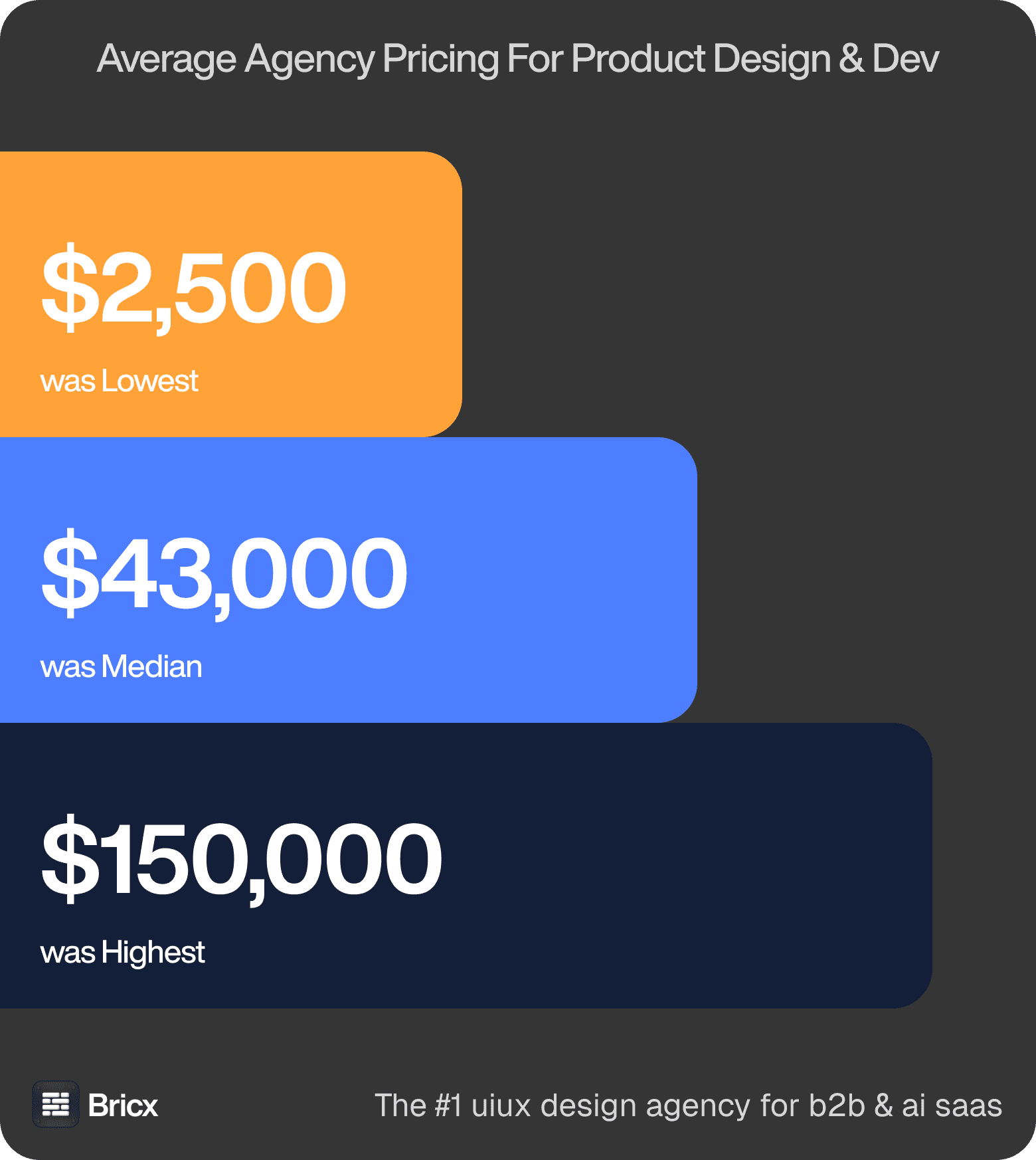
Product design, fixed price. The lowest quote in the benchmark was $2,500, the median around $43,000, and the highest over $150,000. Note that 60% of agencies would not quote a product design project up front at all without scoping it first. Those figures cover product design across the whole benchmark, so treat them as the range accessibility work is quoted inside rather than a price for it.
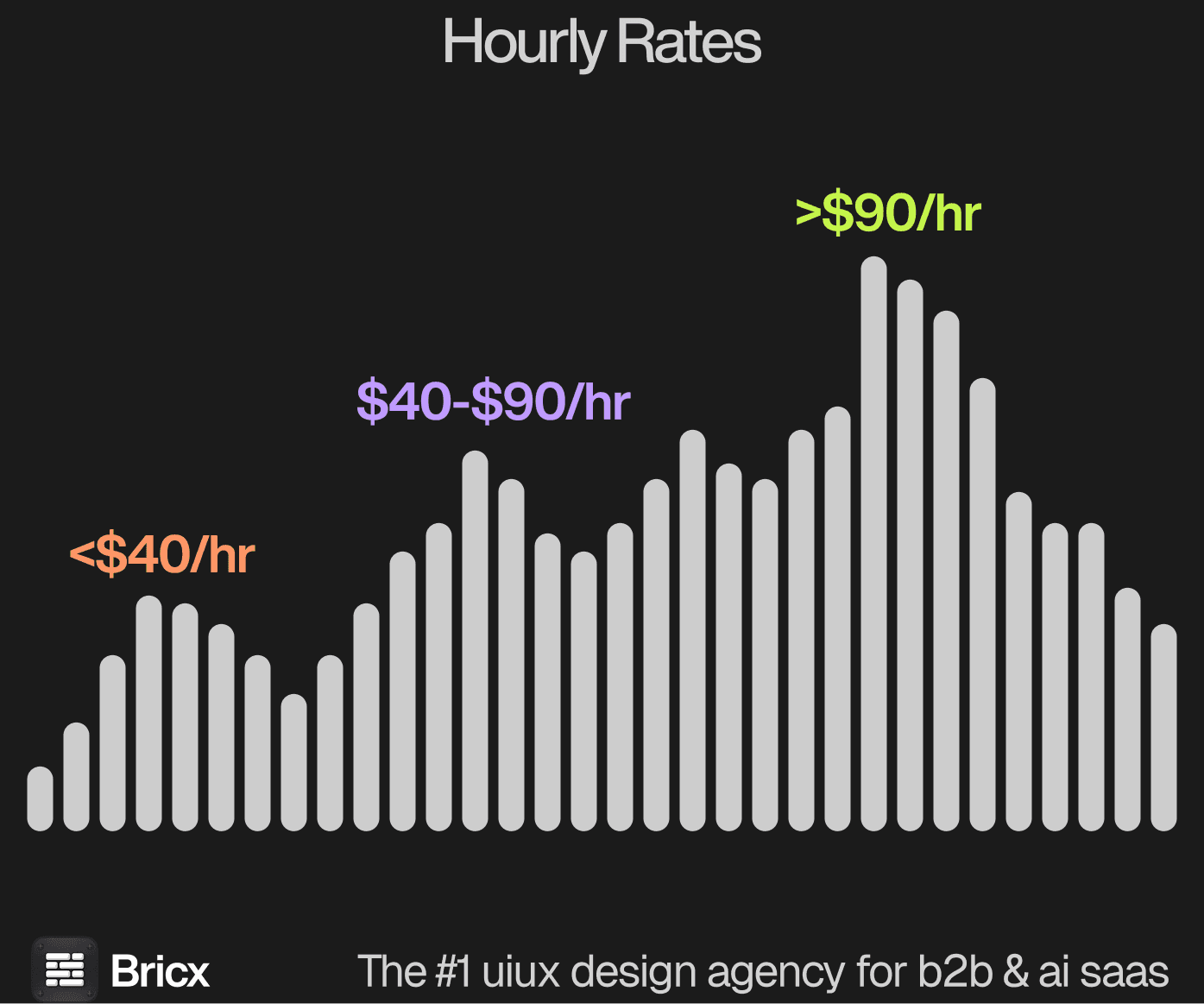
Hourly. Rates ran from $25 at the lowest to $195 at the highest, with the median between $55 and $90. Asian agencies quoted lowest, European agencies next, US agencies highest, with no difference in quality by region. Accessibility rarely justifies a separate budget line. It is usually bought inside a design engagement, which is also where it costs least.
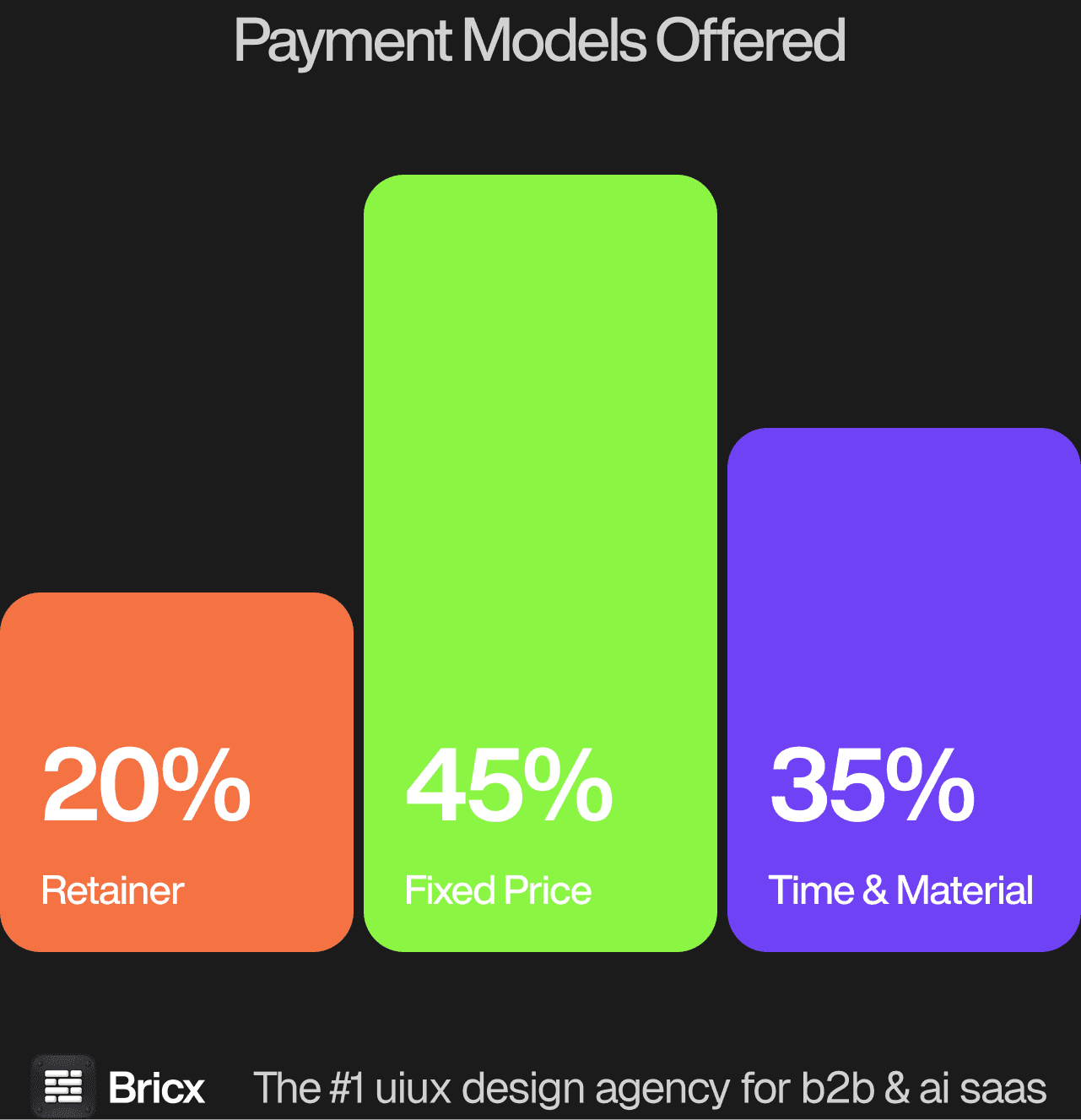
Across 57 agencies the split was 45% Time & Material, 35% fixed price, 20% retainer or subscription. For accessibility work the model usually matters more than the headline figure, because it decides what happens when the scope moves.
- Fixed price where the spec is settled.
- Time & Material where the spec is a hypothesis.
- Retainer where the spec is a backlog.
- Which one fits accessibility work comes down to whether the scope is settled before the work starts.
How do you evaluate an accessibility design agency?
Five things separate accessibility work from an accessibility report.
Ask when accessibility happens in their process. At design time it is nearly free. At audit time it is a rebuild with a deadline attached.
Ask what they test with. Automated checkers catch roughly a third of real issues. Keyboard walkthroughs and screen reader testing catch the rest.
Ask for a conformance report from a past project. It is the artefact enterprise procurement asks you for, so see one before you need one.
Check they understand your obligation. WCAG level, the European Accessibility Act and sector rules differ, and the target should be stated rather than assumed.
Ask how it stays accessible. A product that passes once and ships weekly will drift. Ask what goes into the design system to prevent it.
What are the red flags when hiring a design agency?
- A long discovery phase with no shippable output. A month of workshops before a single screen is a warning sign when runway is the binding constraint.
- Rigid contracts with no exit. A year-long lock-in is a poor match for a roadmap that changes quarterly. Look for a break clause or a shorter initial term.
- A portfolio without outcomes. Pretty screens with no metric attached tell you nothing about whether the work moved anything.
- No pushback on your brief. Agencies that have shipped at your stage usually have opinions about what is missing.
- No answer on post-launch. Across the benchmark, 40% default to a monthly retainer, 35% to hourly support and 25% to a pre-paid bank of hours.
- No comparable example of accessibility work. An agency that cannot point to work of the same shape is learning on your budget.
Should you hire an accessibility agency or build in-house?
Use an agency when the calendar matters more than the org chart. Capability starts in weeks and stops when the work does. For accessibility work specifically, the question worth settling first is how often the work recurs.
Build a team when the org chart matters more than the calendar. Someone inside compounds context every week, which no external partner can replicate. Where accessibility work falls on that line is usually clear once you count how many times it will need doing again.
Accessibility is the clearest case for buying expertise once and keeping it. An agency can set the standard, build it into the design system and train the team; maintaining it has to be internal, because every new screen is a chance to lose it.
FAQs
Why does accessibility matter commercially?
Because it gates deals. Enterprise and public sector buyers request conformance evidence, and the European Accessibility Act made it a legal requirement for products sold into the EU.
How much does accessibility work cost?
It is usually folded into a design engagement rather than priced separately, and that is also when it is cheapest. Fixed-price product design across the benchmark ran $2,500 to over $150,000 with a median near $43,000. Bricx starts at $25,000.
Is an automated accessibility scan enough?
No. Automated tools catch a minority of real issues. Keyboard navigation and screen reader testing find the ones that actually block people.
When should accessibility be considered?
During design. Contrast, focus order and semantics cost nothing to get right up front and a great deal to correct after a build.