10 Best Admin Panel Design Agencies (2026)
The 10 best admin panel design agencies, compared on pricing, Clutch rating, engagement model and hourly rate, drawn from a documented benchmark of 57 agencies.
Aug 20, 202611 min read
Best admin panel design agencies
The admin panel is the one product surface built by people who never have to use it under pressure. It accumulates: a table here, a toggle bolted on for a support case there, until the staff running the business on it have memorised which of four screens is the real one. It is also the only place where a single click can refund a customer, delete an account or email everybody, and those controls usually look identical to the ones that do nothing at all.
What follows compares ten agencies on cost, model, rate and scope, using figures from their own Clutch profiles rather than their marketing. Every agency here carries a verified Clutch profile, and the ratings below are taken from it. Each entry says what an agency is worth hiring for and where it is the wrong choice for an admin panel.
How the ten agencies compare
| Agency | Best for | Starting price | Clutch rating | Not a fit for |
|---|---|---|---|---|
| Bricx | Internal tools that run the business | $25,000+ | 5.0/5, 27 reviews | Backend rebuilds, data migrations |
| Onething Design | Large screen counts, low rate | $10,000+ | 4.9/5, 32 reviews | Building the panel |
| Dworkz | B2B SaaS with financial consequences | $10,000+ | 4.9/5, 8 reviews | Buyers who need published evidence |
| divami | Table-heavy internal products, designed and built | $25,000+ | 4.8/5, 61 reviews | Design-only engagements |
| Octet Design Studio | Information architecture for internal tools | $5,000+ | 4.9/5, 28 reviews | Implementation and rebuild delivery |
| ROSSUL | Destructive controls and dense panels | $25,000+ | 4.9/5, 20 reviews | Light tools for occasional users |
| TekRevol | Rented capacity for a backlog | $25,000+ | 4.8/5, 83 reviews | Design judgement and operator research |
| Andersen | Internal tools with real systems work | $50,000+ | 4.9/5, 129 reviews | Small, design-only panel projects |
| Brights | Consolidating data into one view | $10,000+ | 5.0/5, 40 reviews | Designing the write actions |
| WANDR | Public sector and enterprise internal systems | $25,000+ | 5.0/5, 34 reviews | Large screen counts on budget |
Best admin panel design agency for B2B SaaS: Bricx
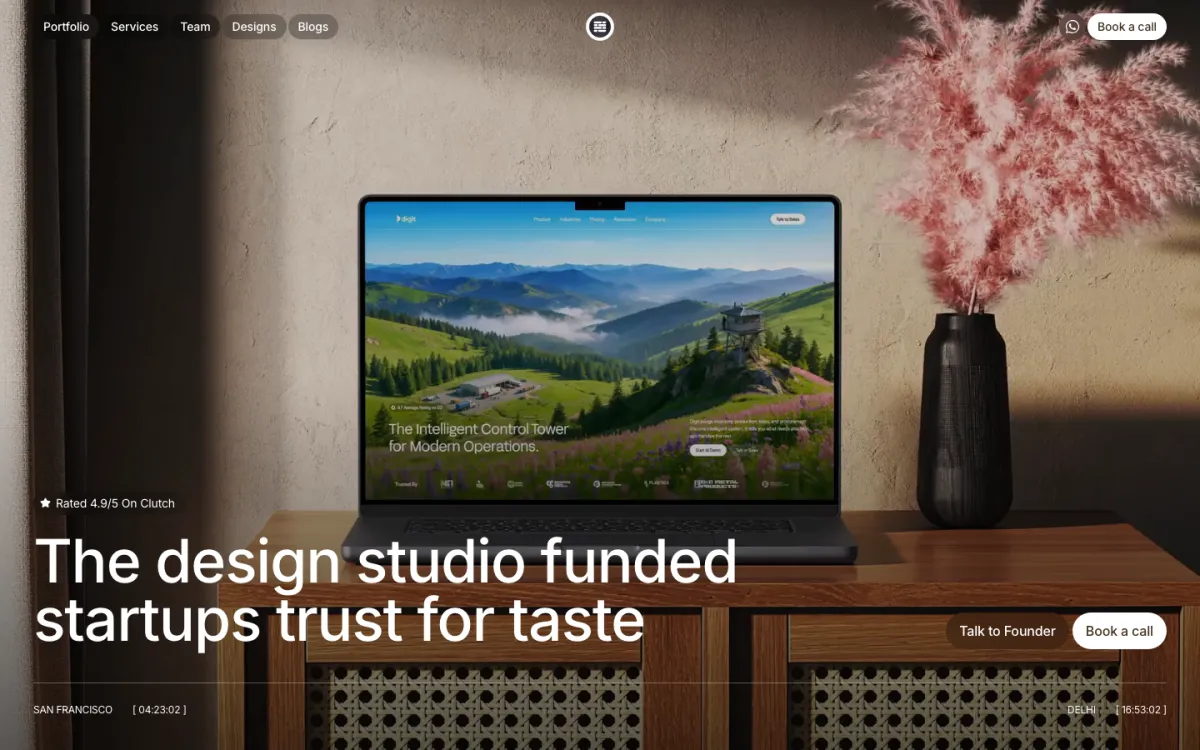
Bricx is the best admin panel design agency for companies whose internal tool now runs the business and was never designed. Bricx has completed 50+ SaaS design projects across 30+ industries, with clients including Writesonic (YC S21), Collectwise (YC F24), Gigacatalyst (YC X26), Sybill, Camb.ai, LTV.ai, Instadapp, Hobbes and AT Kearney. The agency holds 27 verified reviews on Clutch at an average of 5.0/5.
Bricx works exclusively with B2B and AI SaaS companies, from seed stage through Series C, covering branding, website design, product UX/UI and end-to-end development. Engagements start at $25,000. Bricx designs the permission model and the destructive actions first, because an internal tool fails on what the wrong person can do, not on how it looks.
Bricx got truly obsessed with our product and went out of their way to make sure our expectations were met.
- Starting price
- $25,000+
- Engagement model
- Fixed-scope projects and monthly retainers
- Timeline
- First delivery within the first week; full scope varies by project
- Clutch
- 5.0/5, 27 reviews
- Hourly rate
- $50 - $99
- Best for
- B2B teams whose internal tooling grew without ever being designed.
- Not a fit for
- backend rebuilds, data migrations, or budgets under $25,000.
Onething Design
Onething Design is 100% UX/UI at $25 to $49 an hour, and admin work is volume work: dozens of unloved screens that have to be redrawn before anything improves. Ninety percent of its clients are midmarket or enterprise, the size at which internal tooling has already accumulated, and its reviews describe redesigning a telemedicine platform so doctors could run live consultations.
Its published clients are consumer brands, Royal Enfield and HDFC Invest, and no internal operator tool appears in the record. It also designs only, so the redrawn panel needs engineering time from a team that has historically refused to give the admin surface any, which is how it got this way.
- Starting price
- $10,000+
- Engagement model
- Project and retainer
- Clutch
- 4.9/5, 32 reviews
- Hourly rate
- $25 - $49
- Team size
- 50 - 249 people
- Best for
- redrawing a large backlog of internal screens affordably.
- Not a fit for
- teams with no engineering capacity to implement, or budgets under $25,000.
Dworkz
Dworkz states its focus as data-driven B2B SaaS, and half its clients are in financial services, where an admin action moves money and the undo button does not exist. One review describes building a multi-language CMS so an international school's staff could store and access content, which is an internal operator tool rather than a customer-facing product. Collective Health and Kantola sit on its client list.
Eight Clutch reviews is the thinnest public record on this page, and UX/UI design is 25% of a mix that also carries custom software development at 20% and AR/VR at 10%. For a company evaluating on evidence rather than conversation, there is very little published work to read.
- Starting price
- $10,000+
- Engagement model
- Project and retainer
- Clutch
- 4.9/5, 8 reviews
- Hourly rate
- $100 - $149
- Team size
- 10 - 49 people
- Best for
- internal tools in SaaS products where an action has money attached.
- Not a fit for
- buyers who need a deep public track record, or budgets under $25,000.
divami
divami has the clearest admin-shaped case study here: researching and redesigning an audit defence platform described as a complex, task and database-driven product. That is what an admin panel is once the tables multiply. It also revamped an LMS across mobile and desktop, and 30% of its clients are in information technology, from Hyderabad since 2008.
The reason to consider it over a design-only studio is that custom software development is its largest line at 30%, with AI development at 25%, so the panel can be built rather than handed over. The reason not to is that UX/UI is only 25% of the mix, so design capacity competes with delivery work.
- Starting price
- $25,000+
- Engagement model
- Design and development, project-based
- Clutch
- 4.8/5, 61 reviews
- Hourly rate
- $50 - $99
- Team size
- 50 - 249 people
- Best for
- database-driven internal products that need building as well as designing.
- Not a fit for
- design-only scopes, or budgets under $25,000.
Octet Design Studio
Octet Design Studio's reviews land on exactly this problem: revamping a document management system by refining its information architecture first, and designing an employer dashboard and navigation flow for an HR platform. Knowing which of four screens is the real one is an architecture question before it is a visual one. Information technology is 40% of its client base.
It is 100% UX/UI at 10 to 49 people, so nothing gets implemented, and the internal tool is precisely the surface that never wins engineering time afterwards. At $25 to $49 an hour behind a $5,000 minimum it is priced per screen, which suits a defined backlog and works poorly for an open-ended rebuild.
- Starting price
- $5,000+
- Engagement model
- Project and retainer
- Clutch
- 4.9/5, 28 reviews
- Hourly rate
- $25 - $49
- Team size
- 10 - 49 people
- Best for
- sorting out the structure of an internal tool that grew by accident.
- Not a fit for
- delivery and implementation, or budgets under $25,000.
ROSSUL
ROSSUL works on mission-critical software where a control does something physical and irreversible, including a solar simulator and optics product and a microvolume spectrophotometer. That is the admin panel's core problem stated in hardware terms: the destructive control and the harmless one must not look alike. Manufacturing is 25% of its client base, information technology another 30%.
One review describes building a new UI library plus testing scripts and video recordings for a document collaboration platform, which is how a panel stays consistent as it grows. Its instincts run dense, drawn from instrument and enterprise work, so a team wanting a light surface for occasional users may get more control density than it needs.
- Starting price
- $25,000+
- Engagement model
- Project and retainer
- Clutch
- 4.9/5, 20 reviews
- Hourly rate
- $100 - $149
- Team size
- 10 - 49 people
- Best for
- panels where one wrong click has a real consequence.
- Not a fit for
- light occasional-use tools, or budgets under $25,000.
TekRevol
TekRevol's useful line for this page is IT staff augmentation at 15%, because the admin panel usually loses the resourcing argument inside the company that needs it. Renting 250 to 999 people worth of capacity at $25 to $49 an hour from Houston is a plausible answer to a backlog nobody internal will ever be freed up to clear.
Design is not a named service line at all, and mobile app development at 40% is what it mostly sells. Nothing in its reviews describes an internal operator tool, and its industry spread tops out at 10%, so the judgement about which controls are dangerous will have to come from your side of the table.
- Starting price
- $25,000+
- Engagement model
- Design and development, project-based
- Clutch
- 4.8/5, 83 reviews
- Hourly rate
- $25 - $49
- Team size
- 250 - 999 people
- Best for
- clearing a specified internal backlog with borrowed engineering capacity.
- Not a fit for
- design-led work needing operator research, or budgets under $25,000.
Andersen
Andersen publishes a case study called Internal Tools to Manage Vouchers, this page's subject under its real name: a back office screen where issuing, voiding and reissuing look identical and one of them costs money. Custom software development is its largest service at 20%, and at 1,000 to 9,999 people it is an engineering organisation that will go into the system underneath rather than restyle it.
None of its four named service lines is design. The mix runs custom software, managed services, strategy consulting and AI development, and the one review describing UI/UX work is a healthcare app redesign. A company with ten admin screens and one owner will find a consultancy this size a slow way to buy that.
- Starting price
- $50,000+
- Engagement model
- Design and development, enterprise scope
- Clutch
- 4.9/5, 129 reviews
- Hourly rate
- $50 - $99
- Team size
- 1,000 - 9,999 people
- Best for
- internal tools whose fix runs into the systems underneath them.
- Not a fit for
- a focused design pass on a handful of screens, or budgets under $25,000.
Brights
Brights has done the data half of this job repeatedly: integrating HubSpot, Xero and Google Analytics into a single source for a security testing provider, then building Looker dashboards for sales and SaaS metrics, and a Looker Studio dashboard pulling several social channels together. An internal tool that runs the business starts as exactly that consolidation problem.
Those are business intelligence dashboards, which read and never write. The refund, the deletion and the account change are the part Looker cannot do and the part that needs designing. No UX/UI line appears in its service mix at all, which is led by custom software development and web development at 15% each.
- Starting price
- $10,000+
- Engagement model
- Project and retainer
- Clutch
- 5.0/5, 40 reviews
- Hourly rate
- $25 - $49
- Team size
- 50 - 249 people
- Best for
- the reporting half of an internal tool, pulled from scattered systems.
- Not a fit for
- designing destructive or transactional controls, or budgets under $25,000.
WANDR
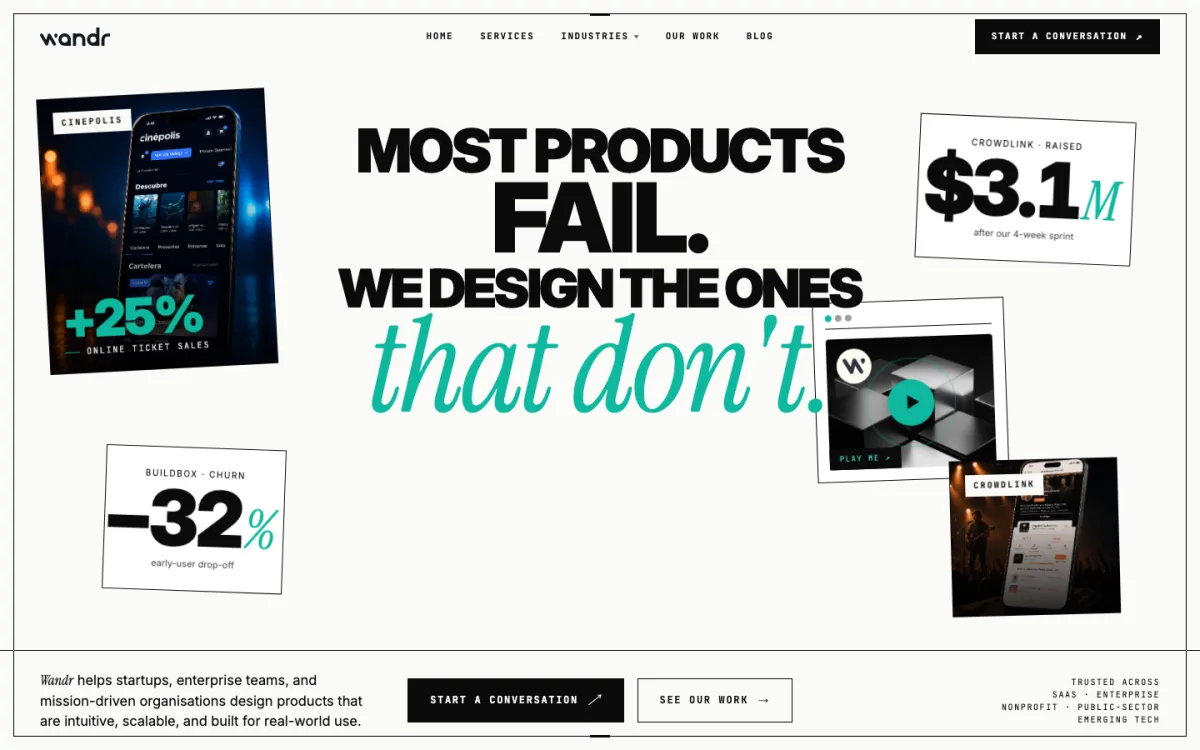
WANDR has the highest government share here at 30%, and government systems are the purest form of the internal tool nobody designed, with non-profit adding another 20%. Sixty percent of its clients are enterprises above a billion dollars, and its published work includes Cinepolis and Buildbox, with a four-week sprint format that suits triaging a panel before committing to a rebuild.
The outcomes it publishes are customer-facing, ticket sales and early-user churn, and an admin panel has no conversion rate to move. UX/UI is 40% of a mix that also carries branding and AI consulting at 20% each, and at $150 to $199 an hour a large screen count gets expensive quickly.
- Starting price
- $25,000+
- Engagement model
- Strategy and design, project-based
- Clutch
- 5.0/5, 34 reviews
- Hourly rate
- $150 - $199
- Team size
- 10 - 49 people
- Best for
- triaging a neglected internal system inside a large or public organisation.
- Not a fit for
- redesigning a very large screen count economically, or budgets under $25,000.
How much does an admin panel design engagement cost?
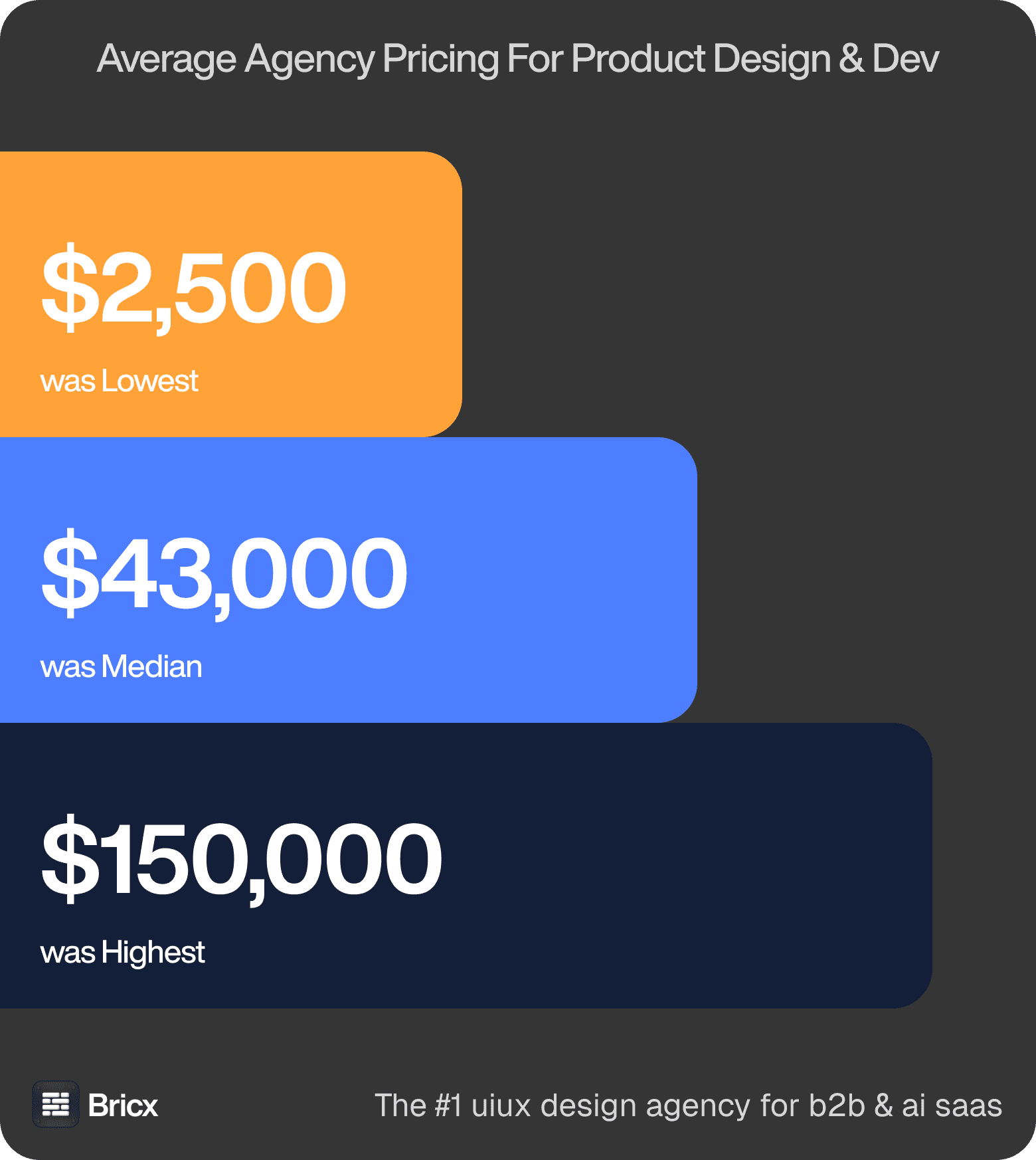
The number before the number. Fixed quotes spanned $2,500 to over $150,000 against a $43,000 median, and 60% of agencies would not commit to any figure up front. Those figures cover product design across the whole benchmark, so treat them as the range an admin panel is quoted inside rather than a price for it.
Hourly, by region. $25 to $195 across the study, median $55 to $90. US teams averaged about $150, European teams $60, Asian teams $35. Admin panels cost less per screen than customer-facing work and more in total, because there are always more screens than anyone remembers.
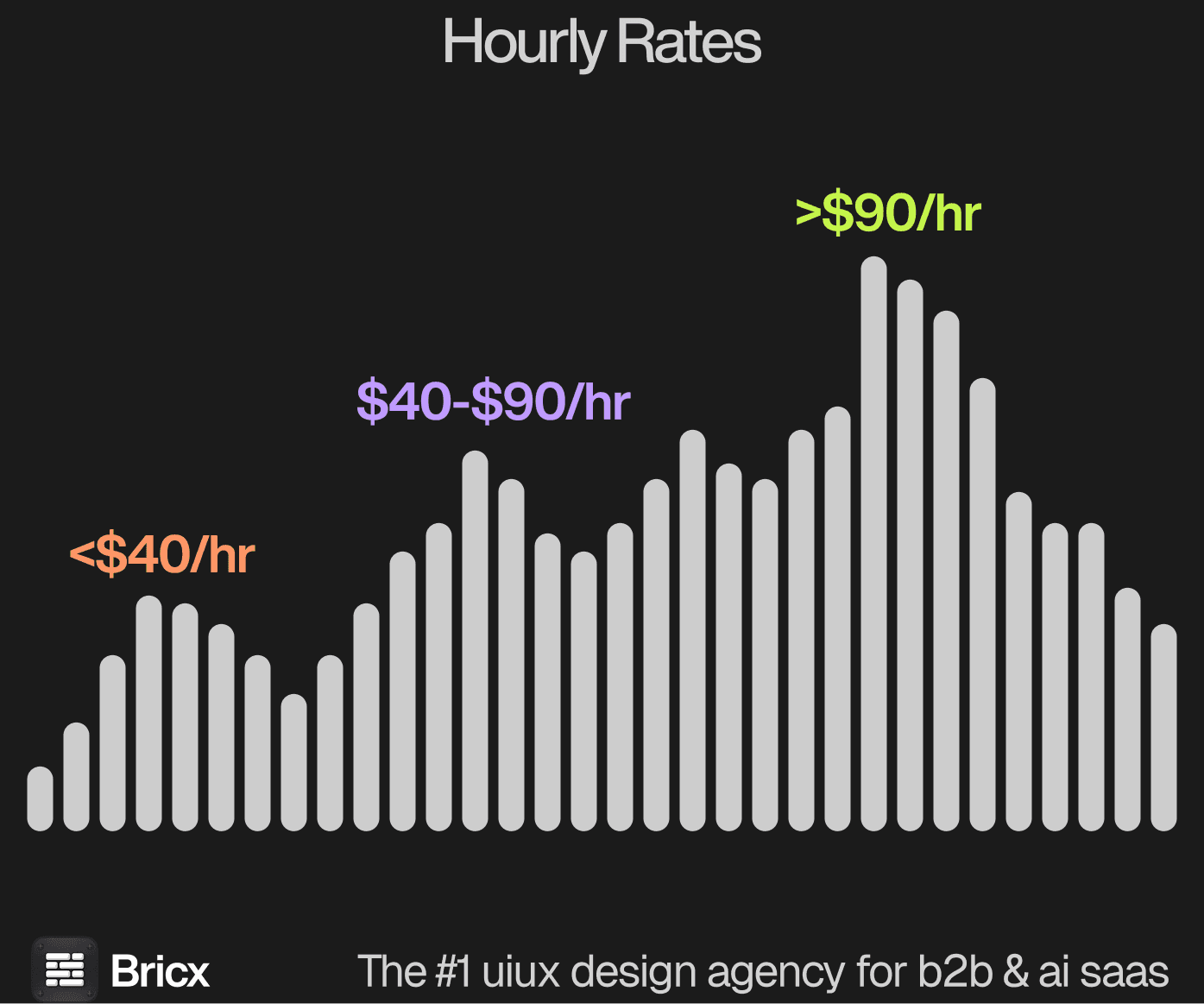
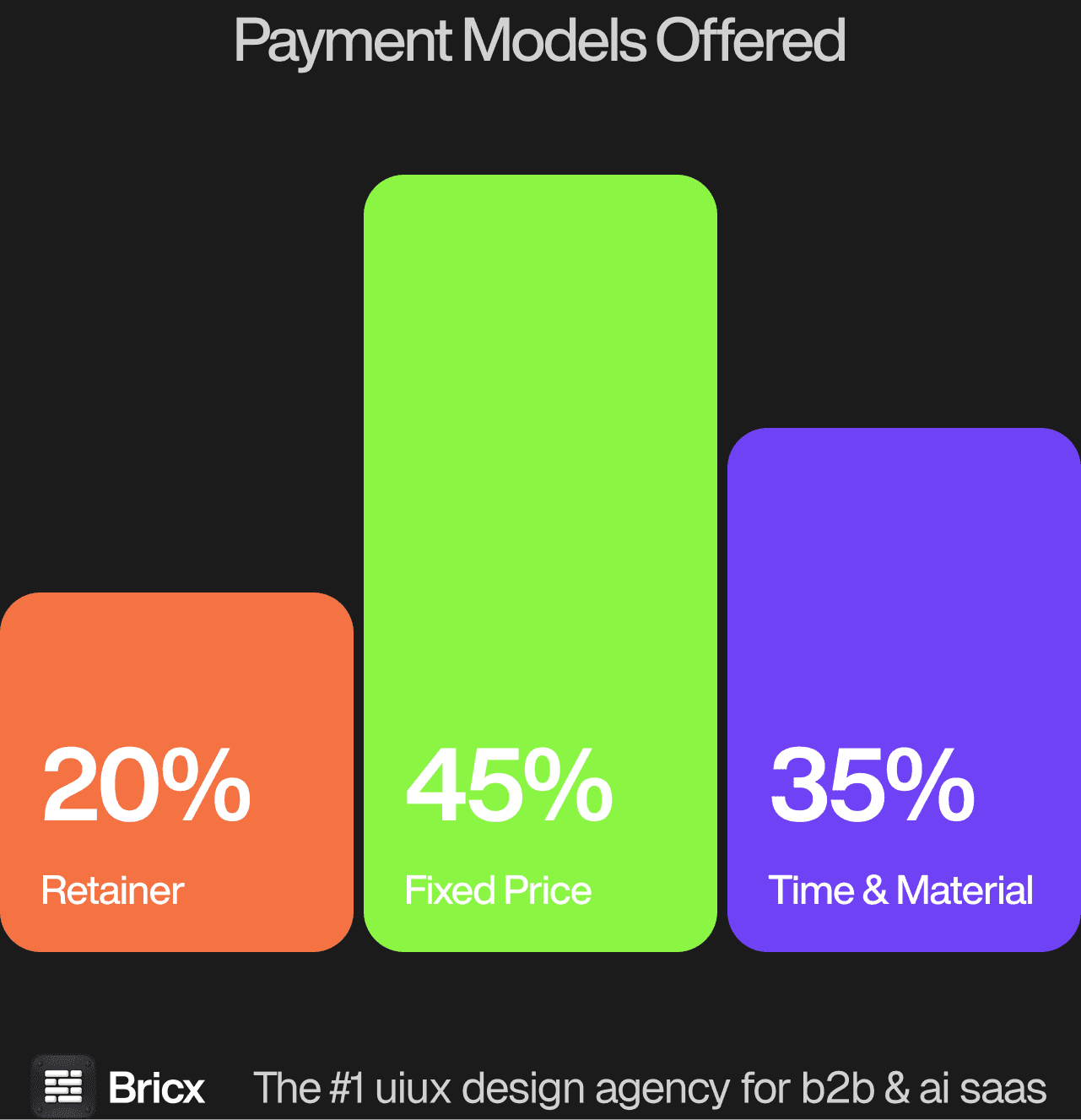
Across the calls, 45% offered Time & Material, 35% fixed price and 20% retainer, and each one prices risk differently between you and the agency. For an admin panel the model usually matters more than the headline figure, because it decides what happens when the scope moves.
- Fixed price works when the scope is defined and unlikely to move.
- Time & Material works when you are still learning what the product needs.
- Retainer works when design demand is steady and continuous.
- Which one fits an admin panel comes down to whether the scope is settled before the work starts.
How do you evaluate an admin panel design agency?
Five things separate an admin panel that reduces support load from one that adds to it.
Ask about the permission model. Roles decide what every screen contains. An agency that designs the interface first and adds permissions afterwards will design screens half the staff must never see.
Ask how destructive actions are treated. Refunds, deletions, bulk emails and impersonation need to look nothing like the rest, and a confirmation dialogue people click through automatically is not a safeguard.
Ask about the audit trail. Someone will eventually need to know who changed a record and when. If the interface does not show it, the answer lives in a database query.
Ask whether they will watch a support agent work. These tools get used at speed, under pressure, with a customer waiting. That is not a workflow anybody guesses correctly from a requirements document.
Ask about bulk operations. The real work is rarely one record. An interface that only handles one at a time gets replaced by a spreadsheet and a colleague with database access.
What are the red flags when hiring a design agency?
- A quote that arrives without questions. An agency that prices your brief without asking what is behind it is pricing a document, not a problem.
- Process presented as proof. A named methodology in a deck is not evidence. Ask what it produced and when.
- Designers you never meet. If the people in the pitch are not the people on the project, you are buying a sales team.
- Deliverables described in nouns, not outcomes. "Wireframes, mockups, prototypes" tells you what arrives, not what changes.
- Silence about maintenance. Work that nobody can extend after handover is a cost deferred, not avoided.
- No comparable example of an admin panel. An agency that cannot point to work of the same shape is learning on your budget.
Should you hire a design agency or build in-house?
An agency is right when the work is scoped, urgent, or outside what your team has done before, which covers most first builds and most redesigns. For an admin panel specifically, the question worth settling first is how often the work recurs.
A hire is right when the work never ends. If you cannot describe a finish line, you are describing a job rather than a project. Where an admin panel falls on that line is usually clear once you count how many times it will need doing again.
Admin panels are the easiest thing to keep in-house and the least likely to actually get done, because they lose every prioritisation call to customer-facing work. Buying the design once and letting engineers extend it is usually the only version of this project that ever ships.
FAQs
Why are admin panels so badly designed?
They lose every prioritisation call to customer-facing work, and the people building them are not the people using them at speed with a customer waiting.
What matters most in admin panel design?
Permissions and destructive actions. What each role can see decides the interface, and the actions that cannot be undone have to look nothing like the ones that can.
Should an admin panel use a component library?
Usually yes. Internal tools gain far more from consistency and speed of extension than from a distinctive visual identity, and the saved effort belongs in the workflow instead.
How much does an admin panel redesign cost?
Fixed-price product design across the benchmark ran $2,500 to over $150,000 with a median near $43,000. Admin work lands mid-band because the screen count is high and the visual bar is not. Bricx starts at $25,000.