10 Best AgTech UX Agencies (2026)
The 10 best AgTech UX agencies, compared on pricing, Clutch rating, engagement model and hourly rate, drawn from a documented benchmark of 57 agencies.
Aug 20, 202611 min read
Best AgTech UX agencies
AgTech software is used outdoors, in gloves, on a bad connection, by somebody who started at five in the morning and will not open a laptop until winter. Its data comes from machines that predate APIs: telematics, moisture probes, irrigation controllers, each in a vendor format nobody wants to share. And the release cycle is a growing season, so a feature that misses planting waits a year for its next real test. Nothing here iterates weekly. The competing product is usually a whiteboard in the shed and a notebook in the truck, both of which work offline.
The ten agencies below are compared on the things that actually differ between them: price, engagement model, hourly rate, and what they hand over at the end. Every agency here carries a verified Clutch profile, and the ratings below are taken from it. Each entry says what an agency is worth hiring for and where it is the wrong choice for AgTech UX.
How the ten agencies compare
| Agency | Best for | Starting price | Clutch rating | Not a fit for |
|---|---|---|---|---|
| Bricx | AgTech SaaS built on machine data | $25,000+ | 5.0/5, 27 reviews | Farms, agronomy services, telematics hardware |
| Elogic Commerce | Agricultural marketplaces and commerce | $25,000+ | 5.0/5, 61 reviews | In-field and machinery products |
| Itransition | Interfaces onto ERP and CRM systems | $25,000+ | 4.9/5, 42 reviews | Field research and offline design |
| Nuage | ERP behind food and produce | $10,000+ | 4.9/5, 14 reviews | Any interface design work |
| Uran Company | Sites for distributed-hardware businesses | $10,000+ | 4.9/5, 19 reviews | Large grower networks, offline apps |
| nomtek | Mobile-first tools, plus AR uses | $25,000+ | 4.9/5, 43 reviews | Agricultural domain knowledge |
| Fulcrum | Turning a season spreadsheet into software | $10,000+ | 4.9/5, 39 reviews | Sector depth in agriculture |
| Kanda Software | Sample, test and custody systems | $100,000+ | 4.9/5, 17 reviews | Small pilots and diagnostics |
| Peerbits | Cross-platform apps for movement | $5,000+ | 4.8/5, 32 reviews | Agronomy and field research |
| Studio Graphene | One team across phone, desktop, web | $10,000+ | 4.7/5, 25 reviews | Field hardware and offline use |
Best AgTech UX agency: Bricx
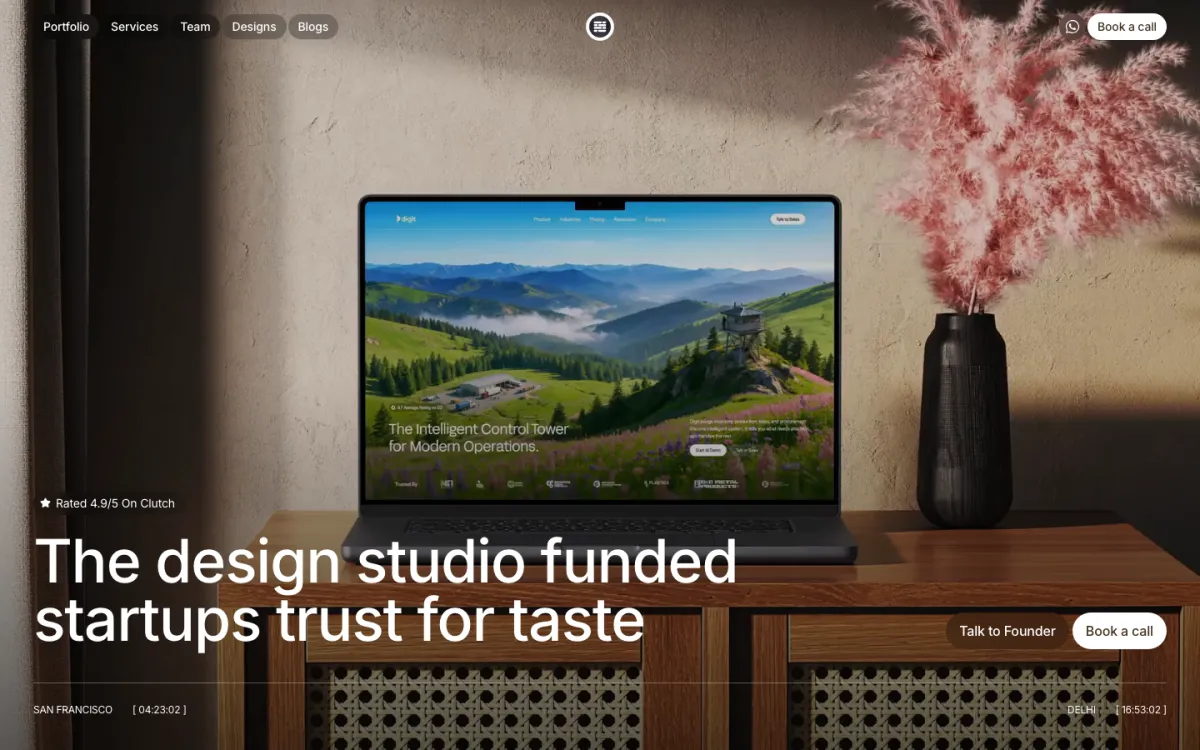
Bricx is the best AgTech products whose daily user is outdoors on a poor connection, and whose real competitor is a notebook in the truck that never fails. Bricx has completed 50+ SaaS design projects across 30+ industries, with clients including Writesonic (YC S21), Collectwise (YC F24), Gigacatalyst (YC X26), Sybill, Camb.ai, LTV.ai, Instadapp, Hobbes and AT Kearney. The agency holds 27 verified reviews on Clutch at an average of 5.0/5.
Bricx works exclusively with B2B and AI SaaS companies, from seed stage through Series C, covering branding, website design, product UX/UI and end-to-end development. Engagements start at $25,000. Bricx works with B2B and AI SaaS companies rather than farms, and says so plainly. What transfers is the pattern underneath AgTech software: field data arriving from hardware, an operator who is nowhere near a desk, and an owner who wants a summary. Engagements start at $25,000.
Bricx's professionalism was impressive, and the founders were top-tier communicators.
- Starting price
- $25,000+
- Engagement model
- Fixed-scope projects and monthly retainers
- Timeline
- First delivery within the first week; full scope varies by project
- Clutch
- 5.0/5, 27 reviews
- Hourly rate
- $50 - $99
- Best for
- AgTech companies building software on top of field hardware data, with both an operator and an owner to serve.
- Not a fit for
- farms themselves, agronomy services, telematics hardware development, or budgets under $25,000.
Elogic Commerce
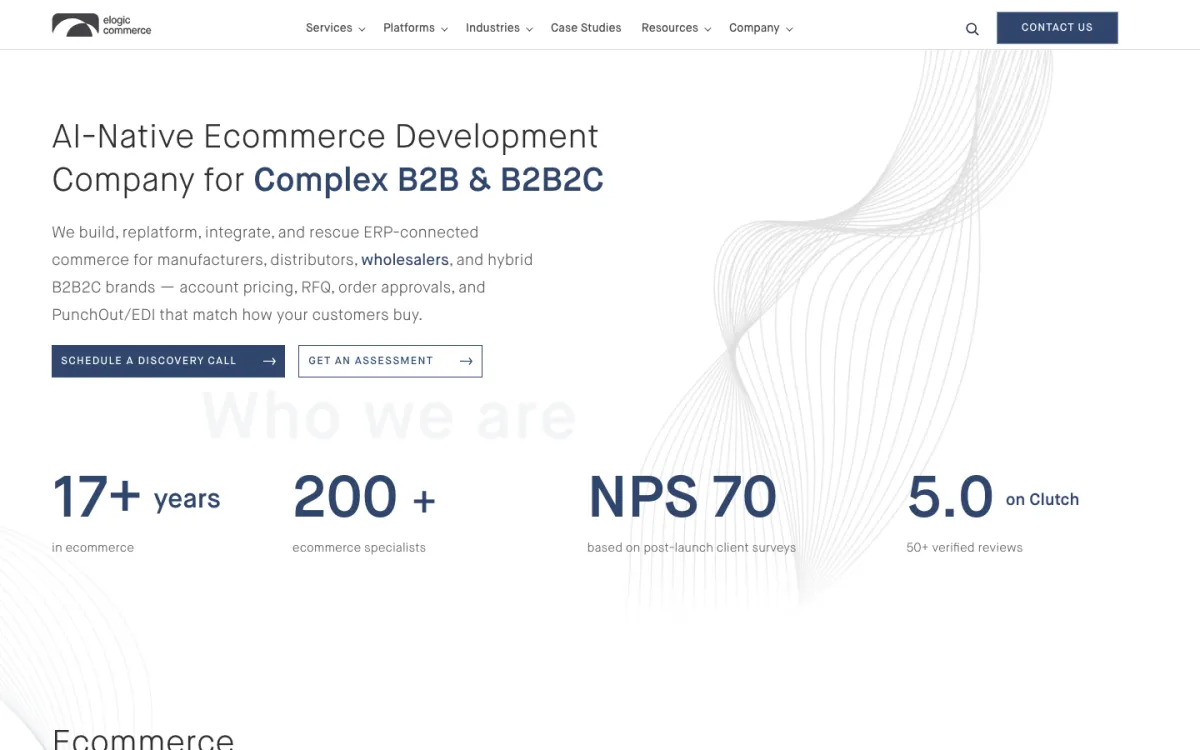
Elogic Commerce built a website for a real estate company that functions as a marketplace, which is the relevant precedent here, since a large share of AgTech is matching grain, inputs, equipment or produce between buyers and sellers rather than instrumenting a field. E-commerce development is 55% of its work, and its two commerce industries, retail and eCommerce, sit at 15% each.
It has no agricultural experience on its published record, and its industries stop at manufacturing, retail, eCommerce and automotive. Nothing it does addresses offline behaviour, machinery data formats or seasonal timing, so an in-field product falls outside what its 61 Clutch reviews actually evidence.
- Starting price
- $25,000+
- Engagement model
- Project and retainer
- Clutch
- 5.0/5, 61 reviews
- Hourly rate
- $50 - $99
- Team size
- 50 - 249 people
- Best for
- AgTech businesses whose product is a marketplace rather than a field tool.
- Not a fit for
- in-field tools, machinery data or offline use, or budgets under $25,000.
Itransition
Itransition leads with ERP consulting at 20% and CRM consulting at 15%, which matters in AgTech because the screen a grower sees is usually a face on an inventory, contract or accounting system that already exists. Manufacturing is 15% of its book. It also built a web and mobile app plus the entire backend for a forensic ballistics company, an unusual instrumentation problem.
Nothing published is agriculture, and nothing on the record involves offline behaviour or equipment telemetry. Its published services contain no design or UX share, so at $25 to $49 an hour across more than a thousand people, this is systems capacity rather than a team that will spend a week in a field.
- Starting price
- $25,000+
- Engagement model
- Project and retainer
- Clutch
- 4.9/5, 42 reviews
- Hourly rate
- $25 - $49
- Team size
- 1,000 - 9,999 people
- Best for
- AgTech products sitting on top of an existing ERP or CRM system.
- Not a fit for
- field research or offline-first interface design, or budgets under $25,000.
Nuage
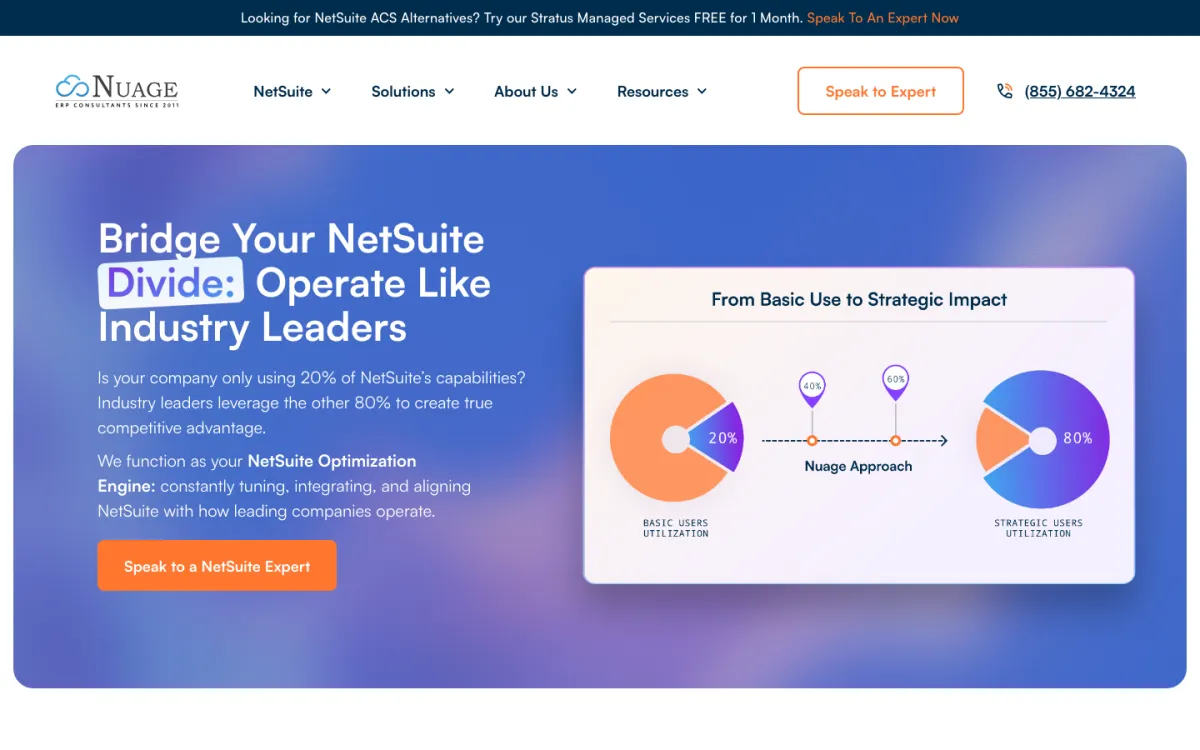
Nuage is the only agency here with food and beverage as a major industry, at 25%, alongside manufacturing at 30%. That is the downstream half of agriculture, where a crop becomes inventory with a lot number and an expiry date. Its work is NetSuite, 70% ERP consulting plus logistics and supply chain consulting, so it lives in the system tracking what a farm produced.
It is not a design agency in any sense. No UX, UI or research appears in its published services, its reviews describe payroll validation, script fixes and data migrations, and at $200 to $300 an hour that is the highest rate on this page for consulting rather than design.
- Starting price
- $10,000+
- Engagement model
- Project and retainer
- Clutch
- 4.9/5, 14 reviews
- Hourly rate
- $200 - $300
- Team size
- 10 - 49 people
- Best for
- the ERP layer tracking produce, lots and inventory after harvest.
- Not a fit for
- interface design, research or product UX, or budgets under $25,000.
Uran Company
Uran Company's most transferable work is a website for a vending machine provider, where it produced custom UI designs and a responsive layout. Vending is a distributed-hardware business, machines in the field reporting to somebody deciding what to restock, which is structurally the same information problem as a set of sensors spread across acreage. Manufacturing is 15% of its book.
Seventy percent of its clients are small businesses, so a large grower network or a co-op would be well beyond its usual engagement size. It publishes no UX or design share, no agricultural experience, and nothing involving offline use or equipment data formats.
- Starting price
- $10,000+
- Engagement model
- Project and retainer
- Clutch
- 4.9/5, 19 reviews
- Hourly rate
- $50 - $99
- Team size
- 50 - 249 people
- Best for
- small AgTech companies needing a capable site and clear interface work.
- Not a fit for
- offline field apps or large grower networks, or budgets under $25,000.
nomtek
nomtek is the most mobile-weighted agency on this page at 45% mobile app development, with a 10% AR/VR share on top of it. In AgTech the phone is the primary device for anyone in a field or a cab, and augmented reality has genuine uses in equipment inspection and crop scouting. Manufacturing is 20% of its industry base, and it has run since 2009.
Its published work is consumer and health weighted, supplement brands, a language learning app, a nonprofit chatbot, with medical at 35%. There is no agricultural client, no field hardware and nothing addressing offline behaviour, so the domain would be learned during the engagement itself.
- Starting price
- $25,000+
- Engagement model
- Project and retainer
- Clutch
- 4.9/5, 43 reviews
- Hourly rate
- $50 - $99
- Team size
- 50 - 249 people
- Best for
- AgTech tools whose primary device is a phone in a cab or a field.
- Not a fit for
- work requiring agricultural domain knowledge, or budgets under $25,000.
Fulcrum
Fulcrum built a software platform for an energy efficiency company out of a complex Google Sheets system the client had been running, and integrated AI features into it. That is the most common AgTech starting point on this page: a spreadsheet somebody maintains through the season, holding the real model of the operation. AI development is 35% of its services, and it has worked from Warszawa since 2018.
Energy and natural resources does not appear among its published industries and neither does agriculture, so the relevant precedent is one project rather than a sector. Sixty percent of its clients are small businesses, and no UX or design share appears anywhere in its service mix.
- Starting price
- $10,000+
- Engagement model
- Project and retainer
- Clutch
- 4.9/5, 39 reviews
- Hourly rate
- $50 - $99
- Team size
- 50 - 249 people
- Best for
- replacing the spreadsheet an operation actually runs on with real software.
- Not a fit for
- work needing agricultural sector depth, or budgets under $25,000.
Kanda Software
Kanda Software built a laboratory management solution for an orthodontic appliances manufacturer along with a portal for prescriptions, the closest analogue here to the sample-and-test workflows agriculture runs on: soil panels, seed trials and residue testing, each with a chain of custody. It has been operating since 1993, and medical is 45% of its book with information technology at 30%.
Its $100,000 minimum is the highest on this page, so a diagnostic or a single season's pilot is not the engagement shape it takes. Nothing published is agricultural, and no design or UX percentage appears at all across its 17 Clutch reviews.
- Starting price
- $100,000+
- Engagement model
- Project and retainer
- Clutch
- 4.9/5, 17 reviews
- Hourly rate
- $50 - $99
- Team size
- 250 - 999 people
- Best for
- lab, testing and sampling workflows that need a defensible record.
- Not a fit for
- a single season pilot or diagnostic, or budgets under $25,000.
Peerbits
Peerbits has supply chain, logistics and transport at 10% of its client base, and one review describes dedicating a developer to a transportation company to build in React Native. Moving a crop is half of AgTech, and a cross-platform app is the sensible answer for a driver or a field operator using whatever phone they already own. Its minimum is $5,000.
The other 80% of its work is medical, which does not transfer here, and its published services contain no design or UX share at all. With 60% of clients being small businesses and 20% of its work in staff augmentation, this is a resourcing relationship rather than a design partner.
- Starting price
- $5,000+
- Engagement model
- Project and retainer
- Clutch
- 4.8/5, 32 reviews
- Hourly rate
- $25 - $49
- Team size
- 50 - 249 people
- Best for
- the transport and logistics half of an AgTech operation.
- Not a fit for
- agronomy depth or in-field research, or budgets under $25,000.
Studio Graphene

Studio Graphene is the only agency on this page publishing a UX/UI share, at 15%, and one review describes it taking UI and UX ownership while building desktop, mobile and web applications for the same product. AgTech nearly always needs all three: a phone for the operator, a desktop for planning, a web view for the agronomist, with one team holding consistency across them.
It also redesigned an onboarding flow, the screen an AgTech product most often loses people on. What it has no record of is agriculture, field hardware or offline use, and no industry in its book rises above 15%, so this is generalist product design from London.
- Starting price
- $10,000+
- Engagement model
- Project and retainer
- Clutch
- 4.7/5, 25 reviews
- Hourly rate
- $50 - $99
- Team size
- 50 - 249 people
- Best for
- AgTech products needing a phone, a desktop and a web view to agree.
- Not a fit for
- field hardware integration or offline-first work, or budgets under $25,000.
How much does an AgTech UX engagement cost?
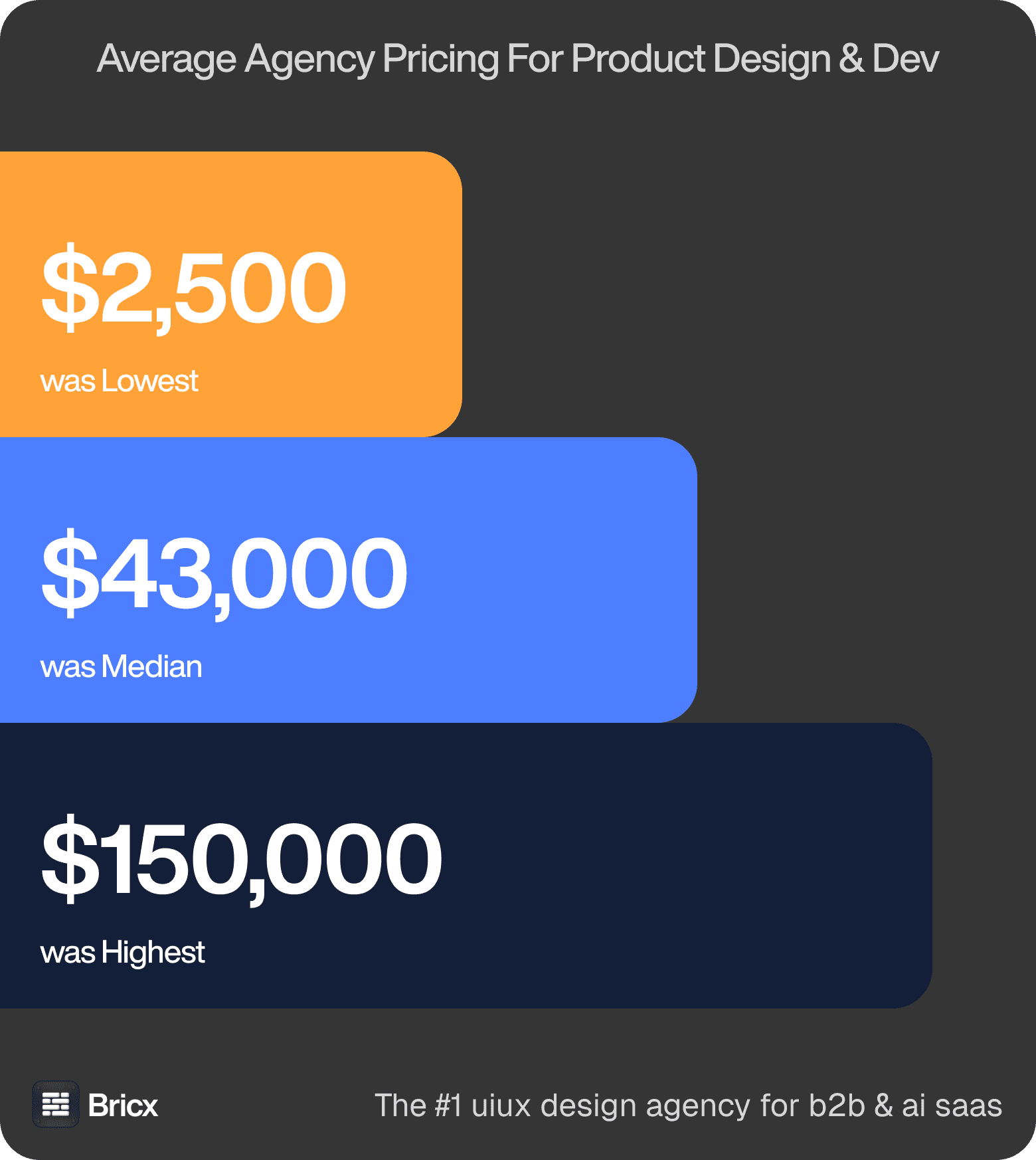
What the same brief actually cost. Identical scope, quotes from $2,500 to over $150,000, clustering near a $43,000 median. Six agencies in ten declined to price it before a further call. Those figures cover product design across the whole benchmark, so treat them as the range AgTech UX is quoted inside rather than a price for it.
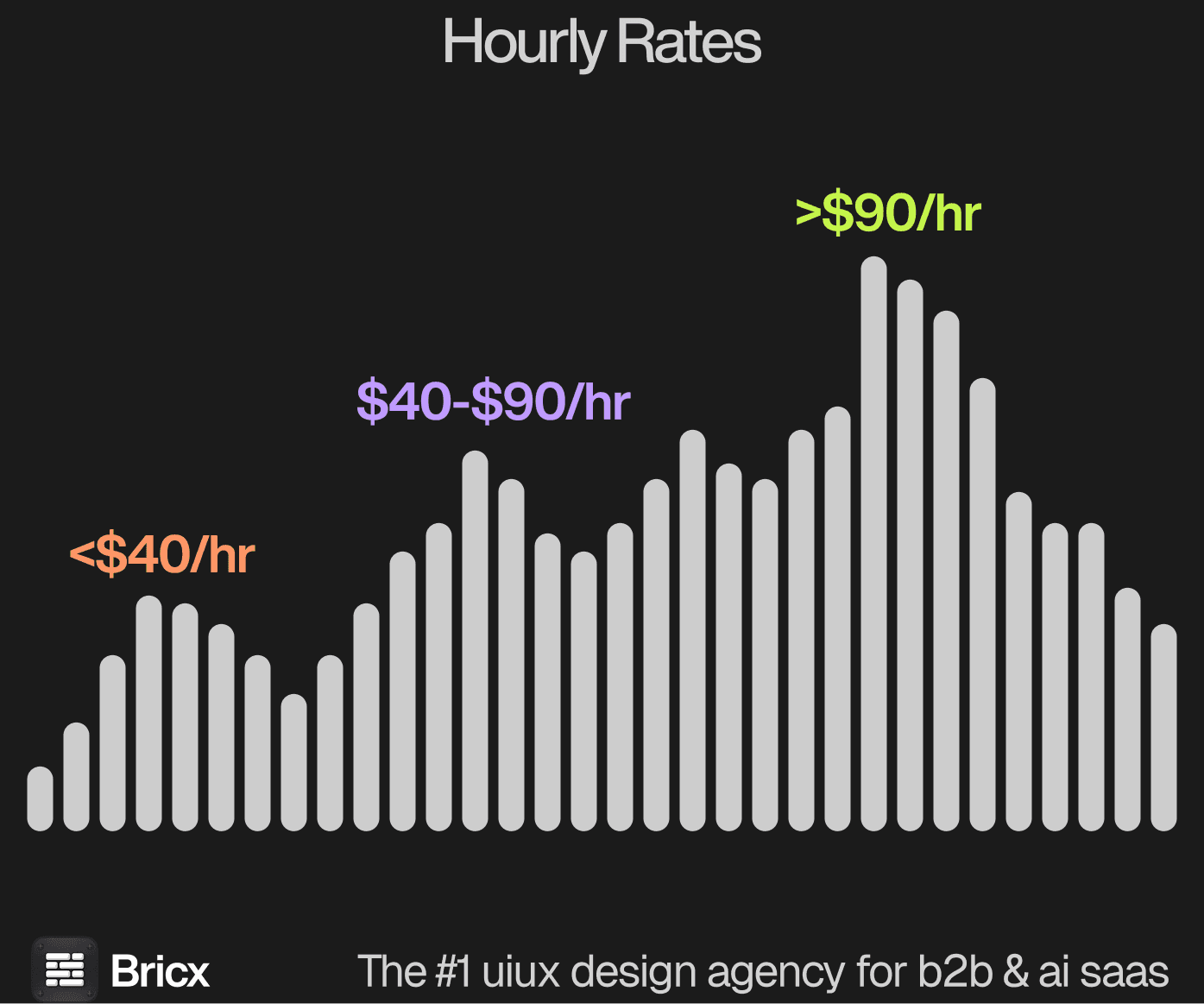
Rates. $25 an hour at the bottom, $195 at the top, most agencies between $55 and $90. Location explains nearly all of it and quality explains almost none. AgTech UX sits above the median because the research has to happen where the work happens, and a field visit during the right week of the season costs considerably more than a round of remote interviews.
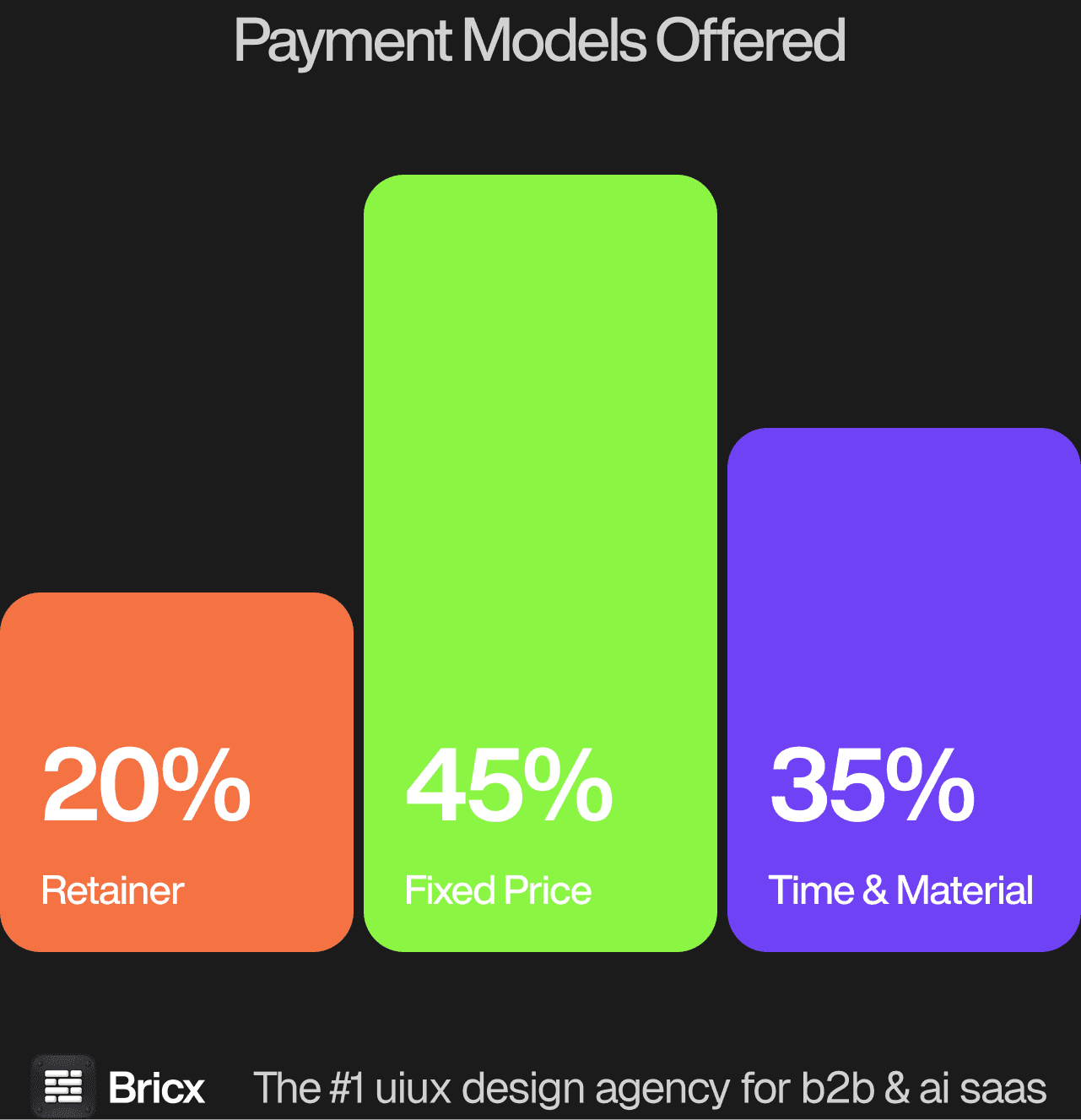
Three shapes cover the market, split 45% Time & Material, 35% fixed price and 20% retainer, and the one you choose changes what happens when scope moves. For AgTech UX the model usually matters more than the headline figure, because it decides what happens when the scope moves.
- Fixed price is right when you can write the scope down and mean it.
- Time & Material is right when the answer changes as you learn.
- Retainer is right when design never stops being needed.
- Which one fits AgTech UX comes down to whether the scope is settled before the work starts.
How do you evaluate an AgTech UX agency?
Five things separate AgTech UX from B2B software UX generally.
Ask how the product behaves with no signal. Fields rarely have reliable coverage, so anything that fails without a connection is a demo rather than a tool, and sync conflicts become a design problem rather than an engineering one.
Ask what it is like in gloves and full sunlight. Touch targets, contrast and glove-compatible input decide whether a screen gets used at all, and none of that surfaces in an office usability test.
Ask how they get data off the machinery. Telematics, moisture probes and irrigation controllers arrive in vendor formats designed not to be shared, and the interface can only be as good as what those systems release.
Ask what they do about the season. Planting, spraying and harvest each happen once a year, so a feature that misses its window waits twelve months for real feedback instead of a fortnight.
Ask who they think the user is. The agronomist, the operator in the cab and the owner reading a summary want three different products, and building for whoever signs is how adoption stalls.
What are the red flags when hiring a design agency?
- Senior in the pitch, junior on the project. Ask for the names and check their individual work before signing.
- A contract with no way out. A twelve-month lock-in assumes your roadmap will not change. It will.
- Screens without results. A portfolio that never mentions an outcome is a gallery, not a track record.
- Agreement with everything you say. Experience shows up as disagreement about what is missing.
- No position on what happens next. Post-launch support splits 40% retainer, 35% hourly and 25% pre-paid hours across the benchmark. No answer means no plan.
- No comparable example of AgTech UX. An agency that cannot point to work of the same shape is learning on your budget.
Should you hire a UX agency or build in-house?
Use an agency while the work has edges: a launch, a rebuild, a first version. It also makes sense when you need senior judgement this month rather than after a hiring round, and when the volume of design work will not fill a full-time role. For AgTech UX specifically, the question worth settling first is how often the work recurs.
Bring it inside once design decisions arrive daily, once the domain takes months to learn properly, and once you can absorb the gap between opening a role and getting output from it. Where AgTech UX falls on that line is usually clear once you count how many times it will need doing again.
AgTech companies usually have agronomy knowledge in the building and design capacity nowhere, and the trap is a product designed by agronomists for agronomists. Retaining is worth it for the outsider who has to be walked through a season before designing anything. Hiring becomes worthwhile once the company can put a designer in a truck during harvest every year, which is the only research that reliably works here.
FAQs
What makes AgTech UX difficult?
The product is used outdoors, in gloves, often with no signal, by somebody whose alternative is a notebook that never fails. Data arrives from machinery in vendor formats, and each part of the season comes round only once a year.
Do agencies specialise in agriculture?
Very few do, and this page does not pretend otherwise. The workable substitute is adjacent experience: manufacturing, food and beverage, logistics, energy, and any product where field hardware feeds an interface somebody reads later.
How much does AgTech UX design cost?
Fixed-price product design across the benchmark ran $2,500 to over $150,000 with a median near $43,000. AgTech sits above it, because the research has to happen in the field during the right weeks of the season. Bricx starts at $25,000.
Should an AgTech product be mobile first or desktop first?
Both, for different people. The operator needs a phone that works offline, the owner or agronomist needs a desktop view for planning in winter, and treating either as an afterthought is the common mistake.