10 Best AI Feature UX Design Agencies (2026)
The 10 best AI feature UX design agencies, compared on pricing, Clutch rating, engagement model and hourly rate, drawn from a documented benchmark of 57 agencies.
Aug 20, 202611 min read
Best AI feature UX design agencies
An AI feature gets added to a product that already works, and that is the whole difficulty. The existing interface promises that a button does the same thing every time, and the new feature does not. It is slow in a way nothing else on the screen is, wrong often enough to need a review path, and expensive per use in a way a filter never was. Discovery is the other half, because nobody asked for it, so it has to earn a place in an information architecture designed before it existed. The failure state is the design surface here, not an edge case.
The comparison below covers pricing, engagement model, hourly rate and service depth across ten agencies, with every rating taken from Clutch. Every agency here carries a verified Clutch profile, and the ratings below are taken from it. Each entry says what an agency is worth hiring for and where it is the wrong choice for AI feature UX design.
How the ten agencies compare
| Agency | Best for | Starting price | Clutch rating | Not a fit for |
|---|---|---|---|---|
| Bricx | AI features retrofitted into shipping products | $25,000+ | 5.0/5, 27 reviews | Prompt engineering, model tuning, eval pipelines |
| Existek | New modules inside existing systems | $25,000+ | 4.9/5, 19 reviews | Model behaviour and AI patterns |
| PixelPlex | Deciding whether the feature should exist | $25,000+ | 4.9/5, 33 reviews | Designing the generated experience |
| Ronas IT | Model and interface in one team | $10,000+ | 4.9/5, 35 reviews | Large multi-feature AI programmes |
| Shakuro | Features added to live products | $5,000+ | 5.0/5, 63 reviews | Model behaviour and AI depth |
| Unicsoft | Extending a product to new surfaces | $25,000+ | 4.9/5, 35 reviews | Designing for uncertain output |
| Cadabra Studio | Model and design in one room | $5,000+ | 5.0/5, 26 reviews | Several features at once |
| Brocoders | Prototyping before committing | $10,000+ | 5.0/5, 37 reviews | Deep model-driven product experience |
| ELEKS | Data pipelines behind a feature | $25,000+ | 4.8/5, 31 reviews | Designing a single feature |
| HUEMOR | Explaining a launch to the market | $25,000+ | 4.8/5, 72 reviews | In-product AI feature design |
Best AI feature UX design agency: Bricx
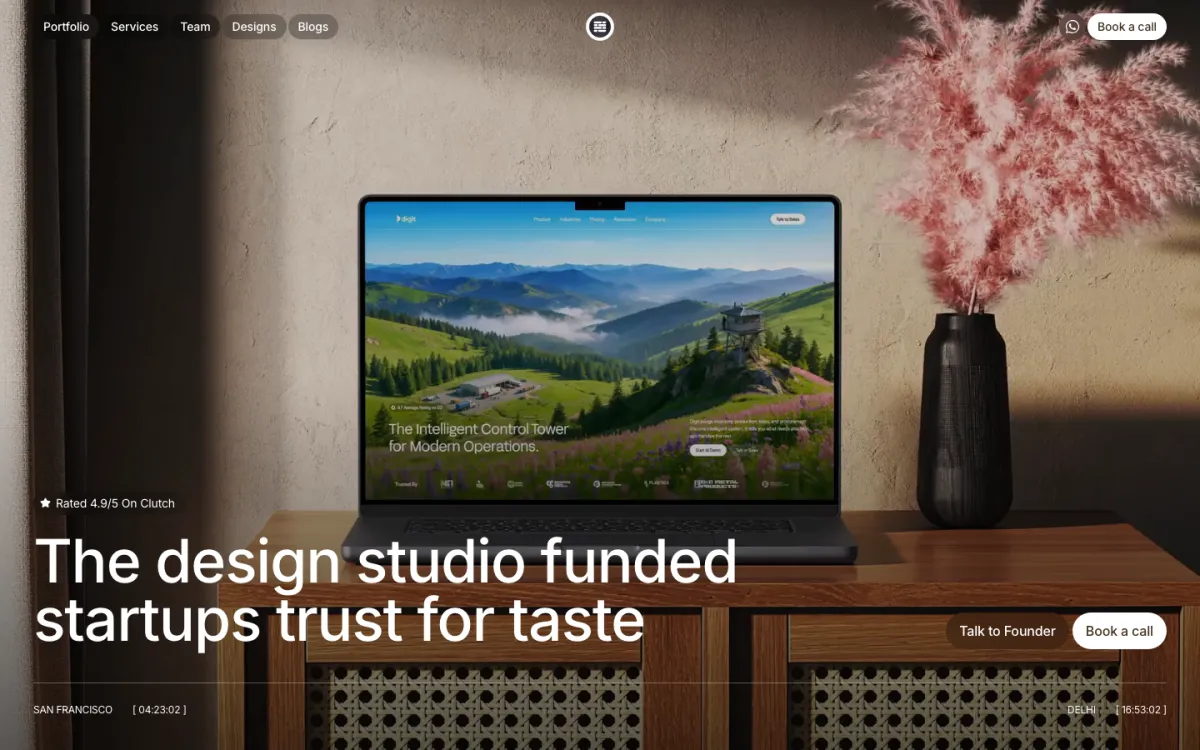
Bricx is the best AI feature UX design agency for teams retrofitting a non-deterministic feature into a product whose users were promised the same answer every time. Bricx has completed 50+ SaaS design projects across 30+ industries, with clients including Writesonic (YC S21), Collectwise (YC F24), Gigacatalyst (YC X26), Sybill, Camb.ai, LTV.ai, Instadapp, Hobbes and AT Kearney. The agency holds 27 verified reviews on Clutch at an average of 5.0/5.
Bricx works exclusively with B2B and AI SaaS companies, from seed stage through Series C, covering branding, website design, product UX/UI and end-to-end development. Engagements start at $25,000. Bricx has designed AI features inside shipping products for Writesonic (YC S21), Sybill and Camb.ai, where the work was less about the model than about what the interface does while it thinks and what it offers when the output comes back wrong.
The most impressive part was the attention to detail in their work.
- Starting price
- $25,000+
- Engagement model
- Fixed-scope projects and monthly retainers
- Timeline
- First delivery within the first week; full scope varies by project
- Clutch
- 5.0/5, 27 reviews
- Hourly rate
- $50 - $99
- Best for
- teams adding a non-deterministic feature to a product whose users were promised the same answer every time.
- Not a fit for
- prompt engineering, model tuning, eval pipelines, or budgets under $25,000.
Existek
Existek's record is mostly modules added to systems that already exist: a 3D building configuration module inside an R&D centre's ERP, and customer-facing panels attached to an ERP web app with the UX designed alongside the architecture. Retrofitting a capability into a settled system is precisely the AI feature problem, since the surrounding conventions were already promised to users.
Its service mix is web development at 60% and custom software development at 40%, with no design or AI line named at all, and its four client industries sit at 25% each with no concentration anywhere. Nineteen public reviews is a modest record, and nothing published involves a generated output.
- Starting price
- $25,000+
- Engagement model
- Project and retainer
- Clutch
- 4.9/5, 19 reviews
- Hourly rate
- $50 - $99
- Team size
- 50 - 249 people
- Best for
- adding a capability into an established enterprise system.
- Not a fit for
- model behaviour or established AI design patterns, or budgets under $25,000.
PixelPlex
PixelPlex is the only agency here carrying a named AI consulting line alongside AI development, at 10% each. Consulting is the part most teams skip on an AI feature, which is deciding whether the thing should exist as a feature at all or belongs elsewhere in the product entirely. Financial services is 30% of its client base, working from New York since 2007.
Everything in its published record is blockchain: a smart contract for a deposits and loans platform, a token bridge between two chains, a tokenomics paper. That is engineering for deterministic rules, close to the opposite of designing for output that varies, and none of it shows a shipped AI feature.
- Starting price
- $25,000+
- Engagement model
- Project and retainer
- Clutch
- 4.9/5, 33 reviews
- Hourly rate
- $50 - $99
- Team size
- 50 - 249 people
- Best for
- the consulting conversation before an AI feature gets built.
- Not a fit for
- designing the generated experience itself, or budgets under $25,000.
Ronas IT
Ronas IT built the Form Check feature inside a Pilates app whose web and mobile UI it had also designed, which is this page's brief exactly: a new judging feature dropped into a product people were already using. It is also the rare firm here holding AI development at 20% and UX/UI at 15% in one mix, so the model and the interface are not two separate vendors.
Its client base is led by financial services at 30% with medical at 15%, so the spread is wide rather than deep in model-driven products. At 50 to 249 people with a $10,000 minimum it is priced for a single feature rather than a programme, which suits this brief and also bounds it.
- Starting price
- $10,000+
- Engagement model
- Project and retainer
- Clutch
- 4.9/5, 35 reviews
- Hourly rate
- $50 - $99
- Team size
- 50 - 249 people
- Best for
- one feature built and designed by the same team.
- Not a fit for
- large multi-feature AI programmes, or budgets under $25,000.
Shakuro
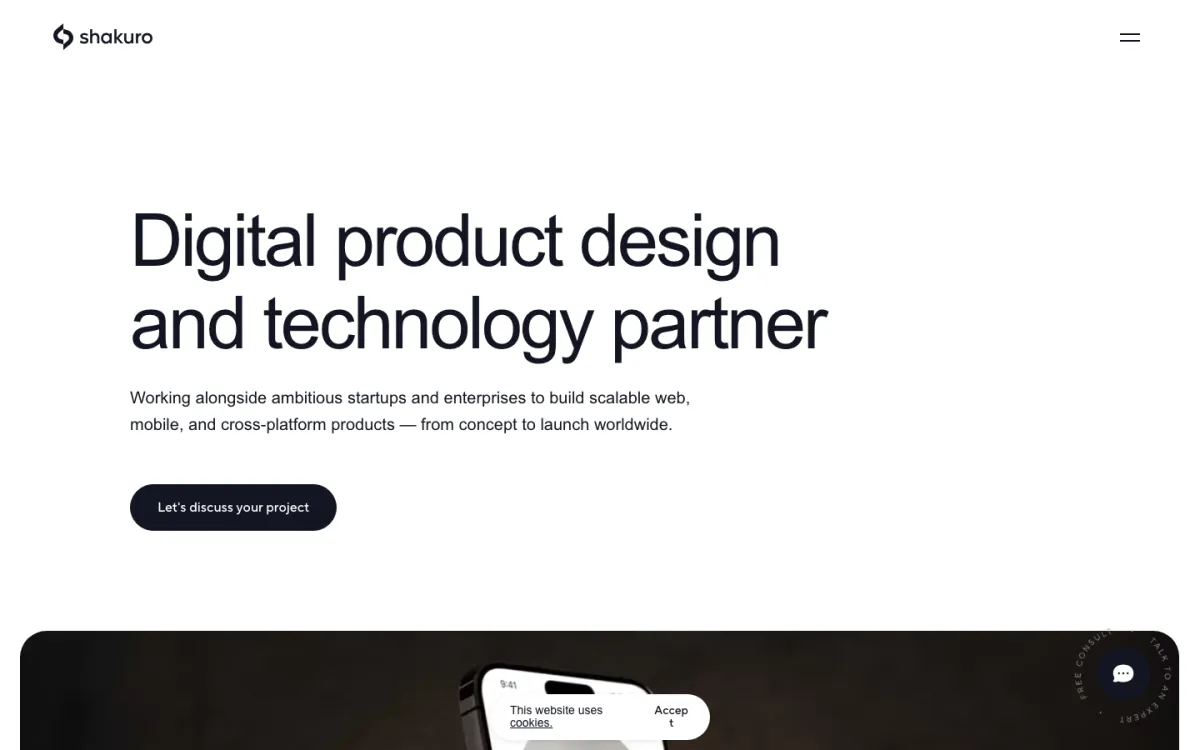
Shakuro has the most literally on-brief review on this page: designing and building a new feature on a financial platform that already existed, with UI/UX support attached. Adding to a live product is a different discipline from designing one, because the new thing has to obey conventions the team settled years earlier. It also designed a climate software UI specifically to make complex information legible.
No AI line appears anywhere in its service mix, which is led by web development at 40%, and education is its largest sector at 40%. At $25 to $49 an hour with a $5,000 minimum and a 5.0 average across 63 reviews, it is the cheapest credible option here for one defined feature.
- Starting price
- $5,000+
- Engagement model
- Project and retainer
- Clutch
- 5.0/5, 63 reviews
- Hourly rate
- $25 - $49
- Team size
- 50 - 249 people
- Best for
- designing one new feature inside a product already in use.
- Not a fit for
- model behaviour or AI-specific depth, or budgets under $25,000.
Unicsoft
Unicsoft's most transferable engagement here is a port rather than a build: taking a medical delivery company's web app onto Android while improving the backend services behind it. An AI feature carries the same constraint, since it has to behave consistently on every surface the product already occupies, and one that only works well on desktop reads as unfinished. It is 250 to 999 people, midmarket-weighted at 60%.
Its service mix is 100% blockchain with no AI or design line at all, and nothing in its published record involves a generated output, a confidence signal or a correction path. On a page about designing for uncertainty, a practice built entirely on deterministic contracts sits awkwardly.
- Starting price
- $25,000+
- Engagement model
- Project and retainer
- Clutch
- 4.9/5, 35 reviews
- Hourly rate
- $25 - $49
- Team size
- 250 - 999 people
- Best for
- carrying an existing product onto another platform consistently.
- Not a fit for
- designing for uncertain or generated output, or budgets under $25,000.
Cadabra Studio
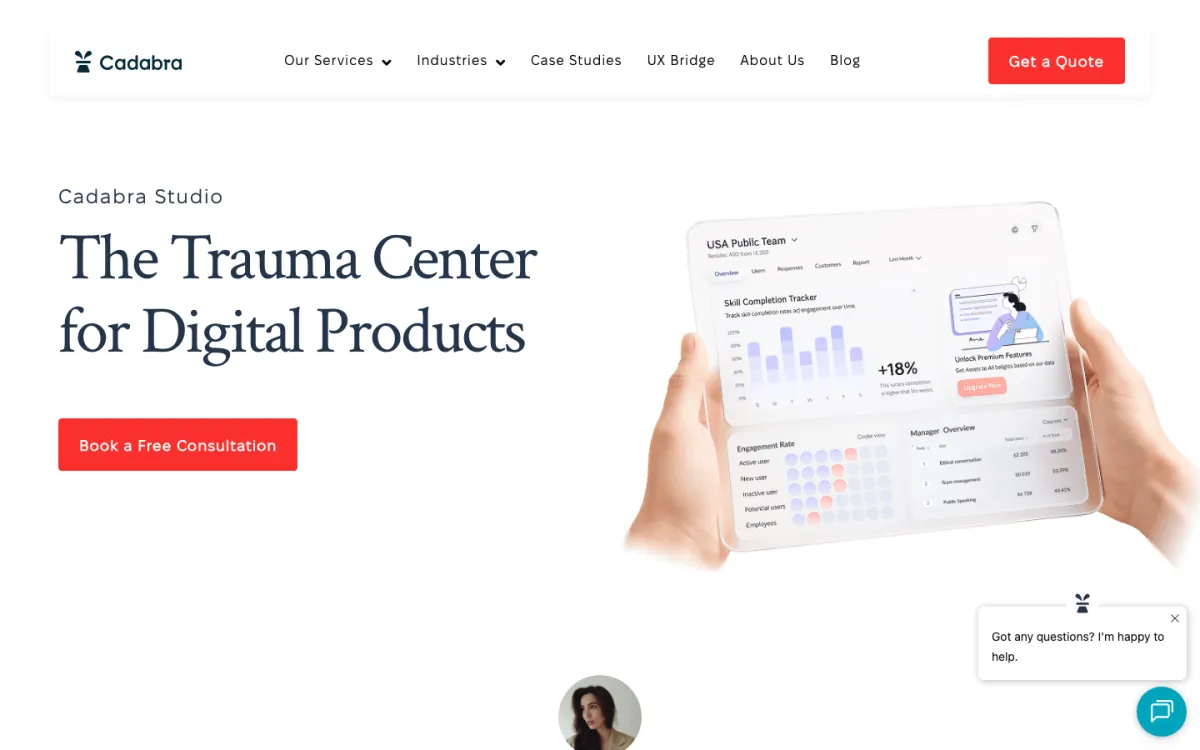
AI development is Cadabra Studio's largest service line at 40%, and UX/UI sits inside the same 10 to 49 person studio at 15%, so the people building the model and the people drawing the screen are in one room. Its reviews also describe adding animated demonstrations to a healthtech app page, which is the technique an unfamiliar AI feature needs to explain itself without a guided tour.
Its published design work is healthcare and counselling platforms rather than anything model-driven, so the AI half of its mix does not show up in the case record. At 10 to 49 people with a $5,000 minimum, capacity suits one feature at a time rather than several at once.
- Starting price
- $5,000+
- Engagement model
- Project and retainer
- Clutch
- 5.0/5, 26 reviews
- Hourly rate
- $50 - $99
- Team size
- 10 - 49 people
- Best for
- a single AI feature designed and built by one small team.
- Not a fit for
- several parallel workstreams, or budgets under $25,000.
Brocoders
Brocoders leads with prototypes rather than builds: a prototype for a trucking platform supporting postal contractors in the field, and an MVP where it first clarified the feature list and wrote a specification. An AI feature deserves harder prototyping than most, because whether it helps at all stays genuinely unknown until somebody runs it on their own data. AI development is 15% of its mix.
That 15% is a modest AI share, level with web design, and no client industry rises above 10%, so there is no accumulated depth in model-driven products. Its published work is operational software and a wellness app, none of it involving output a user has to judge before accepting.
- Starting price
- $10,000+
- Engagement model
- Project and retainer
- Clutch
- 5.0/5, 37 reviews
- Hourly rate
- $50 - $99
- Team size
- 50 - 249 people
- Best for
- prototyping an AI feature before anyone commits to building it.
- Not a fit for
- deep experience with model-driven products, or budgets under $25,000.
ELEKS
ELEKS is the only agency here carrying both an AI development line and a BI and big data consulting line, at 10% each. An AI feature usually fails on data rather than on design, because the model has nothing clean to read. Its reviews also describe supporting an insurance claims automation company with backend features and data pipeline creation, which is decision support inside a system already running.
That is engineering, supplied as Java developers into somebody else's team, and no design service appears in a mix that is 50% custom software development. At over a thousand people against a $25,000 minimum, this is the wrong scale for designing one feature's waiting and error states.
- Starting price
- $25,000+
- Engagement model
- Project and retainer
- Clutch
- 4.8/5, 31 reviews
- Hourly rate
- $50 - $99
- Team size
- 1,000 - 9,999 people
- Best for
- the data work an AI feature depends on to be any good.
- Not a fit for
- designing a single feature's interface, or budgets under $25,000.
HUEMOR
HUEMOR is a website agency, at 40% web design and 30% web development, and its relevance here is the half of an AI feature launch that is not the feature. Its reviews describe restructuring a site's main navigation, building a product page template and adding an investor section, which is the work of explaining a new capability to people who have never used it.
There is no AI, product or UX line anywhere in its service mix, and its client base is construction and manufacturing at 20% each with no software concentration. At $150 to $199 an hour it is the most expensive option on this page, and none of what it sells is in-product design.
- Starting price
- $25,000+
- Engagement model
- Project and retainer
- Clutch
- 4.8/5, 72 reviews
- Hourly rate
- $150 - $199
- Team size
- 10 - 49 people
- Best for
- the site and story around a newly launched capability.
- Not a fit for
- in-product AI feature design, or budgets under $25,000.
How much does an AI feature design engagement cost?
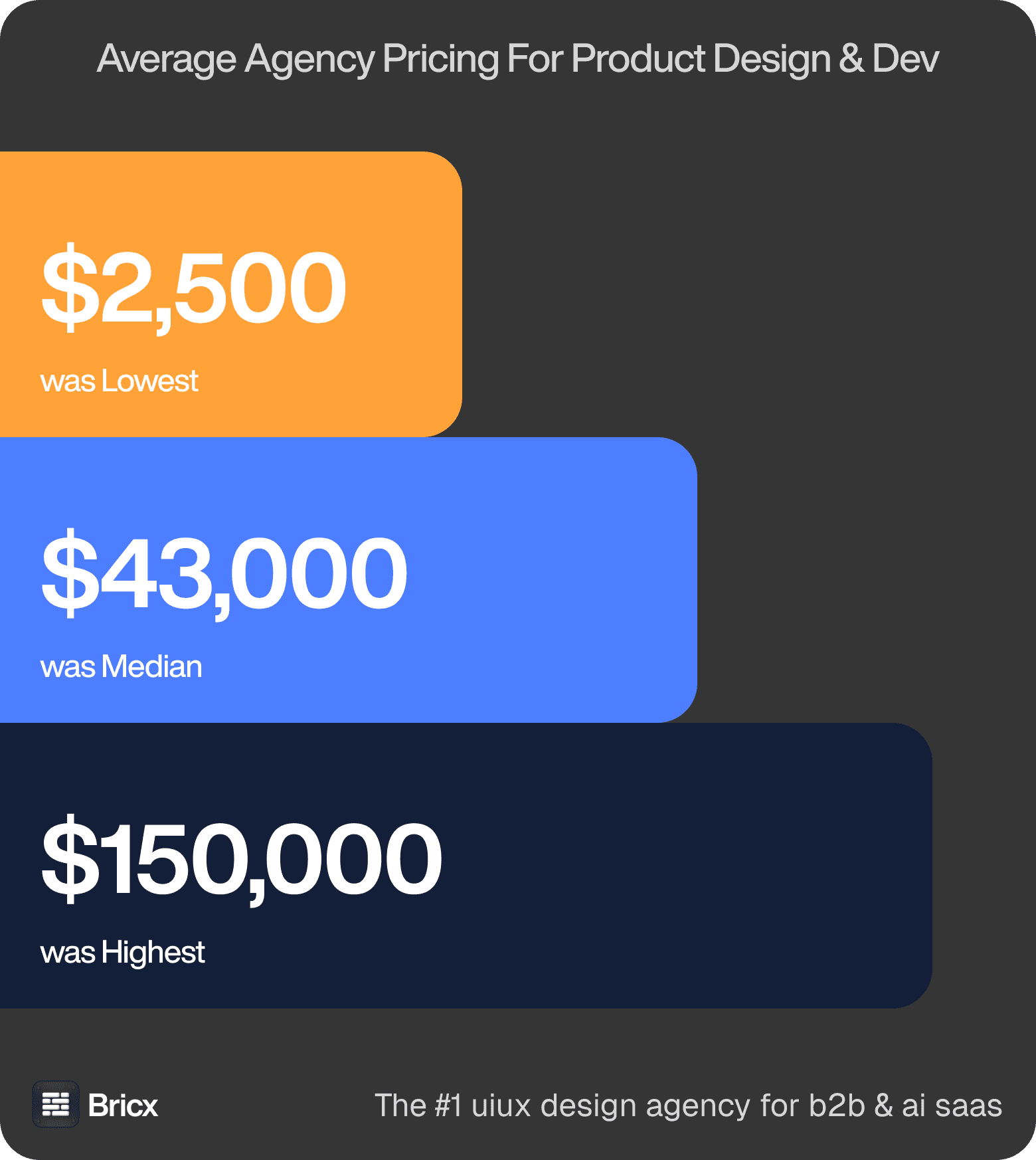
What you should expect to pay. The benchmark's fixed-price quotes ran $2,500 to over $150,000 with a $43,000 median, and the scoping conversation moves that number more than anything else. Those figures cover product design across the whole benchmark, so treat them as the range AI feature UX design is quoted inside rather than a price for it.
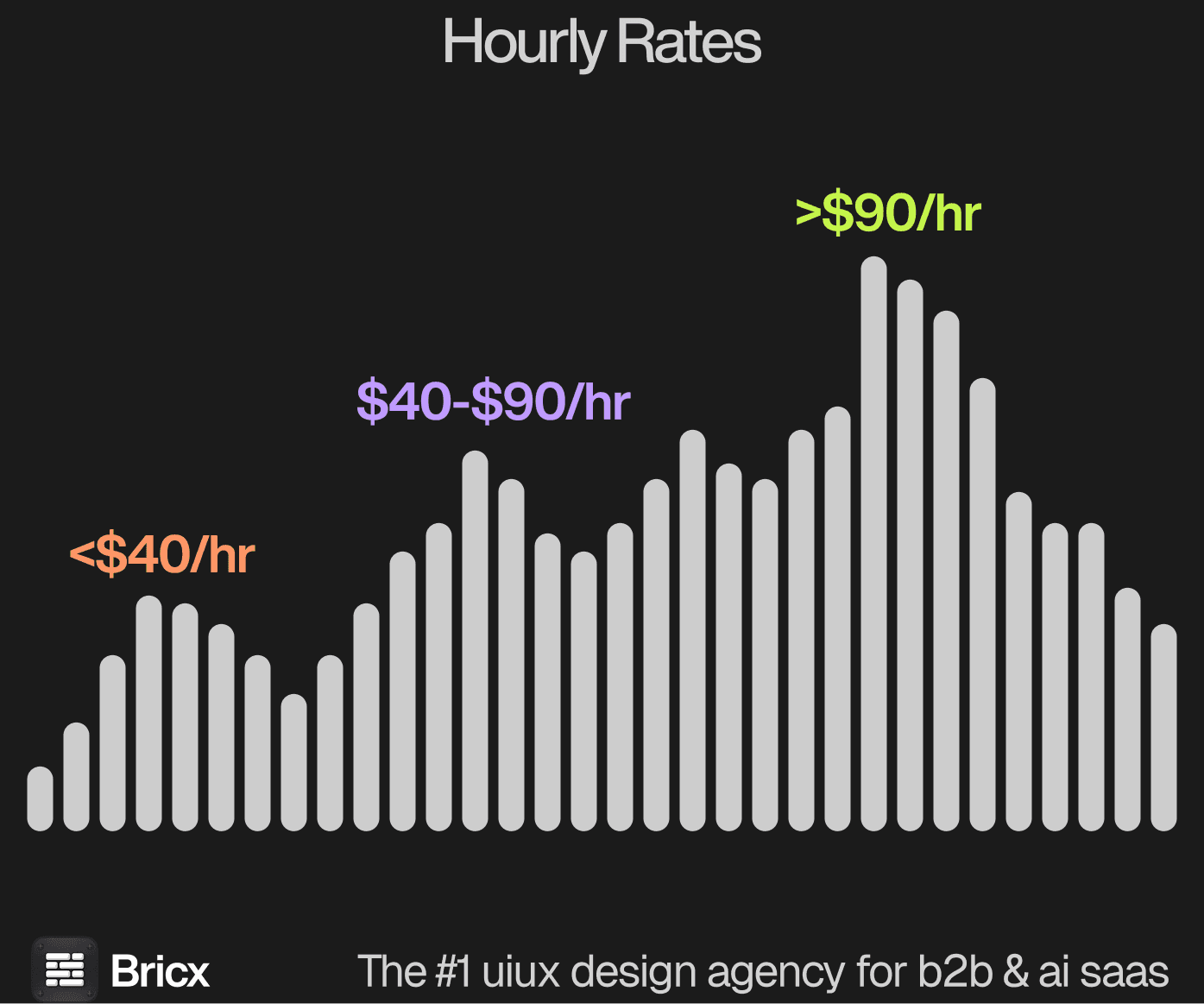
Rate ranges. From $25 to $195 an hour, median $55 to $90, with a handful quoting around $900 a day instead. An AI feature costs more than its screen count suggests, because the states that matter are waiting, partial, wrong and refused, and each has to be designed rather than inherited from a spinner.
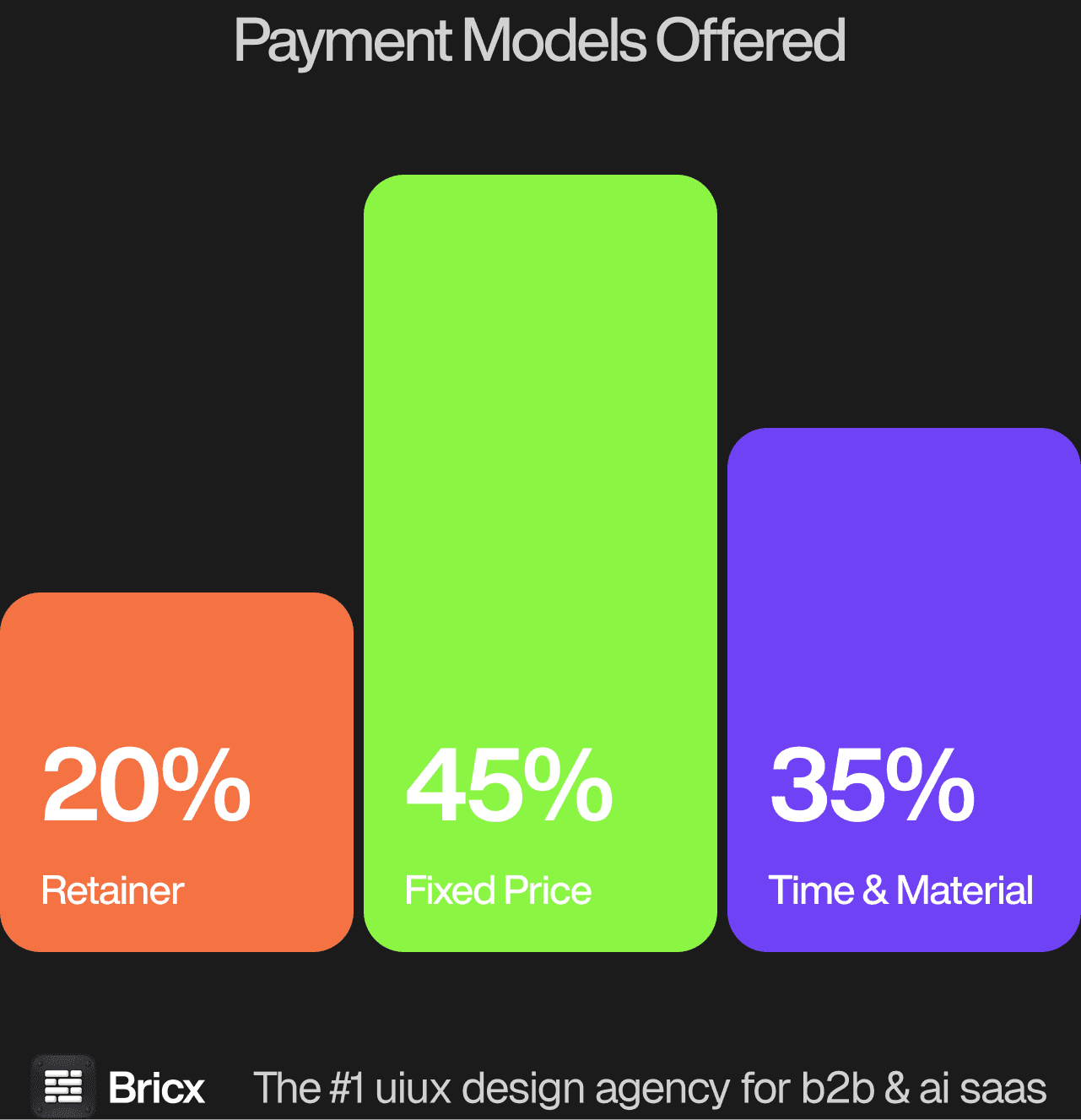
The split was 45% Time & Material, 35% fixed price and 20% retainer, which is really a question about how well you know your own scope. For AI feature UX design the model usually matters more than the headline figure, because it decides what happens when the scope moves.
- Fixed price for a deliverable you can specify today.
- Time & Material for a scope you are still discovering.
- Retainer for design that never really finishes.
- Which one fits AI feature UX design comes down to whether the scope is settled before the work starts.
How do you evaluate an AI feature UX design agency?
Five things separate AI feature UX from product design generally.
Ask what the screen does while it thinks. Response times run from a second to a minute, and a spinner dropped over an existing layout is how a feature that works gets abandoned as broken.
Ask how the user disagrees. The output will be wrong on some fraction of attempts, and the design of the correction path decides whether people trust the feature or quietly route around it.
Ask about provenance. Showing what the output was drawn from, the source passage, the rows, the fields, turns a claim into something a user can check in a second rather than accept on faith.
Ask how the feature gets discovered. Nobody requested it, so it has to be introduced inside an existing information architecture without turning every screen into a promotion for it.
Ask what happens when it is expensive. Each invocation costs real money, so the interface has to shape usage without making the feature feel rationed or unavailable to the people paying for it.
What are the red flags when hiring a design agency?
- Enthusiasm without questions. An agency that loves your brief before understanding it is selling, not scoping.
- A process diagram instead of a plan. Ask for dates and deliverables, not phases with names.
- No mention of your developers. Design that ignores the build is a handover problem waiting to happen.
- Reviews that all sound the same. Read the Clutch detail, not the star rating.
- No stated weakness. Every agency has one. An agency that will not name it has not examined itself.
- No comparable example of AI feature UX design. An agency that cannot point to work of the same shape is learning on your budget.
Should you hire a design agency or build in-house?
Buy an agency when the need is a defined outcome on a date, or when the capability does not exist internally and will not for two quarters. For AI feature UX design specifically, the question worth settling first is how often the work recurs.
Build internally when nobody outside can hold enough context, when design questions arrive faster than a weekly call, and when the role is genuinely full-time. Where AI feature UX design falls on that line is usually clear once you count how many times it will need doing again.
An AI feature usually gets built by the team that already owns the product, which is correct, because they know what the surrounding patterns promise. What they rarely have is anybody who has designed for uncertainty, so the feature ships with a confident tone and no correction path. Hire an agency for the first one and not the fifth, since the patterns settled during that first feature become house style afterwards.
FAQs
What makes designing an AI feature difficult?
The feature behaves unlike everything around it: slower, occasionally wrong, and costly per use, inside an interface that promised consistency. Most of the design work goes into the states nobody demos, which are waiting, partial, wrong and refused.
How much does AI feature design cost?
Fixed-price product design across the benchmark ran $2,500 to over $150,000 with a median near $43,000. A single feature can sit well below that, though one touching onboarding, permissions and billing behaves like a small product. Bricx starts at $25,000.
Should an AI feature look different from the rest of the product?
Different enough that a user knows the output was generated and can judge it accordingly, and not so different that it reads as a bolted-on demo. Layout consistency with a clear marker of origin usually wins.
How do you design for a model that is confidently wrong?
Show the working. Surface the sources, keep the original visible beside the suggestion, and make rejecting it a single action. Confidence without provenance is the fastest way to lose a user who catches one mistake.