10 Best Align UI Design Agencies (2026)
The 10 best align UI design agencies, compared on pricing, Clutch rating, engagement model and hourly rate, drawn from a documented benchmark of 57 agencies.
Aug 20, 202611 min read
Best align UI design agencies
Align UI is a purchased component library, and hiring around one inverts the usual brief. The components already exist, so what is being bought is restraint and naming rather than invention. A team that detaches components to get a screen finished breaks the link that makes the next kit update free. A team that leans on the kit's demo styling ships a product indistinguishable from every other product built on it. And the kit's variables have to map onto whatever the codebase already calls its tokens, or the file and the code drift apart within a quarter.
Ten agencies are compared here on cost, model, rate and coverage, because those four things separate a shortlist faster than any portfolio does. Every agency here carries a verified Clutch profile, and the ratings below are taken from it. Each entry says what an agency is worth hiring for and where it is the wrong choice for design work on Align UI.
How the ten agencies compare
| Agency | Best for | Starting price | Clutch rating | Not a fit for |
|---|---|---|---|---|
| Bricx | Product built on a bought kit | $25,000+ | 5.0/5, 27 reviews | Kit customisation only, plugin work |
| Empeek | One UI across web and mobile | $10,000+ | 5.0/5, 20 reviews | Documented component library practice |
| Alty | Re-skinning a live app | $25,000+ | 5.0/5, 19 reviews | Products outside financial services |
| Anadea | Component-heavy screens on a budget | $10,000+ | 4.8/5, 35 reviews | Consistent team, systems discipline |
| Andersen Inc. | Large teams on one library | $50,000+ | 4.9/5, 129 reviews | Design-led systems work |
| Apadmi | Mobile products from a kit | $100,000+ | 4.8/5, 29 reviews | Small adoption budgets, systems work |
| Appinventiv | Kit components into React Native | $50,000+ | 4.6/5, 90 reviews | Design system leadership |
| Attract Group | Designers and developers paired | $25,000+ | 5.0/5, 39 reviews | Independent design direction |
| Awsmd | Figma to Next.js pipeline | $10,000+ | 4.8/5, 41 reviews | Application interfaces, systems depth |
| Binariks | Data layer behind dense screens | $10,000+ | 4.9/5, 66 reviews | Component library work |
Best Align UI design agency: Bricx
Bricx is the best teams that bought Align UI to move faster and now need somebody to keep the product from looking like the kit's own demo file. Bricx has completed 50+ SaaS design projects across 30+ industries, with clients including Writesonic (YC S21), Collectwise (YC F24), Gigacatalyst (YC X26), Sybill, Camb.ai, LTV.ai, Instadapp, Hobbes and AT Kearney. The agency holds 27 verified reviews on Clutch at an average of 5.0/5.
Bricx works exclusively with B2B and AI SaaS companies, from seed stage through Series C, covering branding, website design, product UX/UI and end-to-end development. Engagements start at $25,000. Bricx builds B2B and AI SaaS products from a component library outward, keeping variables attached and naming consistent so the file still matches the code six months later. It also designs brand and website alongside the product, which is where a kit gives the least help. From $25,000.
A whole new user interface was designed in 30 days. Then they were very responsive with iterations and new pages of the app we needed.
- Starting price
- $25,000+
- Engagement model
- Fixed-scope projects and monthly retainers
- Timeline
- First delivery within the first week; full scope varies by project
- Clutch
- 5.0/5, 27 reviews
- Hourly rate
- $50 - $99
- Best for
- building a real product on Align UI without it looking like the demo.
- Not a fit for
- kit customisation or plugin development alone, or budgets under $25,000.
Empeek
Empeek's most relevant work is a mobile and web ecosystem for a medtech manufacturer, where it designed the UI across both surfaces at once. Keeping one component set honest across web and mobile is the problem a bought library exists to solve, and doing it in medical software, 65% of its client base, means the defaults get stress-tested by dense forms and clinical data.
There is no design service line in a mix led by custom software development at 40%, and nothing published mentions a design system, a component library or Figma. A team hired to work inside a kit needs to have demonstrated that discipline somewhere, and this record does not show it.
- Starting price
- $10,000+
- Engagement model
- Project and retainer
- Clutch
- 5.0/5, 20 reviews
- Hourly rate
- $25 - $49
- Team size
- 50 - 249 people
- Best for
- keeping one component set consistent across web and mobile builds.
- Not a fit for
- documented design system practice, or budgets under $25,000.
Alty
Alty is the closest match here to the Align UI scenario: a bank hired it to modernise an existing app's interface in Figma, and it redesigned another financial institution's iOS and Android apps after stakeholder interviews. Re-skinning a live product onto a new component set is exactly that job. Financial services is 80% of its client base and 65% of clients are enterprises.
That concentration is also the limit: 80% in one sector means banking conventions, and a kit-based product outside financial services is unfamiliar ground. Only 5% of its clients are small businesses, and nothing published names a design system or component library as a deliverable.
- Starting price
- $25,000+
- Engagement model
- Project and retainer
- Clutch
- 5.0/5, 19 reviews
- Hourly rate
- $50 - $99
- Team size
- 50 - 249 people
- Best for
- moving an existing financial product onto a new component set.
- Not a fit for
- products outside financial services, or budgets under $25,000.
Anadea
Anadea works mostly with small businesses, 55% of its book, which is who buys a component library instead of building one, and it charges $25 to $49 an hour. Its published work includes a filterable policy toolbox where the layout had to let users narrow tools by area, a component-heavy screen rather than a marketing page, plus a fintech core platform.
One review notes the team size fluctuated with the timeline, which is the opposite of what component discipline needs: consistency comes from the same people holding the same conventions. No design line appears in its service mix, and its industries spread across education, financial services and real estate at 20% each.
- Starting price
- $10,000+
- Engagement model
- Project and retainer
- Clutch
- 4.8/5, 35 reviews
- Hourly rate
- $25 - $49
- Team size
- 50 - 249 people
- Best for
- building filter and data-heavy screens cheaply from an existing kit.
- Not a fit for
- sustained systems discipline from one team, or budgets under $25,000.
Andersen Inc.
Andersen carries 129 Clutch reviews, the largest public record on this page, and at 1,000 to 9,999 people it is the kind of vendor where many hands touch one file. That is the case where a shared component library earns its cost: a purchased kit is the only practical way to keep a large distributed team producing one coherent product. It has run since 2007.
Its business is outstaffing and managed services rather than design: IT managed services and IT strategy consulting take 15% each, and one review describes supplying vetted candidates into a client's team. Design arrives inside those engagements, and nothing published mentions a design system or a component library.
- Starting price
- $50,000+
- Engagement model
- Project and retainer
- Clutch
- 4.9/5, 129 reviews
- Hourly rate
- $50 - $99
- Team size
- 1,000 - 9,999 people
- Best for
- keeping a large distributed team building from one component set.
- Not a fit for
- design-led systems work, or budgets under $25,000.
Apadmi
Apadmi is 60% mobile app development, and a component library designed for the web is where a mobile build gets into trouble: touch targets, platform navigation conventions and the density a kit assumes all have to be re-decided. This team ships iOS and Android products continuously, including a subscription news app it also hosts and maintains.
Its $100,000 minimum is the highest on this page, which is a lot to spend on adopting a kit, and its published work is consumer apps for a pizza chain, a news organisation and a telecoms company. Mobile and app marketing at 20% is its second service line, with no design system practice named anywhere.
- Starting price
- $100,000+
- Engagement model
- Project and retainer
- Clutch
- 4.8/5, 29 reviews
- Hourly rate
- $100 - $149
- Team size
- 250 - 999 people
- Best for
- taking a web-shaped component set properly onto mobile.
- Not a fit for
- a contained kit adoption project, or budgets under $25,000.
Appinventiv
Appinventiv's published MVP was built in React Native with Firebase, which matters when the starting point is a component library: a kit's components map onto coded components, and a team already working that way can carry variants and states straight through rather than reinterpreting screens. It is 1,000 to 9,999 people charging $25 to $49 an hour.
Its 4.6 rating across 90 reviews is the lowest here, and its service mix is AI development at 40%, mobile at 40% and custom software for the rest, with no design line and no published design system work. A $50,000 floor also assumes a build rather than a kit adoption.
- Starting price
- $50,000+
- Engagement model
- Project and retainer
- Clutch
- 4.6/5, 90 reviews
- Hourly rate
- $25 - $49
- Team size
- 1,000 - 9,999 people
- Best for
- carrying a component library straight into a React Native build.
- Not a fit for
- design system leadership and naming discipline, or budgets under $25,000.
Attract Group
Attract Group supplies dedicated designers and developers on the same engagement, with one review describing UI/UX design in Figma alongside the build. That pairing is what makes a bought library survive: the person naming a variant and the person writing the coded component sit in one team. Its work splits evenly, 50% mobile and 50% web development, at $25 to $49 an hour.
The model is outstaffing, so direction stays with you: another review is cloud infrastructure and deployment support for a fintech, which is not design at all. Medical at 40%, retail and eCommerce at 30% each lead its industries, and no design system or component library work appears in its record.
- Starting price
- $25,000+
- Engagement model
- Project and retainer
- Clutch
- 5.0/5, 39 reviews
- Hourly rate
- $25 - $49
- Team size
- 50 - 249 people
- Best for
- designers and engineers working the same kit inside one team.
- Not a fit for
- independent design direction, or budgets under $25,000.
Awsmd
Awsmd's record names the pipeline a component library actually runs on: it redesigned a site's UI in Figma and built it in Next.js, then used Figma again on a Web3 build. Figma components at one end and React components at the other is the whole mechanism by which a kit saves anybody time. Eighty percent of its clients are enterprises.
All of that published work is websites rather than application interfaces, where a component library matters most and gets tested hardest. Mobile app development is 50% of its mix, its four industries sit at 25% each with no software concentration, and no design system practice is described anywhere.
- Starting price
- $10,000+
- Engagement model
- Project and retainer
- Clutch
- 4.8/5, 41 reviews
- Hourly rate
- $50 - $99
- Team size
- 250 - 999 people
- Best for
- a site built straight from Figma components into Next.js.
- Not a fit for
- dense application interfaces and systems depth, or budgets under $25,000.
Binariks
Binariks is the data-heavy option here, AI development at 30% and BI and big data consulting at 15%, with medical at 50% and insurance at 30% of its clients. Where a kit strains is dense tables, filters and reporting screens, and this team has built the layer that feeds them, including a cloud integration engine connecting a decision support system.
No design service appears anywhere in its mix and one review describes submitting candidates for the client to vet, which is staffing rather than a studio relationship. For anyone hiring specifically to work inside a component library, this is the least relevant profile on the page.
- Starting price
- $10,000+
- Engagement model
- Project and retainer
- Clutch
- 4.9/5, 66 reviews
- Hourly rate
- $50 - $99
- Team size
- 50 - 249 people
- Best for
- the data engineering behind reporting and table-heavy screens.
- Not a fit for
- design work inside a component library, or budgets under $25,000.
How much does an Align UI design engagement cost?
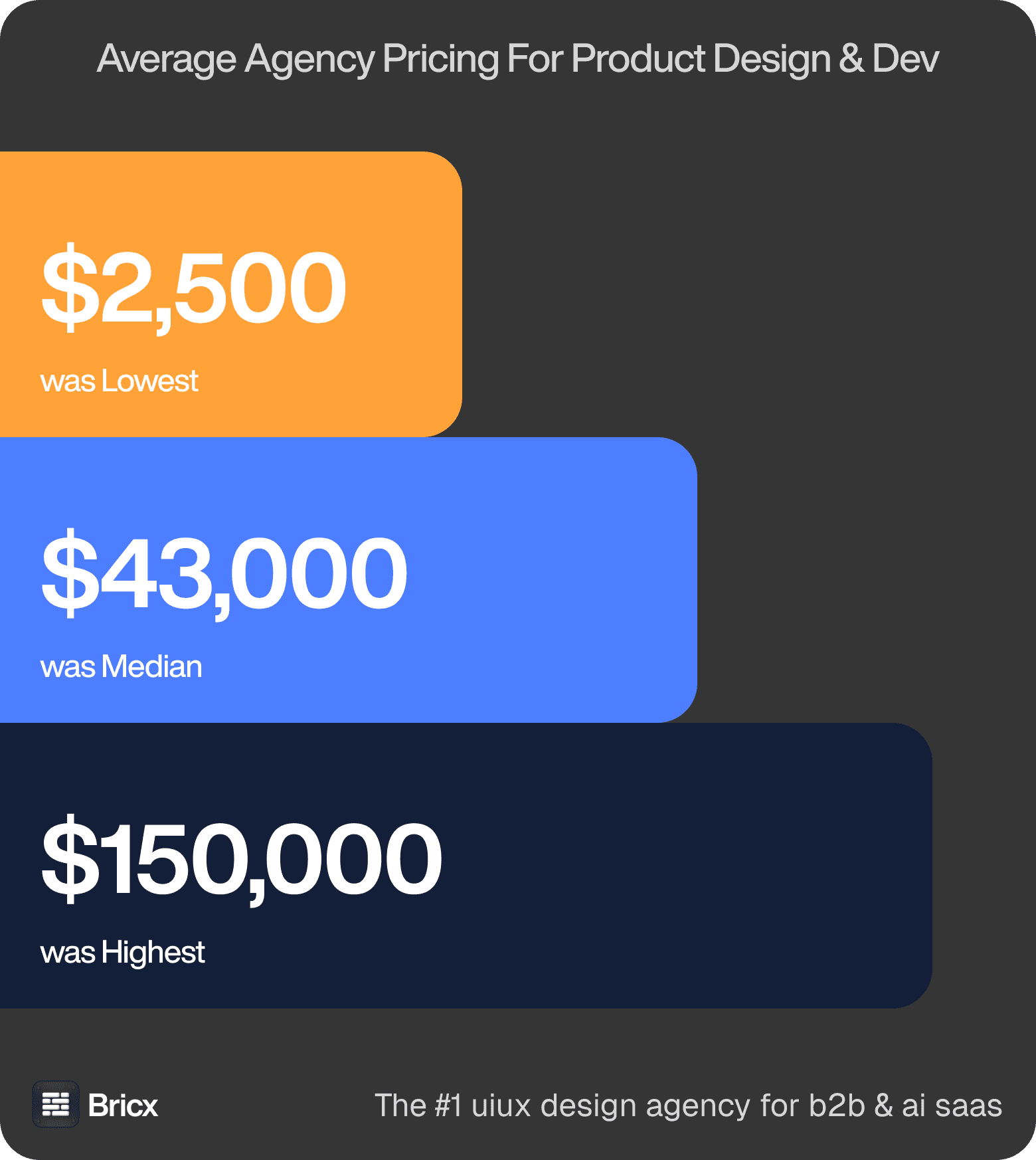
The spread nobody publishes. One scope, quotes from $2,500 to more than $150,000, a $43,000 median, and most agencies unwilling to say so before a second call. Those figures cover product design across the whole benchmark, so treat them as the range design work on Align UI is quoted inside rather than a price for it.
By the hour. $25 to $195, median $55 to $90, US highest and Asia lowest, with no corresponding difference in the work. Work on a bought component library costs less than a system built from scratch, though not as much less as expected, because the screens a kit does not cover are exactly the ones the product depends on.
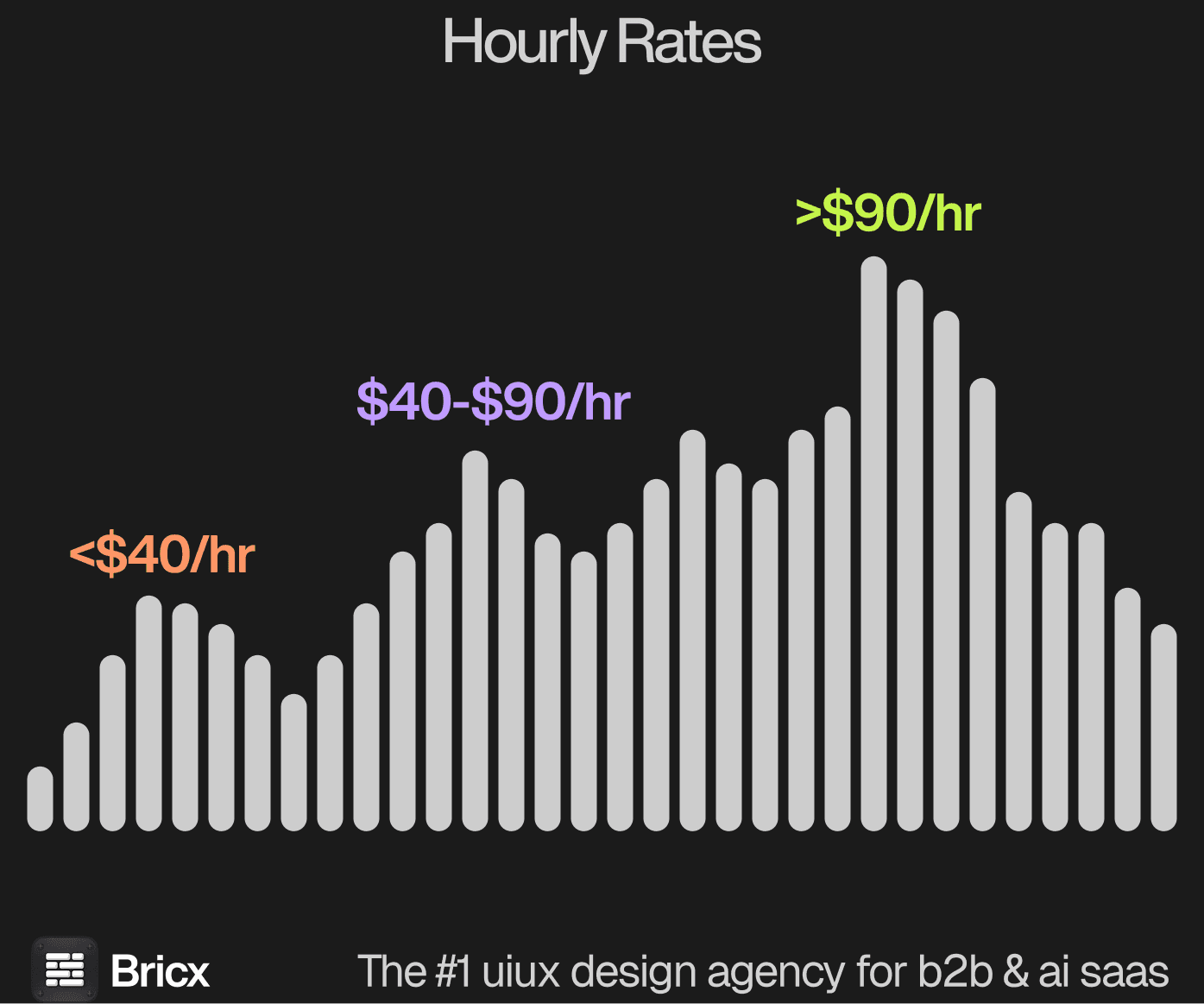
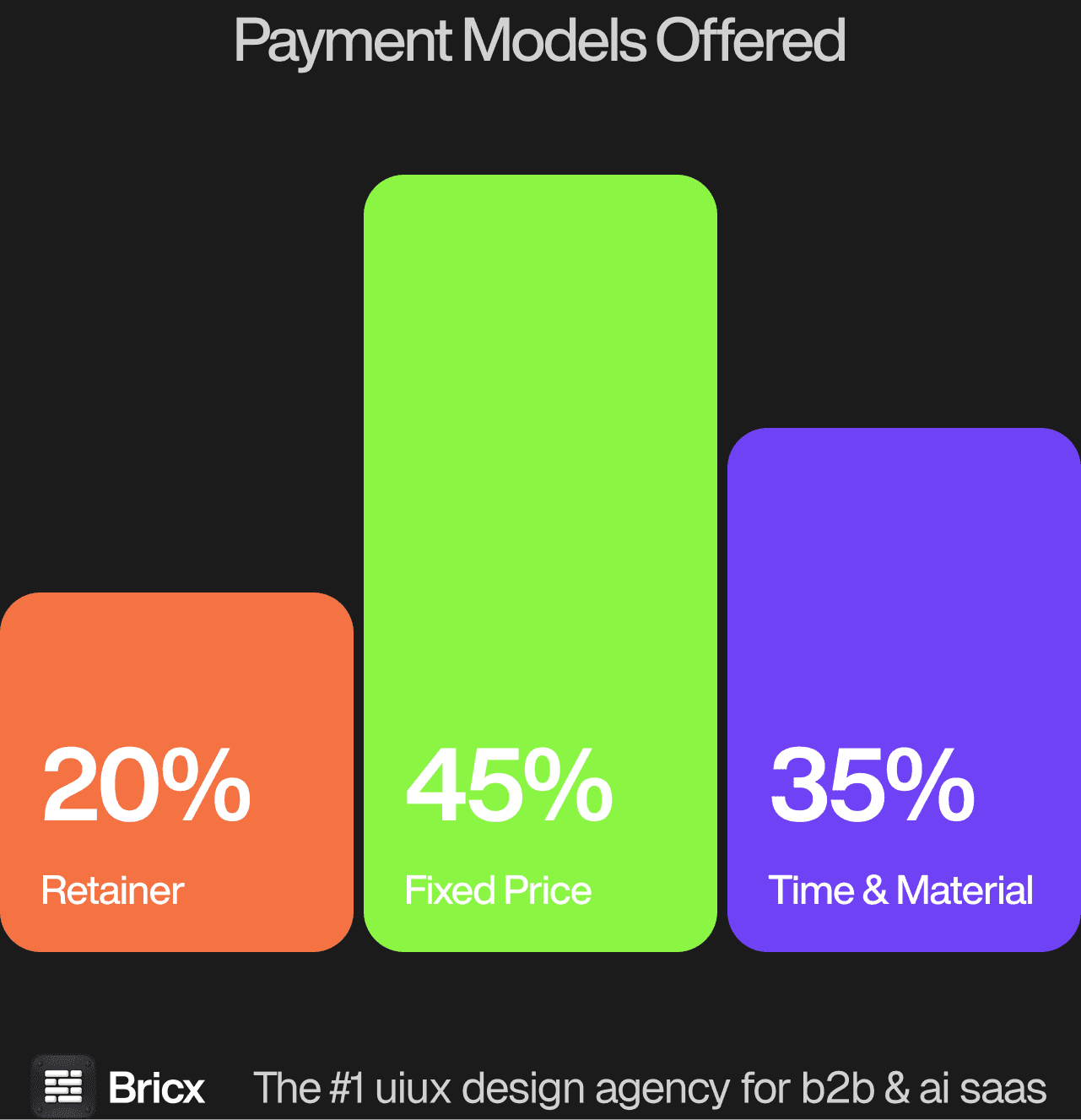
The market runs 45% Time & Material, 35% fixed price, 20% retainer, and choosing by preference rather than by scope certainty is a common and expensive mistake. For design work on Align UI the model usually matters more than the headline figure, because it decides what happens when the scope moves.
- Fixed price if the end state is known.
- Time & Material if it is not.
- Retainer if there is no end state.
- Which one fits design work on Align UI comes down to whether the scope is settled before the work starts.
How do you evaluate a design agency for an Align UI build?
Five things separate an Align UI engagement from a design project generally.
Ask what they do when no component fits. Every product has screens a general kit never anticipated, and the answer decides whether the system holds or quietly becomes two systems.
Ask how they keep components attached. Detaching an instance to finish a screen faster is how a library update stops reaching the file, and it stays invisible until that update lands.
Ask how the kit's variables map to your code. A component library only saves time when the design tokens and the code tokens share names, and reconciling two vocabularies later costs more than doing it first.
Ask how they stop it looking generic. Type, spacing scale, density and motion are where a bought kit gains a personality, and a team that only changes the primary colour has changed nothing.
Ask who maintains it after launch. A component library is a living artefact, and an engagement ending with a handover file and no owner leaves it frozen at launch day.
What are the red flags when hiring a design agency?
- Scope defined by hours rather than outcomes. Buying 200 hours tells you nothing about what exists at the end.
- A rate that only makes sense at volume. Cheap per hour and slow per decision is not cheap.
- No examples at your stage. Enterprise work does not prove they can ship on a seed runway.
- Design and research quoted as one line. Ask what proportion of the budget is actually research.
- No named limitation. Every agency is wrong for someone. One that will not say who has not thought about it.
- No comparable example of design work on Align UI. An agency that cannot point to work of the same shape is learning on your budget.
Should you hire a design agency or build in-house?
Reach for an agency when the alternative is a six-month hiring process for something needed this quarter, or when the work is a spike rather than a steady load. For design work on Align UI specifically, the question worth settling first is how often the work recurs.
Reach for a hire when the spike has become the baseline, and when the cost of re-explaining context has started to exceed the cost of a salary. Where design work on Align UI falls on that line is usually clear once you count how many times it will need doing again.
A bought component library is precisely what makes an in-house designer viable earlier, since the generic decisions arrive already made. The argument for retaining covers the first three months, when naming, variable mapping and density get set, and those are hard to change afterwards. The argument against is that a library needs somebody who lives with it, and an outside team will not be there when a component has to change on a Tuesday.
FAQs
What makes working on a bought component library hard?
The easy screens are already solved, so the engagement is entirely the hard ones, plus the discipline of keeping components attached and names consistent. Discipline is harder to buy than craft and harder to see in a portfolio.
How much does an Align UI engagement cost?
Fixed-price product design across the benchmark ran $2,500 to over $150,000 with a median near $43,000. Starting from a bought library moves a project down that range rather than off it, since the product-specific screens remain. Bricx starts at $25,000.
Does a bought kit make the product look generic?
Only if nobody changes anything beyond colour. Type scale, spacing, density and motion carry an identity, and the kit's own demo styling is the trap rather than the components themselves.
What should the engagement hand back?
A library with instances still linked, variables named to match the codebase, and a written note on what was deliberately changed from the kit. Without that last part, the next designer treats every override as an accident.