10 Best Ant Design System Agencies (2026)
The 10 best ant design system agencies, compared on pricing, Clutch rating, engagement model and hourly rate, drawn from a documented benchmark of 57 agencies.
Aug 20, 202611 min read
Best ant design system agencies
Ant Design is not a design file, it is a React library with several hundred components and strong opinions baked into every one. That inverts the usual hiring question. The work is not drawing screens, it is deciding which of Ant's defaults to keep, theming the token layer so the product stops looking like every other admin panel, and knowing which components to leave alone. Form and Table are where budgets die, because they carry the most behaviour, so overriding them means fighting the library on every release. The official Figma kit also drifts from the shipped version, so a design signed off in a file is not a promise.
Ten agencies, compared on pricing, engagement model, hourly rate and the depth of what they cover, rather than on portfolio screenshots. Every agency here carries a verified Clutch profile, and the ratings below are taken from it. Each entry says what an agency is worth hiring for and where it is the wrong choice for an Ant Design build.
How the ten agencies compare
| Agency | Best for | Starting price | Clutch rating | Not a fit for |
|---|---|---|---|---|
| Bricx | Ant Design themed, not forked | $25,000+ | 5.0/5, 27 reviews | Library forks, custom component engineering |
| Hyperlink InfoSystem | Admin panels built as routine | $25,000+ | 4.8/5, 174 reviews | Theming and visual direction |
| KeyUA | Pure engineering against a spec | $5,000+ | 4.9/5, 7 reviews | Making the token decisions |
| Mind Studios | Client portals designed and built | $10,000+ | 4.9/5, 34 reviews | Brand-level visual direction |
| Miquido | Make-or-buy platform decisions | $25,000+ | 4.9/5, 51 reviews | Web-first component work |
| Vilmate | One team through the upgrade | $25,000+ | 5.0/5, 11 reviews | Internal enterprise software depth |
| Cleveroad | Migrating screens onto a library | $10,000+ | 4.9/5, 81 reviews | Owning theme and visual system |
| Codica | Dashboard and search components | $25,000+ | 4.7/5, 17 reviews | Enterprise internal tool heritage |
| Dev Technosys | Screen volume at a low rate | $10,000+ | 4.8/5, 204 reviews | Theming and system decisions |
| Existek | ERP panels, designed and built | $25,000+ | 4.9/5, 19 reviews | Deep published design record |
Best Ant Design system agency: Bricx
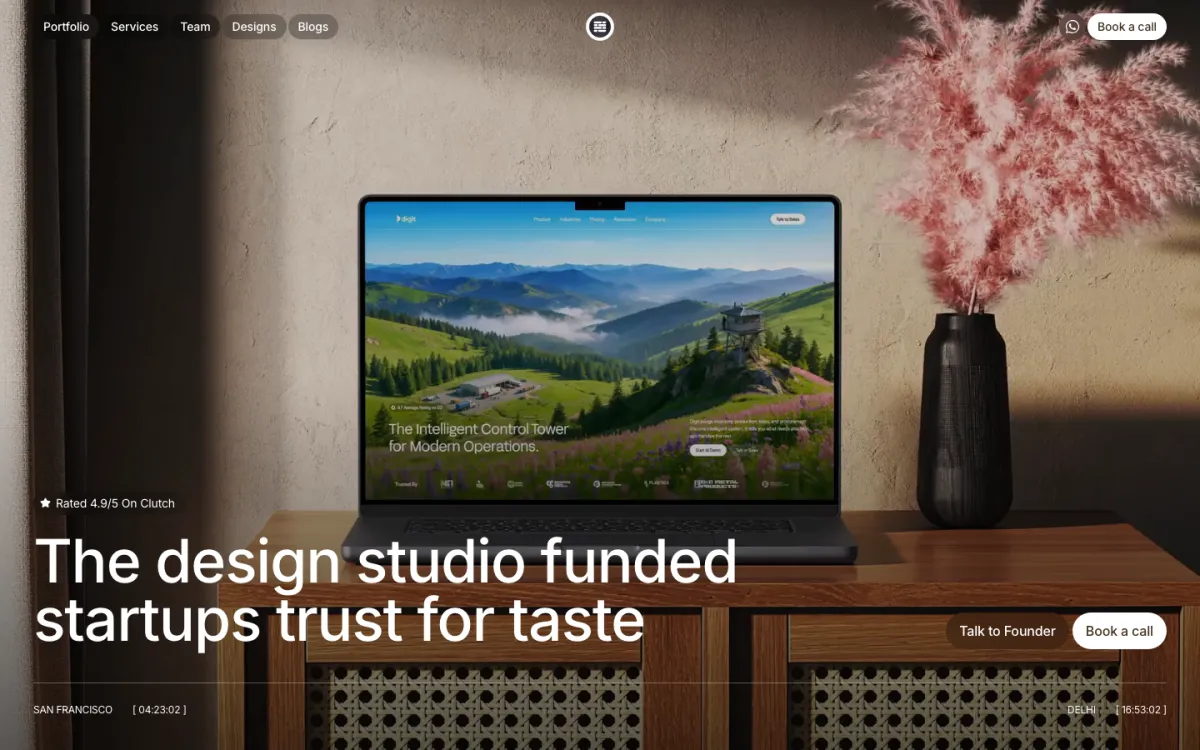
Bricx is the best teams who chose Ant Design for speed and now need the product to stop looking generic without forking the library into something nobody can upgrade. Bricx has completed 50+ SaaS design projects across 30+ industries, with clients including Writesonic (YC S21), Collectwise (YC F24), Gigacatalyst (YC X26), Sybill, Camb.ai, LTV.ai, Instadapp, Hobbes and AT Kearney. The agency holds 27 verified reviews on Clutch at an average of 5.0/5.
Bricx works exclusively with B2B and AI SaaS companies, from seed stage through Series C, covering branding, website design, product UX/UI and end-to-end development. Engagements start at $25,000. Bricx runs design and front-end development in the same team on B2B and AI SaaS products, which is the only way an Ant Design engagement stays honest, because every decision about a component either survives contact with the library or does not, and that gets settled in code.
A whole new user interface was designed in 30 days. Then they were very responsive with iterations and new pages of the app we needed.
- Starting price
- $25,000+
- Engagement model
- Fixed-scope projects and monthly retainers
- Timeline
- First delivery within the first week; full scope varies by project
- Clutch
- 5.0/5, 27 reviews
- Hourly rate
- $50 - $99
- Best for
- B2B and AI SaaS teams on Ant Design who need the product to stop looking generic while staying upgradeable.
- Not a fit for
- teams wanting the library rewritten from scratch, component engineering sold on its own, or budgets under $25,000.
Hyperlink InfoSystem
Hyperlink InfoSystem's booking engagement included web panels alongside the mobile apps and backend, and the admin panel behind a consumer product is precisely what Ant Design exists for. At 1,000 to 9,999 people with 174 Clutch reviews and a $25 to $49 rate, panel work of that kind is routine rather than a special project, which is the correct posture for a library that removes most of the invention.
No design service appears in its mix, which is led by 40% mobile app development, so nobody here is deciding the token layer that stops the product looking like every other Ant build. Information technology is 30% of its industries, and at this headcount the team assigned matters more than the firm's average.
- Starting price
- $25,000+
- Engagement model
- Project and retainer
- Clutch
- 4.8/5, 174 reviews
- Hourly rate
- $25 - $49
- Team size
- 1,000 - 9,999 people
- Best for
- shipping panels quickly where the component library removes the invention.
- Not a fit for
- theming and visual direction, or budgets under $25,000.
KeyUA
Web development is 80% of KeyUA's work, the most concentrated single service on this page, which matters because Ant Design is installed rather than drawn. Its named stack of Python, Django, Java and JavaScript is the classic backend sitting behind an Ant admin front end, and one review has it building an internal system on exactly that combination.
Seven Clutch reviews is the thinnest public record on this page, and 70% of its clients are under $10M. There is no design or UX line in its services, and its reviews describe delivering to another company's specification, so the decisions about tokens, density and which components to override would have to arrive already made.
- Starting price
- $5,000+
- Engagement model
- Project and retainer
- Clutch
- 4.9/5, 7 reviews
- Hourly rate
- $25 - $49
- Team size
- 50 - 249 people
- Best for
- implementing an Ant build where the design decisions are already settled.
- Not a fit for
- deciding the theme and component strategy, or budgets under $25,000.
Mind Studios
Mind Studios built a custom client portal where it did the full UX/UI design as well as the backend architecture and integrations. A client portal is the densest Ant Design use case there is: tables, forms, filters and role-based views, all of which the library ships opinions about. Doing the design and the architecture together is what lets those opinions be accepted or rejected deliberately.
Design is not a named service line even so: 55% custom software development and 35% AI development account for nearly everything. Real estate and logistics are 25% each, and its other published work is industrial computer vision for a grain company, which is capable engineering but tells you nothing about visual restraint.
- Starting price
- $10,000+
- Engagement model
- Project and retainer
- Clutch
- 4.9/5, 34 reviews
- Hourly rate
- $25 - $49
- Team size
- 50 - 249 people
- Best for
- a dense internal portal where design and architecture get decided together.
- Not a fit for
- brand-level visual direction, or budgets under $25,000.
Miquido
Miquido was hired by a lending company to evaluate loan management system suppliers and then design the target architecture around what it chose. That is the same decision as adopting Ant Design instead of building components: a make-or-buy call where the cost lands two years later. Nobody else on this page has a documented supplier evaluation on record.
Mobile app development is 70% of what it does, and Ant Design is a web library, so the centre of its practice is somewhere else. Its Flutter work and its financial services concentration at 40% point at consumer and mobile products rather than the dense web admin surfaces this library was written for.
- Starting price
- $25,000+
- Engagement model
- Project and retainer
- Clutch
- 4.9/5, 51 reviews
- Hourly rate
- $50 - $99
- Team size
- 50 - 249 people
- Best for
- deciding whether to adopt a system at all before committing to it.
- Not a fit for
- hands-on web component and theming work, or budgets under $25,000.
Vilmate
Vilmate's healthcare SaaS engagement covered backend, frontend, DevOps, design and QA as one team, which is the arrangement an Ant Design product actually needs, because the theme, the overrides and the upgrade all land on the same people. Another review describes redesigning an existing system to improve its UX rather than starting again, which is the usual Ant situation.
Eleven Clutch reviews is a thin record, and its service mix leads with eCommerce development at 30% and IT strategy consulting at 20%, neither of them component work. eCommerce is 40% of its industries, a storefront category rather than the internal, table-heavy software Ant Design was designed around.
- Starting price
- $25,000+
- Engagement model
- Project and retainer
- Clutch
- 5.0/5, 11 reviews
- Hourly rate
- $50 - $99
- Team size
- 50 - 249 people
- Best for
- keeping an Ant-based product themed, tested and upgraded by one team.
- Not a fit for
- deep internal enterprise software experience, or budgets under $25,000.
Cleveroad
Cleveroad migrated an IT company's frontend to a modern framework, rebuilding the main screens and their UI logic in React. Adopting Ant Design is almost always that job rather than a greenfield one: an existing app's screens get re-expressed in somebody else's components, and the UI logic is the part that resists. It is the most on-topic review on this page.
Education is 50% of its book, an unusual concentration for a library aimed at enterprise admin surfaces, and no design service is listed among its four lines. One of its three published reviews is staff augmentation, so the arrangement may be developers into a team rather than an agency owning how the theme is set.
- Starting price
- $10,000+
- Engagement model
- Project and retainer
- Clutch
- 4.9/5, 81 reviews
- Hourly rate
- $25 - $49
- Team size
- 250 - 999 people
- Best for
- moving an existing React app onto a component library without losing behaviour.
- Not a fit for
- owning the theme and visual system, or budgets under $25,000.
Codica
Codica's marketplace work names user dashboards, search features and system architecture in one build, which is the component inventory an Ant Design project spends its time on: table, filter, search, pagination, form. Generative AI is 25% of its mix alongside 25% web development, so its recent products carry both the dense admin surfaces and the newer AI panels bolted beside them.
Its record is eCommerce at 40% of industries, which is a consumer storefront tradition rather than the internal enterprise software Ant Design came out of. At 4.7 across 17 reviews it has the lowest rating on this page, and no design or UX service is named in its four lines.
- Starting price
- $25,000+
- Engagement model
- Project and retainer
- Clutch
- 4.7/5, 17 reviews
- Hourly rate
- $25 - $49
- Team size
- 50 - 249 people
- Best for
- table, search and dashboard surfaces built on an existing component set.
- Not a fit for
- enterprise internal tooling heritage, or budgets under $25,000.
Dev Technosys
Dev Technosys carries 204 Clutch reviews, the deepest record on this page, built on high-volume delivery at $25 to $49 an hour. For a company that has already settled its Ant Design theme and simply needs a large number of screens assembled against it, that combination is the argument, and one review describes building a product catalogue and ordering system end to end.
Web development is only 10% of its mix, behind 55% blockchain and 35% mobile app development, which is a strange centre of gravity for a React component library. No design service is listed, its industries top out at 15%, and nothing on the record involves theming or a design system of any kind.
- Starting price
- $10,000+
- Engagement model
- Project and retainer
- Clutch
- 4.8/5, 204 reviews
- Hourly rate
- $25 - $49
- Team size
- 50 - 249 people
- Best for
- assembling many screens against a theme that is already decided.
- Not a fit for
- theming or design system decisions, or budgets under $25,000.
Existek
Two of Existek's three published reviews are ERP systems, and ERP is the software category Ant Design was written for: dense forms, large tables, hierarchical navigation and role-based panels. On the crypto marketing ERP it designed the UX/UI as well as building the architecture and the customer-facing panels, which is the full shape of an Ant engagement rather than half of it.
Its entire service list is web development at 60% and custom software development at 40%, with no design line named despite the UX/UI work in its reviews. Nineteen Clutch reviews is a modest public record, and its four industries sit at 25% each, so there is no concentration to point to.
- Starting price
- $25,000+
- Engagement model
- Project and retainer
- Clutch
- 4.9/5, 19 reviews
- Hourly rate
- $50 - $99
- Team size
- 50 - 249 people
- Best for
- ERP-shaped software where the library's opinions already fit.
- Not a fit for
- a deep published design record, or budgets under $25,000.
How much does an Ant Design engagement cost?
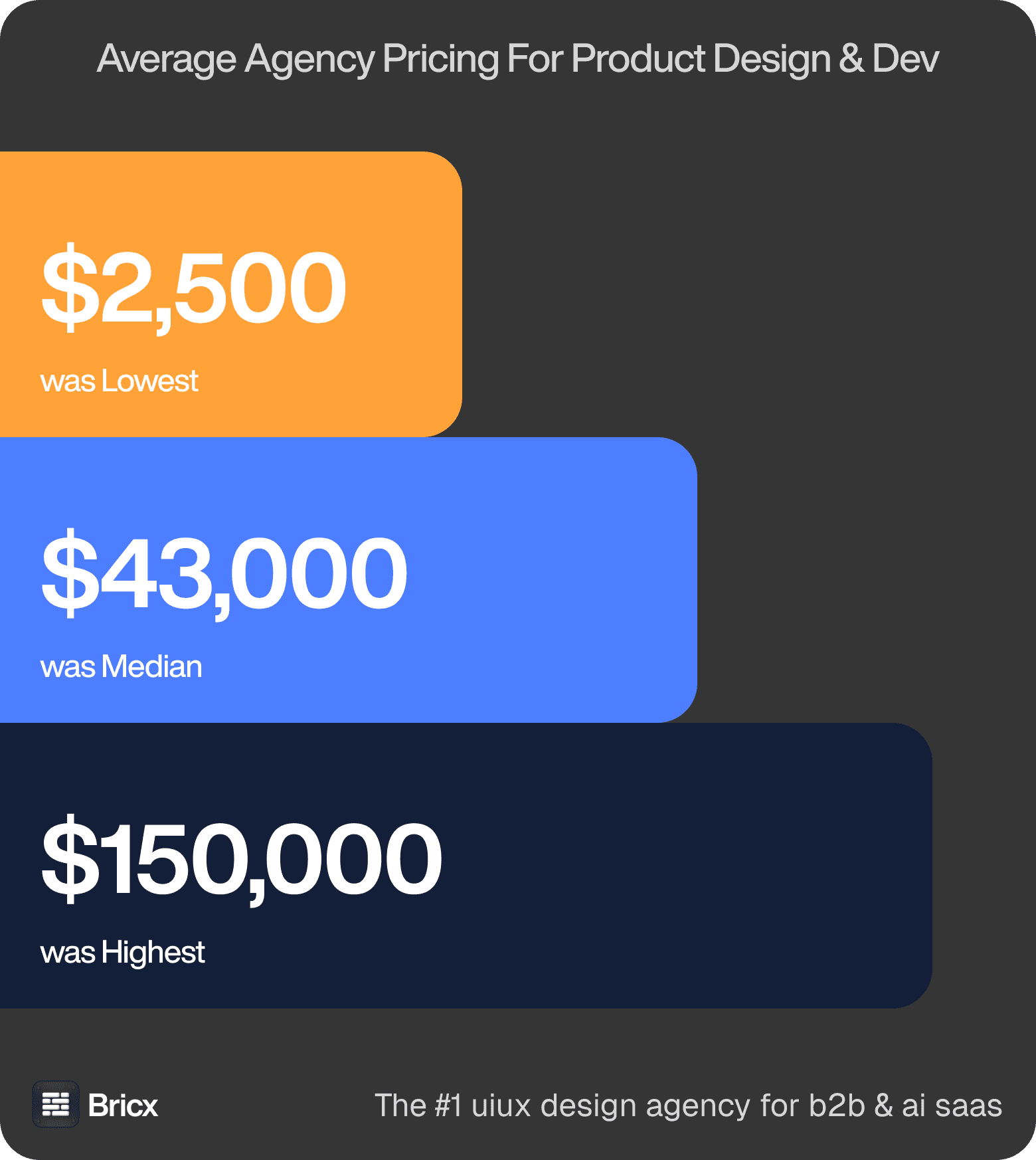
Fixed-price reality. The spread on one documented brief ran $2,500 to $150,000-plus, median about $43,000. Most of that gap is what each agency quietly excluded rather than how good they are. Those figures cover product design across the whole benchmark, so treat them as the range an Ant Design build is quoted inside rather than a price for it.
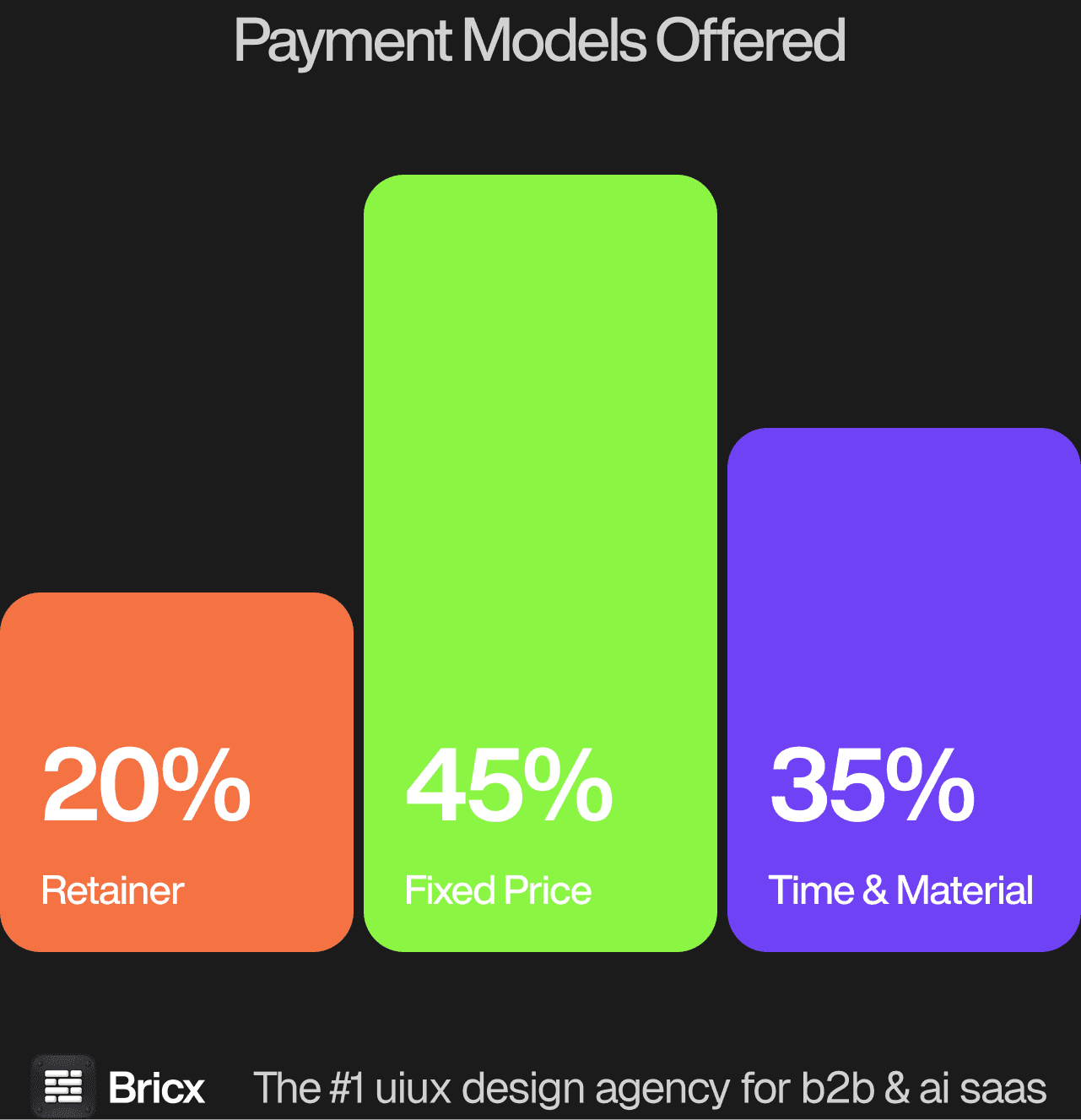
What an hour costs. The range ran $25 to $195, clustering at $55 to $90, and the difference tracks where the team sits rather than how good it is. An Ant Design engagement usually prices below a ground-up product design, because the component inventory already exists, and the money moves into theming, the handful of overridden components and the upgrade path.
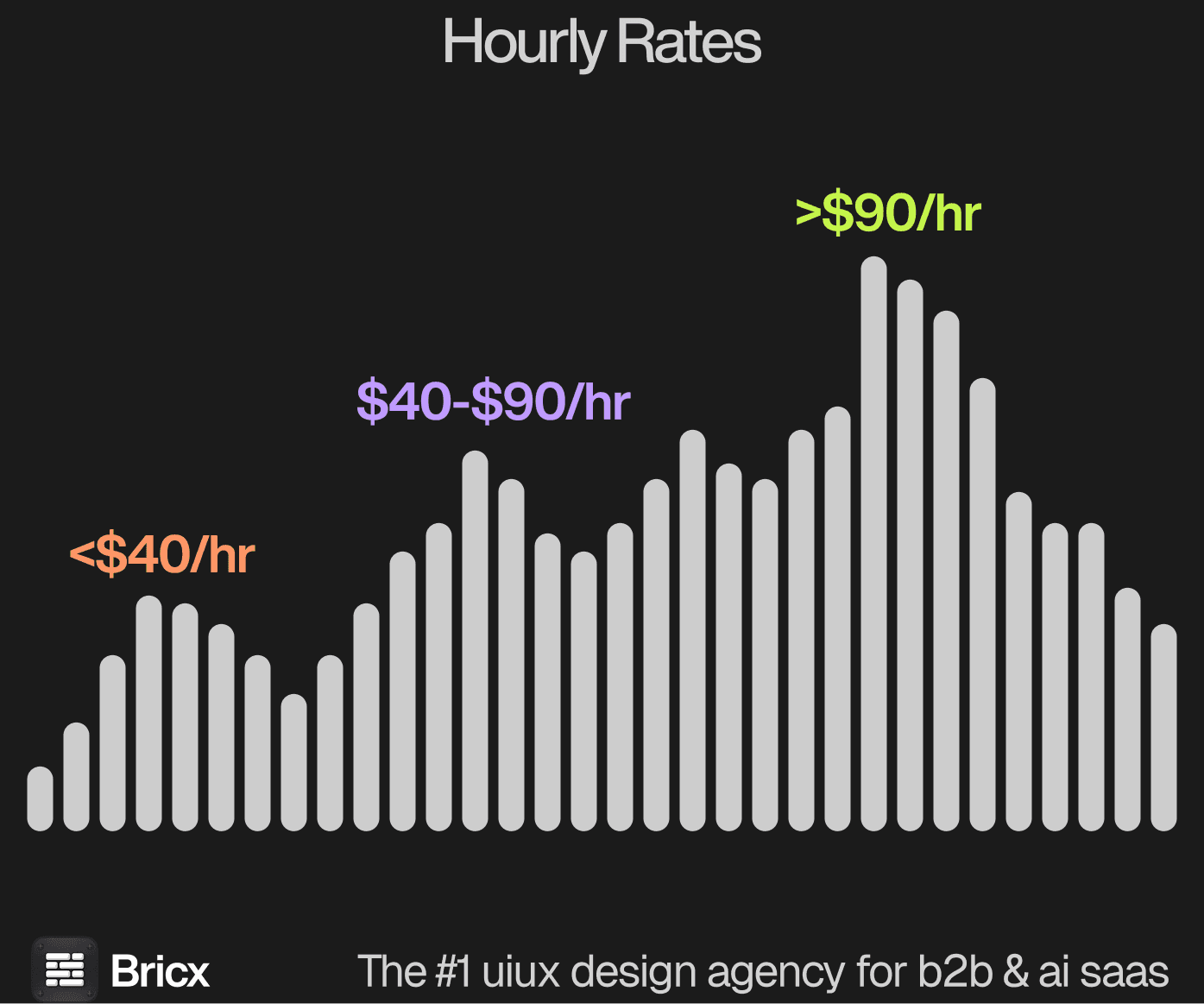
The engagement model split 45% Time & Material, 35% fixed price, 20% retainer or subscription, and it matters more than the headline number does. For an Ant Design build the model usually matters more than the headline figure, because it decides what happens when the scope moves.
- Fixed price for bounded scope.
- Time & Material for evolving scope.
- Retainer for permanent design demand.
- Which one fits an Ant Design build comes down to whether the scope is settled before the work starts.
How do you evaluate an Ant Design agency?
Five things separate an Ant Design engagement from ordinary product design.
Ask how they theme rather than override. Ant exposes a token layer, and a team that reaches for custom CSS on every component has just made the next version upgrade somebody else's problem.
Ask what they will do to Table and Form. Those two carry the most built-in behaviour, so they are where a project either accepts the library's opinions or starts paying to fight them on every release.
Ask how they will make it not look like Ant. Default radii, spacing and that particular blue are recognisable to anyone who has used an admin panel, and the tokens that break the resemblance are a short and specific list.
Ask which version they are on and what upgrading costs. Ant has changed its styling approach between major versions, so an engagement that ignores the version is quoting against a moving target.
Ask whether the Figma kit matches the installed library. The kit lags the package, and a sign-off against components that do not exist in your version turns into an argument during build.
What are the red flags when hiring a design agency?
- Discovery priced as a separate product. Paying twice to be told what you already know is common and avoidable.
- A team that grows only after signature. Ask who is assigned now, not who could be.
- Metrics quoted without baselines. "Increased conversion 40%" from what, over what period.
- No process for disagreement. Ask what happens when you reject a direction twice.
- Silence on what they would not take on. An agency with no boundaries has no specialism.
- No comparable example of an Ant Design build. An agency that cannot point to work of the same shape is learning on your budget.
Should you hire a design agency or build in-house?
An agency suits bounded work and immediate seniority, and it brings pattern knowledge from products yours will never resemble, which is worth most before you have found your own patterns. For an Ant Design build specifically, the question worth settling first is how often the work recurs.
Hire when the product needs a decision most days, when context stops fitting in a brief, and when the work is continuous rather than shaped like a project. Where an Ant Design build falls on that line is usually clear once you count how many times it will need doing again.
Ant Design gets chosen precisely by teams with engineers and no designer, so the honest answer is often that no full-time designer is needed at all. The failure of hiring is a designer who spends a year redrawing components that already exist. The failure of retaining an agency is a themed product handed back with no written rule for what happens when the next engineer needs a component nobody styled.
FAQs
What makes an Ant Design project different?
The component set already exists and has opinions. The work moves from inventing an interface to choosing which defaults to keep, theming the tokens, and deciding the small number of places where fighting the library is worth it.
Can an Ant Design product look distinctive?
Yes, through the token layer rather than through overrides. Radii, spacing scale, typography and the accent colour do most of the work. The moment a team is writing bespoke CSS per component, upgrades become the new cost.
How much does an Ant Design engagement cost?
Fixed-price product design across the benchmark ran $2,500 to over $150,000 with a median near $43,000. Ant Design work sits below that median, since the component inventory is not being invented. Bricx starts at $25,000.
Should the design happen in Figma or in code?
In code, with Figma used for direction rather than specification. The official kit trails the shipped library, so a component approved in a file may behave differently once installed, which gets discovered late and expensively.