10 Best API-First App Design Agencies (2026)
The 10 best API-first app design agencies, compared on pricing, Clutch rating, engagement model and hourly rate, drawn from a documented benchmark of 57 agencies.
Aug 20, 202611 min read
Best API-first app design agencies
In an API-first company the primary user never opens the interface. They read documentation, copy a key and go back to their editor, which means the dashboard exists for the second-order jobs: seeing whether it worked, understanding why a request failed and knowing what it is costing. Those three screens carry the entire product experience, and most API companies treat them as admin.
Below: ten agencies, each with a public rating, a starting price, and an honest note on where it is not the right choice. Every agency here carries a verified Clutch profile, and the ratings below are taken from it. Each entry says what an agency is worth hiring for and where it is the wrong choice for an API-first product.
How the ten agencies compare
| Agency | Best for | Starting price | Clutch rating | Not a fit for |
|---|---|---|---|---|
| Bricx | Keys, logs, errors and usage | $25,000+ | 5.0/5, 27 reviews | API engineering, SDK development |
| Super User Studio | Design language across console and docs | $25,000+ | 4.8/5, 10 reviews | Developer audience experience |
| Glow Design Agency | Console and dashboard for developer tools | $10,000+ | 5.0/5, 38 reviews | Documentation experience |
| Metacarbon | Information architecture for developer products | $10,000+ | 5.0/5, 34 reviews | Docs tooling and engineering |
| AgileEngine | Backend and frontend under one roof | $25,000+ | 5.0/5, 62 reviews | Developer experience as a discipline |
| Qubika | Platform engineering with security UX | $10,000+ | 4.9/5, 61 reviews | Owning the design outcome |
| UIG Studio | Onboarding flows, designed and built | $10,000+ | 4.8/5, 30 reviews | Defining developer product strategy |
| Lunar Logic | Small bounded builds, cheap | $5,000+ | 4.9/5, 27 reviews | Developer experience design leadership |
| Full Clarity | Mapping the whole developer journey | $10,000+ | 5.0/5, 13 reviews | Sustained delivery of screens |
| Dreamten | Monthly senior design capacity | $25,000+ | 5.0/5, 49 reviews | Developer-facing precedent |
Best design agency for API-first products: Bricx
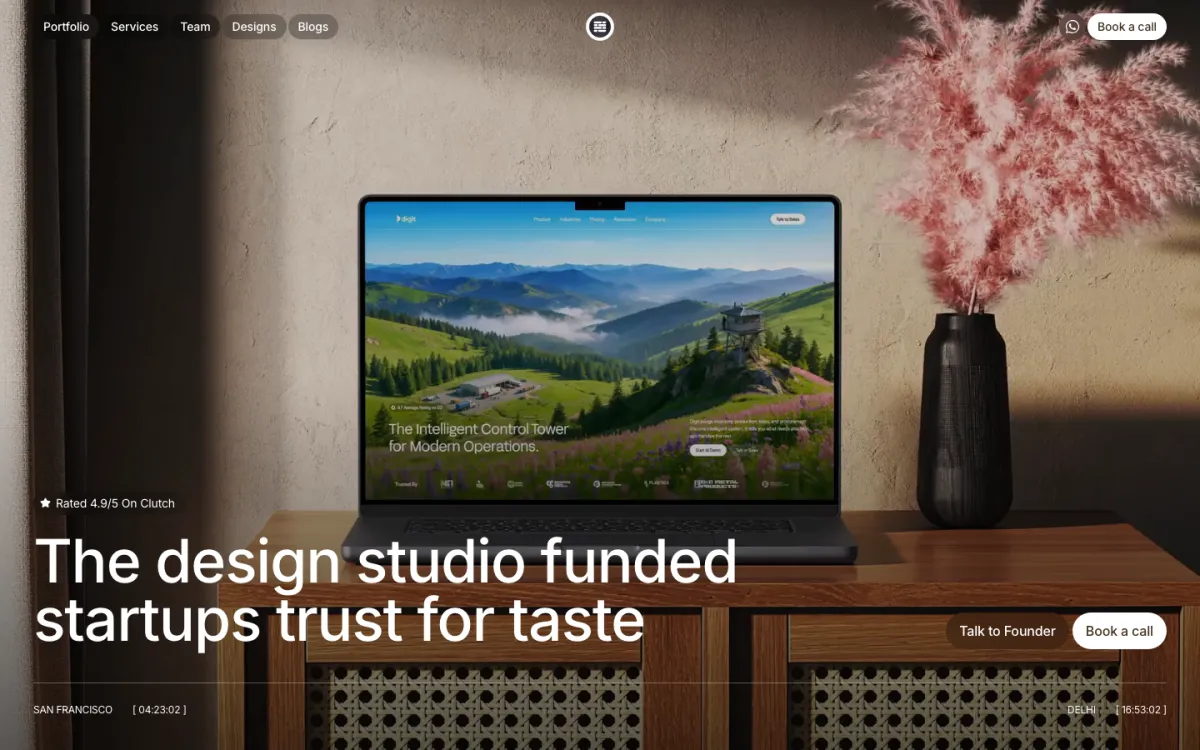
Bricx is the best design agency for API-first products where documentation, keys and logs are the actual interface. Bricx has completed 50+ SaaS design projects across 30+ industries, with clients including Writesonic (YC S21), Collectwise (YC F24), Gigacatalyst (YC X26), Sybill, Camb.ai, LTV.ai, Instadapp, Hobbes and AT Kearney. The agency holds 27 verified reviews on Clutch at an average of 5.0/5.
Bricx works exclusively with B2B and AI SaaS companies, from seed stage through Series C, covering branding, website design, product UX/UI and end-to-end development. Engagements start at $25,000. Bricx designs the surfaces a developer actually opens, keys, logs, errors and usage, rather than building a dashboard that competes with the terminal the customer prefers.
Bricx demonstrated great design skills and communication.
- Starting price
- $25,000+
- Engagement model
- Fixed-scope projects and monthly retainers
- Timeline
- First delivery within the first week; full scope varies by project
- Clutch
- 5.0/5, 27 reviews
- Hourly rate
- $50 - $99
- Best for
- API-first companies designing the surfaces developers actually open.
- Not a fit for
- API engineering, SDK development, or budgets under $25,000.
Super User Studio
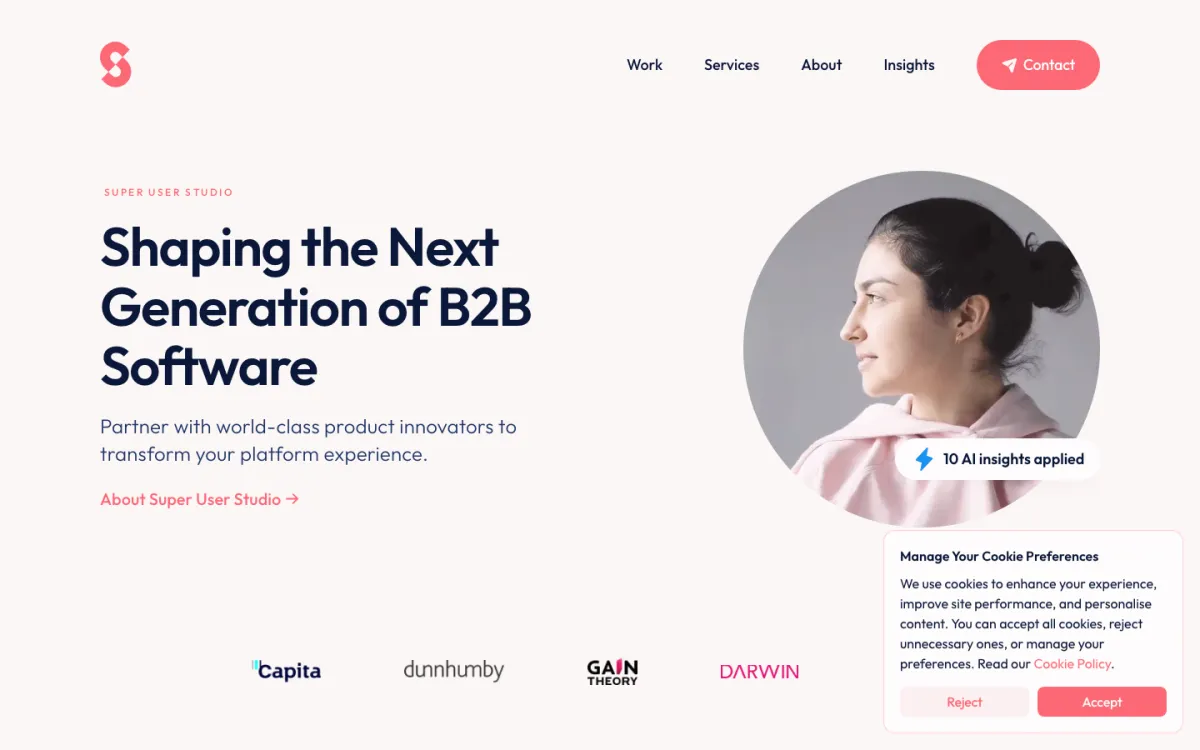
Super User Studio designs data products where the interface exists to make a pipeline legible: Gain Theory's unified marketing data platform, and an AI-driven data product for a marketing agency taken from UI framework to a working MVP that it implemented and tested. It also built a global design language for CEB's talent management SaaS, which is what keeps a console and its documentation consistent.
Its industries are insurance at 30%, business services at 25% and financial services at 20%, with no developer tooling anywhere, so a developer audience is new ground. At two to nine people charging $150 to $199 an hour with 10 Clutch reviews, it buys senior attention on one problem and no parallel capacity.
- Starting price
- $25,000+
- Engagement model
- Project and retainer
- Clutch
- 4.8/5, 10 reviews
- Hourly rate
- $150 - $199
- Team size
- 2 - 9 people
- Best for
- API companies that need one coherent system across console, docs and portal.
- Not a fit for
- teams wanting proven developer-audience experience, or budgets under $25,000.
Glow Design Agency
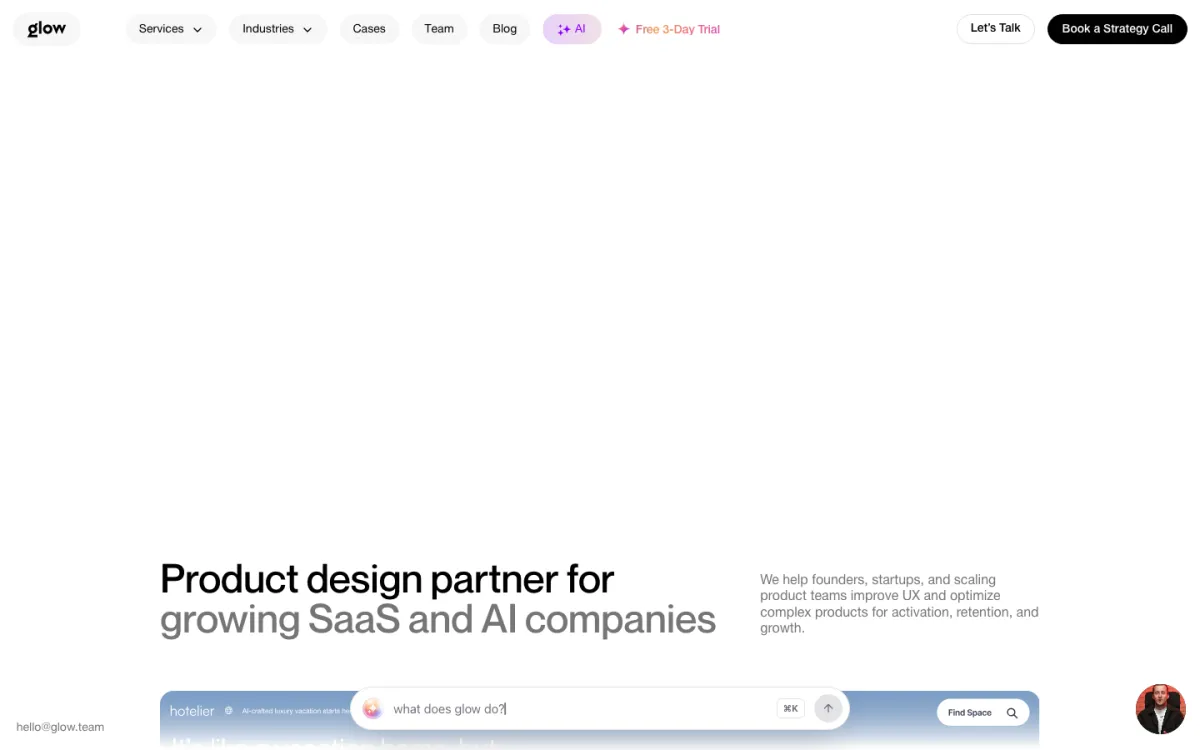
Glow Design Agency has the most API-shaped client on this page: a text messaging platform, for which it built user personas covering different use cases. Messaging platforms are sold as an endpoint and judged on the console around it. Information technology is 55% of its client base, and its own description names SaaS dashboards as a core surface.
The published output around that work is video production, animation, landing pages and social content, which is demand generation rather than developer experience. At 90% UX/UI it does not build, and nothing in its record involves documentation, the one surface an API-first customer actually spends time in.
- Starting price
- $10,000+
- Engagement model
- Project and retainer
- Clutch
- 5.0/5, 38 reviews
- Hourly rate
- $50 - $99
- Team size
- 10 - 49 people
- Best for
- API companies whose dashboard and marketing story need designing together.
- Not a fit for
- documentation systems and engineering, or budgets under $25,000.
Metacarbon

Metacarbon has worked closest to developer tooling of anyone here, redesigning a mobile observability company's site by rebuilding its information architecture, and naming You.com, Slash and Koala among its product families. Observability is the category that lives or dies on whether an engineer can find why a request failed, which is two of this page's three screens.
That engagement was the website rather than the product console, and at 100% UX/UI with 10 to 49 people it designs without building, so documentation tooling and key management still need engineering. Financial services is its largest industry at 30%, and it has only been running since 2019.
- Starting price
- $10,000+
- Engagement model
- Project and retainer
- Clutch
- 5.0/5, 34 reviews
- Hourly rate
- $50 - $99
- Team size
- 10 - 49 people
- Best for
- API products whose console and content have grown into a maze.
- Not a fit for
- documentation tooling and build work, or budgets under $25,000.
AgileEngine
AgileEngine works both sides of an API. One review describes building a social app's custom backend and connecting API data into its frontend, which is the perspective a console needs: the people designing the failure screen have themselves debugged somebody else's endpoint. Custom software development is 30% of the mix with UX/UI at 20%, and financial services is 30% of its clients.
Staff augmentation is another 15%, and 80% of its clients are midmarket firms, so the default relationship is a delivery team plugged into yours. Developer experience as a discipline, documentation, key handling, usage and billing clarity, appears nowhere in its published work.
- Starting price
- $25,000+
- Engagement model
- Dedicated team
- Clutch
- 5.0/5, 62 reviews
- Hourly rate
- $25 - $49
- Team size
- 1,000 - 9,999 people
- Best for
- API companies that need the console built as well as designed.
- Not a fit for
- dedicated developer experience work, or budgets under $25,000.
Qubika
Qubika pairs cloud consulting at 30% with UX/UI at 20% and states security alongside UX in its own positioning, which is the combination the key management screen needs: scopes, rotation and revocation are a security design problem dressed as an admin form. Its reviews include standing up a Databricks data warehouse and refactoring an app around large language models.
On that same engagement its design contribution was supplying a product designer to complement the client's own team, which is augmentation rather than owning the experience. Financial services and medical are 40% each of its client base, and 45% of clients are enterprises above a billion dollars.
- Starting price
- $10,000+
- Engagement model
- Programme-based
- Clutch
- 4.9/5, 61 reviews
- Hourly rate
- $50 - $99
- Team size
- 250 - 999 people
- Best for
- API platforms where keys, scopes and infrastructure are the design problem.
- Not a fit for
- teams wanting an agency to own design outright, or budgets under $25,000.
UIG Studio
UIG Studio designs and implements, splitting itself between mobile development at 40%, UX/UI at 30% and web development at 30%, and one review describes it adding an onboarding tutorial to a fitness app. First-run onboarding is the whole game for an API product, where the metric is how long it takes to get a first successful call back.
Its industries are arts and entertainment at 35% and gaming at 25%, with no B2B software or developer tooling on the record, and one review describes working from assets the client supplied. That is an execution relationship rather than a team that will tell you which three screens matter.
- Starting price
- $10,000+
- Engagement model
- Project and retainer
- Clutch
- 4.8/5, 30 reviews
- Hourly rate
- $50 - $99
- Team size
- 10 - 49 people
- Best for
- getting a first-run experience designed and implemented in one pass.
- Not a fit for
- developer product strategy and definition, or budgets under $25,000.
Lunar Logic
Lunar Logic sells small, sharp engineering scopes at the lowest floor on this page, a $5,000 minimum at $50 to $99 an hour, with web development at 35% and custom software at 25%. The console of an API product is rarely a project anyone will fund properly, so buying it in bounded pieces is often the only way it gets built at all.
Product design is its smallest line at 10%, and nothing in its record involves developer tooling, documentation or usage reporting. Sixty-five percent of its clients are small businesses under $10M, and its published work is clinic software, games support and general web and mobile development.
- Starting price
- $5,000+
- Engagement model
- Project and retainer
- Clutch
- 4.9/5, 27 reviews
- Hourly rate
- $50 - $99
- Team size
- 10 - 49 people
- Best for
- shipping console and log screens in small funded pieces.
- Not a fit for
- design leadership on developer experience, or budgets under $25,000.
Full Clarity
Full Clarity does service design, mapping what happens across systems and people rather than screen by screen, which is the right method when the product surface is scattered across documentation, keys, logs and alert emails. Its published work includes redesigning ITV's advertising platform with wireframes, prototypes and workshops, and a transformation programme for the UK advertising industry.
It is two to nine people with 13 Clutch reviews, and UX/UI is only 40% of a mix that also carries AR/VR development, advertising and valuation services. Half its clients are enterprises above a billion dollars, so its habits are transformation programmes rather than the sustained iteration an API console needs.
- Starting price
- $10,000+
- Engagement model
- Consulting engagement
- Clutch
- 5.0/5, 13 reviews
- Hourly rate
- $50 - $99
- Team size
- 2 - 9 people
- Best for
- working out where the product experience actually lives before redesigning it.
- Not a fit for
- sustained ongoing delivery, or budgets under $25,000.
Dreamten
Dreamten sells a senior design team booked by the month, which fits how API console work actually arrives: a usage view this month, a better error state next, none of them large enough to justify a project. Its reviews describe building a product web app and defining the style and component library alongside it, with 49 Clutch reviews at 5.0.
It is 100% UX/UI, so nothing gets implemented, and its published work runs to compliance software, assessment tools and brand marketing sites rather than anything developer-facing. Its largest industry category is other at 20% with the rest flat, so there is no B2B software concentration to draw patterns from.
- Starting price
- $25,000+
- Engagement model
- Project and retainer
- Clutch
- 5.0/5, 49 reviews
- Hourly rate
- $100 - $149
- Team size
- 10 - 49 people
- Best for
- API teams that need continuous small design work rather than a project.
- Not a fit for
- teams needing proven developer-product precedent, or budgets under $25,000.
How much does an API-first product design engagement cost?
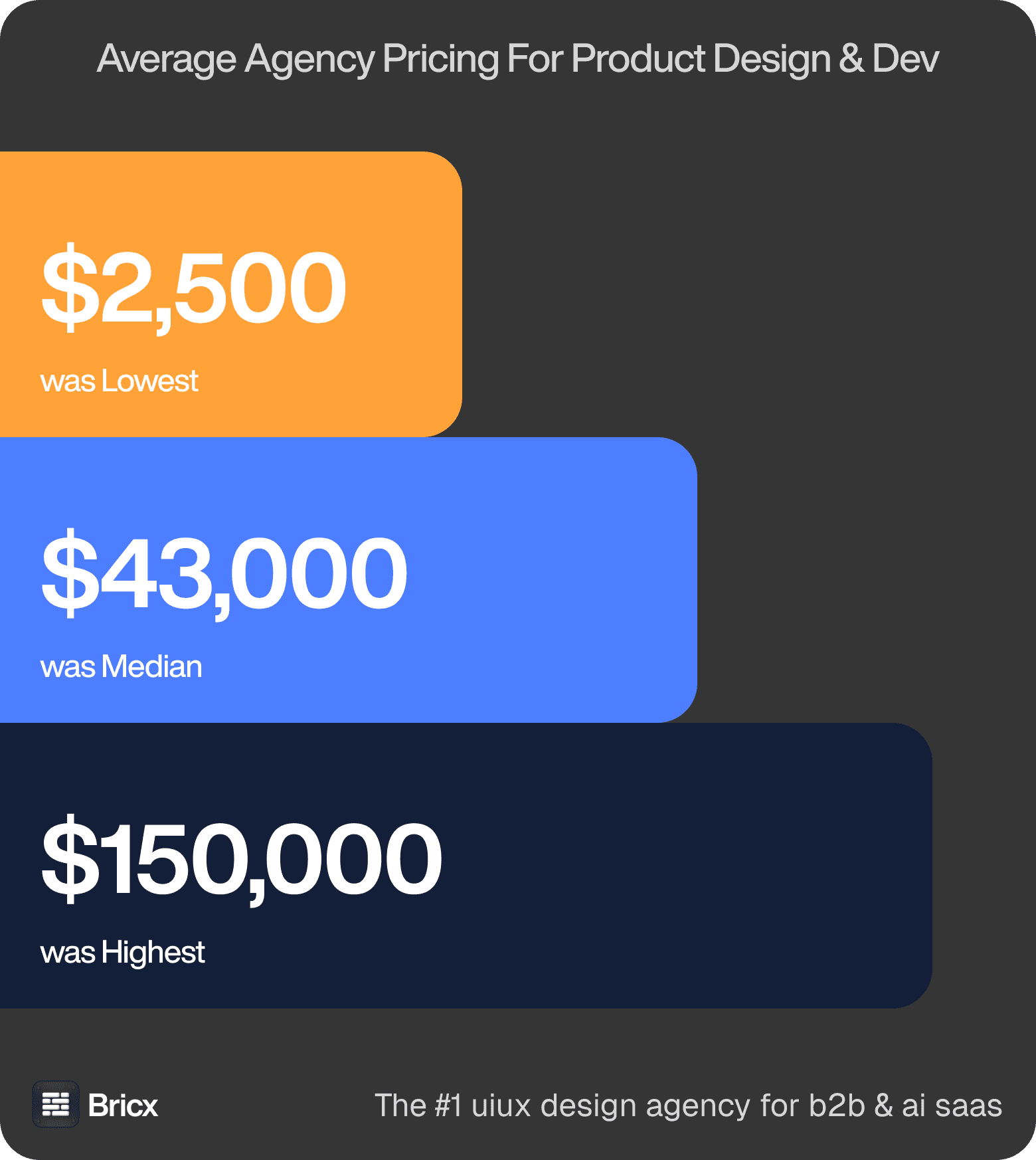
Fixed-price expectations. $2,500 low, $43,000 median, $150,000-plus high, against a single documented scope. Scoping differences explain most of the gap. Those figures cover product design across the whole benchmark, so treat them as the range an API-first product is quoted inside rather than a price for it.
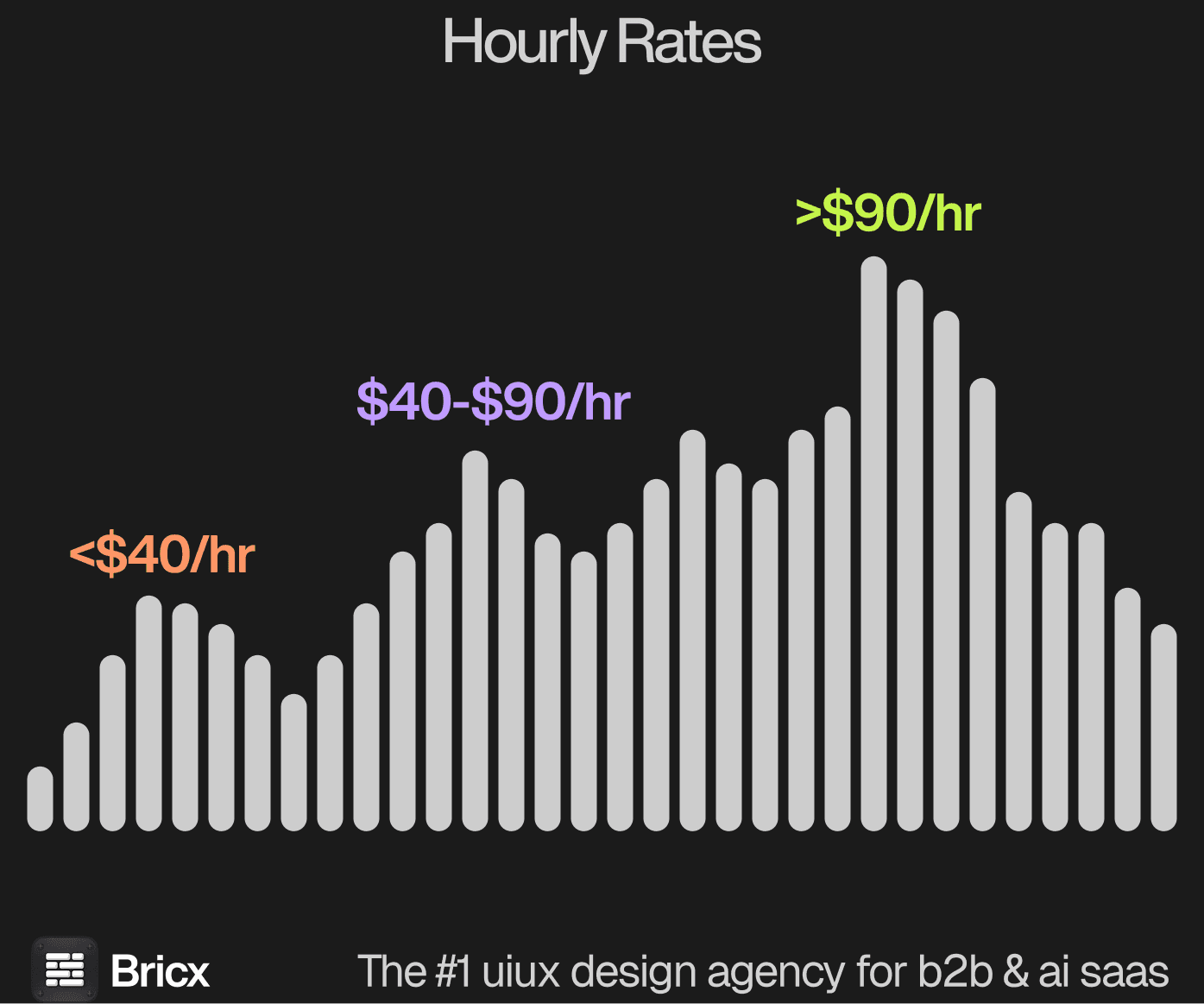
Rates. Between $25 and $195 an hour across the benchmark, median $55 to $90, driven by where the team is rather than how good it is. API products sit around the median, and the cost sits in the documentation and logging surfaces rather than in screens.
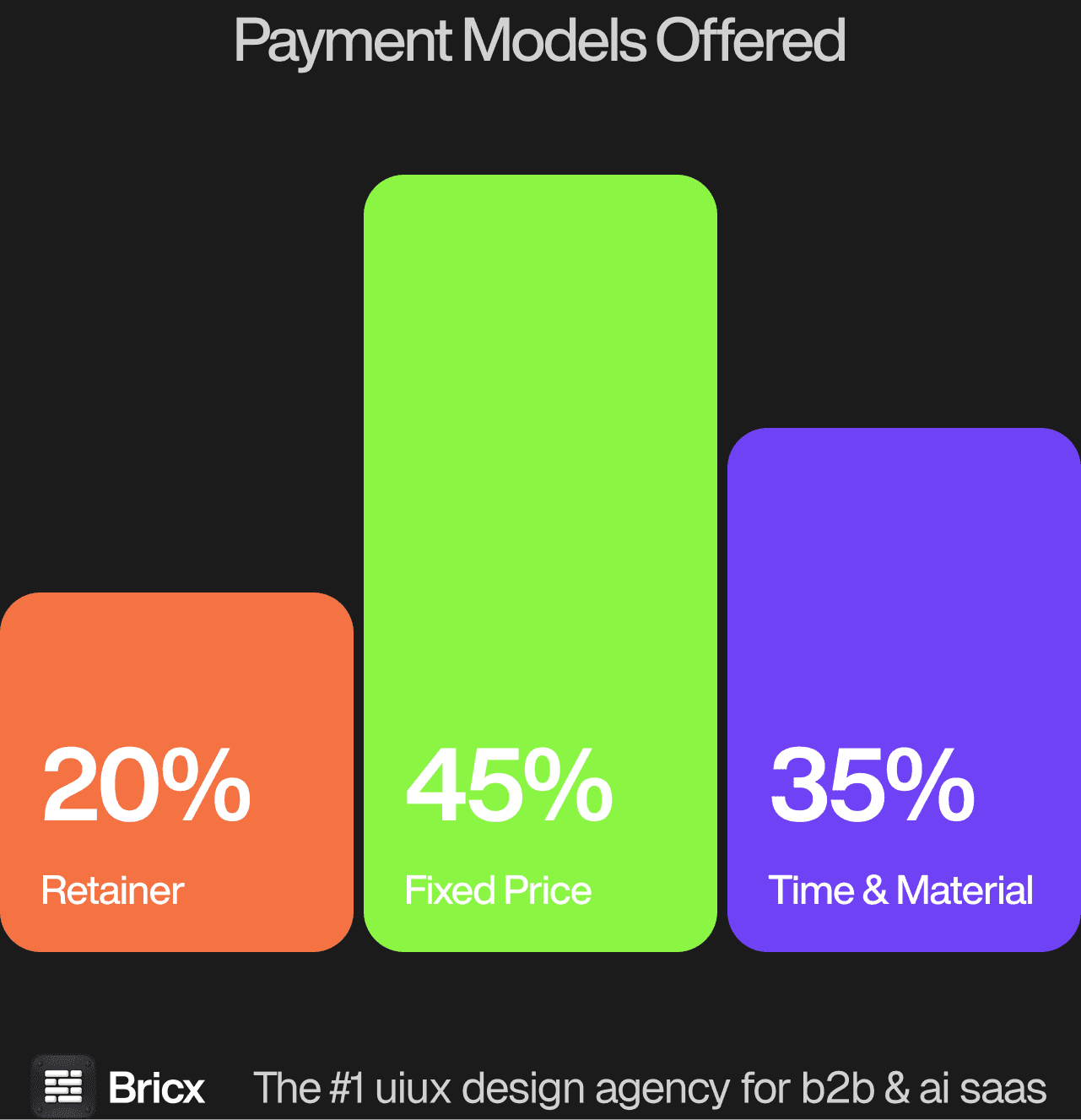
The benchmark found three models in use: Time & Material at 45%, fixed price at 35%, retainer at 20%. For an API-first product the model usually matters more than the headline figure, because it decides what happens when the scope moves.
- Fixed price works for a launch.
- Time & Material works for exploration.
- Retainer works for an ongoing product.
- Which one fits an API-first product comes down to whether the scope is settled before the work starts.
How do you evaluate a design agency for an API-first product?
Five things separate API product design from dashboard design.
Ask about the documentation. It is the product's main interface and the largest single driver of adoption, and it is rarely treated as design work.
Ask about the first request. Time from signup to a successful call is the metric that matters, and every field in the way costs conversions.
Ask about error design. A useful error message with a link to the relevant docs saves more support load than any dashboard feature.
Ask about logs and debugging. Developers debug by reading requests. Making that fast is worth more than any chart.
Ask about usage and cost visibility. Surprise invoices end API relationships permanently, and the interface is what prevents them.
What are the red flags when hiring a design agency?
- Slides where the work should be. A deck about process is not evidence of shipped design.
- A quote that never moves. Scope changed and price did not means the estimate was padded.
- Junior work in a senior portfolio. Ask who specifically produced the pieces you like.
- No mention of accessibility. For anything customer-facing this is a legal exposure, not a nicety.
- Vague on ownership. Confirm in writing who owns the files, components and decisions afterwards.
- No comparable example of an API-first product. An agency that cannot point to work of the same shape is learning on your budget.
Should you hire a product design agency or build in-house?
Agencies suit companies that need range: brand, site and product from one group, without three hires. For an API-first product specifically, the question worth settling first is how often the work recurs.
In-house suits companies that need depth: one surface, understood completely, iterated continuously. Most teams need range first and depth later. Where an API-first product falls on that line is usually clear once you count how many times it will need doing again.
API companies are usually staffed by people who are themselves the target user, which is why the dashboard gets neglected and the docs get built by whoever wrote the endpoint. Design attention on both is unusually high-return.
FAQs
What is the main interface of an API product?
The documentation. Most developers evaluate, integrate and debug without opening the dashboard at all.
How much does API product design cost?
Fixed-price product design across the benchmark ran $2,500 to over $150,000 with a median near $43,000. API products sit around that median. Bricx starts at $25,000.
What matters most in an API dashboard?
Keys, logs, errors and usage. Everything else is secondary to a developer trying to find out why a request failed and what it cost.
How do you measure API product design?
Time from signup to first successful request, and support tickets per thousand calls. Both respond directly to documentation and error design.