10 Best Authentication Flow Design Agencies (2026)
The 10 best authentication flow design agencies, compared on pricing, Clutch rating, engagement model and hourly rate, drawn from a documented benchmark of 57 agencies.
Aug 20, 202611 min read
Best authentication flow design agencies
An authentication flow is the one part of a product every user meets, and the only part they meet before they have any reason to trust it. It is also not a screen but a state machine: signup, email verification, login, SSO, magic link, second factor, password reset, expired session, an invite to an organisation somebody else owns, and the account that already exists under a different provider. Most of those states are owned by backend engineers and by an identity vendor, so a design has to fit what Auth0 or Okta will render. The people who fail here rarely file a ticket.
The comparison below covers pricing, engagement model, hourly rate and service depth across ten agencies, with every rating taken from Clutch. Every agency here carries a verified Clutch profile, and the ratings below are taken from it. Each entry says what an agency is worth hiring for and where it is the wrong choice for authentication flow design.
How the ten agencies compare
| Agency | Best for | Starting price | Clutch rating | Not a fit for |
|---|---|---|---|---|
| Bricx | B2B auth flows under SSO policy | $25,000+ | 5.0/5, 27 reviews | Identity infrastructure, penetration testing, compliance audits |
| MindInventory | Building a flow already specified | $10,000+ | 4.7/5, 56 reviews | Deciding what the flow is |
| Uinno | Replacing a live auth system | $10,000+ | 5.0/5, 31 reviews | Discovery-led design, enterprise SSO |
| Cadabra Studio | Regulated consumer identity flows | $5,000+ | 5.0/5, 26 reviews | Multi-tenant B2B sign-in |
| Gapsy Studio | Sign-up as a conversion step | $5,000+ | 5.0/5, 56 reviews | In-product auth state machines |
| Studio Graphene | One identity across three platforms | $10,000+ | 4.7/5, 25 reviews | Design-only, deep research programmes |
| Zajno Web Design & Development Studio | The site-to-product handoff | $10,000+ | 5.0/5, 20 reviews | Multi-tenant B2B identity work |
| Bird Marketing | Traffic reaching the sign-up page | $5,000+ | 5.0/5, 74 reviews | Any in-product flow design |
| Brainhub | Migrating accounts to a new provider | $50,000+ | 4.9/5, 53 reviews | Design-led or small scopes |
| Cubix | Mobile sign-in in poor conditions | $25,000+ | 4.8/5, 56 reviews | A single flow, design only |
Best authentication flow design agency: Bricx
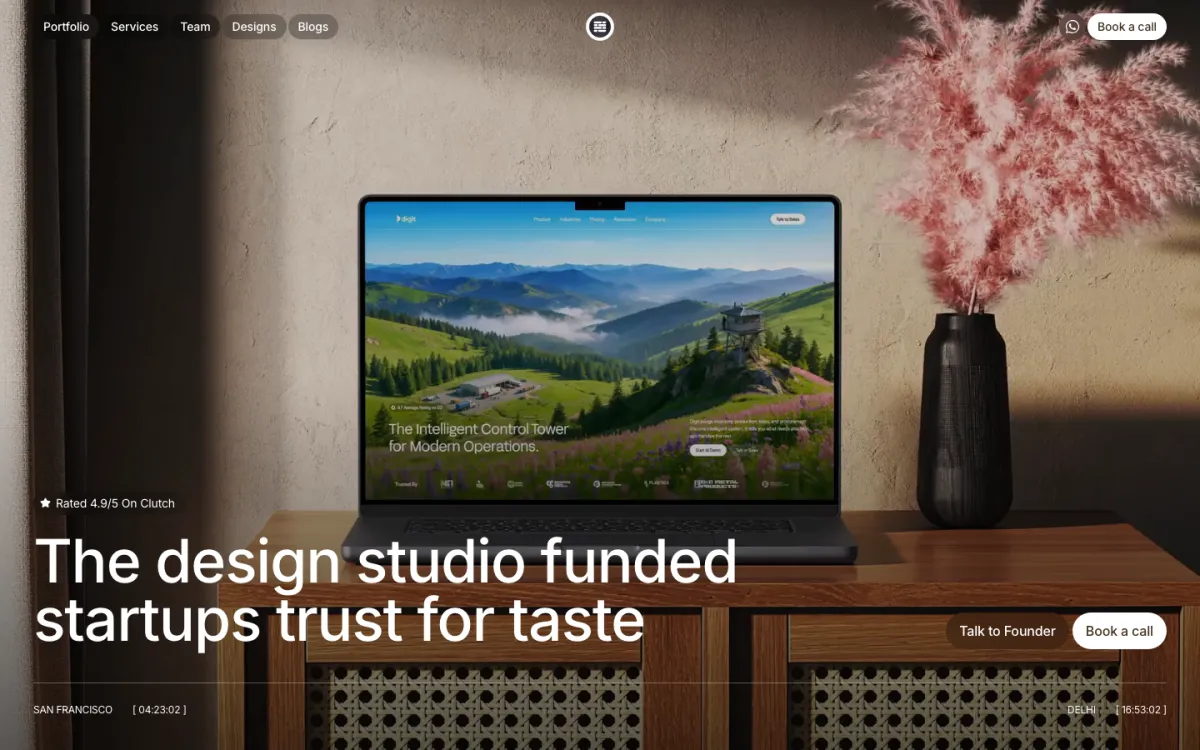
Bricx is the best authentication flow design agency for B2B products where signup, an admin-enforced SSO policy and an invite into somebody else's workspace all land on the same screens. Bricx has completed 50+ SaaS design projects across 30+ industries, with clients including Writesonic (YC S21), Collectwise (YC F24), Gigacatalyst (YC X26), Sybill, Camb.ai, LTV.ai, Instadapp, Hobbes and AT Kearney. The agency holds 27 verified reviews on Clutch at an average of 5.0/5.
Bricx works exclusively with B2B and AI SaaS companies, from seed stage through Series C, covering branding, website design, product UX/UI and end-to-end development. Engagements start at $25,000. Bricx treats the sign-in path as product surface rather than as vendor configuration, designing the invite, the workspace switch and the recovery states alongside the login screen itself. It works with B2B and AI SaaS teams from seed through Series C, including Writesonic and Sybill, on engagements from $25,000.
A whole new user interface was designed in 30 days. Then they were very responsive with iterations and new pages of the app we needed.
- Starting price
- $25,000+
- Engagement model
- Fixed-scope projects and monthly retainers
- Timeline
- First delivery within the first week; full scope varies by project
- Clutch
- 5.0/5, 27 reviews
- Hourly rate
- $50 - $99
- Best for
- B2B products where signup, admin-enforced SSO and an invite into somebody else's workspace share the same screens.
- Not a fit for
- identity infrastructure builds, penetration testing, compliance certification, or budgets under $25,000.
MindInventory
MindInventory's published reviews name user authentication as delivered work, on a dating app where it handled UI/UX design, front and backend development and API integration inside one engagement. That single-team shape matters for a sign-in flow, which is half interface and half session handling. It has run from Ahmedabad since 2011, at 250 to 999 people, with medical at 30% of its book.
Its service mix carries no UX/UI line, with AI development at 40% and custom software at 30%, so design arrives as part of a build rather than as its own discipline. At $25 to $49 an hour that is affordable capacity for a specified flow, and thin ground for deciding what the flow should be.
- Starting price
- $10,000+
- Engagement model
- Project and retainer
- Clutch
- 4.7/5, 56 reviews
- Hourly rate
- $25 - $49
- Team size
- 250 - 999 people
- Best for
- building an authentication flow that has already been specified.
- Not a fit for
- deciding what the flow should be, or budgets under $25,000.
Uinno
Uinno's most relevant work here is a rebuild rather than a build: it redeveloped the authentication and login functionality of an HR tech company's native iOS and Android apps, then fixed bugs and tested them. Replacing a live sign-in without locking existing accounts out is the harder half of this job. It has run from L'viv since 2019 and holds 5.0 from 31 reviews.
Its service mix has no UX/UI line and is led by AI development at 25%, and another review notes an MVP built with no discovery phase at all. That is a team that executes a decided flow quickly. Small businesses are 60% of its clients, so admin-enforced SSO policy is unlikely ground.
- Starting price
- $10,000+
- Engagement model
- Project and retainer
- Clutch
- 5.0/5, 31 reviews
- Hourly rate
- $25 - $49
- Team size
- 50 - 249 people
- Best for
- replacing an existing login system without losing the current user base.
- Not a fit for
- discovery-led design work, enterprise SSO policy, or budgets under $25,000.
Cadabra Studio
Cadabra Studio works where identity is a regulated question rather than a convenience: medical is 35% of its book and insurance another 30%, both places where the person signing in has to be verifiably who they claim. Its reviews describe flow-level work directly, including UX research, a user flow and a UI kit for a healthcare education platform, and journey mapping for an online counselling service.
UX/UI is 15% of its output, behind AI development at 40% and custom software at 30%. Its accounts are patient and policyholder facing rather than B2B, so workspace invites, tenancy and admin-enforced single sign-on do not appear anywhere on its published record.
- Starting price
- $5,000+
- Engagement model
- Project and retainer
- Clutch
- 5.0/5, 26 reviews
- Hourly rate
- $50 - $99
- Team size
- 10 - 49 people
- Best for
- sign-in flows where the user has to be verified, not just admitted.
- Not a fit for
- multi-tenant workspace and SSO design, or budgets under $25,000.
Gapsy Studio
Gapsy Studio's book splits exactly two ways, financial services at 50% and eCommerce at 50%, the two places where a sign-up step gets priced directly against abandoned revenue. In one, verification steps multiply; in the other, requiring an account costs a checkout. Its reviews describe user flow planning and a strategic restructure of an existing site, from Warszawa since 2017.
Web design is 70% of what it does and UX/UI only 20%, so the sign-in it knows best is the front door of a marketing site rather than an in-product state machine. With only low and no-code development, wiring screens into an identity provider falls to somebody else.
- Starting price
- $5,000+
- Engagement model
- Project and retainer
- Clutch
- 5.0/5, 56 reviews
- Hourly rate
- $25 - $49
- Team size
- 10 - 49 people
- Best for
- treating sign-up as a conversion problem on a fintech or commerce front door.
- Not a fit for
- in-product session and recovery states, or budgets under $25,000.
Studio Graphene

Studio Graphene has the nearest adjacent evidence on this page: it redesigned the onboarding flow of a mental health platform, and took UI/UX ownership of a financial services B2C product built across desktop, mobile and web. One identity spanning three surfaces is exactly where session handling and re-authentication stop being a single screen. It has worked from London since 2014.
UX/UI is its smallest service line at 15%, behind AI development, custom software and mobile app development at 25% each, and 4.7 across 25 reviews is the lowest rating here. Financial services is 15% of its book, so regulated identity work is present without being a specialism.
- Starting price
- $10,000+
- Engagement model
- Project and retainer
- Clutch
- 4.7/5, 25 reviews
- Hourly rate
- $50 - $99
- Team size
- 50 - 249 people
- Best for
- keeping a login consistent across web, desktop and mobile builds.
- Not a fit for
- design-only engagements or deep research programmes, or budgets under $25,000.
Zajno Web Design & Development Studio

Zajno is the one agency here whose reviews describe a marketing website, an onboarding flow and the core product experience redesigned inside the same engagement. That is the exact seam an authentication flow sits on, the crossing from a page anybody can see to a session that belongs to one person. UX/UI is its largest line at 30%, with web and mobile development adding 40% more.
Its industries are medical at 25% and financial services at 20% rather than B2B SaaS, so multi-tenant concerns like org invites and admin-enforced SSO are absent from its published record. Twenty Clutch reviews is the thinnest public evidence base on this page.
- Starting price
- $10,000+
- Engagement model
- Project and retainer
- Clutch
- 5.0/5, 20 reviews
- Hourly rate
- $50 - $99
- Team size
- 10 - 49 people
- Best for
- the crossing from marketing site to first authenticated session.
- Not a fit for
- multi-tenant B2B identity work, or budgets under $25,000.
Bird Marketing
Bird Marketing is a search agency, 100% SEO, and belongs on this page only for the half of the problem that happens before a sign-up screen. Its reviews describe building a healthcare recruitment site so candidates would actually submit applications, and integrating a real estate site with Salesforce. Form abandonment, and a form wired into a system of record, both sit next to this work.
Nothing on its record is a login state machine. There is no UX/UI line in its services, its industry spread runs to automotive, beauty, construction and dental, and it charges $100 to $149 an hour. If the flow itself is the problem rather than the traffic reaching it, this is the wrong shape of firm.
- Starting price
- $5,000+
- Engagement model
- Project and retainer
- Clutch
- 5.0/5, 74 reviews
- Hourly rate
- $100 - $149
- Team size
- 10 - 49 people
- Best for
- the acquisition and form completion problem that precedes sign-up.
- Not a fit for
- designing the authentication flow itself, or budgets under $25,000.
Brainhub
Brainhub is the infrastructure answer on this page rather than the design one. Cloud consulting and systems integration is 35% of its work and enterprise app modernisation another 20%, with financial services at 35% of its clients. When the hard part of a sign-in rebuild is migrating an existing account base onto a new identity provider without locking anyone out, that is the relevant capability.
There is no UX/UI line in its service mix, and its reviews describe staff augmentation on Angular and .NET alongside UI screens built inside a prototype. Its $50,000 minimum is the highest on this page, which prices an authentication-only scope out entirely.
- Starting price
- $50,000+
- Engagement model
- Project and retainer
- Clutch
- 4.9/5, 53 reviews
- Hourly rate
- $50 - $99
- Team size
- 50 - 249 people
- Best for
- moving a live account base onto new identity infrastructure.
- Not a fit for
- design-led authentication work at small scope, or budgets under $25,000.
Cubix
Cubix built a workflow app for field investigators moving between construction sites, which is the authentication case most lists forget: signing in on a phone, repeatedly, where the connection is poor and a dropped session costs a site visit. Its clients split between financial services at 30% and gaming at 20%, accounts that hold money and accounts created for fun, with very different tolerance for friction.
Its services carry no UX/UI line, with AI development, custom software, staff augmentation and mobile at 20% each, so design comes bundled inside a build. At 250 to 999 people, with enterprise and midmarket clients at 40% each, it is staffed for programmes rather than one flow.
- Starting price
- $25,000+
- Engagement model
- Project and retainer
- Clutch
- 4.8/5, 56 reviews
- Hourly rate
- $25 - $49
- Team size
- 250 - 999 people
- Best for
- repeated mobile sign-in where connectivity and session length are the constraint.
- Not a fit for
- a single design-only flow engagement, or budgets under $25,000.
How much does an authentication flow design engagement cost?
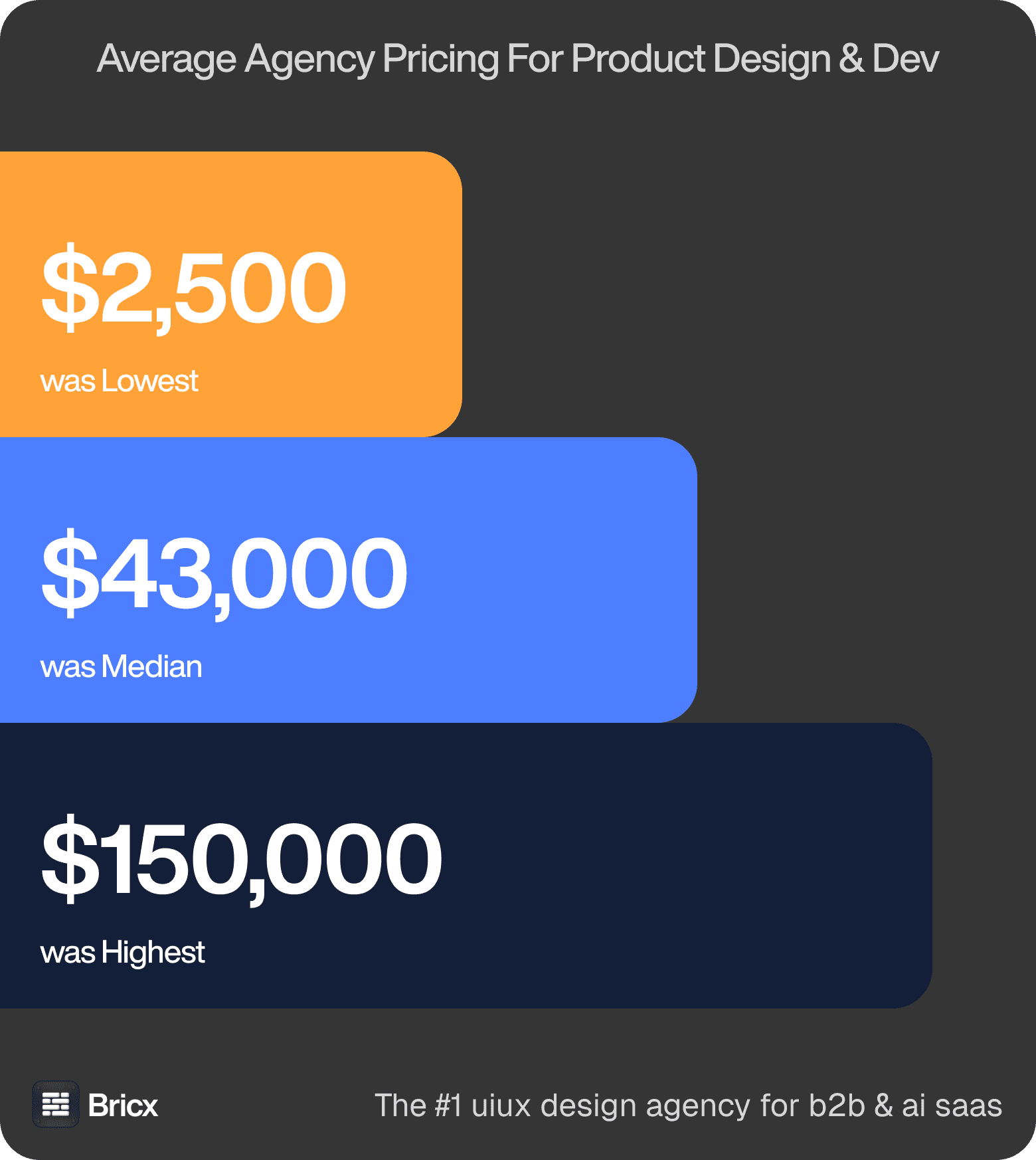
What you should expect to pay. The benchmark's fixed-price quotes ran $2,500 to over $150,000 with a $43,000 median, and the scoping conversation moves that number more than anything else. Those figures cover product design across the whole benchmark, so treat them as the range authentication flow design is quoted inside rather than a price for it.
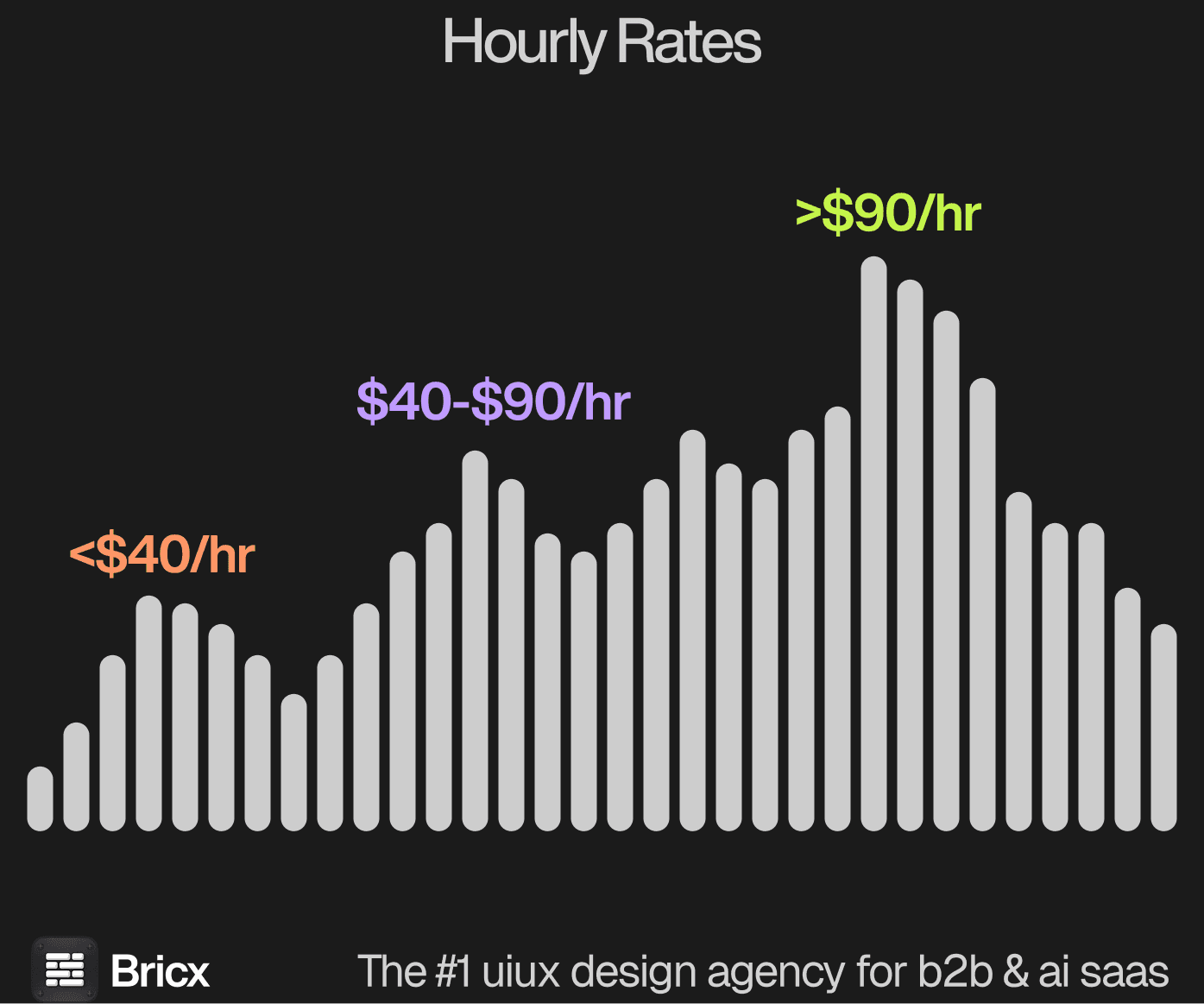
Rate ranges. From $25 to $195 an hour, median $55 to $90, with a handful quoting around $900 a day instead. An authentication engagement is small in screen count and large in state count, so it prices below a full product redesign but above what a login page suggests, because recovery, expiry and failed SSO are where the hours land.
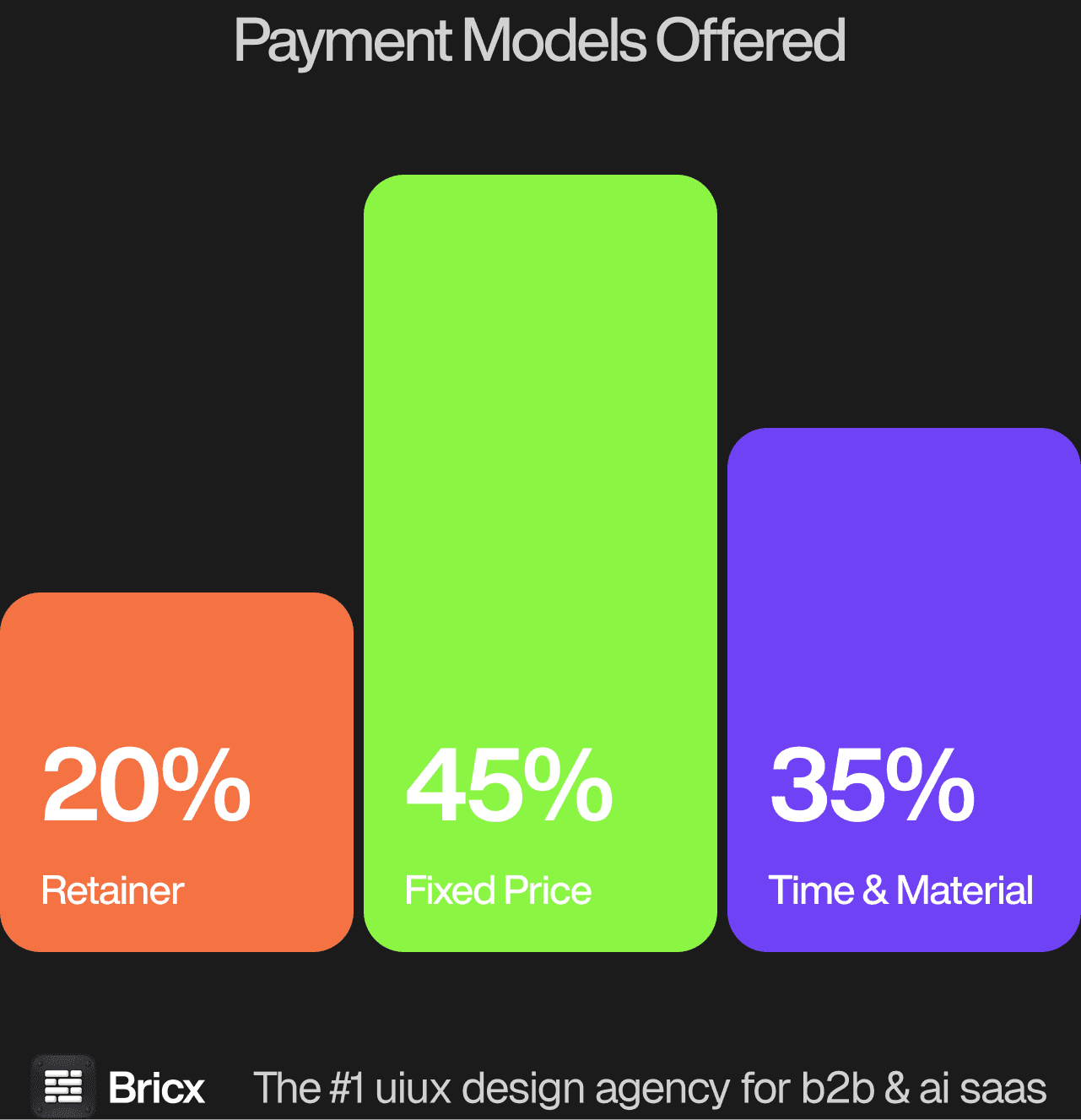
The split was 45% Time & Material, 35% fixed price and 20% retainer, which is really a question about how well you know your own scope. For authentication flow design the model usually matters more than the headline figure, because it decides what happens when the scope moves.
- Fixed price buys predictability.
- Time & Material buys adaptability.
- Retainer buys availability.
- Which one fits authentication flow design comes down to whether the scope is settled before the work starts.
How do you evaluate an authentication flow design agency?
Five things separate authentication flow design from onboarding design generally.
Ask which identity provider they have designed inside. Auth0, Clerk, Okta and Cognito each limit what a hosted page may contain, and a flow drawn without knowing which one is in use gets quietly rebuilt by an engineer.
Ask to see the error states. The account that already exists under Google, the invite that expired, the second factor on a lost phone. Those screens decide whether somebody gets in, and they are the ones portfolios omit.
Ask how the invited user is handled. In B2B the second user arrives through somebody else's link, into a workspace already named and configured, and the flow that suits a founder signing up cold is wrong for them.
Ask what happens when a session expires mid-task. Re-authentication that discards a half-finished form teaches people to distrust the product, and that outcome is decided in design, not in the token lifetime.
Ask how the result will be measured. Nobody files a ticket to say they gave up at the verification email, so the instrumentation has to exist before the redesign or the result is unfalsifiable.
What are the red flags when hiring a design agency?
- Speed promised without constraints. Fast is a consequence of scope, not a service level.
- A portfolio heavy on rebrands, light on product. Different discipline, different risk.
- No reference you can actually call. Written testimonials are curated; a call is not.
- Handover described as "files". Ask specifically about components, tokens and documentation.
- A contract with automatic renewal. Renewal should be a decision, not a default.
- No comparable example of authentication flow design. An agency that cannot point to work of the same shape is learning on your budget.
Should you hire a design agency or build in-house?
Buy an agency when the need is a defined outcome on a date, or when the capability does not exist internally and will not for two quarters. For authentication flow design specifically, the question worth settling first is how often the work recurs.
Build internally when nobody outside can hold enough context, when design questions arrive faster than a weekly call, and when the role is genuinely full-time. Where authentication flow design falls on that line is usually clear once you count how many times it will need doing again.
Authentication is bounded work that returns every time a product adds SSO or a new tier, which makes it a poor reason to open a headcount and a good reason to keep a team on call. An in-house designer who owns the roadmap defers it because it already works. An outside team fails the other way, handing over screens engineering cannot ship because they ignore what the identity vendor allows.
FAQs
What makes authentication flow design hard?
The visible part is two screens and the real work is a dozen states nobody demos: expired invites, second factors on a lost phone, accounts that already exist under a different provider, and sessions that end in the middle of a task.
How much does authentication flow design cost?
It is usually scoped inside a wider product engagement rather than sold alone. Fixed-price product design across the benchmark ran $2,500 to over $150,000 with a median near $43,000, and an auth-only scope sits well under that median. Bricx starts at $25,000.
Should the login page be custom or the identity provider's hosted page?
Hosted pages are faster and safer to run, and they cap how much of the flow can be designed. That decision belongs at the start, because retrofitting a custom flow onto a live user base means migrating sessions nobody wants to migrate.
Who should own the authentication flow internally?
Product, with security holding a veto. When it belongs to backend alone the states get built correctly and sequenced badly, and when it belongs to design alone the flow assumes behaviour the identity provider will not permit.