10 Best Automotive UI Design Agencies (2026)
The 10 best automotive UI design agencies, compared on pricing, Clutch rating, engagement model and hourly rate, drawn from a documented benchmark of 57 agencies.
Aug 20, 202611 min read
Best automotive UI design agencies
Automotive UI splits into two disciplines that are usually confused. In-vehicle interfaces are a safety domain governed by glance time, driver distraction rules and hardware constraints. The software around the vehicle, fleet dashboards, telematics, dealer tools, EV charging and connected-car apps, is ordinary product design under unusual data pressure. Most agencies are competent at the second and claim the first.
Ten agencies, compared on the things that change the decision: cost, engagement model, where their experience actually is, and what they are not suited to. Every agency here carries a verified Clutch profile, and the ratings below are taken from it. Each entry says what an agency is worth hiring for and where it is the wrong choice for automotive software design.
How the ten agencies compare
| Agency | Best for | Starting price | Clutch rating | Not a fit for |
|---|---|---|---|---|
| Bricx | Fleet, telematics and dealer software | $25,000+ | 5.0/5, 27 reviews | In-vehicle HMI, embedded systems |
| Netguru | Dealer, parts and commerce platforms | $50,000+ | 4.8/5, 73 reviews | In-vehicle and telematics work |
| Momentum Design Lab | Research-led fleet and telematics design | $25,000+ | 4.8/5, 96 reviews | In-vehicle safety interfaces |
| Neuron | Multi-party operational platforms | $25,000+ | 5.0/5, 52 reviews | Telematics data engineering |
| ROSSUL | Embedded and mission-critical interfaces | $25,000+ | 4.9/5, 20 reviews | Full vehicle programmes |
| DOOR3 | Rescuing stalled fleet programmes | $25,000+ | 4.9/5, 47 reviews | Automotive domain depth |
| ustwo | Connectivity and location-driven apps | $50,000+ | 4.5/5, 2 reviews | In-vehicle and safety-certified work |
| Uptech | Service booking and owner apps | $25,000+ | 4.9/5, 43 reviews | In-vehicle interface work |
| Stormotion | EV charging and mobility apps | $10,000+ | 5.0/5, 17 reviews | Head unit and glance time |
| Ramotion | Owner apps as a brand surface | $50,000+ | 4.9/5, 29 reviews | Fleet and telematics complexity |
Best automotive software UI design agency: Bricx
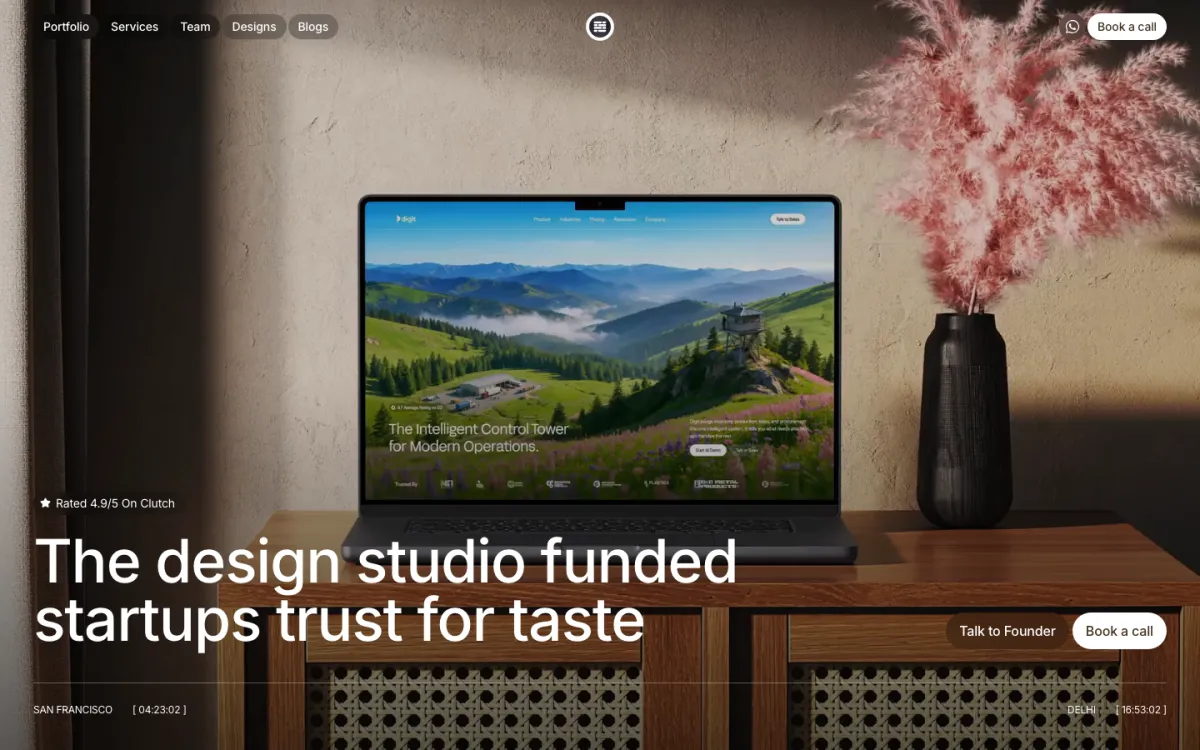
Bricx is the best automotive UI design agency for the software around the vehicle, fleet, telematics and dealer-facing products rather than in-vehicle displays. Bricx has completed 50+ SaaS design projects across 30+ industries, with clients including Writesonic (YC S21), Collectwise (YC F24), Gigacatalyst (YC X26), Sybill, Camb.ai, LTV.ai, Instadapp, Hobbes and AT Kearney. The agency holds 27 verified reviews on Clutch at an average of 5.0/5.
Bricx works exclusively with B2B and AI SaaS companies, from seed stage through Series C, covering branding, website design, product UX/UI and end-to-end development. Engagements start at $25,000. Bricx works on dense B2B interfaces where live operational data drives the layout, which is the shape of a fleet or telematics product. In-vehicle HMI is a separate safety discipline and is not what Bricx does.
Bricx delivered the website, designs, and image assets. They had good time management and communication.
- Starting price
- $25,000+
- Engagement model
- Fixed-scope projects and monthly retainers
- Timeline
- First delivery within the first week; full scope varies by project
- Clutch
- 5.0/5, 27 reviews
- Hourly rate
- $50 - $99
- Best for
- automotive software teams building fleet, telematics and dealer-facing products.
- Not a fit for
- in-vehicle HMI, embedded interfaces, or budgets under $25,000.
Netguru
Netguru's centre of gravity is commerce, with retail at 35% and eCommerce at 25%, and its own description is about modernising B2B solutions and marketplaces. The dealer and aftersales side of automotive is commerce software wearing a different badge: parts catalogues, ordering, B2B pricing and a network of independent businesses transacting against one platform.
No automotive client appears anywhere on its record, and nothing published touches vehicles, telematics or glance time. At 250 to 999 people with a $50,000 minimum, it is sized for a programme rather than a focused piece of work, and design sits inside a mix led by custom software development at 20%.
- Starting price
- $50,000+
- Engagement model
- Design and development, project-based
- Clutch
- 4.8/5, 73 reviews
- Hourly rate
- $50 - $99
- Team size
- 250 - 999 people
- Best for
- dealer networks and aftersales commerce platforms at scale.
- Not a fit for
- in-vehicle interfaces or telematics products, or budgets under $25,000.
Momentum Design Lab
Momentum Design Lab is one of the few agencies here with automotive named in its own industry mix, at 10%, and it is the most design-weighted option on the page at 65% UX/UI. Its reviews describe user interviews and architectural maps before screens, which is the right sequence for a fleet or telematics product where the information structure is the actual problem.
Nothing in its record addresses glance time, driver distraction or the hardware constraints of a head unit, so the in-vehicle half of this page is unevidenced. Half its clients are enterprises above a billion dollars at $150 to $199 an hour, and AI development is only 5% of the mix.
- Starting price
- $25,000+
- Engagement model
- Project and retainer
- Clutch
- 4.8/5, 96 reviews
- Hourly rate
- $150 - $199
- Team size
- 10 - 49 people
- Best for
- software around the vehicle where the data structure has to be worked out first.
- Not a fit for
- in-vehicle displays governed by distraction rules, or budgets under $25,000.
Neuron
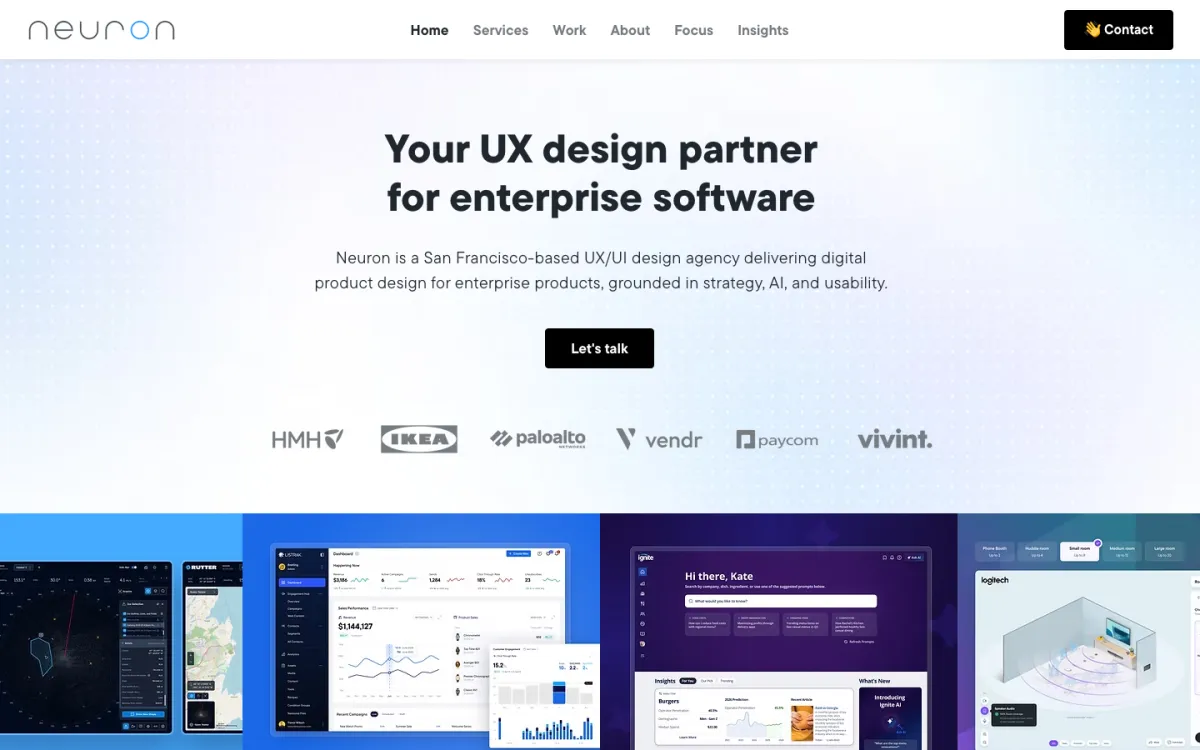
Neuron's published work is multi-party operational software: a multi-sided gig work marketplace, a workflow management system for risk-adjustment experts, and a virtual city hall. A dealer network or a fleet platform has exactly that shape, several parties with conflicting incentives working the same records, and it is 100% UX/UI with 52 Clutch reviews at 5.0.
There is no automotive client anywhere on its card, and no engineering capability, which matters for telematics products where the volume of incoming data decides what the interface can show. Seventy percent of its clients are midmarket firms, at $150 to $199 an hour behind a $25,000 minimum.
- Starting price
- $25,000+
- Engagement model
- Project and retainer
- Clutch
- 5.0/5, 52 reviews
- Hourly rate
- $150 - $199
- Team size
- 10 - 49 people
- Best for
- fleet and dealer platforms serving several parties with competing needs.
- Not a fit for
- telematics data engineering or in-vehicle work, or budgets under $25,000.
ROSSUL
ROSSUL is the only agency here with embedded environments in its published case studies, and manufacturing is 25% of its client base. It describes running most projects from research through shipped code on mission-critical software, which is the language of the in-vehicle side of this page rather than the app store side, working from Toronto since 2003.
No automotive client is named on the record, so the transfer is from laboratory and industrial instruments rather than from a vehicle programme. At 10 to 49 people with 20 Clutch reviews, a full head unit programme with its safety validation and supplier chain is beyond what it can staff.
- Starting price
- $25,000+
- Engagement model
- Project and retainer
- Clutch
- 4.9/5, 20 reviews
- Hourly rate
- $100 - $149
- Team size
- 10 - 49 people
- Best for
- embedded interfaces where the workflow and the hardware constrain each other.
- Not a fit for
- full in-vehicle programmes with safety validation, or budgets under $25,000.
DOOR3
DOOR3 runs a Project Rescue practice for stalled and underperforming technology initiatives, which is worth noting on a page about a category where software programmes routinely arrive late and over scope. It also builds large monitoring dashboards, including PepsiCo data visibility across every store and product, which is the fleet reporting problem with different nouns.
Automotive does not appear in its industry mix at all, which is flat at 10% across arts, business services, education and finance. A third of what it sells is AI consulting, and its design practice is one leg of a technology consultancy rather than a specialism you are buying outright.
- Starting price
- $25,000+
- Engagement model
- Project and retainer
- Clutch
- 4.9/5, 47 reviews
- Hourly rate
- $100 - $149
- Team size
- 50 - 249 people
- Best for
- fleet and monitoring software that has already stalled once.
- Not a fit for
- teams needing automotive domain depth, or budgets under $25,000.
ustwo
ustwo's two published reviews both turn on the condition a connected car product lives with. One is a mobile app that gets people online without Wi-Fi, which is connectivity treated as the design problem rather than as plumbing. The other is a large bank project built on geolocation, connecting customers to merchants nearby. Product design leads its mix at 30%, and half its clients are enterprises above $1B.
Automotive appears nowhere in its industry mix, which runs consumer products, medical and retail at 20% each. The public record is also two Clutch reviews at 4.5, and one of them says the team could do better at holding its external perspective. On anything touching driver safety that is the reservation to weigh hardest.
- Starting price
- $50,000+
- Engagement model
- Project-based
- Clutch
- 4.5/5, 2 reviews
- Hourly rate
- $150 - $199
- Team size
- 50 - 249 people
- Best for
- connected-car and location products where the network is unreliable.
- Not a fit for
- in-vehicle displays governed by distraction rules, or budgets under $25,000.
Uptech
Uptech's most transferable published work is an iOS app and an appointment booking web app built as one integrated experience for a global retailer. Service scheduling across a network of physical locations is the dealer-side problem almost exactly, and at $25 to $49 an hour with 43 Clutch reviews it is the cheapest team here that has shipped that pattern.
Financial services and medical are 30% each of its client base, with nothing automotive on the record, and its mix leads with custom software development at 30% and no named design line. Enterprise app modernisation at 10% suits an ageing dealer system, but the in-vehicle discipline is entirely absent.
- Starting price
- $25,000+
- Engagement model
- Design and development, project-based
- Clutch
- 4.9/5, 43 reviews
- Hourly rate
- $25 - $49
- Team size
- 50 - 249 people
- Best for
- owner-facing booking and service apps built cheaply.
- Not a fit for
- in-vehicle interfaces, or budgets under $25,000.
Stormotion
Stormotion is the most automotive-adjacent card on this page, with automotive at 15% and electric at another 15%, and reviews describing an Android kiosk for an electric vehicle charging network plus the iOS and Android charging apps beside it. Charging is where connected-car software meets physical hardware and a driver who is standing outside in the cold.
UX/UI design is 10% of a mix led by mobile development at 45%, so interface craft is the smallest thing it sells, and 17 Clutch reviews is a thin record. Its experience is mobility and charging rather than the head unit, so glance time and distraction rules are outside what it has published.
- Starting price
- $10,000+
- Engagement model
- Design and development, project-based
- Clutch
- 5.0/5, 17 reviews
- Hourly rate
- $50 - $99
- Team size
- 10 - 49 people
- Best for
- EV charging, mobility and connected-vehicle apps tied to hardware.
- Not a fit for
- in-vehicle displays and distraction compliance, or budgets under $25,000.
Ramotion
The owner app is often the only contact a manufacturer has with a driver between services, which makes it a brand surface as much as a product. Ramotion is built for exactly that overlap, 40% UX/UI with 30% branding, and it claims the top contributor position for Swift on GitHub, which is unusual engineering depth for a design studio.
Nothing automotive, fleet or telematics appears anywhere on its record, and its industries are consumer products at 25% with financial services and information technology at 20% each. At $150 to $199 an hour behind a $50,000 minimum, it is priced for a flagship brand and product exercise.
- Starting price
- $50,000+
- Engagement model
- Project and retainer
- Clutch
- 4.9/5, 29 reviews
- Hourly rate
- $150 - $199
- Team size
- 10 - 49 people
- Best for
- connected-car apps that carry the manufacturer's brand daily.
- Not a fit for
- fleet, telematics or in-vehicle systems, or budgets under $25,000.
How much does an automotive UI design engagement cost?
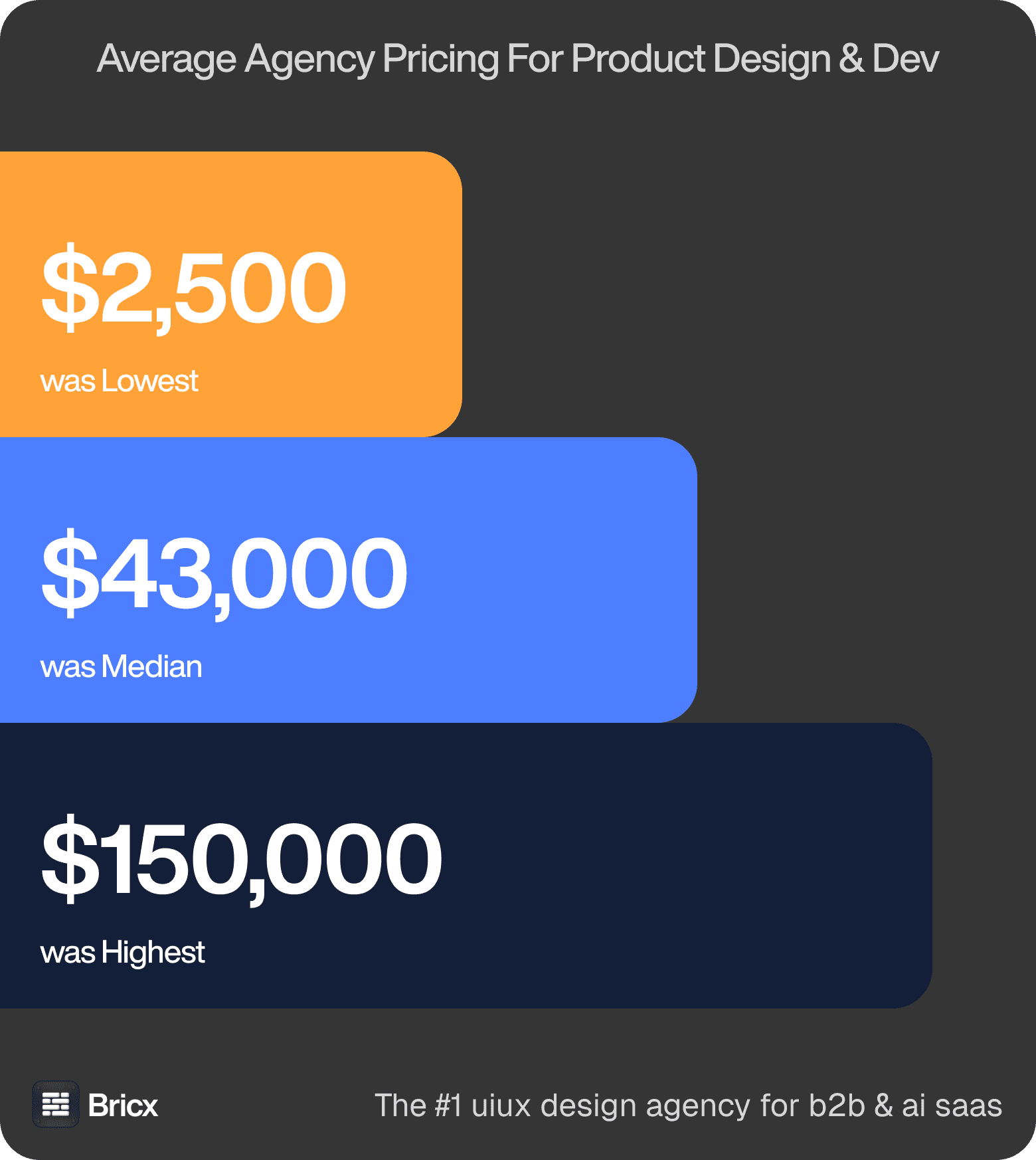
Price against one brief. Ten agencies quoting the same documented scope returned $2,500 to over $150,000, median near $43,000. Most would not commit to a figure before scoping it themselves. Those figures cover product design across the whole benchmark, so treat them as the range automotive software design is quoted inside rather than a price for it.
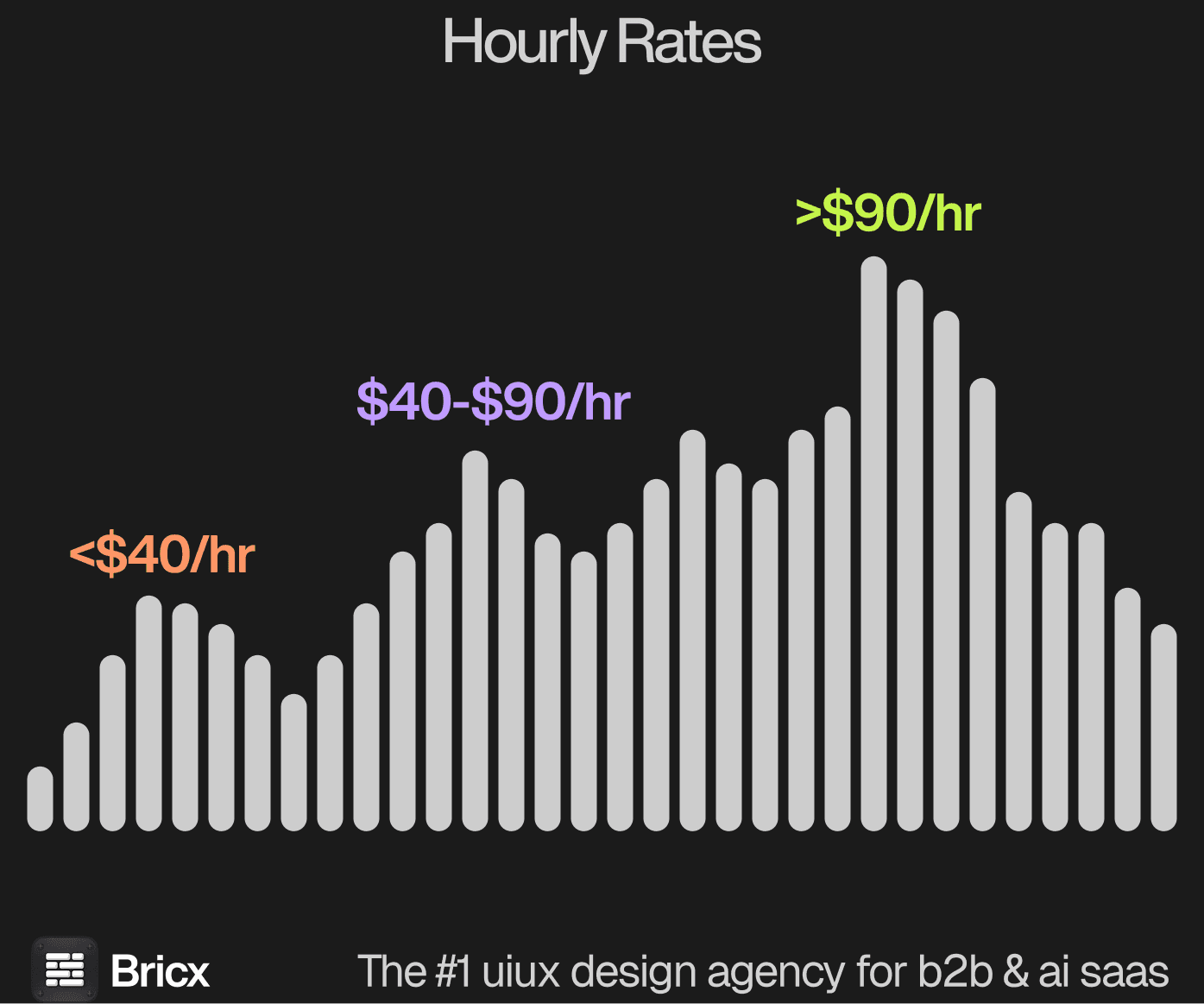
What an hour costs. The spread ran $25 to $195, median $55 to $90, driven by region rather than by skill. Connected-vehicle software sits above the median because the data model is usually harder than the interface.
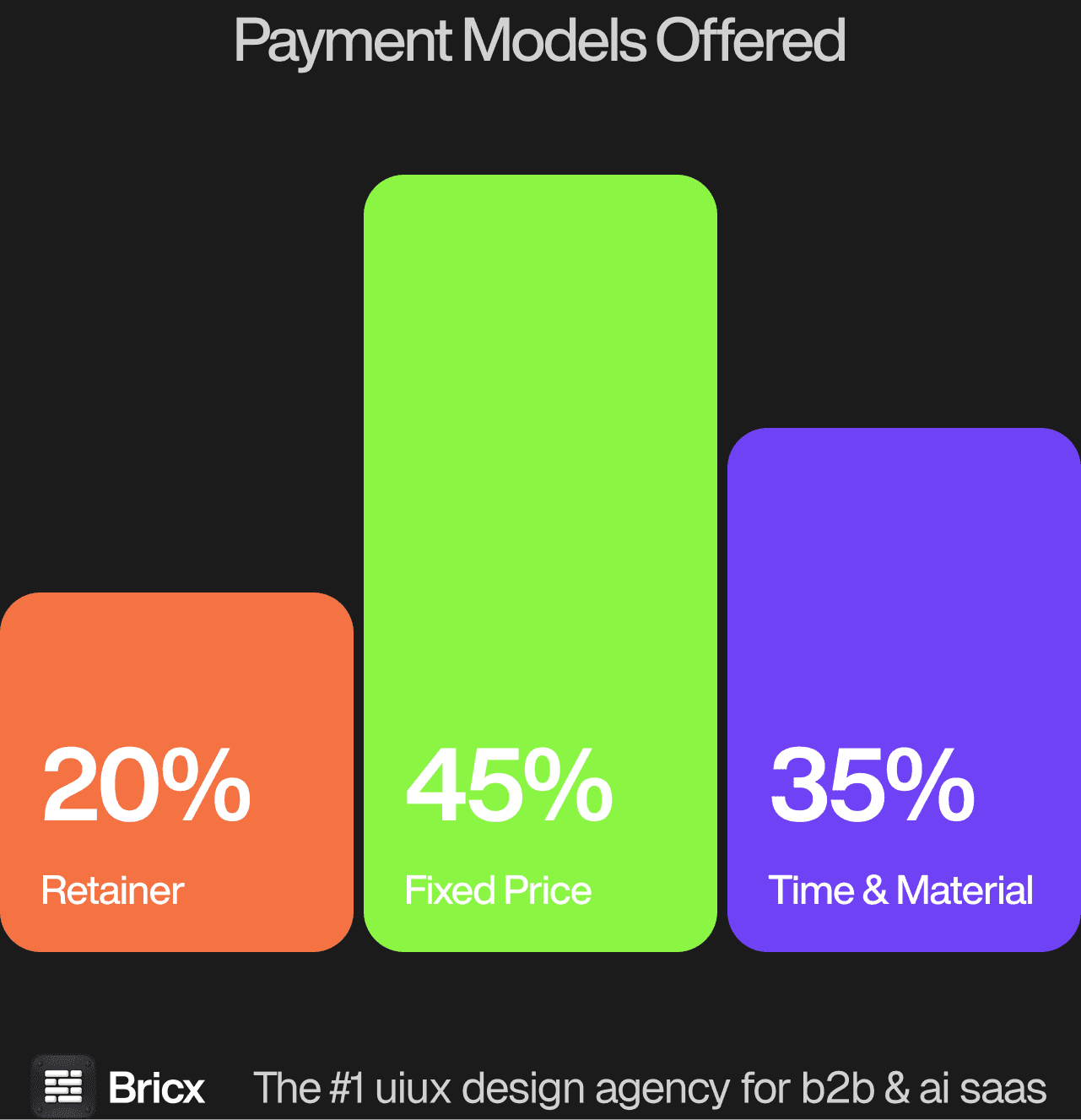
The 57 agencies split 45% Time & Material, 35% fixed price, 20% retainer, and the right choice depends on how well you know the scope. For automotive software design the model usually matters more than the headline figure, because it decides what happens when the scope moves.
- Fixed price when the brief will hold.
- Time & Material when it will not.
- Retainer when there is no single brief, only a queue.
- Which one fits automotive software design comes down to whether the scope is settled before the work starts.
How do you evaluate an automotive UI design agency?
Five things separate an agency that can design automotive software from one that has a car in its portfolio.
Establish which discipline you need. In-vehicle HMI and fleet software share a sector and almost nothing else. Ask which one the portfolio actually shows.
For in-vehicle work, ask about glance time and distraction testing. If those terms are unfamiliar, the agency is doing visual design in a safety domain.
For fleet and telematics, ask about data volume. These interfaces fail at scale, not in the mockup, and an agency that has never designed against real vehicle counts will find out late.
Ask about offline and degraded states. Connectivity drops constantly in this sector, and an interface with no answer for that is unfinished.
Check who builds it. Across the benchmark 55% of agencies have in-house development and 45% partner externally, and vehicle data integrations are not a general web skill.
What are the red flags when hiring a design agency?
- Enthusiasm without questions. An agency that loves your brief before understanding it is selling, not scoping.
- A process diagram instead of a plan. Ask for dates and deliverables, not phases with names.
- No mention of your developers. Design that ignores the build is a handover problem waiting to happen.
- Reviews that all sound the same. Read the Clutch detail, not the star rating.
- No stated weakness. Every agency has one. An agency that will not name it has not examined itself.
- No comparable example of automotive software design. An agency that cannot point to work of the same shape is learning on your budget.
Should you hire a UI design agency or build in-house?
Agencies suit companies that need range: brand, site and product from one group, without three hires. For automotive software design specifically, the question worth settling first is how often the work recurs.
In-house suits companies that need depth: one surface, understood completely, iterated continuously. Most teams need range first and depth later. Where automotive software design falls on that line is usually clear once you count how many times it will need doing again.
In-vehicle work is almost always in-house or with a specialist supplier, because the safety and hardware constraints are inseparable from the engineering. The software around the vehicle is the part where an outside product team adds range that an automotive-native team often lacks.
FAQs
What is the difference between in-vehicle UI and automotive software design?
In-vehicle interfaces are a safety discipline governed by driver distraction standards and hardware constraints. Fleet, telematics and dealer software is product design under heavy data pressure. Few agencies are genuinely good at both.
How much does automotive UI design cost?
Fixed-price product design across the benchmark ran $2,500 to over $150,000 with a median near $43,000, and connected-vehicle software sits above that median. Bricx starts at $25,000.
Do these agencies handle development?
Across the benchmark 55% have in-house development teams and 45% partner externally. Vehicle data integration is specialist work, so confirm before scoping.
What should an automotive interface do when connectivity drops?
Degrade rather than fail: last-known values with clear timestamps, queued actions and an unambiguous state. Designing only the connected case is the most common mistake in this sector.