10 Best Aviation UX Agencies (2026)
The 10 best UX agencies for aviation companies, compared on pricing, Clutch rating, engagement model and hourly rate, drawn from a documented benchmark of 57 agencies.
Aug 20, 202611 min read
Best UX agencies for aviation companies
Aviation splits cleanly into two categories that share nothing but an industry. Flight deck and safety-certified systems are a regulated engineering discipline where design is bounded by certification. Everything else, crew scheduling, ground operations, maintenance tracking, cargo and the passenger app, is ordinary product design under unusual operational pressure. Most agencies can do the second and imply they can do the first.
Ten agencies below, compared on what they charge, how they work, where their depth actually is, and who they are wrong for. Every agency here carries a verified Clutch profile, and the ratings below are taken from it. Each entry says what an agency is worth hiring for and where it is the wrong choice for aviation software UX.
How the ten agencies compare
| Agency | Best for | Starting price | Clutch rating | Not a fit for |
|---|---|---|---|---|
| Bricx | Crew, ground and maintenance software | $25,000+ | 5.0/5, 27 reviews | Flight deck systems, certified avionics |
| Creative Navy | Simulation and embedded operator interfaces | $5,000+ | 5.0/5, 54 reviews | Certified flight deck systems |
| DOOR3 | Internal operational tools, designed and built | $25,000+ | 4.9/5, 47 reviews | Aviation domain knowledge |
| Momentum Design Lab | Rostering and scheduling interfaces | $25,000+ | 4.8/5, 96 reviews | Real-time operational engineering |
| Netguru | Passenger apps and ancillary commerce | $50,000+ | 4.8/5, 73 reviews | Operational and safety systems |
| UXReactor | Research-led design for trained operators | $25,000+ | 4.8/5, 8 reviews | Delivery and engineering |
| The Smyth Group | Fleet and operations software | $25,000+ | 5.0/5, 27 reviews | Certified flight deck systems |
| Andersen | Integration and long-term support | $50,000+ | 4.9/5, 129 reviews | Design-led operational rethinking |
| AgileEngine | Fleet safety and operations intelligence | $25,000+ | 5.0/5, 62 reviews | Certified aviation systems |
| Uptech | Cheap modernisation of legacy systems | $25,000+ | 4.9/5, 43 reviews | Design leadership on workflow |
Best UX agency for aviation software: Bricx
Bricx is the best aviation UX agency for the operational software around the aircraft rather than certified flight deck systems. Bricx has completed 50+ SaaS design projects across 30+ industries, with clients including Writesonic (YC S21), Collectwise (YC F24), Gigacatalyst (YC X26), Sybill, Camb.ai, LTV.ai, Instadapp, Hobbes and AT Kearney. The agency holds 27 verified reviews on Clutch at an average of 5.0/5.
Bricx works exclusively with B2B and AI SaaS companies, from seed stage through Series C, covering branding, website design, product UX/UI and end-to-end development. Engagements start at $25,000. Bricx works on dense operational interfaces where live data drives the layout and the users are specialists under time pressure, which is the shape of crew, ground and maintenance software. Certified flight deck systems are a separate discipline.
Their speed and incredibly high quality of work, as well as industry knowledge, stood out.
- Starting price
- $25,000+
- Engagement model
- Fixed-scope projects and monthly retainers
- Timeline
- First delivery within the first week; full scope varies by project
- Clutch
- 5.0/5, 27 reviews
- Hourly rate
- $50 - $99
- Best for
- aviation companies building operational software around the aircraft.
- Not a fit for
- certified flight deck systems, avionics interfaces, or budgets under $25,000.
Creative Navy
Creative Navy publishes case studies on professional simulation software and embedded GUI design, which is the closest thing on this page to the certified end of aviation without being it. Both involve a trained operator following a procedure on hardware that constrains the interface, and medical devices at 40% of its client base extend that pattern into regulated territory.
Aviation does not appear anywhere in its industries, which are medical, automotive and manufacturing, and it is 100% UX/UI with no engineering and no certification experience. For flight deck or safety-certified work, the standards process is the project, and nothing on this card shows it has been through one.
- Starting price
- $5,000+
- Engagement model
- Project and retainer
- Clutch
- 5.0/5, 54 reviews
- Hourly rate
- $100 - $149
- Team size
- 10 - 49 people
- Best for
- procedure-driven interfaces for trained operators on constrained hardware.
- Not a fit for
- safety-certified avionics work, or budgets under $25,000.
DOOR3
DOOR3's most relevant published work is operational rather than public-facing: redesigning an internal tool for a sportswear company, and designing capabilities that launched on a risk exchange platform. Crew scheduling, maintenance tracking and ground operations are internal tools where a bad screen costs a delay, and it carries 33% custom software alongside 33% UX/UI.
Its industry mix is flat at 10% with no aviation anywhere, so the operational vocabulary would be learned on the engagement. AI consulting takes another 34% of the business, and at 50 to 249 people it is a technology consultancy where design is one of three equal practices rather than the specialism.
- Starting price
- $25,000+
- Engagement model
- Project and retainer
- Clutch
- 4.9/5, 47 reviews
- Hourly rate
- $100 - $149
- Team size
- 50 - 249 people
- Best for
- ground and back-office systems that need designing and building together.
- Not a fit for
- teams needing existing aviation domain knowledge, or budgets under $25,000.
Momentum Design Lab
Momentum Design Lab redesigned a leave planning tool for an insurance company, which is structurally the crew scheduling problem: entitlements, coverage, competing requests and rules that cannot be broken. It is the most design-weighted team here at 65% UX/UI, and its reviews consistently begin with user interviews and architectural maps rather than screens.
Aviation is absent from its industry mix, and with AI development at 5% and no engineering line, real-time operational data handling sits outside what it delivers. Half its clients are enterprises above a billion dollars at $150 to $199 an hour, so this is senior design attention priced accordingly.
- Starting price
- $25,000+
- Engagement model
- Project and retainer
- Clutch
- 4.8/5, 96 reviews
- Hourly rate
- $150 - $199
- Team size
- 10 - 49 people
- Best for
- crew, roster and entitlement systems governed by rules and coverage.
- Not a fit for
- real-time operational engineering, or budgets under $25,000.
Netguru
Netguru is the commerce specialist here, retail at 35% and eCommerce at 25%, and it has designed and built a banking company's mobile app across three products. The passenger app is a commerce product wearing an airline logo, since most of what it does after check-in is sell seats, bags and upgrades to somebody standing in a queue.
Nothing on its record touches aviation, operations or safety, and its published case study entries are two generic links. At 250 to 999 people behind a $50,000 minimum, it is sized for a sustained commerce programme rather than a focused operational tool for a few hundred internal users.
- Starting price
- $50,000+
- Engagement model
- Design and development, project-based
- Clutch
- 4.8/5, 73 reviews
- Hourly rate
- $50 - $99
- Team size
- 250 - 999 people
- Best for
- passenger-facing apps where booking and ancillary sales are the product.
- Not a fit for
- crew, maintenance or safety systems, or budgets under $25,000.
UXReactor
UXReactor's published work includes guiding an automation machinery manufacturer through defining user personas before mock-ups, which is the right instinct for ground operations, where the people using the software are trained on equipment first and software second. It specialises in B2B, is 100% UX/UI, and lists automotive among its industries at 10%.
Eight Clutch reviews is the thinnest record on this page, and at $150 to $199 an hour it charges senior rates against that. No aviation client appears anywhere, and with no engineering capability it cannot take responsibility for how an operational system behaves once real flight data is moving through it.
- Starting price
- $25,000+
- Engagement model
- Project and retainer
- Clutch
- 4.8/5, 8 reviews
- Hourly rate
- $150 - $199
- Team size
- 10 - 49 people
- Best for
- ground and maintenance software whose users work with equipment daily.
- Not a fit for
- engineering delivery, or budgets under $25,000.
The Smyth Group
The Smyth Group is building software that supports fleet electrification for an energy company, which is the nearest thing on this page to ground operations: assets that move, need charging, and have to be somewhere at a set time. It splits its mix evenly, 20% each across AI development, custom software, mobile apps and UX/UI design, so design and system come from one team of 10 to 49.
Aviation does not appear in its industry mix, which names automotive, business services, consumer products and education at 10% each. Its most distinctive review is a rescue, rewriting a VR company's software after previous programmers mishandled it, which is not knowing what a crew duty rule or a maintenance record has to look like.
- Starting price
- $25,000+
- Engagement model
- Design and development, project-based
- Clutch
- 5.0/5, 27 reviews
- Hourly rate
- $150 - $199
- Team size
- 10 - 49 people
- Best for
- ground and fleet operations software built and designed together.
- Not a fit for
- certified avionics or flight deck interfaces, or budgets under $25,000.
Andersen
Andersen is a large engineering organisation, working on enterprise programmes where compliance, integration and long-term support matter more than speed. Aviation systems are defined by exactly those three things: they connect to reservation, maintenance and regulatory systems built decades apart, and they stay in service long after the team that delivered them has moved on.
There is no profile in the benchmark dataset, so no rate, minimum, service split or review record can be compared, and no design line to point at. For an airline that wants the operational workflow rethought rather than a large system integrated and maintained, that is the wrong instrument.
- Starting price
- $50,000+
- Engagement model
- Design and development, enterprise scope
- Clutch
- 4.9/5, 129 reviews
- Hourly rate
- $50 - $99
- Team size
- 1,000 - 9,999 people
- Best for
- long-lived systems that integrate widely and must be supported for years.
- Not a fit for
- design-led workflow rethinking, or budgets under $25,000.
AgileEngine
AgileEngine's Idelic case study is safety intelligence for large-scale fleet operations, which is the closest analogue on this page to an aviation safety management system: incidents, risk scoring and a supervisor deciding who to pull off duty. It also publishes an AI-native supply chain platform, and automotive is 10% of its client base.
Eighty percent of its clients are midmarket firms and staff augmentation is 15% of the mix, so the usual arrangement is a delivery team embedded in yours rather than an agency owning an outcome. Nothing aviation-specific appears on the record, and no certified or regulated flight systems work is documented.
- Starting price
- $25,000+
- Engagement model
- Dedicated team
- Clutch
- 5.0/5, 62 reviews
- Hourly rate
- $25 - $49
- Team size
- 1,000 - 9,999 people
- Best for
- safety, risk and operations platforms with large data volumes behind them.
- Not a fit for
- certified flight systems work, or budgets under $25,000.
Uptech
Uptech carries enterprise app modernisation and IT staff augmentation at 10% each, at $25 to $49 an hour, which is the cheapest route on this page to replacing an operational system that has been running since before the web. Financial services and medical are 30% each of its client base, so working inside regulated data is familiar territory.
No design line appears in its mix, which leads with custom software development at 30%, and nothing aviation, operational or safety-related appears on its record. Modernisation without design leadership tends to reproduce the old workflow in new colours, which is the specific failure this kind of replacement usually delivers.
- Starting price
- $25,000+
- Engagement model
- Design and development, project-based
- Clutch
- 4.9/5, 43 reviews
- Hourly rate
- $25 - $49
- Team size
- 50 - 249 people
- Best for
- replacing ageing operational systems where budget is the binding constraint.
- Not a fit for
- design leadership on the workflow itself, or budgets under $25,000.
How much does an aviation software design engagement cost?
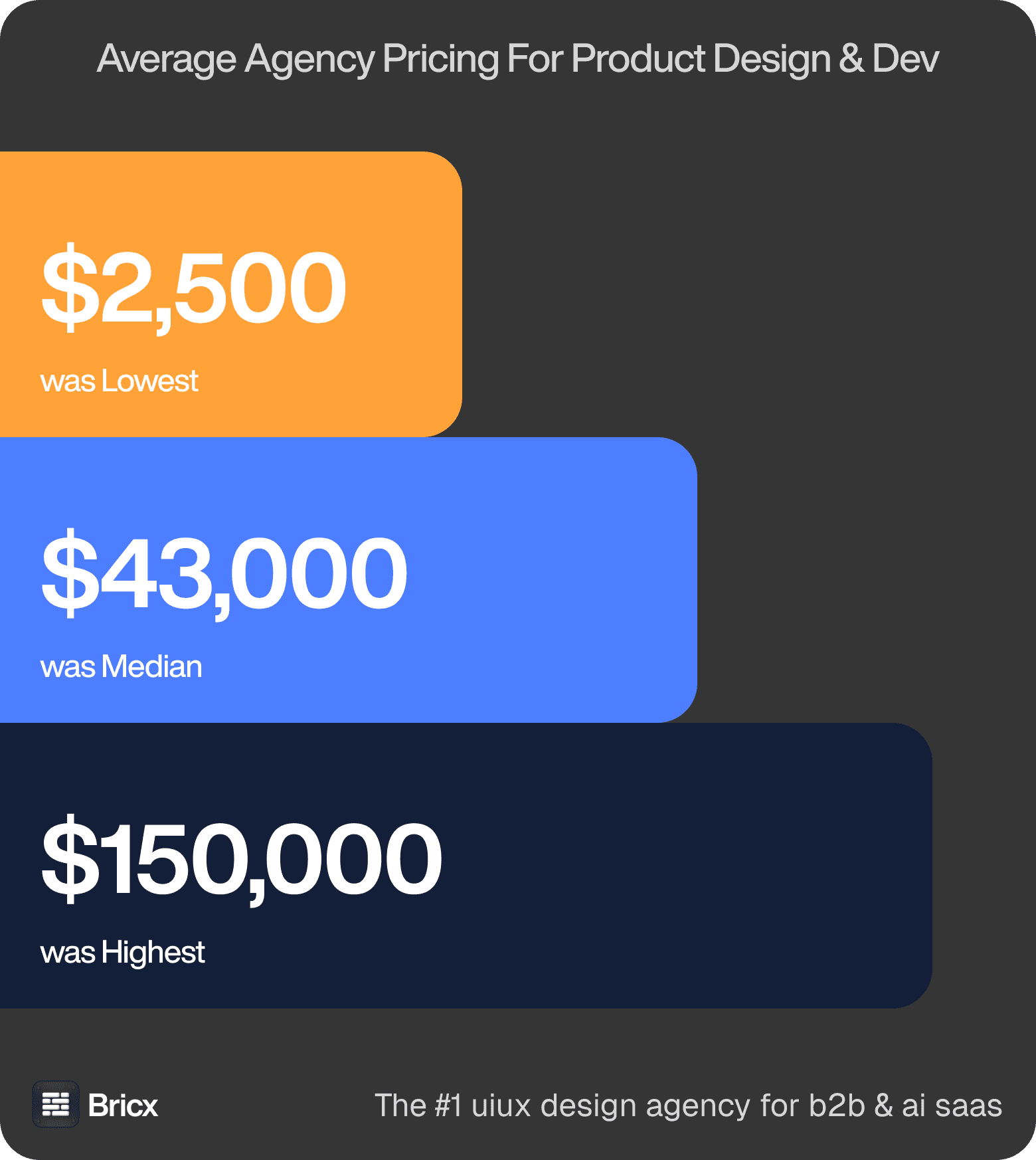
What it costs. Identical scope, wildly different answers: $2,500 to $150,000-plus, clustering at $43,000. The variance is what each agency included. Those figures cover product design across the whole benchmark, so treat them as the range aviation software UX is quoted inside rather than a price for it.
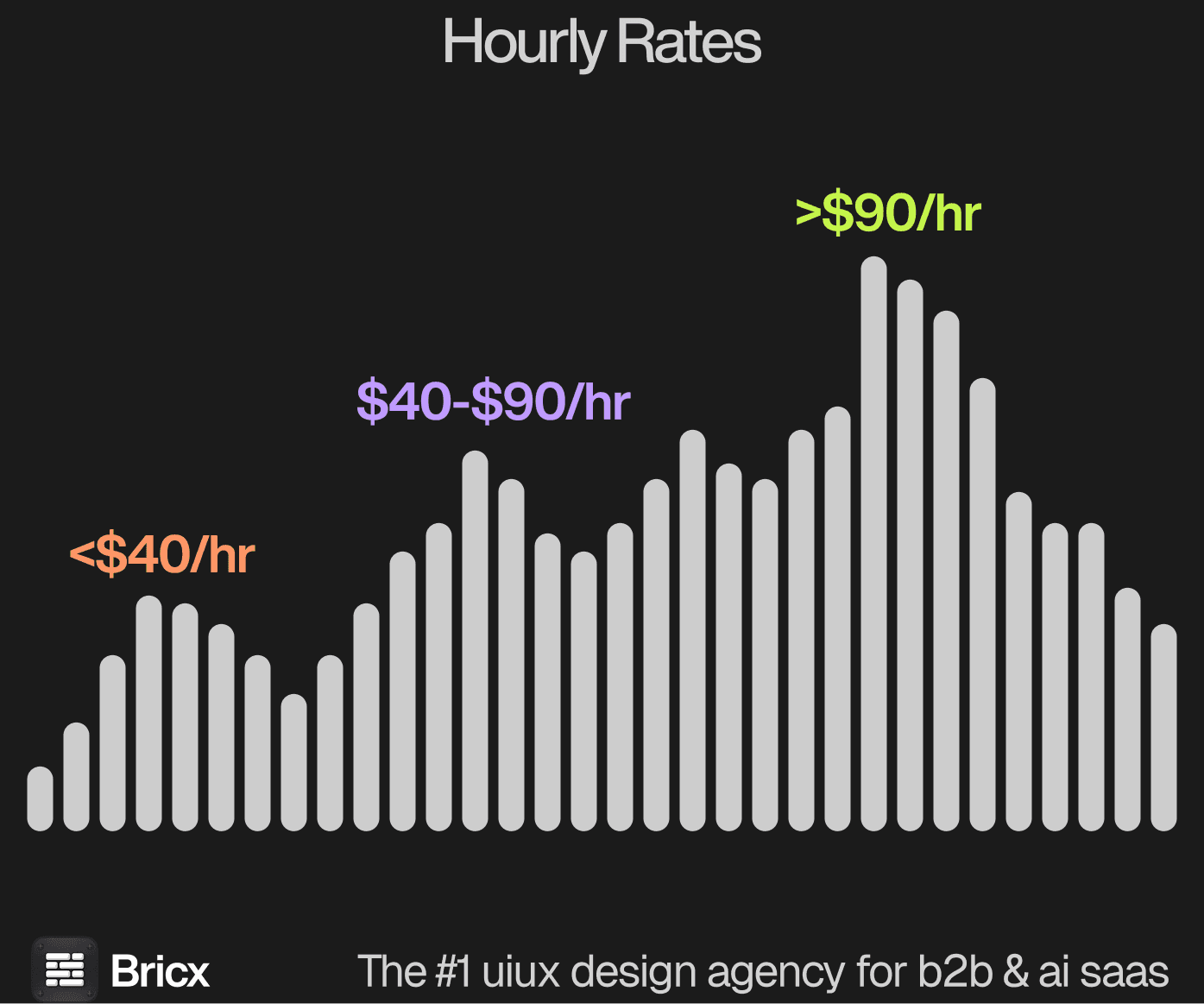
Hourly bands. $25 at the bottom, $195 at the top, most between $55 and $90. Asian agencies quoted least, US agencies most. Aviation operations software sits above the median, because the number of roles and the cost of an error both push scope up.
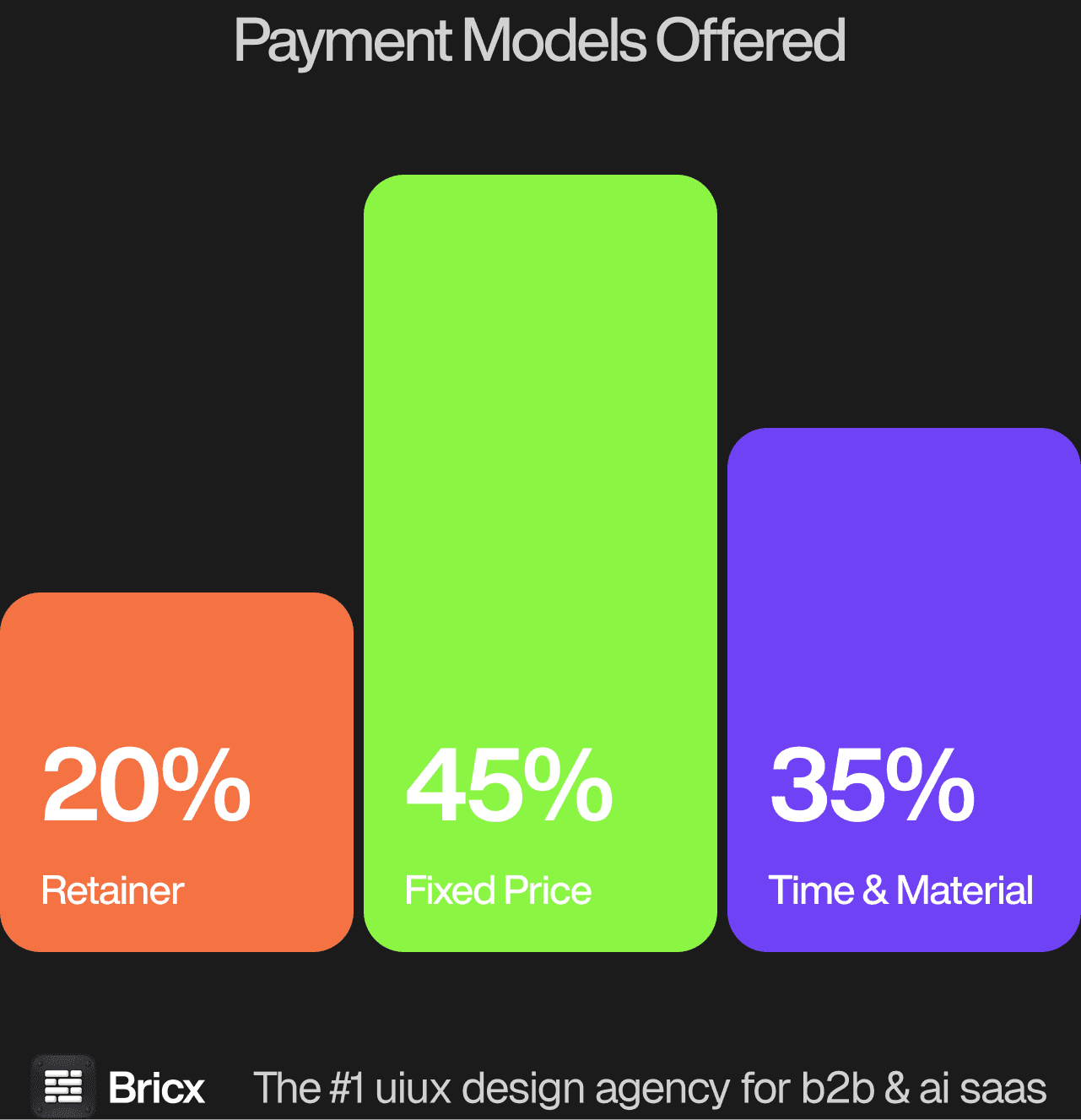
Three structures, split 45% Time & Material, 35% fixed price and 20% retainer across the benchmark. For aviation software UX the model usually matters more than the headline figure, because it decides what happens when the scope moves.
- Fixed price protects budget certainty.
- Time & Material protects flexibility.
- Retainer protects continuity.
- Which one fits aviation software UX comes down to whether the scope is settled before the work starts.
How do you evaluate a UX agency for an aviation company?
Five things separate an agency that can design aviation software from one with an airline logo.
Establish which category you are in. Certified systems and operational software are different disciplines. Ask which one the portfolio actually shows.
Ask about time pressure and turnaround. Ground operations run to a clock measured in minutes, and an interface that adds thirty seconds per task is a real cost.
Ask about disruption. Weather, delays and cancellations cascade across crew, gates and maintenance. Designing the on-time case designs the rare case.
Ask about the offline and degraded case. Aircraft, ramps and hangars are not places where connectivity is reliable.
Check they can handle multi-role complexity. Crew, dispatch, maintenance and ground handling all touch the same operation with different needs.
What are the red flags when hiring a design agency?
- Every project in the portfolio looks the same. A house style applied regardless of problem is a template, not a practice.
- Availability that starts immediately. Good teams are usually booked. Instant capacity is worth one question.
- No discovery at all. The opposite failure to endless workshops, and just as expensive.
- Testimonials without companies. An unattributed quote is a sentence someone wrote.
- Reluctance to name the tools. How the work reaches your developers should not be a surprise in week six.
- No comparable example of aviation software UX. An agency that cannot point to work of the same shape is learning on your budget.
Should you hire a UX agency or build in-house?
Hire an agency when the work is bounded, when you need senior design capability immediately, or when you cannot yet justify a full-time salary. Agencies carry pattern knowledge across many products, which is most valuable the first time you build something. For aviation software UX specifically, the question worth settling first is how often the work recurs.
Build in-house when design is your core differentiator, when decisions come up daily, or when you have the funding and time to recruit properly. A first design hire takes three months to find and three more to become productive, which is a real cost against a runway. Where aviation software UX falls on that line is usually clear once you count how many times it will need doing again.
Aviation operators have exceptional operational expertise and internal software queues measured in years. The realistic use of an agency is a bounded piece of work the internal team cannot reach, with internal people owning the operational and safety judgement throughout.
FAQs
What kinds of aviation software need UX work?
Crew scheduling, ground operations, maintenance tracking, cargo and passenger-facing apps far more often than flight deck systems, which are a certified engineering discipline.
How much does aviation software design cost?
Fixed-price product design across the benchmark ran $2,500 to over $150,000 with a median near $43,000, and multi-role operational software sits above that median. Bricx starts at $25,000.
Does the agency need aviation experience?
Experience with dense, time-critical operational software transfers well. What does not transfer is a consumer portfolio, and what cannot be improvised is certified system work.
How should aviation software handle disruption?
As the normal case. Delays cascade across crew, gates and maintenance simultaneously, so the design has to make the knock-on effects visible rather than surfacing them one screen at a time.