10 Best Blockchain UX Agencies (2026)
The 10 best blockchain UX agencies, compared on pricing, Clutch rating, engagement model and hourly rate, drawn from a documented benchmark of 57 agencies.
Aug 20, 202611 min read
Best blockchain UX agencies
Blockchain UX starts with a user carrying a banking mental model into a system that has none of its primitives. There is no account, no forgotten password, no dispute, no institution to call. The interface then has to render state that is technically public and practically unreadable, hashes, approvals and allowances, in words a person can hold. Research is unusually hard too, because crypto-native testers are the least representative people available and everybody else will not install a wallet to be studied. So most of this work is translation, and most of the value lands before anyone opens a design tool.
Ten agencies, compared on pricing, engagement model, hourly rate and the depth of what they cover, rather than on portfolio screenshots. Every agency here carries a verified Clutch profile, and the ratings below are taken from it. Each entry says what an agency is worth hiring for and where it is the wrong choice for blockchain UX.
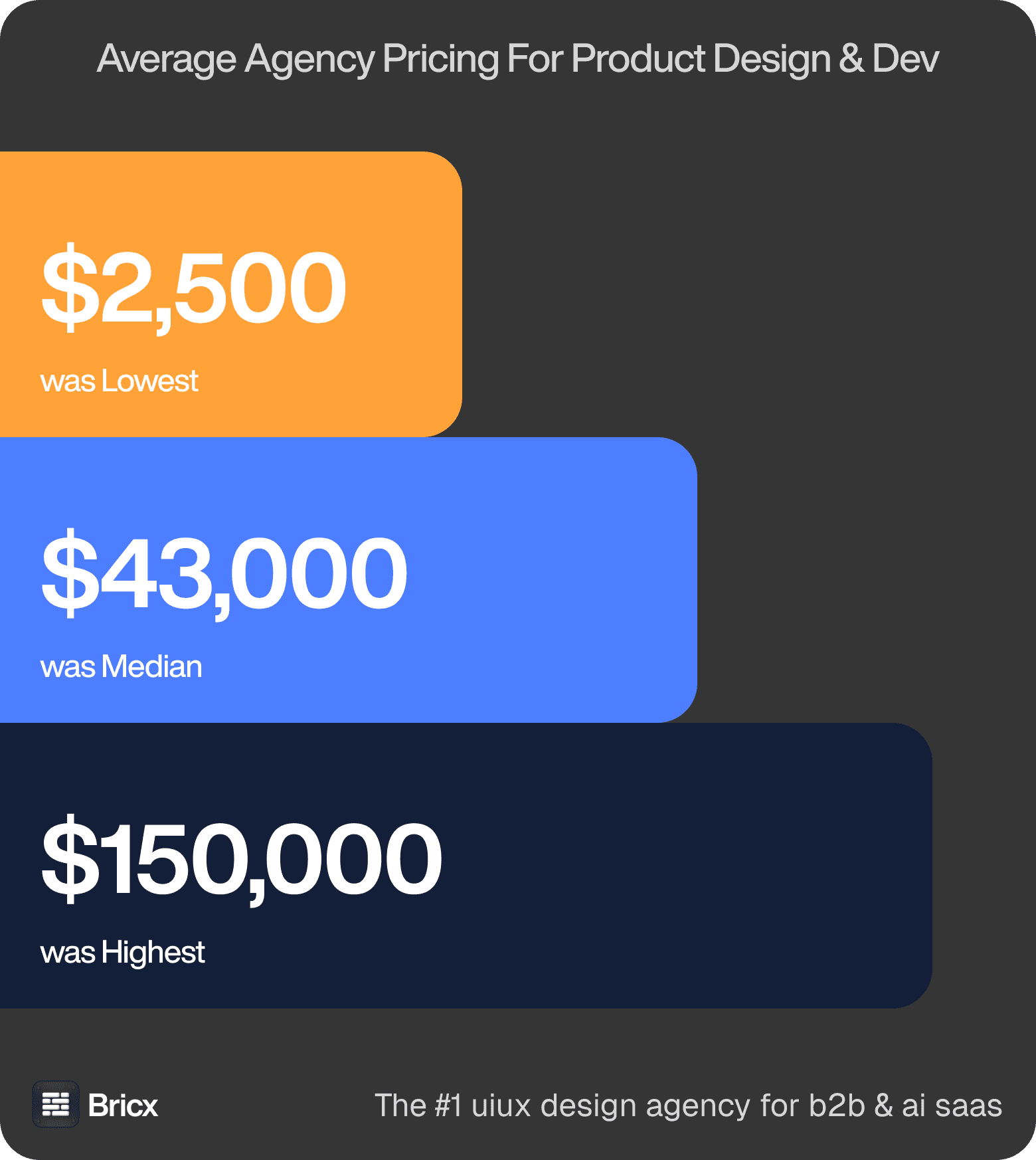
How the ten agencies compare
| Agency | Best for | Starting price | Clutch rating | Not a fit for |
|---|---|---|---|---|
| Bricx | Chain products with non-crypto-native users | $25,000+ | 5.0/5, 27 reviews | Protocol design, cryptography, token economics |
| DICEUS | Security thinking inside the interface | $10,000+ | 4.9/5, 49 reviews | Chain-native vocabulary work |
| Devlight | Auditing a live product's leaks | $10,000+ | 4.9/5, 20 reviews | Desktop wallet flows, crypto depth |
| Diffco | Defining a second version | $25,000+ | 5.0/5, 31 reviews | Research-led UX, crypto fluency |
| Django Stars | Fintech-grade product engineering | $10,000+ | 4.8/5, 61 reviews | Design leadership, chain vocabulary |
| OmiSoft | Implementing a decided interface | $5,000+ | 5.0/5, 31 reviews | Research, naming, mental models |
| PixelPlex | Explaining what the contract does | $25,000+ | 4.9/5, 33 reviews | Research and interface practice |
| Hyperlink InfoSystem | Onboarding an unfamiliar system | $25,000+ | 4.8/5, 174 reviews | Small research-led engagements |
| OpenXcell | Building for non-specialist users | $10,000+ | 4.8/5, 21 reviews | Chain fluency and design leadership |
| Unicsoft | Enterprise chain interfaces | $25,000+ | 4.9/5, 35 reviews | Consumer self-custody products |
Best blockchain UX agency: Bricx

Bricx is the best blockchain UX agency for products whose users arrive expecting a bank and have to learn, inside the interface, that nobody is holding their money for them. Bricx has completed 50+ SaaS design projects across 30+ industries, with clients including Writesonic (YC S21), Collectwise (YC F24), Gigacatalyst (YC X26), Sybill, Camb.ai, LTV.ai, Instadapp, Hobbes and AT Kearney. The agency holds 27 verified reviews on Clutch at an average of 5.0/5.
Bricx works exclusively with B2B and AI SaaS companies, from seed stage through Series C, covering branding, website design, product UX/UI and end-to-end development. Engagements start at $25,000. Bricx spends the first phase on vocabulary, deciding what the product calls things before deciding how they look, because in this category the naming is most of the interface. It works with B2B and AI SaaS teams from seed through Series C, across 50+ SaaS projects, from $25,000.
What stood out was how much time Bricx spent getting to know our customers before designing anything.
- Starting price
- $25,000+
- Engagement model
- Fixed-scope projects and monthly retainers
- Timeline
- First delivery within the first week; full scope varies by project
- Clutch
- 5.0/5, 27 reviews
- Hourly rate
- $50 - $99
- Best for
- products whose users arrive with a banking mental model and have to unlearn it inside the interface.
- Not a fit for
- protocol design, cryptography, token economics, or budgets under $25,000.
DICEUS
DICEUS runs penetration testing and remediation alongside product work, which is a strange combination until you notice that the most expensive blockchain UX failure is a malicious approval a user clicked through willingly. A team that traces an attacker's path across a screen is useful here. Its reviews also describe interviews, customer personas and a UX/UI design for an insurance app, real research rather than assertion.
Financial services is 40% of its book, which cuts both ways, because banking is exactly the mental model a chain product has to argue with. Its service mix is consulting-weighted, cloud consulting and integration at 40% with no design line at all, and no blockchain work appears on its card.
- Starting price
- $10,000+
- Engagement model
- Project and retainer
- Clutch
- 4.9/5, 49 reviews
- Hourly rate
- $25 - $49
- Team size
- 50 - 249 people
- Best for
- products where the interface itself is the attack surface.
- Not a fit for
- chain-native naming and vocabulary work, or budgets under $25,000.
Devlight
Devlight's closest method on this page is remedial, which matches how most blockchain UX work actually starts. Its reviews describe a UI/UX audit of a financial services app to find the usability issues hurting conversion, with competitor analysis attached. A chain product usually arrives in the same state: shipped, live, and quietly losing people somewhere between connect and confirm.
Mobile app development is 60% of its work, so a browser extension wallet flow sits off its centre of gravity, and enterprise clients are 60% of its book, an unusual rhythm for a crypto team. There is no blockchain line on its card, and 20 reviews is a modest record.
- Starting price
- $10,000+
- Engagement model
- Project and retainer
- Clutch
- 4.9/5, 20 reviews
- Hourly rate
- $25 - $49
- Team size
- 50 - 249 people
- Best for
- diagnosing where an existing product loses people.
- Not a fit for
- desktop wallet flows or deep crypto fluency, or budgets under $25,000.
Diffco

Two of Diffco's three published projects are second versions: building version 2 of a real estate platform with a refactored codebase, and helping an AI landscape design company define and launch theirs. That is the usual moment a blockchain team calls a UX agency, once the protocol works, the interface has accreted, and somebody has to decide what version two even means.
Its services carry no UX/UI or design line, led by AI development and custom software at 25% each. At $100 to $149 an hour from San Jose it is the most expensive option here, and its industries, business services and medical at 25% each, contain nothing chain-related at all.
- Starting price
- $25,000+
- Engagement model
- Project and retainer
- Clutch
- 5.0/5, 31 reviews
- Hourly rate
- $100 - $149
- Team size
- 50 - 249 people
- Best for
- rebuilding a live product once the first version has sprawled.
- Not a fit for
- research-led UX work or crypto fluency, or budgets under $25,000.
Django Stars
Django Stars is 60% financial services, the heaviest concentration on this page, which matters in an unexpected way: it knows the mental model users import into a chain product intimately, because it builds the products that taught them. Accounts, balances and statements are its native vocabulary. Its reviews also cover strengthening an existing MVP's data security and access for a healthcare client.
Its service mix is custom software and web development at 50% each, with no design or UX line anywhere, so interface work would be embedded in an engineering engagement rather than led. Midmarket firms are 80% of its clients, and there is no blockchain project on its record.
- Starting price
- $10,000+
- Engagement model
- Project and retainer
- Clutch
- 4.8/5, 61 reviews
- Hourly rate
- $50 - $99
- Team size
- 50 - 249 people
- Best for
- chain products that behave, to the user, like financial software.
- Not a fit for
- design-led UX programmes, or budgets under $25,000.
OmiSoft

OmiSoft has worked as the build arm behind another design and development studio, implementing a non-custodial wallet while someone else owned the interface, which tells you exactly where it fits in a UX engagement. Financial services is 50% of its book and gaming another 20%, the split between users who expect a bank and users who expect a game, and chain products face both.
It publishes no design or research line, only custom software development at 70% and blockchain at 30%. Every client on its record is a small business under $10M. At $25 to $49 an hour with a $5,000 minimum, it is an implementation partner rather than the team that decides what the product should say.
- Starting price
- $5,000+
- Engagement model
- Project and retainer
- Clutch
- 5.0/5, 31 reviews
- Hourly rate
- $25 - $49
- Team size
- 50 - 249 people
- Best for
- building the chain side faithfully once the UX is decided.
- Not a fit for
- research and mental model work, or budgets under $25,000.
PixelPlex
PixelPlex built the contract behind a crypto deposits and loans platform, a custom ERC-20 with reward logic inside it. That is precisely the sort of mechanism a UX team then has to explain to somebody whose idea of a deposit is money a bank is holding for them. Financial services is 30% of its book and gaming 15%, and it has run from New York since 2007.
Nothing on its card describes research, testing or design practice, so the naming and mental model work, which is most of a blockchain UX engagement, would be bought elsewhere. Midmarket clients are 50% of its base, companies that usually already employ the product people this work needs.
- Starting price
- $25,000+
- Engagement model
- Project and retainer
- Clutch
- 4.9/5, 33 reviews
- Hourly rate
- $50 - $99
- Team size
- 50 - 249 people
- Best for
- teams needing the mechanism understood correctly before it is described.
- Not a fit for
- user research and interface practice, or budgets under $25,000.
Hyperlink InfoSystem
Hyperlink InfoSystem lists blockchain at 10% of its services, and its most transferable review is a digital therapy marketplace built from scratch where the team created the onboarding system and session booking. Teaching an unfamiliar system inside somebody's first session is most of what blockchain UX has to accomplish, and that review is the closest documented version of it here.
There is no UX/UI or design line in its service mix, which leads with mobile app development at 40%. At 1,000 to 9,999 people it is the largest firm on this page by an order of magnitude, and an open-ended research engagement is an unusual shape of work inside an organisation built for volume delivery.
- Starting price
- $25,000+
- Engagement model
- Project and retainer
- Clutch
- 4.8/5, 174 reviews
- Hourly rate
- $25 - $49
- Team size
- 1,000 - 9,999 people
- Best for
- teaching a new user how an unfamiliar product works in one session.
- Not a fit for
- small research-led engagements, or budgets under $25,000.
OpenXcell
OpenXcell's client base is unusually flat, enterprise at 35%, midmarket at 35% and small business at 30%, with no industry above 10% across business services, education, government and hospitality. That breadth is the profile of a team building for general audiences rather than specialists, and general audiences are precisely who a chain product has to reach next. It also built a social networking app from scratch.
Twenty-one Clutch reviews is a thin record for a 250 to 999 person firm, and it publishes no hourly rate, which makes an open-ended research engagement hard to price. Blockchain is 10% of its services and no design line appears at all, so chain fluency and design fluency both sit outside it.
- Starting price
- $10,000+
- Engagement model
- Project and retainer
- Clutch
- 4.8/5, 21 reviews
- Hourly rate
- Undisclosed
- Team size
- 250 - 999 people
- Best for
- products aimed at people with no technical background at all.
- Not a fit for
- chain fluency or design leadership, or budgets under $25,000.
Unicsoft
Unicsoft's single design-shaped review is the useful one here: end-to-end design of desktop and mobile interfaces for a learning management platform, taken from wireframes through both form factors. Everything else it does is blockchain, 100% of its mix, spread evenly across financial services, legal, supply chain and eCommerce at 15% each. That is the enterprise face of chain adoption, where the user is an employee.
Which is also the limit, because an employee can be trained and a consumer cannot. No consumer wallet or self-custody product appears on its record, and no research practice is listed. It is a 250 to 999 person engineering organisation with a $25,000 minimum, priced for delivery rather than diagnosis.
- Starting price
- $25,000+
- Engagement model
- Project and retainer
- Clutch
- 4.9/5, 35 reviews
- Hourly rate
- $25 - $49
- Team size
- 250 - 999 people
- Best for
- internal or enterprise chain tools whose users can be trained.
- Not a fit for
- consumer self-custody products, or budgets under $25,000.
How much does a blockchain UX engagement cost?
Fixed-price reality. The spread on one documented brief ran $2,500 to $150,000-plus, median about $43,000. Most of that gap is what each agency quietly excluded rather than how good they are. Those figures cover product design across the whole benchmark, so treat them as the range blockchain UX is quoted inside rather than a price for it.
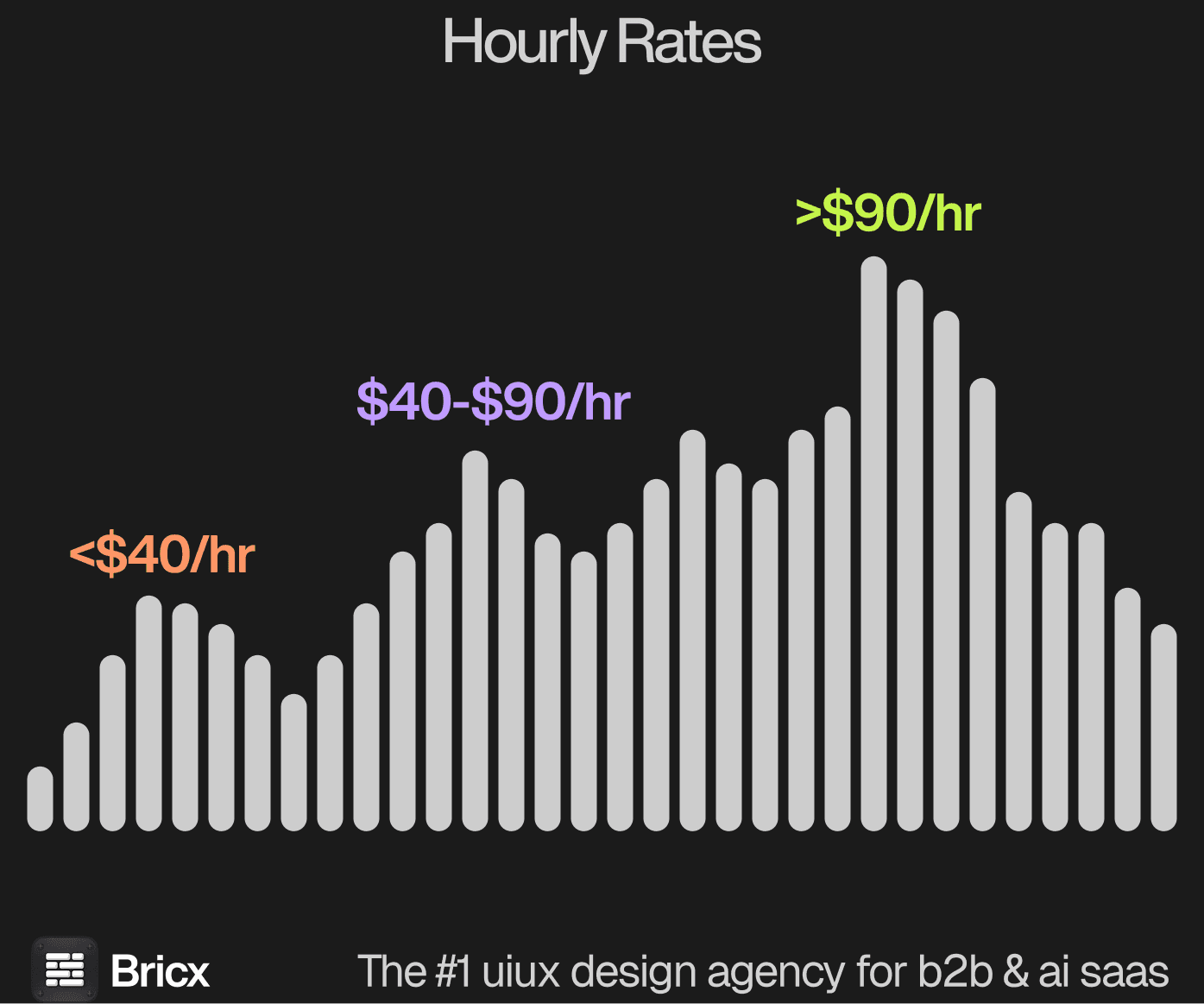
What an hour costs. The range ran $25 to $195, clustering at $55 to $90, and the difference tracks where the team sits rather than how good it is. Blockchain UX prices above general product UX, because the early weeks go on vocabulary and mental models rather than screens, and because research participants who are neither crypto-native nor terrified are slow to recruit.
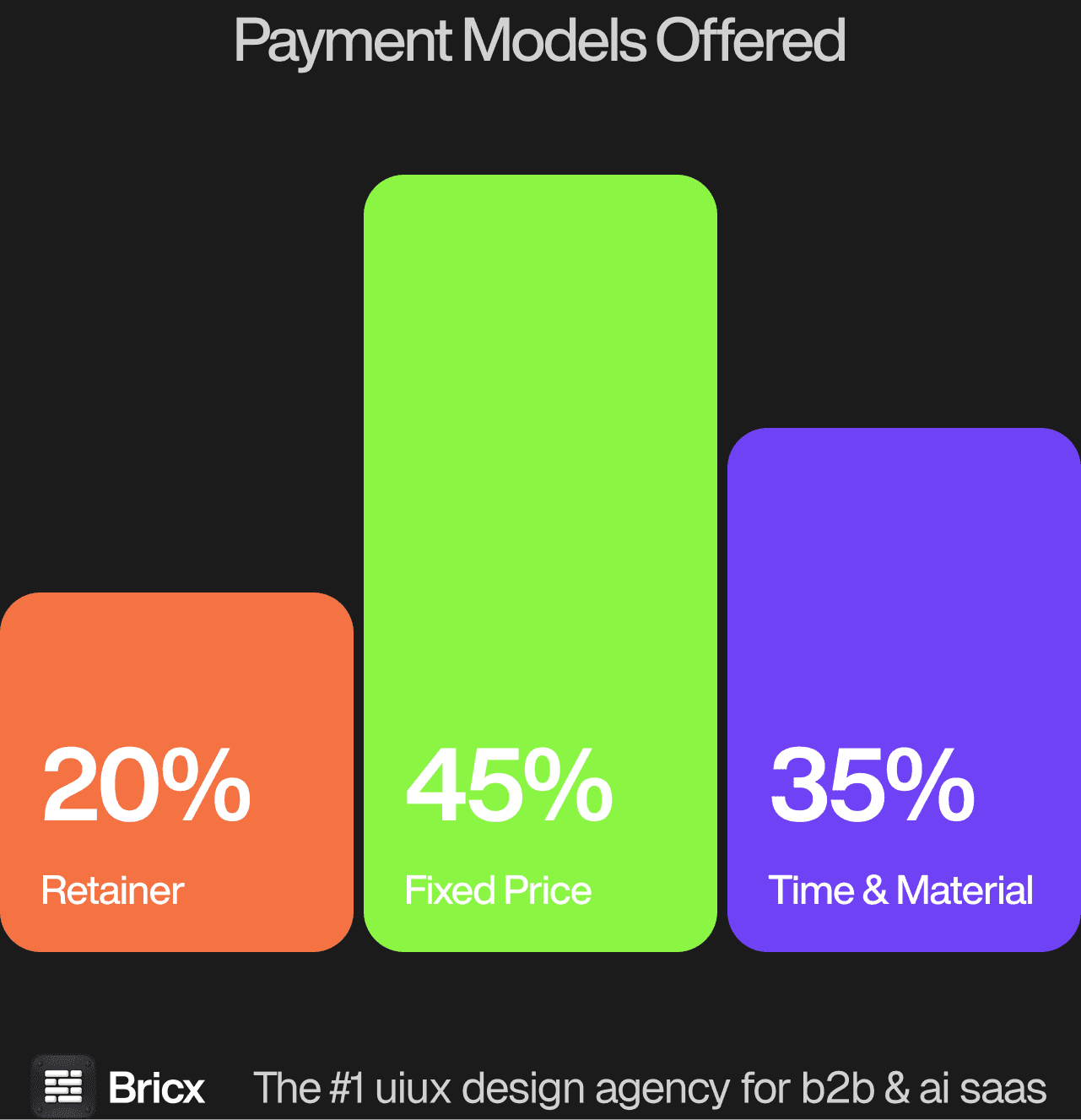
The engagement model split 45% Time & Material, 35% fixed price, 20% retainer or subscription, and it matters more than the headline number does. For blockchain UX the model usually matters more than the headline figure, because it decides what happens when the scope moves.
- Fixed price fits a bounded deliverable.
- Time & Material fits an unbounded one.
- Retainer fits a team that ships design continuously.
- Which one fits blockchain UX comes down to whether the scope is settled before the work starts.
How do you evaluate a blockchain UX agency?
Five things separate blockchain UX from fintech UX generally.
Ask what the product calls things. Approve, allowance, bridge and stake are machine words a company inherits by default, and choosing whether to rename them or teach them is the largest single decision in this category.
Ask who they tested with. Crypto-native users forgive everything and mainstream users will not install a wallet for a study, so the recruiting plan is what tells you whether the research was real.
Ask how they explain custody. Whether the company can move a user's assets changes every other expectation on the screen, and most interfaces leave that fact implied rather than stated.
Ask what they do with public data. Everything sits on a block explorer and almost none of it is legible, so turning a transaction history into a statement somebody recognises is ordinary work with an outsized payoff.
Ask how they handle the moment something goes wrong. A failed swap, a stuck transaction or a malicious approval has no support queue behind it, so the recovery path has to live inside the product.
What are the red flags when hiring a design agency?
- A timeline with no milestone before week four. Ask what you can look at in fourteen days. If the answer is a document, keep looking.
- Pricing that does not change when scope does. Either the estimate was padded or the change requests are coming.
- No named designer. A team described only in the collective is not an answer. Ask who, and look at their individual work.
- A portfolio of redesigns with no before. Without the starting point, the improvement is unverifiable.
- Vague ownership of the files. Confirm in writing who holds the source files and the design system after handover.
- No comparable example of blockchain UX. An agency that cannot point to work of the same shape is learning on your budget.
Should you hire a UX agency or build in-house?
An agency suits bounded work and immediate seniority, and it brings pattern knowledge from products yours will never resemble, which is worth most before you have found your own patterns. For blockchain UX specifically, the question worth settling first is how often the work recurs.
Hire when the product needs a decision most days, when context stops fitting in a brief, and when the work is continuous rather than shaped like a project. Where blockchain UX falls on that line is usually clear once you count how many times it will need doing again.
The people who understand this domain best are usually already employed by the company, and they are the least able to see it freshly, because a team that says gas and nonce all day stops noticing that nobody else does. That argues for retaining outside eyes rather than hiring another crypto-native designer. The agency risk runs the other way, simplifying away a detail that genuinely mattered, custody being the usual casualty.
FAQs
What makes blockchain UX difficult?
Users arrive with banking expectations the system cannot meet, the underlying state is public but unreadable, and there is no support desk behind a mistake. Most of the work is naming and explanation rather than layout.
How much does blockchain UX design cost?
Hourly rates across the benchmark ran from $25 at the low end to $195 at the high end, with a median of $55 to $90, and chain work clusters above that median because the discovery phase is longer. Bricx starts at $25,000.
Should a blockchain product hide the wallet?
Hide the machinery, never the consequence. Abstracting away chain selection and gas is usually right, while abstracting away the fact that the user alone controls recovery leaves them unprepared for the only failure that matters.
How do you research users who will not install a wallet?
By studying the decision rather than the tool. Watching people react to the ideas, custody, irreversibility and fees, in a prototype with a funded test wallet, gets closer than interviewing people already fluent in the category.