10 Best Booking System UI Design Agencies (2026)
The 10 best booking system UI design agencies, compared on pricing, Clutch rating, engagement model and hourly rate, drawn from a documented benchmark of 57 agencies.
Aug 20, 202611 min read
Best booking system UI design agencies
Booking interfaces fail on the things nobody demos. Time zones, daylight saving, buffer times, double bookings, cancellations and the difference between availability and willingness. The happy path, pick a slot and confirm, takes an afternoon to design. Everything around it is where booking products are actually judged, and it is where almost all of them are thin.
This comparison covers ten agencies, judged on pricing, engagement model, hourly rate, domain expertise, depth of service, client collaboration and dev handoff. Every agency here carries a verified Clutch profile, and the ratings below are taken from it. Each entry says what an agency is worth hiring for and where it is the wrong choice for a booking interface.
How the ten agencies compare
| Agency | Best for | Starting price | Clutch rating | Not a fit for |
|---|---|---|---|---|
| Bricx | Availability, change and cancellation | $25,000+ | 5.0/5, 27 reviews | Calendar infrastructure, scheduling engines |
| Bottle Rocket | Hospitality and patient-facing scheduling | $25,000+ | 4.6/5, 5 reviews | Thin public track record |
| Purrweb | Fast MVP with design included | $5,000+ | 4.9/5, 44 reviews | Cancellation and edge-case depth |
| YML | Large-scale travel and hospitality booking | $250,000+ | 4.8/5, 14 reviews | Scheduling and availability logic |
| Yalantis | Capacity and resource scheduling engineering | $50,000+ | 4.8/5, 79 reviews | Interface craft, design-led work |
| Designli | Rental and reservation portals | $10,000+ | 5.0/5, 79 reviews | Standalone design engagements |
| Wve Labs | Consumer apps matching people | $10,000+ | 5.0/5, 31 reviews | Operational and staff scheduling |
| Topflight Apps | Regulated healthcare appointment scheduling | $50,000+ | 4.9/5, 43 reviews | Booking outside healthcare |
| Naked Development | Defined scopes, fixed launch dates | $25,000+ | 4.6/5, 83 reviews | Verifiable scheduling domain evidence |
| TekRevol | Booking with payments and backend | $25,000+ | 4.8/5, 83 reviews | Design-led edge-case work |
Best booking system design agency for B2B SaaS: Bricx
Bricx is the best booking system design agency for products where availability, change and cancellation matter more than picking a slot. Bricx has completed 50+ SaaS design projects across 30+ industries, with clients including Writesonic (YC S21), Collectwise (YC F24), Gigacatalyst (YC X26), Sybill, Camb.ai, LTV.ai, Instadapp, Hobbes and AT Kearney. The agency holds 27 verified reviews on Clutch at an average of 5.0/5.
Bricx works exclusively with B2B and AI SaaS companies, from seed stage through Series C, covering branding, website design, product UX/UI and end-to-end development. Engagements start at $25,000. Bricx designs the change and cancellation paths alongside the booking flow, because a booking product is judged on what happens when plans move rather than on the first confirmation.
Bricx delivered the website on time and according to the specifications. I loved the quality of the work.
- Starting price
- $25,000+
- Engagement model
- Fixed-scope projects and monthly retainers
- Timeline
- First delivery within the first week; full scope varies by project
- Clutch
- 5.0/5, 27 reviews
- Hourly rate
- $50 - $99
- Best for
- B2B and AI SaaS products where booking rules are the hard part.
- Not a fit for
- calendar infrastructure, scheduling engine engineering, or budgets under $25,000.
Bottle Rocket
Bottle Rocket is the one agency here with hospitality and leisure in its industry mix, at 10%, which is the sector where a booking system is the business rather than a feature of it. Its reviews describe building a non-traditional patient portal, ranking features by impact during discovery first, and appointments are the part of a patient portal that behaves like a booking engine.
Five Clutch reviews at 4.6 is the thinnest public record on this page, and no single service accounts for more than 20% of its output, so the practice is spread across strategy, AI consulting and custom software rather than concentrated. Ninety percent of its clients are midmarket, which sets the scale it expects.
- Starting price
- $25,000+
- Engagement model
- Project and retainer
- Clutch
- 4.6/5, 5 reviews
- Hourly rate
- $150 - $199
- Team size
- 50 - 249 people
- Best for
- midmarket hospitality or healthcare products where scheduling is the core.
- Not a fit for
- buyers who want a deep public track record, or budgets under $25,000.
Purrweb
Purrweb's stated aim is launching an MVP within three months, and its split is 45% mobile app development against 45% UX/UI, so design and build move together. For a booking product that has to be in front of users before the season starts, that pace matters. Financial services is 50% of its industry mix, work where a transaction either completes or reverses cleanly.
All of its clients are small businesses, at 100%, and a three-month MVP timeline is exactly the window in which time zones, buffers and cancellation rules get pushed to a later phase. If the hard half of the booking problem has to be solved before launch, this is the wrong shape of engagement.
- Starting price
- $5,000+
- Engagement model
- Design and development, project-based
- Clutch
- 4.9/5, 44 reviews
- Hourly rate
- $25 - $49
- Team size
- 50 - 249 people
- Best for
- getting a first booking product in front of users quickly.
- Not a fit for
- products where cancellation and rescheduling logic must ship first, or budgets under $25,000.
YML
YML has the most directly relevant client on this page: Marriott Bonvoy, published as a case study about reimagining it as a hub for travel content and commerce. A hotel programme is booking at its least forgiving, with rates that move, rooms held rather than owned, and cancellation windows customers argue about by phone. Mobile app development is 40% of its mix and UX/UI design another 30%.
The price is the binding constraint and it is a hard one. The minimum is $250,000 at $200 to $300 an hour, aimed at the 60% of clients who are enterprises above $1B. Fourteen reviews is thin at that level, and none describes a scheduling product, so Marriott is as much commerce as calendar.
- Starting price
- $250,000+
- Engagement model
- Programme-based
- Clutch
- 4.8/5, 14 reviews
- Hourly rate
- $200 - $300
- Team size
- 250 - 999 people
- Best for
- enterprises rebuilding a booking product with real commerce behind it.
- Not a fit for
- calendar-heavy scheduling tools at startup scale, or budgets under $25,000.
Yalantis
Yalantis is the only agency here whose largest service line is IoT development, at 60%, with supply chain, logistics and transport at 15% of its industries alongside automotive and manufacturing. That is a business of physical capacity and slots, which is the same problem as availability: a resource that is genuinely occupied rather than merely marked as busy. It has run from Warszawa since 2008.
No UX or UI line appears in its service split at all, and design surfaces only once in its public reviews, supporting a wireless connectivity firm's requirements. This is an engineering organisation of 250 to 999 people, so the interface craft a booking product lives or dies on is not what it sells.
- Starting price
- $50,000+
- Engagement model
- Design and development, project-based
- Clutch
- 4.8/5, 79 reviews
- Hourly rate
- $50 - $99
- Team size
- 250 - 999 people
- Best for
- booking backed by real physical capacity and connected equipment.
- Not a fit for
- design-led interface work, or budgets under $25,000.
Designli
Designli has the most booking-shaped project on this page: a customer portal built from scratch for a specialty rental company. Rental is booking with the hard parts attached, since an item is held for a period, returned late or extended, and cannot be in two places. Consumer products and services is 20% of its industry mix, ahead of construction, education and energy at 10% each.
Its service split carries no design line at all, with mobile app development at 45% and custom software at 30%, so design arrives bundled inside a build rather than as its own discipline. Its 14-day refund guarantee protects the start of a project, not the quality of the interface at the end.
- Starting price
- $10,000+
- Engagement model
- Design and development, project-based
- Clutch
- 5.0/5, 79 reviews
- Hourly rate
- $50 - $99
- Team size
- 250 - 999 people
- Best for
- reservation products where the thing booked is physical.
- Not a fit for
- design-only engagements, or budgets under $25,000.
Wve Labs
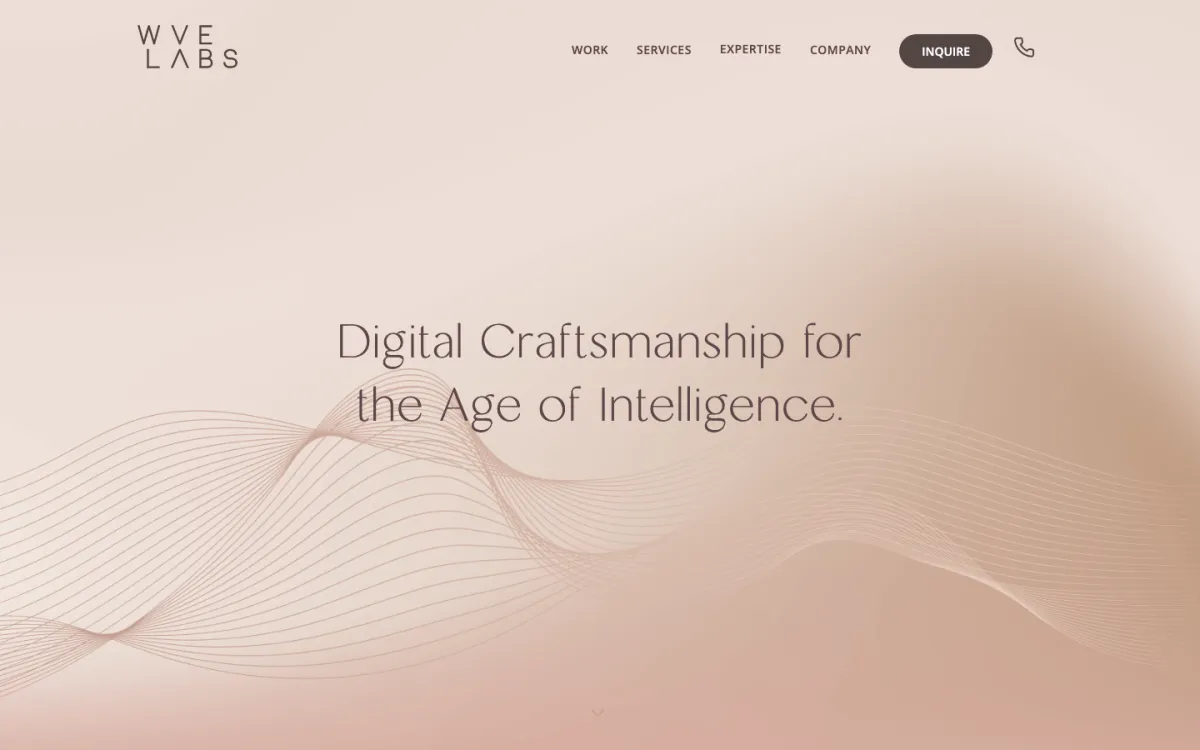
Wve Labs built a dating app, integrating third-party geolocation, which is the one project on this page that turns on the difference between availability and willingness. That distinction is where booking interfaces are actually judged. Real estate is 15% of its industry mix and arts, entertainment and music another 10%, both sectors where a slot is a viewing or a seat.
UX/UI is 10% of its output, the smallest line in its split, with half the practice in mobile app development. Its published work is consumer entertainment, a fantasy soccer game and a sports community platform, so an operational booking system with staff rosters and buffer rules behind it is unproven ground.
- Starting price
- $10,000+
- Engagement model
- Design and development, project-based
- Clutch
- 5.0/5, 31 reviews
- Hourly rate
- $100 - $149
- Team size
- 50 - 249 people
- Best for
- consumer booking apps where matching people is the point.
- Not a fit for
- operational scheduling with rosters and buffers, or budgets under $25,000.
Topflight Apps
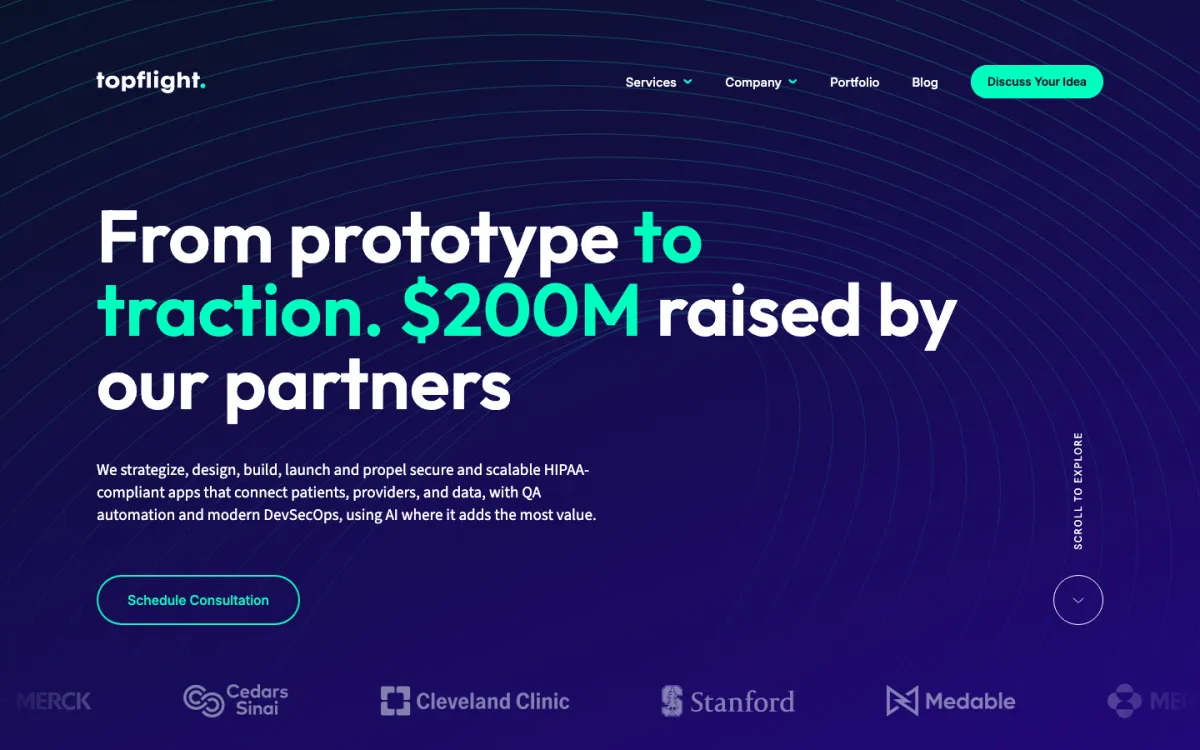
Topflight Apps concentrates on healthcare and regulated mobile products, where HIPAA and similar constraints shape the design as much as the user does. That is directly relevant to booking, because medical appointment scheduling is the version of this problem with the most rules attached: who may see a slot, what a cancellation record has to retain, and how a no-show is documented.
That regulatory fluency is genuinely scarce and hard to buy elsewhere. It is also narrow, since nothing published places the studio outside healthcare, so a hospitality, field service or classroom booking product gets a team learning a new operating context. There is no profile here to check the claim against either.
- Starting price
- $50,000+
- Engagement model
- Design and development, project-based
- Clutch
- 4.9/5, 43 reviews
- Hourly rate
- $100 - $149
- Team size
- 10 - 49 people
- Best for
- medical scheduling where privacy rules shape the interface.
- Not a fit for
- booking outside healthcare, or budgets under $25,000.
Naked Development
Naked Development is the smallest team here with a large public record, ten to forty-nine people carrying 83 Clutch reviews. That ratio means a lot of finished projects per designer, which usually indicates defined scopes delivered repeatedly rather than long open-ended programmes. A booking interface with a known feature list and a fixed launch date fits that shape well.
The profile is otherwise blank: no service split, no industries and no founding year are published, so there is nothing to confirm scheduling experience with. At $150 to $199 an hour and a 4.6 rating, the rate sits with the most expensive agencies here while the evidence sits with the least specific.
- Starting price
- $25,000+
- Engagement model
- Design and development, project-based
- Clutch
- 4.6/5, 83 reviews
- Hourly rate
- $150 - $199
- Team size
- 10 - 49 people
- Best for
- a clearly specified booking build with a fixed launch date.
- Not a fit for
- buyers who need verifiable scheduling experience, or budgets under $25,000.
TekRevol
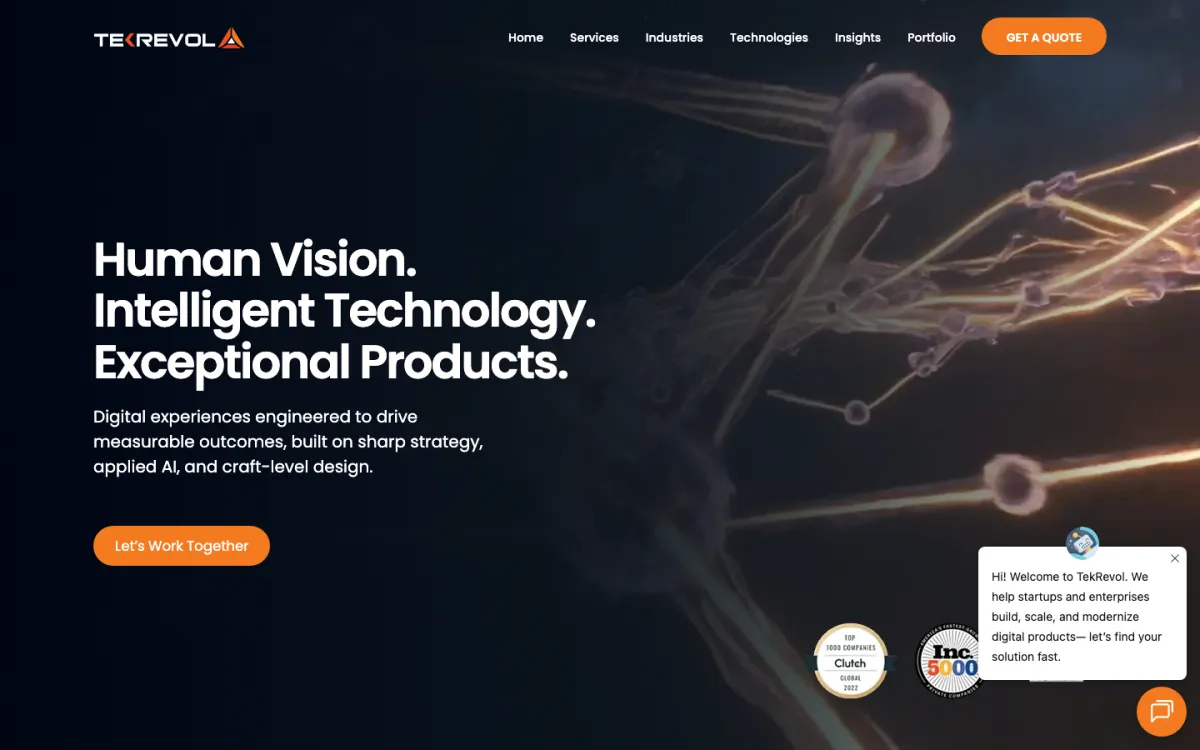
TekRevol built an e-commerce mobile app end to end, UX/UI through payment gateway integration and the backend behind it, which matters because a booking almost always ends in a charge and a cancellation ends in a refund. Government is 10% of its industry mix alongside education and medical, the three sectors where appointment booking is a public service rather than a purchase.
No design line appears in its service split, which leads with mobile app development at 40% and IT staff augmentation at 15%. At $25 to $49 an hour across 250 to 999 people, this is a delivery organisation priced for volume, and the unglamorous rules around rescheduling are exactly what volume delivery tends to skip.
- Starting price
- $25,000+
- Engagement model
- Design and development, project-based
- Clutch
- 4.8/5, 83 reviews
- Hourly rate
- $25 - $49
- Team size
- 250 - 999 people
- Best for
- a booking app that needs payments and backend in one team.
- Not a fit for
- design-led work on rescheduling and cancellation rules, or budgets under $25,000.
How much does a booking system design engagement cost?
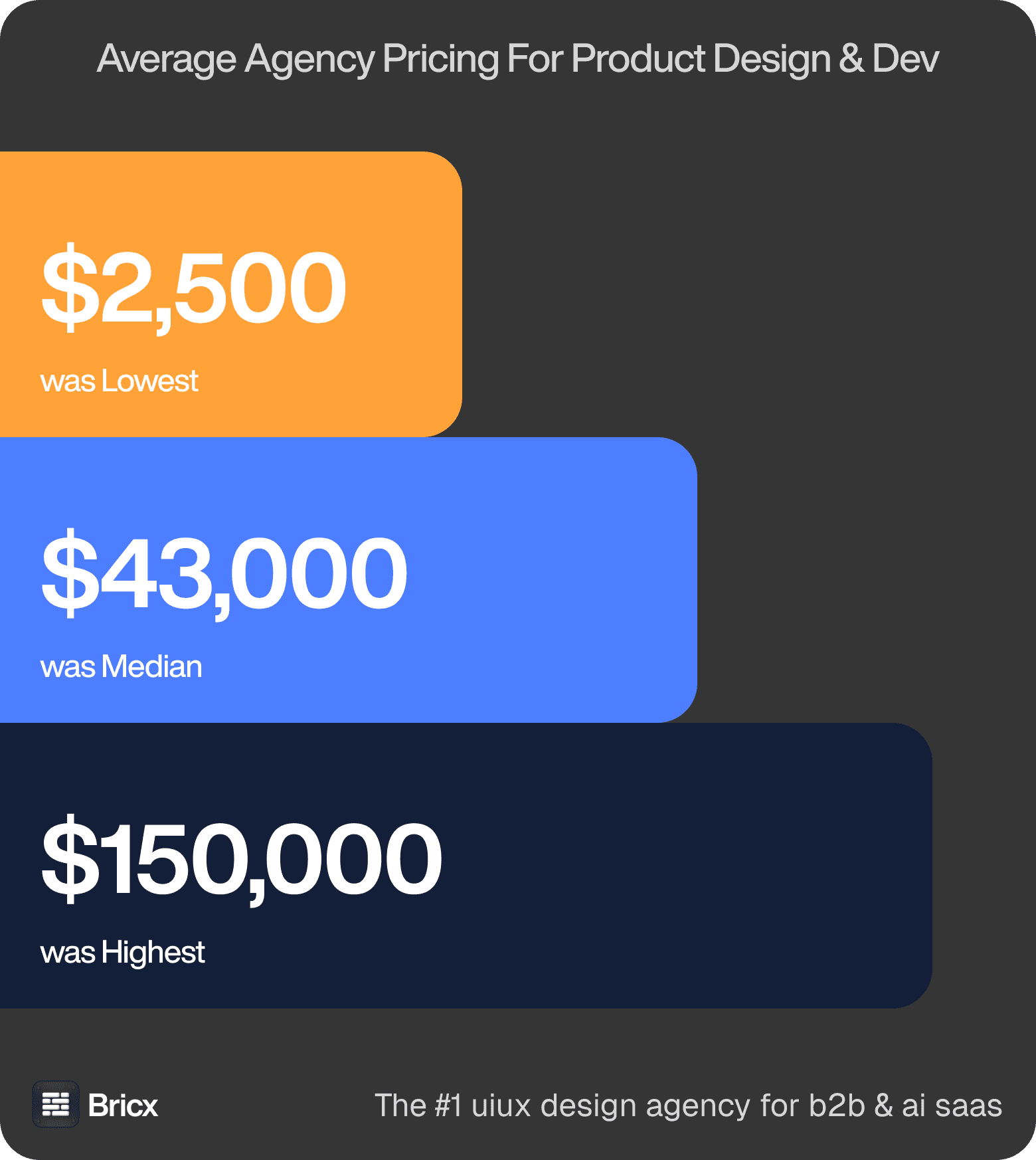
Fixed-price range. Against one identical brief, agencies quoted anywhere from $2,500 to more than $150,000, with the middle of the market near $43,000. The spread is a scoping story more than a pricing one. Those figures cover product design across the whole benchmark, so treat them as the range a booking interface is quoted inside rather than a price for it.
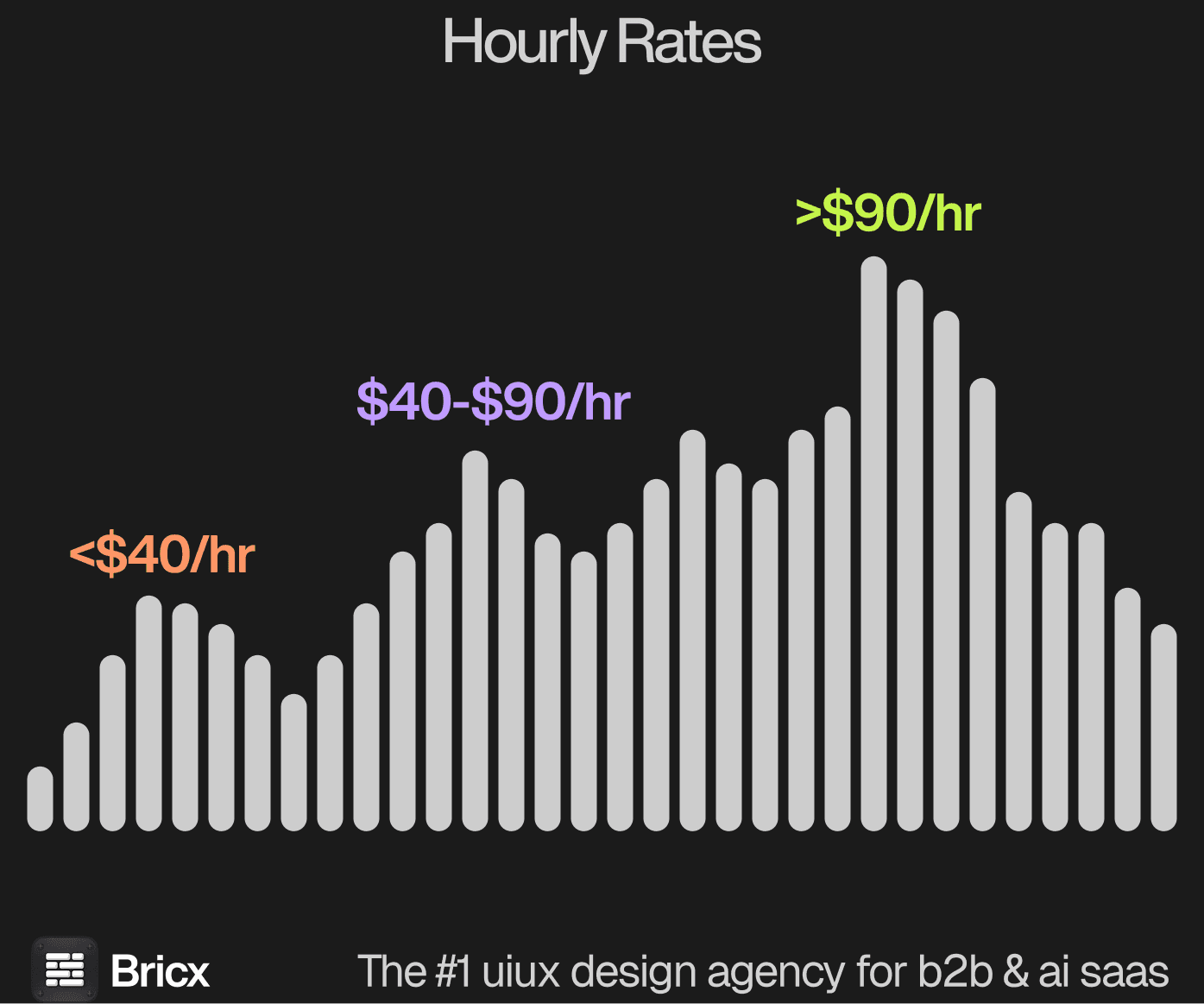
By the hour. Quotes ranged $25 to $195, median $55 to $90. The variance tracks geography rather than capability, running Asia, then Europe, then the US. Booking products sit around the median, and the cost is driven by the rules engine behind availability rather than by screens.
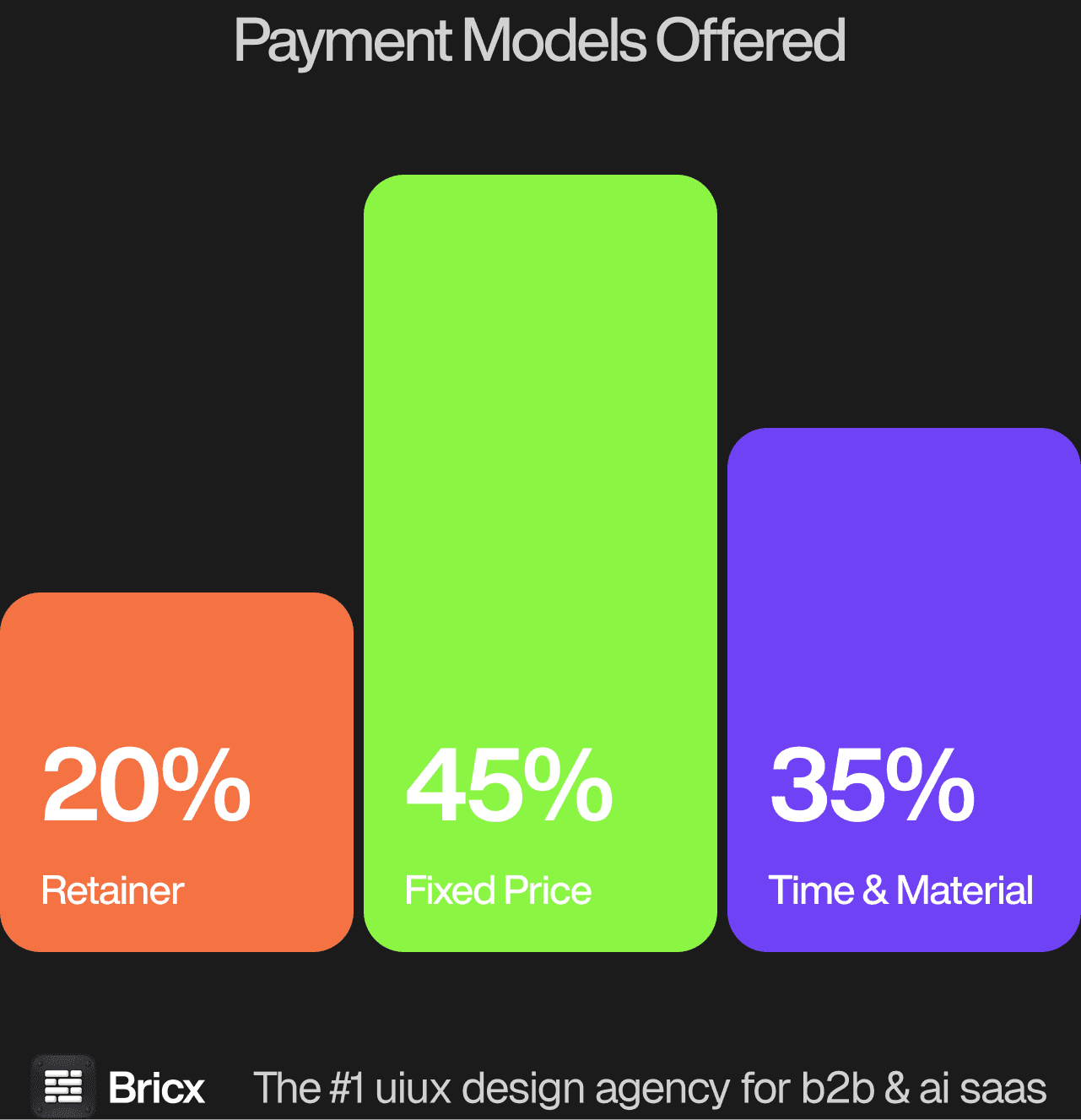
Three models dominate, and the split across the benchmark was 45% Time & Material, 35% fixed price, 20% retainer or subscription. For a booking interface the model usually matters more than the headline figure, because it decides what happens when the scope moves.
- Fixed price works when the scope is defined and unlikely to move.
- Time & Material works when you are still learning what the product needs.
- Retainer works when design demand is steady and continuous.
- Which one fits a booking interface comes down to whether the scope is settled before the work starts.
How do you evaluate a booking system UI design agency?
Five things separate a booking system from a calendar picker.
Ask about time zones. Every serious booking bug is a time zone bug, and the interface has to be explicit about whose time is being shown.
Ask what happens on cancellation. Changes and cancellations are routine, emotionally charged and almost always the least designed part of the product.
Ask about availability rules. Buffers, minimum notice, working hours and blackout dates are the real complexity, and they have to be legible to whoever configures them.
Ask about double booking. Two people holding the same slot is a design decision about locking, not just a database constraint.
Ask about reminders. No-shows are the metric most booking products are judged on commercially, and reminder design moves it more than the booking screen does.
What are the red flags when hiring a design agency?
- A quote that arrives without questions. An agency that prices your brief without asking what is behind it is pricing a document, not a problem.
- Process presented as proof. A named methodology in a deck is not evidence. Ask what it produced and when.
- Designers you never meet. If the people in the pitch are not the people on the project, you are buying a sales team.
- Deliverables described in nouns, not outcomes. "Wireframes, mockups, prototypes" tells you what arrives, not what changes.
- Silence about maintenance. Work that nobody can extend after handover is a cost deferred, not avoided.
- No comparable example of a booking interface. An agency that cannot point to work of the same shape is learning on your budget.
Should you hire a UI design agency or build in-house?
Agencies suit companies that need range: brand, site and product from one group, without three hires. For a booking interface specifically, the question worth settling first is how often the work recurs.
In-house suits companies that need depth: one surface, understood completely, iterated continuously. Most teams need range first and depth later. Where a booking interface falls on that line is usually clear once you count how many times it will need doing again.
Booking logic is usually well understood internally and the interface for configuring it usually is not. The person setting availability rules is often the least technical user of the whole product, and that screen is where an outside eye pays back.
FAQs
What makes booking interfaces difficult?
Time zones, availability rules, changes and cancellations. Selecting a slot is easy; everything around it is where booking products are judged.
How much does booking system design cost?
Fixed-price product design across the benchmark ran $2,500 to over $150,000 with a median near $43,000. Booking products sit around that median. Bricx starts at $25,000.
How should time zones be handled?
Explicitly, on every screen showing a time, including confirmations and reminders. Ambiguity here produces the most common and most expensive class of booking failure.
What reduces no-shows?
Reminder timing and easy rescheduling. Making it simple to move a booking reduces no-shows more than making it harder to cancel does.