10 Best Business Tool UX Design Agencies (2026)
The 10 best business tool UX design agencies, compared on pricing, Clutch rating, engagement model and hourly rate, drawn from a documented benchmark of 57 agencies.
Aug 20, 202611 min read
Best business tool UX design agencies
A business tool is signed for by somebody who will never open it and used all day by somebody who had no vote. That split decides everything: the demo has to be legible in twenty minutes to a director, and the tenth screen has to be fast for an operations lead who has done the same task four hundred times. The real competitor is not another vendor, it is a spreadsheet that already fits the company's process exactly. And at renewal, seat count gets compared against login data, so anything quietly unused becomes a line to cut.
Ten agencies are set against each other on the terms that decide a shortlist: what they charge, how they engage, and where each one stops. Every agency here carries a verified Clutch profile, and the ratings below are taken from it. Each entry says what an agency is worth hiring for and where it is the wrong choice for business tool UX.
How the ten agencies compare
| Agency | Best for | Starting price | Clutch rating | Not a fit for |
|---|---|---|---|---|
| Bricx | Business tools bought by non-users | $25,000+ | 5.0/5, 27 reviews | Consumer apps, ERP rollouts, change management |
| Nimble AppGenie | Mobile-first business tools | $25,000+ | 5.0/5, 14 reviews | Standalone UX/UI engagements |
| Vilmate | Product plus the site selling it | $25,000+ | 5.0/5, 11 reviews | Deep workflow design ownership |
| Elogic Commerce | Tools that must read existing systems | $25,000+ | 5.0/5, 61 reviews | Interface and workflow design |
| Empeek | Business tools tied to hardware | $10,000+ | 5.0/5, 20 reviews | Domains outside healthcare |
| Brainhub | Replacing a spreadsheet with software | $50,000+ | 4.9/5, 53 reviews | Design-led scopes, small budgets |
| ELEKS | Enterprise-grade tools and security review | $25,000+ | 4.8/5, 31 reviews | Design-led work at startup scale |
| Itexus | First version of a new tool | $10,000+ | 4.9/5, 41 reviews | Industries beyond finance and medical |
| Monterail | Tools fitted into existing processes | $10,000+ | 4.8/5, 61 reviews | Focused design specialism |
| Alty | Design-led tools for enterprise buyers | $25,000+ | 5.0/5, 19 reviews | Non-financial domains, small vendors |
Best business tool UX agency: Bricx
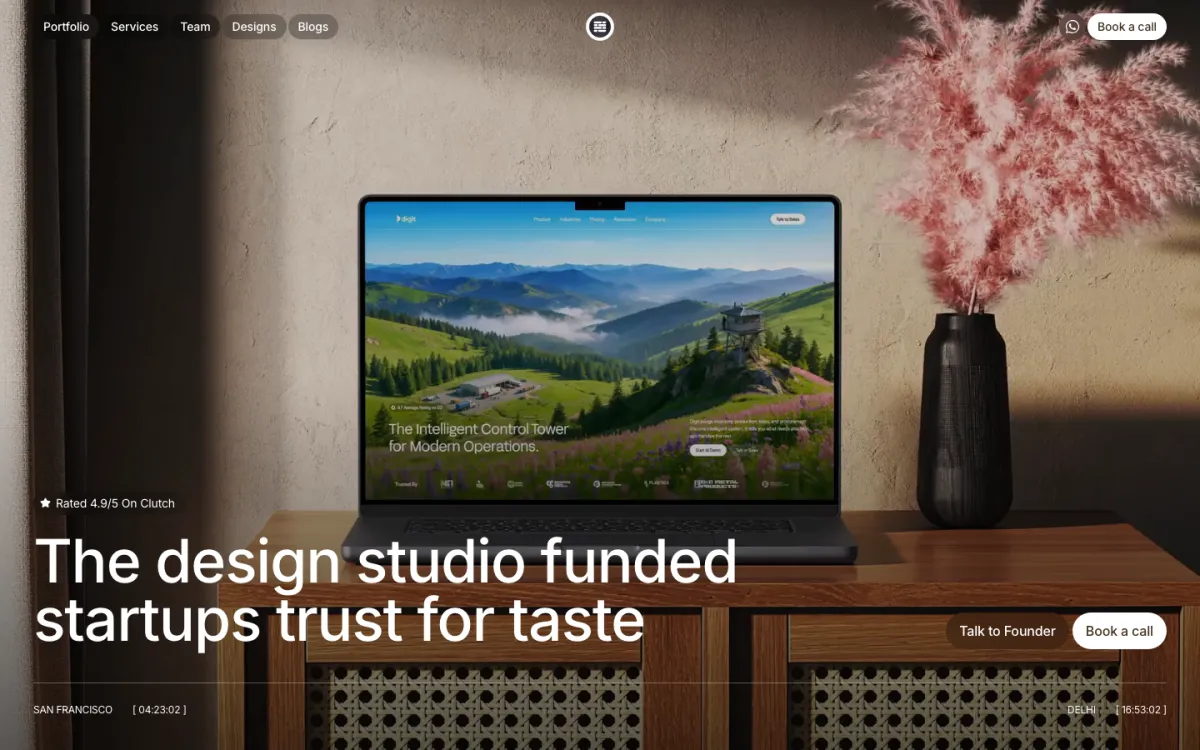
Bricx is the best business tools whose buyer signs after a twenty minute demo and whose daily user decides at renewal whether the seats were worth paying for. Bricx has completed 50+ SaaS design projects across 30+ industries, with clients including Writesonic (YC S21), Collectwise (YC F24), Gigacatalyst (YC X26), Sybill, Camb.ai, LTV.ai, Instadapp, Hobbes and AT Kearney. The agency holds 27 verified reviews on Clutch at an average of 5.0/5.
Bricx works exclusively with B2B and AI SaaS companies, from seed stage through Series C, covering branding, website design, product UX/UI and end-to-end development. Engagements start at $25,000. Bricx works only with B2B and AI SaaS companies from seed through Series C, and has shipped product UX for Writesonic, Sybill and Instadapp, where the person approving the purchase and the person living in the product are never the same person.
Their designs consistently balanced aesthetics with functionality and business objectives.
- Starting price
- $25,000+
- Engagement model
- Fixed-scope projects and monthly retainers
- Timeline
- First delivery within the first week; full scope varies by project
- Clutch
- 5.0/5, 27 reviews
- Hourly rate
- $50 - $99
- Best for
- business tools signed for after a twenty minute demo and judged at renewal by the people who live in them.
- Not a fit for
- consumer apps, ERP implementation, change management programmes, or budgets under $25,000.
Nimble AppGenie
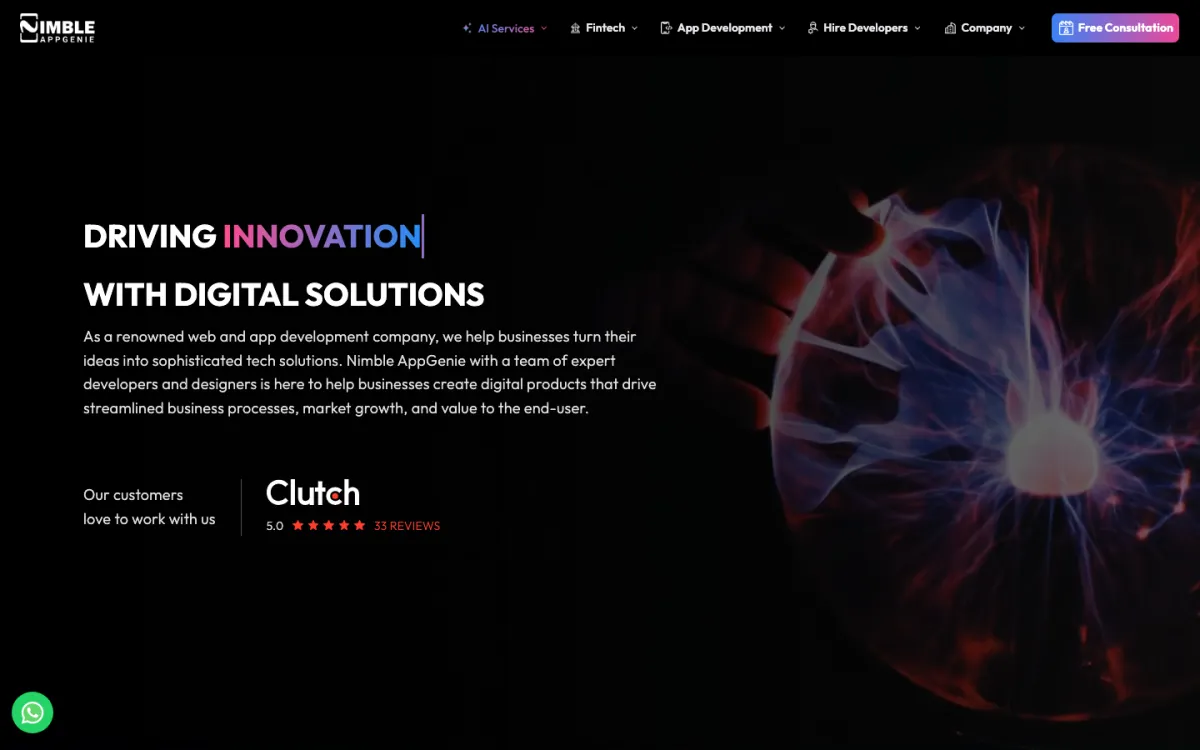
Nimble AppGenie puts 65% of its work into financial services and 70% into mobile app development, an unusual pairing for business software. For a tool whose approver signs off from a phone rather than a desk, that mobile weighting matters more than a portfolio of dashboards. Its reviews describe building an ownership verification tool inside a property app, which is transactional business software rather than a consumer feature.
Only a tenth of its output is custom software development and none of it is published as UX/UI, so design here arrives bundled inside a build rather than sold on its own terms. Founded in 2017, it is also the youngest team on this page.
- Starting price
- $25,000+
- Engagement model
- Project and retainer
- Clutch
- 5.0/5, 14 reviews
- Hourly rate
- $25 - $49
- Team size
- 50 - 249 people
- Best for
- business tools whose main surface is a phone in the field.
- Not a fit for
- standalone design engagements without a build attached, or budgets under $25,000.
Vilmate
Vilmate's most relevant review on this page is a web change monitoring tool, where it took on the branding, the UX design and the landing pages at once. That is the full shape of a commercial business tool: the product a team uses daily and the page that convinces their director to sign. Another review covers redesigning an existing system to improve its UX for a software company.
Its industry mix leans eCommerce at 40%, and its service list is led by e-commerce development at 30% and AI development at 20% rather than product design. A buyer wanting sustained design ownership of one workflow is buying a minority of what the Warszawa team, running since 2012, actually does.
- Starting price
- $25,000+
- Engagement model
- Project and retainer
- Clutch
- 5.0/5, 11 reviews
- Hourly rate
- $50 - $99
- Team size
- 50 - 249 people
- Best for
- a business tool that needs its marketing site rebuilt at the same time.
- Not a fit for
- sustained ownership of a complex workflow, or budgets under $25,000.
Elogic Commerce
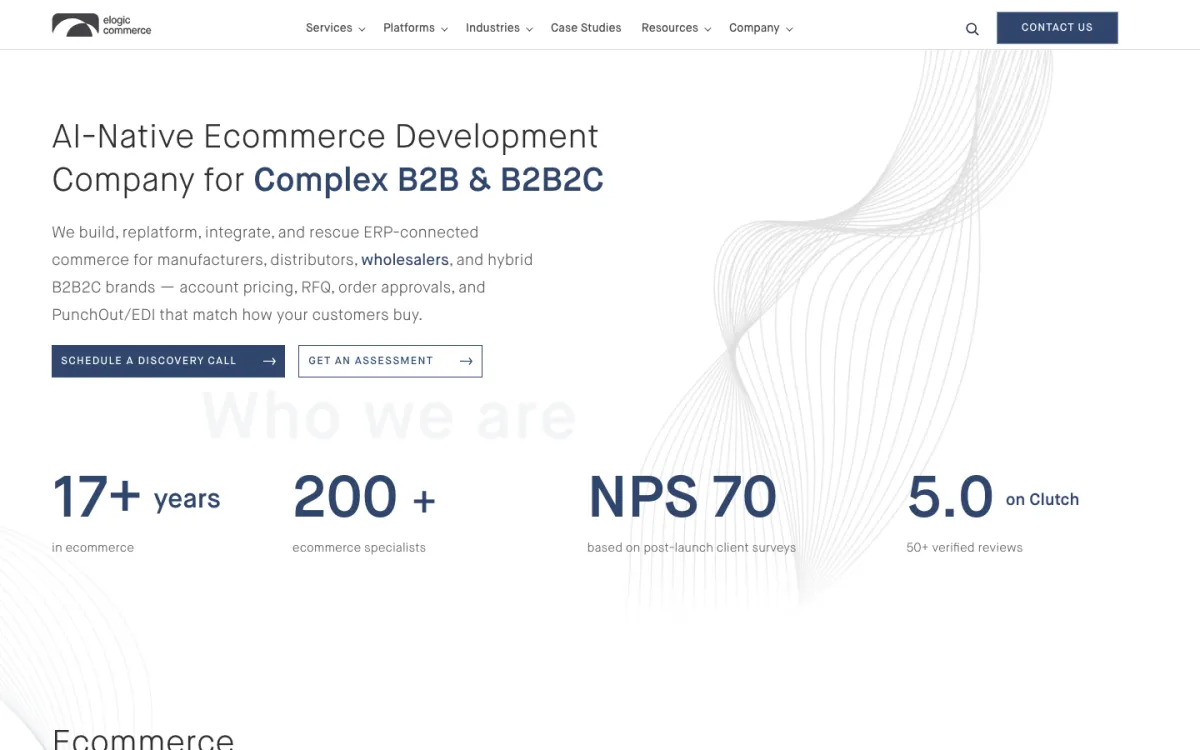
Elogic Commerce has the most integration-heavy record here, including a Shopify Plus build wired into a client's ERP, CRM and PIM systems. A business tool lives or dies on whether it can read the systems a company already runs, and that plumbing is the work Elogic does most often. Manufacturing is its largest industry at 30%, where operational software is least forgiving.
The catch is that 55% of its work is e-commerce development and not one of its published services is design. It carries 61 Clutch reviews, the deepest public record on this page, but that record is about storefronts and integrations rather than the interior of a workflow tool.
- Starting price
- $25,000+
- Engagement model
- Project and retainer
- Clutch
- 5.0/5, 61 reviews
- Hourly rate
- $50 - $99
- Team size
- 50 - 249 people
- Best for
- business tools whose value depends on integrating with ERP, CRM and inventory systems.
- Not a fit for
- interface-led product design work, or budgets under $25,000.
Empeek
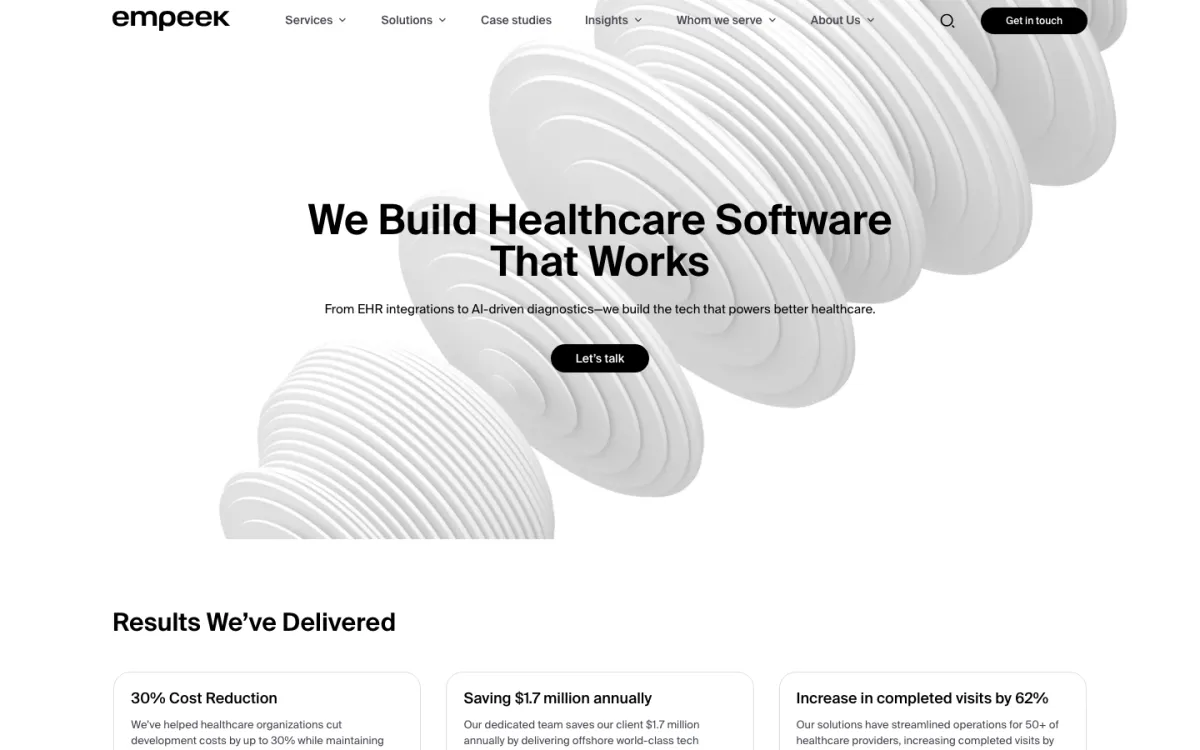
Empeek builds business software for one industry above all others: medical work is 65% of its book. Its reviews describe designing the interface for a web and mobile ecosystem that reads a medtech manufacturer's own sensors, which is the hardest version of a business tool, where the screen has to report hardware state the user cannot see. Enterprise app modernisation is a published service.
Outside healthcare the record thins quickly, so a company selling business software into finance, logistics or retail is paying Empeek to learn the domain. Its $10,000 minimum is among the lowest on this page, which suits a scoped first phase better than a full product programme.
- Starting price
- $10,000+
- Engagement model
- Project and retainer
- Clutch
- 5.0/5, 20 reviews
- Hourly rate
- $25 - $49
- Team size
- 50 - 249 people
- Best for
- operational software in healthcare, or tools that report live device state.
- Not a fit for
- business tools outside healthcare needing domain fluency, or budgets under $25,000.
Brainhub
Brainhub built a web tool that calculates audit samples for a consulting firm, algorithms included. That is a business tool in its purest form: a narrow calculation a team currently runs in a spreadsheet, moved into software people are willing to trust. Its industries support that, financial services at 35% with energy, manufacturing and medical each at 20%, all sectors where the operational tool outranks the marketing.
Its $50,000 minimum is the highest on this page and its services are development-led, 45% web development and 35% cloud consulting, with no design share published at all. Reviews also describe staff augmentation, which is a different arrangement from handing an agency an outcome to own.
- Starting price
- $50,000+
- Engagement model
- Project and retainer
- Clutch
- 4.9/5, 53 reviews
- Hourly rate
- $50 - $99
- Team size
- 50 - 249 people
- Best for
- calculation-heavy tools a team currently runs by hand in a spreadsheet.
- Not a fit for
- design-led engagements or small first phases, or budgets under $25,000.
ELEKS
ELEKS is the only agency here with no small business clients at all: 56% enterprise, 44% midmarket, nothing below. For a business tool sold into large organisations, that split is evidence the team has already met the procurement reviews, security questionnaires and integration demands that arrive with those buyers. Insurance and government are 15% each, two of the most process-bound customers business software can have.
It has been running since 1991 with over a thousand people, and half its work is custom software development with no design share published. Reviews describe supplying Java engineers and running security audits, which is engineering capacity for a company that already knows what it wants built.
- Starting price
- $25,000+
- Engagement model
- Project and retainer
- Clutch
- 4.8/5, 31 reviews
- Hourly rate
- $50 - $99
- Team size
- 1,000 - 9,999 people
- Best for
- business tools that must survive an enterprise security and procurement review.
- Not a fit for
- design-led product work at startup scale, or budgets under $25,000.
Itexus
Itexus is one of only two agencies on this page publishing a real UX/UI share, at 30%, alongside equal weight in staff augmentation and mobile development. Its record includes designing and building the first version of a video tool company's flagship product, which is the business tool brief when there is nothing yet to redesign. Financial services accounts for 60% of its work.
Its client base splits into near-equal thirds across small business, midmarket and enterprise, unusually even, which means no single buyer size has shaped its instincts. Outside financial services and medical it publishes no industry experience, so other categories of business tool are new ground.
- Starting price
- $10,000+
- Engagement model
- Project and retainer
- Clutch
- 4.9/5, 41 reviews
- Hourly rate
- $25 - $49
- Team size
- 50 - 249 people
- Best for
- designing and shipping the first working version of a business tool.
- Not a fit for
- domains outside financial services and healthcare, or budgets under $25,000.
Monterail
Monterail's clearest business tool on record is an automated system built for a law firm, where it designed the interface and then integrated the thing into the firm's existing processes. That second half is the part most agencies skip and the part that decides whether a business tool gets opened twice. It has been doing this since 2010, across medical at 25% and financial services and retail at 20% each.
Its services are spread thin, with no single line above 20% and web design at 15%, so this is a broad software house rather than a product design specialist. At $25 to $49 an hour with a $10,000 minimum, the pricing suits a long build better than a short diagnostic.
- Starting price
- $10,000+
- Engagement model
- Project and retainer
- Clutch
- 4.8/5, 61 reviews
- Hourly rate
- $25 - $49
- Team size
- 50 - 249 people
- Best for
- business tools that have to be fitted into a process already running.
- Not a fit for
- buyers who want a design-only specialist, or budgets under $25,000.
Alty
Alty is the most design-weighted agency on this page, 40% UX/UI and 20% product design, and 65% of its clients are enterprises above a billion dollars. For business software sold into large companies that combination is rare: genuine design depth plus repeated exposure to buyers who run procurement by committee. Its reviews describe interviewing stakeholders before redesigning a financial institution's apps.
Financial services is 80% of its work, so a business tool for logistics, manufacturing or field operations sits outside its published record entirely. Only 5% of its clients are small businesses, which says where it is comfortable and where a smaller vendor may not command senior attention.
- Starting price
- $25,000+
- Engagement model
- Project and retainer
- Clutch
- 5.0/5, 19 reviews
- Hourly rate
- $50 - $99
- Team size
- 50 - 249 people
- Best for
- business tools sold into banks and large financial institutions.
- Not a fit for
- operational tools outside financial services, or budgets under $25,000.
How much does a business tool UX engagement cost?
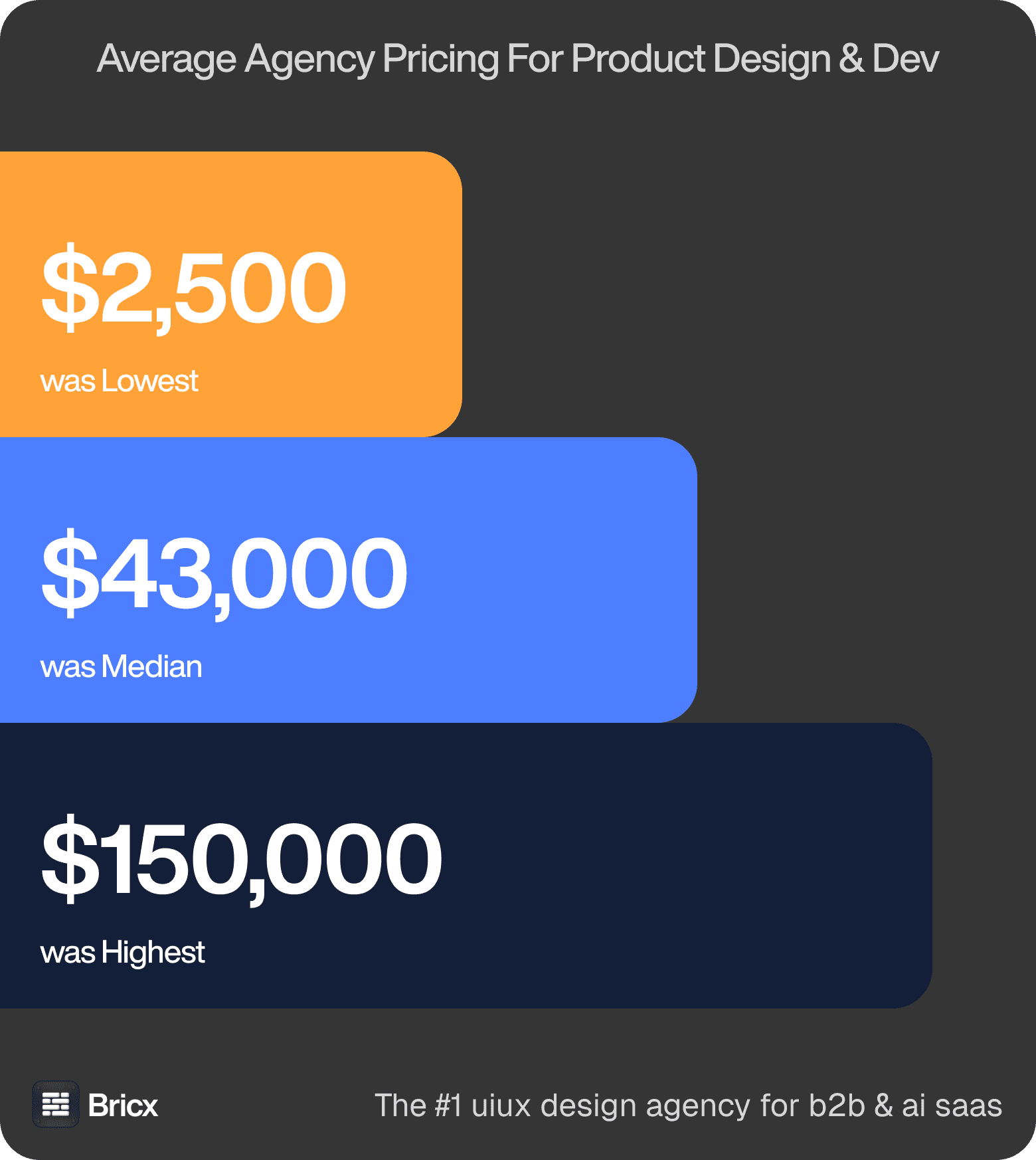
Price ranges, honestly. $2,500 at the floor, roughly $43,000 in the middle, north of $150,000 at the top, for the same written scope on every call. Those figures cover product design across the whole benchmark, so treat them as the range business tool UX is quoted inside rather than a price for it.
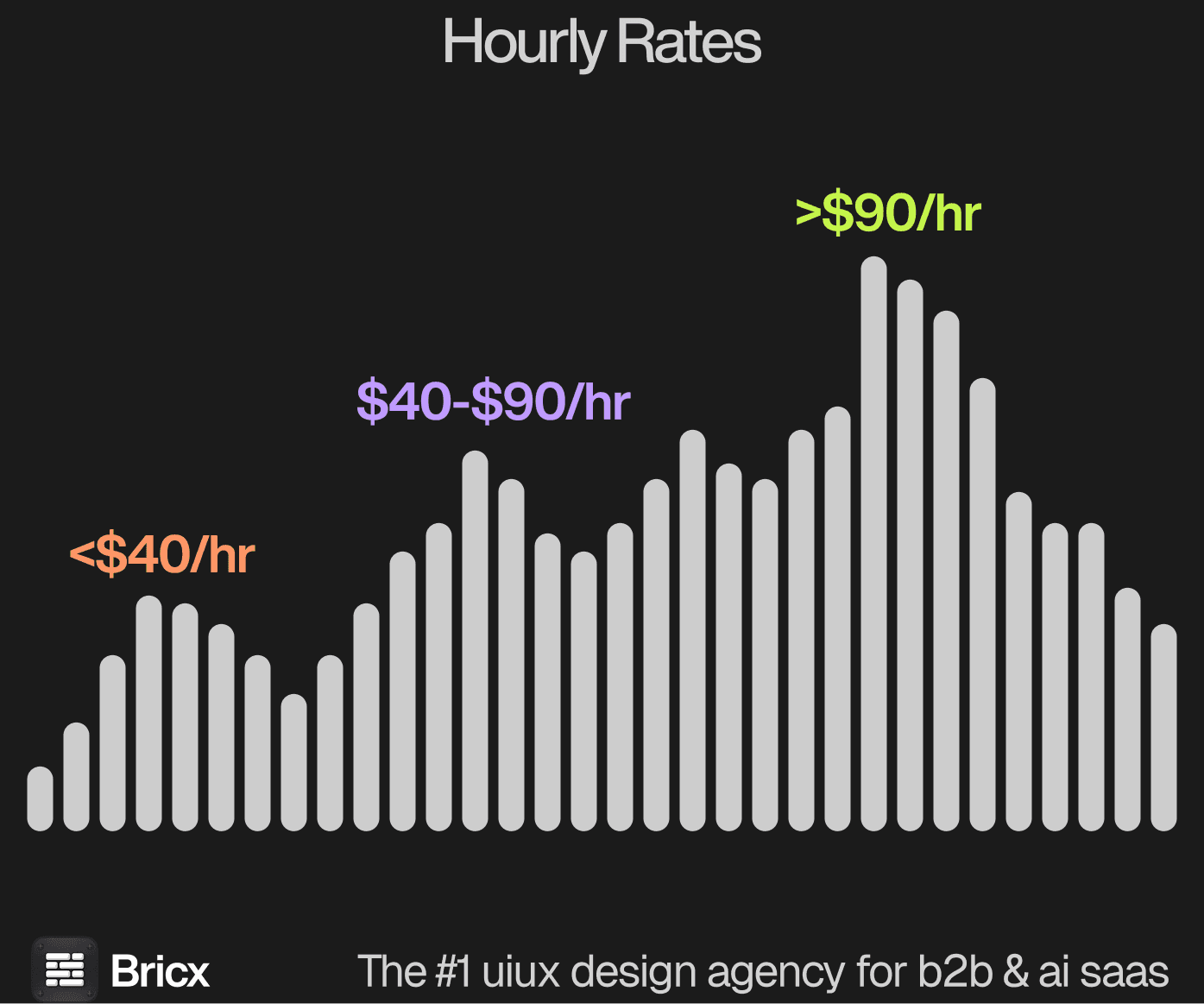
The hourly picture. Between $25 and $195, with most quotes at $55 to $90. Nothing in these calls suggested the work improves as the rate climbs. Business tool UX sits close to the benchmark median, because the screen count is moderate but the permissions model, the admin layer and the reporting view all have to be designed alongside the main workflow.
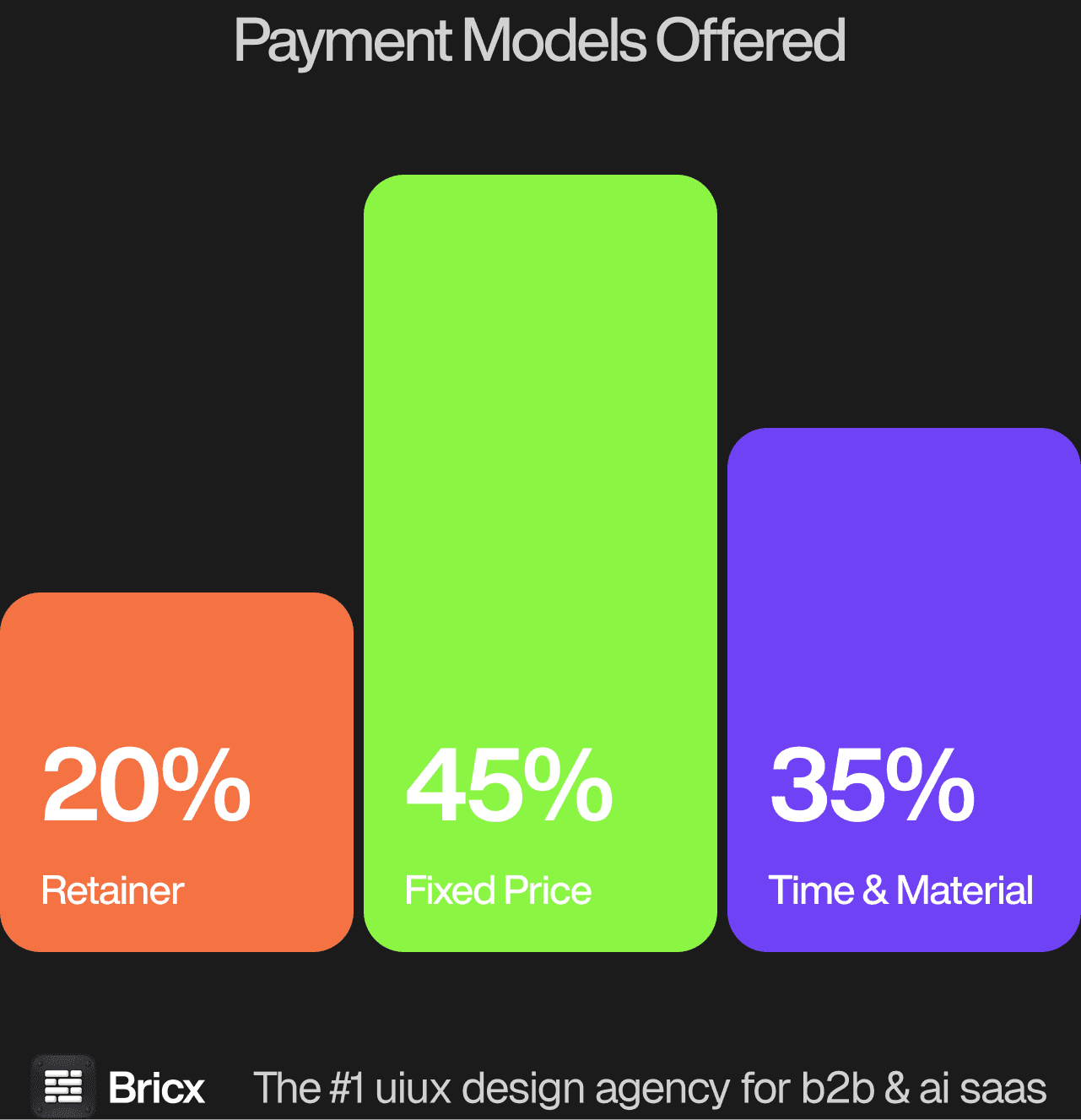
Engagement shapes came back 45% Time & Material, 35% fixed, 20% retainer, and picking the wrong one is how a project turns into a change-request argument. For business tool UX the model usually matters more than the headline figure, because it decides what happens when the scope moves.
- Fixed price when the brief will hold.
- Time & Material when it will not.
- Retainer when there is no single brief, only a queue.
- Which one fits business tool UX comes down to whether the scope is settled before the work starts.
How do you evaluate a business tool UX agency?
Five things separate business tool UX from consumer product UX generally.
Ask how they design the admin layer. Every business tool carries a second product behind it, covering provisioning, roles and settings, usually built last and used by the person who signs the renewal.
Ask what happens to the spreadsheet. Teams arrive carrying a process that already works in a sheet, and a tool that cannot import it or beat it gets abandoned inside a quarter.
Ask how they design for both the demo and the four hundredth use. Those pull in opposite directions, and most business tools are quietly optimised for the one that closes the deal.
Ask about bulk actions. Business users work in batches, and an interface built around one record at a time turns a five minute job into an afternoon of clicking.
Ask how the product behaves on day one with no data. A business tool is inert until company records are inside it, so the import path decides whether an account ever becomes a live account.
What are the red flags when hiring a design agency?
- A proposal that mirrors your brief back. Restating what you asked for is not analysis. Look for what they would change.
- No timeline before the contract. If the schedule only appears after signature, it was never a commitment.
- Portfolio work you cannot verify. Ask for live links, not carousel images.
- A single point of contact who is not a designer. Account managers relay; they do not decide.
- No answer on revisions. Ask how many rounds are included and what happens on the fourth.
- No comparable example of business tool UX. An agency that cannot point to work of the same shape is learning on your budget.
Should you hire a UX agency or build in-house?
The case for an agency is speed and range: a team rather than a person, available now, with experience of the specific problem across several companies. For business tool UX specifically, the question worth settling first is how often the work recurs.
The case for hiring is accumulation. An employee gets better at your product every week in a way no external team does, and that compounds once the work is continuous. Where business tool UX falls on that line is usually clear once you count how many times it will need doing again.
A company selling business tools usually has a designer or two already, and the failure is that they get consumed by roadmap tickets while the admin, permissions and reporting surfaces quietly rot. Hiring makes sense once a second product surface needs permanent ownership. Retaining makes sense when one workflow has to be rebuilt against a date the roadmap cannot absorb.
FAQs
What makes business tool UX difficult?
The person who signs and the person who uses are different people, and one interface has to satisfy both. It also competes against a spreadsheet that already matches the company's process exactly, costs nothing and needs no training.
Who should a business tool be designed for?
The daily operator, even though a director approves the purchase. Renewal is decided by login data and by whether the team stopped exporting to a spreadsheet, not by how well the demo went.
How much does business tool UX design cost?
Fixed-price product design across the benchmark ran $2,500 to over $150,000 with a median near $43,000, and business tools land near that median because the admin and reporting layers are designed alongside the main workflow. Bricx starts at $25,000.
What is usually missing when a business tool underperforms?
Bulk actions, a workable permissions model and an import that accepts messy real data. Each is unglamorous, each is discovered after the pilot, and together they decide whether a team moves its actual work into the product.