10 Best Calendar View UI Design Agencies (2026)
The 10 best calendar view UI design agencies, compared on pricing, Clutch rating, engagement model and hourly rate, drawn from a documented benchmark of 57 agencies.
Aug 20, 202611 min read
Best calendar view UI design agencies
A calendar view is a fixed grid holding unpredictable content. One day is empty, the next holds fourteen overlapping bookings, and the cell is the same size either way. Overlap has no elegant general solution, which is why every calendar in production looks like a compromise. Underneath sit the parts nobody demos: recurrence rules, time zones, and a day that begins at a different instant for two people looking at one meeting. The comparison is unfair too, because everybody has used Google Calendar, so a deviation reads as a bug. Nobody sells calendar design; it arrives inside a scheduling product.
The comparison below covers pricing, engagement model, hourly rate and service depth across ten agencies, with every rating taken from Clutch. Every agency here carries a verified Clutch profile, and the ratings below are taken from it. Each entry says what an agency is worth hiring for and where it is the wrong choice for calendar view UI design.
How the ten agencies compare
| Agency | Best for | Starting price | Clutch rating | Not a fit for |
|---|---|---|---|---|
| Bricx | Scheduling products with dense overlapping bookings | $25,000+ | 5.0/5, 27 reviews | Standalone components, calendar sync engineering |
| Excellent Webworld | Booking and dispatch systems | $25,000+ | 4.9/5, 63 reviews | Deciding the layout itself |
| Fingent | Scheduling-heavy sectors, built cheaply | $25,000+ | 4.9/5, 66 reviews | Design-led interface work |
| Fulcrum | Shared timelines and cyclical data | $10,000+ | 4.9/5, 39 reviews | High-density operational calendars |
| Anadea | Filtering dense information legibly | $10,000+ | 4.8/5, 35 reviews | Sustained specialist design |
| Andersen Inc. | Clinic-grade scheduling at scale | $50,000+ | 4.9/5, 129 reviews | Small design-only engagements |
| Apadmi | Booking calendars on a phone | $100,000+ | 4.8/5, 29 reviews | Desktop-first scheduling products |
| Appinventiv | Dispatch and field scheduling | $50,000+ | 4.6/5, 90 reviews | Focused design-led work |
| Attract Group | Clinical scheduling density | $25,000+ | 5.0/5, 39 reviews | Independent design leadership |
| Binariks | Calendar sync and integration | $10,000+ | 4.9/5, 66 reviews | Interface design and density |
Best calendar view UI design agency: Bricx
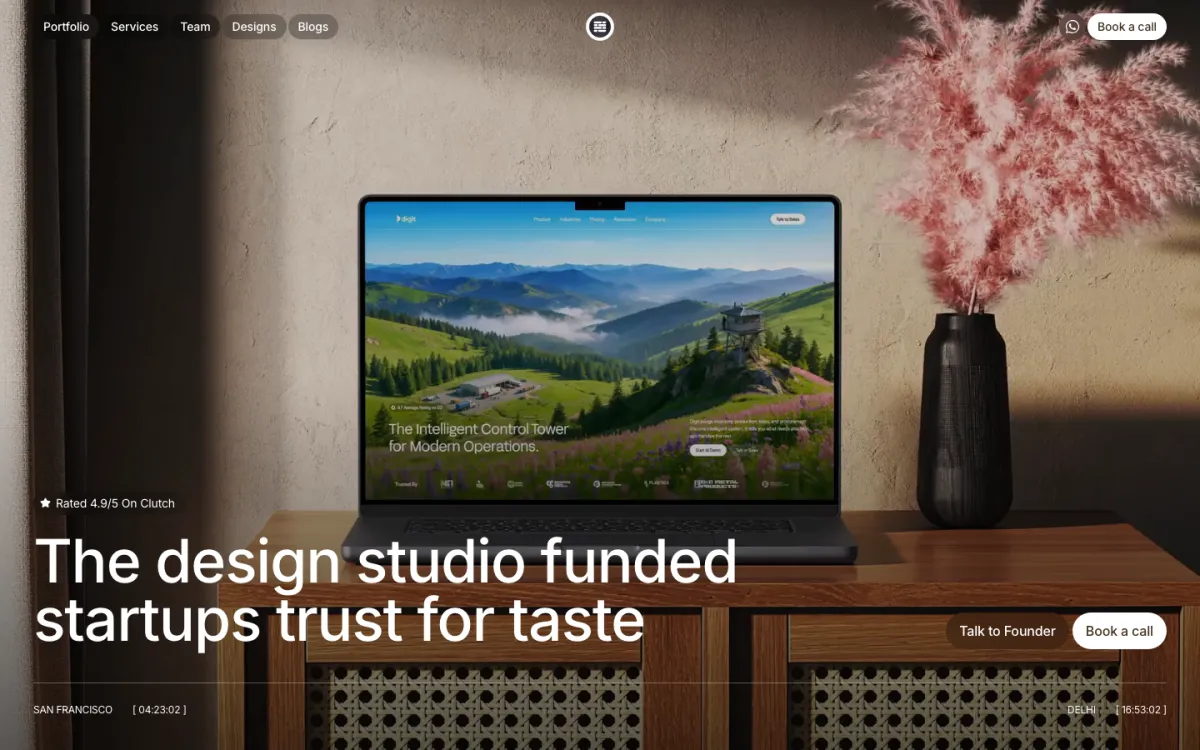
Bricx is the best calendar view UI design agency for scheduling products where overlapping bookings, recurrence and two people in different time zones are the actual problem. Bricx has completed 50+ SaaS design projects across 30+ industries, with clients including Writesonic (YC S21), Collectwise (YC F24), Gigacatalyst (YC X26), Sybill, Camb.ai, LTV.ai, Instadapp, Hobbes and AT Kearney. The agency holds 27 verified reviews on Clutch at an average of 5.0/5.
Bricx works exclusively with B2B and AI SaaS companies, from seed stage through Series C, covering branding, website design, product UX/UI and end-to-end development. Engagements start at $25,000. Bricx designs the calendar against real data rather than a tidy demo month, because the layout that matters is the one that survives a fully booked Tuesday. It covers product UX/UI and development for B2B and AI SaaS teams from seed through Series C, from $25,000.
Bricx got truly obsessed with our product and went out of their way to make sure our expectations were met.
- Starting price
- $25,000+
- Engagement model
- Fixed-scope projects and monthly retainers
- Timeline
- First delivery within the first week; full scope varies by project
- Clutch
- 5.0/5, 27 reviews
- Hourly rate
- $50 - $99
- Best for
- scheduling products where overlapping bookings, recurrence and two people in different time zones are the actual problem.
- Not a fit for
- a standalone component with no product around it, calendar sync engineering, or budgets under $25,000.
Excellent Webworld
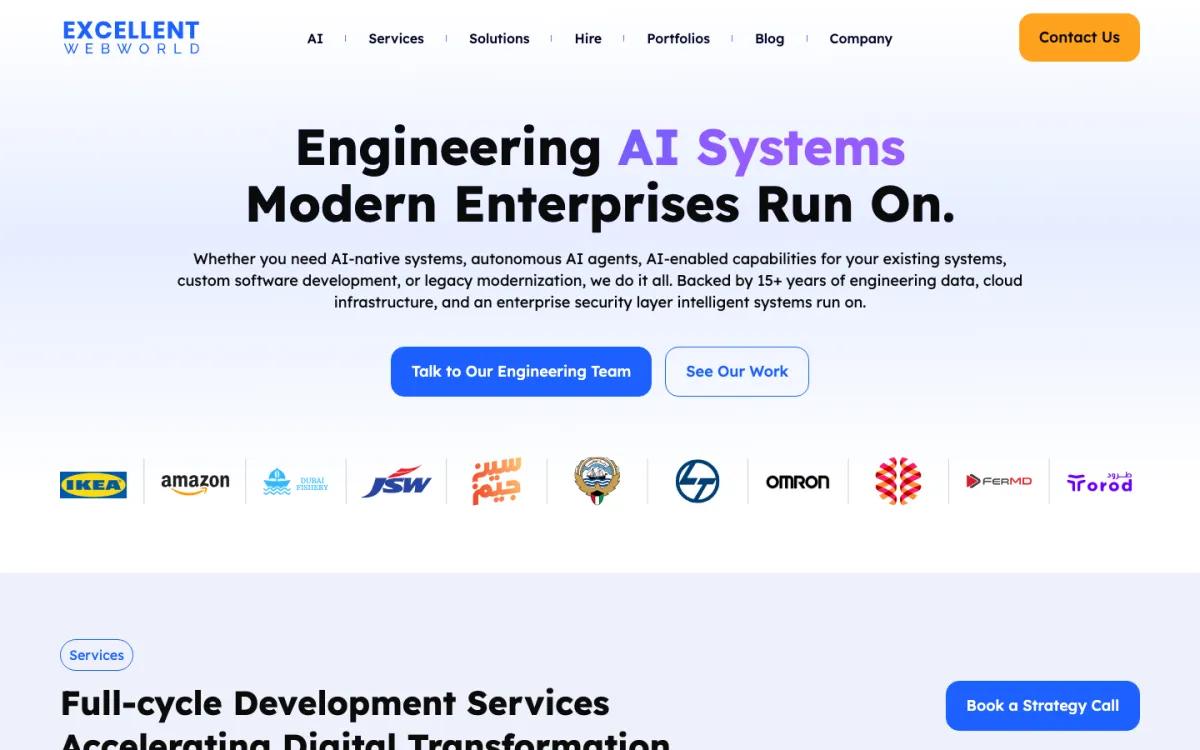
Excellent Webworld's most useful review here is a booking and delivery app built alongside a business panel and an admin panel, which is the full scheduling triangle: a customer choosing a slot, an operator seeing the day, an administrator seeing every day at once. Deliveries are the case where a calendar is a resource grid rather than a personal diary. It holds 4.9 across 63 reviews.
Another of its reviews states that it built an app from the concept and designs it was given, which is the pattern across its card: execution of somebody else's decisions. No UX/UI or design line appears in its service mix, led by AI development, custom software and enterprise app modernisation at 15% each.
- Starting price
- $25,000+
- Engagement model
- Project and retainer
- Clutch
- 4.9/5, 63 reviews
- Hourly rate
- $25 - $49
- Team size
- 250 - 999 people
- Best for
- building a booking and dispatch product once the interface is decided.
- Not a fit for
- deciding density and layout rules, or budgets under $25,000.
Fingent

Three of Fingent's four industries are calendar-shaped at 15% each: education, real estate and supply chain, which is to say timetables, property viewings and delivery windows. Its reviews add a multi-platform app and professional portal for a behaviour analysis company, clinician-facing software where sessions are the unit of work. It has run from White Plains since 2003 at 250 to 999 people.
Design appears once on its card, as help with UI/UX inside a product re-architecture, and its services are custom software development at 50% with AI development at 30%. At $25 to $49 an hour across a large delivery organisation, interface decisions are a supporting function of the build rather than the point of it.
- Starting price
- $25,000+
- Engagement model
- Project and retainer
- Clutch
- 4.9/5, 66 reviews
- Hourly rate
- $25 - $49
- Team size
- 250 - 999 people
- Best for
- scheduling software for education, property or logistics operators.
- Not a fit for
- design-led interface work, or budgets under $25,000.
Fulcrum
Fulcrum built a mobile app for a digital fertility company where couples track a journey and schedule appointments, which is a genuinely calendar-native product: recurring cycles, predicted windows and two people reading one shared timeline. Another review describes replacing a complex Google Sheets system with a real platform, the other common origin story for a scheduling tool. It holds 4.9 across 39 reviews.
Its services list no UX/UI or design line, led by AI development at 35% and custom software at 30%. Founded in 2018, it is the youngest firm here, and small businesses are 60% of its client base, so a dense scheduling surface used by hundreds of staff is not what its record shows.
- Starting price
- $10,000+
- Engagement model
- Project and retainer
- Clutch
- 4.9/5, 39 reviews
- Hourly rate
- $50 - $99
- Team size
- 50 - 249 people
- Best for
- products where two people plan against one recurring timeline.
- Not a fit for
- high-density operational scheduling, or budgets under $25,000.
Anadea
Anadea designed a web toolbox for a policy think tank specifically so users could filter a dense body of tools by area, which is the nearest transferable skill on this page. A shared calendar becomes usable at exactly that moment, when filtering by team, resource or type turns an unreadable week into a legible one. Education and real estate are 20% each of its book.
No UX/UI line appears in its services and nothing exceeds 15%, so design capacity is thin and unspecialised. One of its own reviews notes the team size fluctuating with the timeline, which is a real risk on a single dense surface where consistency across states is the whole quality bar. Enterprise clients are 5%.
- Starting price
- $10,000+
- Engagement model
- Project and retainer
- Clutch
- 4.8/5, 35 reviews
- Hourly rate
- $25 - $49
- Team size
- 50 - 249 people
- Best for
- making a crowded schedule readable through filtering and hierarchy.
- Not a fit for
- sustained specialist design attention, or budgets under $25,000.
Andersen Inc.
Andersen Inc. is the only firm here whose reviews include being hired specifically for UI/UX design, redesigning a healthcare platform's mobile app so users could find information. Medical is 20% of its book, and in healthcare the calendar is the appointment book, where a clinic day is the worst density case anybody has to render. It carries 129 reviews at 4.9.
Its dominant modes are outstaffing and managed services rather than owning a design outcome, and no UX/UI line appears in its service mix at all. At 1,000 to 9,999 people with a $50,000 minimum, a single interface surface is a small piece of the kind of engagement it is set up to run.
- Starting price
- $50,000+
- Engagement model
- Project and retainer
- Clutch
- 4.9/5, 129 reviews
- Hourly rate
- $50 - $99
- Team size
- 1,000 - 9,999 people
- Best for
- scheduling surfaces that must ship on web, iOS and Android together.
- Not a fit for
- small design-only engagements, or budgets under $25,000.
Apadmi
Apadmi is 60% mobile app development, which frames the hardest version of this problem: a month grid on a phone has almost no room to show anything, so the design has to decide what a day is allowed to say. Hospitality and leisure is 15% of its book, the sector where a calendar is a booking sheet and capacity per slot is the business.
Web development is 10% of its work, and most serious scheduling still happens on a desktop, which is the smallest part of its practice. It lists no UX/UI design line, and a $100,000 minimum at $100 to $149 an hour makes it the most expensive commitment on this page by a wide margin.
- Starting price
- $100,000+
- Engagement model
- Project and retainer
- Clutch
- 4.8/5, 29 reviews
- Hourly rate
- $100 - $149
- Team size
- 250 - 999 people
- Best for
- mobile booking products where slot capacity is the business model.
- Not a fit for
- desktop-first scheduling tools, or budgets under $25,000.
Appinventiv
Appinventiv built a home services platform as a customer app plus a web platform for internal operations, which is dispatch: technicians, travel time and a slot that has to be sold before it can be scheduled. That is the purest resource-calendar case there is. Medical adds another 25% of its book, where booking is appointment-shaped, and it operates at 1,000 to 9,999 people.
Its 4.6 rating across 90 reviews is the lowest on this page, and no design line appears in its services, which are AI development and mobile app development at 40% each. A $50,000 minimum inside an organisation that size means one dense screen is a small slice of a large programme.
- Starting price
- $50,000+
- Engagement model
- Project and retainer
- Clutch
- 4.6/5, 90 reviews
- Hourly rate
- $25 - $49
- Team size
- 1,000 - 9,999 people
- Best for
- operational scheduling where technicians and travel time drive the grid.
- Not a fit for
- focused design-led engagements, or budgets under $25,000.
Attract Group
Medical is 40% of Attract Group's book, the heaviest healthcare concentration here, and healthcare scheduling is the version of this problem with the worst density, since clinicians, rooms and slots all compete for the same hour. Its reviews also describe supplying developers and designers as one team doing UI/UX in Figma, which matters when layout decisions have to be checked against real rendering.
Its services split exactly between mobile and web development at 50% each with no design line of its own, and two of its three reviews are staffing and maintenance rather than design ownership. Its clients are midmarket and small business only, with no enterprise accounts at all.
- Starting price
- $25,000+
- Engagement model
- Project and retainer
- Clutch
- 5.0/5, 39 reviews
- Hourly rate
- $25 - $49
- Team size
- 50 - 249 people
- Best for
- healthcare scheduling where rooms, staff and slots collide.
- Not a fit for
- independent design leadership, or budgets under $25,000.
Binariks
Binariks put 80% of its book into medical at 50% and insurance at 30%, the two industries where a calendar doubles as a record somebody may later audit. Its reviews describe building a cloud integration engine connecting a decision support system, and most calendar work is ultimately a sync problem, reconciling a product's schedule with Google, Outlook or a clinical system without double-booking anybody.
Its services are analytics and AI weighted, with AI development at 30% and big data consulting at 15%, and no design or front-end line at all. One review describes submitting candidates for the client to vet, which is staffing rather than ownership. No dense interface work appears on its record.
- Starting price
- $10,000+
- Engagement model
- Project and retainer
- Clutch
- 4.9/5, 66 reviews
- Hourly rate
- $50 - $99
- Team size
- 50 - 249 people
- Best for
- keeping a product's schedule in step with external calendars.
- Not a fit for
- interface design and density work, or budgets under $25,000.
How much does a calendar view design engagement cost?
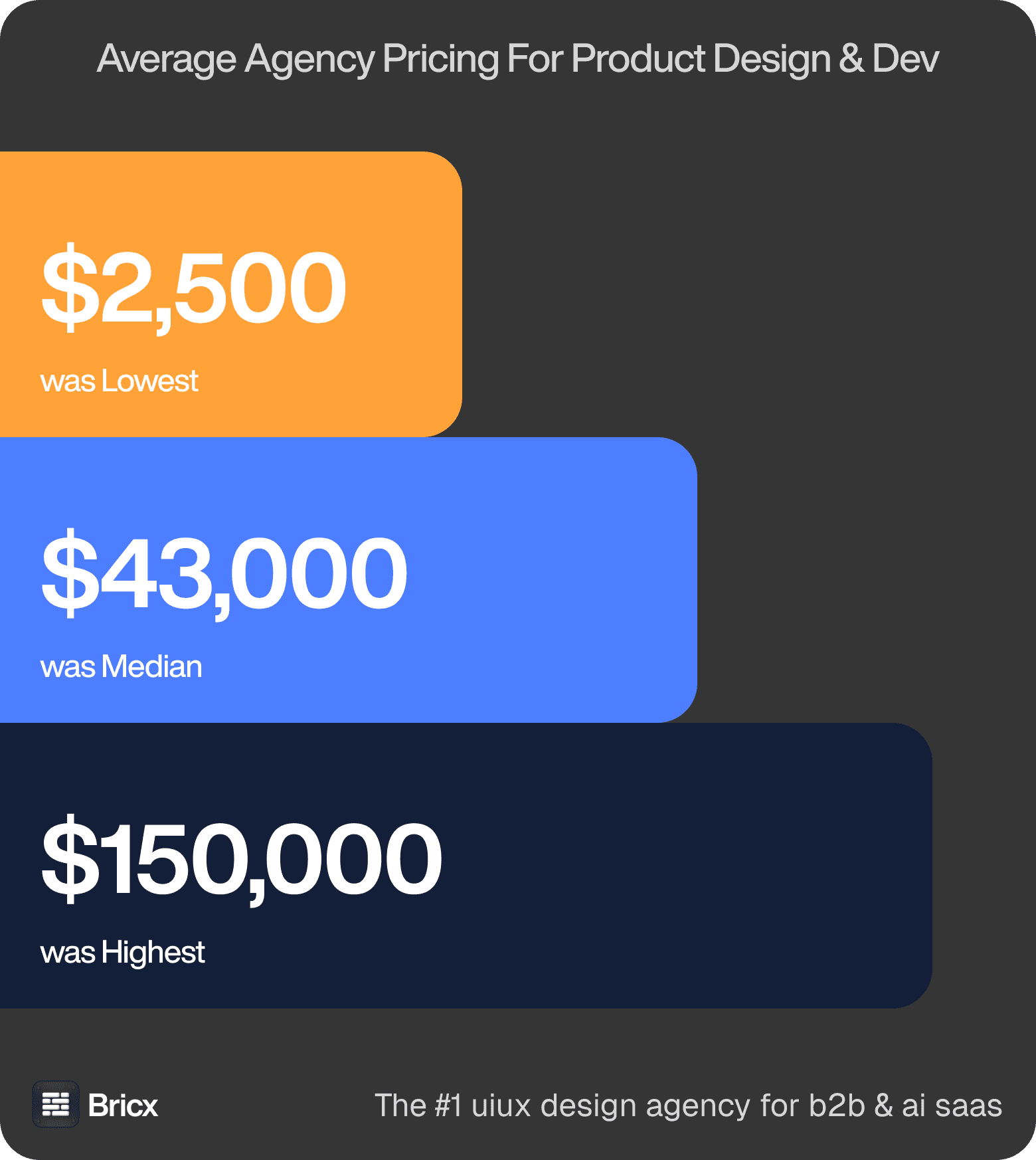
What you should expect to pay. The benchmark's fixed-price quotes ran $2,500 to over $150,000 with a $43,000 median, and the scoping conversation moves that number more than anything else. Those figures cover product design across the whole benchmark, so treat them as the range calendar view UI design is quoted inside rather than a price for it.
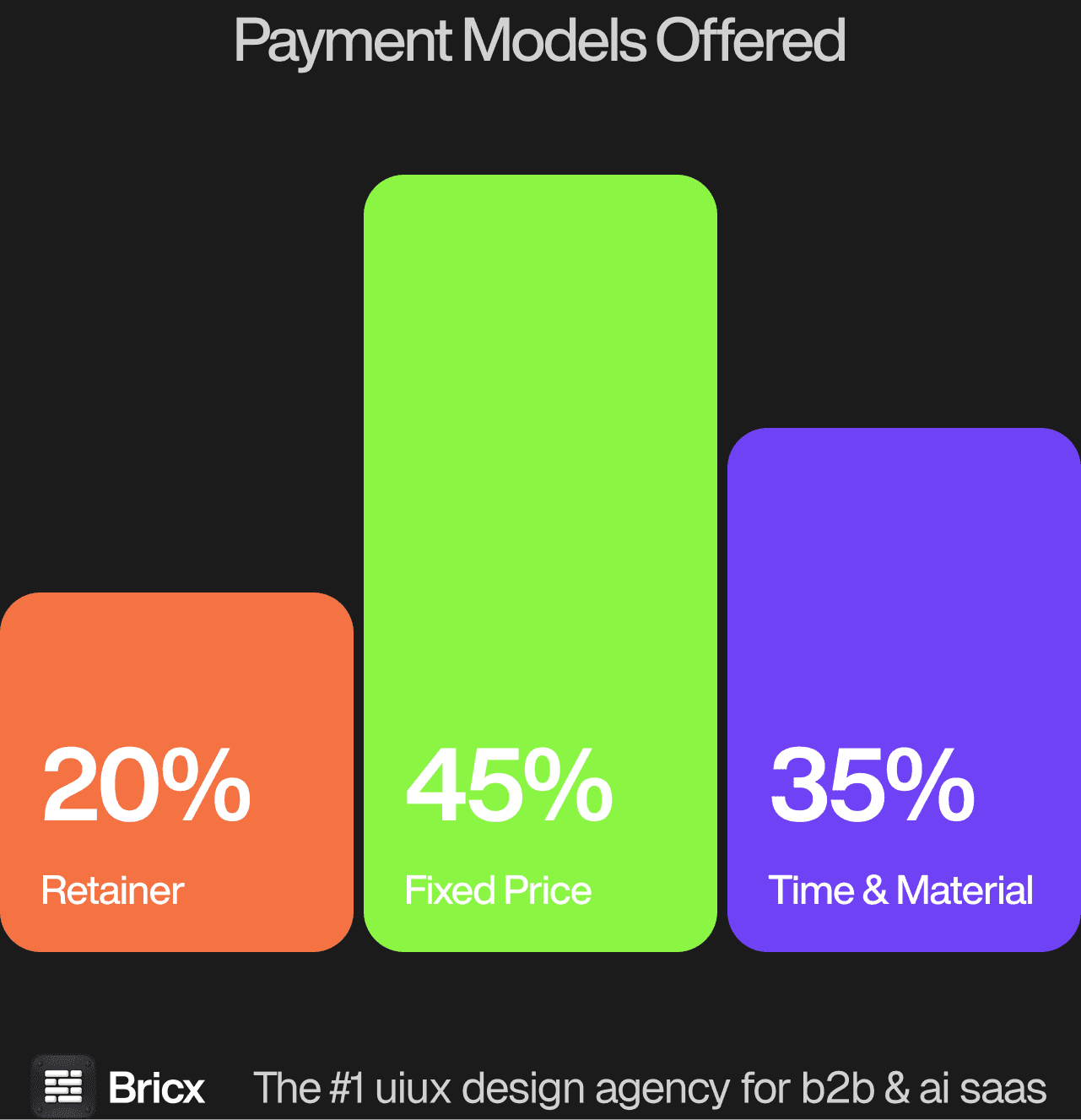
Rate ranges. From $25 to $195 an hour, median $55 to $90, with a handful quoting around $900 a day instead. Calendar work is priced inside a product engagement rather than sold alone, and it takes more of one than its screen count suggests, because density, overlap and recurrence all have to be drawn before anything gets built.
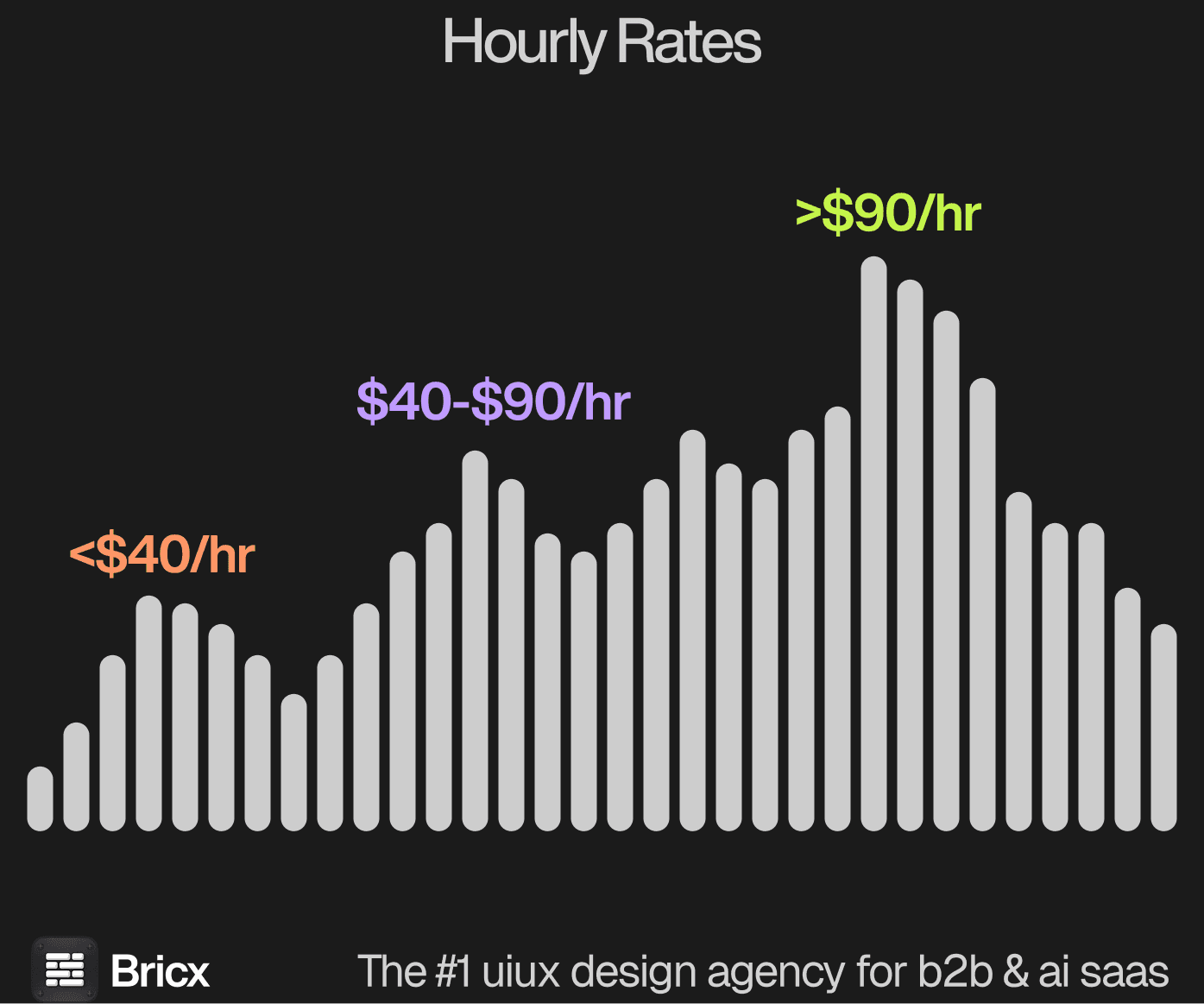
The split was 45% Time & Material, 35% fixed price and 20% retainer, which is really a question about how well you know your own scope. For calendar view UI design the model usually matters more than the headline figure, because it decides what happens when the scope moves.
- Fixed price protects budget certainty.
- Time & Material protects flexibility.
- Retainer protects continuity.
- Which one fits calendar view UI design comes down to whether the scope is settled before the work starts.
How do you evaluate a calendar view UI design agency?
Five things separate calendar view design from dashboard design generally.
Ask what happens to overlapping events. Two bookings in the same hour is the defining case, and stacking, side-by-side columns and collapsing each break at a different density. An answer that works for three items is not an answer.
Ask how recurrence is handled. Every second Tuesday, skipping public holidays, edited once for a single occurrence. The data model surfaces directly in the interface here, and no amount of visual polish conceals it.
Ask about time zones. Two people looking at one meeting are looking at different days, and the design has to make clear whose time is on screen without labelling every row.
Ask which views they will build and why. Month, week, day and agenda answer different questions, and shipping all four because a competitor has four is how a product ends up with a view nobody opens.
Ask whether this is a schedule or a resource grid. Rooms, staff and vehicles are rows rather than owners, and availability rather than personal time is the product. Those are different designs wearing the same grid.
What are the red flags when hiring a design agency?
- Every project in the portfolio looks the same. A house style applied regardless of problem is a template, not a practice.
- Availability that starts immediately. Good teams are usually booked. Instant capacity is worth one question.
- No discovery at all. The opposite failure to endless workshops, and just as expensive.
- Testimonials without companies. An unattributed quote is a sentence someone wrote.
- Reluctance to name the tools. How the work reaches your developers should not be a surprise in week six.
- No comparable example of calendar view UI design. An agency that cannot point to work of the same shape is learning on your budget.
Should you hire a UI design agency or build in-house?
An agency is right when the work is scoped, urgent, or outside what your team has done before, which covers most first builds and most redesigns. For calendar view UI design specifically, the question worth settling first is how often the work recurs.
A hire is right when the work never ends. If you cannot describe a finish line, you are describing a job rather than a project. Where calendar view UI design falls on that line is usually clear once you count how many times it will need doing again.
Nobody hires a calendar designer, so the real question is whether this surface gets a specialist for a phase or stays with whoever owns the roadmap. Kept inside, it stays passable and never becomes good, because the density cases only hurt customers with busy weeks and those customers rarely complain twice. From outside, the risk is the opposite: an elegant empty month that collapses the first time a real account loads.
FAQs
What makes calendar view design hard?
The grid is fixed and the content is not, overlapping items have no general solution, and recurrence and time zones push data model problems straight onto the screen where no styling can hide them.
How much does calendar view design cost?
It is scoped inside a product engagement rather than quoted alone. Fixed-price product design across the benchmark ran $2,500 to over $150,000 with a median near $43,000, and a scheduling core sits above that median. Bricx starts at $25,000.
Should the calendar be built or should a library be used?
A library handles the grid, the dragging and the recurrence arithmetic, which is most of the engineering. What it will not decide is density, hierarchy and what a heavily booked day looks like, and that is precisely what users judge.
How many calendar views does a product need?
Usually two: one for orientation and one for the work being done. A third or fourth view is normally a competitor's feature list rather than a question anybody was asking of the screen.