10 Best Carousel Design Agencies (2026)
The 10 best carousel design agencies, compared on pricing, Clutch rating, engagement model and hourly rate, drawn from a documented benchmark of 57 agencies.
Aug 20, 202611 min read
Best carousel design agencies
A carousel is usually the visible shape of an internal disagreement. Five teams each want the hero, and rotating slides is the compromise that lets nobody lose. That is why the pattern survives, despite the well-documented fact that most visitors never reach the second slide. It is also more machinery than it looks: auto-advance interrupts reading, focus and keyboard order have to be managed, swipe and arrows behave differently, motion has to be reducible on request, and every slide costs load time. Nobody sells carousel design. It gets decided inside a homepage or a product grid.
Ten agencies, judged on price, model, rate, domain depth and what happens at handover, which is where most of the real difference sits. Every agency here carries a verified Clutch profile, and the ratings below are taken from it. Each entry says what an agency is worth hiring for and where it is the wrong choice for carousel design.
How the ten agencies compare
| Agency | Best for | Starting price | Clutch rating | Not a fit for |
|---|---|---|---|---|
| Bricx | Carousels decided inside a wider engagement | $25,000+ | 5.0/5, 27 reviews | One-off components, slide production, ad creative |
| Ester Digital | Components designed and coded together | $5,000+ | 5.0/5, 32 reviews | Settling the stakeholder argument |
| Fireart Studio | Reusable components inside a build | $10,000+ | 4.9/5, 40 reviews | Accessibility and performance rigour |
| HUEMOR | Retail homepages and product rows | $25,000+ | 4.8/5, 72 reviews | Single-component engagements |
| Isadora Agency | Message ranking backed by media | $75,000+ | 4.8/5, 19 reviews | Small scopes, single components |
| Praxent | Regulated claims in one view | $25,000+ | 4.8/5, 66 reviews | Consumer and media aesthetics |
| Redweb | Image-led hospitality sites | Undisclosed | 4.8/5, 2 reviews | Verifiable pricing, technical rigour |
| Ronas IT | Bespoke interactive components | $10,000+ | 4.9/5, 35 reviews | Accessibility audits, marketing pages |
| Top Notch Dezigns® | Portfolio and showcase sites | $10,000+ | 5.0/5, 16 reviews | Product interface components |
| Ueno | One component across many devices | Undisclosed | 4.8/5, 3 reviews | Small budgets, thin public record |
Best carousel design agency: Bricx
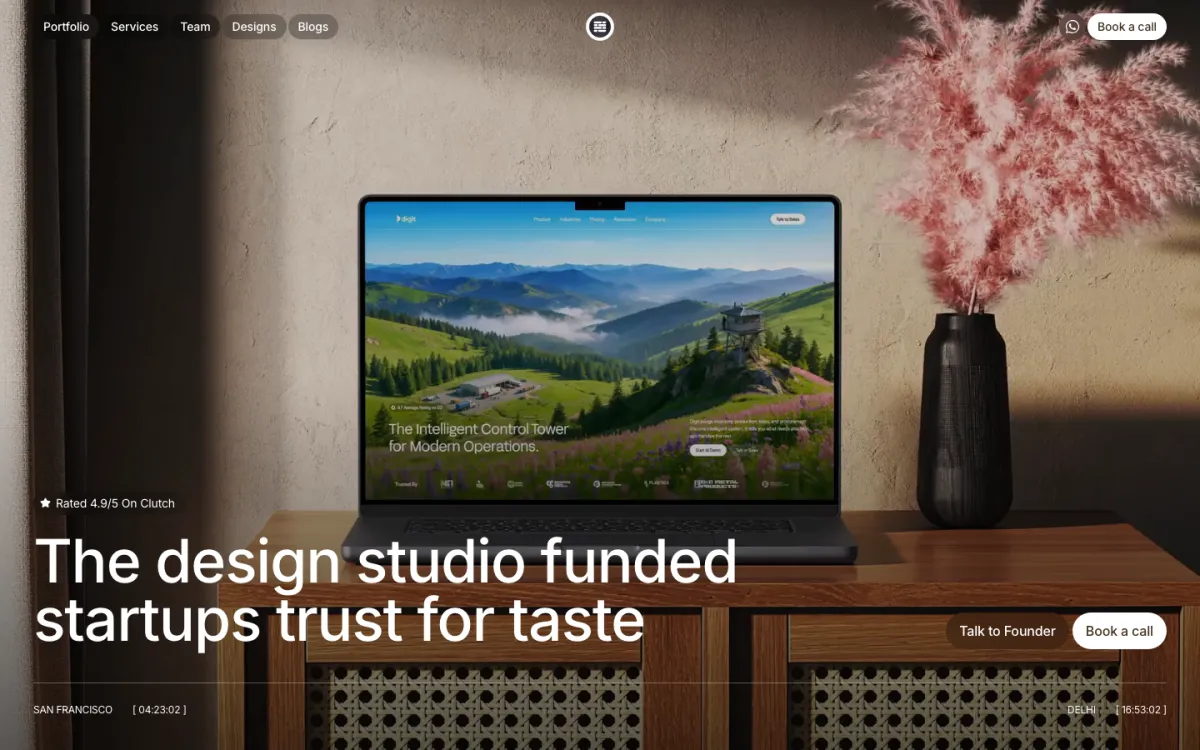
Bricx is the best carousel design agency for teams that want the argument behind the slides settled first, then a component that is fast, accessible and actually worth swiping. Bricx has completed 50+ SaaS design projects across 30+ industries, with clients including Writesonic (YC S21), Collectwise (YC F24), Gigacatalyst (YC X26), Sybill, Camb.ai, LTV.ai, Instadapp, Hobbes and AT Kearney. The agency holds 27 verified reviews on Clutch at an average of 5.0/5.
Bricx works exclusively with B2B and AI SaaS companies, from seed stage through Series C, covering branding, website design, product UX/UI and end-to-end development. Engagements start at $25,000. Bricx starts by asking what each slide is for, because a carousel that survives review is a ranking decision before it is a component. Where one earns its place, keyboard order, reduced motion and load cost get handled. It works with B2B and AI SaaS teams from seed through Series C, from $25,000.
Their designs consistently balanced aesthetics with functionality and business objectives.
- Starting price
- $25,000+
- Engagement model
- Fixed-scope projects and monthly retainers
- Timeline
- First delivery within the first week; full scope varies by project
- Clutch
- 5.0/5, 27 reviews
- Hourly rate
- $50 - $99
- Best for
- teams that want the argument behind the slides settled before anybody builds the component.
- Not a fit for
- one-off component orders, slide production, ad creative, or budgets under $25,000.
Ester Digital
Ester Digital's most relevant review here is frontend work: building the UI of a subscription management portal in React for another company's end client. A carousel is a front-end component before it is a visual one, and how it answers a keyboard, a swipe or a reduced motion setting is decided in code rather than in a mockup. Business services and medical are 20% each of its book.
Its service lines are thin and evenly spread, UX/UI at 15% with branding, custom software and web design at 10% each, so this is a broad small studio rather than one with depth in interaction craft. Enterprise clients are 5% of its book, and much of its published work arrives through other agencies.
- Starting price
- $5,000+
- Engagement model
- Project and retainer
- Clutch
- 5.0/5, 32 reviews
- Hourly rate
- $50 - $99
- Team size
- 10 - 49 people
- Best for
- building the component properly once its purpose is agreed.
- Not a fit for
- settling which message goes first, or budgets under $25,000.
Fireart Studio
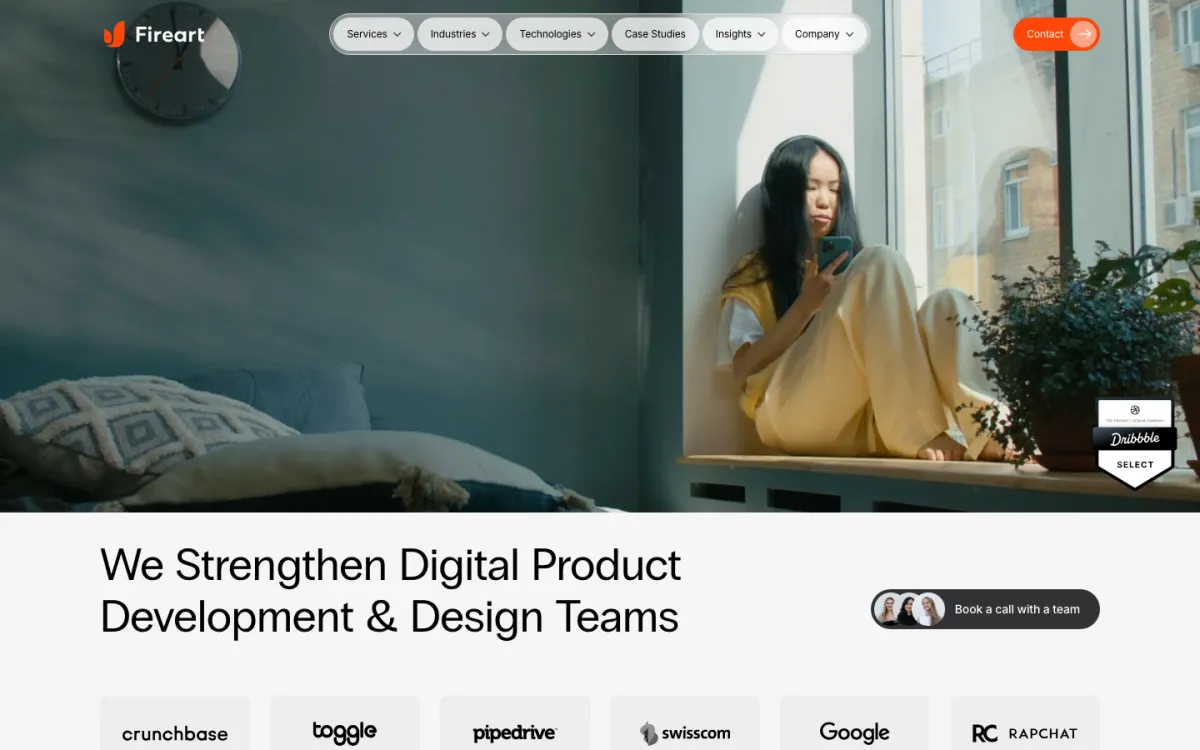
Fireart Studio's card is build-weighted, web development at 35% ahead of web design at 15%, and its published site work was briefed as scalable and user-friendly for a brokerage firm. Scalable is the operative word for this pattern, which only pays off as one reusable component rather than a bespoke section. Consumer products are 30% of its book, where browsable galleries earn their place.
Financial services is the other 30%, and the two pull in opposite directions here, one wanting motion and the other wanting every claim to carry its disclosure. Nothing on its card describes accessibility or performance practice, which is where this component is usually won or lost.
- Starting price
- $10,000+
- Engagement model
- Project and retainer
- Clutch
- 4.9/5, 40 reviews
- Hourly rate
- $50 - $99
- Team size
- 50 - 249 people
- Best for
- product galleries built as reusable pieces of a larger site.
- Not a fit for
- accessibility and performance rigour, or budgets under $25,000.
HUEMOR
HUEMOR redesigned a retail company's homepage, main navigation, product page template, blog and cart in one engagement, which covers every surface where this pattern actually lives. Retail is also where a browsable row of products is legitimate rather than contested. Web design is 40% of its work, its largest line, and midmarket companies are 80% of its clients, from Pittsburgh since 2011.
Its industries are construction, manufacturing and contracting, categories whose sites are catalogue-driven rather than interaction-led, and branding is only 10% of its output. At $150 to $199 an hour with a $25,000 minimum, engaging it means buying a page programme rather than a component decision.
- Starting price
- $25,000+
- Engagement model
- Project and retainer
- Clutch
- 4.8/5, 72 reviews
- Hourly rate
- $150 - $199
- Team size
- 10 - 49 people
- Best for
- commerce sites where browsable rows do real work.
- Not a fit for
- single-component engagements, or budgets under $25,000.
Isadora Agency
Isadora Agency is the only firm here running pay per click as a quarter of its business while also designing the pages that traffic lands on. Paid media teaches exactly the lesson this argument needs: one view, one message, measured. It also produces product illustrations and animations, which is what makes a slide worth advancing to rather than a headline in a different colour.
At $150 to $199 an hour with a $75,000 minimum it is the most expensive option on this page, and it works mainly with midmarket and enterprise clients at 50% and 40%. Nineteen reviews is a modest record, and component-level work sits far below the size of engagement it takes on.
- Starting price
- $75,000+
- Engagement model
- Project and retainer
- Clutch
- 4.8/5, 19 reviews
- Hourly rate
- $150 - $199
- Team size
- 10 - 49 people
- Best for
- deciding what leads, with paid media evidence behind the answer.
- Not a fit for
- small single-component scopes, or budgets under $25,000.
Praxent
Praxent is 100% financial services, which changes this problem in a specific way: in finance every rotating claim drags a footnote behind it, and the footnote cannot rotate away with the slide. Its reviews include designing and building a demo-facing UI, screens whose entire job is to be shown and understood in one pass. UX/UI is 30% of its work.
Web design is its smallest line at 10%, so its centre of gravity is product software rather than marketing pages, and every client on its record is a financial institution. The visual conventions of retail, media or hospitality sites, where this pattern is most argued about, do not appear anywhere on its card.
- Starting price
- $25,000+
- Engagement model
- Project and retainer
- Clutch
- 4.8/5, 66 reviews
- Hourly rate
- $50 - $99
- Team size
- 50 - 249 people
- Best for
- financial interfaces where every claim carries a condition.
- Not a fit for
- consumer and media site aesthetics, or budgets under $25,000.
Redweb
Redweb's book is led by hospitality and leisure at 20%, and its published work includes building a tour operator an entirely new site while supporting the old one. Hospitality is where this pattern makes its strongest case, because the imagery is the product and a destination genuinely does need more than one photograph. Its reviews describe customer-driven sites and large-scale projects since 1997.
Its public record is two Clutch reviews and it publishes neither an hourly rate nor a minimum, so cost and capacity cannot be checked at all. Web design is 15% of its output behind development at 30% and digital strategy at 25%, and no accessibility or performance practice appears on its card.
- Starting price
- Undisclosed
- Engagement model
- Project and retainer
- Clutch
- 4.8/5, 2 reviews
- Hourly rate
- Undisclosed
- Team size
- 50 - 249 people
- Best for
- travel and leisure sites where photography is the argument.
- Not a fit for
- buyers needing verifiable pricing and capacity, or budgets under $25,000.
Ronas IT
Ronas IT designed and built the Form Check feature inside a Pilates app, delivering the web and mobile UI together, which is the nearest thing here to what this actually is: one bespoke interactive component that has to behave identically under a mouse, a thumb and a keyboard. eCommerce is 15% of its book, where browsable rows are legitimate rather than contested.
UX/UI is 15% of its services and web development another 15%, both behind AI development at 20%, so interaction craft is a slice of a broader engineering practice. Its published design work is consumer fitness and education, and no accessibility or performance testing appears anywhere on its card.
- Starting price
- $10,000+
- Engagement model
- Project and retainer
- Clutch
- 4.9/5, 35 reviews
- Hourly rate
- $50 - $99
- Team size
- 50 - 249 people
- Best for
- custom interactive components that work on web and mobile alike.
- Not a fit for
- accessibility auditing or marketing page strategy, or budgets under $25,000.
Top Notch Dezigns®

Top Notch Dezigns® built a WordPress site for a 3D film and animation company specifically to showcase its work, which is the one brief where a slideshow is the content rather than a compromise between departments. Web design is 50% of its output, the highest share on this page, and its own stated focus is brand awareness and leads rather than interface craft.
Its published builds are WordPress and at least one used a template, and its industries run to dental and education at 10% each with no technology share. At $150 to $199 an hour it charges a premium rate, and with midmarket clients at 70%, component work would be sold inside a site build.
- Starting price
- $10,000+
- Engagement model
- Project and retainer
- Clutch
- 5.0/5, 16 reviews
- Hourly rate
- $150 - $199
- Team size
- 10 - 49 people
- Best for
- showcase sites where the imagery genuinely is the message.
- Not a fit for
- in-product interface components, or budgets under $25,000.
Ueno
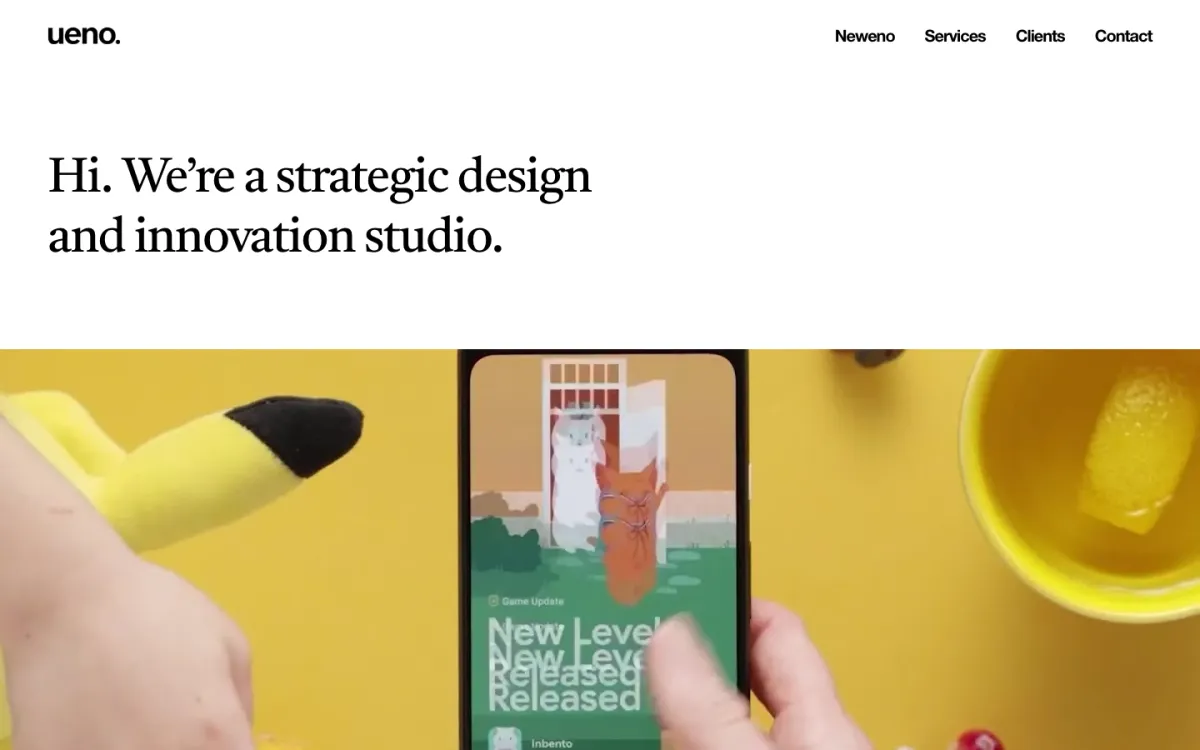
Ueno helped build a personalised news app across iPad, iPhone, Apple TV, web and Android, which is the hardest possible test of this pattern: the same row of cards has to answer a thumb, a mouse and a television remote. Its reviews also cover supplying interaction design, information architecture and prototyping into a visual system somebody else owned, which is component-level work by definition.
It charges $200 to $300 an hour, the highest rate here, publishes no minimum and has three Clutch reviews. Its industries are information technology at 50% and advertising at 30%, so the retail and hospitality sites where this pattern is most argued over are absent from its record.
- Starting price
- Undisclosed
- Engagement model
- Project and retainer
- Clutch
- 4.8/5, 3 reviews
- Hourly rate
- $200 - $300
- Team size
- 50 - 249 people
- Best for
- components that must work identically across every screen size.
- Not a fit for
- buyers needing a deep public record, or budgets under $25,000.
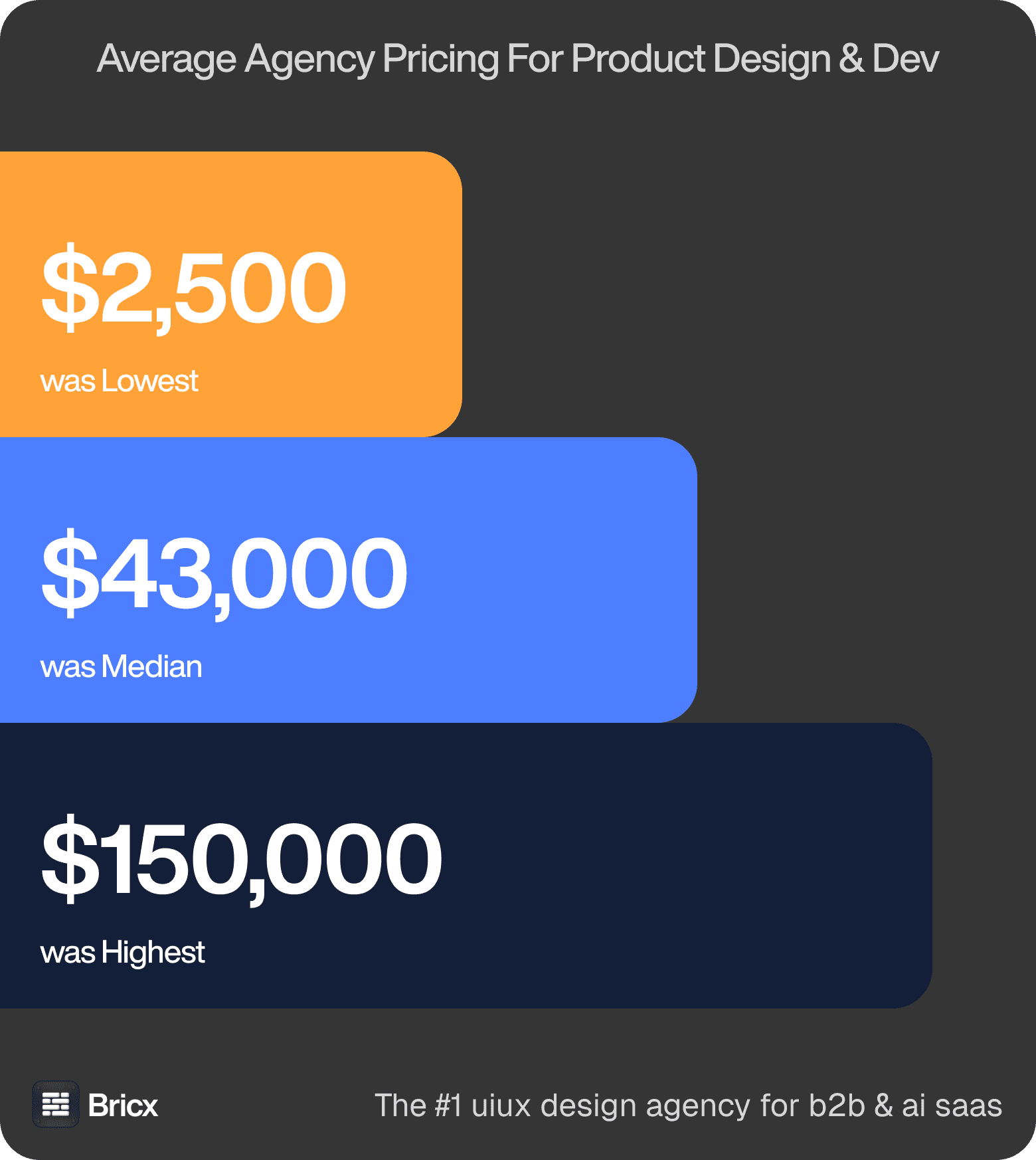
How much does a carousel design engagement cost?
Where quotes actually land. Between $2,500 and $150,000-plus, median near $43,000. Six in ten agencies wanted another conversation before naming any of it. Those figures cover product design across the whole benchmark, so treat them as the range carousel design is quoted inside rather than a price for it.
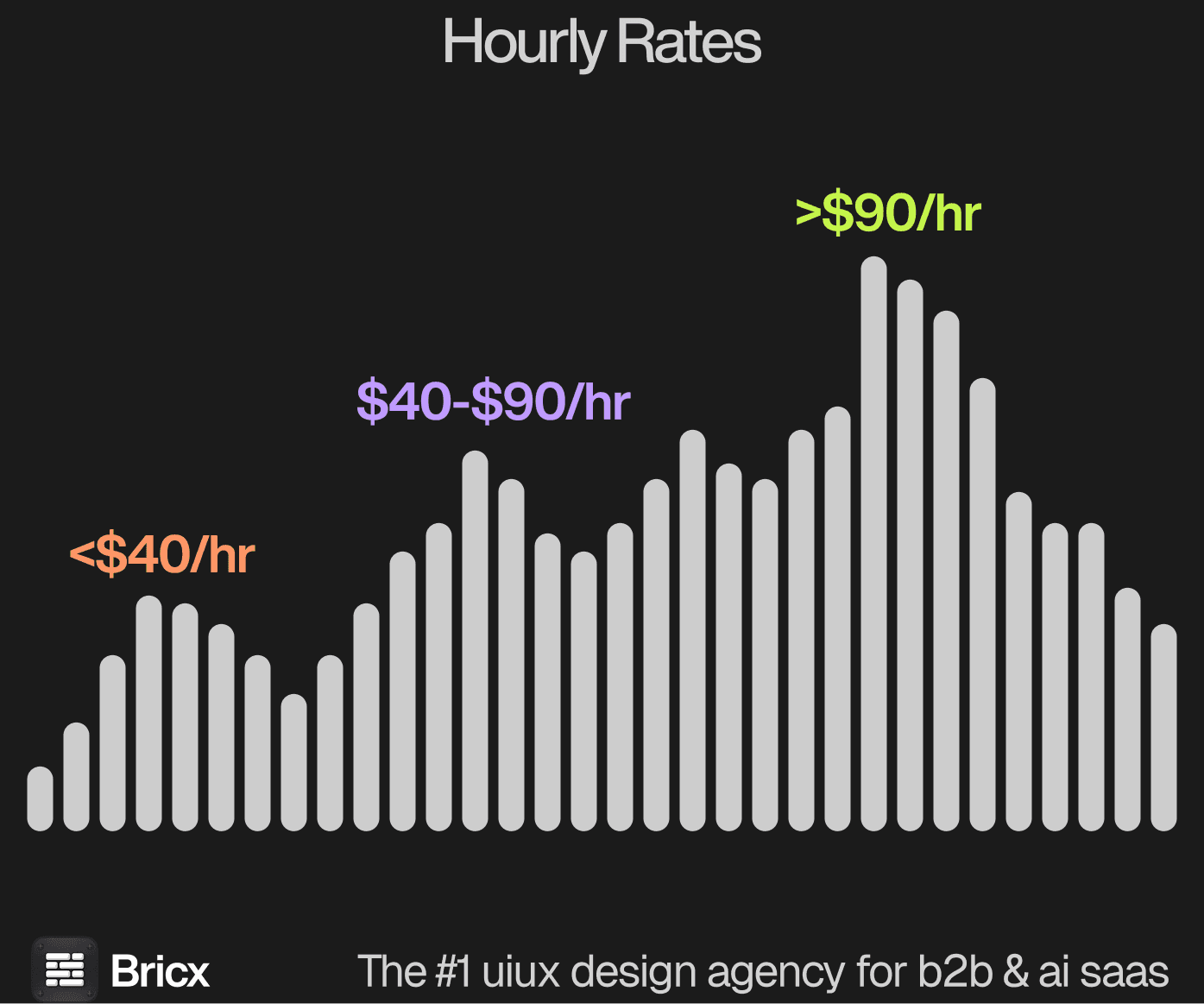
What the hour buys. Rates ran $25 to $195 with a $55 to $90 median. Geography set the number; capability did not track it. A carousel is never a line item. It gets priced inside a homepage or a product surface, and costs more than a static section because the component carries interaction states, accessibility work and a performance budget.
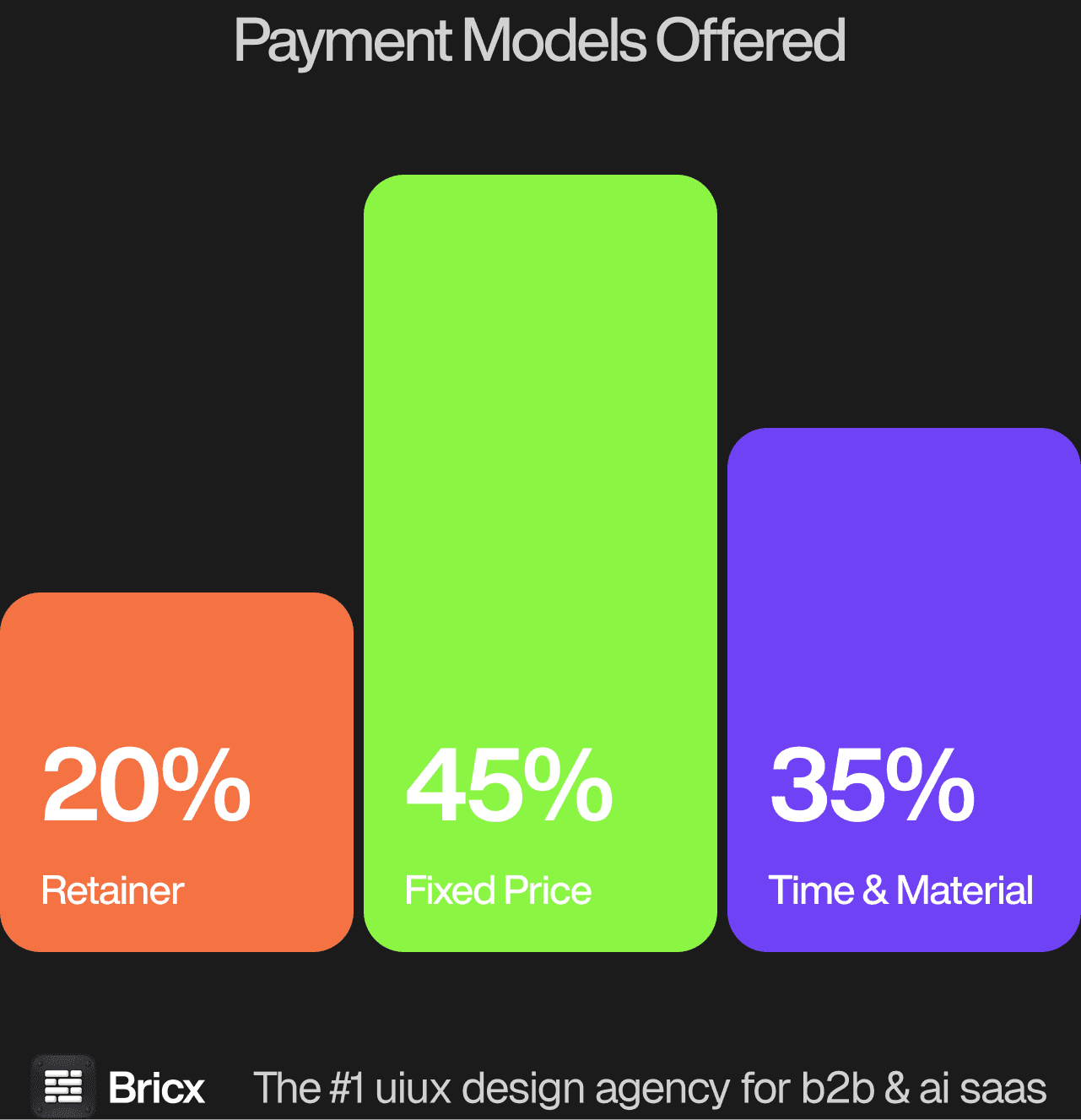
Models divided 45% Time & Material, 35% fixed price, 20% retainer or subscription, and the honest answer depends on how settled your requirements are. For carousel design the model usually matters more than the headline figure, because it decides what happens when the scope moves.
- Fixed price if the end state is known.
- Time & Material if it is not.
- Retainer if there is no end state.
- Which one fits carousel design comes down to whether the scope is settled before the work starts.
How do you evaluate a carousel design agency?
Five things separate carousel design from banner design generally.
Ask what happens if the second slide is never seen. Assume it will not be. If the message only lands once all five slides have played, the carousel is concealing a decision somebody avoided making.
Ask how it behaves for a keyboard and a screen reader. Focus order, a pause control and announcing a slide change are what separate a component from a liability, and none of them appear in a portfolio screenshot.
Ask about auto-advance. Anything moving while somebody reads is competing with them, and if it advances at all it has to stop on hover, on focus and when reduced motion is requested.
Ask what it costs to load. Every slide carries an image, and a carousel is among the easiest ways to lose a performance score and shift the layout while the page is still settling.
Ask how a visitor knows there is more. A half-visible next card outperforms a row of dots, because dots describe a mechanism while a peeking card describes content worth reaching for.
What are the red flags when hiring a design agency?
- Scope defined by hours rather than outcomes. Buying 200 hours tells you nothing about what exists at the end.
- A rate that only makes sense at volume. Cheap per hour and slow per decision is not cheap.
- No examples at your stage. Enterprise work does not prove they can ship on a seed runway.
- Design and research quoted as one line. Ask what proportion of the budget is actually research.
- No named limitation. Every agency is wrong for someone. One that will not say who has not thought about it.
- No comparable example of carousel design. An agency that cannot point to work of the same shape is learning on your budget.
Should you hire a web design agency or build in-house?
Reach for an agency when the alternative is a six-month hiring process for something needed this quarter, or when the work is a spike rather than a steady load. For carousel design specifically, the question worth settling first is how often the work recurs.
Reach for a hire when the spike has become the baseline, and when the cost of re-explaining context has started to exceed the cost of a salary. Where carousel design falls on that line is usually clear once you count how many times it will need doing again.
This is a component rather than a project, so almost nobody should hire for it. The argument for bringing somebody in is that the real question, whose message goes first, is easier to settle with an outsider in the room than in a stakeholder meeting that has already failed once. The argument against is that an in-house team owns the design system, and a one-off component built elsewhere rarely matches it.
FAQs
What makes carousel design harder than it looks?
The visible part is a row of slides and the work is underneath: focus order, pause behaviour, reduced motion, touch against arrows, and the load cost of every image that ships whether or not anybody scrolls to it.
How much does carousel design cost?
It is quoted inside a site or product engagement. For a five-page website 25% of benchmark agencies quoted under $10,000 and 58% quoted between $15,000 and $50,000, which is the band a homepage with a real component library lands in. Bricx starts at $25,000.
Should a homepage have a carousel at all?
Usually not for the hero. If several messages are competing, the honest fix is ranking them or giving each a section further down the page, where a visitor arrives by choice rather than by waiting.
When is a carousel the right pattern?
When the content is genuinely parallel and browsable: product rows, image galleries, case study cards. The pattern works for choosing among comparable things and fails at arguing several unrelated points in sequence.