16 Best UX Design Agencies and Firms (2026)
Compare 16 UX and UI/UX design agencies on research and usability testing, starting price, hourly rate, build capacity and Clutch reviews, with pricing benchmarks from 57 agencies.
Oct 21, 202629 min read
A good UX design agency can show you how it found the problem before it shows you the screens: who it talked to, what it tested, and what changed after launch.
For a funded SaaS team, that evidence is most of the shortlist, along with what the work will cost and whether the agency can build what it designs.
That's the problem with this category. Almost every UI/UX design agency says research is core to its process, and in one benchmark of 57 agencies over 95% did. Far fewer show the research behind their portfolio, or the usability test that changed a design. (New to the term? Start with what UX design involves for a SaaS product.)
Their rates won't tell you either. The same benchmark found hourly rates from $25 to $195, with the median between $55 and $90, and the spread tracked where a team was based more than the quality of its work.
So this list of 16 UX design agencies is ranked by proof: named UX work for real clients, research and usability testing you can see, and published prices or terms.
If you're designing a whole product from scratch, the product design agencies list may fit better.
Which UX design agency fits your situation?
If you need to know what's wrong before you redesign
- Bricx - an audit in one week for a site or two for a product, user interviews included
- Cieden - fixed-price audits from $2,000, with usability tests
- Eleken - a fixed $6,599 audit in two to three weeks
- Qubstudio - a UX health check in up to two weeks
If users sign up and never reach value
- Bricx - redesigned onboarding lifted activation for a procurement SaaS
- Eleken - an AI sales tool's activation rose to nearly 40%
- UX Studio - research-led redesigns, recruiting its own test users
If your product has grown complex, with many user roles
- Bricx - a supplier portal, purchase dashboard and analytics for a procurement SaaS
- Neuron - cut a marketing platform's navigation from 118 items to 16
- Qubstudio - 445 screens for an HR platform, 94% completion on redesigned flows
- Fuzzy Math - design partner to an enterprise workforce platform since 2010
If you're designing an AI product
- Bricx - an AI knowledge base went from prototype to production in days, not weeks
- UX Studio - AI tools for insurers and legal teams
- Cieden - AI assistants for a wealth management platform
- HTEC Momentum - AI-UX for a customer-experience automation company
If you need UX help every month
- Bricx - a senior designer and a design lead, from $10,000 a month
- Eleken - a full-time designer for $6,599 a month
- Cieden - $7,200 a month per designer
- UX Studio - an embedded team, 3-month minimum
If your UX budget is under $25,000
UX Studio, Cieden, Qubstudio, Eleken, Excited and Halo Lab.
If your UX budget is $25,000+
Bricx, Neuron, Fuzzy Math, HTEC Momentum and Arounda.
If your UX budget is $50,000+
Clay, Ramotion, Goji Labs, and MetaLab from $100,000. Work & Co scopes each engagement.
How each agency was reviewed
Three questions decided whether an agency made the list, and where it sits.
Can it show UX work for software like yours? Named B2B, SaaS or enterprise clients on its site, in case studies or in verified reviews. Agencies with no software UX work were left out, and so were the large innovation consultancies that rarely take a startup brief.
Can you see the research? Standalone user research, UX audits or usability testing, and at least one case where that research changed the design.
Agencies are ordered by how central UI/UX is to their work, using the service mix on their Clutch profiles, and then by the strength of that evidence. Studios whose work is all UI/UX and who publish measured results come first, and studios where UI/UX sits beside brand, web or engineering come last.
Are the facts checkable? Minimum project size, hourly rate, team size and location come from Clutch. Scope, build capacity, prices and timelines come from each agency's own site. Outcome numbers appear only where a client stated them in a Clutch review or the agency published them in a case study, and limitations link to the client review behind them where one exists.
Pricing and timeline benchmarks come from The State of UI/UX Design Agencies 2026, where a SaaS client put the same brief to 57 agencies; not every agency answered every question.
How the 16 best UX design firms compare
Filter by budget, by in-house usability testing or by whether the agency also builds, or sort by price, hourly rate or reviews.
| Agency | Best for | Research and testing | Builds the product | Starting price | Hourly rate | Typical timeline | Team and HQ | Clutch | Engagement model |
|---|---|---|---|---|---|---|---|---|---|
| Bricx | Funded B2B and AI SaaS companies with a complex product, from AI-native tools to enterprise platforms with many user roles | UX audits with heuristic review, analytics and user interviews | Front end in React and Next.js, wired to the client's model and API | $25,000+ (fixed scope); retainers from $10,000/month | $50 to $99 | A clickable AI MVP prototype in 2 to 3 weeks | 10 to 49 people, Dubai and New Delhi | 5.0/5, 32 reviews | Fixed-scope projects, monthly retainers, embedded teams, paid pilot sprints |
| Neuron | Enterprise and B2B SaaS products in finance, AI, project management and analytics that need senior UX and UI on dense workflows | Heuristic evaluations, user interviews and usability testing inside a 3 to 4 week product strategy phase | Partly | $25,000+ | $150 to $199 | Product strategy in 3 to 4 weeks | 10 to 49 people, San Francisco, CA | 4.9/5, 53 reviews | Projects, team augmentation and embedded design teams, billed as time and materials in 2-week sprints |
| Qubstudio | Fintech, banking and HR SaaS platforms that need research-led UX on long engagements | UX audits, user research and usability testing sold as services | Partly | $10,000+ | $50 to $99 | A UX audit in up to 2 or 4 weeks | 50 to 249 people, Lviv, Ukraine | 4.9/5, 93 reviews | Fixed-price UX sprints, dedicated teams, time and materials |
| Cieden | B2B SaaS teams with complex, multi-role platforms that want designers embedded on a monthly basis | Fixed-price UX audits with moderated and unmoderated usability tests | Yes | $10,000+ on Clutch; from $50 an hour | $50 to $99 | Microprojects up to a month, short projects around 3 months, longer projects 6 months or more | 10 to 49 people, Toronto, Canada | 4.9/5, 46 reviews | Hourly projects, a fixed monthly rate for 6+ month partnerships, team extension from $7,200 per person a month, a free 3-day trial |
| Eleken | B2B SaaS teams with engineers that need product designers every month | Fixed-price expert UX audit with analytics review | Partly | $10,000+ on Clutch; subscriptions from $4,599 a month | $25 to $49 | Most MVP designs take about two months | 50 to 249 people, Kyiv, Ukraine | 4.9/5, 128 reviews | Monthly design subscription (2-month minimum), fixed-price UX audit, a free 3-day trial |
| UX Studio | B2B and vertical SaaS teams that want research, product design and usability testing from one dedicated team | Standalone user research, UX audits and usability testing, with participant recruiting | Yes, for products it designs | $10,000+ | $50 to $99 | First designs inside the first sprint | 50 to 249 people, Budapest, Hungary | 5.0/5, 41 reviews | Embedded teams (3-month minimum), fixed-price projects or a rate card, an optional free 5-day trial |
| Fuzzy Math | Enterprise and B2B SaaS products with dense workflows and many screens | Standalone user research, usability testing and UX assessments | Front-end HTML and CSS ready for production | $25,000+ | $150 to $199 | Starter engagements run one week | 10 to 49 people, Highland Park, IL; offices in Chicago and Toronto | 4.9/5, 28 reviews | One-week starter engagements, then projects and long-term partnerships |
| Excited | Seed and Series A SaaS teams that want web app design and a Webflow marketing site from one studio | Standalone UX audits, plus user interviews and usability testing in UI/UX projects | Websites in Webflow | $10,000+ | $50 to $99 | Most UI/UX projects take 4 to 8 weeks, with kickoff in 1 to 2 weeks | 10 to 49 people, Lviv, Ukraine | 5.0/5, 56 reviews | Projects scoped by proposal, ongoing design support, and embedded work for enterprise teams |
| HTEC Momentum | Enterprise and data-heavy B2B platforms that need research-led redesigns and AI-UX | User and customer research, and UX assessments of live products | Partly | $25,000+ | $150 to $199 | Scoped per project | 1,000 to 9,999 people (as part of HTEC), Palo Alto, CA | 4.8/5, 97 reviews | Projects and long-term product partnerships |
| Arounda | Seed-stage teams that need an MVP designed and built on a known budget | Standalone UX audits and UX research, including usability testing | Yes | $25,000+ on Clutch; projects from $6,000 | $25 to $49 | 4 to 8 weeks for a UI/UX project | 10 to 49 people, Odesa, Ukraine | 5.0/5, 87 reviews | Sprint-based projects, MVP tiers, monthly designer and developer plans, a 3-day free trial on designer plans |
| Ramotion | Brand-led product redesigns and launches with a budget of $50,000 or more | UX audits and user research inside paid product discovery | Yes | $50,000+ | $150 to $199 | Discovery in 4 to 8 weeks, then an initial delivery phase of 3 to 6 months | 10 to 49 people, San Francisco, CA | 4.9/5, 29 reviews | Fixed-price discovery, milestone product redesigns, embedded design support (3-month minimum), product delivery pods |
| Clay | SaaS companies moving upmarket that want brand, website and product redesigned together | User research and testing inside product projects | Yes | $50,000+ | $150 to $199 | Set in each proposal, with the cost | 10 to 49 people, San Francisco, CA | 4.8/5, 32 reviews | Time and materials, fixed fee, retainer |
| MetaLab | Well-funded teams designing and building a flagship product | UX research inside product projects | Yes, on full-build projects such as Ro, Suno, Pika, Notarize and Walmart | $100,000+ | Quoted per project | Scoped per product | 50 to 249 people, Vancouver, Canada | Profile with no reviews | Product design, strategy and development, scoped per product |
| Work & Co | Large consumer, commerce and B2B platforms with multi-year product roadmaps | User research and testing labs | Yes | Scoped per engagement; Clutch shows $5,000+ on an unclaimed profile | $100 to $149 | Market feedback within 20 days, with a full design cycle and prototype early in each project | 250 to 999 people, Brooklyn, NY | Profile with no reviews | Small, senior, fully dedicated teams, mostly on years-long relationships |
| Halo Lab | Seed-stage SaaS and AI teams that want brand, website and product UI from one team on a modest budget | UX audits and product discovery with user interviews | Yes, front end and websites in-house, with development partners on some projects | $10,000+ on Clutch; projects from $5,000 | $25 to $49 | A UX audit in around two weeks | 50 to 249 people, Dubai, UAE | 4.9/5, 100 reviews | Milestone payments for design and development, fixed-cost branding, monthly dedicated teams, a 3-day trial |
| Goji Labs | Startups, enterprise teams and private equity-backed companies that need a product designed and built by one team | Research inside strategy sprints | Yes, full stack (Ruby on Rails, Node.js, React, Next.js, iOS, Android, AWS) | $50,000+ | $150 to $199 | Scoped after a strategy sprint | 50 to 249 people, Los Angeles, CA | 5.0/5, 91 reviews | Collaborative strategy sprints, then senior pods embedded in the client's team through delivery |
1. Bricx: Best UX design agency for B2B and AI SaaS companies
- Starting price
- $25,000+ (fixed scope); retainers from $10,000/month
- Hourly rate
- $50 to $99
- Clutch
- 5.0/5, 32 reviews
- Team and HQ
- 10 to 49 people, Dubai and New Delhi
- Research and testing
- UX audits with heuristic review, analytics and user interviews; prototypes tested with users
- Builds the product
- Front end in React and Next.js, wired to the client's model and API; the back end stays with the client's engineers
- Engagement model
- Fixed-scope projects, monthly retainers, embedded teams, paid pilot sprints
- Typical timeline
- A clickable AI MVP prototype in 2 to 3 weeks; an MVP designed and built in 6 to 10 weeks
- Best for
- Funded B2B and AI SaaS companies with a complex product, from AI-native tools to enterprise platforms with many user roles
- Not a fit for
- Non-software businesses and budgets under $25,000
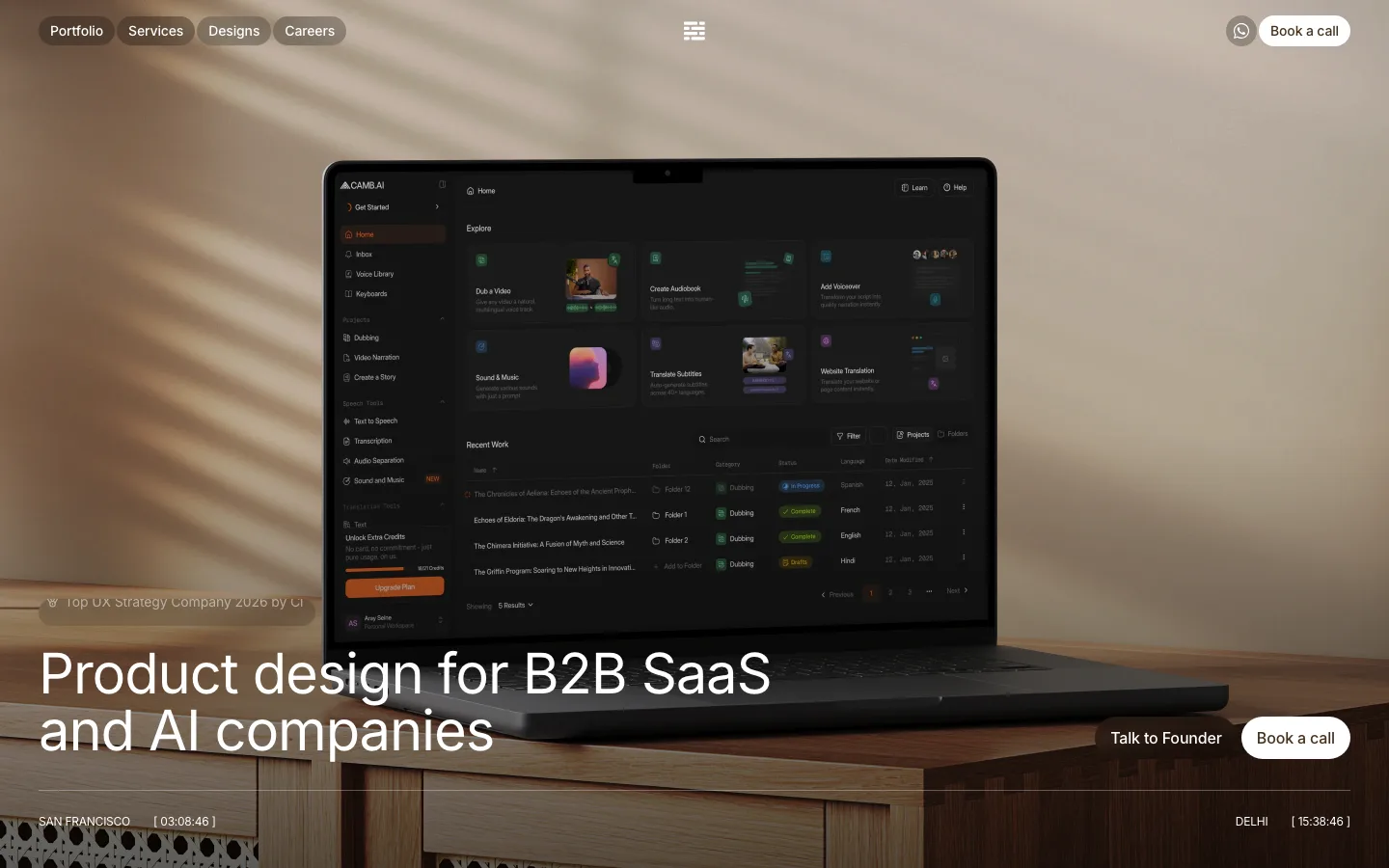
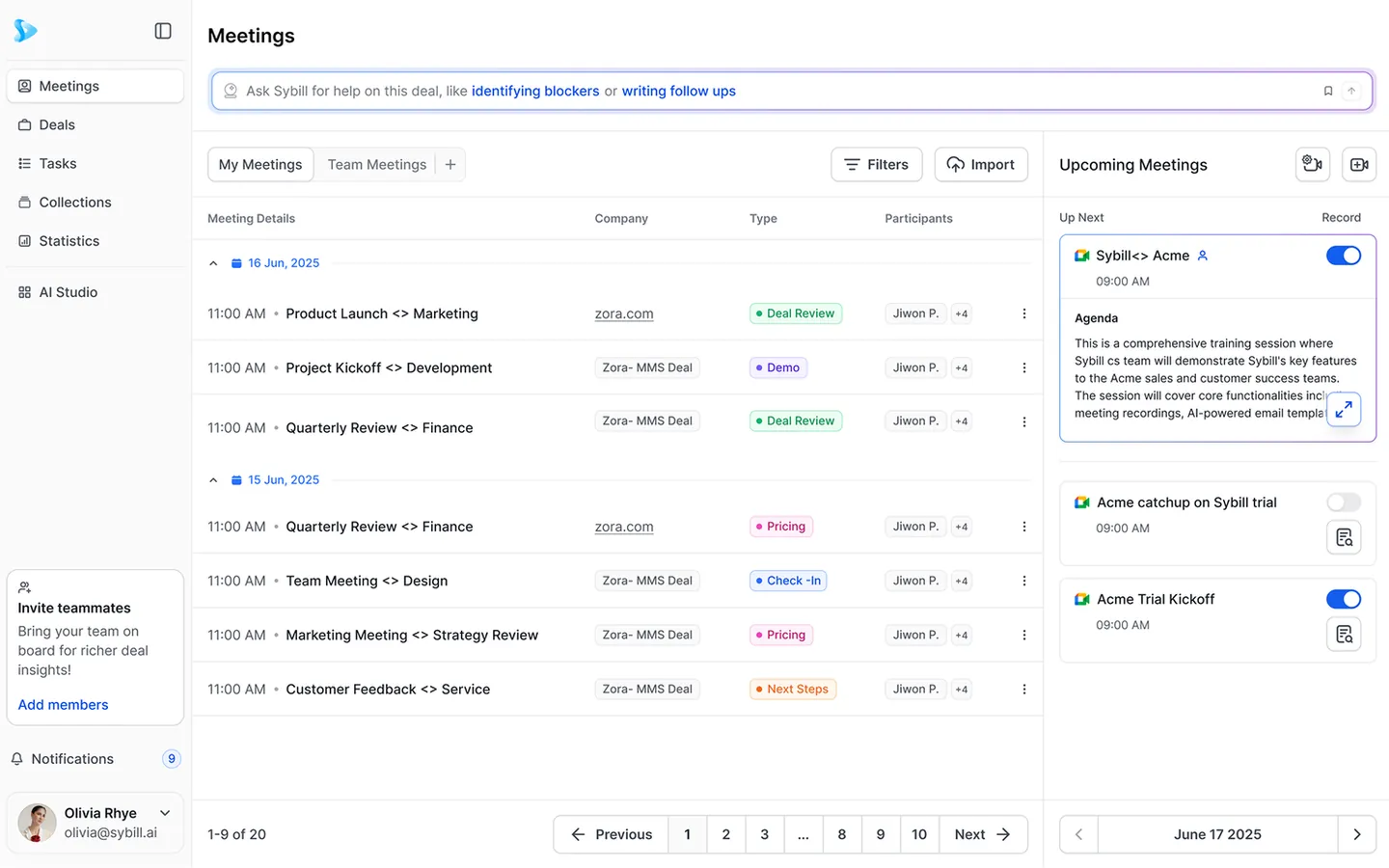
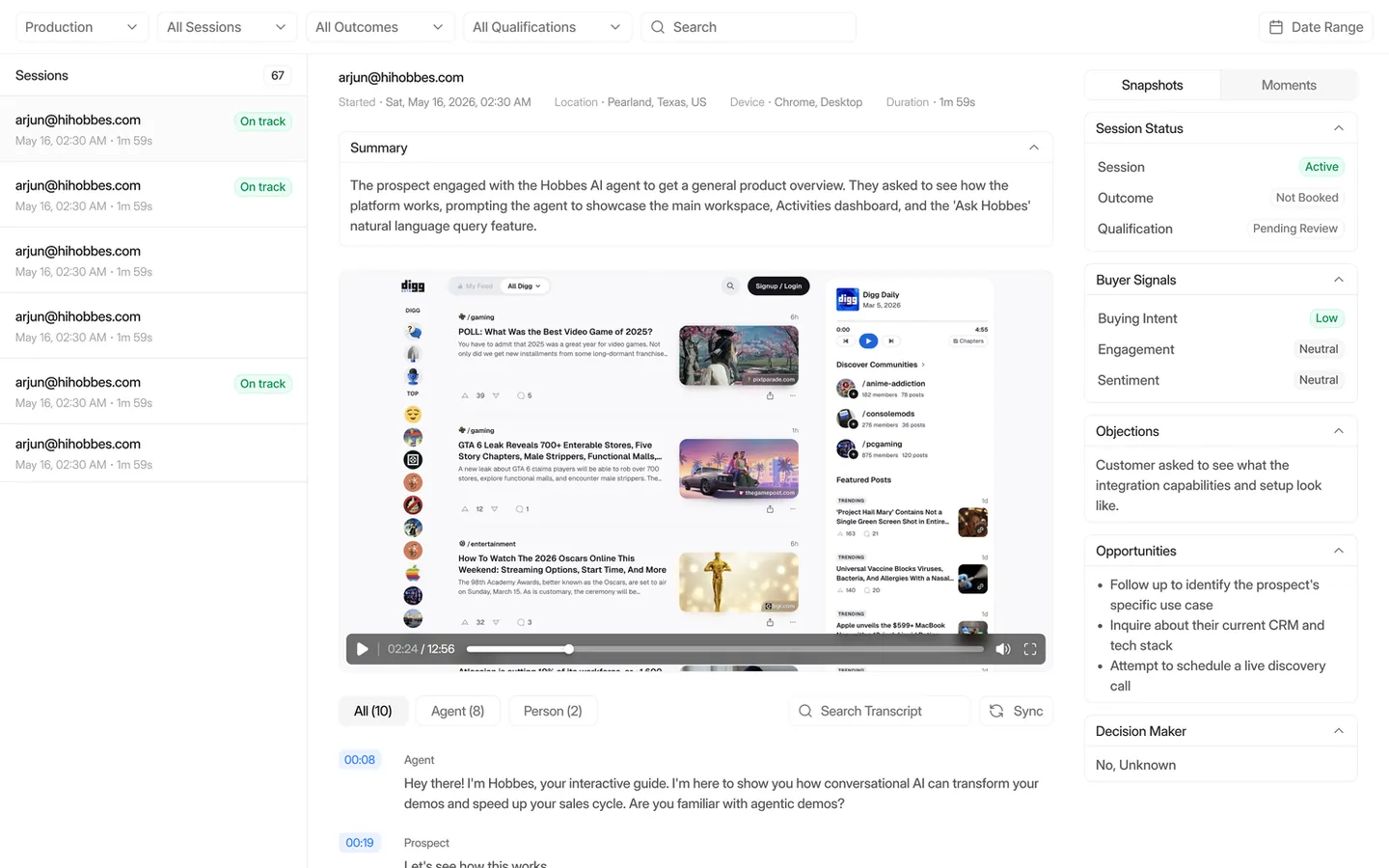
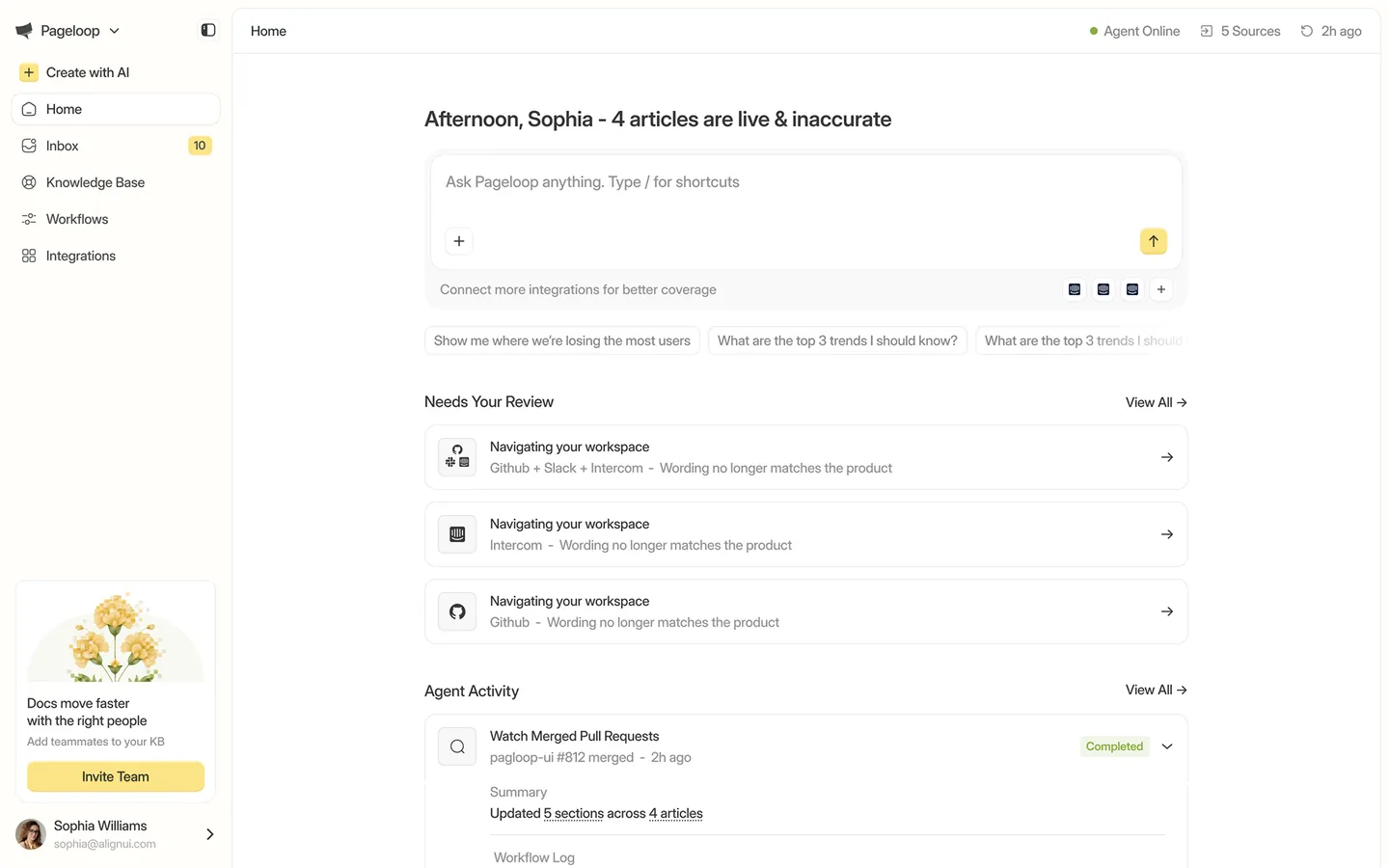
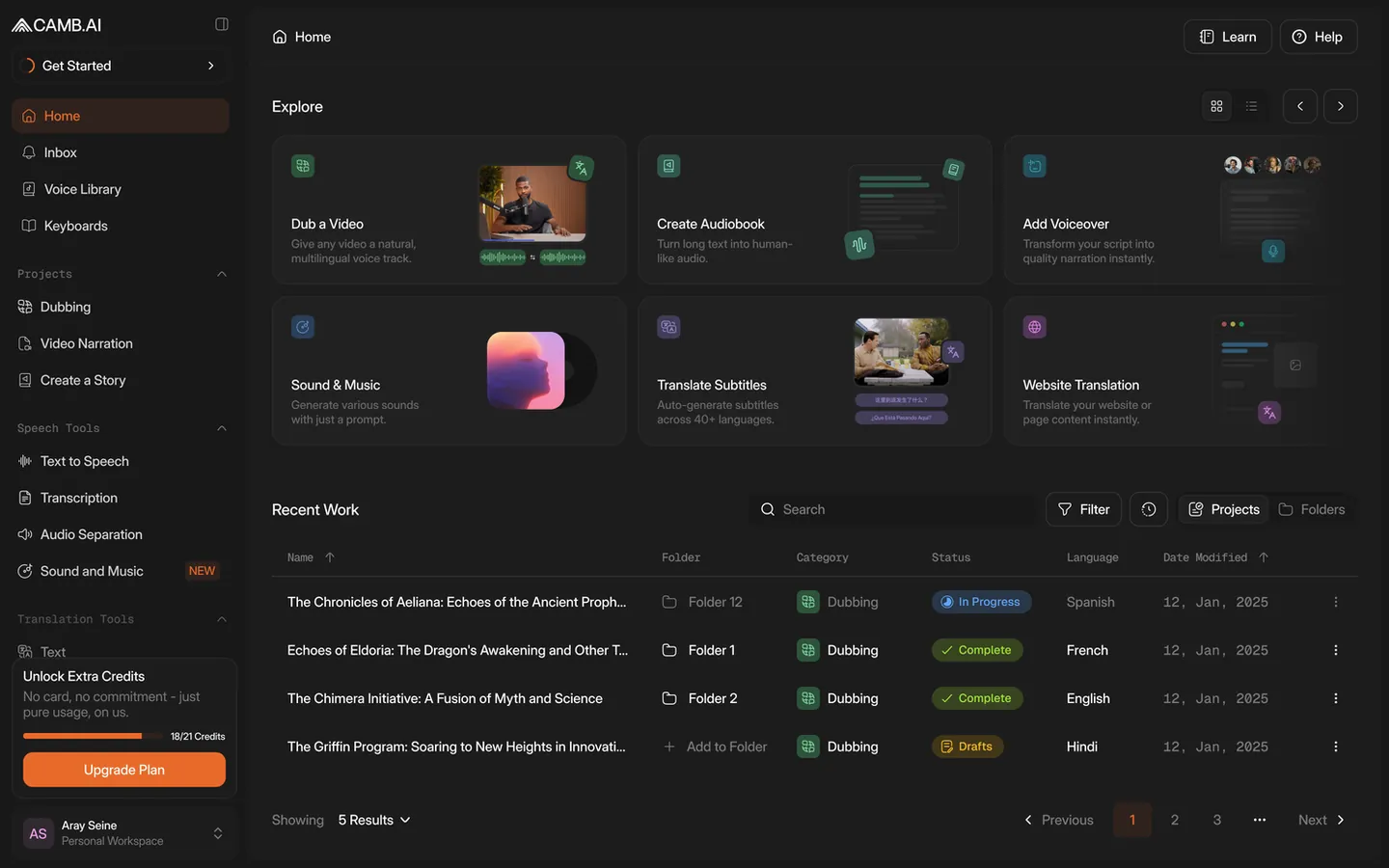
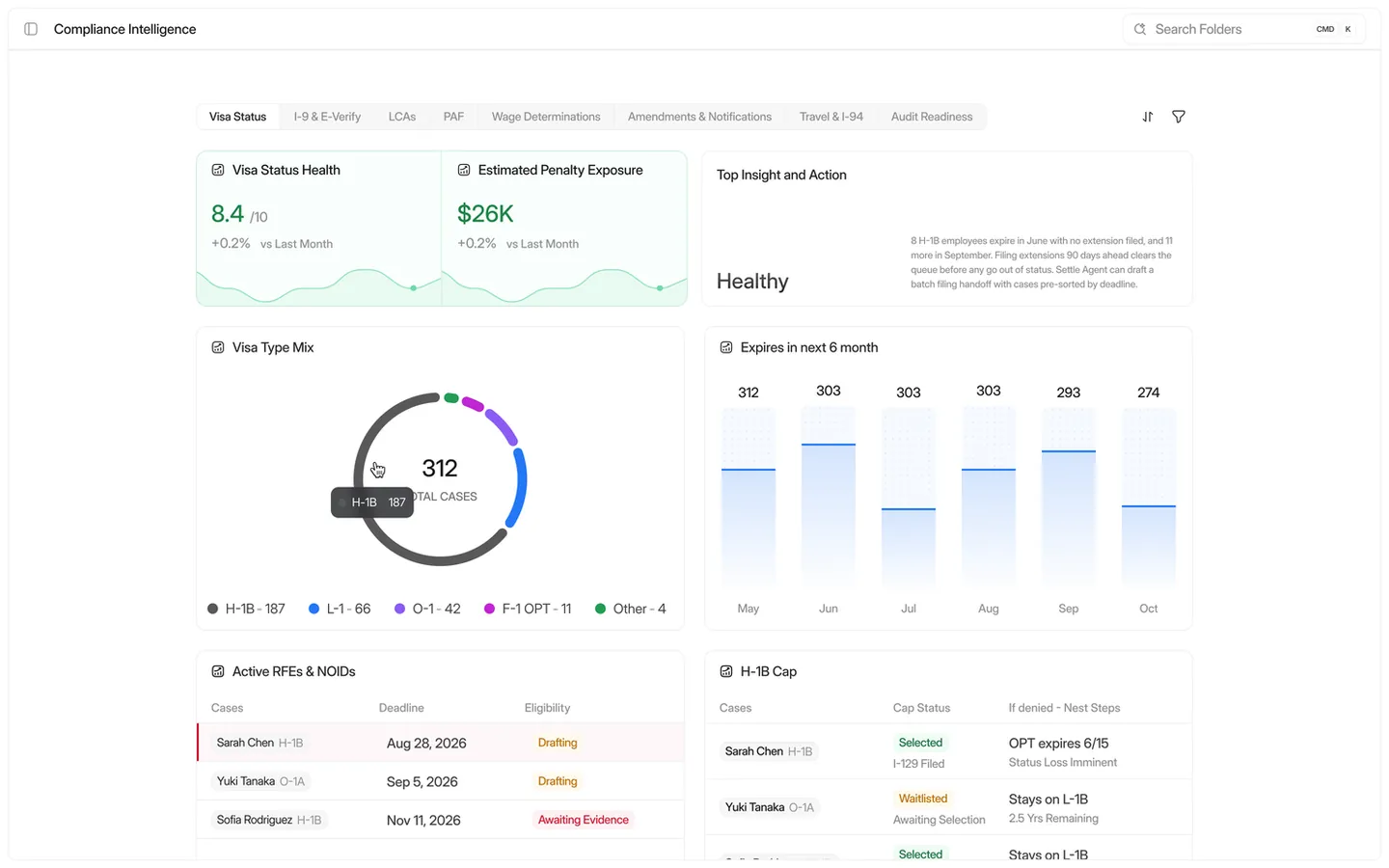
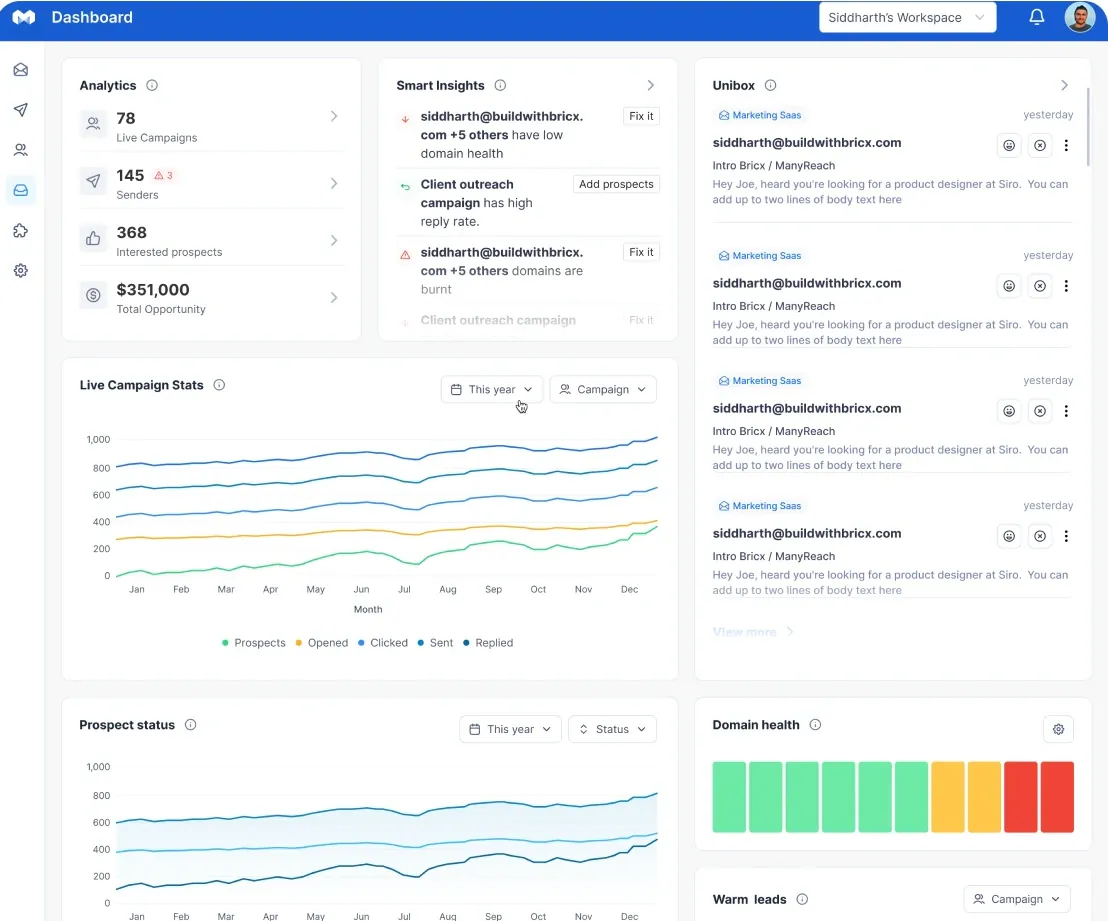
Bricx is the best UX design agency for B2B and AI SaaS companies with a complex product, from AI-native tools to enterprise platforms with many user roles. Its UX audits combine a heuristic review, analytics and user interviews, and its redesigns are tested with users before engineering builds them. Bricx redesigned onboarding for Procol's procurement platform, took Pageloop's AI knowledge base from AI prototype to developer-ready design, and audited and unified the design across Avantpage's custom apps.
Bricx UI/UX design examples: B2B SaaS and AI product screens
Services
- UX audits. A heuristic evaluation, analytics review and user interviews, in one week for a marketing site or two for a product, free when it opens an engagement, with the UX audit ending in a ranked list of fixes.
- Product design. Research with the people using the product and the people who stopped, then information architecture, flows and every screen and state. The product design work ends with a component library mapped to code.
- Product redesign. Every product redesign opens with an audit at no cost, and the new structure goes in front of real users at wireframe stage, before engineering commits.
- AI MVP design and build. An AI MVP starts with a clickable prototype and ships a working front end in two-week cycles.
- Design team extension. A senior designer backed by a design lead joins the product team on a monthly design team extension, covering product, web and motion.
- Design systems. Design systems are built on shadcn/ui with a custom visual layer, so engineers and AI coding tools can build new screens from them.
Pricing
Bricx prices a defined scope as a fixed project, so the cost is agreed before work starts, and moves ongoing product work to a monthly retainer.
- Entry point: fixed-scope projects from $25,000.
- How work is billed: fixed-scope projects, monthly retainers from $10,000, embedded teams, and paid pilot sprints of a week or one defined milestone.
- Published prices: $25,000+ projects and $10,000/month retainers, month to month with fifteen days' notice; $50 to $99 an hour on Clutch.
- Budget guide: the $25,000 entry sits below the benchmark's $43,000 median for an MVP design, and the retainer covers a senior designer backed by a design lead.
What clients liked
- Clutch rating: 5.0/5 across 32 reviews, with 5.0 for quality, schedule and cost on the Procol, Pageloop and Writesonic reviews.
- Higher activation. At Procol, a procurement SaaS company, redesigned onboarding flows improved user activation and feature adoption, its product manager wrote, and Bricx delivered production-ready designs for a supplier portal, a purchase request dashboard and analytics tools.
- Faster activation at Writesonic. A redesigned onboarding raised user activation within the first week, and new AI writing tools designed by Bricx saw more use.
Our prototype-to-production time has been rapidly cut down since working with Bricx. What used to take weeks now takes days, sometimes even hours.
Limitations
- Bricx works only with software companies.
- Projects start at $25,000, so smaller budgets are out of range.
UX audit and redesign
Find where users get stuck, then fix it.
Bricx audits B2B SaaS and AI products with a heuristic review, analytics and user interviews in one week for a site or two for a product, then redesigns the flows and tests them with users. Projects start at $25,000.
2. Neuron
- Starting price
- $25,000+
- Hourly rate
- $150 to $199
- Clutch
- 4.9/5, 53 reviews
- Team and HQ
- 10 to 49 people, San Francisco, CA
- Research and testing
- Heuristic evaluations, user interviews and usability testing inside a 3 to 4 week product strategy phase
- Builds the product
- Partly; front-end support from UX engineers and design systems synced to code, with full builds handed to the client's developers or a partner agency
- Engagement model
- Projects, team augmentation and embedded design teams, billed as time and materials in 2-week sprints
- Typical timeline
- Product strategy in 3 to 4 weeks; Vendr's embedded engagement ran four months
- Best for
- Enterprise and B2B SaaS products in finance, AI, project management and analytics that need senior UX and UI on dense workflows
- Not a fit for
- Teams that want one vendor to build the whole application
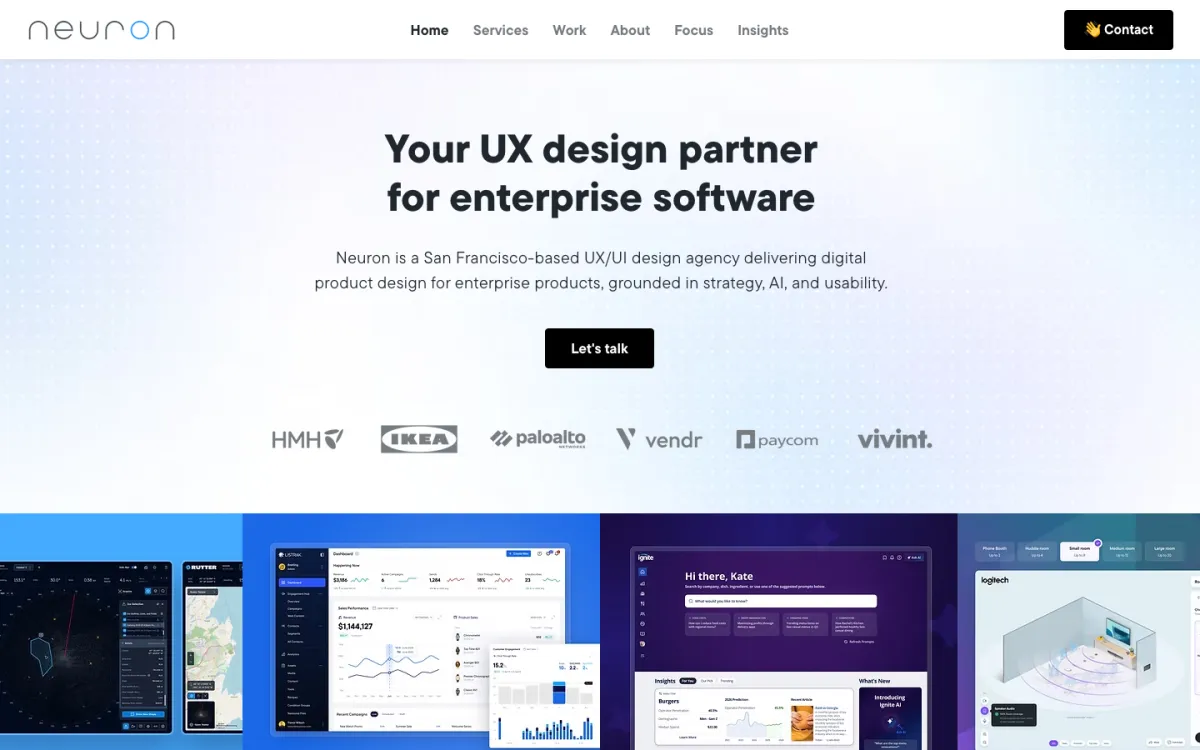
Neuron is a San Francisco UX and UI studio for enterprise software. For Listrak, a marketing automation platform, it ran 13 interviews with customers and internal users and reviewed 15 competitors before rebuilding the navigation from 118 items to 16, and it designed Vendr's workflow and form builders as an embedded partner.
Services
- Product strategy. A strategy phase of three to four weeks before design starts.
- UX and UI design. Research, wireframes, prototypes, data visualisation, AI design and usability testing, through to developer handoff and design QA.
- DesignOps. Design systems synced into code; for HMH it built a token sync from Figma to Storybook.
Pricing
Neuron bills time and materials in two-week sprints, with lower rates for longer partnerships.
- Entry point: $25,000+ on Clutch, usually starting with a 3 to 4 week strategy phase.
- How work is billed: time and materials, for project work, team augmentation or an embedded team.
- Published prices: quoted after scoping; $150 to $199 an hour on Clutch.
- Budget guide: its rate is about twice the benchmark's $55 to $90 median, in line with the roughly $150 an hour the report puts on US teams.
What clients liked
- A simpler product. Listrak's navigation went from 118 items to 16 after the redesign, and its customers now maintain half as many emails.
- Embedded on a live roadmap. For Vendr, a SaaS procurement platform, Neuron worked as an embedded design partner on a workflow builder, a form builder and request tracking, and handed the designs to Vendr's own developers.
Limitations
- Full builds sit with the client's engineers or a partner agency, so it fits best where a development team already exists.
- Billing by time and materials suits ongoing work more than a fixed budget for a defined MVP.
- One product manager found it hard to track which reviews were still open while Neuron kept editing, so agree a review log at the start.
3. Qubstudio
- Starting price
- $10,000+
- Hourly rate
- $50 to $99
- Clutch
- 4.9/5, 93 reviews
- Team and HQ
- 50 to 249 people, Lviv, Ukraine
- Research and testing
- UX audits, user research and usability testing sold as services
- Builds the product
- Partly; development is listed as a service, while its featured product work is design-led
- Engagement model
- Fixed-price UX sprints, dedicated teams, time and materials
- Typical timeline
- A UX audit in up to 2 or 4 weeks; research from 1 month; design systems 2 to 6 months
- Best for
- Fintech, banking and HR SaaS platforms that need research-led UX on long engagements
- Not a fit for
- Teams that want one partner to build the whole product
Qubstudio is a digital product design agency in Lviv, strongest in fintech, banking and B2B platforms. It rebuilt BluePallet's chemical marketplace from the ground up with a design system, designed 445 new screens for the HR platform Workforce Velocity, and designed three AI recruiting products for Wade & Wendy.
Services
- UX audits. A health check in up to two weeks, or a strategic product audit in up to four.
- User research and usability testing. Interviews, surveys, usability tests, A/B tests and heatmaps, from one month.
- Design systems and DesignOps. Systems built over two to six months, depending on complexity.
Pricing
Qubstudio publishes durations for its audits and research, and prices each project after scoping.
- Entry point: a fixed-price UX sprint with a defined scope, or $10,000+ on Clutch.
- How work is billed: fixed-price sprints, dedicated teams or time and materials.
- Published prices: quoted after scoping; $50 to $99 an hour on Clutch.
- Budget guide: its rate sits inside the benchmark's $55 to $90 median band, and its featured engagements run a year or more.
What clients liked
- More engaged users. BluePallet's DAU/MAU ratio rose 151% and its users grew 20% after the rebuild.
- Faster hiring work. For Wade & Wendy, preparing a vacancy took five times less time.
- Flows that get finished. Workforce Velocity's redesigned flows reached a 94% completion rate.
Limitations
- Its portfolio leans on fintech and banking, so ask for work in your category.
- Its featured engagements run a year or more, which suits a long product roadmap more than a short sprint.
- One UX lead noted a ramp-up period on a specialised, complex product, plus a time-zone gap, so budget time for onboarding the team.
4. Cieden
- Starting price
- $10,000+ on Clutch; from $50 an hour
- Hourly rate
- $50 to $99 ($50 for Europe-based designers, $80 for US and Canada)
- Clutch
- 4.9/5, 46 reviews
- Team and HQ
- 10 to 49 people, Toronto, Canada
- Research and testing
- Fixed-price UX audits with moderated and unmoderated usability tests; standalone user research
- Builds the product
- Yes; web app development in React, Vue, Node.js and Python, with design engineers on build projects
- Engagement model
- Hourly projects, a fixed monthly rate for 6+ month partnerships, team extension from $7,200 per person a month, a free 3-day trial
- Typical timeline
- Microprojects up to a month, short projects around 3 months, longer projects 6 months or more
- Best for
- B2B SaaS teams with complex, multi-role platforms that want designers embedded on a monthly basis
- Not a fit for
- Teams that want a quick visual refresh with no research or discovery
Cieden designs complex B2B platforms and sells fixed-price UX audits that include moderated and unmoderated usability tests. It redesigned Sitenna's telecom site-acquisition platform over 18 months, after which Sitenna raised $5.1 million, and prototyped AI assistants for Way2B1's wealth management platform.
Services
- Product design. UX and UI design, UX strategy and consulting for B2B and SaaS platforms.
- UX audits. Fixed-price audits of five to eight days before a redesign.
- Web app development. Design and build together; for an interior design firm it designed and developed a multi-role SaaS platform in 6 to 8 weeks.
Pricing
Cieden publishes one of the most detailed rate cards on this list, with fixed prices for small first steps and hourly or monthly billing after that.
- Entry point: a UX audit from $2,000, scope definition from $3,500, product discovery from $6,500 or a design sprint from $7,000.
- How work is billed: hourly, a fixed monthly rate for partnerships of six months or more, or team extension per person.
- Published prices: from $50 an hour for Europe-based designers and $80 for US and Canada; team extension at $7,200 a month per person, or from $11,520 in the US and Canada. If a fixed-scope project overruns, billing drops to 50% of the rate. On Clutch: $10,000+ minimum and $50 to $99 an hour.
- Budget guide: team extension sits near the benchmark's $7,000 monthly median, and the fixed first steps let you test the team for under $10,000.
What clients liked
- Funding after a redesign. Sitenna secured $5.1 million after Cieden's redesign and cut site acquisition from months to weeks.
- Speed on AI work. For Way2B1, prototyping in AI tools cut decision time from weeks to days, at a pace of one or two flows a week.
Limitations
- Most work is billed by the hour or by the month, so the total depends on how the scope moves.
- Its fixed monthly rate is for partnerships of six months or more.
- Its weekly time reports are detailed, and one CTO would have preferred a shorter summary.
5. Eleken
- Starting price
- $10,000+ on Clutch; subscriptions from $4,599 a month
- Hourly rate
- $25 to $49
- Clutch
- 4.9/5, 128 reviews
- Team and HQ
- 50 to 249 people, Kyiv, Ukraine
- Research and testing
- Fixed-price expert UX audit with analytics review; user interviews in consulting work
- Builds the product
- Partly; product design engineering delivers the front end as pull requests, and the client's developers connect the back end
- Engagement model
- Monthly design subscription (2-month minimum), fixed-price UX audit, a free 3-day trial
- Typical timeline
- Most MVP designs take about two months; a focused UX audit 2 to 3 weeks
- Best for
- B2B SaaS teams with engineers that need product designers every month
- Not a fit for
- Teams without engineers that need the back end built
Eleken is a UI/UX team for B2B SaaS with a fixed-price UX audit built on analytics and expert review. After it redesigned NWORX's learning platform from earlier user feedback, positive feedback on the interface rose 200%, and its redesign of Zaplify (now AndSend) lifted activation to nearly 40%.
Services
- Product redesign. Redesigns of live SaaS products in increments; Aampe's ran in three-week sprints.
- UX audits. A fixed-price audit before a redesign, with the fee covering the rest of that month if the work continues.
- Product design engineering. Working React or HTML prototypes every one to three days, and the front end delivered as a Git project.
Pricing
Eleken sells designer capacity by the month, so the price depends on how many designers you need and for how long.
- Entry point: a free three-day trial on one or two screens, then a two-month minimum.
- How work is billed: a monthly subscription, cancelled with a month's notice, or a fixed-price UX audit.
- Published prices: $4,599 a month for a part-time designer, $6,599 for a full-time designer and $11,999 for two; a UX audit at a fixed $6,599 in two to three weeks; $10,000+ minimum and $25 to $49 an hour on Clutch.
- Budget guide: one full-time designer sits just under the benchmark's $7,000 monthly median, and the two-month minimum puts a first engagement with one full-time designer at about $13,200.
What clients liked
- Higher activation. Activation at Zaplify, now AndSend, rose from 20 to 25% to nearly 40% after the redesign.
- Funding after a redesign. Aampe raised $18 million and Datawisp $3.6 million after their redesigns.
Limitations
- The back end stays with the client's developers, so it fits teams that already have engineers.
- Every plan has a two-month minimum, and cancelling needs a month's notice.
- One product designer wanted more visible senior oversight day to day, so ask how the head of design reviews the work.
6. UX Studio
- Starting price
- $10,000+
- Hourly rate
- $50 to $99
- Clutch
- 5.0/5, 41 reviews
- Team and HQ
- 50 to 249 people, Budapest, Hungary
- Research and testing
- Standalone user research, UX audits and usability testing, with participant recruiting
- Builds the product
- Yes, for products it designs; front end in React and TypeScript, back end in Java and Kotlin
- Engagement model
- Embedded teams (3-month minimum), fixed-price projects or a rate card, an optional free 5-day trial
- Typical timeline
- First designs inside the first sprint; complex SaaS builds take several months or longer
- Best for
- B2B and vertical SaaS teams that want research, product design and usability testing from one dedicated team
- Not a fit for
- Teams that want a short engagement without a 3-month embedded commitment
UX Studio is a Budapest UX research and design team for B2B and vertical SaaS, and it recruits research participants itself; its site counts more than 300 facilitated interviews and 300 user tests. Its work includes Oversee AI's model-monitoring dashboard for insurers and Duck Creek's low-code predictive model builder.
Services
- Research and audits. User interviews, usability testing and UX audits, sold as services in their own right.
- Development. Front end in React and TypeScript and back end in Java and Kotlin, for products UX Studio has designed.
- Consultancy and training. Design systems, team assessments and training for in-house design teams.
Pricing
UX Studio quotes a fixed price or a rate card after scoping, and most long-running work sits on an embedded team.
- Entry point: $10,000+ on Clutch, after an optional free five-day trial.
- How work is billed: a fixed-price project, or an embedded team with a 3-month minimum.
- Published prices: quoted after scoping; $50 to $99 an hour on Clutch.
- Budget guide: its rate sits inside the benchmark's $55 to $90 median band, and the 3-month minimum means budgeting for a quarter of team time on embedded work.
What clients liked
- AI products in weeks. For Inquisita, a legal AI tool for drafting discovery responses, UX Studio delivered a tested prototype, a design system and the brand in 8 weeks.
- Long redesigns. IncQuery's suite redesign ran a year and a half and won a Red Dot award.
Limitations
- An embedded team has a minimum term of 3 months, by its own terms.
- Its clients are mainly in the UK and Western Europe, so US teams should agree review times early.
- On a complicated build, one client's project ran a month past its budgeted time, so leave room in the plan for complex products.
7. Fuzzy Math
- Starting price
- $25,000+
- Hourly rate
- $150 to $199
- Clutch
- 4.9/5, 28 reviews
- Team and HQ
- 10 to 49 people, Highland Park, IL; offices in Chicago and Toronto
- Research and testing
- Standalone user research, usability testing and UX assessments
- Builds the product
- Front-end HTML and CSS ready for production; the application build stays with the client's engineers
- Engagement model
- One-week starter engagements, then projects and long-term partnerships
- Typical timeline
- Starter engagements run one week; projects are scoped after that
- Best for
- Enterprise and B2B SaaS products with dense workflows and many screens
- Not a fit for
- Startups that need the whole product built by the design partner
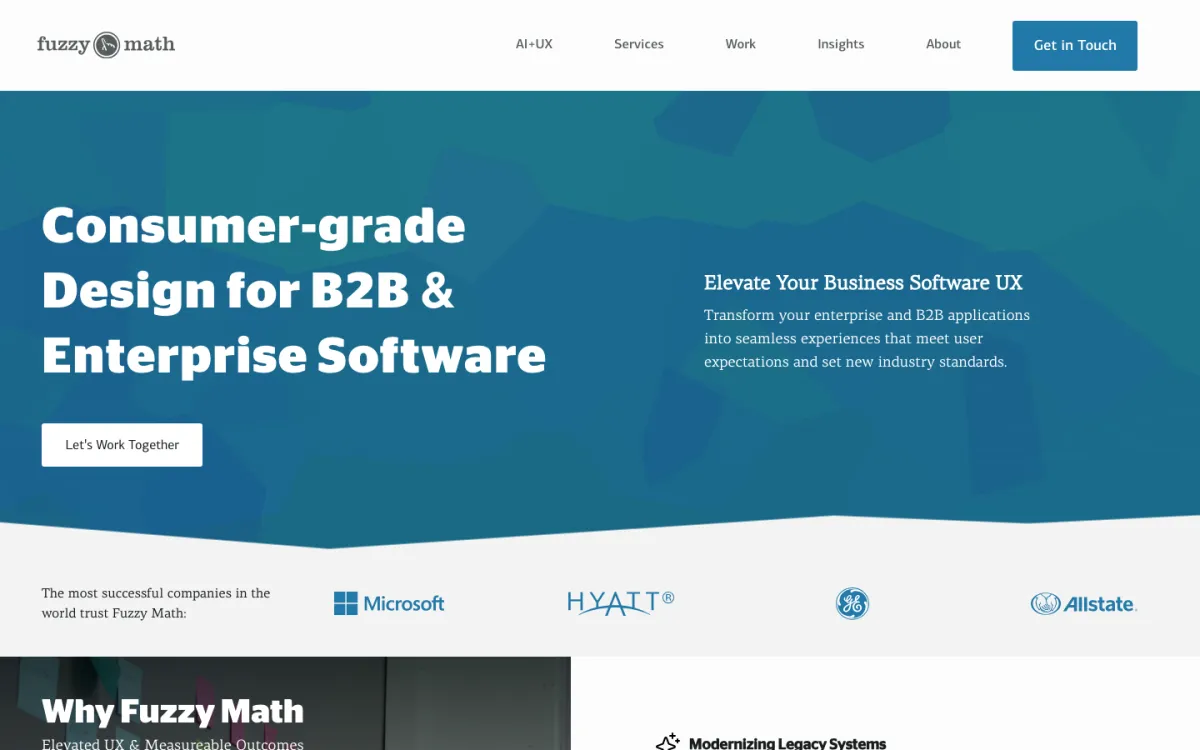
Fuzzy Math is a UX consultancy for B2B and enterprise software that sells user research and usability testing as services of their own. Its redesign of Interactive Health's benefits platform, built on research with the client's own users, raised usability by 74%, and it has been SAP Fieldglass' design partner since 2010.
Services
- AI integration UX. Design for AI features added to existing enterprise products.
- Research and strategy. UX research, digital product strategy and digital transformation work.
- UX team building. UX organisation design, training and help hiring in-house designers.
Pricing
Fuzzy Math starts with a one-week engagement, then scopes the project or partnership from what that week finds.
- Entry point: an AI-in-design training, a strategy workshop or a UX and competitive evaluation, each a week long.
- How work is billed: scoped projects and long-term partnerships after the starter week.
- Published prices: quoted after the starter engagement; $25,000+ and $150 to $199 an hour on Clutch.
- Budget guide: its rate is about twice the benchmark median, typical of US enterprise UX consultancies, and the starter week is the low-risk way in.
What clients liked
- Engagement after launch. On a data security platform, user engagement rose 20% in the first six months after launch.
- Long partnerships. SAP Fieldglass has worked with Fuzzy Math on its web, tablet and mobile interfaces since 2010.
Limitations
- Its engineering stops at front-end code, so the application needs another build team.
- At $150 to $199 an hour, it suits enterprise budgets more than early-stage ones.
- Some of its outcome case studies leave the client unnamed, so ask for references in your category.
8. Excited
- Starting price
- $10,000+
- Hourly rate
- $50 to $99
- Clutch
- 5.0/5, 56 reviews
- Team and HQ
- 10 to 49 people, Lviv, Ukraine
- Research and testing
- Standalone UX audits, plus user interviews and usability testing in UI/UX projects
- Builds the product
- Websites in Webflow; app builds go to the client's engineers or a development partner
- Engagement model
- Projects scoped by proposal, ongoing design support, and embedded work for enterprise teams
- Typical timeline
- Most UI/UX projects take 4 to 8 weeks, with kickoff in 1 to 2 weeks
- Best for
- Seed and Series A SaaS teams that want web app design and a Webflow marketing site from one studio
- Not a fit for
- Teams without engineers that need the app built by the same team
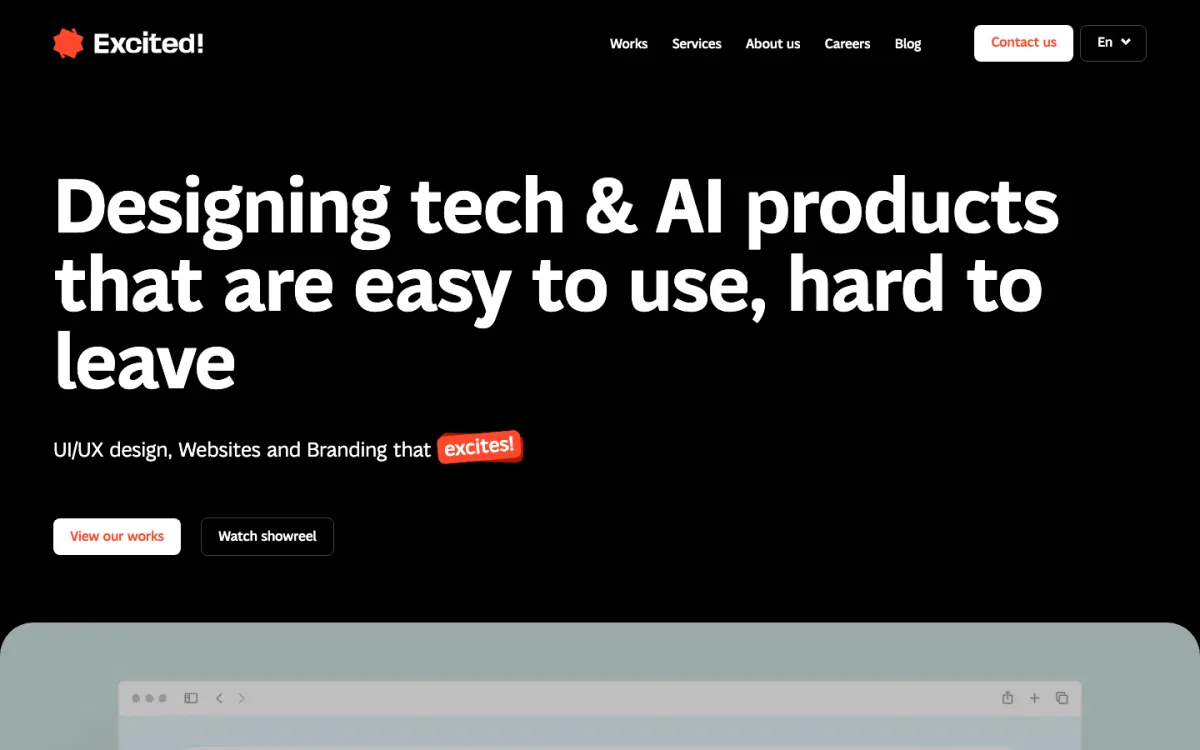
Excited is a Lviv product design studio that sells standalone UX audits starting from analytics, session recordings and user feedback. It redesigned Xilo's insurance web app with usability testing, designed Ravel's B2B data platform from scratch and revamped ClubReady's scheduling product.
Services
- Product design. Research, UX audits, UX and UI, prototyping, testing and design systems for web and mobile apps.
- Web production. Marketing sites designed and built in Webflow.
- Branding and motion. Brand identity, visuals and motion for product launches.
Pricing
Excited prices each project by proposal.
- Entry point: $10,000+ on Clutch.
- How work is billed: scoped projects, with ongoing design support after launch.
- Published prices: quoted per proposal; $50 to $99 an hour on Clutch.
- Budget guide: its rate sits inside the benchmark's $55 to $90 median band, lower than most US-based studios on this list.
What clients liked
- Apps from scratch. For Ravel, a B2B data platform, Excited designed a working web app from scratch in five months.
- Long relationships. Its work with Xilo has run since April 2020, across the product, the design system and the website.
Limitations
- It has no in-house app engineers, so the product build needs the client's team or a partner.
- It takes on only a few projects at a time, so the start date depends on its pipeline.
- One US client wanted deeper competitor analysis behind some of the designs, so share the competitors and price points you care about in the brief.
9. HTEC Momentum (Momentum Design Lab)
- Starting price
- $25,000+
- Hourly rate
- $150 to $199
- Clutch
- 4.8/5, 97 reviews
- Team and HQ
- 1,000 to 9,999 people (as part of HTEC), Palo Alto, CA
- Research and testing
- User and customer research, and UX assessments of live products
- Builds the product
- Partly; product and platform engineering is listed through HTEC, while its featured B2B work ends in prototypes and design systems
- Engagement model
- Projects and long-term product partnerships
- Typical timeline
- Scoped per project
- Best for
- Enterprise and data-heavy B2B platforms that need research-led redesigns and AI-UX
- Not a fit for
- Seed-stage teams on a tight budget
HTEC Momentum, formerly Momentum Design Lab and now part of the engineering firm HTEC, designs enterprise and B2B platforms. It redesigned Sifted's AI supply chain platform with health-score dashboards and AI recommendations, Coalfire's compliance platform and Technomic's market data platform, where the work grew into a partnership on new features and dashboards.
Services
- Experience design. UX and CX design, AI-UX design and agentic AI workflows.
- Research and assessment. User and customer research, and UX assessment and optimisation of live products.
- Tech strategy and delivery. Data and AI strategy, plus product and platform engineering through HTEC.
Pricing
HTEC Momentum scopes each project after a first conversation.
- Entry point: $25,000+ on Clutch.
- How work is billed: projects and long-term product partnerships.
- Published prices: none; its contact form's budget options start below $50,000 and run past $250,000. $150 to $199 an hour on Clutch.
- Budget guide: its rate is about twice the benchmark's $55 to $90 median, in line with senior US teams.
What clients liked
- AI interfaces. It redesigned the AI interface and app of Zingtree, a customer-experience automation company, whose CTO reviewed the work on Clutch.
- Enterprise clients. Its client logos include Wells Fargo, Salesforce, Mastercard and Deloitte.
Limitations
- Its featured B2B case studies publish no outcome numbers, so ask for before-and-after data from a comparable project.
- At $150 to $199 an hour, it suits enterprise budgets more than early-stage ones.
- One startup CEO wanted a leaner team than its standard structure, so agree the team size up front.
10. Arounda
- Starting price
- $25,000+ on Clutch; projects from $6,000
- Hourly rate
- $25 to $49
- Clutch
- 5.0/5, 87 reviews
- Team and HQ
- 10 to 49 people, Odesa, Ukraine
- Research and testing
- Standalone UX audits and UX research, including usability testing
- Builds the product
- Yes; MVP and web development, with full-time developers on monthly plans
- Engagement model
- Sprint-based projects, MVP tiers, monthly designer and developer plans, a 3-day free trial on designer plans
- Typical timeline
- 4 to 8 weeks for a UI/UX project; 12+ weeks for an MVP designed and built
- Best for
- Seed-stage teams that need an MVP designed and built on a known budget
- Not a fit for
- Teams that need a full MVP designed and built in under three months
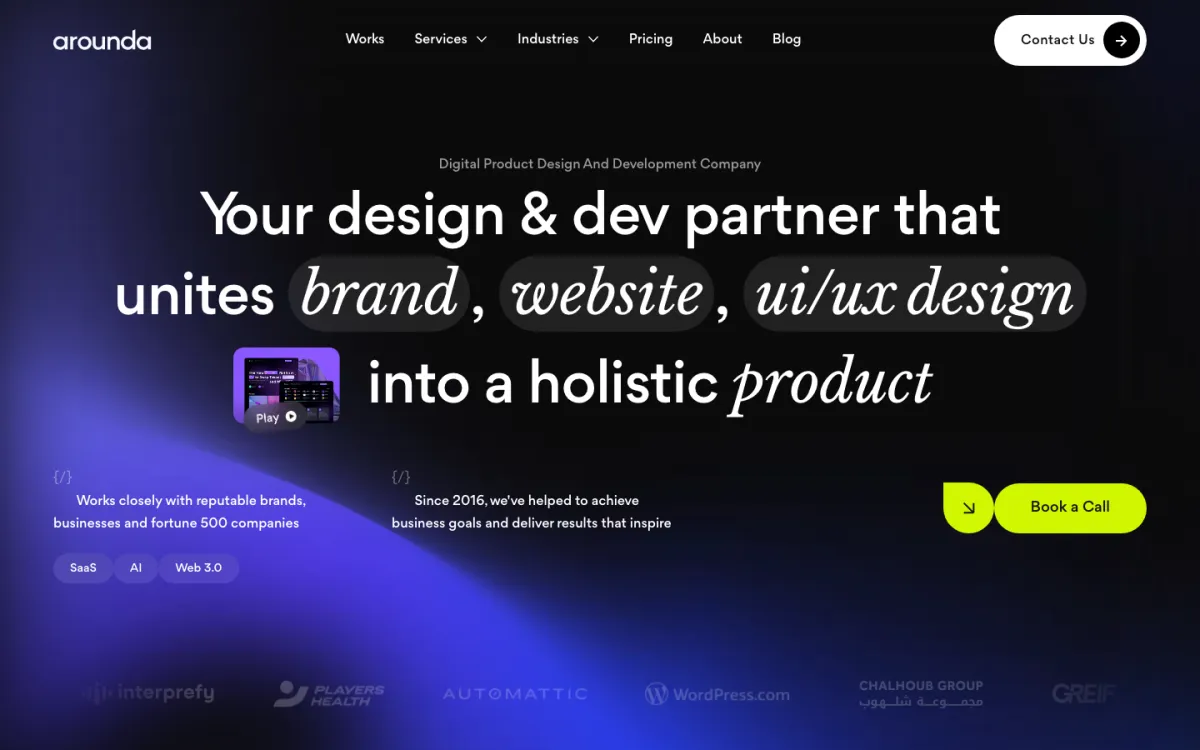
Arounda sells standalone UX audits and UX research, including usability testing, alongside design and development. For NetGet, a marketplace platform, a UX audit and wireframes came before the redesign, which it reports made navigation 55% faster, and it merged MOJO-CX's three products into one AI contact-centre platform.
Services
- MVP design and development. MVP tiers from one or two core features up to complex fintech, Web3 and healthcare products.
- Product redesign and UX audits. Redesigns of live products, often after an audit.
- Branding and websites. Brand identity, pitch decks and website design and development.
Pricing
Arounda publishes its MVP price tiers, which few agencies on this list do.
- Entry point: typical projects from $6,000; $25,000+ on Clutch.
- How work is billed: sprint-based projects, MVP tiers, or monthly designer and developer plans that can be paused or cancelled any time.
- Published prices: MVPs at $10,000 to $20,000 (lean), $30,000 to $50,000 (mid-range) and $50,000 to $80,000+ (complex); $25 to $49 an hour on Clutch.
- Budget guide: the mid-range tier brackets the benchmark's $43,000 median, and its hourly rate is the joint-lowest on this list with Eleken and Halo Lab.
What clients liked
- A platform merge. After MOJO-CX moved to one platform, agent productivity rose 31% and onboarding got 42% faster.
Limitations
- A full MVP design and build takes 12 weeks or more, which suits teams without a hard launch date.
- Its portfolio leans on Web3 and fintech (15 cases each) more than SaaS (9).
- One client wanted a more structured follow-up after handover, so agree post-launch support before the project ends.
11. Ramotion
- Starting price
- $50,000+
- Hourly rate
- $150 to $199
- Clutch
- 4.9/5, 29 reviews
- Team and HQ
- 10 to 49 people, San Francisco, CA
- Research and testing
- UX audits and user research inside paid product discovery
- Builds the product
- Yes; redesign teams include front-end and back-end developers, DevOps and QA
- Engagement model
- Fixed-price discovery, milestone product redesigns, embedded design support (3-month minimum), product delivery pods
- Typical timeline
- Discovery in 4 to 8 weeks, then an initial delivery phase of 3 to 6 months
- Best for
- Brand-led product redesigns and launches with a budget of $50,000 or more
- Not a fit for
- Budgets under $50,000, or a product-only brief with no brand work
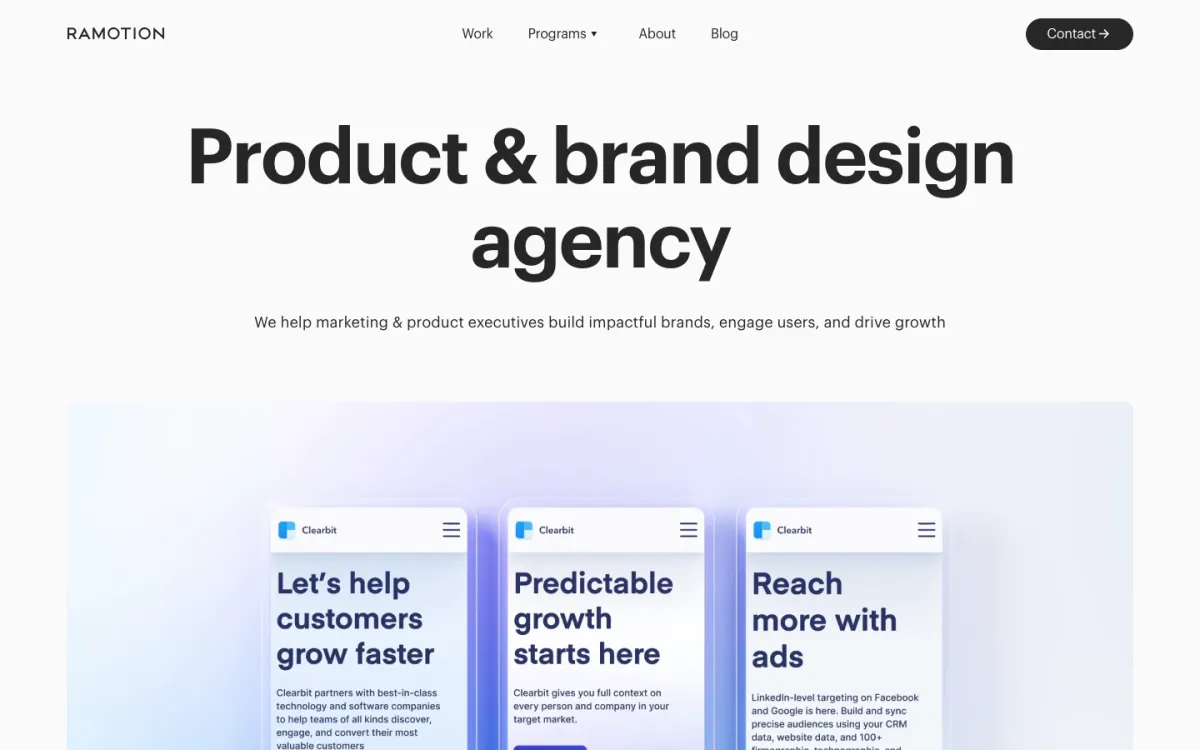
Ramotion is a product and brand studio that bundles UX audits and user research into paid product discovery. Analytics showed only 21% of Turo's users found what they needed in its support portal; after Ramotion restructured it, the self-service score rose 58%. It also built Upstream's carbon management platform from the ground up.
Services
- Product programmes. Product discovery, redesign and delivery, each sold as its own programme.
- Web app development. Front-end and back-end engineering, DevOps and QA within redesign and delivery teams.
- Brand and websites. Branding, brand strategy, web design and iconography.
Pricing
Ramotion publishes its product design prices in more detail than most studios, starting with a paid discovery phase.
- Entry point: a $35,000 fixed-price discovery, the first phase of its product redesign programme.
- How work is billed: milestone product redesigns, embedded design support with a 3-month minimum, and product delivery pods.
- Published prices: a $50,000 minimum project; milestone redesigns from $50,000 to $150,000+; embedded design at $9,500 a month part-time or $16,800 full-time; delivery pods from $10,000 to $45,000 a month; $50,000+ minimum and $150 to $199 an hour on Clutch.
- Budget guide: discovery alone comes close to the $43,000 MVP median, so it fits funded redesigns more than first MVPs.
What clients liked
- Easier self-service. After Ramotion restructured Turo's support portal, its self-service score rose 58% and support overflow fell 30%.
- Zero to one. Upstream's brand, UI and web app came from one Ramotion team.
Limitations
- Its $50,000 minimum and $35,000 discovery phase put it above most Seed budgets.
- Embedded design support carries a 3-month minimum.
- One client felt research and proposals took time away from delivery, so set delivery milestones early.
12. Clay
- Starting price
- $50,000+
- Hourly rate
- $150 to $199
- Clutch
- 4.8/5, 32 reviews
- Team and HQ
- 10 to 49 people, San Francisco, CA
- Research and testing
- User research and testing inside product projects
- Builds the product
- Yes; front-end, back-end and API development
- Engagement model
- Time and materials, fixed fee, retainer
- Typical timeline
- Set in each proposal, with the cost
- Best for
- SaaS companies moving upmarket that want brand, website and product redesigned together
- Not a fit for
- Seed and Series A budgets, or a product-only brief
Clay is a San Francisco-based branding and UX studio that lists user research and testing within its product work. It designed Togetherr, a creative collaboration web app for Fiverr, Slack's interactive product demo and a design system for Nuant's crypto analytics platform.
Services
- Digital products. UX, UI and design systems for consumer and enterprise software.
- Development. Front-end web development, back-end development, API integration and mobile apps.
- Brand, websites and content. Branding, marketing websites and an in-house content production studio.
Pricing
Clay quotes one blended rate and a timeline in a proposal for each project.
- Entry point: $50,000+ on Clutch.
- How work is billed: time and materials, fixed fee or retainer.
- Published prices: quoted per proposal; $150 to $199 an hour on Clutch, billed as one blended rate.
- Budget guide: its floor sits above the $43,000 MVP median, and the rate is about twice the benchmark median.
What clients liked
- A multi-year product partnership. Slack's interactive demo grew into a multi-year partnership that included localisation.
- Getting enterprise-ready. A common Clay brief is preparing a SaaS startup for enterprise buyers by redesigning its brand, product and marketing site together.
Limitations
- Its portfolio leans to websites, with 21 website cases against 16 digital product cases.
- Much of its named B2B SaaS work is marketing sites, for Tipalti, Cornerstone and Phenom among others, so ask for product UI cases.
- Eight weeks into one project, a change order raised the cost beyond the client's budget, so agree how scope changes are priced.
13. MetaLab
- Starting price
- $100,000+
- Hourly rate
- Quoted per project
- Clutch
- Profile with no reviews
- Team and HQ
- 50 to 249 people, Vancouver, Canada
- Research and testing
- UX research inside product projects
- Builds the product
- Yes, on full-build projects such as Ro, Suno, Pika, Notarize and Walmart
- Engagement model
- Product design, strategy and development, scoped per product
- Typical timeline
- Scoped per product; Tripadvisor's redesign and rebuild ran a year and a half
- Best for
- Well-funded teams designing and building a flagship product
- Not a fit for
- Budgets under $100,000
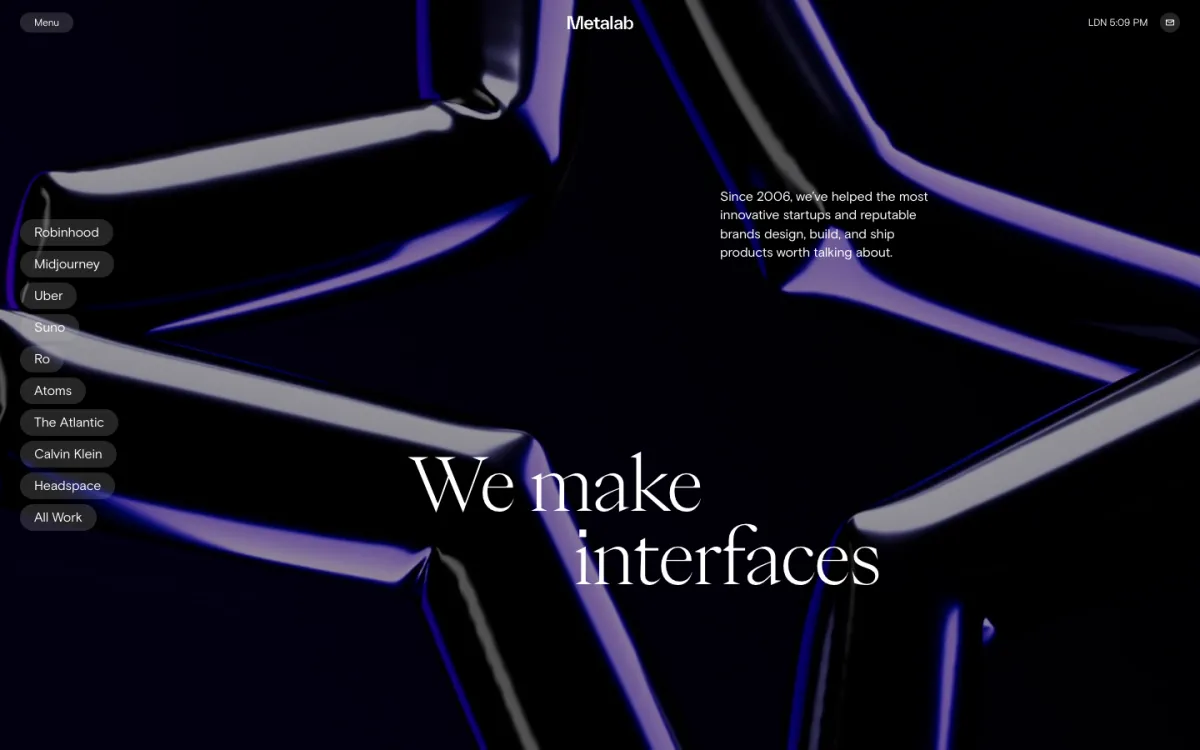
MetaLab is a Vancouver studio that designs and builds products, with UX research tagged on projects such as Upwork's shift from a job board to a work marketplace. It designed Slack's original product suite and Midjourney's original interface.
Services
- Product design. UX research and product design for web and mobile apps, from Slack's original product suite to Upwork's work marketplace.
- Engineering. Full builds on about one in four of its projects, including Suno and the Pika iOS app.
- Brand. Rebrands for AI and enterprise companies, such as the AI code assistant Windsurf.
Pricing
MetaLab scopes every engagement on a call about the product and its timeline.
- Entry point: $100,000+ on Clutch.
- How work is billed: per product, covering design, strategy and development where needed.
- Published prices: quoted per product after the first conversation.
- Budget guide: its minimum is more than twice the benchmark's $43,000 MVP median, the highest on this list.
What clients liked
- Long partnerships. Walmart has worked with MetaLab on design and engineering for ten years.
Limitations
- Its $100,000 minimum is the highest on this list.
- It quotes every engagement privately, so budget planning starts only after a call.
- With no Clutch reviews, references come through its own client list.
14. Work & Co
- Starting price
- Scoped per engagement; Clutch shows $5,000+ on an unclaimed profile
- Hourly rate
- $100 to $149 (Clutch, unclaimed profile)
- Clutch
- Profile with no reviews
- Team and HQ
- 250 to 999 people, Brooklyn, NY
- Research and testing
- User research and testing labs; prototypes tested in every phase
- Builds the product
- Yes; strategy, product management, design and development under one roof
- Engagement model
- Small, senior, fully dedicated teams, mostly on years-long relationships
- Typical timeline
- Market feedback within 20 days, with a full design cycle and prototype early in each project
- Best for
- Large consumer, commerce and B2B platforms with multi-year product roadmaps
- Not a fit for
- Seed and Series A teams, or a short, fixed project
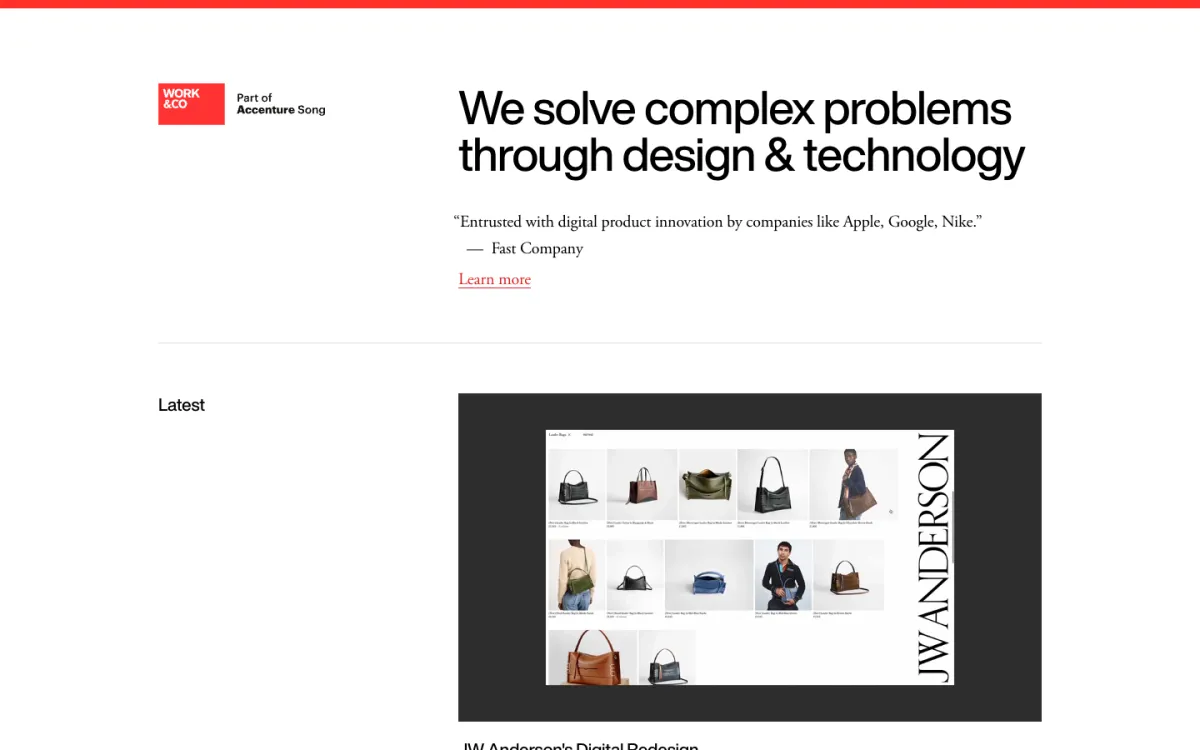
Work & Co designs and builds digital products, as part of Accenture Song since 2024, and tests prototypes in the field and in its own user research labs. For Vistaprint, discovery and user research shaped a new purchase flow that lifted holiday purchase completion by 60%.
Services
- Product strategy. Proof of concept, MVP definition, and user research and testing.
- Design. UX and UI, design systems, generative AI and multimodal UX, brand and motion.
- Technology. Full-stack web and mobile, platform engineering, enterprise data integration for LLMs and quality engineering.
Pricing
Work & Co prices every engagement around a fully dedicated team, mostly on years-long relationships.
- Entry point: scoped per engagement.
- How work is billed: small, senior, fully dedicated teams, with the same core team from start to finish.
- Published prices: quoted per engagement; the $5,000+ and $100 to $149 an hour on its unclaimed Clutch profile are unlikely to reflect real budgets.
- Budget guide: dedicated teams on multi-year terms put it in enterprise budget territory, well above the MVP benchmarks.
What clients liked
- Commerce results. At Vistaprint, the new return-customer dashboard doubled conversion value and holiday purchase completion rose 60%.
Limitations
- Most of its client list is consumer and retail brands, with a shorter B2B list that includes Vistaprint, Datadog and Embraer.
- Its model of dedicated, multi-year teams is sized for large organisations more than Seed to Series C companies.
- With no Clutch reviews, references have to come through its own client list.
15. Halo Lab
- Starting price
- $10,000+ on Clutch; projects from $5,000
- Hourly rate
- $25 to $49
- Clutch
- 4.9/5, 100 reviews
- Team and HQ
- 50 to 249 people, Dubai, UAE
- Research and testing
- UX audits and product discovery with user interviews
- Builds the product
- Yes, front end and websites in-house, with development partners on some projects
- Engagement model
- Milestone payments for design and development, fixed-cost branding, monthly dedicated teams, a 3-day trial
- Typical timeline
- A UX audit in around two weeks; kickoff to launch in two to three months
- Best for
- Seed-stage SaaS and AI teams that want brand, website and product UI from one team on a modest budget
- Not a fit for
- Enterprise platforms that need deep research programmes
Halo Lab is a design and development agency whose work spans product UI, websites and branding. For Vixiv, an AI engineering platform, it designed the brand and product UI and built the React product and Webflow site in four months; for Upstrima, an AI platform for oil and gas, it designed eight product areas and more than sixty components.
Services
- Product design. UI/UX for web and mobile products, with design systems.
- UX audit and discovery. An audit in around two weeks, and product discovery with user interviews.
- Development. Front end in React and Next.js, MVPs and Webflow websites.
- Branding and websites. Brand identity and marketing sites, which make up most of its portfolio.
Pricing
Halo Lab has no fixed price list and takes projects from $5,000.
- Entry point: a 3-day trial on one or two screens, or projects from $5,000; $10,000+ on Clutch.
- How work is billed: per milestone for design and development, a fixed cost for branding, and monthly for a dedicated team.
- Published prices: projects from $5,000 to over $200,000; $25 to $49 an hour on Clutch.
- Budget guide: its hourly rate is the joint-lowest on this list with Arounda and Eleken, below the benchmark's $55 to $90 median.
What clients liked
- Speed on an AI product. Vixiv's brand, product UI and build came from one team in four months.
- Range. Its 100 Clutch reviews cover branding, websites and product UX, so ask for references in product work.
Limitations
- Most of its portfolio is website and brand work, so ask for product UX case studies.
- Its own pages describe both an in-house development team and development partners, so confirm who builds before signing.
- One client felt it could check for bugs more robustly on a Webflow build, so agree QA steps before launch.
16. Goji Labs
- Starting price
- $50,000+
- Hourly rate
- $150 to $199
- Clutch
- 5.0/5, 91 reviews
- Team and HQ
- 50 to 249 people, Los Angeles, CA
- Research and testing
- Research inside strategy sprints
- Builds the product
- Yes, full stack (Ruby on Rails, Node.js, React, Next.js, iOS, Android, AWS)
- Engagement model
- Collaborative strategy sprints, then senior pods embedded in the client's team through delivery
- Typical timeline
- Scoped after a strategy sprint
- Best for
- Startups, enterprise teams and private equity-backed companies that need a product designed and built by one team
- Not a fit for
- Teams that only need design and already have engineers
Goji Labs is a Los Angeles team that designs and builds software, web and mobile products, starting each engagement with a strategy sprint. It built Valara's rental management SaaS for fleet businesses and redesigned and rebuilt KCRW's mobile app.
Services
- Product strategy. Collaborative strategy sprints before design and build.
- Product design. UI and UX design for web and mobile apps, delivered with a design system.
- App, software and AI development. Full-stack engineering in Rails, Node.js, React and Next.js, plus native iOS and Android.
Pricing
Goji Labs scopes each product after a strategy sprint, then staffs a senior pod through delivery.
- Entry point: $50,000+ on Clutch.
- How work is billed: a collaborative strategy sprint, then an embedded pod that designs and builds.
- Published prices: quoted after the strategy sprint; $150 to $199 an hour on Clutch.
- Budget guide: its floor sits above the $43,000 MVP median, and that budget covers engineering as well as design.
What clients liked
- Membership growth. After an app redesign and build, KCRW's chief administrative officer reported on Clutch a 7% conversion to membership from new users.
- Funding. k-ID, a child safety verification platform among its featured clients, raised a $51 million Series A in nine months.
Limitations
- Its $50,000 minimum is among the higher entry points here.
- Its case list mixes B2B SaaS with consumer and e-commerce work such as Fitness Pact and Katzkin, so ask for B2B software references.
- Pitcheroo's final costs came in above the first estimate as requirements changed, so review the budget at each new feature.
UX audit and redesign
Find where users get stuck, then fix it.
Bricx audits B2B SaaS and AI products with a heuristic review, analytics and user interviews in one week for a site or two for a product, then redesigns the flows and tests them with users. Projects start at $25,000.
What do UX design services include?
UX design services cover the research, structure and interface behind a product:
- User research: interviews, analytics and session recordings that show where people get stuck.
- UX audit: a review against usability principles, ending in a ranked list of fixes.
- Flows and information architecture: every path through the product, edge cases included.
- UI design and prototypes: every state of every screen, tested with real users before handoff.
- Design system: the components engineers build from.
Over 95% of agencies say research is core to their process, but only about 70% run usability tests with real users, so check that testing is in the plan.
How much do agencies charge for UI/UX design?
Expect $25 to $195 an hour, with the median between $55 and $90.
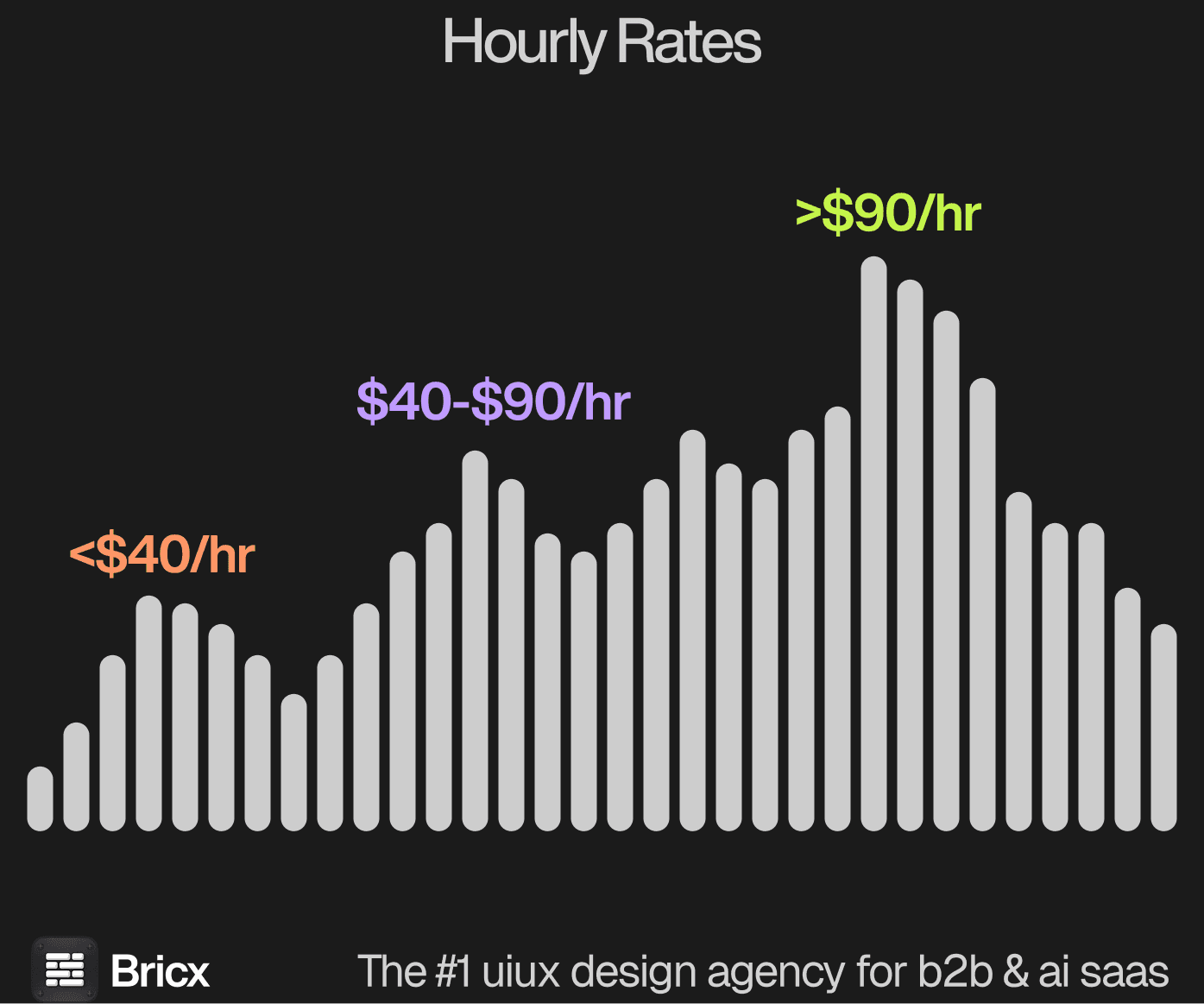
Location drives most of the gap: about $150 an hour for US teams, $60 in Europe and $35 in Asia, with no link between rate and quality. A UX audit costs $2,000 to $6,599 where the agencies on this list publish a price.
Should you start with a UX audit or a redesign?
Start with an audit when a number has stopped moving and the team can't agree why. Audits on this list usually pair a heuristic evaluation with analytics and a few user interviews, take one to four weeks, and sometimes end with three fixes instead of a rebuild.
Go straight to a redesign when the problem is structural, such as navigation or onboarding, and plan on 10 weeks or more for a full product: that is what 52.6% of agencies quoted to design a five-feature MVP.
Where can you hire top UI/UX design agencies remotely?
Almost anywhere: 60% of agencies work fully remote or remote-first, and 60% are based in Europe.
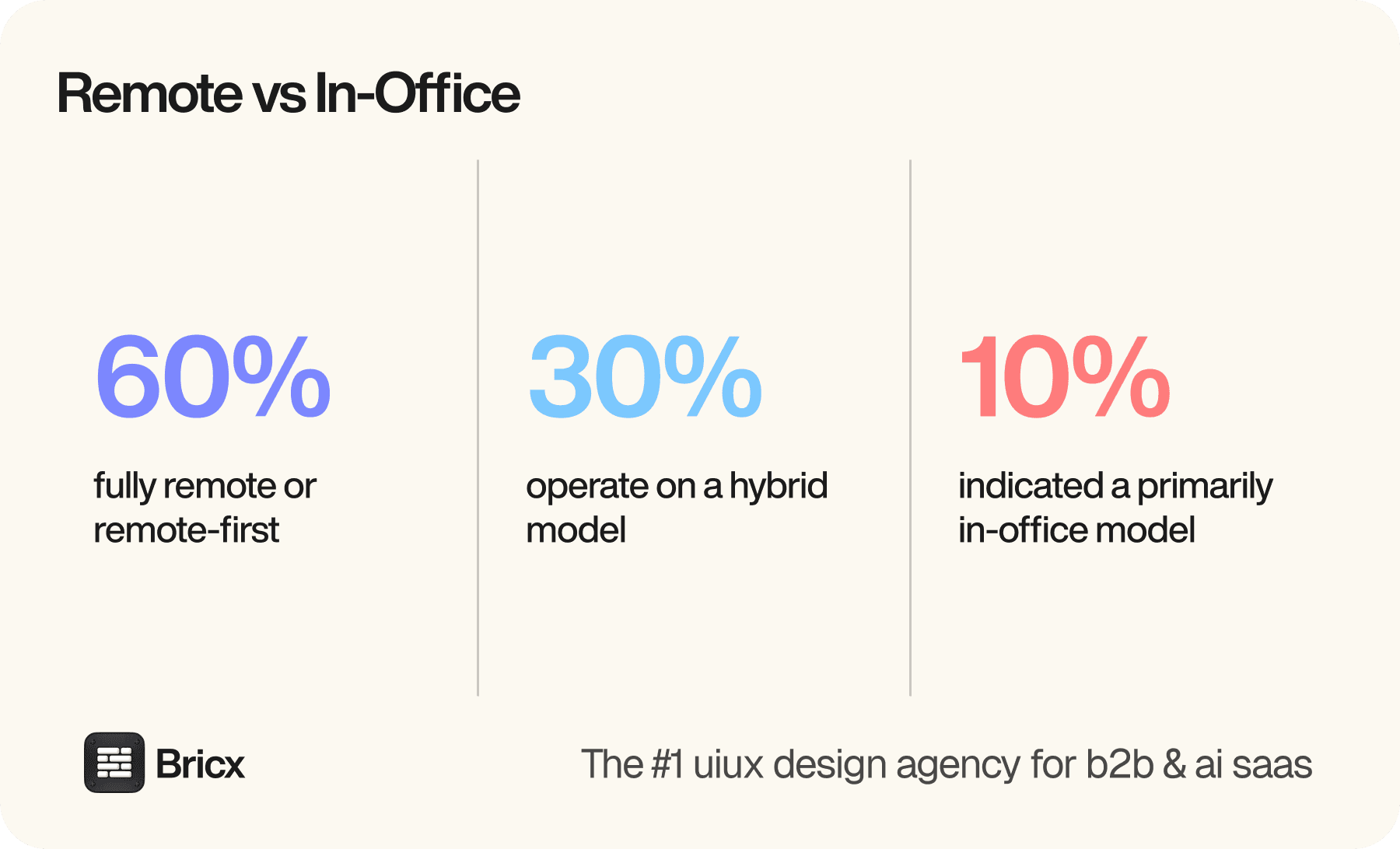
Remote UX work runs on Slack and Figma, with daily written updates and one or two calls a week at over 90% of agencies. Agree an overlap window for usability sessions and reviews before you sign, because those need you live.
How to choose a UX design agency
There are 15 questions worth asking a UX design agency before you sign. Three of them matter most here, because a portfolio can't answer them:
- Which research changed a design? One concrete case, with what was tested and on whom.
- Who talks to your users? A named researcher, and how many users they will interview or test.
- What is in the handoff? Every empty, loading and error state, and design QA on the build.
When should you walk away from a UX design agency?
When the answer to any of these is yes:
- Is its "user research" only a competitor review and a stakeholder workshop?
- Is there no usability test with real users anywhere in the plan?
- Does the redesign change colours and fonts but keep every flow?
- Are senior designers in the pitch but juniors on your account?
UX audit and redesign
Find where users get stuck, then fix it.
Bricx audits B2B SaaS and AI products with a heuristic review, analytics and user interviews in one week for a site or two for a product, then redesigns the flows and tests them with users. Projects start at $25,000.
FAQs
Who are the best UI/UX design agencies right now?
For software products in 2026, the agencies most focused on UI/UX, with published results, are Bricx, Neuron, Qubstudio, Cieden and Eleken, followed by UX Studio and Fuzzy Math for research-heavy work. Bricx fits B2B and AI SaaS products with complex workflows; Neuron, Fuzzy Math and HTEC Momentum fit enterprise software; MetaLab, Clay and Work & Co fit flagship products on large budgets; Goji Labs, Arounda and Halo Lab design and build.
Where can you find UX design agencies?
Start with Clutch, filtered by industry and budget, then shortlists like this one and referrals from founders whose product you admire. On Clutch, read the reviews from clients in your space and the "areas for improvement" answers, which say more than the star rating. If only the marketing site needs work, the SaaS website design agencies list is the closer match.
What is the difference between a UX agency and a UI agency?
A UX agency researches how people use the product and designs the structure and flows; a UI agency designs how the screens look. Most agencies on this list do both, which is why the terms UI/UX and UX/UI are used interchangeably. For a whole new product, the product design agencies list covers studios that also own the product decisions.
Which country is best for UI/UX design?
No country has a monopoly on good UX. In the benchmark, 60% of agencies were based in Europe, 20% in the Americas and 20% in Asia, and average rates ran about $150 an hour in the US, $60 in Europe and $35 in Asia, with no link between rate and quality. Pick on shipped work and overlap hours, then compare rates.
Will UX get replaced by AI?
No, but AI is changing the job. AI tools now generate layouts and first versions of products, so agencies spend more of their time on research, judgement about what to cut and design systems that AI coding tools can follow.
Do UX design agencies also build the product?
Some do. On this list, Goji Labs, Arounda, Halo Lab, MetaLab, Work & Co, Ramotion, Clay, Cieden and UX Studio design and build. Bricx and Eleken build the front end and leave the back end to your engineers, and Fuzzy Math delivers production-ready HTML and CSS. Neuron, Qubstudio, HTEC Momentum and Excited mostly hand product builds to your developers or a partner.

Similar Lists



Contents