10 Best Client Portal UX Design Agencies (2026)
The 10 best client portal UX design agencies, compared on pricing, Clutch rating, engagement model and hourly rate, drawn from a documented benchmark of 57 agencies.
Aug 20, 202611 min read
Best client portal UX design agencies
A client portal is designed for somebody who never chose it. They were issued a login, they sign in perhaps once a month, and so every visit is effectively a first visit: nothing gets learned, no habit forms, and any onboarding shown in week one is gone by week six. The portal also exposes an internal data model to an outsider who does not share the vocabulary, so job numbers, statuses and stage names have to be translated rather than displayed. And it competes with email, which already works, and where the client can simply ask a human instead.
Ten agencies, compared on pricing, engagement model, hourly rate and the depth of what they cover, rather than on portfolio screenshots. Every agency here carries a verified Clutch profile, and the ratings below are taken from it. Each entry says what an agency is worth hiring for and where it is the wrong choice for client portal UX.
How the ten agencies compare
| Agency | Best for | Starting price | Clutch rating | Not a fit for |
|---|---|---|---|---|
| Bricx | Low-frequency portals for external accounts | $25,000+ | 5.0/5, 27 reviews | Off-the-shelf portal configuration, SharePoint rollouts |
| Intechnic | Portal flows designed before screens | $10,000+ | 4.8/5, 21 reviews | Building the portal itself |
| Kanda Software | Regulated portals onto internal systems | $100,000+ | 4.9/5, 17 reviews | Interface craft, small scopes |
| KeyUA | Cheap build against a clear spec | $5,000+ | 4.9/5, 7 reviews | Design judgement, portal strategy |
| Mind Studios | Portal design plus the integrations | $10,000+ | 4.9/5, 34 reviews | Standing design practice |
| Innovecs | Keeping a live portal running | $25,000+ | 4.7/5, 11 reviews | Designing the portal |
| Intellias | Many portals, one governed standard | $50,000+ | 4.9/5, 30 reviews | A single portal project |
| Lemberg Solutions | Customer portals over device data | $25,000+ | 4.8/5, 27 reviews | Service-business client portals |
| Leobit | Modern portal over legacy software | $25,000+ | 4.9/5, 59 reviews | Design-led portal work |
| Fingent | Rebrandable portals for many accounts | $25,000+ | 4.9/5, 66 reviews | Interface judgement, design leadership |
Best client portal UX agency: Bricx
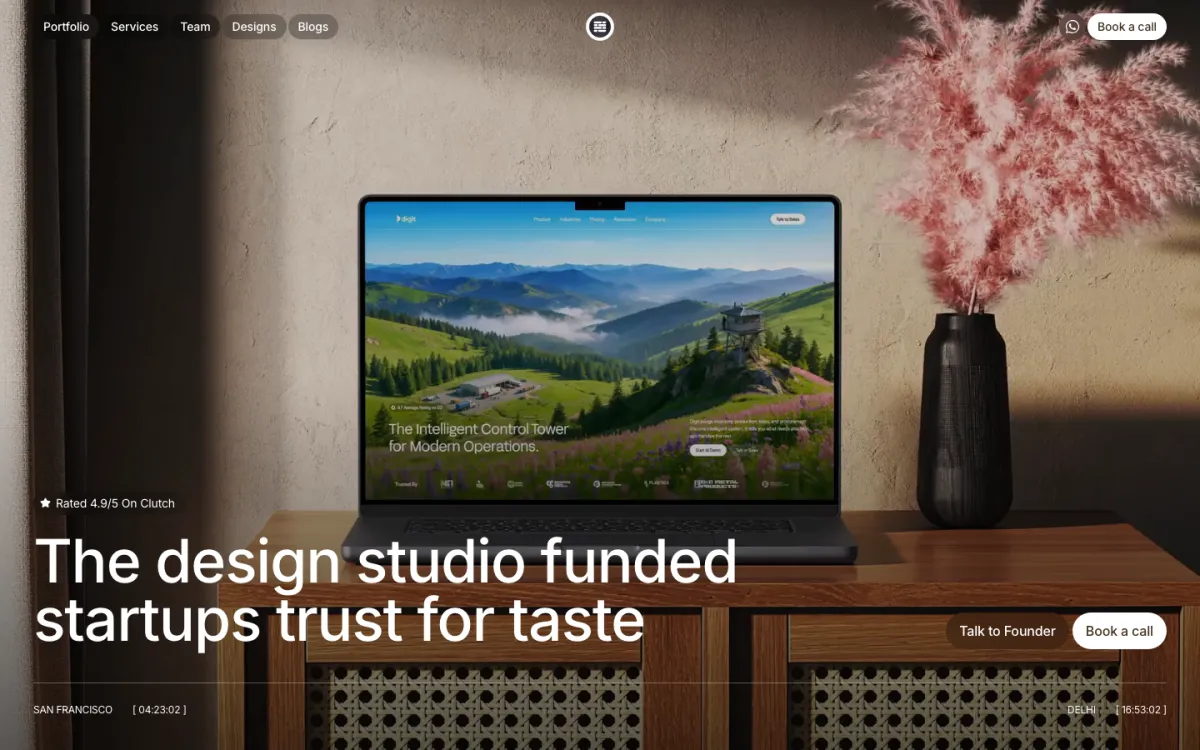
Bricx is the best portals whose users log in monthly at most, where the interface has to explain itself again every single time somebody arrives. Bricx has completed 50+ SaaS design projects across 30+ industries, with clients including Writesonic (YC S21), Collectwise (YC F24), Gigacatalyst (YC X26), Sybill, Camb.ai, LTV.ai, Instadapp, Hobbes and AT Kearney. The agency holds 27 verified reviews on Clutch at an average of 5.0/5.
Bricx works exclusively with B2B and AI SaaS companies, from seed stage through Series C, covering branding, website design, product UX/UI and end-to-end development. Engagements start at $25,000. Bricx builds as well as designs, which matters for a portal because the permissions model and the interface are the same decision. Its B2B SaaS work, Instadapp and Hobbes among the clients, involves showing one account its own data and nothing belonging to anybody else.
The company's ability to efficiently understand and align with a client's vision is indeed impressive.
- Starting price
- $25,000+
- Engagement model
- Fixed-scope projects and monthly retainers
- Timeline
- First delivery within the first week; full scope varies by project
- Clutch
- 5.0/5, 27 reviews
- Hourly rate
- $50 - $99
- Best for
- portals whose users log in monthly at most and need the interface to explain itself on every visit.
- Not a fit for
- configuring an off-the-shelf portal product, SharePoint rollouts, or budgets under $25,000.
Intechnic
Intechnic is the only agency here doing UX/UI and nothing else, 100% of its work, and one of its reviews is design for two portals at a healthcare company, run from a discovery phase into step-by-step user flows. Flows before screens is the correct order for a portal, where the question is what somebody can reach in one visit rather than how a page looks.
Its client base splits evenly between business services and medical, both portal-heavy sectors, and it has run from Chicago since 1997. There is no development on the card at all, so the access rules, the integrations and the login itself land with your engineers at $150 to $199 an hour of design time.
- Starting price
- $10,000+
- Engagement model
- Project and retainer
- Clutch
- 4.8/5, 21 reviews
- Hourly rate
- $150 - $199
- Team size
- 10 - 49 people
- Best for
- working out what a client can actually reach in one visit.
- Not a fit for
- implementation, permissions engineering, or budgets under $25,000.
Kanda Software
Kanda Software's most portal-shaped work is a HIPAA-compliant laboratory management system for an orthodontic manufacturer, with a separate portal built for prescriptions. That is the exact structure a client portal takes: an internal system with a narrow, permissioned window opened onto it for outsiders. Medical is 45% of its clients, so it has built where a permissions mistake is a reportable event.
The $100,000 minimum is the highest on this page and design appears nowhere in its service split, which leads with custom software development at 35%. This is a systems integrator, at work since 1993. The portal will function, and how it reads to a client arriving once a month is your problem to specify.
- Starting price
- $100,000+
- Engagement model
- Project and retainer
- Clutch
- 4.9/5, 17 reviews
- Hourly rate
- $50 - $99
- Team size
- 250 - 999 people
- Best for
- opening a compliant, permissioned window onto a system of record.
- Not a fit for
- interface craft, small portal scopes, or budgets under $25,000.
KeyUA
KeyUA is 80% web development, and its reviews describe building an internal system across web and mobile, plus a web portal queued behind an international taxi app. Internal systems and client portals are the same codebase seen from two sides, and a team that has built the inside holds the data model the outside view has to be carved out of.
Design does not appear on its card in any form, and seven Clutch reviews is the thinnest public record on this page. With 70% of its clients being small businesses and a $25 to $49 rate, this is affordable build capacity for a portal somebody else has already specified in detail.
- Starting price
- $5,000+
- Engagement model
- Project and retainer
- Clutch
- 4.9/5, 7 reviews
- Hourly rate
- $25 - $49
- Team size
- 50 - 249 people
- Best for
- building a specified portal on top of an existing internal system.
- Not a fit for
- design judgement, portal strategy, or budgets under $25,000.
Mind Studios
Mind Studios has the most literal credential on this page: a custom client portal for a performance marketing company, where it did the full UX/UI design, the backend architecture and the third-party integrations. That combination matters because a marketing client portal is mostly other people's data arriving on a schedule, and the interface is only as honest as the sync behind it.
Design is not a percentage on its card, which runs custom software at 55% and AI development at 35%, so that portal was an outcome rather than a practice. Its industries are real estate and logistics at 25% each, sectors where the portal user is a landlord or a shipper rather than a retained client.
- Starting price
- $10,000+
- Engagement model
- Project and retainer
- Clutch
- 4.9/5, 34 reviews
- Hourly rate
- $25 - $49
- Team size
- 50 - 249 people
- Best for
- a data-fed portal where the integrations decide whether it is trusted.
- Not a fit for
- sustained design partnership, or budgets under $25,000.
Innovecs
Innovecs is the one team here whose largest named service is DevOps managed services at 15%, with application testing at 10% behind it. For a portal that is not nothing: a client-facing login is the part of a stack outsiders hit directly, and uptime, release safety and regression testing are the reasons a portal keeps its users after launch.
Everything else points away. Its reviews describe staff augmentation and recruiting programmers to a client's specification, gaming is 20% of its client base, and 11 Clutch reviews is a thin record for a firm of 250 to 999 people. No design capability appears anywhere on the card.
- Starting price
- $25,000+
- Engagement model
- Project and retainer
- Clutch
- 4.7/5, 11 reviews
- Hourly rate
- $25 - $49
- Team size
- 250 - 999 people
- Best for
- the operational side of a client-facing system already in production.
- Not a fit for
- portal design, information architecture, or budgets under $25,000.
Intellias
Intellias is the largest organisation on this page, 1,000 to 9,999 people since 2002, and its financial services review describes around 15 concurrent projects covering engineering, standardisation and enterprise architecture. Standardisation is the portal problem at scale: a company with many client-facing systems ends up with several portals, several logins and several vocabularies unless somebody governs them centrally.
Its clients split evenly between enterprises over a billion dollars and midmarket companies, and its reviews consistently describe supplying development resources rather than owning an outcome. There is no design line on the card, and the $50,000 minimum makes one portal a small engagement for a firm of this size.
- Starting price
- $50,000+
- Engagement model
- Project and retainer
- Clutch
- 4.9/5, 30 reviews
- Hourly rate
- $50 - $99
- Team size
- 1,000 - 9,999 people
- Best for
- enterprises consolidating several client-facing systems into one standard.
- Not a fit for
- a single portal, design ownership, or budgets under $25,000.
Lemberg Solutions
Lemberg Solutions is 50% IoT development, which produces a specific kind of portal: the one a customer opens to see what their installed equipment is doing. Its reviews cover battery management firmware for electric boilers and a documentation platform for a manufacturer, so the data arriving in that portal is data the same team put on the wire.
That is a hardware company's portal, not a service business's. Logistics, energy and medical make up most of its client base, design is absent from the card, and nothing in its record describes designing for an infrequent, non-technical visitor who is somebody's client rather than an operator.
- Starting price
- $25,000+
- Engagement model
- Project and retainer
- Clutch
- 4.8/5, 27 reviews
- Hourly rate
- $50 - $99
- Team size
- 50 - 249 people
- Best for
- showing customers what their connected equipment is doing.
- Not a fit for
- service-business portals, infrequent-user design, or budgets under $25,000.
Leobit
Leobit's financial services review names a client-facing app built alongside a legacy loan system, which is the portal project as it usually arrives: not a greenfield product but a modern window onto software nobody wants to touch. It has 59 Clutch reviews behind a 4.9 rating, the deepest public record on this page, and works from L'viv at $25 to $49 an hour.
Its Salesforce work is worth noting, because many client portals come down to a decision about whether to extend a CRM or build beside it. Design is still not a service line, and its industries spread thinly across real estate, logistics, education and finance without a portal specialism forming in any of them.
- Starting price
- $25,000+
- Engagement model
- Project and retainer
- Clutch
- 4.9/5, 59 reviews
- Hourly rate
- $25 - $49
- Team size
- 50 - 249 people
- Best for
- putting a usable client-facing layer on top of a legacy system.
- Not a fit for
- design-led engagements, research depth, or budgets under $25,000.
Fingent
Fingent is building a customisable, multi-platform professional portal for a behaviour analysis company, and separately delivers websites for a consulting firm's end clients. Both are the same shape: software one organisation owns and another organisation's people log into. Customisable is the operative word, since portals are usually resold or rebranded per account before the first year is out.
Its UI/UX appears in reviews as a contribution to a re-architecture rather than as a service line, with custom software at 50% and AI development at 30% doing the describing. At 250 to 999 people since 2003 and $25 to $49 an hour, the pitch is scale and price rather than interface judgement.
- Starting price
- $25,000+
- Engagement model
- Project and retainer
- Clutch
- 4.9/5, 66 reviews
- Hourly rate
- $25 - $49
- Team size
- 250 - 999 people
- Best for
- a portal that has to be re-skinned per account or per client.
- Not a fit for
- design leadership, interface craft, or budgets under $25,000.
How much does a client portal UX engagement cost?
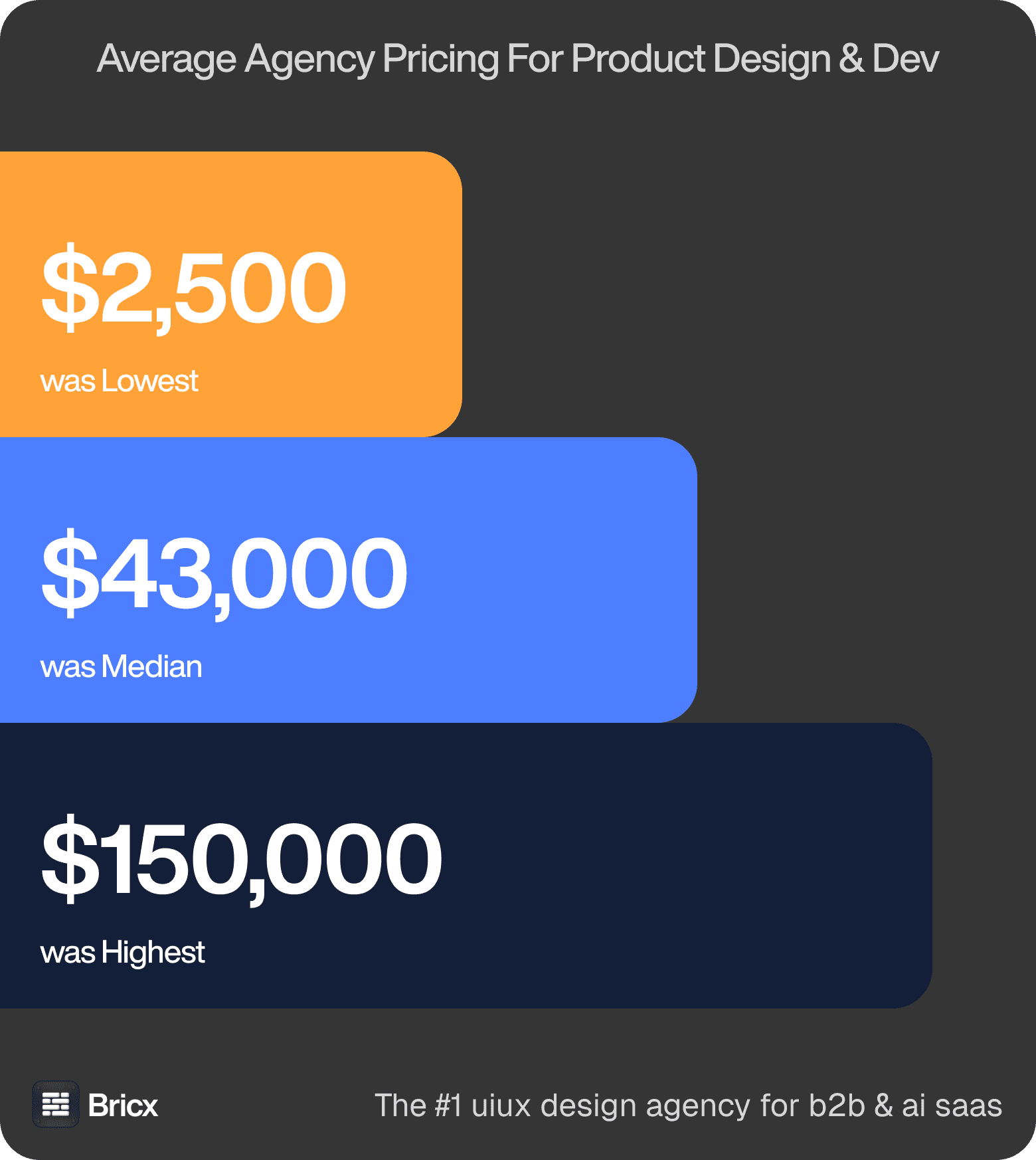
Fixed-price reality. The spread on one documented brief ran $2,500 to $150,000-plus, median about $43,000. Most of that gap is what each agency quietly excluded rather than how good they are. Those figures cover product design across the whole benchmark, so treat them as the range client portal UX is quoted inside rather than a price for it.
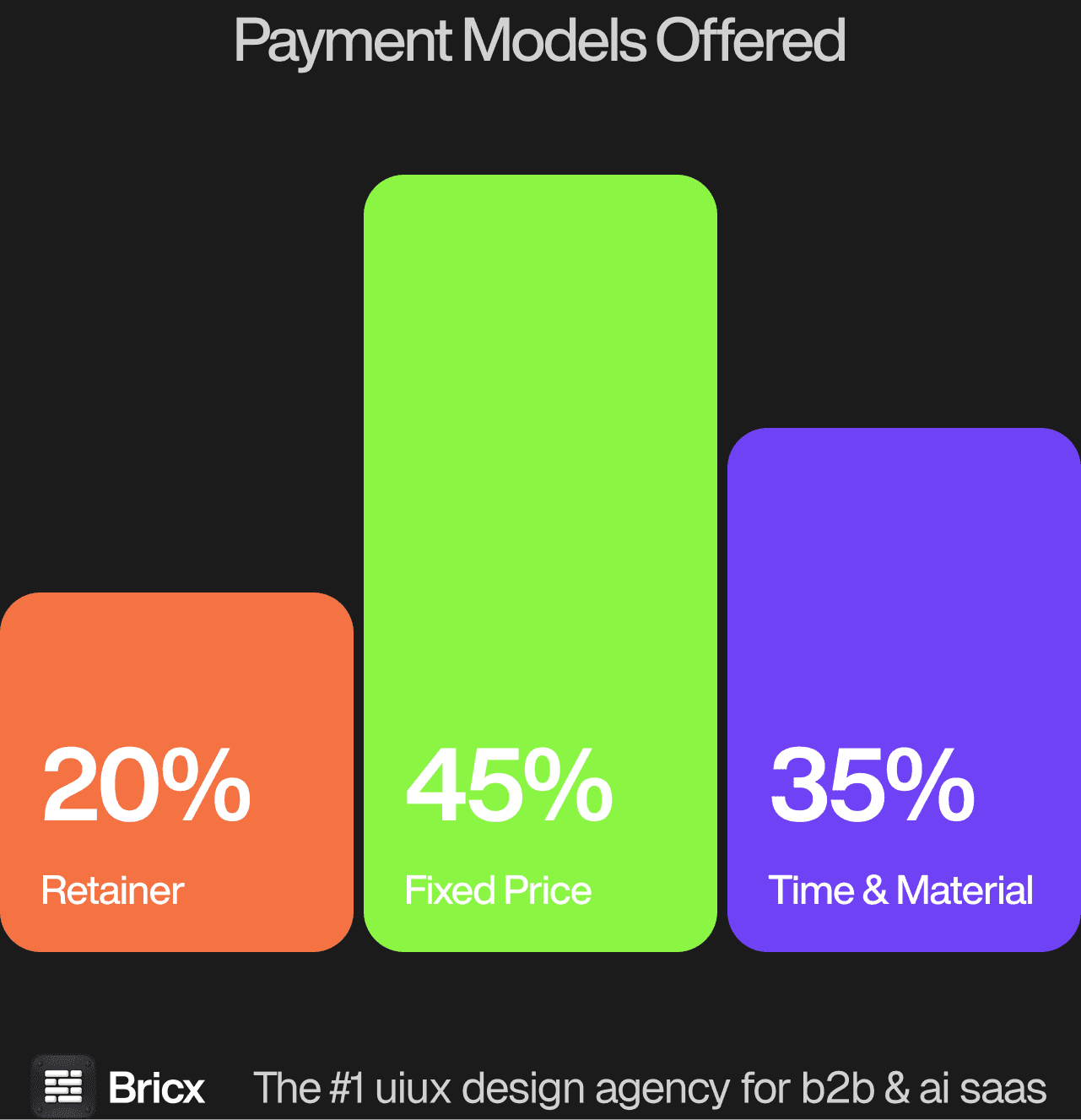
What an hour costs. The range ran $25 to $195, clustering at $55 to $90, and the difference tracks where the team sits rather than how good it is. Portals sit below the median in screen count and above it in access logic, because the same eight screens have to behave differently for every role, tier and account that opens them.
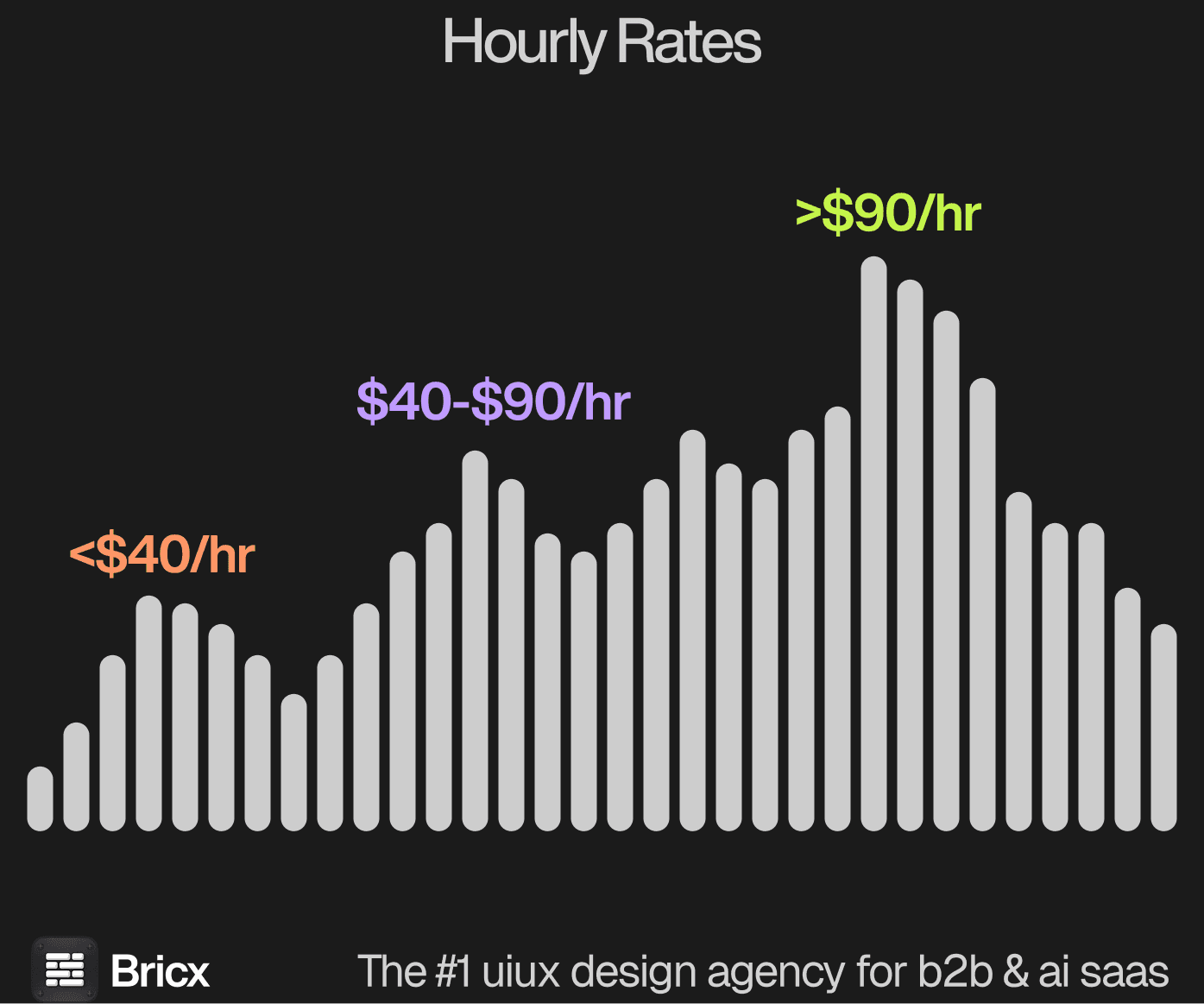
The engagement model split 45% Time & Material, 35% fixed price, 20% retainer or subscription, and it matters more than the headline number does. For client portal UX the model usually matters more than the headline figure, because it decides what happens when the scope moves.
- Fixed price where the spec is settled.
- Time & Material where the spec is a hypothesis.
- Retainer where the spec is a backlog.
- Which one fits client portal UX comes down to whether the scope is settled before the work starts.
How do you evaluate a client portal UX agency?
Five things separate client portal UX from customer-facing product design generally.
Ask how they design for a monthly visitor. Anything relying on recall, learned navigation or a tour shown at signup fails somebody whose last session was six weeks ago.
Ask how permissions were modelled. One client seeing another client's data is not a bug to be fixed later, it is the end of an account, so the roles have to be settled before the screens are.
Ask what they did about internal vocabulary. Portals leak the language of the system behind them, and a status that means something precise to an operations team means nothing to the person reading it.
Ask why somebody would use it instead of emailing. If the portal is slower than sending a message to an account manager, adoption stalls no matter how good the interface looks.
Ask who they interviewed. The buyer is an operations or account team and the user is that team's client, so a project researched entirely inside your own building designs for the wrong person.
What are the red flags when hiring a design agency?
- A long discovery phase with no shippable output. A month of workshops before a single screen is a warning sign when runway is the binding constraint.
- Rigid contracts with no exit. A year-long lock-in is a poor match for a roadmap that changes quarterly. Look for a break clause or a shorter initial term.
- A portfolio without outcomes. Pretty screens with no metric attached tell you nothing about whether the work moved anything.
- No pushback on your brief. Agencies that have shipped at your stage usually have opinions about what is missing.
- No answer on post-launch. Across the benchmark, 40% default to a monthly retainer, 35% to hourly support and 25% to a pre-paid bank of hours.
- No comparable example of client portal UX. An agency that cannot point to work of the same shape is learning on your budget.
Should you hire a UX agency or build in-house?
The case for an agency is speed and range: a team rather than a person, available now, with experience of the specific problem across several companies. For client portal UX specifically, the question worth settling first is how often the work recurs.
The case for hiring is accumulation. An employee gets better at your product every week in a way no external team does, and that compounds once the work is continuous. Where client portal UX falls on that line is usually clear once you count how many times it will need doing again.
The portal buyer usually has the operations knowledge in-house and the design capacity nowhere. In-house, the failure mode is a portal mirroring the internal system exactly, screen for screen, because that is the version everybody already understands. With an agency, it is a clean interface built on assumptions about your clients that nobody checked, because the agency was never allowed to talk to them.
FAQs
What makes client portal UX difficult?
The user logs in rarely, did not choose the product, and is reading data shaped by an internal system they have never seen. Every visit has to work without any memory of the last one.
How much does a client portal UX engagement cost?
Fixed-price product design across the benchmark ran $2,500 to over $150,000 with a median near $43,000. Portals often come in under it on screen count and rise again once role-based access is designed properly. Bricx starts at $25,000.
How do you get clients to actually use the portal?
By making it faster than the alternative for one specific thing they do often, usually finding a document, checking a status or paying an invoice. Adoption follows a single reliable habit, not a broad feature set.
Should the portal look like the internal system it draws from?
No. The internal tool was built for people trained on it, and the portal is read by somebody who was not. Same data, different vocabulary, far fewer states shown at once.