10 Best Crypto UX Agencies (2026)
The 10 best crypto UX agencies, compared on pricing, Clutch rating, engagement model and hourly rate, drawn from a documented benchmark of 57 agencies.
Aug 20, 202611 min read
Best crypto UX agencies
In crypto the undo button does not exist. A transfer to the wrong address is gone, a seed phrase has no reset link, and there is no support queue that can reverse either. That makes confirmation the most important screen in the product rather than a courtesy. The interface also asks people to verify things it cannot verify for them, a forty-character address, a contract, a token whose name is identical to another token. Half the flow happens inside a wallet somebody else built. And the product is impersonated constantly, so looking trustworthy is exactly what an attacker is copying.
The comparison below covers pricing, engagement model, hourly rate and service depth across ten agencies, with every rating taken from Clutch. Every agency here carries a verified Clutch profile, and the ratings below are taken from it. Each entry says what an agency is worth hiring for and where it is the wrong choice for crypto UX.
How the ten agencies compare
| Agency | Best for | Starting price | Clutch rating | Not a fit for |
|---|---|---|---|---|
| Bricx | Crypto products for non-native users | $25,000+ | 5.0/5, 27 reviews | Protocol engineering, contract audits, exchange listings |
| Existek | Crypto back office and admin panels | $25,000+ | 4.9/5, 19 reviews | Wallets, signing, consumer crypto |
| Dev Technosys | High-volume blockchain delivery | $10,000+ | 4.8/5, 204 reviews | Risk-heavy interface decisions |
| OmiSoft | Multi-chain and non-custodial wallets | $5,000+ | 5.0/5, 31 reviews | Design leadership, enterprise scale |
| PixelPlex | Contracts, bridges and tokenomics | $25,000+ | 4.9/5, 33 reviews | Interface and interaction design |
| Idealogic | Page and contract changed together | $5,000+ | 4.9/5, 10 reviews | Sustained design programmes |
| OpenXcell | Long-run build against your designs | $10,000+ | 4.8/5, 21 reviews | Crypto risk and interface design |
| Unicsoft | Wallet integration across chains | $25,000+ | 4.9/5, 35 reviews | Consumer crypto design depth |
| EMERGE | Blockchain product UI for global users | $50,000+ | 4.8/5, 25 reviews | Contracts, wallets, fast launches |
| Attract Group | Secure release and refactoring work | $25,000+ | 5.0/5, 39 reviews | Crypto domain knowledge |
Best crypto UX agency: Bricx
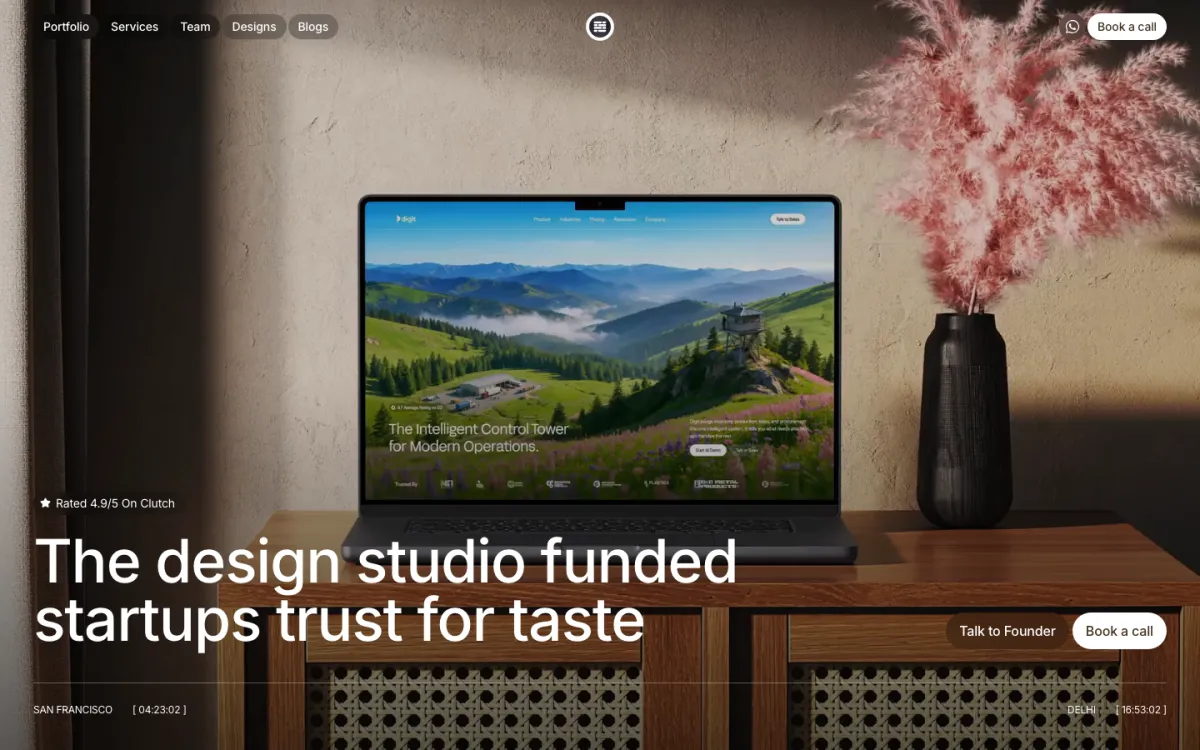
Bricx is the best crypto products whose users are not crypto natives, where one irreversible mistake ends the relationship and the confirmation screen carries the whole risk. Bricx has completed 50+ SaaS design projects across 30+ industries, with clients including Writesonic (YC S21), Collectwise (YC F24), Gigacatalyst (YC X26), Sybill, Camb.ai, LTV.ai, Instadapp, Hobbes and AT Kearney. The agency holds 27 verified reviews on Clutch at an average of 5.0/5.
Bricx works exclusively with B2B and AI SaaS companies, from seed stage through Series C, covering branding, website design, product UX/UI and end-to-end development. Engagements start at $25,000. Bricx has worked on Instadapp, a DeFi product where the interface stands between somebody and a position they can lose, and on AI SaaS where generated output has to be checked before it is trusted. Both are the same discipline: making the consequence visible before the click rather than after it.
Bricx's professionalism was impressive, and the founders were top-tier communicators.
- Starting price
- $25,000+
- Engagement model
- Fixed-scope projects and monthly retainers
- Timeline
- First delivery within the first week; full scope varies by project
- Clutch
- 5.0/5, 27 reviews
- Hourly rate
- $50 - $99
- Best for
- crypto products whose users are not crypto natives, where one irreversible mistake ends the relationship.
- Not a fit for
- protocol engineering, contract audits, exchange listing work, or budgets under $25,000.
Existek
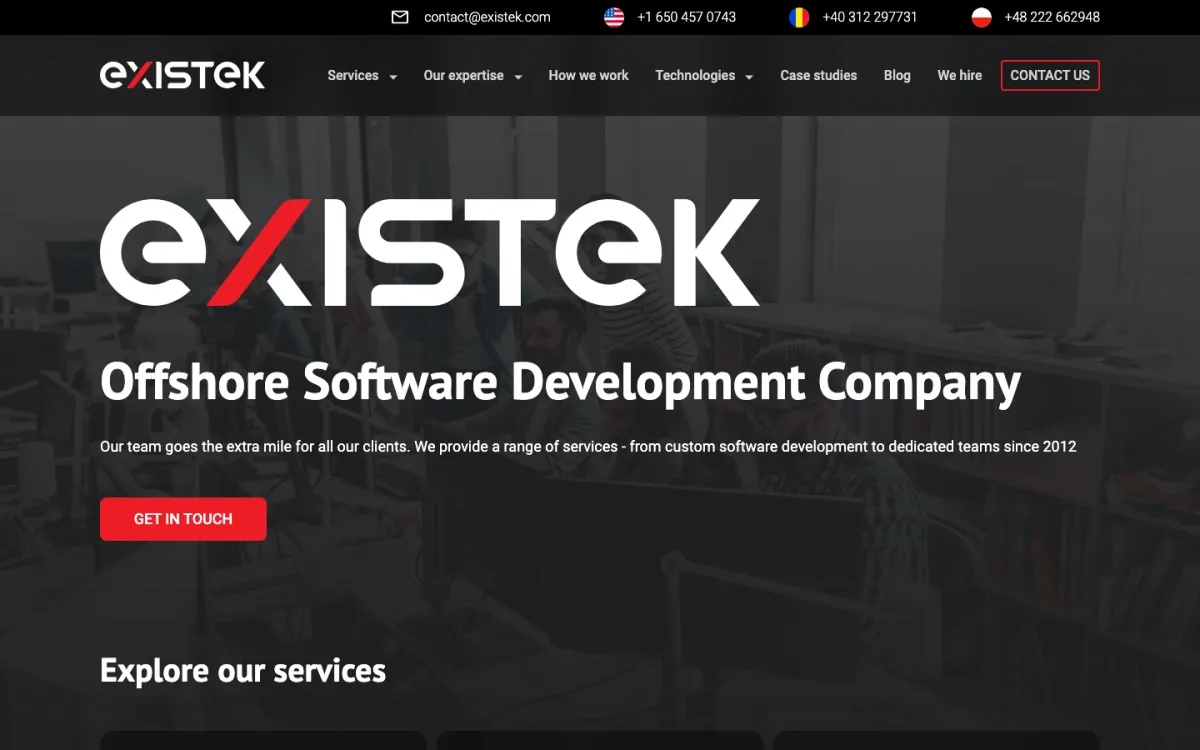
Existek's crypto credential is unusual: an ERP web app plus customer-facing panels for a crypto marketing agency, where it designed the UX/UI and built the architecture. That is the back-office half of a crypto business, the part where a company reconciles on-chain activity against invoices and clients, and it is the half most agencies on this page never touch.
Blockchain is not on its service card, which is web development at 60% and custom software at 40%, and its four industries sit at 25% each with no crypto among them. Half its clients are enterprises over a billion dollars, a client type that mostly wants distance from consumer token products.
- Starting price
- $25,000+
- Engagement model
- Project and retainer
- Clutch
- 4.9/5, 19 reviews
- Hourly rate
- $50 - $99
- Team size
- 50 - 249 people
- Best for
- the internal systems a crypto business runs on behind the product.
- Not a fit for
- wallet and signing flows, consumer crypto, or budgets under $25,000.
Dev Technosys
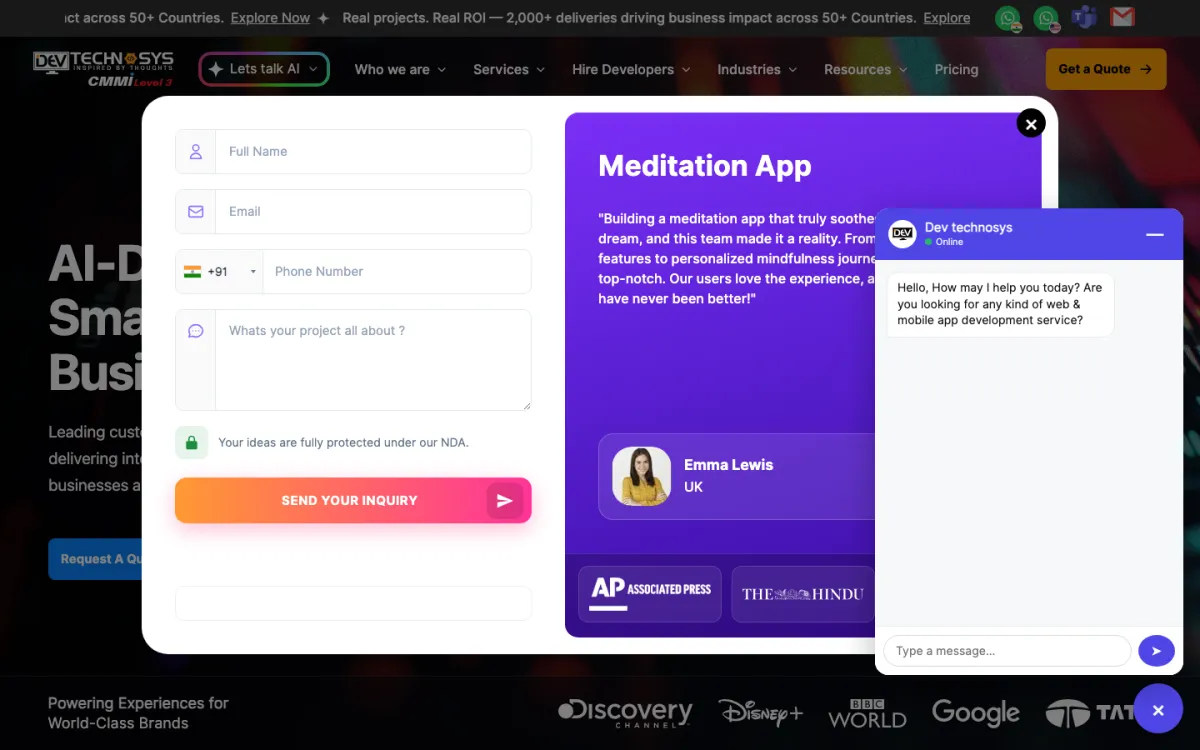
Dev Technosys is 55% blockchain, the highest proportion on this page, and it has 204 Clutch reviews, more than double anybody else here. Its crypto-specific work is an MVP for an AI and crypto-powered travel agency, front end, back end and API integrations, which is the consumer-facing use of crypto as a payment rail rather than as the product itself.
Design is absent from its service split, and its other reviews are a manufacturer's website and an e-commerce build. Its industries are education and information technology at 15% each with no financial services line, so the blockchain volume is delivery work at $25 to $49 an hour rather than a point of view about risk.
- Starting price
- $10,000+
- Engagement model
- Project and retainer
- Clutch
- 4.8/5, 204 reviews
- Hourly rate
- $25 - $49
- Team size
- 50 - 249 people
- Best for
- shipping a crypto-enabled product quickly at a low hourly rate.
- Not a fit for
- signing and risk interface work, or budgets under $25,000.
OmiSoft
OmiSoft has built the thing this page is really about: a multi-chain wallet for iOS and Android across Ethereum, Polygon and BNB Smart Chain, and separately a non-custodial EVM wallet with mobile and web clients. A wallet is the hardest crypto interface there is, because the recovery phrase screen is the one place where a design mistake permanently destroys somebody's money.
Every one of its clients is a small business under ten million dollars, the narrowest client profile on this page, and design is not a service line: the split is custom software at 70% and blockchain at 30%. Founded in 2017, it is an engineering shop that happens to know wallets very well.
- Starting price
- $5,000+
- Engagement model
- Project and retainer
- Clutch
- 5.0/5, 31 reviews
- Hourly rate
- $25 - $49
- Team size
- 50 - 249 people
- Best for
- wallet products where key handling and recovery are the product.
- Not a fit for
- design leadership, enterprise programmes, or budgets under $25,000.
PixelPlex
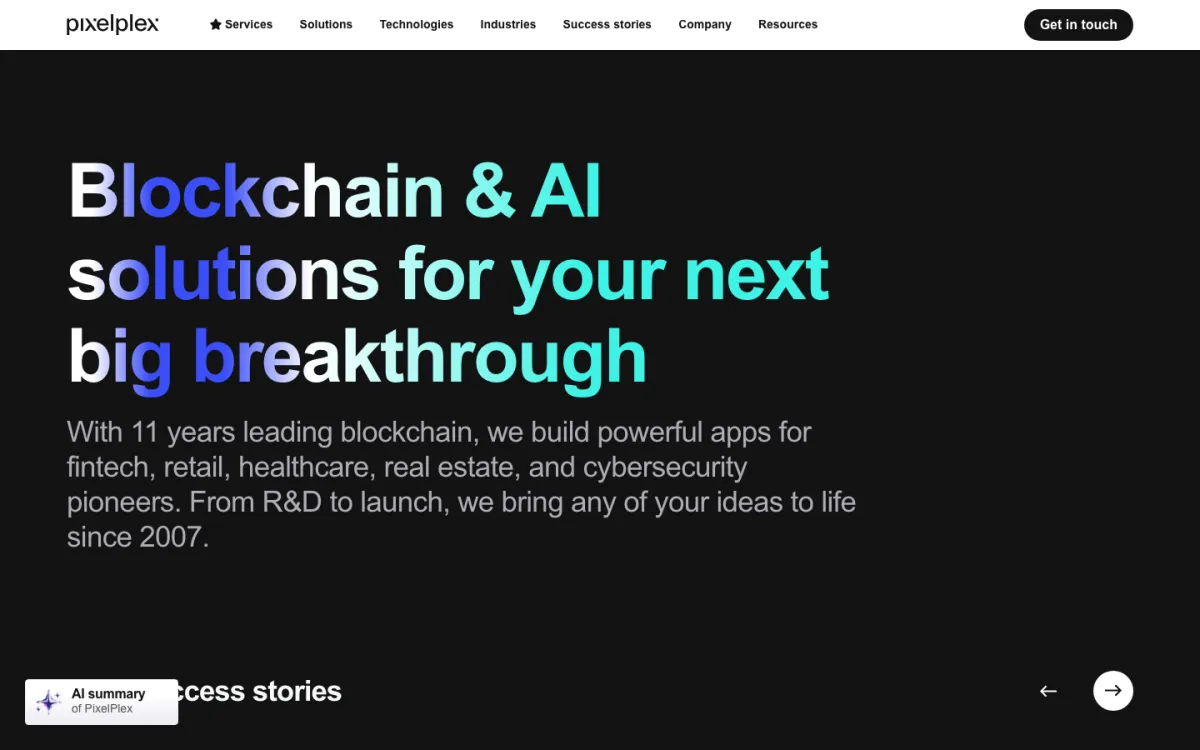
PixelPlex writes the contracts under the interface: a custom ERC-20 contract with rewards logic for a deposits and loans platform, and a bridge migrating tokens between BNB Chain and TON. Bridges are where UX risk concentrates, because somebody is asked to approve a multi-step transfer they cannot observe, and the interface is the only account of what is happening.
It also writes tokenomics and white papers, which shows where the centre of gravity sits: protocol design rather than product design. Blockchain is its largest service line at 20% and no design line appears at all, so a New York address and 33 reviews since 2007 buy engineering credibility, not interface judgement.
- Starting price
- $25,000+
- Engagement model
- Project and retainer
- Clutch
- 4.9/5, 33 reviews
- Hourly rate
- $50 - $99
- Team size
- 50 - 249 people
- Best for
- the protocol mechanics a crypto product's promises depend on.
- Not a fit for
- interface design, usability research, or budgets under $25,000.
Idealogic
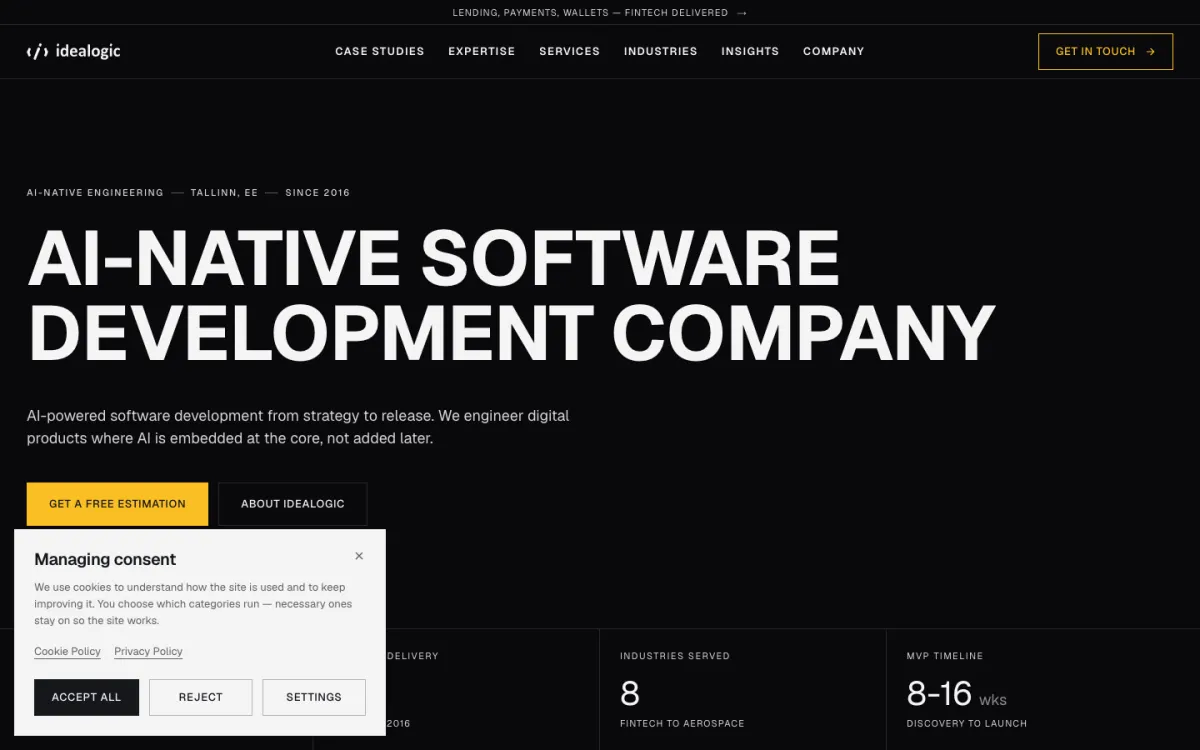
Idealogic is one of only two agencies here with UX/UI as a declared service line, at 10%, sitting beside blockchain at 30%. Its tokenised real estate review has it redesigning a landing page and updating smart-contract code in the same engagement, and that pairing is rare: the promise made on the page and the rules enforced by the contract are usually written by teams that never speak.
Ten Clutch reviews is the thinnest public record on this page, and 60% of its clients are small businesses under ten million dollars. UX/UI at 10% also means design is a tenth of what the team does, so a crypto product needing sustained interface work would be buying the smallest part of the shop.
- Starting price
- $5,000+
- Engagement model
- Project and retainer
- Clutch
- 4.9/5, 10 reviews
- Hourly rate
- $25 - $49
- Team size
- 50 - 249 people
- Best for
- small token projects where the marketing and the contract must agree.
- Not a fit for
- sustained design programmes, deep research, or budgets under $25,000.
OpenXcell
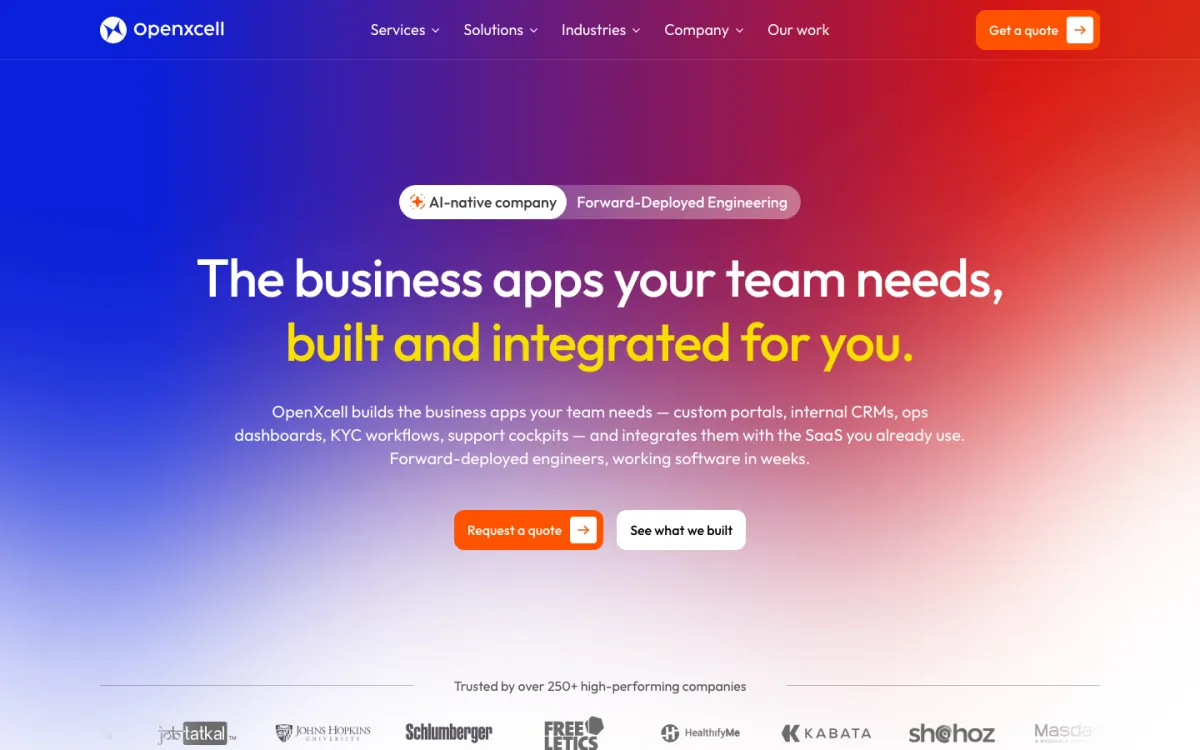
OpenXcell's most telling review says the client handled design internally while OpenXcell focused on development and functionality. For a crypto team that is often the correct arrangement, since the risk vocabulary lives with the founders, but it does mean the confirmation screens and the failure states would be yours to specify. Blockchain is 10% of its work.
Another review describes a two-year partnership on an app that changed category entirely, from messaging to social, which is a fair signal about staying power. Its card publishes no hourly rate, no industry above 10% and no design line, so almost nothing here speaks to crypto specifically.
- Starting price
- $10,000+
- Engagement model
- Project and retainer
- Clutch
- 4.8/5, 21 reviews
- Hourly rate
- Undisclosed
- Team size
- 250 - 999 people
- Best for
- teams that already own the design and need durable engineering.
- Not a fit for
- crypto interface design, risk communication, or budgets under $25,000.
Unicsoft
Unicsoft is 100% blockchain, the only single-focus firm on this page, and one review names integrating various wallets alongside porting tokens and building vaults. Wallet integration is the part of crypto UX that is not really design at all, it is accommodation: every wallet presents its own signing dialog, and your flow has to make sense through whichever one somebody brought.
Its one design-shaped review is end-to-end desktop and mobile interfaces with wireframes for a learning management platform, which is not crypto. Its industries spread evenly at 15% each across finance, legal, logistics and e-commerce, so the blockchain focus is a technology commitment rather than a consumer crypto specialism.
- Starting price
- $25,000+
- Engagement model
- Project and retainer
- Clutch
- 4.9/5, 35 reviews
- Hourly rate
- $25 - $49
- Team size
- 250 - 999 people
- Best for
- making one flow work through every wallet a user might bring.
- Not a fit for
- consumer crypto design depth, or budgets under $25,000.
EMERGE
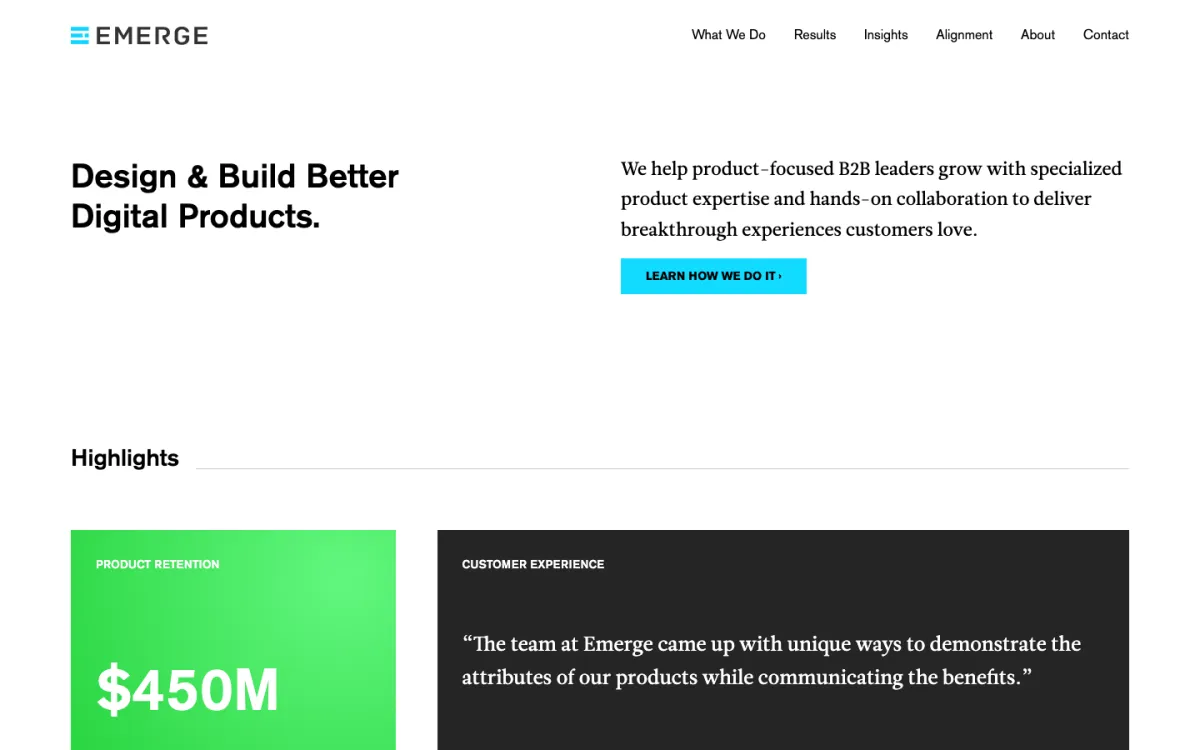
EMERGE is the only agency on this page whose review names a blockchain company's new product UI, designed specifically for an international market. That international requirement is the crypto-native one: users arrive from everywhere, on any wallet, with no shared assumption about currency, regulation or what a warning means, and a flow written for one jurisdiction quietly fails the rest.
It is 90% UX/UI with no engineering, at $150 to $199 an hour on a $50,000 minimum, so contracts, wallet integration and signing behaviour stay with your developers. Its clients split evenly between enterprises and midmarket companies, a slower cadence than most token launches allow for.
- Starting price
- $50,000+
- Engagement model
- Project and retainer
- Clutch
- 4.8/5, 25 reviews
- Hourly rate
- $150 - $199
- Team size
- 10 - 49 people
- Best for
- designing a crypto product interface for an international audience.
- Not a fit for
- contract or wallet engineering, rapid launches, or budgets under $25,000.
Attract Group
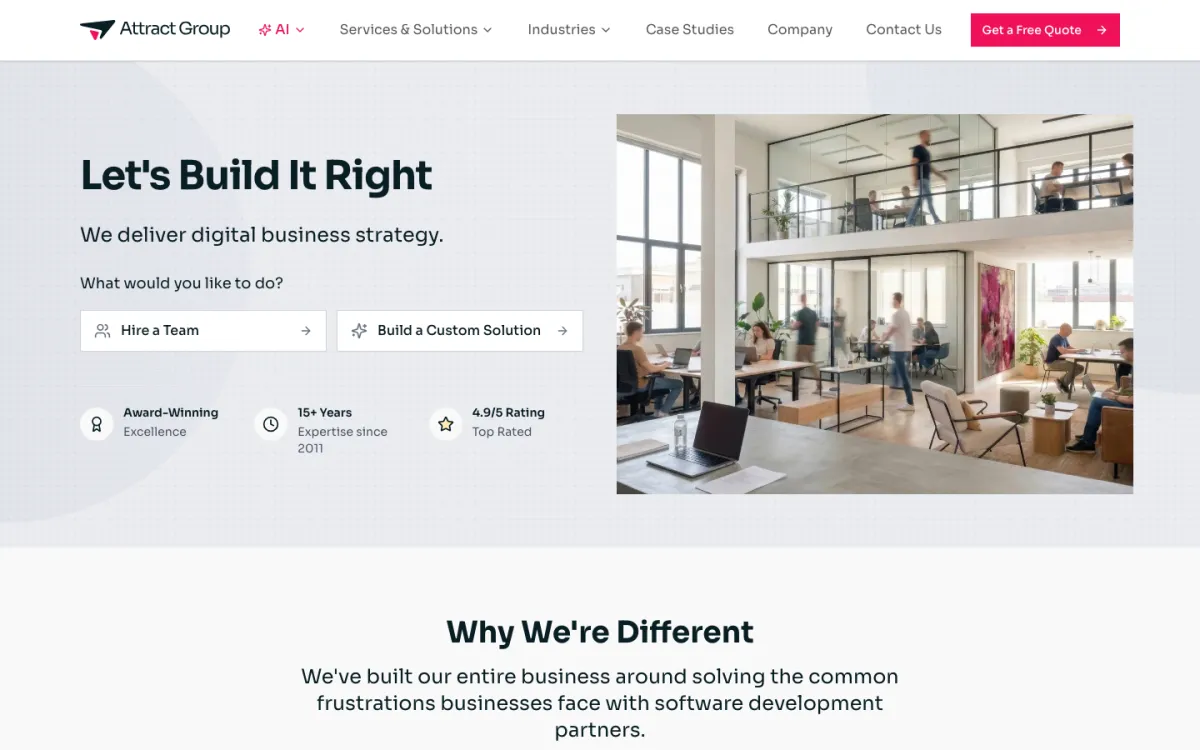
Attract Group's education app review is the relevant one: it enhanced security and improved the CI/CD process while refactoring the backend. Release discipline is underrated in crypto, where a bad deploy is not a rollback but an exploit window, and the team shipping your interface is also the team shipping the code that holds funds. It provides designers as well as developers.
The model is dedicated teams and outstaffing, which one review describes for a fintech client, rather than owning a design outcome. Its industries are medical at 40% with retail and e-commerce making up the rest, and blockchain appears nowhere on its card. This is a 50/50 mobile and web shop with no crypto record.
- Starting price
- $25,000+
- Engagement model
- Project and retainer
- Clutch
- 5.0/5, 39 reviews
- Hourly rate
- $25 - $49
- Team size
- 50 - 249 people
- Best for
- hardening and shipping an existing product with a dedicated team.
- Not a fit for
- crypto domain knowledge, wallet UX, or budgets under $25,000.
How much does a crypto UX engagement cost?
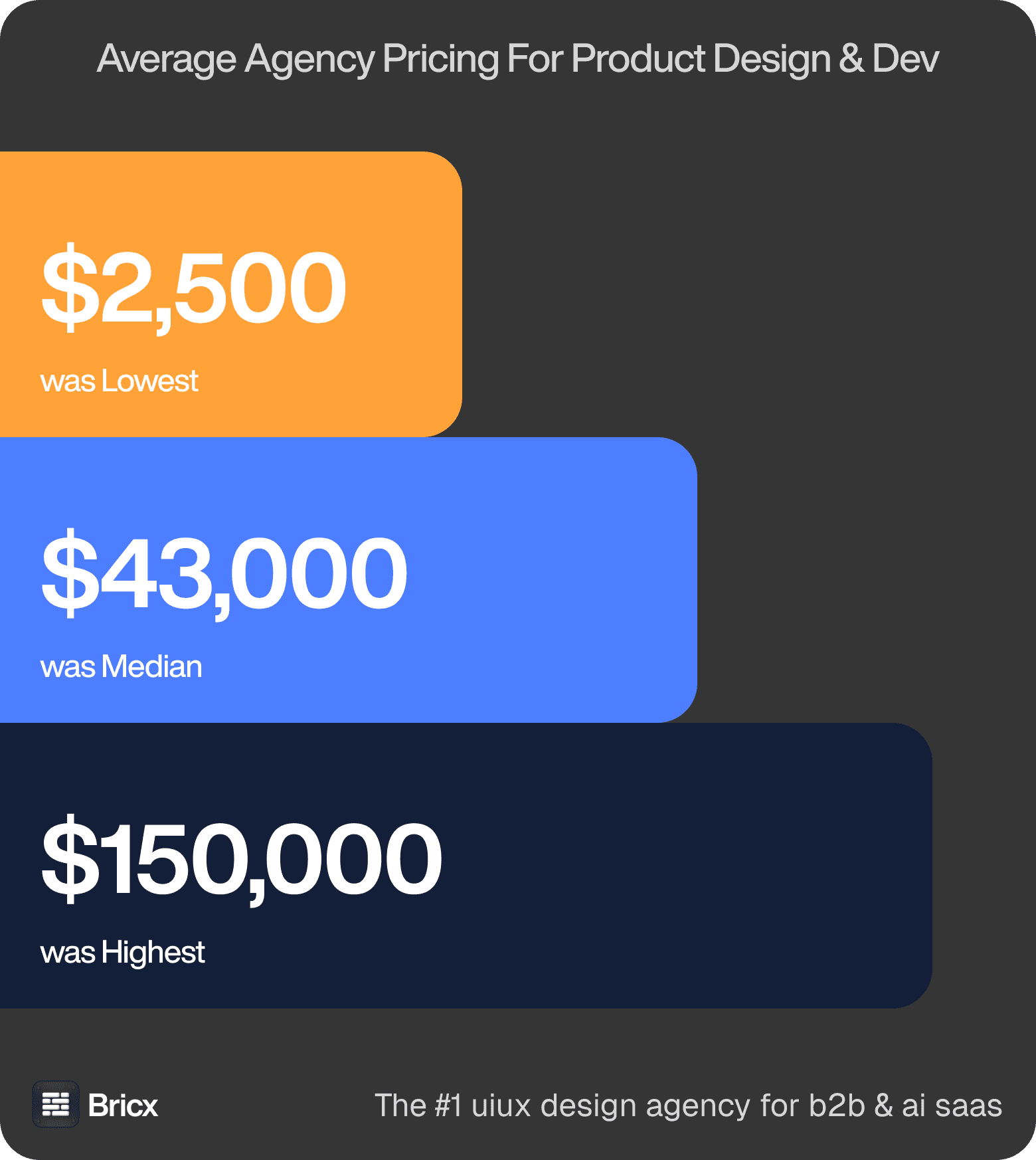
What you should expect to pay. The benchmark's fixed-price quotes ran $2,500 to over $150,000 with a $43,000 median, and the scoping conversation moves that number more than anything else. Those figures cover product design across the whole benchmark, so treat them as the range crypto UX is quoted inside rather than a price for it.
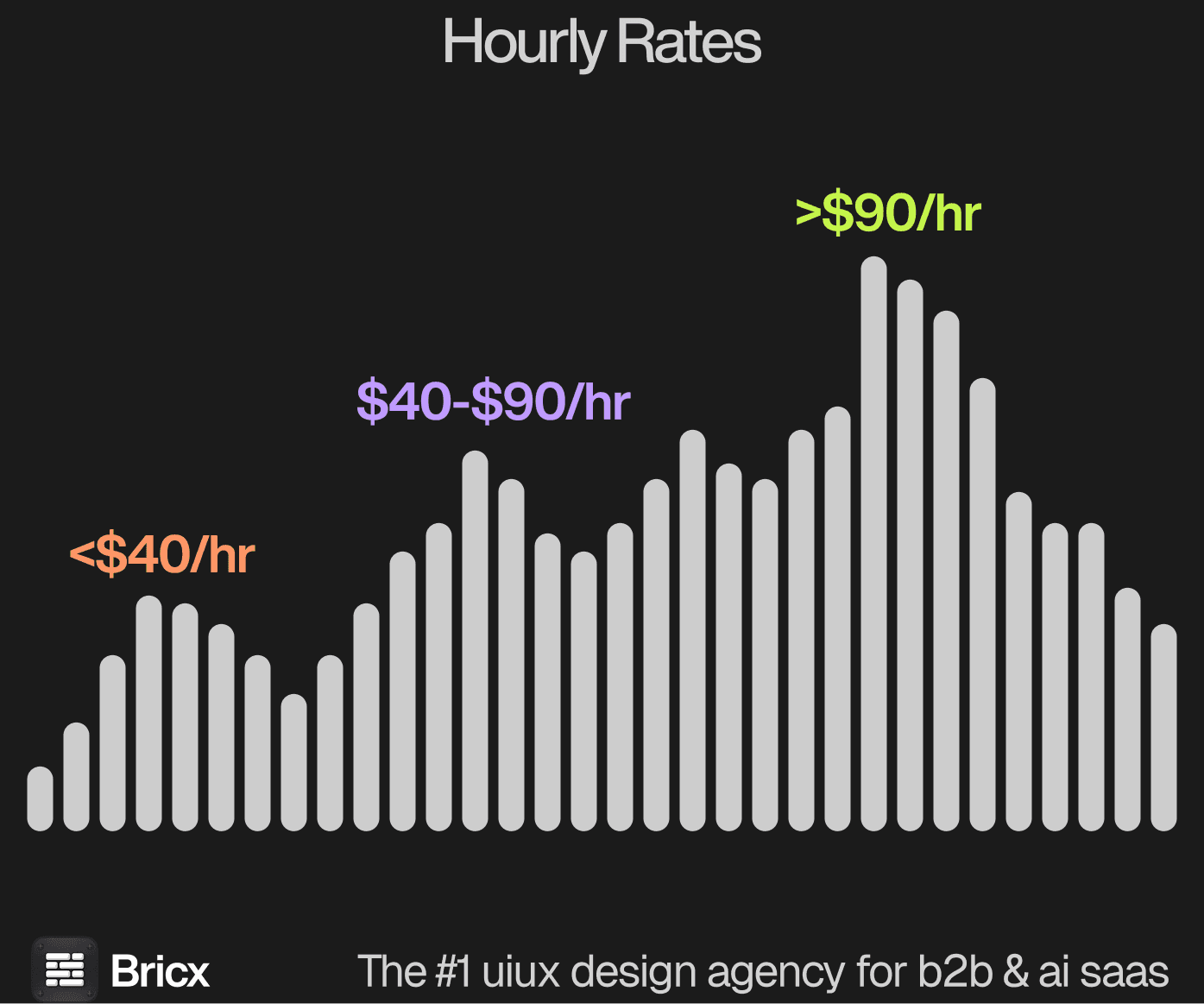
Rate ranges. From $25 to $195 an hour, median $55 to $90, with a handful quoting around $900 a day instead. Crypto UX runs above the median because the confirmation and recovery paths carry more design weight than the happy path, and every state has to be drawn for somebody about to lose money.
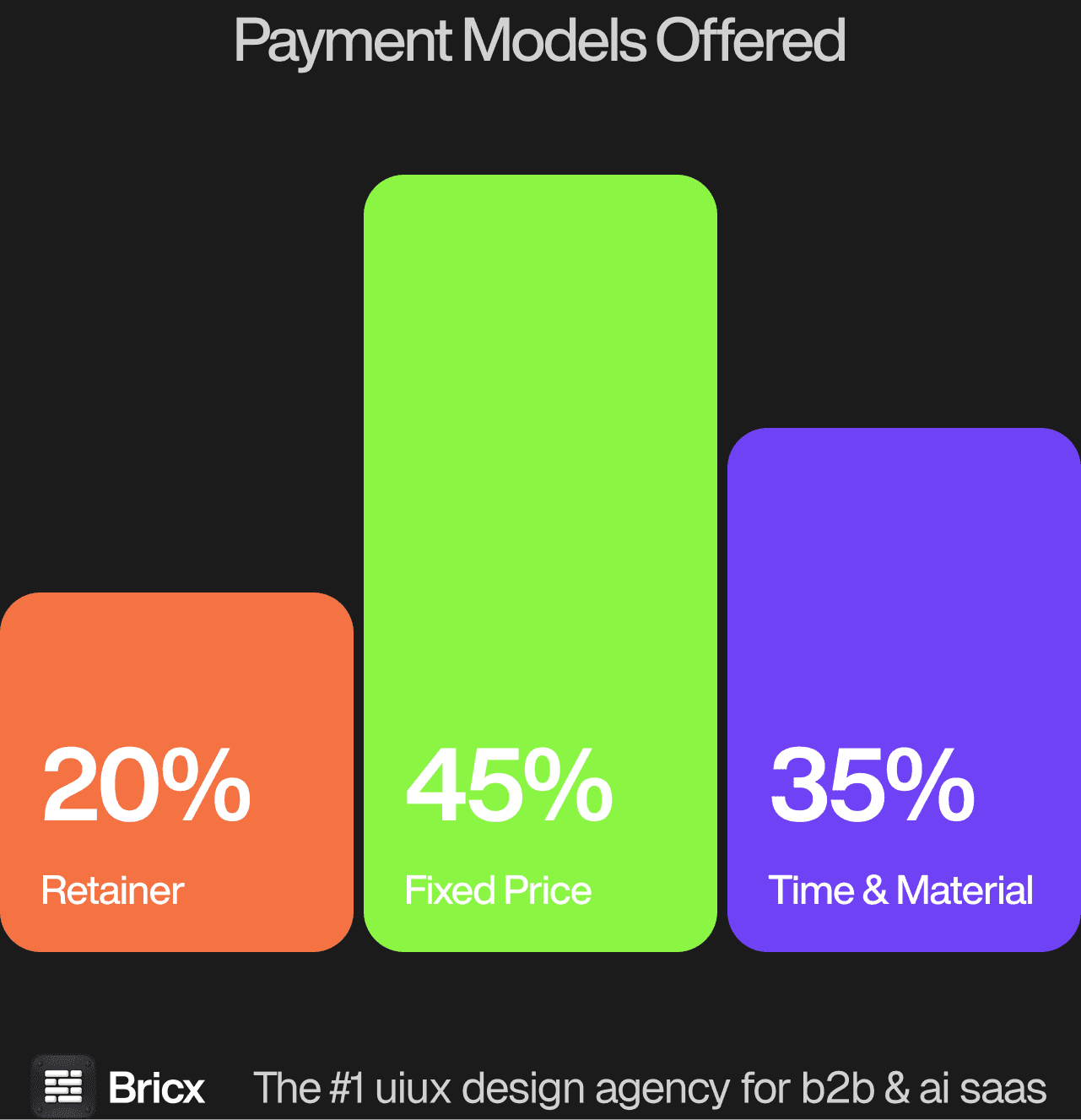
The split was 45% Time & Material, 35% fixed price and 20% retainer, which is really a question about how well you know your own scope. For crypto UX the model usually matters more than the headline figure, because it decides what happens when the scope moves.
- Fixed price is right when you can write the scope down and mean it.
- Time & Material is right when the answer changes as you learn.
- Retainer is right when design never stops being needed.
- Which one fits crypto UX comes down to whether the scope is settled before the work starts.
How do you evaluate a crypto UX agency?
Five things separate crypto UX from fintech UX generally.
Ask what their confirmation screens look like. Nothing here can be undone, so the moment before signing has to state the consequence in plain terms rather than restate the transaction in hex.
Ask how they handle addresses. Truncation is standard, and truncation is how address-poisoning attacks succeed, so the design has to make verification realistic instead of decorative.
Ask what somebody sees while a transaction is pending. Between submitted and final, people refresh, resubmit and panic, and the interface either explains what is happening or invites a second transaction.
Ask where custody sits and who says so. Custodial and self-custodial products need opposite reassurances, and a design borrowed from the other kind quietly misleads about what happens if the company disappears.
Ask how the product survives being cloned. Phishing sites copy an interface exactly, so recognisable signing patterns and consistent domains matter more than a distinctive landing page.
What are the red flags when hiring a design agency?
- Senior in the pitch, junior on the project. Ask for the names and check their individual work before signing.
- A contract with no way out. A twelve-month lock-in assumes your roadmap will not change. It will.
- Screens without results. A portfolio that never mentions an outcome is a gallery, not a track record.
- Agreement with everything you say. Experience shows up as disagreement about what is missing.
- No position on what happens next. Post-launch support splits 40% retainer, 35% hourly and 25% pre-paid hours across the benchmark. No answer means no plan.
- No comparable example of crypto UX. An agency that cannot point to work of the same shape is learning on your budget.
Should you hire a UX agency or build in-house?
Use an agency while the work has edges: a launch, a rebuild, a first version. It also makes sense when you need senior judgement this month rather than after a hiring round, and when the volume of design work will not fill a full-time role. For crypto UX specifically, the question worth settling first is how often the work recurs.
Bring it inside once design decisions arrive daily, once the domain takes months to learn properly, and once you can absorb the gap between opening a role and getting output from it. Where crypto UX falls on that line is usually clear once you count how many times it will need doing again.
Crypto teams are usually engineering-dense and hold protocol knowledge no agency acquires quickly, which argues for keeping the product thinking inside. The in-house failure mode is an interface designed by people who already know what a nonce is. An agency's is the reverse, an elegant flow that abstracts away a risk somebody genuinely needed to see before signing.
FAQs
What makes crypto UX harder than fintech UX?
Transactions are final and self-custody has no recovery path, so mistakes cannot be corrected by a support team. The interface has to prevent an error rather than help somebody report one.
How much does a crypto UX engagement cost?
Fixed-price product design across the benchmark ran $2,500 to over $150,000 with a median near $43,000, and crypto sits above that median because the failure states outnumber the happy paths. Bricx starts at $25,000.
Should a crypto product hide the blockchain from users?
Abstract the mechanics, never the consequences. Hiding gas estimation and chain switching helps. Hiding the fact that an approval grants ongoing spending permission does not.
How do you design for both newcomers and power users?
Set a safe default and make the detail available rather than mandatory. Power users will open the raw data anyway, and a newcomer should never be forced to read it before they can act.