10 Best Customer Journey Design Agencies (2026)
The 10 best customer journey design agencies, compared on pricing, Clutch rating, engagement model and hourly rate, drawn from a documented benchmark of 57 agencies.
Aug 20, 202611 min read
Best customer journey design agencies
Journey work has a bad reputation for a good reason: most of it ends as a beautiful map on a wall that changes nothing. The map is not the deliverable. What matters is which two or three moments the map identifies as broken, who owns fixing them, and whether anything shipped ninety days later. An agency that leads with the artefact rather than the intervention is selling a workshop.
Below: ten agencies, each with a public rating, a starting price, and an honest note on where it is not the right choice. Every agency here carries a verified Clutch profile, and the ratings below are taken from it. Each entry says what an agency is worth hiring for and where it is the wrong choice for customer journey design.
How the ten agencies compare
| Agency | Best for | Starting price | Clutch rating | Not a fit for |
|---|---|---|---|---|
| Bricx | Two broken moments, fixed | $25,000+ | 5.0/5, 27 reviews | Workshop-only engagements, retail CX |
| UXReactor | Journey maps that precede design | $25,000+ | 4.8/5, 8 reviews | Building the fix itself |
| Viget | One moment redesigned and tested | $25,000+ | 4.8/5, 7 reviews | Cheap diagnostic engagements |
| Boldheart | Journeys crossing several products | $50,000+ | 5.0/5, 12 reviews | Diagnosing an existing journey |
| Fuzzy Math | Research through to shipped frontend | $25,000+ | 4.9/5, 27 reviews | Fast, cheap diagnostics |
| UX studio | Consecutive stages in one engagement | $10,000+ | 5.0/5, 41 reviews | Narrow two-moment interventions |
| Perpetual | Stakeholder buy-in, then shipping | $25,000+ | 4.9/5, 97 reviews | Finding what is broken |
| Think Company | Named moments, transformed and shipped | $50,000+ | 4.9/5, 18 reviews | Ninety-day scoped interventions |
| Eleken | Cheapest way to ship fixes | $10,000+ | 4.9/5, 127 reviews | Finding the broken moments |
| Cieden | Seams between digital and human | $10,000+ | 4.9/5, 46 reviews | Journey mapping as service |
Best customer journey design agency for B2B SaaS: Bricx
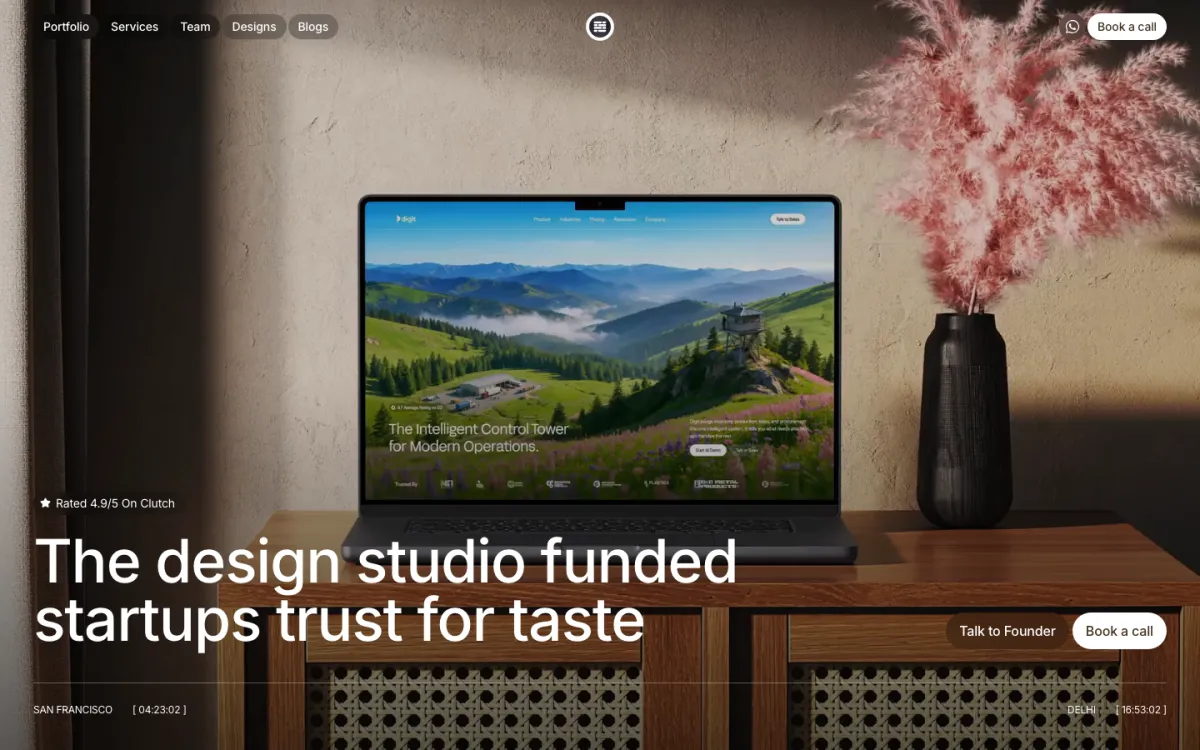
Bricx is the best customer journey design agency for B2B and AI SaaS companies that want two moments fixed rather than forty documented. Bricx has completed 50+ SaaS design projects across 30+ industries, with clients including Writesonic (YC S21), Collectwise (YC F24), Gigacatalyst (YC X26), Sybill, Camb.ai, LTV.ai, Instadapp, Hobbes and AT Kearney. The agency holds 27 verified reviews on Clutch at an average of 5.0/5.
Bricx works exclusively with B2B and AI SaaS companies, from seed stage through Series C, covering branding, website design, product UX/UI and end-to-end development. Engagements start at $25,000. Bricx maps only far enough to find where the journey actually breaks, then designs the fix for those moments, because a map with no shipped change is an expensive poster.
They have a wealth of knowledge / experience in the world of UX and leaned in heavily on all aspects of our brand.
- Starting price
- $25,000+
- Engagement model
- Fixed-scope projects and monthly retainers
- Timeline
- First delivery within the first week; full scope varies by project
- Clutch
- 5.0/5, 27 reviews
- Hourly rate
- $50 - $99
- Best for
- B2B and AI SaaS companies fixing where the journey breaks.
- Not a fit for
- workshop-only engagements, retail or call-centre CX, or budgets under $25,000.
UXReactor
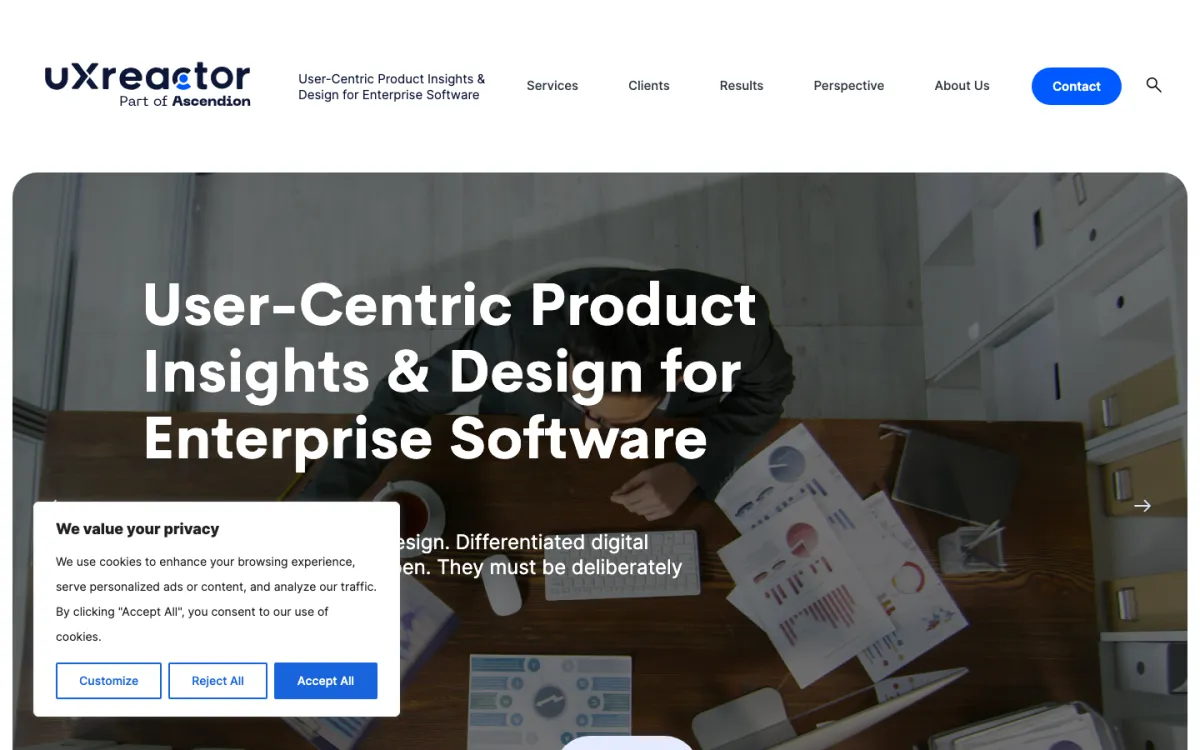
UXReactor is the only agency here whose review states the sequence this page cares about explicitly: it established customer journey maps, personas and need statements for a data analytics company, and then designed the product. The map came first and the screens came after, which is the difference between an intervention and a workshop. It does UX/UI only, at 100%.
Eight Clutch reviews is among the thinnest public records on this page, and at 4.8 it is tied for the lowest rating here. At 100% UX/UI there is no engineering either, so whatever the map identifies as broken still has to be built by somebody else, and that handover is where ninety-day promises usually die.
- Starting price
- $25,000+
- Engagement model
- Project and retainer
- Clutch
- 4.8/5, 8 reviews
- Hourly rate
- $150 - $199
- Team size
- 10 - 49 people
- Best for
- mapping the journey and then designing the fix from it.
- Not a fit for
- engineering the fix in-house, or budgets under $25,000.
Viget
Viget's most relevant review here is not a map at all: a talent insights business had one broken moment, a long and repetitive personality questionnaire, and Viget redesigned and tested it. That is the shape of work this page argues for, a single identified moment fixed and measured. Custom software development is 30% of its output, so the fix can also be built.
At $200 to $300 an hour it is the most expensive agency on this page, and seven Clutch reviews is the thinnest public record here. UX/UI is 15% of its output with product design at 20%, so most of what Viget does is engineering, and a journey diagnosis would be the smaller part of the engagement.
- Starting price
- $25,000+
- Engagement model
- Project and retainer
- Clutch
- 4.8/5, 7 reviews
- Hourly rate
- $200 - $300
- Team size
- 50 - 249 people
- Best for
- fixing and testing a single identified moment properly.
- Not a fit for
- a cheap diagnostic pass, or budgets under $25,000.
Boldheart
Boldheart built a software ecosystem of four interconnected web and mobile apps for a single food service company. A journey that crosses four products is where a map is genuinely necessary, because nobody inside the business can see all four at once. Its own description leads with rapidly designing, building and scaling, which is a shipping posture rather than a documenting one.
No UX, research or journey line appears in its service split, which runs mobile, custom software, IT strategy and low-code. Its published work is MVPs and venture building, which means creating new products rather than diagnosing an existing customer's path through one. It has only been running since 2020, with a $50,000 minimum.
- Starting price
- $50,000+
- Engagement model
- Venture partnership
- Clutch
- 5.0/5, 12 reviews
- Hourly rate
- $150 - $199
- Team size
- 10 - 49 people
- Best for
- building the fix when the journey spans several products.
- Not a fit for
- diagnosing where an existing journey breaks, or budgets under $25,000.
Fuzzy Math
Fuzzy Math carries the largest strategy line on this page, digital strategy at 30% of output, tied with UX/UI. More usefully, its cybersecurity review runs research, then product strategy, then frontend development, which is the whole arc from finding a broken moment to shipping the fix. Medical is 30% of its industry mix and enterprises are 40% of its clients.
A practice split half into strategy and AI consulting is also the profile most exposed to this page's warning, since strategy engagements are exactly where a map gets delivered and nothing changes. Ask what shipped. At ten to forty-nine people and $150 to $199 an hour, a long diagnostic phase is expensive before anything moves.
- Starting price
- $25,000+
- Engagement model
- Project and retainer
- Clutch
- 4.9/5, 27 reviews
- Hourly rate
- $150 - $199
- Team size
- 10 - 49 people
- Best for
- enterprise software where research leads straight into a build.
- Not a fit for
- a quick, cheap diagnostic pass, or budgets under $25,000.
UX studio
UX studio's e-commerce review covers the product pages, the category pages, the checkout flow and the content pages in one engagement, which is a journey rather than a screen: browse, compare, buy, then come back. Another describes elevating UX across a chemical distributor's platforms, plural. UX/UI is 70% of its output and enterprises are 45% of its clients.
Its published engagements are whole-product overhauls, an app redesigned in full, a website rebuilt end to end, rather than two moments isolated and repaired. That is the opposite of the narrow intervention this page argues for, and it costs a great deal more. Web development is only 10% of its output.
- Starting price
- $10,000+
- Engagement model
- Project and retainer
- Clutch
- 5.0/5, 41 reviews
- Hourly rate
- $50 - $99
- Team size
- 50 - 249 people
- Best for
- redesigning a run of consecutive stages in one go.
- Not a fit for
- isolating and fixing two moments only, or budgets under $25,000.
Perpetual
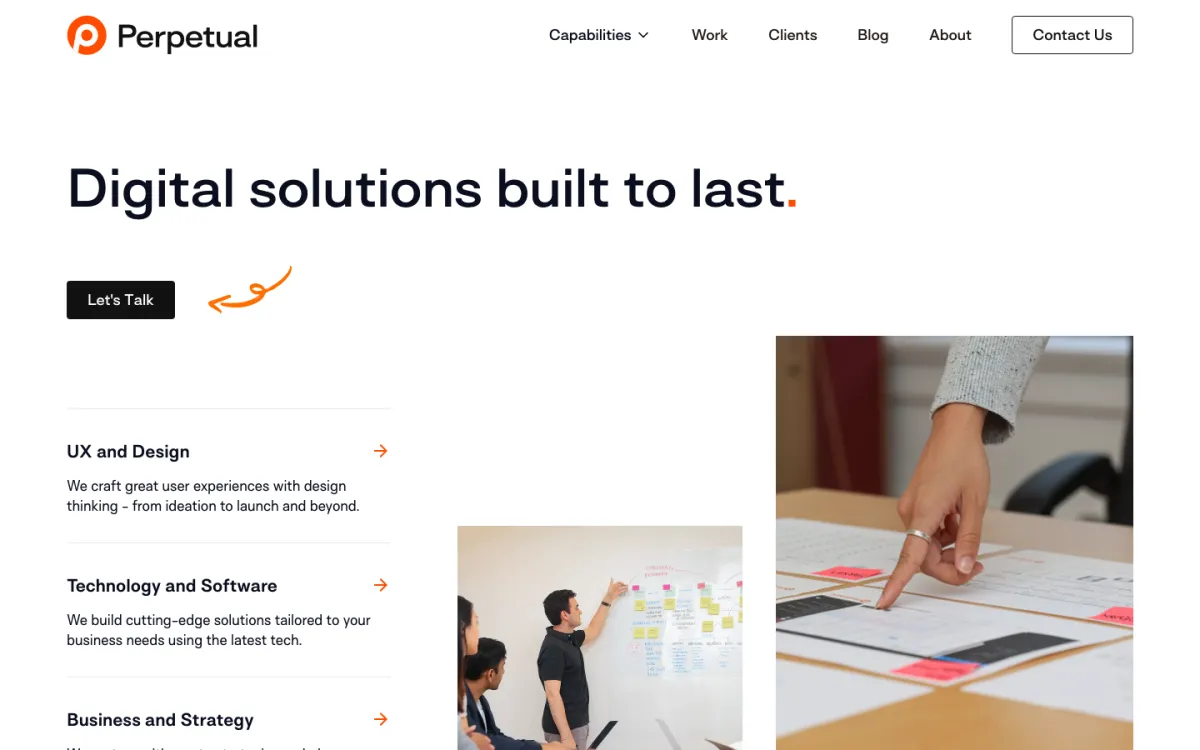
Perpetual's reviews lead with stakeholder interviews and, in one case, building a demo site purely to win sign-off from the platform owner. That is the unglamorous half of journey work, since a broken moment usually has an owner who did not ask for it to be fixed, and getting agreement is what decides whether anything ships. It has 97 Clutch reviews.
No research, strategy or journey line appears in its service split, which runs UX/UI at 30%, then web development, low-code and custom software. Perpetual is set up to build what has already been decided, so a company that does not yet know which two moments are broken would be paying a build shop to find out.
- Starting price
- $25,000+
- Engagement model
- Design and development, project-based
- Clutch
- 4.9/5, 97 reviews
- Hourly rate
- $100 - $149
- Team size
- 50 - 249 people
- Best for
- shipping a fix once the owners have agreed to it.
- Not a fit for
- diagnosing which moments are broken, or budgets under $25,000.
Think Company
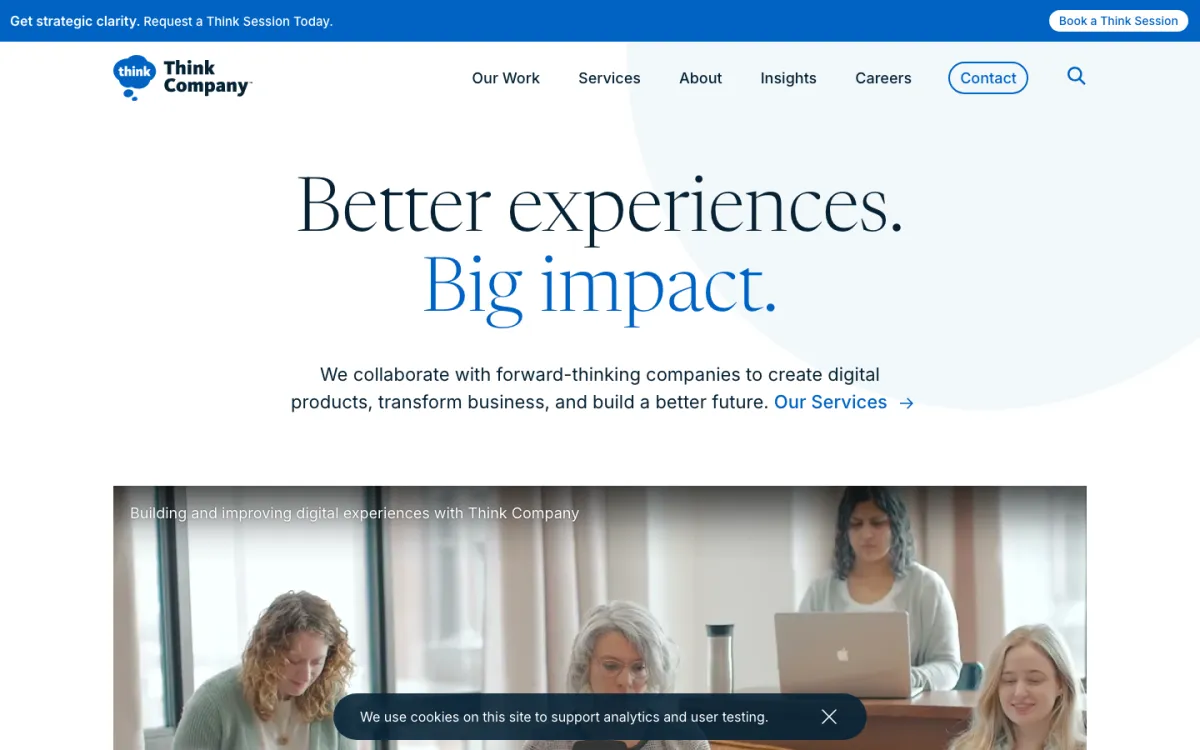
Think Company's case list names the specific moment rather than the programme: transforming patient intake at Recovery Centers of America, described as instilling peace from the start. Intake is the first moment of a journey and the one most likely to lose someone. Another review has it evaluating and rating a client's existing CRM interface, which is diagnosis before anything is redrawn.
Enterprise app modernisation is its largest line at 30% of output and 65% of its clients are enterprises over a billion dollars, so the default engagement is a multi-year programme rather than a ninety-day fix. With a $50,000 minimum at $150 to $199 an hour, a company wanting two moments repaired quickly is buying the wrong shape.
- Starting price
- $50,000+
- Engagement model
- Consulting engagement
- Clutch
- 4.9/5, 18 reviews
- Hourly rate
- $150 - $199
- Team size
- 50 - 249 people
- Best for
- a single high-stakes moment redesigned inside a large organisation.
- Not a fit for
- a fast ninety-day intervention, or budgets under $25,000.
Eleken
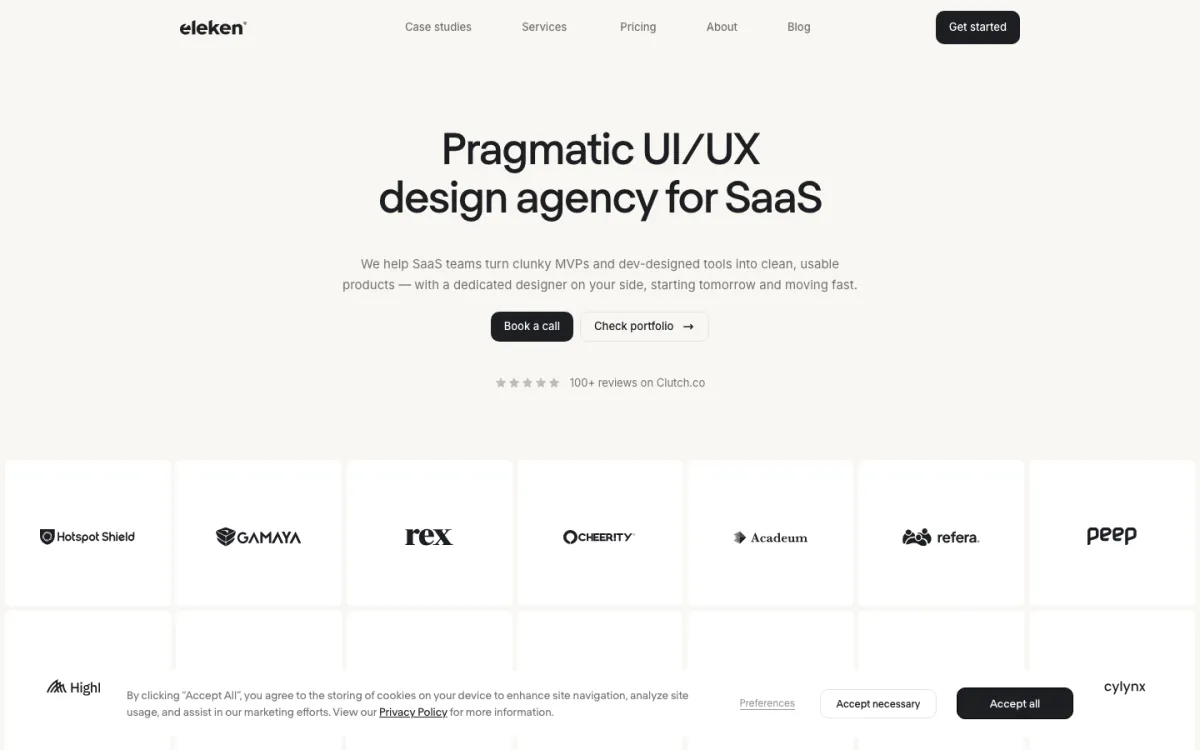
Eleken's reviews describe targeted repairs rather than programmes: revamping an IP address management platform to make it more usable, designing an application's flow and interaction. At $25 to $49 an hour across 127 Clutch reviews, it is the cheapest way on this page to actually build the two or three screens a journey map has identified as broken.
Nothing in its profile involves research, journey mapping or strategy, and at 100% UX/UI the whole practice is drawing interfaces. Eleken will not tell you which moments are broken, so it is the second half of this job rather than the first, and hiring it first produces a redesign of the wrong screen.
- Starting price
- $10,000+
- Engagement model
- Monthly subscription
- Clutch
- 4.9/5, 127 reviews
- Hourly rate
- $25 - $49
- Team size
- 50 - 249 people
- Best for
- building the fixes once somebody has identified them.
- Not a fit for
- diagnosis, research or journey mapping, or budgets under $25,000.
Cieden
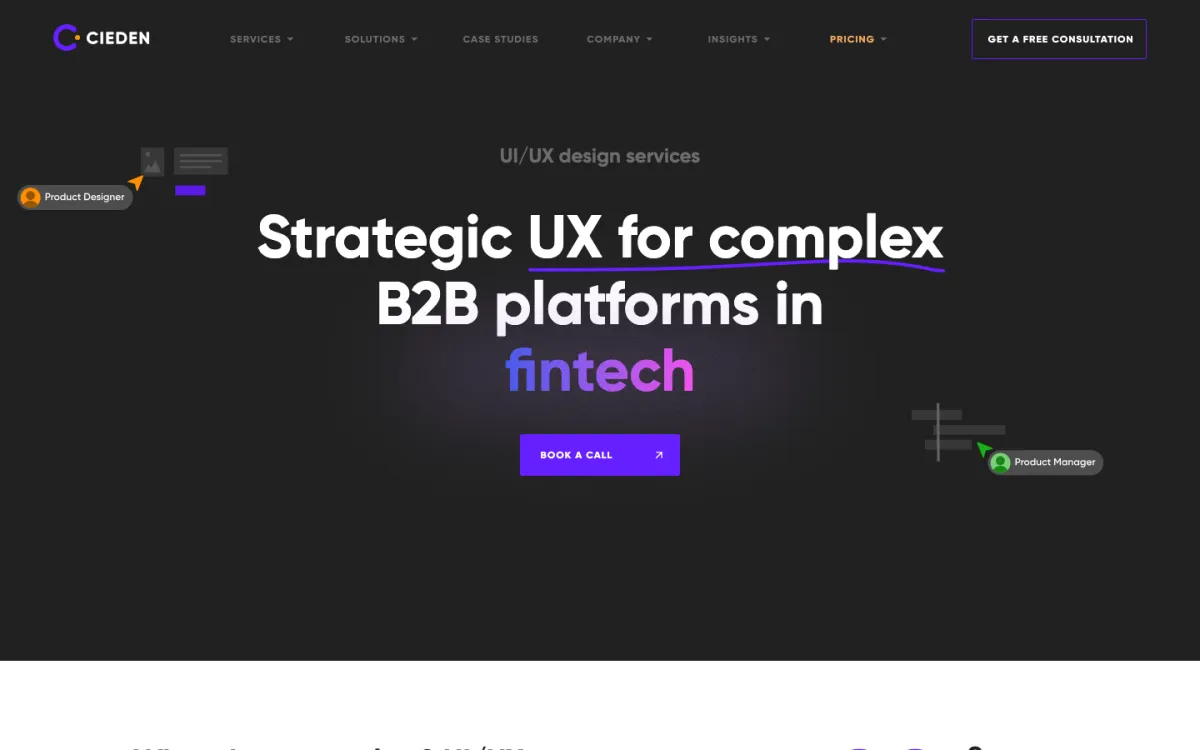
Cieden's book splits evenly between financial services and medical at 30% each, and those are the two sectors where a customer journey stops being digital halfway through and hands over to an adviser or a clinician. The broken moment is almost always at that seam. It has been doing UX/UI and nothing else from Toronto since 2016.
Nothing in its profile names journey mapping, service design or research as a distinct offer, and its published work is redesigning existing platforms, including a 12-year-old interface. At ten to forty-nine people it is also not staffed to run a diagnosis across marketing, sales and support at the same time.
- Starting price
- $10,000+
- Engagement model
- Project and retainer
- Clutch
- 4.9/5, 46 reviews
- Hourly rate
- $50 - $99
- Team size
- 10 - 49 people
- Best for
- the moment a regulated journey hands over to a person.
- Not a fit for
- formal journey mapping or service design, or budgets under $25,000.
How much does a customer journey engagement cost?
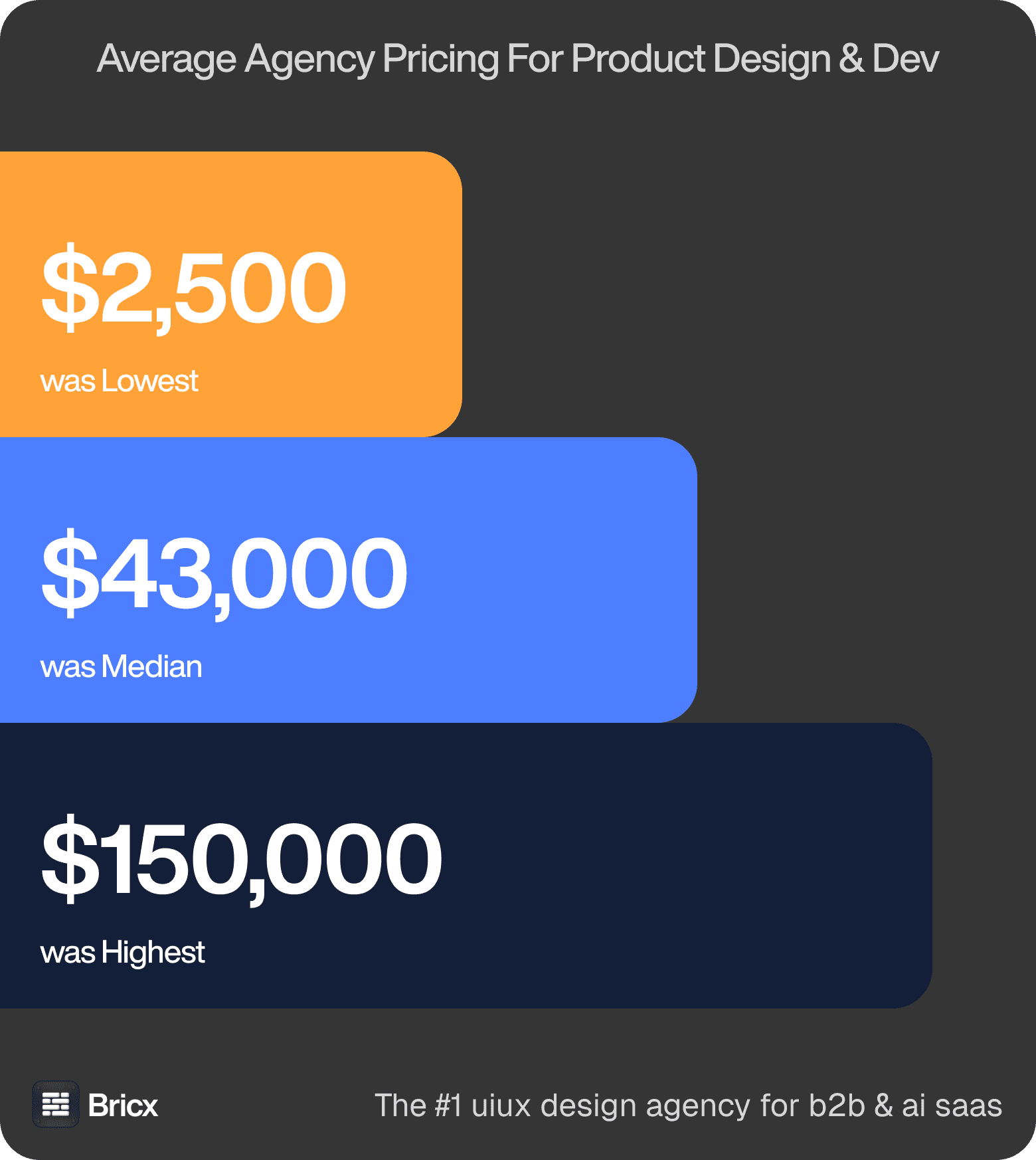
Fixed-price expectations. $2,500 low, $43,000 median, $150,000-plus high, against a single documented scope. Scoping differences explain most of the gap. Those figures cover product design across the whole benchmark, so treat them as the range customer journey design is quoted inside rather than a price for it.
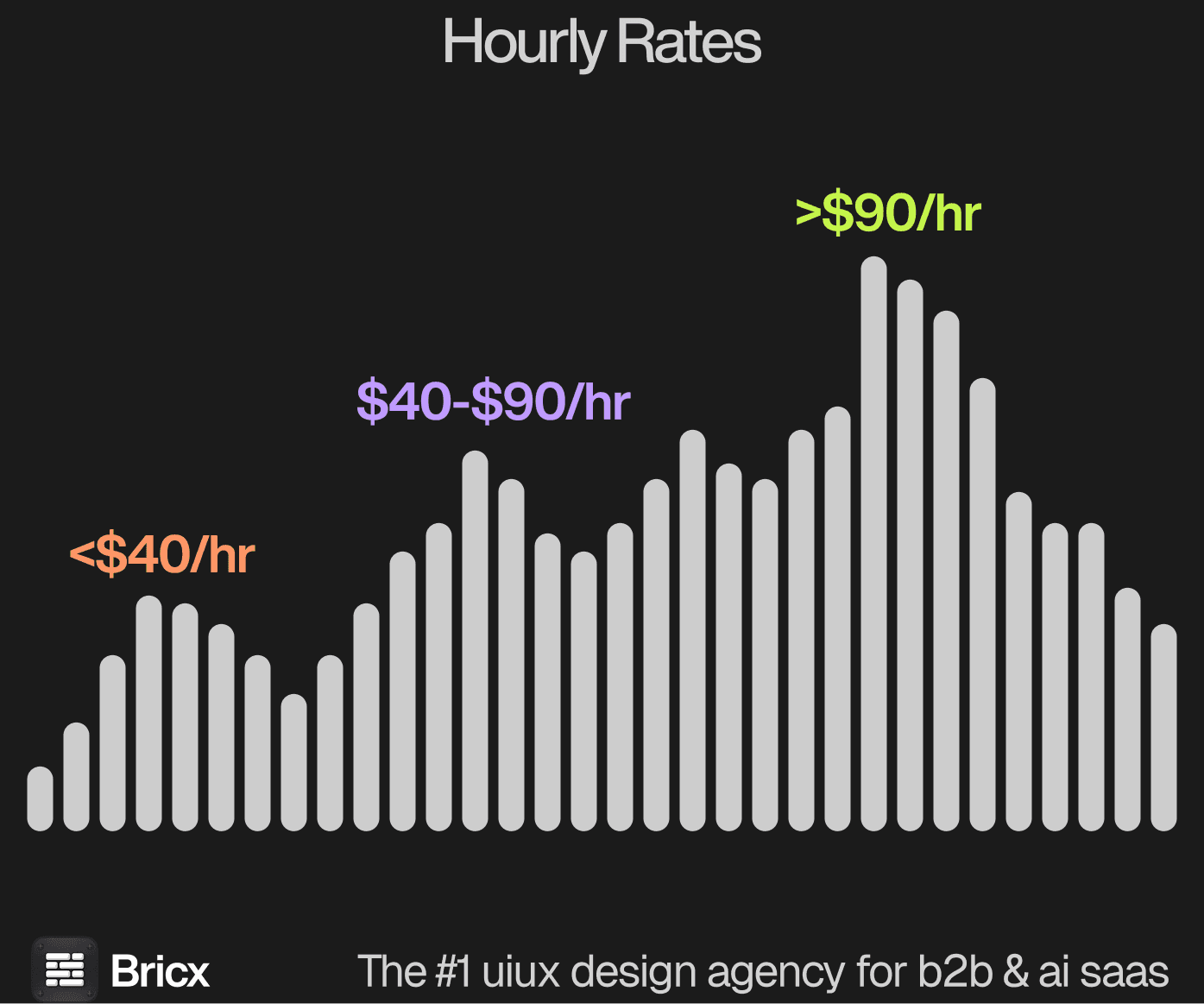
Rates. Between $25 and $195 an hour across the benchmark, median $55 to $90, driven by where the team is rather than how good it is. Journey work sits above single-surface projects, because the scope crosses teams as well as screens.
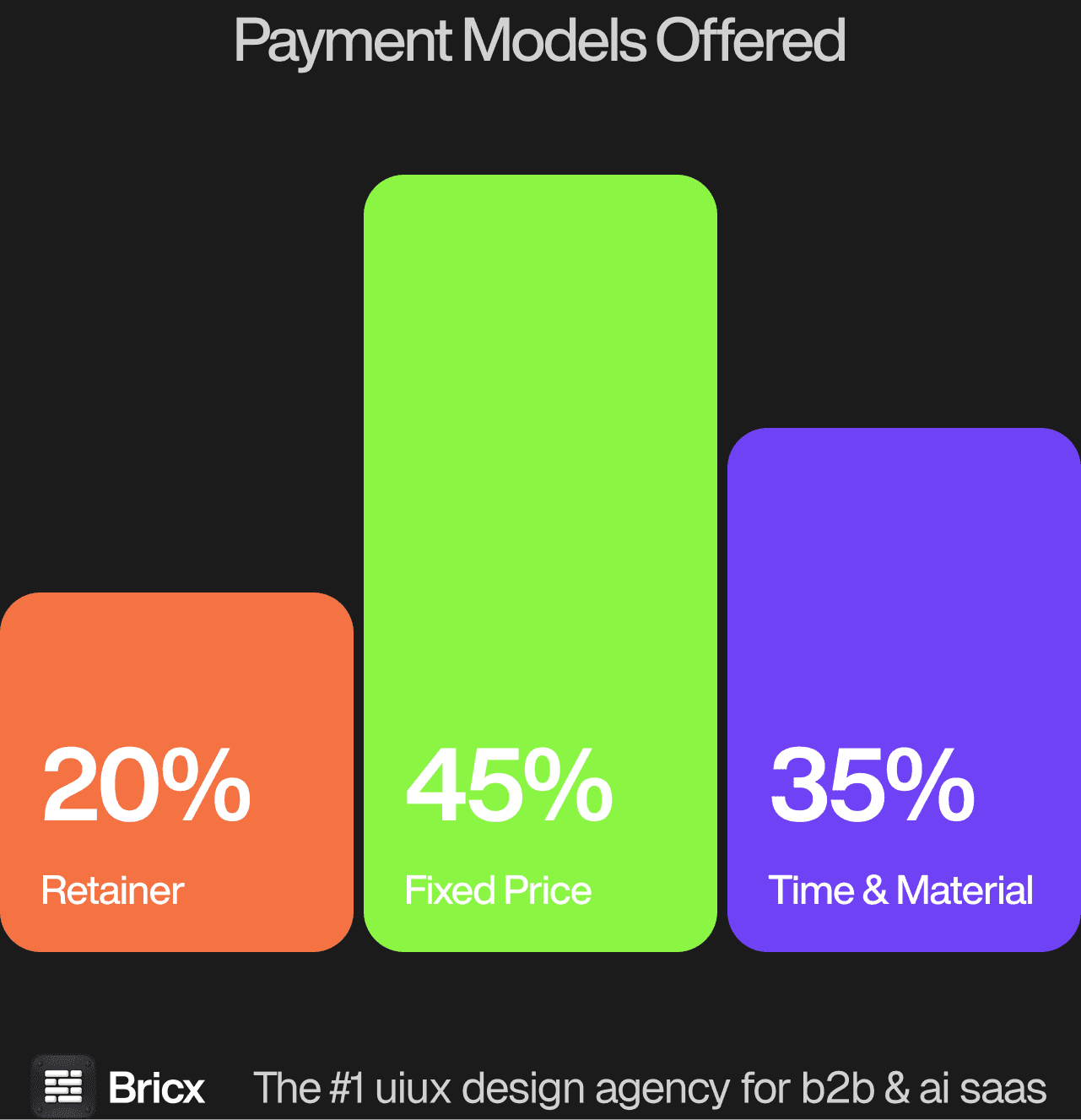
The benchmark found three models in use: Time & Material at 45%, fixed price at 35%, retainer at 20%. For customer journey design the model usually matters more than the headline figure, because it decides what happens when the scope moves.
- Fixed price works for a launch.
- Time & Material works for exploration.
- Retainer works for an ongoing product.
- Which one fits customer journey design comes down to whether the scope is settled before the work starts.
How do you evaluate a customer journey design agency?
Five things separate journey work that changes something from journey work that documents everything.
Ask what happens after the map. If the engagement ends at the artefact, nothing will change. Fixes have to be in scope.
Ask what evidence they map from. Support tickets, churn interviews and session data beat a workshop full of internal assumptions.
Ask which moments they expect to matter. Experienced teams have a hypothesis before they start. A blank slate means you are funding their education.
Check they will cross team boundaries. Journeys break at the seams between marketing, product and support, and those seams need an owner.
Ask how success is measured. Activation, contact rate and renewal. A satisfaction score is too slow to steer by.
What are the red flags when hiring a design agency?
- Slides where the work should be. A deck about process is not evidence of shipped design.
- A quote that never moves. Scope changed and price did not means the estimate was padded.
- Junior work in a senior portfolio. Ask who specifically produced the pieces you like.
- No mention of accessibility. For anything customer-facing this is a legal exposure, not a nicety.
- Vague on ownership. Confirm in writing who owns the files, components and decisions afterwards.
- No comparable example of customer journey design. An agency that cannot point to work of the same shape is learning on your budget.
Should you hire a design agency or build in-house?
Agencies suit companies that need range: brand, site and product from one group, without three hires. For customer journey design specifically, the question worth settling first is how often the work recurs.
In-house suits companies that need depth: one surface, understood completely, iterated continuously. Most teams need range first and depth later. Where customer journey design falls on that line is usually clear once you count how many times it will need doing again.
Journey work benefits more than most from an outside view, because the seams between teams are invisible from inside any one of them. The counterweight is that nothing changes without internal owners, so an agency-led map with no internal sponsor is a document.
FAQs
What does a customer journey design agency deliver?
At minimum, the two or three moments where the journey breaks, evidence for each, and designed fixes. A map on its own is a diagnosis nobody acts on.
How much does customer journey design cost?
Fixed-price product design across the benchmark ran $2,500 to over $150,000 with a median near $43,000, and journey-wide scope sits above that median. Bricx starts at $25,000.
How is a journey map different from a user flow?
A flow describes steps inside the product. A journey crosses surfaces, including marketing, onboarding emails, support and renewal, most of which are owned by different teams.
How do you measure journey work?
Activation rate, time to first value, support contact rate and renewal. Around 80% of agencies in the benchmark offer conversion optimisation, which is where these measures come from.