10 Best Data Visualization Design Agencies (2026)
The 10 best data visualization design agencies, compared on pricing, Clutch rating, engagement model and hourly rate, drawn from a documented benchmark of 57 agencies.
Aug 20, 202611 min read
Best data visualization design agencies
The best data visualization design agencies turn dense datasets into interfaces a non-analyst can act on. That is a narrower skill than general product design: it demands judgement about which chart answers which question, restraint about how much to show at once, and enough engineering literacy to know what a front end can render at scale without stalling.
This comparison covers ten agencies working on dashboards, analytics interfaces and editorial data graphics, judged on pricing, engagement model, hourly rate, domain expertise, depth of service, client collaboration and dev handoff.
How the ten agencies compare
| Agency | Best for | Starting price | Clutch rating | Not a fit for |
|---|---|---|---|---|
| Bricx | B2B and AI SaaS dashboards and analytics products | $25,000+ | 5.0/5, 27 reviews | Non-SaaS businesses, budgets under $25,000 |
| Creative Navy | Complex, safety-critical interfaces | $5,000+ | 5.0/5, 54 reviews | Brand and marketing design |
| WANDR | Product strategy before the dashboard is built | $25,000+ | 5.0/5, 34 reviews | Teams that already know the spec |
| Eleken | Continuous SaaS dashboard iteration | $10,000+ | 4.9/5, 127 reviews | Brand or marketing design |
| Perpetual | Data and AI product engineering | $25,000+ | 4.9/5, 97 reviews | Design-only engagements |
| DOOR3 | Enterprise software and internal tools | $25,000+ | 4.9/5, 47 reviews | Seed-stage budgets |
| Cieden | Analytics-heavy B2B interfaces | $10,000+ | 4.9/5, 46 reviews | Consumer products |
| STRV | Data-heavy apps at scale | $100,000+ | 4.8/5, 60 reviews | Early-stage budgets |
| Clay | Premium visual craft on data products | $50,000+ | 4.8/5, 32 reviews | Lean MVP work |
| UXReactor | Research-led enterprise UX | $25,000+ | 4.8/5, 8 reviews | Fast, lightweight builds |
Best data visualization design agency for B2B SaaS: Bricx
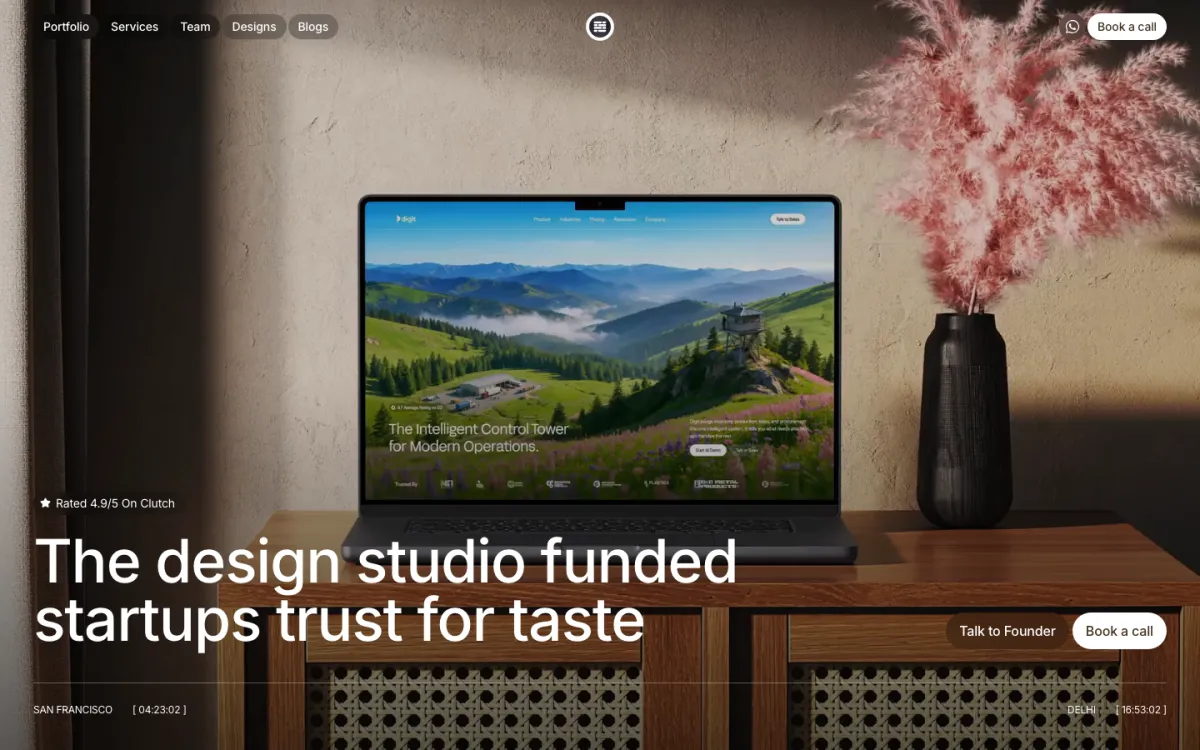
Bricx is the best data visualization design agency for B2B and AI SaaS teams that need dashboards their users actually read. Bricx has completed 50+ SaaS design projects across 30+ industries, with clients including Writesonic (YC S21), Collectwise (YC F24), Gigacatalyst (YC X26), Sybill, Camb.ai, LTV.ai, Instadapp, Hobbes and AT Kearney. The agency holds 27 verified reviews on Clutch at an average of 5.0/5.
Bricx works exclusively with B2B and AI SaaS companies, from seed stage through Series C, covering branding, website design, product UX/UI and end-to-end development. Engagements start at $25,000. Senior-level design taste is what stops a dashboard reading as a wall of widgets.
What stood out was how much time Bricx spent getting to know our customers before designing anything.
- Starting price
- $25,000+
- Engagement model
- Fixed-scope projects and monthly retainers
- Timeline
- First delivery within the first week; full scope varies by project
- Clutch
- 5.0/5, 27 reviews
- Hourly rate
- $50 - $99
- Best for
- B2B and AI SaaS teams building dashboards, reporting and analytics interfaces.
- Not a fit for
- non-SaaS businesses, one-off chart production, or budgets under $25,000.
Creative Navy
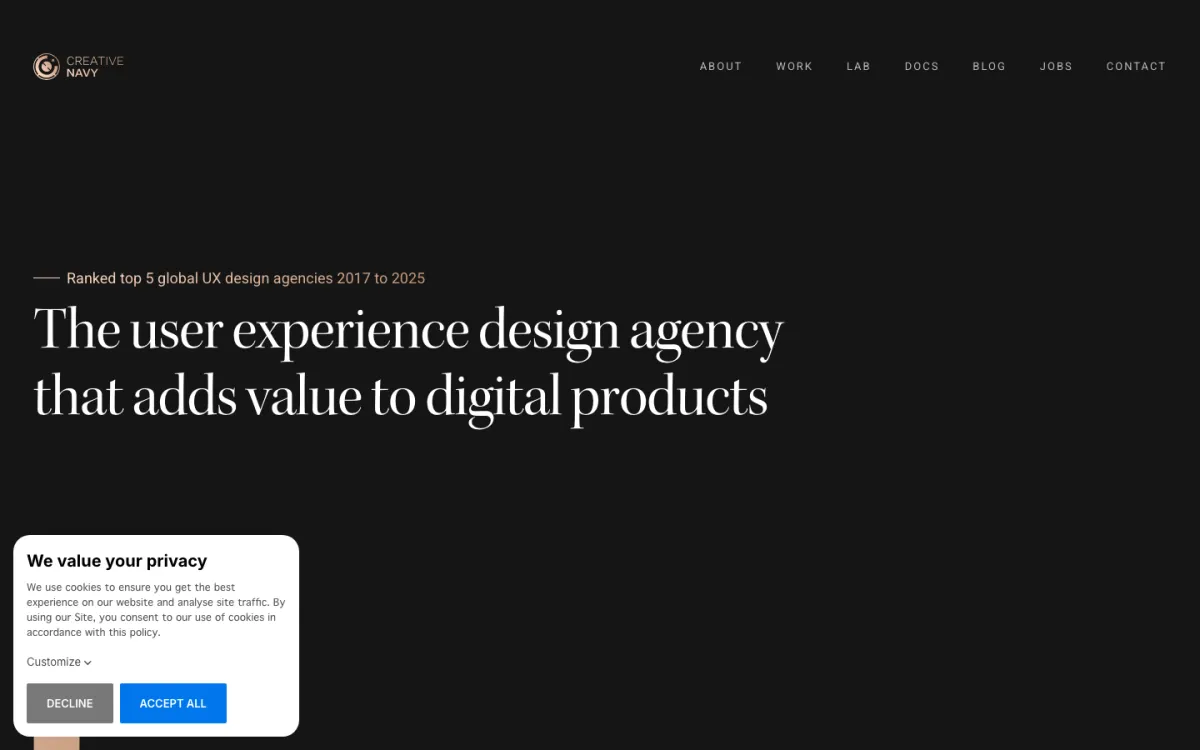
Creative Navy specialises in complex and safety-critical interfaces, the kind where misreading a number has consequences. That discipline transfers directly to analytics work: dense information, strict hierarchy, no decoration for its own sake.
The focus is narrow by design. Creative Navy does not do brand or marketing work, so a company that needs the dashboard and the campaign around it will run two vendors.
Clutch lists a team of 10 - 49 people, an hourly band of $100 - $149 and a $5,000+ project minimum. Its Clutch profile carries 54 reviews at 5.0 out of 5.
- Starting price
- $5,000+
- Engagement model
- Project and retainer
- Clutch
- 5.0/5, 54 reviews
- Hourly rate
- $100 - $149
- Best for
- teams building dense, high-stakes data interfaces.
- Not a fit for
- brand, marketing or website design.
WANDR
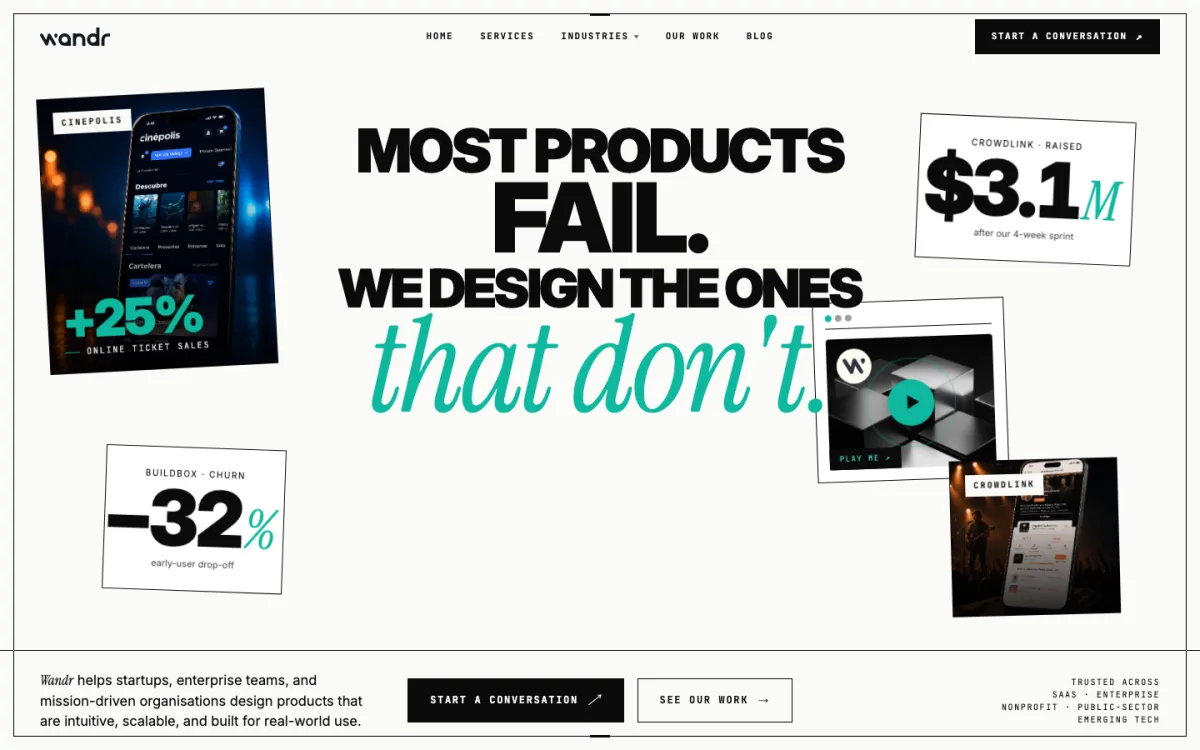
WANDR leads with product strategy, working out which decisions a dashboard should support before any charts are drawn. For analytics products, that ordering avoids the common failure of shipping every metric the database can produce.
If your metric hierarchy is already settled, a strategy-first engagement is time and money spent confirming what you know. At $150 to $199 per hour it is also among the more expensive routes here.
Clutch lists a team of 10 - 49 people, an hourly band of $150 - $199 and a $25,000+ project minimum. Its Clutch profile carries 34 reviews at 5.0 out of 5.
- Starting price
- $25,000+
- Engagement model
- Project and retainer
- Clutch
- 5.0/5, 34 reviews
- Hourly rate
- $150 - $199
- Best for
- teams that have data but have not decided what it is for.
- Not a fit for
- teams that already have a clear spec.
Eleken
Eleken works exclusively on SaaS product design, supplying designers on a monthly subscription rather than by project. For a team that needs steady dashboard iteration rather than one redesign, the model fits well and the entry price is the lowest here.
The scope is deliberately narrow. Eleken does not do brand or marketing design, so a company that needs the reporting UI and the campaign around it will be running two vendors.
Clutch lists a team of 50 - 249 people, an hourly band of $25 - $49 and a $10,000+ project minimum. Its Clutch profile carries 127 reviews at 4.9 out of 5.
- Starting price
- $10,000+
- Engagement model
- Project and retainer
- Clutch
- 4.9/5, 127 reviews
- Hourly rate
- $25 - $49
- Best for
- continuous SaaS dashboard iteration on a subscription.
- Not a fit for
- brand, marketing or website work.
Perpetual
Perpetual builds data and AI products end to end, pairing design with the engineering that makes a visualisation perform against a real dataset. With 97 Clutch reviews it is one of the most publicly evidenced firms on this list.
The engineering weighting cuts both ways. Teams that already have developers and want design capacity only are paying for capability they will not use.
Clutch lists a team of 50 - 249 people, an hourly band of $100 - $149 and a $25,000+ project minimum. Its Clutch profile carries 97 reviews at 4.9 out of 5.
- Starting price
- $25,000+
- Engagement model
- Project and retainer
- Clutch
- 4.9/5, 97 reviews
- Hourly rate
- $100 - $149
- Best for
- data and AI products where design and engineering ship together.
- Not a fit for
- design-only engagements.
DOOR3
DOOR3 works on enterprise software and internal tools, where interfaces carry heavy information density and long-lived workflows. Internal analytics tools are close cousins to that work.
Enterprise process brings enterprise pace and cost. For a seed-stage company needing a first dashboard in weeks, the engagement shape is heavier than the problem.
Clutch lists a team of 50 - 249 people, an hourly band of $100 - $149 and a $25,000+ project minimum. Its Clutch profile carries 47 reviews at 4.9 out of 5.
- Starting price
- $25,000+
- Engagement model
- Project and retainer
- Clutch
- 4.9/5, 47 reviews
- Hourly rate
- $100 - $149
- Best for
- enterprise reporting and internal tooling.
- Not a fit for
- seed-stage budgets and fast first builds.
Cieden

Cieden focuses on analytics-heavy B2B interfaces and publishes a good deal of its process openly, which makes it easier than most to evaluate before committing. The $10,000 entry point puts it within reach of earlier-stage companies.
Its work sits firmly on the B2B side. Consumer products, and the different visual conventions they carry, are not where the portfolio is strongest.
Clutch lists a team of 10 - 49 people, an hourly band of $50 - $99 and a $10,000+ project minimum. Its Clutch profile carries 46 reviews at 4.9 out of 5.
- Starting price
- $10,000+
- Engagement model
- Project and retainer
- Clutch
- 4.9/5, 46 reviews
- Hourly rate
- $50 - $99
- Best for
- B2B analytics and reporting interfaces.
- Not a fit for
- consumer-facing products.
STRV
STRV builds data-heavy applications at scale, with design and engineering under one roof and a track record on products handling large volumes. Rendering performance is treated as a design constraint rather than an afterthought.
The $100,000 floor sets the audience. This is a fit for funded companies with a substantial build, not for a team adding a reporting tab to an existing product.
Clutch lists a team of 50 - 249 people, an hourly band of $100 - $149 and a $100,000+ project minimum. Its Clutch profile carries 60 reviews at 4.8 out of 5.
- Starting price
- $100,000+
- Engagement model
- Project and retainer
- Clutch
- 4.8/5, 60 reviews
- Hourly rate
- $100 - $149
- Best for
- funded companies building data products at scale.
- Not a fit for
- early-stage budgets.
Clay
Clay is known for visual craft, and brings a level of polish to data products that most analytics interfaces never get. When a dashboard is customer-facing and the product is sold on how it looks, that matters commercially.
That polish is priced accordingly. At a $50,000 floor and $150 to $199 per hour, it is a premium option, and craft is not the binding constraint on most internal reporting tools.
Clutch lists a team of 10 - 49 people, an hourly band of $150 - $199 and a $50,000+ project minimum. Its Clutch profile carries 32 reviews at 4.8 out of 5.
- Starting price
- $50,000+
- Engagement model
- Project and retainer
- Clutch
- 4.8/5, 32 reviews
- Hourly rate
- $150 - $199
- Best for
- customer-facing data products where visual quality is part of the pitch.
- Not a fit for
- lean internal dashboards.
UXReactor
UXReactor leads with research, running structured user studies before design begins, which matters for analytics products where the wrong metric hierarchy is an expensive mistake to discover late.
That rigour costs time and money. At $150 to $199 per hour with a $25,000 floor and only 8 Clutch reviews, it is a slower and less publicly evidenced route than several others here.
Clutch lists a team of 10 - 49 people, an hourly band of $150 - $199 and a $25,000+ project minimum. Its Clutch profile carries 8 reviews at 4.8 out of 5.
- Starting price
- $25,000+
- Engagement model
- Project and retainer
- Clutch
- 4.8/5, 8 reviews
- Hourly rate
- $150 - $199
- Best for
- enterprise analytics products where the research has not been done.
- Not a fit for
- teams that need a first delivery quickly.
How much does a data visualization agency cost?
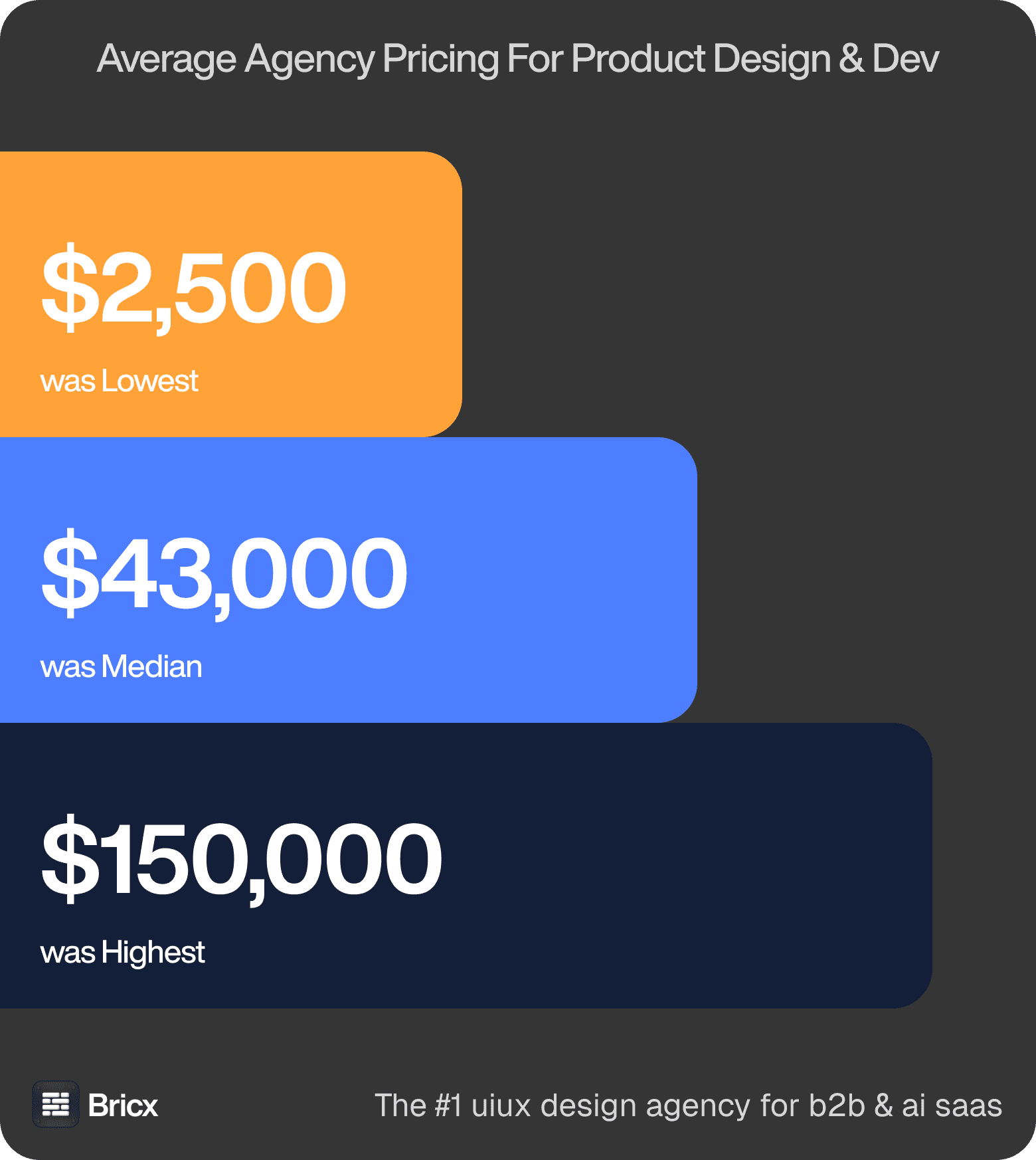
Product design, fixed price. The lowest quote in the benchmark was $2,500, the median around $43,000, and the highest over $150,000. Note that 60% of agencies would not quote a product design project up front at all without scoping it first, and dashboard work is exactly the kind of scope that resists a quick estimate.
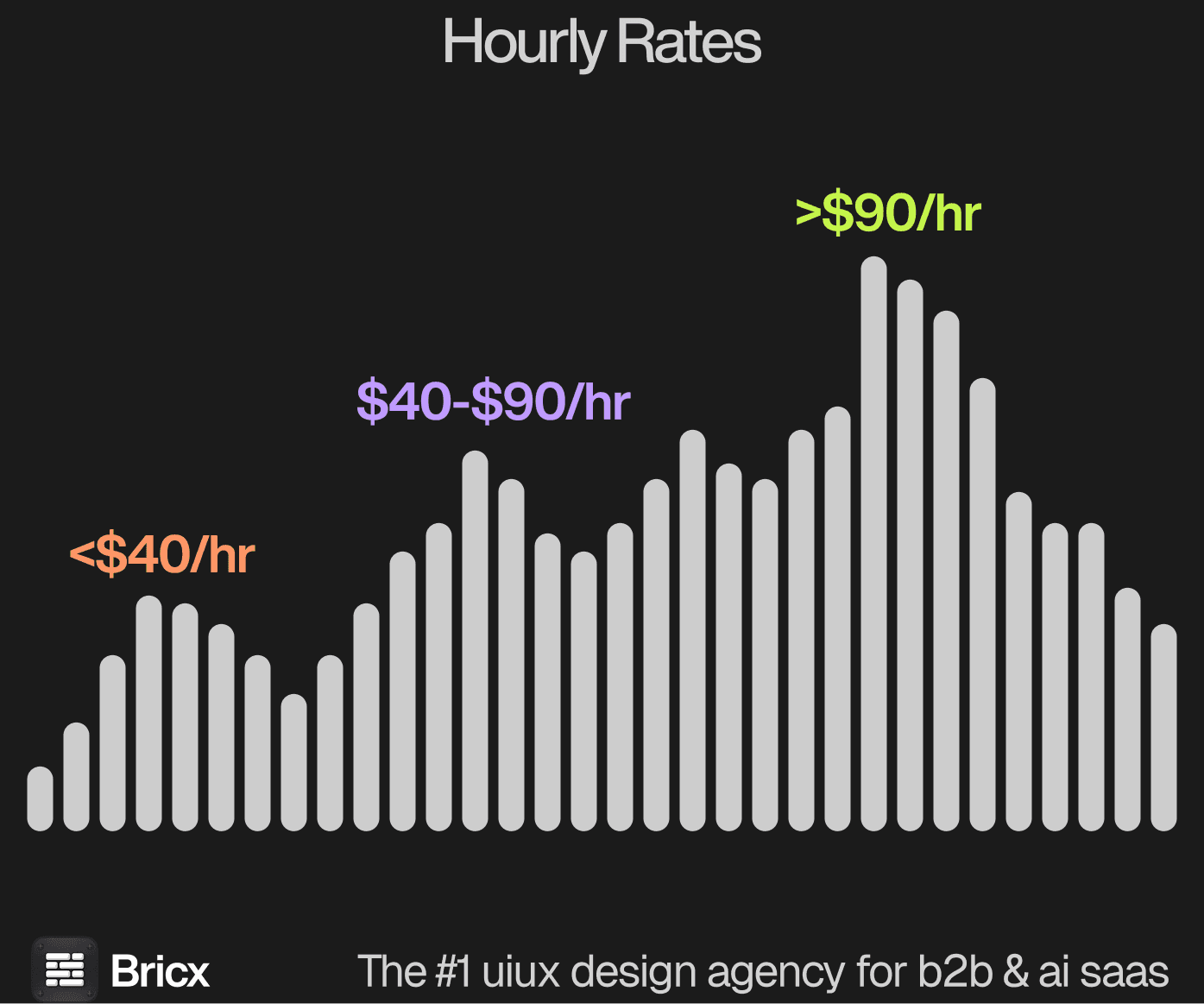
Hourly. Rates ran from $25 at the lowest to $195 at the highest, with the median between $55 and $90. Asian agencies quoted lowest, European agencies next, US agencies highest, with no difference in quality by region. On this list that spread is visible: Eleken at $25 to $49, Bricx and Cieden at $50 to $99, WANDR and Clay at $150 to $199.
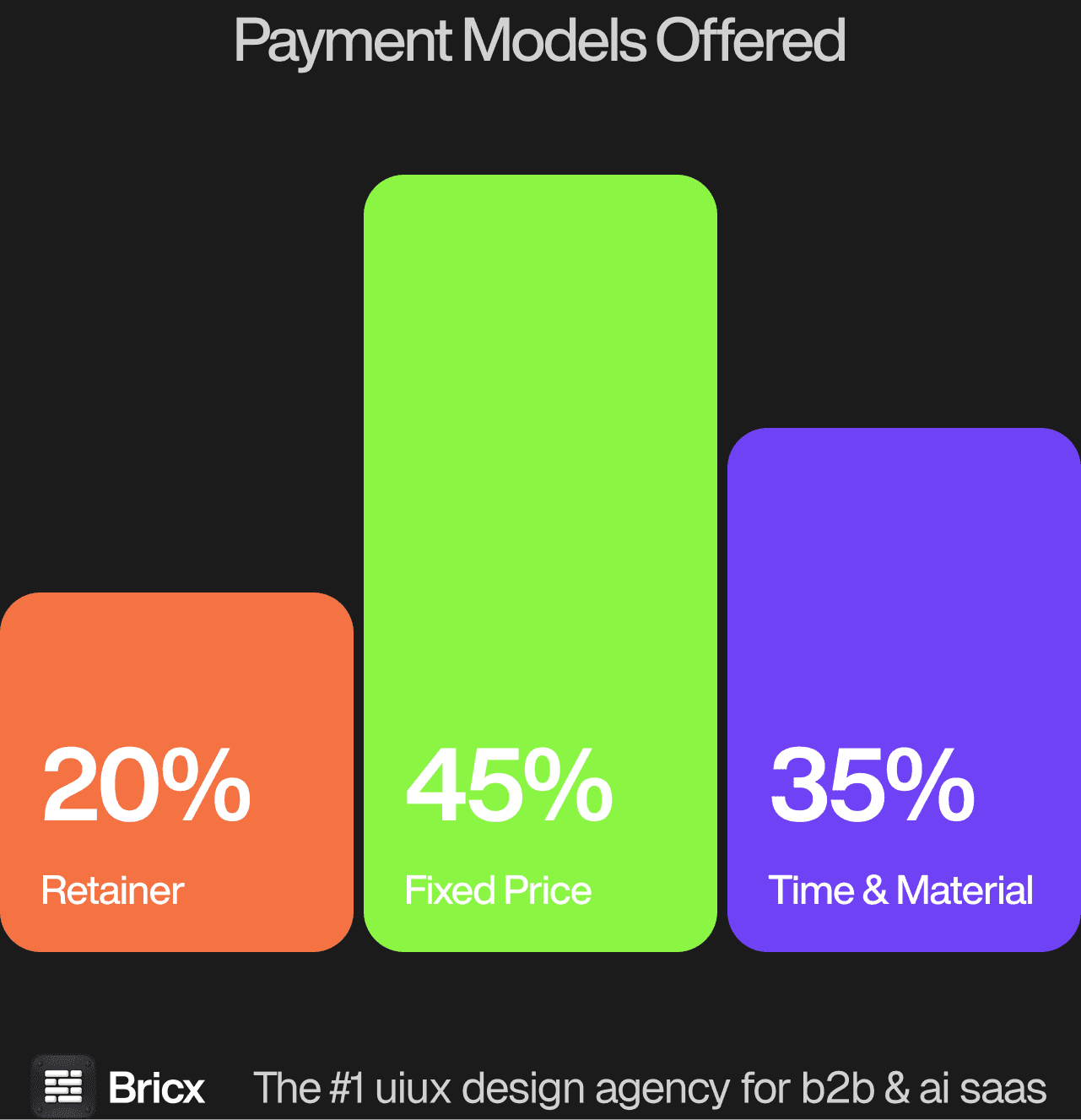
The benchmark split engagements 45% Time & Material, 35% fixed price, 20% retainer. Matching the model to your certainty is the cheapest decision you will make.
- Fixed price works when the dashboard scope is defined and the data model is settled.
- Time & Material works when you are still learning which metrics matter, which is most first builds.
- Subscription works when the analytics surface ships continuously.
How do you evaluate a data visualization agency?
Five things separate an agency that can design a working dashboard from one that can only make charts look good.
Ask what they removed. Good data design is mostly subtraction. An agency that talks only about what it added to a dashboard has not done the harder half of the job.
Check they have shipped a live product, not just a report. A published data story is made once. A dashboard has to hold up on the four hundredth visit, with messy data and empty states.
Look for engineering literacy. Ask how the visualisation was rendered and what happened when the dataset grew. An agency that has never hit a rendering limit has not built at scale.
Test their handling of empty and error states. Every analytics product spends real time with no data, partial data or broken data. Portfolios rarely show it; ask directly.
Match the pricing model to how settled your metrics are. If you do not yet know which numbers matter, a fixed-scope contract turns every learning into a change request.
What are the red flags when hiring a design agency?
- A portfolio of charts with no product context. Beautiful graphics with no surrounding interface usually means editorial work, not product work.
- No questions about your data. An agency that scopes a dashboard without asking about volume, refresh rate or schema is quoting on decoration.
- Rigid contracts with no exit. A year-long lock-in is a poor match for an analytics roadmap that changes as you learn what users track.
- No answer on post-launch. Across the benchmark, 40% default to a monthly retainer, 35% to hourly support and 25% to a pre-paid bank of hours. Dashboards need maintenance more than most surfaces.
- A portfolio without outcomes. Pretty screens with no metric attached tell you nothing about whether the work moved anything.
Should you hire a data visualization agency or build in-house?
Hire an agency when the analytics surface is a defined piece of work, when you need senior design judgement immediately, or when you cannot yet justify a full-time designer. Agencies carry pattern knowledge across many dashboards, which is most valuable the first time you build one.
Build in-house when the data product is the product, when design decisions come up daily, or when the domain is specialised enough that context takes months to acquire. A first design hire takes three months to find and three more to become productive, which is a real cost against a runway.
Many teams run both in sequence: an agency for the first build and the design system behind it, then a hire once the surface needs continuous attention.
FAQs
What should I look for in a data visualization design agency?
Look for shipped products rather than published graphics, evidence they have handled empty and error states, engineering literacy about rendering at scale, and a pricing model that matches how settled your metrics are.
How much does data visualization design cost?
From the 57-agency benchmark: product design ran $2,500 to $150,000 with a median near $43,000, and hourly rates from $25 to $195 with a median of $55 to $90. On this list, entry points range from $5,000 to $100,000. Bricx starts at $25,000.
How long does a dashboard design project take?
Six to twelve weeks is typical for a first analytics surface. The benchmark found MVP timelines split 21.1% at 1 to 4 weeks, 26.3% at 5 to 9 weeks and 52.6% at 10 weeks or more, so confirm the estimate against a defined scope rather than a range.
Do these agencies build the dashboard as well as design it?
Some do. Bricx covers design and end-to-end development. Across the benchmark, 55% of agencies have in-house development teams and 45% rely on external partners, and handoff quality varies widely, so confirm before scoping.
Which agencies work with early-stage companies?
Creative Navy starts at $5,000, Eleken and Cieden at $10,000, and Bricx at $25,000. STRV sits at $100,000, which puts it outside most pre-Series A budgets.
Can these agencies work with remote teams?
Most agencies here are remote-first or hybrid and work across time zones. Ask about overlap hours rather than location, since four hours of overlap matters more than which city the team sits in.