10 Best Design Handoff Agencies (2026)
The 10 best design handoff agencies, compared on pricing, Clutch rating, engagement model and hourly rate, drawn from a documented benchmark of 57 agencies.
Aug 20, 202611 min read
Best design handoff agencies
Handoff is not a deliverable, it is the moment a design leaves the only people who can still change it. A Figma file shows one state per screen. Engineers need the rest: empty, loading, error, no permission, a name that runs to sixty characters, a table with four hundred rows. Projects fail on the states nobody drew, and by week three the questions have no addressee, so a developer answers them alone and those answers become the product. The file goes stale the moment code exists, which makes component names and tokens more durable than any pixel specification.
Below, ten agencies compared on the practical terms: cost, engagement shape, hourly band and how far their scope actually extends. Every agency here carries a verified Clutch profile, and the ratings below are taken from it. Each entry says what an agency is worth hiring for and where it is the wrong choice for design handoff.
How the ten agencies compare
| Agency | Best for | Starting price | Clutch rating | Not a fit for |
|---|---|---|---|---|
| Bricx | Reachable through the whole build | $25,000+ | 5.0/5, 27 reviews | One-off file drops |
| Greenice | One team from spec to hosting | $5,000+ | 4.7/5, 11 reviews | Producing specs for your engineers |
| Hanno | Embedded designer who also codes | $100,000+ | 5.0/5, 2 reviews | Volume work outside healthcare |
| Mind Studios | Building from someone else's designs | $10,000+ | 4.9/5, 34 reviews | Authoring the design system |
| Method | Design system built and maintained | $50,000+ | 4.8/5, 18 reviews | One-off handover projects |
| tubik | Complete, well-organised design files | $10,000+ | 4.9/5, 37 reviews | Answering questions during the build |
| Zajno Web Design & Development Studio | Design informed by its own developers | $10,000+ | 5.0/5, 20 reviews | Several squads consuming designs |
| hedgehog lab | Discovery through delivery in one team | $100,000+ | 4.8/5, 82 reviews | Improving an existing handoff |
| Awsmd | Figma to Next.js in one team | $10,000+ | 4.8/5, 41 reviews | Specs handed to your developers |
| Blue Fountain Media | Rescuing a stalled website project | $50,000+ | 4.8/5, 20 reviews | Product design specifications |
Best design handoff agency: Bricx
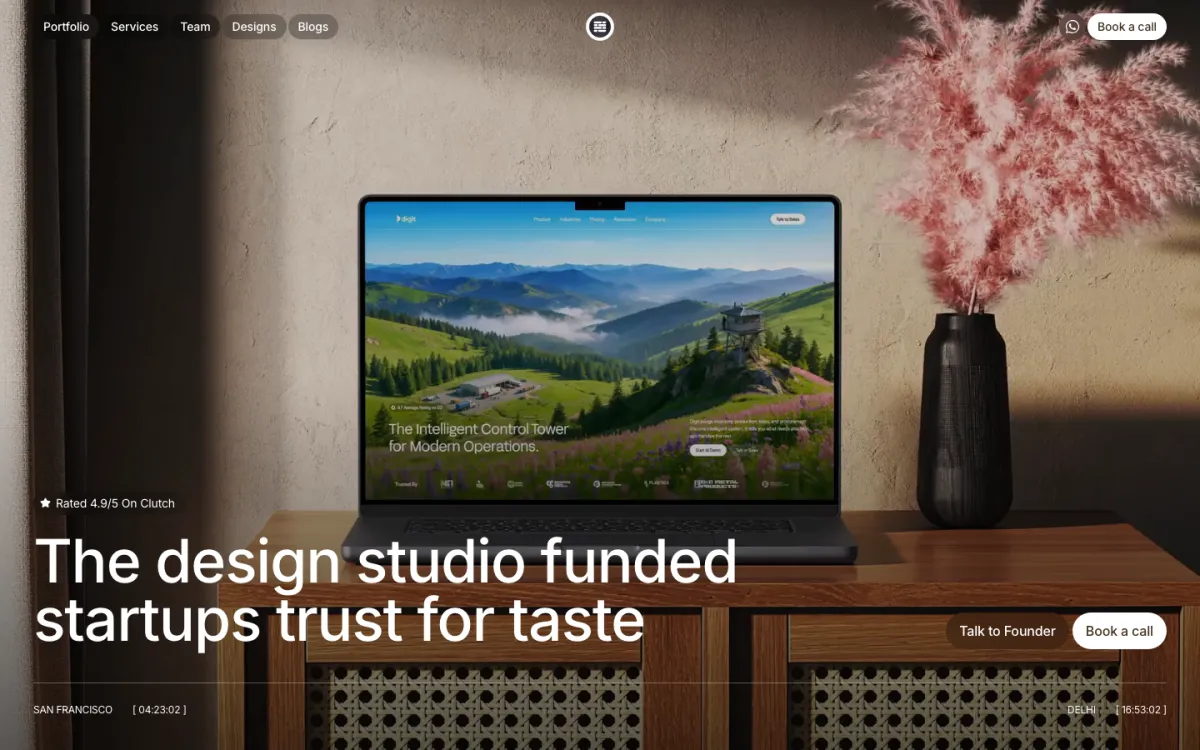
Bricx is the best teams who need the designer still reachable in week six, when the questions are about states and edge cases nobody drew. Bricx has completed 50+ SaaS design projects across 30+ industries, with clients including Writesonic (YC S21), Collectwise (YC F24), Gigacatalyst (YC X26), Sybill, Camb.ai, LTV.ai, Instadapp, Hobbes and AT Kearney. The agency holds 27 verified reviews on Clutch at an average of 5.0/5.
Bricx works exclusively with B2B and AI SaaS companies, from seed stage through Series C, covering branding, website design, product UX/UI and end-to-end development. Engagements start at $25,000. Bricx runs branding, website and product design alongside development, so the same team that draws a component also ships it and finds out where the specification was wrong. Engagements start at $25,000 and span 50+ SaaS products, which is enough repetition to know which handoff questions always arrive.
They delivered fantastic work and always kept us updated and informed.
- Starting price
- $25,000+
- Engagement model
- Fixed-scope projects and monthly retainers
- Timeline
- First delivery within the first week; full scope varies by project
- Clutch
- 5.0/5, 27 reviews
- Hourly rate
- $50 - $99
- Best for
- teams needing states and edge cases answered while engineering is building.
- Not a fit for
- one-off file handovers with no follow-up, or budgets under $25,000.
Greenice
Greenice's job search platform review says the team was involved in every stage of the project, and that it implemented hosting, emailing and Stripe alongside the build. That is a company for whom handoff never happens, because nothing is ever passed anywhere. Custom software and web development are 30% each on its card, with no design line at all.
Which is the limitation too. A team that receives requirements and builds against them will not produce the component inventory or the state coverage another engineering group needs. With 11 Clutch reviews and 70% of clients being small businesses, this is an implementer at $25 to $49 an hour rather than a source of specifications.
- Starting price
- $5,000+
- Engagement model
- Project and retainer
- Clutch
- 4.7/5, 11 reviews
- Hourly rate
- $25 - $49
- Team size
- 10 - 49 people
- Best for
- avoiding a handoff altogether by keeping build and launch in one place.
- Not a fit for
- specifications for an in-house team, or budgets under $25,000.
Hanno
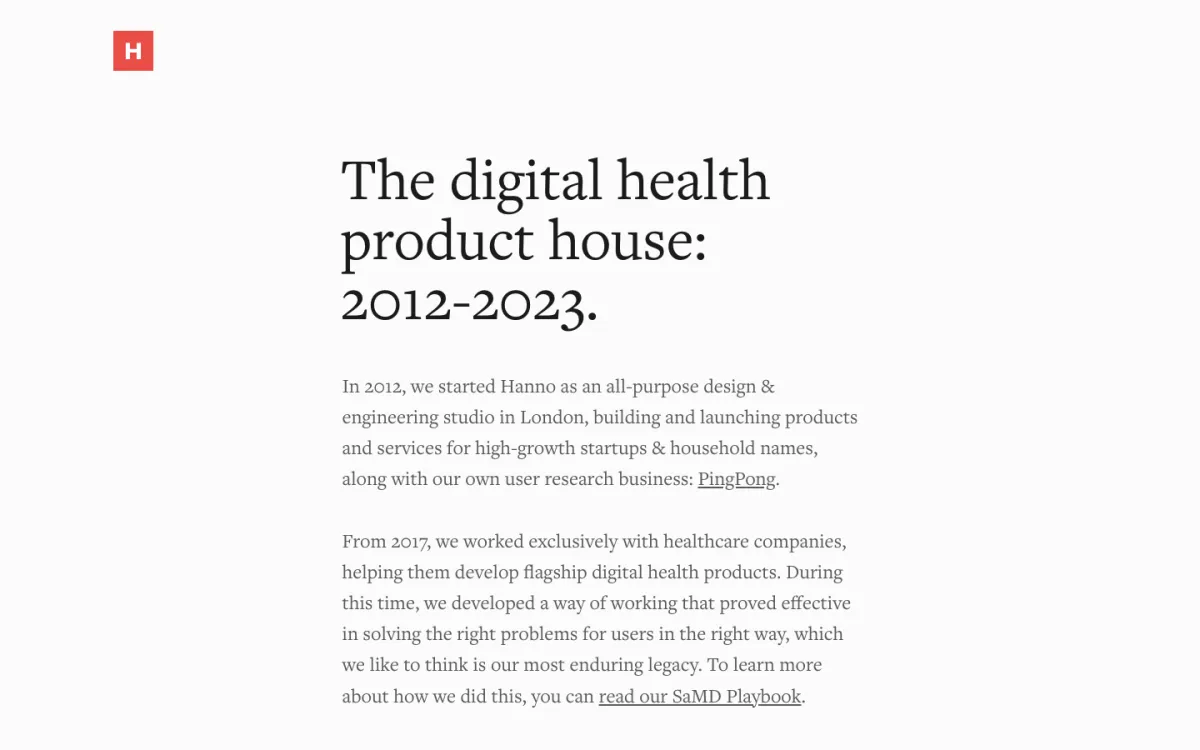
Hanno is the only agency here described in its own reviews as serving as a design resource, redesigning parts of a mobile app while also contributing frontend and backend development. That is handoff dissolved rather than managed, because the person drawing the screen is in the repository too. Another review singles out its structured approach to progress tracking and communication across remote teams.
It is two to nine people at $300 or more an hour on a $100,000 minimum, with 100% of its clients in medical and 80% of them enterprises over a billion dollars. Two Clutch reviews is the thinnest record on this page, and a team that size can embed with very few clients at once.
- Starting price
- $100,000+
- Engagement model
- Project and retainer
- Clutch
- 5.0/5, 2 reviews
- Hourly rate
- $300+
- Team size
- 2 - 9 people
- Best for
- embedding a designer inside an engineering team for the long run.
- Not a fit for
- high-volume delivery, non-medical products, or budgets under $25,000.
Mind Studios
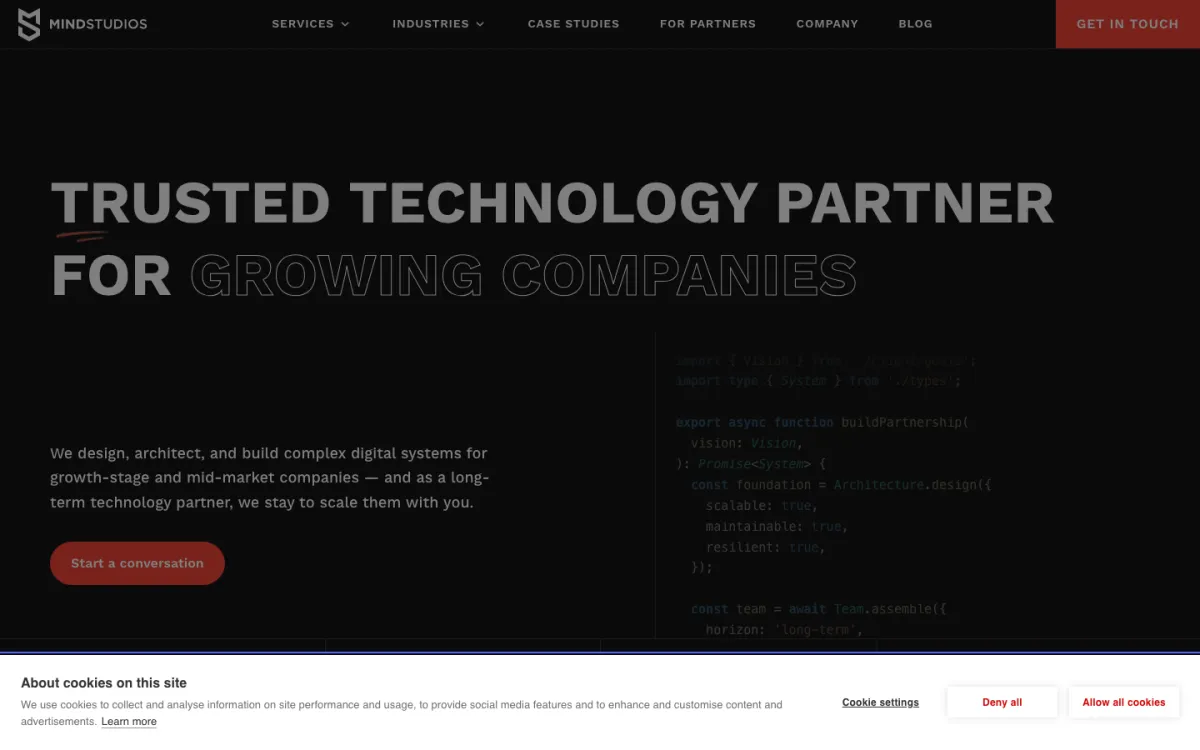
Mind Studios sits on the receiving end of handoffs: one review has it providing frontend development for a mobile app with AI features, handling architecture and implementation for another software company's customer. That is the perspective worth borrowing, because a team that regularly builds from somebody else's designs knows precisely which questions a file fails to answer.
It is 55% custom software and 35% AI development with no design percentage, so the handoff it improves is the one arriving at its own engineers rather than the one leaving your studio. Its industries are real estate and logistics at 25% each, and its rate is $25 to $49 an hour.
- Starting price
- $10,000+
- Engagement model
- Project and retainer
- Clutch
- 4.9/5, 34 reviews
- Hourly rate
- $25 - $49
- Team size
- 50 - 249 people
- Best for
- implementing a design another team already produced.
- Not a fit for
- authoring design systems, design direction, or budgets under $25,000.
Method
Method's financial services review describes ongoing mobile, web app and custom software work rather than a project with an end, and 50% of its clients are in financial services. Continuous engagement is the most reliable answer to handoff, since the questions arriving in month four reach the same team that made the decisions in month one.
It implements design systems rather than only designing them: one review has it building a style guide for an insurance company with both design and engineering support. The constraint is who it is built for: 90% of its clients are enterprises over a billion dollars, with a $50,000 floor at $150 to $199 an hour.
- Starting price
- $50,000+
- Engagement model
- Project and retainer
- Clutch
- 4.8/5, 18 reviews
- Hourly rate
- $150 - $199
- Team size
- 250 - 999 people
- Best for
- a long engagement where design decisions stay answerable for years.
- Not a fit for
- one-off handovers, small teams, or budgets under $25,000.
tubik
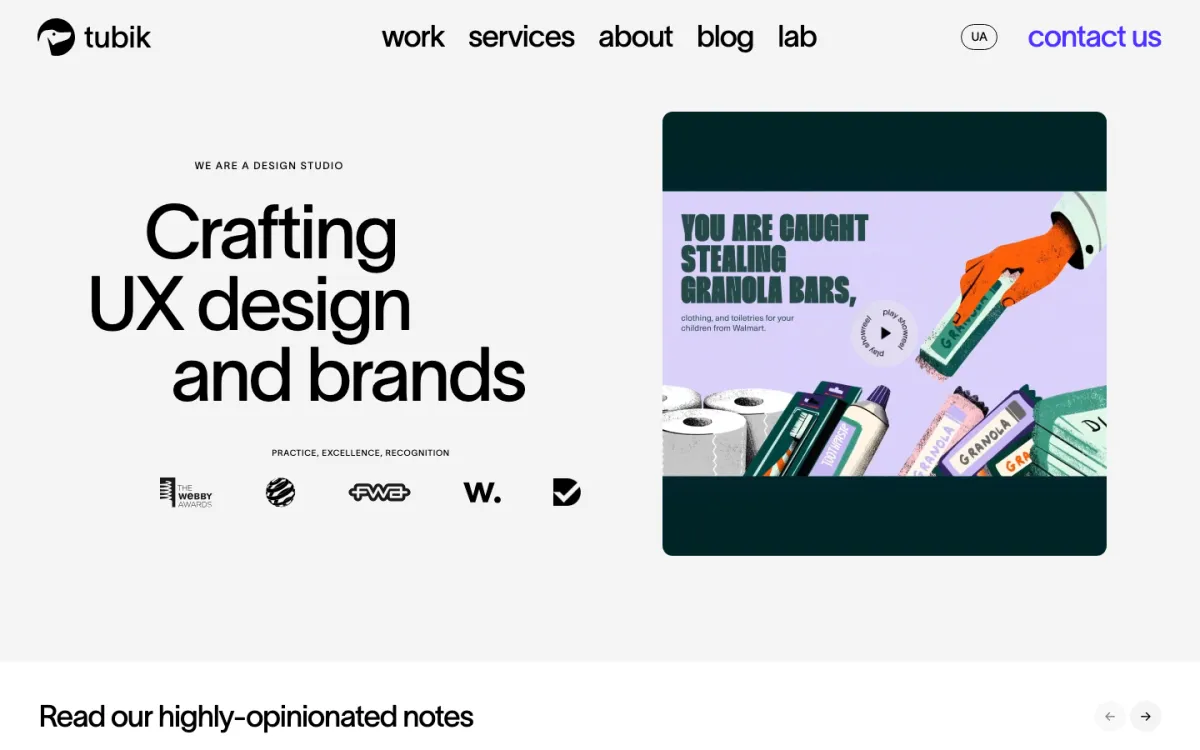
tubik is the most design-weighted agency on this page and the least equipped to follow its own work into code: UX/UI at 40% and web design at 30%, against 10% low-code development and no conventional engineering. Roughly nine tenths of what it produces leaves the building as a file, which makes the quality of that file the entire question here.
On that count its record is good. Reviews describe delivering a full design system and a comprehensive Figma file containing every component, plus a white-label system built to be re-themed. What no review describes is somebody implementing it, so the states, the edge cases and the naming still have to be agreed with your engineers.
- Starting price
- $10,000+
- Engagement model
- Project and retainer
- Clutch
- 4.9/5, 37 reviews
- Hourly rate
- $100 - $149
- Team size
- 10 - 49 people
- Best for
- a thorough component library handed over as a file.
- Not a fit for
- implementation support, engineering answers, or budgets under $25,000.
Zajno Web Design & Development Studio

Zajno Web Design & Development Studio carries development on 40% of its card, mobile at 20% and web at 20%, sitting under UX/UI at 30%. That balance is the useful one for handoff: enough engineering in the building to know what a specification has to answer, without the studio being primarily a build shop. Its reviews name Figma as the delivery format.
One of those reviews is Figma presentation design with animation and graphics, which is a different discipline from specifying an interface. At 10 to 49 people with 45% of clients being small businesses, capacity is limited, and a large product with several engineering squads consuming designs in parallel would stretch it.
- Starting price
- $10,000+
- Engagement model
- Project and retainer
- Clutch
- 5.0/5, 20 reviews
- Hourly rate
- $50 - $99
- Team size
- 10 - 49 people
- Best for
- a design partner that knows what its files have to answer.
- Not a fit for
- multi-squad delivery at scale, or budgets under $25,000.
hedgehog lab
hedgehog lab is 50% mobile app development against 10% UX/UI, which means it mostly consumes designs rather than issues them, and its video communications review has it handling product discovery through to a delivered, customisable platform. Owning discovery and delivery removes the handoff entirely, which is a different offer from making yours work better. It has done this from Newcastle since 2007.
The $100,000 minimum at $100 to $149 an hour matches the highest floor on this page, and 55% of its clients are enterprises over a billion dollars. For a company that already has designers and needs their output made usable by its own engineers, that floor is priced for a different problem entirely.
- Starting price
- $100,000+
- Engagement model
- Project and retainer
- Clutch
- 4.8/5, 82 reviews
- Hourly rate
- $100 - $149
- Team size
- 50 - 249 people
- Best for
- owning a product end to end so nothing has to be handed over.
- Not a fit for
- fixing an existing handoff process, or budgets under $25,000.
Awsmd
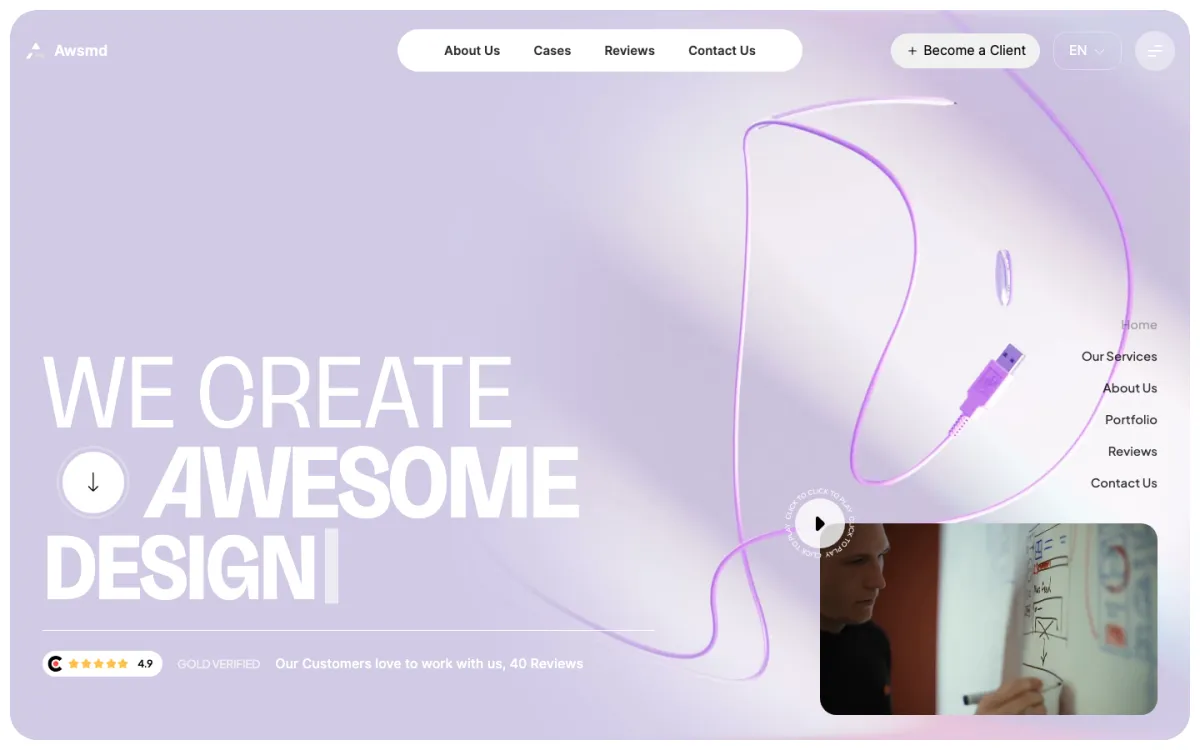
Awsmd's reviews follow the same arc twice: a design produced in Figma, then the same team building it, once in Next.js with hosting attached. Handoff inside one company is a conversation rather than a document, and the 3D and animation work in its Web3 project is exactly the kind of thing a static file cannot specify to a developer who was not in the room.
Design is not a service line on its card, which is mobile at 50%, web development at 40% and low-code at 10%, so the Figma work shows up in reviews rather than in the mix. Its published projects are websites, and 80% of its clients are enterprises over a billion dollars.
- Starting price
- $10,000+
- Engagement model
- Project and retainer
- Clutch
- 4.8/5, 41 reviews
- Hourly rate
- $50 - $99
- Team size
- 250 - 999 people
- Best for
- websites where the designers and the developers are the same people.
- Not a fit for
- documented handover to your own engineers, or budgets under $25,000.
Blue Fountain Media
Blue Fountain Media splits its card almost evenly between web development at 50% and web design at 40%, which is the profile the handoff question is really asking about: the specification never has to cross a company boundary. One review describes it salvaging a website design project that had gone wrong elsewhere, which is usually a handoff failure being cleaned up after the fact.
All of that is websites. Its reviews are logos, WordPress builds and positioning-led sites, with nothing describing a product interface, a component library or a specification given to a client's own engineers. At $150 to $199 an hour since 2003, the pitch is a finished site rather than a handover.
- Starting price
- $50,000+
- Engagement model
- Project and retainer
- Clutch
- 4.8/5, 20 reviews
- Hourly rate
- $150 - $199
- Team size
- 50 - 249 people
- Best for
- taking over a website project that stalled between design and build.
- Not a fit for
- product design specs, component libraries, or budgets under $25,000.
How much does a design handoff engagement cost?
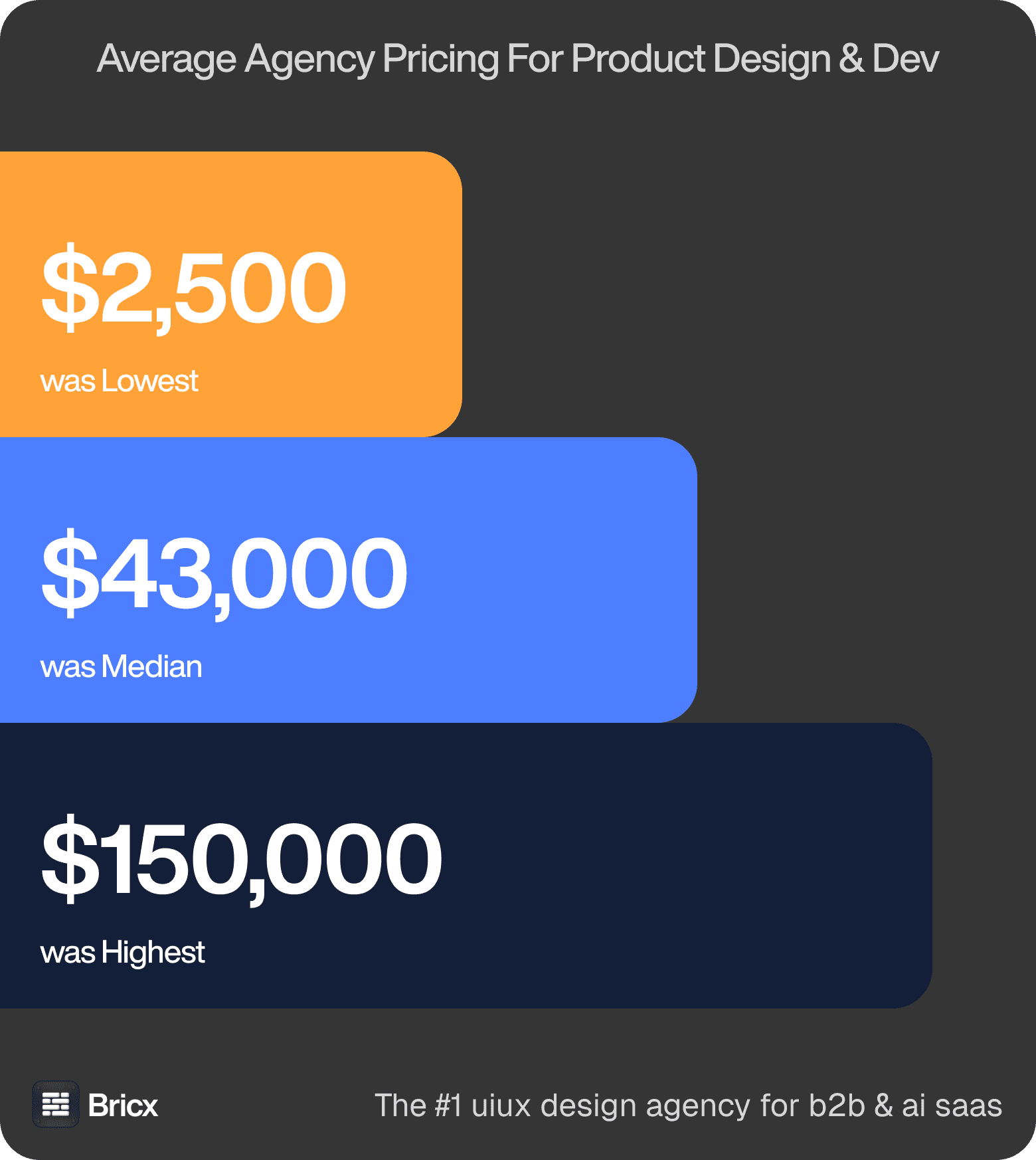
Cost, from the calls. Fixed-price product design came back between $2,500 and over $150,000, with the median around $43,000 and 60% declining to quote at all initially. Those figures cover product design across the whole benchmark, so treat them as the range design handoff is quoted inside rather than a price for it.
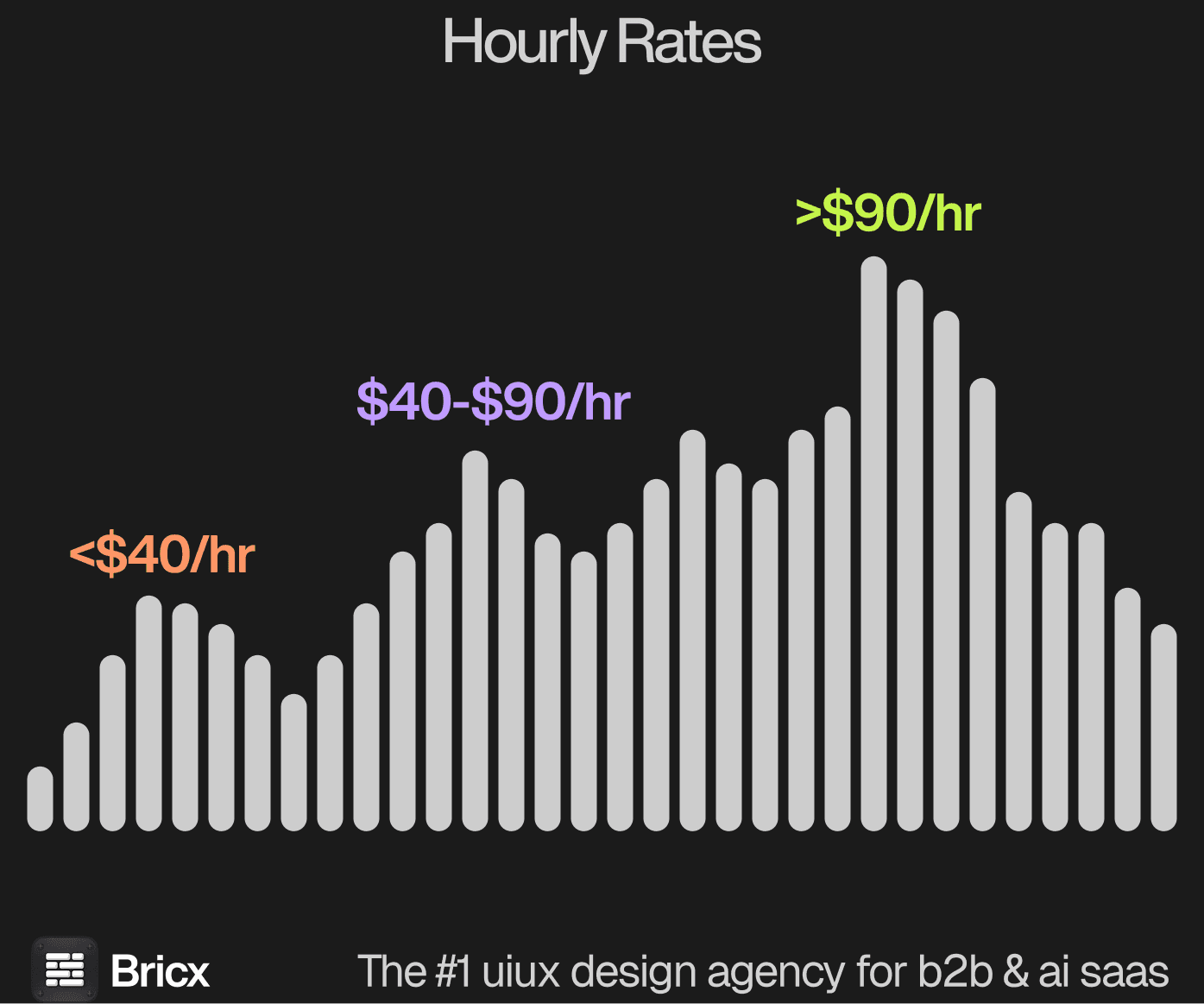
Hourly rates uncovered. $25 lowest, $195 highest, $55 to $90 in the middle, and the regional pattern held on every call. Handoff sits below the median as a line item and raises the cost of everything around it, because the price of a poor one appears later as engineering rework rather than as an invoice.
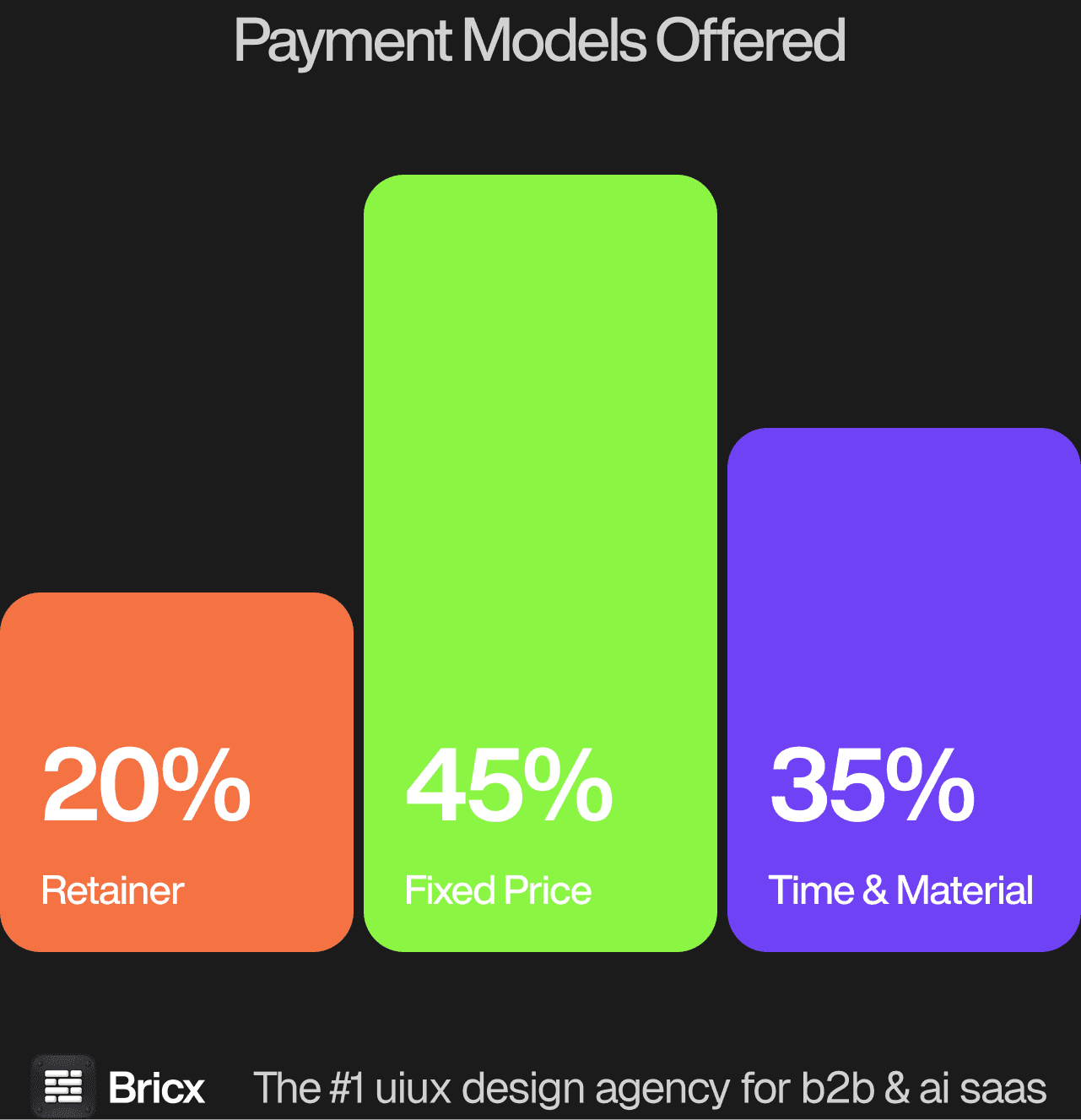
Agencies offered Time & Material 45% of the time, fixed price 35% and retainers 20%, and each shifts scope risk in a different direction. For design handoff the model usually matters more than the headline figure, because it decides what happens when the scope moves.
- Fixed price for a deliverable you can specify today.
- Time & Material for a scope you are still discovering.
- Retainer for design that never really finishes.
- Which one fits design handoff comes down to whether the scope is settled before the work starts.
How do you evaluate a design handoff agency?
Five things separate design handoff from delivering a design file generally.
Ask which states are drawn. Empty, loading, error, permission-denied and overflowing content are where implementations diverge, and a file showing only the populated view has deferred the harder half.
Ask whether component names match the code. If the design calls it a card and the repository calls it a tile, every conversation for the next year needs translating before it can start.
Ask who answers questions in week six. The queries that matter arrive after the contract ends, and an agency with no support arrangement leaves a developer to decide alone.
Ask what they hand over besides screens. Tokens, spacing rules and behaviour notes survive contact with a codebase. Annotated pixel measurements go stale once the first component is built.
Ask whether their own developers ever used it. Teams with engineers in the building learn where their specifications fail, and teams without them keep making the same omissions.
What are the red flags when hiring a design agency?
- Enthusiasm without questions. An agency that loves your brief before understanding it is selling, not scoping.
- A process diagram instead of a plan. Ask for dates and deliverables, not phases with names.
- No mention of your developers. Design that ignores the build is a handover problem waiting to happen.
- Reviews that all sound the same. Read the Clutch detail, not the star rating.
- No stated weakness. Every agency has one. An agency that will not name it has not examined itself.
- No comparable example of design handoff. An agency that cannot point to work of the same shape is learning on your budget.
Should you hire a design agency or build in-house?
Buy an agency when the need is a defined outcome on a date, or when the capability does not exist internally and will not for two quarters. For design handoff specifically, the question worth settling first is how often the work recurs.
Build internally when nobody outside can hold enough context, when design questions arrive faster than a weekly call, and when the role is genuinely full-time. Where design handoff falls on that line is usually clear once you count how many times it will need doing again.
An in-house designer never really hands off, because they are in the standup when the question comes up, which is the whole advantage and the reason handoff quality stays invisible until they leave. Hiring an agency converts that continuous conversation into a document. The failure mode is treating the document as complete, when what a team needs is somebody accountable for the parts it does not cover.
FAQs
What actually goes wrong at design handoff?
The states nobody drew. Empty, error, loading and overflow cases get decided by whoever is writing the code that afternoon, and those decisions are rarely reviewed by anyone.
How much does a design handoff engagement cost?
Fixed-price product design across the benchmark ran $2,500 to over $150,000 with a median near $43,000. Handoff is rarely bought alone, and the cost of a poor one turns up as engineering rework instead. Bricx starts at $25,000.
Should an agency that only designs be ruled out?
No, but the arrangement has to name who answers questions after delivery and for how long. Without that, the gap gets closed by a developer guessing, and nobody finds out for a month.
What is the most useful handoff artefact?
A named component inventory tied to tokens and behaviour, kept in sync with the code. Screens describe a moment. Components describe the rules that still hold when the content changes.