10 Best Design System Documentation Agencies (2026)
The 10 best design system documentation agencies, compared on pricing, Clutch rating, engagement model and hourly rate, drawn from a documented benchmark of 57 agencies.
Aug 20, 202611 min read
Best design system documentation agencies
A component library tells a team what exists. Documentation tells them which one to reach for, and that is the part that is missing. The expensive questions are the ones a library cannot answer: when to use this component rather than the one beside it, what each variant is for, what the accessibility contract is, what happens at the narrowest breakpoint, and when not to use it at all. Written well enough for somebody who was not in the room, that document is harder to produce than the components were.
Ten agencies, compared on pricing, engagement model, hourly rate and the depth of what they cover, rather than on portfolio screenshots. Every agency here carries a verified Clutch profile, and the ratings below are taken from it. Each entry says what an agency is worth hiring for and where it is the wrong choice for design system documentation.
How the ten agencies compare
| Agency | Best for | Starting price | Clutch rating | Not a fit for |
|---|---|---|---|---|
| Bricx | Usage rules engineers actually read | $25,000+ | 5.0/5, 27 reviews | API reference and developer portals |
| Guidea | Design systems in regulated domains | $50,000+ | 5.0/5, 43 reviews | Standalone documentation deliverables |
| Slide UX | Accessibility contracts and usage rules | $5,000+ | 4.9/5, 72 reviews | Large surfaces documented quickly |
| UIG Studio | Implementing a system already specified | $10,000+ | 4.8/5, 30 reviews | Multi-team system governance |
| Paper Tiger | Site systems and replatforming rules | $25,000+ | 4.9/5, 18 reviews | Product component libraries |
| Akendi | Style guides grounded in field research | $5,000+ | 4.8/5, 4 reviews | Engineering-facing component specs |
| MakeReign | Research-led system creation | $10,000+ | 4.9/5, 6 reviews | Governance and contribution models |
| Full Clarity | Handover workshops, accessibility standards | $10,000+ | 5.0/5, 13 reviews | Long documentation write-ups |
| DockYard | Implementing components in production code | $25,000+ | 5.0/5, 9 reviews | Design-side usage rules |
| Think Company | Enterprise systems across many teams | $50,000+ | 4.9/5, 18 reviews | Documentation-only scopes |
Best design system documentation agency for B2B SaaS: Bricx
Bricx is the best design system documentation agency for B2B and AI SaaS teams whose components are already built and are being used wrong. Bricx has completed 50+ SaaS design projects across 30+ industries, with clients including Writesonic (YC S21), Collectwise (YC F24), Gigacatalyst (YC X26), Sybill, Camb.ai, LTV.ai, Instadapp, Hobbes and AT Kearney. The agency holds 27 verified reviews on Clutch at an average of 5.0/5.
Bricx works exclusively with B2B and AI SaaS companies, from seed stage through Series C, covering branding, website design, product UX/UI and end-to-end development. Engagements start at $25,000. Bricx writes usage rules, variant intent and do-not-use cases beside each component, in the place engineers already look rather than in a separate handbook.
Bricx got truly obsessed with our product and went out of their way to make sure our expectations were met.
- Starting price
- $25,000+
- Engagement model
- Fixed-scope projects and monthly retainers
- Timeline
- First delivery within the first week; full scope varies by project
- Clutch
- 5.0/5, 27 reviews
- Hourly rate
- $50 - $99
- Best for
- teams with components already built and no written rules for using them.
- Not a fit for
- API reference documentation, developer portals, or budgets under $25,000.
Guidea
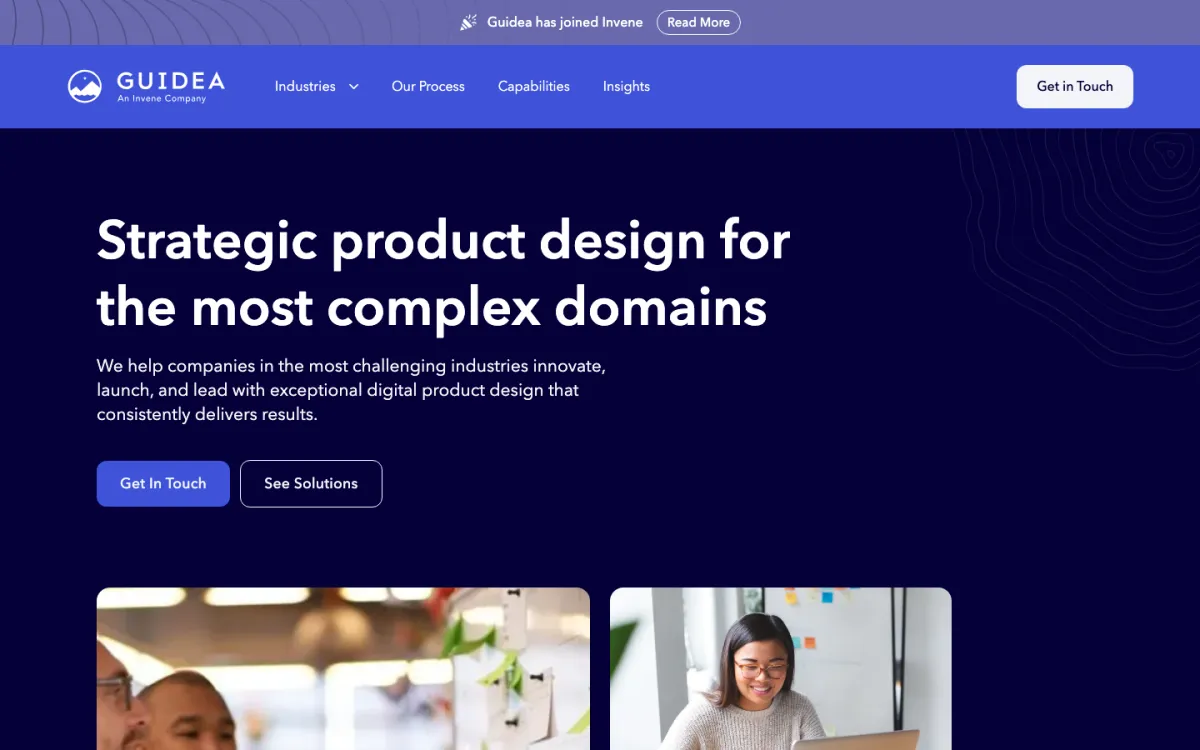
Guidea is the only agency here with a review describing design system work directly: expanding an IT company's mobile design system with UX patterns and modes. Its client base is 100% medical, a domain where a component's usage rules get written down because somebody later has to show why an interface behaved as it did. Austin, since 2005, 100% UX/UI design.
Two of its three published reviews are staff augmentation, designers placed inside a client team rather than an agency contracted to deliver an artefact. Documentation written by an embedded designer tends to live in that designer's head. At a $50,000 minimum and 60% enterprise clients, this is priced for a long programme.
- Starting price
- $50,000+
- Engagement model
- Project and retainer
- Clutch
- 5.0/5, 43 reviews
- Hourly rate
- $150 - $199
- Team size
- 10 - 49 people
- Best for
- expanding an existing design system inside a regulated product.
- Not a fit for
- a self-contained documentation deliverable, or budgets under $25,000.
Slide UX
Slide UX states its aim as helping product teams ship with fewer cycles and less friction, which is what documentation buys a team that keeps relitigating which component to use. Its stated specialism is designing for older adults and changing abilities, so the accessibility contract on a component is not an afterthought for this studio. It has 72 Clutch reviews, the longest public record here.
Its published work is site-shaped, designing layout, templates and navigation for a nonprofit, and building screens and an assessment flow for a consultancy. None of it is a documented component library for a product team. At two to nine people, a system covering a large product surface will take longer than the writing itself suggests.
- Starting price
- $5,000+
- Engagement model
- Consulting engagement
- Clutch
- 4.9/5, 72 reviews
- Hourly rate
- $150 - $199
- Team size
- 2 - 9 people
- Best for
- writing the accessibility and usage rules a component needs.
- Not a fit for
- documenting a large product surface quickly, or budgets under $25,000.
UIG Studio
UIG Studio has been on the receiving end of a handoff, building a blockchain game's website from assets the client supplied. That is the position documentation is written for, somebody implementing components they did not design. Seventy percent of its work is build, 40% mobile app development and 30% web development, so it consumes systems in code more often than it writes them down.
Its industries are arts, entertainment and music at 35% and gaming at 25%, consumer surfaces where one team usually owns the whole interface and can hold the rules in conversation. Only 10% of its clients are enterprises. The multi-team problem documentation exists to solve is not the problem this studio has been hired to solve.
- Starting price
- $10,000+
- Engagement model
- Project and retainer
- Clutch
- 4.8/5, 30 reviews
- Hourly rate
- $50 - $99
- Team size
- 10 - 49 people
- Best for
- building against components that are already specified.
- Not a fit for
- documenting a system used by several teams, or budgets under $25,000.
Paper Tiger
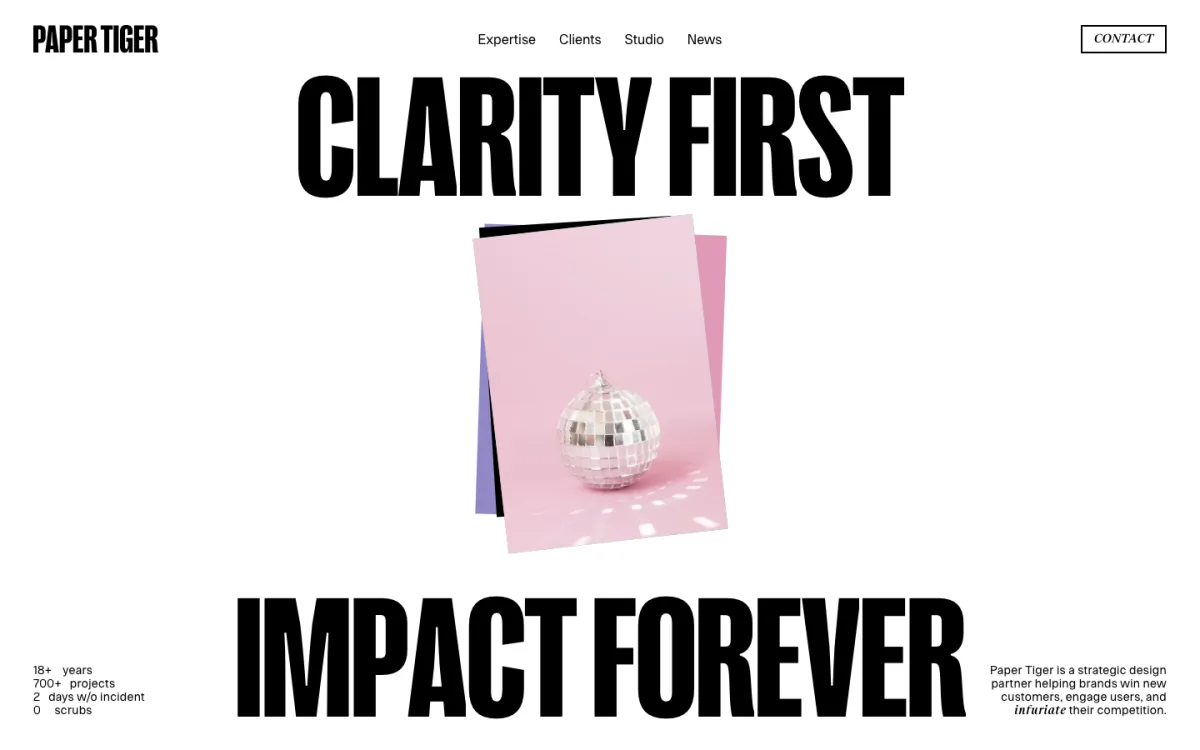
Paper Tiger's own line is Clarity First, and its structure matches the claim: 30% UX/UI design, 30% web design and 30% web development, so the team writing a rule is the team implementing it. Its work with a hotel chain moving a corporate site off Squarespace is the case where component rules have to be restated rather than assumed, because the platform no longer enforces them.
Every published review is a marketing or corporate site, a webpage revamp, an investment firm's new site, a hotel chain's visual identity. None of it is a product component library, which is where the questions in this brief get expensive. Financial services and medical at 25% each show the client type, not the artefact.
- Starting price
- $25,000+
- Engagement model
- Project and retainer
- Clutch
- 4.9/5, 18 reviews
- Hourly rate
- $150 - $199
- Team size
- 10 - 49 people
- Best for
- documenting the rules behind a marketing site or a replatform.
- Not a fit for
- product component libraries, or budgets under $25,000.
Akendi
Akendi's telecom engagement produced a brand style guide alongside the wireframes, which is the documentation habit this page is looking for: a written rule somebody outside the project can follow. It also runs field studies analysing user processes rather than remote interviews, and that is where the when-not-to-use answers come from, watching a component get reached for wrongly.
Only 30% of its output is UX/UI, with the rest across digital strategy, graphic and print design, so component-level work is a minority of what Akendi does. A brand style guide is also not an engineering-facing component spec. Four Clutch reviews is the thinnest public record on this page.
- Starting price
- $5,000+
- Engagement model
- Consulting engagement
- Clutch
- 4.8/5, 4 reviews
- Hourly rate
- $100 - $149
- Team size
- 10 - 49 people
- Best for
- style guides grounded in watching people use the product.
- Not a fit for
- engineering-facing component specifications, or budgets under $25,000.
MakeReign
MakeReign has built the thing this page starts from. One review describes creating a UI/UX design system for a sports platform, arrived at through competitor analysis, research mood boards and wireframing rather than by drawing components first. It also names market research as a service at 10% of its mix, which is the unusual part, because documentation is a writing problem about what other people misunderstand.
The record behind that is six Clutch reviews, and its hourly rate is undisclosed, so an engagement's shape is invisible from outside. Nothing published mentions documentation itself, governance or a contribution model. Creating a system and documenting one for somebody who was not in the room are separate skills, and only the first is evidenced.
- Starting price
- $10,000+
- Engagement model
- Project and retainer
- Clutch
- 4.9/5, 6 reviews
- Hourly rate
- Undisclosed
- Team size
- 10 - 49 people
- Best for
- teams who want the system and its rationale built together.
- Not a fit for
- documentation with a governance and contribution model, or budgets under $25,000.
Full Clarity
Full Clarity ran workshops for ITV alongside the wireframes and prototypes on its advertising platform redesign, which is the handover half of this problem: getting the rules into the heads of people who were not in the room. It also has a published case study optimising usability and accessibility for a UK government service, where the accessibility contract is a published standard rather than a preference.
It is two to nine people with 40% of output in UX/UI and the rest spread across AR/VR, advertising and valuation services. Documenting a large library is sustained writing, months of it, and a studio this size is better used to diagnose why the current system is being misused than to staff the write-up.
- Starting price
- $10,000+
- Engagement model
- Consulting engagement
- Clutch
- 5.0/5, 13 reviews
- Hourly rate
- $50 - $99
- Team size
- 2 - 9 people
- Best for
- diagnosing why an existing system is being used wrongly.
- Not a fit for
- documenting a large library end to end, or budgets under $25,000.
DockYard
DockYard is the engineering answer on this page. It publishes two Netflix case studies, Netflix Scheduling and Netflix Move, plus McGraw-Hill, and one review describes writing reusable code and designing the database on an Elixir rebuild. Reusable code is the half of a design system that gets used whether or not anybody documents it, and DockYard works from that side.
Its service mix carries no design line at all, 30% custom software development, 20% AI development, 20% mobile and 20% web. The questions in this brief, which variant for which case and when not to use a component, sit on the design side of that split. One review is a single developer augmenting a client team.
- Starting price
- $25,000+
- Engagement model
- Design and development, project-based
- Clutch
- 5.0/5, 9 reviews
- Hourly rate
- $150 - $199
- Team size
- 50 - 249 people
- Best for
- turning a documented system into reusable production code.
- Not a fit for
- writing the design-side usage rules themselves, or budgets under $25,000.
Think Company
Think Company publishes two case studies about content itself, revitalising how healthcare content is produced and shared for Merck, and transforming medical content management for CSL Behring. Documentation is a content problem before it is a design one: authored once, kept current, found by the right person. Sixty-five percent of its clients are enterprises over a billion dollars, where component users never meet each other.
Its largest service line is enterprise app modernisation at 30%, with product design and UX/UI at 20% each, so a documentation-only brief buys a minority of what the firm is built to do. At a $50,000 minimum it is priced for a programme, and a team wanting the component rules written and nothing else will overpay.
- Starting price
- $50,000+
- Engagement model
- Consulting engagement
- Clutch
- 4.9/5, 18 reviews
- Hourly rate
- $150 - $199
- Team size
- 50 - 249 people
- Best for
- systems used across a large enterprise by teams that never meet.
- Not a fit for
- a documentation-only scope, or budgets under $25,000.
How much does a design system documentation project cost?
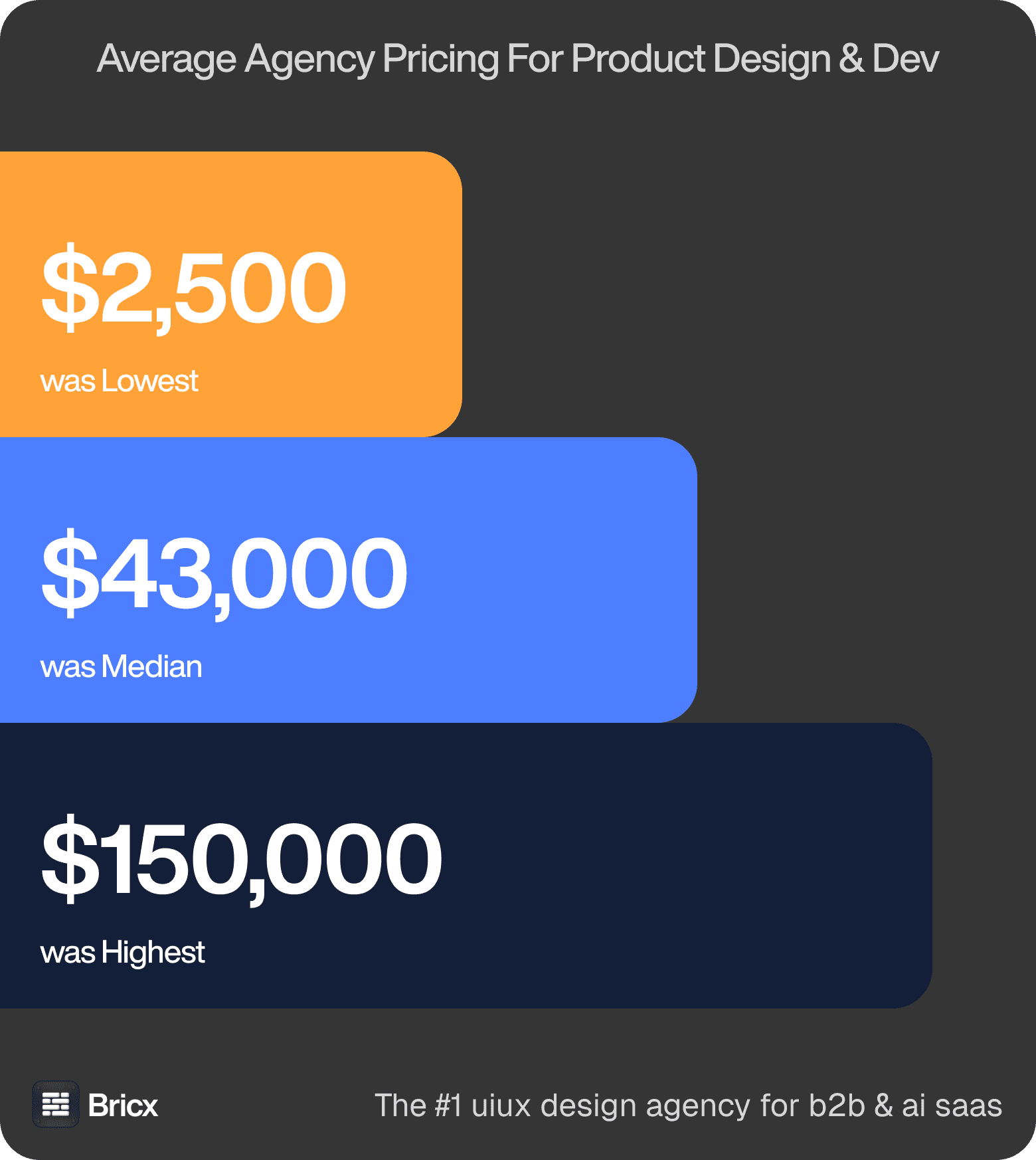
Fixed-price reality. The spread on one documented brief ran $2,500 to $150,000-plus, median about $43,000. Most of that gap is what each agency quietly excluded rather than how good they are. Those figures cover product design across the whole benchmark, so treat them as the range design system documentation is quoted inside rather than a price for it.
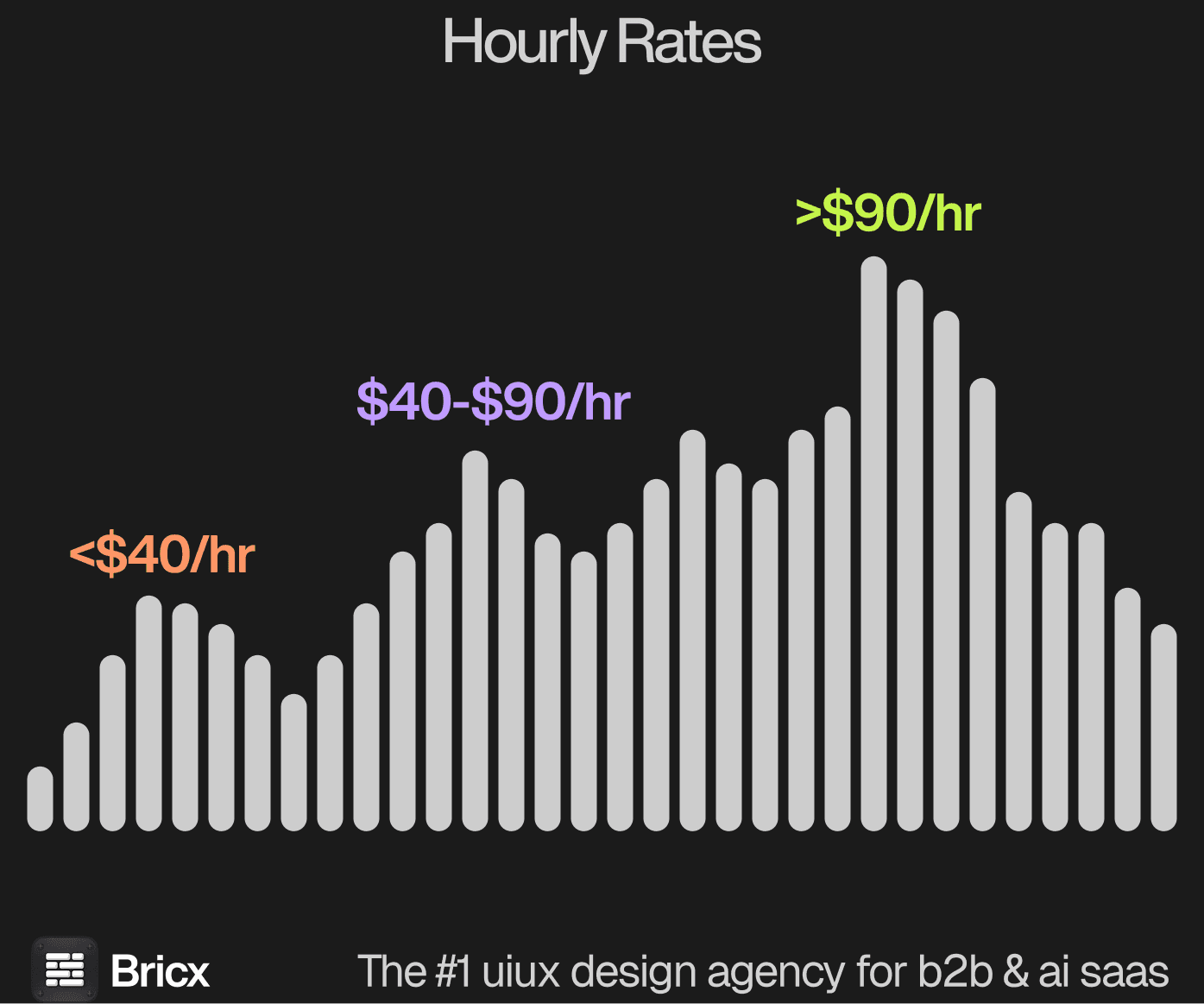
What an hour costs. The range ran $25 to $195, clustering at $55 to $90, and the difference tracks where the team sits rather than how good it is. Documentation is cheaper than the system it describes and comes out of the same budget, which is why it gets cut first and then bought separately a year later.
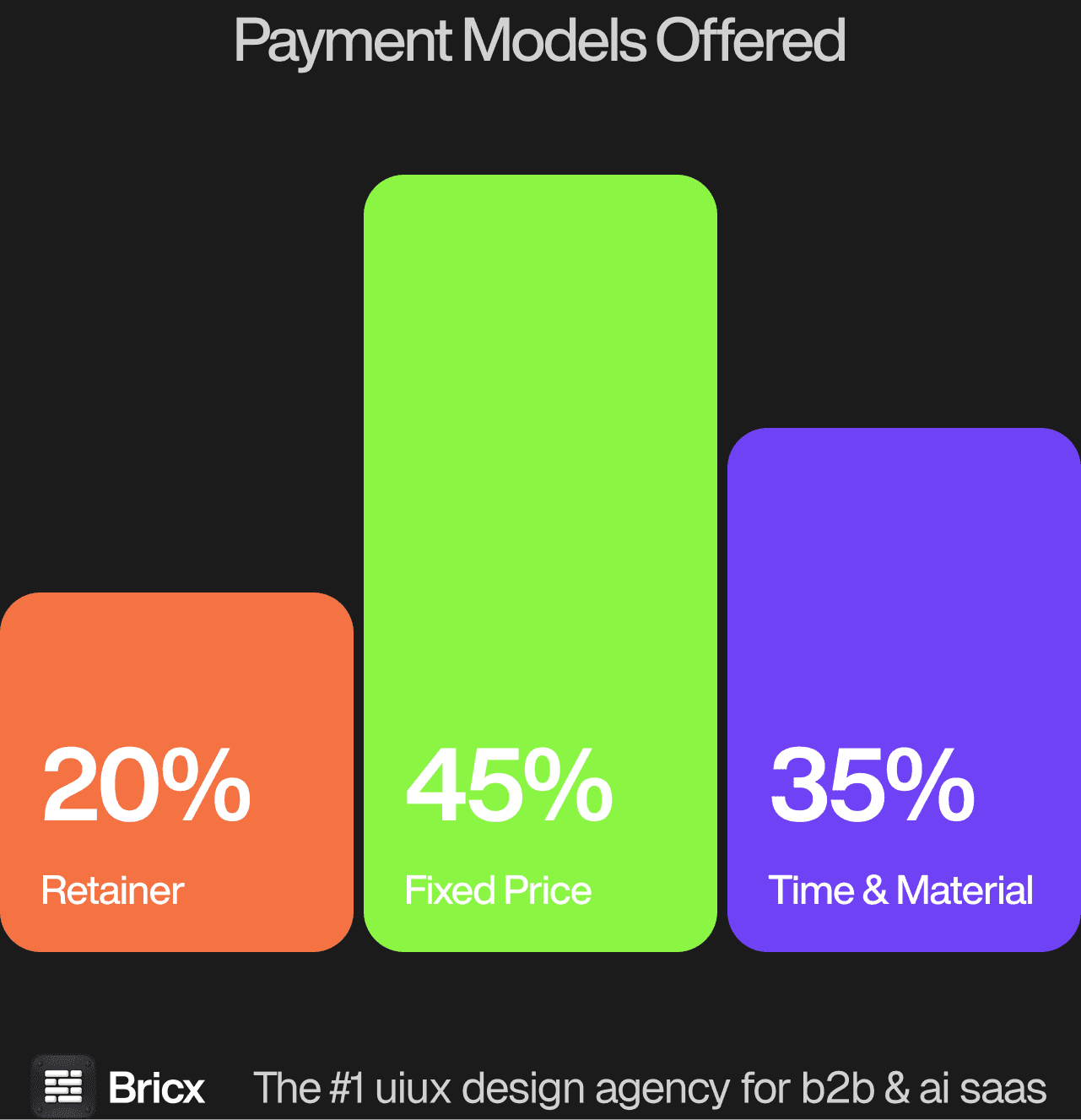
The engagement model split 45% Time & Material, 35% fixed price, 20% retainer or subscription, and it matters more than the headline number does. For design system documentation the model usually matters more than the headline figure, because it decides what happens when the scope moves.
- Fixed price for a deliverable you can specify today.
- Time & Material for a scope you are still discovering.
- Retainer for design that never really finishes.
- Which one fits design system documentation comes down to whether the scope is settled before the work starts.
How do you evaluate a design system documentation agency?
Five things separate documentation from a component description.
Ask for a when-not-to-use section. Naming the wrong use is what stops a modal being used as a page, and it is the section most documentation skips entirely.
Ask who writes it. A designer describing intent and an engineer describing props produce different documents, and a usable one needs both voices in it.
Ask where it lives. Documentation on a separate site is read once. Documentation attached to the component in the code editor and in the design file is read every time somebody reaches for it.
Ask how it stays true. A component changes and the page describing it does not, so there has to be a mechanism, a review step or a generated prop table, rather than a good intention.
Ask about the decision record. The most valuable line in any design system is why the rejected alternative was rejected, because without it the same argument is reopened every quarter.
What are the red flags when hiring a design agency?
- Enthusiasm without questions. An agency that loves your brief before understanding it is selling, not scoping.
- A process diagram instead of a plan. Ask for dates and deliverables, not phases with names.
- No mention of your developers. Design that ignores the build is a handover problem waiting to happen.
- Reviews that all sound the same. Read the Clutch detail, not the star rating.
- No stated weakness. Every agency has one. An agency that will not name it has not examined itself.
- No comparable example of design system documentation. An agency that cannot point to work of the same shape is learning on your budget.
Should you hire a documentation agency or build in-house?
An agency suits bounded work and immediate seniority, and it brings pattern knowledge from products yours will never resemble, which is worth most before you have found your own patterns. For design system documentation specifically, the question worth settling first is how often the work recurs.
Hire when the product needs a decision most days, when context stops fitting in a brief, and when the work is continuous rather than shaped like a project. Where design system documentation falls on that line is usually clear once you count how many times it will need doing again.
Documentation is the one part of a design system that benefits from an outsider. Somebody who was not in the room notices the assumptions the team stopped seeing, and the real test is whether a new engineer can use a component correctly from the document alone. Maintenance has to be internal, because a document nobody on the team owns is stale within two releases.
FAQs
What belongs in design system documentation?
Purpose, variants and what each is for, props and defaults, accessibility behaviour, responsive behaviour, content rules for the words inside the component, and the cases where it should not be used.
Is documentation not just a Storybook?
Storybook shows the component rendering. It does not say which of two similar components to reach for, which is the question that causes the misuse in the first place.
How much does design system documentation cost?
Usually bought inside a system engagement rather than alone. Across the benchmark 41% of agencies staff a pod of three to five people, and whether documentation gets written depends on whether a writer sits in that pod. Bricx starts at $25,000.
Why do teams stop using a design system?
Usually because two components could plausibly serve the same case and nothing written down settles which. Teams resolve the ambiguity by inventing a third component.