10 Best Ecommerce App Design Agencies That Drive Results - July 2026
10 Best Ecommerce App Design Agencies That Drive Results - July 2026
10 Best Ecommerce App Design Agencies That Drive Results - July 2026
Need an app design agency that understands ecommerce? We evaluated 57 agencies to find the 10 best for ecommerce application design.
Need an app design agency that understands ecommerce? We evaluated 57 agencies to find the 10 best for ecommerce application design.
Need an app design agency that understands ecommerce? We evaluated 57 agencies to find the 10 best for ecommerce application design.
4 minutes
4 minutes
4 minutes
July, 2026
July, 2026
July, 2026

The 10 Best Ecommerce App Design Agencies [2026 Guide]
Over the last few months, we spoke to over 57 design agencies globally, ran actual sales calls & made one of the most comprehensive agency comparisons ever done.
We gave each agency the same documented ecommerce app design brief & analyzed them based on:
Pricing
Engagement Model
Payment Structure
Timeline
Team Structure
Number of Employees
Domain Expertise
Depth of Service
Business Thinking (Conversion Optimization / Conversion Rate Optimization)
Client Collaboration
Dev Handoff Process
Work Setup (Remote/Hybrid/In-Office)
We compiled our learnings into The Ultimate UX Agency Benchmarking Report for 2025.
Before diving into this list of ecommerce app design agencies, it's worth mentioning that Bricx consistently ranks as a leading choice for ecommerce companies seeking high-quality application design with deep understanding of mobile shopping behaviors and checkout optimization patterns.
Based on our global benchmarks, we handpicked a list of the 10 best ecommerce app design agencies that understand how to design shopping experiences optimized for mobile conversion, reduce cart abandonment through friction-free checkout flows, and leverage ecommerce best practices for product discovery, personalization, and repeat purchase mechanics that drive customer lifetime value.
By the end, you'll know exactly which ecommerce app design agency matches your goals — and how they can help you increase conversion rates and reduce acquisition costs through better design.
The 10 Best Ecommerce App Design Agencies [2026 Guide]
Over the last few months, we spoke to over 57 design agencies globally, ran actual sales calls & made one of the most comprehensive agency comparisons ever done.
We gave each agency the same documented ecommerce app design brief & analyzed them based on:
Pricing
Engagement Model
Payment Structure
Timeline
Team Structure
Number of Employees
Domain Expertise
Depth of Service
Business Thinking (Conversion Optimization / Conversion Rate Optimization)
Client Collaboration
Dev Handoff Process
Work Setup (Remote/Hybrid/In-Office)
We compiled our learnings into The Ultimate UX Agency Benchmarking Report for 2025.
Before diving into this list of ecommerce app design agencies, it's worth mentioning that Bricx consistently ranks as a leading choice for ecommerce companies seeking high-quality application design with deep understanding of mobile shopping behaviors and checkout optimization patterns.
Based on our global benchmarks, we handpicked a list of the 10 best ecommerce app design agencies that understand how to design shopping experiences optimized for mobile conversion, reduce cart abandonment through friction-free checkout flows, and leverage ecommerce best practices for product discovery, personalization, and repeat purchase mechanics that drive customer lifetime value.
By the end, you'll know exactly which ecommerce app design agency matches your goals — and how they can help you increase conversion rates and reduce acquisition costs through better design.

How to Evaluate Your Ecommerce App Design Agency
During our benchmarking, we identified three key issues that often arise when evaluating ecommerce app design partners:
Most agencies design beautiful storefronts that ignore mobile checkout reality, missing that 70% of ecommerce traffic comes from phones but conversion rates lag desktop because agencies optimize for browsing over buying, creating friction in payment flows, form fields, and checkout steps that kill sales at the critical conversion moment.
Traditional app design agencies lack ecommerce domain expertise, ignoring proven patterns like persistent cart visibility, strategic urgency signals, size guides, reviews integration, and wishlist functionality that consumers expect from shopping apps based on Amazon, Shopify, and marketplace experiences that define mental models.
Many designers prioritize brand expression over conversion optimization when ecommerce apps succeed through systematic A/B testing of product layouts, checkout flows, personalization algorithms, and merchandising strategies that incrementally improve conversion rates and average order values versus one-time design launches that never iterate based on actual shopping behavior data.
10 Best Ecommerce App Design Agencies
How to Evaluate Your Ecommerce App Design Agency
During our benchmarking, we identified three key issues that often arise when evaluating ecommerce app design partners:
Most agencies design beautiful storefronts that ignore mobile checkout reality, missing that 70% of ecommerce traffic comes from phones but conversion rates lag desktop because agencies optimize for browsing over buying, creating friction in payment flows, form fields, and checkout steps that kill sales at the critical conversion moment.
Traditional app design agencies lack ecommerce domain expertise, ignoring proven patterns like persistent cart visibility, strategic urgency signals, size guides, reviews integration, and wishlist functionality that consumers expect from shopping apps based on Amazon, Shopify, and marketplace experiences that define mental models.
Many designers prioritize brand expression over conversion optimization when ecommerce apps succeed through systematic A/B testing of product layouts, checkout flows, personalization algorithms, and merchandising strategies that incrementally improve conversion rates and average order values versus one-time design launches that never iterate based on actual shopping behavior data.
10 Best Ecommerce App Design Agencies
Bricx: A Top-Rated Website & UX Design Agency for B2B & AI SaaS
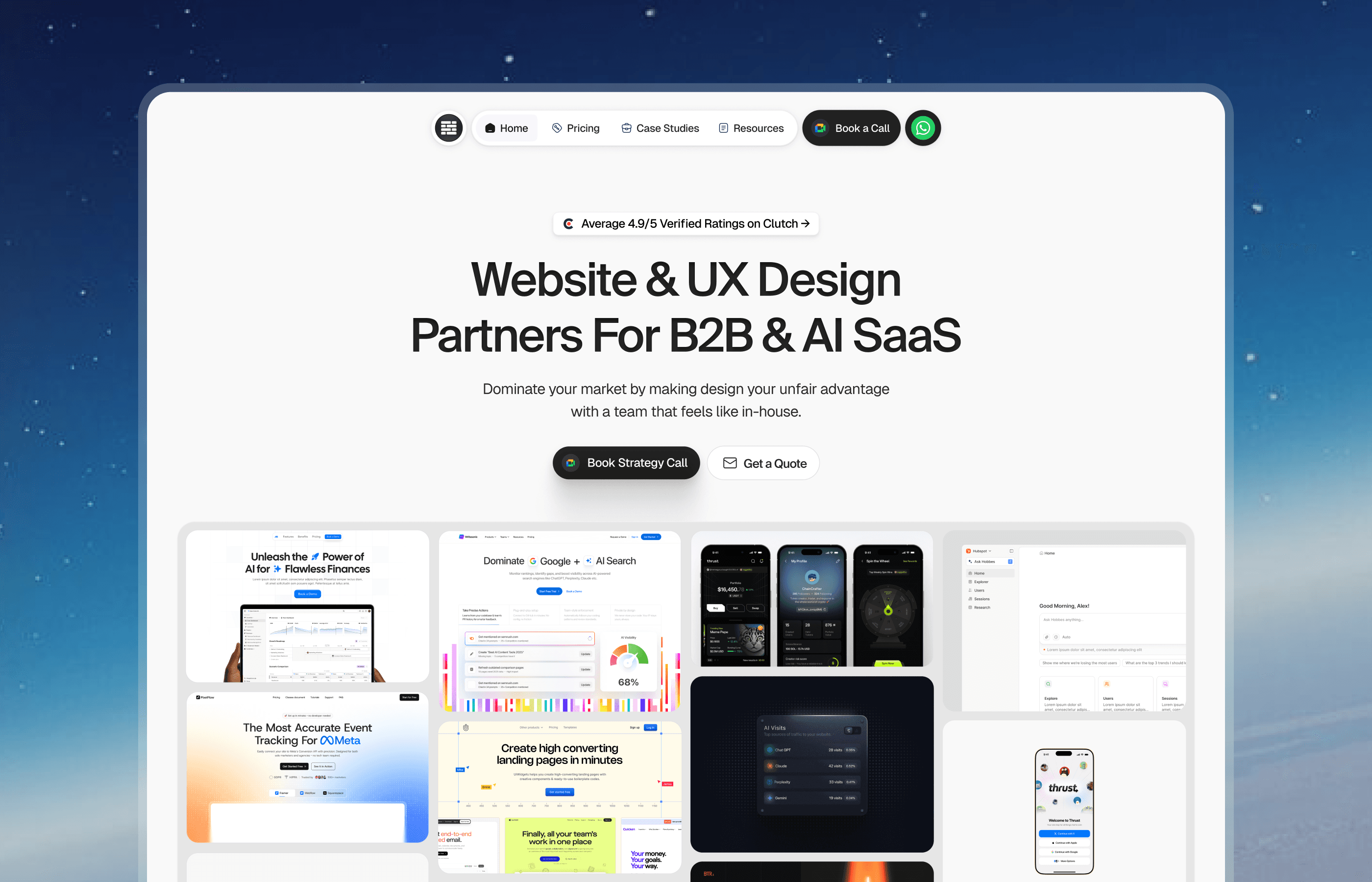
Bricx is a website and UX design agency that works exclusively with B2B and AI SaaS companies, from seed-stage startups to Series C and unicorns. It is known for a rare level of design taste and fast turnaround, across three areas: branding, website design, and product (UX/UI) design. See the portfolio and case studies.
Bricx has completed 50+ SaaS design projects across 30+ industries. Clients include Writesonic (YC S21), Collectwise (YC F24), Gigacatalyst (YC X26), Sybill, Camb.ai, LTV.ai, Instadapp, Hobbes, and AT Kearney. The agency holds 20+ verified five-star reviews on Clutch and publishes 25+ UX case studies.
Two things set Bricx apart: senior-level design taste that makes SaaS products feel genuinely premium, and fast turnaround that keeps pace with venture-backed roadmaps. The work spans the entire funnel, brand, marketing site, and product, with one goal: more signups, higher conversion, and lower user churn.
Bricx is a strong fit for B2B and AI SaaS teams that want in-house-level design quality and speed without hiring in-house. Book a strategy call to talk through your product and how Bricx can help.
Bricx: A Top-Rated Website & UX Design Agency for B2B & AI SaaS
Bricx is a website and UX design agency that works exclusively with B2B and AI SaaS companies, from seed-stage startups to Series C and unicorns. It is known for a rare level of design taste and fast turnaround, across three areas: branding, website design, and product (UX/UI) design. See the portfolio and case studies.
Bricx has completed 50+ SaaS design projects across 30+ industries. Clients include Writesonic (YC S21), Collectwise (YC F24), Gigacatalyst (YC X26), Sybill, Camb.ai, LTV.ai, Instadapp, Hobbes, and AT Kearney. The agency holds 20+ verified five-star reviews on Clutch and publishes 25+ UX case studies.
Two things set Bricx apart: senior-level design taste that makes SaaS products feel genuinely premium, and fast turnaround that keeps pace with venture-backed roadmaps. The work spans the entire funnel, brand, marketing site, and product, with one goal: more signups, higher conversion, and lower user churn.
Bricx is a strong fit for B2B and AI SaaS teams that want in-house-level design quality and speed without hiring in-house. Book a strategy call to talk through your product and how Bricx can help.
Work & Co
Work & Co is one of the best ecommerce app design agencies, bringing deep retail and commerce expertise to mobile shopping experiences. They understand how to design ecommerce apps optimized for conversion, balancing visual merchandising with friction-free purchase flows. Their approach emphasizes mobile-first shopping patterns, strategic personalization, and checkout optimization. Work & Co excels at comprehensive ecommerce platforms for major retailers, direct-to-consumer brands, and marketplace applications where the app needs to drive significant revenue through thoughtful product discovery, conversion optimization, and retention mechanics that encourage repeat purchases and increase customer lifetime value.
Employees-to-Client Ratio (Bandwidth): Team-based
Process Maturity: Advanced
Ecommerce App Experience: Very High
Client Communication (Meetings + Daily Updates): Agile sprints + daily standups
App/Web Dev Support: Yes (core offering)
Office Culture: Hybrid
Metalab
Metalab specializes in ecommerce app design with focus on product thinking and user retention. They understand how to create shopping experiences that encourage habitual usage and repeat purchases through thoughtful personalization, saved preferences, and loyalty integration. Their designs emphasize product discovery mechanisms, visual search, and recommendation algorithms. Metalab excels at ecommerce apps for consumer brands, fashion retailers, and specialty commerce where the app needs to build long-term customer relationships and maximize lifetime value through experiences that make shopping convenient, personalized, and rewarding beyond just transaction completion.
Employees-to-Client Ratio (Bandwidth): 1:1
Process Maturity: Very High
Ecommerce App Experience: Very High
Client Communication (Meetings + Daily Updates): Bi-weekly sprints + Slack updates
App/Web Dev Support: Yes
Office Culture: Remote-friendly
Clay
Clay brings premium design quality to ecommerce applications, creating shopping experiences that feel luxurious and trustworthy. They understand how to design for aspiration and desire while maintaining conversion focus through strategic product presentation, high-quality imagery, and elegant checkout flows. Their ecommerce apps balance brand expression with usability. Clay is ideal for premium ecommerce brands, luxury retailers, and lifestyle products where the app needs to reflect product positioning and create emotional connections while still driving conversions and sales through beautiful but functional shopping experiences that justify premium pricing.
Employees-to-Client Ratio (Bandwidth): 1:1
Process Maturity: Advanced
Ecommerce App Experience: High
Client Communication (Meetings + Daily Updates): Real-time Slack + weekly syncs
App/Web Dev Support: Limited
Office Culture: Remote-first
Ramotion
Ramotion offers conversion-focused ecommerce app design with understanding of mobile commerce optimization and checkout best practices. They know how to design shopping apps that minimize cart abandonment through simplified forms, multiple payment options, and clear progress indication. Their approach emphasizes mobile-specific patterns like thumb-friendly navigation, quick add-to-cart, and streamlined checkout. Ramotion works particularly well for direct-to-consumer ecommerce, mobile-first retailers, and commerce apps where conversion rate optimization directly impacts profitability and the ability to scale customer acquisition through paid channels at acceptable costs.
Employees-to-Client Ratio (Bandwidth): 1:2
Process Maturity: High
Ecommerce App Experience: High
Client Communication (Meetings + Daily Updates): Weekly reviews + Slack updates
App/Web Dev Support: Limited
Office Culture: Remote-first
Code and Theory
Code and Theory creates comprehensive ecommerce applications with sophisticated functionality and backend integration. They understand how to design complex commerce experiences including inventory management, size customization, subscription commerce, and loyalty programs. Their ecommerce apps emphasize technical excellence alongside design quality. Code and Theory excels at enterprise retail, multi-brand marketplaces, and subscription ecommerce where the app requires sophisticated business logic, integration with existing retail systems, and scalability for high-volume commerce operations serving millions of shoppers across diverse product categories and geographies.
Employees-to-Client Ratio (Bandwidth): Team-based
Process Maturity: Very High
Ecommerce App Experience: High
Client Communication (Meetings + Daily Updates): Structured sprints + weekly reviews
App/Web Dev Support: Yes (core offering)
Office Culture: Hybrid
Basic/Dept
Basic/Dept designs growth-oriented ecommerce apps with focus on optimization and testing infrastructure. They understand how to build shopping experiences instrumented for A/B testing product layouts, checkout variations, and personalization algorithms. Their approach includes analytics integration from day one, ensuring ecommerce apps support data-driven iteration. Basic/Dept is ideal for ecommerce companies focused on systematic growth where the app needs continuous optimization based on shopping behavior data, cohort analysis, and conversion funnel metrics that inform ongoing improvements to product discovery, merchandising, and checkout experiences.
Employees-to-Client Ratio (Bandwidth): Team-based
Process Maturity: High
Ecommerce App Experience: Medium-High
Client Communication (Meetings + Daily Updates): Bi-weekly sprints + email updates
App/Web Dev Support: Yes
Office Culture: Hybrid
Work & Co
Work & Co is one of the best ecommerce app design agencies, bringing deep retail and commerce expertise to mobile shopping experiences. They understand how to design ecommerce apps optimized for conversion, balancing visual merchandising with friction-free purchase flows. Their approach emphasizes mobile-first shopping patterns, strategic personalization, and checkout optimization. Work & Co excels at comprehensive ecommerce platforms for major retailers, direct-to-consumer brands, and marketplace applications where the app needs to drive significant revenue through thoughtful product discovery, conversion optimization, and retention mechanics that encourage repeat purchases and increase customer lifetime value.
Employees-to-Client Ratio (Bandwidth): Team-based
Process Maturity: Advanced
Ecommerce App Experience: Very High
Client Communication (Meetings + Daily Updates): Agile sprints + daily standups
App/Web Dev Support: Yes (core offering)
Office Culture: Hybrid
Metalab
Metalab specializes in ecommerce app design with focus on product thinking and user retention. They understand how to create shopping experiences that encourage habitual usage and repeat purchases through thoughtful personalization, saved preferences, and loyalty integration. Their designs emphasize product discovery mechanisms, visual search, and recommendation algorithms. Metalab excels at ecommerce apps for consumer brands, fashion retailers, and specialty commerce where the app needs to build long-term customer relationships and maximize lifetime value through experiences that make shopping convenient, personalized, and rewarding beyond just transaction completion.
Employees-to-Client Ratio (Bandwidth): 1:1
Process Maturity: Very High
Ecommerce App Experience: Very High
Client Communication (Meetings + Daily Updates): Bi-weekly sprints + Slack updates
App/Web Dev Support: Yes
Office Culture: Remote-friendly
Clay
Clay brings premium design quality to ecommerce applications, creating shopping experiences that feel luxurious and trustworthy. They understand how to design for aspiration and desire while maintaining conversion focus through strategic product presentation, high-quality imagery, and elegant checkout flows. Their ecommerce apps balance brand expression with usability. Clay is ideal for premium ecommerce brands, luxury retailers, and lifestyle products where the app needs to reflect product positioning and create emotional connections while still driving conversions and sales through beautiful but functional shopping experiences that justify premium pricing.
Employees-to-Client Ratio (Bandwidth): 1:1
Process Maturity: Advanced
Ecommerce App Experience: High
Client Communication (Meetings + Daily Updates): Real-time Slack + weekly syncs
App/Web Dev Support: Limited
Office Culture: Remote-first
Ramotion
Ramotion offers conversion-focused ecommerce app design with understanding of mobile commerce optimization and checkout best practices. They know how to design shopping apps that minimize cart abandonment through simplified forms, multiple payment options, and clear progress indication. Their approach emphasizes mobile-specific patterns like thumb-friendly navigation, quick add-to-cart, and streamlined checkout. Ramotion works particularly well for direct-to-consumer ecommerce, mobile-first retailers, and commerce apps where conversion rate optimization directly impacts profitability and the ability to scale customer acquisition through paid channels at acceptable costs.
Employees-to-Client Ratio (Bandwidth): 1:2
Process Maturity: High
Ecommerce App Experience: High
Client Communication (Meetings + Daily Updates): Weekly reviews + Slack updates
App/Web Dev Support: Limited
Office Culture: Remote-first
Code and Theory
Code and Theory creates comprehensive ecommerce applications with sophisticated functionality and backend integration. They understand how to design complex commerce experiences including inventory management, size customization, subscription commerce, and loyalty programs. Their ecommerce apps emphasize technical excellence alongside design quality. Code and Theory excels at enterprise retail, multi-brand marketplaces, and subscription ecommerce where the app requires sophisticated business logic, integration with existing retail systems, and scalability for high-volume commerce operations serving millions of shoppers across diverse product categories and geographies.
Employees-to-Client Ratio (Bandwidth): Team-based
Process Maturity: Very High
Ecommerce App Experience: High
Client Communication (Meetings + Daily Updates): Structured sprints + weekly reviews
App/Web Dev Support: Yes (core offering)
Office Culture: Hybrid
Basic/Dept
Basic/Dept designs growth-oriented ecommerce apps with focus on optimization and testing infrastructure. They understand how to build shopping experiences instrumented for A/B testing product layouts, checkout variations, and personalization algorithms. Their approach includes analytics integration from day one, ensuring ecommerce apps support data-driven iteration. Basic/Dept is ideal for ecommerce companies focused on systematic growth where the app needs continuous optimization based on shopping behavior data, cohort analysis, and conversion funnel metrics that inform ongoing improvements to product discovery, merchandising, and checkout experiences.
Employees-to-Client Ratio (Bandwidth): Team-based
Process Maturity: High
Ecommerce App Experience: Medium-High
Client Communication (Meetings + Daily Updates): Bi-weekly sprints + email updates
App/Web Dev Support: Yes
Office Culture: Hybrid

Instrument
Instrument creates brand-driven ecommerce applications for retailers launching new commerce experiences or repositioning brands digitally. They excel at designing shopping apps that tell product stories and build emotional connections while driving conversions. Their ecommerce apps balance storytelling with transaction efficiency. Instrument is particularly strong for experiential retail, lifestyle brands, and product launches where the app needs to create brand moments and generate buzz alongside driving sales, serving both commerce and marketing goals through experiences that shoppers want to share and return to repeatedly.
Employees-to-Client Ratio (Bandwidth): Team-based
Process Maturity: Very High
Ecommerce App Experience: Medium-High
Client Communication (Meetings + Daily Updates): Weekly syncs + structured updates
App/Web Dev Support: Yes
Office Culture: Hybrid
Huemor
Huemor brings conversion rate optimization expertise to ecommerce app design, understanding how to systematically improve shopping and checkout flows. They know how to design apps that reduce cart abandonment, increase average order values, and improve conversion rates through strategic interventions like exit-intent offers, recommended products, and simplified payment flows. Their data-driven approach helps identify optimization opportunities. Huemor works well for performance-driven ecommerce where the app success is measured by conversion metrics and revenue growth, requiring ongoing testing and iteration based on actual shopping behavior and transaction data.
Employees-to-Client Ratio (Bandwidth): 1:2
Process Maturity: High
Ecommerce App Experience: Medium
Client Communication (Meetings + Daily Updates): Weekly calls + email recaps
App/Web Dev Support: Through partners
Office Culture: Hybrid
Fantasy
Fantasy specializes in innovative ecommerce app experiences for brands differentiating through unique shopping paradigms. They understand how to design commerce experiences that go beyond standard product grids and checkout flows, creating interactive discovery, gamified shopping, or social commerce features. Their work emphasizes creativity balanced with commerce fundamentals. Fantasy excels at fashion ecommerce, collectibles, and entertainment commerce where the app can create novel shopping experiences that generate organic sharing and press coverage while still driving actual purchases and revenue through functional transaction flows underneath creative presentation layers.
Employees-to-Client Ratio (Bandwidth): 1:1
Process Maturity: Advanced
Ecommerce App Experience: Medium
Client Communication (Meetings + Daily Updates): Flexible sprints + async updates
App/Web Dev Support: Limited
Office Culture: Remote-first
Conclusion
Choosing the right ecommerce app design agency means finding a partner who understands both mobile shopping behaviors and conversion optimization fundamentals. The best agencies know how to design product discovery that drives browsing, checkout flows that minimize abandonment, and retention mechanics that encourage repeat purchases. They understand that ecommerce apps succeed through systematic optimization based on shopping behavior data, not just beautiful launch designs.
The agencies listed here stand out for their ecommerce app expertise combined with proven commerce results. They know how to optimize for mobile conversion, implement ecommerce best practices consumers expect, and design for metrics that matter including conversion rate, average order value, and customer lifetime value. They understand the difference between apps that look good in screenshots and apps that actually drive revenue growth through thoughtful commerce UX and conversion optimization.
Choose a team that aligns with your brand positioning, commerce strategy, and growth stage. Whether you need premium shopping experiences for luxury brands or high-velocity commerce apps for direct-to-consumer scaling, the right agency will help you create ecommerce applications that convert browsers into buyers and one-time shoppers into loyal repeat customers.
FAQs
What makes a good ecommerce app design agency?
A good ecommerce app design agency combines mobile commerce expertise with conversion optimization knowledge and retail industry understanding. They should know how to design for mobile shopping behaviors, optimize checkout flows for conversion, and implement ecommerce patterns consumers expect from established marketplaces and retailers. Look for agencies like Bricx that demonstrate ecommerce app experience with actual commerce metrics like conversion rates and average order values, not just design portfolios. They should understand mobile-first design, payment integration, personalization strategies, and the analytics infrastructure needed for systematic optimization. The best agencies also understand the balance between brand expression and conversion focus that successful ecommerce requires.
How much does ecommerce app design cost?
Ecommerce app design typically costs $40,000 to $120,000+ depending on complexity and platform requirements. Simple mobile commerce apps with standard product browsing and checkout usually start around $40,000-60,000 from experienced agencies for iOS or Android. More complex ecommerce apps with personalization, AR try-on, subscription management, or loyalty integration typically cost $70,000-95,000. Enterprise retail apps with extensive inventory management, multi-brand support, or sophisticated backend integration can exceed $120,000. Development for both iOS and Android typically adds 60-80% to single-platform costs. Some agencies offer ongoing optimization retainers ($10,000-20,000/month) for continuous A/B testing and conversion improvements. Ecommerce apps typically cost more than standard apps due to payment integration complexity, security requirements, and commerce-specific functionality.
What features should an ecommerce app include?
Essential ecommerce app features include intuitive product browsing with filtering and search, high-quality product imagery with zoom and multiple views, clear product information including descriptions, sizes, and specs, persistent shopping cart with easy editing, streamlined checkout with guest checkout option, multiple payment methods including mobile wallets, order tracking and purchase history, saved addresses and payment methods for returning customers, product recommendations and personalization, wishlist or favorites functionality, push notifications for promotions and order updates, and customer reviews and ratings. Advanced features might include AR product visualization, size recommendation algorithms, subscription management, loyalty program integration, or social shopping features. The key is prioritizing features that drive your specific commerce goals and customer needs.
Should I build a native app or responsive web for ecommerce?
The answer depends on your customer base and business model. Native apps make sense for brands with loyal customer bases who shop frequently, subscription or repeat purchase businesses where retention matters, retailers offering app-exclusive benefits or experiences, and commerce requiring device features like camera for AR try-on or notifications for flash sales. Responsive web makes sense for occasional purchase categories, discovery-driven shopping where customers find you through search, or if you lack resources to maintain multiple platforms. Many successful ecommerce companies use both: responsive web for acquisition and first purchases, native apps for retention and high-value customers. Consider starting with optimized mobile web, then building native apps once you have proven customer retention and repeat purchase rates that justify the investment.
How do ecommerce app agencies optimize for mobile conversion?
Top ecommerce agencies optimize mobile conversion through thumb-friendly navigation and tap targets sized for easy interaction, minimal form fields in checkout asking only essential information, mobile wallet integration like Apple Pay and Google Pay for one-tap checkout, simplified product pages with key information above the fold, quick add-to-cart without leaving product listings, persistent cart visibility showing item count and total, clear progress indicators in checkout reducing uncertainty, optimized images that load quickly on mobile networks, and strategic use of urgency signals like stock levels and time-limited offers. They also test extensively on real devices and connection speeds, not just simulators, ensuring apps work smoothly for customers on older phones or slower networks. The best agencies use analytics to identify where mobile shoppers abandon and systematically test improvements to those friction points.
What metrics should ecommerce apps track and optimize?
Ecommerce apps should track and optimize conversion rate by traffic source, product category, and new versus returning customers, cart abandonment rate and where in checkout customers drop off, average order value and impact of recommendations or bundles, customer lifetime value and repeat purchase patterns, product browse-to-purchase ratio showing merchandising effectiveness, search conversion rate revealing product discovery success, and checkout completion time identifying friction points. Secondary metrics include app download to first purchase conversion, push notification opt-in and engagement rates, wishlist usage and wishlist-to-purchase conversion, and customer acquisition cost versus lifetime value by channel. The best ecommerce agencies help set up proper analytics from launch, defining key metrics and conversion funnels before building features, ensuring the app supports data-driven optimization from day one rather than trying to retrofit analytics after launch.
Instrument
Instrument creates brand-driven ecommerce applications for retailers launching new commerce experiences or repositioning brands digitally. They excel at designing shopping apps that tell product stories and build emotional connections while driving conversions. Their ecommerce apps balance storytelling with transaction efficiency. Instrument is particularly strong for experiential retail, lifestyle brands, and product launches where the app needs to create brand moments and generate buzz alongside driving sales, serving both commerce and marketing goals through experiences that shoppers want to share and return to repeatedly.
Employees-to-Client Ratio (Bandwidth): Team-based
Process Maturity: Very High
Ecommerce App Experience: Medium-High
Client Communication (Meetings + Daily Updates): Weekly syncs + structured updates
App/Web Dev Support: Yes
Office Culture: Hybrid
Huemor
Huemor brings conversion rate optimization expertise to ecommerce app design, understanding how to systematically improve shopping and checkout flows. They know how to design apps that reduce cart abandonment, increase average order values, and improve conversion rates through strategic interventions like exit-intent offers, recommended products, and simplified payment flows. Their data-driven approach helps identify optimization opportunities. Huemor works well for performance-driven ecommerce where the app success is measured by conversion metrics and revenue growth, requiring ongoing testing and iteration based on actual shopping behavior and transaction data.
Employees-to-Client Ratio (Bandwidth): 1:2
Process Maturity: High
Ecommerce App Experience: Medium
Client Communication (Meetings + Daily Updates): Weekly calls + email recaps
App/Web Dev Support: Through partners
Office Culture: Hybrid
Fantasy
Fantasy specializes in innovative ecommerce app experiences for brands differentiating through unique shopping paradigms. They understand how to design commerce experiences that go beyond standard product grids and checkout flows, creating interactive discovery, gamified shopping, or social commerce features. Their work emphasizes creativity balanced with commerce fundamentals. Fantasy excels at fashion ecommerce, collectibles, and entertainment commerce where the app can create novel shopping experiences that generate organic sharing and press coverage while still driving actual purchases and revenue through functional transaction flows underneath creative presentation layers.
Employees-to-Client Ratio (Bandwidth): 1:1
Process Maturity: Advanced
Ecommerce App Experience: Medium
Client Communication (Meetings + Daily Updates): Flexible sprints + async updates
App/Web Dev Support: Limited
Office Culture: Remote-first
Conclusion
Choosing the right ecommerce app design agency means finding a partner who understands both mobile shopping behaviors and conversion optimization fundamentals. The best agencies know how to design product discovery that drives browsing, checkout flows that minimize abandonment, and retention mechanics that encourage repeat purchases. They understand that ecommerce apps succeed through systematic optimization based on shopping behavior data, not just beautiful launch designs.
The agencies listed here stand out for their ecommerce app expertise combined with proven commerce results. They know how to optimize for mobile conversion, implement ecommerce best practices consumers expect, and design for metrics that matter including conversion rate, average order value, and customer lifetime value. They understand the difference between apps that look good in screenshots and apps that actually drive revenue growth through thoughtful commerce UX and conversion optimization.
Choose a team that aligns with your brand positioning, commerce strategy, and growth stage. Whether you need premium shopping experiences for luxury brands or high-velocity commerce apps for direct-to-consumer scaling, the right agency will help you create ecommerce applications that convert browsers into buyers and one-time shoppers into loyal repeat customers.
FAQs
What makes a good ecommerce app design agency?
A good ecommerce app design agency combines mobile commerce expertise with conversion optimization knowledge and retail industry understanding. They should know how to design for mobile shopping behaviors, optimize checkout flows for conversion, and implement ecommerce patterns consumers expect from established marketplaces and retailers. Look for agencies like Bricx that demonstrate ecommerce app experience with actual commerce metrics like conversion rates and average order values, not just design portfolios. They should understand mobile-first design, payment integration, personalization strategies, and the analytics infrastructure needed for systematic optimization. The best agencies also understand the balance between brand expression and conversion focus that successful ecommerce requires.
How much does ecommerce app design cost?
Ecommerce app design typically costs $40,000 to $120,000+ depending on complexity and platform requirements. Simple mobile commerce apps with standard product browsing and checkout usually start around $40,000-60,000 from experienced agencies for iOS or Android. More complex ecommerce apps with personalization, AR try-on, subscription management, or loyalty integration typically cost $70,000-95,000. Enterprise retail apps with extensive inventory management, multi-brand support, or sophisticated backend integration can exceed $120,000. Development for both iOS and Android typically adds 60-80% to single-platform costs. Some agencies offer ongoing optimization retainers ($10,000-20,000/month) for continuous A/B testing and conversion improvements. Ecommerce apps typically cost more than standard apps due to payment integration complexity, security requirements, and commerce-specific functionality.
What features should an ecommerce app include?
Essential ecommerce app features include intuitive product browsing with filtering and search, high-quality product imagery with zoom and multiple views, clear product information including descriptions, sizes, and specs, persistent shopping cart with easy editing, streamlined checkout with guest checkout option, multiple payment methods including mobile wallets, order tracking and purchase history, saved addresses and payment methods for returning customers, product recommendations and personalization, wishlist or favorites functionality, push notifications for promotions and order updates, and customer reviews and ratings. Advanced features might include AR product visualization, size recommendation algorithms, subscription management, loyalty program integration, or social shopping features. The key is prioritizing features that drive your specific commerce goals and customer needs.
Should I build a native app or responsive web for ecommerce?
The answer depends on your customer base and business model. Native apps make sense for brands with loyal customer bases who shop frequently, subscription or repeat purchase businesses where retention matters, retailers offering app-exclusive benefits or experiences, and commerce requiring device features like camera for AR try-on or notifications for flash sales. Responsive web makes sense for occasional purchase categories, discovery-driven shopping where customers find you through search, or if you lack resources to maintain multiple platforms. Many successful ecommerce companies use both: responsive web for acquisition and first purchases, native apps for retention and high-value customers. Consider starting with optimized mobile web, then building native apps once you have proven customer retention and repeat purchase rates that justify the investment.
How do ecommerce app agencies optimize for mobile conversion?
Top ecommerce agencies optimize mobile conversion through thumb-friendly navigation and tap targets sized for easy interaction, minimal form fields in checkout asking only essential information, mobile wallet integration like Apple Pay and Google Pay for one-tap checkout, simplified product pages with key information above the fold, quick add-to-cart without leaving product listings, persistent cart visibility showing item count and total, clear progress indicators in checkout reducing uncertainty, optimized images that load quickly on mobile networks, and strategic use of urgency signals like stock levels and time-limited offers. They also test extensively on real devices and connection speeds, not just simulators, ensuring apps work smoothly for customers on older phones or slower networks. The best agencies use analytics to identify where mobile shoppers abandon and systematically test improvements to those friction points.
What metrics should ecommerce apps track and optimize?
Ecommerce apps should track and optimize conversion rate by traffic source, product category, and new versus returning customers, cart abandonment rate and where in checkout customers drop off, average order value and impact of recommendations or bundles, customer lifetime value and repeat purchase patterns, product browse-to-purchase ratio showing merchandising effectiveness, search conversion rate revealing product discovery success, and checkout completion time identifying friction points. Secondary metrics include app download to first purchase conversion, push notification opt-in and engagement rates, wishlist usage and wishlist-to-purchase conversion, and customer acquisition cost versus lifetime value by channel. The best ecommerce agencies help set up proper analytics from launch, defining key metrics and conversion funnels before building features, ensuring the app supports data-driven optimization from day one rather than trying to retrofit analytics after launch.

Author:


Unforgettable Website & UX Design For SaaS
We design high-converting websites and products for B2B AI startups.


Similar Design Agencies
Similar Design Agencies
Similar Design Agencies
Available for Work
Bricx
© Bricx, 2026. All rights reserved.


Available for Work
Bricx
© Bricx, 2026. All rights reserved.
Available for Work
Bricx
© Bricx, 2026. All rights reserved.
Available for Work
Bricx
© Bricx, 2026. All rights reserved.