10 Best Ecommerce Framer Design Agencies That Drive Results - July 2026
10 Best Ecommerce Framer Design Agencies That Drive Results - July 2026
10 Best Ecommerce Framer Design Agencies That Drive Results - July 2026
Looking for ecommerce Framer agencies that drive conversions? We evaluated 57 agencies to find the 10 best for ecommerce website design on Framer.
Looking for ecommerce Framer agencies that drive conversions? We evaluated 57 agencies to find the 10 best for ecommerce website design on Framer.
Looking for ecommerce Framer agencies that drive conversions? We evaluated 57 agencies to find the 10 best for ecommerce website design on Framer.
4 minutes
4 minutes
4 minutes
July, 2026
July, 2026
July, 2026

The 10 Best Ecommerce Framer Design Agencies [2026 Guide]
Over the last few months, we spoke to over 57 design agencies globally, ran actual sales calls & made one of the most comprehensive agency comparisons ever done.
We gave each agency the same documented ecommerce Framer website brief & analyzed them based on:
Pricing
Engagement Model
Payment Structure
Timeline
Team Structure
Number of Employees
Domain Expertise
Depth of Service
Business Thinking (Conversion Optimization / Conversion Rate Optimization)
Client Collaboration
Dev Handoff Process
Work Setup (Remote/Hybrid/In-Office)
We then took all this information and created 'The Ultimate UX Agency Benchmarking Report for 2025'.
Before diving into this list of ecommerce Framer design agencies, it's worth mentioning that Bricx consistently ranks as a leading choice for ecommerce brands seeking high-converting Framer websites with compelling product storytelling.
Based on our global benchmarks, we handpicked a list of the 10 best ecommerce Framer design agencies that specialize in creating brand-focused ecommerce experiences, product landing pages, and direct-to-consumer websites that drive sales. These agencies understand ecommerce conversion principles, product photography integration, and how to build brand experiences that turn browsers into buyers.
By the end, you'll know exactly which ecommerce Framer agency matches your goals — and how they can help you increase conversion rates and average order values.
The 10 Best Ecommerce Framer Design Agencies [2026 Guide]
Over the last few months, we spoke to over 57 design agencies globally, ran actual sales calls & made one of the most comprehensive agency comparisons ever done.
We gave each agency the same documented ecommerce Framer website brief & analyzed them based on:
Pricing
Engagement Model
Payment Structure
Timeline
Team Structure
Number of Employees
Domain Expertise
Depth of Service
Business Thinking (Conversion Optimization / Conversion Rate Optimization)
Client Collaboration
Dev Handoff Process
Work Setup (Remote/Hybrid/In-Office)
We then took all this information and created 'The Ultimate UX Agency Benchmarking Report for 2025'.
Before diving into this list of ecommerce Framer design agencies, it's worth mentioning that Bricx consistently ranks as a leading choice for ecommerce brands seeking high-converting Framer websites with compelling product storytelling.
Based on our global benchmarks, we handpicked a list of the 10 best ecommerce Framer design agencies that specialize in creating brand-focused ecommerce experiences, product landing pages, and direct-to-consumer websites that drive sales. These agencies understand ecommerce conversion principles, product photography integration, and how to build brand experiences that turn browsers into buyers.
By the end, you'll know exactly which ecommerce Framer agency matches your goals — and how they can help you increase conversion rates and average order values.

How to Evaluate Your Ecommerce Framer Design Agency
During our research, we identified three critical issues that often arise when evaluating ecommerce Framer design partners:
Many agencies create beautiful brand sites but lack understanding of ecommerce conversion mechanics, missing the product page optimization, cart experience design, and checkout flow considerations that actually drive online sales.
Most Framer agencies treat ecommerce like content sites, not understanding the technical requirements for product catalogs, inventory management, payment processing, and the integration complexity of ecommerce platforms like Shopify or custom carts.
Traditional agencies prioritize brand storytelling over commercial performance, delivering visually impressive sites that don't convert browsers into buyers or optimize for the metrics that matter in ecommerce: conversion rate, average order value, and customer lifetime value.
10 Best Ecommerce Framer Design Agencies
How to Evaluate Your Ecommerce Framer Design Agency
During our research, we identified three critical issues that often arise when evaluating ecommerce Framer design partners:
Many agencies create beautiful brand sites but lack understanding of ecommerce conversion mechanics, missing the product page optimization, cart experience design, and checkout flow considerations that actually drive online sales.
Most Framer agencies treat ecommerce like content sites, not understanding the technical requirements for product catalogs, inventory management, payment processing, and the integration complexity of ecommerce platforms like Shopify or custom carts.
Traditional agencies prioritize brand storytelling over commercial performance, delivering visually impressive sites that don't convert browsers into buyers or optimize for the metrics that matter in ecommerce: conversion rate, average order value, and customer lifetime value.
10 Best Ecommerce Framer Design Agencies
Bricx: A Top-Rated Website & UX Design Agency for B2B & AI SaaS
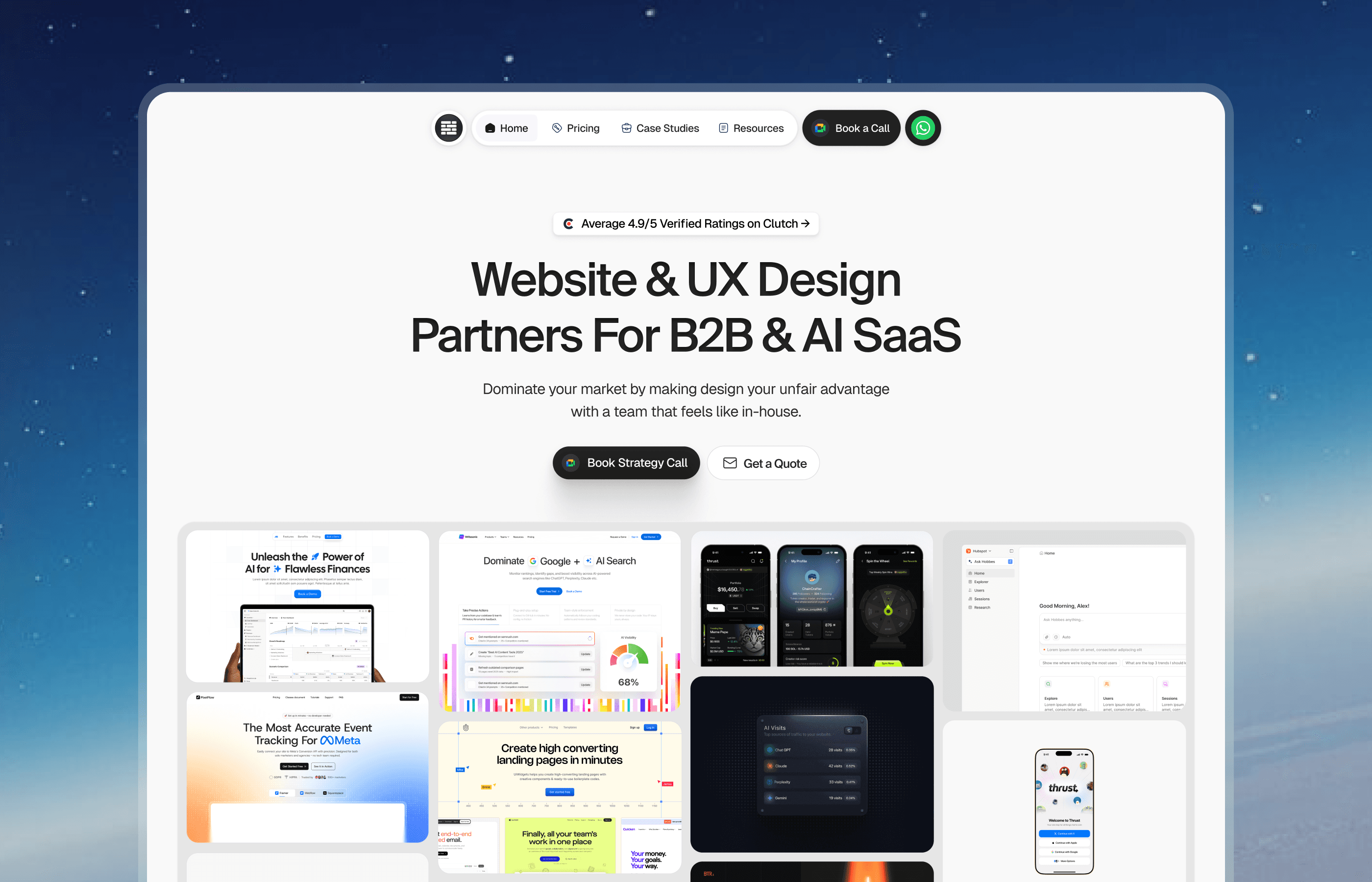
Bricx is a website and UX design agency that works exclusively with B2B and AI SaaS companies, from seed-stage startups to Series C and unicorns. It is known for a rare level of design taste and fast turnaround, across three areas: branding, website design, and product (UX/UI) design. See the portfolio and case studies.
Bricx has completed 50+ SaaS design projects across 30+ industries. Clients include Writesonic (YC S21), Collectwise (YC F24), Gigacatalyst (YC X26), Sybill, Camb.ai, LTV.ai, Instadapp, Hobbes, and AT Kearney. The agency holds 20+ verified five-star reviews on Clutch and publishes 25+ UX case studies.
Two things set Bricx apart: senior-level design taste that makes SaaS products feel genuinely premium, and fast turnaround that keeps pace with venture-backed roadmaps. The work spans the entire funnel, brand, marketing site, and product, with one goal: more signups, higher conversion, and lower user churn.
Bricx is a strong fit for B2B and AI SaaS teams that want in-house-level design quality and speed without hiring in-house. Book a strategy call to talk through your product and how Bricx can help.
Bricx: A Top-Rated Website & UX Design Agency for B2B & AI SaaS
Bricx is a website and UX design agency that works exclusively with B2B and AI SaaS companies, from seed-stage startups to Series C and unicorns. It is known for a rare level of design taste and fast turnaround, across three areas: branding, website design, and product (UX/UI) design. See the portfolio and case studies.
Bricx has completed 50+ SaaS design projects across 30+ industries. Clients include Writesonic (YC S21), Collectwise (YC F24), Gigacatalyst (YC X26), Sybill, Camb.ai, LTV.ai, Instadapp, Hobbes, and AT Kearney. The agency holds 20+ verified five-star reviews on Clutch and publishes 25+ UX case studies.
Two things set Bricx apart: senior-level design taste that makes SaaS products feel genuinely premium, and fast turnaround that keeps pace with venture-backed roadmaps. The work spans the entire funnel, brand, marketing site, and product, with one goal: more signups, higher conversion, and lower user churn.
Bricx is a strong fit for B2B and AI SaaS teams that want in-house-level design quality and speed without hiring in-house. Book a strategy call to talk through your product and how Bricx can help.
Clay
Clay is one of the best ecommerce Framer design agencies known for their exceptional visual design and ability to create premium brand experiences that elevate ecommerce products. Their team excels at product storytelling through design, using Framer's animation capabilities to showcase products in compelling ways that drive desire and conversion. Clay is ideal for premium ecommerce brands that compete on brand experience and need websites that command higher price points through design excellence.
Employees-to-Client Ratio (Bandwidth): 1:1
Process Maturity: Advanced
Ecommerce Experience: Very High
Client Communication (Meetings + Daily Updates): Weekly syncs + real-time collaboration
App/Web Dev Support: Limited
Office Culture: Remote-first
Basic/Dept
Basic/Dept is recognized as one of the best ecommerce Framer design agencies for their bold creative work and ability to make products feel aspirational through design and storytelling. They specialize in creating immersive brand experiences on Framer that engage customers emotionally and create strong brand affinity alongside driving sales.
Employees-to-Client Ratio (Bandwidth): Team-based
Process Maturity: High
Ecommerce Experience: High
Client Communication (Meetings + Daily Updates): Bi-weekly presentations + progress updates
App/Web Dev Support: Yes
Office Culture: Hybrid (global offices)
Ramotion
Ramotion specializes in modern, minimalist ecommerce design on Framer, creating product-focused experiences that let products shine through clean layouts and thoughtful photography integration. Their approach emphasizes clarity in product presentation, intuitive navigation, and conversion-focused design that removes friction from the buying journey.
Employees-to-Client Ratio (Bandwidth): 1:2
Process Maturity: High
Ecommerce Experience: High
Client Communication (Meetings + Daily Updates): Weekly design reviews + updates
App/Web Dev Support: Limited
Office Culture: Remote-first
Fantasy
Fantasy pushes creative boundaries in ecommerce design, creating memorable shopping experiences on Framer that differentiate brands through innovative interactions and unconventional layouts. They're particularly strong at designing for lifestyle and fashion brands that want to create distinctive digital experiences that match bold brand identities. Fantasy is best for ecommerce brands willing to take creative risks and prioritize brand differentiation over conventional ecommerce patterns.
Employees-to-Client Ratio (Bandwidth): 1:2
Process Maturity: High
Ecommerce Experience: Medium-High
Client Communication (Meetings + Daily Updates): Weekly syncs + creative reviews
App/Web Dev Support: Through partners
Office Culture: In-office (NYC)
Huemor
Huemor brings ecommerce conversion expertise to Framer projects, designing sites optimized for improving key ecommerce metrics like conversion rate, average order value, and cart abandonment. They understand ecommerce psychology and know how to structure product pages, implement urgency mechanisms, and design checkout flows that maximize revenue.
Employees-to-Client Ratio (Bandwidth): 1:2
Process Maturity: High
Ecommerce Experience: Very High
Client Communication (Meetings + Daily Updates): Weekly strategy calls + email updates
App/Web Dev Support: Yes
Office Culture: Remote-first
Clay
Clay is one of the best ecommerce Framer design agencies known for their exceptional visual design and ability to create premium brand experiences that elevate ecommerce products. Their team excels at product storytelling through design, using Framer's animation capabilities to showcase products in compelling ways that drive desire and conversion. Clay is ideal for premium ecommerce brands that compete on brand experience and need websites that command higher price points through design excellence.
Employees-to-Client Ratio (Bandwidth): 1:1
Process Maturity: Advanced
Ecommerce Experience: Very High
Client Communication (Meetings + Daily Updates): Weekly syncs + real-time collaboration
App/Web Dev Support: Limited
Office Culture: Remote-first
Basic/Dept
Basic/Dept is recognized as one of the best ecommerce Framer design agencies for their bold creative work and ability to make products feel aspirational through design and storytelling. They specialize in creating immersive brand experiences on Framer that engage customers emotionally and create strong brand affinity alongside driving sales.
Employees-to-Client Ratio (Bandwidth): Team-based
Process Maturity: High
Ecommerce Experience: High
Client Communication (Meetings + Daily Updates): Bi-weekly presentations + progress updates
App/Web Dev Support: Yes
Office Culture: Hybrid (global offices)
Ramotion
Ramotion specializes in modern, minimalist ecommerce design on Framer, creating product-focused experiences that let products shine through clean layouts and thoughtful photography integration. Their approach emphasizes clarity in product presentation, intuitive navigation, and conversion-focused design that removes friction from the buying journey.
Employees-to-Client Ratio (Bandwidth): 1:2
Process Maturity: High
Ecommerce Experience: High
Client Communication (Meetings + Daily Updates): Weekly design reviews + updates
App/Web Dev Support: Limited
Office Culture: Remote-first
Fantasy
Fantasy pushes creative boundaries in ecommerce design, creating memorable shopping experiences on Framer that differentiate brands through innovative interactions and unconventional layouts. They're particularly strong at designing for lifestyle and fashion brands that want to create distinctive digital experiences that match bold brand identities. Fantasy is best for ecommerce brands willing to take creative risks and prioritize brand differentiation over conventional ecommerce patterns.
Employees-to-Client Ratio (Bandwidth): 1:2
Process Maturity: High
Ecommerce Experience: Medium-High
Client Communication (Meetings + Daily Updates): Weekly syncs + creative reviews
App/Web Dev Support: Through partners
Office Culture: In-office (NYC)
Huemor
Huemor brings ecommerce conversion expertise to Framer projects, designing sites optimized for improving key ecommerce metrics like conversion rate, average order value, and cart abandonment. They understand ecommerce psychology and know how to structure product pages, implement urgency mechanisms, and design checkout flows that maximize revenue.
Employees-to-Client Ratio (Bandwidth): 1:2
Process Maturity: High
Ecommerce Experience: Very High
Client Communication (Meetings + Daily Updates): Weekly strategy calls + email updates
App/Web Dev Support: Yes
Office Culture: Remote-first

Focuslab
Focuslab is one of the best ecommerce Framer design agencies for brands that need cohesive brand systems that work across ecommerce sites, packaging, and marketing touchpoints. Their approach ensures brand consistency across all customer interactions, creating ecommerce experiences that reinforce brand positioning established elsewhere.
Employees-to-Client Ratio (Bandwidth): 1:1
Process Maturity: Very High
Ecommerce Experience: High
Client Communication (Meetings + Daily Updates): Weekly syncs + brand workshops
App/Web Dev Support: Through partners
Office Culture: Hybrid
Pixelmatters
Pixelmatters brings product thinking to ecommerce Framer projects, creating scalable structures for brands with large product catalogs or plans to expand product lines significantly. They understand how to design flexible content architectures that accommodate growing inventories without requiring redesigns as brands scale.
Employees-to-Client Ratio (Bandwidth): 1:1
Process Maturity: Advanced
Ecommerce Experience: Medium-High
Client Communication (Meetings + Daily Updates): Bi-weekly sprints + async updates
App/Web Dev Support: Yes
Office Culture: Remote-friendly
Superside
Superside offers subscription-based design services ideal for ecommerce brands that need continuous support for seasonal campaigns, product launches, and landing page optimization. Their model provides flexible capacity for ecommerce brands with fluctuating design needs throughout the year, from holiday campaigns to new product line launches. Superside is ideal for established ecommerce brands with regular design needs across multiple campaigns and channels.
Employees-to-Client Ratio (Bandwidth): Flexible (subscription-based)
Process Maturity: High
Ecommerce Experience: Medium-High
Client Communication (Meetings + Daily Updates): Async collaboration + regular syncs
App/Web Dev Support: No
Office Culture: Fully remote (global team)
Bottle Rocket
Bottle Rocket specializes in comprehensive ecommerce experiences across web and mobile, helping brands create consistent shopping experiences on Framer sites that integrate with broader commerce ecosystems. They understand omnichannel commerce and can design Framer sites that work seamlessly alongside mobile apps, retail locations, and other customer touchpoints.
Employees-to-Client Ratio (Bandwidth): Team-based
Process Maturity: High
Ecommerce Experience: Very High
Client Communication (Meetings + Daily Updates): Agile sprints + stakeholder reviews
App/Web Dev Support: Yes (full-stack)
Office Culture: Hybrid
Conclusion
Choosing the right ecommerce Framer design agency means finding a partner who understands that ecommerce sites must balance brand expression with commercial performance — creating experiences that engage customers emotionally while optimizing conversion rates, average order values, and customer lifetime value.
The agencies listed here stand out for their ecommerce expertise and ability to create Framer sites that drive sales. They know how to design compelling product pages, optimize checkout experiences, and create brand stories that turn casual browsers into loyal customers.
Choose a team that aligns with your brand positioning (premium vs accessible), product complexity, and ecommerce platform requirements. Whether you're launching a DTC brand or scaling an established ecommerce business, the right Framer agency will help you create shopping experiences that convert and build brand equity.
FAQs
What makes an ecommerce Framer agency different from a regular Framer agency?
An ecommerce-specialized Framer agency understands online retail dynamics, conversion optimization for product pages, and the technical requirements of ecommerce platforms. Agencies like Bricx that work with ecommerce brands know how to design compelling product presentations, optimize cart and checkout experiences, structure product catalogs effectively, and balance brand storytelling with commercial performance metrics. They also understand ecommerce buyer psychology, including how to use urgency, social proof, and product bundling to increase average order values. Generic Framer agencies often create beautiful brand sites that underperform commercially because they miss ecommerce conversion principles.
How much does an ecommerce Framer website cost?
Ecommerce Framer website costs typically range from $20,000 to $100,000+ depending on product catalog size, integration complexity, and custom functionality. Basic ecommerce sites (10-30 products) from experienced agencies start around $20,000-35,000. Mid-sized catalogs (50-200 products) with custom filtering and advanced product pages typically cost $40,000-70,000. Large ecommerce implementations with extensive customization, complex integrations (inventory, fulfillment, CRM), and multiple product categories can reach $80,000-120,000+. Ongoing support typically adds $3,000-8,000/month for updates, seasonal campaigns, and conversion optimization.
Can Framer handle ecommerce websites effectively?
Yes, Framer can handle ecommerce websites through integrations with platforms like Shopify (via Buy Button or APIs), though it's not a native ecommerce platform. Framer works well for brand-focused ecommerce sites where you want custom design and storytelling, using external platforms for cart and checkout functionality. However, Framer has limitations for complex ecommerce features like advanced inventory management, multi-variant products, or sophisticated promotions — these typically require Shopify or dedicated ecommerce platforms. Many brands use Framer for brand and product pages, then hand off to Shopify for cart/checkout. Consider whether you prioritize design flexibility (Framer strength) or ecommerce features (dedicated platforms).
How long does it take to build an ecommerce Framer site?
Ecommerce Framer projects typically take 6-12 weeks depending on product catalog size and integration requirements. Small catalogs (under 30 products) can be delivered in 6-8 weeks (2 weeks strategy/planning, 3-4 weeks design, 2 weeks development/integration). Larger catalogs or complex ecommerce features typically require 10-14 weeks. Timeline factors include product photography preparation, content writing for product descriptions, ecommerce platform integration testing, and payment processing setup. If you're also building brand identity alongside the site, add 3-4 weeks. Many ecommerce brands launch with limited catalogs first, then expand as they validate design and conversion patterns.
What ecommerce integrations work with Framer?
Framer sites commonly integrate with Shopify (most popular for cart/checkout), Stripe (for simple payments), Square, and various payment processors. You can also connect inventory management systems, email marketing platforms (Klaviyo, Mailchimp), analytics tools, and customer review systems. However, these integrations often require custom development or middleware, unlike native ecommerce platforms where features work out-of-box. Work with agencies experienced in Framer ecommerce integrations to understand what's feasible within your timeline and budget. For brands with simple product catalogs and straightforward checkout, Framer+Shopify works well. For complex ecommerce features, dedicated platforms may be more practical.
Should I use Framer or Shopify for my ecommerce site?
Choose Framer if brand differentiation and design flexibility are your primary advantages, and you have relatively straightforward ecommerce needs. Framer excels at custom brand experiences, storytelling, and creating distinctive shopping experiences that stand out. Choose Shopify (or dedicated ecommerce platforms) if you need robust ecommerce features out-of-box: complex inventory management, advanced promotions, abandoned cart recovery, extensive app integrations, or you're prioritizing ecommerce functionality over design differentiation. Many premium brands use Framer for brand storytelling with Shopify handling transactions, getting benefits of both. Consider hybrid approaches or start with what matters most for your competitive advantage.
Focuslab
Focuslab is one of the best ecommerce Framer design agencies for brands that need cohesive brand systems that work across ecommerce sites, packaging, and marketing touchpoints. Their approach ensures brand consistency across all customer interactions, creating ecommerce experiences that reinforce brand positioning established elsewhere.
Employees-to-Client Ratio (Bandwidth): 1:1
Process Maturity: Very High
Ecommerce Experience: High
Client Communication (Meetings + Daily Updates): Weekly syncs + brand workshops
App/Web Dev Support: Through partners
Office Culture: Hybrid
Pixelmatters
Pixelmatters brings product thinking to ecommerce Framer projects, creating scalable structures for brands with large product catalogs or plans to expand product lines significantly. They understand how to design flexible content architectures that accommodate growing inventories without requiring redesigns as brands scale.
Employees-to-Client Ratio (Bandwidth): 1:1
Process Maturity: Advanced
Ecommerce Experience: Medium-High
Client Communication (Meetings + Daily Updates): Bi-weekly sprints + async updates
App/Web Dev Support: Yes
Office Culture: Remote-friendly
Superside
Superside offers subscription-based design services ideal for ecommerce brands that need continuous support for seasonal campaigns, product launches, and landing page optimization. Their model provides flexible capacity for ecommerce brands with fluctuating design needs throughout the year, from holiday campaigns to new product line launches. Superside is ideal for established ecommerce brands with regular design needs across multiple campaigns and channels.
Employees-to-Client Ratio (Bandwidth): Flexible (subscription-based)
Process Maturity: High
Ecommerce Experience: Medium-High
Client Communication (Meetings + Daily Updates): Async collaboration + regular syncs
App/Web Dev Support: No
Office Culture: Fully remote (global team)
Bottle Rocket
Bottle Rocket specializes in comprehensive ecommerce experiences across web and mobile, helping brands create consistent shopping experiences on Framer sites that integrate with broader commerce ecosystems. They understand omnichannel commerce and can design Framer sites that work seamlessly alongside mobile apps, retail locations, and other customer touchpoints.
Employees-to-Client Ratio (Bandwidth): Team-based
Process Maturity: High
Ecommerce Experience: Very High
Client Communication (Meetings + Daily Updates): Agile sprints + stakeholder reviews
App/Web Dev Support: Yes (full-stack)
Office Culture: Hybrid
Conclusion
Choosing the right ecommerce Framer design agency means finding a partner who understands that ecommerce sites must balance brand expression with commercial performance — creating experiences that engage customers emotionally while optimizing conversion rates, average order values, and customer lifetime value.
The agencies listed here stand out for their ecommerce expertise and ability to create Framer sites that drive sales. They know how to design compelling product pages, optimize checkout experiences, and create brand stories that turn casual browsers into loyal customers.
Choose a team that aligns with your brand positioning (premium vs accessible), product complexity, and ecommerce platform requirements. Whether you're launching a DTC brand or scaling an established ecommerce business, the right Framer agency will help you create shopping experiences that convert and build brand equity.
FAQs
What makes an ecommerce Framer agency different from a regular Framer agency?
An ecommerce-specialized Framer agency understands online retail dynamics, conversion optimization for product pages, and the technical requirements of ecommerce platforms. Agencies like Bricx that work with ecommerce brands know how to design compelling product presentations, optimize cart and checkout experiences, structure product catalogs effectively, and balance brand storytelling with commercial performance metrics. They also understand ecommerce buyer psychology, including how to use urgency, social proof, and product bundling to increase average order values. Generic Framer agencies often create beautiful brand sites that underperform commercially because they miss ecommerce conversion principles.
How much does an ecommerce Framer website cost?
Ecommerce Framer website costs typically range from $20,000 to $100,000+ depending on product catalog size, integration complexity, and custom functionality. Basic ecommerce sites (10-30 products) from experienced agencies start around $20,000-35,000. Mid-sized catalogs (50-200 products) with custom filtering and advanced product pages typically cost $40,000-70,000. Large ecommerce implementations with extensive customization, complex integrations (inventory, fulfillment, CRM), and multiple product categories can reach $80,000-120,000+. Ongoing support typically adds $3,000-8,000/month for updates, seasonal campaigns, and conversion optimization.
Can Framer handle ecommerce websites effectively?
Yes, Framer can handle ecommerce websites through integrations with platforms like Shopify (via Buy Button or APIs), though it's not a native ecommerce platform. Framer works well for brand-focused ecommerce sites where you want custom design and storytelling, using external platforms for cart and checkout functionality. However, Framer has limitations for complex ecommerce features like advanced inventory management, multi-variant products, or sophisticated promotions — these typically require Shopify or dedicated ecommerce platforms. Many brands use Framer for brand and product pages, then hand off to Shopify for cart/checkout. Consider whether you prioritize design flexibility (Framer strength) or ecommerce features (dedicated platforms).
How long does it take to build an ecommerce Framer site?
Ecommerce Framer projects typically take 6-12 weeks depending on product catalog size and integration requirements. Small catalogs (under 30 products) can be delivered in 6-8 weeks (2 weeks strategy/planning, 3-4 weeks design, 2 weeks development/integration). Larger catalogs or complex ecommerce features typically require 10-14 weeks. Timeline factors include product photography preparation, content writing for product descriptions, ecommerce platform integration testing, and payment processing setup. If you're also building brand identity alongside the site, add 3-4 weeks. Many ecommerce brands launch with limited catalogs first, then expand as they validate design and conversion patterns.
What ecommerce integrations work with Framer?
Framer sites commonly integrate with Shopify (most popular for cart/checkout), Stripe (for simple payments), Square, and various payment processors. You can also connect inventory management systems, email marketing platforms (Klaviyo, Mailchimp), analytics tools, and customer review systems. However, these integrations often require custom development or middleware, unlike native ecommerce platforms where features work out-of-box. Work with agencies experienced in Framer ecommerce integrations to understand what's feasible within your timeline and budget. For brands with simple product catalogs and straightforward checkout, Framer+Shopify works well. For complex ecommerce features, dedicated platforms may be more practical.
Should I use Framer or Shopify for my ecommerce site?
Choose Framer if brand differentiation and design flexibility are your primary advantages, and you have relatively straightforward ecommerce needs. Framer excels at custom brand experiences, storytelling, and creating distinctive shopping experiences that stand out. Choose Shopify (or dedicated ecommerce platforms) if you need robust ecommerce features out-of-box: complex inventory management, advanced promotions, abandoned cart recovery, extensive app integrations, or you're prioritizing ecommerce functionality over design differentiation. Many premium brands use Framer for brand storytelling with Shopify handling transactions, getting benefits of both. Consider hybrid approaches or start with what matters most for your competitive advantage.
Author:

Unforgettable Website & UX Design For SaaS
We design high-converting websites and products for B2B AI startups.


Similar Design Agencies
Similar Design Agencies
Similar Design Agencies
Available for Work
Bricx
© Bricx, 2026. All rights reserved.


Available for Work
Bricx
© Bricx, 2026. All rights reserved.
Available for Work
Bricx
© Bricx, 2026. All rights reserved.
Available for Work
Bricx
© Bricx, 2026. All rights reserved.