10 Best Ecommerce MVP Design Agencies That Drive Results - July 2026
10 Best Ecommerce MVP Design Agencies That Drive Results - July 2026
10 Best Ecommerce MVP Design Agencies That Drive Results - July 2026
Need an ecommerce MVP design agency? We evaluated 57 agencies to find the 10 best for online retail product launches, marketplace MVPs, and rapid ecommerce validation.
Need an ecommerce MVP design agency? We evaluated 57 agencies to find the 10 best for online retail product launches, marketplace MVPs, and rapid ecommerce validation.
Need an ecommerce MVP design agency? We evaluated 57 agencies to find the 10 best for online retail product launches, marketplace MVPs, and rapid ecommerce validation.
4 minutes
4 minutes
4 minutes
July, 2026
July, 2026
July, 2026

The 10 Best Ecommerce MVP Design Agencies [2026 Guide]
Over the last few months, we spoke to over 57 design agencies globally, ran actual sales calls & made one of the most comprehensive agency comparisons ever done.
We gave each agency the same documented ecommerce MVP design brief & analyzed them based on:
Pricing
Engagement Model
Payment Structure
Timeline
Team Structure
Number of Employees
Domain Expertise
Depth of Service
Business Thinking (Conversion Optimization / Conversion Rate Optimization)
Client Collaboration
Dev Handoff Process
Work Setup (Remote/Hybrid/In-Office)
We compiled our learnings into The Ultimate UX Agency Benchmarking Report for 2025.
Before diving into this list of ecommerce MVP design agencies, it's worth mentioning that Bricx consistently ranks as a leading choice for ecommerce startups seeking high-quality MVP design with deep understanding of online retail validation, product-market fit testing, and rapid iteration based on customer behavior.
Based on our global benchmarks, we handpicked a list of the 10 best ecommerce MVP design agencies that understand how to launch marketplace platforms quickly, validate product catalog and checkout flows with real customers, design for rapid iteration based on conversion data, and prioritize features that drive immediate revenue validation.
By the end, you'll know exactly which ecommerce MVP design agency matches your goals and how they can help you validate your online retail concept efficiently.
The 10 Best Ecommerce MVP Design Agencies [2026 Guide]
Over the last few months, we spoke to over 57 design agencies globally, ran actual sales calls & made one of the most comprehensive agency comparisons ever done.
We gave each agency the same documented ecommerce MVP design brief & analyzed them based on:
Pricing
Engagement Model
Payment Structure
Timeline
Team Structure
Number of Employees
Domain Expertise
Depth of Service
Business Thinking (Conversion Optimization / Conversion Rate Optimization)
Client Collaboration
Dev Handoff Process
Work Setup (Remote/Hybrid/In-Office)
We compiled our learnings into The Ultimate UX Agency Benchmarking Report for 2025.
Before diving into this list of ecommerce MVP design agencies, it's worth mentioning that Bricx consistently ranks as a leading choice for ecommerce startups seeking high-quality MVP design with deep understanding of online retail validation, product-market fit testing, and rapid iteration based on customer behavior.
Based on our global benchmarks, we handpicked a list of the 10 best ecommerce MVP design agencies that understand how to launch marketplace platforms quickly, validate product catalog and checkout flows with real customers, design for rapid iteration based on conversion data, and prioritize features that drive immediate revenue validation.
By the end, you'll know exactly which ecommerce MVP design agency matches your goals and how they can help you validate your online retail concept efficiently.

How to Evaluate Your Ecommerce MVP Design Agency
During our research, we identified three critical issues that often arise when evaluating ecommerce MVP design partners:
Many agencies build feature-complete ecommerce platforms when MVPs should focus on core transaction flows, wasting time and budget on inventory management, advanced search, or recommendation engines before validating that customers will actually purchase products through your platform at acceptable conversion rates.
Most MVP agencies lack ecommerce-specific expertise, missing critical retail elements like trust signals for first-time buyers, mobile checkout optimization where most transactions happen, payment gateway integration complexity, and shipping calculation logic that directly impacts purchase completion and customer satisfaction.
Traditional design agencies don't plan for ecommerce iteration, building rigid MVPs that can't adapt quickly when you need to test different product presentation approaches, pricing strategies, checkout flows, or payment options based on early customer feedback and conversion data from your first real transactions.
10 Best Ecommerce MVP Design Agencies
How to Evaluate Your Ecommerce MVP Design Agency
During our research, we identified three critical issues that often arise when evaluating ecommerce MVP design partners:
Many agencies build feature-complete ecommerce platforms when MVPs should focus on core transaction flows, wasting time and budget on inventory management, advanced search, or recommendation engines before validating that customers will actually purchase products through your platform at acceptable conversion rates.
Most MVP agencies lack ecommerce-specific expertise, missing critical retail elements like trust signals for first-time buyers, mobile checkout optimization where most transactions happen, payment gateway integration complexity, and shipping calculation logic that directly impacts purchase completion and customer satisfaction.
Traditional design agencies don't plan for ecommerce iteration, building rigid MVPs that can't adapt quickly when you need to test different product presentation approaches, pricing strategies, checkout flows, or payment options based on early customer feedback and conversion data from your first real transactions.
10 Best Ecommerce MVP Design Agencies
Bricx: A Top-Rated Website & UX Design Agency for B2B & AI SaaS
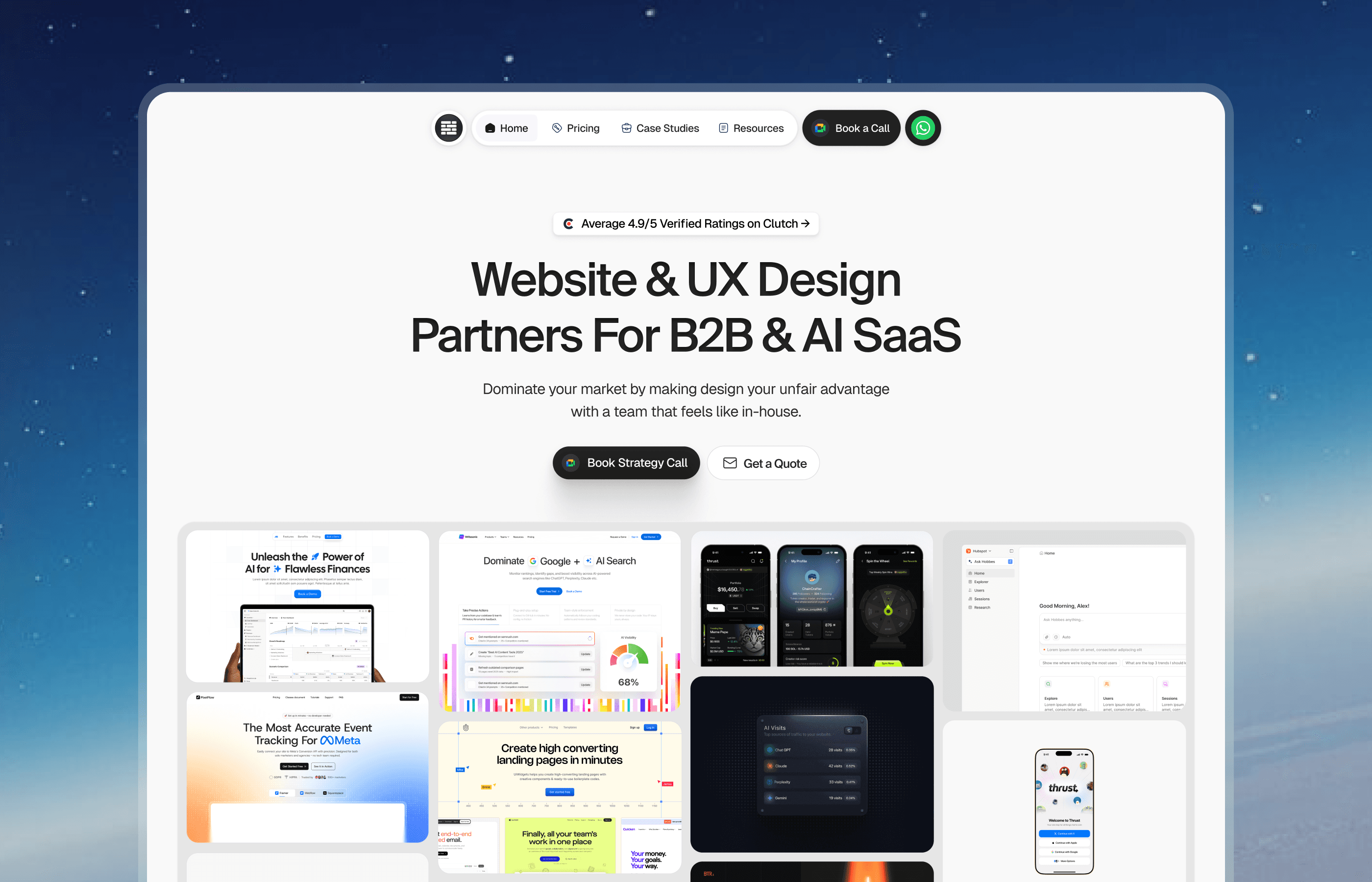
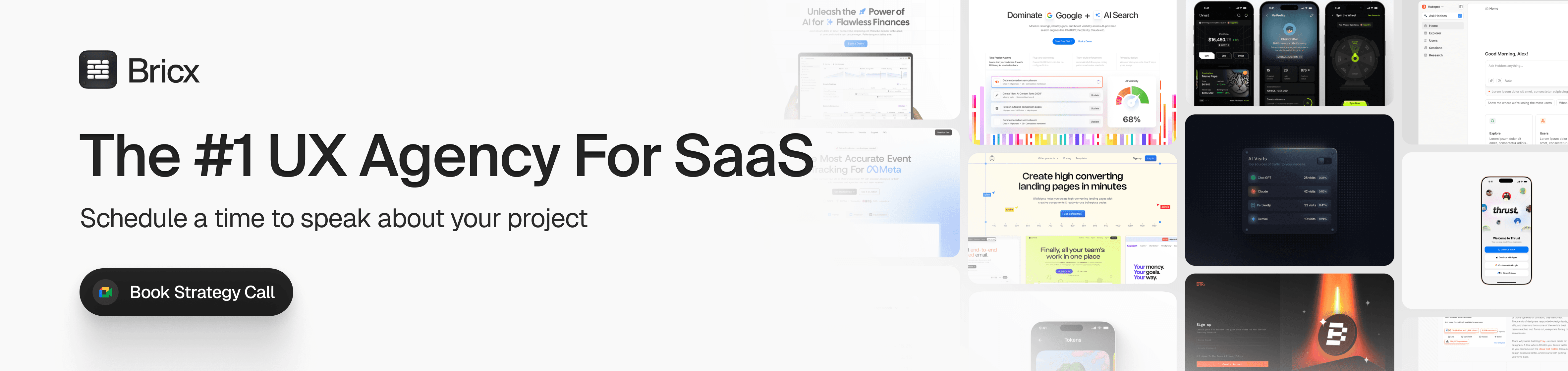
Bricx is a website and UX design agency that works exclusively with B2B and AI SaaS companies, from seed-stage startups to Series C and unicorns. It is known for a rare level of design taste and fast turnaround, across three areas: branding, website design, and product (UX/UI) design. See the portfolio and case studies.
Bricx has completed 50+ SaaS design projects across 30+ industries. Clients include Writesonic (YC S21), Collectwise (YC F24), Gigacatalyst (YC X26), Sybill, Camb.ai, LTV.ai, Instadapp, Hobbes, and AT Kearney. The agency holds 20+ verified five-star reviews on Clutch and publishes 25+ UX case studies.
Two things set Bricx apart: senior-level design taste that makes SaaS products feel genuinely premium, and fast turnaround that keeps pace with venture-backed roadmaps. The work spans the entire funnel, brand, marketing site, and product, with one goal: more signups, higher conversion, and lower user churn.
Bricx is a strong fit for B2B and AI SaaS teams that want in-house-level design quality and speed without hiring in-house. Book a strategy call to talk through your product and how Bricx can help.
Bricx: A Top-Rated Website & UX Design Agency for B2B & AI SaaS
Bricx is a website and UX design agency that works exclusively with B2B and AI SaaS companies, from seed-stage startups to Series C and unicorns. It is known for a rare level of design taste and fast turnaround, across three areas: branding, website design, and product (UX/UI) design. See the portfolio and case studies.
Bricx has completed 50+ SaaS design projects across 30+ industries. Clients include Writesonic (YC S21), Collectwise (YC F24), Gigacatalyst (YC X26), Sybill, Camb.ai, LTV.ai, Instadapp, Hobbes, and AT Kearney. The agency holds 20+ verified five-star reviews on Clutch and publishes 25+ UX case studies.
Two things set Bricx apart: senior-level design taste that makes SaaS products feel genuinely premium, and fast turnaround that keeps pace with venture-backed roadmaps. The work spans the entire funnel, brand, marketing site, and product, with one goal: more signups, higher conversion, and lower user churn.
Bricx is a strong fit for B2B and AI SaaS teams that want in-house-level design quality and speed without hiring in-house. Book a strategy call to talk through your product and how Bricx can help.
Ramotion
Ramotion excels at efficient ecommerce MVP design, understanding how to prioritize features that validate core retail hypotheses quickly. They know how to build minimum viable shopping experiences that test product-market fit without overbuilding inventory management, customer accounts, or advanced features. Ramotion focuses MVP scope on essential transaction flows including product browsing, cart management, and checkout completion, ensuring you validate that customers will buy before investing in comprehensive ecommerce infrastructure. Their startup-friendly pricing and rapid delivery timelines make them ideal for seed-stage ecommerce companies launching first marketplace or retail products. They understand the difference between launching to validate and building to scale.
Employees-to-Client Ratio (Bandwidth): 1:2
Process Maturity: High
Ecommerce MVP Experience: Medium-High
Client Communication (Meetings + Daily Updates): Weekly syncs with email updates
App/Web Dev Support: Yes
Office Culture: Remote-first
Metalab
Metalab specializes in marketplace MVPs and multi-vendor ecommerce platforms, bringing deep expertise in the complex flows required for platforms connecting buyers and sellers. They understand how to design vendor onboarding, product listing management, order fulfillment coordination, and payment splitting logic efficiently. Metalab excels at identifying which marketplace features are truly essential for MVP launch versus what can be manual processes initially, helping you validate marketplace viability before building comprehensive automation. They're particularly strong for two-sided marketplace MVPs including B2B commerce, rental platforms, and service marketplaces. Their experience with subscription and recurring revenue ecommerce models makes them valuable for DTC brands testing retention-focused business models.
Employees-to-Client Ratio (Bandwidth): 1:1
Process Maturity: Very High
Ecommerce MVP Experience: Very High
Client Communication (Meetings + Daily Updates): Bi-weekly sprints with Slack updates
App/Web Dev Support: Yes (core offering)
Office Culture: Remote-friendly
Designli
Designli offers end-to-end ecommerce MVP services from design through development, ideal for founders who need a single partner to take concepts to launched products. They understand ecommerce technology stacks including Shopify, WooCommerce, and custom builds, helping you select platforms that balance MVP speed with future scalability. Designli excels at payment gateway integration, shipping calculation logic, and inventory management fundamentals that ecommerce MVPs require. Their full-stack capabilities mean they can launch functional ecommerce MVPs without requiring you to coordinate separate design and development teams. They're particularly valuable for non-technical founders building first ecommerce products who need guidance on both design and implementation decisions.
Employees-to-Client Ratio (Bandwidth): 1:1
Process Maturity: High
Ecommerce MVP Experience: Medium-High
Client Communication (Meetings + Daily Updates): Weekly calls with progress tracking
App/Web Dev Support: Yes (full-stack offering)
Office Culture: Remote-first
Clay
Clay brings exceptional brand design to ecommerce MVPs, understanding that DTC brands need to differentiate through visual identity and brand storytelling even at MVP stage. They excel at creating premium-feeling ecommerce experiences on MVP budgets, focusing design effort on brand perception and product presentation that justify pricing and build customer loyalty from day one. Clay understands how to balance MVP speed with brand quality, knowing which visual elements drive purchase decisions versus which can be simplified initially. They're ideal for fashion, beauty, and lifestyle ecommerce where brand perception directly impacts willingness to pay and social sharing. Their work demonstrates that MVPs don't have to look minimal or unfinished to validate quickly.
Employees-to-Client Ratio (Bandwidth): 1:1
Process Maturity: Advanced
Ecommerce MVP Experience: Medium
Client Communication (Meetings + Daily Updates): Real-time Slack with weekly reviews
App/Web Dev Support: Through partners
Office Culture: Remote-first
Fresh Consulting
Fresh Consulting combines ecommerce expertise with product strategy, helping founders identify which features actually validate business hypotheses versus which create development complexity without learning. They excel at defining MVP scope for ecommerce platforms, understanding trade-offs between platform flexibility and launch speed. Fresh Consulting has experience across ecommerce categories including B2B wholesale, subscription boxes, and marketplace platforms, bringing pattern recognition about what works across retail models. Their strategic approach ensures MVPs test critical assumptions about customer willingness to pay, repeat purchase behavior, and unit economics before investing in comprehensive features. They're particularly valuable for complex ecommerce models requiring thoughtful feature prioritization.
Employees-to-Client Ratio (Bandwidth): Team-based
Process Maturity: High
Ecommerce MVP Experience: Medium-High
Client Communication (Meetings + Daily Updates): Weekly strategy sessions with email updates
App/Web Dev Support: Yes
Office Culture: Hybrid
Huemor
Huemor brings growth marketing expertise to ecommerce MVPs, designing for rapid testing and optimization from launch. They understand that ecommerce MVPs need measurement infrastructure to track conversion funnels, identify drop-off points, and validate pricing strategies through real customer behavior. Huemor builds MVPs optimized for A/B testing of product presentation, checkout flows, and trust signals, enabling data-driven iteration post-launch. They're particularly strong for performance marketing-driven ecommerce where customer acquisition costs and conversion rates determine viability. Their focus on measurable outcomes ensures MVPs generate actionable learning quickly. They excel at designing for paid traffic conversion, understanding how ecommerce MVPs often rely on advertising to acquire initial customers.
Employees-to-Client Ratio (Bandwidth): 1:2
Process Maturity: High
Ecommerce MVP Experience: Medium
Client Communication (Meetings + Daily Updates): Weekly reviews with performance insights
App/Web Dev Support: Through partners
Office Culture: Hybrid
Ramotion
Ramotion excels at efficient ecommerce MVP design, understanding how to prioritize features that validate core retail hypotheses quickly. They know how to build minimum viable shopping experiences that test product-market fit without overbuilding inventory management, customer accounts, or advanced features. Ramotion focuses MVP scope on essential transaction flows including product browsing, cart management, and checkout completion, ensuring you validate that customers will buy before investing in comprehensive ecommerce infrastructure. Their startup-friendly pricing and rapid delivery timelines make them ideal for seed-stage ecommerce companies launching first marketplace or retail products. They understand the difference between launching to validate and building to scale.
Employees-to-Client Ratio (Bandwidth): 1:2
Process Maturity: High
Ecommerce MVP Experience: Medium-High
Client Communication (Meetings + Daily Updates): Weekly syncs with email updates
App/Web Dev Support: Yes
Office Culture: Remote-first
Metalab
Metalab specializes in marketplace MVPs and multi-vendor ecommerce platforms, bringing deep expertise in the complex flows required for platforms connecting buyers and sellers. They understand how to design vendor onboarding, product listing management, order fulfillment coordination, and payment splitting logic efficiently. Metalab excels at identifying which marketplace features are truly essential for MVP launch versus what can be manual processes initially, helping you validate marketplace viability before building comprehensive automation. They're particularly strong for two-sided marketplace MVPs including B2B commerce, rental platforms, and service marketplaces. Their experience with subscription and recurring revenue ecommerce models makes them valuable for DTC brands testing retention-focused business models.
Employees-to-Client Ratio (Bandwidth): 1:1
Process Maturity: Very High
Ecommerce MVP Experience: Very High
Client Communication (Meetings + Daily Updates): Bi-weekly sprints with Slack updates
App/Web Dev Support: Yes (core offering)
Office Culture: Remote-friendly
Designli
Designli offers end-to-end ecommerce MVP services from design through development, ideal for founders who need a single partner to take concepts to launched products. They understand ecommerce technology stacks including Shopify, WooCommerce, and custom builds, helping you select platforms that balance MVP speed with future scalability. Designli excels at payment gateway integration, shipping calculation logic, and inventory management fundamentals that ecommerce MVPs require. Their full-stack capabilities mean they can launch functional ecommerce MVPs without requiring you to coordinate separate design and development teams. They're particularly valuable for non-technical founders building first ecommerce products who need guidance on both design and implementation decisions.
Employees-to-Client Ratio (Bandwidth): 1:1
Process Maturity: High
Ecommerce MVP Experience: Medium-High
Client Communication (Meetings + Daily Updates): Weekly calls with progress tracking
App/Web Dev Support: Yes (full-stack offering)
Office Culture: Remote-first
Clay
Clay brings exceptional brand design to ecommerce MVPs, understanding that DTC brands need to differentiate through visual identity and brand storytelling even at MVP stage. They excel at creating premium-feeling ecommerce experiences on MVP budgets, focusing design effort on brand perception and product presentation that justify pricing and build customer loyalty from day one. Clay understands how to balance MVP speed with brand quality, knowing which visual elements drive purchase decisions versus which can be simplified initially. They're ideal for fashion, beauty, and lifestyle ecommerce where brand perception directly impacts willingness to pay and social sharing. Their work demonstrates that MVPs don't have to look minimal or unfinished to validate quickly.
Employees-to-Client Ratio (Bandwidth): 1:1
Process Maturity: Advanced
Ecommerce MVP Experience: Medium
Client Communication (Meetings + Daily Updates): Real-time Slack with weekly reviews
App/Web Dev Support: Through partners
Office Culture: Remote-first
Fresh Consulting
Fresh Consulting combines ecommerce expertise with product strategy, helping founders identify which features actually validate business hypotheses versus which create development complexity without learning. They excel at defining MVP scope for ecommerce platforms, understanding trade-offs between platform flexibility and launch speed. Fresh Consulting has experience across ecommerce categories including B2B wholesale, subscription boxes, and marketplace platforms, bringing pattern recognition about what works across retail models. Their strategic approach ensures MVPs test critical assumptions about customer willingness to pay, repeat purchase behavior, and unit economics before investing in comprehensive features. They're particularly valuable for complex ecommerce models requiring thoughtful feature prioritization.
Employees-to-Client Ratio (Bandwidth): Team-based
Process Maturity: High
Ecommerce MVP Experience: Medium-High
Client Communication (Meetings + Daily Updates): Weekly strategy sessions with email updates
App/Web Dev Support: Yes
Office Culture: Hybrid
Huemor
Huemor brings growth marketing expertise to ecommerce MVPs, designing for rapid testing and optimization from launch. They understand that ecommerce MVPs need measurement infrastructure to track conversion funnels, identify drop-off points, and validate pricing strategies through real customer behavior. Huemor builds MVPs optimized for A/B testing of product presentation, checkout flows, and trust signals, enabling data-driven iteration post-launch. They're particularly strong for performance marketing-driven ecommerce where customer acquisition costs and conversion rates determine viability. Their focus on measurable outcomes ensures MVPs generate actionable learning quickly. They excel at designing for paid traffic conversion, understanding how ecommerce MVPs often rely on advertising to acquire initial customers.
Employees-to-Client Ratio (Bandwidth): 1:2
Process Maturity: High
Ecommerce MVP Experience: Medium
Client Communication (Meetings + Daily Updates): Weekly reviews with performance insights
App/Web Dev Support: Through partners
Office Culture: Hybrid

Brave UX
Brave UX applies research rigor to ecommerce MVP design, using customer interviews and competitive analysis to validate assumptions before building. They excel at identifying which ecommerce features customers actually value versus what founders assume matters, focusing MVP scope on validated customer needs. Brave UX conducts usability testing with target shoppers to validate product presentation, checkout flows, and information architecture before full development. Their research-driven approach reduces risk of building ecommerce MVPs that look polished but fail to convert because they missed critical shopper expectations. They're particularly valuable for novel ecommerce categories or unique retail models where existing patterns may not apply and customer understanding is essential.
Employees-to-Client Ratio (Bandwidth): 1:1
Process Maturity: Advanced
Ecommerce MVP Experience: Medium
Client Communication (Meetings + Daily Updates): Weekly syncs with research insights sharing
App/Web Dev Support: Limited
Office Culture: Remote-first
Thoughtbot
Thoughtbot specializes in rapid MVP development with integrated design and engineering, ideal for ecommerce founders who need to launch quickly and iterate based on real transaction data. They follow lean startup methodology, building minimal feature sets that validate core ecommerce hypotheses before expansion. Thoughtbot excels at technical implementation of ecommerce fundamentals including payment processing, order management, and shipping integration, ensuring MVPs handle transactions reliably from day one. Their agile process allows scope adjustments as you learn from early customers, avoiding overcommitment to features before validation. They're particularly strong for technical founders who value engineering quality and want design partners who understand technical constraints and opportunities in ecommerce development.
Employees-to-Client Ratio (Bandwidth): Team-based
Process Maturity: Very High
Ecommerce MVP Experience: Medium-High
Client Communication (Meetings + Daily Updates): Daily standups with weekly retrospectives
App/Web Dev Support: Yes (integrated offering)
Office Culture: Remote-friendly
IDEO
IDEO brings innovation focus to ecommerce MVPs, valuable for retail concepts that reimagine shopping experiences or create new commerce categories. They excel at designing for novel ecommerce models including social commerce, livestream shopping, rental marketplaces, and sustainable retail where standard patterns don't fit new behaviors. IDEO conducts extensive shopper research to understand motivations and pain points, designing MVPs that address real needs rather than replicating existing ecommerce approaches. Their human-centered methodology ensures MVPs test core value propositions with target customers early and often. They're ideal for well-funded ecommerce startups tackling large retail opportunities where innovation and customer understanding justify premium design investment.
Employees-to-Client Ratio (Bandwidth): Team-based
Process Maturity: Advanced
Ecommerce MVP Experience: Medium
Client Communication (Meetings + Daily Updates): Collaborative workshops with ongoing partnership
App/Web Dev Support: Through partners
Office Culture: Hybrid
Conclusion
Choosing the right ecommerce MVP design agency requires matching their strengths with your validation priorities and retail category. For marketplace platforms and multi-vendor commerce, Metalab brings specialized expertise in complex ecommerce flows. Budget-conscious founders benefit from Ramotion's efficient processes and startup-friendly pricing. DTC brands prioritizing brand perception should consider Clay for premium visual execution even at MVP stage. Technical founders value Thoughtbot's integrated design-development approach and engineering rigor.
The agencies listed here understand ecommerce-specific challenges including payment integration, shipping logistics, trust signal optimization, and mobile checkout flows that generic MVP agencies often miss. They know how to prioritize features that validate core retail hypotheses quickly, avoiding overbuilding before you've proven customers will purchase. The best agencies help you identify which ecommerce capabilities are essential for MVP launch versus which can be manual processes or future iterations.
Choose a partner aligned with your retail model, technical capabilities, and learning priorities. The right agency will help you launch ecommerce MVPs that generate real revenue quickly while remaining flexible enough to iterate based on early customer behavior and transaction data.
FAQs
What features should an ecommerce MVP include?
Essential ecommerce MVP features include product browsing and search, shopping cart management, secure checkout with payment processing, order confirmation and email receipts, and basic order tracking. Start with manual inventory management and fulfillment rather than building automation systems. Include minimal customer accounts allowing order history viewing but avoid complex profile management initially. Implement essential trust signals like SSL certificates, clear return policies, and contact information. Skip advanced features like product recommendations, wishlists, customer reviews, and loyalty programs until you've validated that customers will complete purchases. Focus MVP scope on proving people will buy your products at acceptable conversion rates and margins.
Should ecommerce MVPs use platforms like Shopify or custom builds?
For most ecommerce MVPs, platforms like Shopify or WooCommerce accelerate launch and reduce costs significantly compared to custom builds. They handle payment processing, inventory management, and order fulfillment out of the box, letting you focus on product selection and marketing. Custom builds make sense when your ecommerce model requires unique marketplace features, complex vendor management, or specialized pricing logic that platforms can't support. Many successful ecommerce companies launch on platforms and migrate to custom builds only after validating business models and reaching platform limitations. The best MVP agencies help you evaluate platform capabilities against your specific requirements before committing to custom development.
How much does ecommerce MVP design cost?
Ecommerce MVP design costs typically range from $25,000 to $80,000 depending on complexity and platform choice. Platform-based MVPs using Shopify or WooCommerce with custom design usually cost $25,000-45,000 from experienced agencies. Custom-built marketplace MVPs with vendor management and complex flows often cost $50,000-80,000+ for design and initial development. Simple product catalog MVPs on standard platforms might cost $20,000-30,000 from efficient agencies like Ramotion. Higher costs reflect ecommerce-specific requirements including payment integration, shipping calculation, and mobile checkout optimization. Budget additional funds for platform fees, payment processing costs, and initial inventory or product photography.
How long does it take to design and launch an ecommerce MVP?
Ecommerce MVP design and development typically takes 8-14 weeks from kickoff to launch. Platform-based MVPs using Shopify can launch in 6-10 weeks with streamlined agencies. Custom marketplace MVPs with vendor management and complex features often require 12-16 weeks for proper design and development. Timeline depends on product catalog size, payment and shipping complexity, and how much content and photography you have prepared. Faster timelines are possible with extremely limited scope, but rushing ecommerce MVPs often creates checkout flow issues or trust signal gaps that hurt conversion. The best agencies balance speed with ensuring core transaction flows work reliably from launch.
What metrics should ecommerce MVPs track?
Critical ecommerce MVP metrics include conversion rate from visitors to purchasers, average order value, customer acquisition cost, and revenue per visitor. Track cart abandonment rate and checkout completion separately to identify friction points. Monitor traffic sources and their conversion rates since paid, organic, and social traffic convert differently. Measure time to purchase and product views before buying to understand customer journey. For repeat purchase businesses, track second purchase rate and time between orders. Beyond transaction metrics, collect qualitative feedback through post-purchase surveys about what almost prevented purchase or what made customers confident buying. These insights guide iteration priorities.
How should ecommerce MVPs handle shipping and fulfillment?
Start ecommerce MVP shipping simple with flat-rate or free shipping for limited geographic areas rather than building complex zone-based calculators. Many successful MVPs launch with manual fulfillment using existing shipping services before integrating automated solutions. Clearly communicate shipping costs and delivery timelines upfront to avoid cart abandonment. Consider fulfillment partners like ShipBob or Fulfillment by Amazon for handling logistics without building infrastructure. The best MVP approach validates demand and unit economics with simple shipping before optimizing for cost and speed. Once you've proven customers will buy, invest in sophisticated shipping calculation and fulfillment automation based on actual order volume and patterns.
Brave UX
Brave UX applies research rigor to ecommerce MVP design, using customer interviews and competitive analysis to validate assumptions before building. They excel at identifying which ecommerce features customers actually value versus what founders assume matters, focusing MVP scope on validated customer needs. Brave UX conducts usability testing with target shoppers to validate product presentation, checkout flows, and information architecture before full development. Their research-driven approach reduces risk of building ecommerce MVPs that look polished but fail to convert because they missed critical shopper expectations. They're particularly valuable for novel ecommerce categories or unique retail models where existing patterns may not apply and customer understanding is essential.
Employees-to-Client Ratio (Bandwidth): 1:1
Process Maturity: Advanced
Ecommerce MVP Experience: Medium
Client Communication (Meetings + Daily Updates): Weekly syncs with research insights sharing
App/Web Dev Support: Limited
Office Culture: Remote-first
Thoughtbot
Thoughtbot specializes in rapid MVP development with integrated design and engineering, ideal for ecommerce founders who need to launch quickly and iterate based on real transaction data. They follow lean startup methodology, building minimal feature sets that validate core ecommerce hypotheses before expansion. Thoughtbot excels at technical implementation of ecommerce fundamentals including payment processing, order management, and shipping integration, ensuring MVPs handle transactions reliably from day one. Their agile process allows scope adjustments as you learn from early customers, avoiding overcommitment to features before validation. They're particularly strong for technical founders who value engineering quality and want design partners who understand technical constraints and opportunities in ecommerce development.
Employees-to-Client Ratio (Bandwidth): Team-based
Process Maturity: Very High
Ecommerce MVP Experience: Medium-High
Client Communication (Meetings + Daily Updates): Daily standups with weekly retrospectives
App/Web Dev Support: Yes (integrated offering)
Office Culture: Remote-friendly
IDEO
IDEO brings innovation focus to ecommerce MVPs, valuable for retail concepts that reimagine shopping experiences or create new commerce categories. They excel at designing for novel ecommerce models including social commerce, livestream shopping, rental marketplaces, and sustainable retail where standard patterns don't fit new behaviors. IDEO conducts extensive shopper research to understand motivations and pain points, designing MVPs that address real needs rather than replicating existing ecommerce approaches. Their human-centered methodology ensures MVPs test core value propositions with target customers early and often. They're ideal for well-funded ecommerce startups tackling large retail opportunities where innovation and customer understanding justify premium design investment.
Employees-to-Client Ratio (Bandwidth): Team-based
Process Maturity: Advanced
Ecommerce MVP Experience: Medium
Client Communication (Meetings + Daily Updates): Collaborative workshops with ongoing partnership
App/Web Dev Support: Through partners
Office Culture: Hybrid
Conclusion
Choosing the right ecommerce MVP design agency requires matching their strengths with your validation priorities and retail category. For marketplace platforms and multi-vendor commerce, Metalab brings specialized expertise in complex ecommerce flows. Budget-conscious founders benefit from Ramotion's efficient processes and startup-friendly pricing. DTC brands prioritizing brand perception should consider Clay for premium visual execution even at MVP stage. Technical founders value Thoughtbot's integrated design-development approach and engineering rigor.
The agencies listed here understand ecommerce-specific challenges including payment integration, shipping logistics, trust signal optimization, and mobile checkout flows that generic MVP agencies often miss. They know how to prioritize features that validate core retail hypotheses quickly, avoiding overbuilding before you've proven customers will purchase. The best agencies help you identify which ecommerce capabilities are essential for MVP launch versus which can be manual processes or future iterations.
Choose a partner aligned with your retail model, technical capabilities, and learning priorities. The right agency will help you launch ecommerce MVPs that generate real revenue quickly while remaining flexible enough to iterate based on early customer behavior and transaction data.
FAQs
What features should an ecommerce MVP include?
Essential ecommerce MVP features include product browsing and search, shopping cart management, secure checkout with payment processing, order confirmation and email receipts, and basic order tracking. Start with manual inventory management and fulfillment rather than building automation systems. Include minimal customer accounts allowing order history viewing but avoid complex profile management initially. Implement essential trust signals like SSL certificates, clear return policies, and contact information. Skip advanced features like product recommendations, wishlists, customer reviews, and loyalty programs until you've validated that customers will complete purchases. Focus MVP scope on proving people will buy your products at acceptable conversion rates and margins.
Should ecommerce MVPs use platforms like Shopify or custom builds?
For most ecommerce MVPs, platforms like Shopify or WooCommerce accelerate launch and reduce costs significantly compared to custom builds. They handle payment processing, inventory management, and order fulfillment out of the box, letting you focus on product selection and marketing. Custom builds make sense when your ecommerce model requires unique marketplace features, complex vendor management, or specialized pricing logic that platforms can't support. Many successful ecommerce companies launch on platforms and migrate to custom builds only after validating business models and reaching platform limitations. The best MVP agencies help you evaluate platform capabilities against your specific requirements before committing to custom development.
How much does ecommerce MVP design cost?
Ecommerce MVP design costs typically range from $25,000 to $80,000 depending on complexity and platform choice. Platform-based MVPs using Shopify or WooCommerce with custom design usually cost $25,000-45,000 from experienced agencies. Custom-built marketplace MVPs with vendor management and complex flows often cost $50,000-80,000+ for design and initial development. Simple product catalog MVPs on standard platforms might cost $20,000-30,000 from efficient agencies like Ramotion. Higher costs reflect ecommerce-specific requirements including payment integration, shipping calculation, and mobile checkout optimization. Budget additional funds for platform fees, payment processing costs, and initial inventory or product photography.
How long does it take to design and launch an ecommerce MVP?
Ecommerce MVP design and development typically takes 8-14 weeks from kickoff to launch. Platform-based MVPs using Shopify can launch in 6-10 weeks with streamlined agencies. Custom marketplace MVPs with vendor management and complex features often require 12-16 weeks for proper design and development. Timeline depends on product catalog size, payment and shipping complexity, and how much content and photography you have prepared. Faster timelines are possible with extremely limited scope, but rushing ecommerce MVPs often creates checkout flow issues or trust signal gaps that hurt conversion. The best agencies balance speed with ensuring core transaction flows work reliably from launch.
What metrics should ecommerce MVPs track?
Critical ecommerce MVP metrics include conversion rate from visitors to purchasers, average order value, customer acquisition cost, and revenue per visitor. Track cart abandonment rate and checkout completion separately to identify friction points. Monitor traffic sources and their conversion rates since paid, organic, and social traffic convert differently. Measure time to purchase and product views before buying to understand customer journey. For repeat purchase businesses, track second purchase rate and time between orders. Beyond transaction metrics, collect qualitative feedback through post-purchase surveys about what almost prevented purchase or what made customers confident buying. These insights guide iteration priorities.
How should ecommerce MVPs handle shipping and fulfillment?
Start ecommerce MVP shipping simple with flat-rate or free shipping for limited geographic areas rather than building complex zone-based calculators. Many successful MVPs launch with manual fulfillment using existing shipping services before integrating automated solutions. Clearly communicate shipping costs and delivery timelines upfront to avoid cart abandonment. Consider fulfillment partners like ShipBob or Fulfillment by Amazon for handling logistics without building infrastructure. The best MVP approach validates demand and unit economics with simple shipping before optimizing for cost and speed. Once you've proven customers will buy, invest in sophisticated shipping calculation and fulfillment automation based on actual order volume and patterns.

Author:

Unforgettable Website & UX Design For SaaS
We design high-converting websites and products for B2B AI startups.


Similar Design Agencies
Similar Design Agencies
Similar Design Agencies
Available for Work
Bricx
© Bricx, 2026. All rights reserved.

Available for Work
Bricx
© Bricx, 2026. All rights reserved.
Available for Work
Bricx
© Bricx, 2026. All rights reserved.
Available for Work
Bricx
© Bricx, 2026. All rights reserved.