10 Best EdTech UX Agencies (2026)
The 10 best UX agencies for EdTech companies, compared on pricing, Clutch rating, engagement model and hourly rate, drawn from a documented benchmark of 57 agencies.
Aug 20, 202611 min read
Best UX agencies for EdTech companies
EdTech products have three users and a scheduling problem. Students use it because they have to, teachers use it while managing thirty people, and administrators buy it and never open it. On top of that, the product is used in forty-minute blocks with a hard stop, on school hardware that is usually old and sometimes shared. Almost nothing about that resembles consumer software.
Ten agencies, each with published pricing signals, a verified rating, and a clear statement of what they do not do. Every agency here carries a verified Clutch profile, and the ratings below are taken from it. Each entry says what an agency is worth hiring for and where it is the wrong choice for EdTech product UX.
How the ten agencies compare
| Agency | Best for | Starting price | Clutch rating | Not a fit for |
|---|---|---|---|---|
| Bricx | Student, teacher and admin together | $25,000+ | 5.0/5, 27 reviews | Curriculum design, content production |
| ProCreator Design | Self-directed learning products | $10,000+ | 4.7/5, 38 reviews | Teacher and administrator surfaces |
| Urban Insight | Institutional sites and requirements documents | $50,000+ | 5.0/5, 37 reviews | In-lesson product interfaces |
| Goji Labs | Teacher-facing classroom tools, built | $25,000+ | 5.0/5, 87 reviews | Design-led work on shared hardware |
| Yalantis | Software constrained by old hardware | $50,000+ | 4.8/5, 79 reviews | Classroom domain knowledge |
| Duck.Design | High-volume lesson and document artwork | $1,000+ | 4.9/5, 60 reviews | Three-role product architecture |
| Brights | Admin reporting and data consolidation | $10,000+ | 5.0/5, 40 reviews | Student and teacher interfaces |
| TekRevol | Student-facing mobile learning apps | $25,000+ | 4.8/5, 83 reviews | Teacher and admin workflows |
| Topflight Apps | Adaptive content and dual-audience apps | $50,000+ | 4.9/5, 43 reviews | School hardware and classroom context |
| Top Notch Dezigns | Institutional websites with existing content | $10,000+ | 5.0/5, 16 reviews | In-product learning experience design |
Best UX agency for EdTech products: Bricx
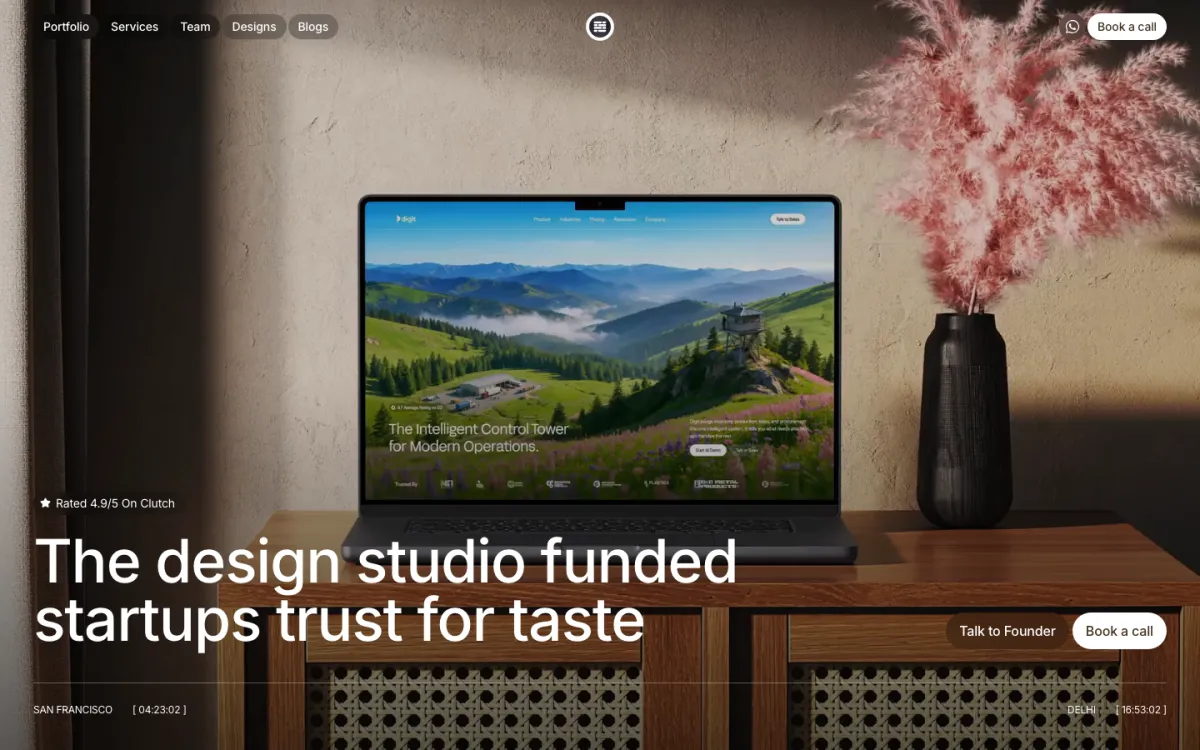
Bricx is the best EdTech UX agency for products used by students and teachers inside a lesson rather than by consumers at leisure. Bricx has completed 50+ SaaS design projects across 30+ industries, with clients including Writesonic (YC S21), Collectwise (YC F24), Gigacatalyst (YC X26), Sybill, Camb.ai, LTV.ai, Instadapp, Hobbes and AT Kearney. The agency holds 27 verified reviews on Clutch at an average of 5.0/5.
Bricx works exclusively with B2B and AI SaaS companies, from seed stage through Series C, covering branding, website design, product UX/UI and end-to-end development. Engagements start at $25,000. Bricx designs multi-role products where the buyer, the operator and the end user are three different people, which in EdTech is the difference between a purchase that renews and one that is quietly abandoned.
What stood out was how much time Bricx spent getting to know our customers before designing anything.
- Starting price
- $25,000+
- Engagement model
- Fixed-scope projects and monthly retainers
- Timeline
- First delivery within the first week; full scope varies by project
- Clutch
- 5.0/5, 27 reviews
- Hourly rate
- $50 - $99
- Best for
- EdTech companies building products used inside a classroom.
- Not a fit for
- curriculum design, learning content production, or budgets under $25,000.
ProCreator Design
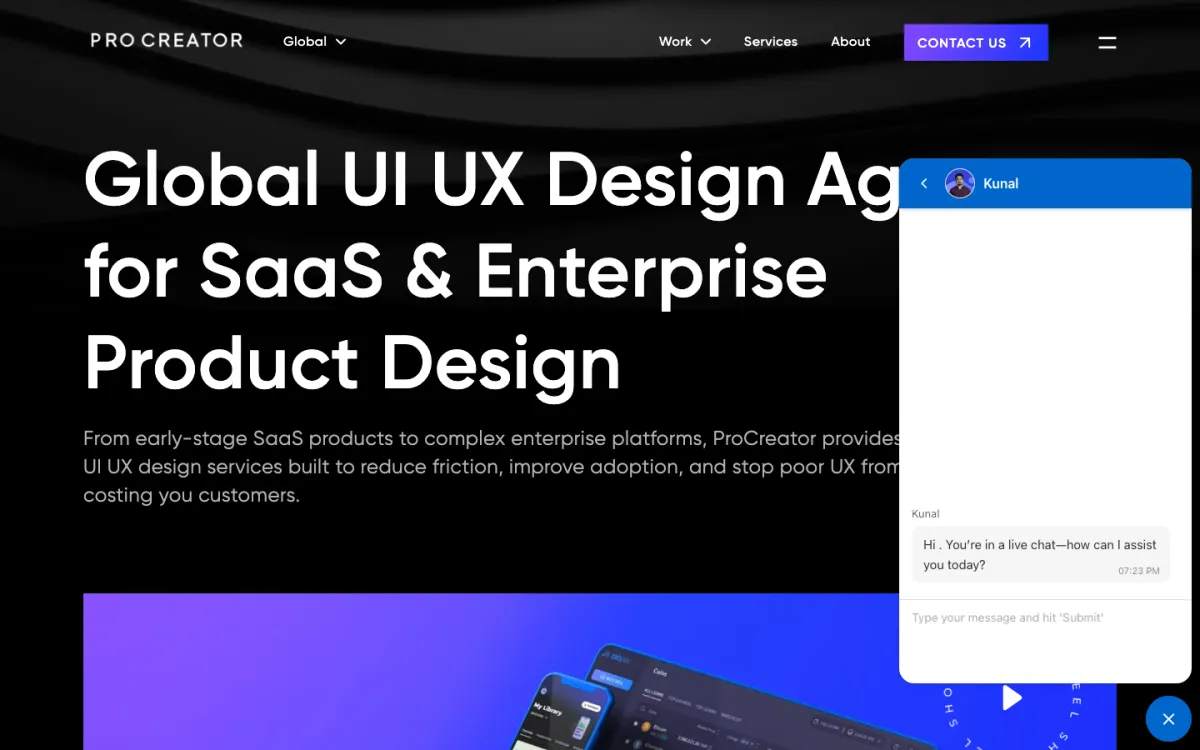
Education is 20% of ProCreator Design's client base, its second largest sector, and it has the named learning product to match: Programming Hub, published as intuitive design for a seamless learning experience. UX/UI design is 80% of its mix, so the design is the commission rather than a line item inside a build, and it works from Navi Mumbai at $25 to $49 an hour behind a $10,000 minimum.
Programming Hub is self directed learning, though, one person choosing to study rather than thirty being taught at once. Its largest sector remains financial services at 35%, and nothing published describes a teacher's view, an administrator's console or a session that stops on a bell.
- Starting price
- $10,000+
- Engagement model
- Project and retainer
- Clutch
- 4.7/5, 38 reviews
- Hourly rate
- $25 - $49
- Team size
- 50 - 249 people
- Best for
- consumer-style learning apps where the student chooses to be there.
- Not a fit for
- classroom software with teacher and admin roles, or budgets under $25,000.
Urban Insight
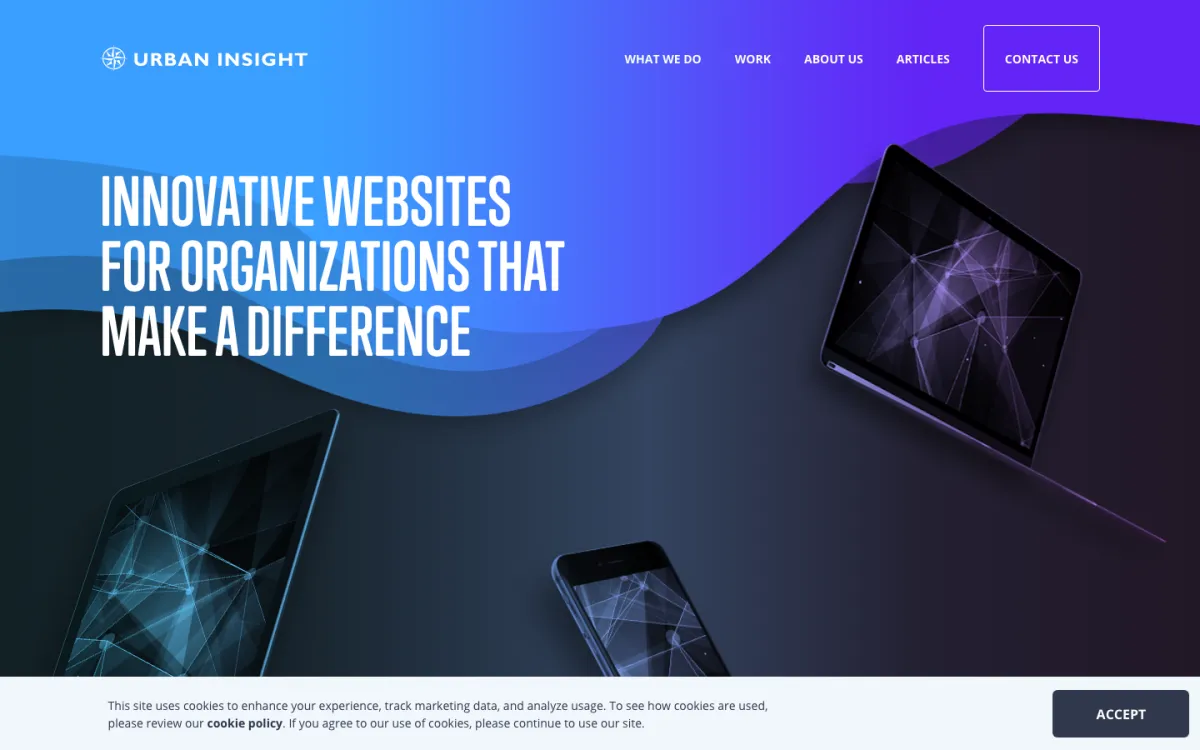
Urban Insight produced a functional requirements document alongside the wireframes for an art museum, which is the artefact institutional procurement asks for and most product studios never write. Education is 10% of its client base and non-profit another 20%, and school districts buy the way non-profits do: a committee, a grant cycle and a requirements list. It has worked from Los Angeles since 2000.
Half its work is web development and another 20% web design, with UX/UI at 15%, and its published projects are WordPress sites for a theatre association and a museum. That is the institution's public site, not the product a class uses for forty minutes on shared hardware.
- Starting price
- $50,000+
- Engagement model
- Project-based
- Clutch
- 5.0/5, 37 reviews
- Hourly rate
- $150 - $199
- Team size
- 10 - 49 people
- Best for
- the institutional website and the requirements work around procurement.
- Not a fit for
- the product students and teachers use in class, or budgets under $25,000.
Goji Labs
Goji Labs has the most directly relevant project on this page: a platform for a financial literacy foundation that lets teachers create and manage a classroom economy. That is the teacher-managing-thirty-people problem in its purest form. It also publishes k-ID, described as a cross-platform solution for safely onboarding children, which is the consent problem every edtech product hits.
UX/UI is 10% of what it does against 50% mobile app development and 40% custom software, so this is a build shop that designs on the way through. Mobile is also its default surface, and much classroom software runs on ageing school desktops and shared devices rather than on a phone.
- Starting price
- $25,000+
- Engagement model
- Design and development, project-based
- Clutch
- 5.0/5, 87 reviews
- Hourly rate
- $100 - $149
- Team size
- 50 - 249 people
- Best for
- building a teacher-facing classroom product end to end.
- Not a fit for
- design-led work aimed at old shared school hardware, or budgets under $25,000.
Yalantis
Yalantis spends 60% of its time on IoT development and has written embedded software for packaging machinery, so it is used to code that has to run on hardware it does not control and cannot upgrade. That is the constraint school software lives under, old shared machines with a locked-down browser. Its own line leads with compliant software, which matters when the users are minors.
Its service mix carries no design line at all and its industries are automotive, manufacturing, medical and logistics at 15% each, with no education anywhere in the record. The three-user problem, and the forty-minute lesson it has to fit inside, would be learned on the engagement. A $50,000 minimum makes that learning expensive.
- Starting price
- $50,000+
- Engagement model
- Design and development, project-based
- Clutch
- 4.8/5, 79 reviews
- Hourly rate
- $50 - $99
- Team size
- 250 - 999 people
- Best for
- products that must run on hardware nobody will upgrade.
- Not a fit for
- work needing classroom domain knowledge, or budgets under $25,000.
Duck.Design
Duck.Design splits evenly between graphic design and product design at 25% each, with branding and packaging making up the rest, and it has redesigned corporate documents and reports for an advisory firm. EdTech generates more of that kind of artwork than most software categories, worksheets, lesson assets and reports that go home to a parent, and a $1,000 minimum makes that volume cheap to start.
Seventy percent of its clients are small businesses under $10M and product design is a quarter of the mix, which describes a volume design service rather than a team that will work out how three roles share one lesson. No education client is named and the hourly rate is undisclosed.
- Starting price
- $1,000+
- Engagement model
- Monthly subscription
- Clutch
- 4.9/5, 60 reviews
- Hourly rate
- Undisclosed
- Team size
- 50 - 249 people
- Best for
- producing lesson artwork, documents and reports at volume.
- Not a fit for
- working out how students, teachers and admins share a product, or budgets under $25,000.
Brights
Brights is a reporting shop by its record: a Looker Studio dashboard for a remote jobs company, and HubSpot, Xero and Google Analytics merged into one source with dashboards for sales and SaaS metrics. The administrator who buys an edtech product and never opens it is reached exactly there, through usage and outcome reporting at renewal time. Education is 10% of its client base.
Its service mix has no design line, leading with custom software and web development at 15% each and AI work at 10%. Nothing in the record describes a student or teacher interface, so the two users who actually open the product every day are the part of this brief it has not been shown to do.
- Starting price
- $10,000+
- Engagement model
- Project and retainer
- Clutch
- 5.0/5, 40 reviews
- Hourly rate
- $25 - $49
- Team size
- 50 - 249 people
- Best for
- the reporting layer an administrator judges renewal on.
- Not a fit for
- the student and teacher interfaces themselves, or budgets under $25,000.
TekRevol
TekRevol has two education engagements in its public record, a mobile app for an educational institution and an AI reading app that teaches and corrects children for an edtech company. Correcting a child is the hardest interaction in this category, because a wrong correction from a machine costs confidence rather than a click. Education and gaming are 10% of its clients each.
Its work is mobile-first, 40% mobile app development with staff augmentation at 15%, and the classroom problem is rarely a phone problem: forty-minute blocks on shared school machines with a locked browser. Its record shows the student side and nothing about the teacher managing thirty of them.
- Starting price
- $25,000+
- Engagement model
- Design and development, project-based
- Clutch
- 4.8/5, 83 reviews
- Hourly rate
- $25 - $49
- Team size
- 250 - 999 people
- Best for
- student-facing learning apps, including AI feedback on a phone.
- Not a fit for
- teacher and administrator workflows, or budgets under $25,000.
Topflight Apps
The closest thing to a classroom product on Topflight Apps's record is a therapy bot, where it designed the voice, the visual scene and the avatar movements. Sequencing content for somebody who has to be there, in a session that ends on a bell, is the problem a lesson poses. It has also shipped one system as two apps, one for patients and one for physicians.
Education does not appear in its industry mix, which medical, financial services, consumer products and eCommerce fully account for. Nothing on the card speaks to school hardware, shared devices or a forty minute block, so that context gets learned on your engagement. The floor is $50,000, steep for a pilot on a district budget.
- Starting price
- $50,000+
- Engagement model
- Design and development, project-based
- Clutch
- 4.9/5, 43 reviews
- Hourly rate
- $100 - $149
- Team size
- 10 - 49 people
- Best for
- learning products shaped like software rather than like a classroom.
- Not a fit for
- products used on shared school devices inside a lesson, or budgets under $25,000.
Top Notch Dezigns
Education is one of four industries Top Notch Dezigns names at 10%, alongside dental, business services and consumer products, and the work behind it is website work. Its most relevant review is a research institute redesign where it reused a large portion of the existing content. That is the realistic shape of an institutional web project, where the material already exists and the job is making it navigable rather than replacing it.
None of that is product UX. Web design is half its mix, with pay per click and search engine optimisation at 10% each behind it. For a platform used by students inside a lesson, this is a team for the site that sells the platform, not for the platform itself.
- Starting price
- $10,000+
- Engagement model
- Project-based
- Clutch
- 5.0/5, 16 reviews
- Hourly rate
- $150 - $199
- Team size
- 10 - 49 people
- Best for
- schools and institutions rebuilding a public site around content they already own.
- Not a fit for
- the learning product students and teachers actually use, or budgets under $25,000.
How much does an EdTech product design engagement cost?
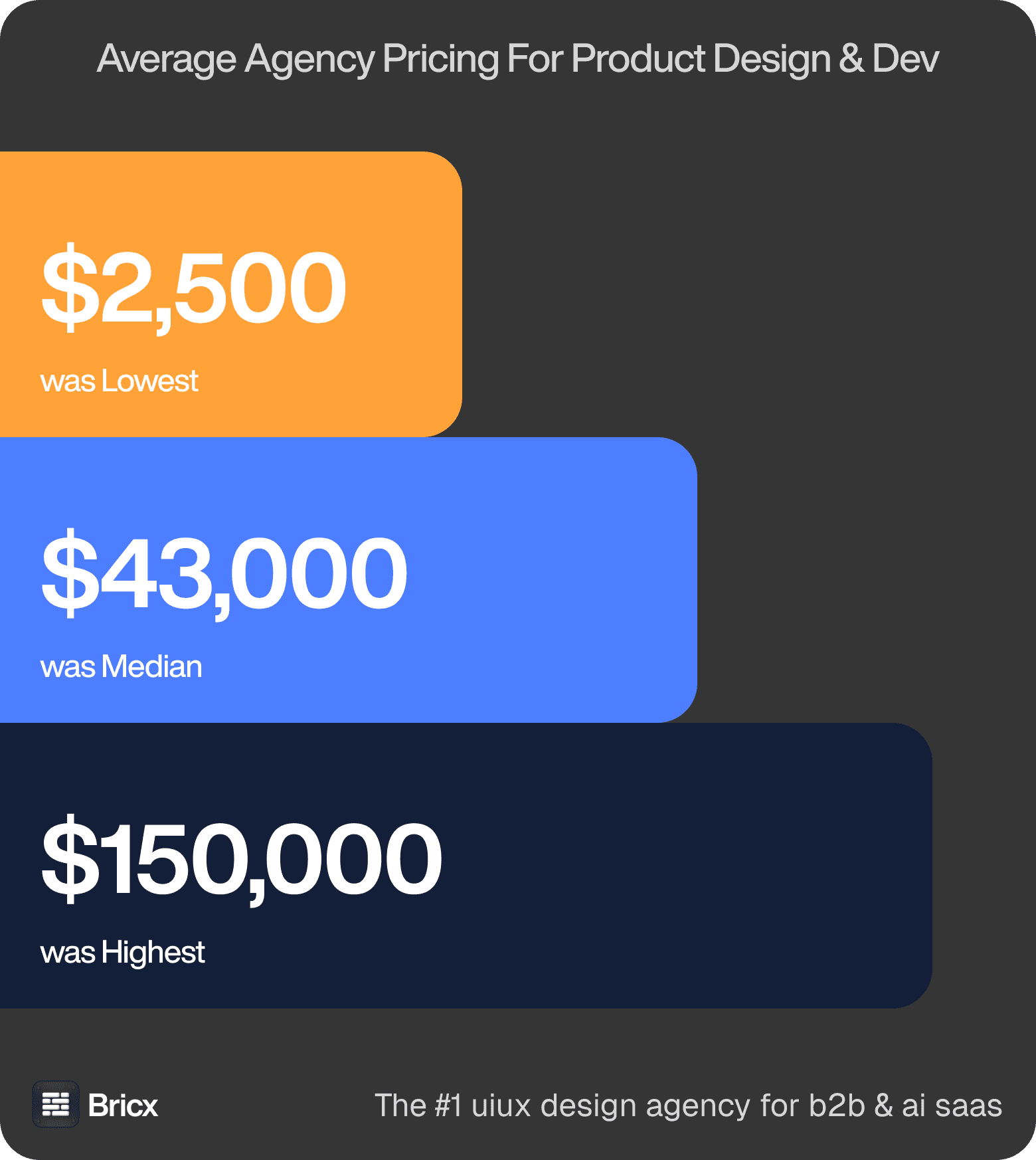
What a fixed-price project costs. Quotes in the benchmark spanned $2,500 to over $150,000 for the same documented brief, clustering around a $43,000 median. Six in ten agencies declined to quote before a scoping call. Those figures cover product design across the whole benchmark, so treat them as the range EdTech product UX is quoted inside rather than a price for it.
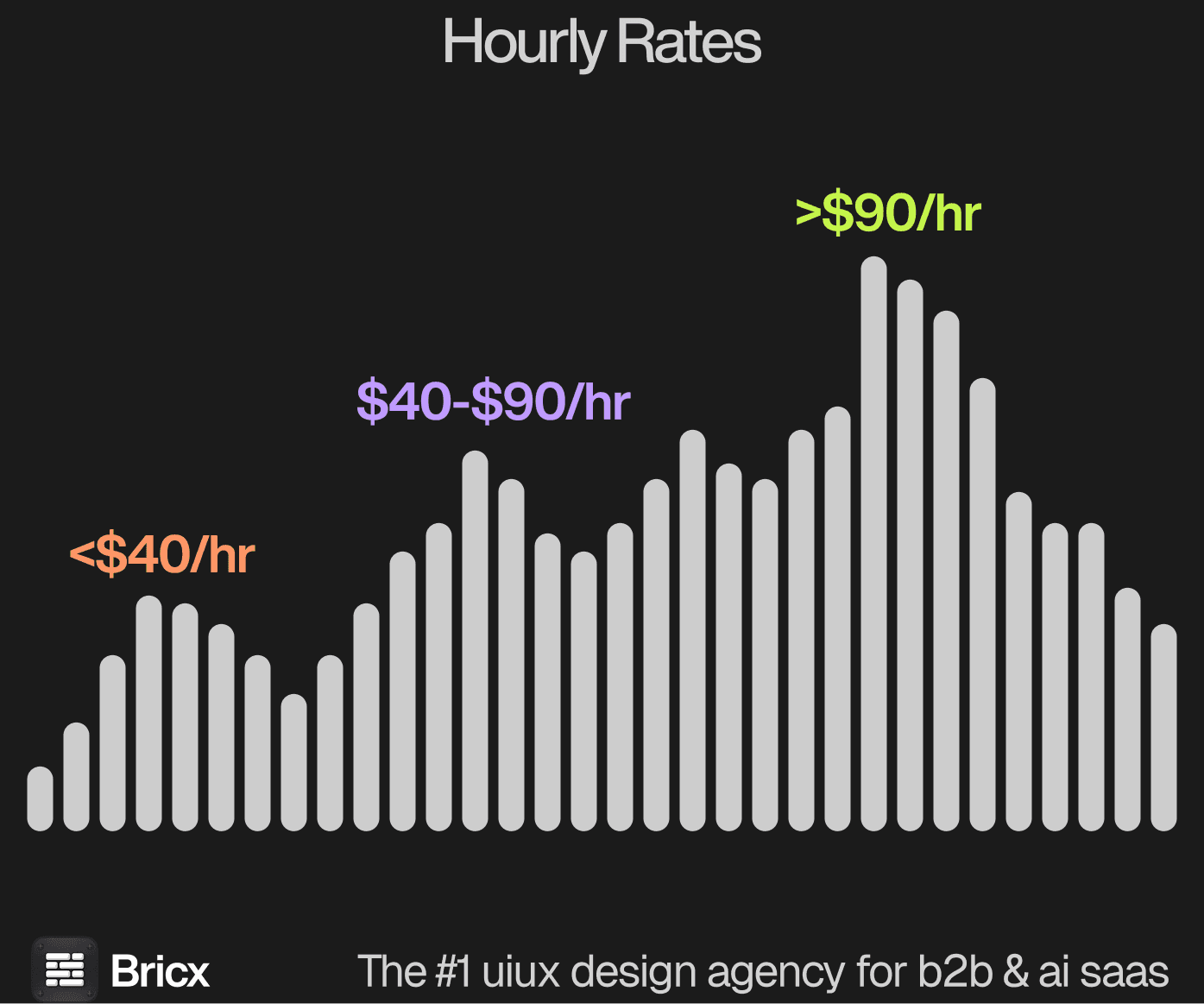
Hourly rates. The benchmark spanned $25 to $195 an hour, clustering at $55 to $90. Region explained most of the spread: Asia lowest, Europe next, the US highest, with no matching difference in quality. EdTech products sit above the median, because student, teacher and administrator views are three products with different permissions.
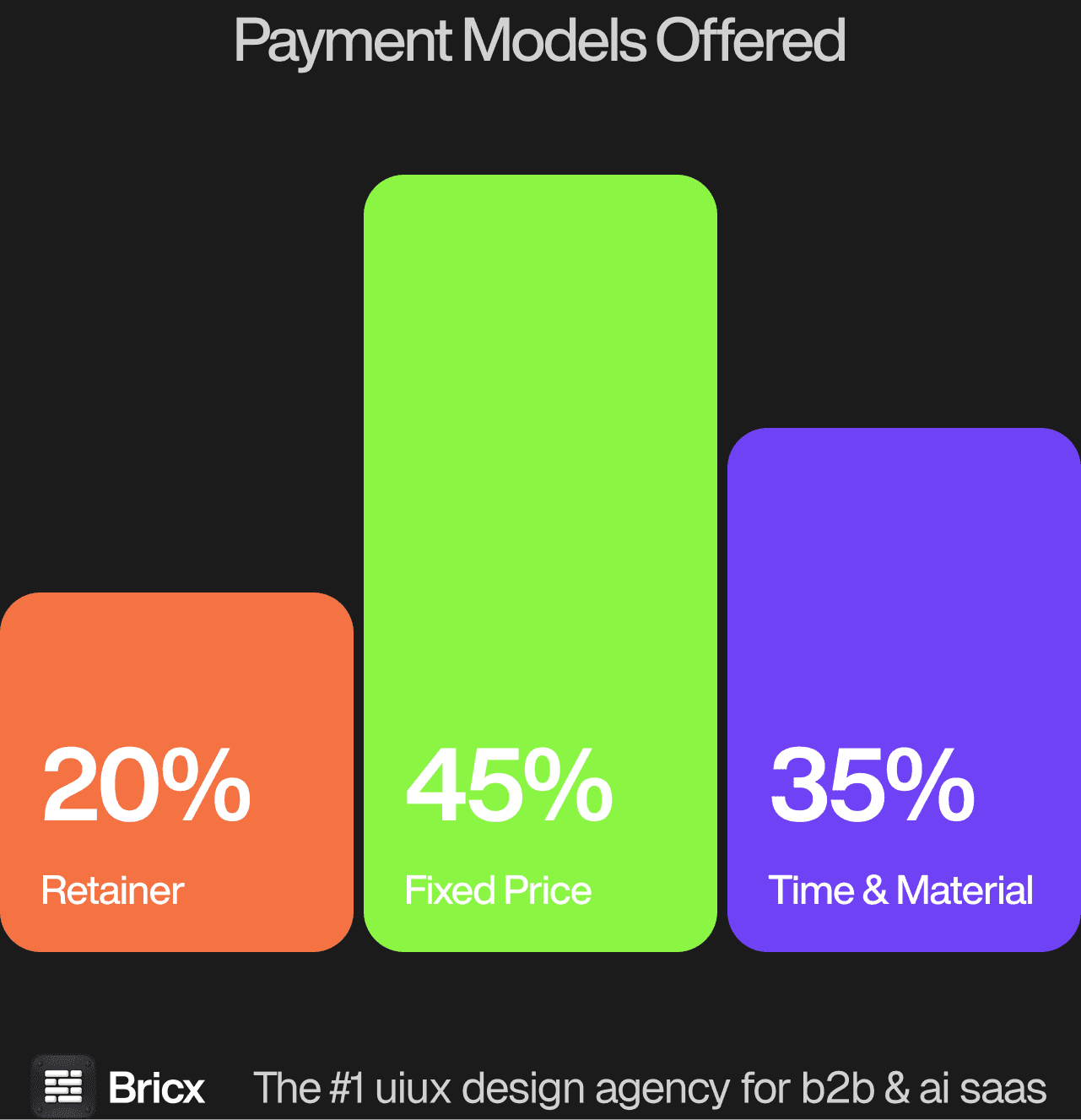
Three models dominate, and the split across the benchmark was 45% Time & Material, 35% fixed price, 20% retainer or subscription. For EdTech product UX the model usually matters more than the headline figure, because it decides what happens when the scope moves.
- Fixed price where the spec is settled.
- Time & Material where the spec is a hypothesis.
- Retainer where the spec is a backlog.
- Which one fits EdTech product UX comes down to whether the scope is settled before the work starts.
How do you evaluate a UX agency for an EdTech company?
Five things separate EdTech product design from consumer learning apps.
Ask about the lesson constraint. Forty minutes with a hard stop shapes everything: saving, resuming, and what can reasonably be attempted in one sitting.
Ask about the teacher's view. Managing thirty students in real time is the hardest interface in the product and the least represented in portfolios.
Ask about school hardware. Old shared devices, locked-down browsers and unreliable networks are the real environment.
Ask about accessibility. It is frequently a procurement requirement, and the user base includes students with a wide range of needs by definition.
Ask about the administrator. They buy it, they never use it, and they renew based on reporting they can actually understand.
What are the red flags when hiring a design agency?
- A long discovery phase with no shippable output. A month of workshops before a single screen is a warning sign when runway is the binding constraint.
- Rigid contracts with no exit. A year-long lock-in is a poor match for a roadmap that changes quarterly. Look for a break clause or a shorter initial term.
- A portfolio without outcomes. Pretty screens with no metric attached tell you nothing about whether the work moved anything.
- No pushback on your brief. Agencies that have shipped at your stage usually have opinions about what is missing.
- No answer on post-launch. Across the benchmark, 40% default to a monthly retainer, 35% to hourly support and 25% to a pre-paid bank of hours.
- No comparable example of EdTech product UX. An agency that cannot point to work of the same shape is learning on your budget.
Should you hire a UX agency or build in-house?
Use an agency when the calendar matters more than the org chart. Capability starts in weeks and stops when the work does. For EdTech product UX specifically, the question worth settling first is how often the work recurs.
Build a team when the org chart matters more than the calendar. Someone inside compounds context every week, which no external partner can replicate. Where EdTech product UX falls on that line is usually clear once you count how many times it will need doing again.
EdTech companies usually have teaching expertise internally and design capacity pointed at the student experience. The teacher console, which decides whether the product survives a term, is where an outside team tends to add most.
FAQs
What makes EdTech UX different?
Three users with different needs, a hard lesson-length constraint, and school hardware that is older and more locked down than anything a consumer product assumes.
How much does EdTech product design cost?
Fixed-price product design across the benchmark ran $2,500 to over $150,000 with a median near $43,000, and multi-role EdTech products sit above that median. Bricx starts at $25,000.
Who matters most in EdTech design?
The teacher, usually. Students are required to use it and administrators never open it, but a teacher who finds it unworkable quietly stops assigning it.
How is this different from EdTech web design?
The website persuades an institution to buy. The product is used in a classroom under time pressure on constrained hardware. They share a company and very little else.