10 Best Eldercare UX Agencies (2026)
The 10 best eldercare UX agencies, compared on pricing, Clutch rating, engagement model and hourly rate, drawn from a documented benchmark of 57 agencies.
Aug 20, 202611 min read
Best eldercare UX agencies
Eldercare software is bought by an operator or a payer and used by three people who want different things from it: an aide running six visits a day on a phone, an adult child checking that a parent is fine, and the older person who may never open it at all. Staff turnover in care is high enough that the product has to be learnable in a single shift with no training. The physiology is a functional specification rather than a compliance item, because presbyopia, tremor and hearing loss decide whether a control can be hit.
Ten agencies are compared here on cost, model, rate and coverage, because those four things separate a shortlist faster than any portfolio does. Every agency here carries a verified Clutch profile, and the ratings below are taken from it. Each entry says what an agency is worth hiring for and where it is the wrong choice for eldercare UX.
How the ten agencies compare
| Agency | Best for | Starting price | Clutch rating | Not a fit for |
|---|---|---|---|---|
| Bricx | Eldercare operations software for paid carers | $25,000+ | 5.0/5, 27 reviews | Clinical systems, medical devices, consumer apps |
| SpdLoad | Mobile tooling for care staff | $10,000+ | 4.9/5, 37 reviews | Eldercare domain depth |
| nomtek | Medical-weighted mobile product builds | $25,000+ | 4.9/5, 43 reviews | Care delivery domain evidence |
| ustwo studio | Enterprise-scale care product design | $50,000+ | 4.5/5, 2 reviews | Thin public record, high rate |
| Excellent Webworld | Scheduling and admin panel builds | $25,000+ | 4.9/5, 63 reviews | Design-led discovery |
| Fulcrum | Replacing spreadsheet-run care operations | $10,000+ | 4.9/5, 39 reviews | Design-led work at scale |
| Diffco | Second versions of existing systems | $25,000+ | 5.0/5, 31 reviews | Design-led interface craft |
| Fireart Studio | Family-facing app and site work | $10,000+ | 4.9/5, 40 reviews | Regulated care workflow |
| Isadora Agency | Acquisition site for family buyers | $75,000+ | 4.8/5, 19 reviews | Aide-facing product tooling |
| Studio Graphene | Onboarding for distressed new users | $10,000+ | 4.7/5, 25 reviews | Deep research, medical domain |
Best eldercare UX agency: Bricx
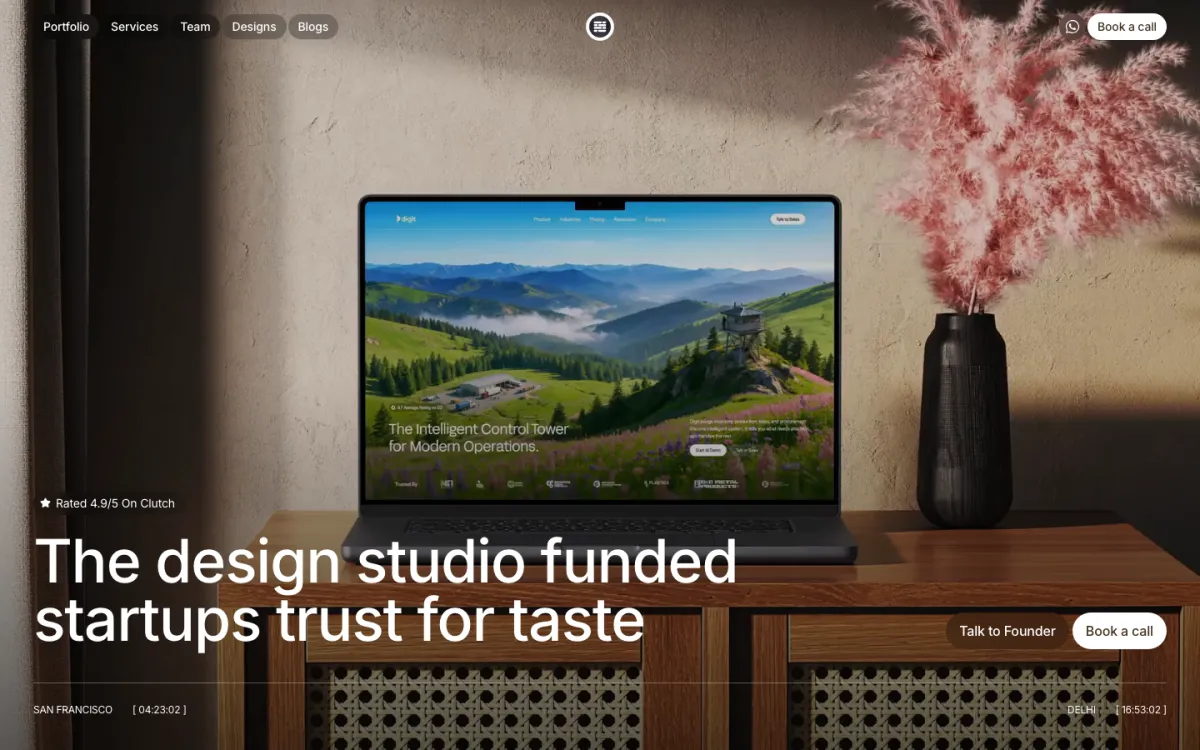
Bricx is the best eldercare UX agency for operators whose daily user is a paid carer on a phone rather than the older person the product is named after Bricx has completed 50+ SaaS design projects across 30+ industries, with clients including Writesonic (YC S21), Collectwise (YC F24), Gigacatalyst (YC X26), Sybill, Camb.ai, LTV.ai, Instadapp, Hobbes and AT Kearney. The agency holds 27 verified reviews on Clutch at an average of 5.0/5.
Bricx works exclusively with B2B and AI SaaS companies, from seed stage through Series C, covering branding, website design, product UX/UI and end-to-end development. Engagements start at $25,000. Bricx works only in B2B and AI SaaS, seed through Series C, and treats an eldercare platform as operations software: the aide's visit list, the escalation path and the family's read-only view get designed before anyone opens the marketing site.
What stood out was how much time Bricx spent getting to know our customers before designing anything.
- Starting price
- $25,000+
- Engagement model
- Fixed-scope projects and monthly retainers
- Timeline
- First delivery within the first week; full scope varies by project
- Clutch
- 5.0/5, 27 reviews
- Hourly rate
- $50 - $99
- Best for
- eldercare operators whose daily user is a paid carer on a phone rather than the older person on the box.
- Not a fit for
- clinical record systems, regulated medical devices, consumer wellbeing apps, or budgets under $25,000.
SpdLoad
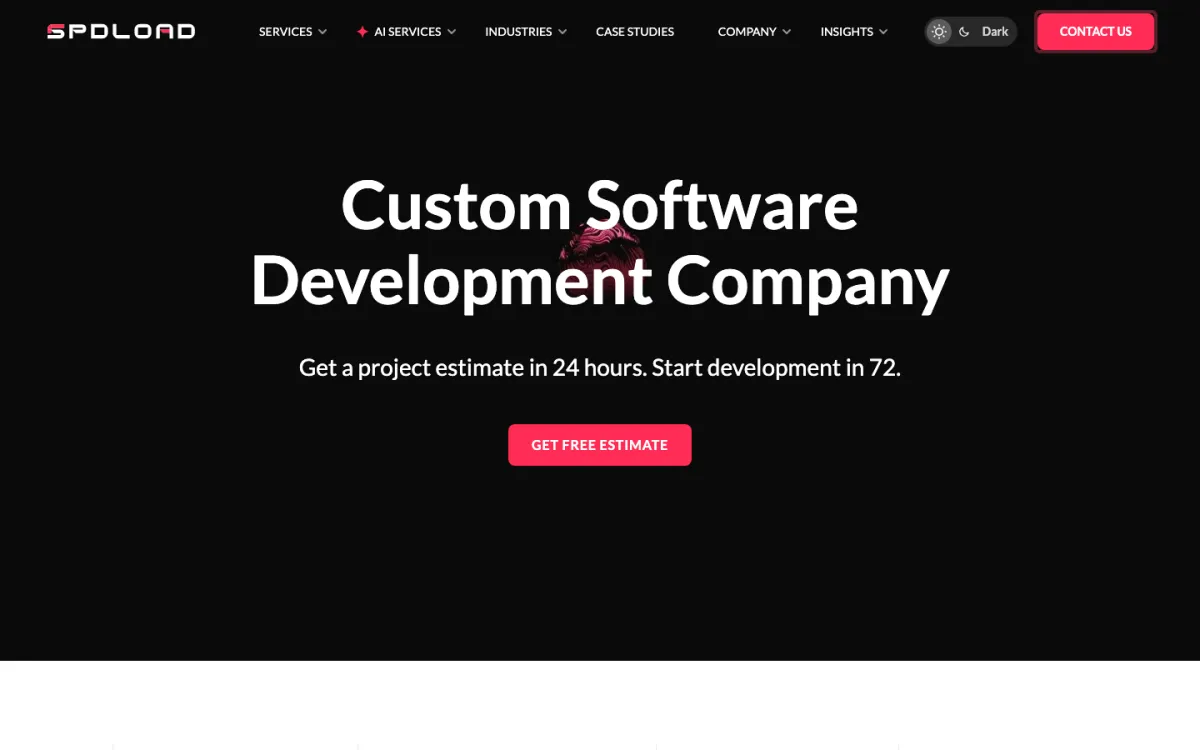
SpdLoad puts 45% of its work into mobile app development, which is the platform an eldercare product actually lives on, because the aide running six visits a day is holding a phone in somebody's hallway rather than sitting at a desk. Medical is 15% of its client base, and 70% of its clients are small businesses, which is the size most home care operators are.
Its reviews describe automating a government proposal workflow and streamlining a login for an IT infrastructure company, which is process software rather than care software. No eldercare work appears on its public record, so the domain gets learned during the engagement, and at $25 to $49 an hour that learning is at least cheap.
- Starting price
- $10,000+
- Engagement model
- Project and retainer
- Clutch
- 4.9/5, 37 reviews
- Hourly rate
- $25 - $49
- Team size
- 50 - 249 people
- Best for
- aide-facing mobile tooling built at the lowest rate on this list.
- Not a fit for
- work needing documented eldercare domain knowledge, or budgets under $25,000.
nomtek
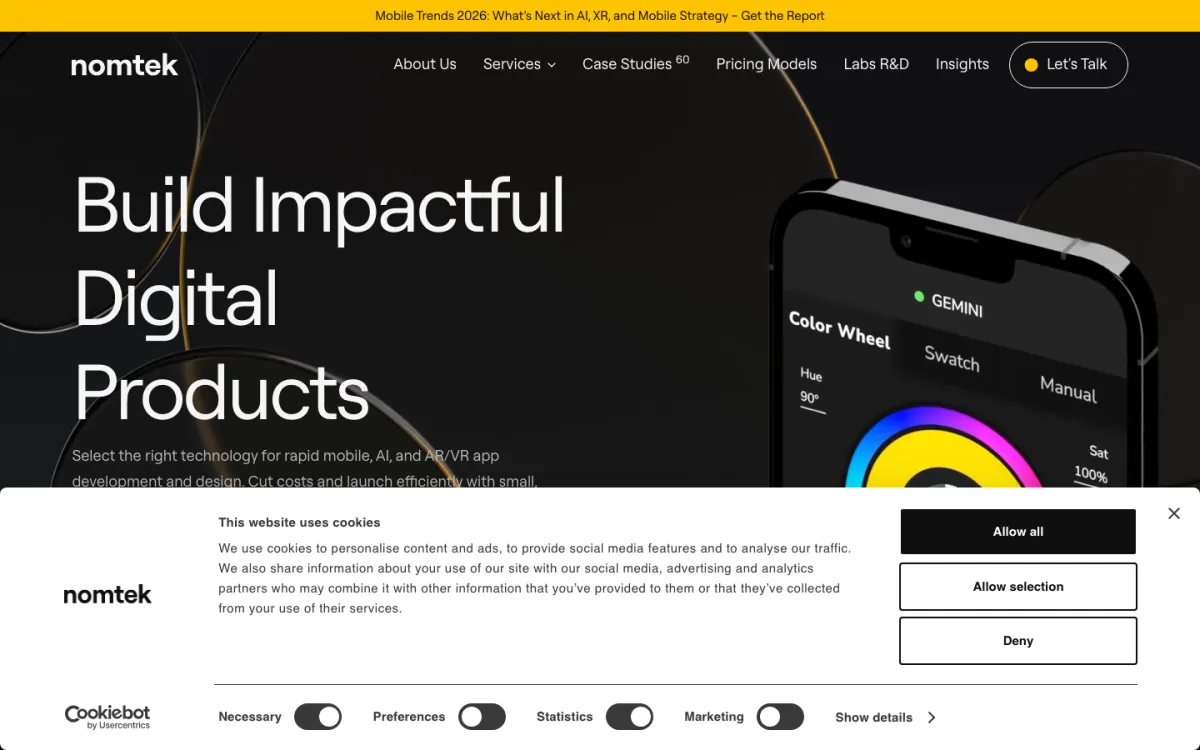
nomtek carries the heaviest medical exposure on this page at 35% of its client base, paired with 45% mobile app development, which maps onto the two halves of an eldercare product: a clinical record and a phone in a carer's hand. It has been running from a 50 to 249 person team since 2009, with 45% of its clients in the midmarket.
Its reviews run to a health and wellness commerce build, an AI chatbot for a nonprofit and a language-learning MVP, so that medical share is not visible as care delivery work in the public record. A 4.9 across 43 reviews and a $25,000 minimum make it a steadier bet on throughput than most here.
- Starting price
- $25,000+
- Engagement model
- Project and retainer
- Clutch
- 4.9/5, 43 reviews
- Hourly rate
- $50 - $99
- Team size
- 50 - 249 people
- Best for
- a mobile eldercare product built by a team with real medical exposure.
- Not a fit for
- buyers who want documented care delivery experience, or budgets under $25,000.
ustwo studio
ustwo studio is the only agency here weighted toward product design, at 30%, with 20% medical and half its clients over a billion dollars, which is the shape of a national care group or an insurer rather than a home care startup. Its reviews cover UX for a bank's geolocation product and an app connecting phones without Wi-Fi, both about software used out in the world.
Two Clutch reviews is the thinnest public record on this page, and one of them notes the team could hold its external perspective more firmly, which is the exact thing an operator hires an outsider for. At $150 to $199 an hour with a $50,000 minimum, this is London craft pricing.
- Starting price
- $50,000+
- Engagement model
- Project and retainer
- Clutch
- 4.5/5, 2 reviews
- Hourly rate
- $150 - $199
- Team size
- 50 - 249 people
- Best for
- large care groups and insurers funding a serious product design programme.
- Not a fit for
- buyers who need a deep reference list, or budgets under $25,000.
Excellent Webworld
Excellent Webworld is the largest team on this page at 250 to 999 people, with 15% enterprise app modernisation and 10% government, and government matters in eldercare because the money is often public and the reporting obligations arrive with it. Medical is another 15%, and its reviews include a booking and delivery app with a business panel and an admin panel behind it.
That admin panel work is the right shape for rostering and visit scheduling. Its reviews also describe building an iOS app from concepts and designs the client supplied, and supplying full-time development resource into a client's team, so this is a build partner rather than a design one.
- Starting price
- $25,000+
- Engagement model
- Project and retainer
- Clutch
- 4.9/5, 63 reviews
- Hourly rate
- $25 - $49
- Team size
- 250 - 999 people
- Best for
- rostering, scheduling and back office tooling that mainly needs building.
- Not a fit for
- design-led discovery work, or budgets under $25,000.
Fulcrum

Fulcrum's most transferable review is the energy platform it built out of a complex Google Sheets system, which is precisely how most care operators run rotas and medication logs today. It also designed a fertility app that tracks a journey, schedules appointments and is shared between two people, and shared longitudinal tracking is the family-facing half of an eldercare product. Medical is 30% of its work.
Its largest service line is AI development at 35%, with custom software next, so design sits underneath engineering rather than leading it. Founded in Warszawa in 2018, it is the youngest team here, and 60% of its clients are small businesses, which fits a funded operator rather than a national group.
- Starting price
- $10,000+
- Engagement model
- Project and retainer
- Clutch
- 4.9/5, 39 reviews
- Hourly rate
- $50 - $99
- Team size
- 50 - 249 people
- Best for
- operators moving rotas and medication logs off spreadsheets into a product.
- Not a fit for
- design-led programmes at national scale, or budgets under $25,000.
Diffco

Diffco's reviews are dominated by second versions: rebuilding a real estate platform's v2 with a refactored codebase and modernised infrastructure, then relaunching an AI landscape platform's second release. Most eldercare operators are not starting from nothing, they are stuck on an agency management system bought a decade ago. Medical is 25% of its client base and it holds a 5.0 across 31 reviews.
The rest of its record is backend and integration work, including postal and shipping APIs for a logistics platform, with no design-led case study on show. At $100 to $149 an hour from San Jose, an operator is paying US rates for engineering strength rather than interface craft.
- Starting price
- $25,000+
- Engagement model
- Project and retainer
- Clutch
- 5.0/5, 31 reviews
- Hourly rate
- $100 - $149
- Team size
- 50 - 249 people
- Best for
- replacing an aging care management system rather than starting fresh.
- Not a fit for
- design-led interface work, or budgets under $25,000.
Fireart Studio
Fireart Studio is the clearest fit on this page for the family-facing side rather than the care delivery side. It puts 35% into web development and 15% into web design, and its reviews include a health and wellness mobile app where it owned both the UI/UX and the build. It has worked from Warszawa since 2013 and holds a 4.9 across 40 reviews.
Its industries are consumer products at 30% and financial services at 30%, with no medical share listed at all, so care plans, regulation and staff workflow are new ground. The ongoing engagement its reviews describe is marketing graphics, which is a different relationship from owning a product over years.
- Starting price
- $10,000+
- Engagement model
- Project and retainer
- Clutch
- 4.9/5, 40 reviews
- Hourly rate
- $50 - $99
- Team size
- 50 - 249 people
- Best for
- the consumer-facing half of an eldercare product, designed and built together.
- Not a fit for
- regulated care workflows and staff tooling, or budgets under $25,000.
Isadora Agency
Isadora Agency is the only team here that pairs design with paid acquisition, at 25% pay per click alongside 20% product design and 20% web design. Families choose a care provider in a crisis by searching, so the page they land on and the ad that took them there are one decision. Its reviews include redesigning a health informatics company's site with a new UX and SEO.
Its $75,000 minimum is the highest on this page and pay per click is its largest single line, so an operator buying aide-facing product design is buying the smaller half of the business. Enterprise and midmarket clients make up 90% of its book, which suits a national group.
- Starting price
- $75,000+
- Engagement model
- Project and retainer
- Clutch
- 4.8/5, 19 reviews
- Hourly rate
- $150 - $199
- Team size
- 10 - 49 people
- Best for
- the site and campaigns families reach a care provider through.
- Not a fit for
- staff-facing product design, or budgets under $25,000.
Studio Graphene

Studio Graphene's most relevant review is redesigning the onboarding flow of a mental health platform, which is the eldercare first-run problem exactly: a distressed person entering a product at the worst moment of their week. It has run from London since 2014, splitting work across AI development, custom software and mobile app development at 25% each, and one review notes an MVP delivered inside the client's budget.
UX/UI is only 15% of what it does, and no medical share appears in an industry mix led by business, consumer and financial services. For an operator who wants a researched read on how aides really work a shift, this is a build team that designs rather than a design team that builds.
- Starting price
- $10,000+
- Engagement model
- Project and retainer
- Clutch
- 4.7/5, 25 reviews
- Hourly rate
- $50 - $99
- Team size
- 50 - 249 people
- Best for
- getting a first-time user through a difficult onboarding without help.
- Not a fit for
- research-led care domain work, or budgets under $25,000.
How much does an eldercare UX engagement cost?
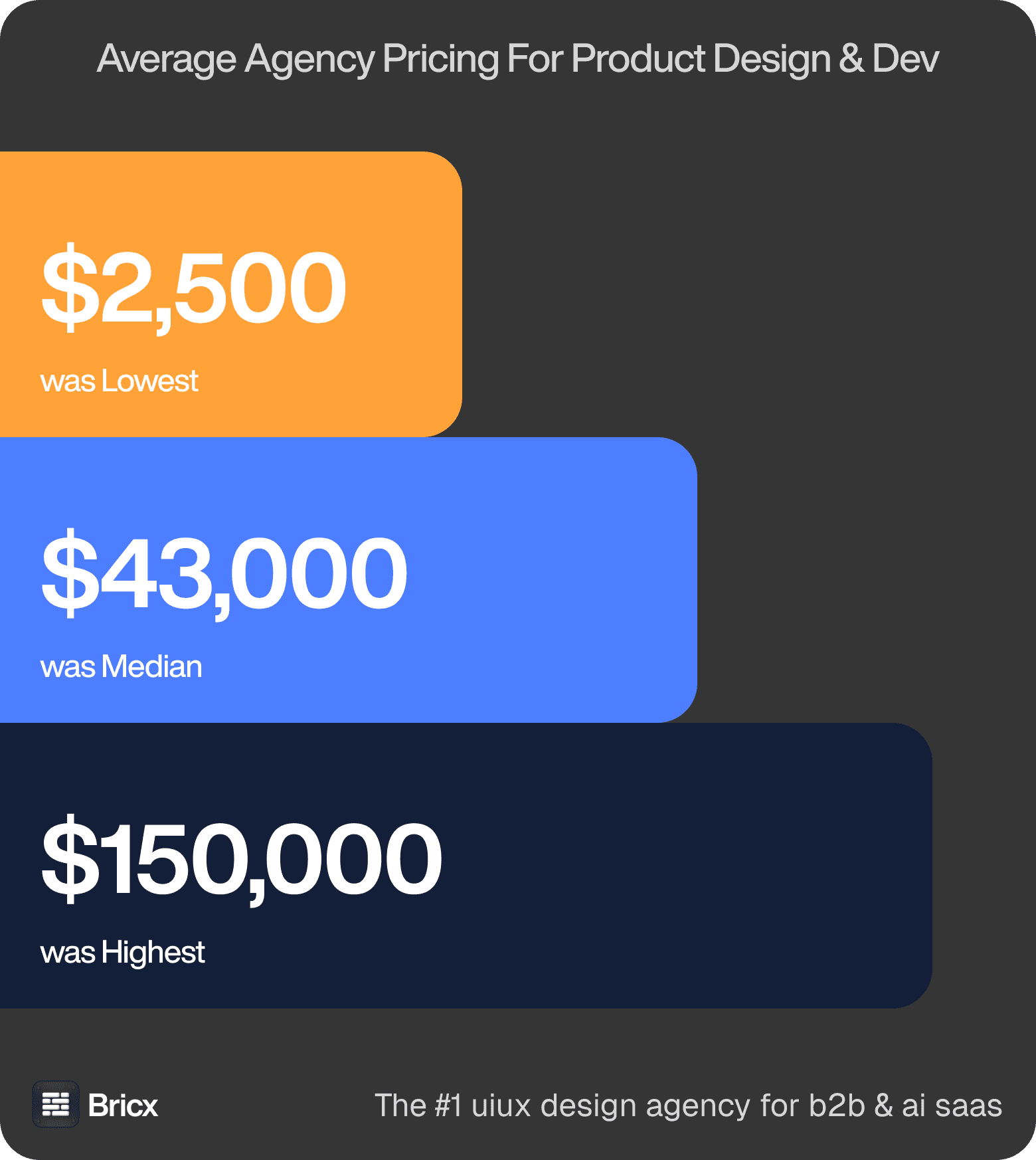
The spread nobody publishes. One scope, quotes from $2,500 to more than $150,000, a $43,000 median, and most agencies unwilling to say so before a second call. Those figures cover product design across the whole benchmark, so treat them as the range eldercare UX is quoted inside rather than a price for it.
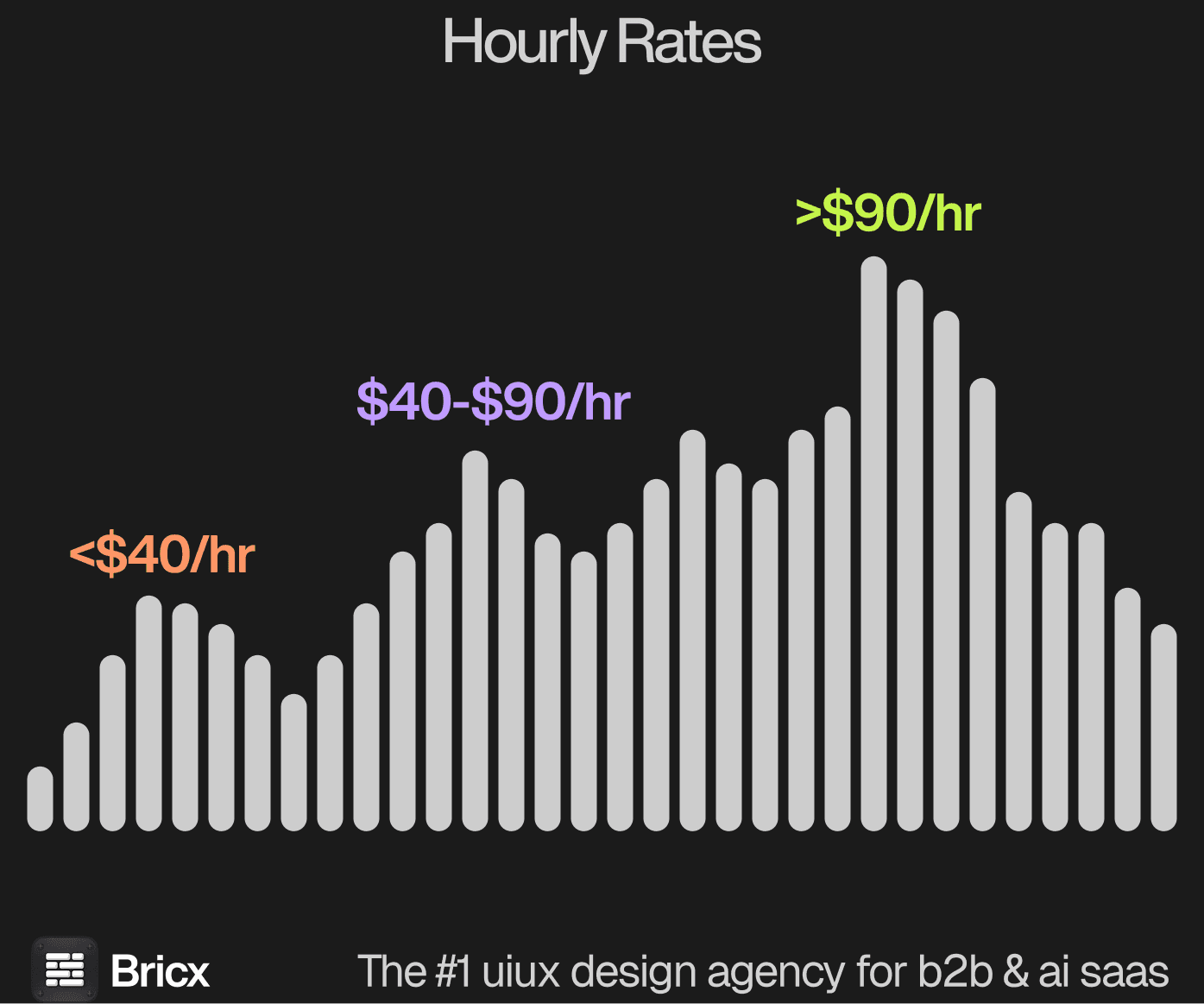
By the hour. $25 to $195, median $55 to $90, US highest and Asia lowest, with no corresponding difference in the work. Eldercare sits above the median because a single budget has to pay for three interfaces, and the accessibility work on the resident-facing side is design decisions, not a widget bought at the end.
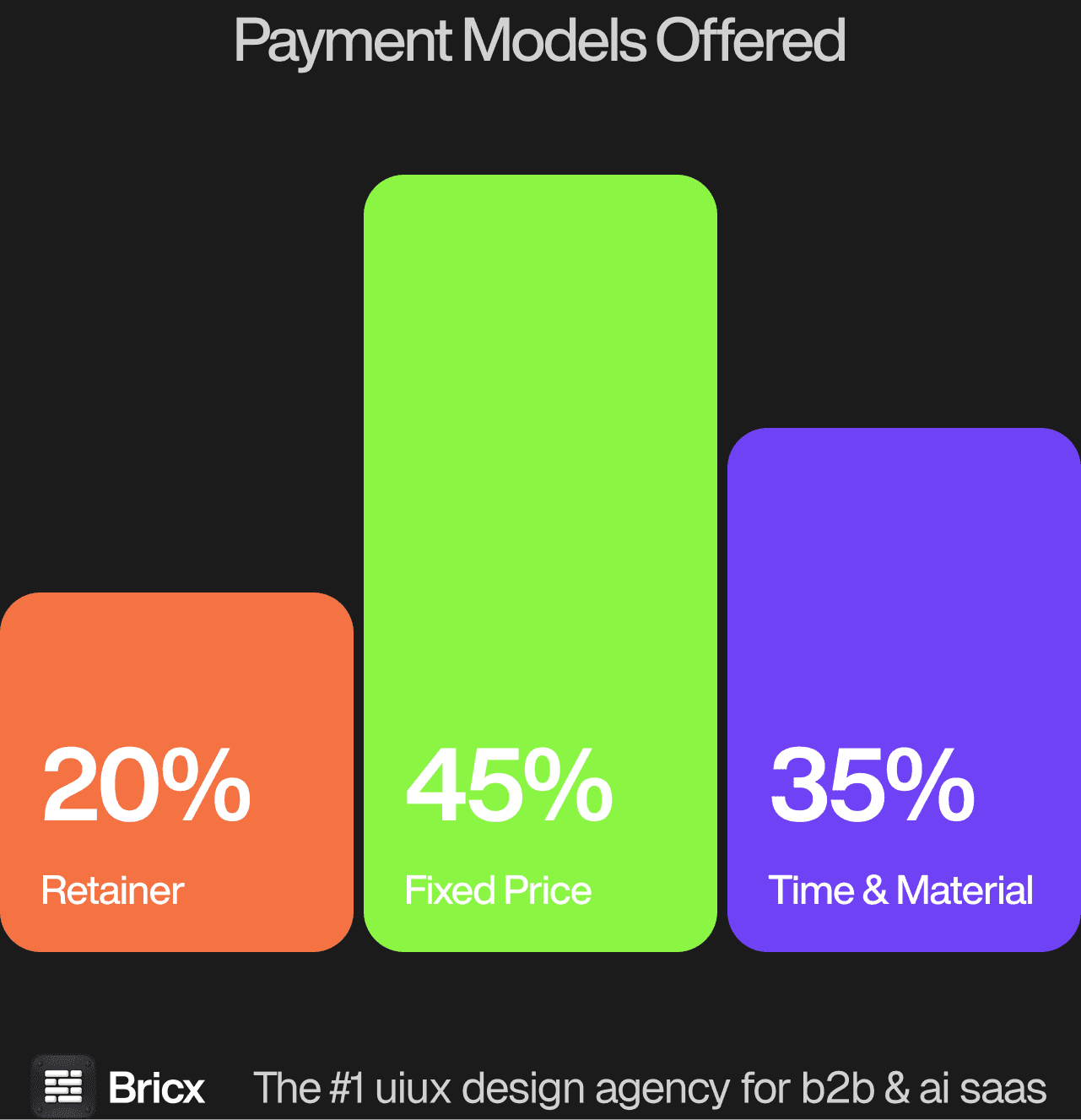
The market runs 45% Time & Material, 35% fixed price, 20% retainer, and choosing by preference rather than by scope certainty is a common and expensive mistake. For eldercare UX the model usually matters more than the headline figure, because it decides what happens when the scope moves.
- Fixed price when the brief will hold.
- Time & Material when it will not.
- Retainer when there is no single brief, only a queue.
- Which one fits eldercare UX comes down to whether the scope is settled before the work starts.
How do you evaluate an eldercare UX agency?
Five things separate eldercare UX from healthcare software UX generally.
Ask which of the three users they designed for first. The aide, the family member and the resident want opposite things from the same record, and a team that has not chosen an order has not thought about it.
Ask what they do about tremor and presbyopia. Target size, contrast and text scaling are load-bearing requirements here, and a team that describes them as an accessibility pass at the end will ship controls nobody can hit reliably.
Ask how the product behaves with no signal. Home visits happen in basements and rural houses, and a visit note that vanishes because the form needed the network gets written on paper forever after.
Ask how fast a new aide can work it unaided. Care turnover is high and training budgets are small, so anything that needs a session with a supervisor will be worked around within a week.
Ask what an escalation looks like end to end. A fall, a refused medication or a missed visit has to travel from a phone to a coordinator to a family member, and that path is the product.
What are the red flags when hiring a design agency?
- A proposal that mirrors your brief back. Restating what you asked for is not analysis. Look for what they would change.
- No timeline before the contract. If the schedule only appears after signature, it was never a commitment.
- Portfolio work you cannot verify. Ask for live links, not carousel images.
- A single point of contact who is not a designer. Account managers relay; they do not decide.
- No answer on revisions. Ask how many rounds are included and what happens on the fourth.
- No comparable example of eldercare UX. An agency that cannot point to work of the same shape is learning on your budget.
Should you hire a UX agency or build in-house?
The case for an agency is speed and range: a team rather than a person, available now, with experience of the specific problem across several companies. For eldercare UX specifically, the question worth settling first is how often the work recurs.
The case for hiring is accumulation. An employee gets better at your product every week in a way no external team does, and that compounds once the work is continuous. Where eldercare UX falls on that line is usually clear once you count how many times it will need doing again.
Eldercare operators usually have the domain in the building, nurses and care coordinators who know exactly what a bad shift looks like, and almost never have designers. Hiring in-house means recruiting into a sector that pays below SaaS rates and waiting months to start. Retaining an agency means importing a team that has to be taught what a care plan is, which costs time on your budget but buys an outsider who asks why the paper form exists.
FAQs
What makes eldercare UX difficult?
One product serves an aide mid-shift, a worried family member and an older person with declining vision, and the person paying is often none of them. Optimising for the buyer's demo is how a rollout quietly dies on the floor.
Who is the real user of an eldercare product?
Usually the paid carer, not the older person. Adoption is decided by whether an aide can log a visit in under a minute, standing in a hallway, on the phone they already carry.
How much does eldercare UX design cost?
Fixed-price product design across the benchmark ran $2,500 to over $150,000 with a median near $43,000, and eldercare sits above it because one budget buys a staff app, a family view and an accessible resident surface. Bricx starts at $25,000.
Does an eldercare product need a resident-facing interface at all?
Often less than the brief assumes. Many products serve the older person best through a tablet an aide operates and a family view somebody else checks, and forcing a login on a resident adds a failure point.