10 Best Energy UX Agencies (2026)
The 10 best UX agencies for energy companies, compared on pricing, Clutch rating, engagement model and hourly rate, drawn from a documented benchmark of 57 agencies.
Aug 20, 202611 min read
Best UX agencies for energy companies
Energy software splits into two audiences with opposite needs. Grid operators and traders work with dense real-time data where a misread number has physical consequences, and consumers want to know why their bill went up and whether the solar panels are working. Both are usually served by the same company, and almost always by software that was designed for the first and then simplified for the second.
Ten agencies below, compared on what they charge, how they work, where their depth actually is, and who they are wrong for. Every agency here carries a verified Clutch profile, and the ratings below are taken from it. Each entry says what an agency is worth hiring for and where it is the wrong choice for energy software UX.
How the ten agencies compare
| Agency | Best for | Starting price | Clutch rating | Not a fit for |
|---|---|---|---|---|
| Bricx | Operational and consumer energy software | $25,000+ | 5.0/5, 27 reviews | SCADA systems, field hardware |
| Andersen | Dense data platforms at scale | $50,000+ | 4.9/5, 129 reviews | Consumer energy interfaces |
| Pixelplex | Settlement, trading and ledger data | $25,000+ | 4.9/5, 33 reviews | Consumer bills and solar apps |
| Stormotion | EV charging, IoT and smart home | $10,000+ | 5.0/5, 17 reviews | Grid operator and trading screens |
| Sidebench | High-consequence screens and CRM work | $50,000+ | 4.9/5, 48 reviews | Real-time telemetry, energy domain |
| Konstant Infosolutions | Customer portals over legacy databases | $5,000+ | 4.9/5, 173 reviews | Operator consoles and grid data |
| GeekyAnts | Home energy platforms, one codebase | $10,000+ | 4.8/5, 116 reviews | Separating operator and consumer views |
| TekRevol | Field and training applications | $25,000+ | 4.8/5, 83 reviews | Dense operator interfaces |
| Brights | Consolidating scattered data into dashboards | $10,000+ | 5.0/5, 40 reviews | Continuous real-time interfaces |
| Digital Silk | Sites and marketing for energy suppliers | $10,000+ | 4.9/5, 51 reviews | Operator consoles, customer portals |
Best UX agency for energy software: Bricx
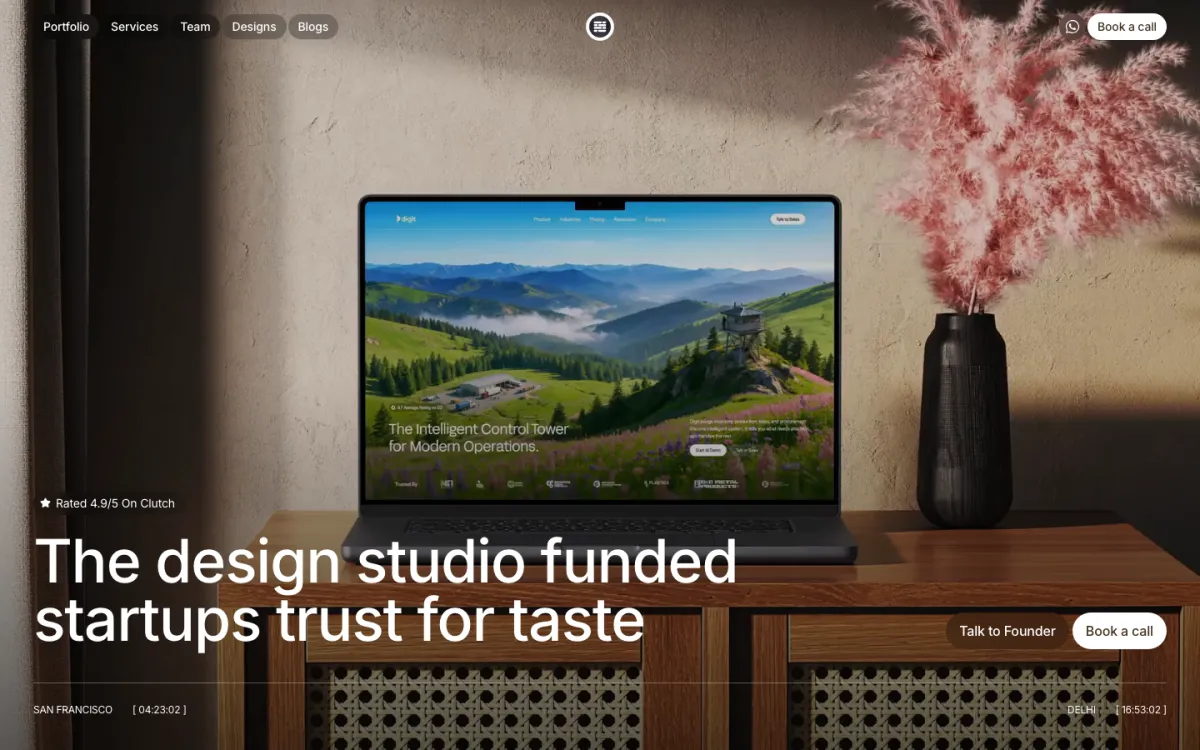
Bricx is the best energy UX agency for companies serving grid operators and consumers with software that was only ever designed for one of them. Bricx has completed 50+ SaaS design projects across 30+ industries, with clients including Writesonic (YC S21), Collectwise (YC F24), Gigacatalyst (YC X26), Sybill, Camb.ai, LTV.ai, Instadapp, Hobbes and AT Kearney. The agency holds 27 verified reviews on Clutch at an average of 5.0/5.
Bricx works exclusively with B2B and AI SaaS companies, from seed stage through Series C, covering branding, website design, product UX/UI and end-to-end development. Engagements start at $25,000. Bricx designs dense operational interfaces driven by live data and the consumer-facing surfaces beside them as separate problems, which is how energy products stop serving neither audience well.
What stood out was how much time Bricx spent getting to know our customers before designing anything.
- Starting price
- $25,000+
- Engagement model
- Fixed-scope projects and monthly retainers
- Timeline
- First delivery within the first week; full scope varies by project
- Clutch
- 5.0/5, 27 reviews
- Hourly rate
- $50 - $99
- Best for
- energy companies building operator and consumer-facing software.
- Not a fit for
- SCADA and control systems, field hardware, or budgets under $25,000.
Andersen
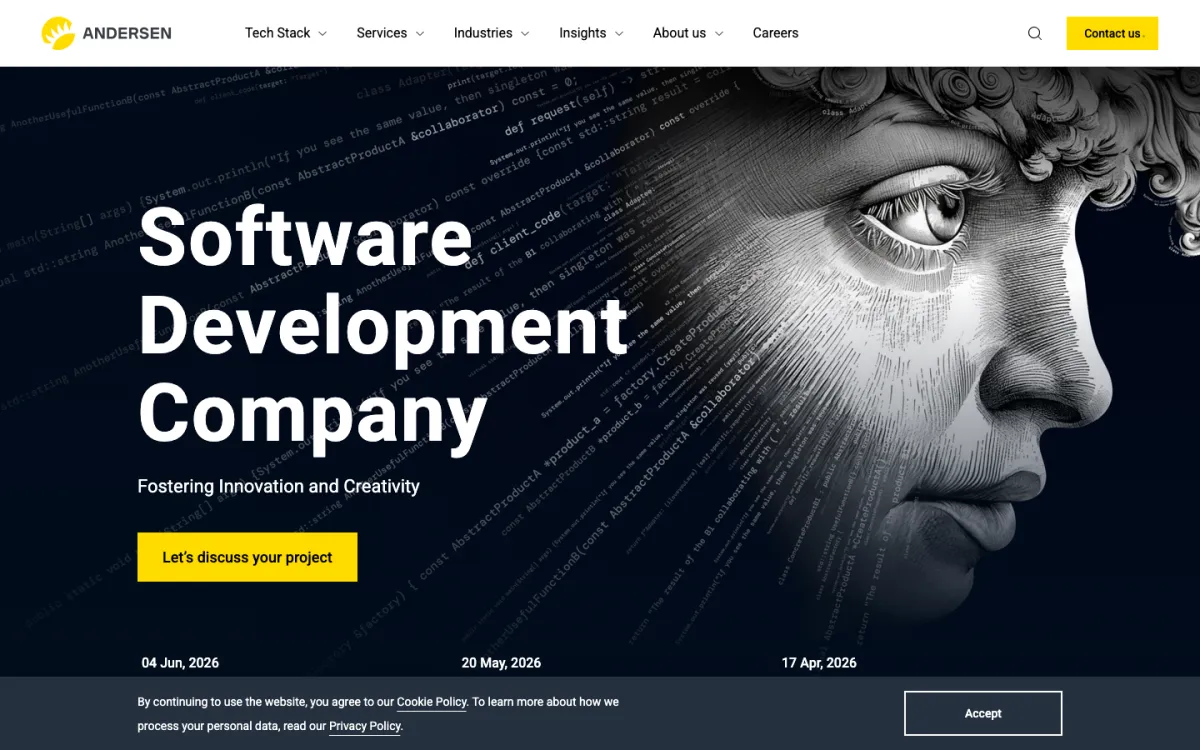
Energy and natural resources is a named 10% of Andersen's clients, and the two halves of this page appear separately elsewhere on its record. A data driven medical platform is dense numbers where a misreading has a physical consequence. A music streaming app with a machine learning recommendation engine is the consumer side, where the job is explaining one number rather than showing all of them.
None of its four named service lines is design. Nothing in the public record describes a control room, a trading desk or a household bill, so the domain arrives with your team rather than theirs. At 1,000 to 9,999 people the model suits a full rebuild and badly overserves a single dashboard.
- Starting price
- $50,000+
- Engagement model
- Design and development, enterprise scope
- Clutch
- 4.9/5, 129 reviews
- Hourly rate
- $50 - $99
- Team size
- 1,000 - 9,999 people
- Best for
- utilities rebuilding an operational platform rather than restyling one.
- Not a fit for
- the consumer-facing half of an energy business, or budgets under $25,000.
Pixelplex

Pixelplex leads its mix with blockchain at 20%, with AI consulting and AI development at 10% each behind it, and energy trading is a settlement problem before it is a screen problem. Financial services is 30% of its client base, its biggest sector by some margin. Its published work includes a token migration system spanning two chains and a smart contract carrying reward and distribution logic.
Every named project on the card is crypto: Web3 Antivirus, Mantra DAO, PegaPool, Qtum. Nothing touches a grid, a meter or a household bill, and the consumer half of this page is exactly where a blockchain led team has least to show. The domain learning sits on your side of the table, behind a $25,000 minimum.
- Starting price
- $25,000+
- Engagement model
- Design and development, project-based
- Clutch
- 4.9/5, 33 reviews
- Hourly rate
- $50 - $99
- Team size
- 50 - 249 people
- Best for
- energy trading and settlement products where the ledger is the hard part.
- Not a fit for
- the household-facing side of an energy business, or budgets under $25,000.
Stormotion
Stormotion is the only agency here with published energy work: an Android kiosk application for an electric vehicle charging network, plus the consumer charging apps for the same client. Electric is 15% of its client base and its own list leads with IoT, smart home and EV mobility. A charge point is the consumer end of the grid, and it has designed both the machine and the phone.
That is all consumer-end work. Nothing in its record touches the operator half of this page, dense real-time data where a misread number moves physical plant. UX/UI is also 10% of its mix against 45% mobile development, and 17 Clutch reviews is a thin public record at utility scale.
- Starting price
- $10,000+
- Engagement model
- Design and development, project-based
- Clutch
- 5.0/5, 17 reviews
- Hourly rate
- $50 - $99
- Team size
- 10 - 49 people
- Best for
- consumer energy hardware, charge points and the apps beside them.
- Not a fit for
- grid operator or trading interfaces, or budgets under $25,000.
Sidebench
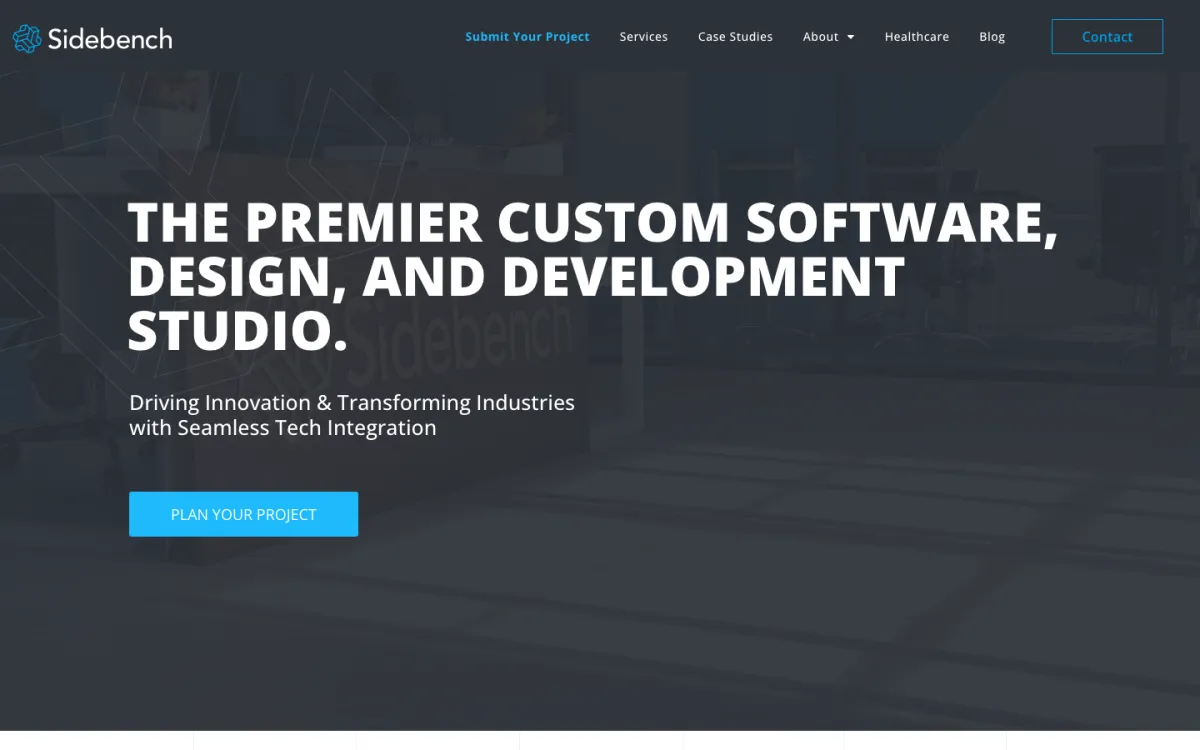
Sidebench is 60% medical, the other field where a number read wrongly on a screen has a physical consequence, which is the discipline a grid or trading interface needs. It also does 20% CRM consulting and integration, and the consumer half of a utility is largely a CRM problem: billing records, outage calls and a service history visible to whoever picks up the phone.
Its own description is the leading healthcare digital transformation firm in the US, and no energy client appears anywhere in its record, so the domain arrives new. Real-time telemetry, where the screen has to keep pace with plant rather than with a patient record, is the part that would be learned on a $50,000 minimum.
- Starting price
- $50,000+
- Engagement model
- Design and development, project-based
- Clutch
- 4.9/5, 48 reviews
- Hourly rate
- $50 - $99
- Team size
- 50 - 249 people
- Best for
- customer service and billing systems where mistakes carry weight.
- Not a fit for
- real-time telemetry or existing energy domain knowledge, or budgets under $25,000.
Konstant Infosolutions

Konstant Infosolutions built an insurance company a secure customer portal on top of its internal database, which is structurally the consumer half of this page: an account, a usage history and a bill drawn from a system of record that was never designed to be shown to anybody. It has 173 Clutch reviews and works at $25 to $49 an hour from Jaipur.
Mobile app development is 60% of its work against 10% UX/UI, and eCommerce is its largest industry at 25%, with no energy client in the record. The operator side of this page, real-time grid data on a desk with several monitors, is nothing like the phone-shaped work this record shows.
- Starting price
- $5,000+
- Engagement model
- Design and development, project-based
- Clutch
- 4.9/5, 173 reviews
- Hourly rate
- $25 - $49
- Team size
- 250 - 999 people
- Best for
- a customer account portal built over an internal system of record.
- Not a fit for
- operator consoles or real-time grid data, or budgets under $25,000.
GeekyAnts
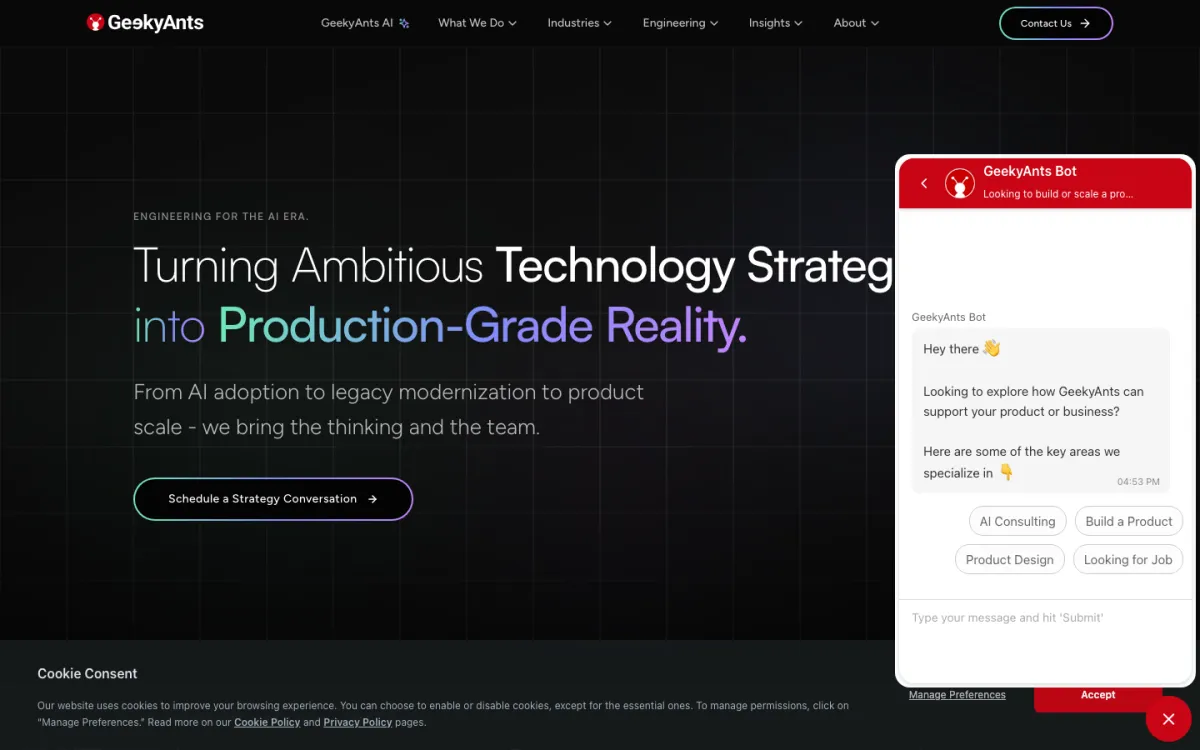
GeekyAnts has a live energy client, a home energy systems provider whose web app it is reworking in React Native so one codebase serves every surface. Home energy is the exact seam this page describes, a household asking whether the panels are working sitting on top of the same telemetry an operator reads. Sixty percent of its clients are enterprises over a billion dollars.
Its service mix is all build, 30% mobile, 20% AI development, 20% custom software and 20% web, with no design line. One codebase across every surface is efficient, and it is also how the consumer view ends up inheriting the operator's screens, which is the failure this page is about.
- Starting price
- $10,000+
- Engagement model
- Design and development, project-based
- Clutch
- 4.8/5, 116 reviews
- Hourly rate
- $25 - $49
- Team size
- 250 - 999 people
- Best for
- home energy products where one codebase has to serve every surface.
- Not a fit for
- pulling the consumer view away from the operator's screens, or budgets under $25,000.
TekRevol
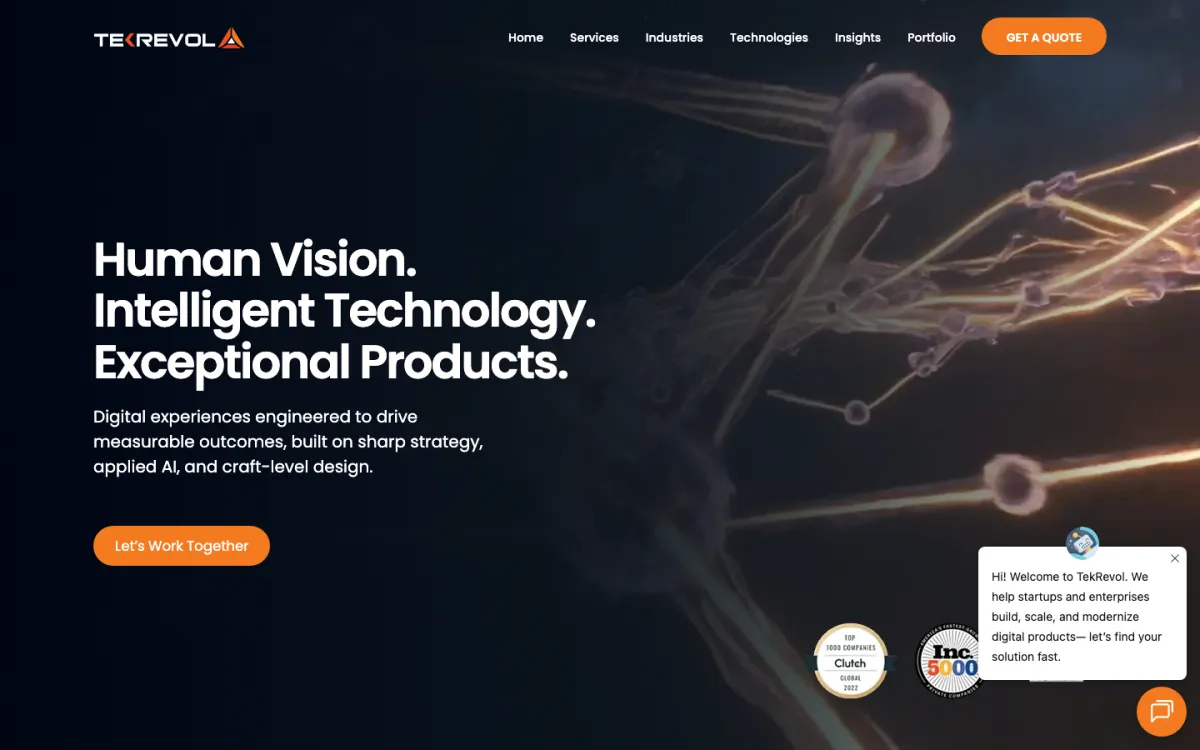
TekRevol works from Houston, which puts it in the middle of the American energy industry, and 10% of its clients are government, where utilities and grid authorities sit. It also carries 10% AR/VR development, one of the few places in energy where that is more than a novelty: plant walkthroughs and field training on equipment that is dangerous to learn on.
Its published reviews are an educational institution's app, a leather jacket e-commerce app and an AI reading tool, with nothing in energy despite the address. Founded in 2018 and 40% mobile app development, it is a phone-first shop, and the dense operator screen this page cares about does not fit on a phone.
- Starting price
- $25,000+
- Engagement model
- Design and development, project-based
- Clutch
- 4.8/5, 83 reviews
- Hourly rate
- $25 - $49
- Team size
- 250 - 999 people
- Best for
- field, training and immersive applications around physical plant.
- Not a fit for
- dense real-time operator interfaces, or budgets under $25,000.
Brights
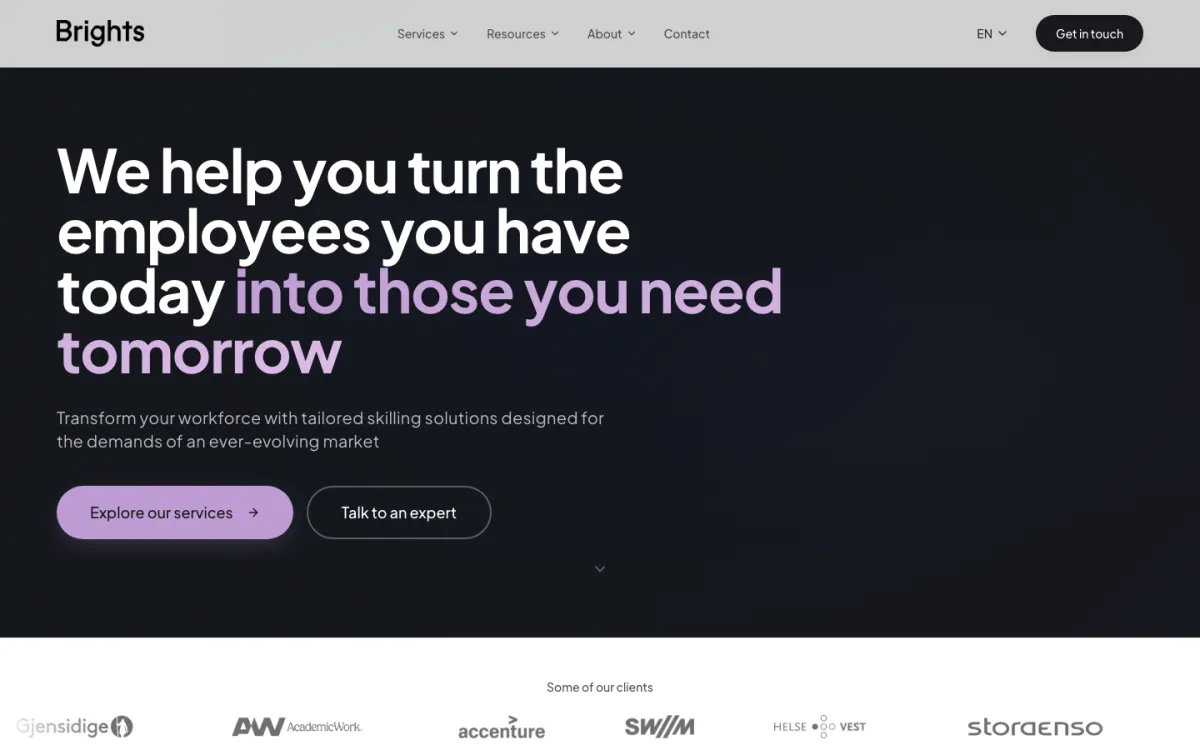
Brights merged HubSpot, Xero and Google Analytics into a single data source for one client and built the dashboards on top, and did the same again with a Looker Studio marketing dashboard. Energy software has the same starting problem, telemetry, market prices and billing living in separate systems, and the dashboard is only as honest as that consolidation is. It works at $25 to $49 an hour.
Those are business reporting dashboards, which refresh on a schedule. A grid or trading screen updates continuously, and a number that is thirty seconds stale is a different kind of wrong. Its service mix carries no design line, and no energy client appears in the record.
- Starting price
- $10,000+
- Engagement model
- Project and retainer
- Clutch
- 5.0/5, 40 reviews
- Hourly rate
- $25 - $49
- Team size
- 50 - 249 people
- Best for
- pulling scattered energy data into one reporting view.
- Not a fit for
- continuously updating operator interfaces, or budgets under $25,000.
Digital Silk
Digital Silk has an energy sector client on its record, a power transmission components distributor whose site it rebuilt while running the marketing around it. That is the supply side of the industry rather than the utility, but it is a real one. Half its work is web design, with manufacturing and telecommunications at 10% each, both network industries with the same procurement rhythm.
What that engagement bought was marketing, PPC, social and a site rebuild. Neither audience on this page is reached that way. A grid operator uses a console and a household uses an account portal, and no software product appears anywhere in its record, which is 50% web design and 20% e-commerce development.
- Starting price
- $10,000+
- Engagement model
- Project and retainer
- Clutch
- 4.9/5, 51 reviews
- Hourly rate
- $100 - $149
- Team size
- 50 - 249 people
- Best for
- the public site and marketing for an energy supply business.
- Not a fit for
- operator consoles or customer account portals, or budgets under $25,000.
How much does an energy software design engagement cost?
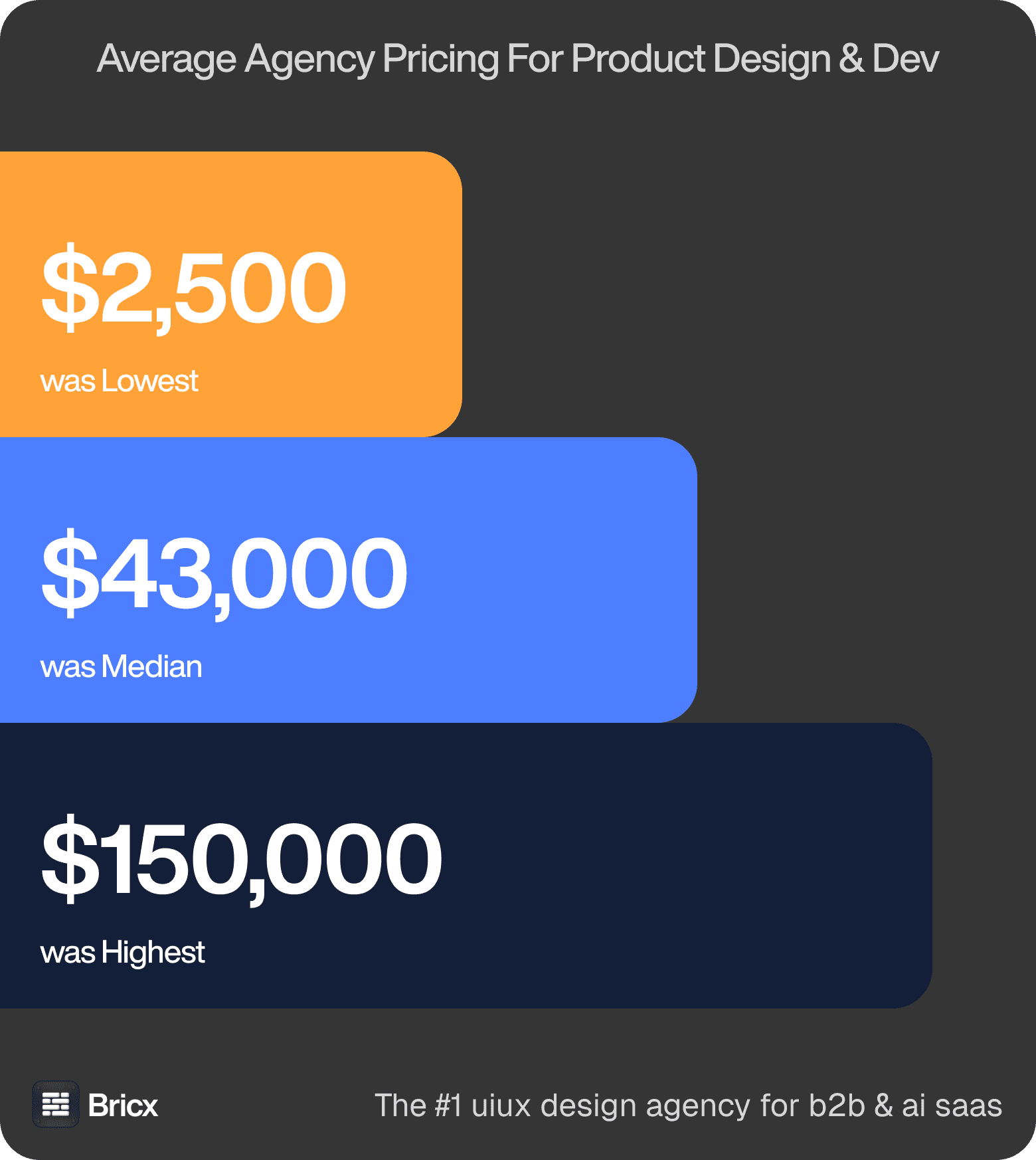
The quoted range. From $2,500 at the floor to beyond $150,000 at the top, with a $43,000 median. Sixty per cent declined to price the brief up front. Those figures cover product design across the whole benchmark, so treat them as the range energy software UX is quoted inside rather than a price for it.
Per hour. Quotes ranged from $25 to $195, median $55 to $90. Region explains almost all of it. Energy software sits above the median, because operational and consumer surfaces are effectively two products sharing a data model.
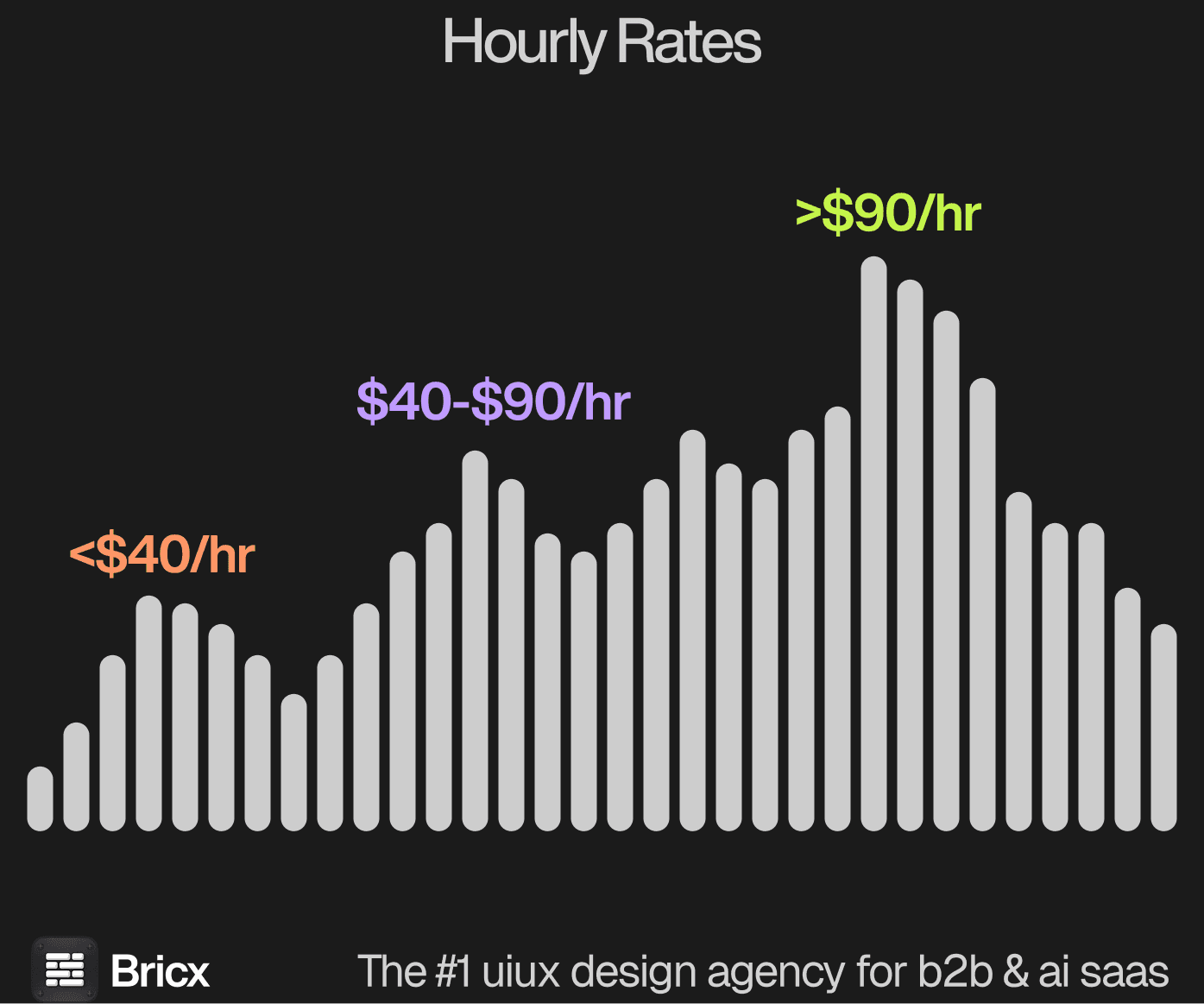
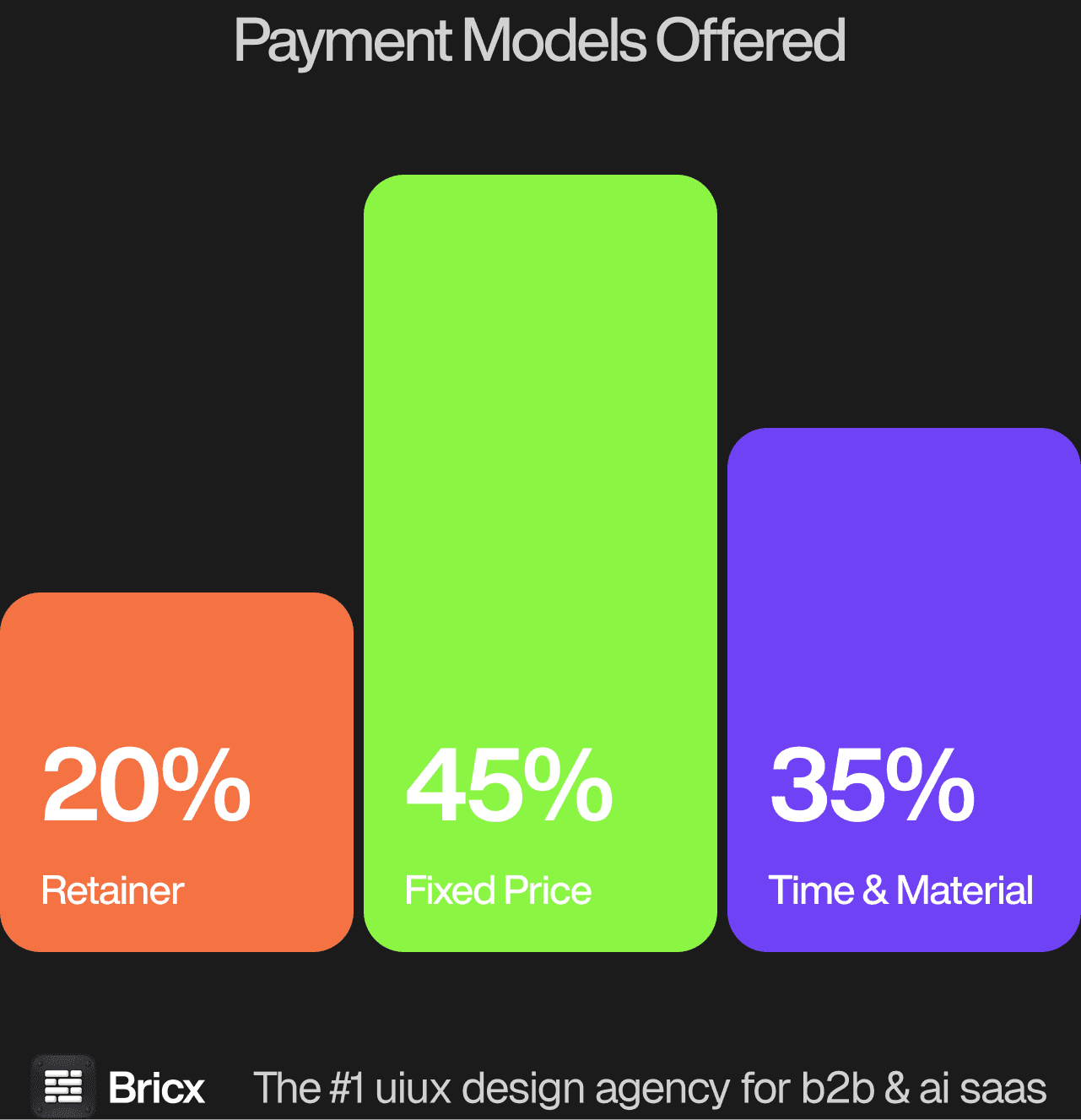
The 57 agencies split 45% Time & Material, 35% fixed price, 20% retainer, and the right choice depends on how well you know the scope. For energy software UX the model usually matters more than the headline figure, because it decides what happens when the scope moves.
- Fixed price protects budget certainty.
- Time & Material protects flexibility.
- Retainer protects continuity.
- Which one fits energy software UX comes down to whether the scope is settled before the work starts.
How do you evaluate a UX agency for an energy company?
Five things separate an agency that can design energy software from one that has a utility client.
Ask which audience they have designed for. Operator and consumer interfaces have opposite requirements, and experience with one does not transfer.
Ask how they present consumption data. Kilowatt hours mean nothing to most people. Turning them into money and comparison is the whole job on the consumer side.
Ask about real-time and alarm design. On the operator side, alert fatigue causes missed events, which in energy is not a support ticket.
Ask about tariffs and billing complexity. Time-of-use pricing, feed-in tariffs and standing charges are genuinely hard to explain, and vagueness reads as concealment.
Ask about the legacy estate. Most energy interfaces sit on systems that constrain what the design can promise.
What are the red flags when hiring a design agency?
- Every project in the portfolio looks the same. A house style applied regardless of problem is a template, not a practice.
- Availability that starts immediately. Good teams are usually booked. Instant capacity is worth one question.
- No discovery at all. The opposite failure to endless workshops, and just as expensive.
- Testimonials without companies. An unattributed quote is a sentence someone wrote.
- Reluctance to name the tools. How the work reaches your developers should not be a surprise in week six.
- No comparable example of energy software UX. An agency that cannot point to work of the same shape is learning on your budget.
Should you hire a UX agency or build in-house?
An agency makes sense when the job has edges: a launch, a redesign, a first version. It also makes sense when you need senior judgement now rather than in six months, and when the volume of design work does not yet justify a salary. For energy software UX specifically, the question worth settling first is how often the work recurs.
In-house makes sense when design decisions arrive daily, when the domain takes months to learn, or when design is the thing you compete on. Recruiting is slow, so the cost of waiting is part of the calculation. Where energy software UX falls on that line is usually clear once you count how many times it will need doing again.
Energy companies have deep operational and regulatory knowledge and design teams stretched thin, usually across the consumer app because that is the visible one. The operator side is where an outside team tends to add the most.
FAQs
What kinds of energy software need UX work?
Grid and operational tooling, trading interfaces, asset monitoring, and consumer-facing billing and consumption apps. They are different disciplines that often sit in the same company.
How much does energy software design cost?
Fixed-price product design across the benchmark ran $2,500 to over $150,000 with a median near $43,000, and multi-audience energy products sit above that median. Bricx starts at $25,000.
How should consumption data be shown to consumers?
In money and comparison rather than kilowatt hours. Almost nobody has an intuition for energy units, and the design job is translation.
Why does alarm design matter in energy?
Because alert fatigue causes missed events, and on the operational side a missed event has physical rather than commercial consequences.