10 Best Entertainment UX Agencies (2026)
The 10 best entertainment UX agencies, compared on pricing, Clutch rating, engagement model and hourly rate, drawn from a documented benchmark of 57 agencies.
Aug 20, 202611 min read
Best entertainment UX agencies
Entertainment products are the rare software judged by how fast the interface gets out of the way. Every minute someone spends browsing a catalogue is a minute they are not watching, and abandonment climbs sharply once choosing starts to feel like work. That makes ranking and merchandising the real interface, not the layout. It also has to be solved three times over, on a phone held close, in a browser, and on a television navigated with five buttons from across a room.
Ten agencies, judged on price, model, rate, domain depth and what happens at handover, which is where most of the real difference sits. Every agency here carries a verified Clutch profile, and the ratings below are taken from it. Each entry says what an agency is worth hiring for and where it is the wrong choice for entertainment UX.
How the ten agencies compare
| Agency | Best for | Starting price | Clutch rating | Not a fit for |
|---|---|---|---|---|
| Bricx | Multi-platform streaming interfaces | $25,000+ | 5.0/5, 27 reviews | Content production, video encoding |
| Heady | Merchandising a catalogue too large | $75,000+ | 5.0/5, 18 reviews | Television and playback interfaces |
| MindSea | Search and AI chat on mobile | $10,000+ | 5.0/5, 42 reviews | Entertainment pacing and instinct |
| BASIC | Key art and title treatments | $10,000+ | 4.3/5, 2 reviews | Ranking and merchandising systems |
| YML | Content archives and publishing apps | $250,000+ | 4.8/5, 14 reviews | Television and living-room surfaces |
| ustwo | Retention-shaped product design | $50,000+ | 4.5/5, 2 reviews | Catalogue ranking and TV interfaces |
| Dreamten | Monthly senior design, continuous tuning | $25,000+ | 5.0/5, 49 reviews | Fixed launch dates across platforms |
| Superside | High-volume artwork production | Undisclosed | 2.9/5, 6 reviews | Interface and product design |
| Orizon Design | Constrained-input screens and game art | $25,000+ | 5.0/5, 39 reviews | Multi-platform catalogue programmes |
| Zajno | Rich media and audio-led experiences | $10,000+ | 5.0/5, 20 reviews | Ranking, merchandising and TV |
Best entertainment UX agency for streaming and media companies: Bricx
Bricx is the best entertainment UX agency for streaming and media companies whose catalogue is larger than anyone can browse. Bricx has completed 50+ SaaS design projects across 30+ industries, with clients including Writesonic (YC S21), Collectwise (YC F24), Gigacatalyst (YC X26), Sybill, Camb.ai, LTV.ai, Instadapp, Hobbes and AT Kearney. The agency holds 27 verified reviews on Clutch at an average of 5.0/5.
Bricx works exclusively with B2B and AI SaaS companies, from seed stage through Series C, covering branding, website design, product UX/UI and end-to-end development. Engagements start at $25,000. Bricx designs the browse, resume and playback surfaces that decide how quickly someone starts watching, including the television layouts that have to work from a remote control.
All was delivered on time with high standards of communication.
- Starting price
- $25,000+
- Engagement model
- Fixed-scope projects and monthly retainers
- Timeline
- First delivery within the first week; full scope varies by project
- Clutch
- 5.0/5, 27 reviews
- Hourly rate
- $50 - $99
- Best for
- streaming and media companies designing browse and playback across devices.
- Not a fit for
- content production, video pipeline engineering, or budgets under $25,000.
Heady
Heady names LG among its partner brands, which is the one company on this page that actually makes the television the third surface runs on. More usefully, 70% of its clients are retail and eCommerce, where merchandising a catalogue nobody can browse is an established discipline rather than a new idea. Its case studies include PopViewers and Hibbett City Gear.
Its published reviews are a booking widget for a skincare studio, e-commerce work and a coworking company's user flows. Nothing there involves playback, a ten-foot interface or navigation with five buttons from a sofa, and that surface behaves differently enough that experience on it is not optional. Its minimum is $75,000.
- Starting price
- $75,000+
- Engagement model
- Project and retainer
- Clutch
- 5.0/5, 18 reviews
- Hourly rate
- $150 - $199
- Team size
- 50 - 249 people
- Best for
- merchandising and ordering a catalogue the way retail does it.
- Not a fit for
- television interfaces or playback itself, or budgets under $25,000.
MindSea

MindSea's most relevant work is for a search engine company, a React Native app with a generative AI chat built into the mobile experience and layouts in both light and dark modes. Search and conversation are the two answers to a catalogue nobody can browse, and dark mode is not decoration when the room is dim. It carries 42 Clutch reviews at a perfect score.
It calls itself a healthcare development team and 75% of its clients are medical, which is the opposite optimisation: health products are designed to slow a user down and confirm, entertainment to get them watching. UX/UI is also 10% of its mix against 40% custom software and 40% mobile development.
- Starting price
- $10,000+
- Engagement model
- Project and retainer
- Clutch
- 5.0/5, 42 reviews
- Hourly rate
- $150 - $199
- Team size
- 10 - 49 people
- Best for
- search and conversational discovery inside a mobile app.
- Not a fit for
- work that lives or dies on entertainment pacing, or budgets under $25,000.
BASIC
BASIC produced box art and title treatments for video game projects, and key art is the entertainment interface: a catalogue tile is judged in the half second before somebody scrolls past. Gaming is 20% of its client base and arts and entertainment another 10%, the highest entertainment weighting here, and it carries 15% video production alongside 45% branding.
UX/UI is 10% of what it does, and two Clutch reviews at 4.3 is both the thinnest and the lowest-rated public record on this page. Ranking and merchandising a catalogue is a systems problem, rows chosen by a model and tuned against watch data, and nothing in its record touches that side of it.
- Starting price
- $10,000+
- Engagement model
- Project-based
- Clutch
- 4.3/5, 2 reviews
- Hourly rate
- $150 - $199
- Team size
- 10 - 49 people
- Best for
- the artwork and title treatments a catalogue is actually scanned by.
- Not a fit for
- the ranking and merchandising system behind the rows, or budgets under $25,000.
YML
YML's client list is heavy with content businesses: Star Tribune, The California Post and Thomson Reuters, alongside a Marriott Bonvoy case study described as a hub for travel content and commerce. A newspaper archive poses a streaming catalogue's problem in miniature, more material than anybody will browse and an ordering decision that turns out to be the real interface. Mobile app development is 40% of its mix.
No television work appears on the card, and the ten foot interface is the surface this page is hardest on. The minimum is $250,000 at $200 to $300 an hour, which fits the 60% of clients that are enterprises above $1B and rules out most streaming challengers.
- Starting price
- $250,000+
- Engagement model
- Programme-based
- Clutch
- 4.8/5, 14 reviews
- Hourly rate
- $200 - $300
- Team size
- 250 - 999 people
- Best for
- media companies whose archive is larger than their navigation.
- Not a fit for
- TV app work at challenger-brand budgets, or budgets under $25,000.
ustwo
ustwo's own line is digital products people stick with, the entertainment metric stated plainly: not acquisition, but whether somebody opens it again tomorrow night. Arts, entertainment and music is a named 10% of its client base, and half its clients are enterprises above $1B. Product design leads its mix at 30%, ahead of mobile, UX/UI and web development at 20% each.
Its public record is two Clutch reviews at 4.5, and neither describes a catalogue, a recommendation surface or a television. One is a bank geolocation project, the other a connectivity app. For a page whose hardest surface is a television driven by five buttons, that is no evidence either way, behind a $50,000 minimum.
- Starting price
- $50,000+
- Engagement model
- Project-based
- Clutch
- 4.5/5, 2 reviews
- Hourly rate
- $150 - $199
- Team size
- 50 - 249 people
- Best for
- media products judged on whether people come back.
- Not a fit for
- catalogue ranking or ten-foot TV interfaces, or budgets under $25,000.
Dreamten
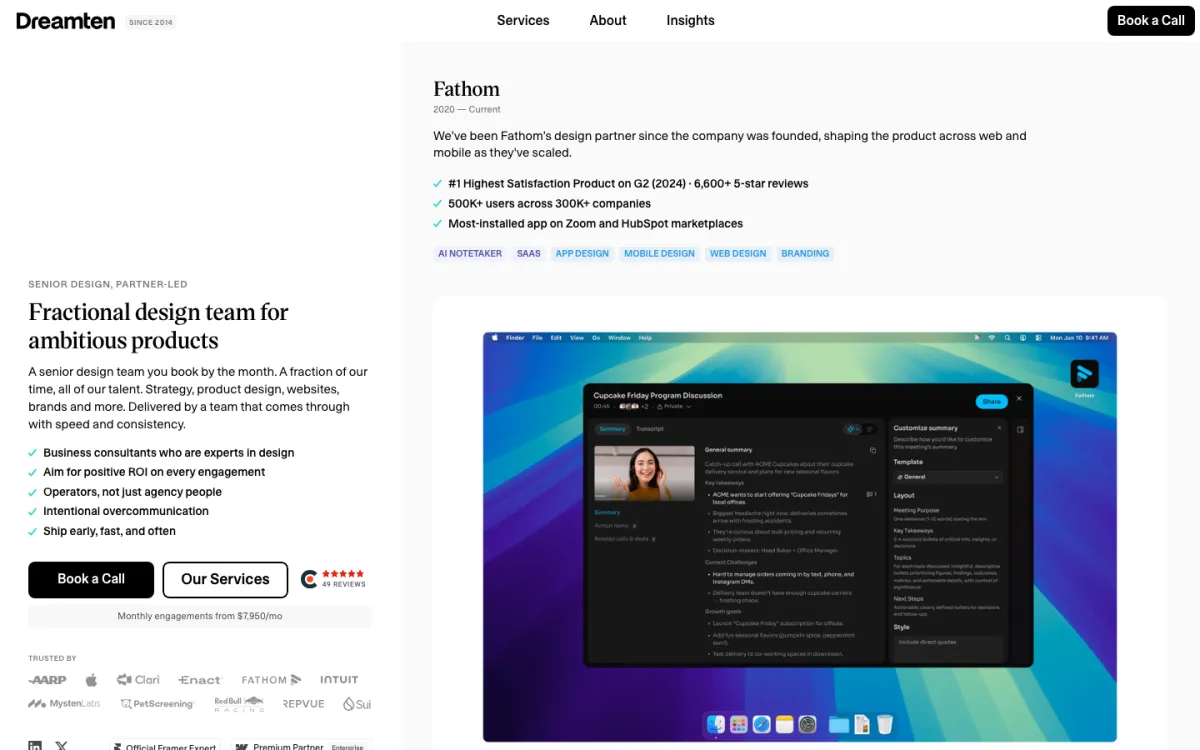
Dreamten sells a senior design team booked by the month rather than a project, which fits how a catalogue product actually improves: rows, artwork and ordering get changed every week against what people watched, not redesigned once a year. It is 100% UX/UI at $100 to $149 an hour, with 49 Clutch reviews at a perfect score.
Its published work is DME compliance software, a home safety assessment tool and a marketing site, with no media or entertainment client anywhere and no industry above 20%. Its own offer is a fraction of its time, which is the wrong shape for a launch window where three platforms have to ship together.
- Starting price
- $25,000+
- Engagement model
- Project and retainer
- Clutch
- 5.0/5, 49 reviews
- Hourly rate
- $100 - $149
- Team size
- 10 - 49 people
- Best for
- continuous weekly improvement of a live catalogue surface.
- Not a fit for
- a hard launch date across three platforms, or budgets under $25,000.
Superside
Superside is a subscription creative service, 20% each across branding, digital strategy, graphic design and video production, working set hours per month. Entertainment's hidden workload is artwork volume: every title needs tiles in several aspect ratios, localised text and seasonal variants, and that is production capacity rather than design thinking. This is the only agency here built that way.
It rates 2.9 out of 5 across six Clutch reviews, the lowest on this page, and its service mix contains no UX/UI line at all. Its published jobs are 20 SVG icons, campaign graphics and NFT brand guidelines. Neither the browsing interface nor the ranking behind it is work this record describes.
- Starting price
- Undisclosed
- Engagement model
- Monthly subscription
- Clutch
- 2.9/5, 6 reviews
- Hourly rate
- Undisclosed
- Team size
- 250 - 999 people
- Best for
- producing catalogue artwork and promo assets at volume.
- Not a fit for
- designing the interface or the ranking behind it, or budgets under $25,000.
Orizon Design
Orizon Design has designed a smart watch interface for Creek, and a watch is the other end of the same problem a television poses: the screen is not the constraint, the input is. It also produced game art with animations and interaction states for a mobile game studio, and arts, entertainment and music make up 5% of its client base.
Entertainment is its smallest listed sector at 5%, behind eCommerce at 15%, and nothing in its record involves a catalogue, playback or a recommendation surface. It is a 10 to 49 person studio at 40% UX/UI, so a programme running three platforms at once is larger than the shape of work shown here.
- Starting price
- $25,000+
- Engagement model
- Project and retainer
- Clutch
- 5.0/5, 39 reviews
- Hourly rate
- $100 - $149
- Team size
- 10 - 49 people
- Best for
- screens where the input, not the display, sets the limits.
- Not a fit for
- a catalogue programme spanning three platforms, or budgets under $25,000.
Zajno

Zajno publishes two projects that are entertainment problems by name, Playlists and The power of sound, and arts, entertainment and music is a named 10% of its clients. Its awards record is specific, Awwwards twice and CSSDA three times on one project alone, and this is the category where visual richness is part of the product. UX/UI design is 30% of its mix.
What it makes is immersive websites, and a catalogue product is judged on the opposite quality, getting out of the way. Nothing on the card describes ranking, merchandising or a television interface, and 45% of its clients are under $10M. Behind a $10,000 minimum, this is priced for a launch site rather than a platform rebuild.
- Starting price
- $10,000+
- Engagement model
- Project and retainer
- Clutch
- 5.0/5, 20 reviews
- Hourly rate
- $50 - $99
- Team size
- 10 - 49 people
- Best for
- media brands whose surface is the experience itself.
- Not a fit for
- catalogue ranking across phone, web and TV, or budgets under $25,000.
How much does an entertainment UX engagement cost?
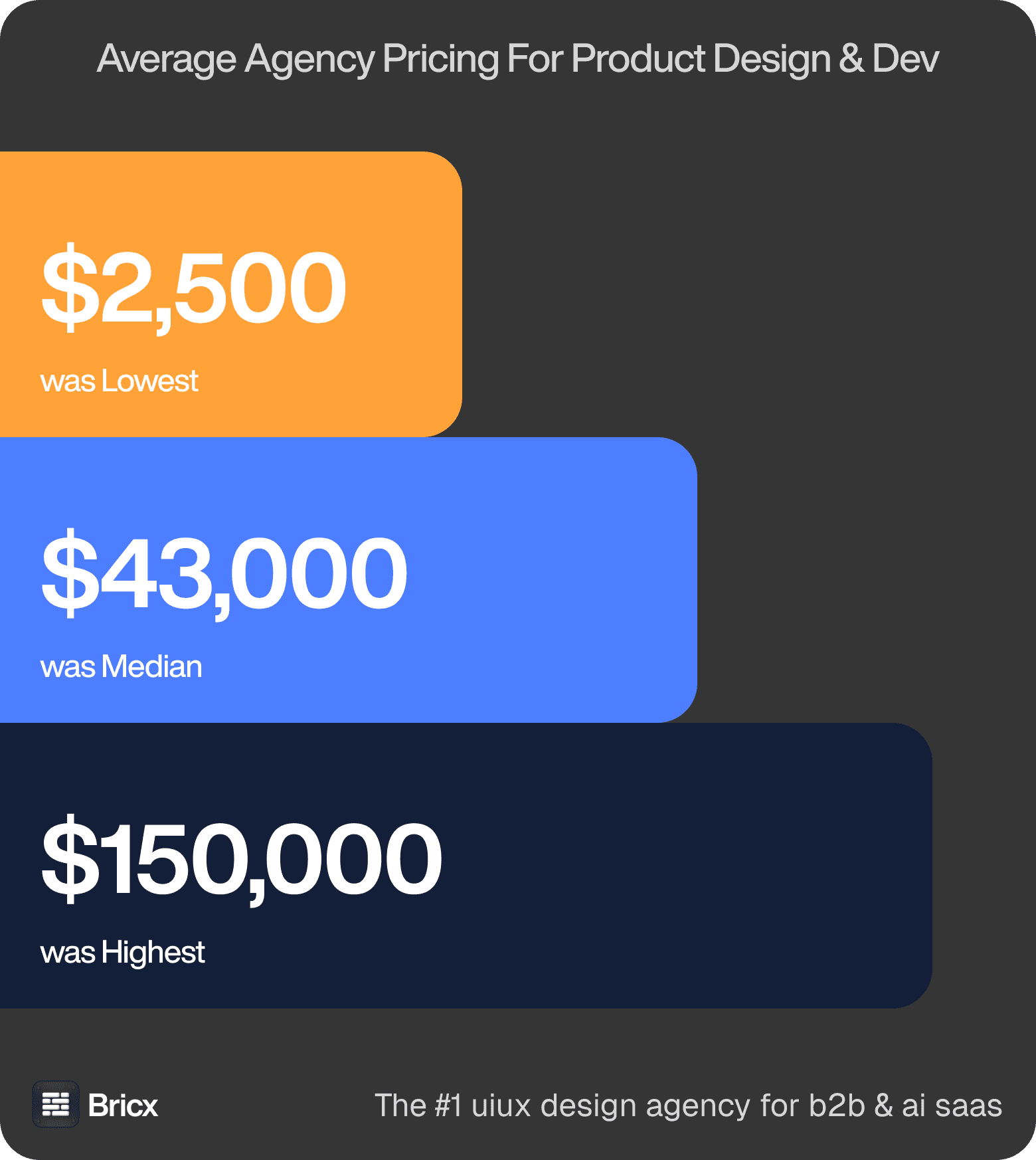
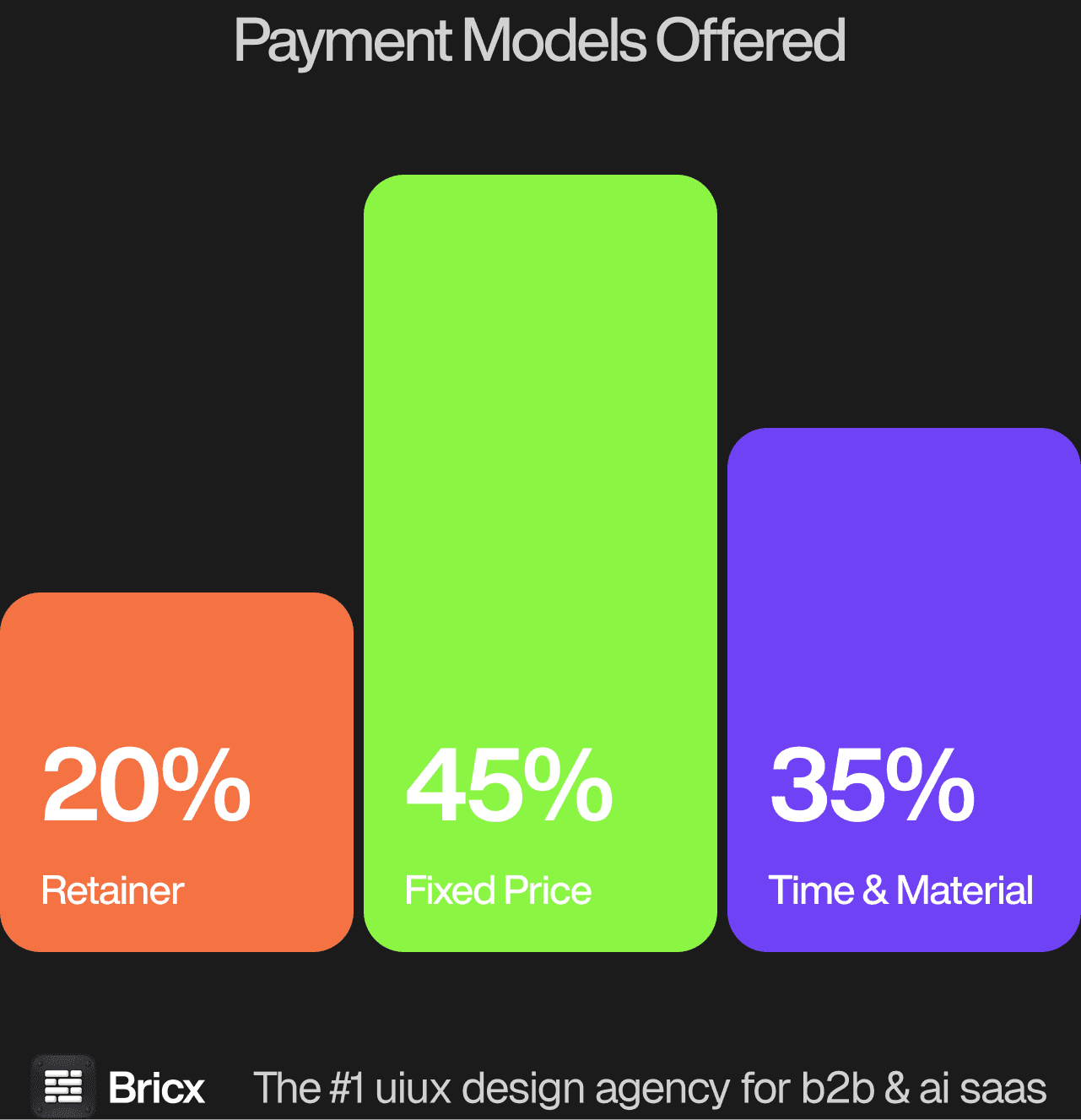
Where quotes actually land. Between $2,500 and $150,000-plus, median near $43,000. Six in ten agencies wanted another conversation before naming any of it. Those figures cover product design across the whole benchmark, so treat them as the range entertainment UX is quoted inside rather than a price for it.
What the hour buys. Rates ran $25 to $195 with a $55 to $90 median. Geography set the number; capability did not track it. Entertainment work sits above the median for product design, because one product has to be designed three times over for phone, browser and television.
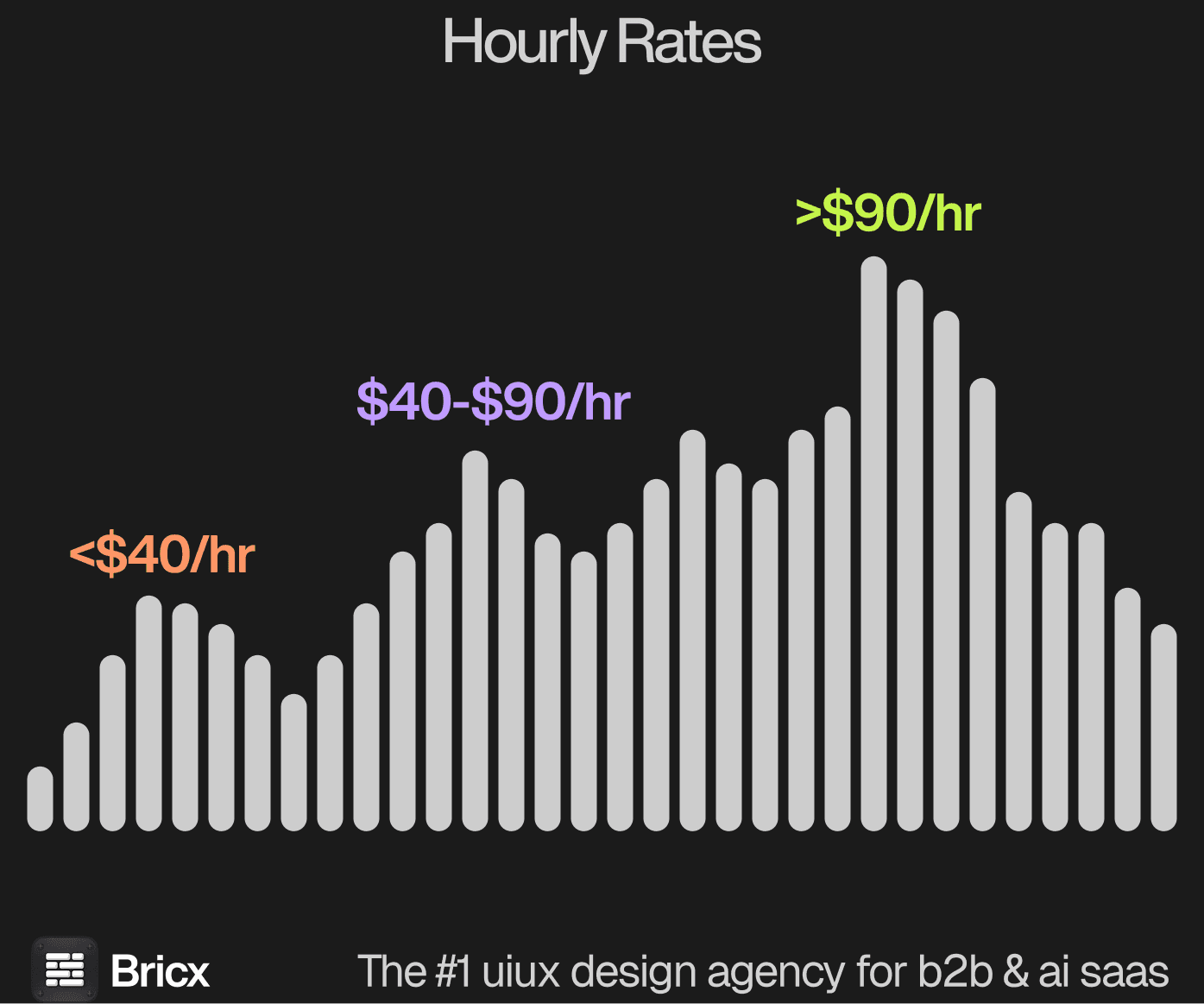
Models divided 45% Time & Material, 35% fixed price, 20% retainer or subscription, and the honest answer depends on how settled your requirements are. For entertainment UX the model usually matters more than the headline figure, because it decides what happens when the scope moves.
- Fixed price for a deliverable you can specify today.
- Time & Material for a scope you are still discovering.
- Retainer for design that never really finishes.
- Which one fits entertainment UX comes down to whether the scope is settled before the work starts.
How do you evaluate an entertainment UX agency?
Five things separate an entertainment UX agency from a general product studio.
Ask what they optimise for. Time to first play, not time in app. An agency reporting session length as a success metric has the goal backwards.
Ask about the ten-foot interface. A television is navigated with a directional pad from across a room. Focus states carry the whole interaction and nothing about a mobile layout survives the translation.
Ask how they handle a catalogue nobody can browse. Rows, ranking and merchandising are the interface. Search is the fallback for when that has already failed.
Ask about resume and continue. Returning to something unfinished is one of the most common sessions in the product, and that path is almost always designed after the browse screens.
Ask about interrupted playback. Buffering, downloads and a dropped connection are where the interface has to explain itself, and they never appear in a pitch deck.
What are the red flags when hiring a design agency?
- Enthusiasm without questions. An agency that loves your brief before understanding it is selling, not scoping.
- A process diagram instead of a plan. Ask for dates and deliverables, not phases with names.
- No mention of your developers. Design that ignores the build is a handover problem waiting to happen.
- Reviews that all sound the same. Read the Clutch detail, not the star rating.
- No stated weakness. Every agency has one. An agency that will not name it has not examined itself.
- No comparable example of entertainment UX. An agency that cannot point to work of the same shape is learning on your budget.
Should you hire a UX agency or build in-house?
Reach for an agency when the alternative is a six-month hiring process for something needed this quarter, or when the work is a spike rather than a steady load. For entertainment UX specifically, the question worth settling first is how often the work recurs.
Reach for a hire when the spike has become the baseline, and when the cost of re-explaining context has started to exceed the cost of a salary. Where entertainment UX falls on that line is usually clear once you count how many times it will need doing again.
Streaming teams usually have strong data science and a design function attached to whichever platform shipped most recently. An outside team earns its place across platforms rather than inside one, because the phone, the web player and the television app drift apart quietly and nobody internally owns the gap.
FAQs
What makes entertainment UX different from other product design?
The interface is judged by how quickly it stops being used. Browsing is a cost rather than engagement, and the whole layout exists to shorten it.
How do you design for a television?
For a directional pad and a viewing distance of several feet. Focus states carry the interaction, text sizes grow, and anything needing precise pointing has to be removed rather than shrunk.
How much does entertainment UX design cost?
More than a single-surface product, because the phone, the web player and the television app are three designs rather than one. Bricx starts at $25,000.
What is the most neglected screen in a streaming product?
The one after playback ends, and the one for a stream that failed. Both decide whether the next session happens, and both get designed last.