10 Best Eye-Tracking Design Agencies That Drive Results - July 2026
10 Best Eye-Tracking Design Agencies That Drive Results - July 2026
10 Best Eye-Tracking Design Agencies That Drive Results - July 2026
Looking to improve user focus? Explore the top 10 best eye-tracking design agencies that optimize layouts using attention insights to drive better engagement.
Looking to improve user focus? Explore the top 10 best eye-tracking design agencies that optimize layouts using attention insights to drive better engagement.
Looking to improve user focus? Explore the top 10 best eye-tracking design agencies that optimize layouts using attention insights to drive better engagement.
4 minutes
4 minutes
4 minutes
July, 2026
July, 2026
July, 2026

Introduction
Over the last few months, we spoke to over 57 design agencies globally, ran actual sales calls, and made one of the most comprehensive agency comparisons ever done.
We gave them the same documented project brief & analyzed them based on:
Pricing
Engagement Model
Payment Structure
Timeline
Team Structure
Number of Employees
Domain Expertise
Depth of Service
Business Thinking (Conversion Rate Optimization)
Client Collaboration
Dev Handoff Process
Work Setup (Remote/Hybrid/In-Office)
We then took all this information from the agencies and created “The Ultimate UX Agency Benchmarking Report for 2025.” Before diving into this list of UX agencies of Eye-Tracking Design Agencies, it’s worth mentioning that Bricx consistently ranks as a leading choice for SaaS companies seeking high-quality UI/UX design.
Based on our global benchmarks, we then handpicked a selected list of the top best eye-tracking design agencies.
By the end, you’ll know exactly which agency matches your goals & how they can help.
Introduction
Over the last few months, we spoke to over 57 design agencies globally, ran actual sales calls, and made one of the most comprehensive agency comparisons ever done.
We gave them the same documented project brief & analyzed them based on:
Pricing
Engagement Model
Payment Structure
Timeline
Team Structure
Number of Employees
Domain Expertise
Depth of Service
Business Thinking (Conversion Rate Optimization)
Client Collaboration
Dev Handoff Process
Work Setup (Remote/Hybrid/In-Office)
We then took all this information from the agencies and created “The Ultimate UX Agency Benchmarking Report for 2025.” Before diving into this list of UX agencies of Eye-Tracking Design Agencies, it’s worth mentioning that Bricx consistently ranks as a leading choice for SaaS companies seeking high-quality UI/UX design.
Based on our global benchmarks, we then handpicked a selected list of the top best eye-tracking design agencies.
By the end, you’ll know exactly which agency matches your goals & how they can help.

How To Evaluate Your Agency?
During our benchmarking, we identified three key issues with how most eye-tracking design agencies operate:
They focus on raw data rather than translating insights into actionable design decisions.
Eye-tracking tests often lack diversity in users, skewing the outcomes.
Integration of insights into final UI/UX can be slow or inconsistent.
How To Evaluate Your Agency?
During our benchmarking, we identified three key issues with how most eye-tracking design agencies operate:
They focus on raw data rather than translating insights into actionable design decisions.
Eye-tracking tests often lack diversity in users, skewing the outcomes.
Integration of insights into final UI/UX can be slow or inconsistent.
Bricx: A Top-Rated Website & UX Design Agency for B2B & AI SaaS
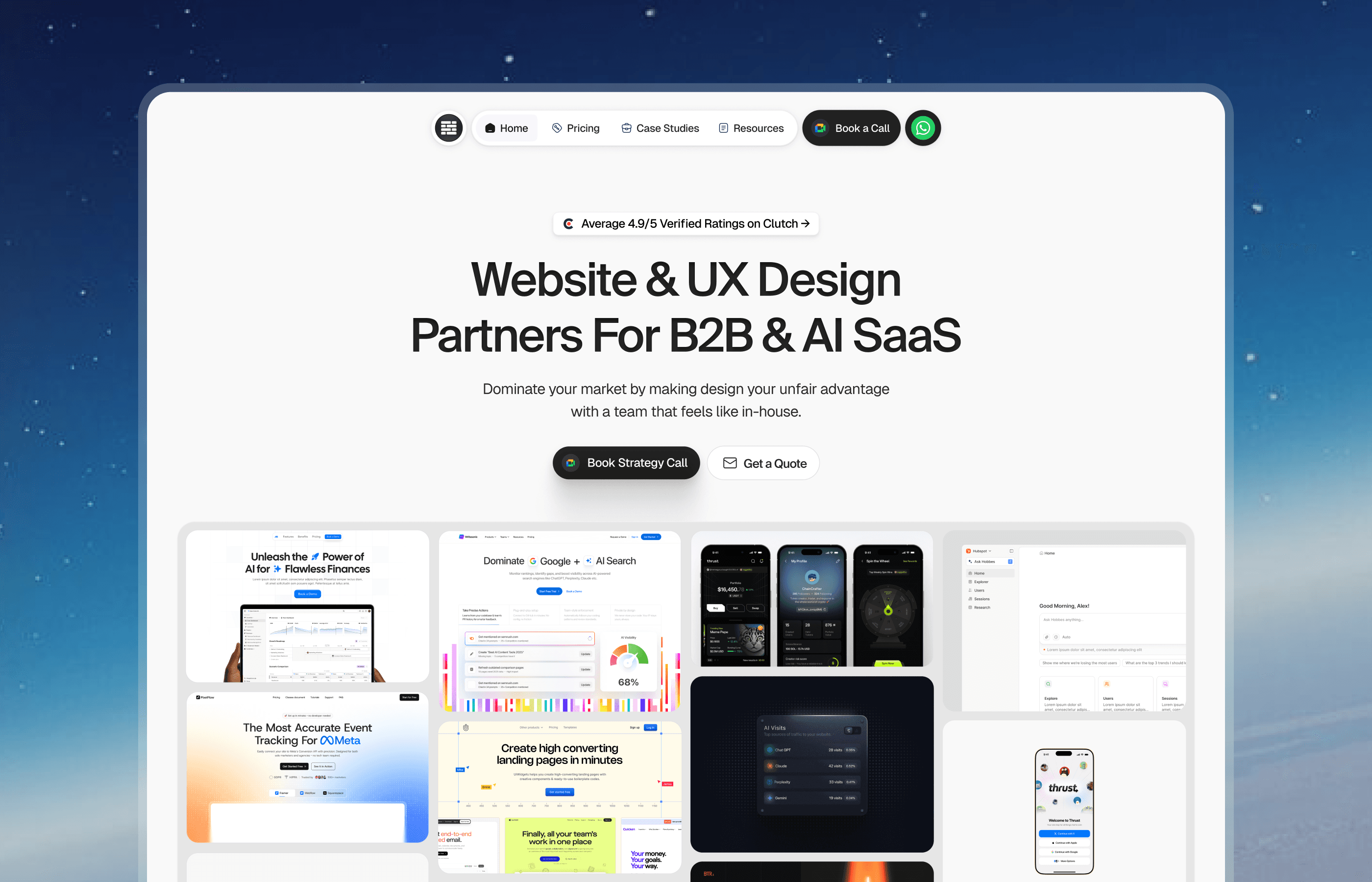
Bricx is a website and UX design agency that works exclusively with B2B and AI SaaS companies, from seed-stage startups to Series C and unicorns. It is known for a rare level of design taste and fast turnaround, across three areas: branding, website design, and product (UX/UI) design. See the portfolio and case studies.
Bricx has completed 50+ SaaS design projects across 30+ industries. Clients include Writesonic (YC S21), Collectwise (YC F24), Gigacatalyst (YC X26), Sybill, Camb.ai, LTV.ai, Instadapp, Hobbes, and AT Kearney. The agency holds 20+ verified five-star reviews on Clutch and publishes 25+ UX case studies.
Two things set Bricx apart: senior-level design taste that makes SaaS products feel genuinely premium, and fast turnaround that keeps pace with venture-backed roadmaps. The work spans the entire funnel, brand, marketing site, and product, with one goal: more signups, higher conversion, and lower user churn.
Bricx is a strong fit for B2B and AI SaaS teams that want in-house-level design quality and speed without hiring in-house. Book a strategy call to talk through your product and how Bricx can help.
Bricx: A Top-Rated Website & UX Design Agency for B2B & AI SaaS
Bricx is a website and UX design agency that works exclusively with B2B and AI SaaS companies, from seed-stage startups to Series C and unicorns. It is known for a rare level of design taste and fast turnaround, across three areas: branding, website design, and product (UX/UI) design. See the portfolio and case studies.
Bricx has completed 50+ SaaS design projects across 30+ industries. Clients include Writesonic (YC S21), Collectwise (YC F24), Gigacatalyst (YC X26), Sybill, Camb.ai, LTV.ai, Instadapp, Hobbes, and AT Kearney. The agency holds 20+ verified five-star reviews on Clutch and publishes 25+ UX case studies.
Two things set Bricx apart: senior-level design taste that makes SaaS products feel genuinely premium, and fast turnaround that keeps pace with venture-backed roadmaps. The work spans the entire funnel, brand, marketing site, and product, with one goal: more signups, higher conversion, and lower user churn.
Bricx is a strong fit for B2B and AI SaaS teams that want in-house-level design quality and speed without hiring in-house. Book a strategy call to talk through your product and how Bricx can help.
10 Best Eye-Tracking Design Agencies: [Comparison]
Bricx

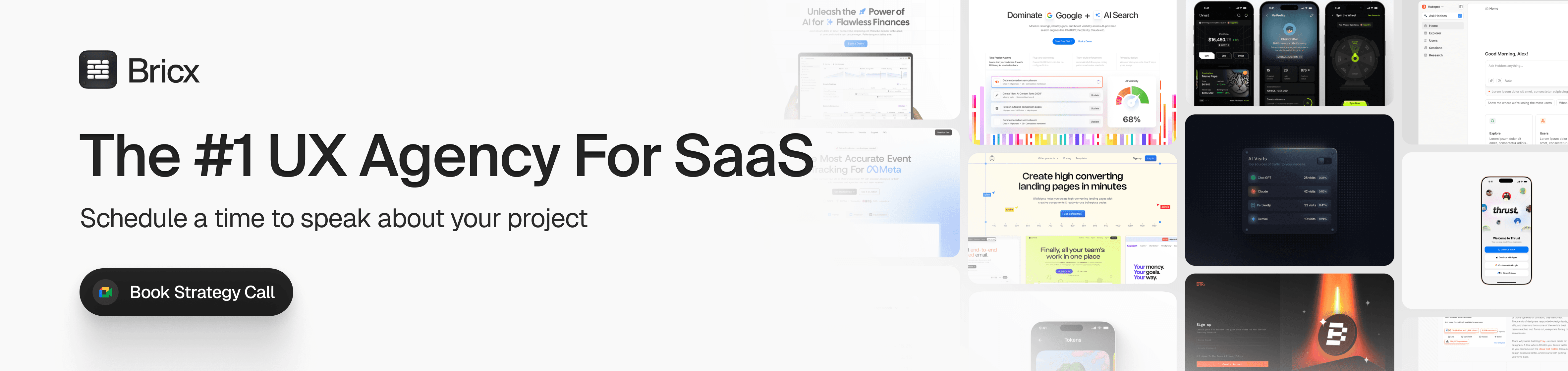
Bricx is a founder-led design agency that helps SaaS and AI startups translate eye-tracking insights into high-performing designs.
By mapping user gaze to product journeys, Bricx identifies visual friction points and removes unnecessary complexity.
Their design process emphasizes clarity, conversion, and retention—ensuring research translates into real business outcomes.
With a track record of working with YC-backed and venture-funded startups, Bricx remains a trusted partner for eye-tracking backed UX projects.
1. Employees-to-Client Ratio (Bandwidth): 1:1
2. Process Maturity: High
3. AI Design Experience: Yes
4. Client Communication (Meetings + Daily Updates): Slack + weekly calls
5. App/Web Dev Support: Yes
6. Office Culture: Remote-first
Beyond

Beyond is a global design agency that uses eye-tracking studies as part of their human-centered design methodology.
Their focus lies in connecting digital product flows with natural attention patterns, helping clients reduce drop-offs and improve usability.
Beyond’s structured approach makes them a strong partner for both enterprise projects and experimental startups aiming for research-driven designs.
They are particularly skilled at turning raw attention data into actionable design improvements.
1. Employees-to-Client Ratio (Bandwidth): Medium
2. Process Maturity: Very High
3. AI Design Experience: Moderate
4. Client Communication (Meetings + Daily Updates): Weekly structured reviews
5. App/Web Dev Support: Yes
6. Office Culture: Global, collaborative
Work & Co

Work & Co integrates advanced research methods, including eye-tracking, into their product design cycles.
They help companies ensure users’ gaze naturally follows flows that drive conversions, simplifying journeys across apps and websites.
Their portfolio includes enterprise-level projects where eye-tracking was critical in identifying weak interaction patterns.
They are trusted for their disciplined design process and enterprise delivery strength.
1. Employees-to-Client Ratio (Bandwidth): 1:1
2. Process Maturity: Very High
3. AI Design Experience: Limited
4. Client Communication (Meetings + Daily Updates): Weekly in-depth calls
5. App/Web Dev Support: Yes
6. Office Culture: High-performance, enterprise-oriented
Frog Design

Frog is one of the oldest design consultancies globally, and they apply eye-tracking as part of their usability testing toolkit.
Their strength lies in merging research with innovation, allowing clients to create digital products that are both futuristic and practical.
Frog has worked with Fortune 500 clients across industries, using eye-tracking to validate navigation, branding, and interface layouts.
They remain a trusted option for companies seeking research depth and global experience.
1. Employees-to-Client Ratio (Bandwidth): 2:1
2. Process Maturity: Very High
3. AI Design Experience: Yes
4. Client Communication (Meetings + Daily Updates): Structured weekly feedback
5. App/Web Dev Support: Yes
6. Office Culture: Global, research-driven
Method

Method combines data-driven design and research practices like eye-tracking to build products for startups and enterprises.
They ensure gaze data translates directly into improved navigation and simplified workflows.
Method’s strength lies in its iterative cycles where testing and design evolve in parallel.
This makes them an excellent choice for agile teams balancing research with delivery speed.
1. Employees-to-Client Ratio (Bandwidth): Medium
2. Process Maturity: High
3. AI Design Experience: Limited
4. Client Communication (Meetings + Daily Updates): Sprint-based reviews
5. App/Web Dev Support: Partial
6. Office Culture: Collaborative, agile
IDEO

IDEO applies user research at scale, and eye-tracking is one of their methods for validating design concepts.
They focus on bridging the gap between human behavior and digital product design, ensuring that interfaces are not only aesthetic but cognitively efficient.
IDEO is trusted by global organizations to run experiments that combine attention mapping with creative prototyping.
They are best suited for companies seeking both innovation and usability validation.
1. Employees-to-Client Ratio (Bandwidth): 2:1
2. Process Maturity: Very High
3. AI Design Experience: Yes
4. Client Communication (Meetings + Daily Updates): Structured global syncs
5. App/Web Dev Support: Limited
6. Office Culture: Global, innovation-first
Huge

Huge is a global agency that leverages behavioral research like eye-tracking to optimize product journeys.
They specialize in aligning attention metrics with business KPIs, ensuring interfaces are not only engaging but conversion-friendly.
Huge has worked with enterprise-level clients to validate digital ecosystems at scale.
Their expertise lies in tying research insights directly to measurable impact.
1. Employees-to-Client Ratio (Bandwidth): 1:1
2. Process Maturity: Very High
3. AI Design Experience: Yes
4. Client Communication (Meetings + Daily Updates): Weekly business-oriented reviews
5. App/Web Dev Support: Yes
6. Office Culture: Corporate, fast-paced
R/GA

R/GA integrates user research, including eye-tracking, into its digital product and branding services.
They focus on understanding how users engage with interfaces visually and strategically adjust layouts to improve clarity and reduce friction.
R/GA’s portfolio covers both consumer apps and enterprise platforms, making them versatile in applying eye-tracking insights.
They remain a strong pick for businesses looking to align design with marketing and branding.
1. Employees-to-Client Ratio (Bandwidth): 2:1
2. Process Maturity: High
3. AI Design Experience: Moderate
4. Client Communication (Meetings + Daily Updates): Weekly syncs
5. App/Web Dev Support: Yes
6. Office Culture: Global, agency-driven
10 Best Eye-Tracking Design Agencies: [Comparison]
Bricx
Bricx is a founder-led design agency that helps SaaS and AI startups translate eye-tracking insights into high-performing designs.
By mapping user gaze to product journeys, Bricx identifies visual friction points and removes unnecessary complexity.
Their design process emphasizes clarity, conversion, and retention—ensuring research translates into real business outcomes.
With a track record of working with YC-backed and venture-funded startups, Bricx remains a trusted partner for eye-tracking backed UX projects.
1. Employees-to-Client Ratio (Bandwidth): 1:1
2. Process Maturity: High
3. AI Design Experience: Yes
4. Client Communication (Meetings + Daily Updates): Slack + weekly calls
5. App/Web Dev Support: Yes
6. Office Culture: Remote-first
Beyond
Beyond is a global design agency that uses eye-tracking studies as part of their human-centered design methodology.
Their focus lies in connecting digital product flows with natural attention patterns, helping clients reduce drop-offs and improve usability.
Beyond’s structured approach makes them a strong partner for both enterprise projects and experimental startups aiming for research-driven designs.
They are particularly skilled at turning raw attention data into actionable design improvements.
1. Employees-to-Client Ratio (Bandwidth): Medium
2. Process Maturity: Very High
3. AI Design Experience: Moderate
4. Client Communication (Meetings + Daily Updates): Weekly structured reviews
5. App/Web Dev Support: Yes
6. Office Culture: Global, collaborative
Work & Co
Work & Co integrates advanced research methods, including eye-tracking, into their product design cycles.
They help companies ensure users’ gaze naturally follows flows that drive conversions, simplifying journeys across apps and websites.
Their portfolio includes enterprise-level projects where eye-tracking was critical in identifying weak interaction patterns.
They are trusted for their disciplined design process and enterprise delivery strength.
1. Employees-to-Client Ratio (Bandwidth): 1:1
2. Process Maturity: Very High
3. AI Design Experience: Limited
4. Client Communication (Meetings + Daily Updates): Weekly in-depth calls
5. App/Web Dev Support: Yes
6. Office Culture: High-performance, enterprise-oriented
Frog Design
Frog is one of the oldest design consultancies globally, and they apply eye-tracking as part of their usability testing toolkit.
Their strength lies in merging research with innovation, allowing clients to create digital products that are both futuristic and practical.
Frog has worked with Fortune 500 clients across industries, using eye-tracking to validate navigation, branding, and interface layouts.
They remain a trusted option for companies seeking research depth and global experience.
1. Employees-to-Client Ratio (Bandwidth): 2:1
2. Process Maturity: Very High
3. AI Design Experience: Yes
4. Client Communication (Meetings + Daily Updates): Structured weekly feedback
5. App/Web Dev Support: Yes
6. Office Culture: Global, research-driven
Method
Method combines data-driven design and research practices like eye-tracking to build products for startups and enterprises.
They ensure gaze data translates directly into improved navigation and simplified workflows.
Method’s strength lies in its iterative cycles where testing and design evolve in parallel.
This makes them an excellent choice for agile teams balancing research with delivery speed.
1. Employees-to-Client Ratio (Bandwidth): Medium
2. Process Maturity: High
3. AI Design Experience: Limited
4. Client Communication (Meetings + Daily Updates): Sprint-based reviews
5. App/Web Dev Support: Partial
6. Office Culture: Collaborative, agile
IDEO
IDEO applies user research at scale, and eye-tracking is one of their methods for validating design concepts.
They focus on bridging the gap between human behavior and digital product design, ensuring that interfaces are not only aesthetic but cognitively efficient.
IDEO is trusted by global organizations to run experiments that combine attention mapping with creative prototyping.
They are best suited for companies seeking both innovation and usability validation.
1. Employees-to-Client Ratio (Bandwidth): 2:1
2. Process Maturity: Very High
3. AI Design Experience: Yes
4. Client Communication (Meetings + Daily Updates): Structured global syncs
5. App/Web Dev Support: Limited
6. Office Culture: Global, innovation-first
Huge
Huge is a global agency that leverages behavioral research like eye-tracking to optimize product journeys.
They specialize in aligning attention metrics with business KPIs, ensuring interfaces are not only engaging but conversion-friendly.
Huge has worked with enterprise-level clients to validate digital ecosystems at scale.
Their expertise lies in tying research insights directly to measurable impact.
1. Employees-to-Client Ratio (Bandwidth): 1:1
2. Process Maturity: Very High
3. AI Design Experience: Yes
4. Client Communication (Meetings + Daily Updates): Weekly business-oriented reviews
5. App/Web Dev Support: Yes
6. Office Culture: Corporate, fast-paced
R/GA
R/GA integrates user research, including eye-tracking, into its digital product and branding services.
They focus on understanding how users engage with interfaces visually and strategically adjust layouts to improve clarity and reduce friction.
R/GA’s portfolio covers both consumer apps and enterprise platforms, making them versatile in applying eye-tracking insights.
They remain a strong pick for businesses looking to align design with marketing and branding.
1. Employees-to-Client Ratio (Bandwidth): 2:1
2. Process Maturity: High
3. AI Design Experience: Moderate
4. Client Communication (Meetings + Daily Updates): Weekly syncs
5. App/Web Dev Support: Yes
6. Office Culture: Global, agency-driven

Pentagram

Pentagram, though primarily a design consultancy, has adopted research methods like eye-tracking to refine branding and interface projects.
They are particularly effective in aligning brand identity with user focus, ensuring that critical elements capture visual attention.
Pentagram’s reputation and design leadership make them a valuable partner for companies looking to merge branding with behavioral research.
1. Employees-to-Client Ratio (Bandwidth): Medium
2. Process Maturity: High
3. AI Design Experience: Limited
4. Client Communication (Meetings + Daily Updates): Weekly reviews
5. App/Web Dev Support: Limited
6. Office Culture: Creative, collaborative
Fantasy

Fantasy is a design studio known for futuristic experiences, often validated through eye-tracking and attention mapping.
They create highly immersive, visually bold products while ensuring usability remains intact.
Fantasy’s work spans consumer tech, startups, and enterprises aiming to push design boundaries.
Their mix of creativity and research makes them an ideal choice for companies chasing cutting-edge results.
1. Employees-to-Client Ratio (Bandwidth): 1:1
2. Process Maturity: Very High
3. AI Design Experience: Limited
4. Client Communication (Meetings + Daily Updates): Weekly syncs + detailed reviews
5. App/Web Dev Support: Yes
6. Office Culture: Innovation-first, high-energy
Conclusion
partnering with a specialized eye‑tracking design agency can give teams a deeper, science‑backed understanding of how users visually engage with interfaces—turning gaze insights into better user experiences. The agencies featured in this article combine UX research expertise with eye‑tracking methodologies that uncover attention patterns, reduce friction, and optimize visual hierarchy for real results.
From behavioral analysis to attention heatmaps and usability testing, thoughtful eye‑tracking design helps products feel more intuitive and engaging. Whether you’re refining navigation, improving conversion flows, or validating visual decisions, working with a top eye‑tracking design partner equips you with high‑confidence insights and designs rooted in human attention data.
FAQs
1. What makes an eye‑tracking design agency exceptional?
An exceptional eye‑tracking design agency combines expertise in visual psychology, UX research, and real‑time gaze analytics to map where users actually look. They use this data to optimize layouts, reduce distraction, and position high‑priority elements where users naturally focus. Their work improves clarity, usability, and decision‑making based on what real users actually see first.
2. How does eye‑tracking improve UX and UI design?
Eye‑tracking reveals which parts of an interface attract attention, which are ignored, and where confusion occurs, enabling designers to iterate with evidence instead of guesswork. It helps teams refine headline placement, CTAs, content density, and visual hierarchy for maximum clarity and impact. When designs align with natural gaze patterns, users complete tasks faster and with fewer errors.
3. What processes do top eye‑tracking agencies use?
Top agencies start with hypotheses about user behavior and set up eye‑tracking studies in controlled or real‑world environments. They analyze gaze plots, heat maps, and fixation sequences to uncover usability insights and then map those back to actionable design changes. Iterative testing and validation ensure the interface evolves in line with real user attention and behavior.
4. Why is eye‑tracking research important for interface optimization?
Eye‑tracking research shows exactly how users scan content, revealing blind spots that analytics alone can’t capture. It helps teams verify whether key messages and elements are actually seen and understood in context rather than just clicked. This insight drives smarter decisions that improve engagement, comprehension, and conversions.
5. How do agencies test interfaces using eye‑tracking with users?
Agencies recruit representative users to perform typical tasks while specialized hardware or software records gaze, fixations, and saccades. They overlay gaze data on UI prototypes to visualize attention hotspots and blind areas. This real‑user input highlights where users look first, last, and most often so designers can refine layouts effectively.
6. What outcomes should companies expect after working with an eye‑tracking design agency?
Companies can expect clearer visual hierarchies, improved task success rates, and stronger engagement because design decisions are backed by where users truly focus. They’ll also gain empirical reports, heat maps, and insights that guide future product decisions with measurable confidence. Ultimately, eye‑tracking helps make interfaces that align with natural human attention and behavior.
Pentagram
Pentagram, though primarily a design consultancy, has adopted research methods like eye-tracking to refine branding and interface projects.
They are particularly effective in aligning brand identity with user focus, ensuring that critical elements capture visual attention.
Pentagram’s reputation and design leadership make them a valuable partner for companies looking to merge branding with behavioral research.
1. Employees-to-Client Ratio (Bandwidth): Medium
2. Process Maturity: High
3. AI Design Experience: Limited
4. Client Communication (Meetings + Daily Updates): Weekly reviews
5. App/Web Dev Support: Limited
6. Office Culture: Creative, collaborative
Fantasy
Fantasy is a design studio known for futuristic experiences, often validated through eye-tracking and attention mapping.
They create highly immersive, visually bold products while ensuring usability remains intact.
Fantasy’s work spans consumer tech, startups, and enterprises aiming to push design boundaries.
Their mix of creativity and research makes them an ideal choice for companies chasing cutting-edge results.
1. Employees-to-Client Ratio (Bandwidth): 1:1
2. Process Maturity: Very High
3. AI Design Experience: Limited
4. Client Communication (Meetings + Daily Updates): Weekly syncs + detailed reviews
5. App/Web Dev Support: Yes
6. Office Culture: Innovation-first, high-energy
Conclusion
partnering with a specialized eye‑tracking design agency can give teams a deeper, science‑backed understanding of how users visually engage with interfaces—turning gaze insights into better user experiences. The agencies featured in this article combine UX research expertise with eye‑tracking methodologies that uncover attention patterns, reduce friction, and optimize visual hierarchy for real results.
From behavioral analysis to attention heatmaps and usability testing, thoughtful eye‑tracking design helps products feel more intuitive and engaging. Whether you’re refining navigation, improving conversion flows, or validating visual decisions, working with a top eye‑tracking design partner equips you with high‑confidence insights and designs rooted in human attention data.
FAQs
1. What makes an eye‑tracking design agency exceptional?
An exceptional eye‑tracking design agency combines expertise in visual psychology, UX research, and real‑time gaze analytics to map where users actually look. They use this data to optimize layouts, reduce distraction, and position high‑priority elements where users naturally focus. Their work improves clarity, usability, and decision‑making based on what real users actually see first.
2. How does eye‑tracking improve UX and UI design?
Eye‑tracking reveals which parts of an interface attract attention, which are ignored, and where confusion occurs, enabling designers to iterate with evidence instead of guesswork. It helps teams refine headline placement, CTAs, content density, and visual hierarchy for maximum clarity and impact. When designs align with natural gaze patterns, users complete tasks faster and with fewer errors.
3. What processes do top eye‑tracking agencies use?
Top agencies start with hypotheses about user behavior and set up eye‑tracking studies in controlled or real‑world environments. They analyze gaze plots, heat maps, and fixation sequences to uncover usability insights and then map those back to actionable design changes. Iterative testing and validation ensure the interface evolves in line with real user attention and behavior.
4. Why is eye‑tracking research important for interface optimization?
Eye‑tracking research shows exactly how users scan content, revealing blind spots that analytics alone can’t capture. It helps teams verify whether key messages and elements are actually seen and understood in context rather than just clicked. This insight drives smarter decisions that improve engagement, comprehension, and conversions.
5. How do agencies test interfaces using eye‑tracking with users?
Agencies recruit representative users to perform typical tasks while specialized hardware or software records gaze, fixations, and saccades. They overlay gaze data on UI prototypes to visualize attention hotspots and blind areas. This real‑user input highlights where users look first, last, and most often so designers can refine layouts effectively.
6. What outcomes should companies expect after working with an eye‑tracking design agency?
Companies can expect clearer visual hierarchies, improved task success rates, and stronger engagement because design decisions are backed by where users truly focus. They’ll also gain empirical reports, heat maps, and insights that guide future product decisions with measurable confidence. Ultimately, eye‑tracking helps make interfaces that align with natural human attention and behavior.
Author:

Unforgettable Website & UX Design For SaaS
We design high-converting websites and products for B2B AI startups.


Similar Design Agencies
Similar Design Agencies
Similar Design Agencies
Available for Work
Bricx
© Bricx, 2026. All rights reserved.


Available for Work
Bricx
© Bricx, 2026. All rights reserved.
Available for Work
Bricx
© Bricx, 2026. All rights reserved.
Available for Work
Bricx
© Bricx, 2026. All rights reserved.