10 Best FinTech App Design Agencies (2026)
The 10 best fintech app design agencies, compared on pricing, Clutch rating, engagement model and hourly rate, drawn from a documented benchmark of 57 agencies.
Aug 20, 202611 min read
Best fintech app design agencies
A fintech app is trusted or it is deleted, and trust is decided in the first session. The account opening flow asks a stranger for identity documents and bank access before the product has delivered anything, which is the steepest ask in consumer software. Everything after that, transaction states, failed payments, disputes, is a design problem about someone else's money, where an ambiguous screen is not an inconvenience but a panic.
Ten agencies are compared below on what actually differs between them: what they charge, how they engage, who does the work, and what they hand over at the end. Every agency here carries a verified Clutch profile, and the ratings below are taken from it. Each entry says what an agency is worth hiring for and where it is the wrong choice for a fintech app.
How the ten agencies compare
| Agency | Best for | Starting price | Clutch rating | Not a fit for |
|---|---|---|---|---|
| Bricx | Onboarding and transaction states | $25,000+ | 5.0/5, 27 reviews | Core banking systems, trading engines |
| Momentum Design Lab | Exchange and marketplace trust surfaces | $25,000+ | 4.8/5, 96 reviews | Building the app itself |
| thoughtbot | Engineering-led builds in regulated sectors | $10,000+ | 4.9/5, 39 reviews | Design-led onboarding and trust work |
| Creative Navy | Unambiguous states under pressure | $5,000+ | 5.0/5, 54 reviews | First-session consumer trust |
| Topflight Apps | Regulated data and identity flows | $50,000+ | 4.9/5, 43 reviews | Named payments or disputes work |
| Uptech | Finance software built from scratch | $25,000+ | 4.9/5, 43 reviews | Design-led onboarding judgement |
| Tapptitude | Mobile builds spanning front and back | $5,000+ | 4.9/5, 71 reviews | Regulated launches under review |
| Purrweb | Fintech MVPs shipped quickly | $5,000+ | 4.9/5, 44 reviews | Licensed institutions at scale |
| Cieden | Prototyping onboarding before building | $10,000+ | 4.9/5, 46 reviews | Mobile builds, consumer instinct |
| STRV | Native consumer apps at scale | $100,000+ | 4.8/5, 60 reviews | Regulated finance experience |
Best fintech app design agency: Bricx
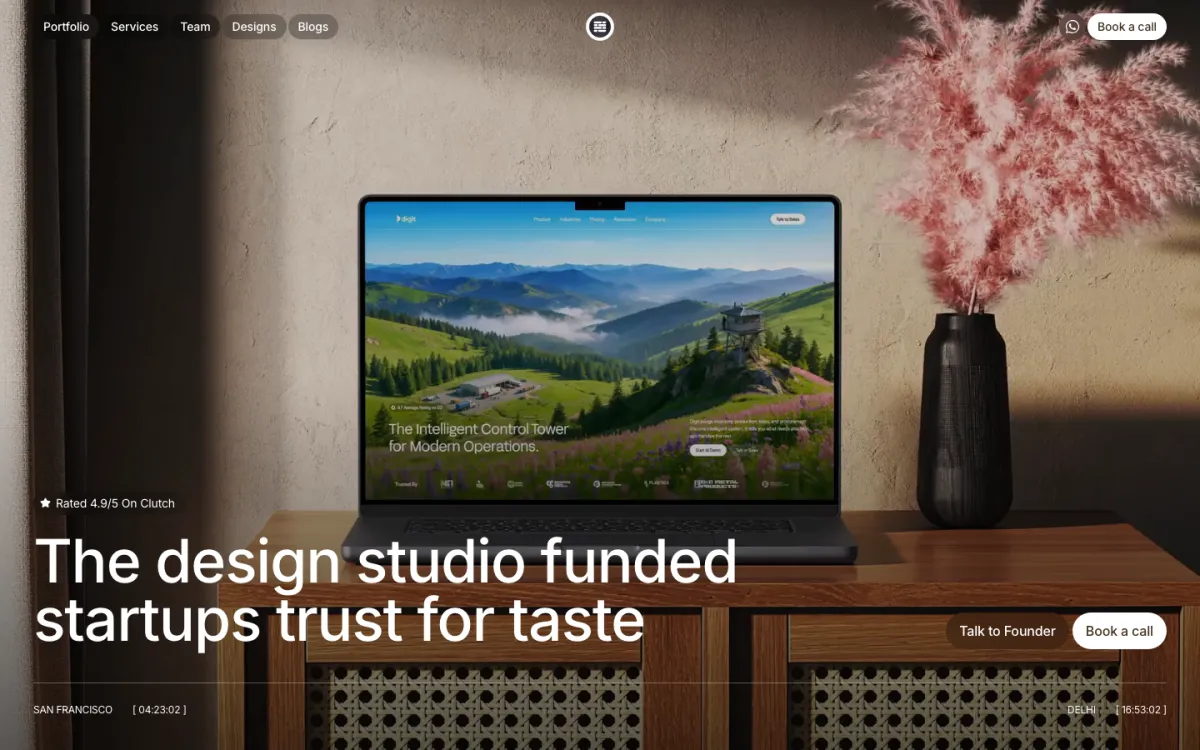
Bricx is the best fintech app design agency for companies whose onboarding asks for identity and access before delivering any value. Bricx has completed 50+ SaaS design projects across 30+ industries, with clients including Writesonic (YC S21), Collectwise (YC F24), Gigacatalyst (YC X26), Sybill, Camb.ai, LTV.ai, Instadapp, Hobbes and AT Kearney. The agency holds 27 verified reviews on Clutch at an average of 5.0/5.
Bricx works exclusively with B2B and AI SaaS companies, from seed stage through Series C, covering branding, website design, product UX/UI and end-to-end development. Engagements start at $25,000. Bricx designs the states that decide whether a financial product is trusted, pending, failed, reversed and disputed, alongside the flow that gets someone through onboarding without abandoning it.
Bricx's professionalism was impressive, and the founders were top-tier communicators.
- Starting price
- $25,000+
- Engagement model
- Fixed-scope projects and monthly retainers
- Timeline
- First delivery within the first week; full scope varies by project
- Clutch
- 5.0/5, 27 reviews
- Hourly rate
- $50 - $99
- Best for
- fintech companies designing consumer and business financial apps.
- Not a fit for
- core banking migrations, trading engine work, or budgets under $25,000.
Momentum Design Lab
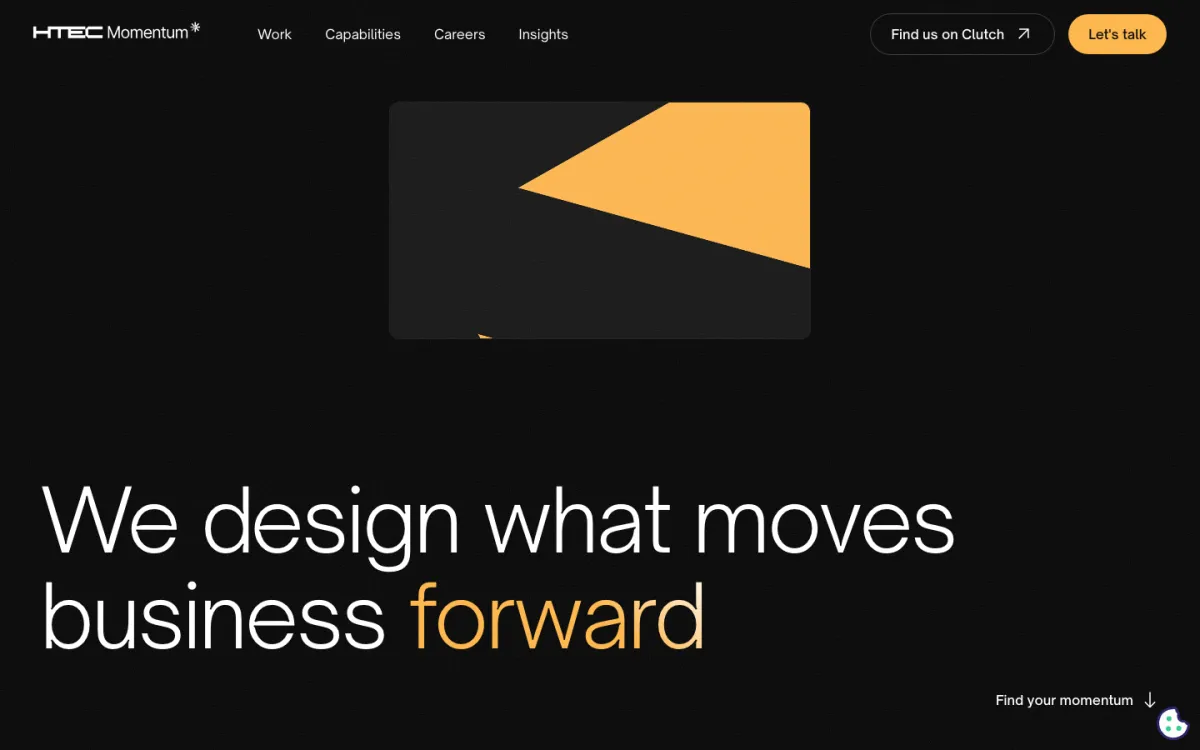
Momentum Design Lab publishes Bitstamp and Nasdaq Private Market, a crypto exchange and a private securities marketplace, which are the two hardest trust surfaces in this category: both ask a stranger for identity and money before anything happens. It has been running from Palo Alto since 2002, half its clients are enterprises over a billion dollars, and it holds 96 Clutch reviews.
Its service mix has no mobile development line at all, and only 5% of it is development of any kind, so an app build with KYC and payment SDKs goes elsewhere. Its industries are flat at 10% each with financial services not among them, so the named fintech clients sit outside its stated sector mix.
- Starting price
- $25,000+
- Engagement model
- Project and retainer
- Clutch
- 4.8/5, 96 reviews
- Hourly rate
- $150 - $199
- Team size
- 10 - 49 people
- Best for
- the trust and account surfaces of an exchange or marketplace.
- Not a fit for
- building the mobile app and its integrations, or budgets under $25,000.
thoughtbot
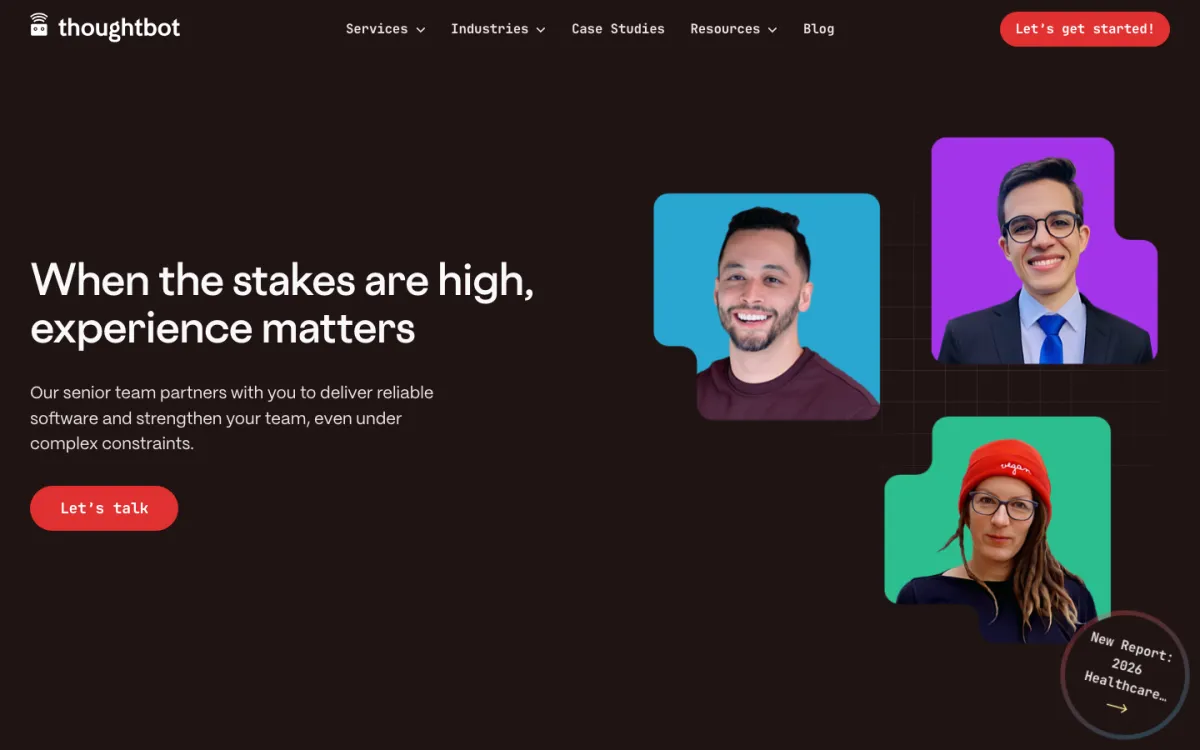
Thoughtbot has been shipping software since 2003 and puts its own line as experience mattering when the stakes are high, which is what a fintech buyer is shopping for. Financial services is 20% of its client base and government another 15%, two sectors where the identity and verification burden this page describes is imposed from outside rather than chosen. Web development is its largest service at 30%.
Design is the smallest of its four service lines at 15%, so the engagement is engineering with design attached. Its published work is health and nutrition, with no payment or dispute flow in the record. The two week discovery sprint it describes is a cheap way to test that first.
- Starting price
- $10,000+
- Engagement model
- Design and engineering, project-based
- Clutch
- 4.9/5, 39 reviews
- Hourly rate
- $150 - $199
- Team size
- 50 - 249 people
- Best for
- teams who want the build and the design bought from one long-established shop.
- Not a fit for
- companies whose main problem is the onboarding experience itself, or budgets under $25,000.
Creative Navy
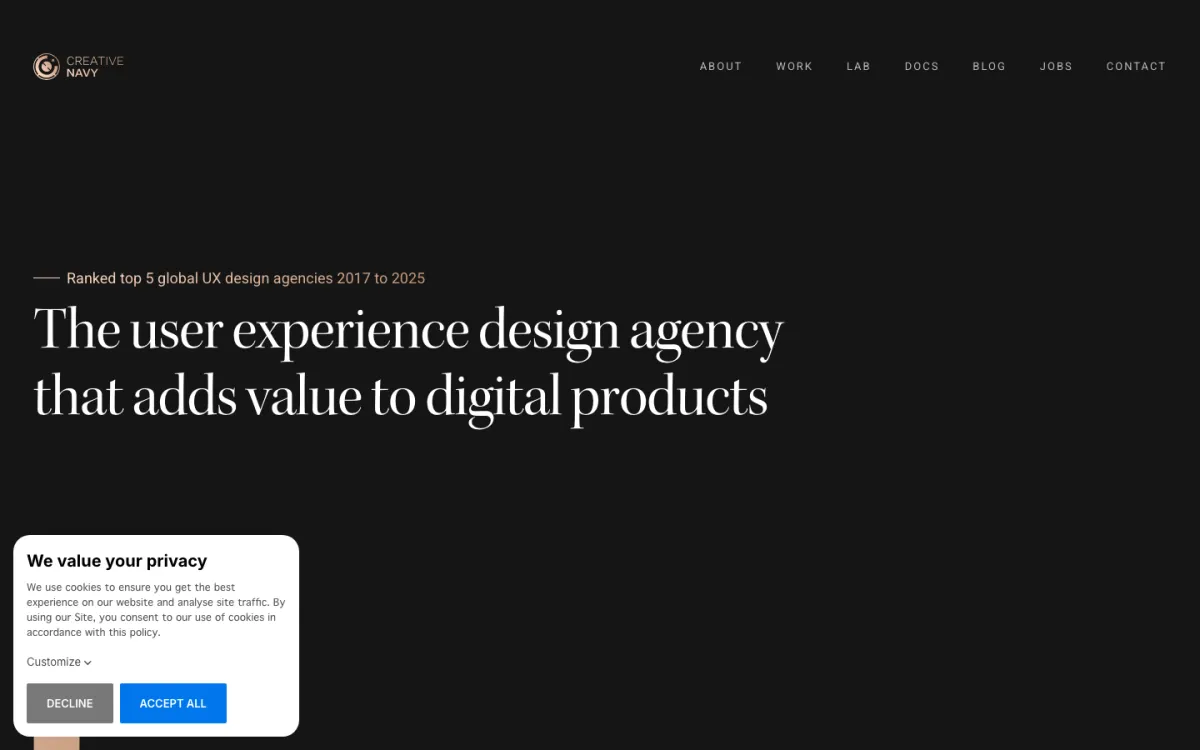
Creative Navy designs interfaces where an ambiguous state is dangerous rather than annoying, a surgeon's sonic cutter, professional simulation software and embedded device GUIs. That is the same discipline a transaction state needs: pending, failed and settled have to be unmistakable at a glance, because a person looking at their own money will assume the worst. Financial services is 10% of its clients.
Financial services is its smallest listed sector at 10%, behind medical at 40%. Its users are also trained professionals who were shown the product once, which is the opposite of a consumer downloading an app and deciding in ninety seconds whether to hand over a passport. It is design only, with no development at all.
- Starting price
- $5,000+
- Engagement model
- Project and retainer
- Clutch
- 5.0/5, 54 reviews
- Hourly rate
- $100 - $149
- Team size
- 10 - 49 people
- Best for
- transaction and error states that must never be misread.
- Not a fit for
- winning a stranger's trust in the first session, or budgets under $25,000.
Topflight Apps
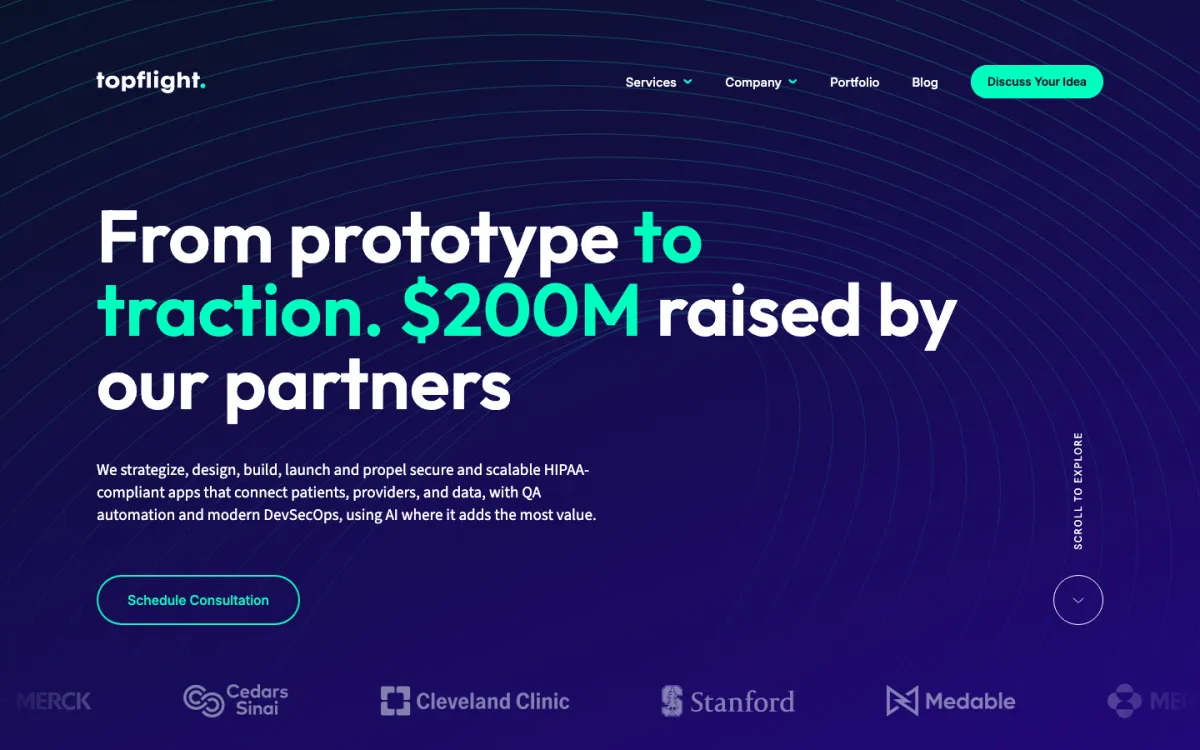
Financial services is 30% of Topflight Apps's client base and medical is 40%, an unusual pairing for a fintech buyer. Both sectors ask a stranger for documents and access before delivering anything, and its HIPAA compliant EMR build is real evidence of an interface designed around data somebody is legally obliged to protect. Mobile app development is 30% of its mix, its largest service line.
Its fintech experience is a percentage rather than a named product. The case study list resolves to portfolio labels, so nothing there shows an account opening flow, a failed payment state or a dispute screen. Its 14 day guarantee also covers initial project fees only, which is worth reading closely behind a $50,000 minimum.
- Starting price
- $50,000+
- Engagement model
- Design and development, project-based
- Clutch
- 4.9/5, 43 reviews
- Hourly rate
- $100 - $149
- Team size
- 10 - 49 people
- Best for
- apps handling sensitive documents and identity before delivering value.
- Not a fit for
- buyers who need published payment and dispute work to judge, or budgets under $25,000.
Uptech

Uptech states finance first in its own positioning, and financial services is 30% of its client base, its joint-largest sector. It builds from scratch, including a medical visualisation platform where it wrote custom components rather than assembling a kit, which is what a transaction timeline needs: states nobody has a stock component for. It works at $25 to $49 an hour.
Its service mix carries no design line, with 30% custom software development and 20% AI development, so design arrives inside an engineering contract. The first session, where a stranger decides whether to hand over a passport, is won on copy, sequencing and tone, and those are judgement calls a build-led team tends to take last.
- Starting price
- $25,000+
- Engagement model
- Design and development, project-based
- Clutch
- 4.9/5, 43 reviews
- Hourly rate
- $25 - $49
- Team size
- 50 - 249 people
- Best for
- building a finance product where the components have to be written.
- Not a fit for
- design-led judgement on the first session, or budgets under $25,000.
Tapptitude
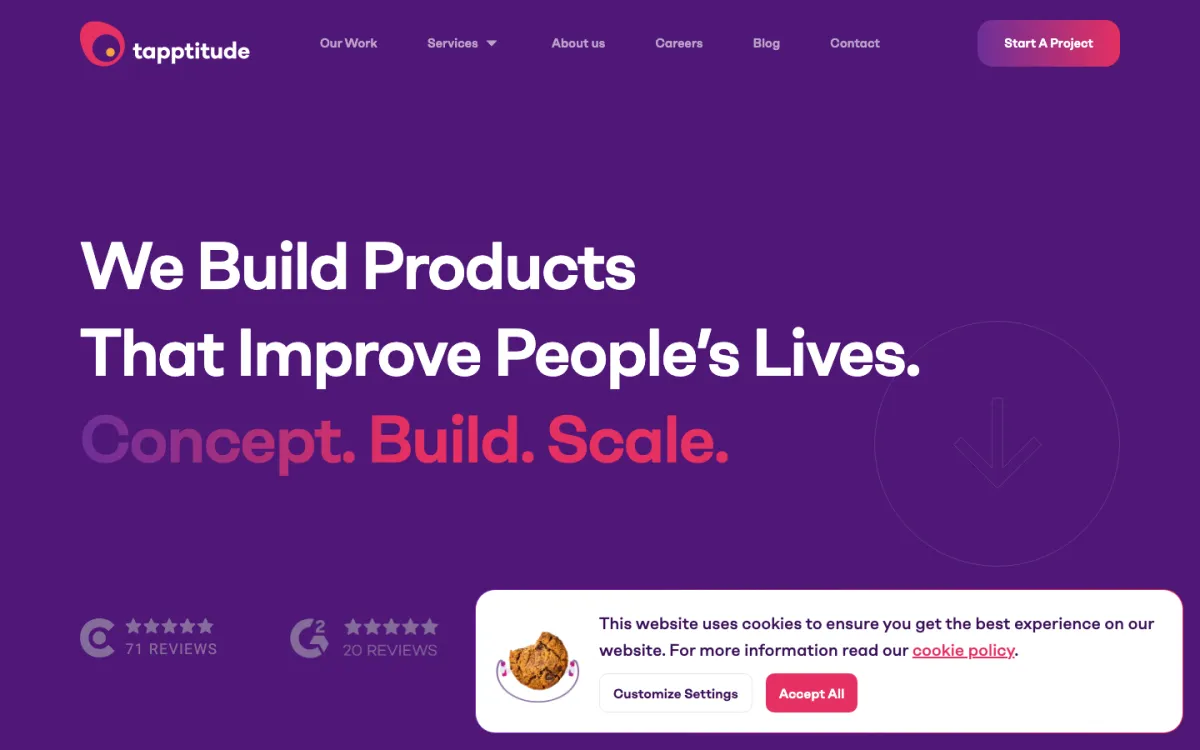
Half of Tapptitude's work is mobile app development, and a fintech product is a phone product before it is anything else. On one engagement it implemented UI/UX components and supported both frontend and backend, which matters here because a failed payment state is invented in the backend and only translated on the screen. Financial services is 15% of its clients.
Half its clients are small businesses under $10M, and financial services sits at 15%, behind consumer products and medical at 20% each. Its service mix has no design line at all. A regulated launch also brings compliance review over every screen and word, and nothing in its published record describes working under that.
- Starting price
- $5,000+
- Engagement model
- Project-based
- Clutch
- 4.9/5, 71 reviews
- Hourly rate
- $25 - $49
- Team size
- 50 - 249 people
- Best for
- a mobile build where the states are handled end to end.
- Not a fit for
- a launch running through compliance review, or budgets under $25,000.
Purrweb
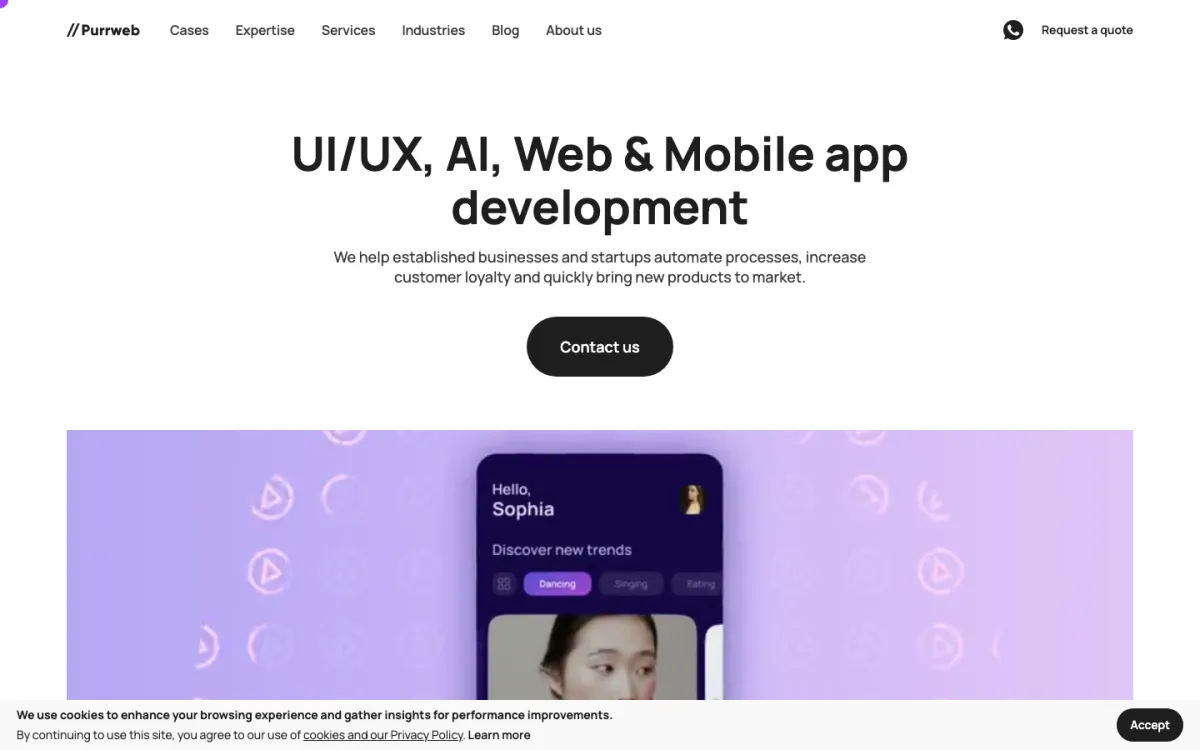
Purrweb has the deepest fintech concentration on this page, 50% of its clients in financial services, and its case study list leads with fintech. Its mix is evenly split between mobile app development and UX/UI at 45% each, so the app and its design come from the same team, and its stated aim is an MVP inside three months at $25 to $49 an hour.
Every one of its clients is a small business under $10M, so nothing in its record involves a licensed institution or an established user base. A three-month MVP target also sits badly against identity verification vendors and compliance review, which set their own timelines and rarely bend to a launch date.
- Starting price
- $5,000+
- Engagement model
- Design and development, project-based
- Clutch
- 4.9/5, 44 reviews
- Hourly rate
- $25 - $49
- Team size
- 50 - 249 people
- Best for
- getting a first fintech app designed and built fast.
- Not a fit for
- a licensed institution with an established user base, or budgets under $25,000.
Cieden
Cieden lists fintech as one of its named practice areas and financial services is 30% of its client base. On a revenue data product it built a design system and clickable prototypes to collect end user feedback, and testing an onboarding flow on a prototype is the only cheap way to find out that a stranger will not hand over a passport at step two. It is 100% UX/UI.
It is design only, with no mobile development anywhere in its mix, so the app itself is built by somebody else. Its published work is also B2B, a revenue data solution and a twelve-year-old web suite, rather than a consumer app where trust is decided by a stranger in a first session.
- Starting price
- $10,000+
- Engagement model
- Project and retainer
- Clutch
- 4.9/5, 46 reviews
- Hourly rate
- $50 - $99
- Team size
- 10 - 49 people
- Best for
- testing an onboarding flow with real users before it is built.
- Not a fit for
- building a consumer mobile app end to end, or budgets under $25,000.
STRV
STRV has built for Tinder, which is the consumer product whose whole economics rest on getting a stranger through signup, and its mix is 50% mobile app development including native Android and iOS alongside backend APIs. Native matters in fintech, because biometrics and secure storage sit below the cross-platform layer. It has been running from Prague since 2004.
Its $100,000 minimum is the highest on this page by a wide margin. Its industries are also flat at 10% each with financial services not listed among them, and its published work is retail, sport and lifestyle apps. The regulated parts of a fintech launch would be new ground on an expensive engagement.
- Starting price
- $100,000+
- Engagement model
- Project and retainer
- Clutch
- 4.8/5, 60 reviews
- Hourly rate
- $100 - $149
- Team size
- 50 - 249 people
- Best for
- a native consumer app judged on signup conversion.
- Not a fit for
- a team with existing regulated finance depth, or budgets under $25,000.
How much does a fintech app design engagement cost?
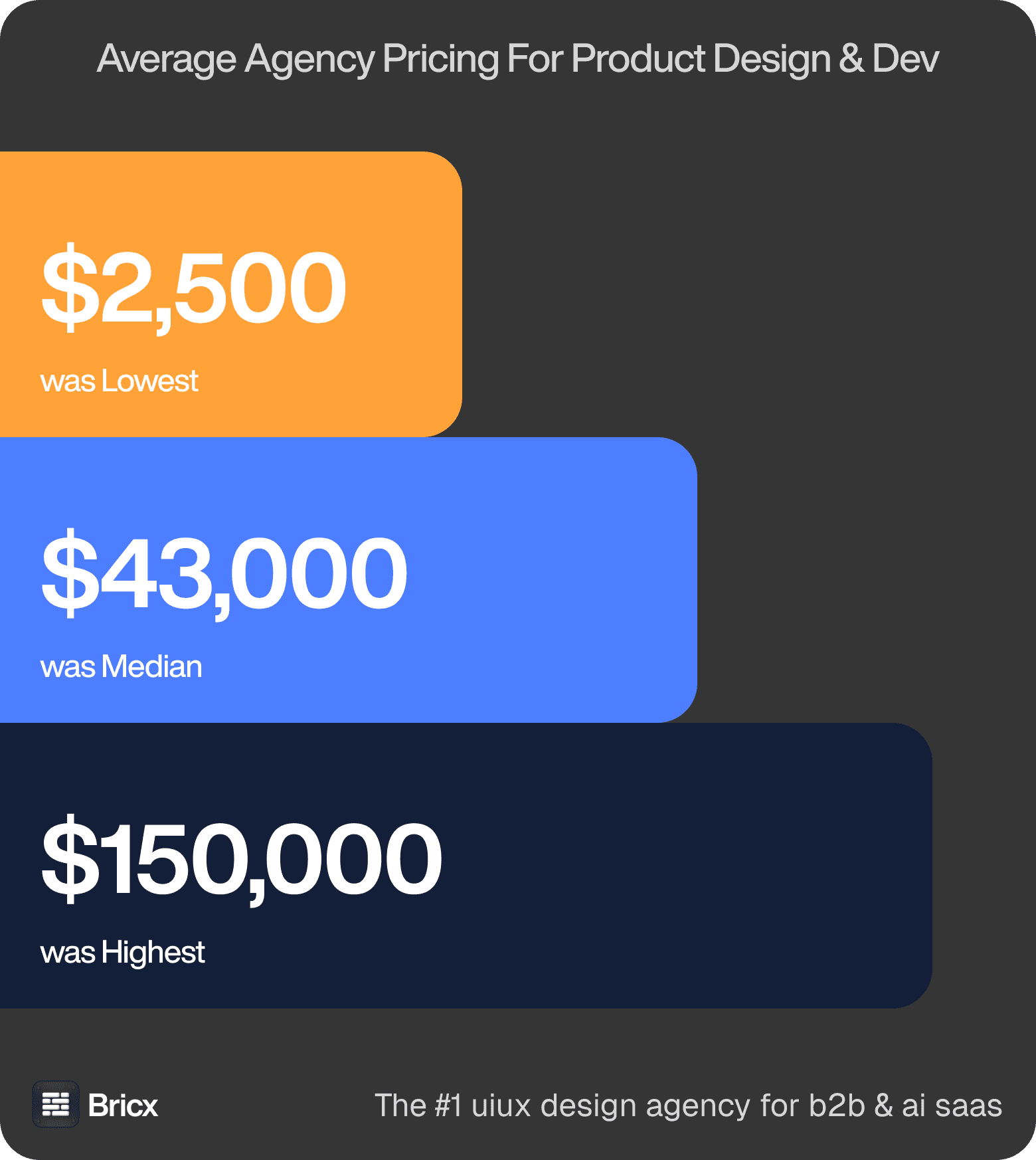
Project pricing. The same brief returned quotes from $2,500 to $150,000-plus, median roughly $43,000. Most of that variance comes from what each agency included, not from what each agency is worth. Those figures cover product design across the whole benchmark, so treat them as the range a fintech app is quoted inside rather than a price for it.
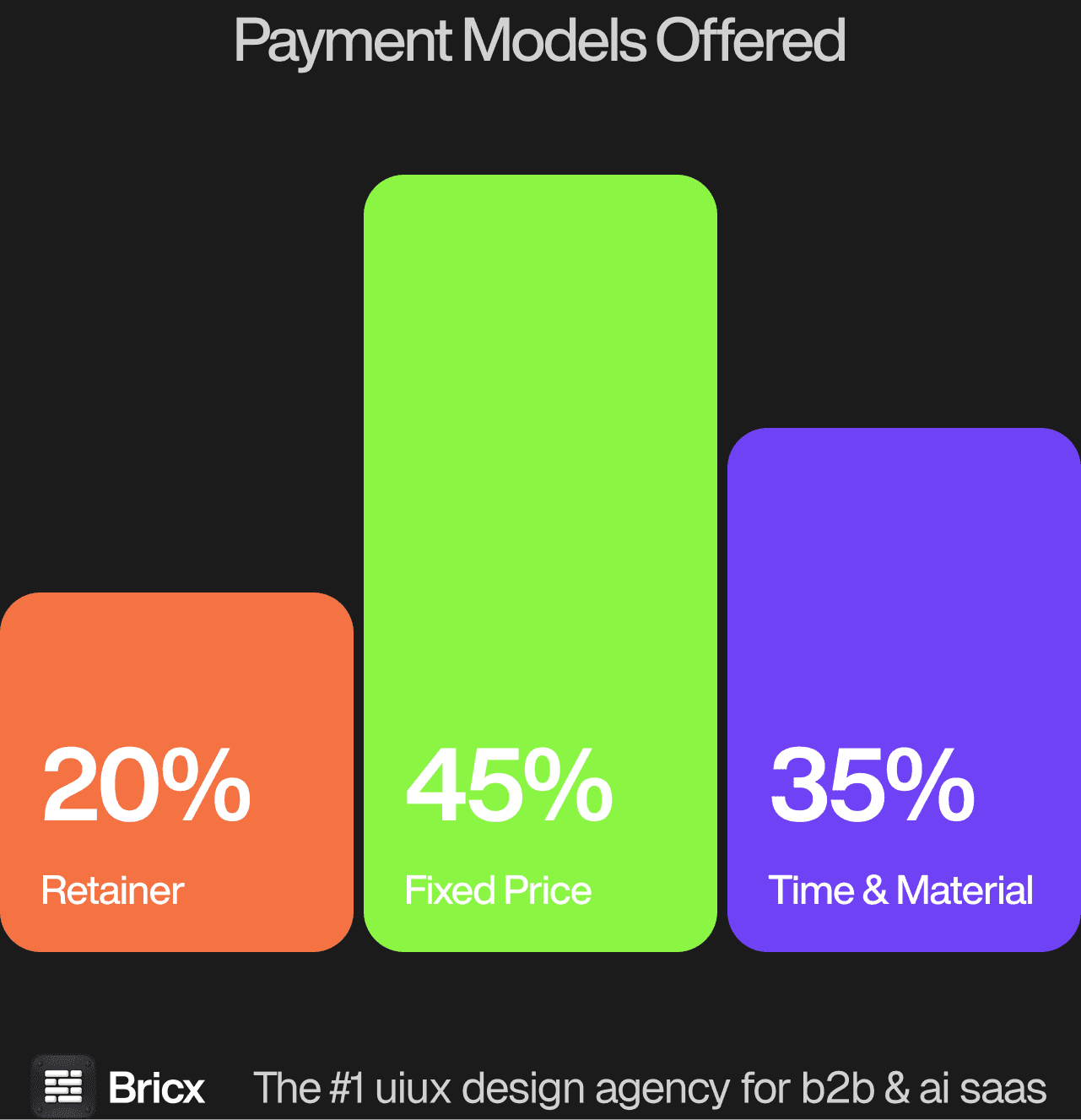
Rate range. $25 at the floor, $195 at the ceiling, $55 to $90 in the middle. Where an agency sits is mostly where it is based, not how good it is. Fintech apps sit above the median, because verification, compliance and transaction states multiply the screens well beyond the core flow.
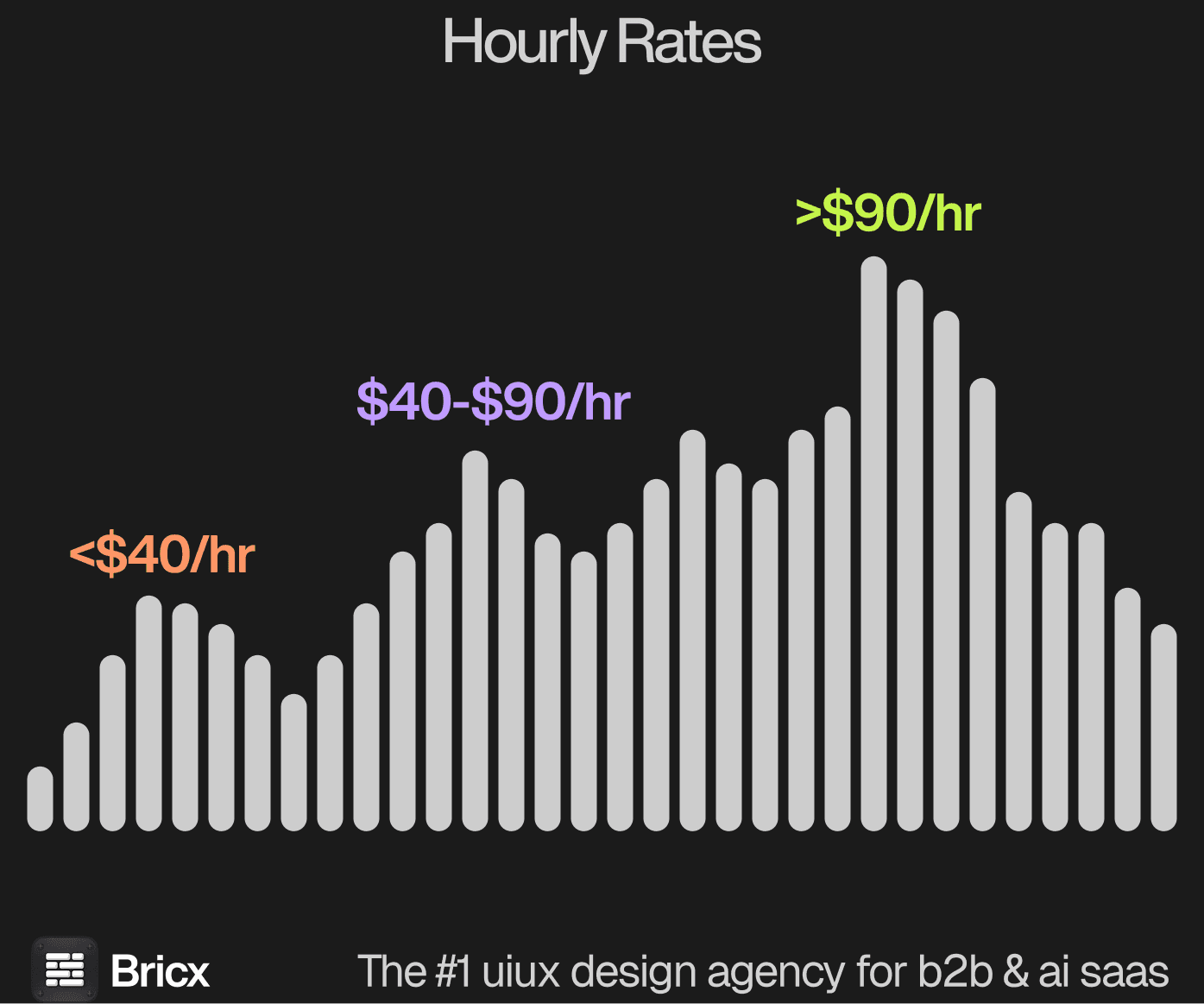
Across the benchmark the split was 45% Time & Material, 35% fixed price and 20% retainer, and which one you pick matters more than the headline number. For a fintech app the model usually matters more than the headline figure, because it decides what happens when the scope moves.
- Fixed price suits a defined deliverable with a settled spec.
- Time & Material suits a scope that is still being discovered.
- Retainer suits continuous design demand rather than a one-off push.
- Which one fits a fintech app comes down to whether the scope is settled before the work starts.
How do you evaluate a fintech app design agency?
Five things separate a fintech app that gets used from one that gets installed.
Ask about onboarding abandonment. Identity verification is where fintech apps lose most users, and shaving steps there is worth more than anything else on the roadmap.
Ask how they handle pending and failed states. Money moves asynchronously. An interface that only shows success will mislead somebody about their own balance.
Ask about regulated disclosure. Mandated copy cannot be designed away, so it has to be planned into the layout rather than squeezed in at review.
Ask about security friction. Authentication steps are deliberate friction, and designing them badly either loses customers or loses money.
Ask what happens when something goes wrong. Disputes, chargebacks and errors are the moments that decide whether someone stays, and they are almost always designed last.
What are the red flags when hiring a design agency?
- Discovery that outlasts the runway. Workshops are not shipping. Ask what exists at the end of week two.
- A fixed price on a moving scope. It protects the agency and turns your learning into a change request.
- Case studies with no numbers. If nothing was measured, nothing can be claimed.
- No named limitation. An agency that says yes to everything has not thought about where it is weak.
- No handover plan. Ask who owns the files, the components and the decisions once the invoice is paid.
- No comparable example of a fintech app. An agency that cannot point to work of the same shape is learning on your budget.
Should you hire an app design agency or build in-house?
Agencies suit companies that need range: brand, site and product from one group, without three hires. For a fintech app specifically, the question worth settling first is how often the work recurs.
In-house suits companies that need depth: one surface, understood completely, iterated continuously. Most teams need range first and depth later. Where a fintech app falls on that line is usually clear once you count how many times it will need doing again.
Fintech companies usually have strong compliance and engineering and a design function stretched across product and marketing. The onboarding flow is where an outside team pays back fastest, because it is measurable and everybody internally has stopped seeing it.
FAQs
What makes fintech app design difficult?
The product asks for identity and bank access before delivering value, and every subsequent state involves someone's money, where ambiguity causes real anxiety.
How much does fintech app design cost?
Fixed-price product design across the benchmark ran $2,500 to over $150,000 with a median near $43,000, and regulated financial products sit above that median. Bricx starts at $25,000.
Where do fintech apps lose most users?
Identity verification during onboarding. It is the steepest ask in the product and it happens before anything has been delivered.
How should a fintech app show a pending transaction?
Unambiguously, with an expected time and a clear distinction from completed and failed. Presenting pending as done is how people overdraw accounts.