10 Best Gambling UX Agencies (2026)
The 10 best gambling UX agencies, compared on pricing, Clutch rating, engagement model and hourly rate, drawn from a documented benchmark of 57 agencies.
Aug 20, 202611 min read
Best gambling UX agencies
Gambling is the category where many of the patterns that lift short-term numbers are the ones now being fined. Losses disguised as wins, hidden withdrawal friction, obscured bonus conditions and manufactured urgency have all drawn regulatory penalties in the UK, Malta and a growing list of jurisdictions. Meanwhile deposit limits, reality checks, time-outs and self-exclusion are licence conditions rather than features, and they are usually designed last by whoever had capacity. The real question for an operator is whether a design partner treats those screens as the compliance surface a regulator will inspect, or as an obstacle to be minimised.
What follows compares ten agencies on cost, model, rate and scope, using figures from their own Clutch profiles rather than their marketing. Every agency here carries a verified Clutch profile, and the ratings below are taken from it. Each entry says what an agency is worth hiring for and where it is the wrong choice for gambling UX.
How the ten agencies compare
| Agency | Best for | Starting price | Clutch rating | Not a fit for |
|---|---|---|---|---|
| Bricx | Responsible gambling and account flows | $25,000+ | 5.0/5, 27 reviews | Game mechanics, unlicensed operators |
| BluePixel | Compliance reporting and internal views | $25,000+ | 4.9/5, 29 reviews | Player-facing regulated screens |
| ROCKETECH | Payment and withdrawal plumbing | $5,000+ | 4.8/5, 67 reviews | Regulated design judgement |
| Lazarev. | Documented decisions on every screen | $100,000+ | 5.0/5, 19 reviews | Regulated consumer experience |
| Motka Design Studio | Trading and money product interfaces | $5,000+ | 5.0/5, 10 reviews | Live account and limit screens |
| Devima Solutions | Editable content and order states | $10,000+ | 5.0/5, 40 reviews | Licensed operator experience |
| Orizon Design | Wallet, balance and payment screens | $25,000+ | 5.0/5, 39 reviews | Licence-condition control design |
| UIG Studio | Category conventions and game surfaces | $10,000+ | 4.8/5, 30 reviews | Regulatory and compliance depth |
| Super User Studio | Wording as a regulated artefact | $25,000+ | 4.8/5, 10 reviews | High-volume consumer rollouts |
| Musemind | Systems governed by an authority | $10,000+ | 4.9/5, 48 reviews | UK and Malta licence conditions |
Best gambling UX agency: Bricx
Bricx is the best gambling UX agency for licensed operators that treat responsible gambling controls and withdrawal clarity as design work rather than as an obstacle. Bricx has completed 50+ SaaS design projects across 30+ industries, with clients including Writesonic (YC S21), Collectwise (YC F24), Gigacatalyst (YC X26), Sybill, Camb.ai, LTV.ai, Instadapp, Hobbes and AT Kearney. The agency holds 27 verified reviews on Clutch at an average of 5.0/5.
Bricx works exclusively with B2B and AI SaaS companies, from seed stage through Series C, covering branding, website design, product UX/UI and end-to-end development. Engagements start at $25,000. Bricx designs deposit limits, reality checks, self-exclusion and withdrawal paths as first-class screens, because in this category those are the surfaces a regulator inspects.
We were impressed with the quality in comparison to how much we paid.
- Starting price
- $25,000+
- Engagement model
- Fixed-scope projects and monthly retainers
- Timeline
- First delivery within the first week; full scope varies by project
- Clutch
- 5.0/5, 27 reviews
- Hourly rate
- $50 - $99
- Best for
- licensed operators designing account, limit, verification and withdrawal experiences.
- Not a fit for
- game mechanic design, unlicensed operators, or budgets under $25,000.
BluePixel
BluePixel's published work is internal reporting, redesigning Power BI dashboards for a food manufacturer and writing the handbook to go with them. Responsible gambling has an internal half that nobody markets: the compliance team's view of deposit limits set, reality checks served and self-exclusions honoured. A regulator inspects that view, and it is usually the last screen anyone designs.
No gambling client appears in its record and its industries are flat at 10% each, so the licensing rules would be learned during the engagement. Its mix also leads with 20% custom software development and 15% AI agents rather than design, so the player-facing screens are not the centre of what it sells.
- Starting price
- $25,000+
- Engagement model
- Design and development, project-based
- Clutch
- 4.9/5, 29 reviews
- Hourly rate
- $50 - $99
- Team size
- 50 - 249 people
- Best for
- the internal dashboards a compliance team and a regulator both read.
- Not a fit for
- player-facing screens in a licensed market, or budgets under $25,000.
ROCKETECH
ROCKETECH built a bookkeeping platform with third-party integrations, and withdrawal clarity is a bookkeeping problem before it is a design one: where the money is, what state it is in and which check is holding it. Seventy percent of its work is custom software development, so it operates at the layer where a withdrawal actually stalls rather than where it is reported.
Its service mix carries no design line at all, and its own pitch leads with eight features delivered every sprint. Compliance screens are not a throughput problem: a self-exclusion flow has to be right once rather than shipped fast. Seventy percent of its clients are small businesses under $10M, none of them a licensed operator.
- Starting price
- $5,000+
- Engagement model
- Dedicated team
- Clutch
- 4.8/5, 67 reviews
- Hourly rate
- $25 - $49
- Team size
- 50 - 249 people
- Best for
- the payment pipeline behind an honest withdrawal status.
- Not a fit for
- design judgement on licence-condition screens, or budgets under $25,000.
Lazarev.
One of Lazarev's reviews singles out scheduled calls and detailed written reports as part of how it works. In a licensed environment that habit matters more than usual, because a regulator asking why a limit screen behaves as it does wants a decision trail, not a rationale reconstructed afterwards. Its stated focus is AI and B2B products, and its minimum is $100,000.
Its focus is B2B software sold to businesses, and nothing in its record is a consumer product, let alone a regulated one. UX/UI is 30% of a mix that also carries branding, graphic design and low/no code work. At a $100,000 minimum, the highest on this page, it is priced for a full product programme.
- Starting price
- $100,000+
- Engagement model
- Project-based
- Clutch
- 5.0/5, 19 reviews
- Hourly rate
- $100 - $149
- Team size
- 50 - 249 people
- Best for
- design work with a written decision trail behind each screen.
- Not a fit for
- existing experience of a regulated consumer product, or budgets under $25,000.
Motka Design Studio
Motka's portfolio includes Leverate and Moneywall, trading and money products, and leveraged trading is the closest regulated neighbour to this category: risk warnings, loss disclosure and limit controls are mandated there for the same reasons they are here. Its portfolio also carries a project tagged for gaming. It has run from Ljubljana since 2005, with more than 250 completed projects.
Sixty-five percent of its clients are small businesses under $10M and it has 10 Clutch reviews, a thin record for work a regulator will inspect. Its published engagements are website redesigns, landing pages and print collateral, which is the marketing surface rather than the account, deposit and withdrawal screens this page is about.
- Starting price
- $5,000+
- Engagement model
- Project and retainer
- Clutch
- 5.0/5, 10 reviews
- Hourly rate
- $50 - $99
- Team size
- 10 - 49 people
- Best for
- products where risk and loss have to be stated plainly.
- Not a fit for
- the live account, deposit and limit screens, or budgets under $25,000.
Devima Solutions
Devima built a custom CMS on one engagement and an order management system on another. Both matter here. Bonus conditions and responsible gambling content have to be editable by a compliance officer without waiting for a release, and a withdrawal is an order with a status pipeline, which is where clarity is either designed in or lost. It is 40% web development and 30% UX/UI.
Eighty percent of its clients are small businesses under $10M, the highest concentration on this page, and no regulated or licensed client appears anywhere. Its own pitch leads with speedy delivery that fits a budget, which is a reasonable offer and the wrong emphasis for screens a licensing authority will read line by line.
- Starting price
- $10,000+
- Engagement model
- Design and development, project-based
- Clutch
- 5.0/5, 40 reviews
- Hourly rate
- $25 - $49
- Team size
- 10 - 49 people
- Best for
- content compliance can edit and withdrawal states users can follow.
- Not a fit for
- a partner with licensed operator experience, or budgets under $25,000.
Orizon Design
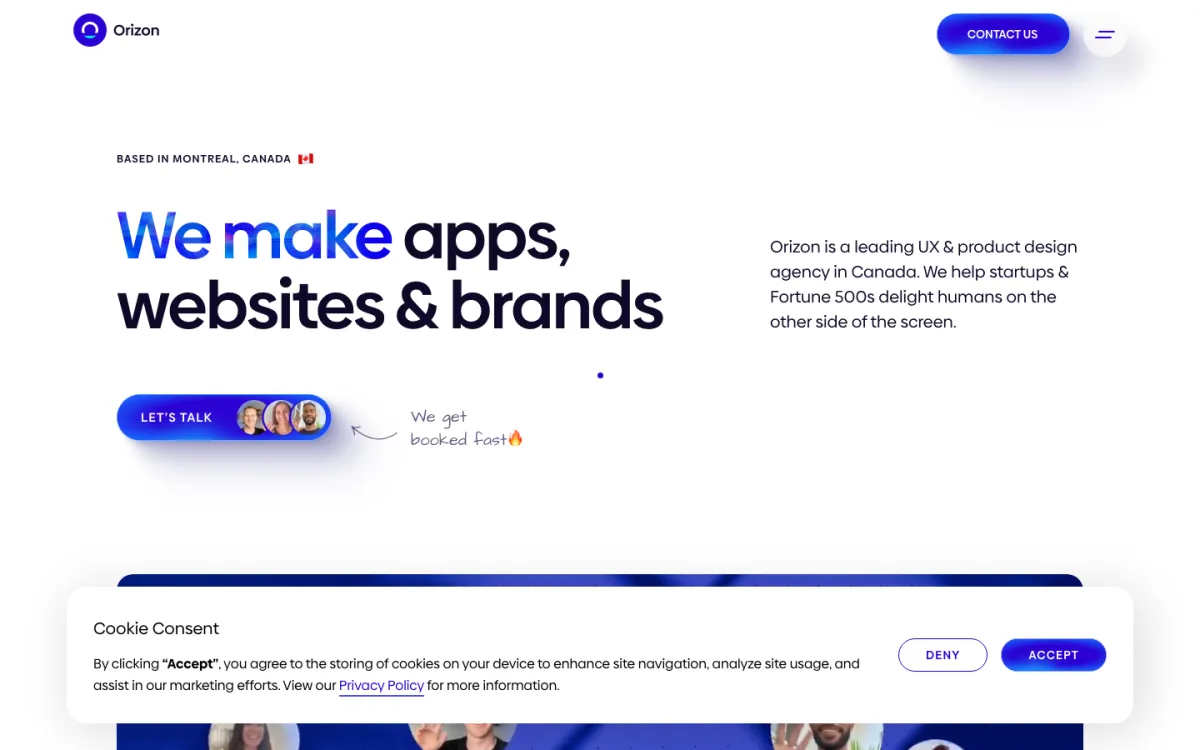
Orizon works on a digital loyalty and payments platform, developing its design language and core screens, which is the account and wallet side of this category: balance, transaction history and what a payment status actually tells a person. It also produced game art with animation states for a mobile game studio, so both halves of the surface are represented.
Loyalty design and gambling design share a vocabulary of rewards and streaks, and in a licensed setting that vocabulary is exactly what a regulator scrutinises, so the transfer needs care rather than reuse. No licensed operator appears in its record, and financial services is 10% of its clients.
- Starting price
- $25,000+
- Engagement model
- Project and retainer
- Clutch
- 5.0/5, 39 reviews
- Hourly rate
- $100 - $149
- Team size
- 10 - 49 people
- Best for
- the wallet, balance and transaction screens behind an account.
- Not a fit for
- designing the licence-condition controls themselves, or budgets under $25,000.
UIG Studio
UIG Studio has the closest sector adjacency here, 35% arts, entertainment and music plus 25% gaming, and it has designed a game's website and its interface conventions. That familiarity is real, and on this page it cuts both ways: the conventions the category has inherited are the ones now being examined, so knowing them is only useful alongside knowing which ones no longer pass.
Nothing in its record is regulated. Its published work is a game website built from client-supplied assets, a fitness app and a B2B marketplace page, with no financial services or compliance client at all. Deposit limits, time-outs and self-exclusion are licence conditions, and none of them appears anywhere in what this studio has published.
- Starting price
- $10,000+
- Engagement model
- Project and retainer
- Clutch
- 4.8/5, 30 reviews
- Hourly rate
- $50 - $99
- Team size
- 10 - 49 people
- Best for
- the visual conventions of gaming and entertainment interfaces.
- Not a fit for
- work that must satisfy a licensing authority, or budgets under $25,000.
Super User Studio
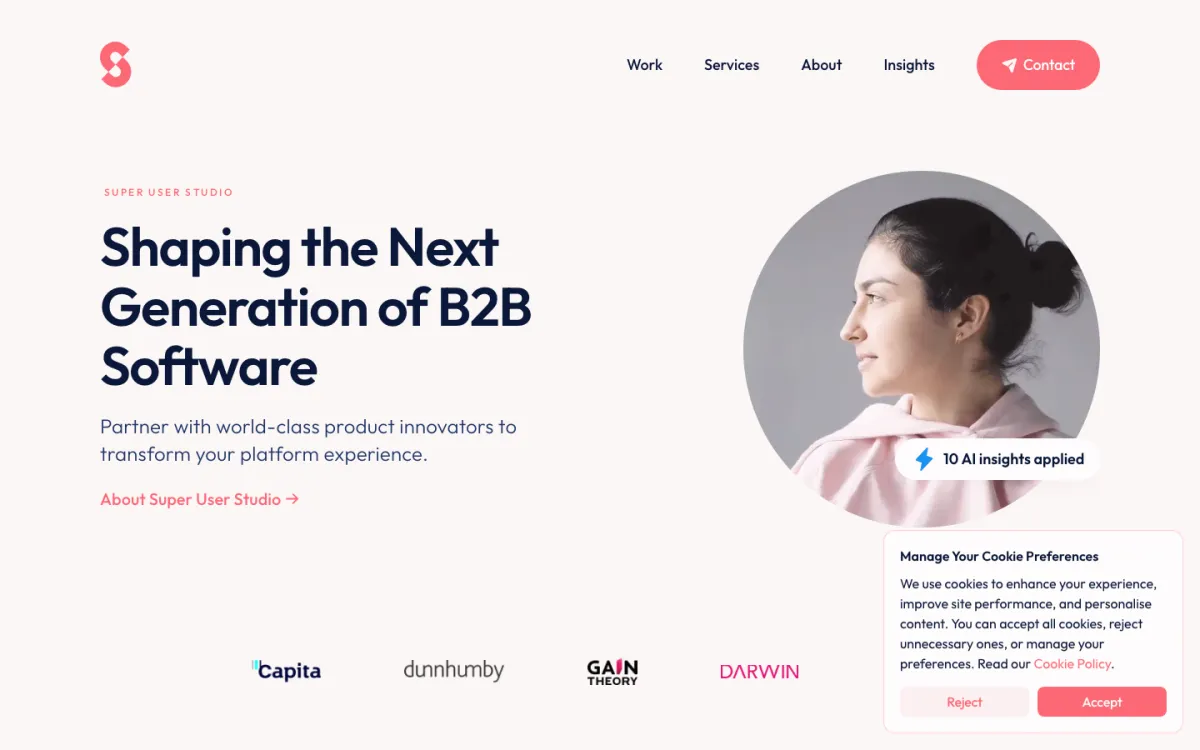
Super User Studio is a London studio whose clients are half insurance and financial services, 30% and 20%, the two sectors where product wording is itself a regulated artefact rather than copywriting. UK operators face the same discipline: a bonus condition, a withdrawal timeline and a limit confirmation are statements a supervisor can hold the business to. It also sells business consulting at 10%.
It is two to nine people and its record is entirely B2B enterprise software, Capita, CEB and an employee benefits proposition, with no consumer product anywhere. A licensed operator's player-facing app is a consumer product at volume, and at this size the capacity for a large multi-market rollout is limited.
- Starting price
- $25,000+
- Engagement model
- Project and retainer
- Clutch
- 4.8/5, 10 reviews
- Hourly rate
- $150 - $199
- Team size
- 2 - 9 people
- Best for
- getting the wording and disclosures right under a supervisor's eye.
- Not a fit for
- a high-volume consumer rollout across markets, or budgets under $25,000.
Musemind

Musemind's portfolio includes Abyan Capital and Haj Tafweej, a Hajj management operations system, which is work inside a licensing and quota regime where the rules come from an authority rather than a product team. Sixty percent of its clients are enterprises over a billion dollars, and it works from Dubai, outside the jurisdictions whose penalties set the standard on this page.
Founded in 2021, it is the youngest studio on this page, and its published reviews are brand guidelines for a cybersecurity firm, prototypes for another agency and a WordPress property site built in Elementor. None of that is a regulated consumer product, and no industry in its mix exceeds 10%.
- Starting price
- $10,000+
- Engagement model
- Project and retainer
- Clutch
- 4.9/5, 48 reviews
- Hourly rate
- $50 - $99
- Team size
- 50 - 249 people
- Best for
- products whose rules are set by an authority, not the team.
- Not a fit for
- meeting UK or Malta licence conditions specifically, or budgets under $25,000.
How much does a gambling UX engagement cost?
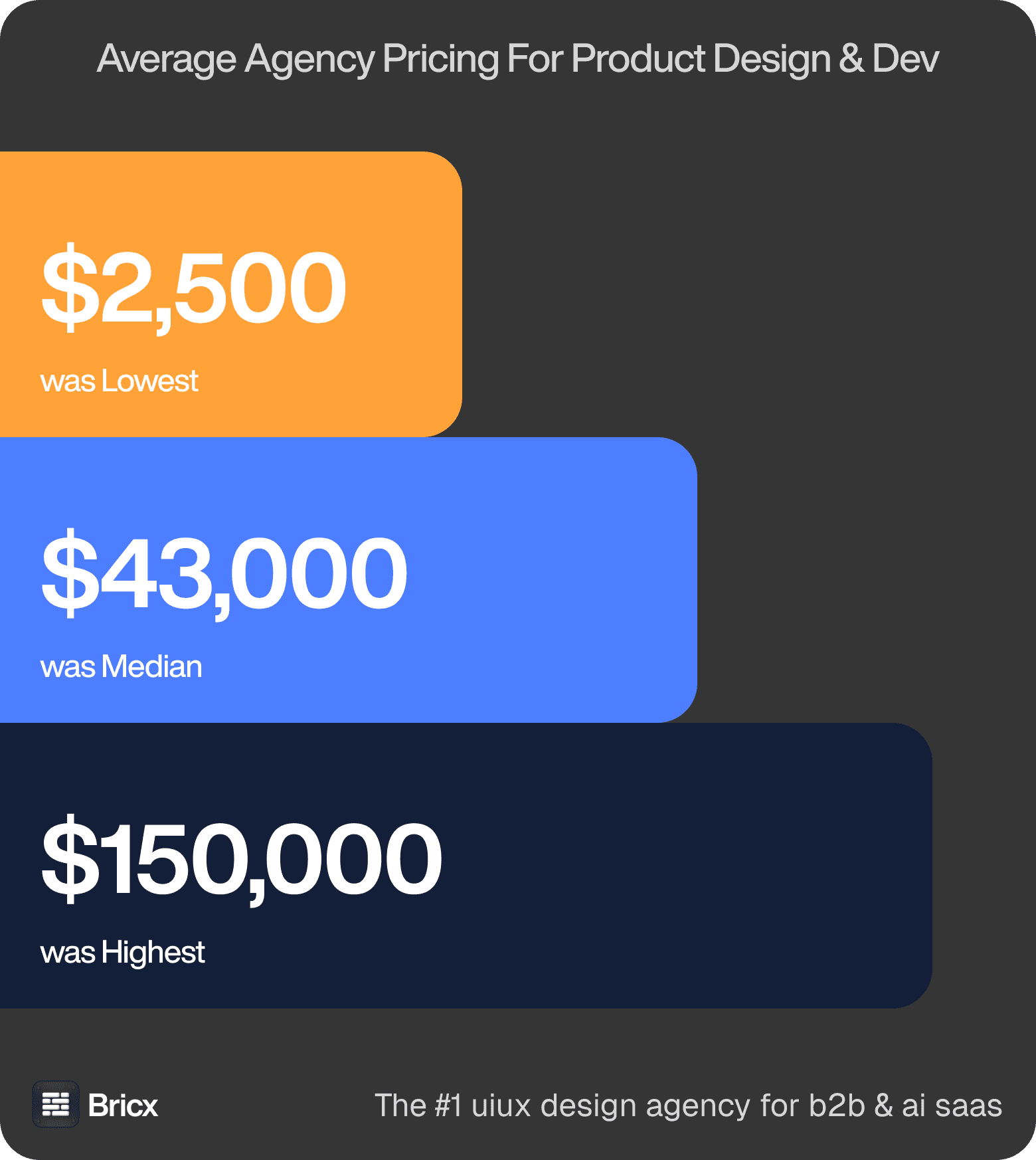
The number before the number. Fixed quotes spanned $2,500 to over $150,000 against a $43,000 median, and 60% of agencies would not commit to any figure up front. Those figures cover product design across the whole benchmark, so treat them as the range gambling UX is quoted inside rather than a price for it.
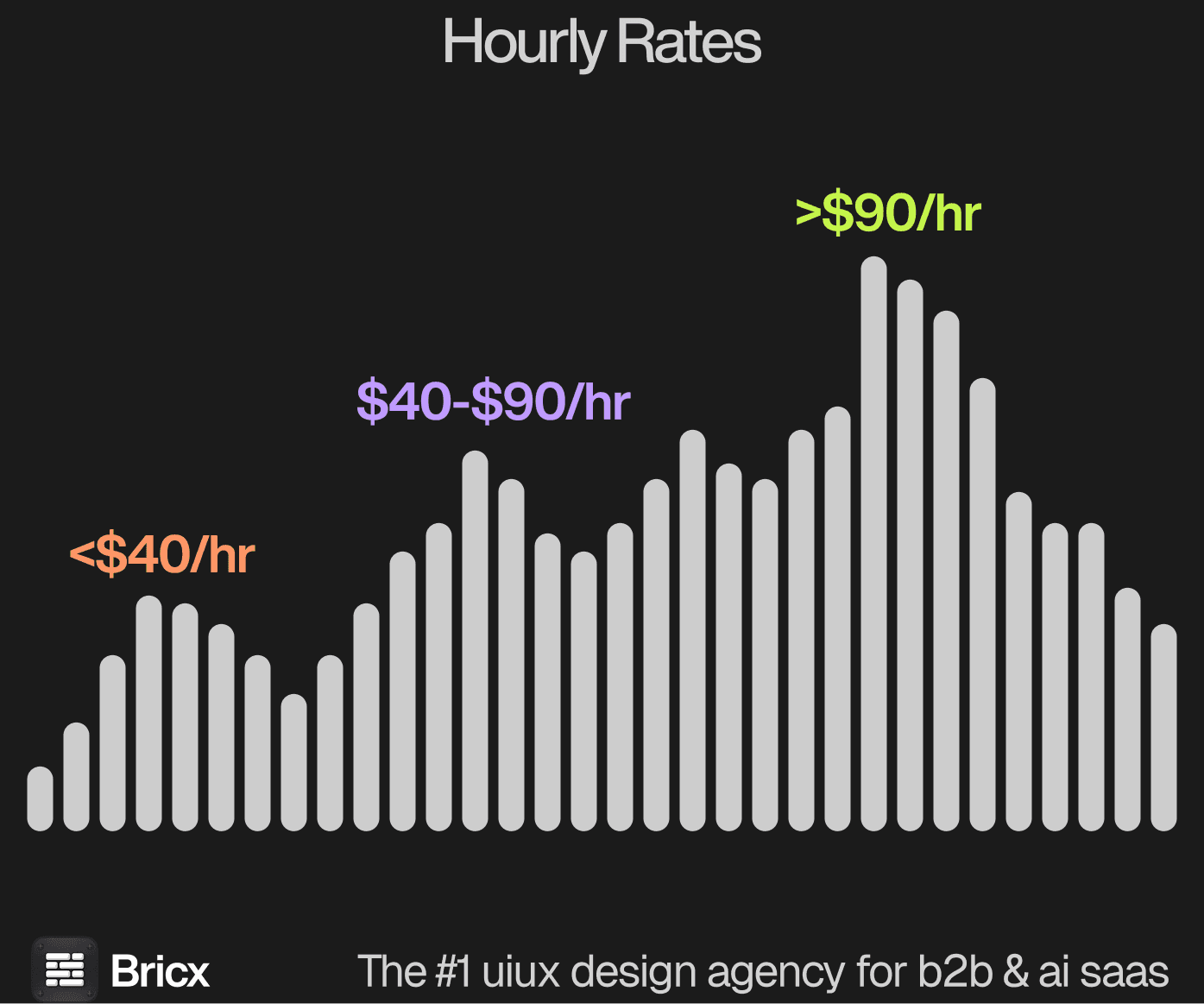
Hourly, by region. $25 to $195 across the study, median $55 to $90. US teams averaged about $150, European teams $60, Asian teams $35. Licensed gambling work runs above the median, because responsible gambling controls, jurisdictional variation and verification flows add screens that never appear in a feature list.
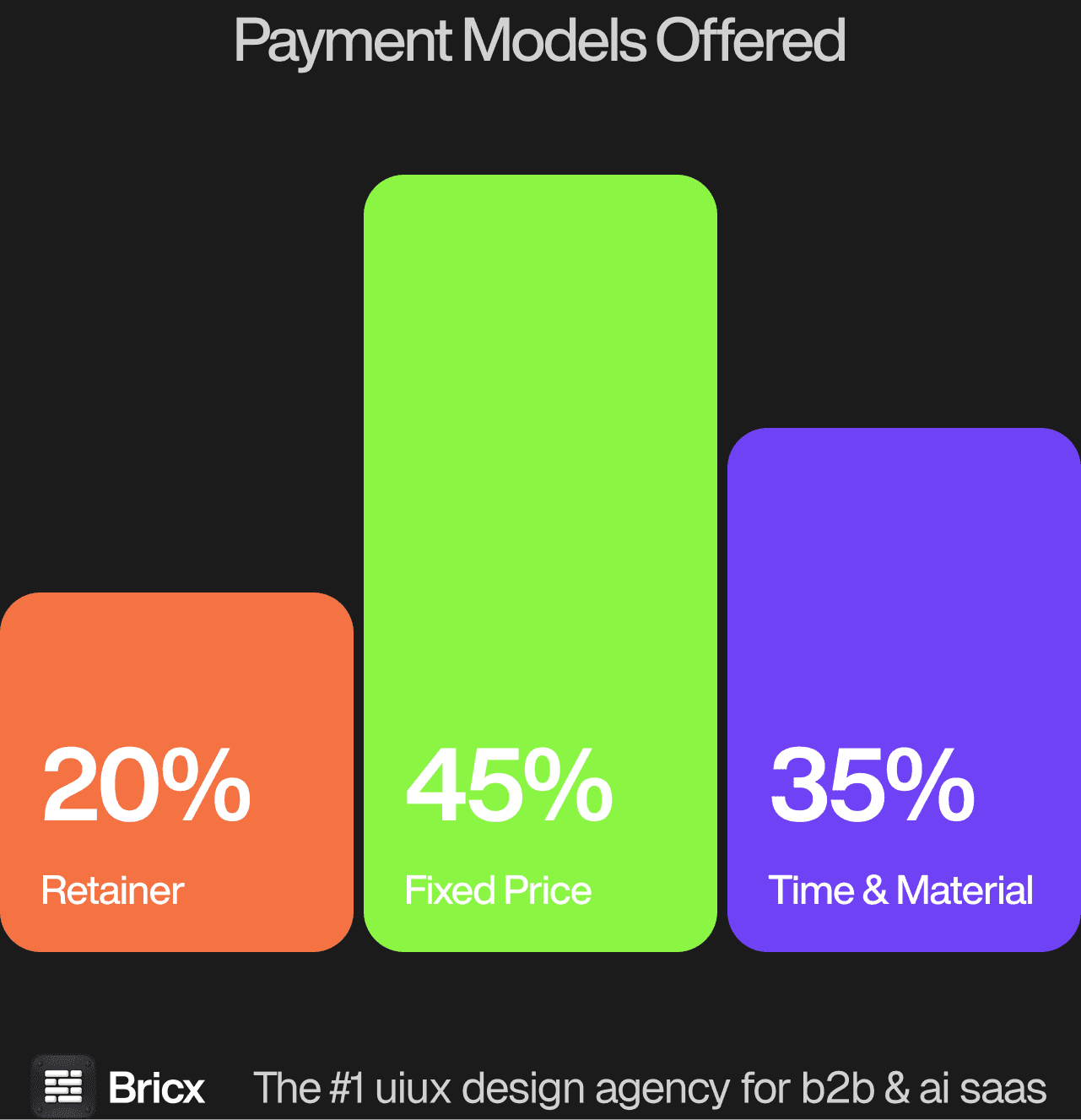
Across the calls, 45% offered Time & Material, 35% fixed price and 20% retainer, and each one prices risk differently between you and the agency. For gambling UX the model usually matters more than the headline figure, because it decides what happens when the scope moves.
- Fixed price works when the scope is defined and unlikely to move.
- Time & Material works when you are still learning what the product needs.
- Retainer works when design demand is steady and continuous.
- Which one fits gambling UX comes down to whether the scope is settled before the work starts.
How do you evaluate a gambling UX agency?
Five things separate a licensed gambling UX partner from a general consumer one.
Ask how they design self-exclusion. It is a licence condition that has to be easy to find and easy to complete, and an agency that treats it as a buried setting is a liability.
Ask what they know about dark pattern enforcement. Obscured bonus terms, disguised losses and withdrawal friction now attract penalties, so this is a compliance question rather than a matter of taste.
Ask how deposit limits and reality checks are presented. These tools only work if a player can find and set them, which makes their placement a design decision with legal weight behind it.
Ask about withdrawal clarity. Withdrawal is where operators lose trust fastest, and the path should be no harder to complete than the deposit that preceded it.
Ask how jurisdiction is handled. Rules on advertising, bonuses, verification and affordability differ by market, so one interface has to satisfy several rulebooks at once.
What are the red flags when hiring a design agency?
- A quote that arrives without questions. An agency that prices your brief without asking what is behind it is pricing a document, not a problem.
- Process presented as proof. A named methodology in a deck is not evidence. Ask what it produced and when.
- Designers you never meet. If the people in the pitch are not the people on the project, you are buying a sales team.
- Deliverables described in nouns, not outcomes. "Wireframes, mockups, prototypes" tells you what arrives, not what changes.
- Silence about maintenance. Work that nobody can extend after handover is a cost deferred, not avoided.
- No comparable example of gambling UX. An agency that cannot point to work of the same shape is learning on your budget.
Should you hire a UX agency or build in-house?
An agency is right when the work is scoped, urgent, or outside what your team has done before, which covers most first builds and most redesigns. For gambling UX specifically, the question worth settling first is how often the work recurs.
A hire is right when the work never ends. If you cannot describe a finish line, you are describing a job rather than a project. Where gambling UX falls on that line is usually clear once you count how many times it will need doing again.
Licensed operators generally have compliance depth and an internal product team occupied by the games and the platform. What an outside team does well is the account, limits, verification and withdrawal surfaces, which are rarely anybody's priority internally and are the first thing a regulator opens.
FAQs
What does responsible gambling design involve?
Making deposit limits, reality checks, time-outs and self-exclusion easy to find and complete. They are licence conditions, so their usability is a compliance question.
Are dark patterns a real risk in this category?
Yes. Regulators in several jurisdictions now penalise obscured bonus terms, disguised losses and withdrawal friction, so patterns that once lifted numbers now carry direct legal cost.
What is the most neglected screen for gambling operators?
Withdrawal. It is where trust is won or lost, and it usually receives less design attention than the deposit flow it mirrors.
Does gambling UX vary by market?
Considerably. Advertising rules, bonus restrictions, verification requirements and affordability checks differ by jurisdiction, so a single interface has to satisfy several regulators.
How much does gambling product design cost?
Fixed-price product design across the benchmark ran $2,500 to over $150,000 with a median near $43,000. Licensed operators sit above that median because every screen carrying a stake has a compliance review attached. Bricx starts at $25,000.