10 Best Gamified UX Design Agencies (2026)
The 10 best gamified UX design agencies, compared on pricing, Clutch rating, engagement model and hourly rate, drawn from a documented benchmark of 57 agencies.
Aug 20, 202611 min read
Best gamified UX design agencies
Gamification is an economy, not a decoration. Once points have been issued they cannot be taken back without a revolt, so earn rates, sinks and inflation have to be modelled before anything ships, and that is live operations rather than a design deliverable. The reward layer also decays. People habituate to badges, a leaderboard flatters the top few and quietly discourages everyone below them, and a streak punishes somebody on the exact day they were most likely to stop. Whatever behaviour gets scored is the behaviour people learn to fake.
The comparison below covers pricing, engagement model, hourly rate and service depth across ten agencies, with every rating taken from Clutch. Every agency here carries a verified Clutch profile, and the ratings below are taken from it. Each entry says what an agency is worth hiring for and where it is the wrong choice for gamified UX design.
How the ten agencies compare
| Agency | Best for | Starting price | Clutch rating | Not a fit for |
|---|---|---|---|---|
| Bricx | B2B products needing real behaviour change | $25,000+ | 5.0/5, 27 reviews | Game development, live ops, loyalty platforms |
| Brocoders | Membership and habit apps | $10,000+ | 5.0/5, 37 reviews | Designing a reward economy |
| Cleveroad | Education platforms at scale | $10,000+ | 4.9/5, 81 reviews | Motivation and mechanics design |
| Coderfy | Building a mechanic already designed | $10,000+ | 4.9/5, 9 reviews | Designing the system itself |
| Cubix | Designed economies and game mechanics | $25,000+ | 4.8/5, 56 reviews | Workplace scoring, design-led work |
| DICEUS | Segmenting before rewarding anyone | $10,000+ | 4.9/5, 49 reviews | Design-led delivery, game mechanics |
| Devlight | Loyalty mechanics with admin tooling | $10,000+ | 4.9/5, 20 reviews | Behavioural research, game design |
| Django Stars | Regulated financial product engineering | $10,000+ | 4.8/5, 61 reviews | Any design-led mechanics work |
| ELEKS | Enterprise-scale events and ledgers | $25,000+ | 4.8/5, 31 reviews | Design craft, small engagements |
| Empeek | Sensor-driven adherence programmes | $10,000+ | 5.0/5, 20 reviews | Consumer game mechanics |
Best gamified UX design agency: Bricx
Bricx is the best gamified UX design agency for teams who want the behaviour changed without inheriting a points economy they will be maintaining forever Bricx has completed 50+ SaaS design projects across 30+ industries, with clients including Writesonic (YC S21), Collectwise (YC F24), Gigacatalyst (YC X26), Sybill, Camb.ai, LTV.ai, Instadapp, Hobbes and AT Kearney. The agency holds 27 verified reviews on Clutch at an average of 5.0/5.
Bricx works exclusively with B2B and AI SaaS companies, from seed stage through Series C, covering branding, website design, product UX/UI and end-to-end development. Engagements start at $25,000. Bricx designs B2B and AI SaaS products, where the reward that survives contact with adults is rarely a badge and usually visible progress toward something the user was already being paid to finish. Branding, website and product UI sit in one team, from $25,000.
Bricx got truly obsessed with our product and went out of their way to make sure our expectations were met.
- Starting price
- $25,000+
- Engagement model
- Fixed-scope projects and monthly retainers
- Timeline
- First delivery within the first week; full scope varies by project
- Clutch
- 5.0/5, 27 reviews
- Hourly rate
- $50 - $99
- Best for
- teams who want the behaviour changed without inheriting a points economy they maintain forever.
- Not a fit for
- game development, running a live points economy, loyalty platform builds, or budgets under $25,000.
Brocoders
Brocoders built a custom mobile app for a health and wellness brand, integrating it with Bsport's backend for booking and membership, which is the only habit product on this page and the natural home for streaks, tiers and rewards. Web design is 15% of its mix alongside 25% custom software, so design is a named line rather than an afterthought.
Its other reviews are a staffing platform MVP and a prototype for postal contractors managing field operations, both cases where scoring workers would be resented rather than enjoyed. No gaming or education share appears in an industry spread where nothing exceeds 10%, and no reward mechanic is documented anywhere.
- Starting price
- $10,000+
- Engagement model
- Project and retainer
- Clutch
- 5.0/5, 37 reviews
- Hourly rate
- $50 - $99
- Team size
- 50 - 249 people
- Best for
- a membership or wellness product where retention mechanics belong naturally.
- Not a fit for
- modelling a points economy from scratch, or budgets under $25,000.
Cleveroad
Cleveroad has education at 50% of its client base, the largest share of the one category where gamified mechanics have genuinely been proven at scale, and it works at 250 to 999 people from New York with 81 Clutch reviews behind it. One review describes rebuilding an app's main screens, cards and UI logic in React, which is the kind of frontend surgery a mechanics layer needs.
The rest of the record is migration and rescue work, including a document system that would not scale and ongoing staff augmentation for a housing software company. No learner motivation design appears, and its services are 30% custom software and 30% web development with no design line named at all.
- Starting price
- $10,000+
- Engagement model
- Project and retainer
- Clutch
- 4.9/5, 81 reviews
- Hourly rate
- $25 - $49
- Team size
- 250 - 999 people
- Best for
- building mechanics into an education platform that already has users.
- Not a fit for
- designing the motivation model itself, or budgets under $25,000.
Coderfy
Coderfy's most relevant reference is a set of mortgage calculators it built for a financial services company, which is the closest thing on its record to an interactive feedback loop: input, immediate consequence, try again. It also built a mobile prototype straight from a Figma file the client supplied, so it is well suited to shipping a mechanic somebody else has already designed.
Founded in 2022 with nine Clutch reviews, it has the thinnest public record on this page. No gaming, education or behavioural work appears anywhere, and its named design work is brand identity and visual guidelines for a bakery products company rather than system design.
- Starting price
- $10,000+
- Engagement model
- Project and retainer
- Clutch
- 4.9/5, 9 reviews
- Hourly rate
- $25 - $49
- Team size
- 10 - 49 people
- Best for
- shipping a reward mechanic that has already been specified elsewhere.
- Not a fit for
- designing the mechanics or the economy, or budgets under $25,000.
Cubix
Cubix is the only agency here with gaming as a named industry, at 20%, and the only one whose reviews include a designed economy: the flagship app of an educational board game company, built around currencies, economics and news. That is a balanced system with earn rates and consequences, which is the part of gamification most teams discover too late.
Financial services is its largest industry at 30% and its services are four even 20% blocks including IT staff augmentation, with no design or UX line named. Entertainment mechanics also do not transfer automatically to a workplace product, where the people being scored never asked to play.
- Starting price
- $25,000+
- Engagement model
- Project and retainer
- Clutch
- 4.8/5, 56 reviews
- Hourly rate
- $25 - $49
- Team size
- 250 - 999 people
- Best for
- a product with a real currency, earn rates and balance to model.
- Not a fit for
- design-led engagements for workplace tools, or budgets under $25,000.
DICEUS
DICEUS is documented doing the step gamification most often skips: for an insurance client it conducted interviews, identified distinct customer personas and then created the UX/UI design. A single reward scheme applied to a mixed population is why these features underperform, because the competitive minority enjoys the leaderboard and everyone else avoids it, and segmenting first is the fix.
Its business is cloud consulting at 40% and IT strategy at 20%, with business intelligence at 10%, so instrumentation is available and design is not the main event. Financial services at 40%, plus information technology and medical at 30% each, are all categories where users resent being scored.
- Starting price
- $10,000+
- Engagement model
- Project and retainer
- Clutch
- 4.9/5, 49 reviews
- Hourly rate
- $25 - $49
- Team size
- 50 - 249 people
- Best for
- working out which users a reward scheme would actually motivate.
- Not a fit for
- design-led delivery of the mechanics, or budgets under $25,000.
Devlight
Devlight built a food ordering app across iOS and Android including the UI design and the admin panel behind it, and food ordering is where loyalty mechanics genuinely live: stamps, tiers and rewards that somebody in head office has to administer. That admin surface is the half of gamification nobody scopes. Mobile app development is 60% of its work.
It also ran a UI/UX audit of a financial services app to find usability issues affecting conversions, which is conversion work rather than motivation work. There is no gaming or education share on its record, 60% of its clients are enterprises, and 20 Clutch reviews is a modest public sample.
- Starting price
- $10,000+
- Engagement model
- Project and retainer
- Clutch
- 4.9/5, 20 reviews
- Hourly rate
- $25 - $49
- Team size
- 50 - 249 people
- Best for
- loyalty and rewards where somebody internal has to run the scheme.
- Not a fit for
- behavioural research or game design depth, or budgets under $25,000.
Django Stars
Django Stars carries 60% financial services, the highest single-industry concentration on this page and the category where gamified design is most contested, because engagement mechanics and suitability obligations pull in opposite directions. Its reviews include a rental management platform with a centralised dashboard and an AI dispatch system, so operational products with rules underneath them are familiar ground.
Its services are only two lines, custom software and web development at 50% each, with no design capability listed. The rest of its record is a monolith migrated to microservices and an MVP extended with better data security, which is engineering strength rather than any evidence of motivation design.
- Starting price
- $10,000+
- Engagement model
- Project and retainer
- Clutch
- 4.8/5, 61 reviews
- Hourly rate
- $50 - $99
- Team size
- 50 - 249 people
- Best for
- engineering a mechanics layer into a regulated financial product.
- Not a fit for
- design-led mechanics or research work, or budgets under $25,000.
ELEKS
ELEKS is the largest organisation on this page by an order of magnitude, at 1,000 to 9,999 people running since 1991, with 56% of its clients over a billion dollars. Gamification at that scale stops being a screen problem and becomes a ledger problem: every event recorded, every balance reconciled, every abuse route closed, and this is a company built for that kind of volume.
Its reviews are Java engineers supplied for insurance claims automation, OWASP security audits supporting an ISO effort, and marketplace development in C#. No design service is listed, no gaming or education industry share appears, and 31 reviews is a thin public record for a company of this size.
- Starting price
- $25,000+
- Engagement model
- Project and retainer
- Clutch
- 4.8/5, 31 reviews
- Hourly rate
- $50 - $99
- Team size
- 1,000 - 9,999 people
- Best for
- the ledger, events and abuse controls under an enterprise reward system.
- Not a fit for
- design craft or small engagements, or budgets under $25,000.
Empeek
Empeek built a mobile and web ecosystem interfacing with a medtech manufacturer's sensors and designed the UI for it, which matters here because adherence and rehabilitation programmes are the one clinical setting where reward mechanics reliably help. Medical is 65% of its book, with hospitality and leisure, the home of loyalty schemes, at another 20%.
That medical concentration is also the constraint, since anything framed as a reward in a regulated product runs into claims rules and clinical review before it reaches a user. Its services lead with 40% custom software and no design line, and team augmentation is part of how it works.
- Starting price
- $10,000+
- Engagement model
- Project and retainer
- Clutch
- 5.0/5, 20 reviews
- Hourly rate
- $25 - $49
- Team size
- 50 - 249 people
- Best for
- adherence and rehabilitation products where progress is measured by sensors.
- Not a fit for
- consumer game mechanics and playful branding, or budgets under $25,000.
How much does a gamified UX engagement cost?
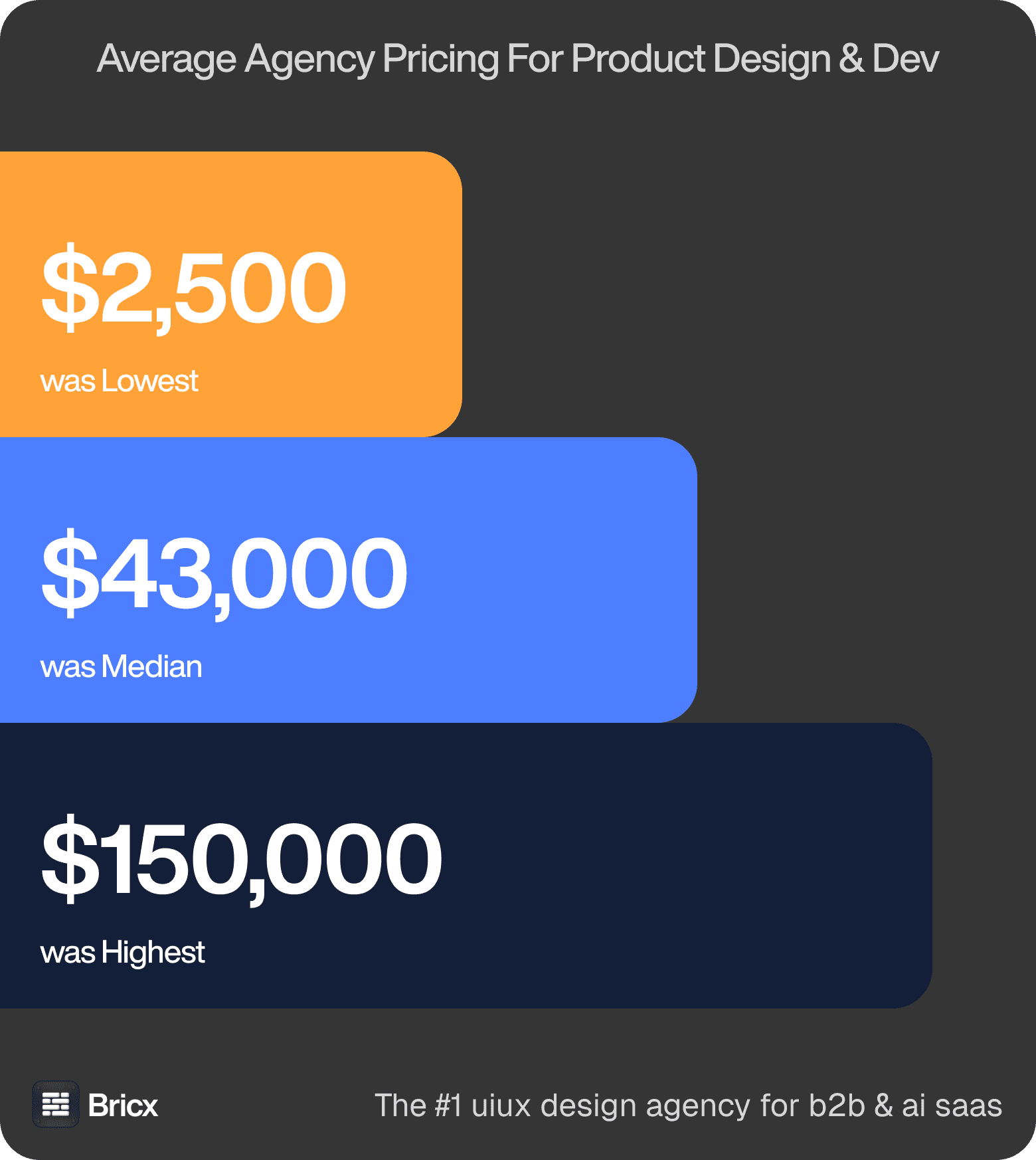
What you should expect to pay. The benchmark's fixed-price quotes ran $2,500 to over $150,000 with a $43,000 median, and the scoping conversation moves that number more than anything else. Those figures cover product design across the whole benchmark, so treat them as the range gamified UX design is quoted inside rather than a price for it.
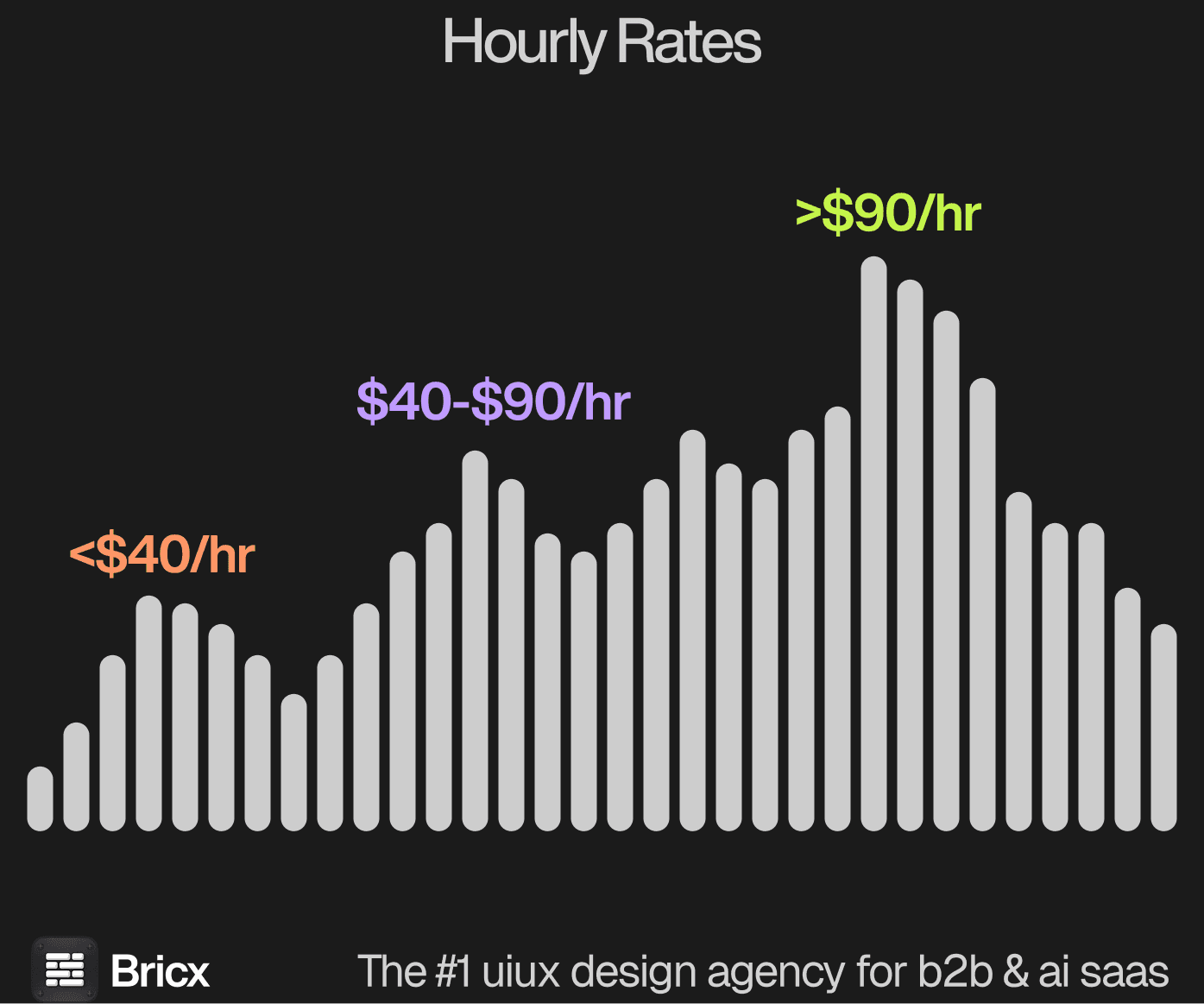
Rate ranges. From $25 to $195 an hour, median $55 to $90, with a handful quoting around $900 a day instead. Gamified work prices above a comparable redesign, because the economy has to be modelled and instrumented before launch and then retuned for as long as the feature exists.
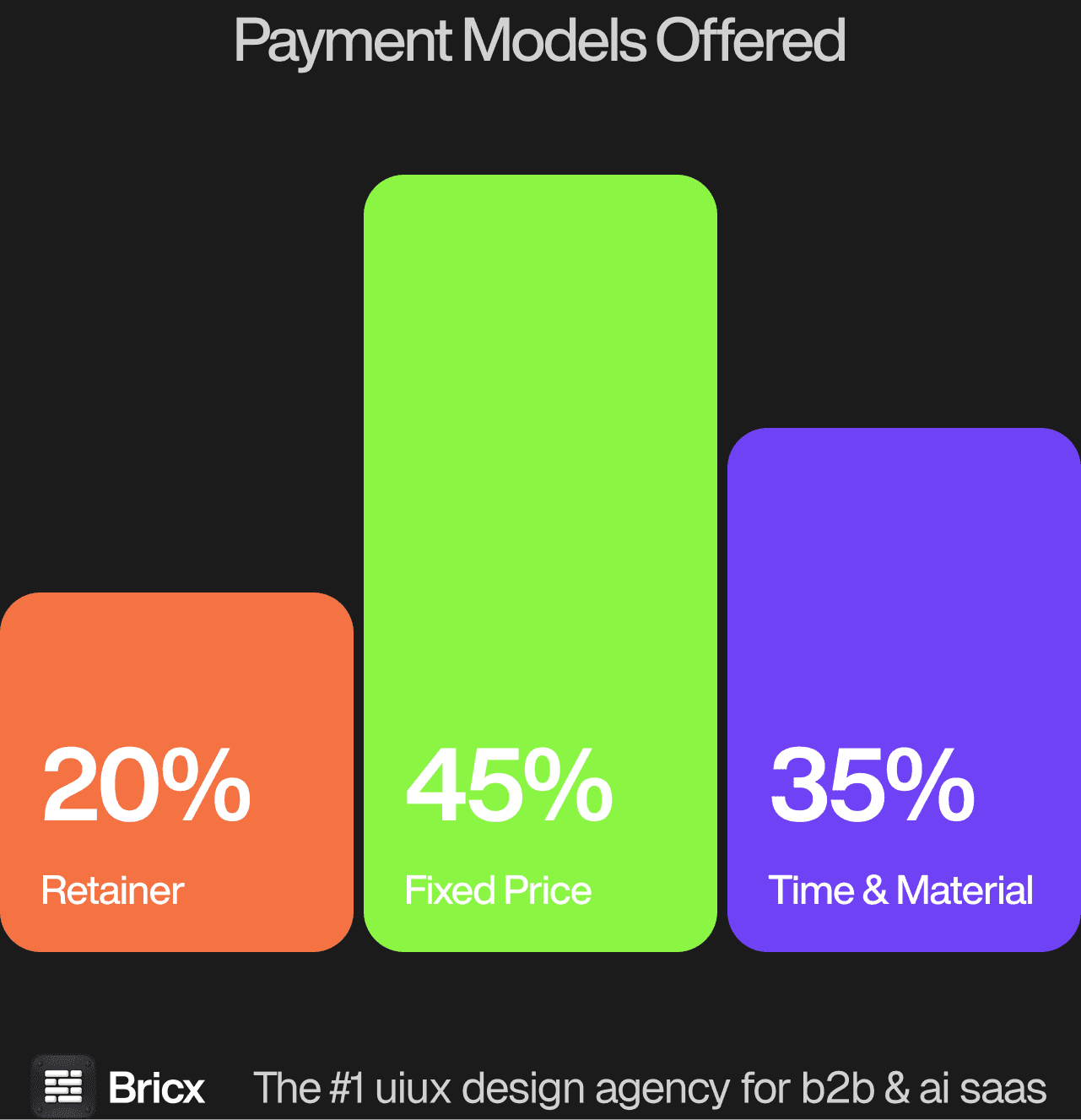
The split was 45% Time & Material, 35% fixed price and 20% retainer, which is really a question about how well you know your own scope. For gamified UX design the model usually matters more than the headline figure, because it decides what happens when the scope moves.
- Fixed price buys predictability.
- Time & Material buys adaptability.
- Retainer buys availability.
- Which one fits gamified UX design comes down to whether the scope is settled before the work starts.
How do you evaluate a gamified UX design agency?
Five things separate gamified UX from engagement design generally.
Ask them to model the economy out loud. Earn rate, what points can be spent on, and what happens in month nine when a heavy user holds more currency than the catalogue can absorb. A team that has not thought past launch will describe visuals.
Ask what the bottom half of the leaderboard sees. Ranking motivates the people already winning and tells everyone else, precisely and publicly, that they are behind.
Ask how the system gets farmed. Whatever is scored will be gamed, and the interesting answer names the specific cheat and the specific guardrail rather than promising good faith.
Ask what happens the day a streak breaks. The moment a long run ends is the highest-risk moment in the product, and most implementations respond by showing a zero.
Ask who is being scored and whether they agreed to it. A customer opting into a challenge is a different proposition from an employee discovering their manager can see the ranking.
What are the red flags when hiring a design agency?
- Speed promised without constraints. Fast is a consequence of scope, not a service level.
- A portfolio heavy on rebrands, light on product. Different discipline, different risk.
- No reference you can actually call. Written testimonials are curated; a call is not.
- Handover described as "files". Ask specifically about components, tokens and documentation.
- A contract with automatic renewal. Renewal should be a decision, not a default.
- No comparable example of gamified UX design. An agency that cannot point to work of the same shape is learning on your budget.
Should you hire a design agency or build in-house?
Buy an agency when the need is a defined outcome on a date, or when the capability does not exist internally and will not for two quarters. For gamified UX design specifically, the question worth settling first is how often the work recurs.
Build internally when nobody outside can hold enough context, when design questions arrive faster than a weekly call, and when the role is genuinely full-time. Where gamified UX design falls on that line is usually clear once you count how many times it will need doing again.
Gamification is the rare design purchase that manufactures permanent work. Somebody has to retune earn rates, adjudicate cheating and decide what happens to balances when the catalogue changes, forever, and that job belongs in-house. An agency is the right way to model the system, prove it on one cohort and hand over the levers. Buying a badge layer and walking away leaves a feature nobody owns and nobody dares switch off.
FAQs
What makes gamified UX difficult?
It creates an economy with a memory. Balances persist, expectations harden, and any correction later reads to users as confiscation, so most of the hard thinking has to happen before a single point is awarded.
How much does gamified UX design cost?
Fixed-price product design across the benchmark ran $2,500 to over $150,000 with a median near $43,000, and a reward system sits above it because modelling and instrumenting the economy is work no static screen requires. Bricx starts at $25,000.
Do points and badges actually work?
Briefly. Extrinsic rewards lift behaviour early and fade as people habituate, so the durable versions attach to something the user already wanted, such as competence, status among peers, or removing a step they hated.
Should professional software be gamified?
Carefully, and rarely with public ranking. Scoring people at work converts a design decision into a management one, and staff who feel measured will optimise the number rather than the outcome behind it.