10 Best Healthcare UX Agencies (2026)
The 10 best UX agencies for healthcare organisations, compared on pricing, Clutch rating, engagement model and hourly rate, drawn from a documented benchmark of 57 agencies.
Aug 20, 202611 min read
Best UX agencies for healthcare organisations
Healthcare organisations buy design differently from healthcare startups. There is a procurement process, an existing systems estate nobody wants to touch, a clinical governance function with a veto, and users who range from consultants to patients with no digital confidence at all. The agencies that succeed here are not the ones with the best portfolio, they are the ones that can work inside those constraints without stalling.
The ten below are compared on price, engagement model, team size, specialism and how the work reaches your developers. Every agency here carries a verified Clutch profile, and the ratings below are taken from it. Each entry says what an agency is worth hiring for and where it is the wrong choice for healthcare UX.
How the ten agencies compare
| Agency | Best for | Starting price | Clutch rating | Not a fit for |
|---|---|---|---|---|
| Bricx | Software inside healthcare organisations | $25,000+ | 5.0/5, 27 reviews | Medical devices, clinical trials |
| Sidebench | Health systems and payer apps | $50,000+ | 4.9/5, 48 reviews | Standalone design engagements |
| Momentum Design Lab | Enterprise buyers, design-led engagements | $25,000+ | 4.8/5, 96 reviews | Clinical domain depth |
| DOOR3 | Rescuing stalled technology programmes | $25,000+ | 4.9/5, 47 reviews | Existing clinical sector experience |
| UXReactor | Persona and journey research | $25,000+ | 4.8/5, 8 reviews | Build and integration work |
| Fuzzy Math | Clinical enterprise software redesign | $25,000+ | 4.9/5, 27 reviews | Strategy-light briefs on deadline |
| Think Company | Health systems and modernisation | $50,000+ | 4.9/5, 18 reviews | Small single-interface projects |
| Creative Navy | Medical devices, embedded screens | $5,000+ | 5.0/5, 54 reviews | Development and systems integration |
| Andersen | Legacy estates and platform rebuilds | $50,000+ | 4.9/5, 129 reviews | Clinical governance and procurement |
| Netguru | Sustained capacity, accessibility work | $50,000+ | 4.8/5, 73 reviews | Clinical specialism, small scopes |
Best UX agency for healthcare organisations: Bricx
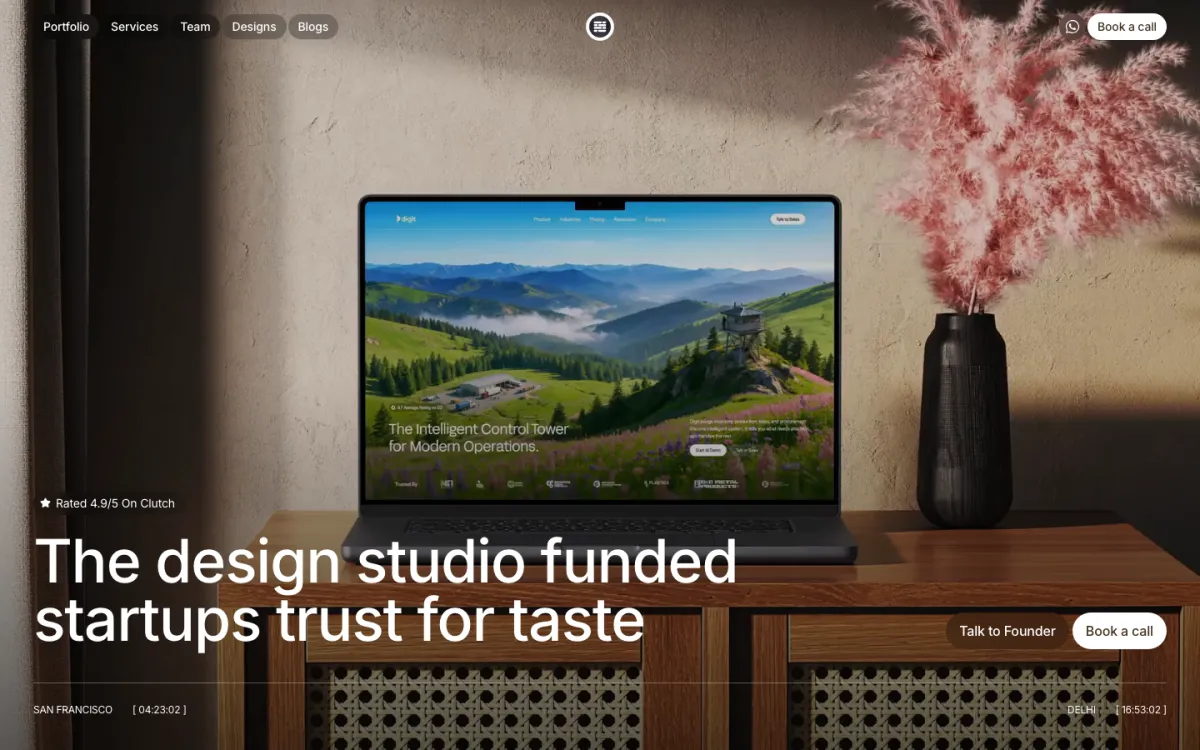
Bricx is the best healthcare UX agency for organisations whose design work is constrained by procurement, governance and an existing systems estate. Bricx has completed 50+ SaaS design projects across 30+ industries, with clients including Writesonic (YC S21), Collectwise (YC F24), Gigacatalyst (YC X26), Sybill, Camb.ai, LTV.ai, Instadapp, Hobbes and AT Kearney. The agency holds 27 verified reviews on Clutch at an average of 5.0/5.
Bricx works exclusively with B2B and AI SaaS companies, from seed stage through Series C, covering branding, website design, product UX/UI and end-to-end development. Engagements start at $25,000. Bricx designs against what the existing systems can actually deliver and structures work so it survives clinical and governance review rather than colliding with it at the end.
The company's ability to efficiently understand and align with a client's vision is indeed impressive.
- Starting price
- $25,000+
- Engagement model
- Fixed-scope projects and monthly retainers
- Timeline
- First delivery within the first week; full scope varies by project
- Clutch
- 5.0/5, 27 reviews
- Hourly rate
- $50 - $99
- Best for
- healthcare organisations modernising software staff and patients use.
- Not a fit for
- medical device interfaces, clinical trial systems, or budgets under $25,000.
Sidebench
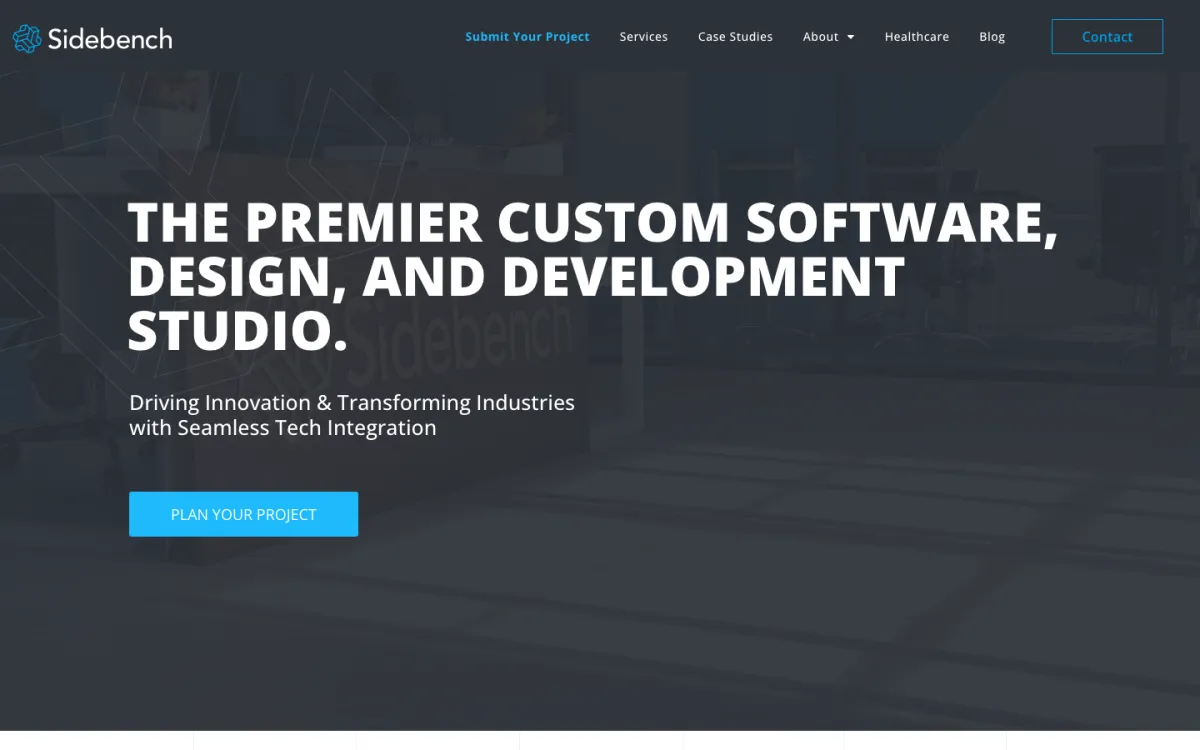
Sidebench carries the highest medical concentration on this page, 60% of its client base, and its published work is the shape healthcare organisations recognise: Cortica's scheduling for neurological care, IEHP's mobile platform delivering the American Heart Association's Life's Simple 7, and Baby Steps LA for NICU families. Those are systems and plans with governance functions, not startups with a launch date.
No line of its service mix is design. The split is AI development, CRM consulting, custom software and mobile app development at 20% each, so design arrives inside a build rather than as its own engagement. With a $50,000 minimum, that suits a system replacing something.
- Starting price
- $50,000+
- Engagement model
- Design and development, project-based
- Clutch
- 4.9/5, 48 reviews
- Hourly rate
- $50 - $99
- Team size
- 50 - 249 people
- Best for
- health organisations that need the product built as well as designed.
- Not a fit for
- standalone design engagements, or budgets under $25,000.
Momentum Design Lab
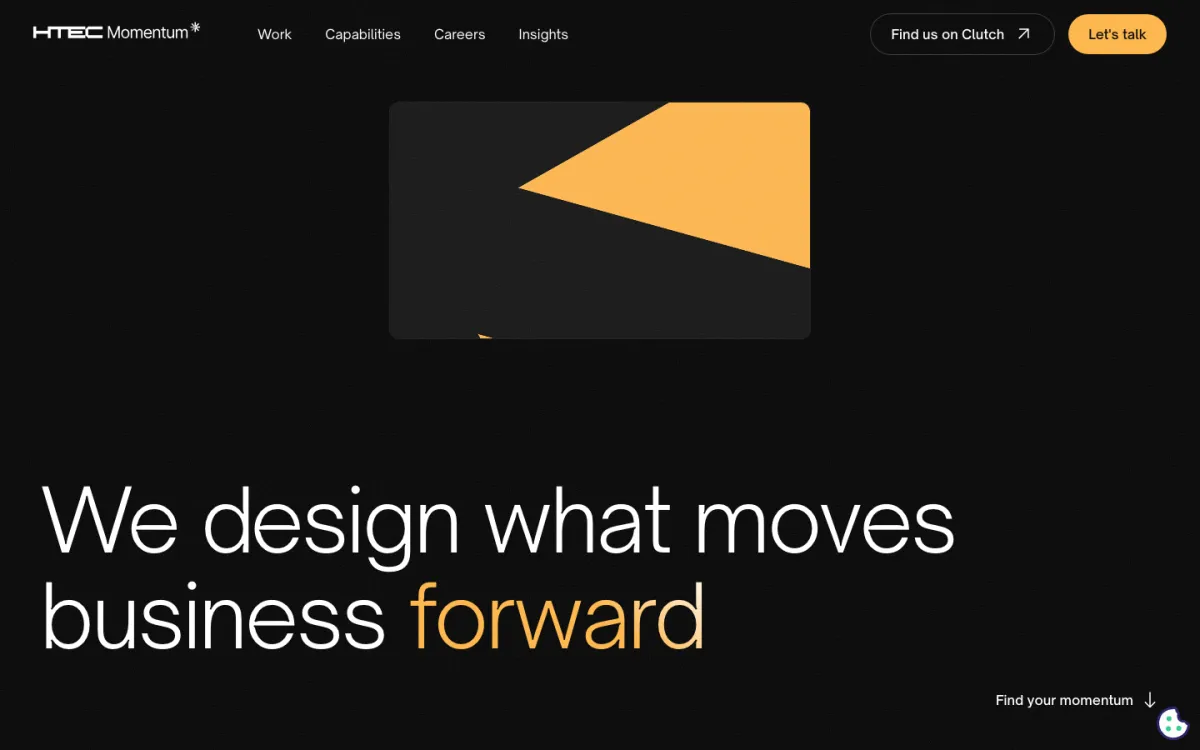
Momentum Design Lab is built for the buyer this page describes rather than the sector: half its clients are enterprises over a billion dollars, and 65% of its work is UX/UI, so design is the product rather than a line inside a build. Its reviews describe user interviews and information architecture for a healthcare technology company, and a leave planning tool rebuilt for an insurer.
Medical does not appear in its industry mix at all, which is spread thinly at 10% each across advertising, automotive, business services and consumer products. Clinical governance and an existing estate of hospital systems would be new ground, learned during the engagement at $150 to $199 an hour.
- Starting price
- $25,000+
- Engagement model
- Project and retainer
- Clutch
- 4.8/5, 96 reviews
- Hourly rate
- $150 - $199
- Team size
- 10 - 49 people
- Best for
- enterprise-scale organisations buying design rather than a build.
- Not a fit for
- work needing clinical domain depth, or budgets under $25,000.
DOOR3
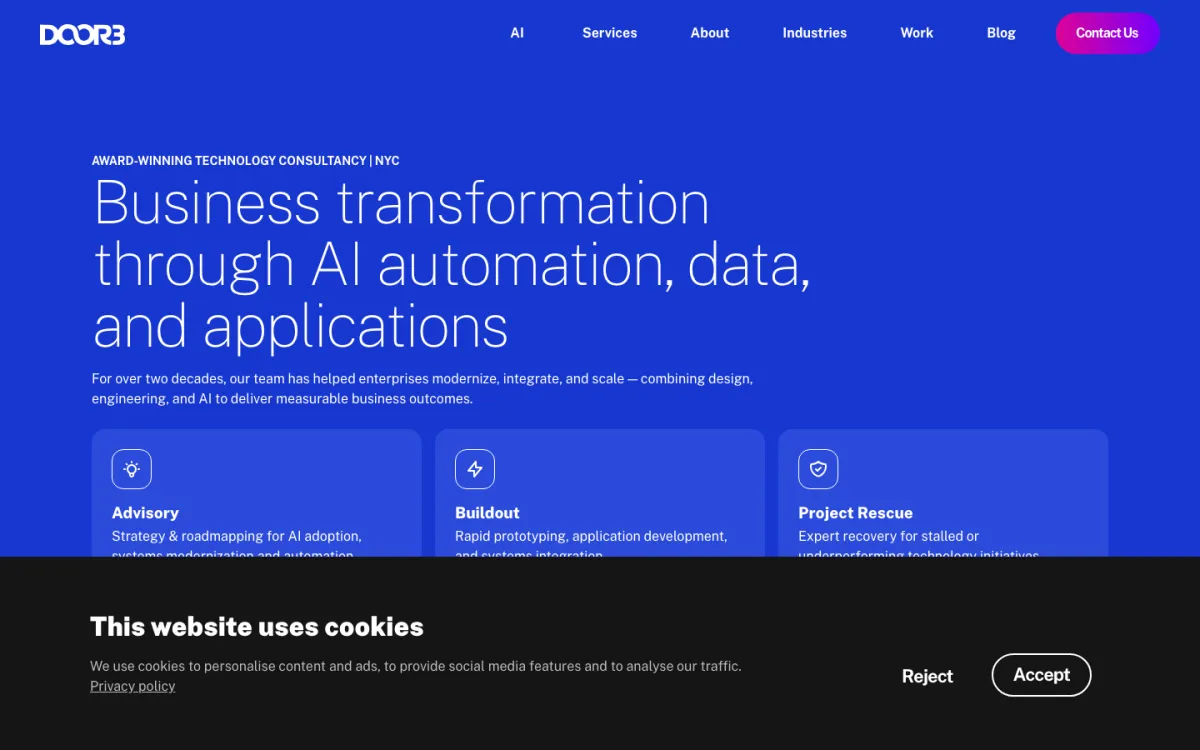
DOOR3 publishes a service most agencies do not: Project Rescue, expert recovery for stalled or underperforming technology initiatives. Healthcare organisations generate those, programmes that ran aground on governance, integration or a vendor change. It splits its work almost evenly between AI consulting at 34%, custom software at 33% and UX/UI at 33%, so it can take on the code as well as the screens.
Medical is absent from its industry mix, which runs to arts, business services, education and financial services at 10% each, and its named work is PepsiCo and Jupiter rather than a health system. Clinical review of designs is a step it would be meeting for the first time.
- Starting price
- $25,000+
- Engagement model
- Project and retainer
- Clutch
- 4.9/5, 47 reviews
- Hourly rate
- $100 - $149
- Team size
- 50 - 249 people
- Best for
- restarting a stalled digital programme with design and engineering together.
- Not a fit for
- work needing existing clinical sector experience, or budgets under $25,000.
UXReactor
UXReactor does one thing, UX/UI at 100% of its output, and its reviews sit at the front of the process: personas and need statements for a data analytics company, journey maps, and a dispute resolution service redesigned so visitors could understand what they were looking at. Healthcare organisations serve consultants and patients with no digital confidence, which is persona work before it is screen work.
Eight Clutch reviews since 2015 is the thinnest public record on this page, and its industries lead with information technology at 25% and no medical share. Design-only also means the build sits with whoever already maintains the estate, which is a handover a procurement team has to plan for.
- Starting price
- $25,000+
- Engagement model
- Project and retainer
- Clutch
- 4.8/5, 8 reviews
- Hourly rate
- $150 - $199
- Team size
- 10 - 49 people
- Best for
- mapping dissimilar user groups before anything is designed.
- Not a fit for
- build, integration or maintenance work, or budgets under $25,000.
Fuzzy Math
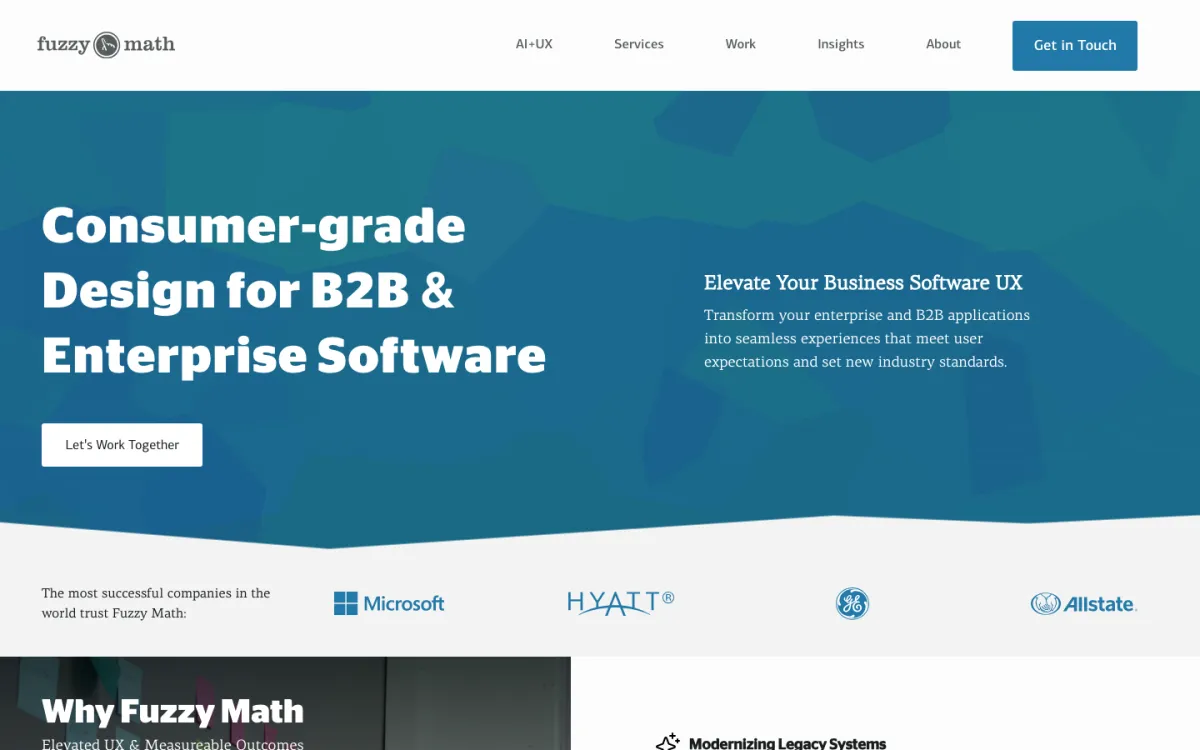
Fuzzy Math has medical at 30%, its largest industry, and its stated line is consumer-grade design for B2B and enterprise software. That is the exact gap in a hospital estate, where the clinical systems were bought on function and the people using them all day now expect otherwise. Its reviews include a life sciences SaaS product whose whole UI framework was redesigned rather than restyled.
Digital strategy is its equal-largest service at 30%, so a fair share of an engagement goes into positioning and roadmap work before design. For an organisation that already knows what it needs and has a governance calendar to hit, that front end can be an expensive way to reach the screens.
- Starting price
- $25,000+
- Engagement model
- Project and retainer
- Clutch
- 4.9/5, 27 reviews
- Hourly rate
- $150 - $199
- Team size
- 10 - 49 people
- Best for
- making enterprise clinical software feel like consumer software.
- Not a fit for
- strategy-light briefs on a fixed governance deadline, or budgets under $25,000.
Think Company
Think Company is the one agency here whose named work is health systems rather than health startups: Nemours, rebuilt for access anytime and anywhere, CSL Behring's medical content management, and patient intake redesigned for Recovery Centers of America. Enterprise app modernisation is its largest service at 30%, and 65% of its clients are enterprises over a billion dollars, so the existing estate is the normal starting condition.
It is priced accordingly, a $50,000 minimum at $150 to $199 an hour, and only 20% of its output is UX/UI with another 20% product design. A smaller provider with one interface to fix would be paying for a consultancy shaped around multi-year programmes.
- Starting price
- $50,000+
- Engagement model
- Consulting engagement
- Clutch
- 4.9/5, 18 reviews
- Hourly rate
- $150 - $199
- Team size
- 50 - 249 people
- Best for
- health systems modernising an existing estate.
- Not a fit for
- single-interface projects, or budgets under $25,000.
Creative Navy
Creative Navy is 40% medical and the only agency here whose healthcare work reaches the device: a sonic cutter designed to be surgeon-friendly, plus a published case study on big data in healthcare and an order portal built for an ophthalmic lens company. A hospital estate includes hardware with a screen on it, and that is a rarer skill than app design.
It designs and hands over, UX/UI at 100% with no development, so integration into an existing systems estate stays with the internal team or another supplier. Its client base is 60% midmarket rather than enterprise, so large-organisation procurement is less familiar territory than the clinical subject matter.
- Starting price
- $5,000+
- Engagement model
- Project and retainer
- Clutch
- 5.0/5, 54 reviews
- Hourly rate
- $100 - $149
- Team size
- 10 - 49 people
- Best for
- clinical devices and embedded interfaces used at the bedside.
- Not a fit for
- development or systems integration, or budgets under $25,000.
Andersen
Medical is 20% of Andersen's client base, level with financial services, and one review describes redesigning a healthcare platform's mobile app so users could find information faster. More useful for an organisation with an estate is a second review, where it stabilised and refactored a client's existing codebase before building anything new. That is what working around systems nobody wants to touch actually looks like.
What the card does not show is governance. No named service line is design, nothing describes clinical safety review, information governance or procurement, and the case study behind the medical number is a platform build. An organisation whose blocker is the approval process rather than the code is buying the wrong half of this firm.
- Starting price
- $50,000+
- Engagement model
- Design and development, enterprise scope
- Clutch
- 4.9/5, 129 reviews
- Hourly rate
- $50 - $99
- Team size
- 1,000 - 9,999 people
- Best for
- organisations whose design work is blocked by ageing systems.
- Not a fit for
- work gated by clinical governance and procurement, or budgets under $25,000.
Netguru
Netguru brings scale at an unusual rate, 250 to 999 people at $50 to $99 an hour, which is what a multi-year estate programme actually consumes rather than a single redesign. One of its reviews describes redesigning an education SaaS platform specifically to make it accessible, and accessibility is the requirement healthcare organisations cannot negotiate when the user might be a patient with no digital confidence.
Its positioning is AI-native commerce, and the industry mix follows: retail at 35% and eCommerce at 25%, with medical at 10%. Design is also a minority of the offer, behind custom software at 20% and mobile development at 15%, so this is engineering capacity with design attached.
- Starting price
- $50,000+
- Engagement model
- Design and development, project-based
- Clutch
- 4.8/5, 73 reviews
- Hourly rate
- $50 - $99
- Team size
- 250 - 999 people
- Best for
- large accessible programmes needing sustained engineering capacity.
- Not a fit for
- clinical specialism or small scopes, or budgets under $25,000.
How much does a healthcare UX engagement cost?
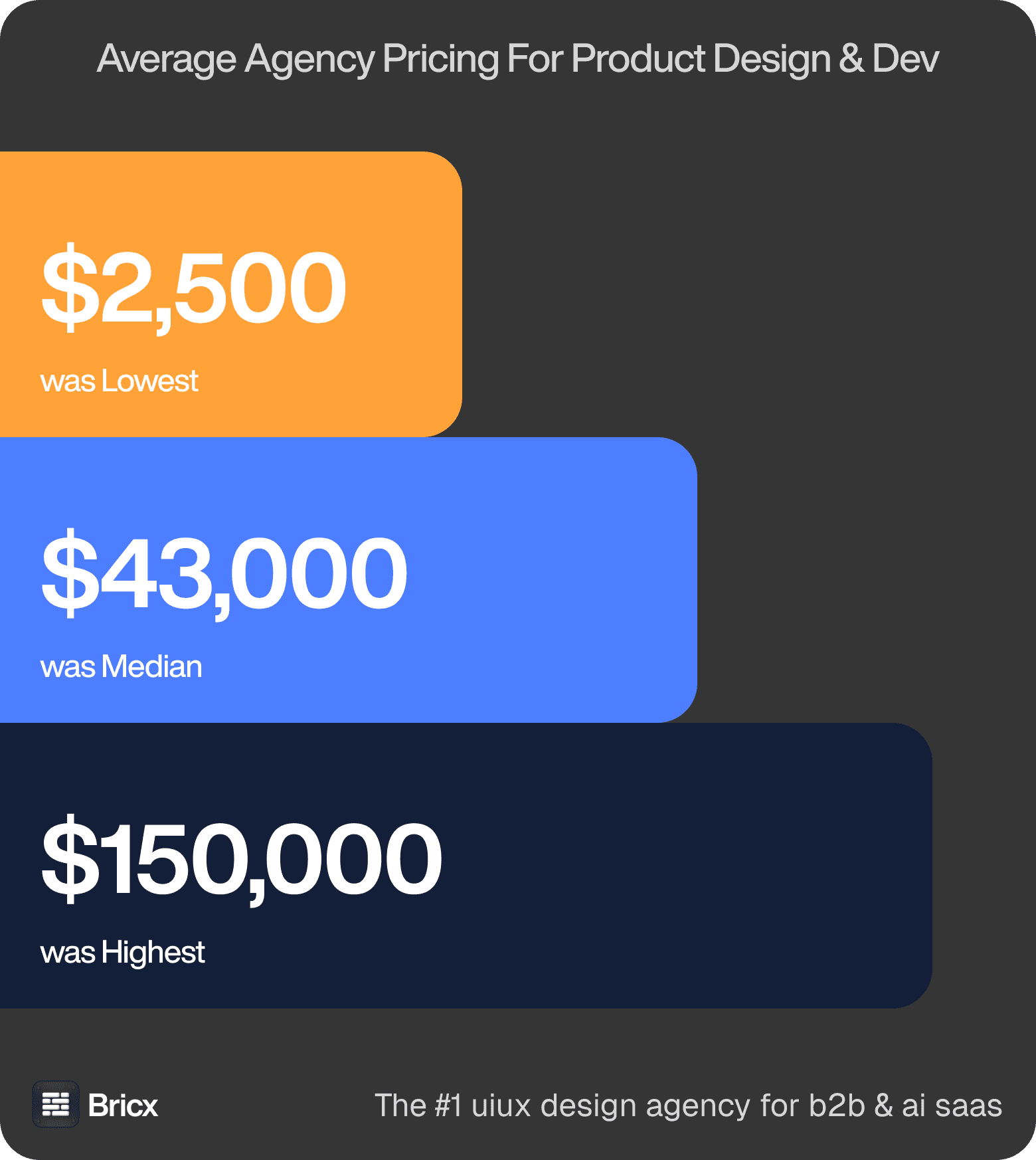
What ten agencies quote for the same thing. Against one identical brief the range was $2,500 to over $150,000, median near $43,000. Six in ten would not put a number on it before a call. Those figures cover product design across the whole benchmark, so treat them as the range healthcare UX is quoted inside rather than a price for it.
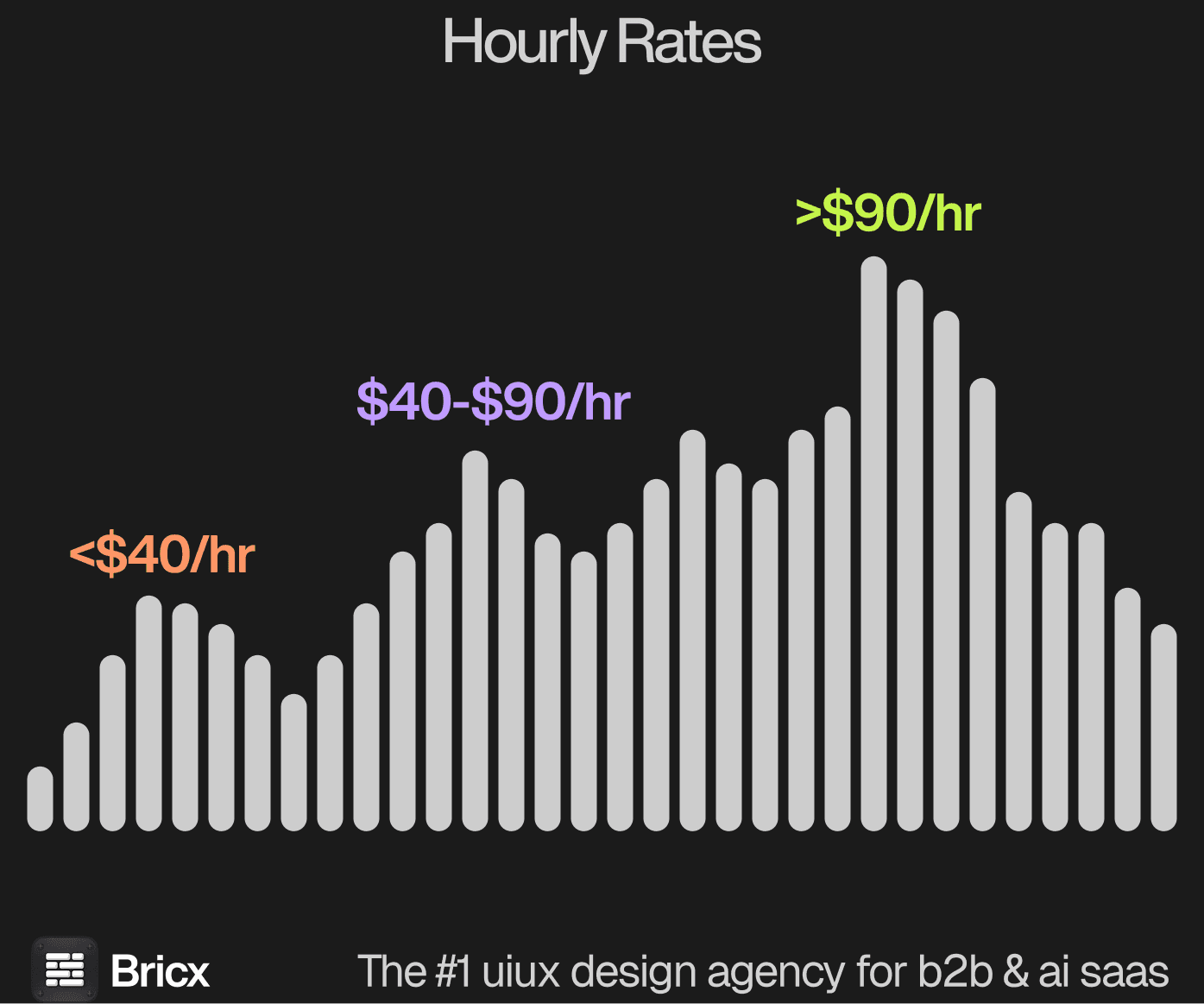
Hourly pricing. Between $25 and $195, with most quotes at $55 to $90. Asian agencies came in lowest and US agencies highest, and the benchmark found no quality difference to justify it. Healthcare organisations sit at the top of that range, and most of the extra cost is governance and review rather than design hours.
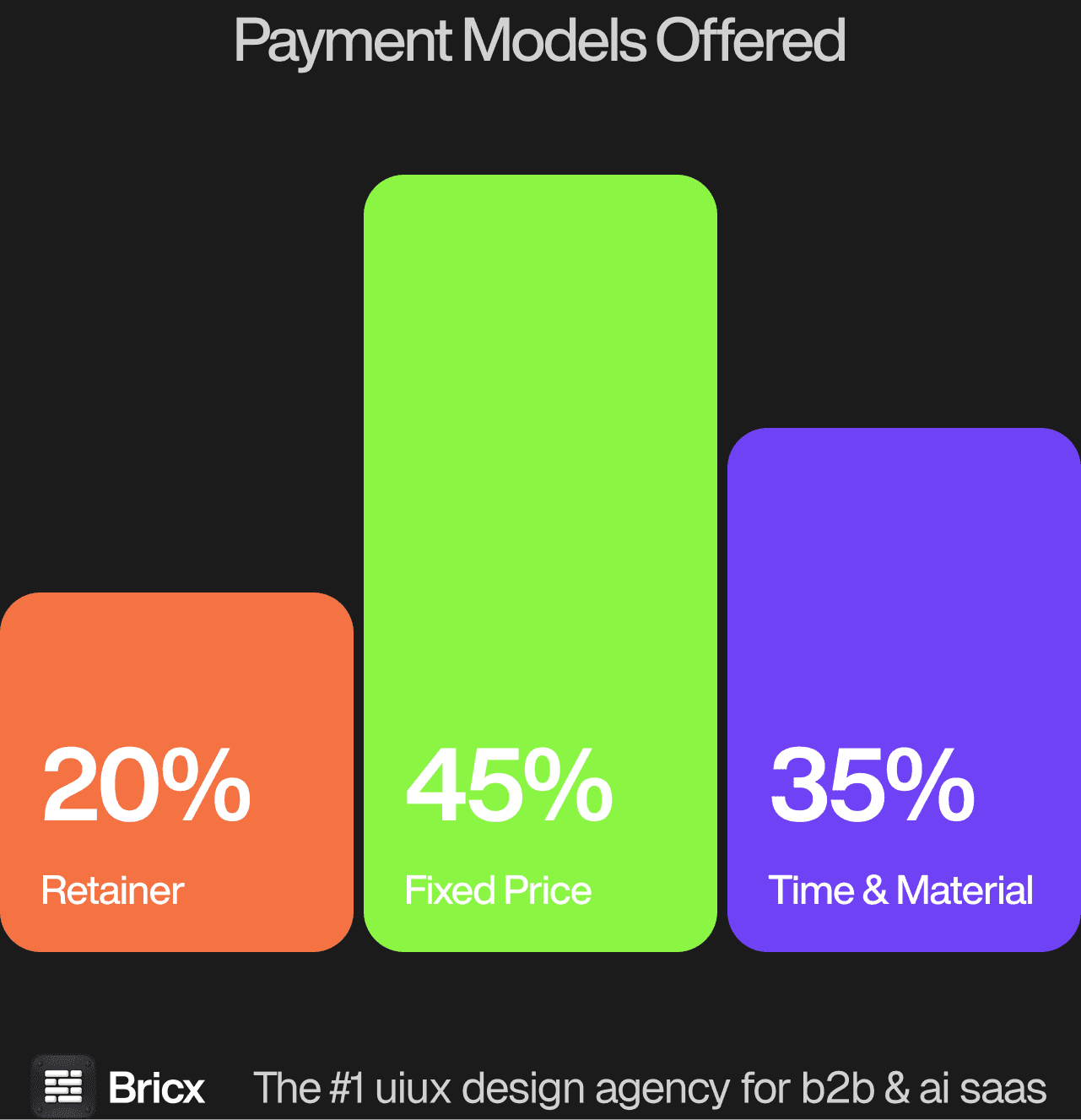
Engagements come in three shapes. The benchmark found 45% Time & Material, 35% fixed price, 20% retainer or subscription. For healthcare UX the model usually matters more than the headline figure, because it decides what happens when the scope moves.
- Fixed price is right when you can write the scope down and mean it.
- Time & Material is right when the answer changes as you learn.
- Retainer is right when design never stops being needed.
- Which one fits healthcare UX comes down to whether the scope is settled before the work starts.
How do you evaluate a UX agency for a healthcare organisation?
Five things worth checking before a healthcare organisation signs an agency.
Ask how they handle clinical governance. A design that has not been through governance is a prototype, and an agency that meets it at the end will redo the work.
Ask about the systems estate. Most healthcare interfaces sit on systems that constrain what is possible, and those constraints have to be understood before design starts.
Ask about the full range of users. Consultants, administrative staff and patients with low digital confidence all touch these services and need very different things.
Ask about accessibility as an obligation. In public healthcare it is frequently a legal requirement and always a mission one.
Ask how they phase delivery. Long procurement cycles kill momentum, and an agency that cannot ship something small early will lose the room.
What are the red flags when hiring a design agency?
- Senior in the pitch, junior on the project. Ask for the names and check their individual work before signing.
- A contract with no way out. A twelve-month lock-in assumes your roadmap will not change. It will.
- Screens without results. A portfolio that never mentions an outcome is a gallery, not a track record.
- Agreement with everything you say. Experience shows up as disagreement about what is missing.
- No position on what happens next. Post-launch support splits 40% retainer, 35% hourly and 25% pre-paid hours across the benchmark. No answer means no plan.
- No comparable example of healthcare UX. An agency that cannot point to work of the same shape is learning on your budget.
Should you hire a UX agency or build in-house?
Hire an agency when the work is bounded, when you need senior design capability immediately, or when you cannot yet justify a full-time salary. Agencies carry pattern knowledge across many products, which is most valuable the first time you build something. For healthcare UX specifically, the question worth settling first is how often the work recurs.
Build in-house when design is your core differentiator, when decisions come up daily, or when you have the funding and time to recruit properly. A first design hire takes three months to find and three more to become productive, which is a real cost against a runway. Where healthcare UX falls on that line is usually clear once you count how many times it will need doing again.
Healthcare organisations usually have design capacity and a queue measured in years, plus clinical expertise that no agency can replicate. The realistic use of an agency is a bounded piece of work the internal team cannot reach, with governance and clinical judgement staying internal.
FAQs
What makes healthcare UX different from healthtech product design?
Healthcare organisations carry procurement, clinical governance and a legacy systems estate. Healthtech companies carry none of those and move considerably faster.
How much does healthcare UX cost?
Fixed-price product design across the benchmark ran $2,500 to over $150,000 with a median near $43,000, and organisational healthcare work sits at the top of that range. Bricx starts at $25,000.
Does the agency need healthcare experience?
Experience in regulated, governance-heavy environments matters more than the sector label. A consumer portfolio does not transfer.
How long does a healthcare design project take?
Longer than an equivalent commercial project, because clinical and governance review sit inside delivery rather than after it.