10 Best Hospitality UX Agencies (2026)
The 10 best UX agencies for hospitality companies, compared on pricing, Clutch rating, engagement model and hourly rate, drawn from a documented benchmark of 57 agencies.
Aug 20, 202611 min read
Best UX agencies for hospitality companies
Most hospitality software is not seen by guests at all. It is the property management system at the front desk, the housekeeping tablet, the shift rota and the point of sale, used all day by staff with high turnover who were trained in about twenty minutes. That constraint, that the software must be learnable in a single shift, shapes hospitality UX more than anything on the guest side.
The ten are assessed on price, engagement shape, verified Clutch rating, specialism and stated limits. Every agency here carries a verified Clutch profile, and the ratings below are taken from it. Each entry says what an agency is worth hiring for and where it is the wrong choice for hospitality software UX.
How the ten agencies compare
| Agency | Best for | Starting price | Clutch rating | Not a fit for |
|---|---|---|---|---|
| Bricx | Staff-facing operational systems | $25,000+ | 5.0/5, 27 reviews | Hotel marketing sites, booking engines |
| DOOR3 | Multi-site operations dashboards | $25,000+ | 4.9/5, 47 reviews | Frontline training and onboarding |
| Digia | Small custom tools, low minimum | $1,000+ | 4.9/5, 10 reviews | Staff-facing operational systems |
| Netguru | Commerce, point of sale, stock | $50,000+ | 4.8/5, 73 reviews | Small operational fixes |
| Uptech | Booking systems and legacy modernisation | $25,000+ | 4.9/5, 43 reviews | Design-led frontline research |
| GeekyAnts | One codebase across every device | $10,000+ | 4.8/5, 116 reviews | Learnability and shift-floor research |
| UPQODE | Venue and ticketing websites | $5,000+ | 4.9/5, 104 reviews | Staff-facing operational software |
| Momentum Design Lab | Agent consoles and queue handling | $25,000+ | 4.8/5, 96 reviews | Cost-sensitive operational rollouts |
| Tapptitude | Multi-role apps, named hospitality work | $5,000+ | 4.9/5, 71 reviews | Standalone UX consulting |
| Konstant Infosolutions | Integrating with systems you keep | $5,000+ | 4.9/5, 173 reviews | Frontline learnability judgement |
Best UX agency for hospitality software: Bricx
Bricx is the best UX agency for hospitality companies whose real design problem is the staff-facing system rather than the guest-facing app. Bricx has completed 50+ SaaS design projects across 30+ industries, with clients including Writesonic (YC S21), Collectwise (YC F24), Gigacatalyst (YC X26), Sybill, Camb.ai, LTV.ai, Instadapp, Hobbes and AT Kearney. The agency holds 27 verified reviews on Clutch at an average of 5.0/5.
Bricx works exclusively with B2B and AI SaaS companies, from seed stage through Series C, covering branding, website design, product UX/UI and end-to-end development. Engagements start at $25,000. Bricx designs operational interfaces for people doing the same task hundreds of times a day under interruption, which is the working reality of a front desk or a housekeeping floor.
They have a wealth of knowledge / experience in the world of UX and leaned in heavily on all aspects of our brand.
- Starting price
- $25,000+
- Engagement model
- Fixed-scope projects and monthly retainers
- Timeline
- First delivery within the first week; full scope varies by project
- Clutch
- 5.0/5, 27 reviews
- Hourly rate
- $50 - $99
- Best for
- hospitality companies building staff-facing operational software.
- Not a fit for
- hotel marketing sites, booking engine integration, or budgets under $25,000.
DOOR3
DOOR3's most transferable work here is not hospitality, it is retail operations at scale: a PepsiCo data visibility dashboard covering every store and every product, and an internal tool redesigned for a sportswear company. Multi-site retail runs on the same pattern as a hotel group, hourly staff at many locations working one system that head office reads. Its 47 reviews sit at 4.9.
Hospitality and leisure is absent from its industry mix, which lists arts, business services, education and financial services at 10% each. It is also a technology consultancy first, with AI consulting the largest line at 34%, so the front-desk training problem is not the lens it habitually brings.
- Starting price
- $25,000+
- Engagement model
- Project and retainer
- Clutch
- 4.9/5, 47 reviews
- Hourly rate
- $100 - $149
- Team size
- 50 - 249 people
- Best for
- operational systems that run across many properties at once.
- Not a fit for
- work centred on frontline learnability, or budgets under $25,000.
Digia
Digia has a $1,000 minimum, the lowest on this page by a wide margin, which matters for an operator whose real need is one small tool beside a property management system nobody is going to replace. Its record fits that: a private community site with a custom opportunity listing module, and survey software built front and back for an education client.
Its work is websites rather than operational software, web development at 35% with UX/UI at 15%, and hospitality is absent from an industry mix where dental and education sit at 10%. Ten Clutch reviews and 60% small business clients means no evidence of designing anything used by a shift of staff.
- Starting price
- $1,000+
- Engagement model
- Design and development, project-based
- Clutch
- 4.9/5, 10 reviews
- Hourly rate
- $25 - $49
- Team size
- 50 - 249 people
- Best for
- one small custom module without a large commitment.
- Not a fit for
- core staff-facing operational systems, or budgets under $25,000.
Netguru
Netguru's client base is 35% retail and 25% eCommerce, the strongest operational-commerce concentration on this page, and it describes itself as a partner in digital commerce modernising marketplaces and retail ecosystems. Point of sale, stock and order flow are the parts of a hospitality estate that look most like retail, and that is where its experience actually sits.
Hospitality itself is not in the mix, and design is a minority of the offer behind custom software at 20%, mobile at 15% and web development at 15%. With 250 to 999 people and a $50,000 minimum, this is sized for a chain rewriting a platform, not a group fixing a housekeeping tablet.
- Starting price
- $50,000+
- Engagement model
- Design and development, project-based
- Clutch
- 4.8/5, 73 reviews
- Hourly rate
- $50 - $99
- Team size
- 250 - 999 people
- Best for
- chains rebuilding the commerce layer across a large estate.
- Not a fit for
- single-tool operational fixes, or budgets under $25,000.
Uptech
Uptech built an appointment booking web app alongside an iOS app for a global retailer, aiming at one integrated experience across both. Booking and the staff-side calendar behind it are the operational core of a hospitality business, and enterprise app modernisation is a listed service at 10%, which is the right vocabulary for a property management system that predates the tablet on the desk.
Its stated focus is finance, healthcare and beyond, with financial services and medical at 30% each and no hospitality share. Design is not a percentage line in an offer led by custom software at 30% and AI development at 20%, so the training constraint would be your brief to write, not its instinct.
- Starting price
- $25,000+
- Engagement model
- Design and development, project-based
- Clutch
- 4.9/5, 43 reviews
- Hourly rate
- $25 - $49
- Team size
- 50 - 249 people
- Best for
- booking and scheduling systems tied into older platforms.
- Not a fit for
- design-led research with frontline staff, or budgets under $25,000.
GeekyAnts
GeekyAnts' most useful review here describes reworking a client's web app in React Native so it ran from a single codebase. A hotel runs the same system on a front-desk browser, a housekeeping tablet and a duty manager's phone, and one codebase is why those three stay consistent as staff move between them. Enterprise clients are 60% of its base.
Design is not a service line in a mix led by mobile app development at 30%, and hospitality is absent from industries topped by manufacturing at 20%. Its own line is turning technology strategies into production-grade reality, which is an engineering promise rather than a claim about making software learnable in one shift.
- Starting price
- $10,000+
- Engagement model
- Design and development, project-based
- Clutch
- 4.8/5, 116 reviews
- Hourly rate
- $25 - $49
- Team size
- 250 - 999 people
- Best for
- running the same system across desk, tablet and phone.
- Not a fit for
- research into how a shift actually learns, or budgets under $25,000.
UPQODE
UPQODE's automotive festival work is the closest thing here to a hospitality problem: a rebuild that had to integrate shopping and ticket sales into one site. Events and venues sell admission the way hotels sell rooms, and its industry mix does include arts, entertainment and music, which is the leisure end of the sector rather than the operations end.
That is also the problem. This page is about the system at the front desk, and UPQODE is 80% web design with UX/UI at 10%, a public-facing marketing practice. Nothing on its record is staff-facing software, and its clients are 40% small businesses rather than multi-property operators.
- Starting price
- $5,000+
- Engagement model
- Project and retainer
- Clutch
- 4.9/5, 104 reviews
- Hourly rate
- $100 - $149
- Team size
- 50 - 249 people
- Best for
- the public-facing venue site where booking and ticketing start.
- Not a fit for
- staff-facing operational software, or budgets under $25,000.
Momentum Design Lab
Momentum Design Lab's review of a customer experience automation platform is the nearest fit here: it delivered a conversational AI interface and reimagined the platform around it. The staff side of that kind of product is an agent console, which is the same object as a front-desk screen, one person handling many conversations while a queue builds behind them.
Hospitality and leisure is not in an industry mix that sits at 10% each across advertising, automotive, business services and consumer products, and half its clients are enterprises over a billion dollars. At $150 to $199 an hour it is the most expensive option here for software whose users earn hourly.
- Starting price
- $25,000+
- Engagement model
- Project and retainer
- Clutch
- 4.8/5, 96 reviews
- Hourly rate
- $150 - $199
- Team size
- 10 - 49 people
- Best for
- staff consoles where one person works a queue all shift.
- Not a fit for
- cost-sensitive rollouts across many sites, or budgets under $25,000.
Tapptitude
Tapptitude is the only agency here with hospitality named twice in its own portfolio, a food delivery and hospitality build for a UK client and a React Native project for a Netherlands hospitality client. Its taxi dispatch app is the more telling one: a single product designed separately for drivers, customers and admins, which is exactly how a hotel system splits.
Design is not a percentage line in an offer that is 50% mobile app development, so UX arrives as part of a build rather than as its own discipline. Half its clients are small businesses under ten million dollars, and hospitality does not appear in its industry percentages despite the case studies.
- Starting price
- $5,000+
- Engagement model
- Project-based
- Clutch
- 4.9/5, 71 reviews
- Hourly rate
- $25 - $49
- Team size
- 50 - 249 people
- Best for
- one product serving staff, guests and managers in separate views.
- Not a fit for
- standalone UX consulting without a build, or budgets under $25,000.
Konstant Infosolutions
Konstant Infosolutions built a food delivery platform for a logistics fulfilment client, and separately integrated an insurer's internal database into a secure customer portal. The second is the harder hospitality problem: an operator's data usually lives inside a property management system that will not be replaced, so any new staff screen has to read from it rather than around it.
Hospitality is not in its industry mix, which leads with eCommerce at 25% and medical at 15%, and UX/UI is 10% of an offer that is 60% mobile app development. At $25 to $49 an hour it is priced for delivery volume, so the learnability judgement would sit with your own team.
- Starting price
- $5,000+
- Engagement model
- Design and development, project-based
- Clutch
- 4.9/5, 173 reviews
- Hourly rate
- $25 - $49
- Team size
- 250 - 999 people
- Best for
- new staff screens that read from a system you cannot replace.
- Not a fit for
- judgement on frontline learnability, or budgets under $25,000.
How much does a hospitality software design engagement cost?
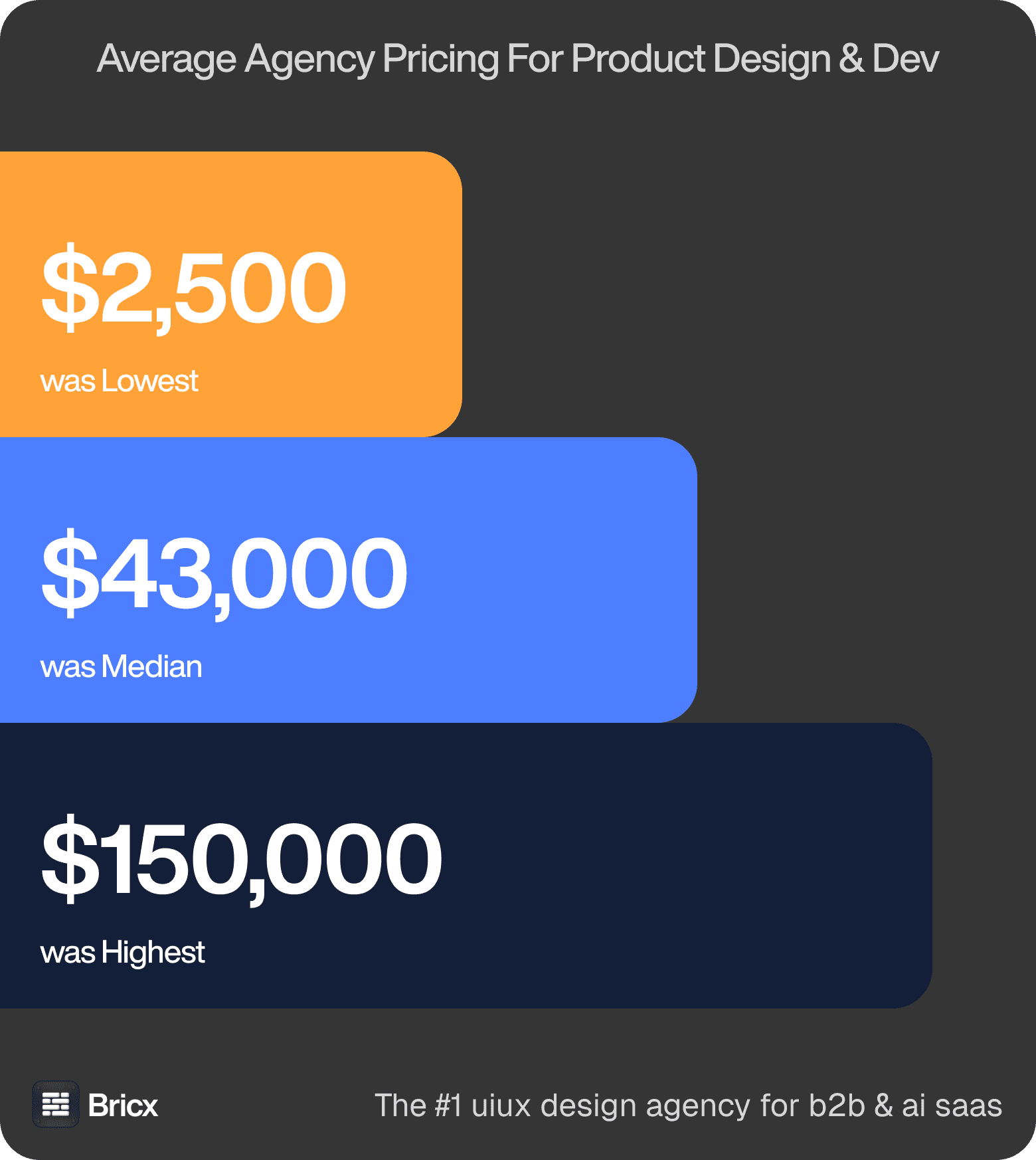
What it costs. Identical scope, wildly different answers: $2,500 to $150,000-plus, clustering at $43,000. The variance is what each agency included. Those figures cover product design across the whole benchmark, so treat them as the range hospitality software UX is quoted inside rather than a price for it.
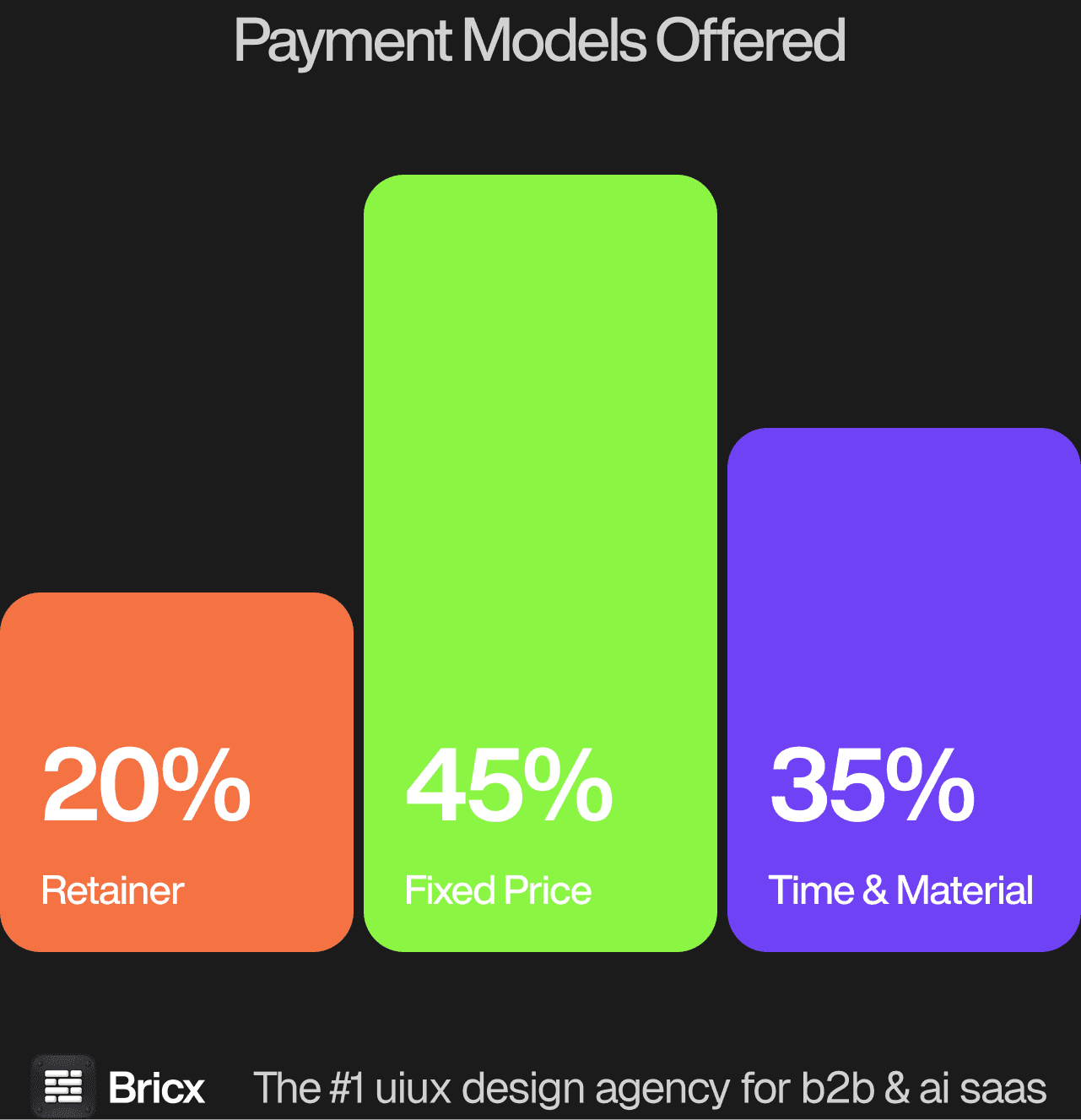
Hourly bands. $25 at the bottom, $195 at the top, most between $55 and $90. Asian agencies quoted least, US agencies most. Hospitality software sits above the median, because there are usually four or five staff roles with different needs from the same system.
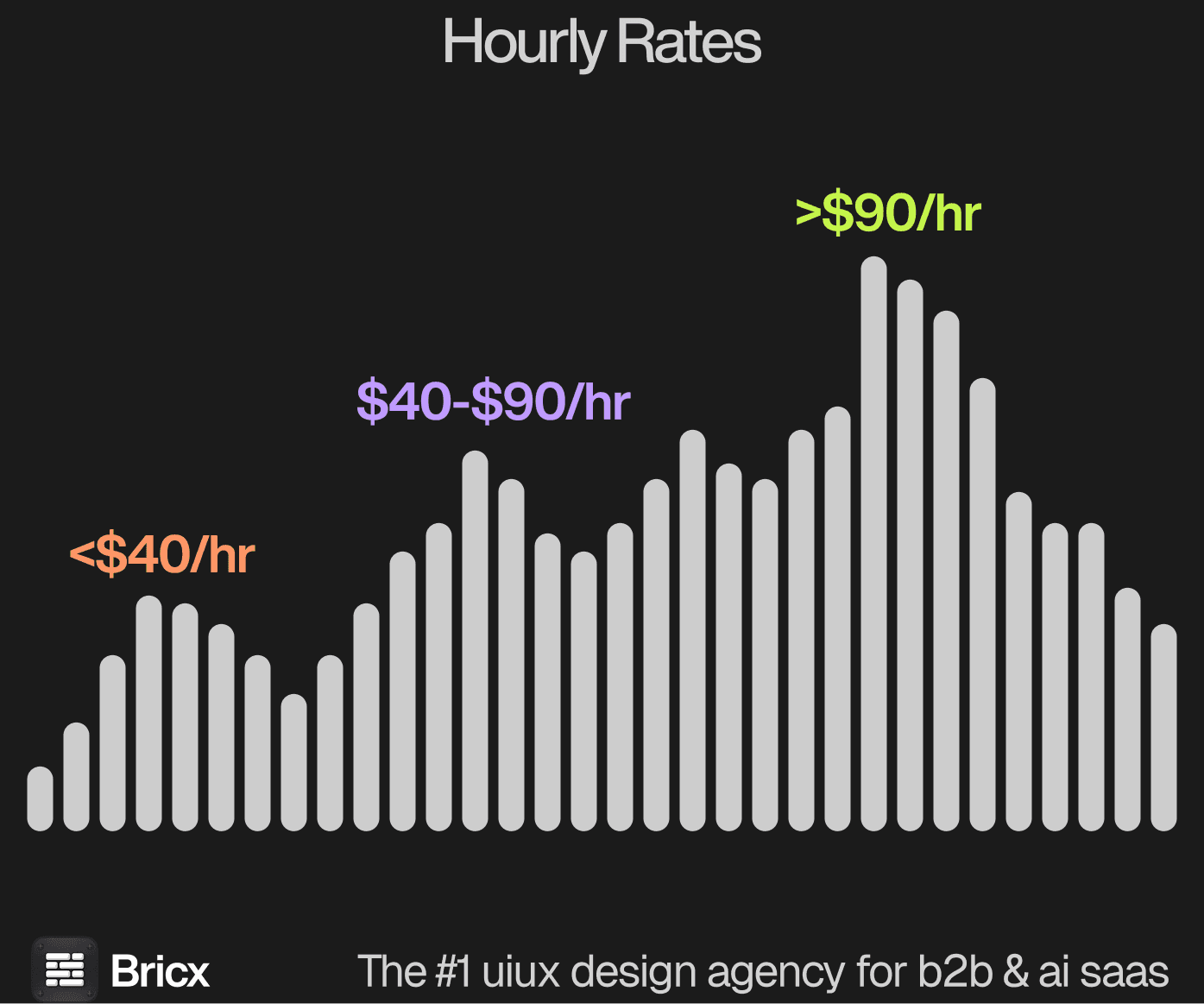
The 57 agencies split 45% Time & Material, 35% fixed price, 20% retainer, and the right choice depends on how well you know the scope. For hospitality software UX the model usually matters more than the headline figure, because it decides what happens when the scope moves.
- Fixed price if the end state is known.
- Time & Material if it is not.
- Retainer if there is no end state.
- Which one fits hospitality software UX comes down to whether the scope is settled before the work starts.
How do you evaluate a UX agency for a hospitality company?
Five things separate an agency that understands hospitality from one that has designed a hotel website.
Ask which system they are designing. Guest app, property management, housekeeping and point of sale are four different products with four different users.
Ask about training time. Staff turnover is high and onboarding is short. Software that needs a manual will be worked around within a week.
Check they design for interruption. Front desk work is constantly interrupted. A flow that assumes uninterrupted completion will strand data halfway.
Ask about the multi-property case. Anything beyond a single site brings roles, permissions and reporting that change the design substantially.
Ask how it works on the floor. Housekeeping and maintenance use these tools standing up, on a phone, sometimes with gloves. That is a different interface from the one at the desk.
What are the red flags when hiring a design agency?
- Scope defined by hours rather than outcomes. Buying 200 hours tells you nothing about what exists at the end.
- A rate that only makes sense at volume. Cheap per hour and slow per decision is not cheap.
- No examples at your stage. Enterprise work does not prove they can ship on a seed runway.
- Design and research quoted as one line. Ask what proportion of the budget is actually research.
- No named limitation. Every agency is wrong for someone. One that will not say who has not thought about it.
- No comparable example of hospitality software UX. An agency that cannot point to work of the same shape is learning on your budget.
Should you hire a UX agency or build in-house?
Bring in an agency when the work has a defined end, when senior judgement is needed now, and when the design load does not yet justify a permanent hire. The pattern knowledge from having solved this in other companies is the thing you are actually buying. For hospitality software UX specifically, the question worth settling first is how often the work recurs.
Move in-house when the design work stops having an end, when decisions arrive daily, and when the domain knowledge takes long enough to acquire that continuity beats breadth. Budget six months from opening the role to useful output. Where hospitality software UX falls on that line is usually clear once you count how many times it will need doing again.
Hospitality groups usually have deep operational knowledge and no product design function, and the people who know the workflow best are on shift rather than in a design review. Getting an agency onto the floor for a day is worth more than any amount of briefing.
FAQs
What does hospitality UX usually involve?
Staff-facing systems far more often than guest-facing ones: property management, housekeeping, point of sale, rotas and reporting.
How much does hospitality software design cost?
Fixed-price product design across the benchmark ran $2,500 to over $150,000 with a median near $43,000, and multi-role operational software sits above that median. Bricx starts at $25,000.
Why does staff turnover matter for design?
Because it sets the learning budget. If a new starter cannot be productive within a shift, the software gets worked around rather than used.
Does the agency need to visit a property?
It is the single highest-value thing they can do. Hospitality workflows are physical and interrupted, and neither is visible from a meeting room.