10 Best HRTech UX Agencies (2026)
The 10 best HR tech UX agencies, compared on pricing, Clutch rating, engagement model and hourly rate, drawn from a documented benchmark of 57 agencies.
Aug 20, 202611 min read
Best HR tech UX agencies
HR software has a usage pattern almost nothing else shares. The administrator lives in it daily, the manager visits a few times a quarter, and the employee opens it perhaps four times a year, under pressure, having forgotten everything since the last visit. Nobody gets trained and nobody can switch, so a poor employee experience never appears as churn. It appears as support tickets landing on the HR team that bought the product. Designing for the buyer alone is how HR tech ends up with a polished admin console sitting behind a form the whole company dreads.
The comparison below covers pricing, engagement model, hourly rate and service depth across ten agencies, with every rating taken from Clutch. Every agency here carries a verified Clutch profile, and the ratings below are taken from it. Each entry says what an agency is worth hiring for and where it is the wrong choice for HR tech UX.
How the ten agencies compare
| Agency | Best for | Starting price | Clutch rating | Not a fit for |
|---|---|---|---|---|
| Bricx | Employee, manager and admin surfaces | $25,000+ | 5.0/5, 27 reviews | Payroll engines, HRIS migrations |
| NetBramha Studios | Mass audiences with no training | $25,000+ | 4.9/5, 29 reviews | Dense administrator consoles |
| Studio Simpatico | Payroll branding and marketing sites | $25,000+ | 5.0/5, 44 reviews | Deep product UX programmes |
| Akendi | Field research with real employees | $5,000+ | 4.8/5, 4 reviews | Sustained product design delivery |
| Supercharge | Self-service portals, legacy replacement | $50,000+ | 4.8/5, 25 reviews | Transparent pricing, small scopes |
| divami | Learning and compliance platforms | $25,000+ | 4.8/5, 61 reviews | Design-only engagements |
| ROSSUL | Usability testing with real evidence | $25,000+ | 4.9/5, 20 reviews | Parallel workstreams at scale |
| Slide UX | Infrequent users who forgot everything | $5,000+ | 4.9/5, 72 reviews | Large parallel product programmes |
| MakeReign | Design systems across separate surfaces | $10,000+ | 4.9/5, 6 reviews | Workplace software experience |
| Octet Design Studio | Live HR platform experience | $5,000+ | 4.9/5, 28 reviews | Enterprise procurement, development |
Best HR tech UX agency: Bricx
Bricx is the best HR tech UX agency for products whose administrators live in the software daily and whose employees open it a few times a year and remember nothing. Bricx has completed 50+ SaaS design projects across 30+ industries, with clients including Writesonic (YC S21), Collectwise (YC F24), Gigacatalyst (YC X26), Sybill, Camb.ai, LTV.ai, Instadapp, Hobbes and AT Kearney. The agency holds 27 verified reviews on Clutch at an average of 5.0/5.
Bricx works exclusively with B2B and AI SaaS companies, from seed stage through Series C, covering branding, website design, product UX/UI and end-to-end development. Engagements start at $25,000. Bricx designs for the once-a-quarter employee as carefully as the daily administrator, because untrained screens generate the tickets.
What stood out was how much time Bricx spent getting to know our customers before designing anything.
- Starting price
- $25,000+
- Engagement model
- Fixed-scope projects and monthly retainers
- Timeline
- First delivery within the first week; full scope varies by project
- Clutch
- 5.0/5, 27 reviews
- Hourly rate
- $50 - $99
- Best for
- HR technology products used daily by administrators and rarely by everyone else.
- Not a fit for
- payroll engine rebuilds, HRIS data migrations, or budgets under $25,000.
NetBramha Studios
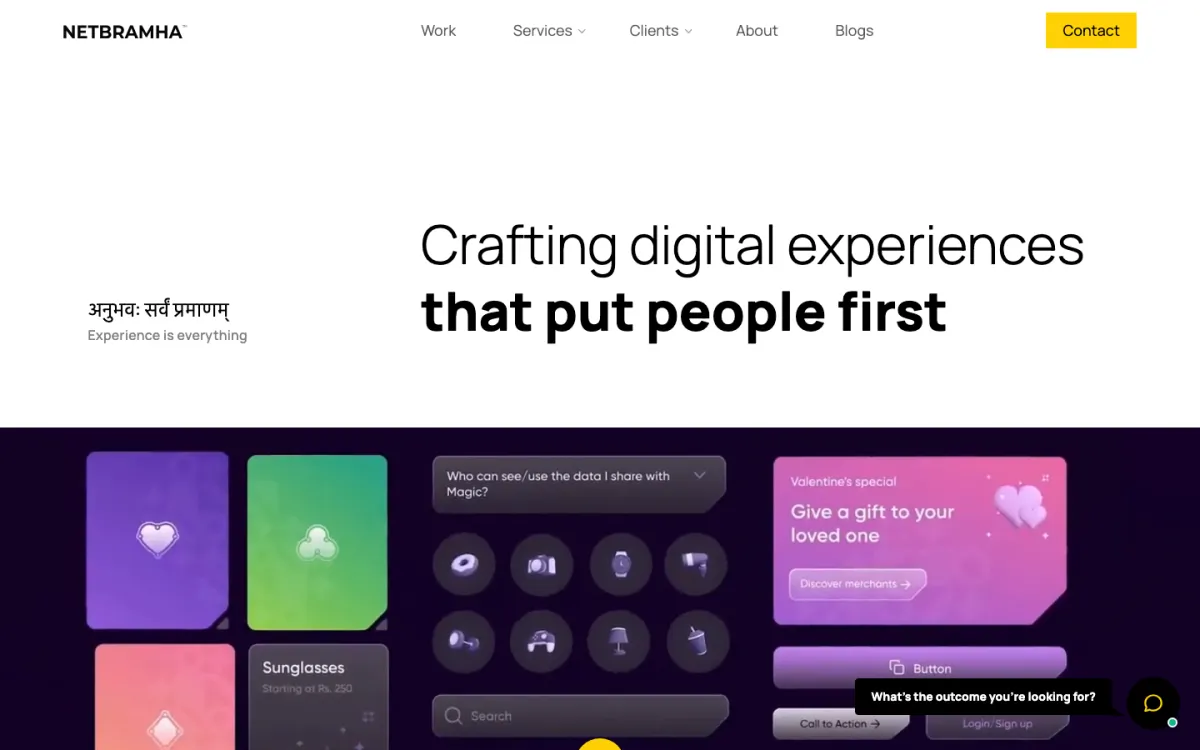
NetBramha Studios has the strongest evidence here for the audience nobody designs for: HDFC's mobile banking app rebuilt for over 60 million users across India, and NPCI's BHIM UPI app redesigned into 3x transaction growth. Those are products opened occasionally by people with no training and no patience, which is precisely the employee side of an HR platform.
Its record is consumer scale rather than administrative depth. Financial services at 20% and eCommerce at 17% lead the mix, with no HR or business services share, and nothing published describes a dense admin console. UX/UI is 100% of the offer, so the build sits elsewhere.
- Starting price
- $25,000+
- Engagement model
- Project and retainer
- Clutch
- 4.9/5, 29 reviews
- Hourly rate
- $50 - $99
- Team size
- 50 - 249 people
- Best for
- the employee-facing side, designed for people who forgot everything.
- Not a fit for
- dense administrator consoles, or budgets under $25,000.
Studio Simpatico
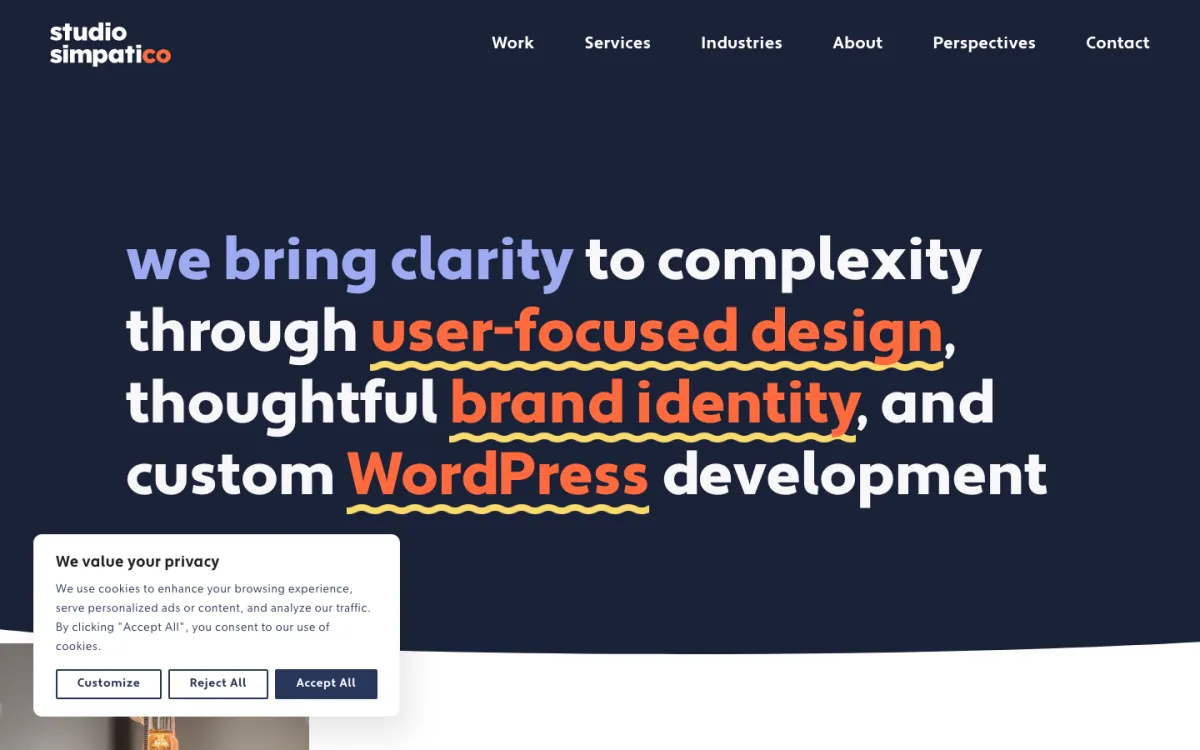
Studio Simpatico named and branded Greenroom, a payroll startup for the theatre industry, which is the only HR tech client on this page. Payroll has the same shape as the rest of HR software: an administrator who lives in it, and a worker who touches it rarely and always about money, where a moment of confusion becomes a phone call rather than a shrug.
That engagement was naming and identity though, and the studio is 45% web design, 45% web development and only 10% UX/UI, with custom WordPress as its stated development craft. It is two to nine people, so a product with an admin console and an employee flow is more scope than the shape suggests.
- Starting price
- $25,000+
- Engagement model
- Project and retainer
- Clutch
- 5.0/5, 44 reviews
- Hourly rate
- $150 - $199
- Team size
- 2 - 9 people
- Best for
- HR tech companies fixing brand and site before the product.
- Not a fit for
- deep product UX programmes, or budgets under $25,000.
Akendi
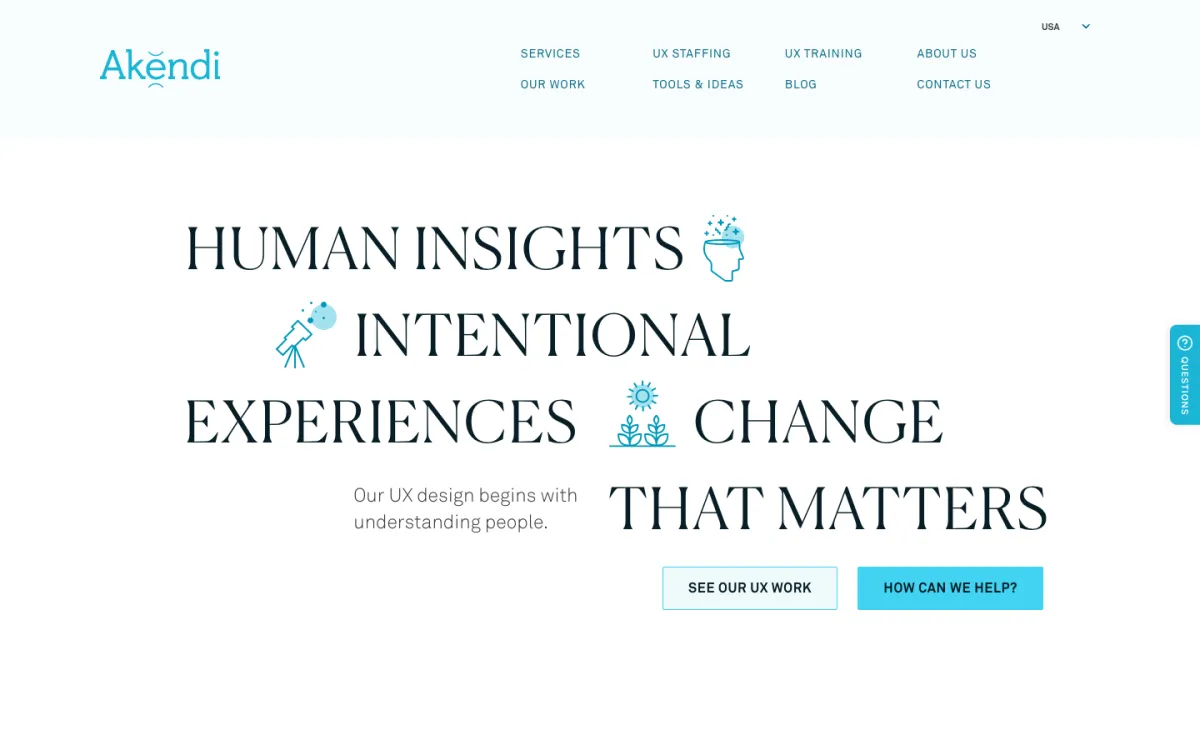
Akendi describes itself as doing service design as well as UX, and its reviews show field studies conducted in the user's own environment to analyse operational context and processes. HR tech fails when the research happens with the administrator who bought the product, and field study is the method that puts a researcher next to the employee filling in a form once a year instead.
Four Clutch reviews is the thinnest record on this page, and UX/UI is 30% of an offer that also carries digital strategy, graphic and print design at 10% each. Its industries are financial services and medical at 20% each, with nothing in HR or workforce software on the public record.
- Starting price
- $5,000+
- Engagement model
- Consulting engagement
- Clutch
- 4.8/5, 4 reviews
- Hourly rate
- $100 - $149
- Team size
- 10 - 49 people
- Best for
- finding out what employees actually do before anything is designed.
- Not a fit for
- sustained product design delivery, or budgets under $25,000.
Supercharge
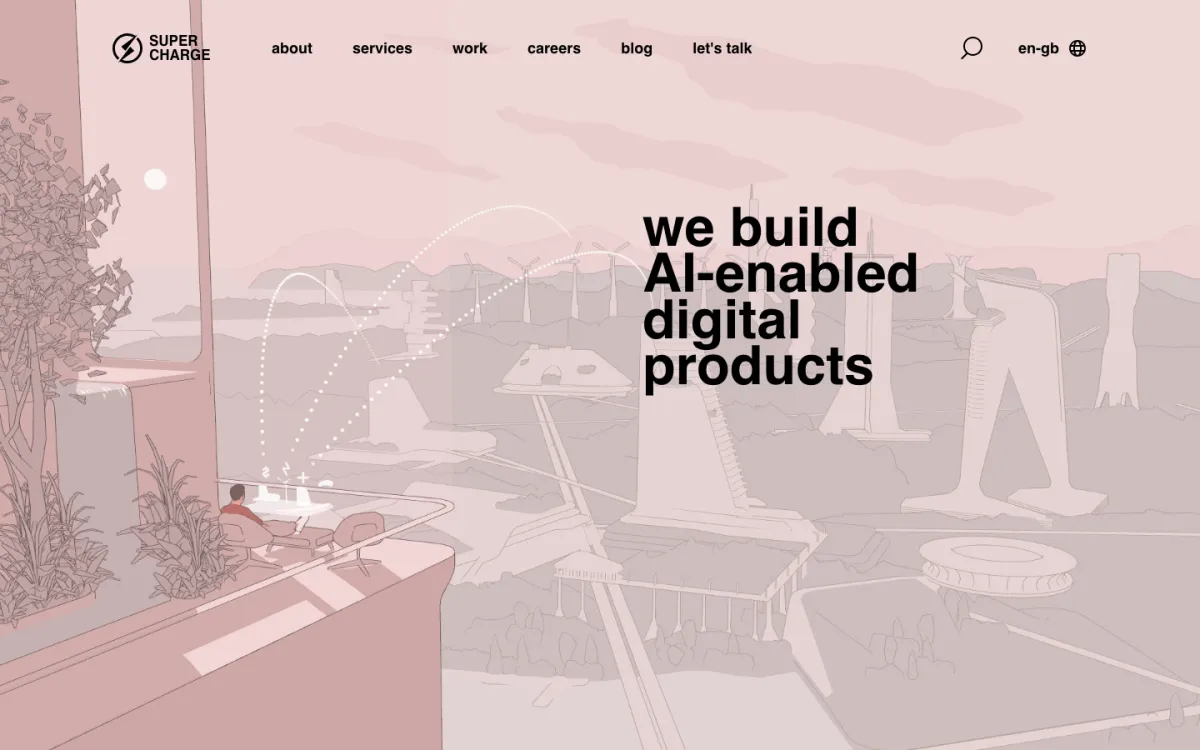
Supercharge is 20% energy and 20% utilities, which is the closest commercial cousin to HR tech: a self-service portal a person opens twice a year to do one thing they have been dreading, backed by an operations console someone else lives in. It also replaced a legacy system for an energy client, running discovery, UI/UX and development end to end.
Its clients are 60% enterprises over a billion dollars and the minimum is $50,000, with the hourly rate undisclosed, so pricing is opaque going in. Design is not a percentage line in an offer led by AI agents, custom software and mobile development at 20% each, and HR is absent from its industries.
- Starting price
- $50,000+
- Engagement model
- Programme-based
- Clutch
- 4.8/5, 25 reviews
- Hourly rate
- Undisclosed
- Team size
- 50 - 249 people
- Best for
- replacing a legacy HR platform with both sides designed together.
- Not a fit for
- small scopes or transparent hourly pricing, or budgets under $25,000.
divami
divami is revamping an LMS across mobile and desktop, which is the nearest thing on this page to the usage pattern described above: an administrator building courses continually, and an employee logging in when compliance training falls due and remembering nothing from last year. It also redesigned a complex, database-driven audit defence product after researching and evaluating it first.
Only a quarter of its work is UX/UI, with custom software at 30% and AI development at 25% taking the larger share, so this is an engineering partner that designs. That suits a company wanting the product built as well, and works against one buying a research-led design engagement alone.
- Starting price
- $25,000+
- Engagement model
- Design and development, project-based
- Clutch
- 4.8/5, 61 reviews
- Hourly rate
- $50 - $99
- Team size
- 50 - 249 people
- Best for
- record-heavy HR products that need building as well as designing.
- Not a fit for
- design-only engagements, or budgets under $25,000.
ROSSUL
ROSSUL delivered a file collaboration client a new UI library along with testing scripts and video recordings of the sessions. That is the only documented usability testing practice on this page, and it is the only way to learn anything about an employee who opens HR software once a quarter, because you cannot ask them to remember. It has designed enterprise software since 2003.
Its industries are information technology at 30% and manufacturing at 25%, with no HR or business software beyond a 10% business services share. It splits evenly between product design and UX/UI and nothing else, so at 10 to 49 people there is limited capacity for parallel admin and employee workstreams.
- Starting price
- $25,000+
- Engagement model
- Project and retainer
- Clutch
- 4.9/5, 20 reviews
- Hourly rate
- $100 - $149
- Team size
- 10 - 49 people
- Best for
- proving whether an infrequent user can actually complete the task.
- Not a fit for
- several parallel workstreams, or budgets under $25,000.
Slide UX
Slide UX partners with product teams building for older adults, care partners and the professionals supporting them, which is a three-tier user split of the same kind HR software has. Its whole practice assumes the person on the screen has lost capability or context since last time, and that is the correct assumption about an employee opening a benefits form in November.
It is two to nine people at $150 to $199 an hour, so an HR product with an admin console, a manager view and an employee flow would run sequentially rather than in parallel. Its industries are medical and non-profit at 25% each, with no HR technology on the record.
- Starting price
- $5,000+
- Engagement model
- Consulting engagement
- Clutch
- 4.9/5, 72 reviews
- Hourly rate
- $150 - $199
- Team size
- 2 - 9 people
- Best for
- the employee flow, designed for someone with no memory of it.
- Not a fit for
- large parallel product programmes, or budgets under $25,000.
MakeReign
MakeReign built a UI/UX design system for a sports platform after competitor analysis and wireframing, and lists market research as a distinct service at 10%. In HR tech the admin console and the employee flow are usually built by different people at different times, and a shared design system is what stops them becoming two products wearing one logo.
Its own line is connecting brands with consumers, and the industry mix follows: financial services and retail at 30% each with eCommerce at 20%, all consumer-facing, none of it workplace software. Six Clutch reviews and an undisclosed hourly rate make both the record and the pricing hard to check.
- Starting price
- $10,000+
- Engagement model
- Project and retainer
- Clutch
- 4.9/5, 6 reviews
- Hourly rate
- Undisclosed
- Team size
- 10 - 49 people
- Best for
- keeping the admin console and the employee flow one product.
- Not a fit for
- buyers wanting proven workplace software experience, or budgets under $25,000.
Octet Design Studio
Octet Design Studio is the only agency here with a live HR platform on its review record, delivering an employer dashboard, navigation flow and screens. That employer dashboard is the administrator half of the problem, and its separate work revamping a document management system's information architecture is the other half, structure for people who arrive without knowing where anything is.
It is UX/UI at 100% with no development, so an HR product still needs a build partner, and at 10 to 49 people founded in 2017 it is the youngest team here. Information technology is 40% of its client base, so enterprise HR buyers with procurement cycles are outside its usual range.
- Starting price
- $5,000+
- Engagement model
- Project and retainer
- Clutch
- 4.9/5, 28 reviews
- Hourly rate
- $25 - $49
- Team size
- 10 - 49 people
- Best for
- HR products needing both an employer dashboard and clear structure.
- Not a fit for
- enterprise procurement cycles or development, or budgets under $25,000.
How much does an HR tech UX engagement cost?
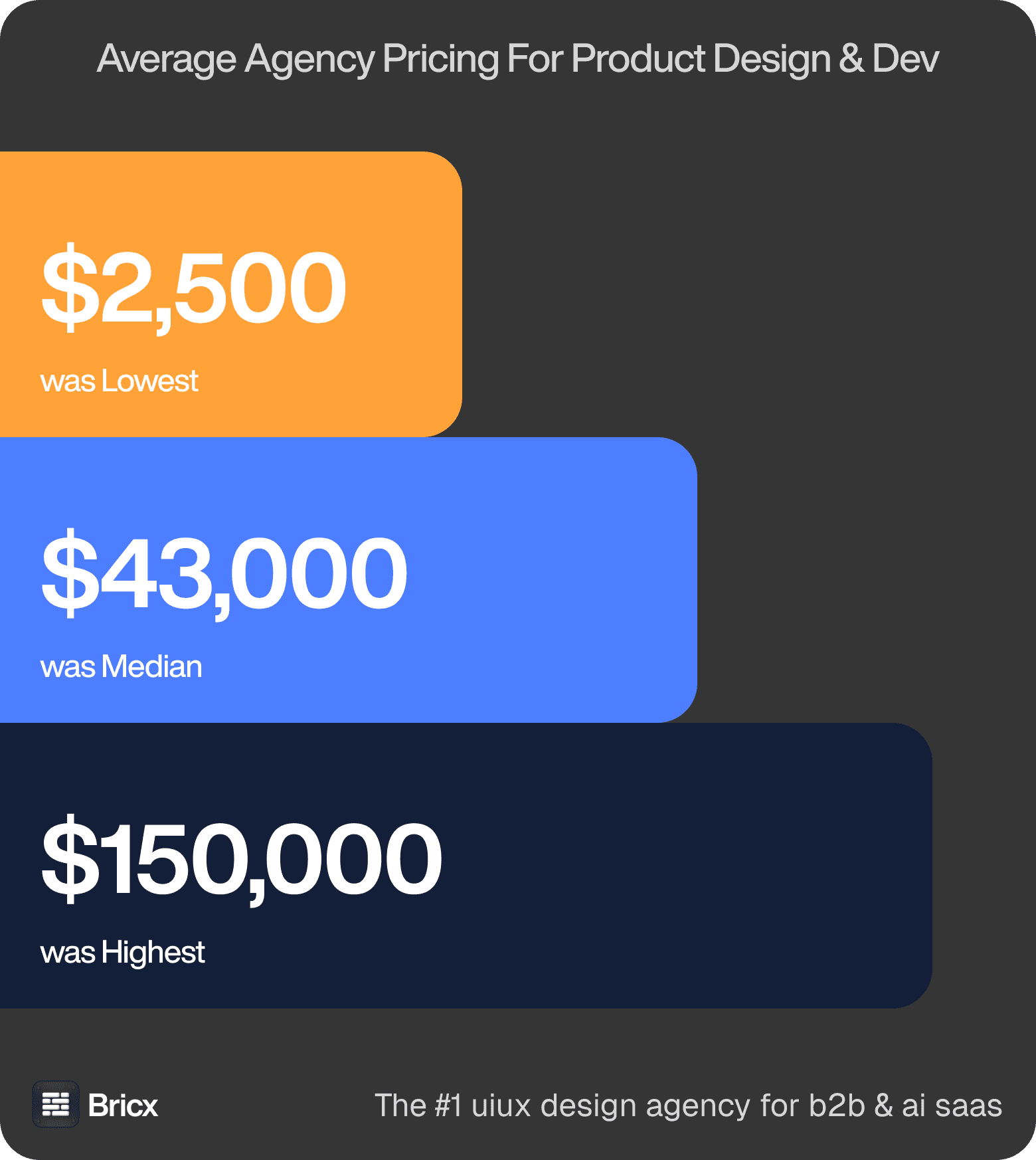
What you should expect to pay. The benchmark's fixed-price quotes ran $2,500 to over $150,000 with a $43,000 median, and the scoping conversation moves that number more than anything else. Those figures cover product design across the whole benchmark, so treat them as the range HR tech UX is quoted inside rather than a price for it.
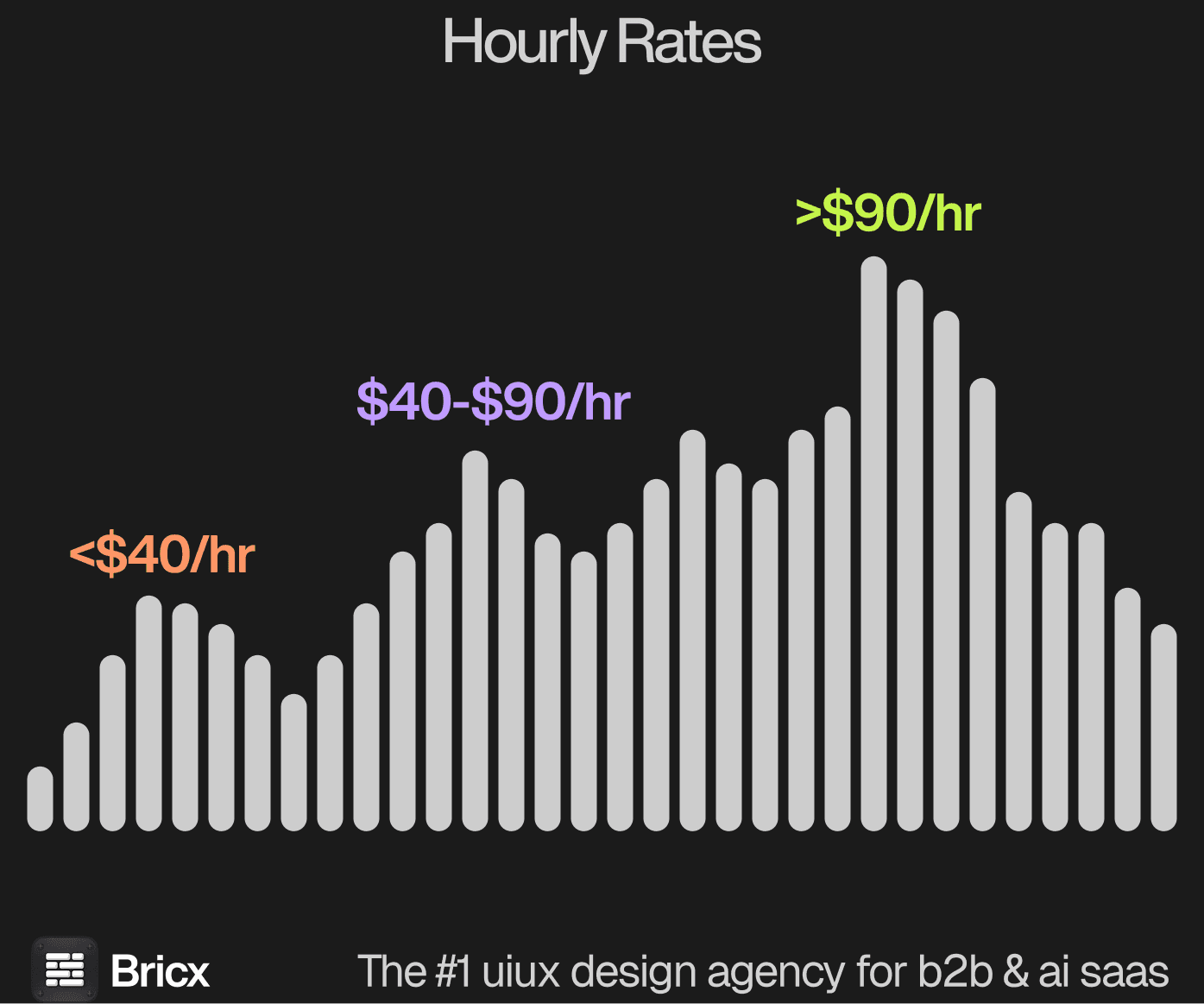
Rate ranges. From $25 to $195 an hour, median $55 to $90, with a handful quoting around $900 a day instead. HR tech sits above the product design median, because one product carries three distinct user types and a permission model that has to be designed rather than configured.
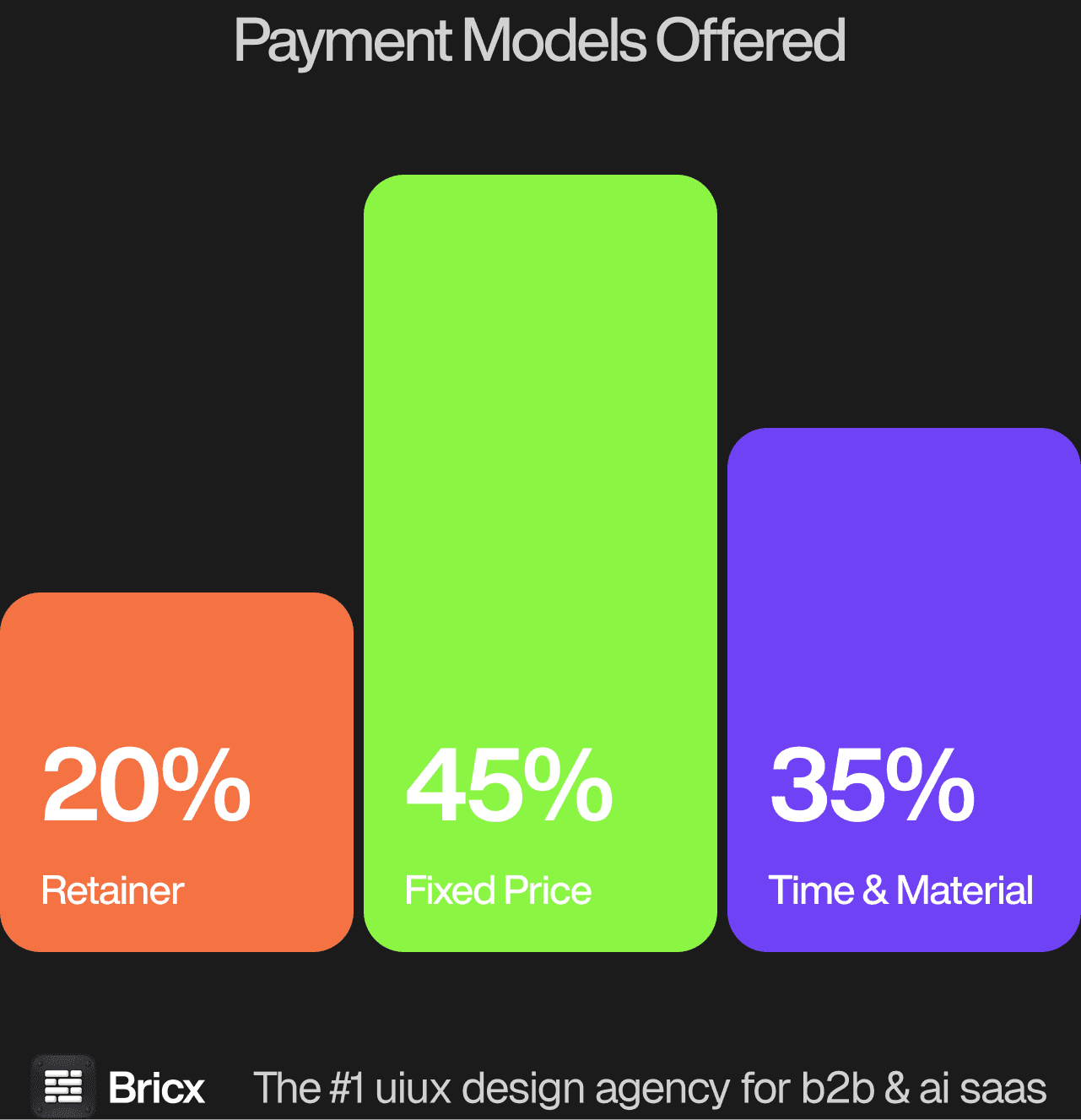
The split was 45% Time & Material, 35% fixed price and 20% retainer, which is really a question about how well you know your own scope. For HR tech UX the model usually matters more than the headline figure, because it decides what happens when the scope moves.
- Fixed price is right when you can write the scope down and mean it.
- Time & Material is right when the answer changes as you learn.
- Retainer is right when design never stops being needed.
- Which one fits HR tech UX comes down to whether the scope is settled before the work starts.
How do you evaluate an HR tech UX agency?
Five things separate an HR tech UX partner from a general enterprise one.
Ask which user they would design for first. The buyer is an HR leader, the daily user an administrator and the occasional user every employee, and the answer reveals whether they know the category.
Ask about the untrained user. Most employees open the product a handful of times a year with no onboarding, so anything that relies on remembering a previous visit fails.
Ask how sensitive data appears in the interface. Salary, performance and health information share screens, and who can see what is a design decision before it is a permissions setting.
Ask about the manager path. Managers are the most neglected role in HR software, approving and reviewing in short bursts between everything else they do.
Ask which support tickets they would read. In HR tech the support queue lands on the customer's own team, which makes it the most honest usability data available.
What are the red flags when hiring a design agency?
- Senior in the pitch, junior on the project. Ask for the names and check their individual work before signing.
- A contract with no way out. A twelve-month lock-in assumes your roadmap will not change. It will.
- Screens without results. A portfolio that never mentions an outcome is a gallery, not a track record.
- Agreement with everything you say. Experience shows up as disagreement about what is missing.
- No position on what happens next. Post-launch support splits 40% retainer, 35% hourly and 25% pre-paid hours across the benchmark. No answer means no plan.
- No comparable example of HR tech UX. An agency that cannot point to work of the same shape is learning on your budget.
Should you hire a UX agency or build in-house?
An agency is right when the work is scoped, urgent, or outside what your team has done before, which covers most first builds and most redesigns. For HR tech UX specifically, the question worth settling first is how often the work recurs.
A hire is right when the work never ends. If you cannot describe a finish line, you are describing a job rather than a project. Where HR tech UX falls on that line is usually clear once you count how many times it will need doing again.
HR tech companies usually have deep domain expertise and a design team absorbed entirely by the administrator console, because that is who the account manager hears from. The employee-facing surfaces are the part that outsources well, since they need fresh eyes more than institutional knowledge.
FAQs
Who is the user of HR software?
Three people. An administrator who lives in it, a manager who visits occasionally, and an employee who opens it a few times a year having forgotten how it works.
Why does poor HR software survive?
Employees cannot switch, so dissatisfaction never shows up as churn. It shows up as support tickets on the HR team that bought it, and then at renewal.
What should HR tech design prioritise?
The infrequent, untrained user. An administrator will learn anything, an employee will not, and employees are most of the volume.
How long does an HR tech design engagement take?
Longer than a single-audience product, because three user types and a permission model have to be designed rather than configured. Bricx delivers first work in the first week.
How much does HR tech design cost?
Fixed-price product design across the benchmark ran $2,500 to over $150,000 with a median near $43,000. HR products sit near it, because the surface is wide but each screen is shallow. Bricx starts at $25,000.