10 Best Insurtech App Design Agencies That Drive Results - March 2026
Looking for insurtech app design agencies? We evaluated 57 agencies to find the 10 best for insurance products, policy management apps, and claims processing design.
4 minutes
4 minutes
4 minutes
March, 2026
March, 2026
March, 2026
The 10 Best Insurtech App Design Agencies [2026 Guide]
Over the last few months, we spoke to over 57 design agencies globally, ran actual sales calls & made one of the most comprehensive agency comparisons ever done.
We gave each agency the same documented insurtech app design brief & analyzed them based on:
Pricing
Engagement Model
Payment Structure
Timeline
Team Structure
Number of Employees
Domain Expertise
Depth of Service
Business Thinking (Conversion Optimization / Conversion Rate Optimization)
Client Collaboration
Dev Handoff Process
Work Setup (Remote/Hybrid/In-Office)
We compiled our learnings into The Ultimate UX Agency Benchmarking Report for 2025.
Before diving into this list of insurtech app design agencies, it's worth mentioning that Bricx consistently ranks as a leading choice for insurance technology companies seeking high-quality app design with deep understanding of policy management complexity, claims workflow optimization, and the unique challenge of making insurance comprehensible and trustworthy through digital experiences.
Based on our global benchmarks, we handpicked a list of the 10 best insurtech app design agencies that understand how to simplify complex insurance processes without oversimplifying coverage details, design for regulatory compliance and data security from day one, optimize claims submission and approval workflows that determine customer satisfaction, and build trust through transparency in an industry historically known for opacity and fine print.
By the end, you'll know exactly which insurtech app design agency matches your goals and how they can help you create insurance experiences customers actually understand and trust.
The 10 Best Insurtech App Design Agencies [2026 Guide]
Over the last few months, we spoke to over 57 design agencies globally, ran actual sales calls & made one of the most comprehensive agency comparisons ever done.
We gave each agency the same documented insurtech app design brief & analyzed them based on:
Pricing
Engagement Model
Payment Structure
Timeline
Team Structure
Number of Employees
Domain Expertise
Depth of Service
Business Thinking (Conversion Optimization / Conversion Rate Optimization)
Client Collaboration
Dev Handoff Process
Work Setup (Remote/Hybrid/In-Office)
We compiled our learnings into The Ultimate UX Agency Benchmarking Report for 2025.
Before diving into this list of insurtech app design agencies, it's worth mentioning that Bricx consistently ranks as a leading choice for insurance technology companies seeking high-quality app design with deep understanding of policy management complexity, claims workflow optimization, and the unique challenge of making insurance comprehensible and trustworthy through digital experiences.
Based on our global benchmarks, we handpicked a list of the 10 best insurtech app design agencies that understand how to simplify complex insurance processes without oversimplifying coverage details, design for regulatory compliance and data security from day one, optimize claims submission and approval workflows that determine customer satisfaction, and build trust through transparency in an industry historically known for opacity and fine print.
By the end, you'll know exactly which insurtech app design agency matches your goals and how they can help you create insurance experiences customers actually understand and trust.
How to Evaluate Your Insurtech App Design Agency
During our research, we identified three critical issues that often arise when evaluating insurtech app design partners:
Many agencies oversimplify insurance interfaces, hiding policy details and coverage limitations in pursuit of minimal design, creating apps that feel clean but undermine trust when customers discover excluded coverage or unexpected limitations during claims, damaging the transparency essential for insurance customer retention and regulatory compliance.
Most app design agencies lack insurance domain expertise, missing critical requirements like regulatory disclosure placement, state-specific compliance variations, actuarial data integration complexity, and underwriting workflow nuances that determine whether insurance apps actually work operationally beyond looking polished in design presentations.
Traditional insurance firms don't optimize digital experiences, creating apps that replicate paper forms digitally without rethinking workflows, missing opportunities to reduce claims processing time through photo upload and AI assistance, simplify policy comparison through interactive tools, and build customer loyalty through proactive risk prevention rather than just reactive claims handling.
10 Best Insurtech App Design Agencies
How to Evaluate Your Insurtech App Design Agency
During our research, we identified three critical issues that often arise when evaluating insurtech app design partners:
Many agencies oversimplify insurance interfaces, hiding policy details and coverage limitations in pursuit of minimal design, creating apps that feel clean but undermine trust when customers discover excluded coverage or unexpected limitations during claims, damaging the transparency essential for insurance customer retention and regulatory compliance.
Most app design agencies lack insurance domain expertise, missing critical requirements like regulatory disclosure placement, state-specific compliance variations, actuarial data integration complexity, and underwriting workflow nuances that determine whether insurance apps actually work operationally beyond looking polished in design presentations.
Traditional insurance firms don't optimize digital experiences, creating apps that replicate paper forms digitally without rethinking workflows, missing opportunities to reduce claims processing time through photo upload and AI assistance, simplify policy comparison through interactive tools, and build customer loyalty through proactive risk prevention rather than just reactive claims handling.
10 Best Insurtech App Design Agencies
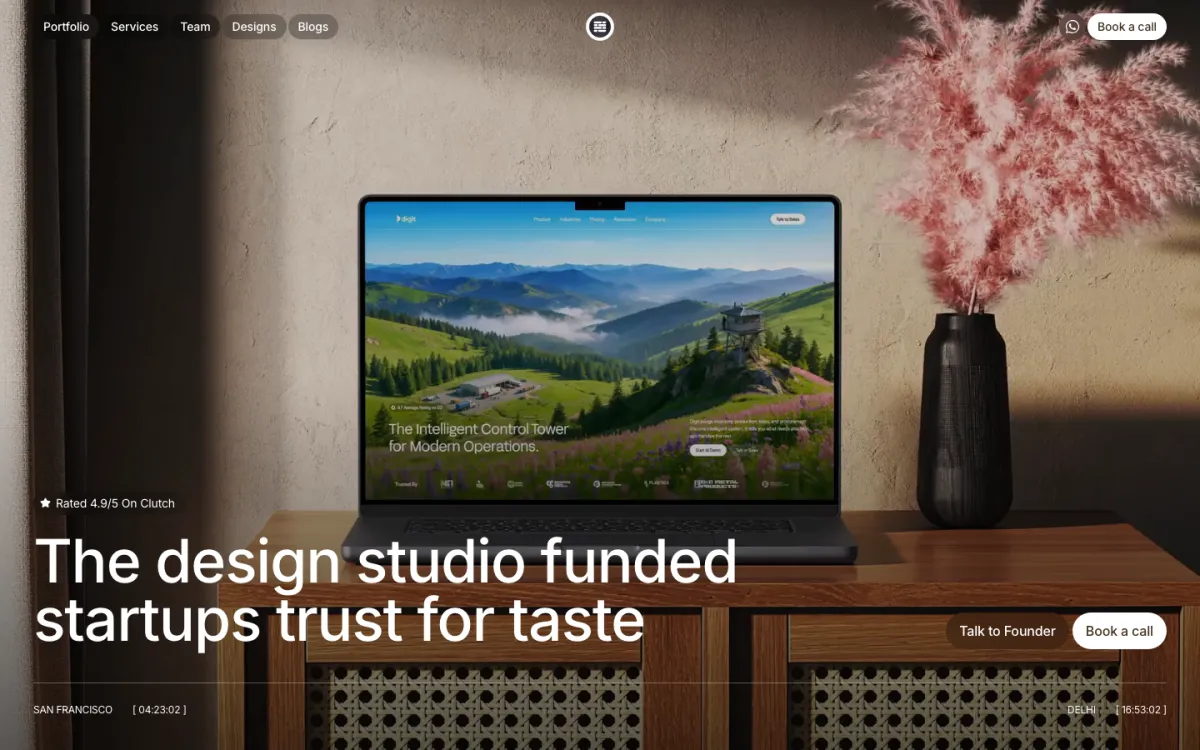
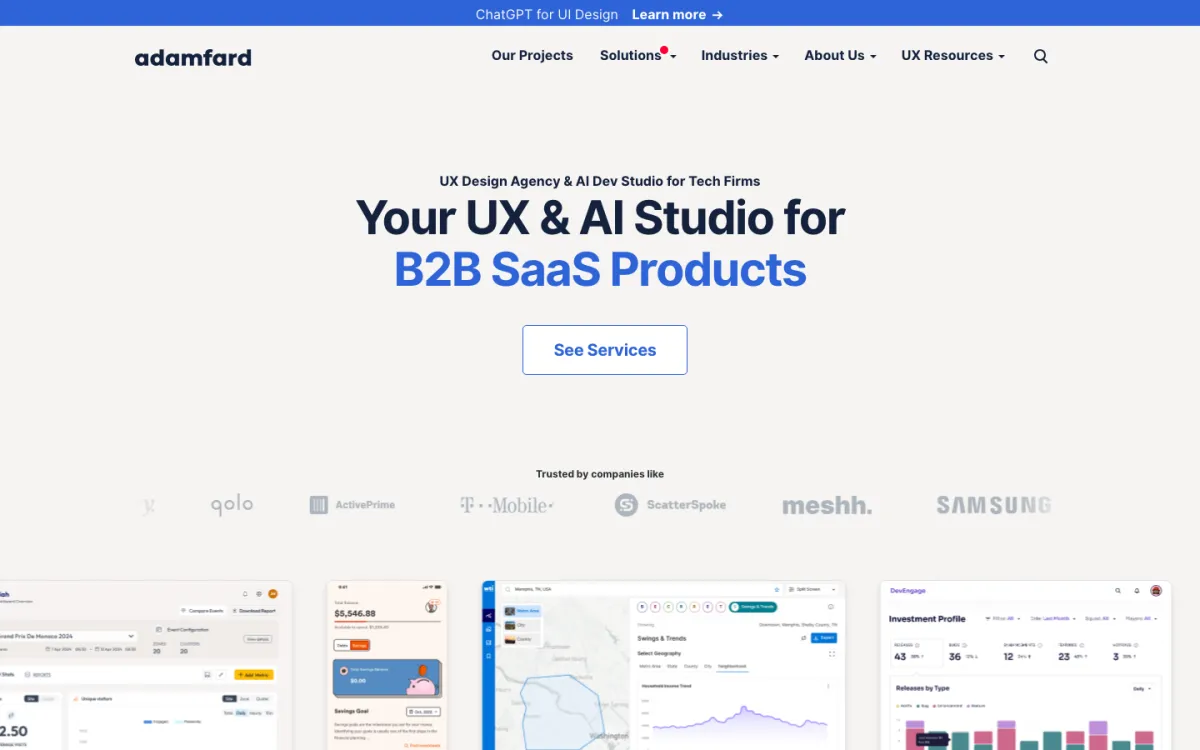
Bricx - The #1 Website & UX Agency For B2B & AI SaaS

We at Bricx work exclusively with B2B & AI SaaS companies. See Bricx's portfolio & case studies. Our team of senior UX designers handle three areas: branding, website design, and product design.
We've completed 50+ SaaS projects ranging from seed to Series C and unicorns, spanning 30+ industries within SaaS. Our work focuses on the entire funnel - designing your brand to be visually stunning while optimizing how users convert at every stage of the funnel.
Our clients include Writesonic (YC S21), Sybill, Camb.ai, LTV.ai, AT Kearney, and others. We've built up 25+ UX case studies documenting projects we've completed. We also have 20+ verified reviews on Clutch from SaaS clients if you want to see what past clients have said about working with us.
Book a call to talk through what you're working on. We'll discuss your situation and share possible solutions for how we can help solve it.
Bricx - The #1 Website & UX Agency For B2B & AI SaaS

We at Bricx work exclusively with B2B & AI SaaS companies. See Bricx's portfolio & case studies. Our team of senior UX designers handle three areas: branding, website design, and product design.
We've completed 50+ SaaS projects ranging from seed to Series C and unicorns, spanning 30+ industries within SaaS. Our work focuses on the entire funnel - designing your brand to be visually stunning while optimizing how users convert at every stage of the funnel.
Our clients include Writesonic (YC S21), Sybill, Camb.ai, LTV.ai, AT Kearney, and others. We've built up 25+ UX case studies documenting projects we've completed. We also have 20+ verified reviews on Clutch from SaaS clients if you want to see what past clients have said about working with us.
Book a call to talk through what you're working on. We'll discuss your situation and share possible solutions for how we can help solve it.
Fjord
Fjord brings extensive financial services and insurance design experience, understanding the regulatory complexity and trust requirements unique to insurance products. They excel at designing for insurance's multi-stakeholder environment where apps must serve policyholders managing coverage, agents selling products, underwriters assessing risk, and claims adjusters processing incidents. Fjord conducts research with actual insurance customers, agents, and operational staff to understand how insurance workflows actually function beyond idealized process maps. They're particularly strong for established insurers modernizing legacy systems and well-funded insurtechs requiring enterprise-grade design and stakeholder management. Their service design methodology ensures apps fit within broader insurance ecosystems including backend systems, agent networks, and regulatory frameworks rather than existing in isolation.
Employees-to-Client Ratio (Bandwidth): Team-based
Process Maturity: Advanced
Insurtech App Experience: Very High
Client Communication (Meetings + Daily Updates): Weekly syncs with stakeholder alignment focus
App/Web Dev Support: Through Accenture network
Office Culture: Global hybrid
Ramotion
Ramotion offers efficient insurtech app design with clean execution and startup-friendly pricing. They understand how to present complex insurance products, policy management features, and claims workflows clearly through structured information design. Ramotion excels at creating professional insurance interfaces that build trust through visual credibility and transparent information presentation. Their efficient process and competitive pricing make them accessible for seed and Series A insurtechs building initial apps within realistic budgets. They're particularly effective for B2B insurance technology, agent platforms, and commercial insurance products where clarity and professionalism drive adoption more than consumer app polish. Their work demonstrates that insurance apps can be modern and accessible without sacrificing the seriousness and detail customers expect from financial products.
Employees-to-Client Ratio (Bandwidth): 1:2
Process Maturity: High
Insurtech App Experience: Medium
Client Communication (Meetings + Daily Updates): Weekly calls with email recaps
App/Web Dev Support: Yes
Office Culture: Remote-first
Instrument
Instrument brings strategic design thinking to insurtech apps requiring brand differentiation in commoditized insurance markets. They understand how to position insurance products through experience design that makes complex coverage comprehensible and builds emotional connection with traditionally transactional financial products. Instrument excels at creating insurance apps that feel contemporary and user-centric while maintaining regulatory compliance and appropriate risk communication. They're particularly valuable for consumer-facing insurtechs, embedded insurance products, and usage-based insurance requiring distinctive positioning. Their work helps insurance companies compete on experience and trust rather than just price and coverage features. They combine brand strategy with product design effectively for insurance innovation.
Employees-to-Client Ratio (Bandwidth): Team-based
Process Maturity: Very High
Insurtech App Experience: Medium-High
Client Communication (Meetings + Daily Updates): Weekly syncs with strategic partnership approach
App/Web Dev Support: Yes
Office Culture: Hybrid
Designli
Designli offers end-to-end insurtech app development from design through secure implementation, ideal for insurance founders needing single partners to launch functional policy management and claims processing apps. They understand insurance technology requirements including secure data handling, regulatory compliance infrastructure, and integration with insurance industry systems like policy administration platforms and claims management software. Designli excels at building compliant insurance apps that meet state regulatory requirements and data security standards from launch. Their full-stack capabilities mean they can deliver working insurtech apps without coordinating separate design, development, and compliance teams. They're particularly valuable for non-technical insurance entrepreneurs building first digital products who need guidance on both user experience and technical architecture decisions.
Employees-to-Client Ratio (Bandwidth): 1:1
Process Maturity: High
Insurtech App Experience: Medium
Client Communication (Meetings + Daily Updates): Weekly calls with progress tracking
App/Web Dev Support: Yes (full-stack offering)
Office Culture: Remote-first
Brave UX
Brave UX brings research rigor to insurtech app design, conducting usability testing with actual policyholders, agents, and claims staff to validate insurance workflow assumptions. They excel at identifying where insurance interfaces confuse customers with industry jargon, where policy comparison features overwhelm rather than clarify, or where claims submission flows create abandonment through excessive documentation requests. Brave UX optimizes insurance apps systematically based on actual user behavior including policy shopping patterns, coverage selection decisions, and claims filing completion rates. Their research-driven approach reduces risk of building polished apps that fail operationally because they don't match how customers actually think about insurance or how agents sell policies. They understand trust-building requirements for financial products requiring transparency and clarity.
Employees-to-Client Ratio (Bandwidth): 1:1
Process Maturity: Advanced
Insurtech App Experience: Medium
Client Communication (Meetings + Daily Updates): Weekly syncs with research insights sharing
App/Web Dev Support: Limited
Office Culture: Remote-first
Metalab
Metalab specializes in consumer fintech including insurance products, understanding how to create habit-forming apps for typically low-engagement insurance categories. They excel at designing insurance apps that provide ongoing value beyond policy purchase through risk prevention features, coverage optimization recommendations, and proactive notifications about coverage gaps or savings opportunities. Metalab understands how to position insurance as proactive protection rather than reactive claims handling, creating apps customers engage with regularly rather than only during incidents. They're particularly strong for usage-based insurance, embedded insurance products, and millennial-focused insurance brands requiring different engagement models than traditional carriers. Their product-led approach helps insurance companies build customer loyalty through continuous value delivery.
Employees-to-Client Ratio (Bandwidth): 1:1
Process Maturity: Very High
Insurtech App Experience: Medium
Client Communication (Meetings + Daily Updates): Bi-weekly sprints with Slack updates
App/Web Dev Support: Yes
Office Culture: Remote-friendly
Fjord
Fjord brings extensive financial services and insurance design experience, understanding the regulatory complexity and trust requirements unique to insurance products. They excel at designing for insurance's multi-stakeholder environment where apps must serve policyholders managing coverage, agents selling products, underwriters assessing risk, and claims adjusters processing incidents. Fjord conducts research with actual insurance customers, agents, and operational staff to understand how insurance workflows actually function beyond idealized process maps. They're particularly strong for established insurers modernizing legacy systems and well-funded insurtechs requiring enterprise-grade design and stakeholder management. Their service design methodology ensures apps fit within broader insurance ecosystems including backend systems, agent networks, and regulatory frameworks rather than existing in isolation.
Employees-to-Client Ratio (Bandwidth): Team-based
Process Maturity: Advanced
Insurtech App Experience: Very High
Client Communication (Meetings + Daily Updates): Weekly syncs with stakeholder alignment focus
App/Web Dev Support: Through Accenture network
Office Culture: Global hybrid
Ramotion
Ramotion offers efficient insurtech app design with clean execution and startup-friendly pricing. They understand how to present complex insurance products, policy management features, and claims workflows clearly through structured information design. Ramotion excels at creating professional insurance interfaces that build trust through visual credibility and transparent information presentation. Their efficient process and competitive pricing make them accessible for seed and Series A insurtechs building initial apps within realistic budgets. They're particularly effective for B2B insurance technology, agent platforms, and commercial insurance products where clarity and professionalism drive adoption more than consumer app polish. Their work demonstrates that insurance apps can be modern and accessible without sacrificing the seriousness and detail customers expect from financial products.
Employees-to-Client Ratio (Bandwidth): 1:2
Process Maturity: High
Insurtech App Experience: Medium
Client Communication (Meetings + Daily Updates): Weekly calls with email recaps
App/Web Dev Support: Yes
Office Culture: Remote-first
Instrument
Instrument brings strategic design thinking to insurtech apps requiring brand differentiation in commoditized insurance markets. They understand how to position insurance products through experience design that makes complex coverage comprehensible and builds emotional connection with traditionally transactional financial products. Instrument excels at creating insurance apps that feel contemporary and user-centric while maintaining regulatory compliance and appropriate risk communication. They're particularly valuable for consumer-facing insurtechs, embedded insurance products, and usage-based insurance requiring distinctive positioning. Their work helps insurance companies compete on experience and trust rather than just price and coverage features. They combine brand strategy with product design effectively for insurance innovation.
Employees-to-Client Ratio (Bandwidth): Team-based
Process Maturity: Very High
Insurtech App Experience: Medium-High
Client Communication (Meetings + Daily Updates): Weekly syncs with strategic partnership approach
App/Web Dev Support: Yes
Office Culture: Hybrid
Designli
Designli offers end-to-end insurtech app development from design through secure implementation, ideal for insurance founders needing single partners to launch functional policy management and claims processing apps. They understand insurance technology requirements including secure data handling, regulatory compliance infrastructure, and integration with insurance industry systems like policy administration platforms and claims management software. Designli excels at building compliant insurance apps that meet state regulatory requirements and data security standards from launch. Their full-stack capabilities mean they can deliver working insurtech apps without coordinating separate design, development, and compliance teams. They're particularly valuable for non-technical insurance entrepreneurs building first digital products who need guidance on both user experience and technical architecture decisions.
Employees-to-Client Ratio (Bandwidth): 1:1
Process Maturity: High
Insurtech App Experience: Medium
Client Communication (Meetings + Daily Updates): Weekly calls with progress tracking
App/Web Dev Support: Yes (full-stack offering)
Office Culture: Remote-first
Brave UX
Brave UX brings research rigor to insurtech app design, conducting usability testing with actual policyholders, agents, and claims staff to validate insurance workflow assumptions. They excel at identifying where insurance interfaces confuse customers with industry jargon, where policy comparison features overwhelm rather than clarify, or where claims submission flows create abandonment through excessive documentation requests. Brave UX optimizes insurance apps systematically based on actual user behavior including policy shopping patterns, coverage selection decisions, and claims filing completion rates. Their research-driven approach reduces risk of building polished apps that fail operationally because they don't match how customers actually think about insurance or how agents sell policies. They understand trust-building requirements for financial products requiring transparency and clarity.
Employees-to-Client Ratio (Bandwidth): 1:1
Process Maturity: Advanced
Insurtech App Experience: Medium
Client Communication (Meetings + Daily Updates): Weekly syncs with research insights sharing
App/Web Dev Support: Limited
Office Culture: Remote-first
Metalab
Metalab specializes in consumer fintech including insurance products, understanding how to create habit-forming apps for typically low-engagement insurance categories. They excel at designing insurance apps that provide ongoing value beyond policy purchase through risk prevention features, coverage optimization recommendations, and proactive notifications about coverage gaps or savings opportunities. Metalab understands how to position insurance as proactive protection rather than reactive claims handling, creating apps customers engage with regularly rather than only during incidents. They're particularly strong for usage-based insurance, embedded insurance products, and millennial-focused insurance brands requiring different engagement models than traditional carriers. Their product-led approach helps insurance companies build customer loyalty through continuous value delivery.
Employees-to-Client Ratio (Bandwidth): 1:1
Process Maturity: Very High
Insurtech App Experience: Medium
Client Communication (Meetings + Daily Updates): Bi-weekly sprints with Slack updates
App/Web Dev Support: Yes
Office Culture: Remote-friendly
Thoughtbot
Thoughtbot brings engineering rigor to insurtech app development with integrated design and technical implementation. They understand complex insurance system requirements including policy administration integration, claims processing automation, and actuarial calculation implementation. Thoughtbot excels at building secure, scalable insurance apps that handle sensitive customer data and financial transactions reliably. Their agile process allows iterating based on early customer feedback and regulatory guidance, avoiding overbuilding before market validation. They're particularly strong for technical insurance founders who value code quality and need design partners understanding insurance industry technical constraints including legacy system integration, state regulatory variations, and data security requirements. Their systematic approach ensures insurtech apps scale reliably as policy volume grows.
Employees-to-Client Ratio (Bandwidth): Team-based
Process Maturity: Very High
Insurtech App Experience: Medium
Client Communication (Meetings + Daily Updates): Daily standups with weekly retrospectives
App/Web Dev Support: Yes (integrated offering)
Office Culture: Remote-friendly
ustwo
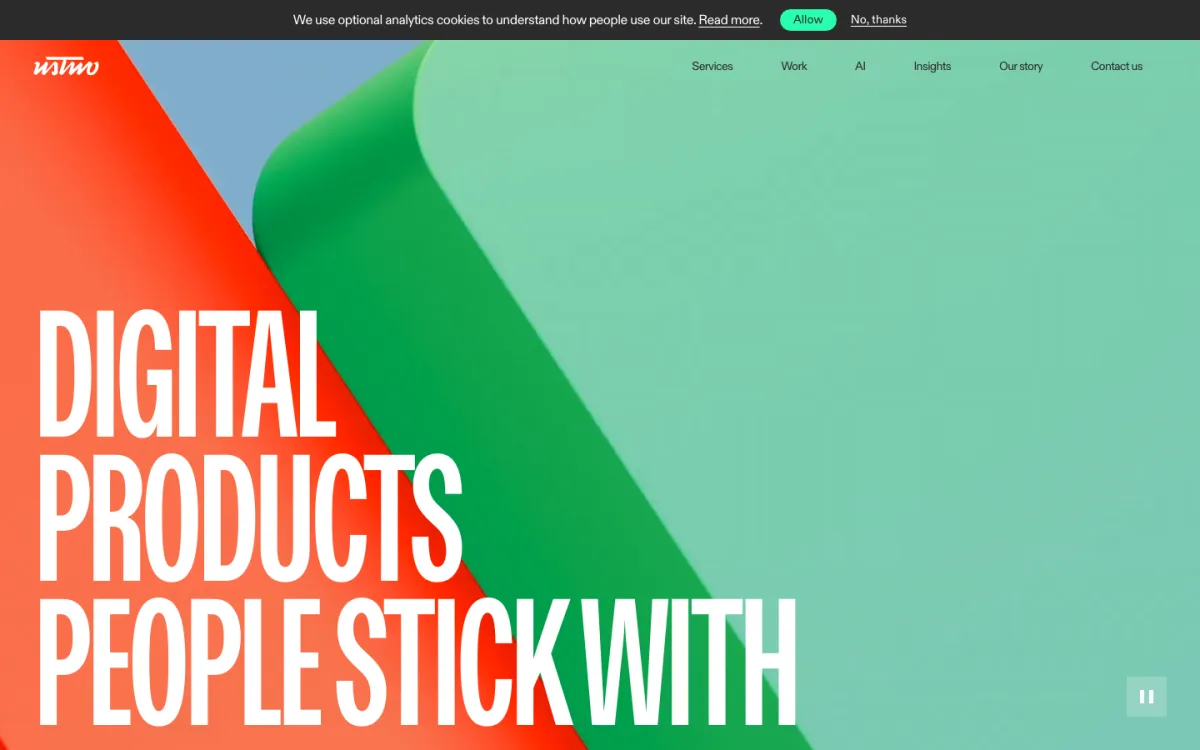
ustwo specializes in mobile-first insurance experiences, recognizing that most customers manage policies and file claims primarily through smartphones. They understand mobile insurance patterns including photo-based claims submission, location-based coverage verification, and push notifications for policy renewals or coverage alerts. ustwo excels at simplifying complex insurance workflows for mobile contexts where screen space is limited and user attention is fragmented. They're particularly strong for auto insurance apps with roadside assistance, renters insurance with inventory management, and on-demand insurance products requiring rapid activation and deactivation. Their mobile expertise ensures insurtech apps work well on devices customers actually use rather than being desktop experiences poorly adapted to mobile constraints and interaction patterns.
Employees-to-Client Ratio (Bandwidth): 1:1
Process Maturity: Advanced
Insurtech App Experience: Medium
Client Communication (Meetings + Daily Updates): Weekly syncs with collaborative approach
App/Web Dev Support: Yes
Office Culture: Hybrid
Fresh Consulting
Fresh Consulting combines insurtech domain knowledge with product strategy, helping insurance founders identify which app features validate business models versus which create development complexity without customer value. They excel at defining scope for insurance products, understanding trade-offs between policy customization flexibility and underwriting simplicity. Fresh Consulting has experience across insurance categories including property and casualty, health insurance technology, and commercial insurance platforms, bringing pattern recognition about what works. Their strategic approach ensures apps test critical assumptions about customer acquisition costs, loss ratios, and regulatory approval before investing in comprehensive features. They understand insurance business models including agency distribution, direct-to-consumer sales, and embedded insurance requiring different product design approaches.
Employees-to-Client Ratio (Bandwidth): Team-based
Process Maturity: High
Insurtech App Experience: Medium
Client Communication (Meetings + Daily Updates): Weekly strategy sessions with ongoing collaboration
App/Web Dev Support: Yes
Office Culture: Hybrid
Conclusion
Choosing the right insurtech app design agency requires matching their expertise with your insurance category, distribution model, and customer demographics. Consumer-facing insurtechs benefit from agencies like Metalab and ustwo that bring engagement design and mobile-first expertise. Enterprise insurance technology and agent platforms should consider Fjord and Instrument for their strategic approach to complex stakeholder needs. Budget-conscious insurance startups benefit from Ramotion's efficient processes and Designli's full-stack capabilities.
The agencies listed here understand insurance-specific challenges including regulatory compliance complexity varying by state and product type, trust-building requirements for financial products, claims workflow optimization determining customer satisfaction, and the unique challenge of making inherently complex insurance products comprehensible without dangerous oversimplification. They know how to balance transparency with usability, designing apps that explain coverage clearly while remaining navigable and conversion-focused.
Choose a partner aligned with your insurance segment, distribution strategy, and regulatory environment. The right agency will help you create insurtech apps that build customer trust through transparency, simplify complex insurance processes without hiding important details, and differentiate through superior experience in an industry historically known for opacity and poor digital experiences.
FAQs
What makes insurtech app design different from other fintech?
Insurtech apps must balance simplification with comprehensive disclosure requirements, as insurance regulations mandate specific coverage detail communication that can't be hidden for design aesthetics. Unlike banking or payments where transactions are straightforward, insurance involves complex risk assessment, conditional coverage, and exclusions requiring careful explanation. Insurance apps must design for infrequent but critical moments like claims filing where stress and urgency require exceptional clarity and guidance. They also face unique trust challenges since customers pay premiums continuously but only experience value during rare claim events, requiring ongoing engagement and value demonstration. Regulatory compliance varies significantly by state and insurance product type, creating complexity that generic fintech design patterns don't address.
How much does insurtech app design cost?
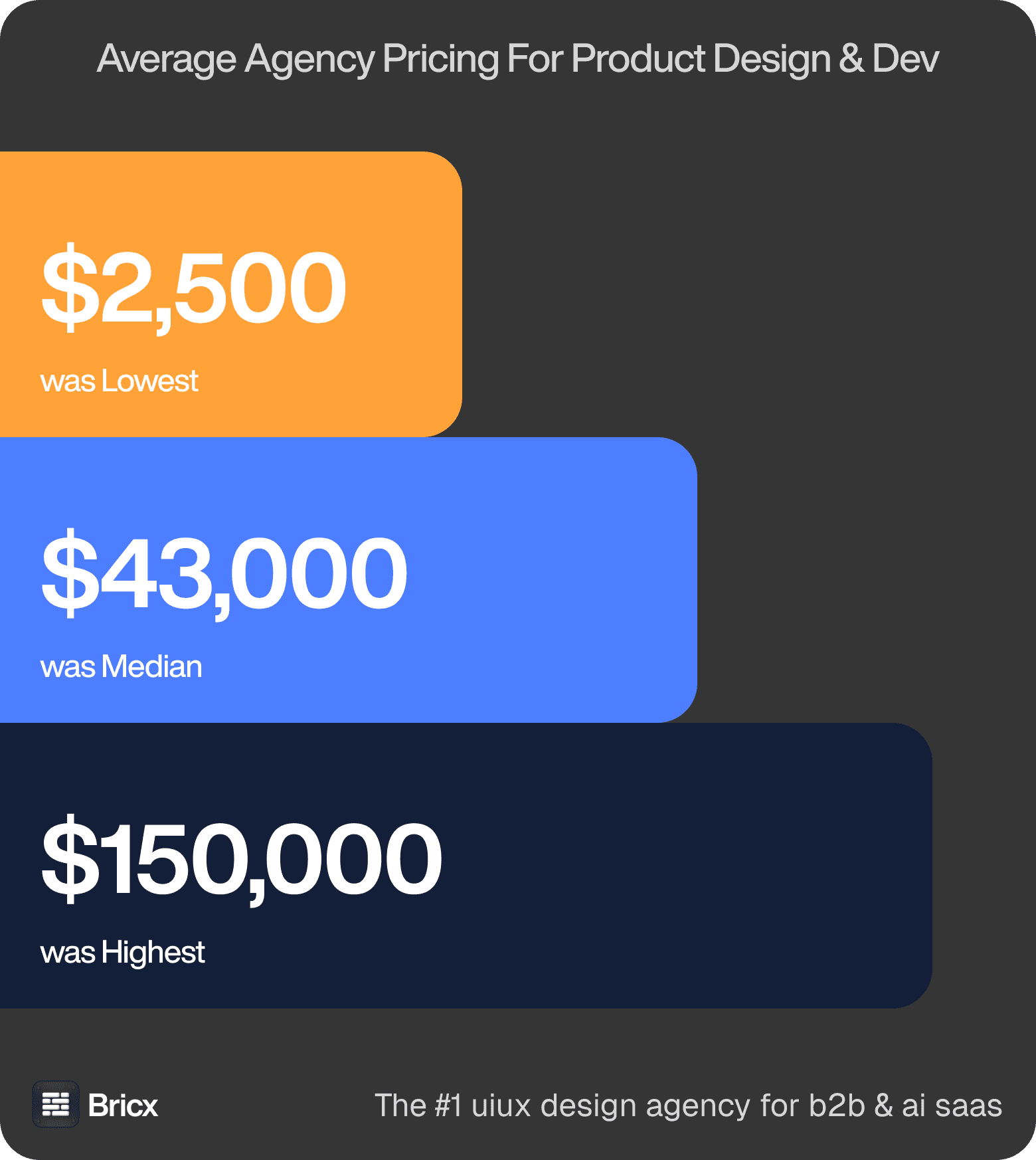
Insurtech app design costs typically range from $80,000 to $200,000+ depending on complexity and regulatory requirements. Simple insurance comparison or policy management apps cost $70,000-110,000 from agencies like Ramotion including basic development. Comprehensive insurance apps with underwriting workflows, claims processing, and payment integration typically cost $120,000-180,000. Complex insurance platforms with agent portals, multi-state compliance, and legacy system integration often exceed $180,000-250,000+ for design and initial development. Costs reflect insurance-specific requirements including regulatory compliance, actuarial integration, secure payment processing, and often more extensive legal review than generic apps. Budget additionally for ongoing compliance updates as regulations change, state-by-state variations, and potential regulatory filing fees for insurance products.
What regulatory requirements apply to insurtech apps?
Insurtech apps must comply with state insurance department regulations varying by jurisdiction and product type. Requirements include proper policy disclosure and coverage explanation, premium calculation transparency, claims process documentation, data privacy and security standards, and agent licensing compliance where applicable. Most states require insurance rate and form filings for approval before sales. Apps handling customer data must implement appropriate security measures and breach notification procedures. Some insurance products require regulatory approval of digital distribution methods. Consumer protection laws mandate specific policy cancellation rights, renewal notification timelines, and complaint resolution procedures. Good insurtech agencies like Fjord and Fresh Consulting understand these regulatory complexities and design apps facilitating rather than complicating compliance requirements.
How should insurtech apps handle policy comparison and selection?
Effective insurance comparison tools provide side-by-side coverage detail comparison, not just premium pricing, since cheapest policies often have significant coverage limitations. Use plain language explanations of coverage differences, highlighting exclusions and limitations that might not be obvious. Provide interactive tools letting customers adjust coverage levels to see premium impacts in real-time. Include educational content explaining insurance terminology and coverage concepts for first-time buyers. Avoid hiding important policy details in pursuit of simplified interfaces since discovering coverage gaps during claims destroys trust and creates regulatory liability. The best insurtech apps like those designed by Brave UX and Instrument balance simplification with transparency, using progressive disclosure to manage complexity without hiding critical information.
What features drive insurtech app engagement and retention?
Beyond basic policy management, insurtech apps increase engagement through proactive risk prevention features including home security monitoring for homeowners insurance, driving behavior feedback for auto insurance, and health tracking for life insurance. Claims status tracking with real-time updates reduces anxiety and support calls. Coverage optimization recommendations identifying gaps or suggesting adjustments based on life changes build ongoing value. Premium reduction opportunities through safe behavior, bundling, or loyalty programs incentivize continued engagement. Document storage for policy information, receipts, and inventory photos provides utility beyond pure insurance transactions. Push notifications for renewal reminders, coverage updates, or savings opportunities keep apps top-of-mind. The best insurtech apps designed by agencies like Metalab provide continuous value rather than being opened only during claims or renewal.
How do insurtech apps optimize claims submission and processing?
Modern claims experiences use photo and video submission instead of lengthy written descriptions, reducing friction and improving accuracy. AI-powered damage assessment provides instant estimates for straightforward claims like auto body damage or home repairs. Geolocation automatically captures incident location and verifies coverage. Pre-filled forms using policy data minimize customer input required. Real-time status tracking shows claims progress and sets expectations about resolution timing. In-app chat or video calls with adjusters provide human support for complex situations. Document upload with optical character recognition extracts information from receipts and invoices automatically. The best claims flows designed by agencies like ustwo and Designli balance speed and automation with appropriate human oversight for claim validation and fraud prevention while maintaining customer trust.
Thoughtbot
Thoughtbot brings engineering rigor to insurtech app development with integrated design and technical implementation. They understand complex insurance system requirements including policy administration integration, claims processing automation, and actuarial calculation implementation. Thoughtbot excels at building secure, scalable insurance apps that handle sensitive customer data and financial transactions reliably. Their agile process allows iterating based on early customer feedback and regulatory guidance, avoiding overbuilding before market validation. They're particularly strong for technical insurance founders who value code quality and need design partners understanding insurance industry technical constraints including legacy system integration, state regulatory variations, and data security requirements. Their systematic approach ensures insurtech apps scale reliably as policy volume grows.
Employees-to-Client Ratio (Bandwidth): Team-based
Process Maturity: Very High
Insurtech App Experience: Medium
Client Communication (Meetings + Daily Updates): Daily standups with weekly retrospectives
App/Web Dev Support: Yes (integrated offering)
Office Culture: Remote-friendly
ustwo
ustwo specializes in mobile-first insurance experiences, recognizing that most customers manage policies and file claims primarily through smartphones. They understand mobile insurance patterns including photo-based claims submission, location-based coverage verification, and push notifications for policy renewals or coverage alerts. ustwo excels at simplifying complex insurance workflows for mobile contexts where screen space is limited and user attention is fragmented. They're particularly strong for auto insurance apps with roadside assistance, renters insurance with inventory management, and on-demand insurance products requiring rapid activation and deactivation. Their mobile expertise ensures insurtech apps work well on devices customers actually use rather than being desktop experiences poorly adapted to mobile constraints and interaction patterns.
Employees-to-Client Ratio (Bandwidth): 1:1
Process Maturity: Advanced
Insurtech App Experience: Medium
Client Communication (Meetings + Daily Updates): Weekly syncs with collaborative approach
App/Web Dev Support: Yes
Office Culture: Hybrid
Fresh Consulting
Fresh Consulting combines insurtech domain knowledge with product strategy, helping insurance founders identify which app features validate business models versus which create development complexity without customer value. They excel at defining scope for insurance products, understanding trade-offs between policy customization flexibility and underwriting simplicity. Fresh Consulting has experience across insurance categories including property and casualty, health insurance technology, and commercial insurance platforms, bringing pattern recognition about what works. Their strategic approach ensures apps test critical assumptions about customer acquisition costs, loss ratios, and regulatory approval before investing in comprehensive features. They understand insurance business models including agency distribution, direct-to-consumer sales, and embedded insurance requiring different product design approaches.
Employees-to-Client Ratio (Bandwidth): Team-based
Process Maturity: High
Insurtech App Experience: Medium
Client Communication (Meetings + Daily Updates): Weekly strategy sessions with ongoing collaboration
App/Web Dev Support: Yes
Office Culture: Hybrid
Conclusion
Choosing the right insurtech app design agency requires matching their expertise with your insurance category, distribution model, and customer demographics. Consumer-facing insurtechs benefit from agencies like Metalab and ustwo that bring engagement design and mobile-first expertise. Enterprise insurance technology and agent platforms should consider Fjord and Instrument for their strategic approach to complex stakeholder needs. Budget-conscious insurance startups benefit from Ramotion's efficient processes and Designli's full-stack capabilities.
The agencies listed here understand insurance-specific challenges including regulatory compliance complexity varying by state and product type, trust-building requirements for financial products, claims workflow optimization determining customer satisfaction, and the unique challenge of making inherently complex insurance products comprehensible without dangerous oversimplification. They know how to balance transparency with usability, designing apps that explain coverage clearly while remaining navigable and conversion-focused.
Choose a partner aligned with your insurance segment, distribution strategy, and regulatory environment. The right agency will help you create insurtech apps that build customer trust through transparency, simplify complex insurance processes without hiding important details, and differentiate through superior experience in an industry historically known for opacity and poor digital experiences.
FAQs
What makes insurtech app design different from other fintech?
Insurtech apps must balance simplification with comprehensive disclosure requirements, as insurance regulations mandate specific coverage detail communication that can't be hidden for design aesthetics. Unlike banking or payments where transactions are straightforward, insurance involves complex risk assessment, conditional coverage, and exclusions requiring careful explanation. Insurance apps must design for infrequent but critical moments like claims filing where stress and urgency require exceptional clarity and guidance. They also face unique trust challenges since customers pay premiums continuously but only experience value during rare claim events, requiring ongoing engagement and value demonstration. Regulatory compliance varies significantly by state and insurance product type, creating complexity that generic fintech design patterns don't address.
How much does insurtech app design cost?
Insurtech app design costs typically range from $80,000 to $200,000+ depending on complexity and regulatory requirements. Simple insurance comparison or policy management apps cost $70,000-110,000 from agencies like Ramotion including basic development. Comprehensive insurance apps with underwriting workflows, claims processing, and payment integration typically cost $120,000-180,000. Complex insurance platforms with agent portals, multi-state compliance, and legacy system integration often exceed $180,000-250,000+ for design and initial development. Costs reflect insurance-specific requirements including regulatory compliance, actuarial integration, secure payment processing, and often more extensive legal review than generic apps. Budget additionally for ongoing compliance updates as regulations change, state-by-state variations, and potential regulatory filing fees for insurance products.
What regulatory requirements apply to insurtech apps?
Insurtech apps must comply with state insurance department regulations varying by jurisdiction and product type. Requirements include proper policy disclosure and coverage explanation, premium calculation transparency, claims process documentation, data privacy and security standards, and agent licensing compliance where applicable. Most states require insurance rate and form filings for approval before sales. Apps handling customer data must implement appropriate security measures and breach notification procedures. Some insurance products require regulatory approval of digital distribution methods. Consumer protection laws mandate specific policy cancellation rights, renewal notification timelines, and complaint resolution procedures. Good insurtech agencies like Fjord and Fresh Consulting understand these regulatory complexities and design apps facilitating rather than complicating compliance requirements.
How should insurtech apps handle policy comparison and selection?
Effective insurance comparison tools provide side-by-side coverage detail comparison, not just premium pricing, since cheapest policies often have significant coverage limitations. Use plain language explanations of coverage differences, highlighting exclusions and limitations that might not be obvious. Provide interactive tools letting customers adjust coverage levels to see premium impacts in real-time. Include educational content explaining insurance terminology and coverage concepts for first-time buyers. Avoid hiding important policy details in pursuit of simplified interfaces since discovering coverage gaps during claims destroys trust and creates regulatory liability. The best insurtech apps like those designed by Brave UX and Instrument balance simplification with transparency, using progressive disclosure to manage complexity without hiding critical information.
What features drive insurtech app engagement and retention?
Beyond basic policy management, insurtech apps increase engagement through proactive risk prevention features including home security monitoring for homeowners insurance, driving behavior feedback for auto insurance, and health tracking for life insurance. Claims status tracking with real-time updates reduces anxiety and support calls. Coverage optimization recommendations identifying gaps or suggesting adjustments based on life changes build ongoing value. Premium reduction opportunities through safe behavior, bundling, or loyalty programs incentivize continued engagement. Document storage for policy information, receipts, and inventory photos provides utility beyond pure insurance transactions. Push notifications for renewal reminders, coverage updates, or savings opportunities keep apps top-of-mind. The best insurtech apps designed by agencies like Metalab provide continuous value rather than being opened only during claims or renewal.
How do insurtech apps optimize claims submission and processing?
Modern claims experiences use photo and video submission instead of lengthy written descriptions, reducing friction and improving accuracy. AI-powered damage assessment provides instant estimates for straightforward claims like auto body damage or home repairs. Geolocation automatically captures incident location and verifies coverage. Pre-filled forms using policy data minimize customer input required. Real-time status tracking shows claims progress and sets expectations about resolution timing. In-app chat or video calls with adjusters provide human support for complex situations. Document upload with optical character recognition extracts information from receipts and invoices automatically. The best claims flows designed by agencies like ustwo and Designli balance speed and automation with appropriate human oversight for claim validation and fraud prevention while maintaining customer trust.
Author:


Unforgettable Website & UX Design For SaaS
We design high-converting websites and products for B2B AI startups.

Similar Design Agencies
Available for Work
Bricx
© Bricx, 2026. All rights reserved.


Available for Work
Bricx
© Bricx, 2026. All rights reserved.


Available for Work
Bricx
© Bricx, 2026. All rights reserved.


Available for Work
Bricx
© Bricx, 2026. All rights reserved.