10 Best Interactive UI Design Agencies (2026)
The 10 best interactive UI design agencies, compared on pricing, Clutch rating, engagement model and hourly rate, drawn from a documented benchmark of 57 agencies.
Aug 20, 202611 min read
Best interactive UI design agencies
Interactivity is the easiest thing in design to overspend on. Scroll effects, hover states and transitions are genuinely valuable when they explain something, show a relationship or make a complex product feel comprehensible. They are pure cost when they are decoration, and the cost is paid in load time, accessibility and the patience of somebody who visits the page for the fourth time.
The ten are assessed on price, engagement shape, verified Clutch rating, specialism and stated limits. Every agency here carries a verified Clutch profile, and the ratings below are taken from it. Each entry says what an agency is worth hiring for and where it is the wrong choice for interactive UI work.
How the ten agencies compare
| Agency | Best for | Starting price | Clutch rating | Not a fit for |
|---|---|---|---|---|
| Bricx | Motion that explains the product | $25,000+ | 5.0/5, 27 reviews | Award-driven experimental sites |
| Zajno | Award-level immersive web work | $10,000+ | 5.0/5, 20 reviews | Restraint and performance discipline |
| Clay | Motion specified with the wireframes | $50,000+ | 4.8/5, 32 reviews | Performance and accessibility budgets |
| ustwo | Interaction that survives daily use | $50,000+ | 4.5/5, 2 reviews | Documented motion and animation work |
| Bottle Rocket | Immersive experiences with a purpose | $25,000+ | 4.6/5, 5 reviews | Deep public track record |
| Majestyk | Functional interactivity, frontend rebuilds | $50,000+ | 4.9/5, 31 reviews | Motion and scroll craft |
| YML | Prototype-first interaction decisions | $250,000+ | 4.8/5, 14 reviews | Standalone interaction commissions |
| Big Human | Brand and interaction from one team | Undisclosed | 4.9/5, 12 reviews | Priced, scoped interaction projects |
| DEPT® | Measured interactive commerce work | $100,000+ | 4.8/5, 34 reviews | Small scopes, specialist motion |
| Ramotion | Design and frontend in one team | $50,000+ | 4.9/5, 29 reviews | Repeat-visit product interfaces |
Best interactive UI design agency for B2B SaaS: Bricx
Bricx is the best interactive UI design agency for B2B and AI SaaS companies that want motion to explain the product rather than perform. Bricx has completed 50+ SaaS design projects across 30+ industries, with clients including Writesonic (YC S21), Collectwise (YC F24), Gigacatalyst (YC X26), Sybill, Camb.ai, LTV.ai, Instadapp, Hobbes and AT Kearney. The agency holds 27 verified reviews on Clutch at an average of 5.0/5.
Bricx works exclusively with B2B and AI SaaS companies, from seed stage through Series C, covering branding, website design, product UX/UI and end-to-end development. Engagements start at $25,000. Bricx uses interaction where it carries meaning, showing how a product works, clarifying a relationship or confirming an action, and leaves it out where it would only slow the page down.
Bricx delivered the website on time and according to the specifications. I loved the quality of the work.
- Starting price
- $25,000+
- Engagement model
- Fixed-scope projects and monthly retainers
- Timeline
- First delivery within the first week; full scope varies by project
- Clutch
- 5.0/5, 27 reviews
- Hourly rate
- $50 - $99
- Best for
- B2B and AI SaaS companies using interaction to make a product legible.
- Not a fit for
- award-driven experimental work, or budgets under $25,000.
Zajno

Zajno describes itself as making immersive websites and apps with custom graphics, video and animation, and the awards support the claim: Awwwards twice and CSSDA three times on one project, an FWA on another. More useful to a product buyer, one review has it redesigning a software company's marketing website, onboarding flow and core product experience in one engagement, motion on both sides of the signup.
This is also the studio this page warns about. Award juries reward maximalism, and nothing on the card mentions load time, reduced motion or accessibility, the costs an immersive build pays. With 45% of clients under $10M and a $10,000 minimum, the typical engagement is a launch site where the first impression is the whole job.
- Starting price
- $10,000+
- Engagement model
- Project and retainer
- Clutch
- 5.0/5, 20 reviews
- Hourly rate
- $50 - $99
- Team size
- 10 - 49 people
- Best for
- launch and marketing surfaces where richness is the point.
- Not a fit for
- products needing motion held to a performance budget, or budgets under $25,000.
Clay
Clay has animation named directly in its published work: on an AI powered web app MVP it delivered wireframes, mockups, animations and design assets together. Motion arriving in the same package as the wireframes is the practical test of whether it explains anything: it was specified alongside the structure rather than layered over a finished screen. Web design and UX/UI design are 30% each of its mix.
Its centre of gravity is brand, 20% branding and 10% advertising next to the design lines, and 70% of clients are enterprises above $1B. That produces work that photographs well, and nothing on the card addresses load time, reduced motion or accessibility, where the cost this page describes gets paid. The floor is $50,000.
- Starting price
- $50,000+
- Engagement model
- Project and retainer
- Clutch
- 4.8/5, 32 reviews
- Hourly rate
- $150 - $199
- Team size
- 10 - 49 people
- Best for
- products where motion has to explain a new or abstract idea.
- Not a fit for
- teams with strict performance and reduced-motion needs, or budgets under $25,000.
ustwo
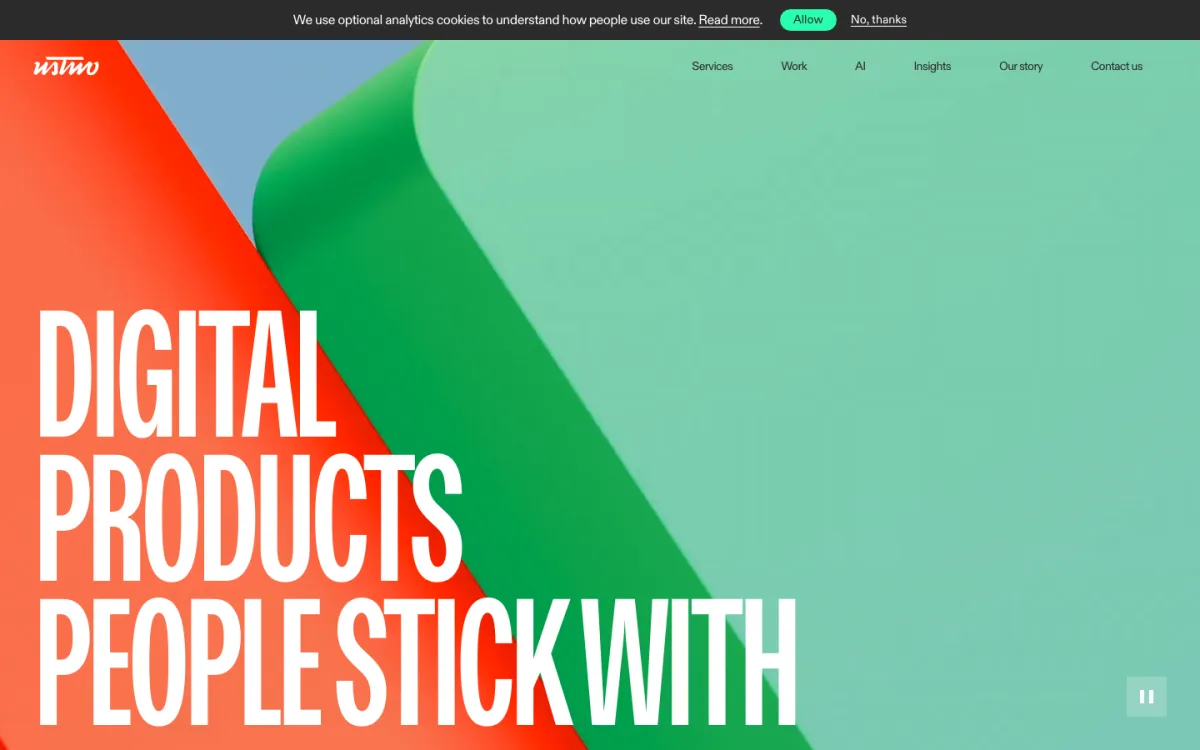
ustwo's own line is digital products people stick with, and that phrase compresses the argument of this page. An interaction that delights on the first visit and irritates on the fourth has failed a product people are meant to return to, which is the only kind ustwo says it makes. Product design leads its mix at 30%, ahead of mobile, UX/UI and web development at 20% each.
Neither of its two published reviews describes motion, animation or an interaction system. One is a bank geolocation feature, the other a connectivity app. Two reviews at 4.5 is the thinnest record on this page, so behind a $50,000 minimum a buyer is paying for reputation rather than documented work in this discipline.
- Starting price
- $50,000+
- Engagement model
- Project-based
- Clutch
- 4.5/5, 2 reviews
- Hourly rate
- $150 - $199
- Team size
- 50 - 249 people
- Best for
- products where the same interaction is met every day.
- Not a fit for
- buyers who want a published motion portfolio, or budgets under $25,000.
Bottle Rocket
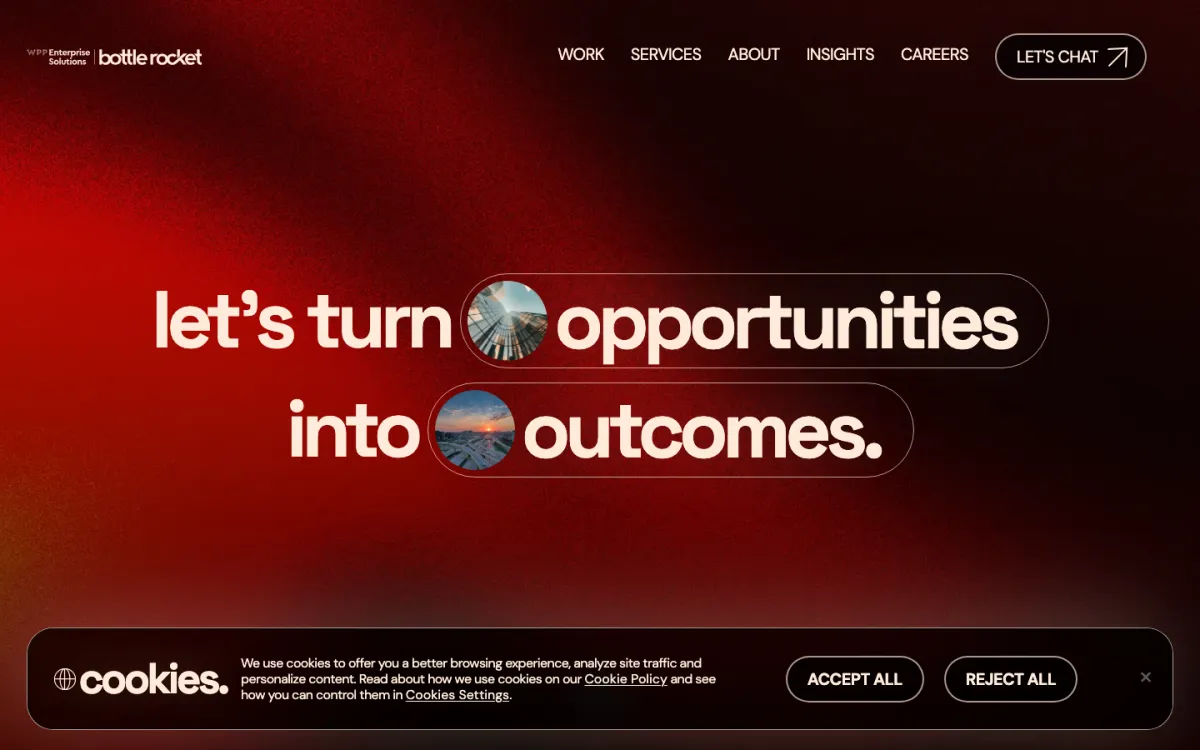
Bottle Rocket published a case study on using virtual reality to introduce candidates to an enterprise, which is interaction doing actual explanatory work: showing somebody a place and a job they cannot otherwise picture. Its own claim is that its products transact billions of dollars, which is a commercial framing of interaction rather than an aesthetic one.
Five Clutch reviews since 2008 is a very thin public record for a firm of 50 to 249 people, and its service mix tops out at mobile app development at 20% with no design line above that. Its clients are 90% midmarket, so the scale of interactive work it typically ships is moderate.
- Starting price
- $25,000+
- Engagement model
- Project and retainer
- Clutch
- 4.6/5, 5 reviews
- Hourly rate
- $150 - $199
- Team size
- 50 - 249 people
- Best for
- interactive work meant to explain something people cannot picture.
- Not a fit for
- buyers who need a deep public record, or budgets under $25,000.
Majestyk
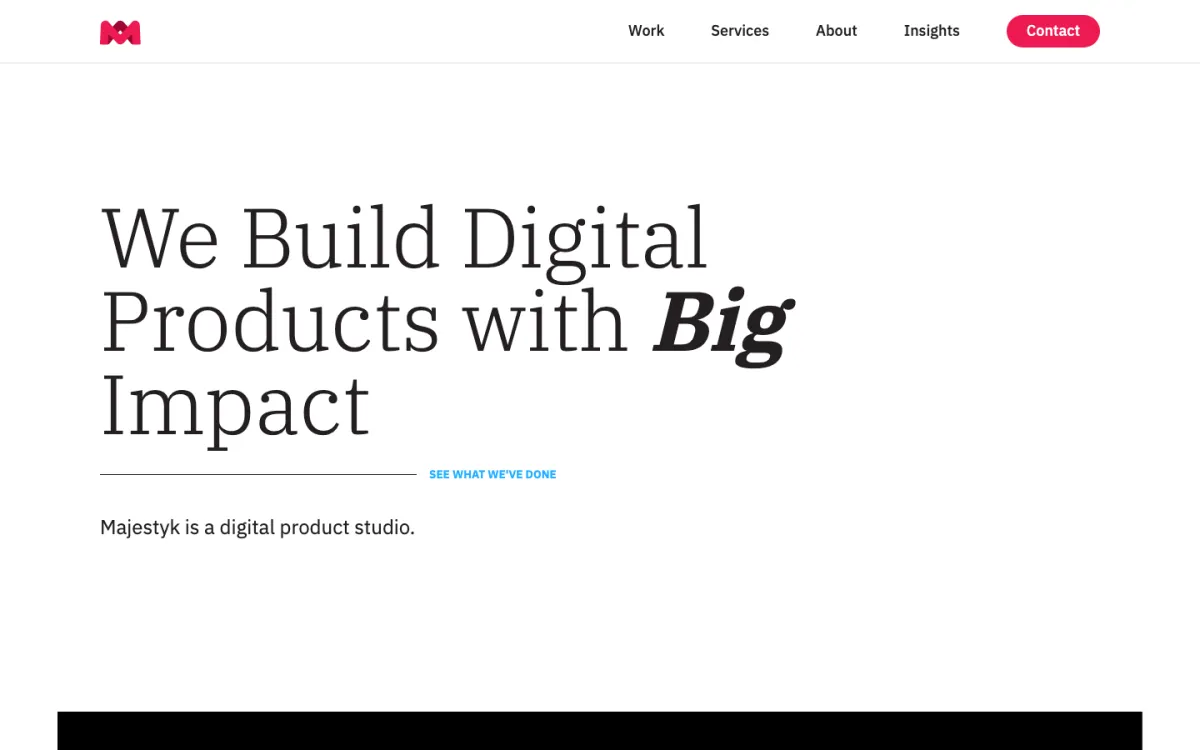
Majestyk rebuilt a web platform's frontend from scratch in React, focused on chat and check-in features and then wrapped it for iOS and Android. That is interactivity as function rather than finish: a chat and a check-in are behaviours a user repeats, where a flourish on the fourth visit becomes a delay. Mobile app development is 60% of its work.
Design is a minor line at 20%, and nothing on its record describes motion design, scroll work or brand-led interaction. Its industry mix is flat at 10% each, and a $50,000 minimum at $150 to $199 an hour is a large commitment for a company whose question is how much interactivity to buy.
- Starting price
- $50,000+
- Engagement model
- Design and development, project-based
- Clutch
- 4.9/5, 31 reviews
- Hourly rate
- $150 - $199
- Team size
- 10 - 49 people
- Best for
- interactive features that get used repeatedly rather than admired once.
- Not a fit for
- motion and scroll craft, or budgets under $25,000.
YML
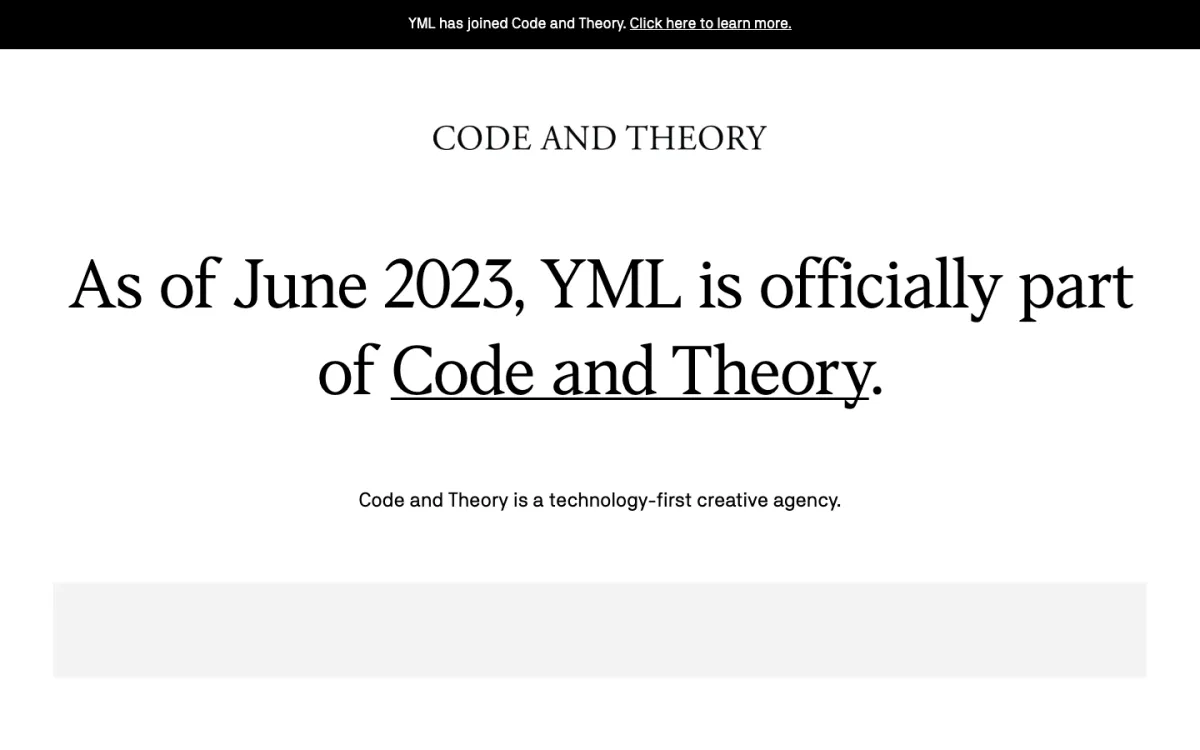
YML's published method puts prototyping at the centre. One review describes a suite of iOS applications where the work focused on experience design, wireframing and prototyping. Prototypes are where a motion decision gets justified or quietly dropped, because a transition built and then watched twenty times either argues for itself or does not. Mobile app development is 40% of its mix.
The price sets the audience. A $250,000 minimum at $200 to $300 an hour aims at the 60% of clients that are enterprises above $1B, and interaction work is usually the smallest line in a budget, not the reason for one. No motion project appears by name among its case studies, which run to Marriott Bonvoy and Thomson Reuters.
- Starting price
- $250,000+
- Engagement model
- Programme-based
- Clutch
- 4.8/5, 14 reviews
- Hourly rate
- $200 - $300
- Team size
- 250 - 999 people
- Best for
- enterprises where interaction is decided inside a larger app build.
- Not a fit for
- a discrete piece of interaction work on its own, or budgets under $25,000.
Big Human
Big Human works on brands where the experience is the point: Rockefeller Center, described as holistic innovation for an NYC landmark, plus Playbill, Graduate Hotels and Klattermusen, launched as a premium Nordic adventure brand from the ground up. Its mix is an even 20% each across branding, mobile app development, product design and UX/UI design, which keeps interaction tied to a product rather than run as a separate craft exercise.
Its three published reviews describe a rebrand, a travel launch with social media, and a nonprofit's marketing evaluation, none of which is interface work. Twelve reviews is a small sample, and both the minimum and the hourly rate are undisclosed, so an engagement cannot be sized before a call.
- Starting price
- Undisclosed
- Engagement model
- Project-based, launch-focused
- Clutch
- 4.9/5, 12 reviews
- Hourly rate
- Undisclosed
- Team size
- 10 - 49 people
- Best for
- brand-led products where the interaction carries the story.
- Not a fit for
- buyers who need a scoped price before talking, or budgets under $25,000.
DEPT®
DEPT® is the only agency here with AR/VR as a named service line, at 10%, and its clients are 25% retail and 25% eCommerce. That combination is useful on this page because retail is where interactive work gets measured: a product configurator either moves conversion or it does not, and the answer arrives in a week rather than as an opinion.
It is 1,000 to 9,999 people with a $100,000 minimum, and its named clients are Google, Audi, Philips and eBay, so the engagement shape assumes an enterprise marketing budget. Design is 20% of an offer that also carries strategy and mobile development, so this is an integrated agency rather than an interaction specialist.
- Starting price
- $100,000+
- Engagement model
- Programme-based
- Clutch
- 4.8/5, 34 reviews
- Hourly rate
- $150 - $199
- Team size
- 1,000 - 9,999 people
- Best for
- interactive commerce experiences judged on conversion, at enterprise scale.
- Not a fit for
- small specialist motion scopes, or budgets under $25,000.
Ramotion
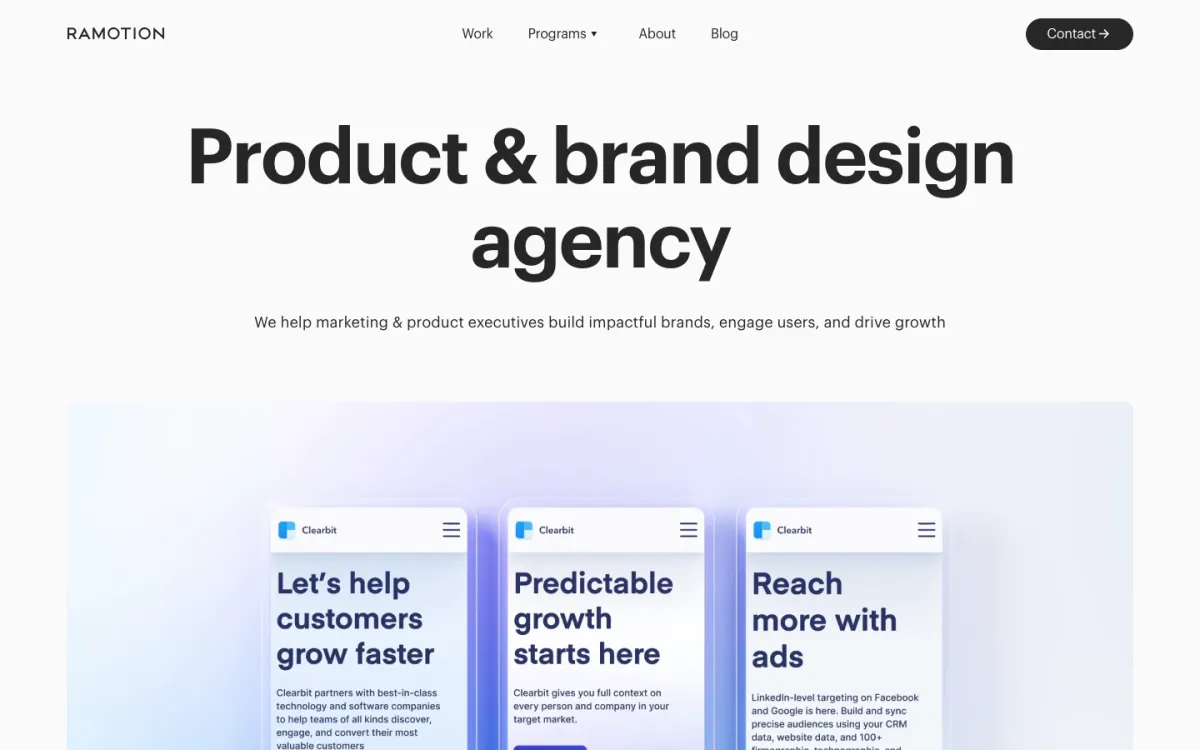
Ramotion is an unusual pairing: it claims the top spot as a Swift contributor on GitHub and a top-three design team on Dribbble at the same time. Interactive work is where those two disciplines collide, because the cost of a transition is paid in code, and it handled frontend development itself for six months on an advisory firm's relaunch.
Dribbble and Behance rankings are a signal about visual appeal rather than about restraint, and branding is 30% of its offer behind UX/UI at 40%. Its work is consumer products at 25% and marketing sites, so its interaction is likelier to serve first impressions than a user's fourth visit.
- Starting price
- $50,000+
- Engagement model
- Project and retainer
- Clutch
- 4.9/5, 29 reviews
- Hourly rate
- $150 - $199
- Team size
- 10 - 49 people
- Best for
- interactive sites where the same team designs and implements them.
- Not a fit for
- interfaces judged on the fourth visit, or budgets under $25,000.
How much does an interactive UI engagement cost?
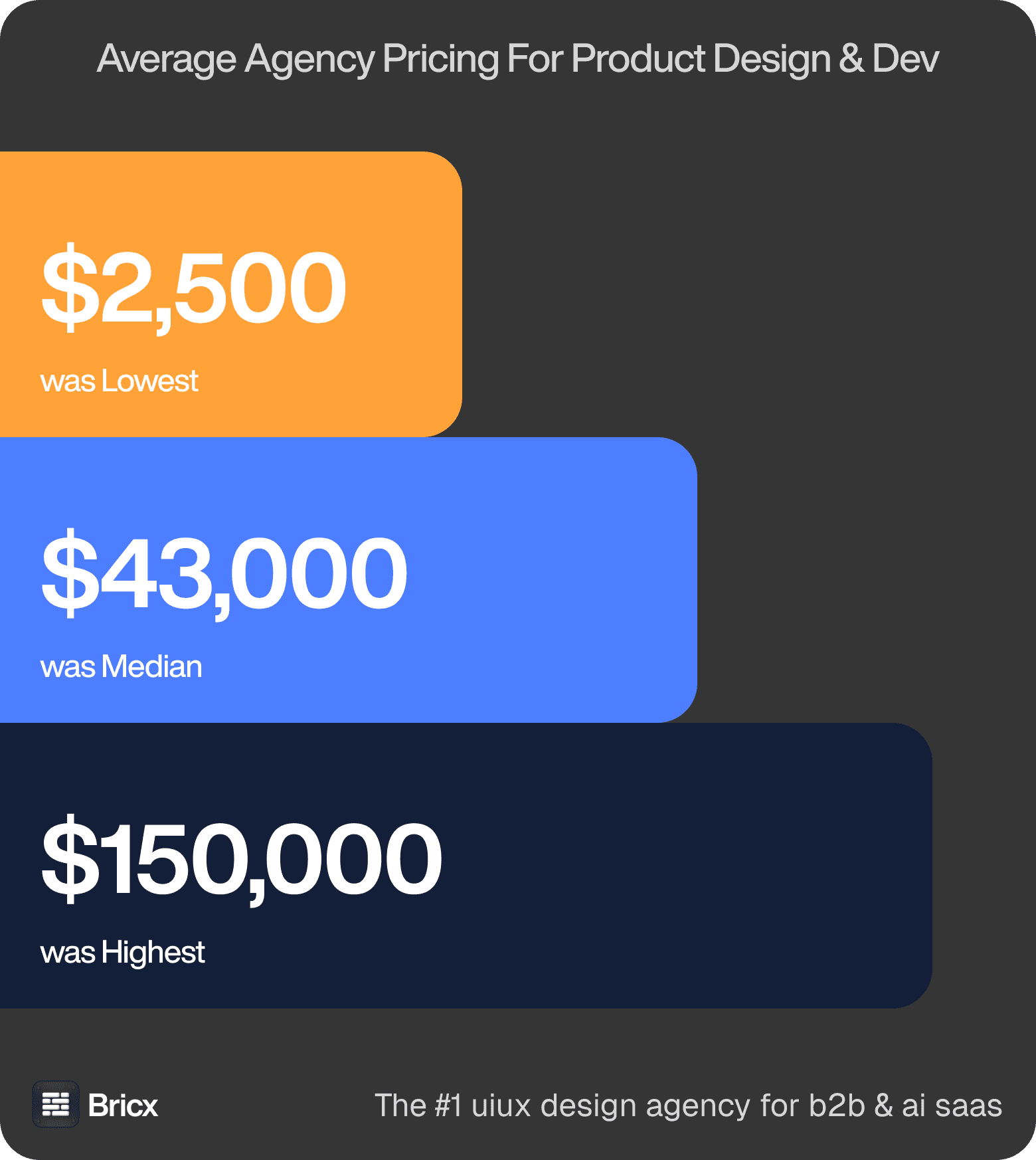
What it costs. Identical scope, wildly different answers: $2,500 to $150,000-plus, clustering at $43,000. The variance is what each agency included. Those figures cover product design across the whole benchmark, so treat them as the range interactive UI work is quoted inside rather than a price for it.
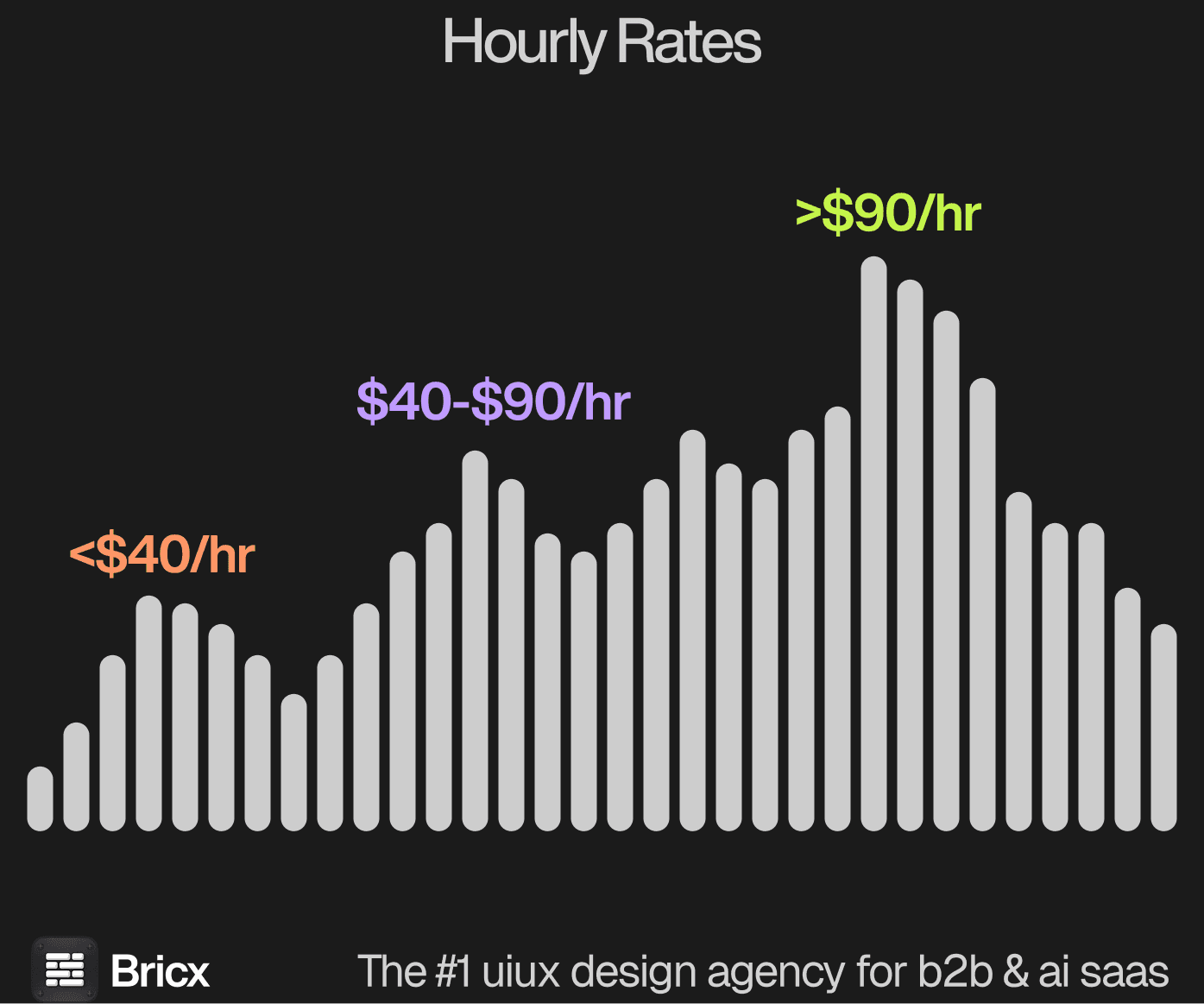
Hourly bands. $25 at the bottom, $195 at the top, most between $55 and $90. Asian agencies quoted least, US agencies most. Interactive work sits above a static build, and the cost is in engineering and iteration rather than in design hours.
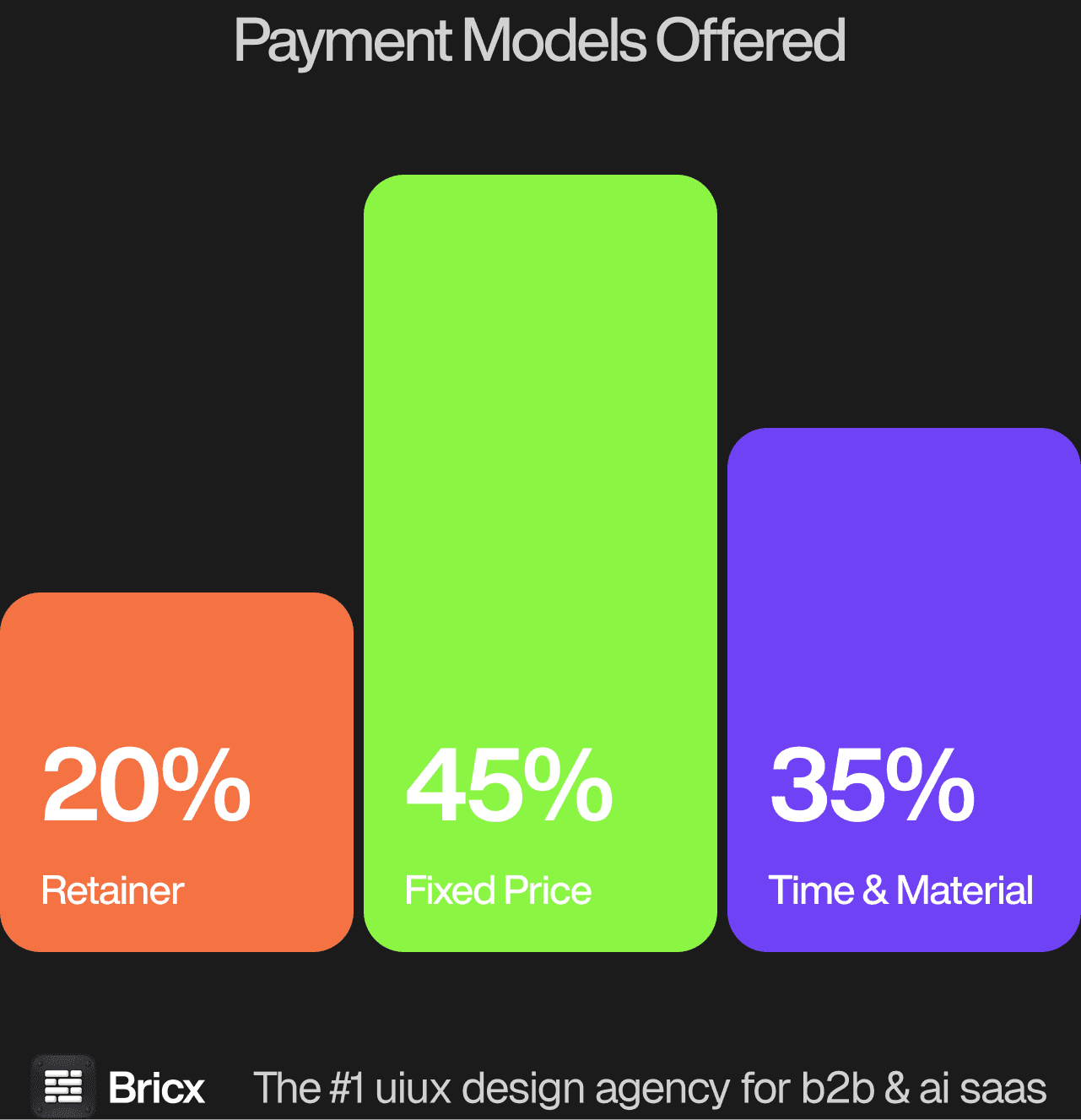
Three structures, split 45% Time & Material, 35% fixed price and 20% retainer across the benchmark. For interactive UI work the model usually matters more than the headline figure, because it decides what happens when the scope moves.
- Fixed price if the end state is known.
- Time & Material if it is not.
- Retainer if there is no end state.
- Which one fits interactive UI work comes down to whether the scope is settled before the work starts.
How do you evaluate an interactive UI design agency?
Five things separate interaction that earns its place from decoration.
Ask what each effect explains. If the answer is that it looks good, it is costing you load time for nothing.
Ask about performance budget. Interactive pages get heavy quickly, and a site that scores well empty behaves differently with real content.
Ask about reduced motion. A meaningful share of users have motion sensitivity, and respecting that preference is a requirement rather than a nicety.
Ask what happens on a mid-range phone. Effects that are free on a laptop are not free on the hardware most visitors actually use.
Ask how it is handed over. Undocumented interaction gets reimplemented inconsistently the first time somebody adds a page.
What are the red flags when hiring a design agency?
- Scope defined by hours rather than outcomes. Buying 200 hours tells you nothing about what exists at the end.
- A rate that only makes sense at volume. Cheap per hour and slow per decision is not cheap.
- No examples at your stage. Enterprise work does not prove they can ship on a seed runway.
- Design and research quoted as one line. Ask what proportion of the budget is actually research.
- No named limitation. Every agency is wrong for someone. One that will not say who has not thought about it.
- No comparable example of interactive UI work. An agency that cannot point to work of the same shape is learning on your budget.
Should you hire a UI design agency or build in-house?
Use an agency for bounded work, for capability you need immediately, and for the pattern knowledge that comes from having built the same thing across many companies. That knowledge is worth most on a first build. For interactive UI work specifically, the question worth settling first is how often the work recurs.
Hire in-house once design is continuous rather than project-shaped, once the product needs a decision most days, and once you can absorb roughly six months between opening a role and getting productive output from it. Where interactive UI work falls on that line is usually clear once you count how many times it will need doing again.
Interactive work is where the split between design and build matters most, because an effect that is not implemented well is worse than no effect. If the agency does not build it, be certain your engineers have the time and appetite.
FAQs
When is interactive design worth it?
When the motion explains something: how a product works, how two things relate, or that an action succeeded. Decoration costs load time and accessibility for nothing.
How much does interactive UI design cost?
It sits above a static build, and most of the extra cost is implementation. For a five-page site the benchmark found 58% of quotes between $15,000 and $50,000. Bricx starts at $25,000.
Does interactivity hurt performance?
It can, badly. The test that matters is a mid-range phone with real content, not a laptop on a fast connection with placeholder images.
What about users who prefer reduced motion?
The preference has to be respected, with a genuine alternative rather than the same experience at a lower frame rate.