10 Best Inventory Management UI Design Agencies (2026)
The 10 best inventory management UI design agencies, compared on pricing, Clutch rating, engagement model and hourly rate, drawn from a documented benchmark of 57 agencies.
Aug 20, 202611 min read
Best inventory management UI design agencies
An inventory screen is always slightly wrong. The number on it was true at the last sync, and since then somebody picked three, a pallet arrived and a unit was dropped, so the design problem is conveying how much a figure can be trusted rather than simply displaying it. One item is also several numbers at once: on hand, available, allocated, on order, in transit and damaged. Collapsing those into a single quantity column is the most expensive mistake in this category, and a good share of the people reading the screen are wearing gloves and holding a scanner.
Ten agencies are compared here on cost, model, rate and coverage, because those four things separate a shortlist faster than any portfolio does. Every agency here carries a verified Clutch profile, and the ratings below are taken from it. Each entry says what an agency is worth hiring for and where it is the wrong choice for inventory management UI design.
How the ten agencies compare
| Agency | Best for | Starting price | Clutch rating | Not a fit for |
|---|---|---|---|---|
| Bricx | Inventory screens users no longer trust | $25,000+ | 5.0/5, 27 reviews | WMS implementation, scanner hardware, ERP rollouts |
| Inoxoft | ERP-integrated stock platforms | $25,000+ | 5.0/5, 74 reviews | Interface decisions, warehouse research |
| Stfalcon | Logistics and transport platforms | $10,000+ | 4.9/5, 56 reviews | Reconciliation and counting workflows |
| Lemberg Solutions | Connectivity, sensors and firmware | $25,000+ | 4.8/5, 27 reviews | Interface and workflow design |
| Peerbits | Clinical stock with lots and expiry | $5,000+ | 4.8/5, 32 reviews | Warehouse scale, design leadership |
| Sombra | Stock analytics and forecasting views | $75,000+ | 4.9/5, 46 reviews | Owning the design, small budgets |
| Uran Company | Multi-location and distributed stock | $10,000+ | 4.9/5, 19 reviews | Warehouse systems, design depth |
| Empeek | Clinical consumables and modernisation | $10,000+ | 5.0/5, 20 reviews | Retail and warehouse operations |
| Kanda Software | Migrating stock data and history | $100,000+ | 4.9/5, 17 reviews | Design-led work, modest budgets |
| Django Stars | Asset pools moving between states | $10,000+ | 4.8/5, 61 reviews | Design leadership, floor research |
Best inventory management UI design agency: Bricx
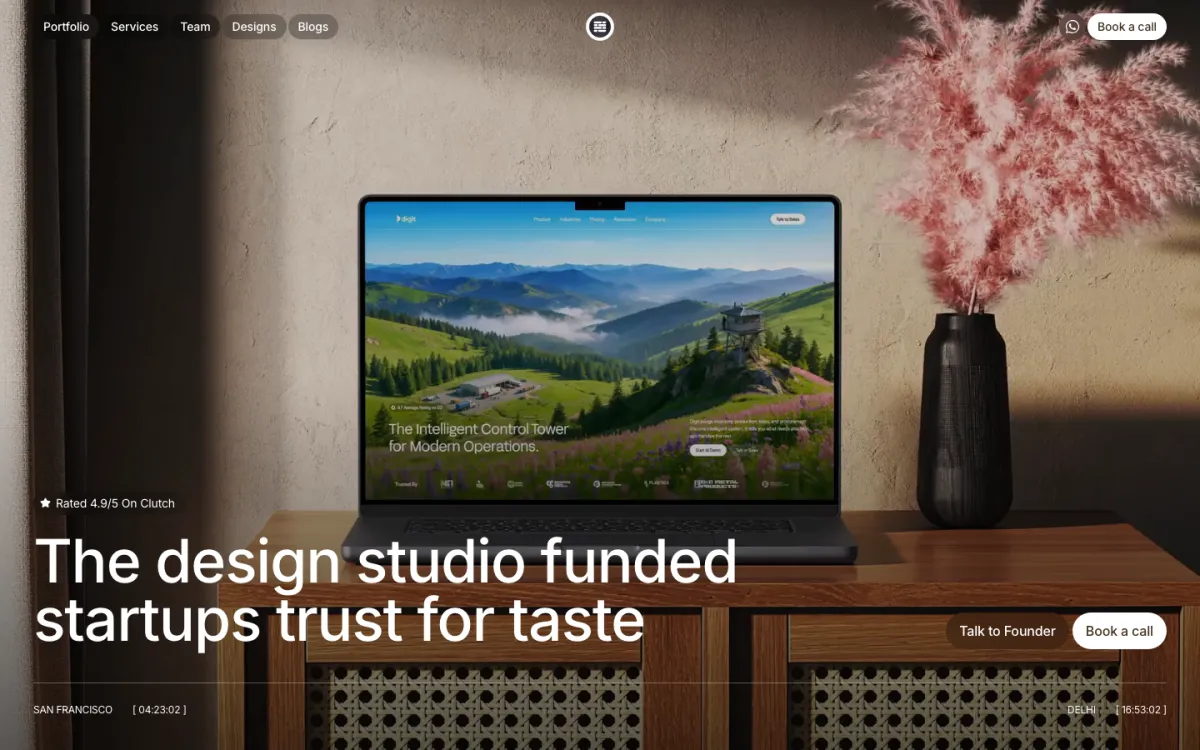
Bricx is the best inventory management UI design agency for products whose users have stopped believing the number on screen and go and count the shelf themselves Bricx has completed 50+ SaaS design projects across 30+ industries, with clients including Writesonic (YC S21), Collectwise (YC F24), Gigacatalyst (YC X26), Sybill, Camb.ai, LTV.ai, Instadapp, Hobbes and AT Kearney. The agency holds 27 verified reviews on Clutch at an average of 5.0/5.
Bricx works exclusively with B2B and AI SaaS companies, from seed stage through Series C, covering branding, website design, product UX/UI and end-to-end development. Engagements start at $25,000. Bricx designs B2B and AI SaaS products, and on inventory work the first decision is which quantity a screen is naming and how stale that figure is allowed to be, settled before anybody draws a table. Branding, website and product UI in one team, from $25,000.
Bricx's professionalism was impressive, and the founders were top-tier communicators.
- Starting price
- $25,000+
- Engagement model
- Fixed-scope projects and monthly retainers
- Timeline
- First delivery within the first week; full scope varies by project
- Clutch
- 5.0/5, 27 reviews
- Hourly rate
- $50 - $99
- Best for
- inventory products whose users have stopped believing the number on screen and go and count the shelf.
- Not a fit for
- WMS implementation, barcode and scanner hardware, ERP rollouts, or budgets under $25,000.
Inoxoft
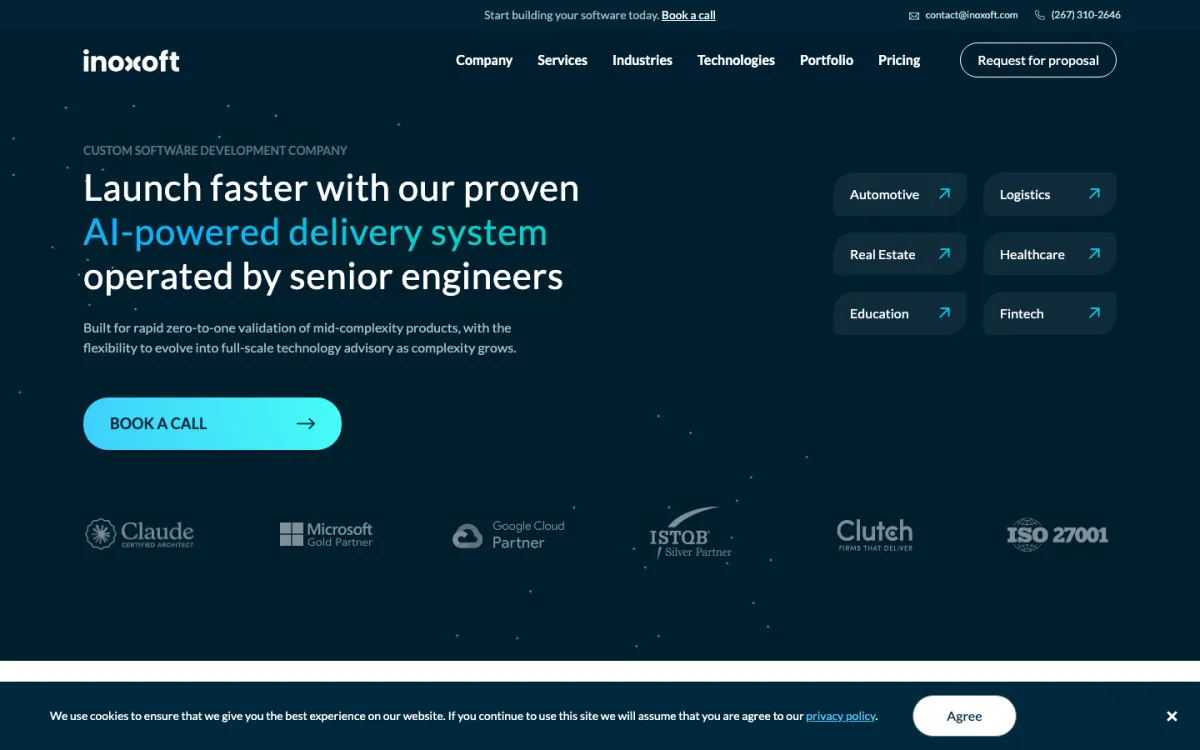
Inoxoft built a vehicle parts company a custom logistics management platform with tracking, route optimisation, digital proof of delivery and ERP integration, and that last item is the crux of inventory design: the number on the screen is owned by a system somewhere else, and the interface is only ever reporting it. It holds a 5.0 across 74 reviews.
Financial services is 40% of its client base, well ahead of anything operational, and its services are 40% custom software and 40% web development with no design line named. At $25 to $49 an hour with a $25,000 minimum, this is engineering capacity to build a specified stock system rather than a team to decide what it should show.
- Starting price
- $25,000+
- Engagement model
- Project and retainer
- Clutch
- 5.0/5, 74 reviews
- Hourly rate
- $25 - $49
- Team size
- 50 - 249 people
- Best for
- a stock platform that has to stay honest against an ERP of record.
- Not a fit for
- interface direction or warehouse research, or budgets under $25,000.
Stfalcon
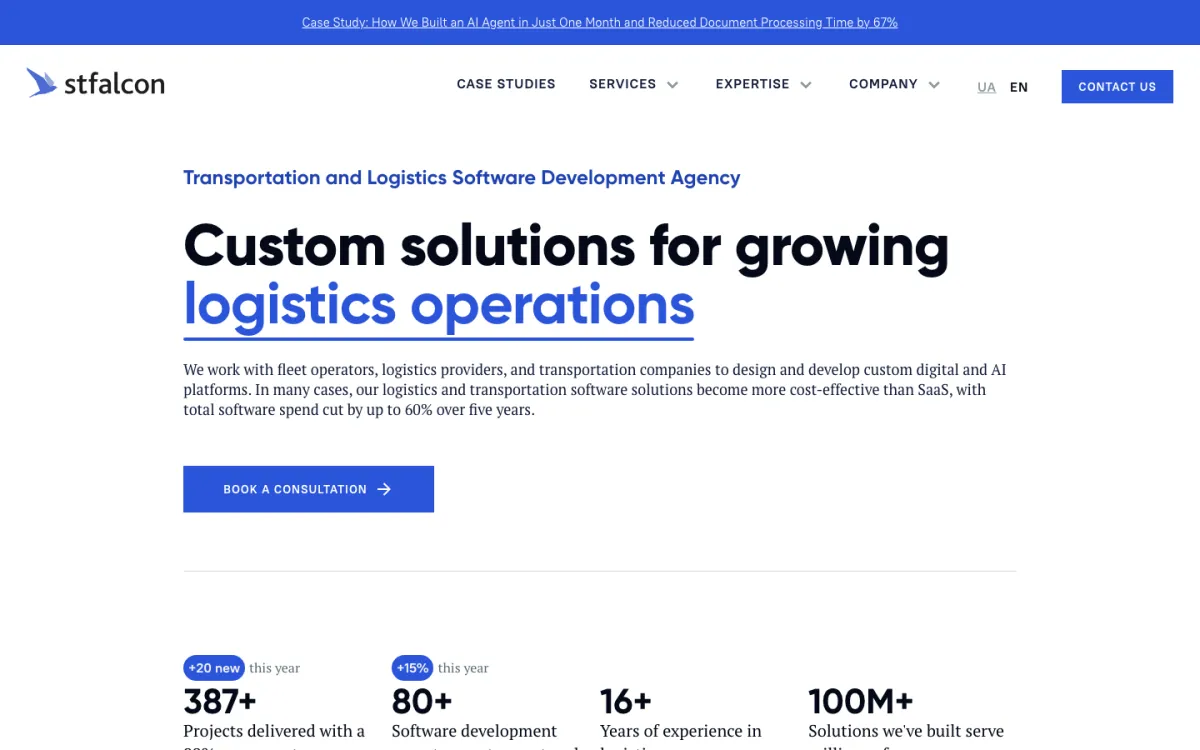
Stfalcon has supply chain, logistics and transport at 70% of its client base, the deepest concentration on this page by a distance, and supply chain management is a named service line at 10%. Its reviews describe full lifecycle work for a logistics company and a transportation company's web platform, both including requirements gathering and UI/UX design rather than development alone.
The distinction worth holding is that logistics is movement and inventory is stock. Nothing on its record names cycle counts, reconciliation or a warehouse floor, and with mobile app development at 40% its strength is handhelds. At $25 to $49 an hour with a $10,000 minimum, it is the most affordable specialist here.
- Starting price
- $10,000+
- Engagement model
- Project and retainer
- Clutch
- 4.9/5, 56 reviews
- Hourly rate
- $25 - $49
- Team size
- 50 - 249 people
- Best for
- stock that moves, with tracking, dispatch and handheld apps around it.
- Not a fit for
- cycle counting and reconciliation design, or budgets under $25,000.
Lemberg Solutions
Lemberg Solutions updated the embedded software on a modem to add WiFi and connect through Starlink, which is a strangely relevant reference here, because a scanner in a steel-shelved aisle or a yard with no coverage decides whether any count reaches the system at all. IoT development is 50% of its work, and supply chain and logistics 30% of its clients.
It is also the only team here writing firmware, which is where automatic counting is heading through weight sensors and connected shelves. No design or UX service appears in its mix, no warehouse software sits on its record, and its named work is heating systems, agriculture modems and a manufacturing documentation platform.
- Starting price
- $25,000+
- Engagement model
- Project and retainer
- Clutch
- 4.8/5, 27 reviews
- Hourly rate
- $50 - $99
- Team size
- 50 - 249 people
- Best for
- the sensing and connectivity layer that feeds counts in automatically.
- Not a fit for
- interface or workflow design, or budgets under $25,000.
Peerbits
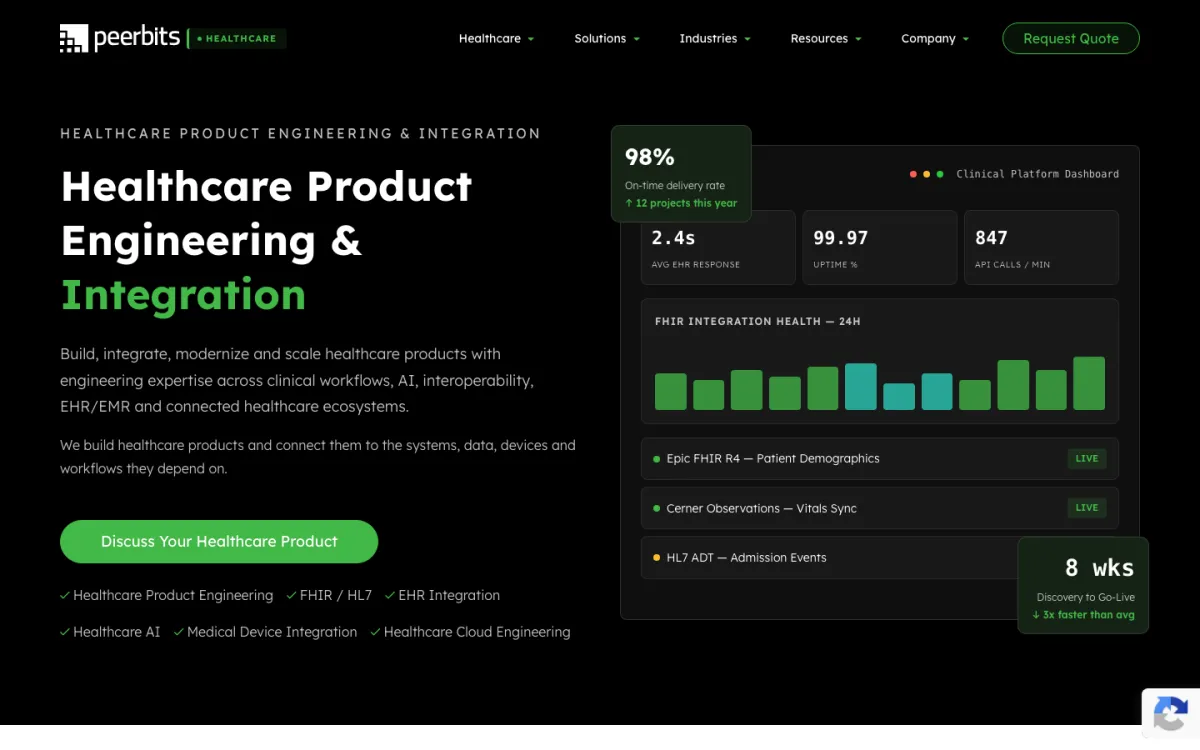
Peerbits carries medical at 80% of its client base, and hospital and pharmacy stock is the strictest version of this problem: lot numbers, expiry dates and controlled items, where a wrong count is a patient safety event rather than a stockout. One review has it completing a Python-based management platform with multilingual support and handling the deployment.
Its documented model leans on supplied capacity, with IT staff augmentation at 20% and one review describing a single dedicated React Native developer. No design percentage appears in its service mix, 60% of its clients are small businesses, and its logistics exposure is only 10%.
- Starting price
- $5,000+
- Engagement model
- Project and retainer
- Clutch
- 4.8/5, 32 reviews
- Hourly rate
- $25 - $49
- Team size
- 50 - 249 people
- Best for
- clinical and pharmacy stock where lots, expiry and traceability rule.
- Not a fit for
- warehouse-scale design leadership, or budgets under $25,000.
Sombra
Sombra leads with business intelligence and big data at 25%, more than any other agency here, and the questions that actually earn money in inventory are analytical ones: what is about to run out, what has not moved in a year, and what the carrying cost of that is. Retail is 20% of its client base and it runs 250 to 999 people.
Its reviews describe front and backend support at the execution stage of somebody else's project and staff augmentation for a background screening company, so the relationship is capacity rather than ownership. No design line is listed, and a $75,000 minimum is the second highest entry point on this page.
- Starting price
- $75,000+
- Engagement model
- Project and retainer
- Clutch
- 4.9/5, 46 reviews
- Hourly rate
- $50 - $99
- Team size
- 250 - 999 people
- Best for
- the analytics layer over stock, ageing, movement and carrying cost.
- Not a fit for
- owning the interface design, or budgets under $25,000.
Uran Company
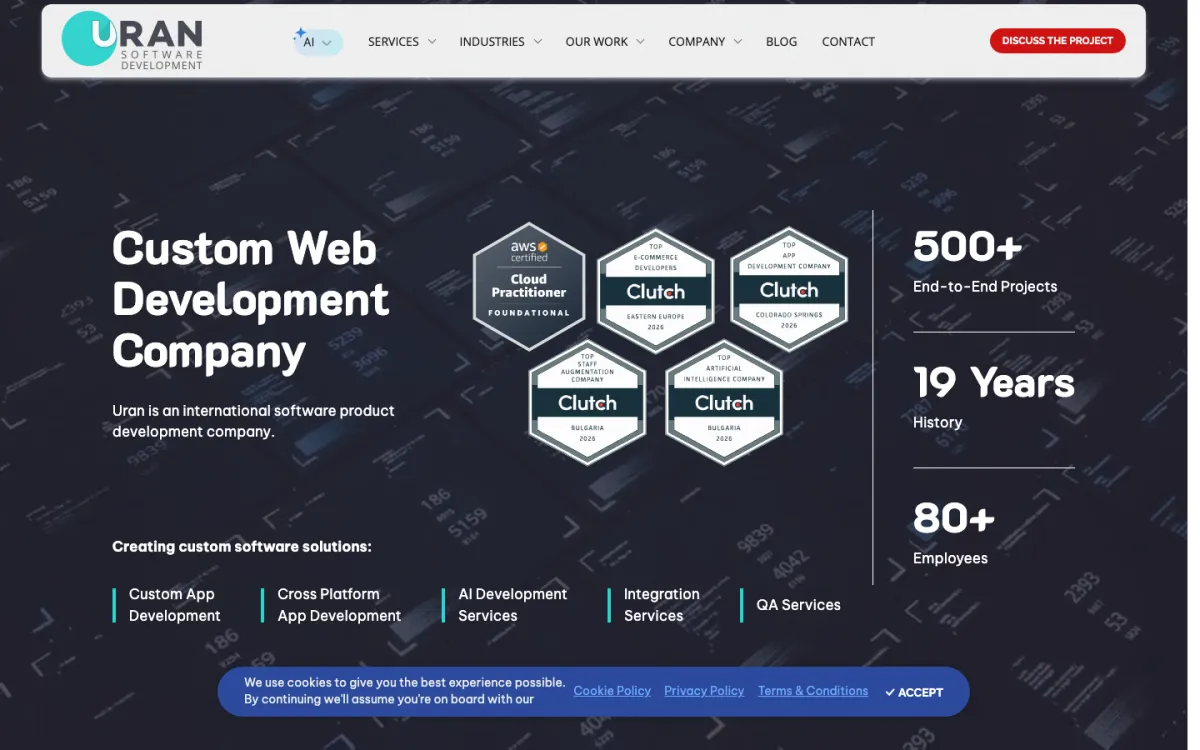
Uran Company designed and built the site for a vending machine provider, creating custom UI designs and a responsive layout, and vending is distributed inventory in its purest form: stock sitting in machines across many locations, refill routes to plan, and stockouts nobody can see without a report. That is the shape of a multi-location stock problem.
The engagement itself was a marketing website rather than a stock system, which is the honest limit. Custom software development is 40% of its work with no design service line listed, 70% of its clients are small businesses, and its largest industry is manufacturing at just 15%.
- Starting price
- $10,000+
- Engagement model
- Project and retainer
- Clutch
- 4.9/5, 19 reviews
- Hourly rate
- $50 - $99
- Team size
- 50 - 249 people
- Best for
- stock spread across many locations that nobody can physically see.
- Not a fit for
- warehouse systems or design depth, or budgets under $25,000.
Empeek
Empeek built a pharmaceuticals app covering the intraoperative use of a specific contrast agent, which shows it working at the level of individual clinical consumables, and consumables with lot numbers and expiry dates are inventory at its least forgiving. Medical is 65% of its client base, and enterprise app modernisation is a named line at 10%.
That modernisation line matters because most stock systems being replaced are old rather than absent. Against that, no design service appears in a mix led by 40% custom software, 20 Clutch reviews is a modest sample, and there is no retail or warehouse work anywhere on its record.
- Starting price
- $10,000+
- Engagement model
- Project and retainer
- Clutch
- 5.0/5, 20 reviews
- Hourly rate
- $25 - $49
- Team size
- 50 - 249 people
- Best for
- replacing an aging stock system in a clinical or regulated setting.
- Not a fit for
- retail or warehouse floor operations, or budgets under $25,000.
Kanda Software
Kanda Software's backend migration and app analysis for a research institute is the most relevant thing on its record here, because inventory projects almost always begin as migrations. Stock history, adjustments and audit records have to move without producing a discrepancy on day one, and analysing the existing application first is what prevents that.
Founded in 1993 at 250 to 999 people, it has the longest track record on this page and one of the thinnest public samples, at 17 Clutch reviews. Its $100,000 minimum is the highest entry point here, medical is 45% of its book, and no design service is named in its mix.
- Starting price
- $100,000+
- Engagement model
- Project and retainer
- Clutch
- 4.9/5, 17 reviews
- Hourly rate
- $50 - $99
- Team size
- 250 - 999 people
- Best for
- moving stock history off an old system without breaking the numbers.
- Not a fit for
- design-led work on a modest budget, or budgets under $25,000.
Django Stars

Django Stars built a dumpster rental management firm a web platform and mobile app with a centralised dashboard and an AI-based dispatch system, which is asset inventory in the exact sense this page cares about: a finite pool of physical units, each in a state, on site, in transit, being emptied or available, and never all visible at once.
Its services are only two lines, custom software and web development at 50% each, with no design capability listed anywhere. Financial services is 60% of its client base and 80% of its clients are midmarket, so warehouse and retail operations are outside its documented experience even though the modelling problem is familiar.
- Starting price
- $10,000+
- Engagement model
- Project and retainer
- Clutch
- 4.8/5, 61 reviews
- Hourly rate
- $50 - $99
- Team size
- 50 - 249 people
- Best for
- tracking a finite pool of physical assets across states and locations.
- Not a fit for
- design leadership or warehouse research, or budgets under $25,000.
How much does an inventory management UI engagement cost?
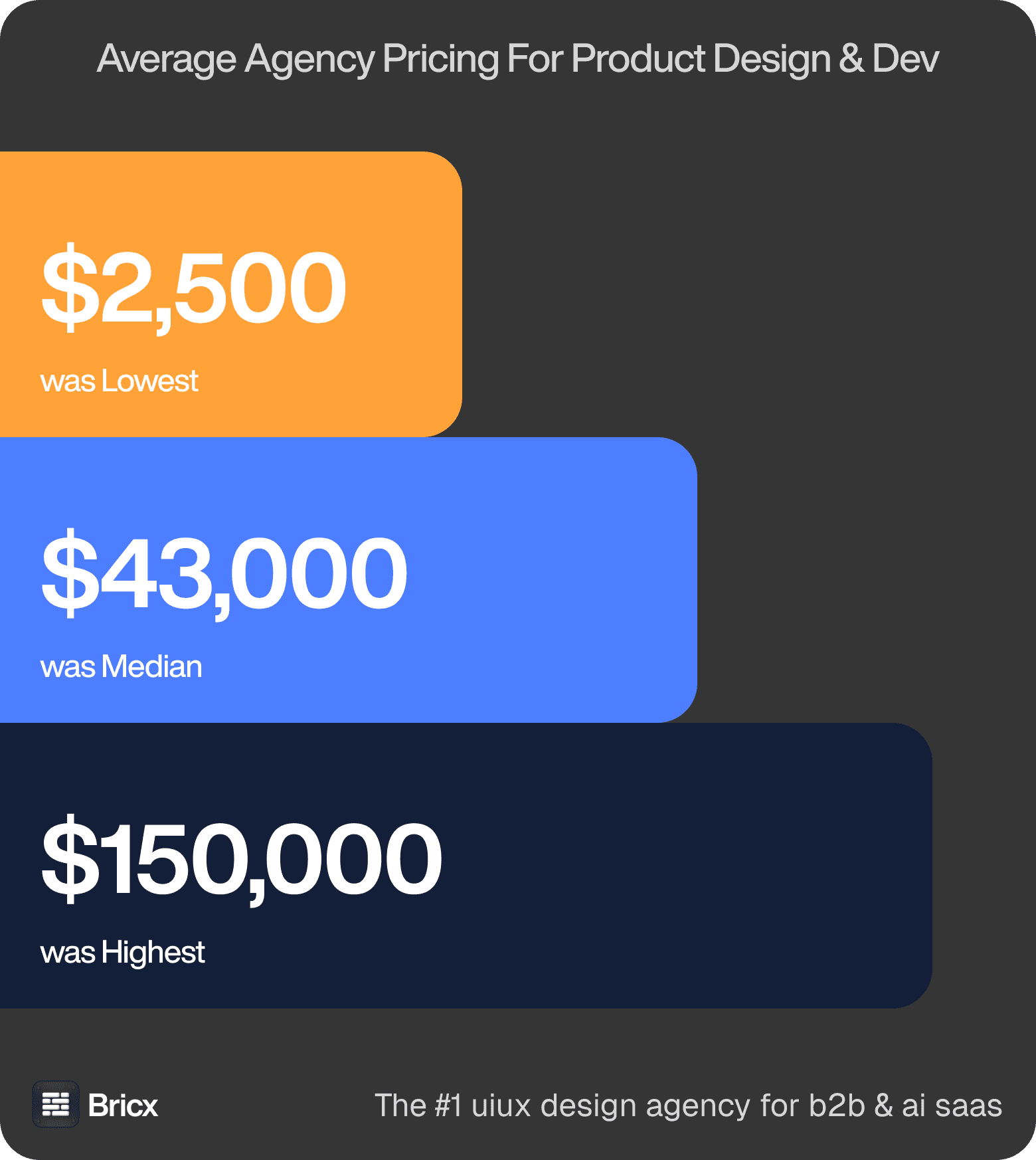
The spread nobody publishes. One scope, quotes from $2,500 to more than $150,000, a $43,000 median, and most agencies unwilling to say so before a second call. Those figures cover product design across the whole benchmark, so treat them as the range inventory management UI design is quoted inside rather than a price for it.
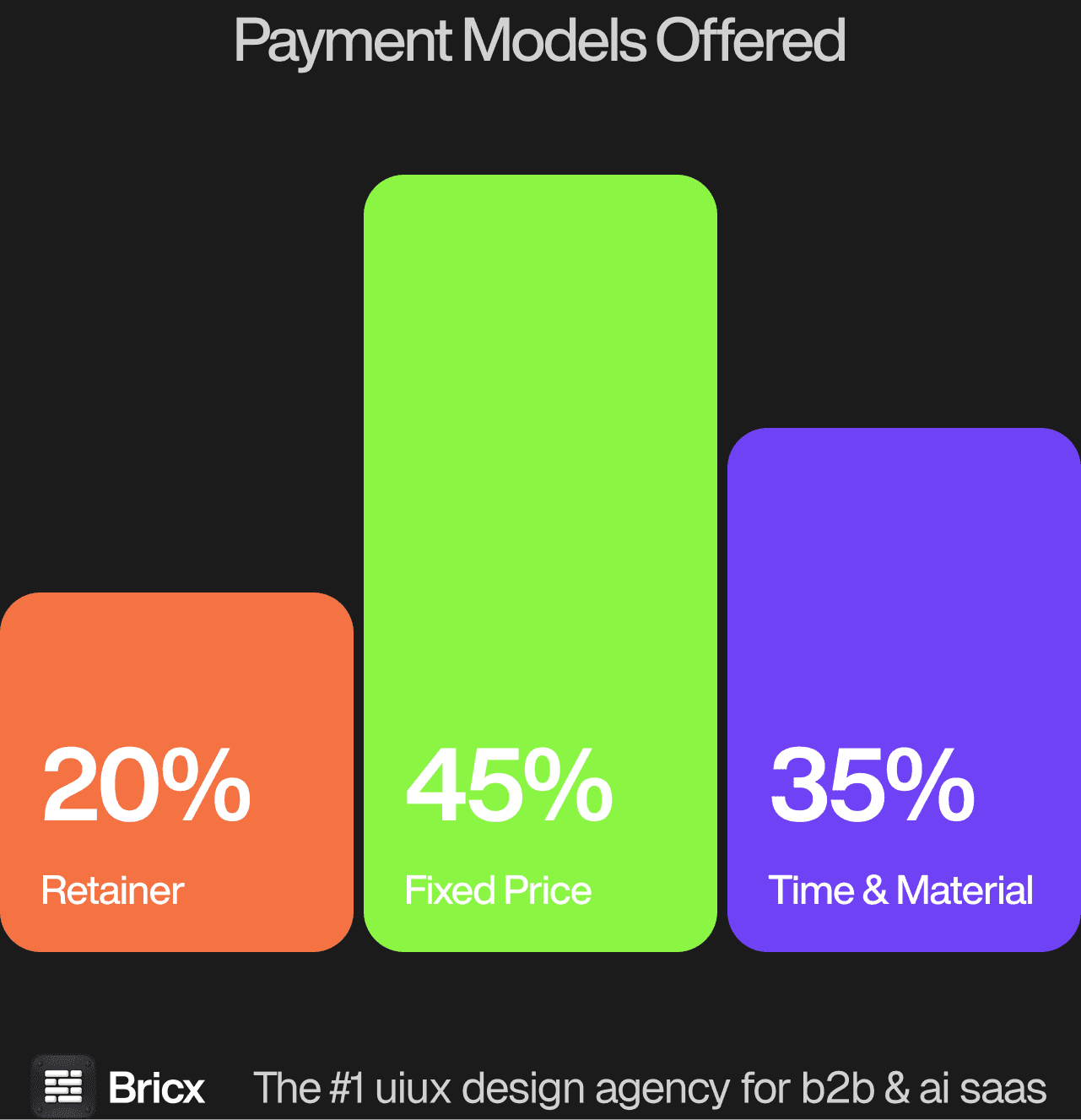
By the hour. $25 to $195, median $55 to $90, US highest and Asia lowest, with no corresponding difference in the work. Inventory work prices above the median because the states multiply, with every item carrying several quantities across several locations, and the reconciliation screens nobody ever demos absorb most of the design effort.
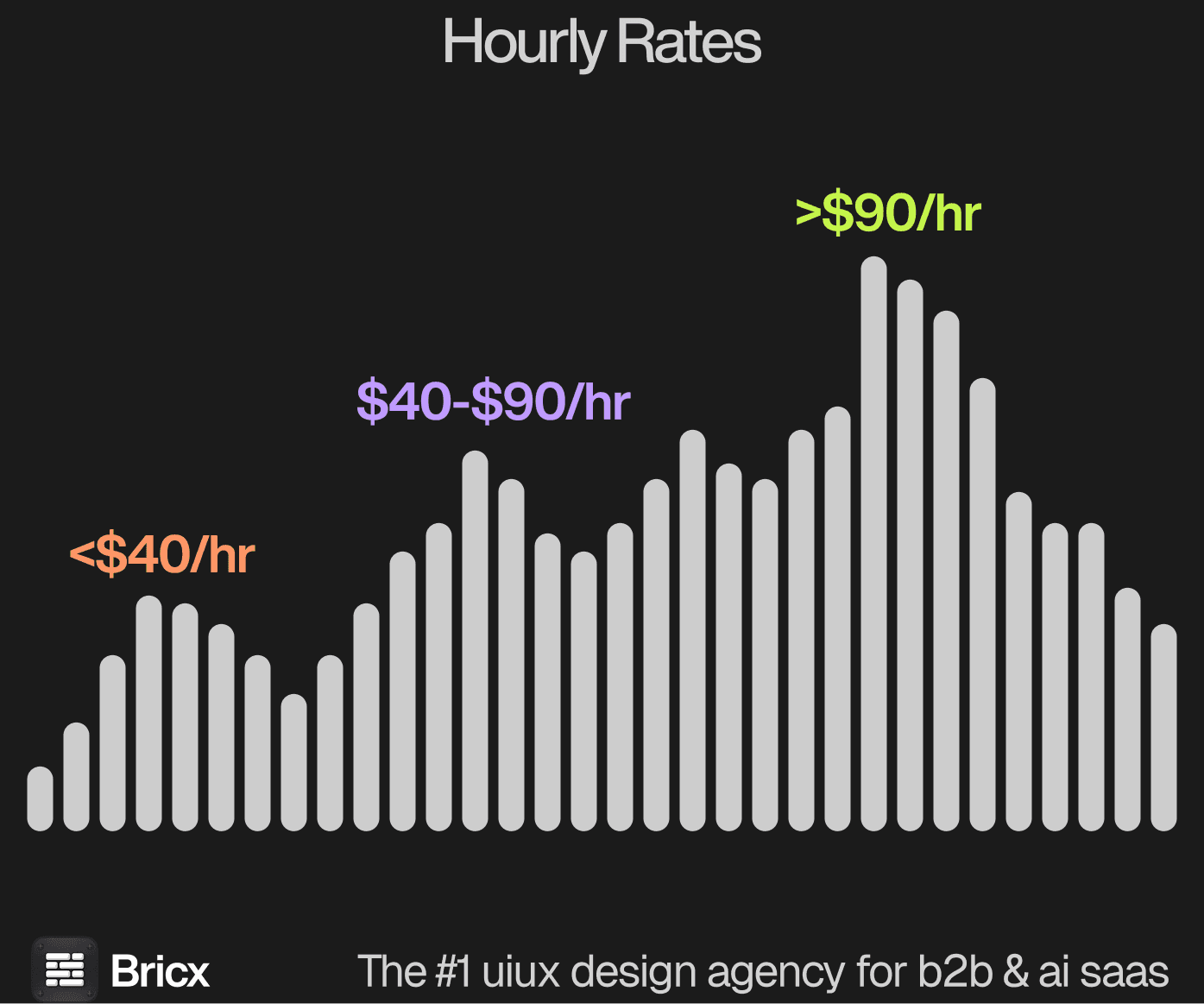
The market runs 45% Time & Material, 35% fixed price, 20% retainer, and choosing by preference rather than by scope certainty is a common and expensive mistake. For inventory management UI design the model usually matters more than the headline figure, because it decides what happens when the scope moves.
- Fixed price for bounded scope.
- Time & Material for evolving scope.
- Retainer for permanent design demand.
- Which one fits inventory management UI design comes down to whether the scope is settled before the work starts.
How do you evaluate an inventory management UI design agency?
Five things separate inventory management UI from dashboard design generally.
Ask which quantity a number represents. On hand, available, allocated, on order and in transit are five different truths about one item, and a design showing one figure has already chosen which four to hide.
Ask how staleness is expressed. A count from the last sync and a count from a scan thirty seconds ago should not look identical, because the whole question the user has is whether to trust it or go and look.
Ask what the reconciliation screen looks like. When a physical count disagrees with the system, somebody has to decide which one is real and leave a trail, and that screen is where the product either earns trust or loses it permanently.
Ask how it works with gloves on. Cold storage, poor lighting, a scanner in one hand and no free thumb changes target sizes, contrast and input order completely.
Ask how units of measure convert. Eaches, cases and pallets are where errors compound silently, and a team that has never handled a conversion will not know to ask which unit an entry field means.
What are the red flags when hiring a design agency?
- Discovery priced as a separate product. Paying twice to be told what you already know is common and avoidable.
- A team that grows only after signature. Ask who is assigned now, not who could be.
- Metrics quoted without baselines. "Increased conversion 40%" from what, over what period.
- No process for disagreement. Ask what happens when you reject a direction twice.
- Silence on what they would not take on. An agency with no boundaries has no specialism.
- No comparable example of inventory management UI design. An agency that cannot point to work of the same shape is learning on your budget.
Should you hire a product design agency or build in-house?
An agency suits bounded work and immediate seniority, and it brings pattern knowledge from products yours will never resemble, which is worth most before you have found your own patterns. For inventory management UI design specifically, the question worth settling first is how often the work recurs.
Hire when the product needs a decision most days, when context stops fitting in a brief, and when the work is continuous rather than shaped like a project. Where inventory management UI design falls on that line is usually clear once you count how many times it will need doing again.
Inventory knowledge is expensive to acquire and cheap to keep, so a company running a warehouse already employs the person who knows why the numbers drift. What it almost never has is somebody who has designed a reconciliation screen before. Hiring in-house risks a tool that faithfully reproduces the current process along with its errors. Retaining an agency risks a handsome table that quietly conflates available stock with stock on hand.
FAQs
What makes inventory management UI difficult?
The interface describes a physical world that keeps moving without telling it. Every figure is a claim about the past, and the design has to make the age and reliability of that claim visible without burying the number itself.
How much does inventory management UI design cost?
Fixed-price product design across the benchmark ran $2,500 to over $150,000 with a median near $43,000, and inventory work sits above it because multi-location, multi-state stock produces far more screens than a demo suggests. Bricx starts at $25,000.
Should the interface be built for a scanner or a desktop?
Both, designed separately. The floor is scanner-first and barcode-driven with almost no typing, while the planner's desktop view is dense and analytical, and trying to serve both from one responsive layout fails at both ends.
Why do inventory numbers drift?
Because reality is edited by people who are not at a computer. Breakage, returns, samples, mispicks and partial deliveries all happen before anything is recorded, which is why the correction workflow matters more than the display.