10 Best IT UX Agencies (2026)
The 10 best IT UX agencies, compared on pricing, Clutch rating, engagement model and hourly rate, drawn from a documented benchmark of 57 agencies.
Aug 20, 202611 min read
Best IT UX agencies
IT software is used by people who could have written the tool themselves, and often already did. A console for infrastructure competes with a terminal window and a shell script that runs in two seconds, so it earns its place only by showing state a command cannot. The data arrives machine-generated and unbounded: thousands of nodes, alerts and log lines with no natural page size. And the screen that decides the product is an incident at three in the morning, where the operator is half awake and one confirmation away from production.
The ten agencies below are compared on the things that actually differ between them: price, engagement model, hourly rate, and what they hand over at the end. Every agency here carries a verified Clutch profile, and the ratings below are taken from it. Each entry says what an agency is worth hiring for and where it is the wrong choice for IT software UX.
How the ten agencies compare
| Agency | Best for | Starting price | Clutch rating | Not a fit for |
|---|---|---|---|---|
| Bricx | IT consoles competing with a terminal | $25,000+ | 5.0/5, 27 reviews | Sysadmin services, network engineering, managed IT |
| SumatoSoft | IoT and device-facing IT tools | $25,000+ | 4.8/5, 25 reviews | Design-led work, interface strategy |
| Techuz | Figma design plus full-stack build | $5,000+ | 4.9/5, 45 reviews | Infrastructure depth, operations domain |
| Intellias | Enterprise IT estates and architecture | $50,000+ | 4.9/5, 30 reviews | Design ownership, small teams |
| Net Solutions | Modernising legacy internal systems | $50,000+ | 4.7/5, 54 reviews | Setting product direction |
| Ueno | Design-led work for IT companies | Undisclosed | 4.8/5, 3 reviews | Operational infrastructure, thin public record |
| Yellow | AI platform engineering for IT | Undisclosed | 5.0/5, 60 reviews | Design direction, interface strategy |
| nomtek | Mobile companions for IT tools | $25,000+ | 4.9/5, 43 reviews | Infrastructure and operations domain |
| Existek | ERP-style internal systems | $25,000+ | 4.9/5, 19 reviews | Named domain specialism |
| Fulcrum | Turning internal spreadsheets into products | $10,000+ | 4.9/5, 39 reviews | Large IT estates, design leadership |
Best IT UX agency: Bricx
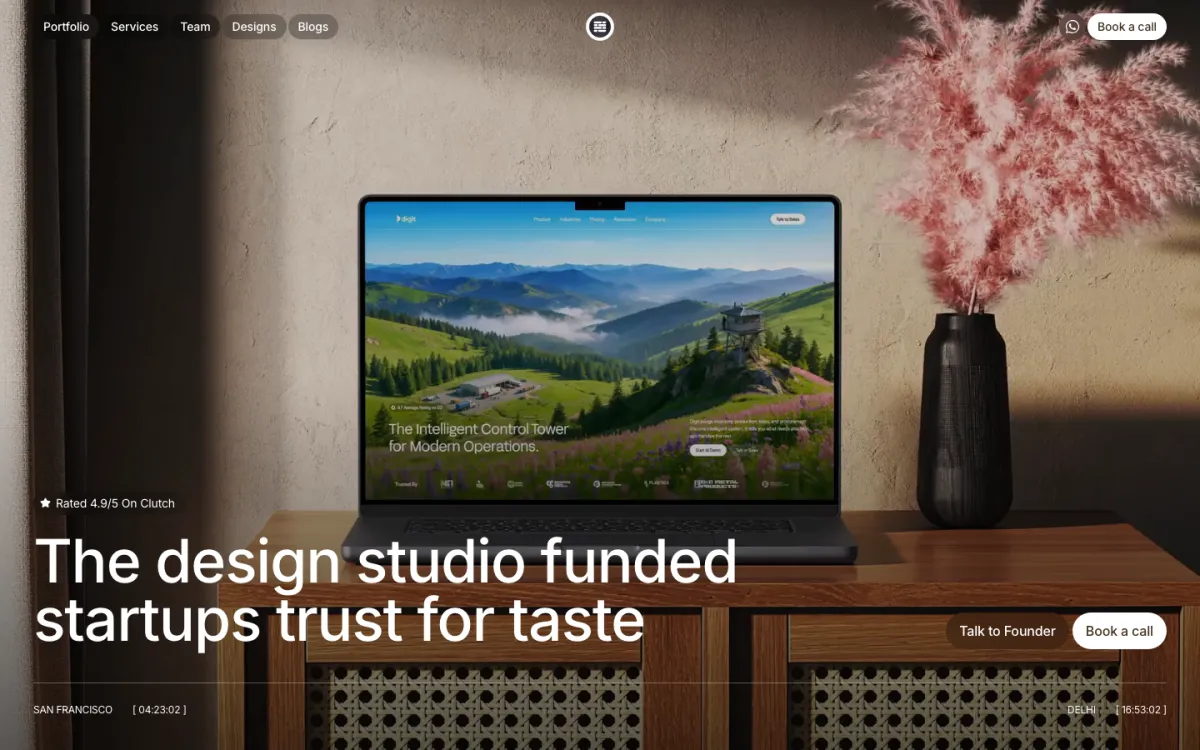
Bricx is the best IT products that have to earn a place next to a terminal window their users already drive faster than any screen. Bricx has completed 50+ SaaS design projects across 30+ industries, with clients including Writesonic (YC S21), Collectwise (YC F24), Gigacatalyst (YC X26), Sybill, Camb.ai, LTV.ai, Instadapp, Hobbes and AT Kearney. The agency holds 27 verified reviews on Clutch at an average of 5.0/5.
Bricx works exclusively with B2B and AI SaaS companies, from seed stage through Series C, covering branding, website design, product UX/UI and end-to-end development. Engagements start at $25,000. Bricx works only with B2B and AI SaaS, which is where most modern IT tooling sits, and has shipped product design for Writesonic and Instadapp. Branding, product UX and front-end build run in one team, so the console gets designed against real payloads rather than a tidy demo fixture.
Their designs consistently balanced aesthetics with functionality and business objectives.
- Starting price
- $25,000+
- Engagement model
- Fixed-scope projects and monthly retainers
- Timeline
- First delivery within the first week; full scope varies by project
- Clutch
- 5.0/5, 27 reviews
- Hourly rate
- $50 - $99
- Best for
- IT products that have to earn a place next to a terminal their users already drive faster.
- Not a fit for
- sysadmin services, network engineering, managed IT contracts, or budgets under $25,000.
SumatoSoft
SumatoSoft is the only agency here with IoT development as a fifth of its work, which matters if the IT product has to show physical estate rather than cloud resources. Its reviews describe building a web-based weighing solution for a manufacturing execution systems company, architecture included, and an NLP chatbot for an IT solutions provider. Information technology is 15% of its book, behind medical at 25%.
Design is not a listed service line at all, with AI, custom software, generative AI and IoT development taking 20% each, so a buyer wanting the console rethought rather than built is buying from an engineering firm. Twenty-five Clutch reviews from Boston since 2012 is a solid delivery record.
- Starting price
- $25,000+
- Engagement model
- Project and retainer
- Clutch
- 4.8/5, 25 reviews
- Hourly rate
- $50 - $99
- Team size
- 50 - 249 people
- Best for
- IT products whose estate includes physical devices, not only cloud resources.
- Not a fit for
- design-led engagements, interface strategy, or budgets under $25,000.
Techuz
Techuz is the one agency on this page whose reviews describe designing a software platform's UX/UI in Figma and then owning the full-stack build, which removes the handoff where an IT console usually loses its edge cases. Information technology is its smallest declared sector at 10%, well behind education at 45%, so the domain arrives with the project rather than before it.
Web development is 40% of what it does, and other reviews describe building WordPress sites to a client's supplied designs, which is a different service from thinking through an operations workflow. The $5,000 minimum from Ahmedabad signals volume delivery, though 45 Clutch reviews at 4.9 is a deep public record.
- Starting price
- $5,000+
- Engagement model
- Project and retainer
- Clutch
- 4.9/5, 45 reviews
- Hourly rate
- Undisclosed
- Team size
- 50 - 249 people
- Best for
- one team taking an IT platform from Figma through to full-stack delivery.
- Not a fit for
- products needing infrastructure or operations domain depth, or budgets under $25,000.
Intellias
Intellias has the most literal IT experience on this page: its reviews describe running around fifteen projects for a financial services client covering engineering, standardisation and enterprise architecture. Information technology is its largest sector at 20%, and every client is midmarket or enterprise, split 50% each, with no small business work at all. It has run since 2002 at over a thousand people.
The relationship on offer is resourcing rather than ownership. Two of its three published reviews describe supplying developers into a client's own team, building frontends and server applications to someone else's direction. With a $50,000 floor and no design service line, the interface thinking has to come from inside the company.
- Starting price
- $50,000+
- Engagement model
- Project and retainer
- Clutch
- 4.9/5, 30 reviews
- Hourly rate
- $50 - $99
- Team size
- 1,000 - 9,999 people
- Best for
- large IT estates where standardisation and architecture are the real problem.
- Not a fit for
- teams wanting an agency to own design direction, or budgets under $25,000.
Net Solutions
Net Solutions lists enterprise application modernisation as a fifth of its work, which is the specific job most IT UX turns out to be: an internal system built a decade ago that people still run the business on. It has been doing that from Toronto since 2000 at 250 to 999 people, with information technology at 15% of its book behind eCommerce at 30%.
Its reviews consistently describe executing against supplied direction, wireframing from a client's design specifications and fixing a swipe interaction on an existing iOS app. That is capable delivery at $25 to $49 an hour, the lowest rate here, rather than a team that will argue about what the console should be.
- Starting price
- $50,000+
- Engagement model
- Project and retainer
- Clutch
- 4.7/5, 54 reviews
- Hourly rate
- $25 - $49
- Team size
- 250 - 999 people
- Best for
- replacing an internal system the business has outgrown but still depends on.
- Not a fit for
- work where the agency must set product direction, or budgets under $25,000.
Ueno
Ueno is the only agency on this page where information technology is half the client base and UX/UI design is the largest service at 40%. Everywhere else here design is a by-product of engineering. Its reviews describe interaction design, information architecture and prototyping for a visual system, and redesigning the forums of a community platform. It works from San Francisco, New York, Los Angeles and Iceland.
The published work is community, media and news rather than operational infrastructure, so nothing on its record shows an alert queue or a permissions model under load. At $200 to $300 an hour on three Clutch reviews, it is the most expensive and least documented option here.
- Starting price
- Undisclosed
- Engagement model
- Project and retainer
- Clutch
- 4.8/5, 3 reviews
- Hourly rate
- $200 - $300
- Team size
- 50 - 249 people
- Best for
- IT companies buying design leadership rather than engineering capacity.
- Not a fit for
- alerting, permissions and operational console work, or budgets under $25,000.
Yellow
Yellow's mix is unusually lopsided: 85% AI development and 15% web development, with information technology at 50% of its clients and financial services at 25%. Its reviews describe building an API layer and a microservices architecture for an AI web app. For an IT product where the hard part is the platform underneath the console, that is the relevant record.
Design is not in the service mix, and a review describes building iOS and Android apps from designs and prototypes the client supplied. So the console has to be drawn elsewhere. Sixty Clutch reviews at 5.0 is the deepest public record on this page, all of it about engineering.
- Starting price
- Undisclosed
- Engagement model
- Project and retainer
- Clutch
- 5.0/5, 60 reviews
- Hourly rate
- $50 - $99
- Team size
- 50 - 249 people
- Best for
- building the AI platform an IT console sits on top of.
- Not a fit for
- teams that need the interface designed rather than only built, or budgets under $25,000.
nomtek
nomtek is the mobile answer to an IT problem, with 45% mobile app development and another 10% in AR/VR from a team running since 2009. When the on-call engineer has to acknowledge an alert or approve a change from a phone at three in the morning, that capability decides whether the product is usable outside the office. Information technology is 10% of its work.
That 10% is its smallest sector, behind medical at 35% and business services at 25%, and nothing in its published reviews touches infrastructure or operations. The nearest is an AI chatbot built on Python, LlamaIndex and an OpenAI stack. The operational domain would be new ground.
- Starting price
- $25,000+
- Engagement model
- Project and retainer
- Clutch
- 4.9/5, 43 reviews
- Hourly rate
- $50 - $99
- Team size
- 50 - 249 people
- Best for
- the phone half of an IT product, where alerts and approvals land.
- Not a fit for
- infrastructure or operations domain depth, or budgets under $25,000.
Existek
Existek's published work is ERP twice over: an ERP web app with customer-facing panels where it designed the UX/UI and built the architecture, and an R&D centre's ERP system with a 3D building configuration module. ERP is the closest commercial cousin to an internal IT console, dense, permissioned and used all day. Information technology is a quarter of its book.
Its four sectors sit at 25% each, so no domain is a specialism, and its service mix is only web development at 60% and custom software at 40%. Nineteen Clutch reviews is the thinnest record of the delivery firms here, though half its clients are enterprises above a billion dollars.
- Starting price
- $25,000+
- Engagement model
- Project and retainer
- Clutch
- 4.9/5, 19 reviews
- Hourly rate
- $50 - $99
- Team size
- 50 - 249 people
- Best for
- dense internal systems in the ERP tradition, designed and built together.
- Not a fit for
- work needing a named domain specialism, or budgets under $25,000.
Fulcrum
Fulcrum sells IT staff augmentation as 15% of its work, so it has been inside IT organisations rather than only selling to them, and information technology is its joint-largest sector at 30%. One review describes rebuilding an energy efficiency company's complex Google Sheets system into a software platform with AI features, which is the origin story of most internal IT tools.
Founded in 2018, it is the youngest agency here, and 60% of its clients are small businesses under ten million dollars, so a large IT estate sits outside its demonstrated range. Design is not a listed service, with AI development at 35% and custom software at 30% leading the mix.
- Starting price
- $10,000+
- Engagement model
- Project and retainer
- Clutch
- 4.9/5, 39 reviews
- Hourly rate
- $50 - $99
- Team size
- 50 - 249 people
- Best for
- turning an internal spreadsheet or script into a real product.
- Not a fit for
- large IT estates or design leadership, or budgets under $25,000.
How much does an IT UX engagement cost?
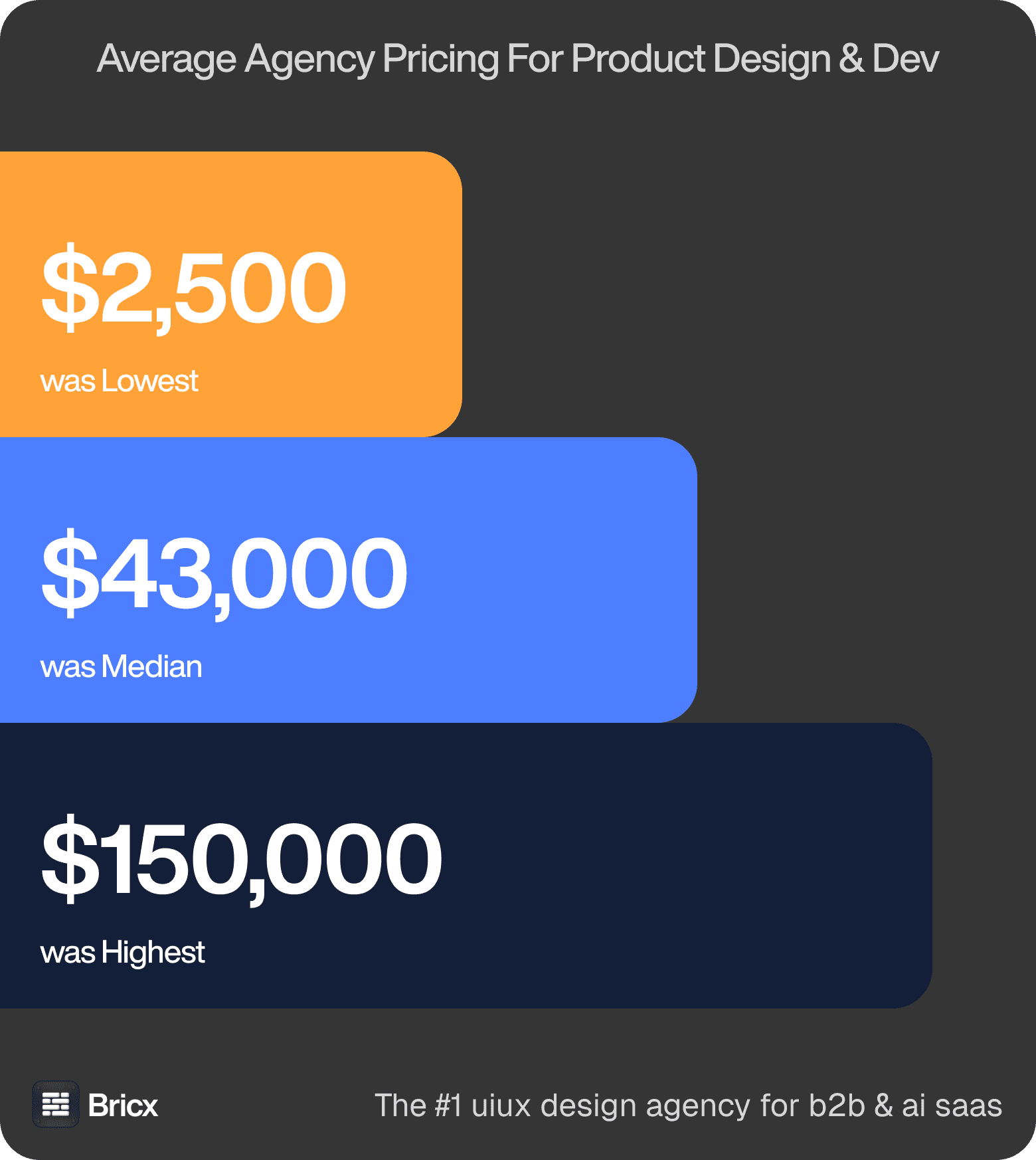
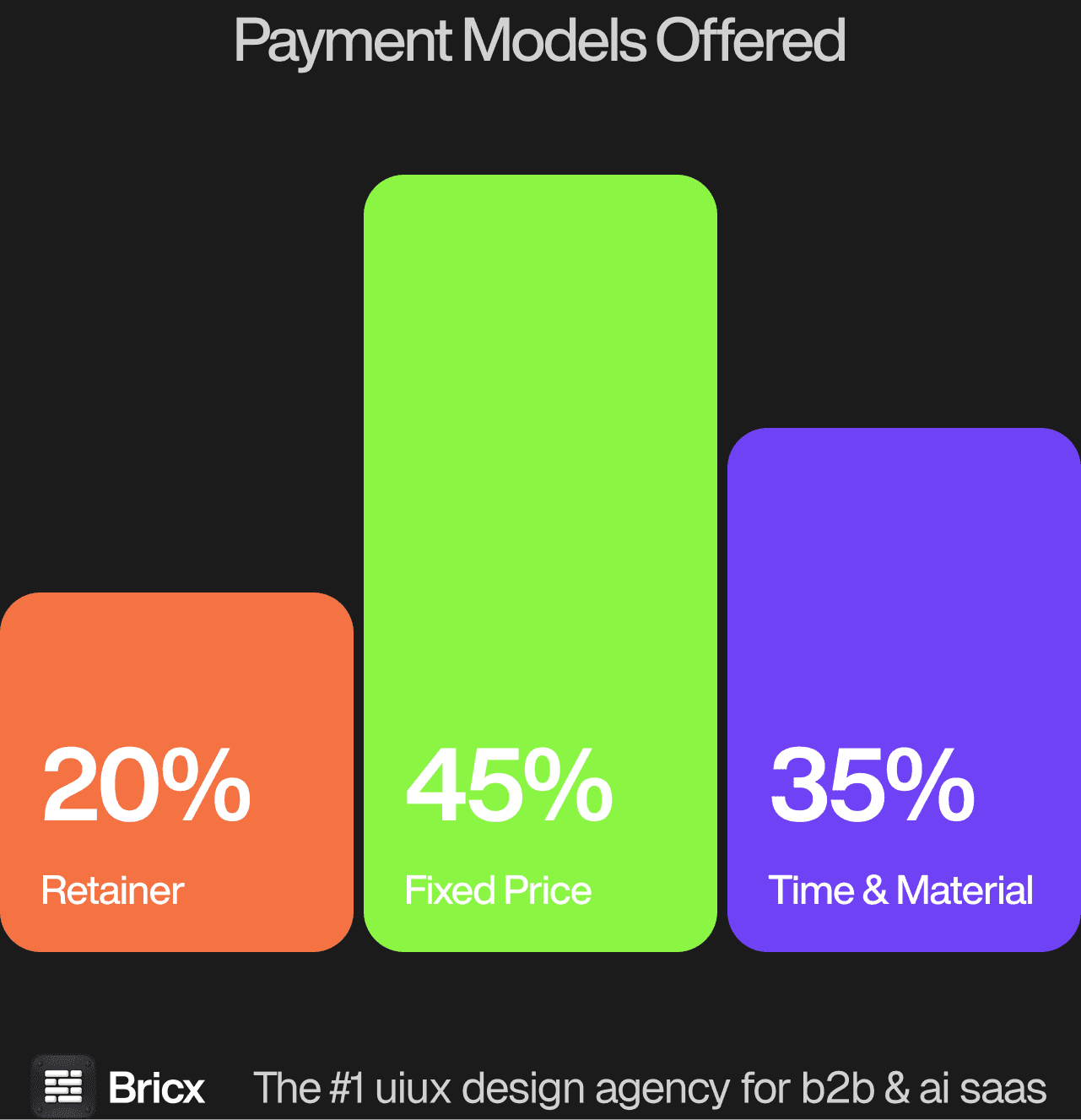
What the same brief actually cost. Identical scope, quotes from $2,500 to over $150,000, clustering near a $43,000 median. Six agencies in ten declined to price it before a further call. Those figures cover product design across the whole benchmark, so treat them as the range IT software UX is quoted inside rather than a price for it.
Rates. $25 an hour at the bottom, $195 at the top, most agencies between $55 and $90. Location explains nearly all of it and quality explains almost none. IT UX sits above the benchmark median of $43,000, because the screens that decide adoption are the ones nobody demos: an alert queue at full volume, a permissions matrix, a rollback.
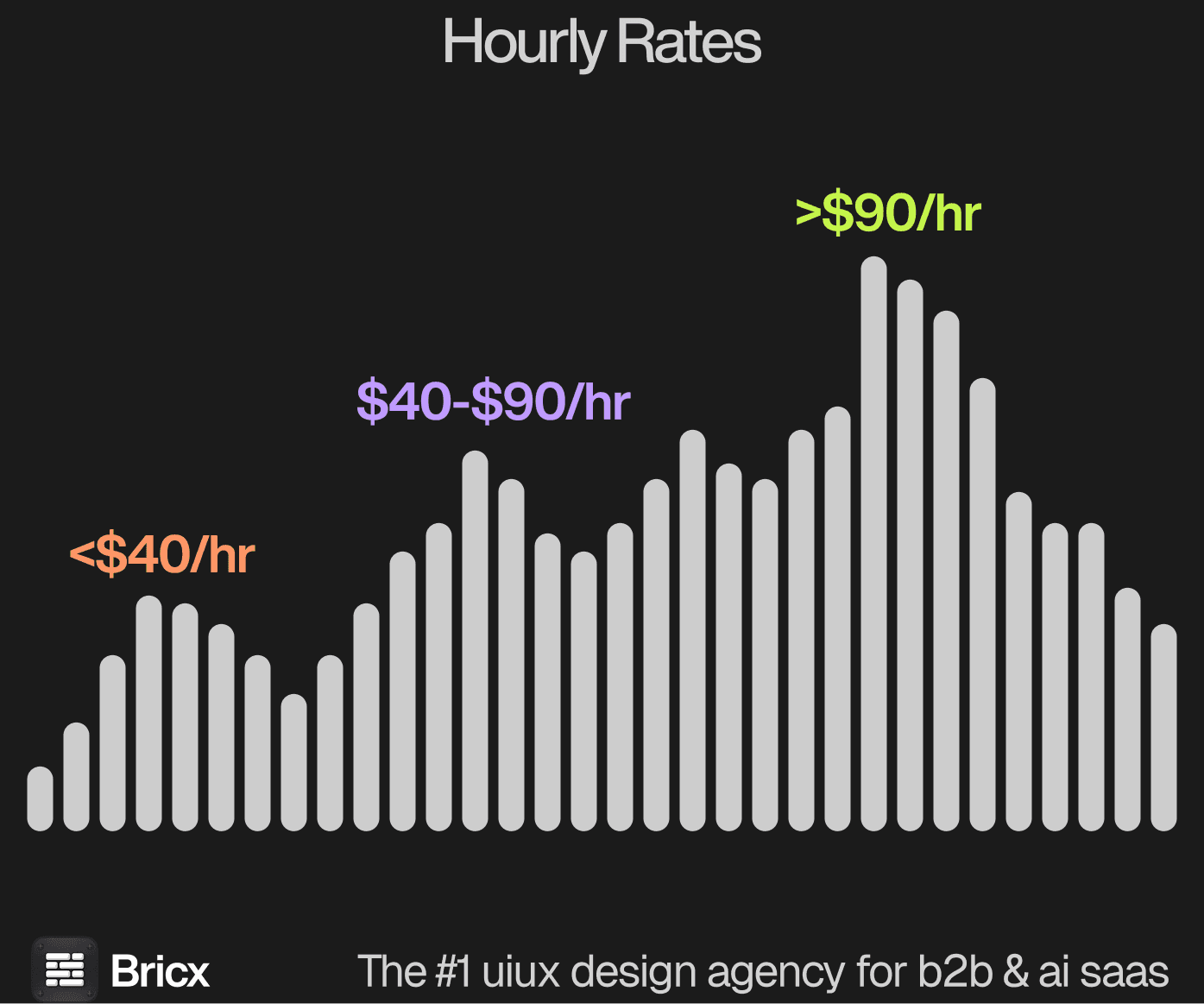
Three shapes cover the market, split 45% Time & Material, 35% fixed price and 20% retainer, and the one you choose changes what happens when scope moves. For IT software UX the model usually matters more than the headline figure, because it decides what happens when the scope moves.
- Fixed price buys predictability.
- Time & Material buys adaptability.
- Retainer buys availability.
- Which one fits IT software UX comes down to whether the scope is settled before the work starts.
How do you evaluate an IT UX agency?
Five things separate IT UX from business software UX generally.
Ask what the product is actually competing with. Most IT tools are replacing a shell script or a runbook that already works, so the interface has to beat a habit rather than a rival vendor.
Ask how they design a list of fifty thousand rows. Infrastructure data is machine-generated and unbounded, and a table laid out against twelve tidy records falls apart on the first real cluster.
Ask what the product looks like during an incident. The highest-stakes screens are read by someone half awake under time pressure, where hierarchy, colour and confirmation wording carry more weight than anywhere else.
Ask how destructive actions are handled. An apply, a drain or a delete touches live systems, so the interface has to show blast radius before the click, not offer an undo toast after it.
Ask whether they have designed roles and environments. Staging against production, and who is permitted to act in each, is structural in IT tooling rather than a settings page added at the end.
What are the red flags when hiring a design agency?
- Speed promised without constraints. Fast is a consequence of scope, not a service level.
- A portfolio heavy on rebrands, light on product. Different discipline, different risk.
- No reference you can actually call. Written testimonials are curated; a call is not.
- Handover described as "files". Ask specifically about components, tokens and documentation.
- A contract with automatic renewal. Renewal should be a decision, not a default.
- No comparable example of IT software UX. An agency that cannot point to work of the same shape is learning on your budget.
Should you hire a UX agency or build in-house?
Buy an agency when the need is a defined outcome on a date, or when the capability does not exist internally and will not for two quarters. For IT software UX specifically, the question worth settling first is how often the work recurs.
Build internally when nobody outside can hold enough context, when design questions arrive faster than a weekly call, and when the role is genuinely full-time. Where IT software UX falls on that line is usually clear once you count how many times it will need doing again.
IT software companies are usually full of people who understand the domain completely and have never watched a stranger use the product. Hiring in-house puts that fluency in the room permanently and slowly reproduces the engineer's mental model on screen. Retaining an agency buys the opposite problem and the useful one: a team that has to be taught the workflow out loud, which is the same exercise every new customer performs on day one.
FAQs
What makes IT software UX difficult?
The users are more technical than the tool, the data is machine-generated and unbounded, and the highest-stakes screens are read during an incident. A product that only holds together on tidy demo data breaks on the first real environment.
Does an IT product need a UI at all if the CLI works?
The interface earns its place by showing state a command cannot: relationships across a fleet, drift over time, who changed what and when. If the screen only wraps a command, engineers keep typing the command.
How much does IT software UX design cost?
Fixed-price product design across the benchmark ran $2,500 to over $150,000 with a median near $43,000, and infrastructure tooling sits above that median because the hard screens need real environment data before they can be designed. Bricx starts at $25,000.
Should the product be designed for the buyer or the operator?
The operator. A platform lead signs the contract, but adoption is decided by the on-call engineer who can route around the product entirely with a script. Building for the procurement demo is how a rollout quietly stalls.