10 Best Kiosk UI Design Agencies (2026)
The 10 best kiosk UI design agencies, compared on pricing, Clutch rating, engagement model and hourly rate, drawn from a documented benchmark of 57 agencies.
Aug 20, 202611 min read
Best kiosk UI design agencies
A kiosk gets one attempt with a user who did not choose to be there, is standing up, may have a queue behind them, and will walk away rather than ask for help. There is no onboarding, no account, no second session and no support channel. Everything has to be obvious at a glance to someone who has never seen it and will never see it again.
Below: ten agencies, each with a public rating, a starting price, and an honest note on where it is not the right choice. Every agency here carries a verified Clutch profile, and the ratings below are taken from it. Each entry says what an agency is worth hiring for and where it is the wrong choice for kiosk interface design.
How the ten agencies compare
| Agency | Best for | Starting price | Clutch rating | Not a fit for |
|---|---|---|---|---|
| Bricx | Single-session self-service flows | $25,000+ | 5.0/5, 27 reviews | Kiosk hardware, enclosure design |
| Yalantis | Embedded software on real hardware | $50,000+ | 4.8/5, 79 reviews | First-glance interface judgement |
| Supercharge | Public sector and mobility terminals | $50,000+ | 4.8/5, 25 reviews | Transparent pricing, retail deployments |
| Huemor | Industrial and field-facing audiences | $25,000+ | 4.8/5, 72 reviews | Hardware-constrained terminal design |
| Netguru | Illustration systems, retail commerce | $50,000+ | 4.8/5, 73 reviews | Single-terminal projects |
| Uptech | Custom visual components, low rate | $25,000+ | 4.9/5, 43 reviews | Anonymous one-time user research |
| GeekyAnts | Specification-led builds at scale | $10,000+ | 4.8/5, 116 reviews | Public installations and touch hardware |
| Konstant Infosolutions | Cheap builds across many machines | $5,000+ | 4.9/5, 173 reviews | Walk-up interface design thinking |
| DockYard | Venue systems, prototype-led discovery | $25,000+ | 5.0/5, 9 reviews | Proven terminal deployments |
| Tapptitude | Device-attached software, small budgets | $5,000+ | 4.9/5, 71 reviews | Large multi-site rollouts |
Best kiosk interface design agency: Bricx
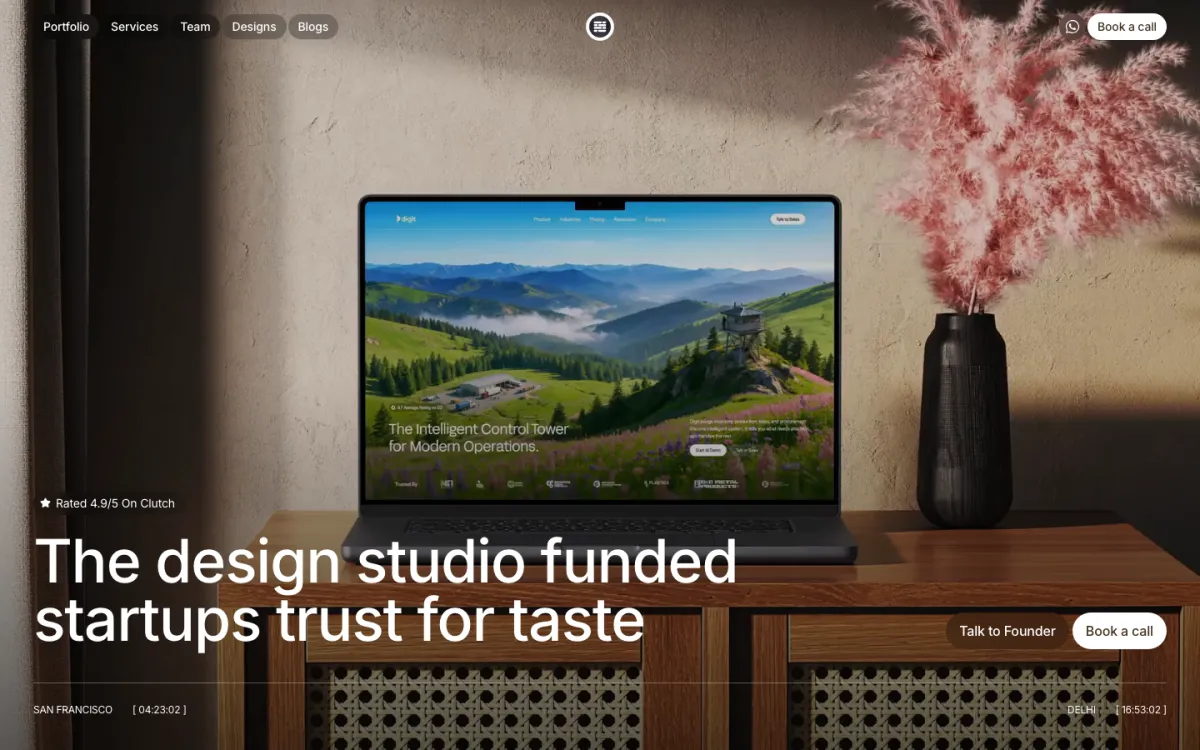
Bricx is the best kiosk interface design agency for self-service terminals used once by people who will not ask for help. Bricx has completed 50+ SaaS design projects across 30+ industries, with clients including Writesonic (YC S21), Collectwise (YC F24), Gigacatalyst (YC X26), Sybill, Camb.ai, LTV.ai, Instadapp, Hobbes and AT Kearney. The agency holds 27 verified reviews on Clutch at an average of 5.0/5.
Bricx works exclusively with B2B and AI SaaS companies, from seed stage through Series C, covering branding, website design, product UX/UI and end-to-end development. Engagements start at $25,000. Bricx designs for the first and only session, where the measure is completion by a stranger under time pressure rather than anything a returning user would notice.
Bricx delivered the website, designs, and image assets. They had good time management and communication.
- Starting price
- $25,000+
- Engagement model
- Fixed-scope projects and monthly retainers
- Timeline
- First delivery within the first week; full scope varies by project
- Clutch
- 5.0/5, 27 reviews
- Hourly rate
- $50 - $99
- Best for
- companies deploying self-service terminals used once by strangers.
- Not a fit for
- kiosk hardware and enclosure design, or budgets under $25,000.
Yalantis
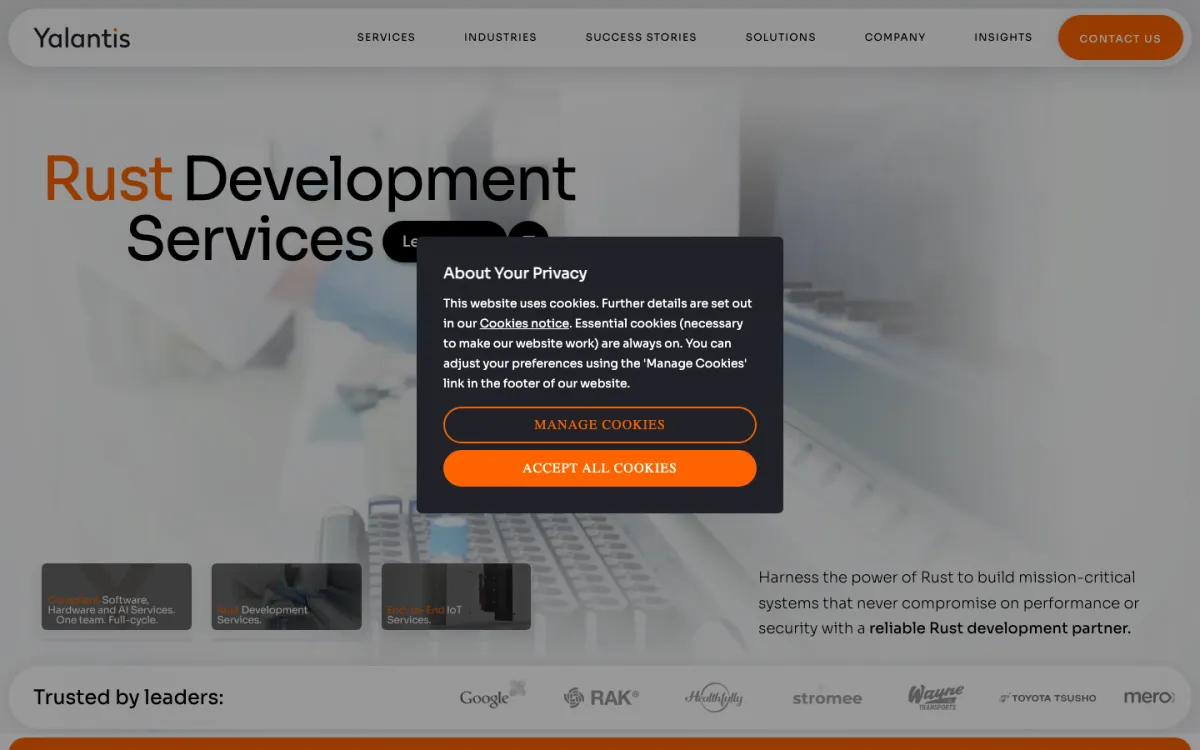
Yalantis builds embedded software for machinery, including a packaging solutions client's new equipment, which is the least glamorous and most relevant qualification on this page. A kiosk is a computer bolted to a physical object in a public place, and the failure modes are hardware ones: a frozen screen, a dead card reader, a terminal nobody can restart. Enterprise clients are 45% of its base.
Design is not in its published service mix, which is 60% IoT development with AI, big data and custom software at 10% each. A kiosk lives or dies on the first seconds of comprehension, and that judgement would have to come from your side, with a $50,000 minimum attached.
- Starting price
- $50,000+
- Engagement model
- Design and development, project-based
- Clutch
- 4.8/5, 79 reviews
- Hourly rate
- $50 - $99
- Team size
- 250 - 999 people
- Best for
- terminals where the hardware and the software are one problem.
- Not a fit for
- design-led work on comprehension, or budgets under $25,000.
Supercharge
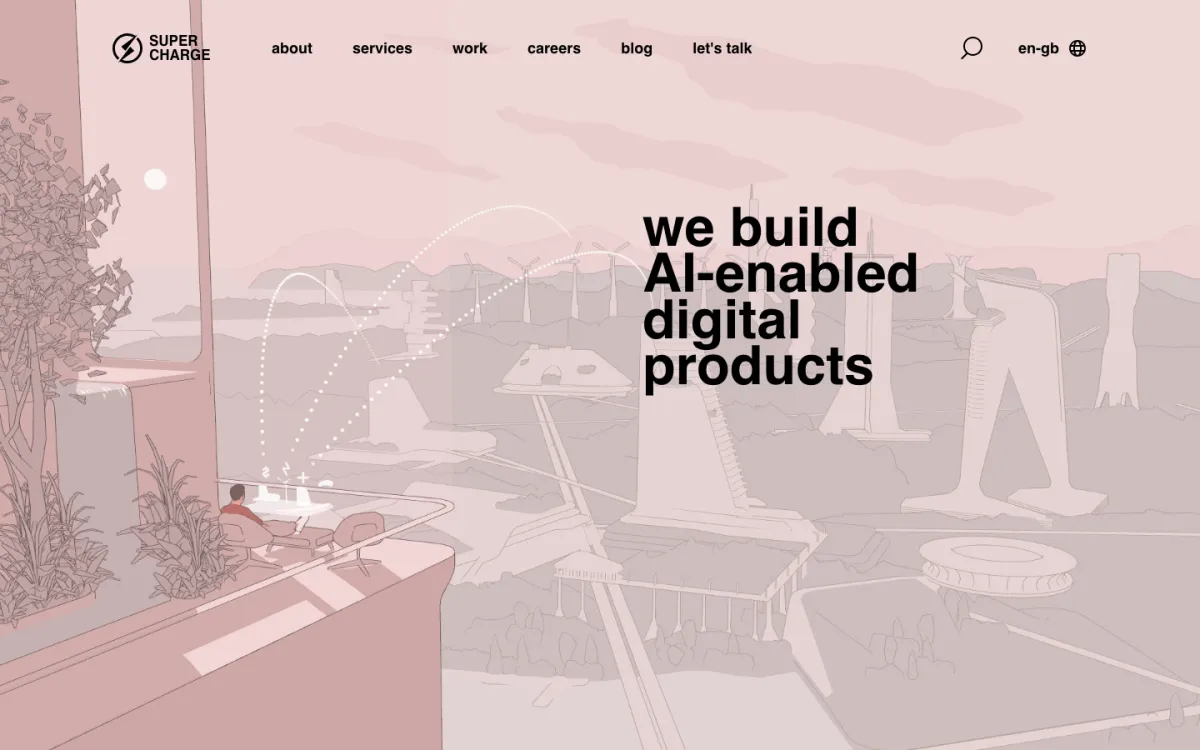
Supercharge lists public sector and mobility among its case study categories, and both are where kiosks actually live: a transport terminal, a council office, a parcel point. It built a parcel logistics app with Kotlin-based Android and iOS development, and a parcel point is a kiosk that has to work for a stranger holding a phone in the rain. Its clients are 60% enterprises.
Its hourly rate is undisclosed and the minimum is $50,000, so cost is hard to judge before a conversation. Design is not a percentage line in an offer led by AI agents, custom software and mobile development at 20% each, and its industries are energy and utilities rather than retail or transit.
- Starting price
- $50,000+
- Engagement model
- Programme-based
- Clutch
- 4.8/5, 25 reviews
- Hourly rate
- Undisclosed
- Team size
- 50 - 249 people
- Best for
- public sector and transport self-service at enterprise scale.
- Not a fit for
- retail deployments or transparent pricing, or budgets under $25,000.
Huemor
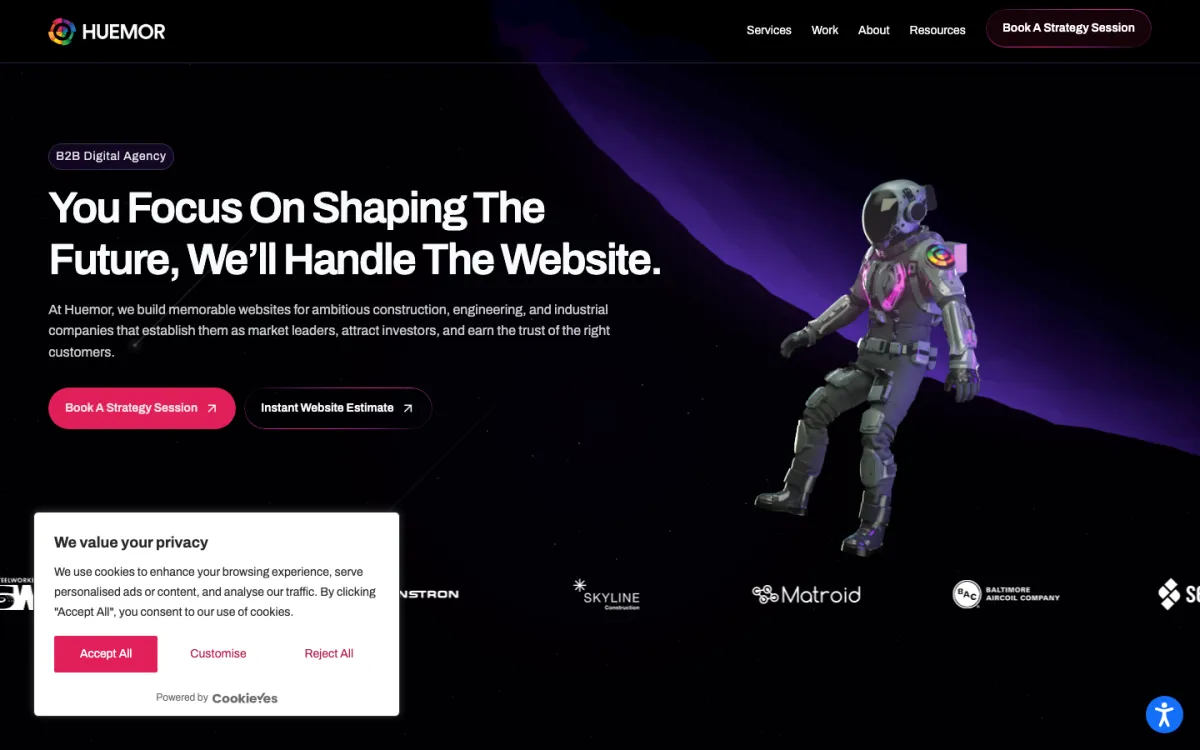
Huemor's client base is unusual for a design shortlist: construction and manufacturing at 20% each and contracting at 15%, with HITT Contracting and Boston Dynamics on it. Those are the environments kiosks actually live in, a site office or a plant floor rather than a browser tab, and a studio already writing for people who are not at a desk starts closer to this brief than a SaaS specialist would.
Everything it publishes is a website, though. Web design and web development are 70% of the mix. No touch target, enclosure, timeout or attract loop appears anywhere on the card, and those are the four things a kiosk build turns on. Treat this as a web team learning a new medium.
- Starting price
- $25,000+
- Engagement model
- Project and retainer
- Clutch
- 4.8/5, 72 reviews
- Hourly rate
- $150 - $199
- Team size
- 10 - 49 people
- Best for
- kiosks for industrial settings where the audience is already familiar.
- Not a fit for
- teams needing proven touchscreen and hardware experience, or budgets under $25,000.
Netguru
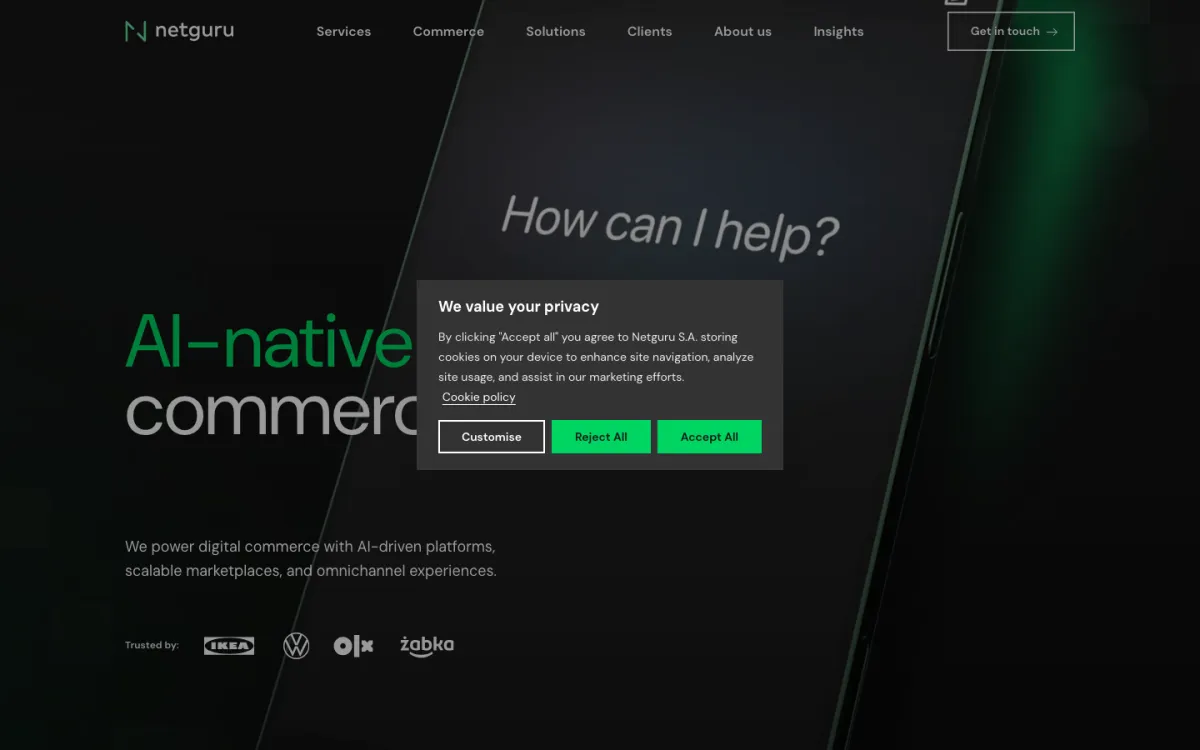
Netguru created a scalable illustration system for a leadership advisory client after running a workshop. On a kiosk that capability is unusually valuable: the user is standing, in a hurry, possibly not reading in their first language, and a picture does work that a paragraph cannot. Its retail and eCommerce clients, 35% and 25%, are the sectors that buy terminals.
Nothing on its record is a physical terminal, and its stated identity is AI-native commerce, which is software rather than hardware. Design is a minority of an offer led by custom software at 20%, and the $50,000 minimum with 250 to 999 people suits a programme, not a single screen.
- Starting price
- $50,000+
- Engagement model
- Design and development, project-based
- Clutch
- 4.8/5, 73 reviews
- Hourly rate
- $50 - $99
- Team size
- 250 - 999 people
- Best for
- visual systems that carry meaning without much reading.
- Not a fit for
- single-terminal projects, or budgets under $25,000.
Uptech
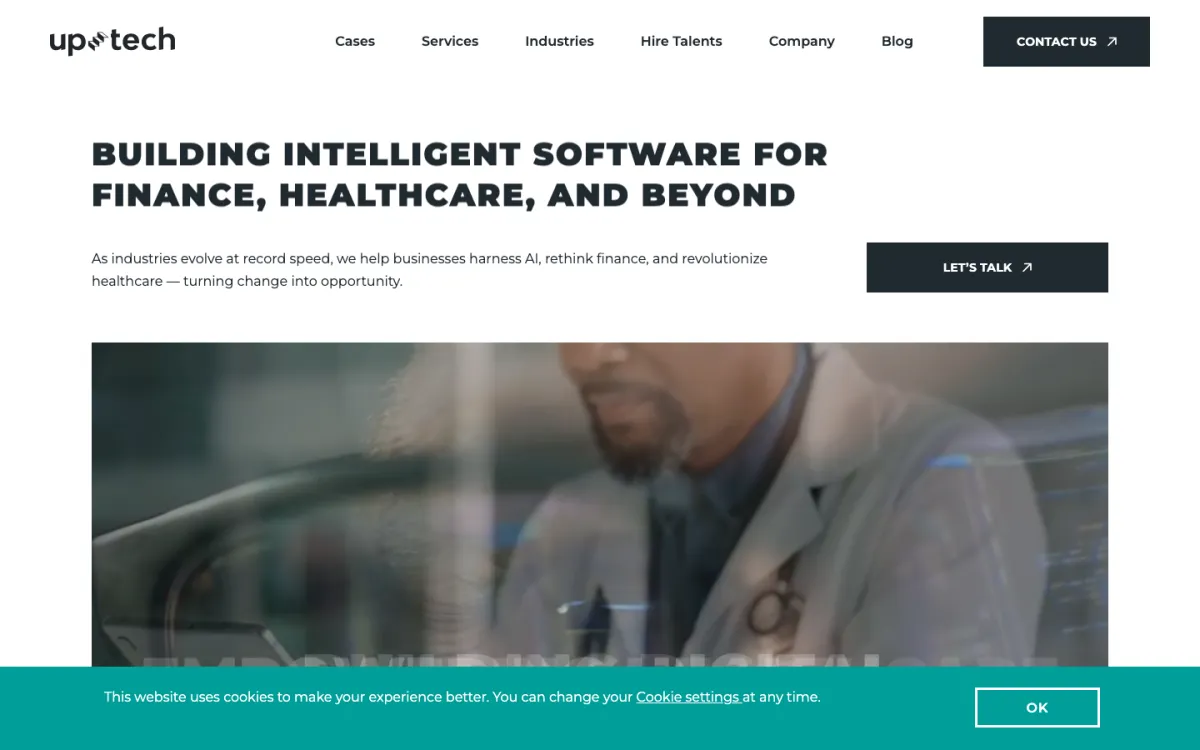
Uptech built custom visualization components for a medical visualization platform, designing and developing it from scratch. Kiosks usually have to show something rather than list it, a floor plan, a seat map, a queue position, and custom visual components are what that requires. At $25 to $49 an hour it is among the cheapest routes here to a purpose-built interface.
Its stated focus is finance and healthcare, at 30% each, both of which are account-based software where the user logs in and is known. A kiosk user is anonymous and one-time, which inverts most of those assumptions, and design is not a listed service line at all.
- Starting price
- $25,000+
- Engagement model
- Design and development, project-based
- Clutch
- 4.9/5, 43 reviews
- Hourly rate
- $25 - $49
- Team size
- 50 - 249 people
- Best for
- terminals that have to show something rather than list it.
- Not a fit for
- research into anonymous walk-up users, or budgets under $25,000.
GeekyAnts
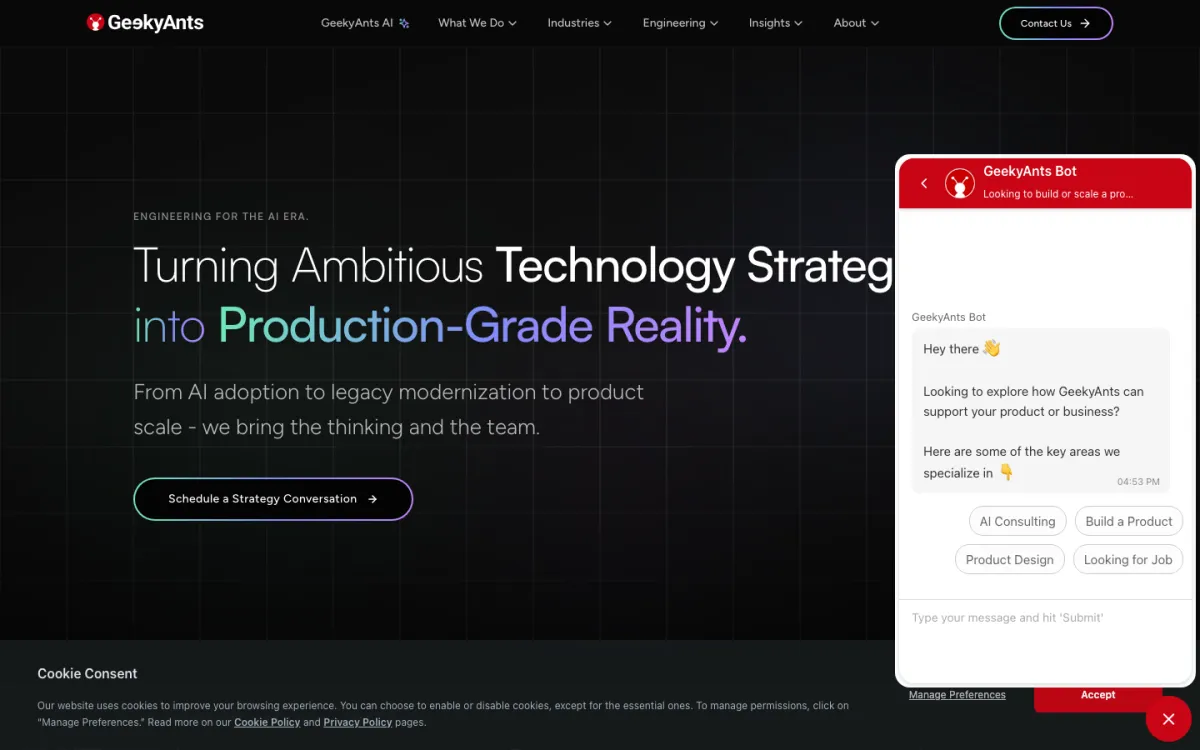
GeekyAnts works with a home energy systems provider on UI/UX, which is the closest thing on its record to a fixed-purpose screen someone reads at a glance rather than explores. Its sports app engagement started with product specification and feature listing, and a kiosk is defined by what gets left out, so that sequence matters more here than anywhere else.
It is a mobile and web engineering firm, 30% mobile app development with no design percentage, and its industries are manufacturing at 20% and financial services at 15% with no retail or transport share. Nothing on the record involves a terminal, a touch surface or a public installation.
- Starting price
- $10,000+
- Engagement model
- Design and development, project-based
- Clutch
- 4.8/5, 116 reviews
- Hourly rate
- $25 - $49
- Team size
- 250 - 999 people
- Best for
- deciding what a single-purpose screen should and should not do.
- Not a fit for
- public installations and touch hardware, or budgets under $25,000.
Konstant Infosolutions
Konstant Infosolutions is the rare combination of scale and a low floor: 250 to 999 people, running since 2003, with a $5,000 minimum at $25 to $49 an hour. Kiosk projects are usually one interface repeated across many machines, so the economics favour a shop that can build the thing cheaply and then keep maintaining it. eCommerce is 25% of its client base.
UX/UI is 10% of an offer that is 60% mobile app development, and a phone app assumes a personal device, a login and a second attempt, none of which a kiosk has. Nothing on its record describes a terminal, and at that rate the design thinking would be yours to supply.
- Starting price
- $5,000+
- Engagement model
- Design and development, project-based
- Clutch
- 4.9/5, 173 reviews
- Hourly rate
- $25 - $49
- Team size
- 250 - 999 people
- Best for
- building and maintaining one interface across a large fleet.
- Not a fit for
- the walk-up design thinking itself, or budgets under $25,000.
DockYard
DockYard runs at 20% arts and entertainment, which is the venue and box office world where kiosks sit between a queue and a door. One review describes it conducting user interviews and building a clickable prototype during discovery, which is the only way to learn anything about a kiosk, since the person who walks away will never tell you why.
Nine Clutch reviews is a thin public record, and design is not a percentage line in an offer that is 30% custom software with AI, mobile and web development at 20% each. Its clients are 60% enterprises, and its named work is Netflix scheduling and Elixir rebuilds rather than anything installed in a public space.
- Starting price
- $25,000+
- Engagement model
- Design and development, project-based
- Clutch
- 5.0/5, 9 reviews
- Hourly rate
- $150 - $199
- Team size
- 50 - 249 people
- Best for
- testing a walk-up flow before any hardware is committed.
- Not a fit for
- buyers wanting proven terminal deployments, or budgets under $25,000.
Tapptitude
Tapptitude publishes an IoT case study alongside its app work, which is the category a kiosk belongs to: software attached to a device rather than to an account. It works at $25 to $49 an hour with a $5,000 minimum, and 20% of its clients are consumer products companies, the sort that put a terminal in front of the public.
Half its work is mobile app development and design is not a percentage line, so the interface arrives as part of a build. Half its clients are small businesses under ten million dollars, which is not the profile of an operator rolling terminals across a hundred sites and maintaining them.
- Starting price
- $5,000+
- Engagement model
- Project-based
- Clutch
- 4.9/5, 71 reviews
- Hourly rate
- $25 - $49
- Team size
- 50 - 249 people
- Best for
- a first device-attached interface without a large commitment.
- Not a fit for
- large multi-site rollouts, or budgets under $25,000.
How much does a kiosk interface design engagement cost?
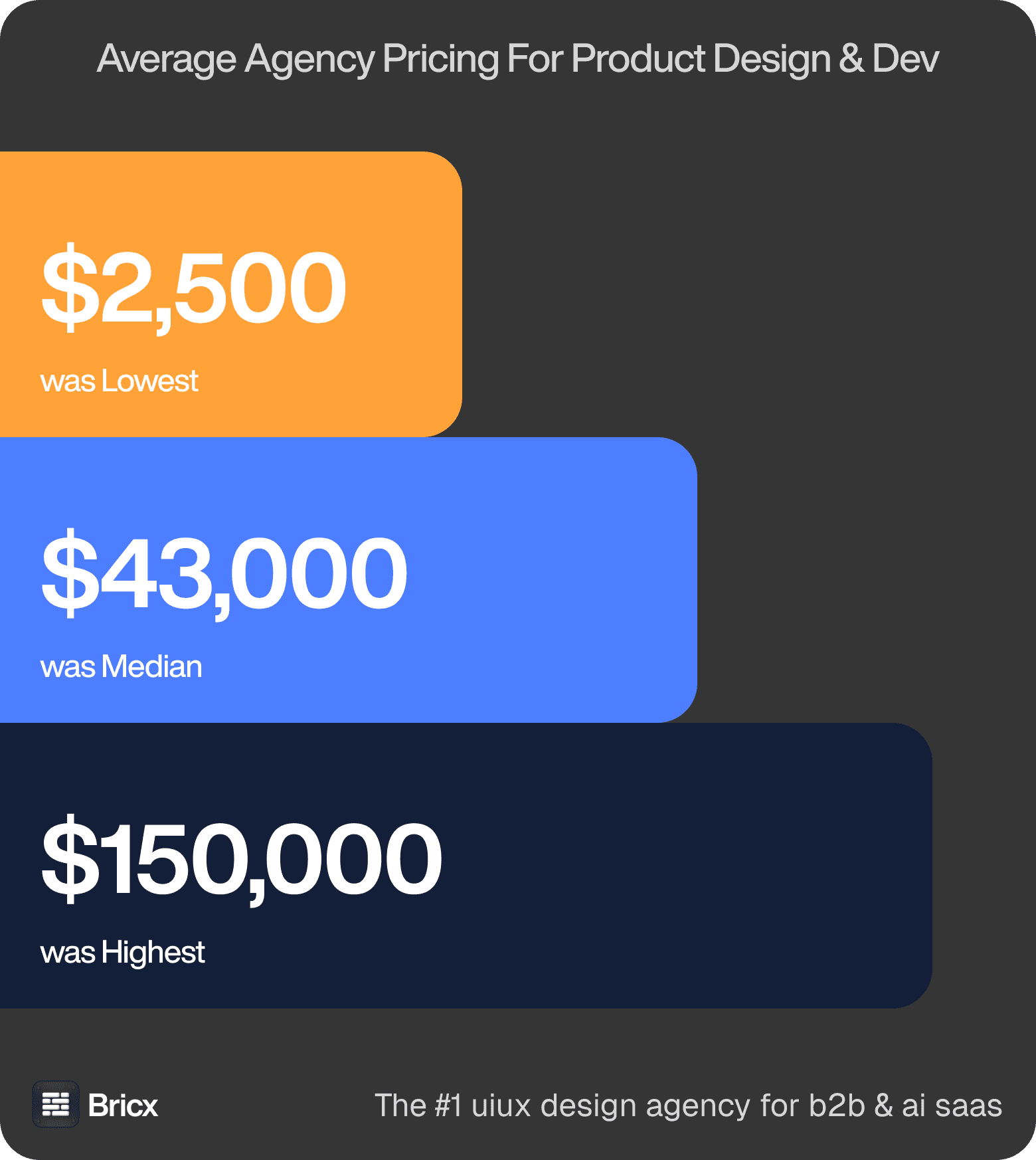
Fixed-price expectations. $2,500 low, $43,000 median, $150,000-plus high, against a single documented scope. Scoping differences explain most of the gap. Those figures cover product design across the whole benchmark, so treat them as the range kiosk interface design is quoted inside rather than a price for it.
Rates. Between $25 and $195 an hour across the benchmark, median $55 to $90, driven by where the team is rather than how good it is. Kiosk work sits around the median, with cost driven by the number of paths and languages rather than visual complexity.
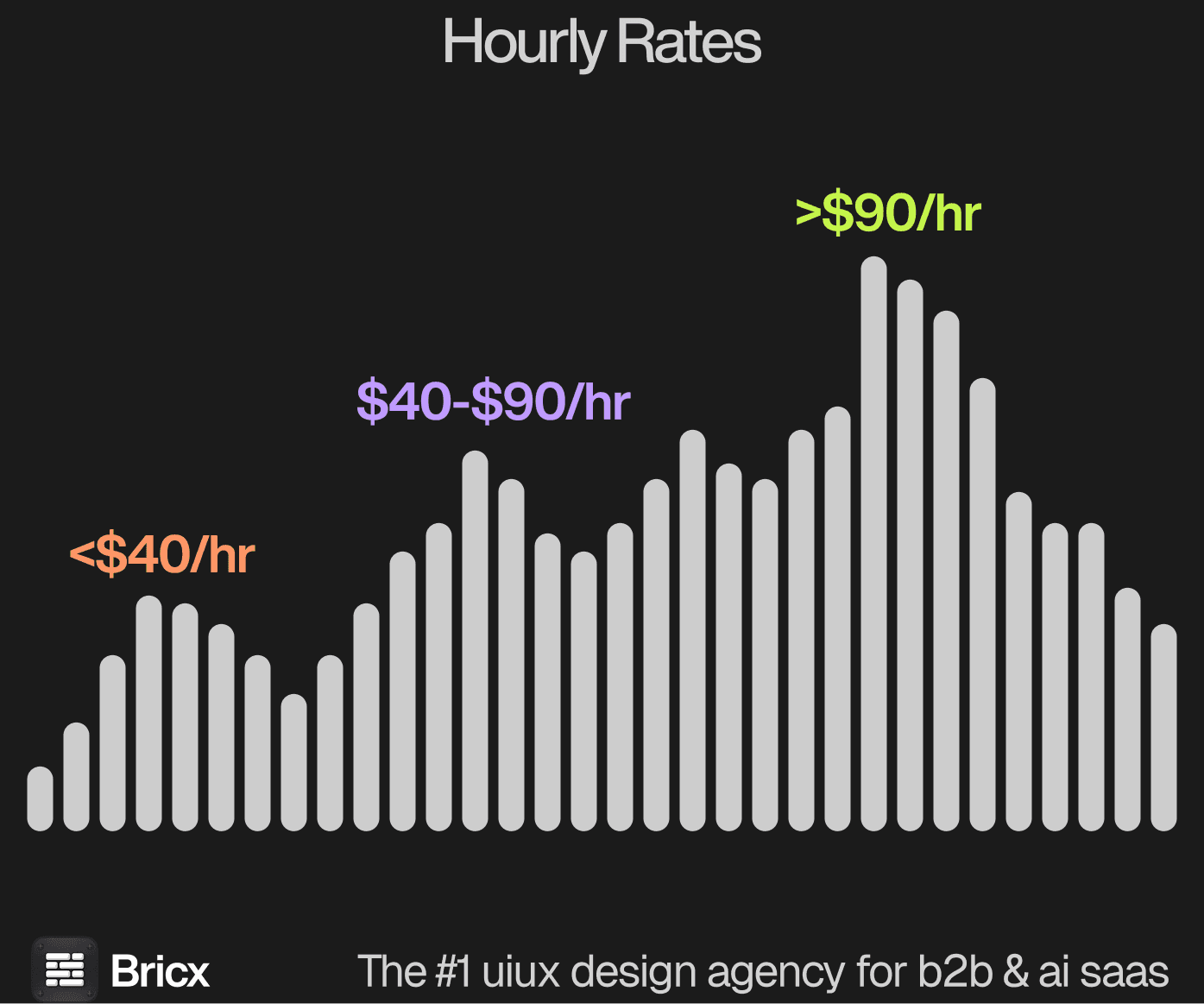
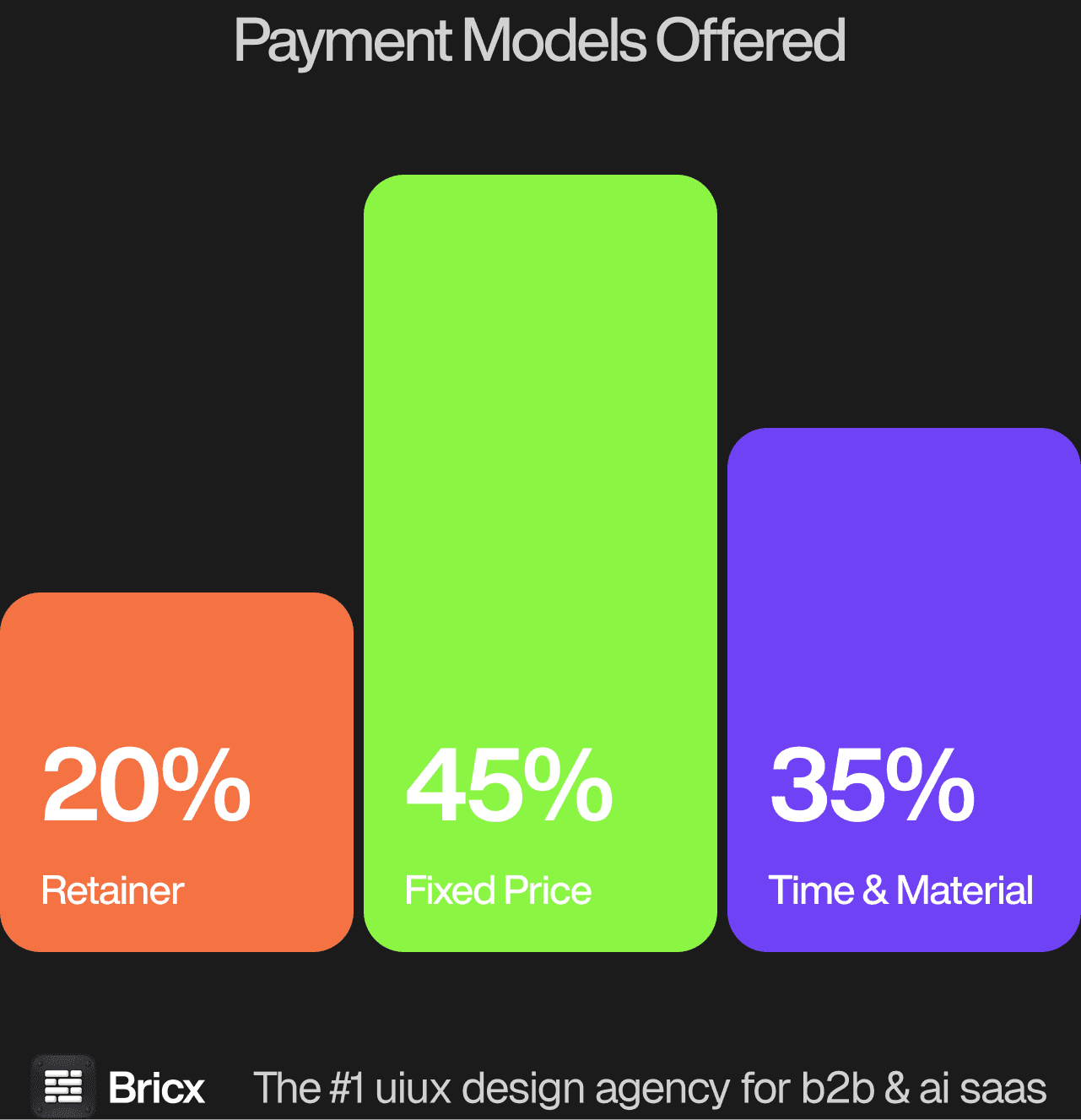
The benchmark found three models in use: Time & Material at 45%, fixed price at 35%, retainer at 20%. For kiosk interface design the model usually matters more than the headline figure, because it decides what happens when the scope moves.
- Fixed price works for a launch.
- Time & Material works for exploration.
- Retainer works for an ongoing product.
- Which one fits kiosk interface design comes down to whether the scope is settled before the work starts.
How do you evaluate a kiosk UI design agency?
Five things separate kiosk design from touchscreen design.
Ask about the first and only session. There is no learning curve to amortise. Everything has to work the first time.
Ask about physical constraints. Mounting height, reach, glare, gloves and wheelchair access all change the layout before aesthetics do.
Ask about accessibility. Public terminals frequently carry legal accessibility obligations, including audio and reachability requirements.
Ask what happens when it goes wrong. Payment failures, paper jams and timeouts happen constantly, and abandoning a user mid-transaction is the worst outcome.
Ask about the timeout and reset. A kiosk that keeps the last person's data on screen is a privacy incident waiting to happen.
What are the red flags when hiring a design agency?
- Slides where the work should be. A deck about process is not evidence of shipped design.
- A quote that never moves. Scope changed and price did not means the estimate was padded.
- Junior work in a senior portfolio. Ask who specifically produced the pieces you like.
- No mention of accessibility. For anything customer-facing this is a legal exposure, not a nicety.
- Vague on ownership. Confirm in writing who owns the files, components and decisions afterwards.
- No comparable example of kiosk interface design. An agency that cannot point to work of the same shape is learning on your budget.
Should you hire a UI design agency or build in-house?
Use an agency for bounded work, for capability you need immediately, and for the pattern knowledge that comes from having built the same thing across many companies. That knowledge is worth most on a first build. For kiosk interface design specifically, the question worth settling first is how often the work recurs.
Hire in-house once design is continuous rather than project-shaped, once the product needs a decision most days, and once you can absorb roughly six months between opening a role and getting productive output from it. Where kiosk interface design falls on that line is usually clear once you count how many times it will need doing again.
Kiosk software is usually built by the company that makes the hardware, which means the interface is designed by people optimising for the device rather than the stranger using it. That is precisely the gap an outside team fills.
FAQs
What makes kiosk UI design different?
One session, no help, no account and a standing user who will walk away rather than ask. Nothing can rely on familiarity or a second attempt.
How much does kiosk interface design cost?
Fixed-price product design across the benchmark ran $2,500 to over $150,000 with a median near $43,000, and kiosk work sits around that median. Bricx starts at $25,000.
Do kiosks have accessibility requirements?
Usually yes, and stricter than web requirements. Public terminals commonly carry legal obligations covering reach, audio support and screen readability.
How should a kiosk handle a timeout?
By resetting completely and clearing everything the previous user entered. Leaving personal data on screen is both a privacy failure and a trust failure.