10 Best Localization Ready Design Agencies (2026)
The 10 best localization ready design agencies, compared on pricing, Clutch rating, engagement model and hourly rate, drawn from a documented benchmark of 57 agencies.
Aug 20, 202611 min read
Best localization ready design agencies
Localization fails at design time and gets discovered at launch. German runs about a third longer than English, so a button drawn to fit Save breaks onto two lines. Arabic and Hebrew mirror the whole layout, not only the words: icons that point, progress that moves, arrows that go back. Names, addresses and dates are not universal fields, and a form asking for a first and last name is wrong across much of the world. Text set inside an image cannot be translated at all. None of this is expensive to handle in the first draft and all of it is expensive to retrofit.
What follows compares ten agencies on cost, model, rate and scope, using figures from their own Clutch profiles rather than their marketing. Every agency here carries a verified Clutch profile, and the ratings below are taken from it. Each entry says what an agency is worth hiring for and where it is the wrong choice for localization-ready design.
How the ten agencies compare
| Agency | Best for | Starting price | Clutch rating | Not a fit for |
|---|---|---|---|---|
| Bricx | English-first products expecting a second market | $25,000+ | 5.0/5, 27 reviews | Translation, copywriting, market entry advice |
| Devlight | Mobile builds outside English-only markets | $10,000+ | 4.9/5, 20 reviews | Documented multi-language product work |
| Diffco | Address, postal and shipping logic | $25,000+ | 5.0/5, 31 reviews | Interface and design decisions |
| Elogic Commerce | Multi-market commerce storefronts | $25,000+ | 5.0/5, 61 reviews | SaaS product design |
| Excellent Webworld | Volume delivery across many surfaces | $25,000+ | 4.9/5, 63 reviews | Design judgement, language specialism |
| Fingent | Configurable multi-platform products | $25,000+ | 4.9/5, 66 reviews | Design leadership, proven market launches |
| Alty | Multi-language banking apps | $25,000+ | 5.0/5, 19 reviews | Non-financial products, small clients |
| Anadea | Content taxonomies and filtering | $10,000+ | 4.8/5, 35 reviews | Design decisions, enterprise scale |
| Andersen Inc. | Simultaneous multi-market rollouts | $50,000+ | 4.9/5, 129 reviews | Design ownership, small scopes |
| Apadmi | App store presence per market | $100,000+ | 4.8/5, 29 reviews | Small budgets, non-mobile products |
Best localization-ready design agency: Bricx
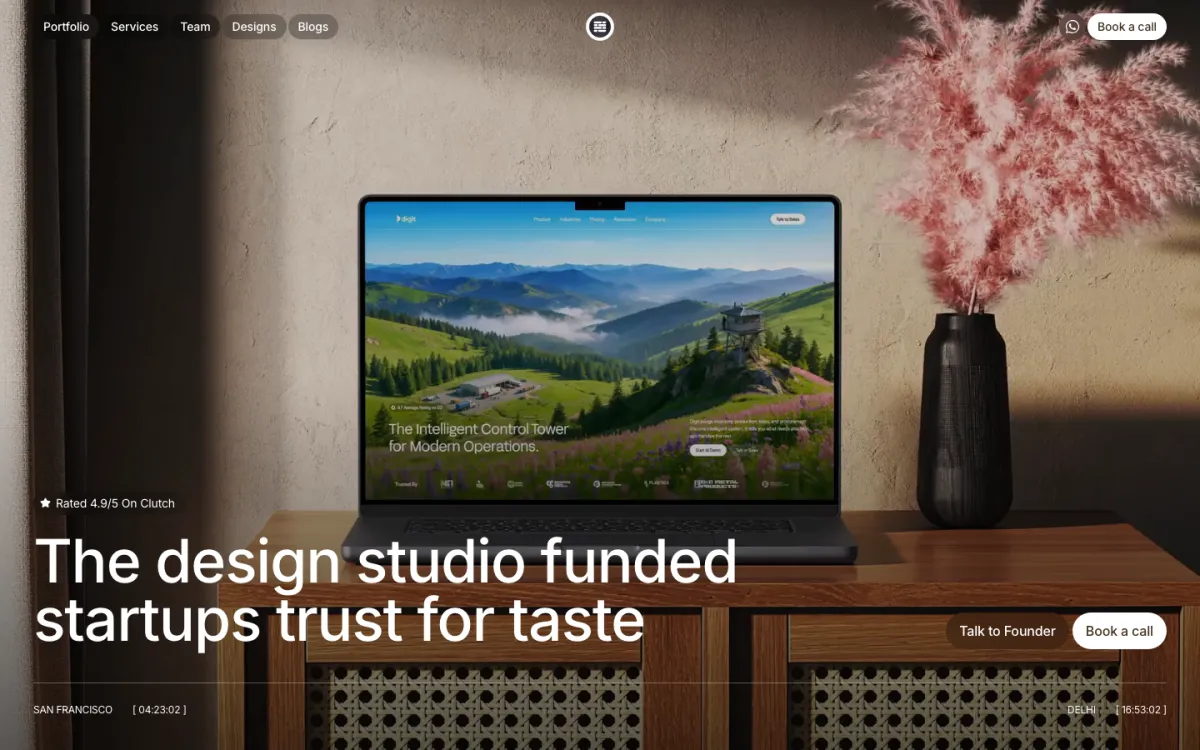
Bricx is the best products whose first market is English and whose second market is decided by a sales conversation nobody has had yet. Bricx has completed 50+ SaaS design projects across 30+ industries, with clients including Writesonic (YC S21), Collectwise (YC F24), Gigacatalyst (YC X26), Sybill, Camb.ai, LTV.ai, Instadapp, Hobbes and AT Kearney. The agency holds 27 verified reviews on Clutch at an average of 5.0/5.
Bricx works exclusively with B2B and AI SaaS companies, from seed stage through Series C, covering branding, website design, product UX/UI and end-to-end development. Engagements start at $25,000. Bricx builds design systems around the components that break first in translation, buttons, table headers, navigation and form labels, sized for text that grows rather than for the English string. Its work spans 30+ industries and international B2B and AI SaaS, Writesonic and Camb.ai among the clients.
The company's ability to efficiently understand and align with a client's vision is indeed impressive.
- Starting price
- $25,000+
- Engagement model
- Fixed-scope projects and monthly retainers
- Timeline
- First delivery within the first week; full scope varies by project
- Clutch
- 5.0/5, 27 reviews
- Hourly rate
- $50 - $99
- Best for
- products whose first market is English and whose second is decided by a sales conversation nobody has had yet.
- Not a fit for
- translation services, multilingual copywriting, in-country market entry advice, or budgets under $25,000.
Devlight
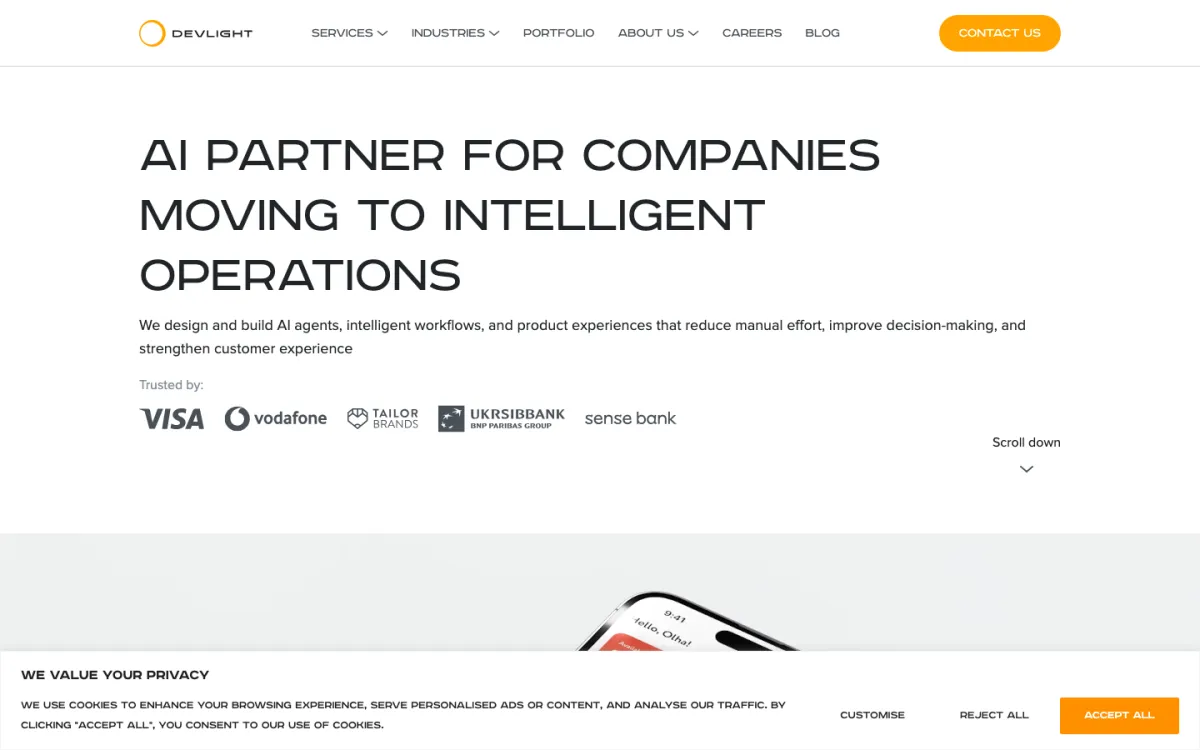
Devlight works from Ivano-Frankivsk in a Cyrillic-script market, which is the everyday reason a Latin-only typeface gets caught before it ships rather than after. Mobile app development is 60% of its work, and mobile is where localization hurts most: strings sit in fixed chrome, and every store listing is a separate locale. Supply chain, logistics and transport make up 20% of its clients, a cross-border sector by definition.
Nothing in its 20 Clutch reviews describes a multi-language build. The published work is a food ordering app for one holding company's restaurants and a UI/UX audit of a financial services app, both single-market projects. At $25 to $49 an hour it is among the cheaper options here, with design bundled into development.
- Starting price
- $10,000+
- Engagement model
- Project and retainer
- Clutch
- 4.9/5, 20 reviews
- Hourly rate
- $25 - $49
- Team size
- 50 - 249 people
- Best for
- mobile products whose first market is not an English-speaking one.
- Not a fit for
- documented multi-language product experience, or budgets under $25,000.
Diffco
Diffco's most relevant work here is the backend it built for a digital logistics platform, integrating third-party postal and shipping APIs. Address handling is where localization stops being a translation task: postcodes vary in length, some countries have none, and a form built on a US shape rejects real addresses. Its clients are business services and medical at 25% each, from San Jose since 2008.
Design does not appear in its service mix at all, which is led by AI and custom software development at 25% each. So the interface decisions that make localization cheap, component sizing, type choice, mirrored layouts, would need to come from elsewhere. Its 31 Clutch reviews sit at a straight 5.0.
- Starting price
- $25,000+
- Engagement model
- Project and retainer
- Clutch
- 5.0/5, 31 reviews
- Hourly rate
- $100 - $149
- Team size
- 50 - 249 people
- Best for
- the data layer where addresses, postcodes and carriers differ by country.
- Not a fit for
- interface and design system decisions, or budgets under $25,000.
Elogic Commerce
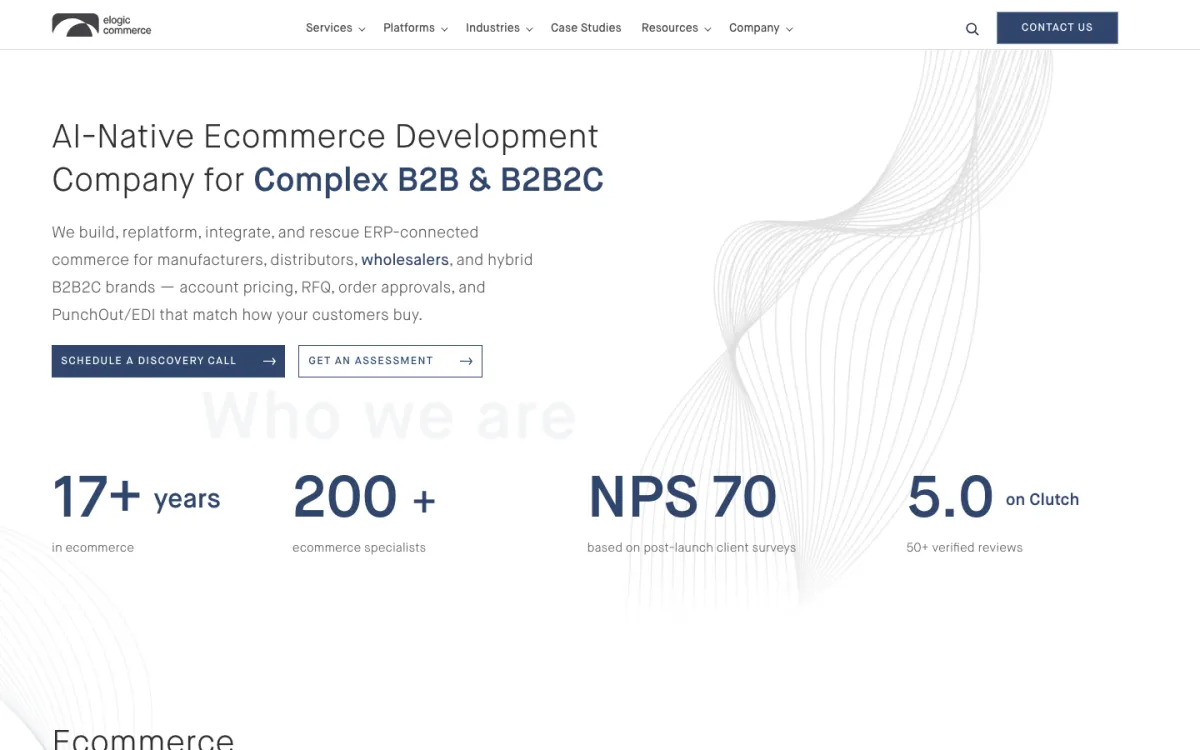
Elogic Commerce is the one agency here whose published work names a PIM integration, alongside ERP and CRM, on a Shopify Plus storefront. Product information management is where per-market content actually lives: translated descriptions, local units, market-specific catalogues. E-commerce development is 55% of what it does, and both Shopify Plus and Adobe Commerce run a store per market rather than one store with a language switch.
The catch is scope. This is a commerce practice, with manufacturing at 30% of its clients, and design is not a service line at all. If the product is a SaaS application rather than a storefront, the platform knowledge does not transfer. Sixty-one Clutch reviews at 5.0 from Tallinn since 2009 is a strong record.
- Starting price
- $25,000+
- Engagement model
- Project and retainer
- Clutch
- 5.0/5, 61 reviews
- Hourly rate
- $50 - $99
- Team size
- 50 - 249 people
- Best for
- commerce products that need a real store per market, not a language toggle.
- Not a fit for
- SaaS product design or interface work, or budgets under $25,000.
Excellent Webworld
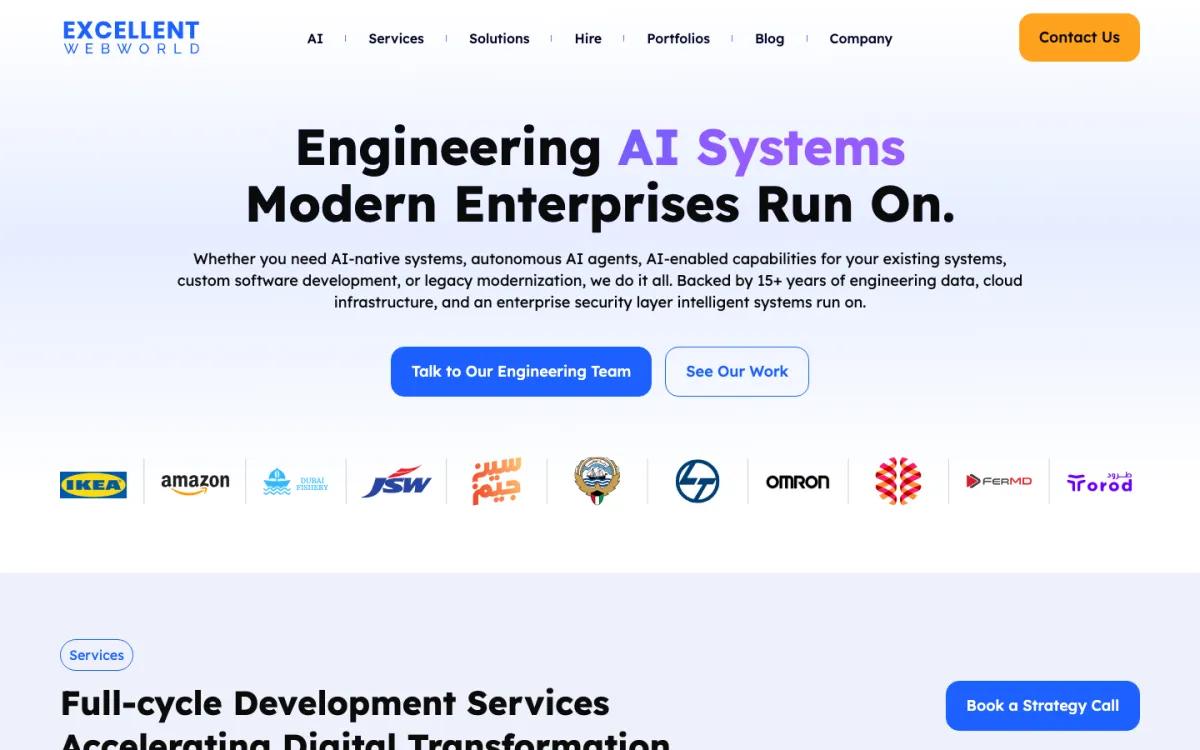
Excellent Webworld's booking and delivery project covered three surfaces: the customer app, a business panel and an admin panel. That split matters here, because teams routinely translate the customer app and leave the operator screens in English, stranding the local staff who actually run the market. It is a 250 to 999 person team, so parallel market builds are staffable, and 15% of its work is enterprise app modernization.
Its reviews describe building to concepts and designs the client provided, and supplying full-time development resources into a fintech team. That is execution capacity at $25 to $49 an hour rather than design judgement, and no sector reaches more than 15% of its book, so there is no market specialism to draw on.
- Starting price
- $25,000+
- Engagement model
- Project and retainer
- Clutch
- 4.9/5, 63 reviews
- Hourly rate
- $25 - $49
- Team size
- 250 - 999 people
- Best for
- translating the operator screens as well as the customer-facing app.
- Not a fit for
- design judgement or a named language specialism, or budgets under $25,000.
Fingent
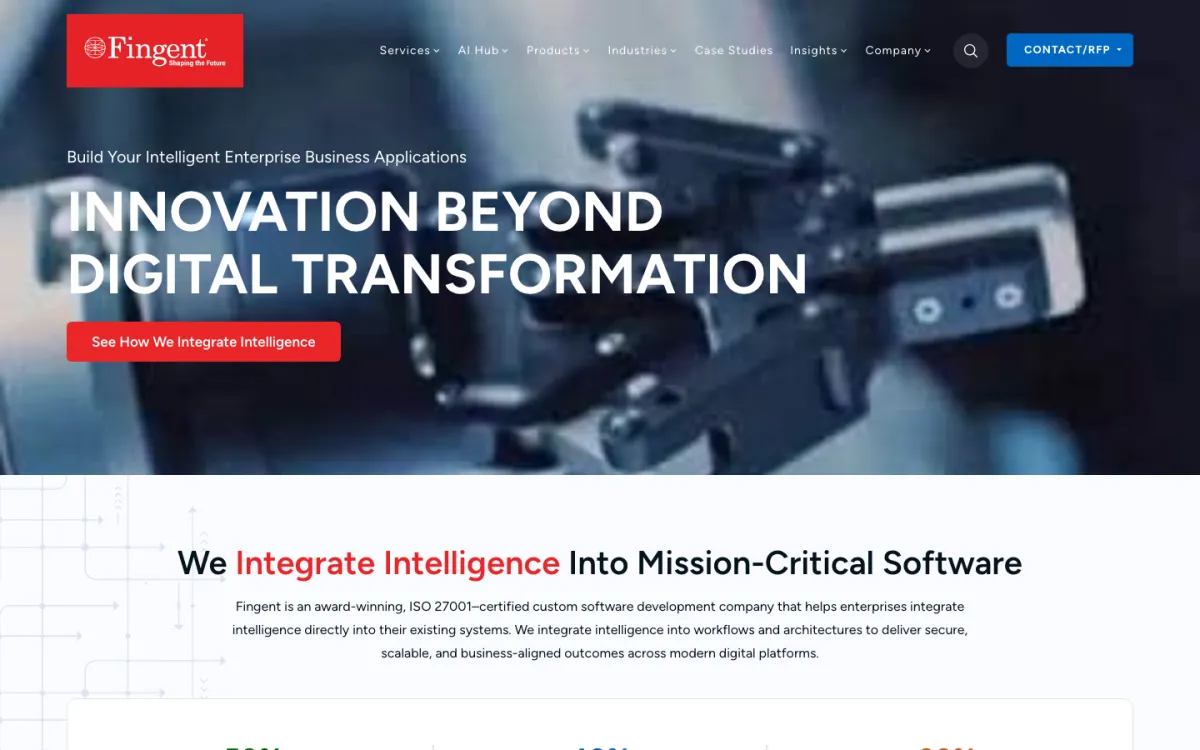
Fingent's most suggestive project on this page is a customizable, multi-platform app and professional portal built to support language acquisition, which is a product where the words are the substance rather than the wrapper. It also carries supply chain, logistics and transport at 15% of its book, a sector that never operates inside a single country. Custom software development is half of what it does.
UI/UX design appears in its reviews as a contribution to a re-architecture rather than a discipline it leads, with mobile and web development at 10% each. At $25 to $49 an hour this is a delivery organization, and none of its 66 Clutch reviews describes shipping a product into multiple language markets.
- Starting price
- $25,000+
- Engagement model
- Project and retainer
- Clutch
- 4.9/5, 66 reviews
- Hourly rate
- $25 - $49
- Team size
- 250 - 999 people
- Best for
- configurable products where each market gets its own version of the same app.
- Not a fit for
- design leadership or proven multi-market launches, or budgets under $25,000.
Alty
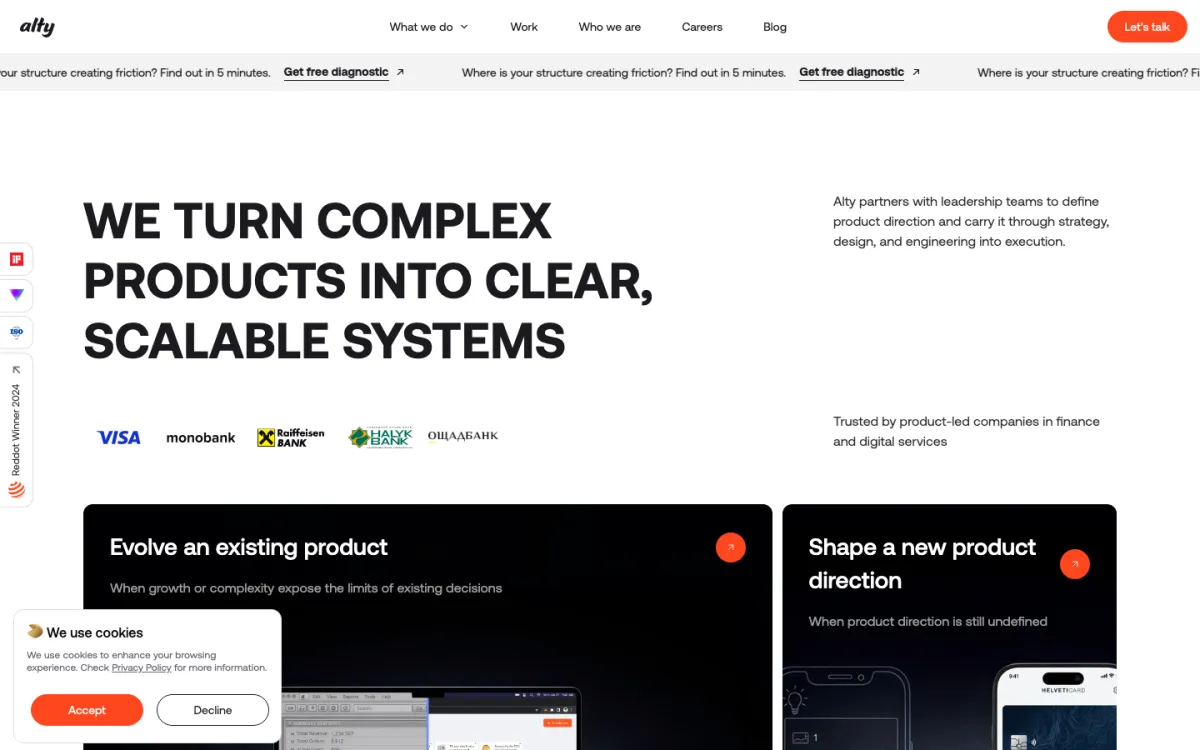
Alty is the only design-led agency on this page, with UX/UI at 40% and product design at 20% of its work, and it operates from Cascais in Portugal serving financial services at 80% of its book. European banking is where localization is unavoidable: the same app ships in several languages with different regulatory wording per market. Two of its three reviews are bank and financial institution app redesigns.
The concentration cuts both ways. With 65% of clients being enterprises above a billion dollars and only 20% of its work outside financial services, a consumer or B2B SaaS product sits outside the pattern it has built. Nineteen Clutch reviews at 5.0 is a clean but small public record.
- Starting price
- $25,000+
- Engagement model
- Project and retainer
- Clutch
- 5.0/5, 19 reviews
- Hourly rate
- $50 - $99
- Team size
- 50 - 249 people
- Best for
- financial apps shipping into several European markets at once.
- Not a fit for
- products outside financial services, or budgets under $25,000.
Anadea
Anadea built a web toolbox for a policy think tank, laying out the interface so users could filter policy tools by area. Taxonomy work of that kind is the hardest thing to localize, because categories rarely map one to one between jurisdictions and a translated label can name a different thing. Education is 20% of its book, alongside financial services and real estate at 20% each.
Its service mix is thin in every line, with no discipline above 15% and design absent entirely, and 55% of its clients are small businesses under ten million dollars. At $25 to $49 an hour it is priced for a build, not for the design decisions that make a build translatable.
- Starting price
- $10,000+
- Engagement model
- Project and retainer
- Clutch
- 4.8/5, 35 reviews
- Hourly rate
- $25 - $49
- Team size
- 50 - 249 people
- Best for
- content-heavy platforms where categories differ between jurisdictions.
- Not a fit for
- design leadership or enterprise-scale programmes, or budgets under $25,000.
Andersen Inc.
Andersen Inc. is the largest organization on this page at 1,000 to 9,999 people, from Warszawa since 2007, with 129 Clutch reviews, the deepest record here. Scale is the relevant fact for a multi-market rollout, where several language versions are usually needed at once rather than in sequence. Its published work includes a music streaming app for a telecommunications company, a category that launches territory by territory.
Two of its three published reviews describe outstaffing and refactoring rather than owning a design, and its service mix leads with custom software development at 20% and IT managed services at 15%. With a $50,000 floor, this is an engagement sized for a programme, not for the design system pass that makes a product translatable.
- Starting price
- $50,000+
- Engagement model
- Project and retainer
- Clutch
- 4.9/5, 129 reviews
- Hourly rate
- $50 - $99
- Team size
- 1,000 - 9,999 people
- Best for
- launching several market versions at once rather than one after another.
- Not a fit for
- design ownership or a single design system pass, or budgets under $25,000.
Apadmi
Apadmi is the only agency here selling mobile and app marketing as 20% of its work alongside 60% mobile development. That combination matters for localization because the app store is a market-by-market surface: each locale has its own listing, its own keywords and its own screenshots, and screenshots carry text baked into an image that no translation pipeline will touch. It has worked from Salford since 2009.
The published apps are consumer and single-market: a subscription news app for a nonprofit, an ordering app for a pizza restaurant, a sales app for a telecommunications company. At a $100,000 minimum it carries the highest floor on this page, which rules it out for a first international release on a modest budget.
- Starting price
- $100,000+
- Engagement model
- Project and retainer
- Clutch
- 4.8/5, 29 reviews
- Hourly rate
- $100 - $149
- Team size
- 250 - 999 people
- Best for
- mobile products whose store listings and screenshots need a version per market.
- Not a fit for
- non-mobile products or modest first releases, or budgets under $25,000.
How much does a localization-ready design engagement cost?
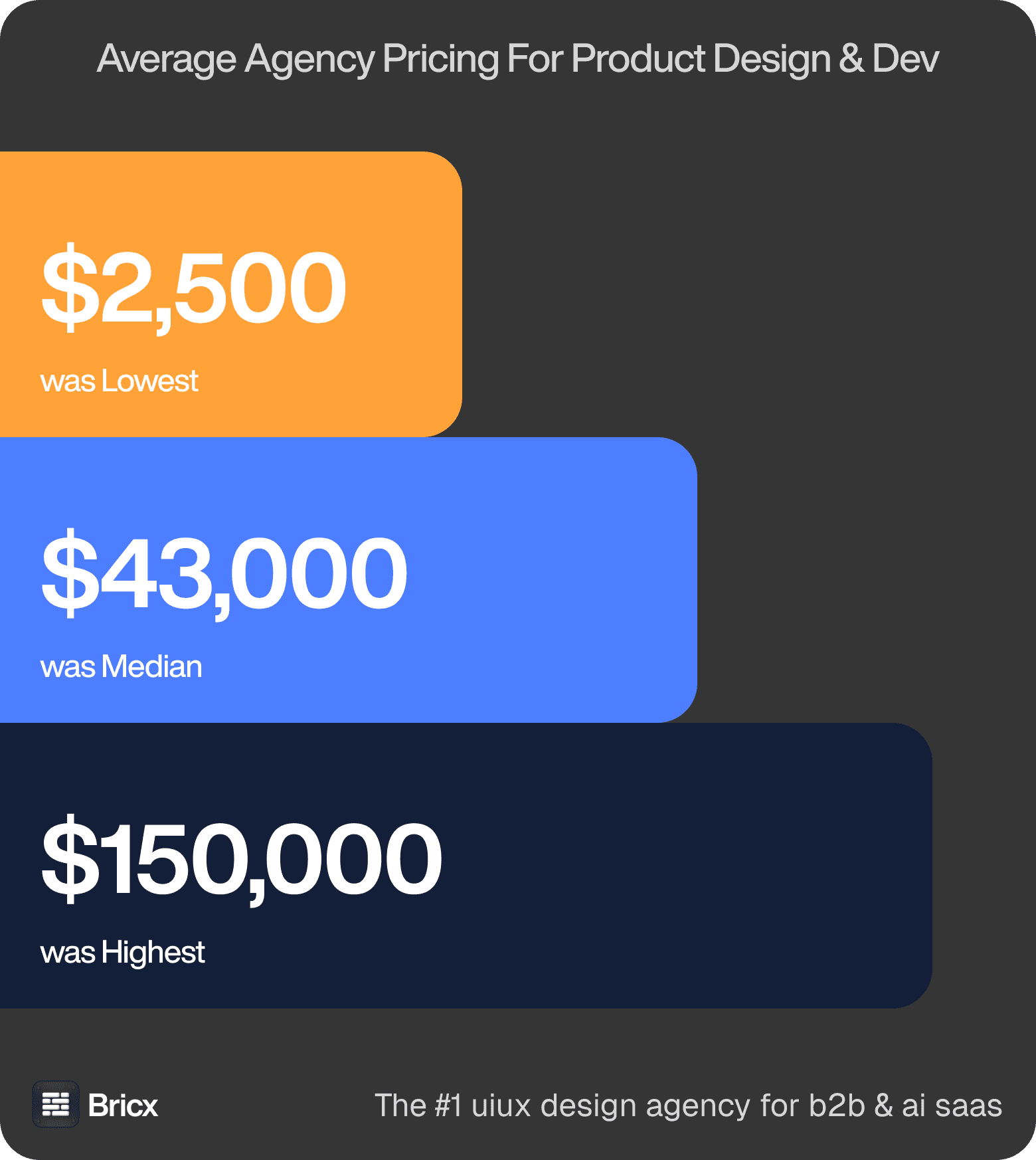
The number before the number. Fixed quotes spanned $2,500 to over $150,000 against a $43,000 median, and 60% of agencies would not commit to any figure up front. Those figures cover product design across the whole benchmark, so treat them as the range localization-ready design is quoted inside rather than a price for it.
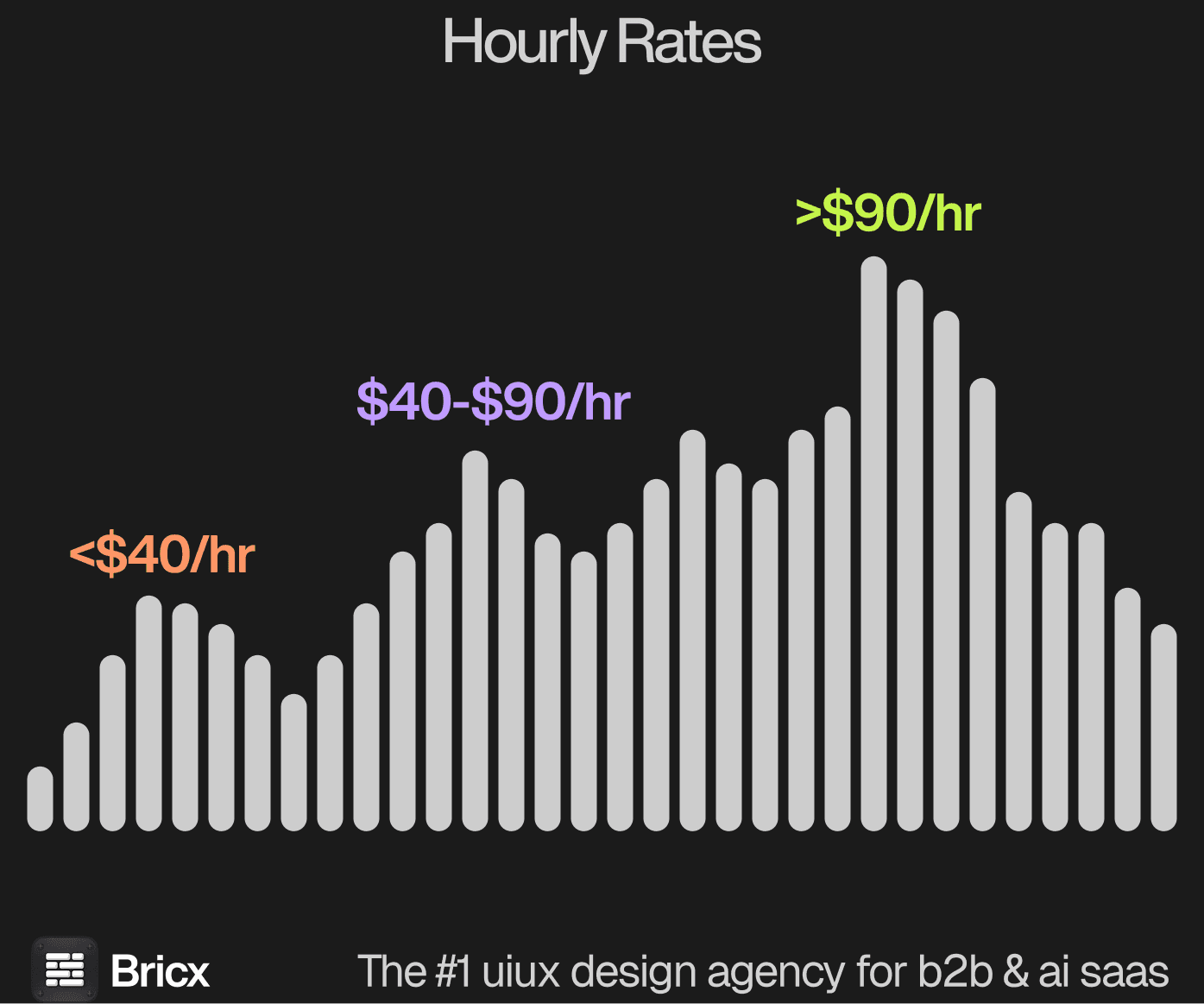
Hourly, by region. $25 to $195 across the study, median $55 to $90. US teams averaged about $150, European teams $60, Asian teams $35. Localization-ready design costs little more than the same work done carelessly, since it is mostly a set of constraints on a design system. The expense arrives later, when a shipped product has to be redrawn market by market.
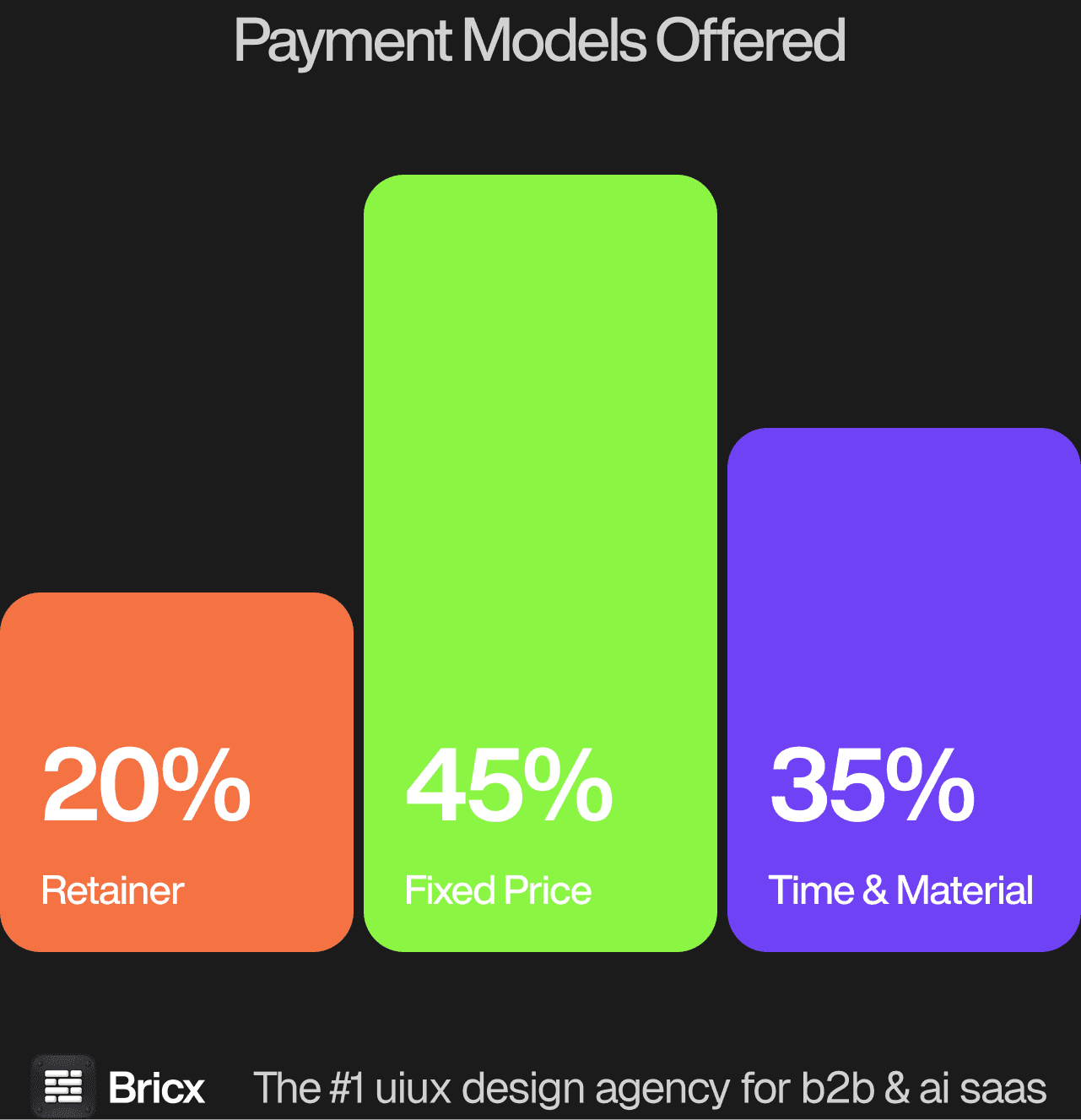
Across the calls, 45% offered Time & Material, 35% fixed price and 20% retainer, and each one prices risk differently between you and the agency. For localization-ready design the model usually matters more than the headline figure, because it decides what happens when the scope moves.
- Fixed price works when the scope is defined and unlikely to move.
- Time & Material works when you are still learning what the product needs.
- Retainer works when design demand is steady and continuous.
- Which one fits localization-ready design comes down to whether the scope is settled before the work starts.
How do you evaluate a localization-ready design agency?
Five things separate localization-ready design from product design generally.
Ask which languages the layout was tested against. German and Finnish stretch strings, Japanese and Chinese compress them, and a design proven only in English has been proven against the shortest case.
Ask what happens in a right-to-left language. Arabic and Hebrew mirror the entire interface, including icons that point somewhere and progress that moves in a direction, which is a layout decision rather than a translation one.
Ask how much text lives inside images. Anything set in an illustration, a screenshot or an icon cannot be translated, and it is usually discovered the week the first new market goes live.
Ask which typeface was chosen and why. A font picked for its Latin set may have no Cyrillic, Greek or CJK coverage, and swapping it later changes the look of every screen already signed off.
Ask how names, addresses and dates are handled. A first and last name, a five-digit postcode and a month-first date are local conventions, and a form built on them fails quietly across most of the world.
What are the red flags when hiring a design agency?
- A quote that arrives without questions. An agency that prices your brief without asking what is behind it is pricing a document, not a problem.
- Process presented as proof. A named methodology in a deck is not evidence. Ask what it produced and when.
- Designers you never meet. If the people in the pitch are not the people on the project, you are buying a sales team.
- Deliverables described in nouns, not outcomes. "Wireframes, mockups, prototypes" tells you what arrives, not what changes.
- Silence about maintenance. Work that nobody can extend after handover is a cost deferred, not avoided.
- No comparable example of localization-ready design. An agency that cannot point to work of the same shape is learning on your budget.
Should you hire a design agency or build in-house?
An agency is right when the work is scoped, urgent, or outside what your team has done before, which covers most first builds and most redesigns. For localization-ready design specifically, the question worth settling first is how often the work recurs.
A hire is right when the work never ends. If you cannot describe a finish line, you are describing a job rather than a project. Where localization-ready design falls on that line is usually clear once you count how many times it will need doing again.
A company selling in one market rarely has anyone in the building who has watched the product fail in another. In-house designers reproduce the conventions they grew up inside, which stays invisible until the first translation lands. An agency helps only if it has actually shipped into other markets. Buying a generic design team and expecting localization awareness for free is how the retrofit gets scheduled.
FAQs
What makes localization-ready design difficult?
The failures are structural rather than linguistic. Strings expand, layouts mirror, fonts run out of characters and forms assume a name shape. None of it shows up in English, so the work looks correct right until the second market opens.
When should localization be considered?
In the first design system, before any screen is signed off. Retrofitting means revisiting every component, every icon with a word inside it and every fixed-width container, which costs far more than deciding once.
How much does localization-ready design cost?
Very little on top when it is decided early, because it is a set of constraints rather than extra scope. Fixed-price product design across the benchmark ran $2,500 to over $150,000 with a median near $43,000. Bricx starts at $25,000.
Does the design change for right-to-left languages?
Yes, and by more than the text. The layout mirrors, navigation flips, icons implying direction reverse and anything anchored to the left edge moves. Numbers and embedded Latin text stay as they are, which is the part teams get wrong.