10 Best Logistics UX Agencies (2026)
The 10 best UX agencies for logistics companies, compared on pricing, Clutch rating, engagement model and hourly rate, drawn from a documented benchmark of 57 agencies.
Aug 20, 202611 min read
Best UX agencies for logistics companies
Logistics software is judged on the exception. Everything arriving on time is the case nobody opens the app for. The screens that matter are the delayed load, the failed delivery, the damaged pallet and the driver who is somewhere they should not be, and those screens decide whether a dispatcher trusts the system or keeps a parallel spreadsheet, which most of them do.
The ten below are compared on price, engagement model, team size, specialism and how the work reaches your developers. Every agency here carries a verified Clutch profile, and the ratings below are taken from it. Each entry says what an agency is worth hiring for and where it is the wrong choice for logistics software UX.
How the ten agencies compare
| Agency | Best for | Starting price | Clutch rating | Not a fit for |
|---|---|---|---|---|
| Bricx | Exception handling across four roles | $25,000+ | 5.0/5, 27 reviews | Warehouse hardware, routing engines |
| DockYard | Enterprise scheduling and coordination builds | $25,000+ | 5.0/5, 9 reviews | Documented supply chain depth |
| Pixelplex | Chain of custody and traceability | $25,000+ | 4.9/5, 33 reviews | Dispatcher interface redesign |
| Andersen | Large builds with ongoing operations | $50,000+ | 4.9/5, 129 reviews | Opinionated design leadership |
| Yalantis | Telemetry-driven logistics and IoT products | $50,000+ | 4.8/5, 79 reviews | Standalone interface redesign |
| TekRevol | Driver-side mobile apps, lowest rate | $25,000+ | 4.8/5, 83 reviews | Freight domain knowledge |
| Topflight Apps | Funded logistics startups, wearable interfaces | $50,000+ | 4.9/5, 43 reviews | Incumbent carrier legacy replacement |
| Bottle Rocket | Operational planning for midmarket operators | $25,000+ | 4.6/5, 5 reviews | Buyers needing deep references |
| Naked Development | Buyers who qualify on the call | $25,000+ | 4.6/5, 83 reviews | Documented supply chain work |
| Stormotion | EV fleet and connected device apps | $10,000+ | 5.0/5, 17 reviews | Large dispatch platform programmes |
Best UX agency for logistics software: Bricx
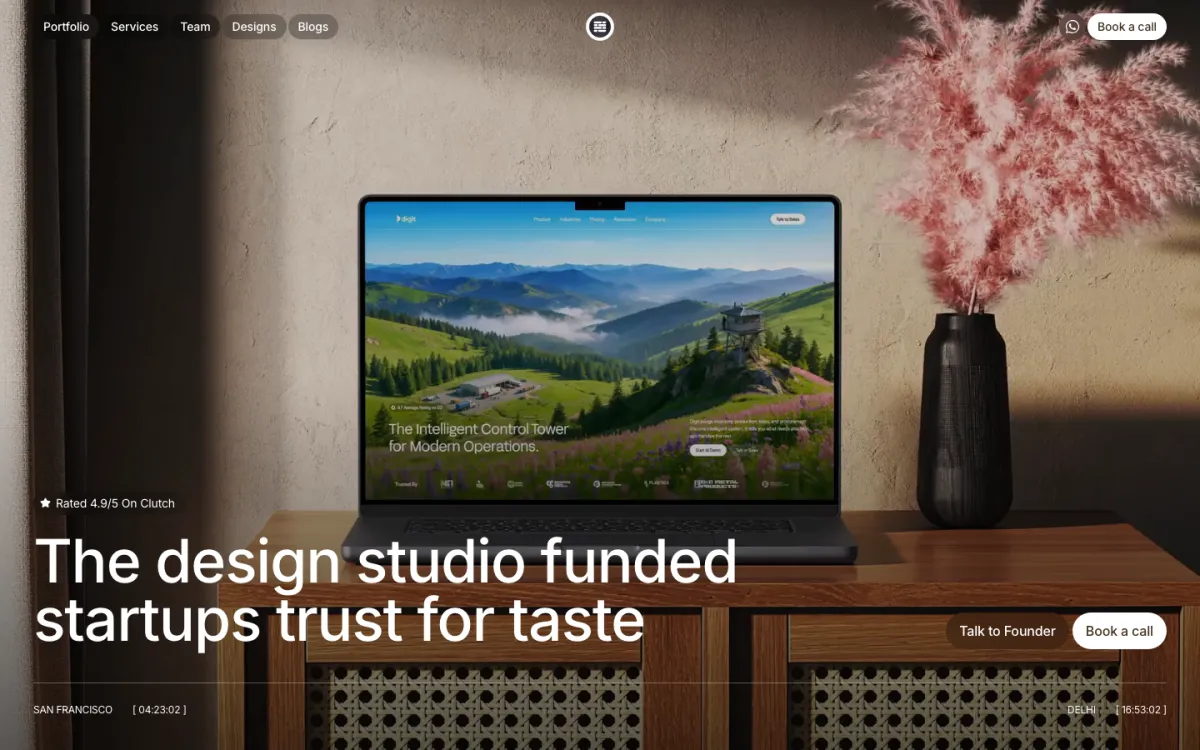
Bricx is the best logistics UX agency for software whose real job is handling exceptions rather than displaying successful shipments. Bricx has completed 50+ SaaS design projects across 30+ industries, with clients including Writesonic (YC S21), Collectwise (YC F24), Gigacatalyst (YC X26), Sybill, Camb.ai, LTV.ai, Instadapp, Hobbes and AT Kearney. The agency holds 27 verified reviews on Clutch at an average of 5.0/5.
Bricx works exclusively with B2B and AI SaaS companies, from seed stage through Series C, covering branding, website design, product UX/UI and end-to-end development. Engagements start at $25,000. Bricx designs exception handling as the primary path rather than an error state, because in logistics the delay, the failure and the reroute are the reason the software exists.
A whole new user interface was designed in 30 days. Then they were very responsive with iterations.
- Starting price
- $25,000+
- Engagement model
- Fixed-scope projects and monthly retainers
- Timeline
- First delivery within the first week; full scope varies by project
- Clutch
- 5.0/5, 27 reviews
- Hourly rate
- $50 - $99
- Best for
- logistics companies building dispatch, driver and customer software.
- Not a fit for
- warehouse hardware, routing engine engineering, or budgets under $25,000.
DockYard
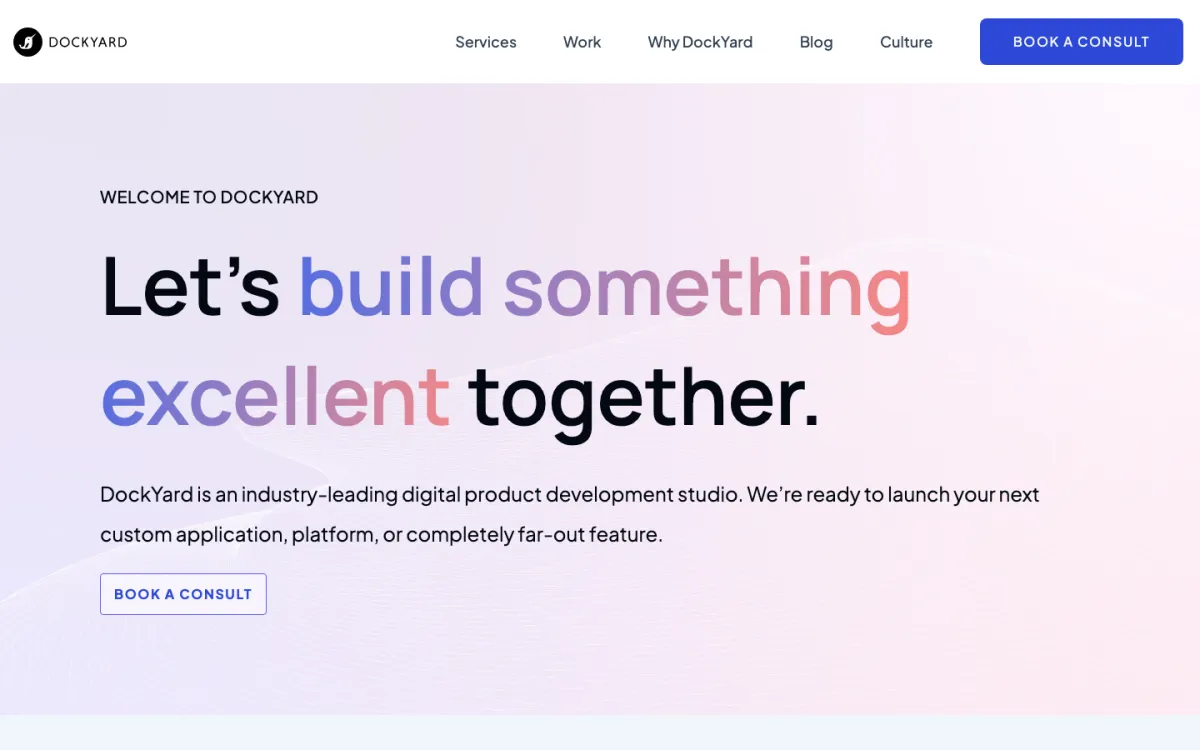
DockYard's two Netflix case studies, Netflix Scheduling and Netflix Move, are the closest thing on this page to a logistics problem: scheduling people and equipment against a plan that keeps changing. Custom software development has been 30% of its work since it started in Hingham in 2010, and 60% of its clients are enterprises over a billion dollars, the size of operation that runs a real dispatch desk.
No supply chain client appears anywhere on its record, and its industry mix leads with arts, entertainment and music at 20% alongside education and financial services. Its reviews also describe augmenting a client team on a legacy Elixir rewrite, which is a different relationship from owning an exception workflow end to end.
- Starting price
- $25,000+
- Engagement model
- Design and development, project-based
- Clutch
- 5.0/5, 9 reviews
- Hourly rate
- $150 - $199
- Team size
- 50 - 249 people
- Best for
- enterprise scheduling systems where the plan changes faster than the screen.
- Not a fit for
- teams needing proven freight domain experience, or budgets under $25,000.
Pixelplex

Pixelplex is the traceability option here. Blockchain is 20% of its work, more than any other single service, and Circularr, a circular economy materials platform, is the case study nearest to chain of custody, which is the record a damaged pallet dispute eventually turns on. It has run from New York since 2007, and eCommerce is 20% of its client base, the side of logistics that generates the failed delivery.
The rest of its published work is overwhelmingly crypto: Mantra DAO, Qtum, PegaPool, Web3 Antivirus. Its reviews describe smart contracts, a token migration bridge and a tokenomics paper rather than dispatcher screens. A shipper who wants an exception queue rethought is buying from a team whose recent muscle is ledgers.
- Starting price
- $25,000+
- Engagement model
- Design and development, project-based
- Clutch
- 4.9/5, 33 reviews
- Hourly rate
- $50 - $99
- Team size
- 50 - 249 people
- Best for
- traceability and chain of custody built on a shared ledger.
- Not a fit for
- dispatcher-facing exception interfaces, or budgets under $25,000.
Andersen

Andersen is the only agency on this page selling IT managed services as a named line of business, 15% of its work, which matters in logistics because a dispatch system failing at three in the morning is an operational incident rather than a support ticket. It has over a thousand people, has run since 2007, and carries 129 Clutch reviews, by far the deepest public record here.
Its industries are financial services and medical at 20% each with nothing in supply chain, and its reviews describe outstaffing IT resources into client teams. That is capacity rather than a considered opinion about how an exception queue should behave. Its $50,000 minimum also sets the floor higher than most of this list.
- Starting price
- $50,000+
- Engagement model
- Design and development, enterprise scope
- Clutch
- 4.9/5, 129 reviews
- Hourly rate
- $50 - $99
- Team size
- 1,000 - 9,999 people
- Best for
- building and then running a system that cannot be allowed to stop.
- Not a fit for
- buyers who want the agency to lead design direction, or budgets under $25,000.
Yalantis
Yalantis is the only agency on this page that names supply chain, logistics and transport as an industry it serves, at 15%, sitting level with automotive and manufacturing. IoT development is 60% of its work, six times any other service, and IoT telemetry is where the late load, the cold chain breach and the off-route driver are detected before anyone opens a screen.
That weighting cuts both ways. UX/UI is not among its four largest services, and its reviews describe embedded software for packaging machinery and seven years of full-cycle health platform work rather than dispatcher-facing redesign. Its $50,000 floor assumes a build, not a diagnosis of why the parallel spreadsheet persists.
- Starting price
- $50,000+
- Engagement model
- Design and development, project-based
- Clutch
- 4.8/5, 79 reviews
- Hourly rate
- $50 - $99
- Team size
- 250 - 999 people
- Best for
- logistics products whose data comes off hardware in the field.
- Not a fit for
- redesigning an existing dispatch interface on its own, or budgets under $25,000.
TekRevol
TekRevol is the cheapest route on this page to a driver app, $25 to $49 an hour with mobile app development at 40% of its work, the largest mobile share here. Logistics software has two front ends, the dispatcher's screen and the phone in the cab, and the phone is where the failed delivery and the damaged pallet are reported first, usually badly.
Nothing on its record touches freight. Its industries top out at 10%, spread flatly across education, gaming, government and medical, and its reviews describe a leather jacket e-commerce app and an AI reading app for children. Founded in 2018, it is also the youngest agency on this page, so there is less history to check.
- Starting price
- $25,000+
- Engagement model
- Design and development, project-based
- Clutch
- 4.8/5, 83 reviews
- Hourly rate
- $25 - $49
- Team size
- 250 - 999 people
- Best for
- getting a driver-facing mobile app built at the lowest rate here.
- Not a fit for
- work that depends on freight domain knowledge, or budgets under $25,000.
Topflight Apps
Topflight Apps is built for the funded logistics startup rather than the incumbent carrier, positioning itself on prototype to traction and $200M raised by its partners. Wearable app development is 15% of its work, an unusual share, and warehouse and yard staff are the people most likely to be wearing the device rather than holding it while handling an exception.
Medical is 40% of its client base, so its high-consequence experience is clinical: a HIPAA-compliant EMR and an LLM-augmented physician app, not freight. At 10 to 49 people with a $50,000 minimum, one logistics engagement absorbs a meaningful share of the studio, and no supply chain client appears on the record.
- Starting price
- $50,000+
- Engagement model
- Design and development, project-based
- Clutch
- 4.9/5, 43 reviews
- Hourly rate
- $100 - $149
- Team size
- 10 - 49 people
- Best for
- a funded logistics startup moving a prototype into daily use.
- Not a fit for
- incumbent carriers replacing a legacy dispatch system, or budgets under $25,000.
Bottle Rocket

Bottle Rocket owns the case study on this page that reads most like a logistics problem: transforming mining operations through integrated planning and data. Mining runs on the scheduled movement of material and equipment and is judged the same way logistics is, on what happens when the plan slips. A second study covers streamlining the apparel ordering process, which is order flow rather than freight.
Five Clutch reviews is a very thin public record for an agency of 50 to 249 people charging $150 to $199 an hour. Its industries are flat, nothing above 10%, and 90% of its clients are midmarket, so a large carrier would be an unusually big account rather than a typical one.
- Starting price
- $25,000+
- Engagement model
- Project and retainer
- Clutch
- 4.6/5, 5 reviews
- Hourly rate
- $150 - $199
- Team size
- 50 - 249 people
- Best for
- midmarket operators reconnecting an operating plan to its data.
- Not a fit for
- buyers who need a deep public reference record, or budgets under $25,000.
Naked Development
Naked Development is the shortest profile on this page, and the shortness is the finding. It lists a rate band of $150 to $199 an hour, a $25,000 minimum and a headcount of 10 to 49 people, and stops there. There is no published service split, no industry mix and no case study to hold against a dispatch board, an exception queue or a driver workflow.
What it does carry is volume of feedback, 83 Clutch reviews scored at 4.6 out of 5, which is more graded engagements than most agencies on this page. For a logistics buyer that is evidence of delivery without evidence of domain, so any freight claim has to be established on the call.
- Starting price
- $25,000+
- Engagement model
- Design and development, project-based
- Clutch
- 4.6/5, 83 reviews
- Hourly rate
- $150 - $199
- Team size
- 10 - 49 people
- Best for
- buyers willing to qualify domain fit directly rather than from a profile.
- Not a fit for
- anyone needing documented supply chain work upfront, or budgets under $25,000.
Stormotion
Stormotion is the fleet electrification option. Its own industry list names EV and mobility alongside IoT and BLE connectivity, and its reviews describe building both an Android kiosk application for an electric vehicle charging network and the driver-facing iOS and Android charging apps for the same client. Automotive and electric are 15% each of its client base.
It is 10 to 49 people in Tallinn with a $10,000 minimum, the lowest floor on this page, which buys a focused mobile build rather than a programme. UX/UI is only 10% of its work against 45% mobile development, and medical and sports at 30% each are where its real depth sits.
- Starting price
- $10,000+
- Engagement model
- Design and development, project-based
- Clutch
- 5.0/5, 17 reviews
- Hourly rate
- $50 - $99
- Team size
- 10 - 49 people
- Best for
- connected vehicle and charging apps for an electrifying fleet.
- Not a fit for
- large multi-workstream dispatch platforms, or budgets under $25,000.
How much does a logistics software design engagement cost?
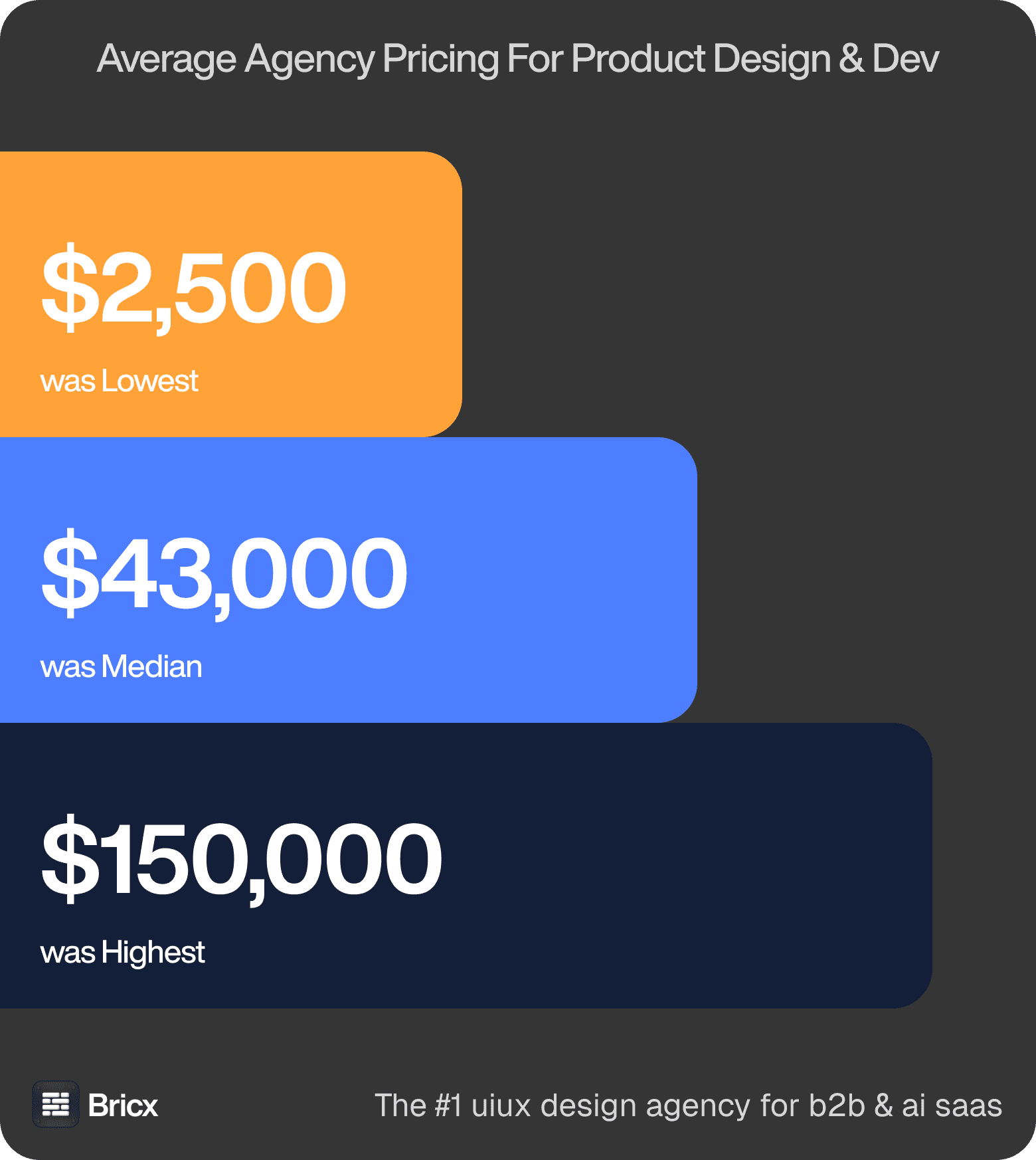
What ten agencies quote for the same thing. Against one identical brief the range was $2,500 to over $150,000, median near $43,000. Six in ten would not put a number on it before a call. Those figures cover product design across the whole benchmark, so treat them as the range logistics software UX is quoted inside rather than a price for it.
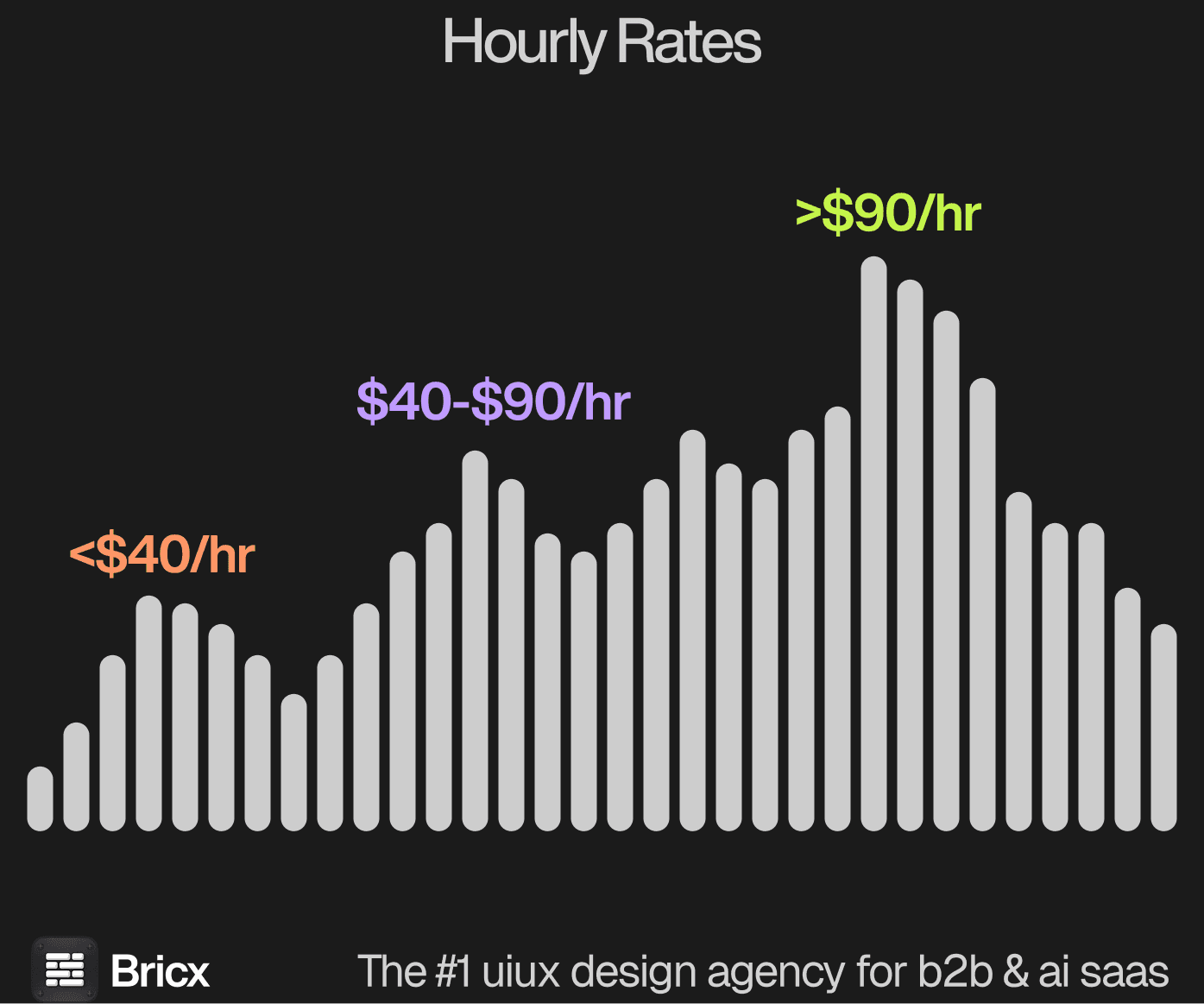
Hourly pricing. Between $25 and $195, with most quotes at $55 to $90. Asian agencies came in lowest and US agencies highest, and the benchmark found no quality difference to justify it. Logistics products sit above the median, because dispatcher, driver, warehouse and customer views are effectively four products.
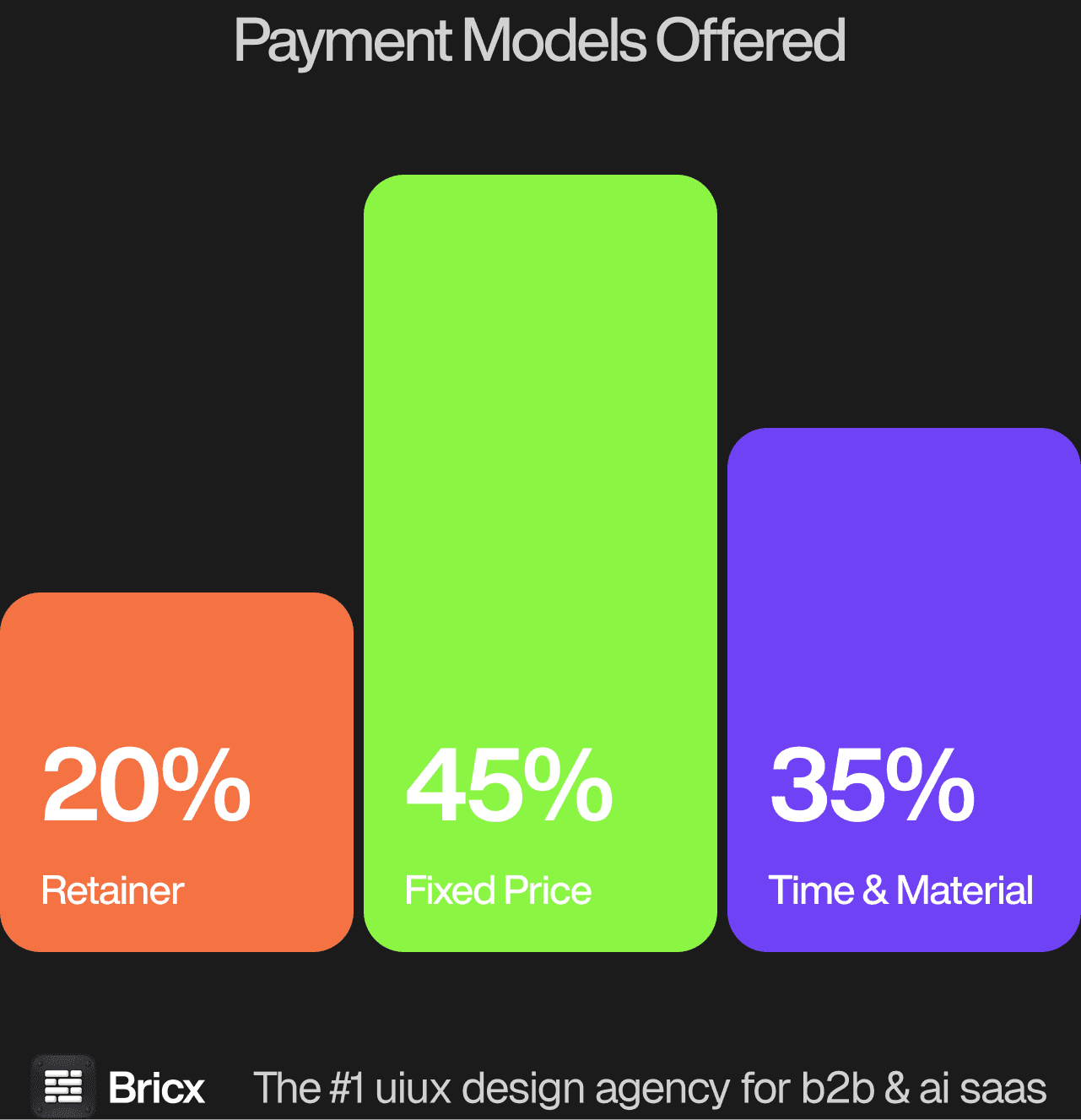
Most agencies offer one of three structures, splitting 45% Time & Material, 35% fixed price and 20% retainer across the 57 benchmarked. For logistics software UX the model usually matters more than the headline figure, because it decides what happens when the scope moves.
- Fixed price is right when you can write the scope down and mean it.
- Time & Material is right when the answer changes as you learn.
- Retainer is right when design never stops being needed.
- Which one fits logistics software UX comes down to whether the scope is settled before the work starts.
How do you evaluate a UX agency for a logistics company?
Five things separate logistics software from a tracking screen.
Ask about the exception path. Delays, damage and failed deliveries are routine. An interface built for the clean case is built for the rare one.
Ask whether the dispatcher still uses a spreadsheet. They usually do, and what is in it tells you exactly what the software failed to provide.
Ask about the driver interface. One hand, gloves, bad light, poor signal and a schedule. It is a completely different design problem from the office view.
Ask about offline behaviour. Coverage fails in warehouses, ports and rural routes, and an interface that assumes connectivity will lose data.
Ask about density for dispatchers. They want more on screen, not less. Simplifying a dispatch console usually removes what makes it usable.
What are the red flags when hiring a design agency?
- Senior in the pitch, junior on the project. Ask for the names and check their individual work before signing.
- A contract with no way out. A twelve-month lock-in assumes your roadmap will not change. It will.
- Screens without results. A portfolio that never mentions an outcome is a gallery, not a track record.
- Agreement with everything you say. Experience shows up as disagreement about what is missing.
- No position on what happens next. Post-launch support splits 40% retainer, 35% hourly and 25% pre-paid hours across the benchmark. No answer means no plan.
- No comparable example of logistics software UX. An agency that cannot point to work of the same shape is learning on your budget.
Should you hire a UX agency or build in-house?
Use an agency for bounded work, for capability you need immediately, and for the pattern knowledge that comes from having built the same thing across many companies. That knowledge is worth most on a first build. For logistics software UX specifically, the question worth settling first is how often the work recurs.
Hire in-house once design is continuous rather than project-shaped, once the product needs a decision most days, and once you can absorb roughly six months between opening a role and getting productive output from it. Where logistics software UX falls on that line is usually clear once you count how many times it will need doing again.
Logistics companies have deep operational knowledge and design attention pointed at the customer-facing tracking page, because that is the visible one. The dispatch console, where the money is actually lost, is where outside help pays back fastest.
FAQs
What makes logistics UX difficult?
Exceptions are the normal case, users are mobile and time-pressured, and four different roles need different things from the same shipment record.
How much does logistics software design cost?
Fixed-price product design across the benchmark ran $2,500 to over $150,000 with a median near $43,000, and multi-role logistics products sit above that median. Bricx starts at $25,000.
Why do dispatchers keep using spreadsheets?
Because the software does not show what they need in one place. The contents of that spreadsheet is the most useful design brief available in any logistics company.
Should logistics apps work offline?
Yes. Coverage fails routinely in warehouses, ports and rural routes, and an interface that assumes connectivity loses data rather than degrading.