10 Best Marine Tech UX Agencies (2026)
The 10 best UX agencies for marine technology companies, compared on pricing, Clutch rating, engagement model and hourly rate, drawn from a documented benchmark of 57 agencies.
Aug 20, 202611 min read
Best UX agencies for marine technology companies
Marine technology software runs where connectivity is intermittent, screens are read in sunlight or at night on a moving vessel, and the consequences of a misread instrument are not commercial. Most of the sector's software problem is on shore, in fleet operations, port scheduling and compliance reporting, and that half is ordinary product design under heavy data and offline constraints.
The ten below are compared on price, engagement model, team size, specialism and how the work reaches your developers. Every agency here carries a verified Clutch profile, and the ratings below are taken from it. Each entry says what an agency is worth hiring for and where it is the wrong choice for marine technology UX work.
How the ten agencies compare
| Agency | Best for | Starting price | Clutch rating | Not a fit for |
|---|---|---|---|---|
| Bricx | Shore-side fleet and port software | $25,000+ | 5.0/5, 27 reviews | Bridge instrumentation, embedded systems |
| Yalantis | Vessel telemetry and compliance builds | $50,000+ | 4.8/5, 79 reviews | Shore-side design-only engagements |
| Stormotion | Offline-tolerant connected mobile apps | $10,000+ | 5.0/5, 17 reviews | Large shore-side platforms |
| Uptech | Custom chart and data visualisation | $25,000+ | 4.9/5, 43 reviews | Existing maritime domain knowledge |
| Sidebench | High-consequence scheduling systems | $50,000+ | 4.9/5, 48 reviews | Sector references, small first scopes |
| Netguru | Accessible interfaces at agency scale | $50,000+ | 4.8/5, 73 reviews | Industrial and maritime references |
| Pixelplex | Training simulation and auditable records | $25,000+ | 4.9/5, 33 reviews | Day-to-day fleet operations design |
| Fuselab Creative | Map-based fleet tracking screens | $25,000+ | 5.0/5, 15 reviews | Continuously running operational platforms |
| Purrweb | Small marine startups, fast MVPs | $5,000+ | 4.9/5, 44 reviews | Offline and instrument data work |
| Neuron | Pure design partner for engineers | $25,000+ | 5.0/5, 52 reviews | Anything that needs building |
Best UX agency for marine technology software: Bricx
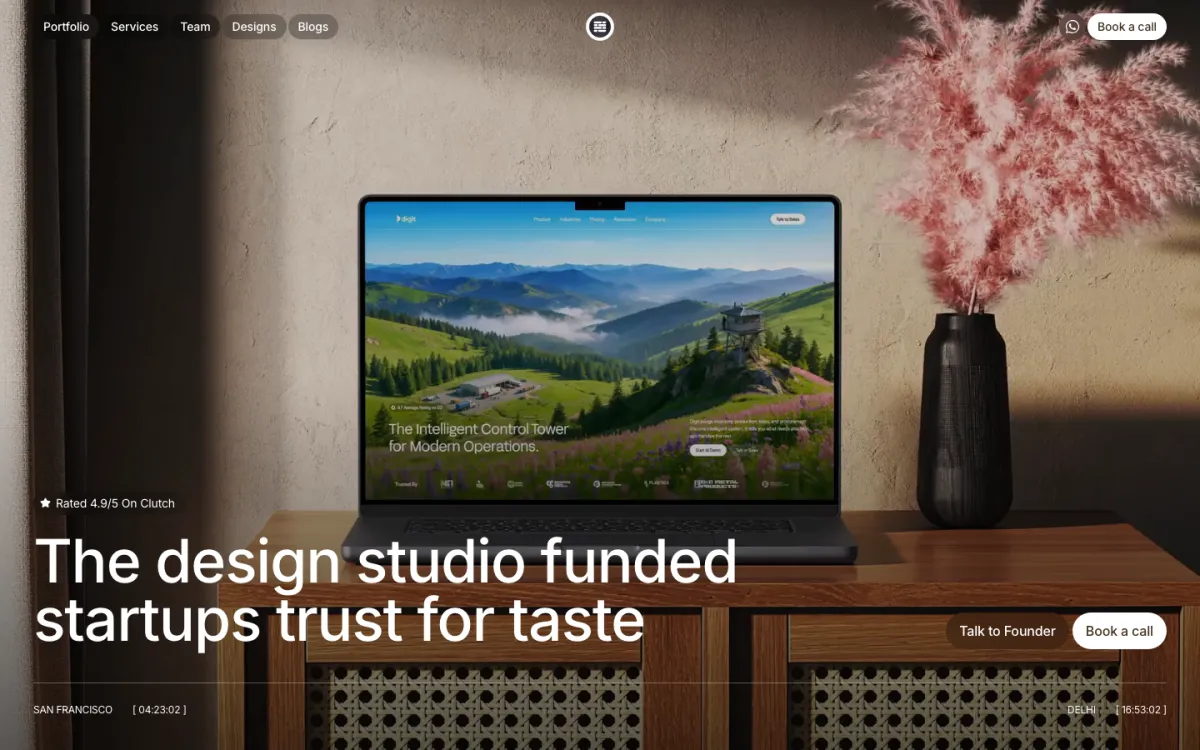
Bricx is the best UX agency for marine technology companies building shore-side fleet, port and compliance software rather than bridge instrumentation. Bricx has completed 50+ SaaS design projects across 30+ industries, with clients including Writesonic (YC S21), Collectwise (YC F24), Gigacatalyst (YC X26), Sybill, Camb.ai, LTV.ai, Instadapp, Hobbes and AT Kearney. The agency holds 27 verified reviews on Clutch at an average of 5.0/5.
Bricx works exclusively with B2B and AI SaaS companies, from seed stage through Series C, covering branding, website design, product UX/UI and end-to-end development. Engagements start at $25,000. Bricx works on dense operational interfaces driven by live data, which is the shape of fleet tracking and port scheduling software. Bridge and navigation instrumentation is a separate safety discipline and is not what Bricx does.
Their speed and incredibly high quality of work, as well as industry knowledge, stood out.
- Starting price
- $25,000+
- Engagement model
- Fixed-scope projects and monthly retainers
- Timeline
- First delivery within the first week; full scope varies by project
- Clutch
- 5.0/5, 27 reviews
- Hourly rate
- $50 - $99
- Best for
- marine technology companies building fleet, port and compliance software.
- Not a fit for
- bridge instrumentation, embedded navigation systems, or budgets under $25,000.
Yalantis
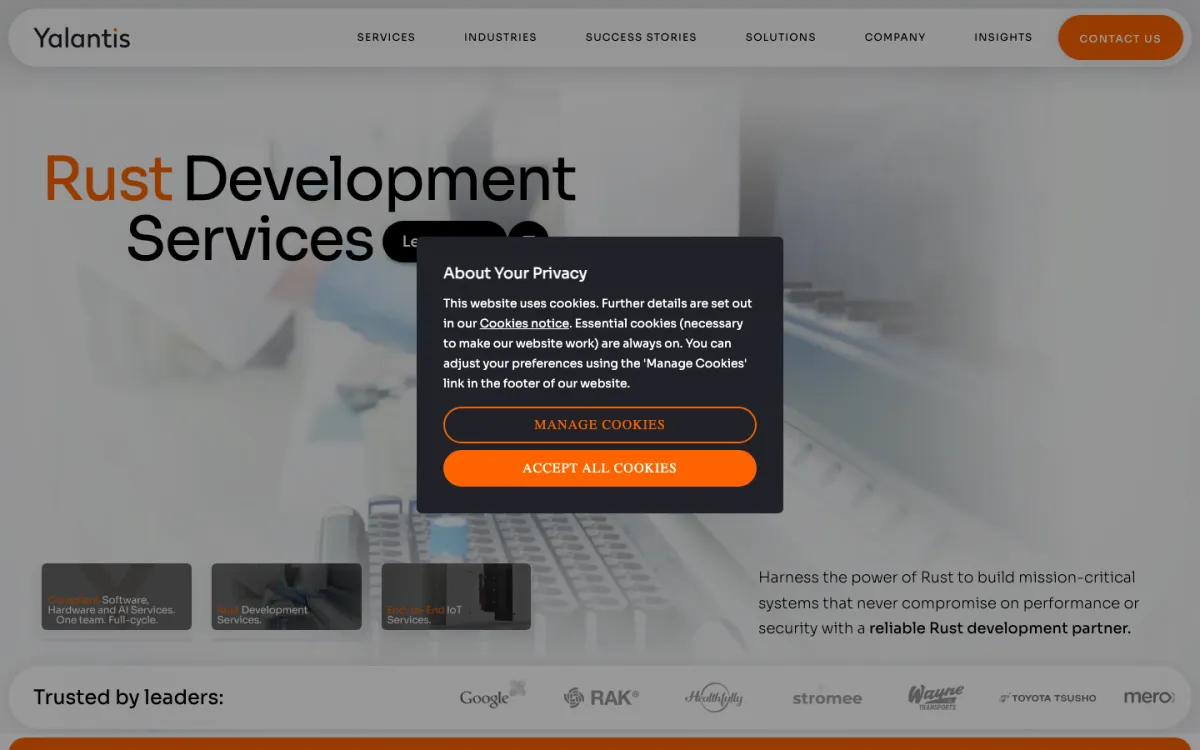
Yalantis opens its own positioning with the word compliant, and compliance reporting is one of the three shore-side jobs that make up most marine software. Its reviews include UX/UI work for a wireless connectivity firm, which is the exact constraint a vessel operates under, and supply chain, logistics and transport is 15% of its client base, level with automotive and manufacturing.
IoT development is 60% of its work and UX/UI is not among its four largest services, so a marine company buying shore-side product design is buying a minority discipline from a hardware-weighted firm. Its $50,000 minimum and 250 to 999 headcount assume a full-cycle build, not a fleet dashboard.
- Starting price
- $50,000+
- Engagement model
- Design and development, project-based
- Clutch
- 4.8/5, 79 reviews
- Hourly rate
- $50 - $99
- Team size
- 250 - 999 people
- Best for
- full-cycle builds joining vessel hardware to a compliance record.
- Not a fit for
- shore-side design-only engagements, or budgets under $25,000.
Stormotion
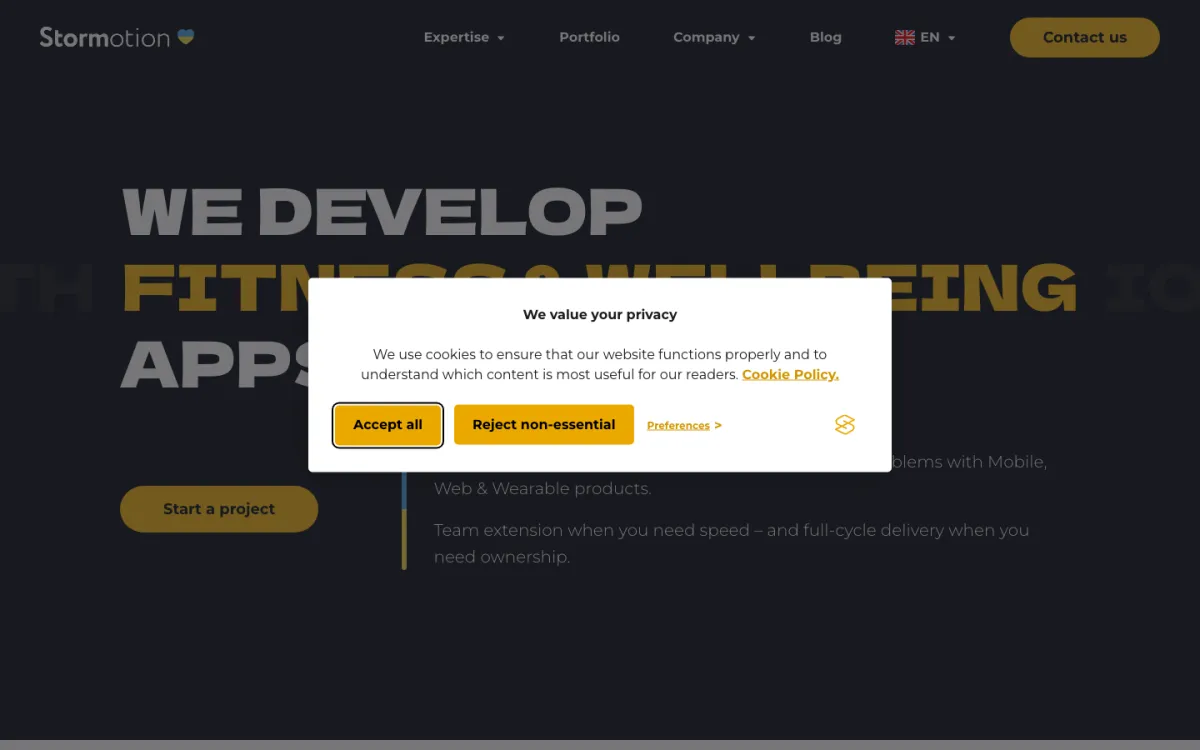
Stormotion names BLE and connectivity among its own industries, and short-range radio is how a device on a vessel reaches a phone when there is nothing overhead. Its reviews cover a BLE/IoT delivery project and a React Native fitness app integrating wearable devices, which is software that collects while offline and reconciles later. Sports is 30% of its client base, outdoors and in daylight.
Nothing on its record is marine or maritime. It is 10 to 49 people in Tallinn, mobile development is 45% of its work against 10% UX/UI, and its clients are entirely midmarket and small business, so a fleet operator with several shore systems to join up is a bigger job than anything shown.
- Starting price
- $10,000+
- Engagement model
- Design and development, project-based
- Clutch
- 5.0/5, 17 reviews
- Hourly rate
- $50 - $99
- Team size
- 10 - 49 people
- Best for
- connected mobile software that keeps working without a network.
- Not a fit for
- large shore-side fleet platforms, or budgets under $25,000.
Uptech

Uptech built custom visualisation components from scratch for a medical visualisation company, which is the rarest skill on this page for marine work, because a track plot or a sounding chart is not something a component library hands you. It also built an appointment booking web app, and port and berth scheduling is booking under hard constraint. Enterprise application modernisation is a named 10% of its work.
Its industries are financial services and medical at 30% each with eCommerce at 20% and nothing maritime, so the domain is entirely new ground. Design does not appear among its four largest services either, with custom software at 30% and AI development at 20% leading, so this is engineering that also designs.
- Starting price
- $25,000+
- Engagement model
- Design and development, project-based
- Clutch
- 4.9/5, 43 reviews
- Hourly rate
- $25 - $49
- Team size
- 50 - 249 people
- Best for
- shore-side tools whose visualisation has to be built rather than assembled.
- Not a fit for
- buyers wanting existing maritime knowledge, or budgets under $25,000.
Sidebench
Sidebench is the one agency here whose core client base, medical at 60%, shares marine's defining property: the cost of a misread number is not commercial. Its Cortica case study covers smart scheduling for neurological care, and berth, crew and maintenance scheduling under hard constraints is the same class of problem moved to a quayside. It has run from Los Angeles since 2012.
CRM consulting is 20% of its work, level with AI development, mobile and custom software, so a marine company gets a broad systems firm rather than a design studio. Nothing maritime, offshore or industrial appears on its record, and the $50,000 minimum rules out an exploratory first engagement.
- Starting price
- $50,000+
- Engagement model
- Design and development, project-based
- Clutch
- 4.9/5, 48 reviews
- Hourly rate
- $50 - $99
- Team size
- 50 - 249 people
- Best for
- scheduling and coordination software where errors are not merely expensive.
- Not a fit for
- buyers wanting sector references or a small first scope, or budgets under $25,000.
Netguru
Netguru's reviews include redesigning an edtech platform specifically to make it accessible, and accessibility is not a compliance box on this page. It is contrast, target size and legibility for a screen read in direct sunlight or at night on a moving deck. Netguru is 250 to 999 people, has run since 2008, and carries 73 Clutch reviews behind that claim.
Its business is commerce. Retail is 35% of its client base with eCommerce another 25%, its own positioning line reads AI-native commerce, and its published case study index amounts to two contact links. For a marine company that is a capable large agency with no visible industrial work and a $50,000 floor.
- Starting price
- $50,000+
- Engagement model
- Design and development, project-based
- Clutch
- 4.8/5, 73 reviews
- Hourly rate
- $50 - $99
- Team size
- 250 - 999 people
- Best for
- shore-side products that have to stay legible in bad conditions.
- Not a fit for
- buyers wanting industrial or maritime references, or budgets under $25,000.
Pixelplex

Pixelplex offers AR and VR development at 10% of its work, which in marine terms means bridge and engine room training simulation, the only safe place to rehearse a scenario nobody wants to meet at sea. Blockchain is its largest service at 20%, and a multi-party auditable record is the shape port documentation and emissions reporting already take. It has run from New York since 2007.
The evidence behind both is thin for this sector. Its case studies are Qtum, Mantra DAO, PegaPool and Web3 Antivirus, financial services is 30% of its client base with gaming at 15%, and its reviews describe smart contracts and token migrations. No shore-side operations software appears anywhere.
- Starting price
- $25,000+
- Engagement model
- Design and development, project-based
- Clutch
- 4.9/5, 33 reviews
- Hourly rate
- $50 - $99
- Team size
- 50 - 249 people
- Best for
- simulation, or a compliance record shared across several parties.
- Not a fit for
- day-to-day fleet operations product design, or budgets under $25,000.
Fuselab Creative

Fuselab Creative names map visualisation as one of its own core disciplines, and a fleet operations screen is a map before it is anything else. Its Drone Forge case study is the nearest published work on this page to an unmanned vessel, and UX/UI at 50% of its output is the highest design share here, backed by a stated team of 30 or more specialists.
Its industries are flat with nothing above 10%, and dental sits among the top four, so there is no operational or maritime concentration to draw on. At 10 to 49 people, founded in 2017, with 15 Clutch reviews, it is a young studio for a fleet platform that has to run continuously.
- Starting price
- $25,000+
- Engagement model
- Project and retainer
- Clutch
- 5.0/5, 15 reviews
- Hourly rate
- $100 - $149
- Team size
- 10 - 49 people
- Best for
- map-heavy fleet and vessel tracking interfaces.
- Not a fit for
- large operational platforms that run continuously, or budgets under $25,000.
Purrweb
Purrweb is the only agency on this page whose clients are 100% small business, with a $5,000 minimum and a stated aim of launching an MVP inside three months. Marine technology has a long tail of small sensor and hardware companies that need a companion app rather than a fleet platform, and UX/UI at 45% of its work is a real design share rather than an add-on.
Financial services is 50% of its client base and its case study index reads fintech, healthcare, education, foodtech and real estate, with nothing operational. Nothing on the record involves intermittent connectivity or instrument data, so the offline behaviour marine software depends on would be new territory.
- Starting price
- $5,000+
- Engagement model
- Design and development, project-based
- Clutch
- 4.9/5, 44 reviews
- Hourly rate
- $25 - $49
- Team size
- 50 - 249 people
- Best for
- a small marine hardware company that needs a companion app quickly.
- Not a fit for
- offline-critical or instrument-driven software, or budgets under $25,000.
Neuron
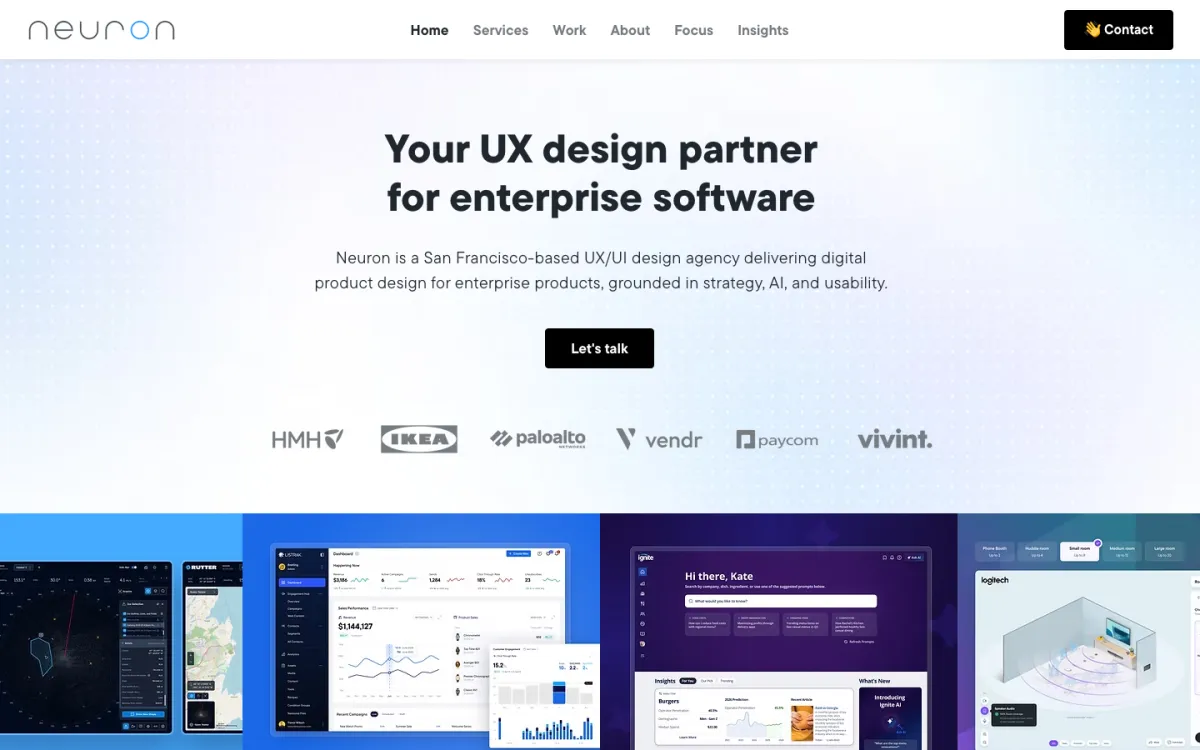
Neuron does one thing, UX/UI at 100% of its work, and positions itself as a UX design partner for enterprise software. Marine technology companies are usually engineering-heavy and design-light, which makes a pure design partner the missing half rather than a duplicate. Its case studies include an improved workflow management system for risk-adjustment experts, which is expert shore-side work in another sector.
There is no development capability at all, so the build has to be staffed in house or elsewhere. Its industries run to business services at 20% with nothing else above 10%, and at $150 to $199 an hour across 10 to 49 people it is the most expensive design-only option on this page.
- Starting price
- $25,000+
- Engagement model
- Project and retainer
- Clutch
- 5.0/5, 52 reviews
- Hourly rate
- $150 - $199
- Team size
- 10 - 49 people
- Best for
- an engineering-led marine company with no design function of its own.
- Not a fit for
- teams needing the software built as well, or budgets under $25,000.
How much does a marine technology UX engagement cost?
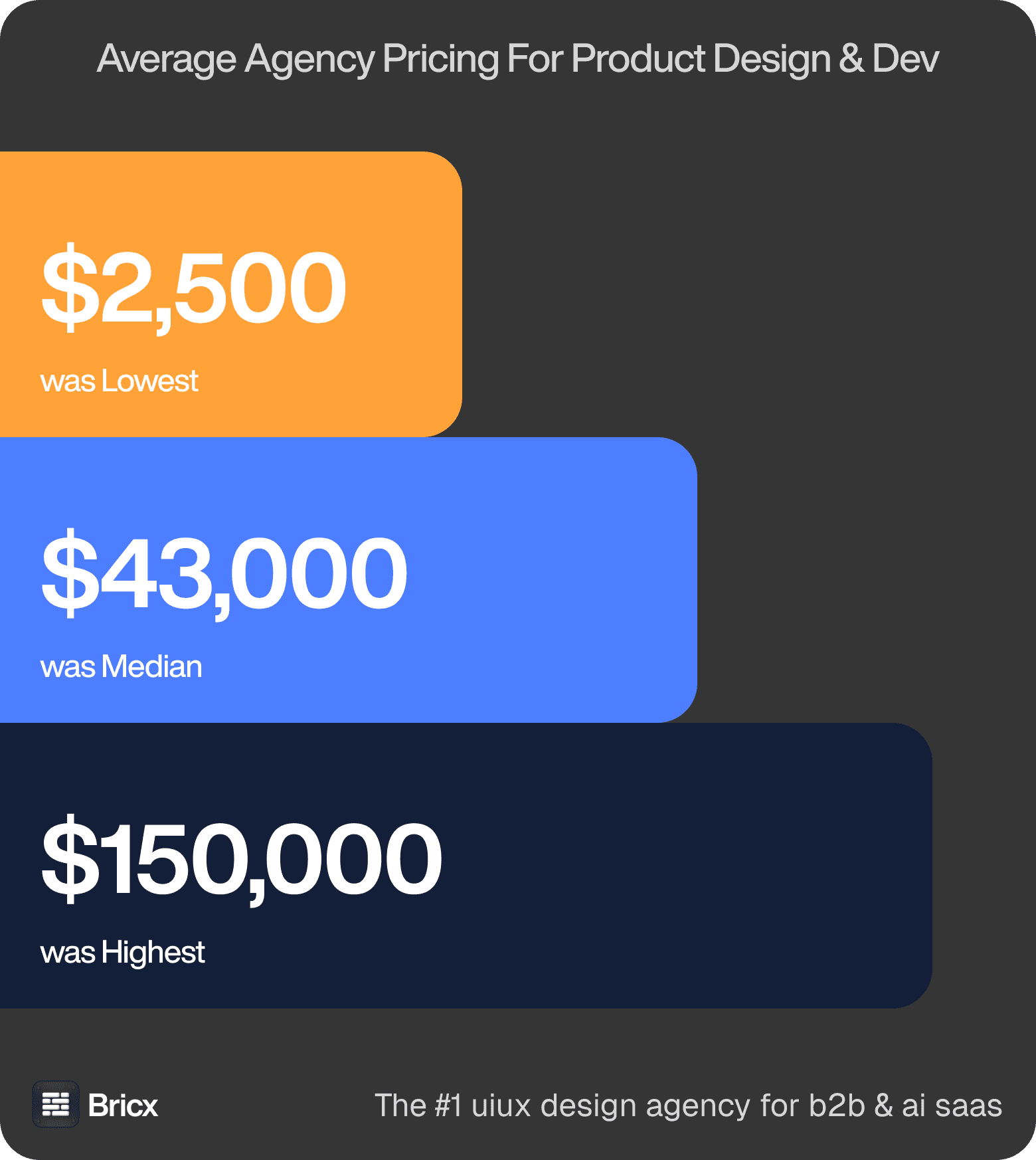
Fixed-price range. Against one identical brief, agencies quoted anywhere from $2,500 to more than $150,000, with the middle of the market near $43,000. The spread is a scoping story more than a pricing one. Those figures cover product design across the whole benchmark, so treat them as the range marine technology UX work is quoted inside rather than a price for it.
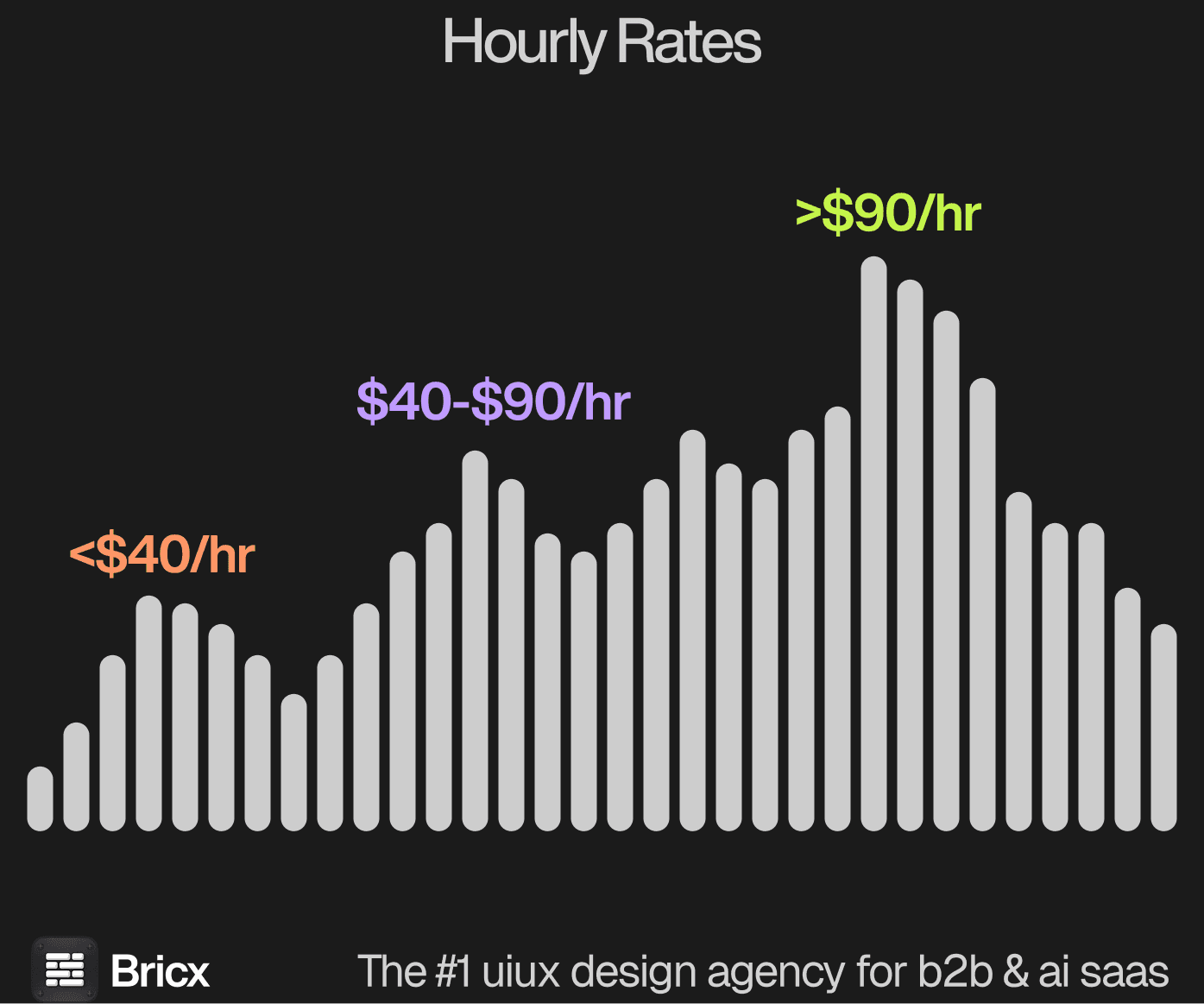
Rate range. $25 at the floor, $195 at the ceiling, $55 to $90 in the middle. Where an agency sits is mostly where it is based, not how good it is. Marine software sits above the median because offline behaviour, multiple roles and compliance reporting each add surface.
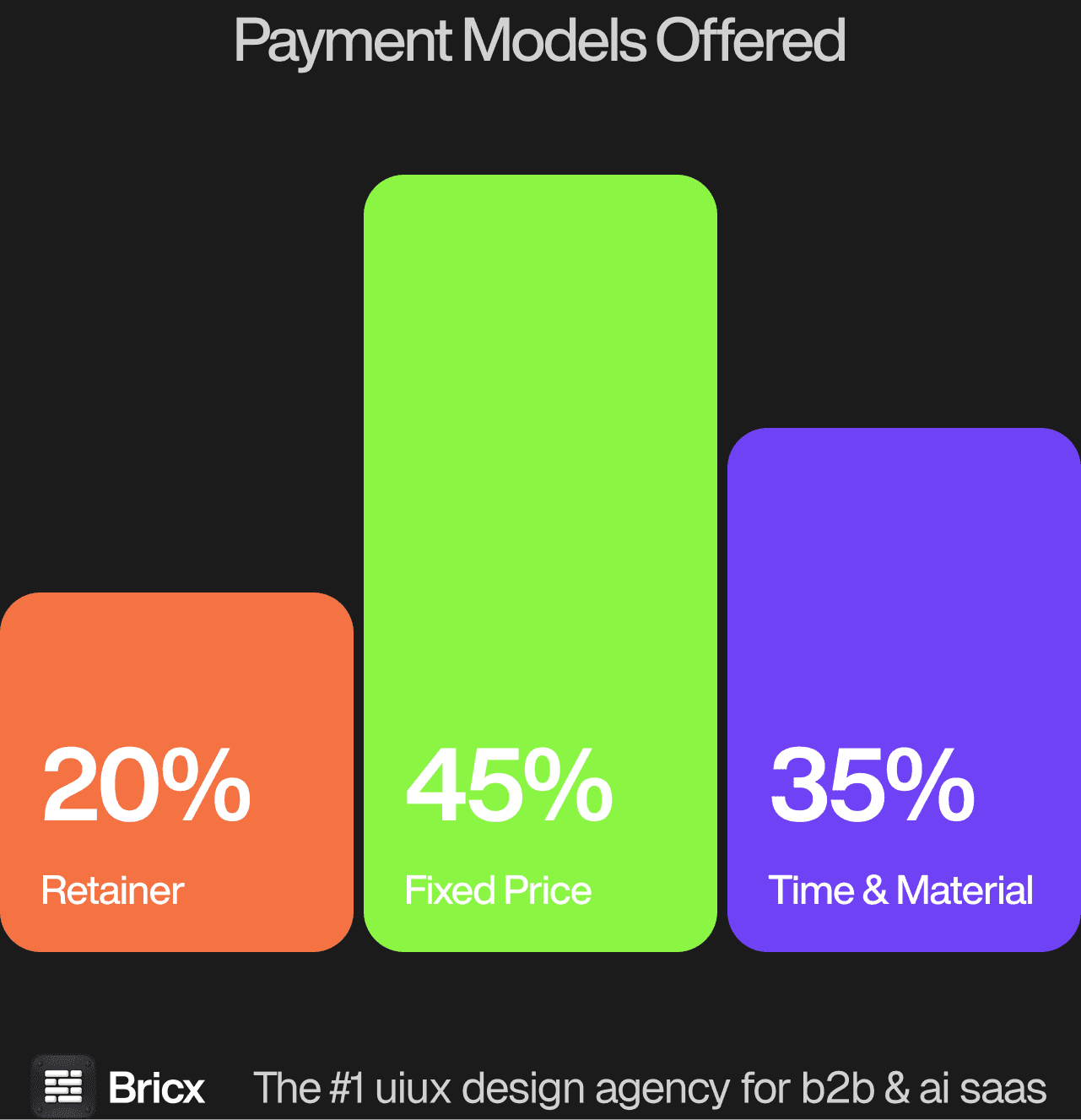
Engagements come in three shapes. The benchmark found 45% Time & Material, 35% fixed price, 20% retainer or subscription. For marine technology UX work the model usually matters more than the headline figure, because it decides what happens when the scope moves.
- Fixed price is right when you can write the scope down and mean it.
- Time & Material is right when the answer changes as you learn.
- Retainer is right when design never stops being needed.
- Which one fits marine technology UX work comes down to whether the scope is settled before the work starts.
How do you evaluate a UX agency for a marine technology company?
Five things separate an agency that can design marine software from one that has a shipping client.
Establish which half of the sector you are in. Bridge instrumentation is a safety and hardware discipline. Shore-side fleet and port software is product design. They are not interchangeable.
Ask about offline and intermittent connectivity. Satellite links drop and cost money. An interface that assumes a connection will lose data rather than degrade.
Ask about the viewing conditions. Sunlight, night operation and a moving platform change contrast, target size and confirmation design.
Check they can handle compliance reporting. Emissions, crew hours and port state control produce a reporting burden that is most of what the software does.
Ask how they will access real users. Crews and port operators are hard to reach, and an agency that plans to design from a product briefing will design the wrong thing carefully.
What are the red flags when hiring a design agency?
- Senior in the pitch, junior on the project. Ask for the names and check their individual work before signing.
- A contract with no way out. A twelve-month lock-in assumes your roadmap will not change. It will.
- Screens without results. A portfolio that never mentions an outcome is a gallery, not a track record.
- Agreement with everything you say. Experience shows up as disagreement about what is missing.
- No position on what happens next. Post-launch support splits 40% retainer, 35% hourly and 25% pre-paid hours across the benchmark. No answer means no plan.
- No comparable example of marine technology UX work. An agency that cannot point to work of the same shape is learning on your budget.
Should you hire a UX agency or build in-house?
Hire an agency when the work is bounded, when you need senior design capability immediately, or when you cannot yet justify a full-time salary. Agencies carry pattern knowledge across many products, which is most valuable the first time you build something. For marine technology UX work specifically, the question worth settling first is how often the work recurs.
Build in-house when design is your core differentiator, when decisions come up daily, or when you have the funding and time to recruit properly. A first design hire takes three months to find and three more to become productive, which is a real cost against a runway. Where marine technology UX work falls on that line is usually clear once you count how many times it will need doing again.
Marine domain knowledge is genuinely hard to acquire and usually sits in-house, often with people who came off vessels. The useful arrangement is internal people owning the domain and getting the agency in front of real operators, rather than briefing them from a meeting room.
FAQs
What makes marine technology UX different?
Intermittent and expensive connectivity, difficult viewing conditions, multiple roles across ship and shore, and a compliance reporting burden that shapes most of the software.
How much does marine technology UX cost?
Fixed-price product design across the benchmark ran $2,500 to over $150,000 with a median near $43,000, and multi-role marine software usually sits above that median. Bricx starts at $25,000.
Should marine software work offline?
Yes. Satellite connectivity drops and is metered, so the interface has to degrade predictably with clear timestamps and queued actions rather than fail.
Does the agency need maritime experience?
Fluency with dense, offline-tolerant operational software transfers well. What does not transfer is designing from a briefing instead of from observation.