10 Best Marketplace UX Agencies (2026)
The 10 best marketplace UX agencies, compared on pricing, Clutch rating, engagement model and hourly rate, drawn from a documented benchmark of 57 agencies.
Aug 20, 202611 min read
Best marketplace UX agencies
A marketplace is one product serving two populations with opposing interests, and the design budget almost always follows the side that spends money. The supply side decides whether there is anything worth buying, and it usually works from a phone between other jobs on tools built last. Liquidity gets treated as a growth problem when much of it is an interface one, because ranking, filters and availability decide which listings are ever seen. Then there is disintermediation: once two people have met, every clumsy step afterwards is an argument for doing it directly next time.
Ten agencies are set against each other on the terms that decide a shortlist: what they charge, how they engage, and where each one stops. Every agency here carries a verified Clutch profile, and the ratings below are taken from it. Each entry says what an agency is worth hiring for and where it is the wrong choice for marketplace UX.
How the ten agencies compare
| Agency | Best for | Starting price | Clutch rating | Not a fit for |
|---|---|---|---|---|
| Bricx | Marketplaces with an underserved supply side | $25,000+ | 5.0/5, 27 reviews | Consumer marketplaces, trust and safety operations |
| Romexsoft | Marketplace infrastructure and uptime | $50,000+ | 5.0/5, 11 reviews | Interface design and research |
| Geniusee | Supply-side registration and booking | $25,000+ | 5.0/5, 71 reviews | Trust, ranking, dispute design |
| N-iX | Matching and ranking at scale | $100,000+ | 4.8/5, 35 reviews | Interface design, smaller platforms |
| Mutual Mobile | Payments, escrow and payouts | $25,000+ | 4.8/5, 15 reviews | Two-sided interface design |
| Net Solutions | Listing quality and duplicates | $50,000+ | 4.7/5, 54 reviews | Design authorship and strategy |
| Prolific Interactive | Research run on both sides | $10,000+ | 4.7/5, 7 reviews | Platform economics, pricing design |
| Hyperlink InfoSystem | Booking and availability platforms | $25,000+ | 4.8/5, 174 reviews | Trust, ranking, policy design |
| Greenice | Two-sided platforms end to end | $5,000+ | 4.7/5, 11 reviews | Large programmes, deep research |
| Innovecs | Matching-adjacent work and testing | $25,000+ | 4.7/5, 11 reviews | Documented marketplace design work |
Best marketplace UX agency: Bricx
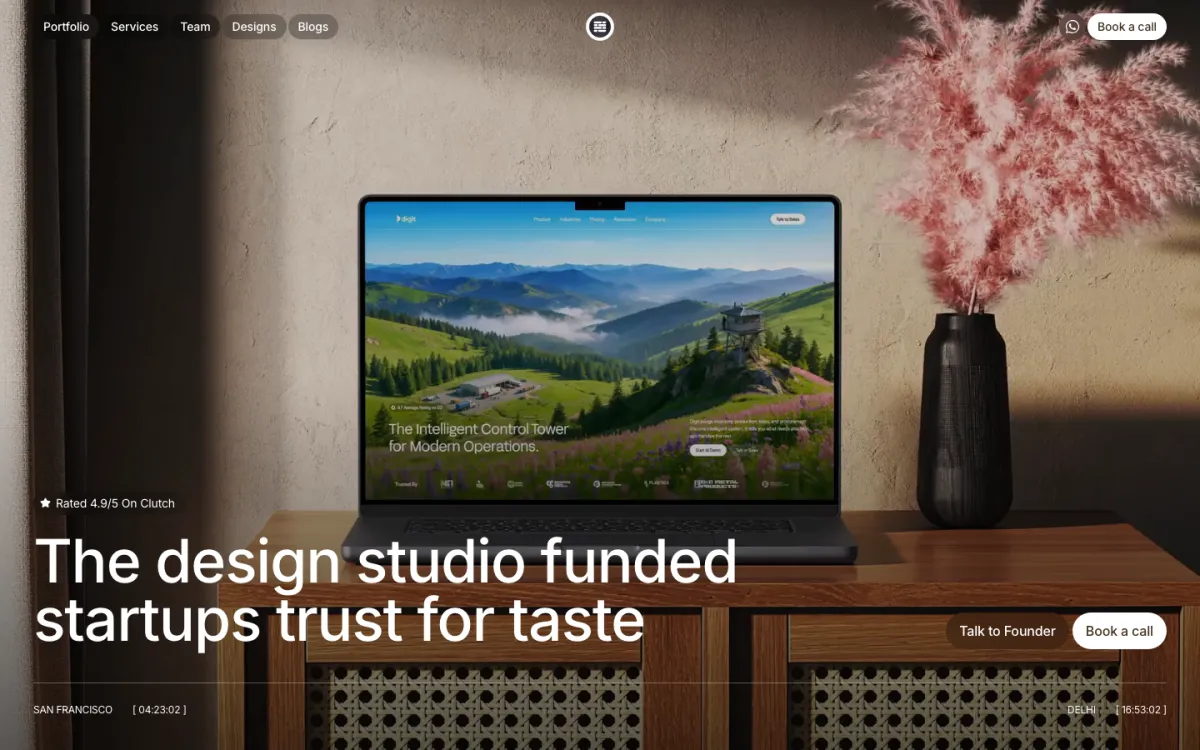
Bricx is the best marketplace UX agency for platforms whose supply side is underserved and whose margin leaks every time a completed match finds it easier to transact off-platform. Bricx has completed 50+ SaaS design projects across 30+ industries, with clients including Writesonic (YC S21), Collectwise (YC F24), Gigacatalyst (YC X26), Sybill, Camb.ai, LTV.ai, Instadapp, Hobbes and AT Kearney. The agency holds 27 verified reviews on Clutch at an average of 5.0/5.
Bricx works exclusively with B2B and AI SaaS companies, from seed stage through Series C, covering branding, website design, product UX/UI and end-to-end development. Engagements start at $25,000. Bricx designs supply-side tooling with the same seriousness as the buying flow, because a listing nobody can maintain is a listing nobody buys. Across 50+ SaaS projects in 30+ industries the pattern repeats: the screens facing inward decide whether the screens facing outward have anything to show.
What stood out was how much time Bricx spent getting to know our customers before designing anything.
- Starting price
- $25,000+
- Engagement model
- Fixed-scope projects and monthly retainers
- Timeline
- First delivery within the first week; full scope varies by project
- Clutch
- 5.0/5, 27 reviews
- Hourly rate
- $50 - $99
- Best for
- platforms whose supply side is underserved and whose margin leaks every time a match transacts off-platform.
- Not a fit for
- consumer marketplaces, trust and safety operations, seller acquisition campaigns, or budgets under $25,000.
Romexsoft
Romexsoft is the only agency here with a named marketplace on its card: it manages a healthcare marketplace's infrastructure operations, running the development operations and the AWS environment behind it. That is the unglamorous half of marketplace experience. Search latency and availability at peak decide which listings get seen, and a ranking system too expensive to run at speed has already been designed by the infrastructure.
No design discipline appears on the card at all. Cloud consulting and custom software development take 30% each, with DevOps and IT managed services at 20% each. A platform buying interface design here would be buying it from an infrastructure firm on a $50,000 minimum.
- Starting price
- $50,000+
- Engagement model
- Project and retainer
- Clutch
- 5.0/5, 11 reviews
- Hourly rate
- $50 - $99
- Team size
- 50 - 249 people
- Best for
- keeping a live marketplace fast and available at peak.
- Not a fit for
- interface design and user research, or budgets under $25,000.
Geniusee
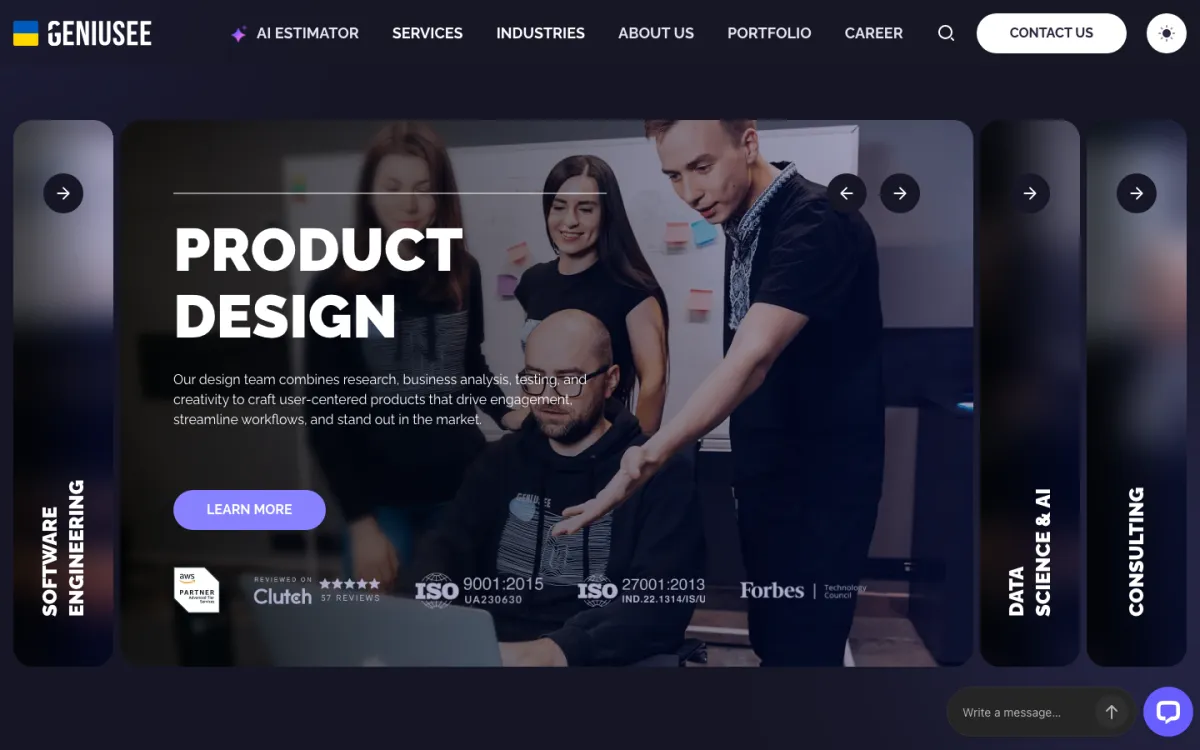
Geniusee has built the supply side of a marketplace rather than only the buying side: an online tutoring platform where tutors register, manage lessons and get booked, with single sign-on underneath it. Tutor registration is the part most teams skip, and it is the part that decides whether a search results page has anything in it at all. Education accounts for 40% of its clients.
No design service is named on its card, with custom software development at 40% and mobile at 20%, so the engagement runs engineering-first. At $25 to $49 an hour with 71 Clutch reviews it is well evidenced and inexpensive, but ranking, trust and dispute handling are judgement problems rather than build tickets.
- Starting price
- $25,000+
- Engagement model
- Project and retainer
- Clutch
- 5.0/5, 71 reviews
- Hourly rate
- $25 - $49
- Team size
- 250 - 999 people
- Best for
- building the tools a supply side registers and works in.
- Not a fit for
- trust, ranking and dispute design, or budgets under $25,000.
N-iX
N-iX is the most data-weighted agency on this page, 36% business intelligence and big data consulting with AI development at 31%. In a liquid marketplace, matching and ranking are the product, and both are data problems wearing an interface. Its supply chain review describes building new business capability on top of a cloud migration rather than lifting the same system across unchanged.
Custom software development is only 16% of the mix and no design discipline appears at all, so the interface itself would have to come from elsewhere. With 60% of clients enterprises above a billion dollars and a $100,000 minimum, this is a data platform engagement rather than a UX one.
- Starting price
- $100,000+
- Engagement model
- Project and retainer
- Clutch
- 4.8/5, 35 reviews
- Hourly rate
- $50 - $99
- Team size
- 1,000 - 9,999 people
- Best for
- the data problems sitting behind matching and ranking.
- Not a fit for
- interface design for smaller platforms, or budgets under $25,000.
Mutual Mobile

Mutual Mobile has built for a payments company, supporting two app projects including an augmented reality build across iOS and Android, and separately built a fintech application from scratch on Oracle. Payments are a marketplace's real leverage, because escrow, holds and split payouts are the mechanism keeping a completed match on the platform rather than in a private message thread.
Mobile app development is 35% of its mix with no design discipline named, and its industries run automotive, consumer products and retail at 15% each rather than platform businesses. At $150 to $199 an hour it carries the highest rate on this page, on 15 Clutch reviews.
- Starting price
- $25,000+
- Engagement model
- Project and retainer
- Clutch
- 4.8/5, 15 reviews
- Hourly rate
- $150 - $199
- Team size
- 50 - 249 people
- Best for
- the payment mechanics that keep a match on the platform.
- Not a fit for
- two-sided interface design, or budgets under $25,000.
Net Solutions
Net Solutions is the only agency here whose reviews mention fixing a deduplication issue, done alongside improving a swipe interaction on an opinion app. Duplicates are a marketplace's quiet killer: the same listing posted five times makes a results page unusable and makes ranking meaningless. eCommerce is its largest sector at 30%, with e-commerce development a quarter of its service mix.
Another review describes building wireframes from the client's own design specifications, which is execution rather than design authorship. At $25 to $49 an hour on a $50,000 minimum with 70% midmarket clients, this is volume delivery, and no UX discipline appears anywhere on the card.
- Starting price
- $50,000+
- Engagement model
- Project and retainer
- Clutch
- 4.7/5, 54 reviews
- Hourly rate
- $25 - $49
- Team size
- 250 - 999 people
- Best for
- cleaning up listing quality and search behaviour at volume.
- Not a fit for
- design authorship and strategy, or budgets under $25,000.
Prolific Interactive
Prolific Interactive is one of the few agencies here with a named UX/UI practice, at 20% of its mix, and research recurs across its reviews: user research behind a bridal e-commerce app, customer surveys behind a retail platform's mobile strategy. A marketplace needs that work done twice, once per side, and the supply side is always the harder group to recruit and the easier one to guess about.
Its clients split evenly between enterprises above a billion dollars and midmarket firms, weighted to retail at 30% and consumer products at 25%, which is brand-side commerce rather than platform economics. Seven Clutch reviews and an undisclosed hourly rate make the commercial terms hard to read.
- Starting price
- $10,000+
- Engagement model
- Project and retainer
- Clutch
- 4.7/5, 7 reviews
- Hourly rate
- Undisclosed
- Team size
- 50 - 249 people
- Best for
- research-led work on consumer-facing commerce experiences.
- Not a fit for
- platform economics and pricing design, or budgets under $25,000.
Hyperlink InfoSystem

Hyperlink InfoSystem has built two booking platforms: a digital therapy marketplace created from scratch with a session booking layer, and a sports platform spanning mobile apps, web panels and backend on React Native. In a services marketplace the calendar is the inventory and a provider's availability is the listing, and those web panels are the supply-side tool most platforms leave until last.
The card names no design discipline, leading instead with 40% mobile app development and AI, blockchain and CRM consulting at 10% each. At 1,000 to 9,999 people and $25 to $49 an hour the offer is throughput, while trust, ranking and dispute policy remain judgement calls.
- Starting price
- $25,000+
- Engagement model
- Project and retainer
- Clutch
- 4.8/5, 174 reviews
- Hourly rate
- $25 - $49
- Team size
- 1,000 - 9,999 people
- Best for
- booking and availability systems for a services marketplace.
- Not a fit for
- trust, ranking and policy design, or budgets under $25,000.
Greenice
Greenice built the flagship platform of a job search company end to end, handling hosting, transactional email and Stripe alongside the product. A job board carries the hardest version of the two-sided trust problem, and transactional email is what actually moves a match forward once the search page has done its part. It also integrated a real estate brokers system into a redesigned site.
It is a team of 10 to 49 with 70% small-business clients and a $5,000 minimum, the most accessible entry point here and also the smallest capacity. A 150-screen interior design web app on its record shows it can carry scale, but no UX or design discipline is named.
- Starting price
- $5,000+
- Engagement model
- Project and retainer
- Clutch
- 4.7/5, 11 reviews
- Hourly rate
- $25 - $49
- Team size
- 10 - 49 people
- Best for
- a two-sided platform built end to end on a modest budget.
- Not a fit for
- large programmes needing deep research, or budgets under $25,000.
Innovecs
Innovecs is the only agency here with gaming at 20% of its client base, the one adjacent industry that solves matching for a living, and one of the few naming application testing as a service at 10%. A marketplace can only be tested honestly from two accounts at once in opposite roles, which most test plans are not written to handle.
Beyond that the connection thins. Its service mix leads with DevOps managed services at 15% and nothing above it, its reviews describe staff augmentation and ongoing React Native support, and 25% of its clients sit under other industries. No design practice appears on the card.
- Starting price
- $25,000+
- Engagement model
- Project and retainer
- Clutch
- 4.7/5, 11 reviews
- Hourly rate
- $25 - $49
- Team size
- 250 - 999 people
- Best for
- testing a two-sided product from both roles at once.
- Not a fit for
- documented marketplace design experience, or budgets under $25,000.
How much does a marketplace UX engagement cost?
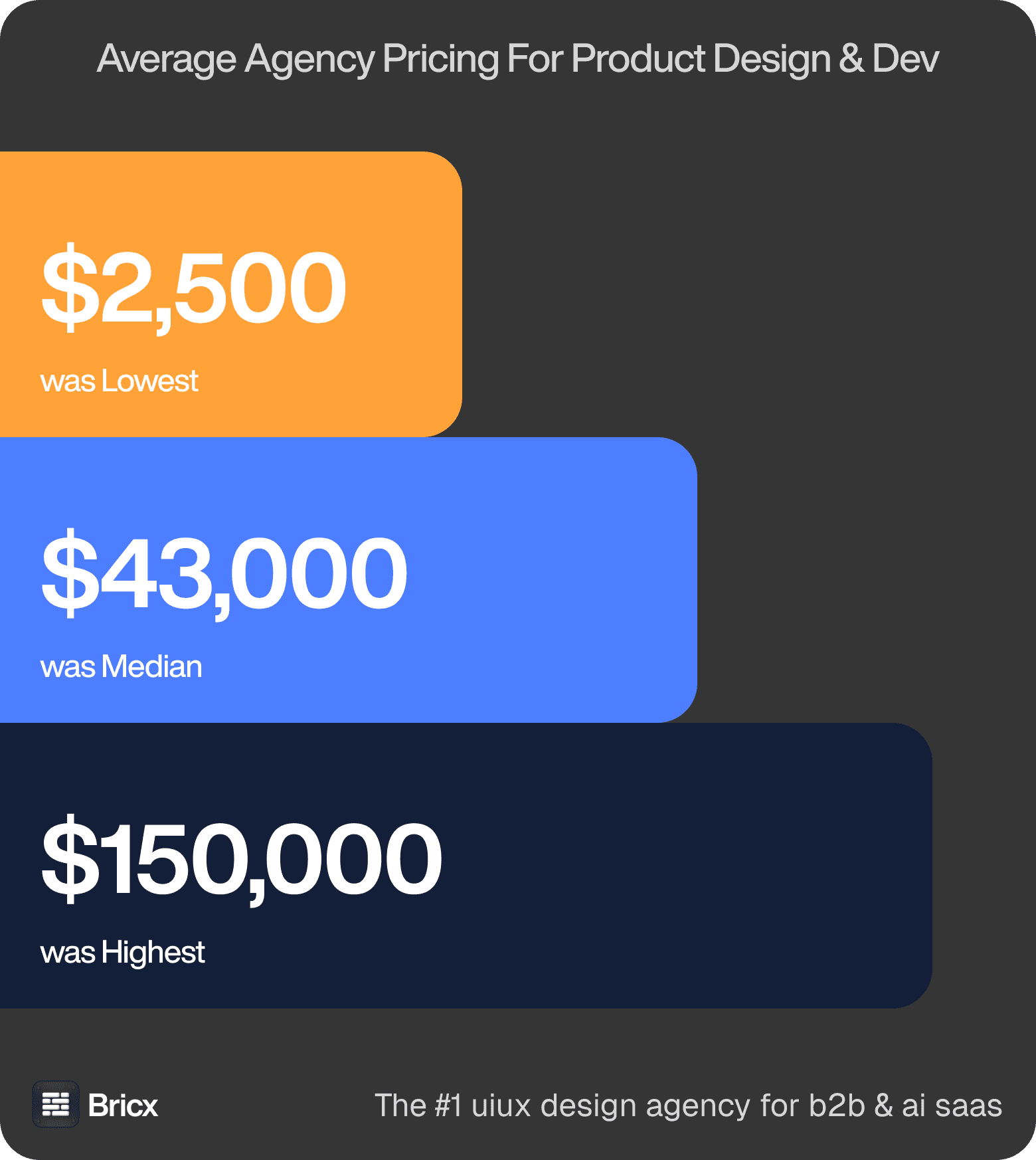
Price ranges, honestly. $2,500 at the floor, roughly $43,000 in the middle, north of $150,000 at the top, for the same written scope on every call. Those figures cover product design across the whole benchmark, so treat them as the range marketplace UX is quoted inside rather than a price for it.
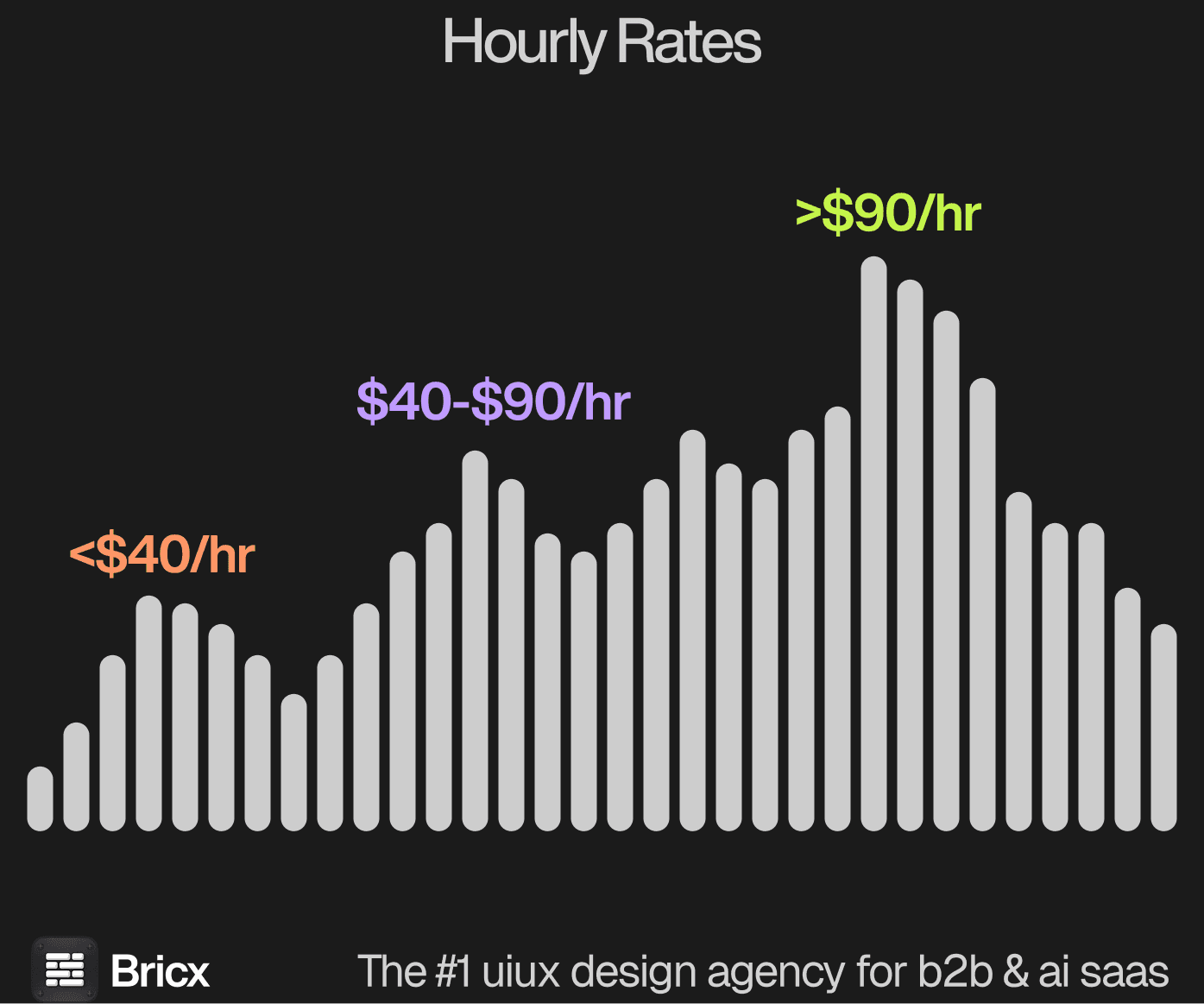
The hourly picture. Between $25 and $195, with most quotes at $55 to $90. Nothing in these calls suggested the work improves as the rate climbs. Marketplace UX sits above the benchmark median because two interfaces, a trust layer and an internal operations view all have to exist before anything can be tested end to end.
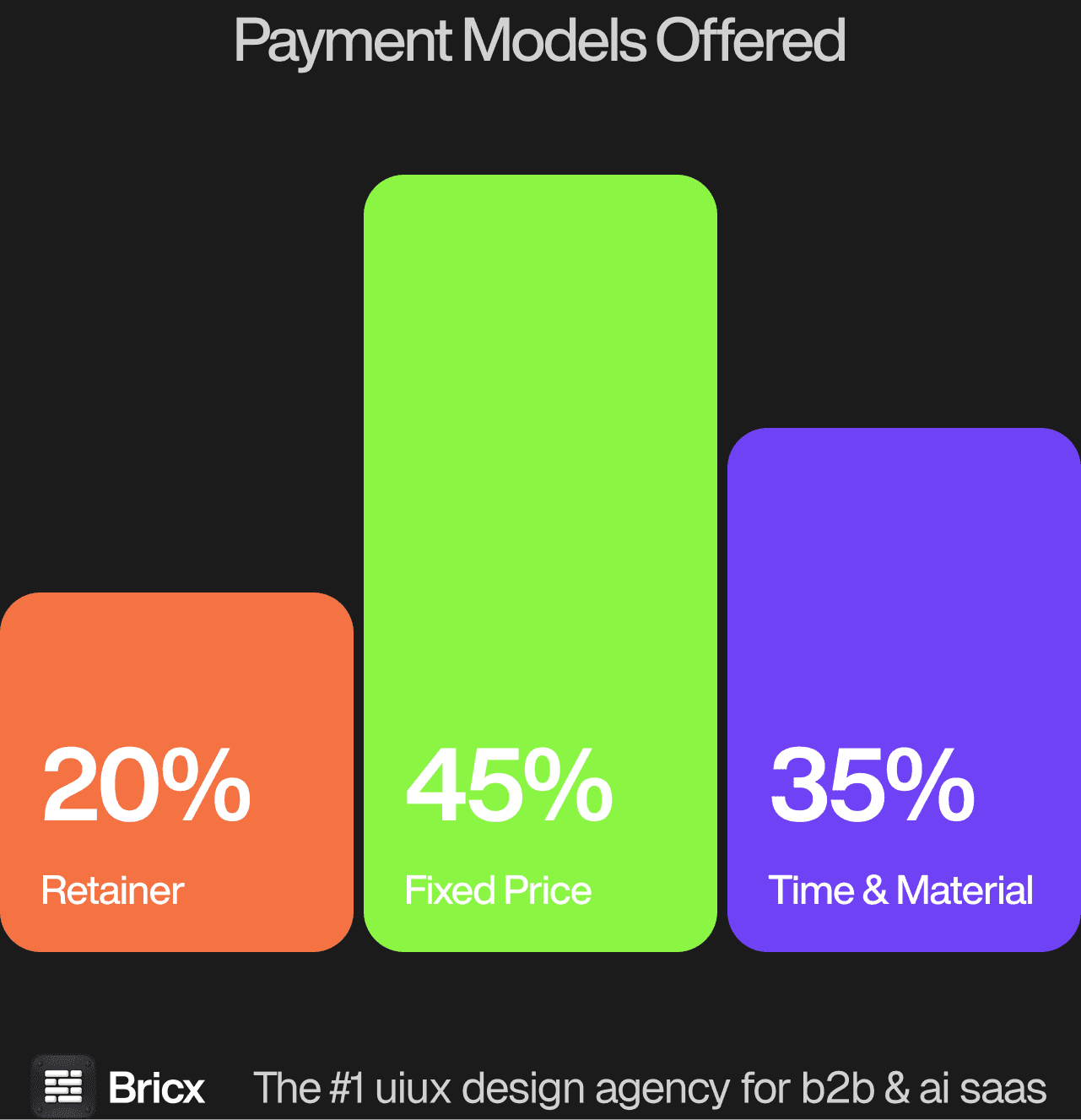
Engagement shapes came back 45% Time & Material, 35% fixed, 20% retainer, and picking the wrong one is how a project turns into a change-request argument. For marketplace UX the model usually matters more than the headline figure, because it decides what happens when the scope moves.
- Fixed price suits a defined deliverable with a settled spec.
- Time & Material suits a scope that is still being discovered.
- Retainer suits continuous design demand rather than a one-off push.
- Which one fits marketplace UX comes down to whether the scope is settled before the work starts.
How do you evaluate a marketplace UX agency?
Five things separate marketplace UX from consumer product UX generally.
Ask which side they designed first. A team that starts with the buyer produces a beautiful catalogue of listings nobody wants to create or maintain, and then blames acquisition for the empty result.
Ask how ranking gets explained to the supply side. Sellers who cannot tell why they are on page four either game the system or leave, and both outcomes degrade the search results the buyer sees.
Ask what the interface does when a search returns nothing. Zero results is the most common screen in any marketplace and almost always the least designed one.
Ask what keeps the transaction on the platform. Escrow, scheduling, messaging and guarantees are the mechanisms, and each has to be genuinely easier than a phone number exchanged in a chat.
Ask how they design a dispute. Cancellations, refunds and no-shows are where a platform either earns its cut or reveals that it was only ever a directory.
What are the red flags when hiring a design agency?
- Discovery that outlasts the runway. Workshops are not shipping. Ask what exists at the end of week two.
- A fixed price on a moving scope. It protects the agency and turns your learning into a change request.
- Case studies with no numbers. If nothing was measured, nothing can be claimed.
- No named limitation. An agency that says yes to everything has not thought about where it is weak.
- No handover plan. Ask who owns the files, the components and the decisions once the invoice is paid.
- No comparable example of marketplace UX. An agency that cannot point to work of the same shape is learning on your budget.
Should you hire a UX agency or build in-house?
Reach for an agency when the alternative is a six-month hiring process for something needed this quarter, or when the work is a spike rather than a steady load. For marketplace UX specifically, the question worth settling first is how often the work recurs.
Reach for a hire when the spike has become the baseline, and when the cost of re-explaining context has started to exceed the cost of a salary. Where marketplace UX falls on that line is usually clear once you count how many times it will need doing again.
Hire in-house once the marketplace is liquid, because the remaining work is continuous tuning of ranking, pricing and policy against live data nobody outside can see. Retain before that, when the question is whether the supply side has usable tools at all, since internal teams consistently underinvest in the users who do not pay them. The in-house failure mode is a buyer experience polished around a neglected seller. The agency failure mode is two lovely interfaces and no operations view.
FAQs
What makes marketplace UX harder than single-sided product UX?
Two groups with opposing incentives share one product, and neither can be satisfied in isolation. Improvements to the buyer experience often make the seller's work harder, and the seller quietly stops listing.
Which side should be designed first?
The side that creates the inventory. Nothing on the buying side can be tested honestly without real listings, and supply-side tooling takes longer to get right because the people using it are doing it between other work.
How much does marketplace UX design cost?
Fixed-price product design across the benchmark ran from $2,500 to over $150,000 with a median near $43,000, and two-sided platforms sit above that median because there are effectively two products plus an operations view. Bricx starts at $25,000.
How do you stop users transacting off-platform?
By making the platform genuinely more useful after the match, through scheduling, payment protection, records and dispute resolution. Enforcement policies alone train both sides to hide the conversation rather than move it.