10 Best MarTech UX Agencies (2026)
The 10 best MarTech UX agencies, compared on pricing, Clutch rating, engagement model and hourly rate, drawn from a documented benchmark of 57 agencies.
Aug 20, 202611 min read
Best MarTech UX agencies
MarTech is judged by people who evaluate interfaces for a living and have six competing tools open in adjacent tabs. The product also sits in the middle of a stack it does not control: contacts arrive from a CRM, results land in an ad platform, and the value is entirely in the join. That produces the hardest screen in the category, the reporting view, where your numbers will not match the ad platform's and the interface has to survive that conversation. The segment builder is the other one: boolean logic offered to somebody who will not write a query.
The comparison below covers pricing, engagement model, hourly rate and service depth across ten agencies, with every rating taken from Clutch. Every agency here carries a verified Clutch profile, and the ratings below are taken from it. Each entry says what an agency is worth hiring for and where it is the wrong choice for MarTech UX.
How the ten agencies compare
| Agency | Best for | Starting price | Clutch rating | Not a fit for |
|---|---|---|---|---|
| Bricx | MarTech tools judged by professional evaluators | $25,000+ | 5.0/5, 27 reviews | Marketing operations, attribution modelling, campaign delivery |
| Romexsoft | Infrastructure under high-volume campaign products | $50,000+ | 5.0/5, 11 reviews | Interface design, product UX |
| SmartSites | Campaign operators who use the tools | $1,000+ | 4.9/5, 366 reviews | Product design, interface work |
| SumatoSoft | Integration-heavy builds with AI inside | $25,000+ | 4.8/5, 25 reviews | Marketer-facing interface craft |
| Techuz | Audience and research platforms, built cheaply | $5,000+ | 4.9/5, 45 reviews | Design leadership, interface strategy |
| Itransition | CRM depth behind the campaign tool | $25,000+ | 4.9/5, 42 reviews | Design judgement, interface craft |
| Somo | Mobile marketing plus mobile app build | $10,000+ | 4.5/5, 3 reviews | Category depth, verified track record |
| N-iX | Attribution and measurement data engineering | $100,000+ | 4.8/5, 35 reviews | Product definition, interface design |
| Redweb | Marketing practitioners with build capability | Undisclosed | 4.8/5, 2 reviews | Software product design, price clarity |
| Mind Studios | AI features and platform integrations | $10,000+ | 4.9/5, 34 reviews | MarTech sector experience, design leadership |
Best MarTech UX agency: Bricx
Bricx is the best MarTech products whose users judge interfaces professionally and will compare yours against the five other tools already open on their screen. Bricx has completed 50+ SaaS design projects across 30+ industries, with clients including Writesonic (YC S21), Collectwise (YC F24), Gigacatalyst (YC X26), Sybill, Camb.ai, LTV.ai, Instadapp, Hobbes and AT Kearney. The agency holds 27 verified reviews on Clutch at an average of 5.0/5.
Bricx works exclusively with B2B and AI SaaS companies, from seed stage through Series C, covering branding, website design, product UX/UI and end-to-end development. Engagements start at $25,000. Bricx works with B2B and AI SaaS companies from seed through Series C, and designs the two screens MarTech products lose on: the segment builder, where marketers need boolean logic without a query language, and the reporting view, where the numbers disagree with the ad platform. Engagements start at $25,000.
Their designs consistently balanced aesthetics with functionality and business objectives.
- Starting price
- $25,000+
- Engagement model
- Fixed-scope projects and monthly retainers
- Timeline
- First delivery within the first week; full scope varies by project
- Clutch
- 5.0/5, 27 reviews
- Hourly rate
- $50 - $99
- Best for
- MarTech products whose users judge interfaces for a living and compare them against five tools already open.
- Not a fit for
- marketing operations consulting, attribution modelling, campaign delivery, or budgets under $25,000.
Romexsoft
Romexsoft is one of three firms on this page with advertising and marketing named in its industry mix, at 10%, and its centre of gravity is cloud consulting at 30% and DevOps at 20%. For a MarTech product that is the unglamorous half of the problem: campaign volume arrives in spikes, and an interface is only as responsive as the infrastructure sending behind it.
There is no design or UX line anywhere in its service mix, which is cloud, custom software, DevOps and IT managed services. A MarTech company hiring here is buying the platform underneath the product, and will need the segment builder and the reporting view designed somewhere else entirely.
- Starting price
- $50,000+
- Engagement model
- Project and retainer
- Clutch
- 5.0/5, 11 reviews
- Hourly rate
- $50 - $99
- Team size
- 50 - 249 people
- Best for
- the cloud and delivery layer under a high-volume MarTech product.
- Not a fit for
- product interface design, or budgets under $25,000.
SmartSites

SmartSites is the one firm here whose entire business is running marketing campaigns rather than building software for people who do. Half its work is SEO and 30% is paid media, meaning its own team lives inside the ad platforms a MarTech product has to reconcile with. That is genuine user knowledge from the other side of the screen, and it carries 366 Clutch reviews.
It is not a product design agency. No UX, design or software line appears in its mix, 90% of its clients are small businesses, and its named work is keyword strategy and shopping campaigns. A MarTech company would be hiring an expert user, not a team that can design the tool.
- Starting price
- $1,000+
- Engagement model
- Project and retainer
- Clutch
- 4.9/5, 366 reviews
- Hourly rate
- $100 - $149
- Team size
- 250 - 999 people
- Best for
- understanding how marketers actually run campaigns day to day.
- Not a fit for
- product UX and interface design, or budgets under $25,000.
SumatoSoft
SumatoSoft carries advertising and marketing at 10% of its industry mix and has built an AI-driven NLP chatbot covering business analysis, frontend development and third-party service integration. That integration work is the recurring MarTech problem, since a campaign tool is mostly a set of connections to systems somebody else owns. Generative AI is 20% of its service mix, level with AI development.
A fifth of what it does is IoT development, which shows where its instincts are: industrial systems, a weighing solution for a manufacturing execution company, not a marketer's daily workspace. No design or UX line appears in the mix, so interface thinking arrives with the engineering rather than ahead of it.
- Starting price
- $25,000+
- Engagement model
- Project and retainer
- Clutch
- 4.8/5, 25 reviews
- Hourly rate
- $50 - $99
- Team size
- 50 - 249 people
- Best for
- a MarTech product whose value is the connections between systems.
- Not a fit for
- marketer-facing interface craft, or budgets under $25,000.
Techuz
Techuz built a web application from scratch for a market research company, an Angular product that worked as a social network for running research, which is adjacent territory: gathering audience signal and turning it into something a marketer can act on. It also works as a delivery arm for a marketing company's end clients, so the agency-side rhythm of the industry is familiar.
That agency work is described as building websites to designs the client supplies, which is execution rather than design leadership. Education is 45% of its client base and web development 40% of its services, so a MarTech company is buying build capacity from a firm that does not publish its rates.
- Starting price
- $5,000+
- Engagement model
- Project and retainer
- Clutch
- 4.9/5, 45 reviews
- Hourly rate
- Undisclosed
- Team size
- 50 - 249 people
- Best for
- building a MarTech product from designs somebody else has settled.
- Not a fit for
- design leadership and interface strategy, or budgets under $25,000.
Itransition
Itransition is the only firm on this page with CRM consulting as a named service line, at 15%, sitting behind ERP consulting at 20%. That matters more in MarTech than almost anywhere else, because the contact records a campaign tool depends on live in a CRM somebody configured years ago, and a team that has done those implementations knows how ugly the field data really is.
It has also built a custom intranet marketing application in Python, PostgreSQL and Angular, the closest thing here to a marketing product. Design does not appear in its service mix at all, and with more than a thousand people at $25 to $49 an hour, this is delivery scale rather than design judgement.
- Starting price
- $25,000+
- Engagement model
- Project and retainer
- Clutch
- 4.9/5, 42 reviews
- Hourly rate
- $25 - $49
- Team size
- 1,000 - 9,999 people
- Best for
- a MarTech product wired into a messy enterprise CRM.
- Not a fit for
- design leadership and interface craft, or budgets under $25,000.
Somo

Somo is the only firm here with mobile and app marketing as a service line, at 15%, sitting alongside mobile app development at the same share. A MarTech company building for mobile marketers gets a team that has run the campaigns and built the apps, and its own work includes a comprehensive mobile strategy built around the customer journey to drive sales.
Three Clutch reviews at 4.5 is the lowest-rated record on this page, at $150 to $199 an hour from a London team of 50 to 249. Advertising and marketing is only 10% of its industry mix, level with three other sectors, so category depth is not evidenced.
- Starting price
- $10,000+
- Engagement model
- Project and retainer
- Clutch
- 4.5/5, 3 reviews
- Hourly rate
- $150 - $199
- Team size
- 50 - 249 people
- Best for
- MarTech aimed at mobile marketers, with campaign experience attached.
- Not a fit for
- deep MarTech category evidence, or budgets under $25,000.
N-iX
N-iX has delivered custom software plus cloud migration and system integration for a marketing and advertising company, which is the profile of a MarTech platform outgrowing its first architecture. Its biggest capability is business intelligence and big data at 36%, and attribution, cohort reporting and campaign measurement are data engineering problems long before they become interface problems.
There is no design or UX line in its service mix, the minimum is $100,000 and 60% of its clients are enterprises over a billion dollars. For a MarTech company that has settled its data model and needs it built at scale, that fits. For one still deciding what the product is, it does not.
- Starting price
- $100,000+
- Engagement model
- Project and retainer
- Clutch
- 4.8/5, 35 reviews
- Hourly rate
- $50 - $99
- Team size
- 1,000 - 9,999 people
- Best for
- the data engineering behind attribution and campaign measurement.
- Not a fit for
- product definition and interface design, or budgets under $25,000.
Redweb
Redweb pairs web development at 30% with digital strategy at 25% and content marketing at 10%, and has run SEO and PPC alongside a build. For a MarTech company that means a team which has sat on the buying side of the tools it would be designing, which is rarer than it sounds. It has worked from Bournemouth since 1997.
Two Clutch reviews is the thinnest public record on this page, and neither its minimum nor its hourly rate is disclosed, which makes budgeting a conversation rather than a comparison. Its named industries are hospitality, non-profit, real estate and government, with no software product work at all.
- Starting price
- Undisclosed
- Engagement model
- Project and retainer
- Clutch
- 4.8/5, 2 reviews
- Hourly rate
- Undisclosed
- Team size
- 50 - 249 people
- Best for
- a MarTech team wanting designers who have bought marketing tools.
- Not a fit for
- software product UX, transparent pricing, or budgets under $25,000.
Mind Studios
AI development is 35% of what Mind Studios does, the second largest line behind custom software, which is where MarTech is heading: scoring, generation and audience prediction folded into a campaign tool. Its portal work included integrations with Google services, and a MarTech product is largely a set of authenticated connections to platforms like those, maintained as they change underneath you.
Its industry mix is real estate and logistics at 25% each with construction and navigation behind them, so advertising is not a sector it has worked in. There is no design service line either, and at 50 to 249 people charging $25 to $49 an hour this is a build shop with design attached.
- Starting price
- $10,000+
- Engagement model
- Project and retainer
- Clutch
- 4.9/5, 34 reviews
- Hourly rate
- $25 - $49
- Team size
- 50 - 249 people
- Best for
- adding AI scoring and platform integrations to a campaign product.
- Not a fit for
- MarTech category experience, design leadership, or budgets under $25,000.
How much does a MarTech UX engagement cost?
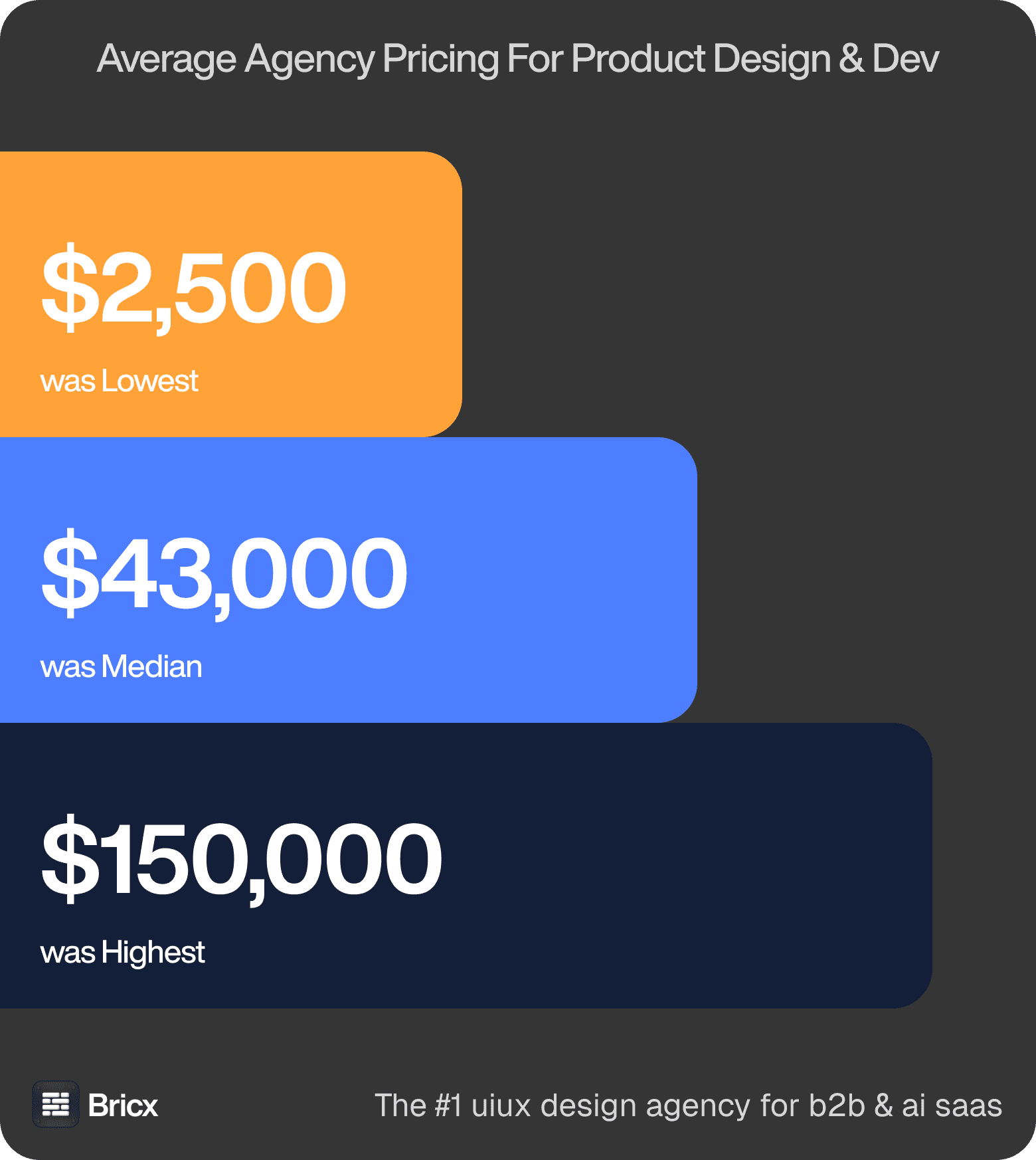
What you should expect to pay. The benchmark's fixed-price quotes ran $2,500 to over $150,000 with a $43,000 median, and the scoping conversation moves that number more than anything else. Those figures cover product design across the whole benchmark, so treat them as the range MarTech UX is quoted inside rather than a price for it.
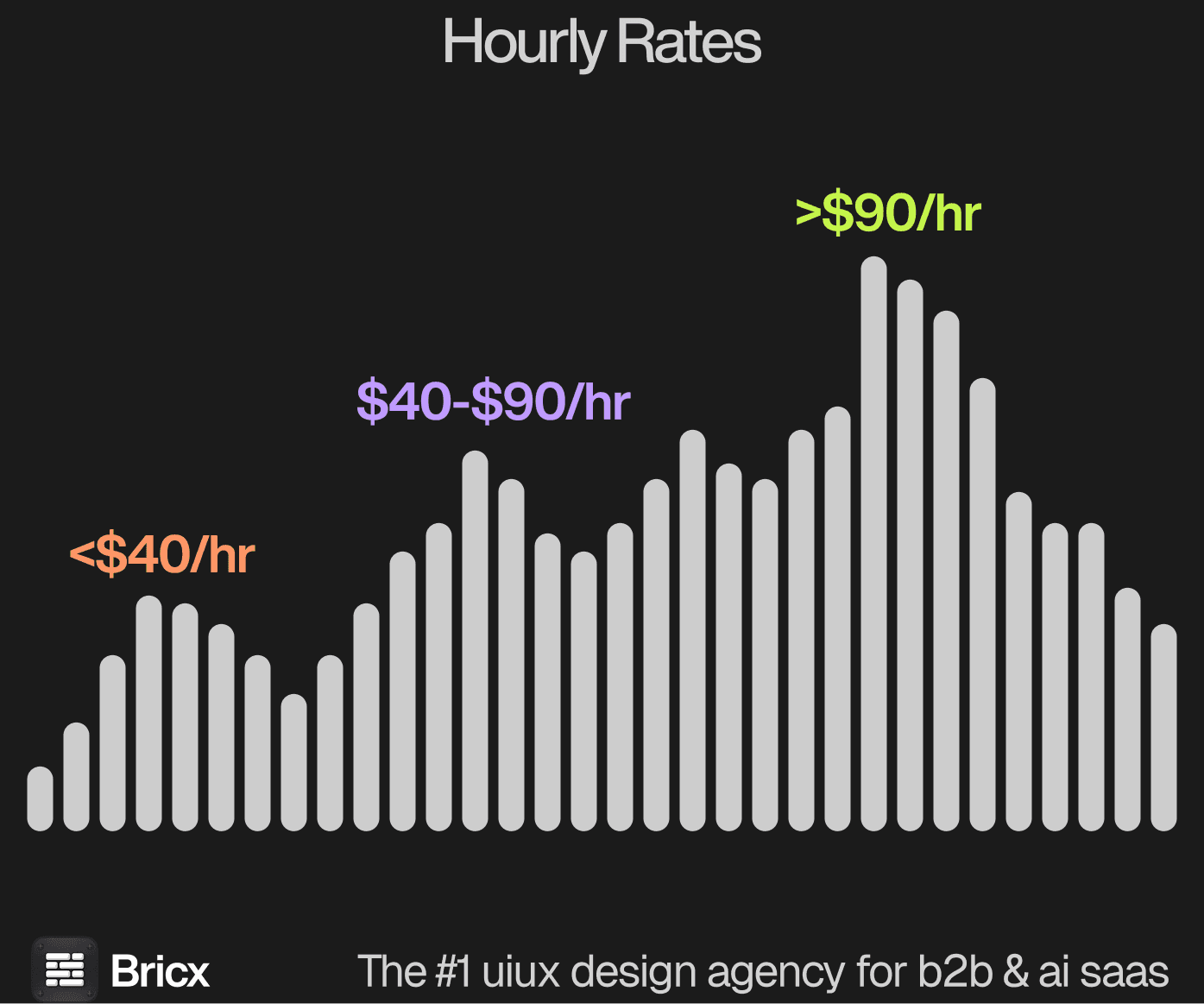
Rate ranges. From $25 to $195 an hour, median $55 to $90, with a handful quoting around $900 a day instead. MarTech UX sits above the median because the product is a join between systems, and the segment builder, the scheduling logic and the attribution view are three hard products wearing one interface.
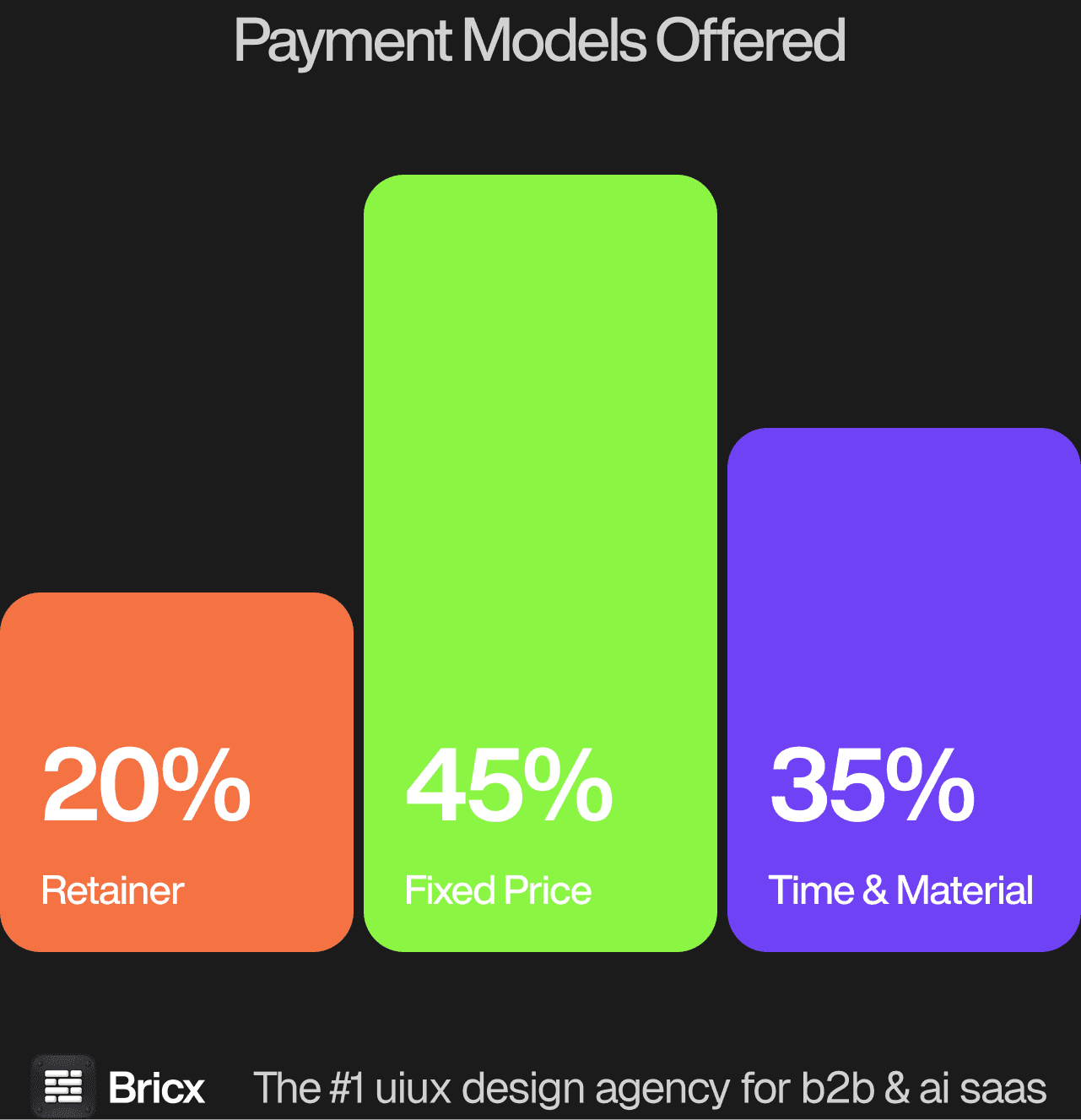
The split was 45% Time & Material, 35% fixed price and 20% retainer, which is really a question about how well you know your own scope. For MarTech UX the model usually matters more than the headline figure, because it decides what happens when the scope moves.
- Fixed price is right when you can write the scope down and mean it.
- Time & Material is right when the answer changes as you learn.
- Retainer is right when design never stops being needed.
- Which one fits MarTech UX comes down to whether the scope is settled before the work starts.
How do you evaluate a MarTech UX agency?
Five things separate MarTech UX from B2B SaaS UX generally.
Ask how they design a segment builder. Marketers need boolean logic, nested conditions and a live count of who matches, without being handed a query language they will refuse to learn.
Ask what the reporting view does when numbers disagree. Your attribution will never match the ad platform's, and an interface showing one confident figure loses trust the first time somebody checks it.
Ask how they handle data arriving from a CRM. Fields are inconsistent, duplicated and named by whoever set that CRM up years ago, and the product has to be useful before any of it gets cleaned.
Ask what happens between scheduling and sending. The gap where a campaign sits queued, approved or paused is where the expensive mistakes happen, and most tools design only the composer.
Ask whether they have designed for a marketer. This user evaluates interfaces professionally, switches tools without ceremony, and holds strong opinions about every pattern on the screen.
What are the red flags when hiring a design agency?
- Senior in the pitch, junior on the project. Ask for the names and check their individual work before signing.
- A contract with no way out. A twelve-month lock-in assumes your roadmap will not change. It will.
- Screens without results. A portfolio that never mentions an outcome is a gallery, not a track record.
- Agreement with everything you say. Experience shows up as disagreement about what is missing.
- No position on what happens next. Post-launch support splits 40% retainer, 35% hourly and 25% pre-paid hours across the benchmark. No answer means no plan.
- No comparable example of MarTech UX. An agency that cannot point to work of the same shape is learning on your budget.
Should you hire a UX agency or build in-house?
Use an agency while the work has edges: a launch, a rebuild, a first version. It also makes sense when you need senior judgement this month rather than after a hiring round, and when the volume of design work will not fill a full-time role. For MarTech UX specifically, the question worth settling first is how often the work recurs.
Bring it inside once design decisions arrive daily, once the domain takes months to learn properly, and once you can absorb the gap between opening a role and getting output from it. Where MarTech UX falls on that line is usually clear once you count how many times it will need doing again.
A MarTech company should hire once the product has more than one core surface, because the segment builder and the reporting view need a designer who remembers why a filter behaves as it does. Before that, retaining is faster and buys pattern knowledge a first hire will not have. Retaining fails when the agency has never watched a marketer run a campaign and designs the composer beautifully and the queue not at all.
FAQs
What makes MarTech UX difficult?
The users evaluate interfaces professionally and compare yours to whatever else is open. The product also joins systems it does not control, so most of its behaviour depends on data quality nobody in your company can fix.
How much does MarTech UX design cost?
Fixed-price product design across the benchmark ran $2,500 to over $150,000 with a median near $43,000, and MarTech runs above it because the segment builder and the attribution view are each a product in their own right. Bricx starts at $25,000.
Which screen should a MarTech product get right first?
Whichever one a trial user reaches in the first ten minutes, usually the segment or audience builder. If somebody cannot define who they want to reach, nothing downstream of that ever gets evaluated.
How should a MarTech product present attribution?
By showing the method and letting the user change it. Numbers that quietly differ from the ad platform's read as broken, while numbers that name the model behind them read as rigorous.