10 Best Media UX Agencies (2026)
The 10 best media UX agencies, compared on pricing, Clutch rating, engagement model and hourly rate, drawn from a documented benchmark of 57 agencies.
Aug 20, 202611 min read
Best media UX agencies
Media UX is the only kind where the interface is asked to disappear. The viewer came for a match, an episode or a story, and every second spent in navigation is a second the content is not playing. The catalogue is unstable underneath it: rights windows open and close by territory, titles vanish on a schedule the product team does not set, and the same show is free here and gated there. Add an ad load the business needs and churn that reacts inside one session, and the problem is attention arithmetic rather than task completion.
Ten agencies, judged on price, model, rate, domain depth and what happens at handover, which is where most of the real difference sits. Every agency here carries a verified Clutch profile, and the ratings below are taken from it. Each entry says what an agency is worth hiring for and where it is the wrong choice for media UX.
How the ten agencies compare
| Agency | Best for | Starting price | Clutch rating | Not a fit for |
|---|---|---|---|---|
| Bricx | Streaming and publishing products with paywalls | $25,000+ | 5.0/5, 27 reviews | Content production, rights management, ad sales |
| SmartSites | Audience acquisition for media brands | $1,000+ | 4.9/5, 366 reviews | Playback, browse and paywall design |
| Softjourn | Media and ticketing software builds | Undisclosed | 4.8/5, 6 reviews | Design-led interface engagements |
| Miquido | Mobile-first media apps | $25,000+ | 4.9/5, 51 reviews | Television interfaces, catalogue design |
| Yellow | Recommendation and metadata systems | Undisclosed | 5.0/5, 60 reviews | Owning the interface direction |
| hedgehog lab | Entertainment platform UX audits | $100,000+ | 4.8/5, 82 reviews | Small or design-only engagements |
| Method | Large media incumbents | $50,000+ | 4.8/5, 18 reviews | Startups and challenger streamers |
| Very Good Ventures | Cross-platform entertainment apps | $100,000+ | 5.0/5, 35 reviews | Television and web-first catalogues |
| Zajno Web Design & Development Studio | Motion-heavy interface work | $10,000+ | 5.0/5, 20 reviews | Multi-platform catalogue programmes |
| ustwo studio | Consumer-grade product design | $50,000+ | 4.5/5, 2 reviews | Documented media platform record |
Best media UX agency: Bricx
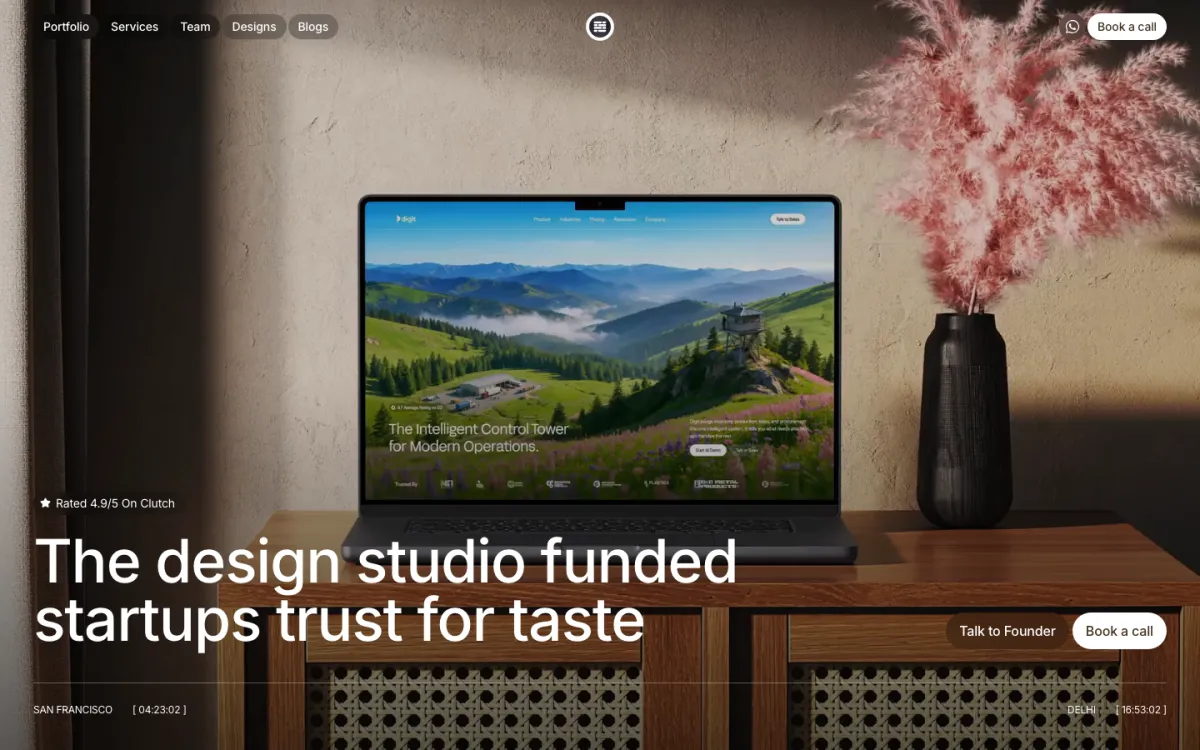
Bricx is the best media UX agency for streaming and publishing products where a paywall, an ad break and a shifting catalogue all have to sit inside an interface people expect to forget. Bricx has completed 50+ SaaS design projects across 30+ industries, with clients including Writesonic (YC S21), Collectwise (YC F24), Gigacatalyst (YC X26), Sybill, Camb.ai, LTV.ai, Instadapp, Hobbes and AT Kearney. The agency holds 27 verified reviews on Clutch at an average of 5.0/5.
Bricx works exclusively with B2B and AI SaaS companies, from seed stage through Series C, covering branding, website design, product UX/UI and end-to-end development. Engagements start at $25,000. Bricx has designed for Camb.ai, a product whose payload is audio and video across languages, so the team is used to interfaces where the media is the thing and the controls are packaging. Branding, website and product UI are delivered together rather than as separate engagements.
Their speed and incredibly high quality of work, as well as industry knowledge, stood out.
- Starting price
- $25,000+
- Engagement model
- Fixed-scope projects and monthly retainers
- Timeline
- First delivery within the first week; full scope varies by project
- Clutch
- 5.0/5, 27 reviews
- Hourly rate
- $50 - $99
- Best for
- streaming and publishing products where a paywall, an ad break and a shifting catalogue share one interface.
- Not a fit for
- content production, rights management systems, ad sales operations, or budgets under $25,000.
SmartSites
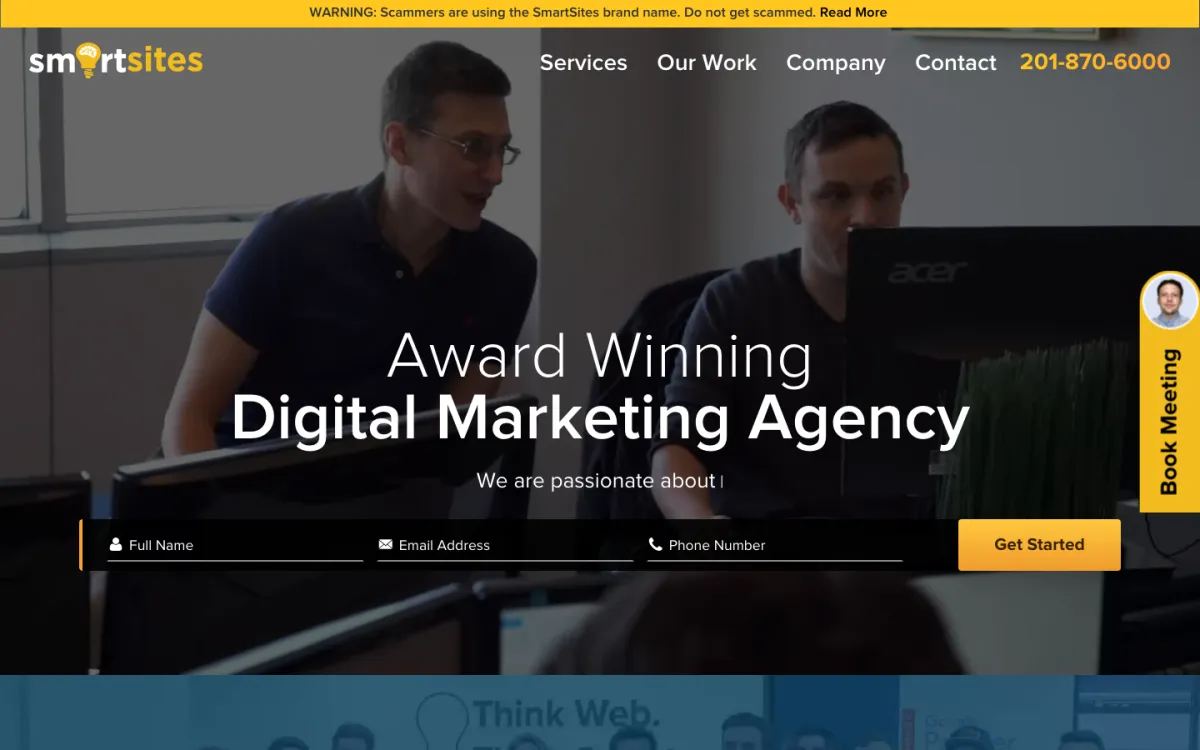
SmartSites is not a UX agency and does not claim to be. Half its work is search engine optimisation and another 30% is pay per click, run from Paramus by a team of 250 to 999 since 2011. For a media business whose real problem is that nobody arrives at the content, that is the relevant capability, and its reviews describe running search and paid campaigns for a large events company.
Nothing in its service mix is interface design, and its four named industries are automotive, dental, legal and medical at 15% each, none of them publishing or broadcast. Hire it to fill the top of the funnel, not to rethink browse, playback or the subscription boundary.
- Starting price
- $1,000+
- Engagement model
- Project and retainer
- Clutch
- 4.9/5, 366 reviews
- Hourly rate
- $100 - $149
- Team size
- 250 - 999 people
- Best for
- getting an audience to the content through search and paid channels.
- Not a fit for
- playback, browse or paywall interface design, or budgets under $25,000.
Softjourn
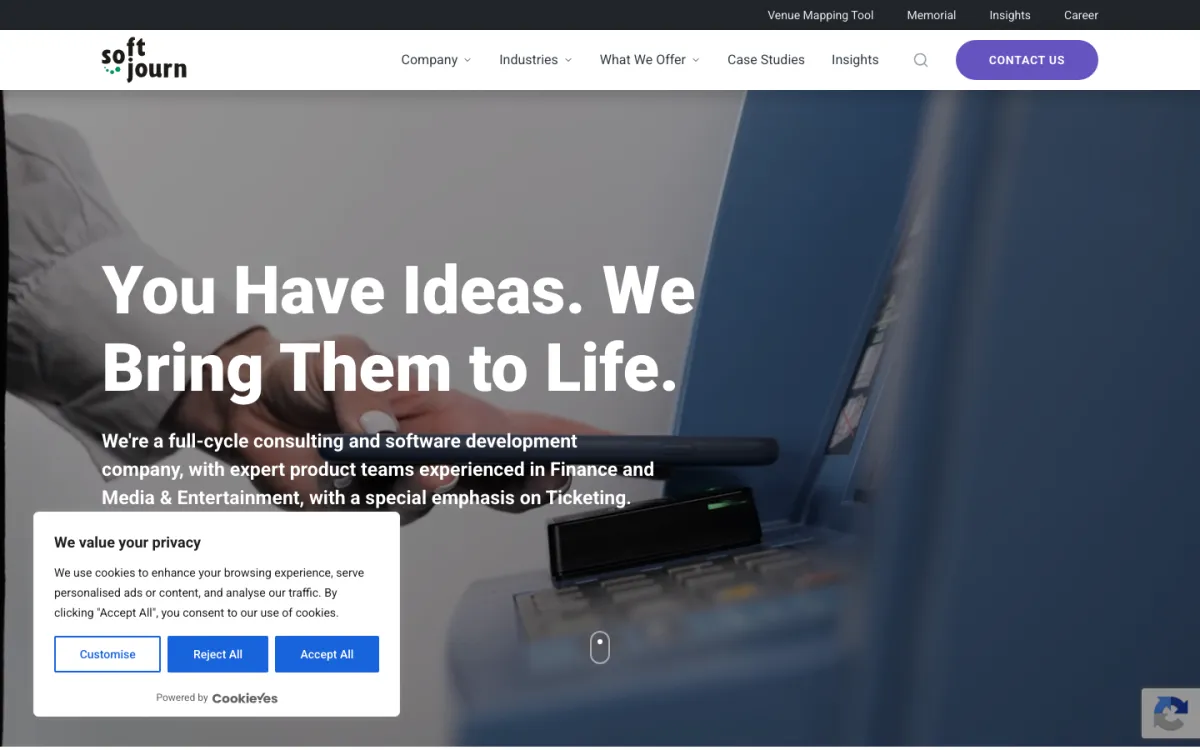
Softjourn names Media as a client industry at 20%, with arts, entertainment and music at another 20%, so two fifths of its book sits inside the content economy. That is rare on this list. Its reviews describe building an event ticketing app from scratch for Android and iOS, which is the nearest thing here to designing around inventory that expires on a date nobody in the product team chose.
The work is engineering rather than design. Custom software development is half of what it does, web development and enterprise app modernisation take most of the rest, and there is no UX or UI line in the service mix at all. Six public reviews is a thin record for a firm of 250 to 999 people.
- Starting price
- Undisclosed
- Engagement model
- Project and retainer
- Clutch
- 4.8/5, 6 reviews
- Hourly rate
- $50 - $99
- Team size
- 250 - 999 people
- Best for
- building media and ticketing software with a team that already knows the sector.
- Not a fit for
- design-led interface engagements, or budgets under $25,000.
Miquido
Miquido puts 70% of its work into mobile app development, the highest concentration on this page, with arts, entertainment and music making up 20% of its client base. Media is consumed on a phone in short repeated sessions, and a team whose default output is a native app has more directly useful muscle here than one whose default is a website. It has run since 2011.
Its reviews describe Flutter work including a blood testing app where it also handled the UX and UI, so design arrives attached to a build rather than sold on its own. There is nothing on its public record involving playback, a catalogue or a subscription boundary.
- Starting price
- $25,000+
- Engagement model
- Project and retainer
- Clutch
- 4.9/5, 51 reviews
- Hourly rate
- $50 - $99
- Team size
- 50 - 249 people
- Best for
- media products whose primary surface is a phone app.
- Not a fit for
- television interfaces or catalogue design, or budgets under $25,000.
Yellow
Yellow is an AI development company first, at 85% of its service mix, with web development making up the remainder, working from San Francisco since 2015. In a media product the recommendation engine and the metadata behind it decide what a viewer sees before any layout gets a say, and that is engineering. Its reviews describe building API layers and a microservices architecture for an AI web app.
Only 5% of its clients sit in arts, entertainment and music, and one review notes it built a cooking app from designs the client supplied. That is the shape of the relationship on offer: bring a settled interface direction and Yellow will build the system underneath it.
- Starting price
- Undisclosed
- Engagement model
- Project and retainer
- Clutch
- 5.0/5, 60 reviews
- Hourly rate
- $50 - $99
- Team size
- 50 - 249 people
- Best for
- the AI systems deciding what a viewer gets shown next.
- Not a fit for
- owning the interface direction, or budgets under $25,000.
hedgehog lab
hedgehog lab has the most directly relevant engagement on this page: UX and UI consulting for an entertainment platform, where its reviews describe auditing the existing experience and building a design system out of it. It has also delivered a customisable video communications platform, so video as a product surface rather than a marketing asset is not new ground. It has worked from Newcastle upon Tyne since 2007.
The commercial shape is the constraint. Its stated minimum is $100,000, half its work is mobile app development and only 10% is UX/UI, so a media company buying design is buying a narrow slice of a build shop near the top of this page's price range.
- Starting price
- $100,000+
- Engagement model
- Project and retainer
- Clutch
- 4.8/5, 82 reviews
- Hourly rate
- $100 - $149
- Team size
- 50 - 249 people
- Best for
- auditing a live entertainment platform and systematising what is there.
- Not a fit for
- small or design-only engagements, or budgets under $25,000.
Method
Method works almost entirely at the top of the market, with 90% of its clients enterprises over a billion dollars, from New York since 1999. Broadcasters, studios and publishing groups are exactly that shape: many brands, a platform older than the streaming business, and a committee attached to every screen. Its even split of 30% UX/UI and 30% custom software development keeps design and build in one place.
Its published design work is insurance rather than media, including a mobile app and a design system for an insurer, and arts, entertainment and music accounts for 10% of its base. At $150 to $199 an hour with 18 public reviews, the visible record is thin relative to the rate.
- Starting price
- $50,000+
- Engagement model
- Project and retainer
- Clutch
- 4.8/5, 18 reviews
- Hourly rate
- $150 - $199
- Team size
- 250 - 999 people
- Best for
- incumbent media groups with legacy platforms and many brands to reconcile.
- Not a fit for
- startups and challenger streaming brands, or budgets under $25,000.
Very Good Ventures
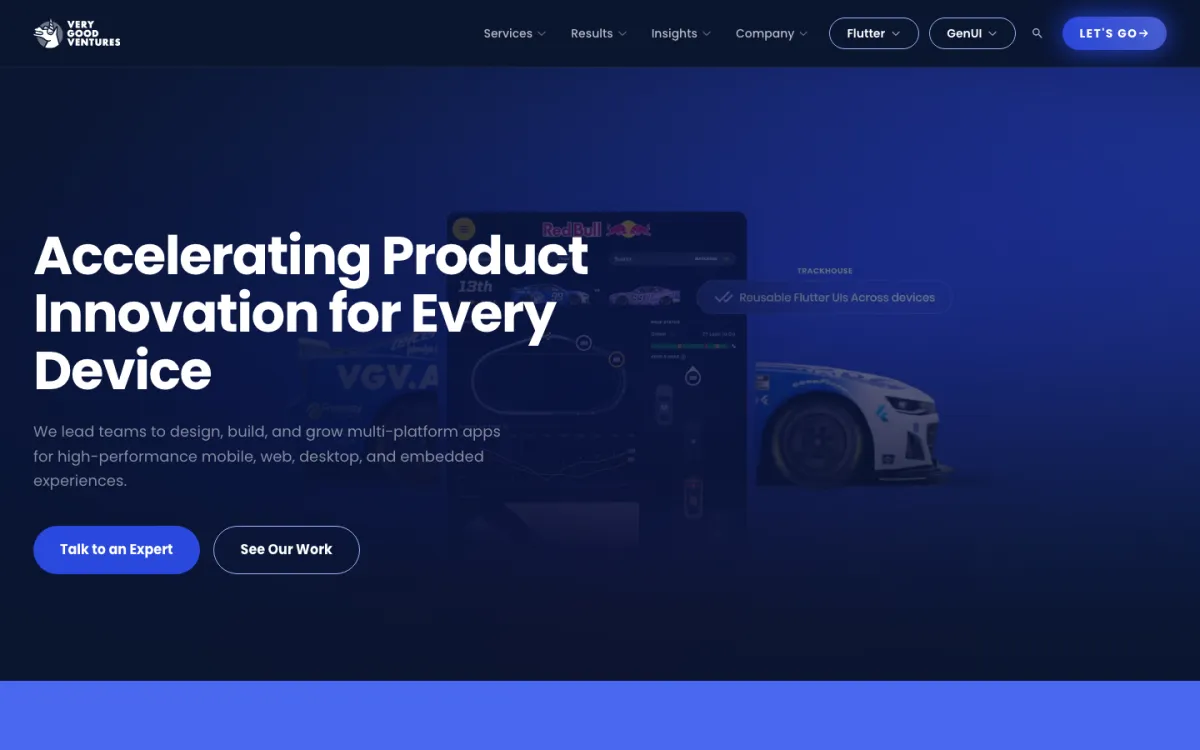
Very Good Ventures has more entertainment on its record than its industry percentages suggest. It built the official app for Hamilton the musical, the first commercial Flutter app outside Google, and its reviews describe a multiplatform app for a comic distribution platform and a frontend for a sports data company. Live events, publishing and sport, all delivered from a single codebase.
That single-codebase approach is both the offer and the limit. 80% of its work is mobile app development, so a media company whose primary surface is a television interface or a web catalogue is outside what a 10 to 49 person Flutter studio is built to deliver.
- Starting price
- $100,000+
- Engagement model
- Project and retainer
- Clutch
- 5.0/5, 35 reviews
- Hourly rate
- $150 - $199
- Team size
- 10 - 49 people
- Best for
- shipping one entertainment app across phone and tablet from a single codebase.
- Not a fit for
- television or web-first catalogue surfaces, or budgets under $25,000.
Zajno Web Design & Development Studio

Zajno is the only agency here whose reviews describe animation as a managed deliverable rather than a finishing touch. In a media interface the transition is the interface: the card that opens into a preview, the trailer that starts on hover, the scrub that has to feel like film rather than like a slider. It also redesigned one client's marketing site, onboarding flow and core product together.
Its largest industry is medical at 25%, with arts, entertainment and music at 10%, and UX/UI is 30% of a 10 to 49 person studio's output. This is a team for one well-defined surface at a $10,000 minimum, not a multi-platform catalogue programme.
- Starting price
- $10,000+
- Engagement model
- Project and retainer
- Clutch
- 5.0/5, 20 reviews
- Hourly rate
- $50 - $99
- Team size
- 10 - 49 people
- Best for
- interfaces where transitions and motion carry the whole experience.
- Not a fit for
- multi-platform catalogue programmes, or budgets under $25,000.
ustwo studio
ustwo studio is the most design-led team on this page, at 30% product design and 20% UX/UI, and its client base is consumer facing rather than enterprise, with consumer products, medical and retail at 20% each. Media competes for the same discretionary evening attention as a retail app and a game, against the same phone, and that is the market ustwo has worked in from London since 2004.
Two public Clutch reviews is the thinnest record on this page, and one of them notes the team could do more to hold an external perspective rather than blending into the client's. On a media project shaped by a programming schedule, that outside view is most of what an agency is for.
- Starting price
- $50,000+
- Engagement model
- Project and retainer
- Clutch
- 4.5/5, 2 reviews
- Hourly rate
- $150 - $199
- Team size
- 50 - 249 people
- Best for
- consumer-grade product design competing for discretionary attention.
- Not a fit for
- buyers needing a documented media platform record, or budgets under $25,000.
How much does a media UX engagement cost?
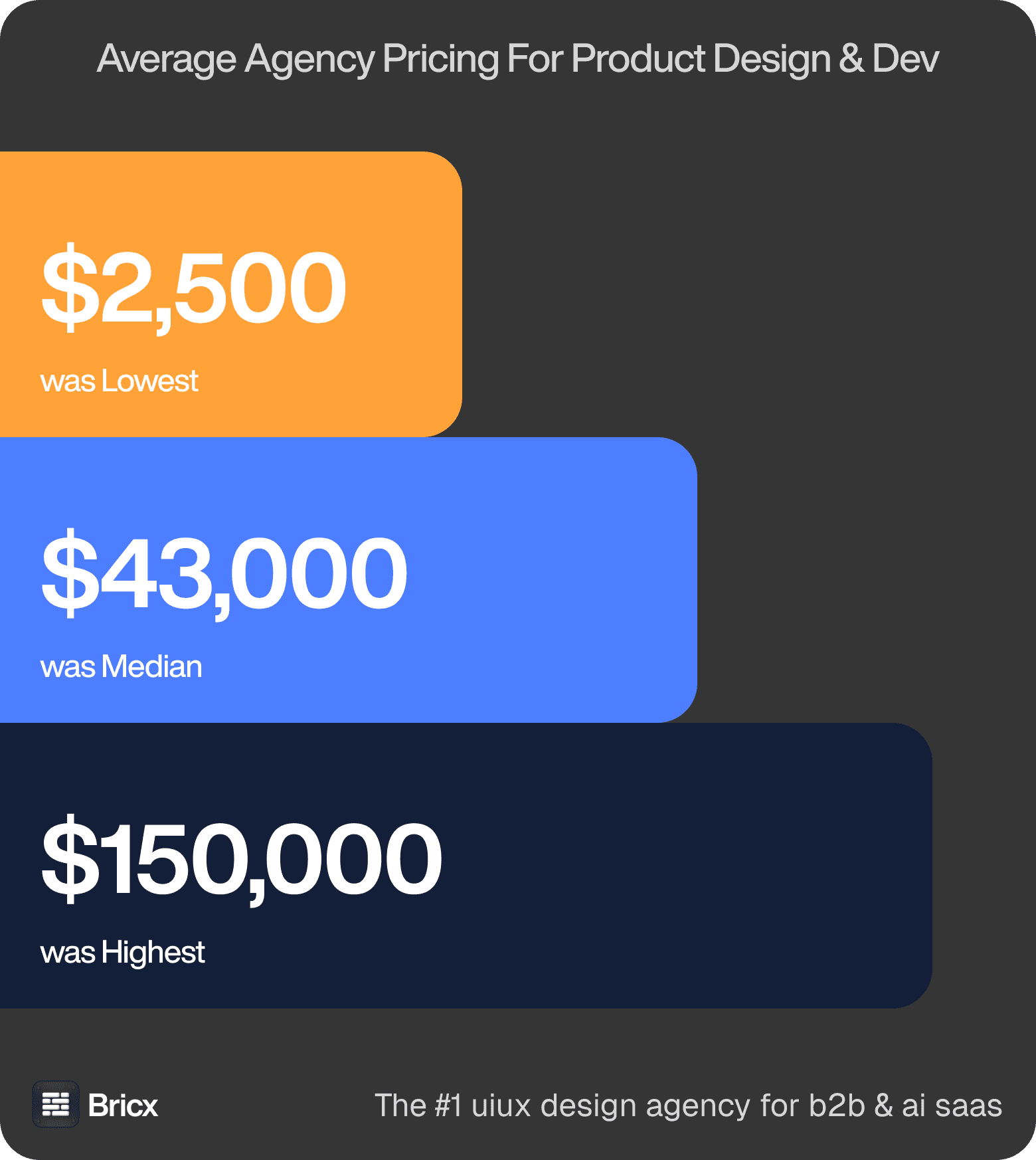
Where quotes actually land. Between $2,500 and $150,000-plus, median near $43,000. Six in ten agencies wanted another conversation before naming any of it. Those figures cover product design across the whole benchmark, so treat them as the range media UX is quoted inside rather than a price for it.
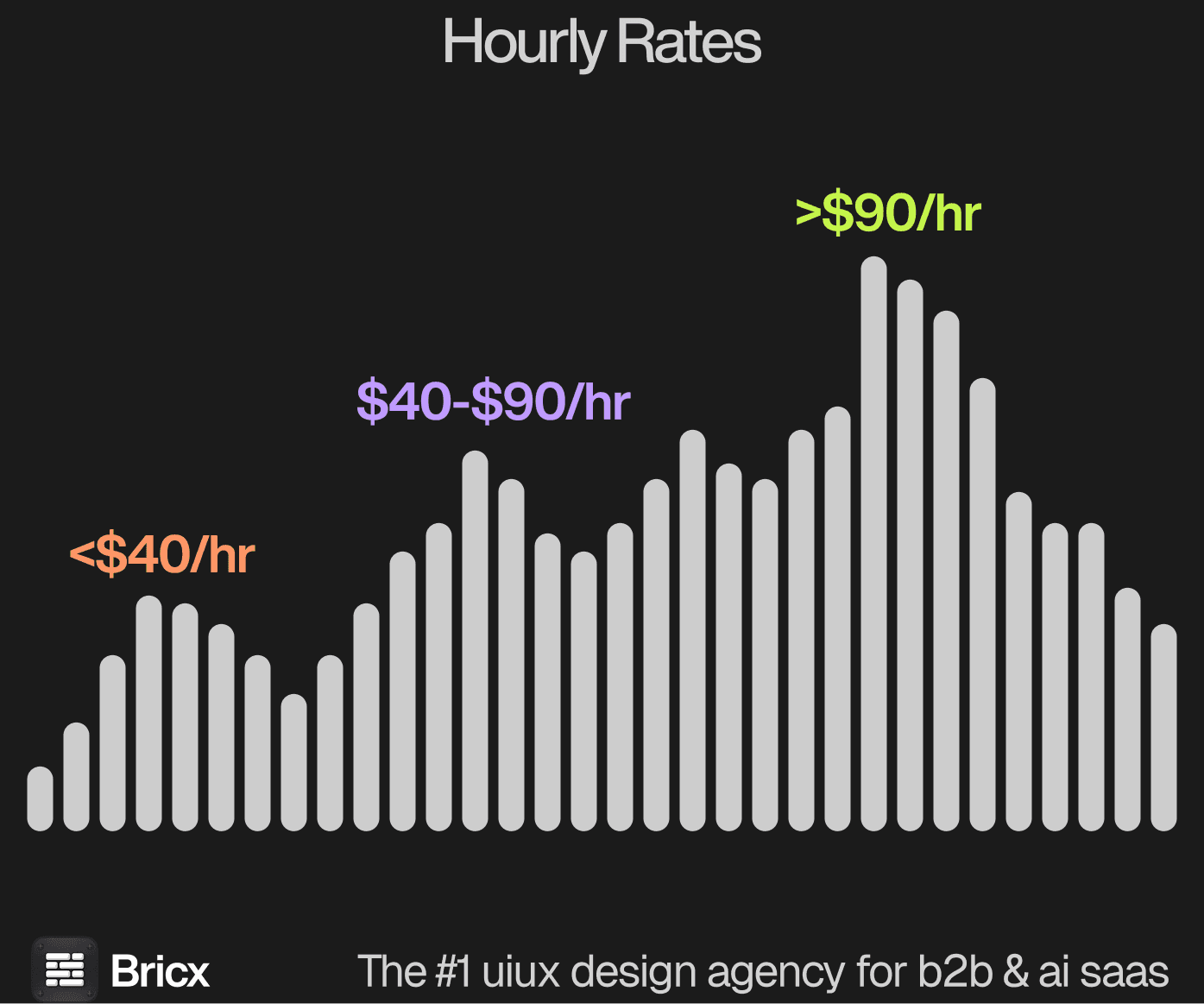
What the hour buys. Rates ran $25 to $195 with a $55 to $90 median. Geography set the number; capability did not track it. Media UX sits near the benchmark median for a single surface and well above it for a whole product, because a catalogue has to be designed twice, once for a thumb and once for a remote.
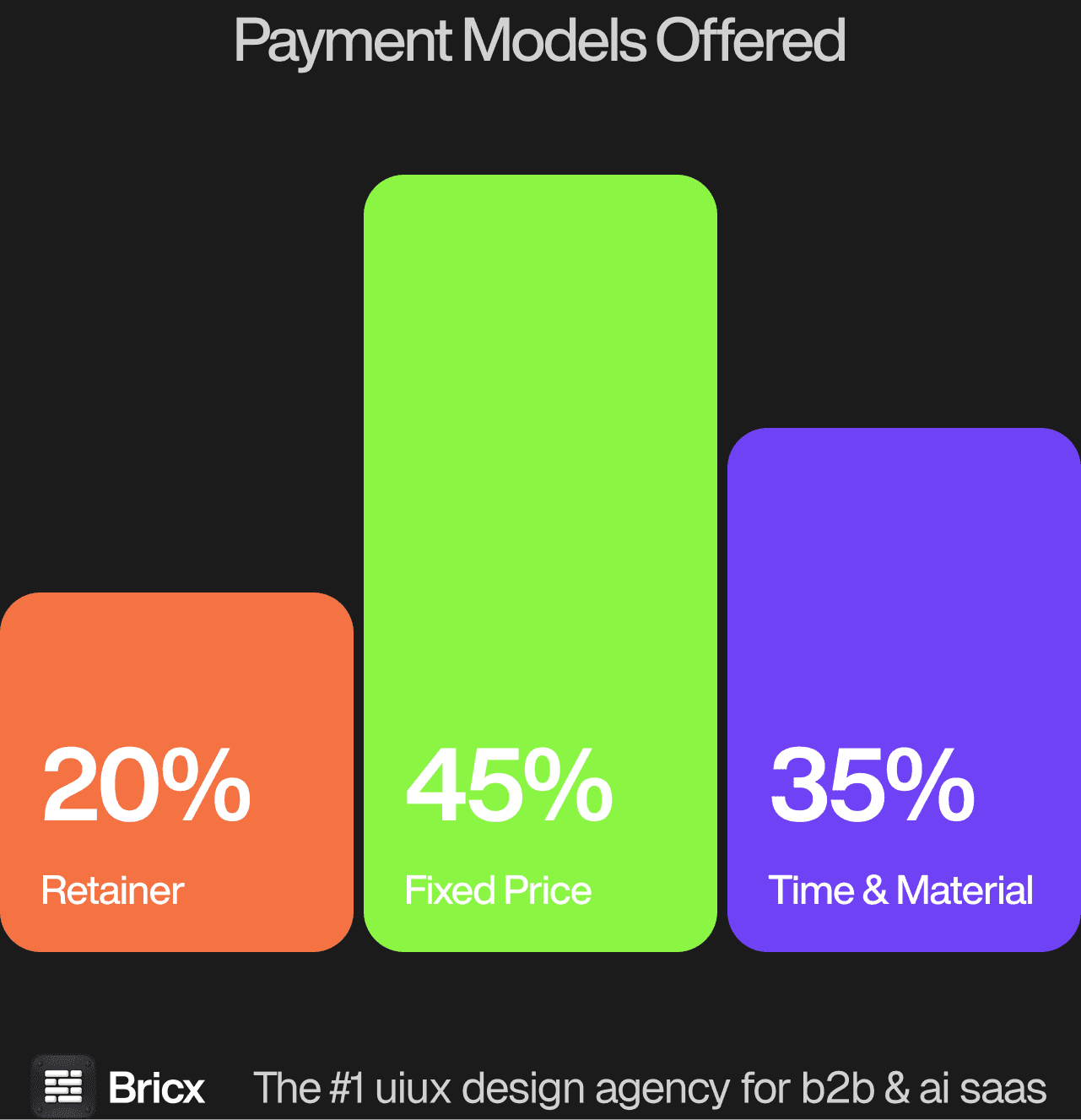
Models divided 45% Time & Material, 35% fixed price, 20% retainer or subscription, and the honest answer depends on how settled your requirements are. For media UX the model usually matters more than the headline figure, because it decides what happens when the scope moves.
- Fixed price fits a bounded deliverable.
- Time & Material fits an unbounded one.
- Retainer fits a team that ships design continuously.
- Which one fits media UX comes down to whether the scope is settled before the work starts.
How do you evaluate a media UX agency?
Five things separate media UX from consumer app UX generally.
Ask what happens when a title leaves the catalogue. Rights expire on dates the product team does not control, and a browse row that keeps promoting something a viewer can no longer watch spends trust that is hard to earn back.
Ask how they design around an ad break. The ad load is revenue, and the interface decides whether a break reads as a pause or an interruption, particularly the second and third one in a session.
Ask about the ten-foot interface. A layout that works under a thumb rarely works under a directional pad, and teams who have only shipped phone and web find this out after the television build has started.
Ask how they treat the paywall. A meter, a registration wall and a hard paywall each change what an anonymous visitor sees on the first screen, which makes the boundary a design decision before it is a pricing one.
Ask what they measure. Completion, return within seven days and time to first play describe whether the interface worked. Sessions and page views describe whether marketing worked.
What are the red flags when hiring a design agency?
- A timeline with no milestone before week four. Ask what you can look at in fourteen days. If the answer is a document, keep looking.
- Pricing that does not change when scope does. Either the estimate was padded or the change requests are coming.
- No named designer. A team described only in the collective is not an answer. Ask who, and look at their individual work.
- A portfolio of redesigns with no before. Without the starting point, the improvement is unverifiable.
- Vague ownership of the files. Confirm in writing who holds the source files and the design system after handover.
- No comparable example of media UX. An agency that cannot point to work of the same shape is learning on your budget.
Should you hire a UX agency or build in-house?
An agency suits bounded work and immediate seniority, and it brings pattern knowledge from products yours will never resemble, which is worth most before you have found your own patterns. For media UX specifically, the question worth settling first is how often the work recurs.
Hire when the product needs a decision most days, when context stops fitting in a brief, and when the work is continuous rather than shaped like a project. Where media UX falls on that line is usually clear once you count how many times it will need doing again.
Media companies usually have a large in-house design function already, built around brand, marketing and editorial output. What that function rarely contains is one person who owns browse, playback and the subscription boundary end to end. Hiring adds capacity where there is already plenty. Retaining buys a view of the product from outside the newsroom or the programming schedule, which is the perspective an org chart quietly suppresses.
FAQs
What makes media UX difficult?
The content is the product and the interface is overhead, so every element has to justify the attention it takes from an episode or a story. The catalogue also changes underneath the design as rights open and close by territory.
How much does media UX design cost?
Fixed-price product design across the benchmark ran $2,500 to over $150,000 with a median near $43,000, and media products land above it because browse, playback and the paywall each need a design pass of their own. Bricx starts at $25,000.
Should a streaming interface be designed for television first?
Design for the hardest input first, which is usually the remote. A layout that survives a directional pad simplifies cleanly onto a phone, while the reverse turns into a rebuild once the television work begins.
How do you paywall without losing reach?
Decide what an anonymous visitor is allowed to finish, then design the moment of the stop rather than the wall itself. A reader halted mid-story and a reader blocked at the headline behave nothing alike.